
Choosing between Dynamics 365 and Zoho CRM for your sales operations comes down to five questions:
Are you already running Microsoft 365, Teams, and Outlook, or do you operate on a platform-neutral stack?
Do you need CRM only, or do you need CRM and ERP under one roof?
Is your budget $14/user/month or $105/user/month, and what does that gap buy you?
How much implementation complexity can your team absorb before the system works against you?
Does your CRM have the B2B data it needs to make AI features useful, or are your reps still manually researching every prospect?
In short, here's what we recommend:
Dynamics 365 is the CRM for organizations that live inside the Microsoft ecosystem and need front-office and back-office operations on one platform. Sales reps work inside Outlook and Teams without switching contexts.
The shared Dataverse layer connects sales data to finance, supply chain, and service modules. Microsoft has been named a Leader in the Gartner Magic Quadrant for Sales Force Automation Platforms for 15 consecutive years.
But that power comes at a price: implementations commonly run $250,000 to $2 million, licensing is confusing, and the learning curve is steep for teams without dedicated admins.
Zoho CRM is the CRM for growth-stage businesses that want strong features without enterprise costs. Paid plans start at roughly $14/user/month, and the platform includes sales automation, AI-powered lead scoring, process enforcement through Blueprint, CPQ, and analytics.
Zoho is trusted by 300,000+ businesses worldwide and has been recognized in the Gartner MQ for Sales Force Automation Platforms for 15 consecutive years.
The trade-off: advanced configuration gets complex fast, support quality is inconsistent, and integrating with non-Zoho systems requires more effort than the marketing suggests.
Both platforms are capable CRMs. But neither solves the quality and completeness of the B2B data inside them. A CRM is only as good as the data it holds, and most CRM data decays faster than teams can maintain it. That's where ZoomInfo changes the equation.
ZoomInfo is an AI-powered go-to-market platform built on a B2B data foundation of 500M contacts, 100M companies, 135M+ verified phone numbers, and 200M+ verified business emails.
ZoomInfo integrates with both Dynamics 365 and Zoho CRM, enriching records with verified contact data, company intelligence, and buying signals so your CRM always has accurate information.
Beyond enrichment, ZoomInfo's GTM Context Graph combines this data with your CRM records, conversation transcripts, and behavioral signals to reveal not just what's happening in your pipeline, but why.
Teams access this intelligence through GTM Workspace for sellers, GTM Studio for marketers and RevOps, or API and MCP in any other tool.
If turning your CRM into an intelligence-driven sales engine sounds like the missing piece, see how ZoomInfo works with your stack.
Dynamics 365 vs. Zoho CRM at a glance
Dynamics 365 Sales | Zoho CRM | ZoomInfo | |
|---|---|---|---|
Primary function | CRM + ERP suite | CRM + business app ecosystem | B2B data and GTM intelligence platform |
Starting price | (Sales Professional) | ~$14/user/month (Standard, billed annually) | Custom-quoted; free tier available |
Free plan | 30-day trial | Free for up to 3 users, forever | ZoomInfo Lite, permanently free |
AI capabilities | Copilot + autonomous agents (Sales Qualification, Sales Close) | Zia AI (predictive scoring, 7 pre-built agents, generative AI) | GTM Context Graph, AI-drafted outreach, buying signal intelligence |
Native ecosystem | Microsoft 365, Teams, Outlook, Power BI, Azure | 60+ Zoho apps (Books, Desk, Analytics, Campaigns) | Integrates with Dynamics 365, Zoho CRM, Salesforce, HubSpot, and 120+ tools |
Implementation time | Months; often requires SI partner | Days to weeks | |
Learning curve | Steep | Moderate | Moderate |
Contract flexibility | Annual commitment; 7-day cancellation window | Annual; permanent free tier available | |
Best for | Microsoft-stack enterprises needing CRM + ERP | Value-conscious SMBs and mid-market | Any sales team that needs accurate B2B data and buying signals |
Dynamics 365 wins on ecosystem depth, Zoho CRM wins on value
The core difference between these two platforms comes down to what surrounds the CRM.
Dynamics 365 is built for organizations that already run on Microsoft. Sales reps can surface CRM data inside Teams calls, draft emails from Outlook, and build dashboards in Power BI without leaving the Microsoft environment.
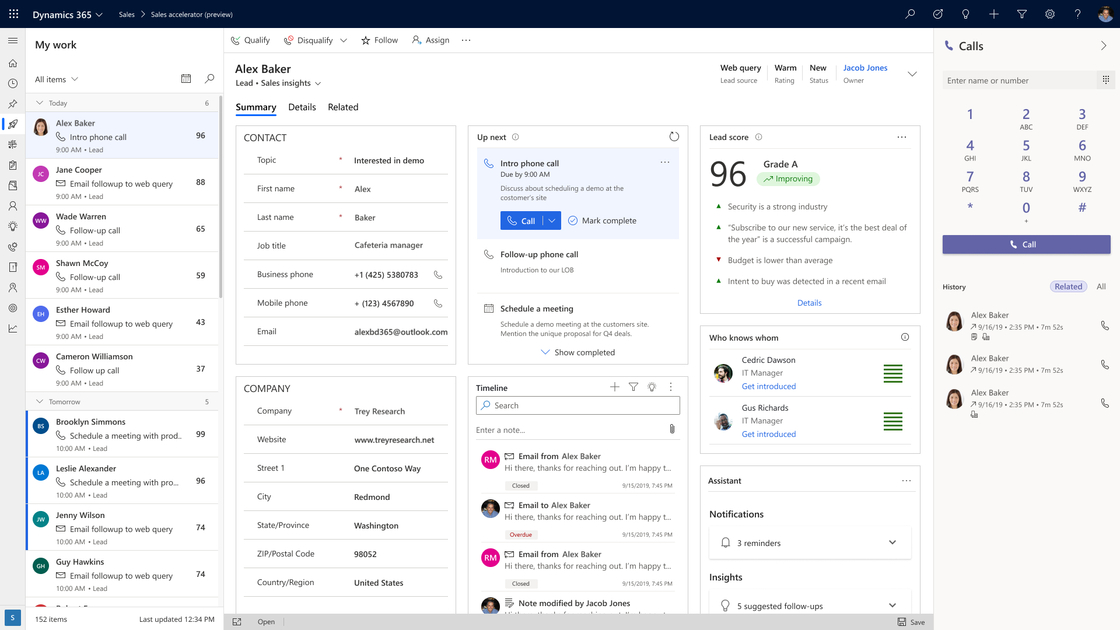
The shared Dataverse layer means sales data connects natively to finance, supply chain, field service, and HR modules. For a 500-person manufacturer running Microsoft 365, Azure, and SharePoint, Dynamics 365 is the natural CRM extension of that investment.
No competing suite matches this density of Microsoft-to-Microsoft connection.
Zoho CRM follows a similar ecosystem philosophy, built around Zoho's own products. Signing up gives you access to more than 40 integrated Zoho business applications, including Zoho Books for accounting, Zoho Desk for support, Zoho Analytics for BI, and Zoho Campaigns for email marketing.
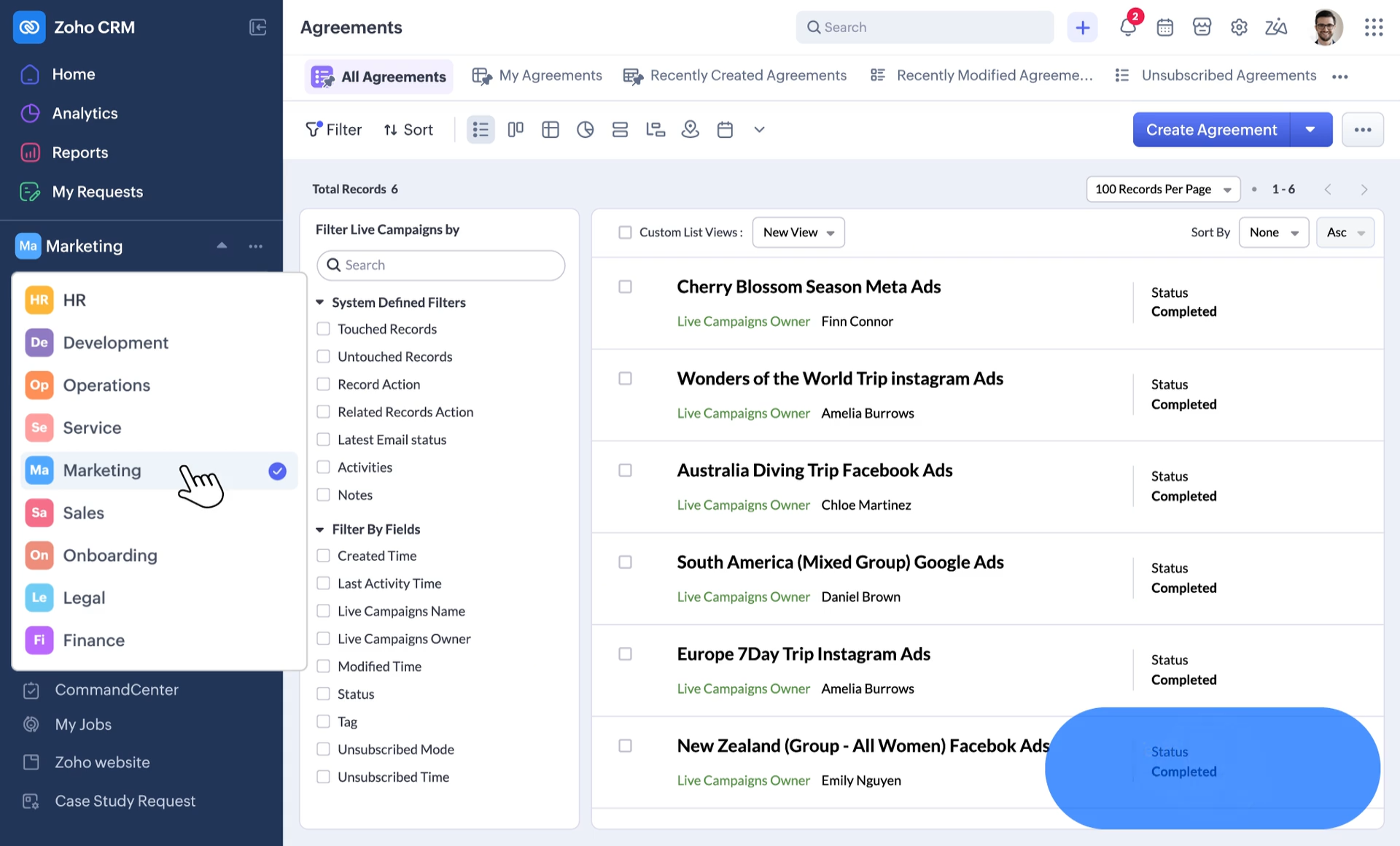
For teams that adopt the Zoho ecosystem, the integration runs deep and the combined cost is a fraction of what you'd pay assembling equivalent Microsoft licenses.
The difference is who these ecosystems serve. Microsoft's ecosystem assumes you have IT staff, implementation partners, and budget for enterprise software. Zoho's ecosystem assumes you want to get started this week, handle configuration yourself, and pay under $50/user/month for a complete business stack.
Sales automation approaches differ at every level
Both platforms cover the lead-to-deal pipeline, but the mechanics reflect different design priorities.
Dynamics 365 Sales is built around a lead-to-cash workflow with a configurable sales process, predictive scoring, and conversation intelligence that analyzes Teams and phone call recordings.
The standout feature is the AI agent layer: the Sales Qualification Agent can research leads on its own, send outreach emails, handle follow-up responses, assess qualification criteria, and hand off only high-potential leads to sellers.
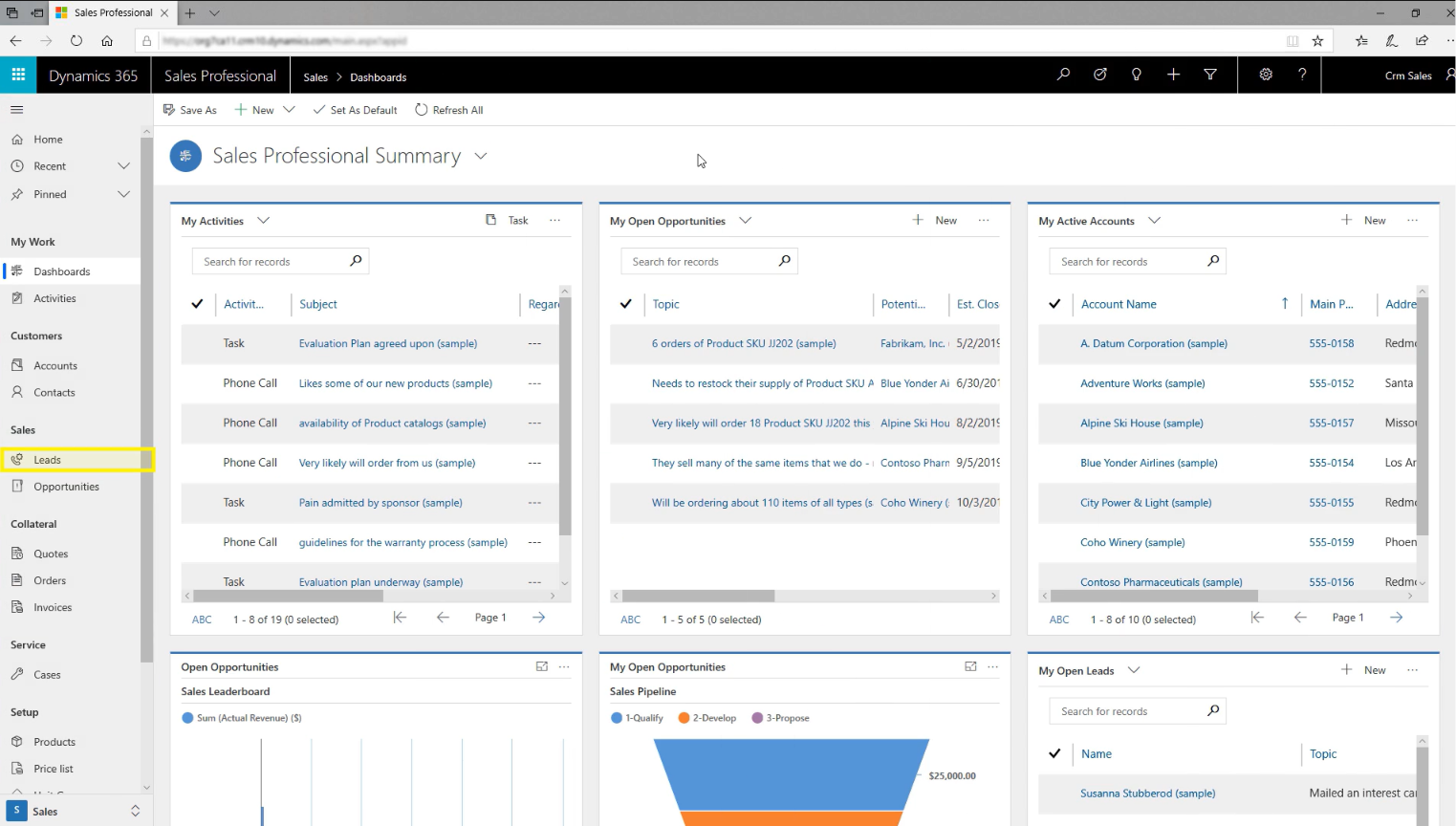
Source: Dynamics 365
This is not copilot-style assistance where a human approves every step. In its "Research and engage" mode, the agent operates as an autonomous SDR.
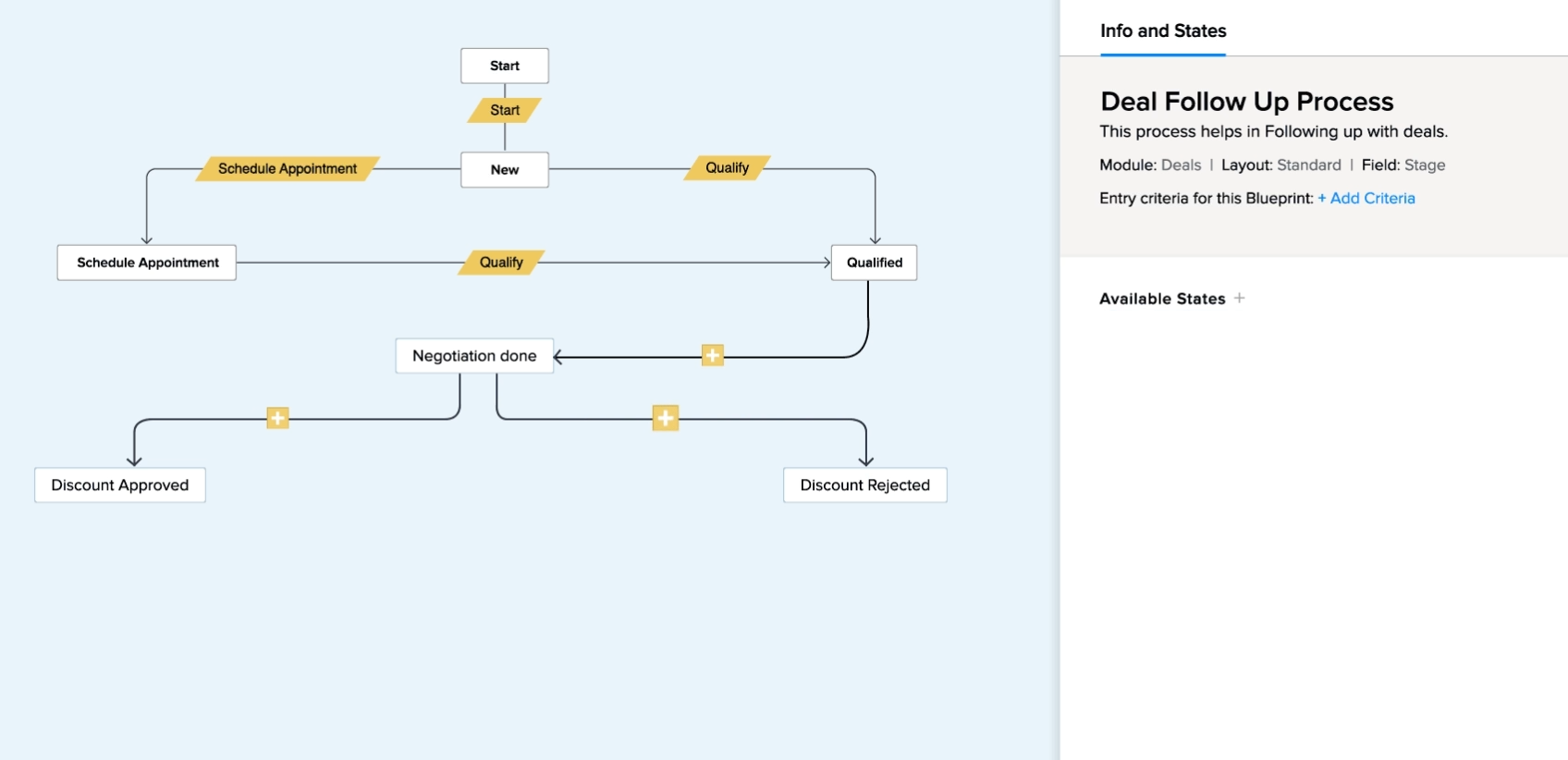
Zoho CRM takes a different approach to process enforcement. Blueprint maps each stage of a sales process as a visual flowchart, with conditions that must be met before a deal moves forward.
Source: Zoho CRM
Required fields, completed tasks, approvals granted: Blueprint ensures reps follow the defined process rather than skipping steps.
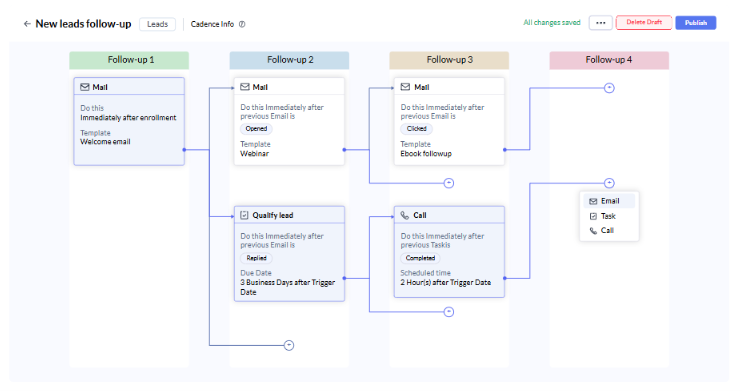
Zoho also includes Cadences for multichannel follow-up sequences that branch based on customer responses across email, phone, WhatsApp, and task assignments.
Source: Zoho CRM
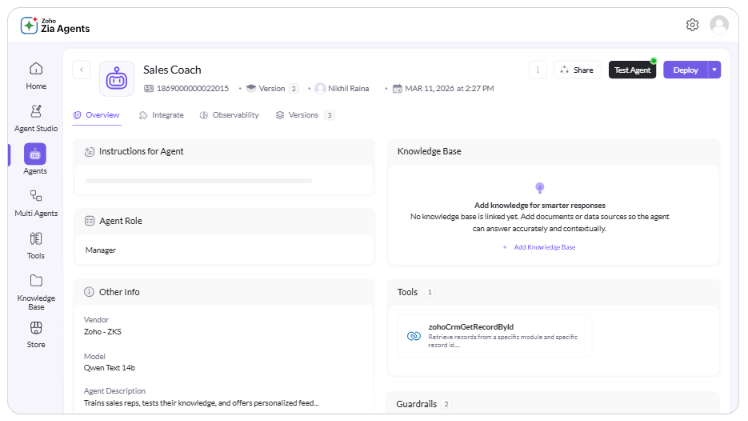
Zia, Zoho's AI layer, offers seven pre-built agents including an SDR agent, sales coach, deal analyzer, and follow-up scheduler. These agents can be deployed as "Digital Employees" with their own CRM identities.
Source: Zoho CRM
The practical difference: Dynamics 365's AI agents run on Azure OpenAI infrastructure with native access to Microsoft's collaboration stack. Zoho's agents run on its proprietary Zia LLM, built in-house to keep data processing within Zoho's environment. Microsoft's advantage is the context available to its agents (Outlook emails, Teams calls, SharePoint documents). Zoho's advantage is that AI features are available at lower price tiers and don't require separate Copilot credit purchases.
The data problem neither CRM solves alone
Here's what both Dynamics 365 and Zoho CRM share: they're only as valuable as the data inside them.
A sales rep opens their CRM to research a target account. The contact record has a phone number from two years ago. The company's employee count is stale.
There's no information about the org chart, the technology stack, or whether anyone at that company is researching solutions. The CRM has the structure for a good sales process, but the underlying data is incomplete, outdated, or missing entirely.
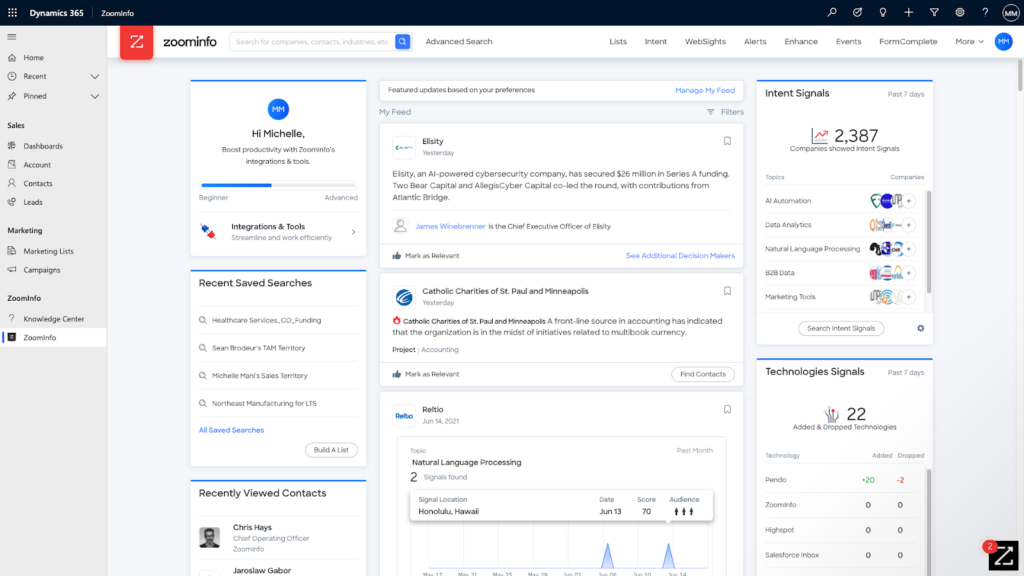
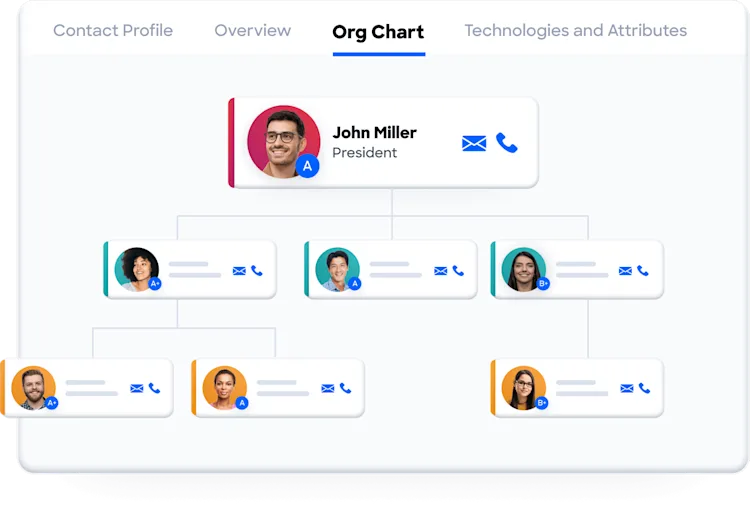
This is where ZoomInfo changes the equation. ZoomInfo integrates with both Microsoft Dynamics 365 and Zoho CRM, enriching records with verified contact information, company attributes, org charts, and technographics.
Source: ZoomInfo
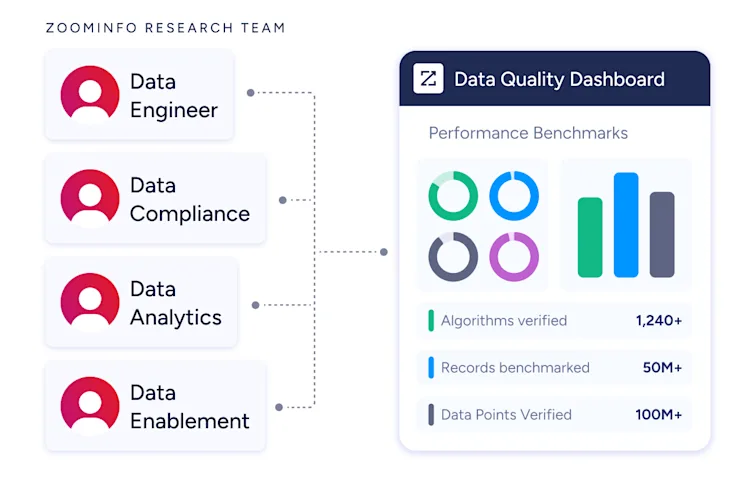
When a rep pulls up an account, they see verified direct-dial phone numbers and business emails backed by a multi-source verification pipeline with 300+ human researchers and up to 95% accuracy on first-party data.
Source: ZoomInfo
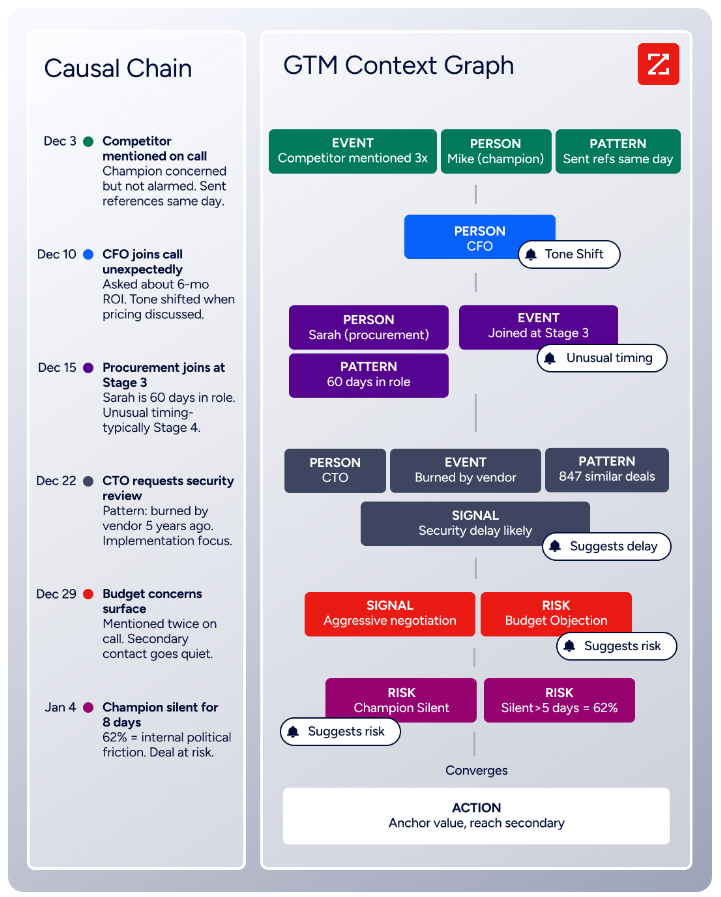
But enrichment is the first layer. ZoomInfo's GTM Context Graph processes 1.5B+ data points daily, combining your CRM records with conversation transcripts, intent signals, and behavioral data to capture why deals move or stall. Your CRM records that a deal moved to Stage 3.
Source: ZoomInfo
ZoomInfo's intelligence layer reveals that executive sponsorship entering at this stage, combined with the company researching your competitor and hiring three new VPs, matches the pattern behind closed-won deals in your segment. That context turns CRM data into actionable intelligence.
Seismic's sales team attributed 39% of active pipeline to opportunities identified or influenced by ZoomInfo signals and boosted productivity by 54%. (Seismic Case Study)
Pricing exposes fundamentally different philosophies
The cost difference between these platforms is not subtle.
Dynamics 365 Sales starts at $65/user/month for Sales Professional, which covers core sales force automation but excludes Copilot AI, advanced customization, and autonomous agents.
Sales Enterprise at $105/user/month adds Copilot, conversation intelligence, and prebuilt agent access with 1,000 Copilot Credits per user per month. Sales Premium at $150/user/month adds AI-powered enrichment and recommended actions.
But licensing is only the beginning. 60% of implementations exceed initial budgets by 20-40%. Software licensing typically accounts for only 15-20% of total implementation cost; consulting, customization, data migration, and training drive the rest.
Using AI agents beyond the included Copilot Credits requires an Azure subscription and additional credit purchases. Users on G2 and Software Advice call licensing "genuinely difficult to navigate."
Zoho CRM takes the opposite approach. The free plan supports up to 3 users with core lead, contact, and deal management.
Paid plans scale through Standard ($14/user/month), Professional ($23/user/month), Enterprise ($40/user/month), and Ultimate ($52/user/month), all billed annually. Month-to-month billing is available at higher rates.
The math is stark: a 50-person sales team on Dynamics 365 Sales Enterprise pays $63,000/year in licensing alone, before implementation. The same team on Zoho CRM Enterprise pays roughly $24,000/year, and Zoho includes AI features, Blueprint process automation, and territory management at that tier.
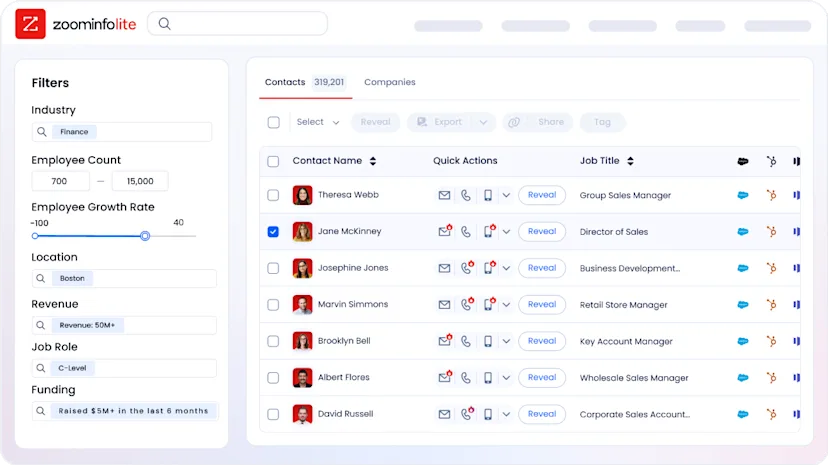
ZoomInfo uses custom-quoted, consumption-based pricing scaled to usage, seats, and credit volume. ZoomInfo Lite is permanently free with access to the B2B database and 10 monthly export credits.
Source: ZoomInfo
For teams evaluating whether ZoomInfo's data quality justifies the investment, a 7-day free trial provides full platform access.
AI capabilities are headed in the same direction, but starting from different places
Both Dynamics 365 and Zoho CRM are investing heavily in AI, with autonomous agents as the headline feature of their 2025-2026 roadmaps. The implementations differ in scope and access.
Dynamics 365 has embedded Copilot across every module and deployed autonomous agents built for specific tasks: the Sales Qualification Agent and Sales Close Agent for sales, the Case Management Agent for customer service, the Account Reconciliation Agent for finance, and the Supplier Communication Agent for supply chain.
Microsoft's 2026 Release Wave 1 targets 25+ planned agents for Dynamics 365 Finance alone. The advantage: these agents have native access to the entire Microsoft stack, including Azure OpenAI Service, Teams conversation data, and Outlook email history.
The constraint: Copilot and agent capabilities require additional Copilot Credits beyond what's included in base plans, plus an active Azure subscription. Enterprise and Premium tiers include credits, but Professional tier users get no Copilot access at all.
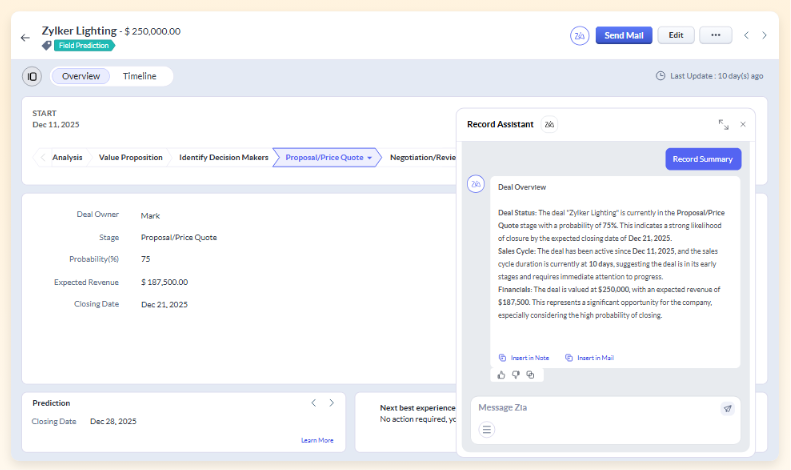
Zoho CRM offers Zia across predictive scoring, generative AI, conversational assistance, and agentic execution. The Zia Agents Store includes seven pre-built agents, and Agent Studio lets teams build custom agents from natural language descriptions.
Source: Zoho CRM
Zoho launched its own proprietary LLM in 2025, replacing reliance on third-party AI infrastructure. Zia also handles CRM configuration (describe a module in plain language and Zia creates it with fields) and workflow automation (describe automation logic and Zia builds the rule).
The constraint: Zia's predictive AI, call transcription, and anomaly detection are gated to Enterprise and Ultimate tiers. The AI doesn't have the same depth of productivity context that Microsoft's Copilot draws from (Teams calls, Outlook emails, SharePoint documents).
ZoomInfo approaches AI from the data layer rather than the application layer. The GTM Context Graph provides the intelligence that makes CRM-based AI useful.
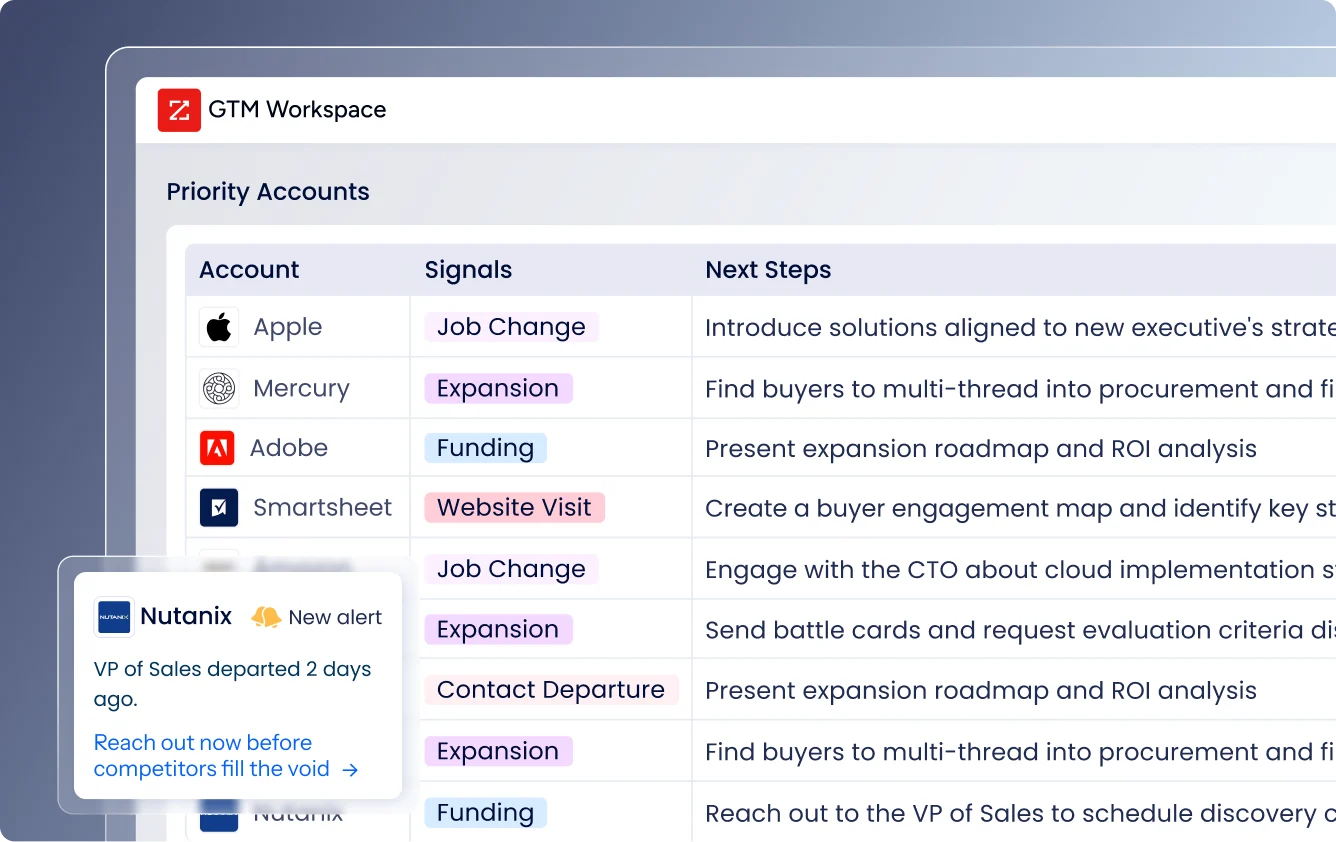
AI features in GTM Workspace generate account briefs, draft personalized outreach, prioritize accounts by buying signals, and surface hidden stakeholders, all drawing on ZoomInfo's B2B dataset and the customer's own CRM data.
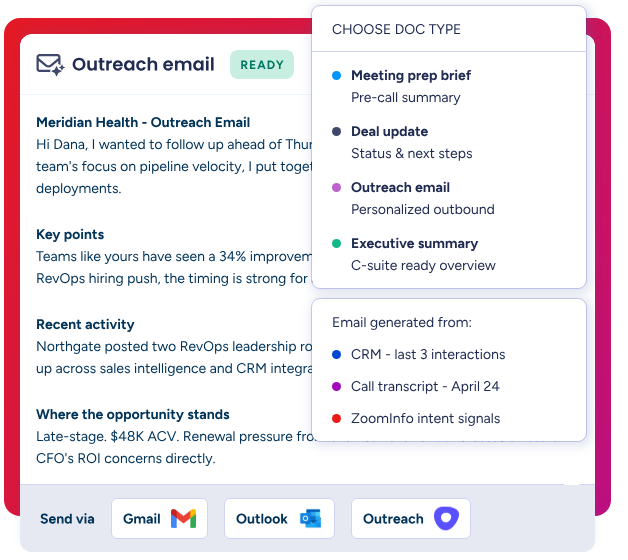
Source: ZoomInfo
This intelligence feeds into whichever CRM you choose, making both Dynamics 365's Copilot and Zoho's Zia more effective by ensuring they operate on accurate, complete data.
"ZoomInfo's not just a contact data company anymore. They've built a full system of execution. GTM Intelligence works the list, writes the outreach, triggers the play, and helps drive predictable growth." — Ian Brodie, CEO & Co-Founder, Levanta (Levanta Case Study)
Customization depth versus customization accessibility
Dynamics 365 and Zoho CRM both offer extensive customization, but the experience of building and maintaining those customizations differs.
Dynamics 365 customization runs through the Power Platform: Power Apps for custom interfaces, Power Automate for workflow automation with hundreds of prebuilt connectors, and Power BI for analytics.
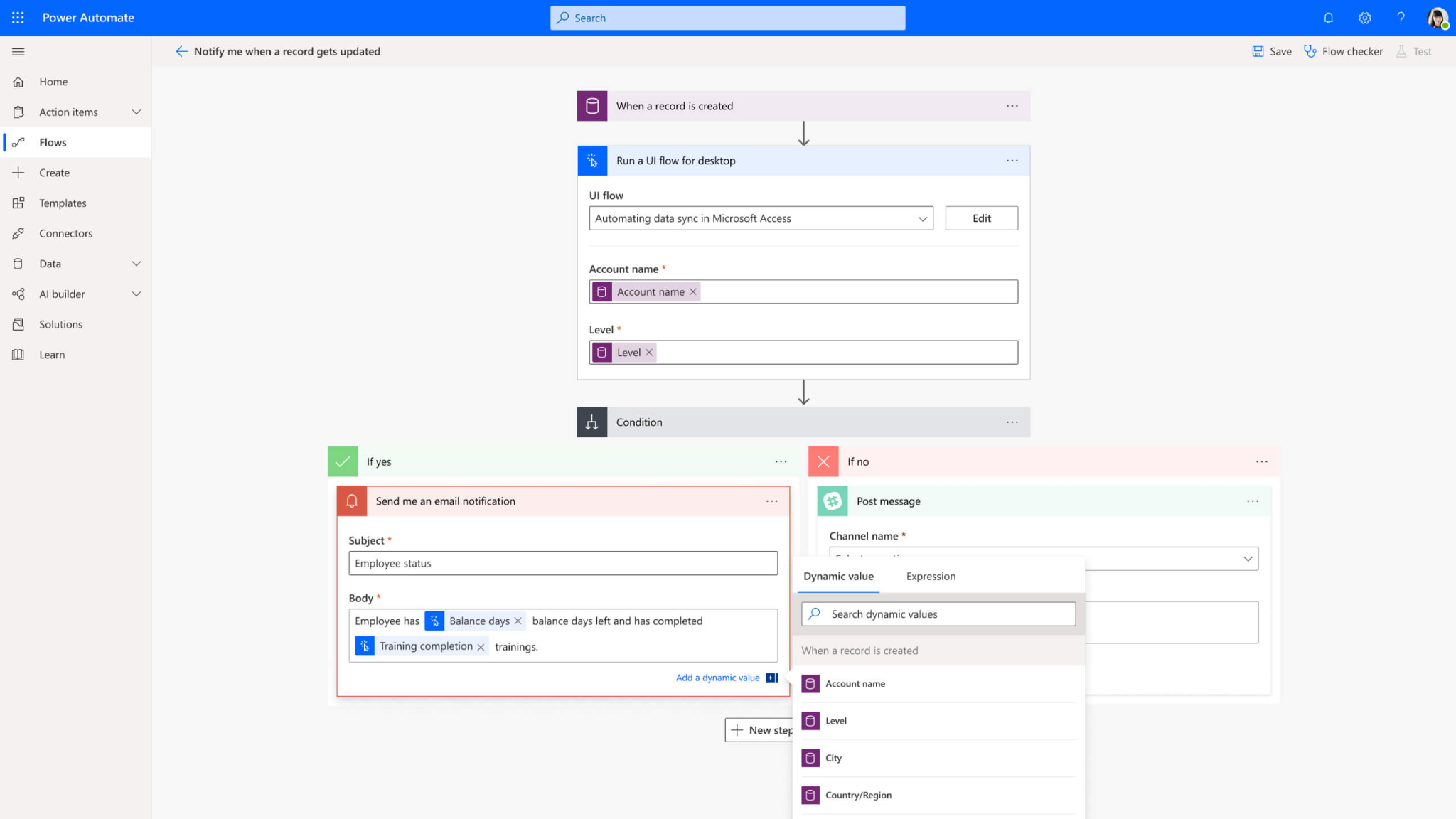
Source: Dynamics 365
The platform distinguishes between model-driven apps (structured, data-model-driven) and canvas apps (freeform design). Security roles, business process flows, custom entities, and complex workflows are all configurable.
The depth is real, but G2 and Capterra reviewers describe a steep onboarding curve and clunky navigation between modules, particularly for teams without dedicated admins.
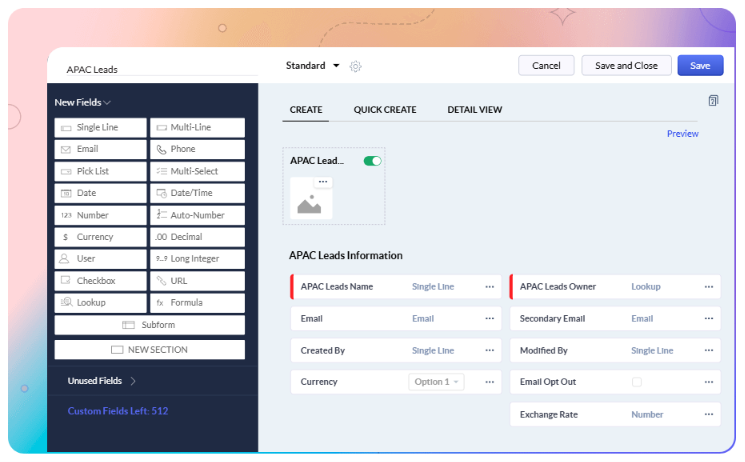
Zoho CRM customization centers on Canvas Design Studio, a no-code visual design environment for pixel-level control over CRM record views. Administrators can redesign layouts without code, and "Image to Canvas" generates designs from uploaded screenshots.
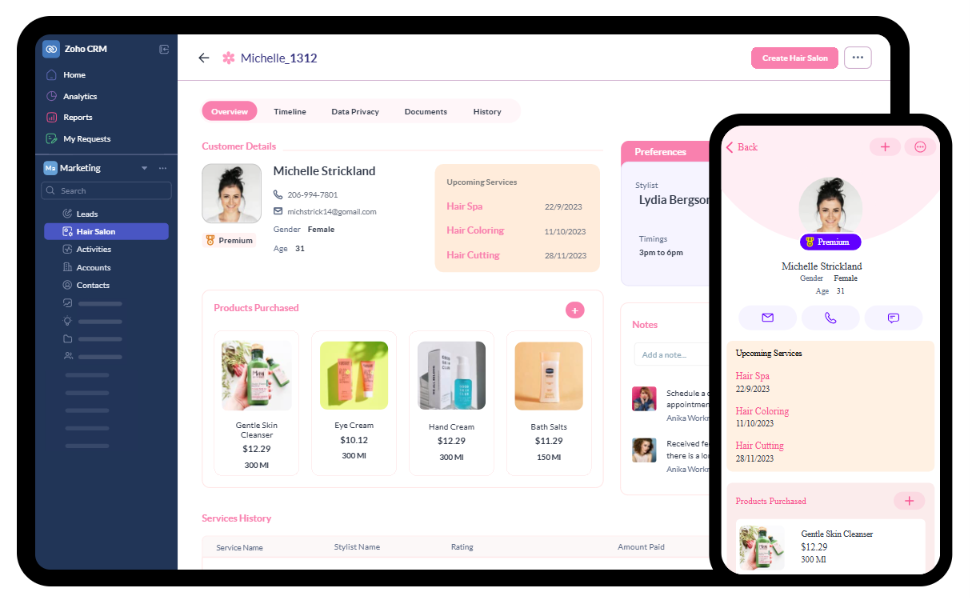
Source: Zoho CRM
The customization layer includes up to 500 custom modules on Ultimate, Wizards for guided data entry, Kiosk Studio for interactive process flows, and Customer Portals for external access. Zoho also supports custom Deluge Script functions for deeper automation.
The practical difference: Dynamics 365 customization is more capable in complex enterprise scenarios (multi-entity, multi-process, integrated with Azure services), but almost always requires a consultant or dedicated admin. Zoho CRM customization is more accessible for mid-market teams who want to tailor the CRM without hiring a development partner, but hits limits in highly complex enterprise configurations.
Integration tells you who each platform was designed for
Dynamics 365 integrates natively with everything Microsoft: Teams, Outlook, SharePoint, OneDrive, Power BI, and Azure services. This is its primary competitive advantage.
Sales reps access CRM context during Teams meetings. Finance data flows into the same Dataverse as sales records. For organizations on the Microsoft stack, the integration runs so deep it barely feels like integration.
Outside the Microsoft ecosystem, the story changes. G2 reviewers note that connecting Dynamics 365 to third-party ERPs, marketing platforms, or legacy systems can be clunky, often requiring middleware or custom development.
Zoho CRM integrates natively with the Zoho ecosystem and offers 1,100+ pre-built third-party integrations through the Zoho Marketplace. Key connections include Google Workspace, Microsoft Teams (phone and online meeting), QuickBooks, Mailchimp, and Slack.
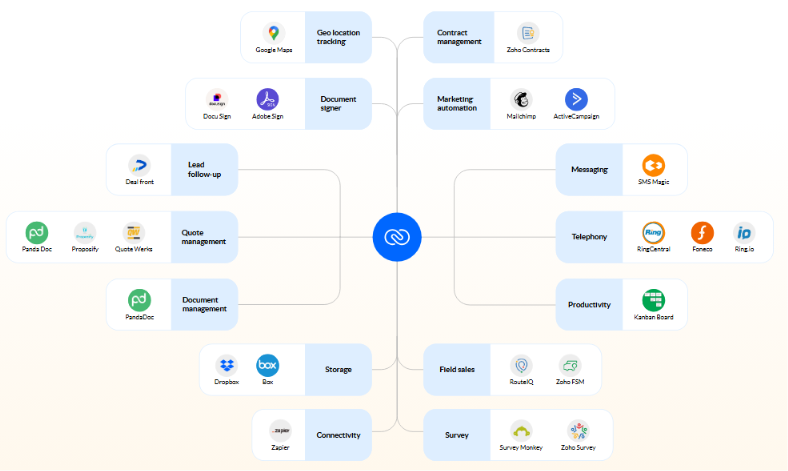
Source: Zoho CRM
But G2 users flag integration issues when connecting to non-Zoho systems in complex environments. Organizations invested in Salesforce or Microsoft toolchains may encounter friction requiring custom API work.
ZoomInfo sidesteps the ecosystem question entirely. It integrates with both platforms: Microsoft Dynamics 365 is a featured integration in ZoomInfo's App Marketplace, and Zoho CRM connects through the broader integration ecosystem.
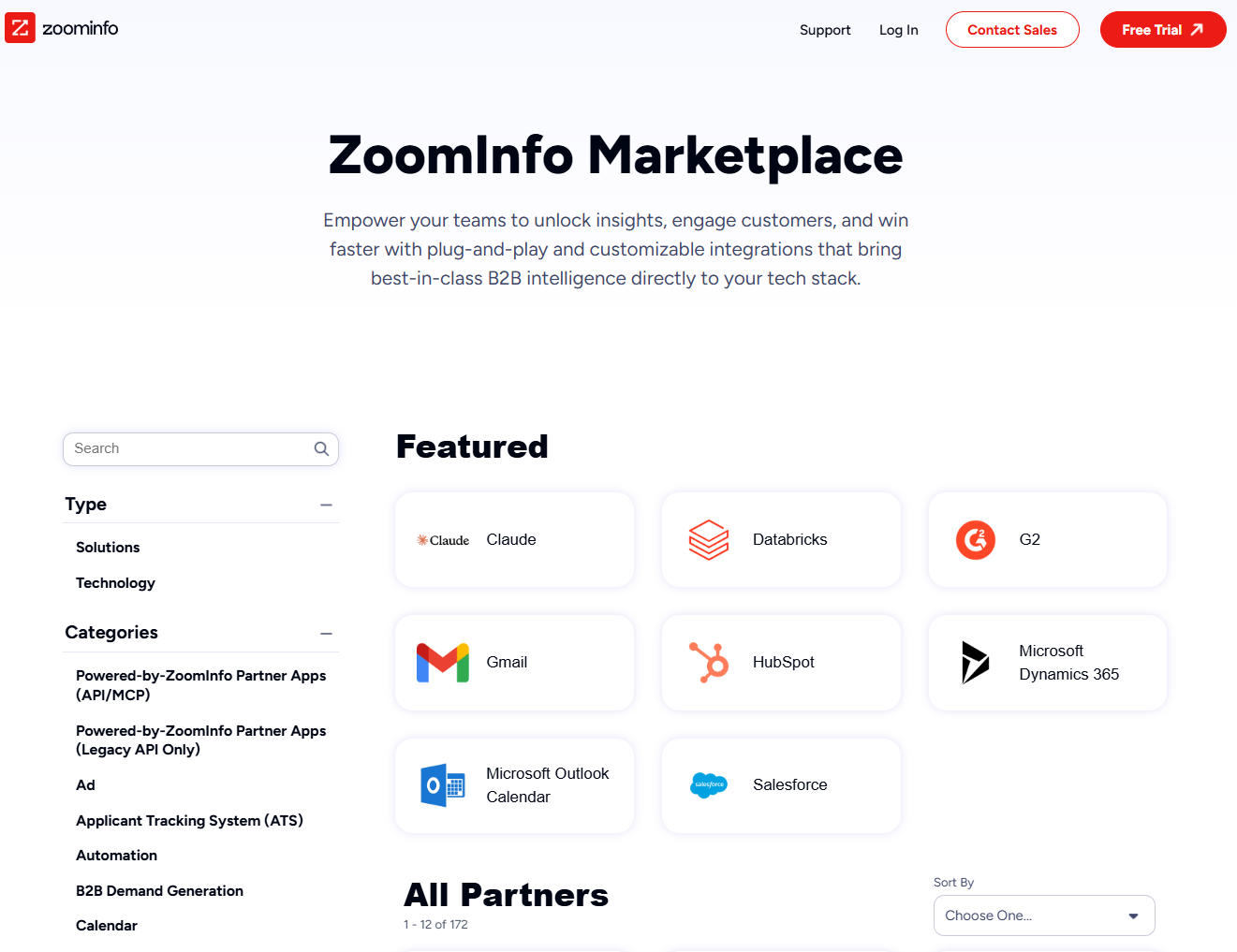
Source: ZoomInfo
ZoomInfo's Enterprise API and MCP server deliver the same B2B intelligence to any tool, including custom-built applications and AI agents.
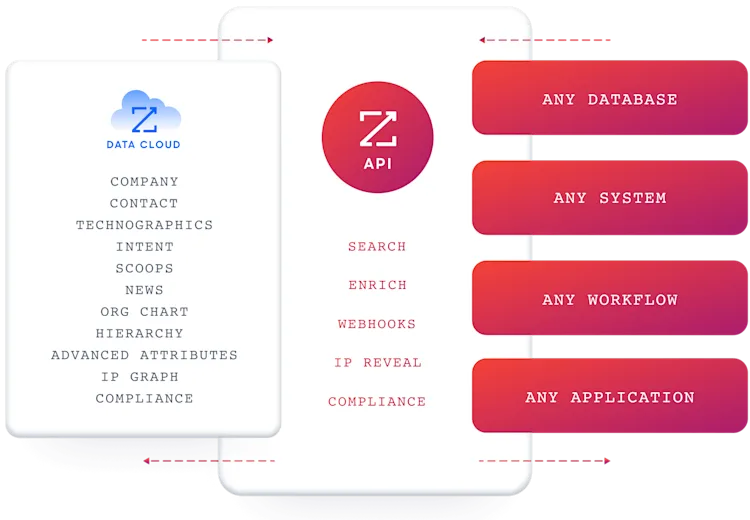
Source: ZoomInfo
The same data that powers ZoomInfo's own products is accessible in any workflow, regardless of which CRM you choose.
"The plug-and-play aspect of the API means I can integrate it into any process and get information at a moment's notice." (BDO Canada Case Study)
Reporting and analytics serve different analytical depths
Dynamics 365 works natively with Power BI, Excel, and Microsoft's analytics stack. Teams build dashboards and analyze operations without third-party BI tools.
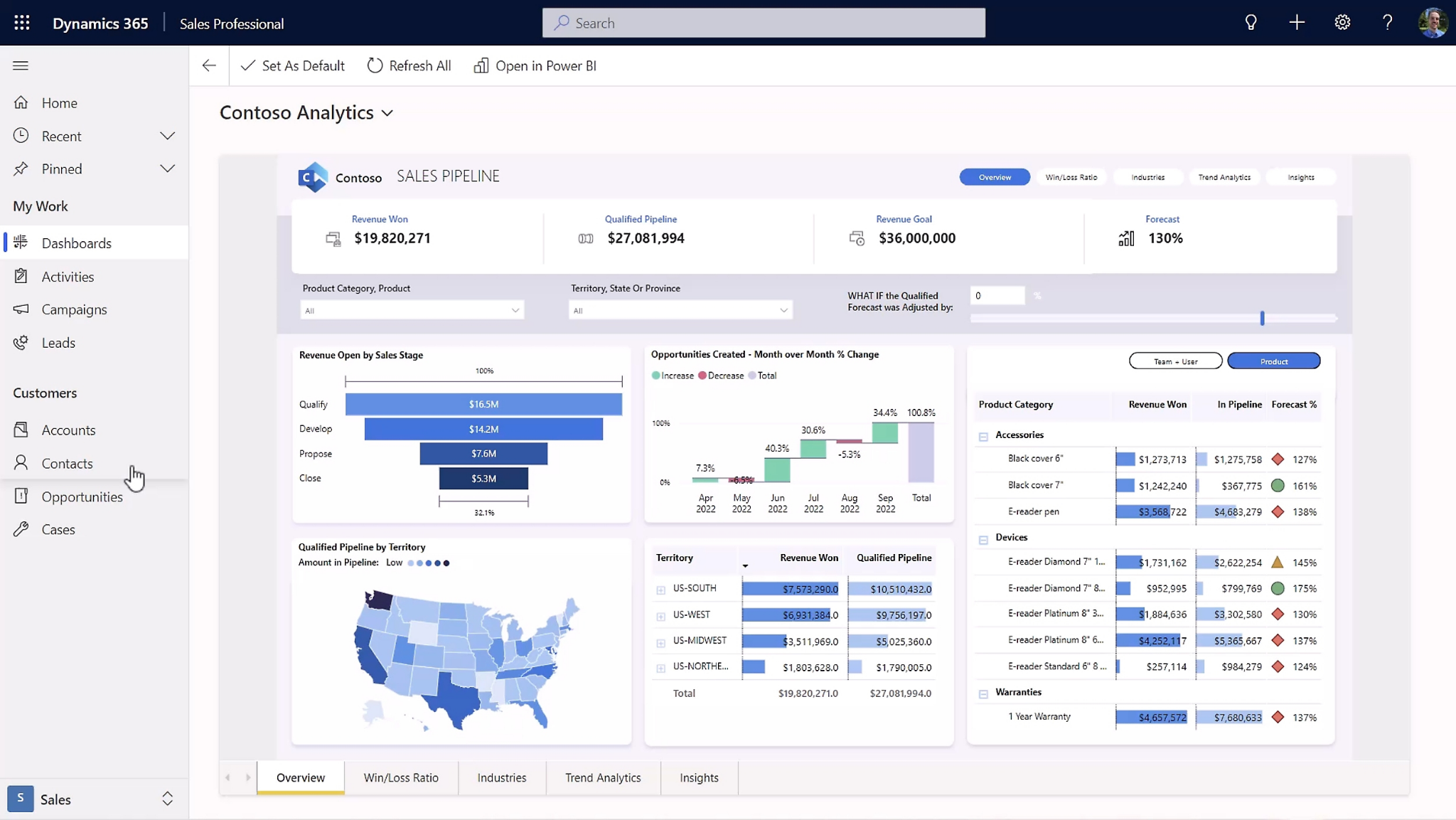
Source: Dynamics 365
G2 users highlight reporting as one of the platform's most consistent strengths. The depth is there but requires configuration expertise to unlock.
Zoho CRM includes over 40 standard reports, nine dashboard chart types, Cohort Analysis, Quadrant Analysis, and Zia-powered anomaly detection that flags deviations and prescribes corrective actions. The Zoho Analytics integration pulls data from 250+ sources for cross-functional BI.
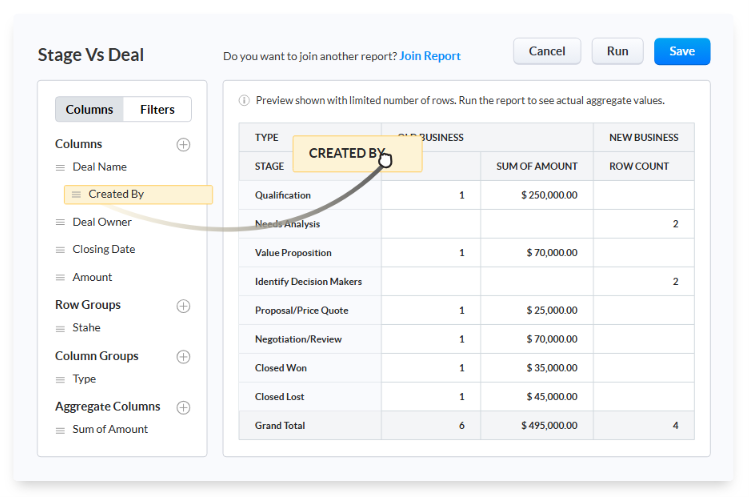
Source: Zoho CRM
For the price tier, the native analytics are strong, including visualization types (Sankey, treemap, waterfall) that most CRMs at this price point don't include.
ZoomInfo adds a dimension neither CRM's analytics can provide on its own: external intelligence. Intent signals showing which accounts are researching your category. Technographic data revealing competitive displacement opportunities. Org chart intelligence identifying multi-threaded selling paths.
Source: ZoomInfo
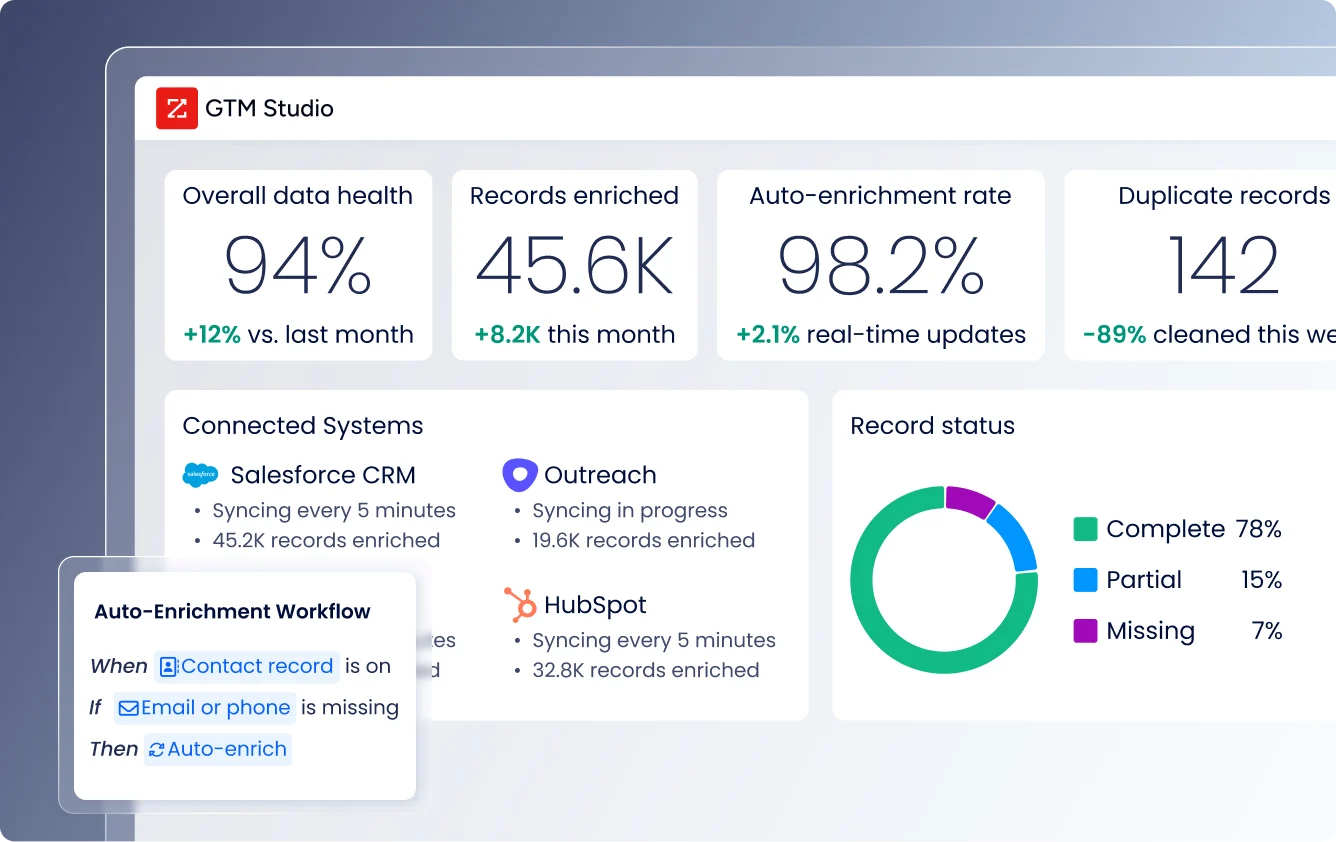
ZoomInfo's GTM Workspace surfaces dashboards tracking engagement, funnel progression, and top-performing segments, while GTM Studio provides analytics connecting marketing plays to pipeline impact. This external intelligence layer makes your CRM's internal reporting more meaningful.
Source: ZoomInfo
Scalability runs in different directions
Dynamics 365 scales vertically: from Business Central (SMB ERP starting at $80/user/month) through enterprise Sales, Finance, Supply Chain Management, Field Service, and Contact Center.
An organization can start with CRM and expand into full ERP without switching platforms. The shared Dataverse data layer means adding modules doesn't require rebuilding integrations.
For multinational enterprises needing CRM, ERP, field service, and contact center on one platform, no competing vendor matches this breadth under a single contract.
Zoho CRM scales horizontally: from the free plan (3 users) through Standard, Professional, Enterprise, and Ultimate.
The plan structure adds capabilities at each tier (Blueprint at Professional, territory management at Enterprise, custom ML at Ultimate) without forcing a platform migration. Module 360 handles 1.5 billion+ records in a single org and 50,000+ users.
Source: Zoho CRM
The broader Zoho ecosystem (60+ apps) allows expansion into adjacent functions. But Zoho's ERP capabilities, while growing with the January 2026 Zoho ERP launch, are younger and less proven than Microsoft's multi-decade ERP lineage.
ZoomInfo scales with the intelligence needs of your go-to-market organization. As your sales team grows, ZoomInfo's data ensures every new rep has access to verified contacts, buying signals, and account intelligence from day one.
Source: ZoomInfo
API access is included in all relevant plans, and the MCP server enables custom AI agents to consume ZoomInfo's intelligence programmatically, regardless of your CRM's scale or complexity.
Security and compliance for regulated buyers
All three platforms carry security certifications suited to enterprise buyers, though the breadth differs.
Dynamics 365 is covered under Microsoft's compliance portfolio with 90+ compliance offerings: ISO 27001, SOC 1/2/3, HIPAA, FedRAMP, PCI-DSS, GDPR, and DORA.
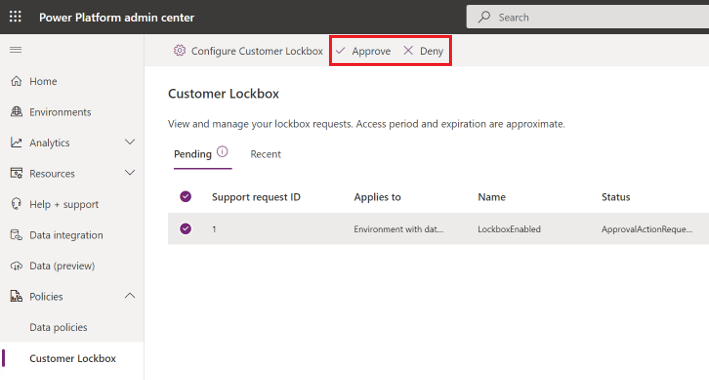
Customer Lockbox requires explicit customer approval before Microsoft engineers access data.
Source: Dynamics 365
Customer-managed encryption keys through Azure Key Vault give customers control over data encryption. For organizations in financial services, healthcare, or government, this compliance depth is difficult to match.
Zoho CRM holds key compliance certifications including ISO 27001, ISO 27701, ISO 27017, ISO 27018, SOC 2 Type 2, SOC 1 Type 2, and a SOC 2 + HIPAA Type 2 audit. Data centers span the US, EU, India, Japan, China, Australia, Canada, Saudi Arabia, and South Africa.
Zoho's bootstrapped, no-VC structure supports its privacy positioning: the company does not sell user data and runs its own data centers rather than relying on public cloud infrastructure. GDPR and HIPAA compliance features are built into the CRM.
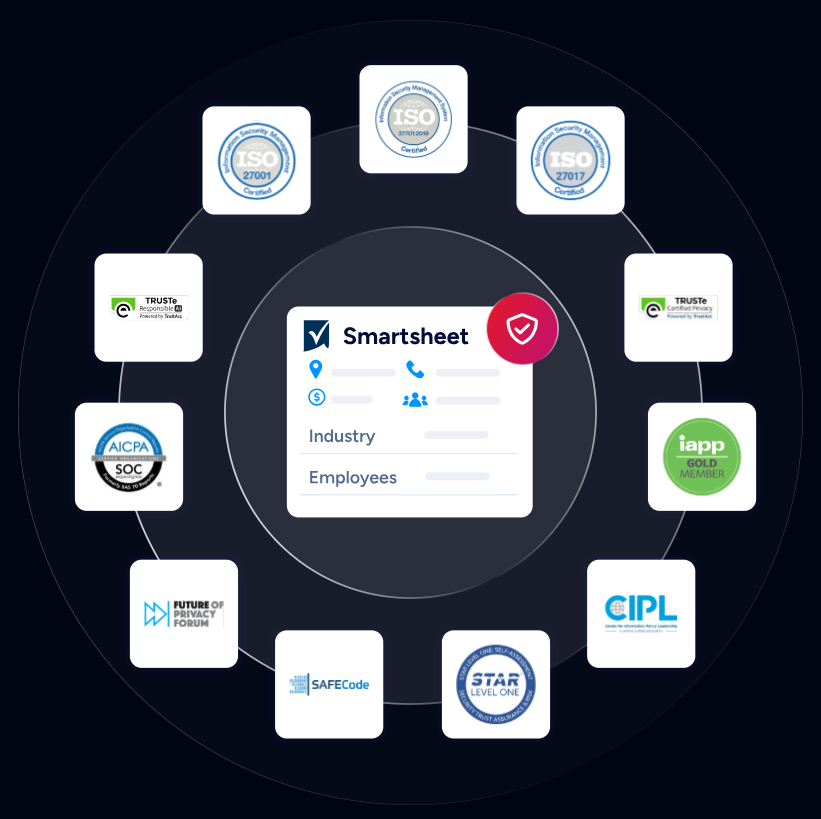
ZoomInfo maintains compliance certifications including ISO 27001, ISO 27701, SOC 2 Type II, TRUSTe GDPR and CCPA, renewed annually. ZoomInfo is a registered data broker in California and Vermont and operates a dedicated Trust Center.
Source: ZoomInfo
For enterprise buyers evaluating data vendors, this compliance infrastructure is built into the data layer itself.
Dynamics 365 vs. Zoho CRM vs. ZoomInfo: Which should you choose?
The decision depends on where your organization sits today and where it's headed.
Choose Dynamics 365 if:
You already run Microsoft 365, Teams, and Outlook across your organization
You need both CRM and ERP under one platform and one data model
Your budget accommodates enterprise licensing and implementation costs
You have (or plan to hire) dedicated admins or an implementation partner
Multi-entity, multi-currency, multi-language operations are core requirements
Choose Zoho CRM if:
You want strong CRM features at a fraction of the enterprise price
Month-to-month contracts and transparent pricing matter to your procurement process
Your team can handle CRM configuration without a dedicated implementation partner
You value having 60+ integrated business apps available in one ecosystem
You need a CRM that works today, not six months after a consulting engagement
Add ZoomInfo to either if:
Your sales team needs accurate, verified B2B contact data to fill the CRM
You want buying signals that reveal which accounts are actively in-market
Your AI investments are underperforming because the underlying data is incomplete
You need your CRM to be an intelligence platform, not just a record-keeping system
You want one data foundation that works across any CRM, any tool, any AI agent
See ZoomInfo in action with a free trial
A CRM without good data is an expensive filing cabinet. A CRM with verified contacts, buying signals, and contextual intelligence becomes a system that helps your team sell. Whether you choose Dynamics 365 for its Microsoft ecosystem depth or Zoho CRM for its value and flexibility, ZoomInfo provides the data foundation that makes either platform deliver on its potential.
Dynamics 365 vs. Zoho CRM vs. ZoomInfo FAQ
What is the core difference between Dynamics 365 and Zoho CRM?
Dynamics 365 is a combined CRM and ERP suite built for organizations on the Microsoft stack, offering native integration with Teams, Outlook, and Power BI, plus back-office modules for finance, supply chain, and field service.
Zoho CRM is a standalone CRM with a broader ecosystem of 60+ integrated Zoho business apps, designed for businesses that want sales automation, AI, and customization at a fraction of the cost.
Which platform is more affordable?
Zoho CRM is significantly cheaper. Paid plans start at roughly $14/user/month billed annually, with a free plan for up to 3 users.
Dynamics 365 Sales starts at $65/user/month for the Professional tier and $105/user/month for Enterprise.
Beyond licensing, Dynamics 365 implementations commonly cost $250,000 to $2 million when including consulting, customization, and data migration, while Zoho CRM implementations are typically handled by the buying organization itself.
How does ZoomInfo work with Dynamics 365 and Zoho CRM?
ZoomInfo integrates with both platforms to enrich CRM records with verified B2B contact data, company attributes, org charts, and technographics.
Beyond enrichment, ZoomInfo's GTM Context Graph layers buying signals, intent data, and conversation intelligence on top of your CRM data. ZoomInfo serves as the data and intelligence foundation that makes either CRM more effective, not as a replacement for either platform.
Which platform has better AI features?
Both platforms are investing heavily in AI. Dynamics 365 offers Copilot and autonomous agents backed by Azure OpenAI, with native access to Teams and Outlook data. Zoho CRM offers Zia with seven pre-built agents, an in-house LLM, and natural language CRM configuration.
Dynamics 365 AI has deeper context but costs more and is gated to higher tiers. Zoho CRM AI is more accessible at lower price points but has less ambient data to draw from.
ZoomInfo adds an external intelligence layer to both, ensuring AI operates on verified B2B data rather than stale CRM records.
Which CRM is better for a company already using Microsoft 365?
Dynamics 365 has a clear advantage for Microsoft-stack organizations. Sales reps access CRM data inside Teams meetings and Outlook emails without switching applications. Power BI dashboards connect natively. The shared Dataverse data layer links sales to finance and operations. No competing CRM matches this integration depth within the Microsoft ecosystem.
Which platform is easier to implement and get started with?
Zoho CRM is easier to implement. Most teams are productive within days to weeks, handling configuration themselves using no-code tools like Canvas and Blueprint.
Dynamics 365 implementations typically take 4-6 months for Sales and 6-12 months for ERP modules, and most deployments require a certified Microsoft implementation partner. This difference in time-to-value is one of the most practical factors in the decision.
Can I use ZoomInfo without switching my CRM?
Yes. ZoomInfo integrates with Dynamics 365, Zoho CRM, Salesforce, HubSpot, and 120+ other tools through its App Marketplace, Enterprise API, and MCP server. It works as an intelligence layer with your existing CRM, not as a replacement.
Teams can access ZoomInfo data through its own GTM Workspace and GTM Studio interfaces, or consume the same data inside their CRM through native integrations.
Which platform is best for a growing mid-market company?
Zoho CRM is the strongest fit for most growing mid-market companies. Its plan structure scales from free through Ultimate without platform migration, month-to-month contracts avoid lock-in, and the Zoho ecosystem covers adjacent needs like accounting, helpdesk, and project management.
Dynamics 365 becomes compelling when the company outgrows standalone CRM and needs integrated ERP capabilities, or when it is committed to the Microsoft stack. Adding ZoomInfo to either platform ensures the sales team has accurate data and buying signals regardless of company size.
