

Enlyft occupies a specific niche in the B2B account intelligence market. Built around proprietary technographic data covering 20,000+ technologies and a company graph spanning 36 million companies, the platform helps go-to-market teams decide which accounts to pursue, when to pursue them, and why.
It is strongest in the Microsoft partner ecosystem, where it powers CloudAscent, a propensity scoring program used across Microsoft's global channel.
To write this Enlyft review, we analyzed the platform in detail. We believe it's a good fit if:
You sell into the Microsoft partner ecosystem and need CloudAscent integration
Technographic data is your primary criterion for identifying target accounts
You need custom propensity-to-buy models trained on your own CRM data
You're targeting ISVs, MSPs, or technology companies
Vendor-to-channel data sharing is a core use case
However, Enlyft might not be the best choice if:
You need the largest possible B2B contact and company database
Conversation intelligence and deal-level context matter to your sales process
You want AI seller workflows and marketing orchestration in one platform
You require broad integration coverage across your full GTM stack
You need access through APIs, MCP, and native AI agent capabilities
In this case, consider ZoomInfo: an AI GTM platform built on B2B data covering 500M contacts, 100M companies, and 135M+ verified phone numbers, with a GTM Context Graph that combines your CRM records, conversation transcripts, and behavioral signals into a single intelligence layer.
That intelligence reaches sellers through GTM Workspace, marketers and RevOps through GTM Studio, or any third-party tool through APIs and MCP.
We've included a detailed look at ZoomInfo later in this review for teams that need account intelligence as part of a complete GTM system. If you're ready to explore what that looks like, you can start with a free trial.
What is Enlyft?
Enlyft (formerly iDataLabs) is an account intelligence platform founded by Lokesh Dave, who spent over a decade at Microsoft working on Windows Update before building his first startup.
Frustrated by the limits of traditional company profile databases when defining his ideal prospect, Dave realized the model he was building manually (combining fit, intent, and technology attributes) was itself the product. The company launched originally as iDataLabs before rebranding to Enlyft.
Today, Enlyft calls itself a Predictive Selling platform organized around three motions: Identify, Prioritize, and Engage. It serves go-to-market teams selling to companies with more than 25 employees, with a focus on technology companies, ISVs, and Microsoft channel partners. The company is headquartered in Kirkland, Washington and holds SOC 2 Type 2 certification.

Source: Enlyft
Enlyft's customers include Microsoft, CDW, Pax8, PwC, SHI, Dell, Crayon, Intuit, Capgemini, and Chargebee. Microsoft is the most prominent reference, having used Enlyft across multiple business units with reported results: doubled sales win-rates, a 30% lift in opportunity value, and 5x to 9x growth in marketing qualified leads.
Enlyft Pros & Cons
Pros | Cons |
|---|---|
- Technographic data covering 20,000+ technologies | - Key features like propensity models gated to Enterprise tier |
- Custom propensity-to-buy models trained on your CRM data | - Smaller contact database than leading competitors |
- CloudAscent integration for Microsoft partner ecosystem | - No published pricing (requires contacting sales) |
- Specialized partner ecosystem activation tools | - Limited native integration ecosystem |
- Specialized ISV and MSP databases | - No conversation intelligence capability |
- G2 recognition for user adoption and momentum | - Credit-based model may escalate costs at scale |
- Active product development cadence | - All subscription fees nonrefundable |
Enlyft Review: How it Works & Key Features
Account Fit & Propensity Modeling: Enlyft separates market scope from fit quality to score every account in your addressable market.
Enlyft's account intelligence starts with a distinction most platforms skip: separating your Total Addressable Market (TAM) from your Ideal Customer Profile (ICP).
The TAM defines hard boundaries (which countries, industries, and company sizes can become customers), while the ICP applies weighted scoring within those boundaries to rank accounts by how closely they resemble your best existing customers.
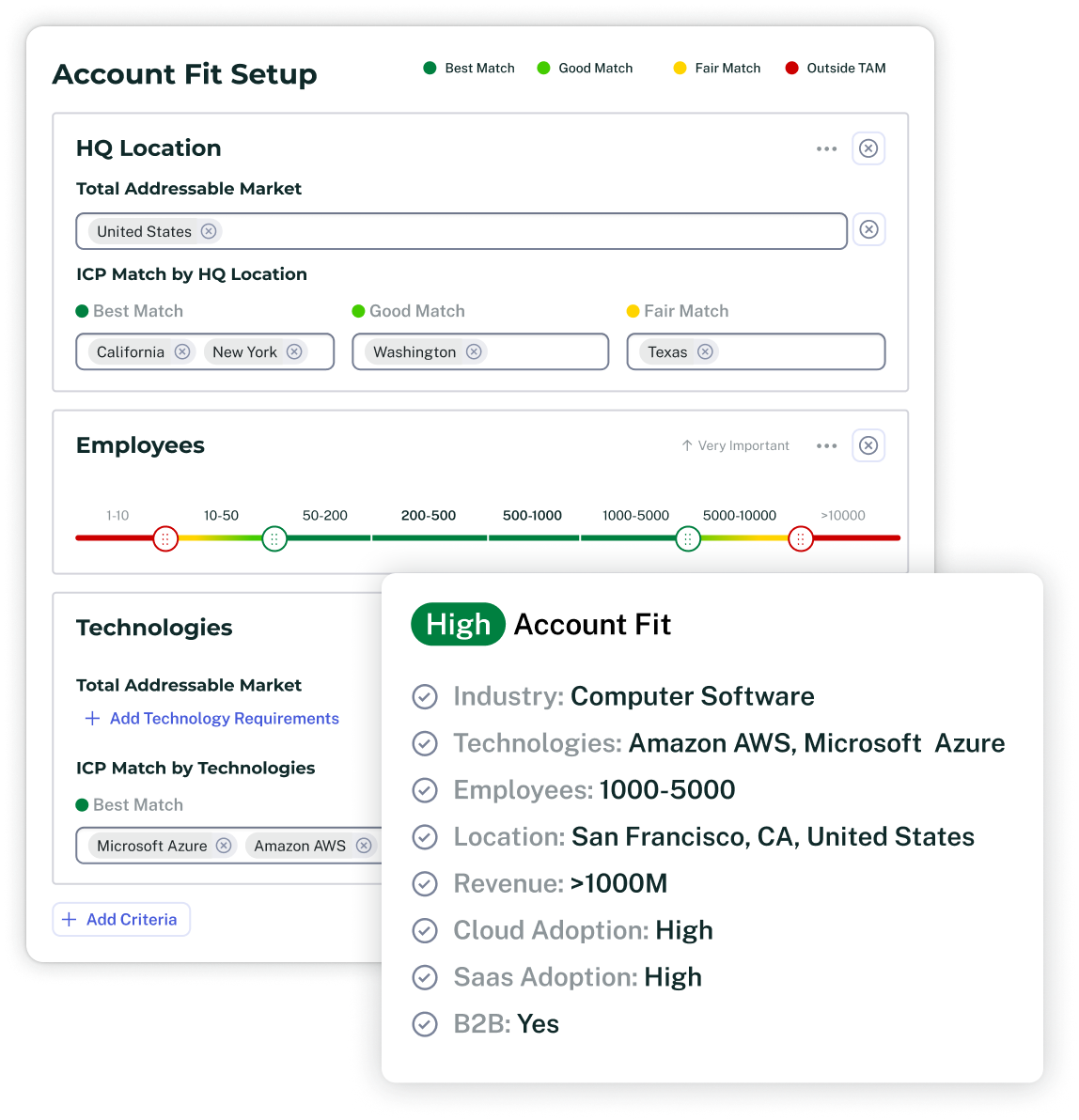
You set this up in the Account Fit setup interface. For numeric properties like revenue or headcount, a four-handle slider defines both the outer TAM boundary and the inner ICP range.
Source: Enlyft
For categorical properties like industry or technology stack, you specify which values qualify as Best Match, Good Match, or Fair Match. Each criterion carries a configurable importance weight, so attributes more predictive of conversion rank higher.
Every account in the TAM receives an Account Fit Score bucketed as High, Medium, Low, or Outside TAM. A distribution chart shows in real time how the configuration partitions accounts across tiers, with adjustable thresholds for tuning.
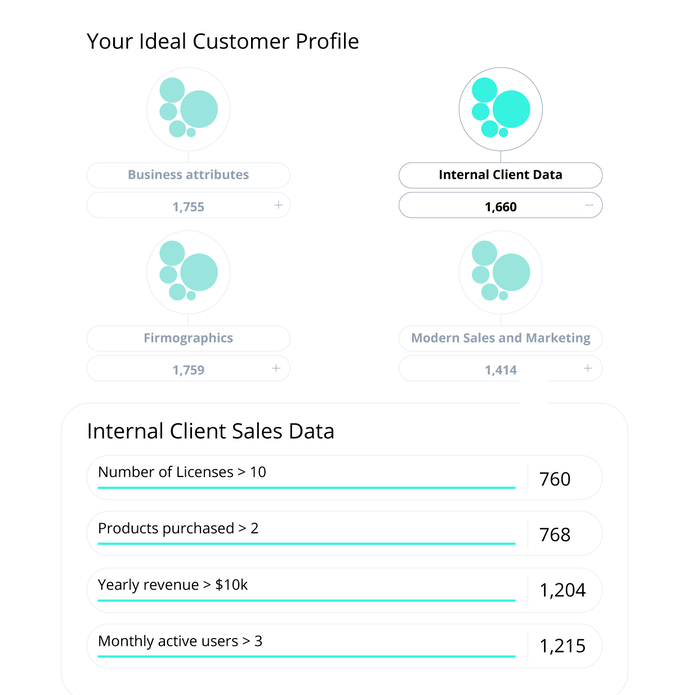
Beyond rule-based scoring, Enlyft's Propensity Models layer machine learning predictions on top. These models combine Enlyft's proprietary data with a customer's own sales history to predict likelihood to buy across Whitespace, Cross-Sell, and Next Logical Purchase motions.
Source: Enlyft
One notable design choice: technology usage is treated as a first-class ICP criterion, not a supplementary filter. You can define a specific CRM, cloud platform, or development stack as a scoring attribute with its own importance weight, as documented in the setup interface. For teams selling technology products, this ties the scoring directly to purchasing patterns.
The Account Fit product page claims TAM definition and ICP configuration can be completed in hours rather than the weeks or months typical of traditional approaches.
Data Intelligence: Enlyft combines proprietary technographics with firmographics, intent signals, and AI-generated attributes.
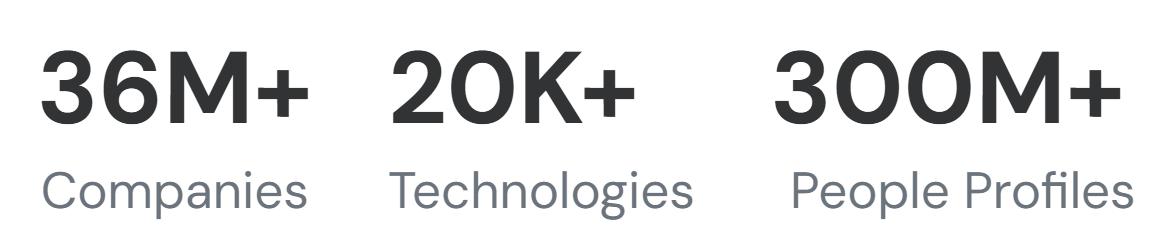
Enlyft's data covers 36M+ companies, 20,000+ technologies, and 300M+ people profiles, delivered as 500+ account attributes from hundreds of data sources updated daily.
Source: Enlyft
The data flows through a six-stage collection process: web crawling of billions of public documents, third-party data partnerships, proprietary AI models for validation and classification, community contributions, manual review by researchers, and continuous model improvement.
Technographics are the standout. Enlyft tracks 20,000+ technologies organized into products, vendors, and categories. Users can filter by any of those three dimensions. A public Technology Targeting directory lets prospective buyers see exactly which technologies Enlyft tracks before signing a contract.
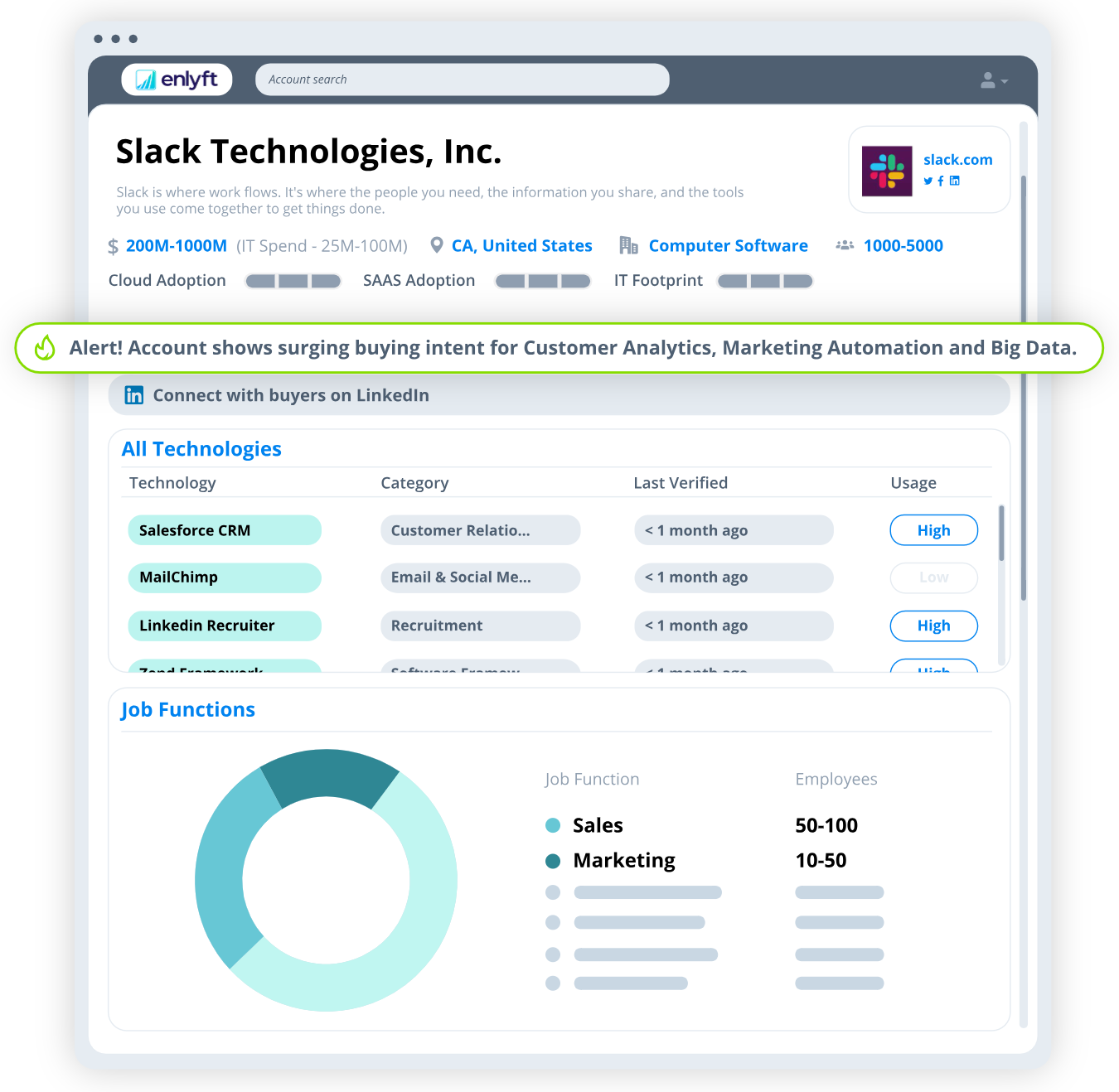
Buyer intent data comes through a partnership with Bombora Company Surge, which monitors content consumption patterns across a cooperative network of B2B websites. Enlyft uses AI to pre-select relevant intent topics from 7,000+ available topics, reducing setup work for teams new to intent data.
Source: Enlyft
The Spring 2025 release introduced AI Datapoints, which let users define up to three custom data point questions and receive structured answers synthesized from Enlyft's data on each company. A user could ask about AI Disruption Risk or Security Posture, and the system generates answers from 10-K filings and proprietary signals. Results can be previewed against up to five accounts before saving.
Additional data dimensions include IT Spend estimation from proprietary algorithms, Cloud Adoption and SaaS Adoption scores calibrated against peer companies, and Employees by Job Function for targeting by functional team size.
Buyer Personas, Buying Signals & GenAI Engage: Enlyft connects account intelligence to contacts, timing, and personalized outreach.
Enlyft addresses three layers of the prospecting problem in sequence: finding the right people, identifying the right moment, and crafting the right message.
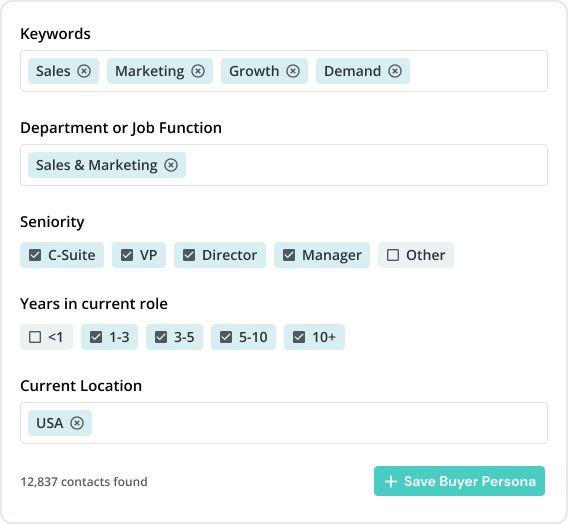
Buyer Personas let teams define which job titles, seniority levels, and functional roles represent decision-makers within target accounts, then surface matching contacts from a database of 300M+ people profiles, 25M direct dials, and 45M business emails.
Source: Enlyft
Contact quality is managed through a two-tier email confidence system: verified emails carry a high-confidence flag, while inferred emails (derived from company-level patterns) are validated in real time for deliverability before being saved. Contacts can be exported to CRM in one click or found on LinkedIn through Enlyft's browser extension.
Enlyft Buying Signals is a proprietary dataset compiled from billions of signals each week across news, events, hiring, jobs, and more.
Each account receives a Buying Signals score based on signal type, magnitude, and recency over a rolling 12-month window, with a plain-language summary explaining the score. Enlyft says this data is compiled in-house rather than licensed from shared third-party intent networks.
GenAI Engage generates personalized outreach using Enlyft insights, ICP fit data, and Buying Signal context. A related feature, Intelligent Snapshots, produces an ICP-tuned account brief for any of 30M companies, giving reps context before outreach.
The Spring 2025 release also introduced Visitor Tracking, which identifies which companies visit your website and overlays ICP fit and Buying Signals scores. The Visitor Tracking Dashboard segments visiting companies by TAM membership and Account Fit tier, with real-time Slack notifications for high-value visitors.
Partner Activation: Enlyft offers specialized tools for vendor-to-channel intelligence sharing.
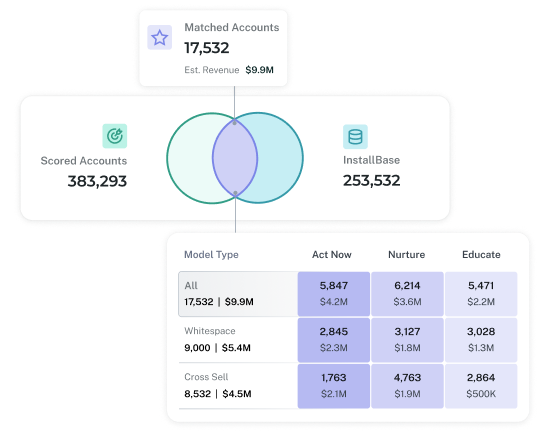
Enlyft's most distinctive capability is Intelligent Partner Activation, which it calls "the only AI-native account intelligence and mapping platform designed for partner ecosystems." This solves a problem most B2B data tools ignore: coordinating account targeting across vendors, distributors, and resellers working from disconnected datasets.
Source: Enlyft
The system combines vendor-provided first-party data, second-party partner data, and market signals from Enlyft's Company Graph into ranked account lists with propensity scores, buying signals, and whitespace mapping. Vendors and partners can exchange first-party data through secure infrastructure without either party surrendering raw data ownership.
The most prominent deployment is CloudAscent for Microsoft Partners, a propensity scoring program built and run by Enlyft for Microsoft's global partner ecosystem. Models cover Azure, Microsoft 365, Dynamics, and Surface.
Enlyft maintains specialized databases for targeting specific technology segments: 300,000+ ISVs with 500+ attributes each, 200,000+ MSPs categorized by service area and vendor relationship, and a Growth Index that scores future growth trajectory.
Pricing: Enlyft uses a credit-based model with two editions and no published prices.
Enlyft's pricing page outlines two tiers but lists no dollar amounts. You must contact sales for actual pricing.
Business Edition starts at 20,000 annual credits and 20 user licenses. It includes account firmographics (30M+ companies), technographics (18,000+ technologies), buyer personas (300M+ contacts), Enlyft AI Core Models, standard Account Fit and Buying Signals, up to 3 Solution Pivots, Intelligent Snapshots, AI Outreach, CRM integrations, and basic API access.
Enterprise Edition adds custom propensity-to-buy models, custom Account Fit and Buying Signals configurations, enhanced API access, custom file format exports, Opportunity Analysis, an enhanced Customer Success Manager, and Data as a Service as an add-on. All Enterprise terms are negotiated via Order Form.
Key commercial details from the Terms of Service: subscriptions auto-renew unless either party provides written notice at least 30 days before the term ends. All subscription fees are nonrefundable, and cancellation takes effect at the end of the current term. New features "may require payment of additional fees."

Source: Enlyft
A free browser extension provides limited prospecting without a credit card. No formal free trial for the full platform is publicly documented.
Where Enlyft Falls Short
Enlyft delivers value for its target market. But several limitations surface when teams need capabilities beyond technographic-driven account intelligence.
Data Scale Relative to the Market: Enlyft covers 36M+ companies and 300M+ people profiles with 25M direct dials and 45M business emails. For teams selling into the technology sector, this may suffice. But for organizations targeting broader markets or needing wider contact coverage, the database is smaller than platforms maintaining 500M+ contacts and 100M+ companies with 135M+ verified phone numbers.
Enterprise Gating on Critical Features: Propensity to Buy models, custom file formats, enhanced API access, Opportunity Analysis, and Data as a Service are all Enterprise-only. The Business Edition provides standard AI Core models but excludes the custom propensity models that represent much of Enlyft's value.
Teams that need scoring sophistication but can't justify an Enterprise contract face a gap between what the platform can do and what their tier allows.
No Conversation Intelligence: Enlyft captures external signals (news, hiring, technology changes) but cannot analyze what happens inside your sales conversations.
It can tell you an account is likely to buy, but it cannot capture why a deal accelerated after the CFO joined a call, why a champion went quiet, or what competitive mentions in discovery calls predict about deal outcomes. The intelligence flows one direction: outside-in signals without inside-out context.
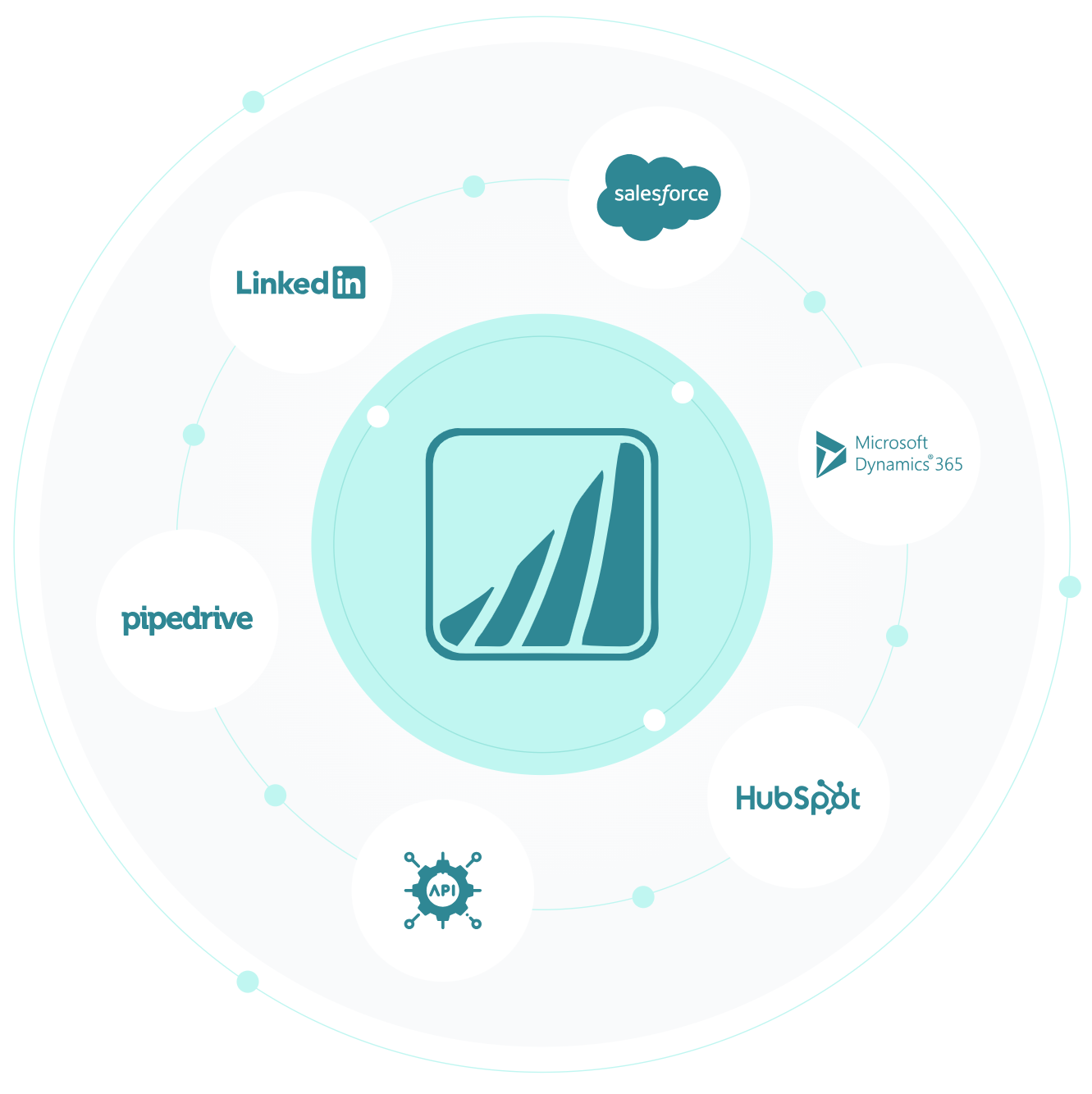
Narrow Integration Ecosystem: Documented native integrations include Salesforce, Microsoft Dynamics 365, HubSpot, Pipedrive, LinkedIn Ads, Marketo, and Outreach. This covers major platforms but misses tools like Clay, Apollo, Salesloft, and Gong that have become standard in modern sales stacks. Teams with complex GTM toolchains may find themselves relying on manual exports or workarounds.
Source: Enlyft
No Marketing Execution Layer: Enlyft generates account intelligence but includes no campaign execution tools. There is no native advertising platform, no form optimization, no multi-channel orchestration. Marketing teams using Enlyft still need separate tools to act on the intelligence it provides.
Opacity on Pricing and Methodology: Enlyft publishes no pricing, which creates friction for self-service evaluation. Its data collection methodology is also not documented publicly in detail, a gap that breeds buyer skepticism when evaluating against providers who publish their methods.
These limitations reflect Enlyft's design as a focused account intelligence platform rather than a full GTM system. For teams whose needs stay within that focus (particularly in the Microsoft channel), the platform works well. But for organizations that need intelligence, execution, and context in one system, a broader platform may fit better.
Top Enlyft Alternative for Complete GTM Intelligence: ZoomInfo
ZoomInfo addresses Enlyft's scope limitations with an AI GTM platform built on three pillars: B2B data, a GTM Context Graph that turns data into intelligence, and access that delivers that intelligence to any tool, team, or workflow.
Data Scale and Quality: ZoomInfo operates the largest B2B data platform in the industry.
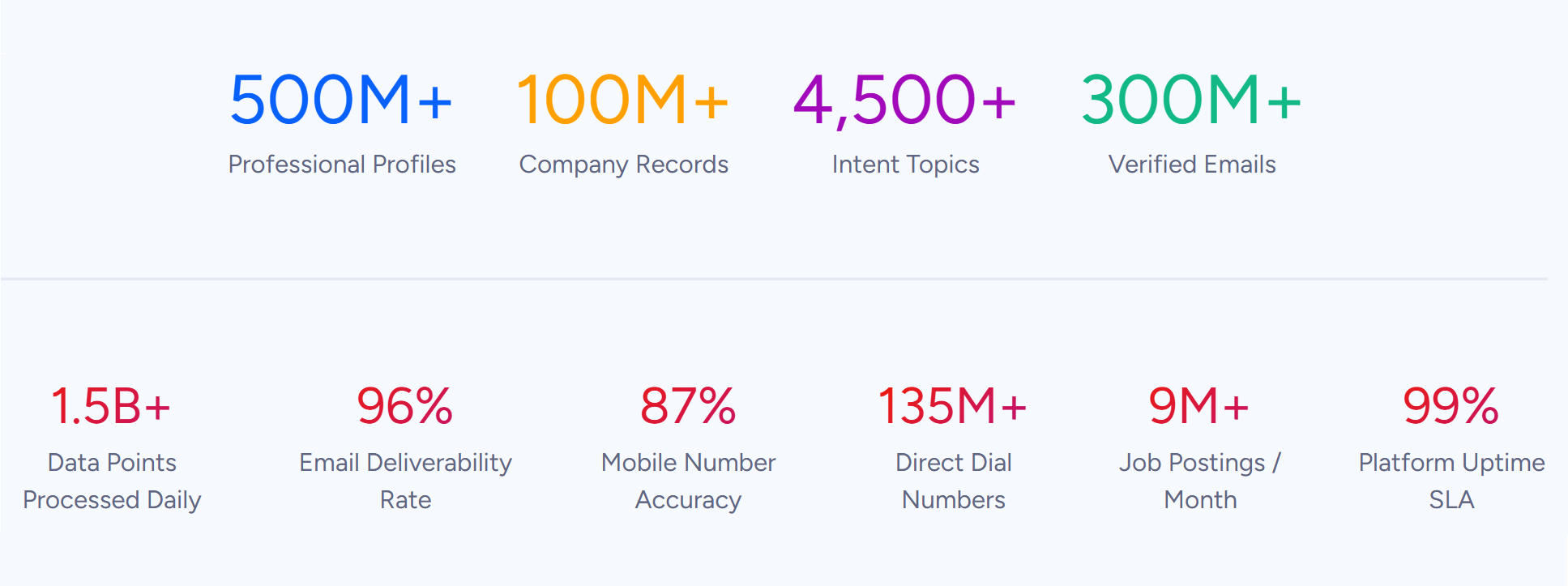
Where Enlyft covers 36M+ companies and 300M+ people profiles, ZoomInfo maintains 500M contacts, 100M companies, 135M+ verified phone numbers, 120M direct-dial phone numbers, and 200M+ verified business email addresses. Global coverage includes 34M+ company profiles outside North America, 200M+ professional profiles outside NA, and 45M+ mobile numbers outside NA.
Source: ZoomInfo
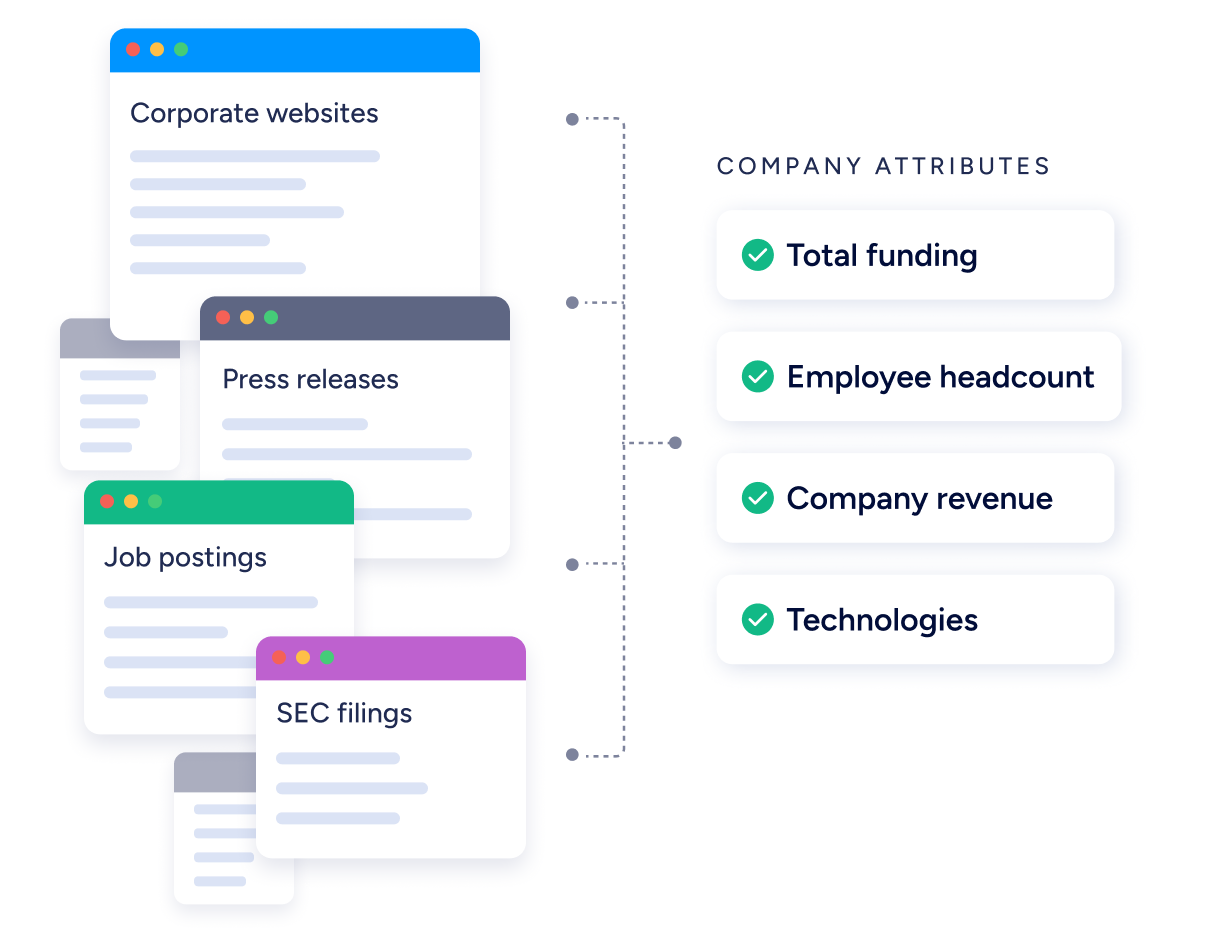
This data flows through a multi-source verification pipeline: automated ML scanning of 28 million site domains daily, third-party partner data covering 95 million businesses, a community of 200,000+ ZoomInfo Lite users who share data back, and an in-house Data Training Lab of 300+ human researchers. First-party data reaches up to 95% accuracy.
Source: ZoomInfo
The data advantage holds up to outside scrutiny. In a Fortune 500 competitive RFP analyzing 25 million contacts across vendors, the independent consultant concluded that "no other competitor came even close." ZoomInfo has been named a Leader in the Forrester Wave for Intent Data Providers B2B (Q1 2025) and a Leader in the Gartner Magic Quadrant for ABM Platforms for two consecutive years.
Technographics cover 30,000+ technologies across 200+ categories for 30+ million companies, with nearly 90% of active pairings updated within three months. Intent data tracks signals from 210 million IP-to-Organization pairings and 6 trillion+ new keyword-to-device pairings sourced monthly.
Guided Intent, exclusive to ZoomInfo, identifies topics historically correlated with deal success rather than requiring manual topic selection.

Source: ZoomInfo
"ZoomInfo gives us the information we need to execute. We don't have to go through and spend our time digging. It's already there, so we can be three steps ahead." (Vensure)
GTM Context Graph: ZoomInfo fuses first-party and third-party data into an intelligence layer that captures why deals move.
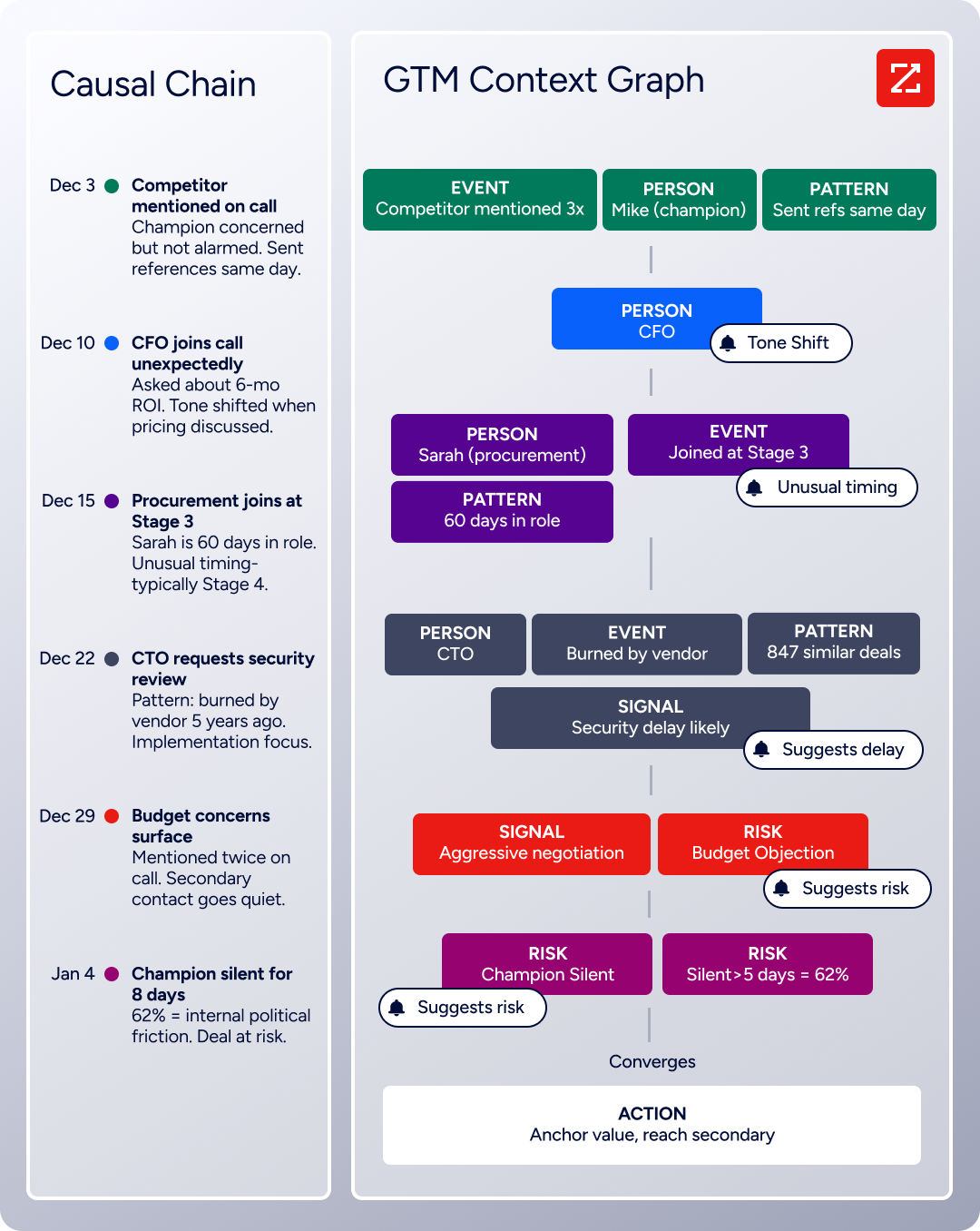
Enlyft delivers outside-in signals: technographic changes, buying intent, company events. ZoomInfo's GTM Context Graph adds the inside-out dimension by combining ZoomInfo's B2B data with a customer's own CRM records, conversation intelligence from Chorus, email interactions, and behavioral signals. The result processes 1.5B+ data points daily and captures not just what happened in a deal, but why.
Source: ZoomInfo
A CRM records that a deal moved to Stage 4. Chorus captures that the CFO joined the last call and asked about six-month ROI. The GTM Context Graph connects these signals: executive sponsorship entering at this stage, combined with ROI-focused questions, matches the pattern behind closed-won deals in your segment. That reasoning flows into every downstream action.
The follow-up email addresses the specific concern raised. The next GTM play targets accounts with similar signal combinations. The forecast weights deals by buying evidence rather than stage labels.
This is the capability Enlyft cannot provide. Without conversation intelligence and first-party data unification, Enlyft's intelligence remains one-directional: it describes accounts from the outside but cannot reason about what is happening inside your deals.
Seismic attributed 39% of active pipeline to opportunities identified or influenced by ZoomInfo signals, with 54% productivity gains. "That combination of our internal CRM data, external signals, and AI that's given all that context has helped us craft very specific account- and persona-based messages. And people have responded to them right away." (Seismic)
GTM Workspace and GTM Studio: ZoomInfo provides dedicated interfaces for sellers, marketers, and RevOps.
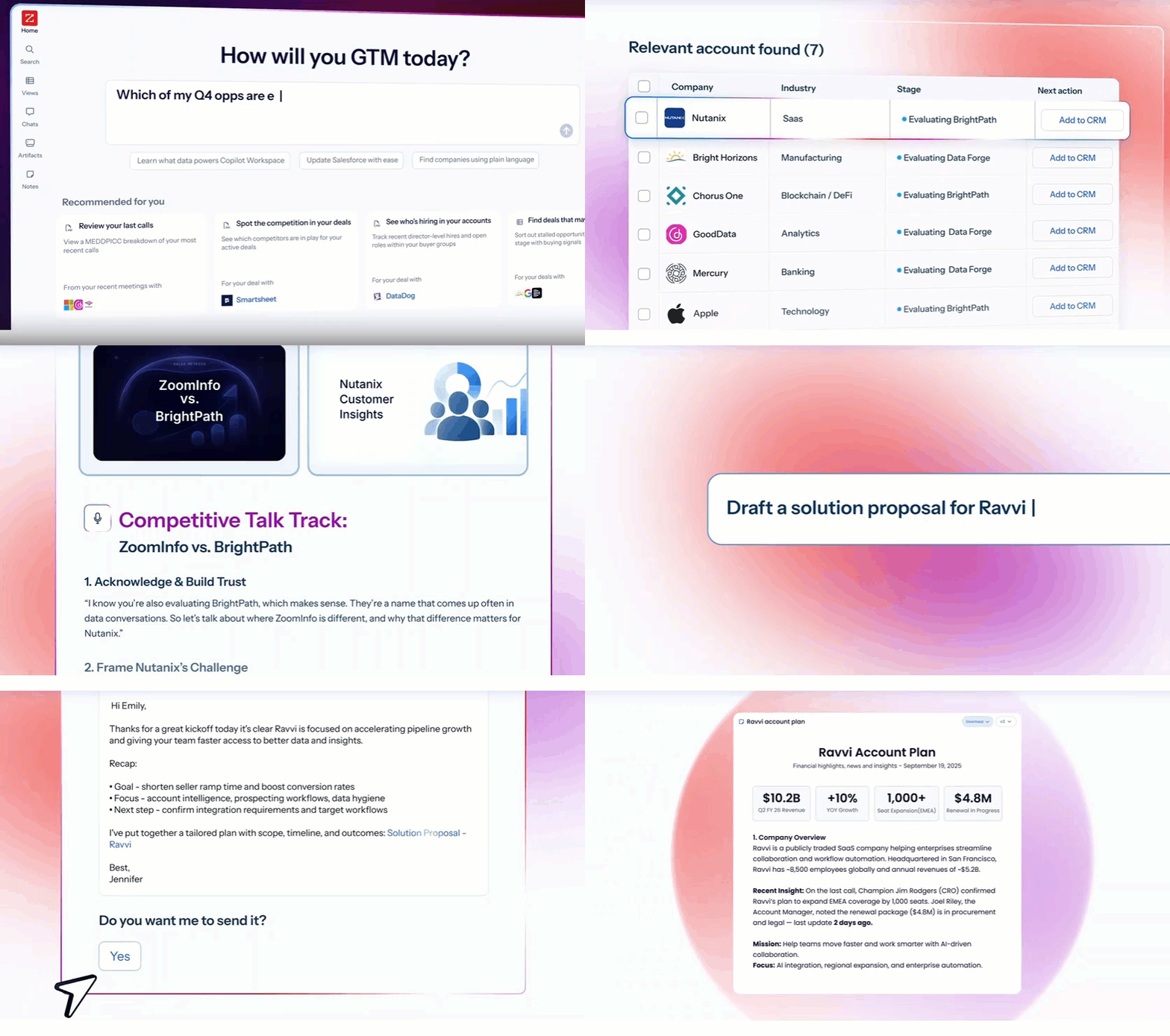
ZoomInfo’s GTM Workspace gives sellers a single interface where prioritized accounts, AI-drafted outreach, and deal execution converge. Built on Anthropic's Claude, its AI agents research accounts, generate follow-ups, monitor signals, draft outreach, and update CRM fields.
Source: ZoomInfo
An Action Feed streams in-market buyers matched to target criteria with pre-drafted actions on every signal. An AI Assistant produces one-click account briefs pulling CRM history, company news, and stakeholder context into a 10-second summary.
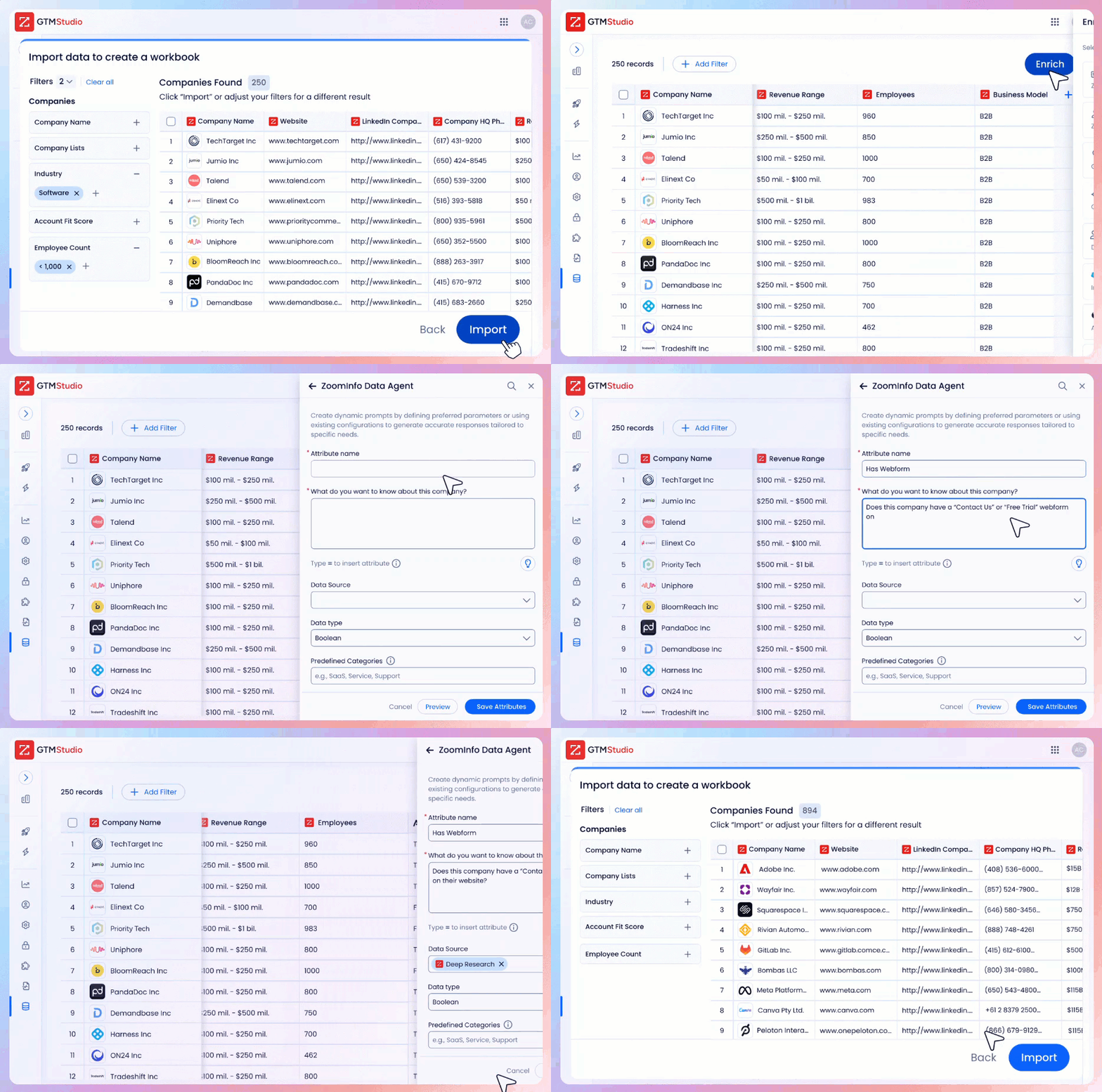
GTM Studio serves marketers, RevOps, and GTM engineers with a canvas for designing, enriching, and activating GTM plays. Teams describe audiences in natural language, launch multi-channel plays (email, calls, ads, direct mail), and measure pipeline impact in real time, all without engineering support. Expansion plays that used to take 3 weeks now launch in 30 minutes.
Source: ZoomInfo
Where Enlyft generates intelligence that teams must act on in separate tools, ZoomInfo connects intelligence to execution in the same platform. Workspace delivers intelligence to sellers. Studio delivers it to the teams designing the plays those sellers run.
Spekit saw opportunities at higher-scoring accounts 43% more likely to turn into qualified pipeline, moving 58% faster through qualification. "Anything that minimizes our team's need to switch contexts is beneficial. ZoomInfo offers a single view, eliminating the need to navigate between systems." (Spekit)
Universal Access: ZoomInfo's intelligence works in any tool through APIs and MCP.
Enlyft offers basic API access on its Business Edition and enhanced API on Enterprise, with native integrations covering a handful of platforms. ZoomInfo takes a broader approach.
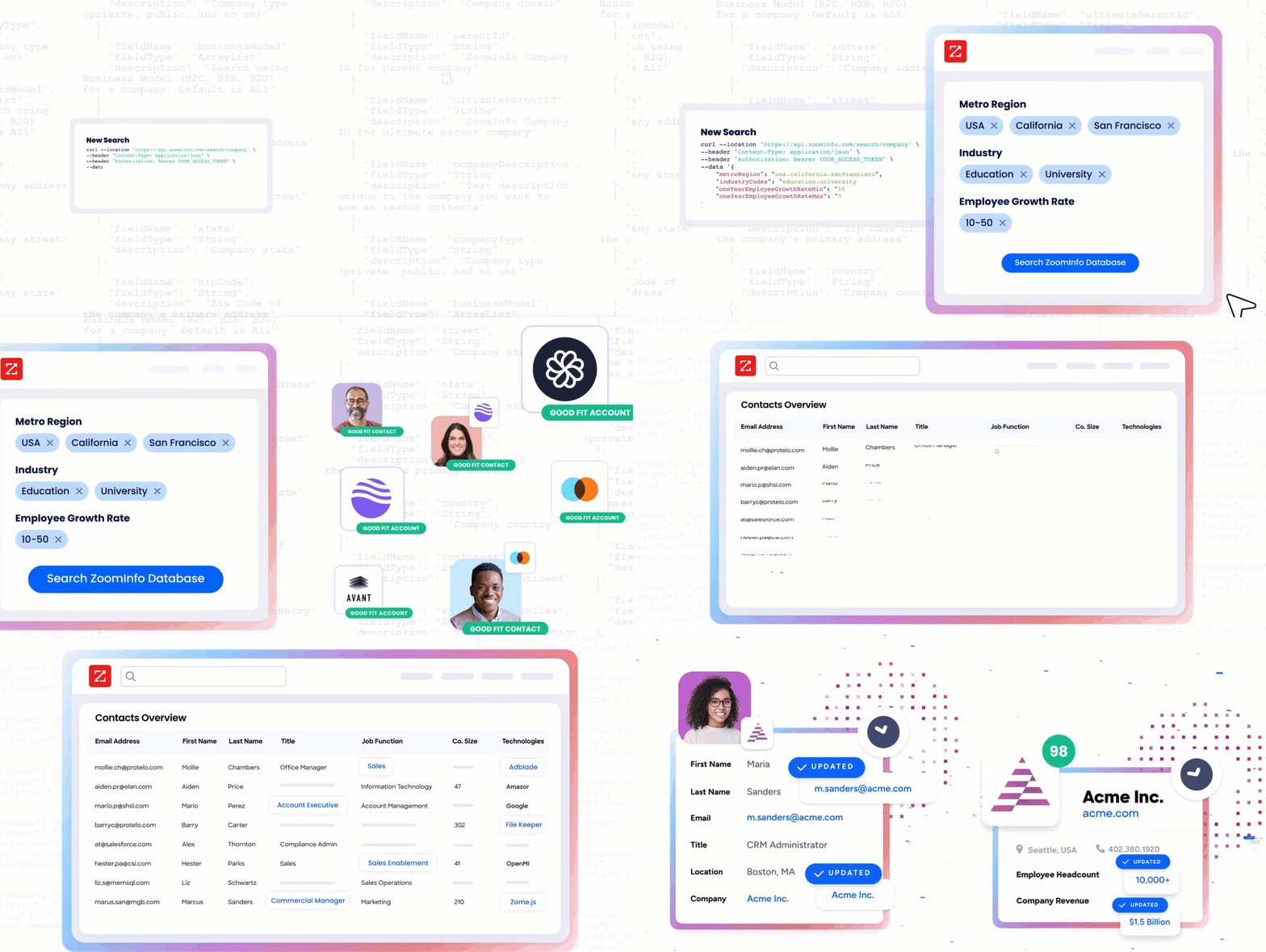
Enterprise APIs expose search, enrichment, AI intelligence (account summaries, lookalike companies, contact recommendations), audience management, and engagement data through documented endpoints at docs.zoominfo.com.
Source: ZoomInfo
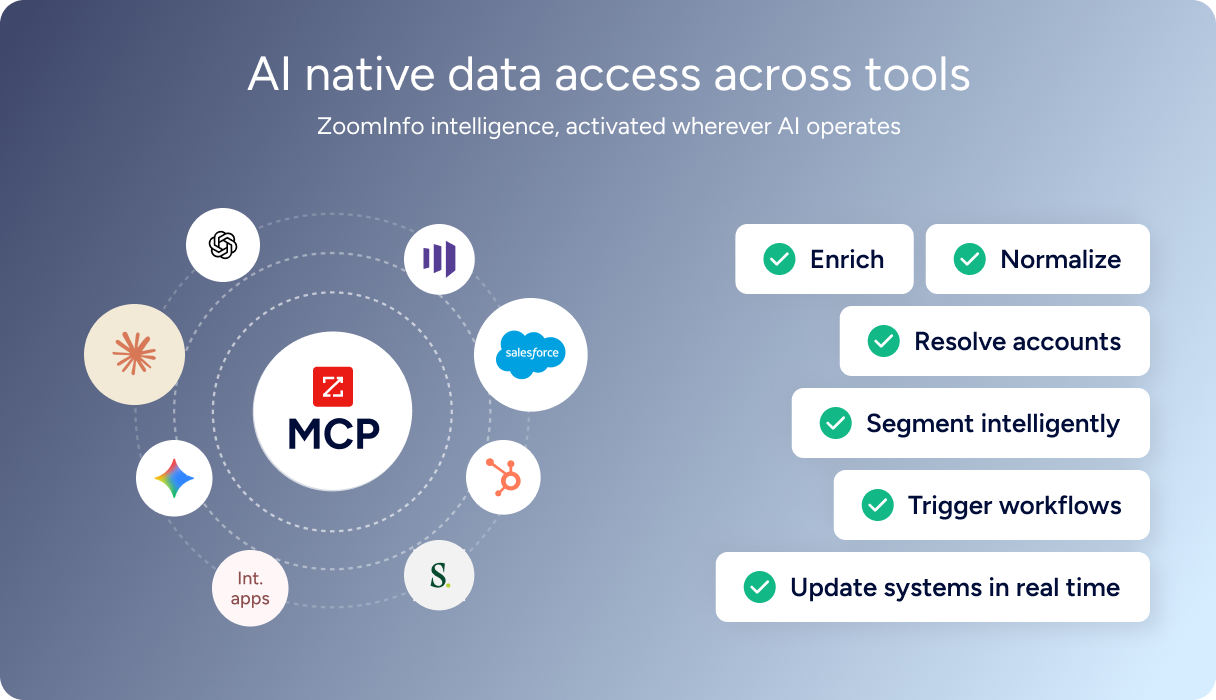
The ZoomInfo MCP server connects AI models directly to ZoomInfo's B2B data as a native tool, with no custom coding required. MCP is listed in the Claude directory and currently supports Claude and ChatGPT.
Source: ZoomInfo
API Access has been added to all relevant plans, and the App Marketplace lists 120 partner integrations across CRM, Marketing Automation, Sales Engagement, Revenue Intelligence, Data Warehouse, and more. The same data and GTM Context Graph powering ZoomInfo's own products is available in any custom agent, internal tool, or partner platform.
BDO Canada activated ZoomInfo data directly within internal systems, cutting time spent on data dashboard updates by 87%. "The plug-and-play aspect of the API means I can integrate it very easily into any process and get information at a moment's notice." (BDO Canada)
Enlyft or ZoomInfo: Comparison Summary
Enlyft | ZoomInfo | |
|---|---|---|
Primary focus | Account intelligence and technographic data | AI GTM platform |
Company database | 36M+ companies | 100M companies |
Contact database | 300M+ people profiles, 25M direct dials, 45M emails | 500M contacts, 135M+ verified phone numbers, 200M+ verified emails |
Technologies tracked | 20,000+ | 30,000+ across 200+ categories |
Intent data | Bombora partnership + proprietary Buying Signals | Proprietary intent (210M IP-to-Org pairings, 6T+ keyword signals/month) + Guided Intent |
Conversation intelligence | Not available | Chorus (recording, transcription, AI analysis) |
GTM Context Graph | Not available | First-party + third-party data combined into single intelligence layer |
Seller interface | Browser extension + platform | GTM Workspace with AI agents |
Marketing orchestration | Not available | GTM Studio + native DSP + FormComplete |
Partner ecosystem activation | Specialized (CloudAscent, data escrow) | Not a primary focus |
API and MCP access | Basic (Business), Enhanced (Enterprise) | All relevant plans + MCP server |
Native integrations | ~10 platforms | 120+ partner integrations |
Analyst recognition | G2 High Performer, Momentum Leader | Gartner MQ Leader, Forrester Wave Leader, G2 133 No. 1 rankings |
Free access | Browser extension only | ZoomInfo Lite (permanent free) + 7-day trial |
Published pricing | No | No (consumption-based pricing) |
Best for | Microsoft channel, tech companies, partner ecosystems | Full GTM operations across sales, marketing, and RevOps |
Final Verdict
The choice between Enlyft and ZoomInfo depends on whether you need focused account intelligence or a complete GTM platform.
Choose Enlyft if you operate within the Microsoft partner ecosystem and need CloudAscent integration, or if technographic data is the primary lens through which you identify and prioritize accounts.
Enlyft's partner activation capabilities, specialized ISV and MSP databases, and custom propensity models make it a strong fit for technology companies that sell through indirect channels and need to coordinate account targeting across vendor-partner relationships.
Its focused design means less complexity for teams that don't need marketing automation, conversation intelligence, or multi-channel execution.
Choose ZoomInfo if you need account intelligence as part of a broader GTM system that unifies data, context, and execution.
With B2B data covering 500M+ contacts and 100M companies, a GTM Context Graph that reasons across your CRM, conversations, and market signals, and access through GTM Workspace, GTM Studio, and APIs/MCP, ZoomInfo provides intelligence and execution that grow with your team.
For organizations that have outgrown point solutions and need their data, insights, and actions working together in one system, ZoomInfo is built for that scale.
Get started with ZoomInfo here.
Enlyft has built a genuine specialty in technographic-driven account intelligence and partner ecosystem activation. ZoomInfo has built a broader platform that includes those capabilities and extends into conversation intelligence, AI seller workflows, marketing orchestration, and open data access. Your choice depends on how much of the GTM problem you want one platform to solve.
Enlyft FAQ
What is Enlyft used for?
Enlyft is an account intelligence platform that helps B2B go-to-market teams identify, prioritize, and engage target accounts using technographic data, firmographics, buying signals, and AI propensity models. It is particularly strong for technology companies selling into the Microsoft partner ecosystem, ISVs, and MSPs.
ZoomInfo covers these account intelligence use cases and extends into conversation intelligence, marketing orchestration, and AI seller workflows within a single platform.
How much does Enlyft cost?
Enlyft does not publish pricing. The platform offers two editions: Business (starting at 20,000 annual credits and 20 user licenses) and Enterprise (custom-negotiated). All subscription fees are nonrefundable, and contracts auto-renew unless notice is given at least 30 days before the term ends.
ZoomInfo uses consumption-based pricing and offers ZoomInfo Lite as a permanent free tier and a separate 7-day free trial for evaluating the full platform.
Does Enlyft have a free plan?
Enlyft offers a free browser extension for limited prospecting, but no free plan or documented trial for the full platform. ZoomInfo provides ZoomInfo Lite, a permanent free tier with access to its B2B database, 10 monthly export credits, the ReachOut Chrome Extension, WebSights Lite, and HubSpot integration, plus a separate 7-day free trial of paid features.
How does Enlyft's technographic data compare to ZoomInfo's?
Enlyft tracks over 20,000 technologies across 36 million companies and was originally built as a technographic-first database. ZoomInfo tracks over 30,000 technologies across 200+ categories for 30+ million companies, with nearly 90% of active pairings updated within three months.
Both platforms treat technographics as a core data dimension, but ZoomInfo embeds technographics within a broader data platform that also includes 500M contacts, 135M+ verified phone numbers, and intent data from 210 million IP-to-Organization pairings.
Does Enlyft include conversation intelligence?
No. Enlyft captures external signals like news, hiring activity, and technology changes, but does not record, transcribe, or analyze sales conversations. ZoomInfo includes Chorus, a conversation intelligence product that captures every customer call, meeting, and email, then feeds that context into the GTM Context Graph so AI can reason about why deals advance or stall.
What integrations does Enlyft support?
Enlyft integrates natively with Salesforce, Microsoft Dynamics 365, HubSpot, Pipedrive, LinkedIn Ads, Marketo, Outreach, and Slack. API access is available at a basic level on the Business Edition and enhanced on Enterprise.
ZoomInfo's App Marketplace lists 120+ partner integrations, and its MCP server connects AI models directly to ZoomInfo's data in any MCP-compatible tool, with API access included in all relevant plans.
Who is Enlyft best suited for?
Enlyft is best suited for B2B technology vendors, Microsoft channel partners, and companies that sell to ISVs or MSPs where technographic data is the primary signal for identifying target accounts. Teams that need partner ecosystem activation with secure data sharing will find Enlyft's capabilities distinctive.
For organizations that need broader GTM capabilities spanning sales execution, marketing orchestration, conversation intelligence, and open data access, ZoomInfo provides a more complete platform.
What is Enlyft's CloudAscent?
CloudAscent is a Microsoft-commissioned propensity scoring program built and managed by Enlyft for Microsoft's global partner ecosystem. It predicts which accounts are most likely to purchase Microsoft Azure, Microsoft 365, Dynamics, or Surface.
Microsoft partners access CloudAscent recommendations through Microsoft Partner Center. This is a distinctive capability with no direct equivalent in most competing platforms.
Researching Enlyft? These comparisons and alternatives help you decide:
