
Propensity occupies a specific niche in B2B marketing: account-based marketing that tracks engagement at the individual contact level, not just the account. For small growth teams tired of enterprise ABM platforms that take months to deploy and six figures to license, Propensity offers a faster path into contact-level campaigns across display, geofencing, contextual ads, and more.
To write this Propensity review, we analyzed it extensively. We believe it's the right choice if:
You're a small B2B growth team focused on ABM campaign execution
You want contact-level attribution rather than account-level reporting
You need to launch omnichannel campaigns quickly without a large ops team
You value a hands-on customer success relationship over self-service tooling
You want geofencing and contextual targeting alongside traditional ABM
Your team runs on Salesforce or HubSpot
However, Propensity might not be the best choice if:
You need a B2B data platform for prospecting, enrichment, and sales intelligence beyond ABM
You want conversation intelligence, sales automation, and operations tools unified with your marketing
You require CRM support beyond Salesforce and HubSpot
You need an AI intelligence layer that reasons across your deals, not just your campaigns
You want API and MCP access to power custom AI agents and third-party workflows
In this case, consider ZoomInfo: an AI GTM platform built on 500M contacts, 100M companies, 135M+ verified phone numbers, 120M direct-dial phone numbers, and 200M+ verified business emails. Its GTM Context Graph processes 1.5B+ data points daily, unifying this data with your CRM records, conversation transcripts, and behavioral signals to reveal not just what's happening in your pipeline, but why. Where Propensity focuses on ABM campaign execution for small teams, ZoomInfo provides the full go-to-market infrastructure (data, intelligence, sales, marketing, and operations) that growing B2B organizations need as they scale beyond campaign-only tools.
We've included a detailed look at ZoomInfo later in this Propensity review, as the natural next step for teams ready to unify their GTM stack. If you're ready to explore the platform, you can start with ZoomInfo's free trial.
What is Propensity?
Propensity is a contact-level marketing platform for B2B growth teams, founded in 2017 in Exeter, New Hampshire by husband-and-wife team Sumner and Carla Vanderhoof. The company operates as Addapptation Inc. dba Propensity, having pivoted from its origins as a Salesforce consultancy toward intent-based account marketing.
The platform bundles five products: Account-Based Marketing, Geofencing, Contextual Targeting, Website Visitor De-Anonymization, and Data Enrichment. Campaigns run across 20+ advertising channels including LinkedIn, Facebook, Display, Native, Direct Mail, Email, Reddit, TikTok, and CTV.
The company's central pitch: traditional ABM platforms report at the account level, telling you a company is in-market but not which person is engaging. Propensity closes that gap by tracking engagement down to the individual contact level, capturing ad clicks, site visits, and content interactions tied to specific people rather than company domains.
In November 2025, Propensity was named a Challenger in the 2025 Gartner Magic Quadrant for Account-Based Marketing Platforms, its first appearance in the report. The company also earned a spot on the 2025 Inc. 5000 list and received a G2 Momentum Leader badge. The platform is SOC 2, GDPR, and ISO 27001 certified and serves customers including Microsoft, AWS, Papaya Global, and Digital Science.
Propensity positions itself against enterprise ABM platforms like Demandbase, 6sense, and Terminus, competing on speed, simplicity, and cost for teams that don't need (or can't afford) an enterprise deployment.
Propensity Pros & Cons
Pros | Cons |
|---|---|
Contact-level attribution across the entire ABM funnel | Limited to Salesforce and HubSpot for native CRM integrations |
Campaign launch in under 30 minutes with pre-built playbooks | Contact data costs accrue separately per campaign |
20+ advertising channels in a single subscription | $2,000/month minimum makes it inaccessible for very small budgets |
Gartner MQ Challenger recognition validates positioning | Small G2 review base limits signal confidence |
Unlimited users with no per-seat fees | Campaign builder depth creates a learning curve for ABM newcomers |
Geofencing and contextual targeting included natively | No sales prospecting, conversation intelligence, or operations tools |
Hands-on customer success model | CRM integrations beyond Salesforce/HubSpot require API on $3K+ plans |
SOC 2, GDPR, and ISO 27001 certified | Feature releases can arrive with rough edges |
Propensity Review: How it Works & Key Features
Account-Based Marketing: Propensity's core product delivers contact-level attribution across omnichannel campaigns.
Propensity's ABM platform follows a five-stage workflow. First, users define their ICP using the Audience Builder, filtering by firmographics, role, technology stack, and intent signals. The platform surfaces accounts showing intent signals sourced from Bombora, with over 20 million signals added weekly in a GDPR-compliant manner.
Source: Propensity
Second, users launch campaigns using editable 30-, 60-, or 90-day playbooks across channels including LinkedIn, Meta, Google, YouTube, the Propensity Display Network, direct mail, email, and CTV. An AI Playbook Editor generates messaging and creative assets, and Propensity claims campaigns can launch in under 30 minutes.
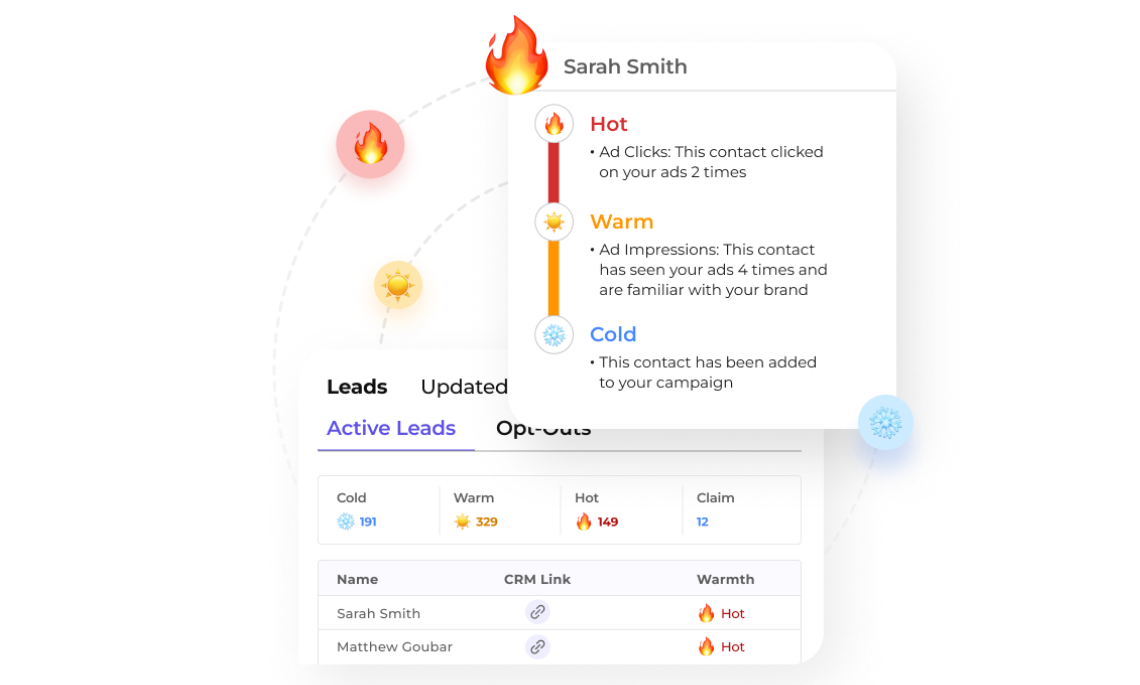
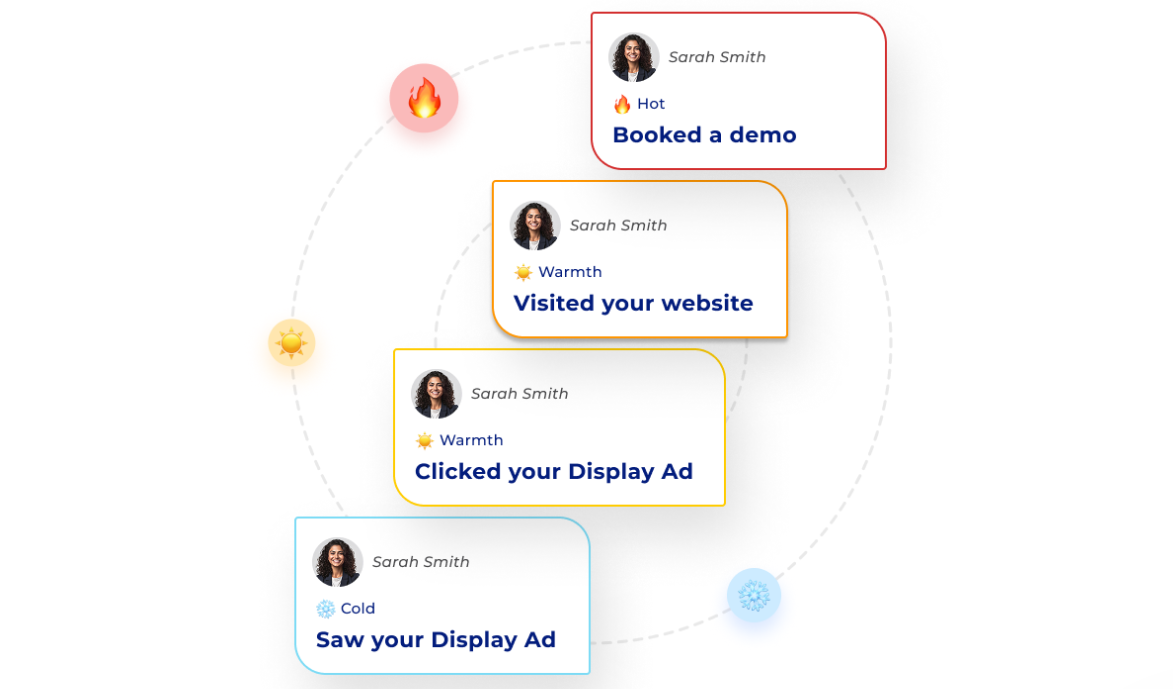
Third, the platform tracks engagement minute-by-minute at the contact level, capturing ad clicks, site visits, email opens, and content interactions. Contacts are scored as cold, warm, or hot using either Account-Centric or Contact-Centric models, with scores that reset after inactivity.
Source: Propensity
Fourth, when contacts reach qualification thresholds, enriched lead records (including email, phone, LinkedIn profile, and engagement history) sync into Salesforce or HubSpot. Auto-assignment rules route leads to reps and trigger real-time Slack and email alerts.
Finally, pre-built dashboards show pipeline influence, channel performance, ROI by campaign, and multi-touch attribution, all tied to individual contacts rather than accounts.
Propensity notes that the average buying circle contains 4 to 10 people and that contacts are double-verified for email and employment accuracy. An AI ABM Coach guides teams through campaign setup without requiring prior ABM expertise, and free tools include a Market Gap Analysis tool, Audience Builder, Asset Creator, and ABM Roadmap planner.
Geofencing: Location-based advertising that captures physical intent signals for B2B pipeline generation.
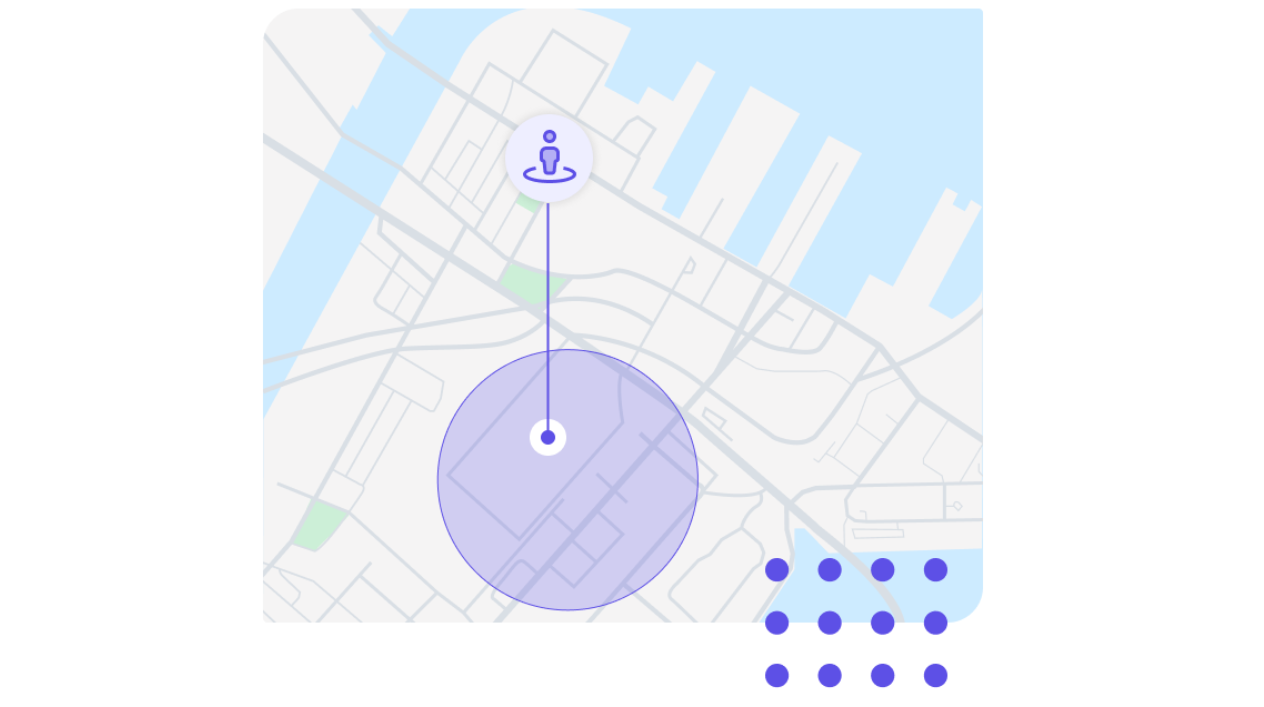
Propensity's Geofencing draws virtual perimeters around physical locations and delivers display, HTML5, or video ads to mobile users whose devices enter the radius. The platform uses GPS, Wi-Fi, or cellular signals to detect device presence and trigger ad delivery in real time.
Source: Propensity
The use case is clearest at events. Marketers draw geofences around conference venues, competitor campuses, airports, or industry hubs to reach attendees who might never scan a badge or fill out a form. Campaigns can deliver ads while users are inside the geofence or after they leave, extending the campaign window beyond the physical moment.
The feature becomes more useful when paired with Propensity's website tracker. When someone served a geofencing ad later visits the website, the tracker de-anonymizes that visit at the contact level, resolving the individual's name, role, and company. Those contacts flow into CRM and sales workflows automatically. Propensity documents six campaign templates for this: local market pipeline creation, event-based pipeline creation, industry hub targeting, account-based expansion, market entry, and sales-led prospecting waves.
What makes this distinct from standalone geofencing tools is that engagement resolves to named individuals, not just company domains. As Propensity frames it: "Purchasing decisions are made by individuals, not accounts." And unlike badge scans, geofencing captures physical presence regardless of whether attendees voluntarily interact.
Contextual Targeting: Ad placement based on page content, paired with contact-level de-anonymization.
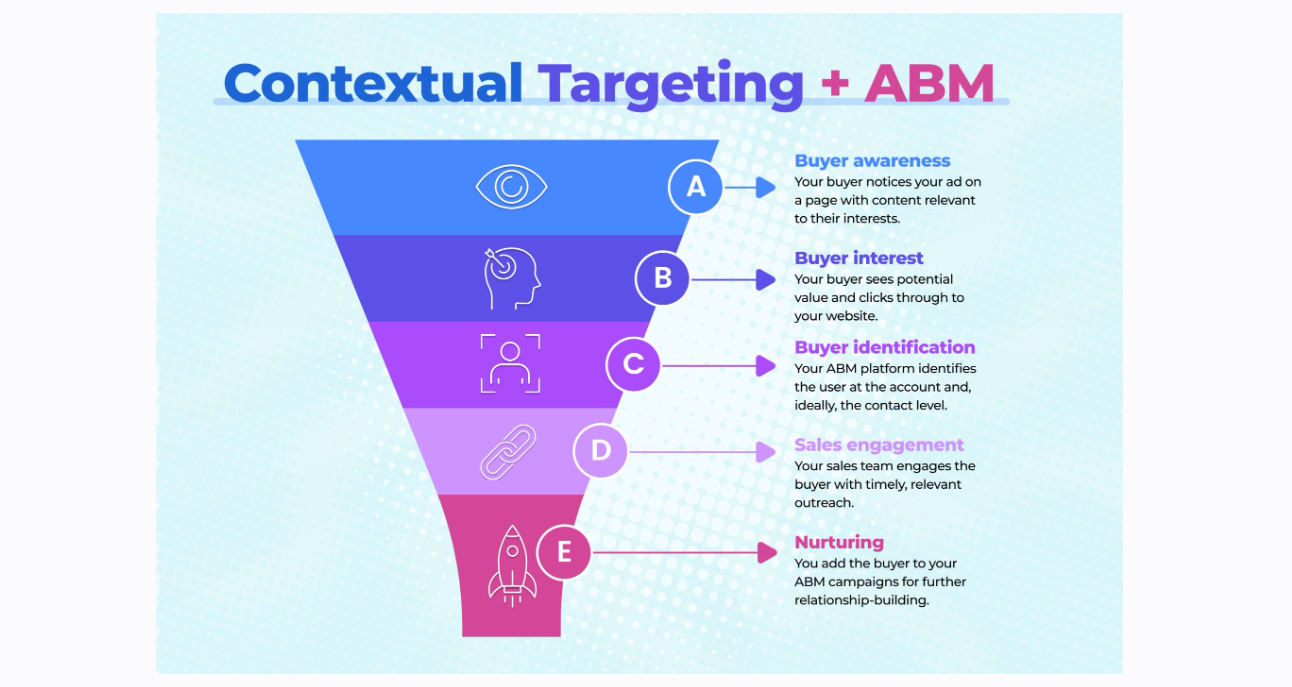
Contextual Targeting places display, HTML5, and video ads on webpages based on the meaning and content of those pages. Marketers define their targeting by specifying in-context (positive) and out-of-context (negative) keyword phrases. The ad engine analyzes page topics beyond simple keyword matching.
Source: Propensity
Before a campaign goes live, Propensity provides sample URL previews showing the types of webpages where ads may appear. Country-based validation prioritizes placements on pages accessed by users in selected geographies.
The feature's value comes from its connection to Propensity's de-anonymization layer. When someone clicks a contextual ad and visits the advertiser's site, contact-level tracking identifies who that visitor is. CRM sync routes the verified contacts and their engagement history into sales workflows. This turns what would otherwise be an awareness play into a lead generation mechanism.
Source: Propensity
Because contextual targeting does not rely on cookies or behavioral tracking, it reaches buyers regardless of their browser privacy settings, a real advantage as third-party cookies continue to be restricted.
Website Visitor De-Anonymization: Identifying the people behind anonymous website sessions.
Website Visitor De-Anonymization resolves anonymous website traffic to individual contacts using a proprietary identity graph that combines IP resolution with third-party intent data. The platform covers remote and hybrid workers, a population that breaks traditional IP-to-company matching because they rarely use corporate networks.
Source: Propensity
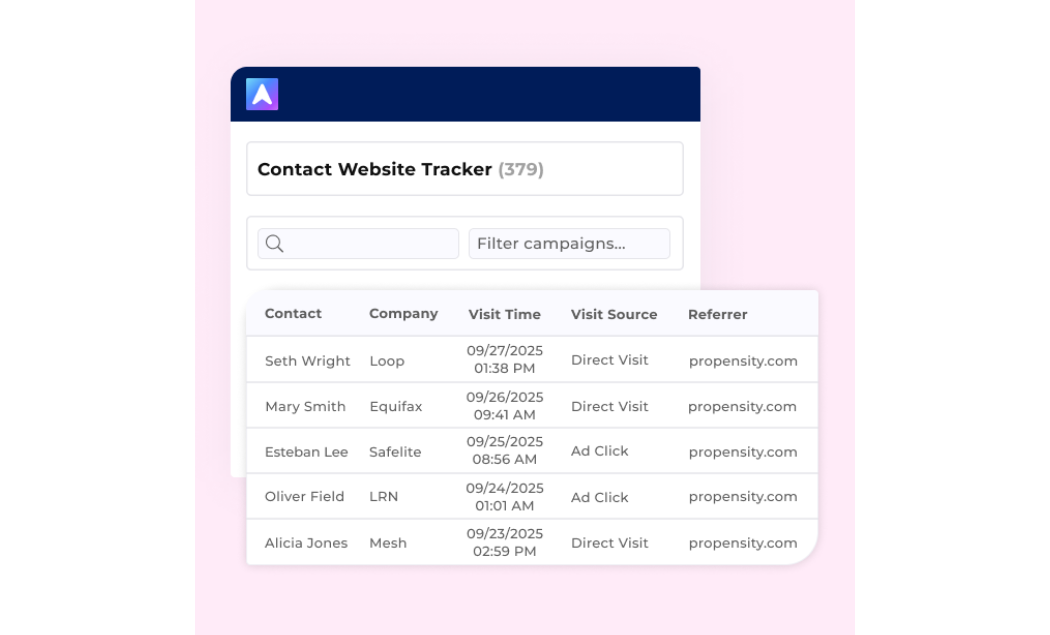
Once a session is resolved, Propensity captures UTM parameters, paid ad source, referral path, pages viewed, and timestamps for each contact. The system distinguishes between net-new leads and contacts already in the CRM, preventing duplicate outreach. Identified profiles are enriched with psychographic and firmographic data and pushed into Salesforce or HubSpot daily at no additional cost for the CRM sync.
Source: Propensity
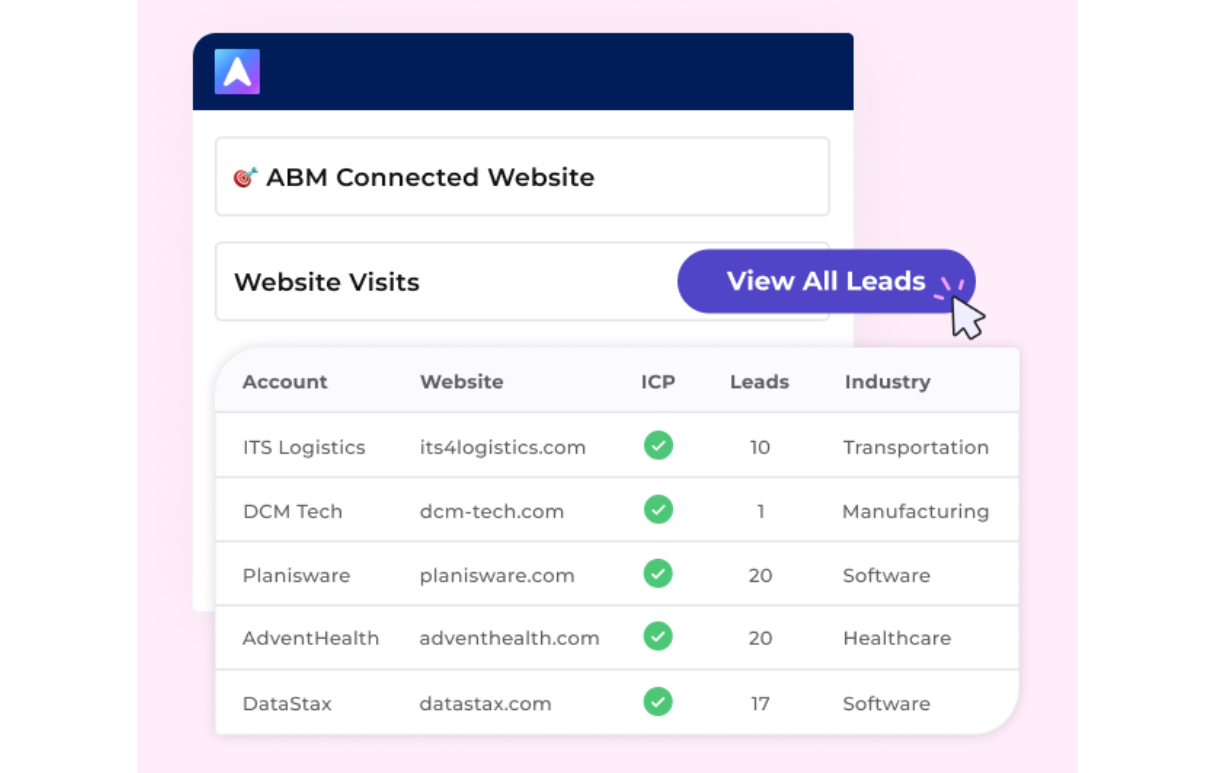
A useful detail: Propensity shows total visitor volume alongside which visitors were identified and which were not, giving match-rate transparency rather than an inflated headline number. High-intent pages (pricing, integrations, comparisons) are tracked at the individual level, giving sales teams specific outreach context.
Pricing: Flat monthly tiers with unlimited users, starting at $2,000/month.
Propensity uses a flat monthly subscription model with three tiers, all priced per organization rather than per seat:
Essential ($2,000/month):
Account and contact-level website de-anonymization
Intent data access (capped)
Unlimited campaigns
Contextual and geofencing ads
Propensity Display Network (image, native, video, audio, CTV)
Marketing email distribution
Standard lead scoring
Analytics and reporting
Salesforce and HubSpot integration
Unlimited users
Strategic ($3,000/month):
Everything in Essential
Unlimited intent data
Dedicated account manager and sales training
Custom lead and account scoring
LinkedIn and Facebook ads
Direct mail
API access
Unlimited ($4,000/month):
Everything in Strategic
Unlimited contact data
Premium technical support and technical onboarding
Google and YouTube ads
TikTok and Reddit ads
Notable pricing details: LinkedIn and Facebook ads require the $3,000/month Strategic tier. Google, YouTube, TikTok, and Reddit require the $4,000/month Unlimited tier. G2 reviewers note added costs for contact information that accrue with each new campaign launch, which are not prominently disclosed upfront. Unlimited contact data is only available at the highest tier. Intent data from Bombora is described as GDPR-compliant.
Propensity offers a self-serve free trial that provides access to intent data, audience creation, and website visitor identification. The exact duration and restrictions are not publicly documented.
Where Propensity Falls Short
Propensity delivers strong contact-level ABM for small teams, but several limitations surface as teams scale or need more from their go-to-market stack. These reflect Propensity's deliberate focus on ABM execution rather than full GTM infrastructure.
ABM Only, Not a Full GTM Platform. Propensity handles campaign execution well, but it doesn't offer sales prospecting tools, conversation intelligence, operations automation, or data quality management. Teams that outgrow pure ABM need separate tools for pipeline management, call recording and analysis, lead routing, and CRM hygiene, adding cost and complexity.
Narrow CRM Integration. The platform supports only Salesforce and HubSpot as native CRM integrations. Teams on Pipedrive, Microsoft Dynamics, or Zoho need API access, which is only available on the $3,000/month Strategic plan or above. For a platform that emphasizes CRM-synced workflows, this narrows the addressable market.
Hidden Contact Data Costs. While the subscription tiers appear straightforward, reviewers note contact data fees that accrue per campaign launch. Unlimited contact data is only available at the $4,000/month tier. For teams running frequent campaigns with large target lists, these costs can exceed the base subscription, creating budget unpredictability.
Channel Gating by Tier. The tier structure locks important advertising channels behind higher-priced plans. LinkedIn and Facebook ads require the Strategic tier ($3,000/month). Google, YouTube, TikTok, and Reddit require Unlimited ($4,000/month). A team that wants to run campaigns across the channels their buyers actually use may find the Essential plan too restrictive.
Limited Data Scale and Intelligence. Propensity sources intent data from Bombora and offers contact enrichment, but it doesn't operate its own large-scale B2B data platform. There's no equivalent to large verified contact databases, technographic profiling, or an intelligence layer that captures why deals move or stall. Teams that need sales intelligence alongside their ABM execution must layer in additional data vendors.
Small Review Base. With approximately 30 verified G2 reviews, the feedback sample is thin compared to established platforms. The high ratings likely reflect early adopters who self-selected into the platform, not a broad sample. For risk-averse buyers, this limited social proof is a concern.
These limitations aren't failures. They're the natural result of building a focused ABM platform for small growth teams. But they create a clear inflection point for organizations that need their ABM capabilities backed by large-scale data, AI intelligence, and a unified go-to-market platform.
Top Propensity Alternative for Full GTM Execution: ZoomInfo
Where Propensity focuses on ABM campaign execution for small teams, ZoomInfo is an AI GTM platform built on the largest B2B dataset in the industry: 500M contacts, 100M companies, 135M+ verified phone numbers, 120M direct-dial phone numbers, and 200M+ verified business emails.
That data fuels ZoomInfo's GTM Context Graph: an intelligence layer that unifies your CRM records, conversation transcripts, and behavioral signals with the 1.5B+ data points ZoomInfo processes daily, capturing why deals move or stall so your team can act on proven patterns.
Your team can use this intelligence through the GTM Workspace for sellers, GTM Studio for marketers and RevOps, or APIs and MCP in any front-end. The result: ABM is one capability among many, supported by data and intelligence at a scale that standalone ABM tools cannot match.
Comprehensive B2B Data: ZoomInfo operates the largest B2B data platform in the industry.
ZoomInfo's data is the foundation everything else builds on. The platform maintains 500M contacts and 100M companies, 135M+ verified phone numbers, 120M direct-dial numbers, and 200M+ verified business email addresses. Global coverage extends to 34M+ company profiles outside North America, 200M+ professional profiles outside NA, and 45M+ mobile numbers outside NA.
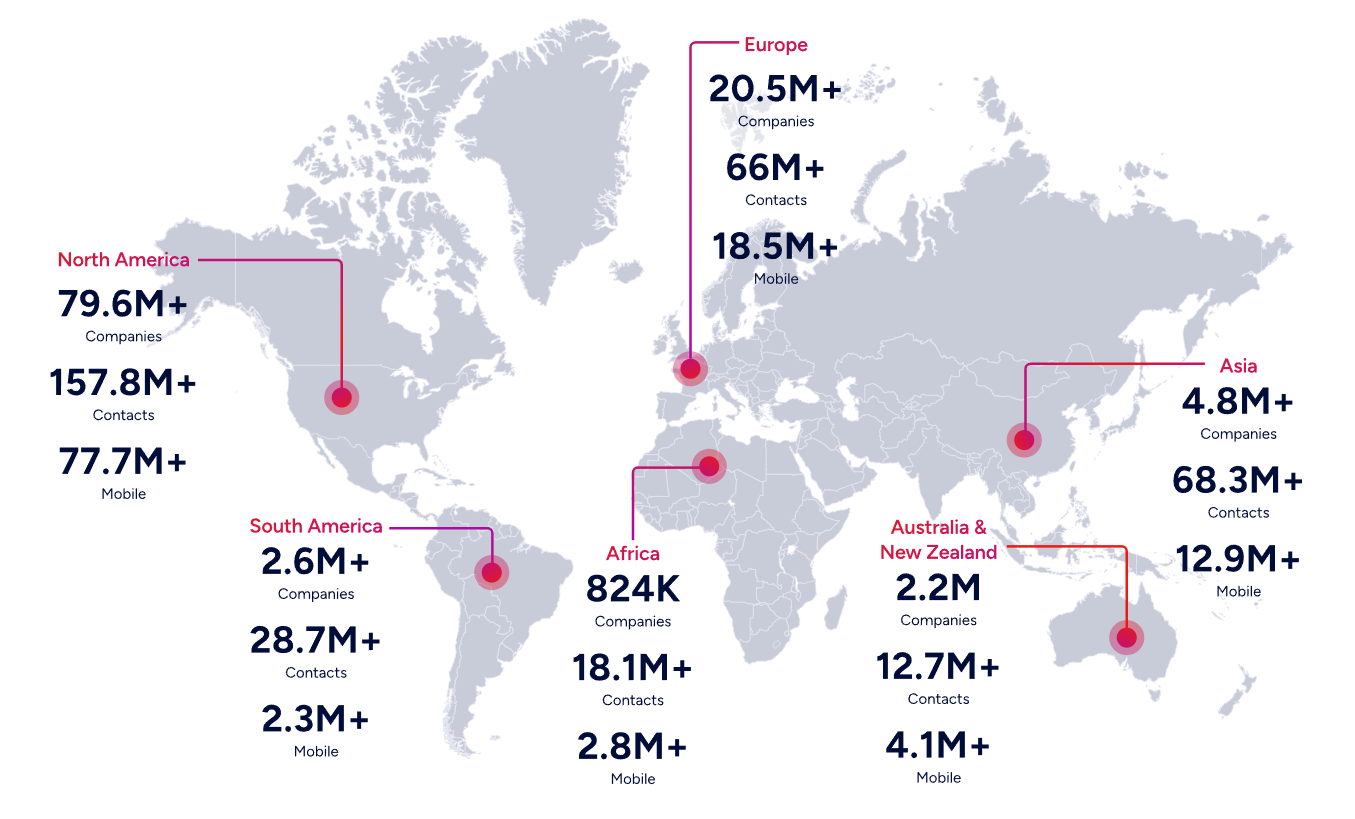
This data runs through a multi-source verification pipeline: automated ML scanning of 28 million site domains daily, third-party partner data covering 95 million businesses, a community of 200,000+ ZoomInfo Lite users who share data back, and an in-house Data Training Lab of 300+ human researchers. First-party data reaches up to 95% accuracy.
The data quality is externally validated. In a Fortune 500 competitive RFP analyzing 25 million contacts across vendors, the independent consultant concluded that "no other competitor came even close." ZoomInfo holds 133 No. 1 rankings on G2 across Sales Intelligence, Buyer Intent, Data Quality, and related categories, and is the only vendor in the Customers' Choice quadrant on Gartner's Voice of the Customer report, with a 4.7/5.0 average rating.
For ABM specifically, this data scale matters. Propensity's campaigns are only as good as the contacts they can reach and verify. ZoomInfo's data ensures that target account lists are complete, contact information is current, and enrichment doesn't require stitching together multiple vendors.
"ZoomInfo gives us the information we need to execute. We don't have to go through and spend our time digging. It's already there, so we can be three steps ahead." (Vensure case study)
GTM Context Graph: An intelligence layer that captures why deals move, not just what happened.
ZoomInfo's GTM Context Graph processes 1.5B+ data points daily, fusing ZoomInfo's B2B data with a customer's CRM records, conversation transcripts from Chorus, email interactions, and behavioral signals into a single intelligence layer. The distinction from standard intent data: the GTM Context Graph captures not just what happened in a deal, but why it happened.
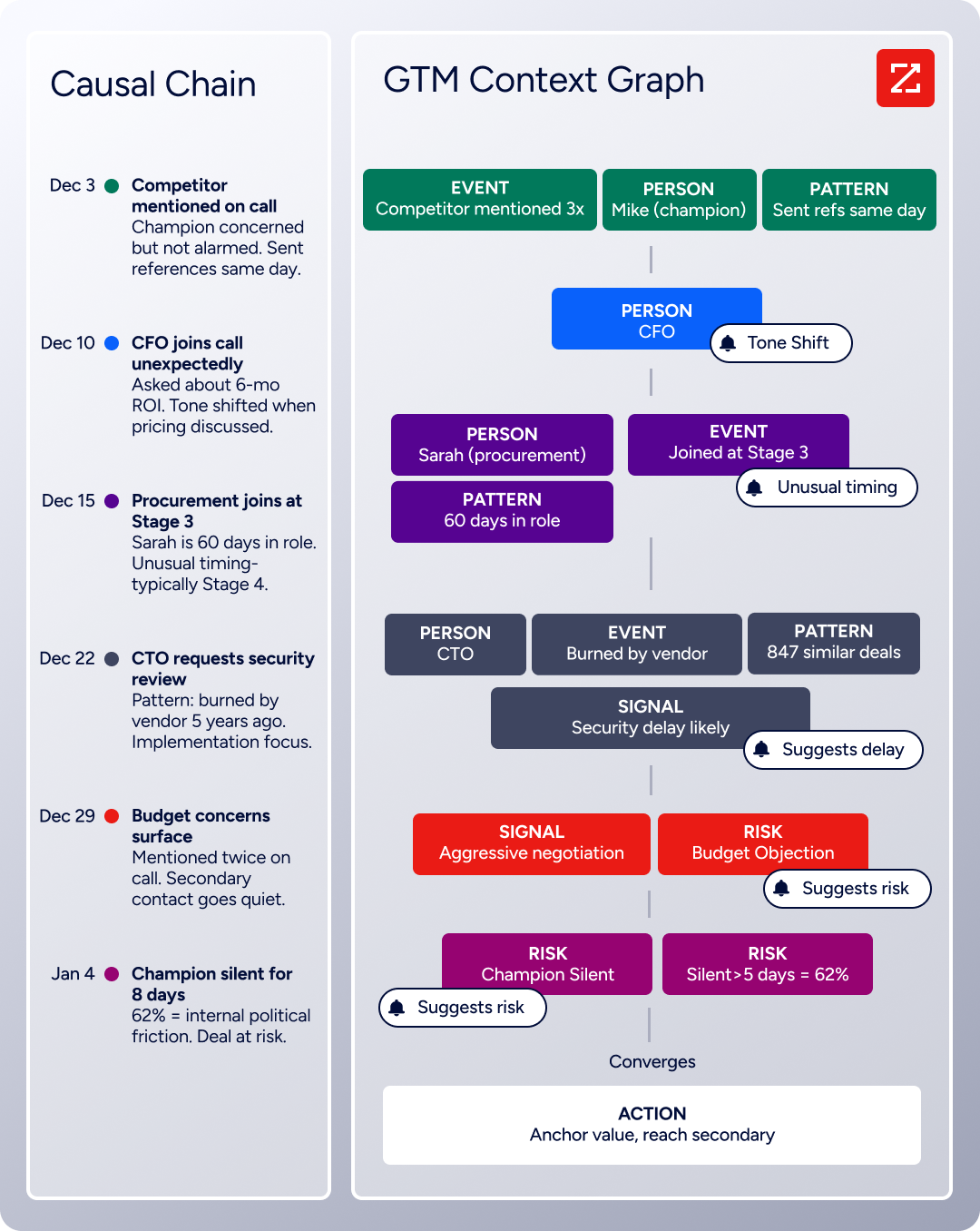
For example, a CRM records that a deal moved from Stage 3 to Stage 4. But as ZoomInfo's Chief Product Officer Dominik Facher writes: "The CRM recorded the state change. It has no record of why it happened." Maybe the CFO joined the last call and asked about six-month ROI. Maybe the VP went quiet for eight days during an internal budget battle. The GTM Context Graph makes this decision context machine-readable, capturing relationships between people, actions and their outcomes, patterns across thousands of similar deals, and the exceptions that reveal real blockers.
This is the intelligence layer Propensity's platform lacks. Propensity tracks campaign engagement signals. ZoomInfo correlates those signals with CRM activity, conversation content, hiring patterns, funding rounds, and competitive mentions to surface accounts where the combination of signals matches proven win patterns.
ZoomInfo's Buyer Intent tracks signals from 210 million IP-to-Organization pairings and 6 trillion+ keyword-to-device pairings sourced monthly. Guided Intent, exclusive to ZoomInfo, identifies topics historically correlated with deal success rather than requiring manual topic selection.
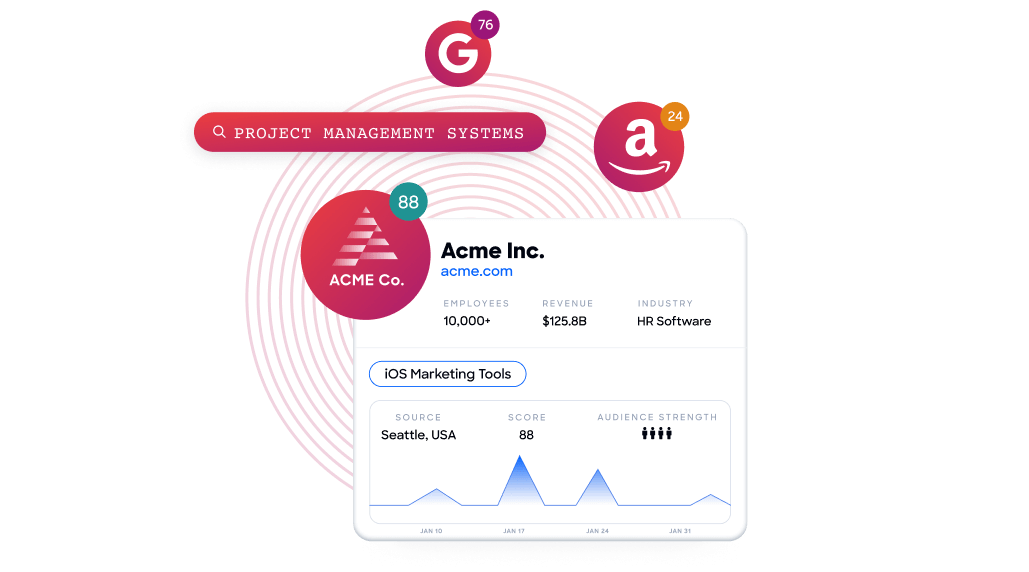
Seismic attributed 39% of active pipeline to ZoomInfo-influenced opportunities: "That combination of our internal CRM data, external signals, and AI that's given all that context has helped us craft very specific account- and persona-based messages." (Seismic case study)
Full GTM Platform: Sales, marketing, and operations unified beyond ABM.
Where Propensity is an ABM execution tool, ZoomInfo provides the complete GTM infrastructure. This includes capabilities Propensity doesn't offer:
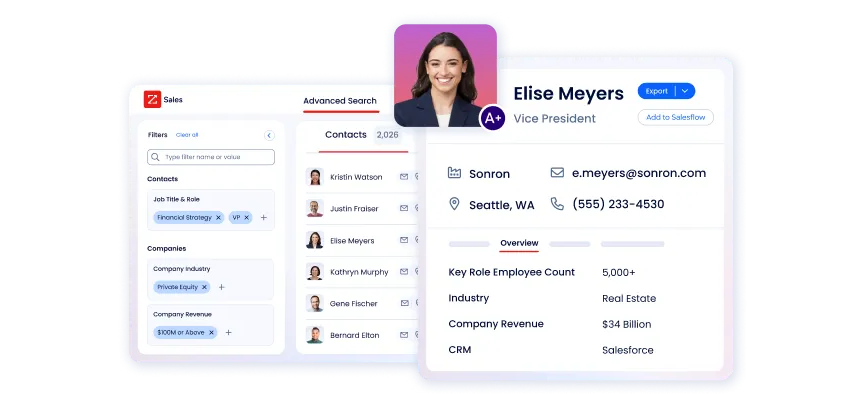
Sales Prospecting. ZoomInfo Sales provides contact and company search with 300+ attributes, department org charts with direct dials and emails, job-change alerts, and one-click CRM export. This is the product that made ZoomInfo the standard for B2B prospecting.
Conversation Intelligence. Chorus captures and analyzes all customer calls, meetings, and emails with AI-generated insights (talk ratios, sentiment, objection detection). It feeds deal intelligence into the GTM Context Graph, making every conversation part of the intelligence layer.
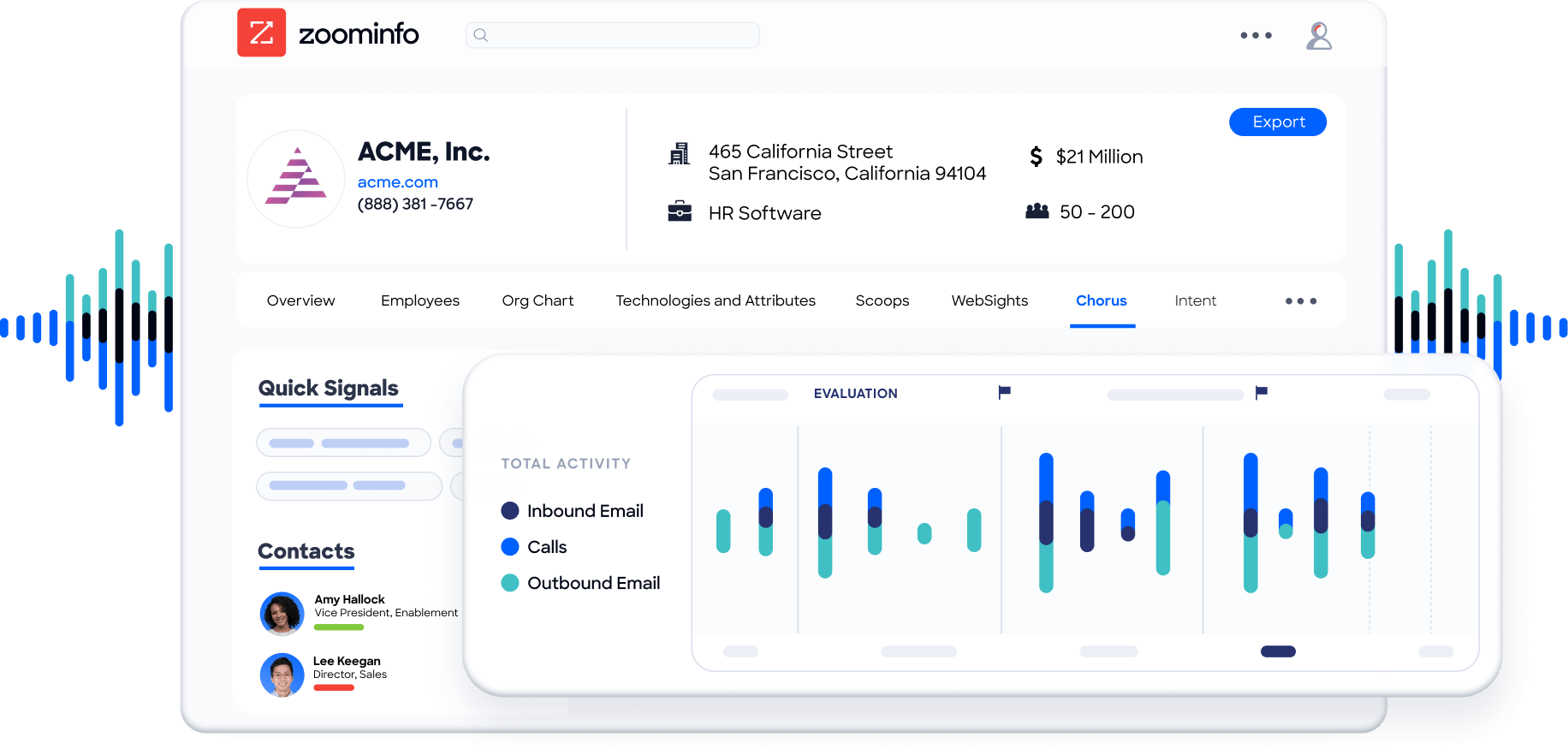
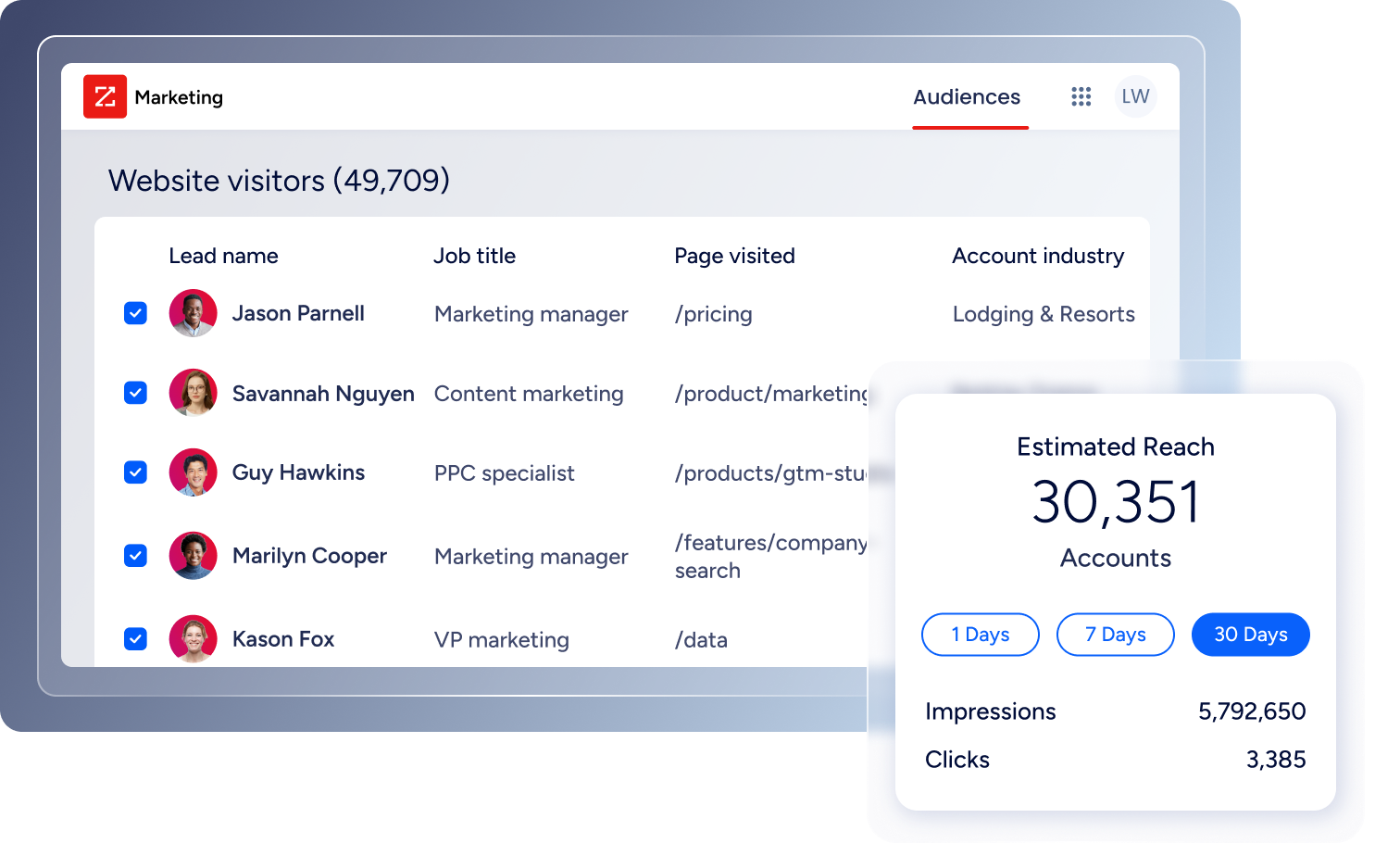
Marketing and ABM. ZoomInfo Marketing includes a native demand-side platform for display advertising based on 300+ company attributes, FormComplete (which reduces forms to a single field while auto-appending remaining data), contact-level site visitor identification, and Account Fit Scoring. ZoomInfo is a Leader in the 2025 Gartner Magic Quadrant for ABM Platforms (compared to Propensity's Challenger position) and a Leader in the Forrester Wave for Intent Data Providers B2B.
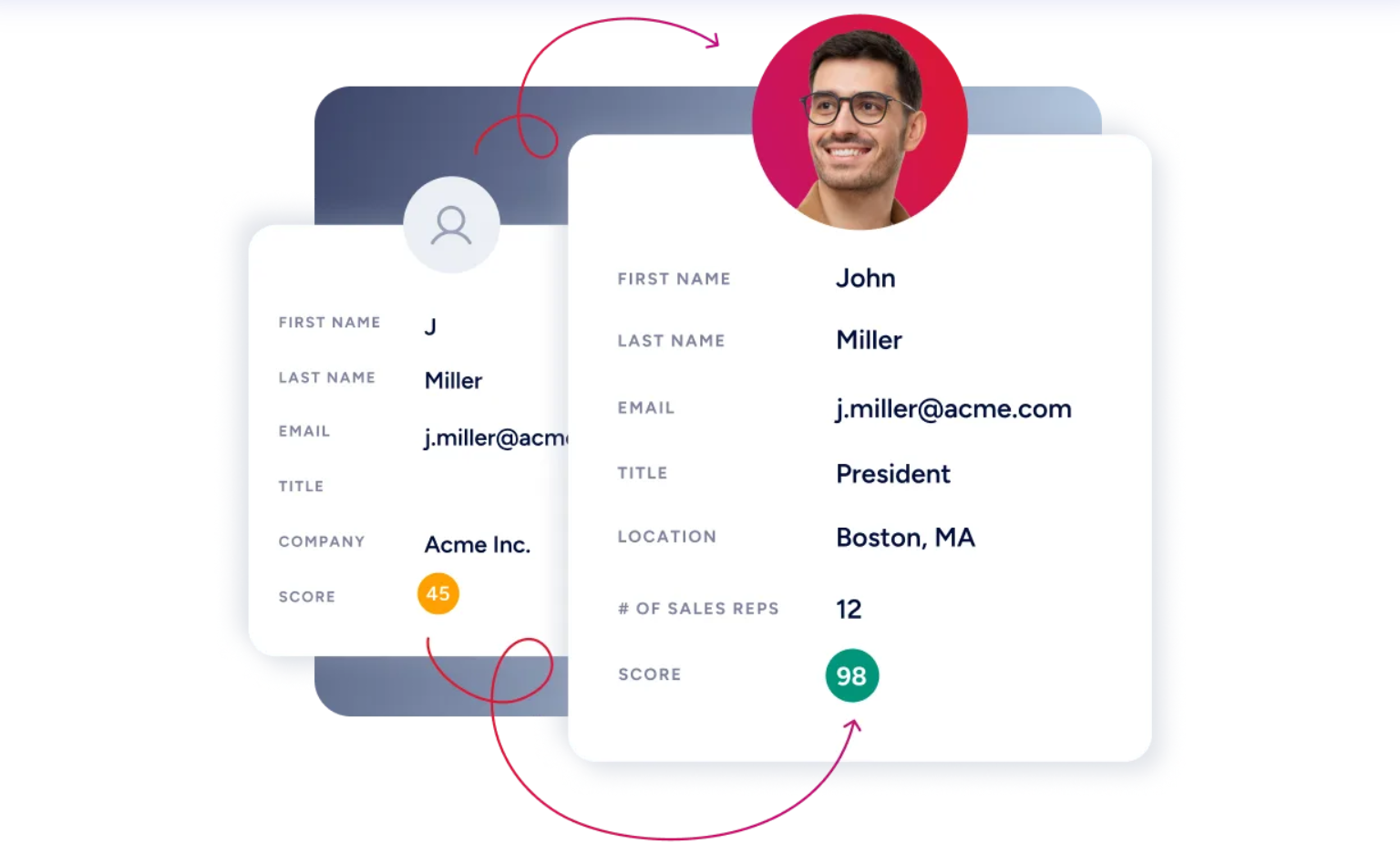
Operations. ZoomInfo Operations automates CRM data quality through multi-vendor enrichment from approximately 60 vendors, automated deduplication, lead routing via territory rules and lead-to-account matching, and predictive modeling that scores accounts 0-100 based on 300+ attributes.
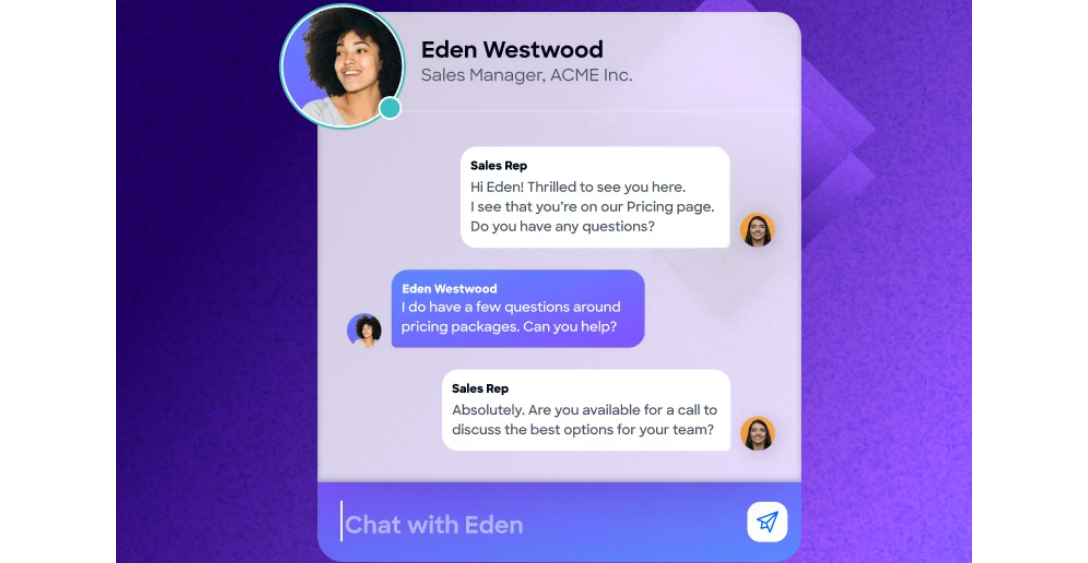
Website Chat. ZoomInfo Chat identifies the company behind anonymous website visitors before they self-identify, routing conversations based on company attributes and intent signals.
Redwood Logistics achieved a 99% reduction in CPC and 310% increase in CTR: "It's about the right data at the right time to help us reach out with the right message across the full buyer journey." (Redwood Logistics case study)
Universal Access: Use ZoomInfo's intelligence in any tool, any workflow, any AI agent.
ZoomInfo delivers its data and intelligence through three channels, so teams aren't locked into a single interface:
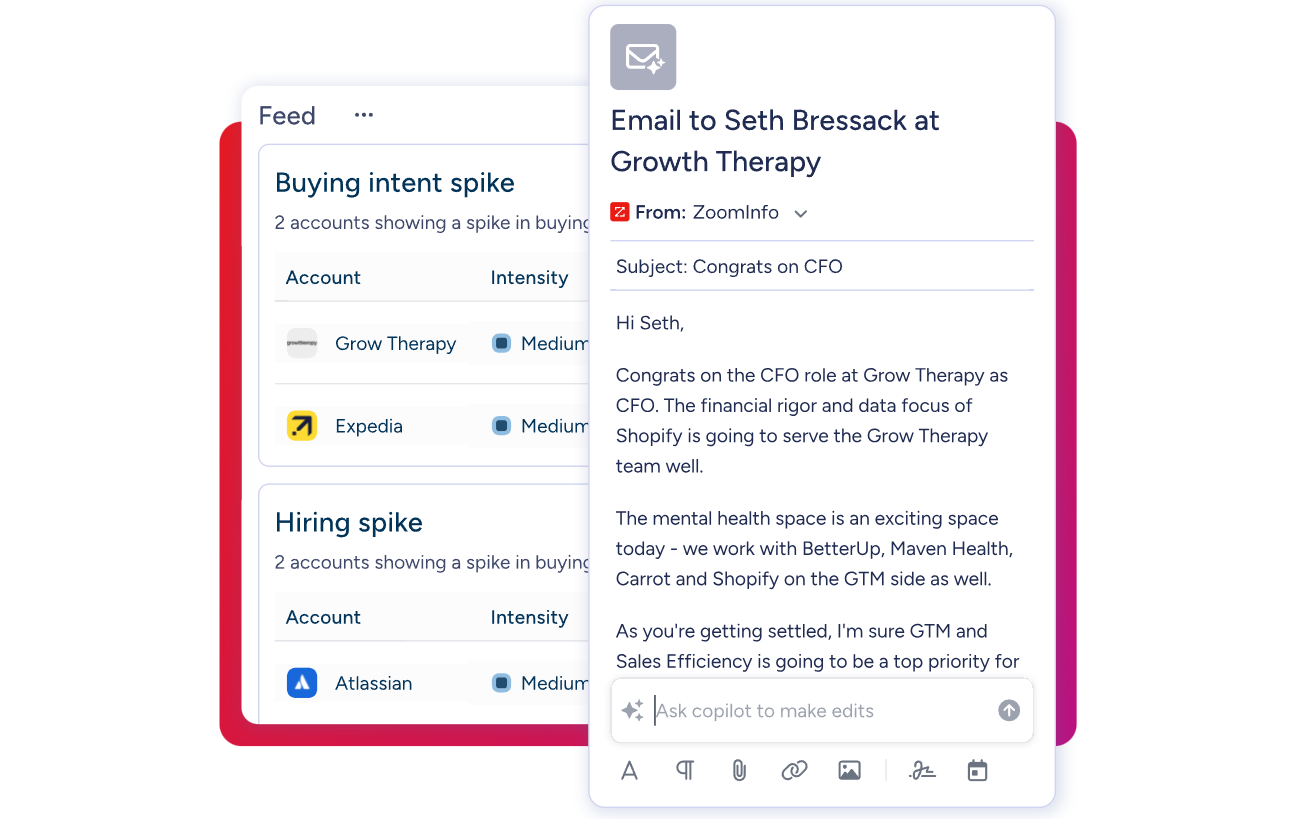
GTM Workspace is the seller's front-end. It consolidates CRM data, ZoomInfo intelligence, and conversation history into a single view with AI agents (built on Anthropic's Claude) that automate account research, draft outreach, update CRM fields, and surface next-best actions. These agents answer who to contact, when to engage, and what to say.
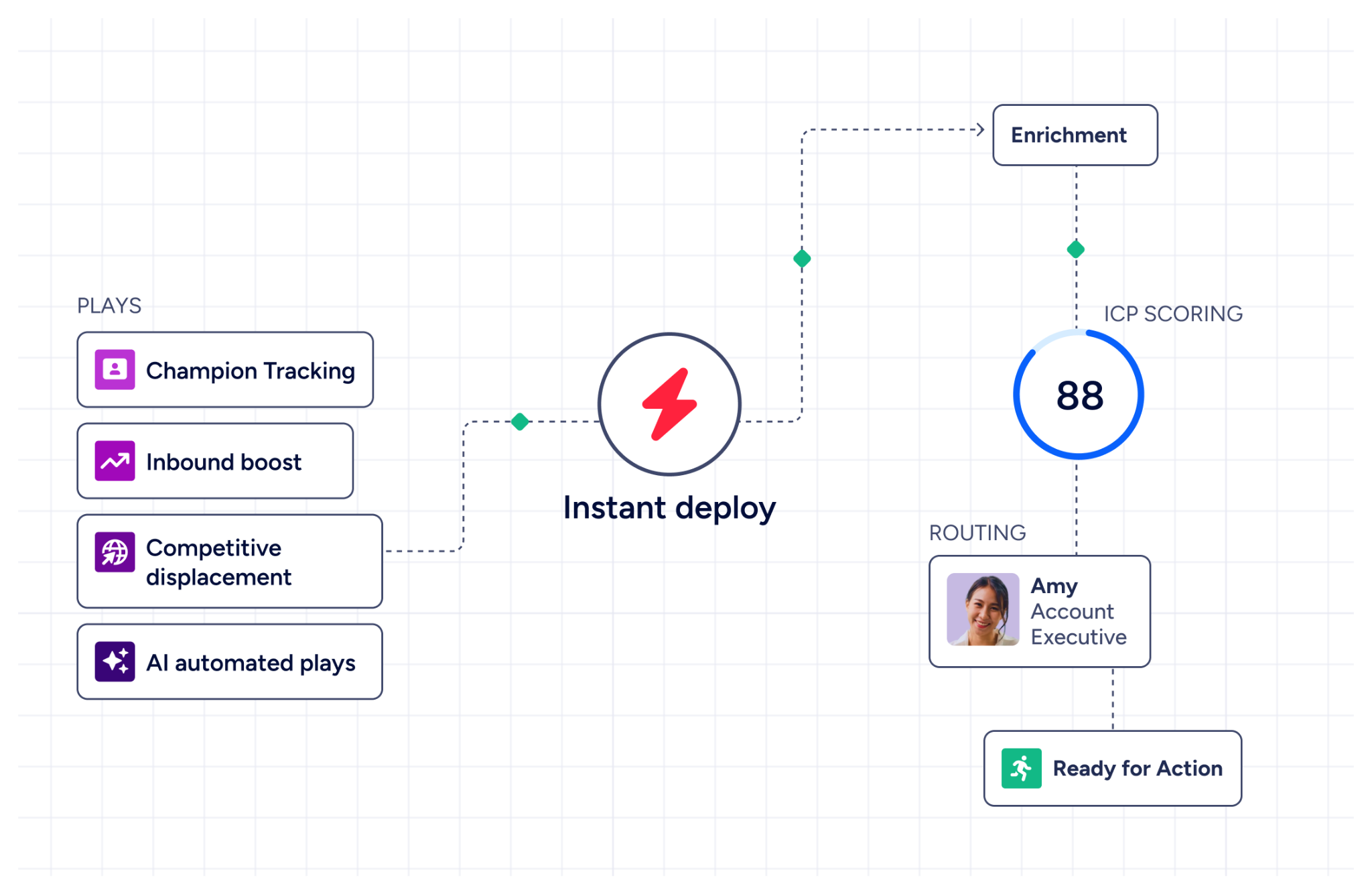
GTM Studio is the marketing and RevOps front-end. Teams build audiences using natural language, enrich with first- and third-party data, define triggers, and activate plays across channels without engineering support. Expansion plays that used to take 3 weeks now launch in 30 minutes.
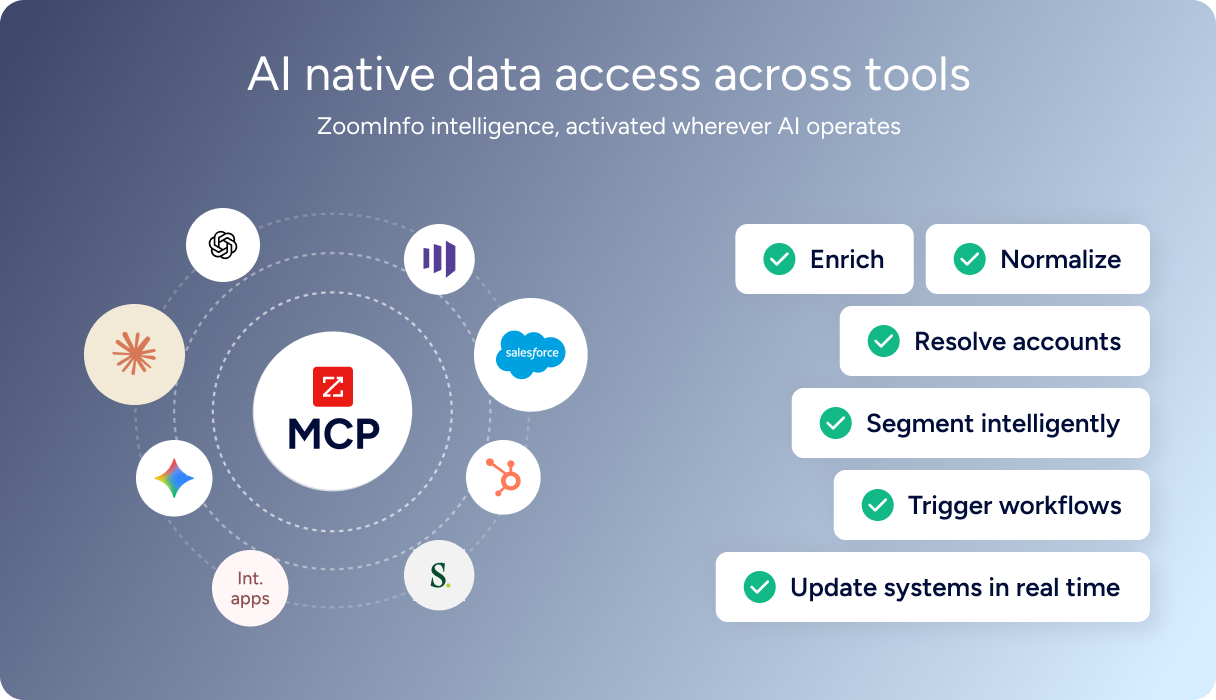
APIs and MCP expose the same intelligence to any custom agent, internal tool, or partner platform. ZoomInfo MCP is listed in the Claude directory and supports Claude and ChatGPT, with additional MCP-compatible tools noted as coming soon. API access is included in all relevant plans.
All three channels draw from the same GTM Context Graph. A buying signal one team detects is immediately actionable by every other team. By contrast, Propensity's data stays within its own ABM dashboards, with only CRM sync as the bridge to other tools.
ZoomInfo integrates natively with Salesforce, HubSpot, and Microsoft Dynamics (addressing Propensity's CRM limitation), plus 120 partner integrations across marketing automation, sales engagement, data warehouses, and communications tools.
"The plug-and-play aspect of the API means I can integrate it very easily into any process and get information at a moment's notice," achieving an 87% reduction in time spent on data dashboard updates. (BDO Canada case study)
Flexible Pricing with Free Entry Points.
ZoomInfo uses a consumption-based pricing model with custom quotes based on usage patterns, number of users, credit volume, and feature requirements. While ZoomInfo does not publish fixed prices, it offers two free entry points that Propensity's pricing structure doesn't match:
ZoomInfo Lite is a permanent free tier (not a trial) with access to ZoomInfo's B2B database, 10 monthly export credits, individual and company searches, contact information and email addresses, the ReachOut Chrome Extension, WebSights Lite (up to 10 website visitor reveals per day), built-in email sending, and HubSpot integration.
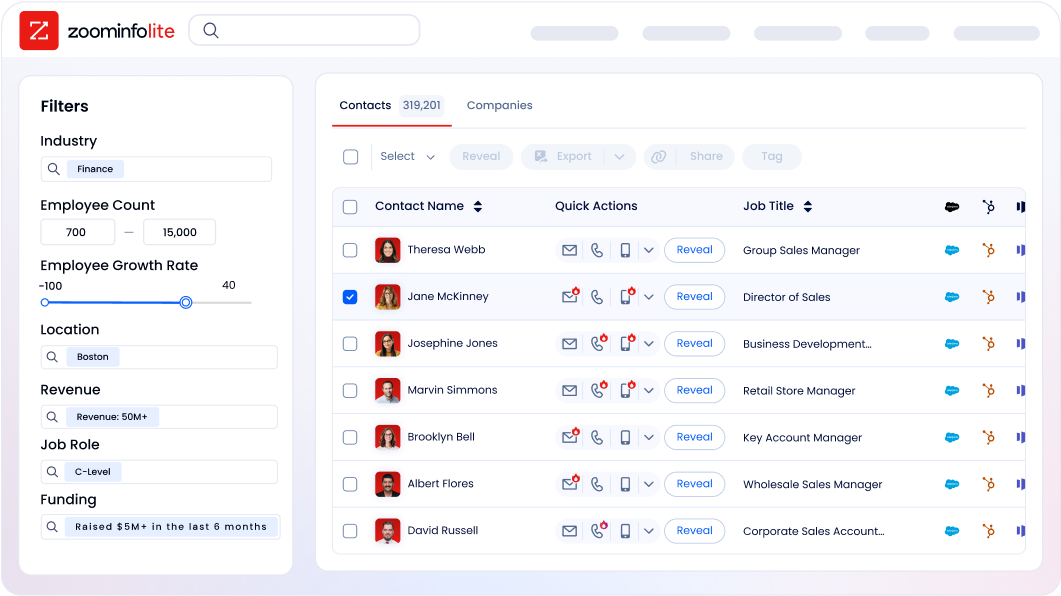
A separate 7-day free trial provides access to core platform features including contact and company search, intent signals, and email outreach.
Paid plans are organized into Sales (Professional, Advanced, Enterprise), Marketing (Marketing Demand, ABM Lite, ABM Enterprise), and add-on products (Chorus, Chat, Enterprise API). Annual contracts are standard. The platform's security infrastructure includes ISO 27001, ISO 27701, SOC 2 Type II, TRUSTe GDPR and CCPA certifications, all renewed annually.
Propensity or ZoomInfo: Comparison Summary
Propensity | ZoomInfo | |
|---|---|---|
Primary focus | Contact-level ABM execution | AI GTM platform |
Target audience | Small B2B growth teams | Enterprise and upper mid-market B2B teams |
Data scale | Intent data from Bombora; unspecified contact database | 500M contacts, 100M companies, 135M+ verified phone numbers, 200M+ verified emails |
Intelligence layer | Campaign engagement scoring | GTM Context Graph (1.5B+ data points daily) |
ABM capabilities | Core product with 20+ channels | Full ABM suite with native DSP, plus GTM Studio orchestration |
Gartner MQ for ABM | Challenger (2025, first appearance) | Leader (2024 and 2025) |
Sales prospecting | Not available | Contact and company search with 300+ attributes |
Conversation intelligence | Not available | Chorus (call recording, transcription, AI analysis) |
Operations/data quality | Not available | Multi-vendor enrichment, deduplication, lead routing |
CRM integrations | Salesforce and HubSpot only | Salesforce, HubSpot, Microsoft Dynamics, plus 120+ integrations |
API/MCP access | API on Strategic ($3K/month) and above | API included in all relevant plans; MCP for AI agents |
Website visitor tracking | Contact-level de-anonymization | WebSights with company and contact identification |
Geofencing | Native feature | Not a native feature |
Contextual targeting | Native feature | Not a native feature |
Free tier | Free trial (terms not publicly documented) | ZoomInfo Lite (permanent) + 7-day trial |
Published pricing | $2,000-$4,000/month flat | Custom-quoted, consumption-based |
Compliance | SOC 2, GDPR, ISO 27001 | ISO 27001, ISO 27701, SOC 2 Type II, TRUSTe GDPR/CCPA |
Final Verdict
The choice between Propensity and ZoomInfo depends on your team's size, maturity, and go-to-market needs.
Choose Propensity if you're a small B2B growth team that needs focused ABM campaign execution without the complexity of an enterprise platform. Propensity works well when your primary goal is running omnichannel awareness campaigns, de-anonymizing website visitors, and generating contact-level attribution, all without a long deployment or a large budget. The geofencing and contextual targeting capabilities are genuine differentiators for teams that want to reach buyers at events and through content-relevant placements. If your CRM is Salesforce or HubSpot, your team is small enough to benefit from a hands-on customer success relationship, and ABM execution is your main gap, Propensity delivers.
Choose ZoomInfo if you need more than an ABM execution tool. ZoomInfo is the right choice when your go-to-market motion requires B2B data for prospecting, an intelligence layer that reasons across deal signals, conversation intelligence for call analysis and coaching, operations tools for CRM data quality, and the flexibility to access all of this through native products or your own tools via API and MCP. Its ABM capabilities alone match Propensity's core use case, backed by a data platform that is orders of magnitude larger and validated by Gartner, Forrester, and G2. For teams ready to unify their GTM stack rather than bolt on another point solution, ZoomInfo provides the infrastructure to grow into.
Get started with ZoomInfo here.
The fundamental difference is scope. Propensity solves one problem well: contact-level ABM for small teams. ZoomInfo provides the data, intelligence, and execution infrastructure that B2B organizations need across their entire go-to-market motion. For many teams, the decision comes down to whether they need a focused campaign tool today or a platform that supports their growth trajectory tomorrow.
Propensity FAQ
What is Propensity used for?
Propensity is a contact-level marketing platform for B2B growth teams running account-based marketing campaigns. Its core use cases include identifying in-market accounts using intent data, launching omnichannel advertising campaigns across 20+ channels, de-anonymizing website visitors at the individual contact level, and syncing qualified leads into Salesforce or HubSpot for sales follow-up. It also offers geofencing for event-based marketing and contextual targeting for content-relevant ad placement.
How much does Propensity cost?
Propensity uses flat monthly pricing across three tiers: Essential at $2,000/month, Strategic at $3,000/month, and Unlimited at $4,000/month. All plans include unlimited users with no per-seat fees. However, contact data costs accrue separately per campaign, and important channels like LinkedIn and Facebook ads require the Strategic tier, while Google, YouTube, TikTok, and Reddit require the Unlimited tier. ZoomInfo uses consumption-based pricing with custom quotes, but offers a permanent free tier (ZoomInfo Lite) and a 7-day free trial for evaluating the platform before committing.
Does Propensity have a free plan?
Propensity offers a self-serve free trial that provides access to intent data, audience creation, and website visitor identification. The exact duration, feature restrictions, and credit card requirements are not publicly documented. ZoomInfo offers both a permanent free tier (ZoomInfo Lite) with 10 monthly export credits, B2B database access, and WebSights Lite, as well as a separate 7-day free trial with broader feature access.
What CRMs does Propensity integrate with?
Propensity natively integrates with Salesforce and HubSpot only. Teams using Pipedrive, Microsoft Dynamics, Zoho, or other CRMs need API access, which is only available on the Strategic plan ($3,000/month) or above. ZoomInfo integrates natively with Salesforce, HubSpot, and Microsoft Dynamics, and offers 120+ additional integrations through its App Marketplace, with API access included in all relevant plans.
How does Propensity's contact-level attribution work?
Propensity tracks engagement at the individual contact level rather than the account level. When someone clicks an ad, visits specific pages, or engages with content, the platform ties that interaction to a named person (not just their company). Contacts are scored as cold, warm, or hot based on their engagement, with scores that reset automatically after inactivity. This data syncs into the CRM with the contact's email, phone, LinkedIn profile, and full engagement history.
What is the difference between Propensity and ZoomInfo for ABM?
Propensity is a focused ABM execution platform that handles campaign creation, omnichannel ad delivery, and contact-level attribution for small B2B teams. ZoomInfo is a full GTM platform where ABM is one capability among many. ZoomInfo holds a Leader position in the Gartner Magic Quadrant for ABM Platforms (compared to Propensity's Challenger position) and adds B2B data (500M contacts), the GTM Context Graph intelligence layer, conversation intelligence, sales prospecting, operations automation, and access via API and MCP. Propensity offers geofencing and contextual targeting as native features that ZoomInfo does not directly replicate.
Is Propensity suitable for enterprise teams?
Propensity is built for small to mid-sized B2B growth teams and positions itself as an accessible alternative to enterprise ABM platforms. While enterprise-name customers like Microsoft and AWS appear on its client list, the platform's limited CRM integrations, thin review base, and seed-stage funding ($2.02M total raised) suggest it is optimized for smaller deployments. Enterprise teams with complex tech stacks, multiple CRM systems, or requirements for sales intelligence and operations automation may find ZoomInfo's infrastructure a better fit for their scale.
Does Propensity offer geofencing?
Yes, geofencing is a native feature in Propensity. Marketers can draw virtual perimeters around physical locations (conference venues, competitor campuses, airports, industry hubs) and serve display, HTML5, or video ads to mobile users whose devices enter the radius. When those users later visit the advertiser's website, Propensity's tracker identifies them at the contact level. This feature is included in all plans starting at the Essential tier. ZoomInfo does not offer native geofencing as part of its platform.
