
Forage AI has built its business on a simple promise: hand over your data collection headaches, and they'll handle everything. The company operates as a managed data extraction partner, taking full ownership of web scraping, document processing, and AI-powered automation so enterprise teams never have to build or maintain their own pipelines.
With 500M+ websites crawled and 10M+ documents parsed, Forage AI targets organizations that have tried and failed to scale data collection in-house.
To write this Forage AI review, we've analyzed the platform. We believe it's a strong fit if:
You need a fully managed data extraction service where someone else owns the pipeline
Your data requirements are highly custom (non-standard document formats, niche web sources, industry-specific extraction logic)
You operate in regulated industries like finance or healthcare and need domain-expert oversight
You have complex document processing needs (financial PDFs, legal contracts, handwritten forms)
You prefer a managed partnership over self-serve tools
However, Forage AI might not be the best choice if:
You need instant, self-serve access to B2B contact and company data
You want transparent pricing and the ability to evaluate costs before a sales call
You need ready-to-use go-to-market intelligence (intent signals, org charts, technographics)
Your primary goal is sales prospecting, pipeline generation, or account-based marketing
You require a platform you can log into and operate independently
In this case, you should consider ZoomInfo: an all-in-one AI GTM platform that takes a different approach to B2B data. Where Forage AI builds custom pipelines to extract data from scratch, ZoomInfo provides instant access to a pre-built, continuously verified database of 500M contacts and 100M companies, combined with intent signals and go-to-market intelligence through its GTM Context Graph. For teams whose data needs center on sales, marketing, or revenue operations, ZoomInfo eliminates the extraction step.
We've included a detailed look at ZoomInfo later in this review because it takes a different approach to B2B data for go-to-market teams. If you want instant access to verified B2B data, start with ZoomInfo's free trial.
What is Forage AI?
Forage AI is an AI-powered data extraction and automation partner founded in 2017 by Aaron Calvo. The company is privately held, 100% remote, and operates with a 100+ person team. 22C Capital holds a minority ownership stake.
Calvo's background traces through financial analysis at Bridgewater Associates and King Street Capital, then into data engineering at ZocDoc (where he built a doctor data pipeline using web crawling), IHS Markit (directing data automation), and Rho AI (heading web crawling and data automation). He founded Forage AI to offer that same extraction capability as a managed service.
The company builds its offer around three pillars: Web Data Extraction (scraping business, social media, news, and firmographic data at scale), Intelligent Document Processing (extracting structured data from PDFs, contracts, and financial filings), and AI-Powered Solutions (Agentic AI, Retrieval-Augmented Generation, and Entity Matching).
Forage AI targets enterprise teams in finance, healthcare, real estate, e-commerce, and AI/ML who need reliable external data but lack the scraping infrastructure to collect it.
Forage AI Pros & Cons
Pros | Cons |
|---|---|
Fully managed service, client owns no pipeline infrastructure | No self-serve product or transparent pricing |
High accuracy claims: 99% for document extraction, 97% for table extraction | No free trial or sandbox environment |
Deep domain expertise in finance and healthcare | Small review volume on third-party platforms |
Broad coverage across web scraping, document processing, and AI automation | UI and documentation gaps reported by users |
GDPR, CCPA compliance with on-premise deployment options | Fully managed model creates switching risk and vendor dependency |
Smaller company relative to funded competitors | |
Long-tenured client relationships with multi-year partnerships | Every engagement requires custom scoping and sales conversation |
Forage AI Review: How it Works & Key Features
Web Data Extraction: Forage AI handles the complete scraping pipeline so clients never touch the infrastructure.
Forage AI's web data extraction is a managed, end-to-end service that covers crawl strategy, parsing, transformation, quality assurance, and delivery.
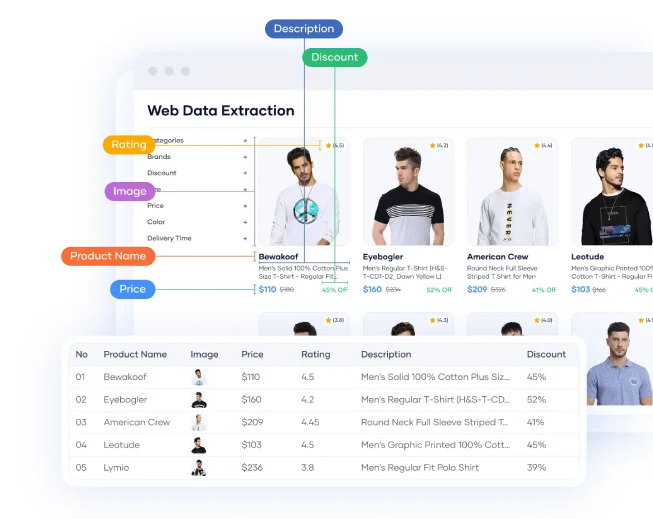
Clients specify their targets (URLs, company names, industry categories, or keywords), Forage AI configures and runs the extraction system, and delivers organized data in the client's preferred format.
The service spans five categories: Business Data Extraction, Social Media Data Extraction, Online News Aggregation, Website Change Monitoring, and Custom Web Data Extraction.
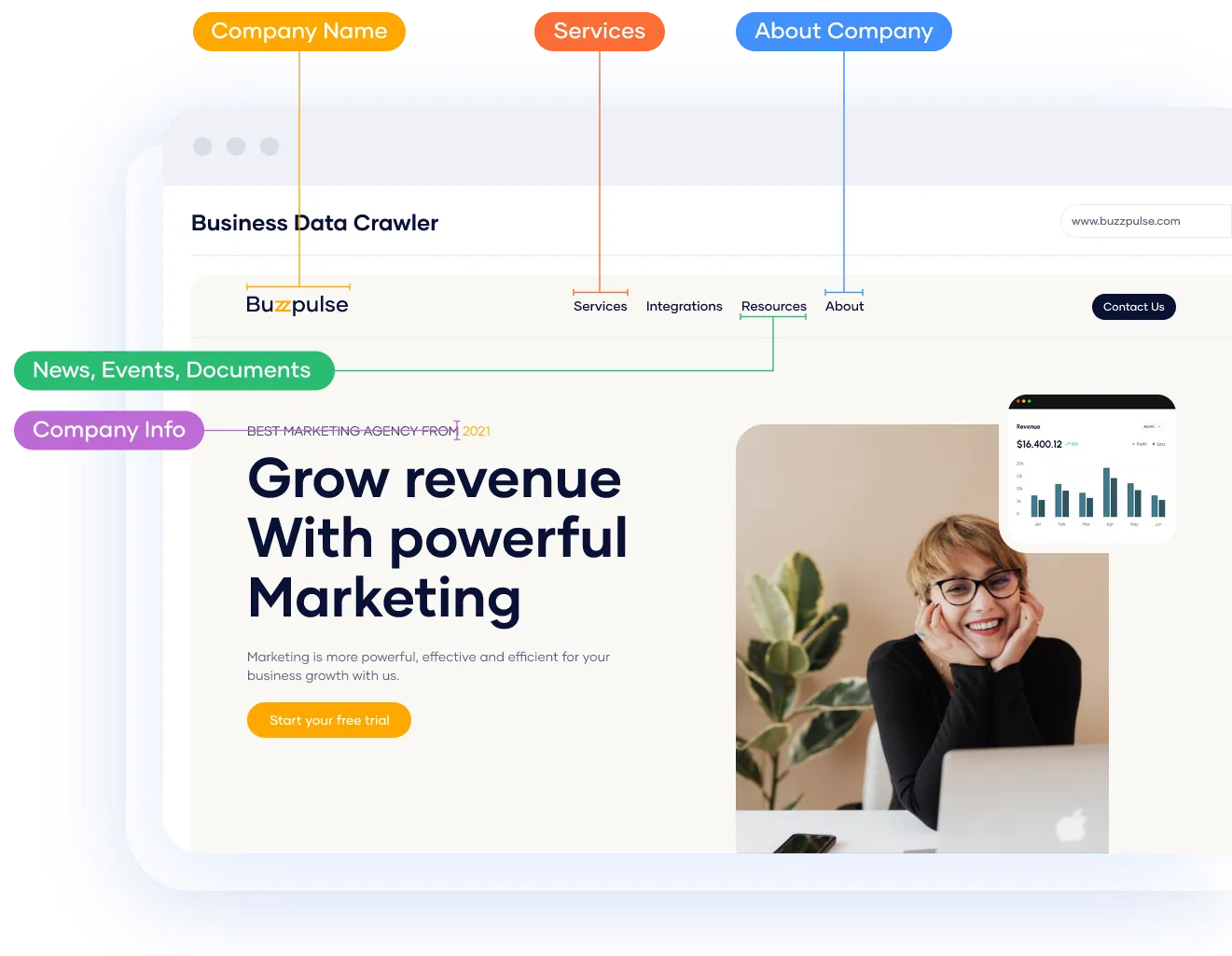
Business data fields include company names, legal names, founding years, addresses, contacts, social media handles, products and services, NAICS/SIC codes, and job postings.
Source: Forage AI
Social media extraction claims 15M+ profiles extracted to date, with the ability to process over a million profiles in less than half a day.
The infrastructure uses ML, NLP, and LLMs developed in-house, with orchestration that includes task scheduling, priority queuing, retry strategies, failover across nodes/clusters, and pipeline monitoring.
The system includes data lifecycle management and re-runs for change processing, meaning when source websites change layouts, the pipeline automatically re-processes affected data.
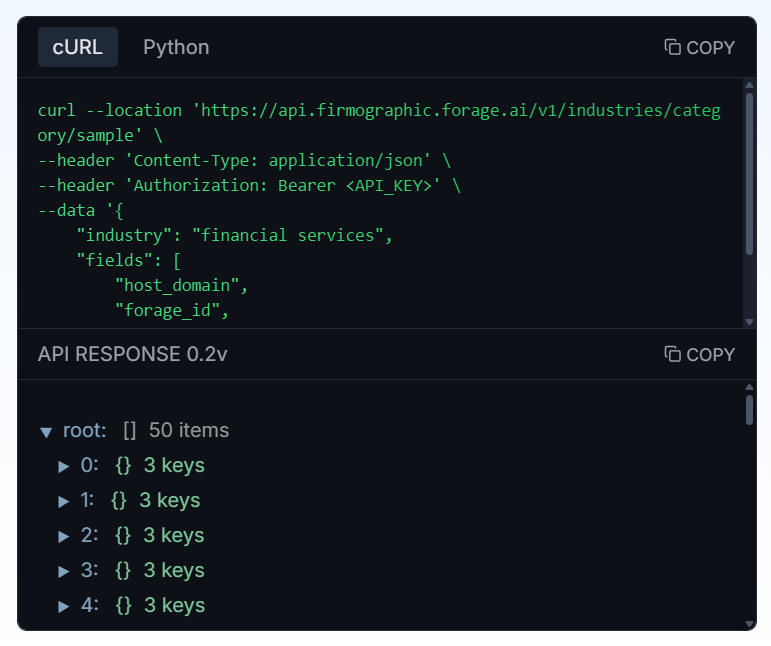
Forage AI also offers a Firmographic Data API as its only self-serve product: a REST API providing instant access to B2B firmographic data on 8M+ companies with daily uploads and sub-second response times. Coverage currently spans the USA, with plans to expand to 200+ countries.
Source: Forage AI
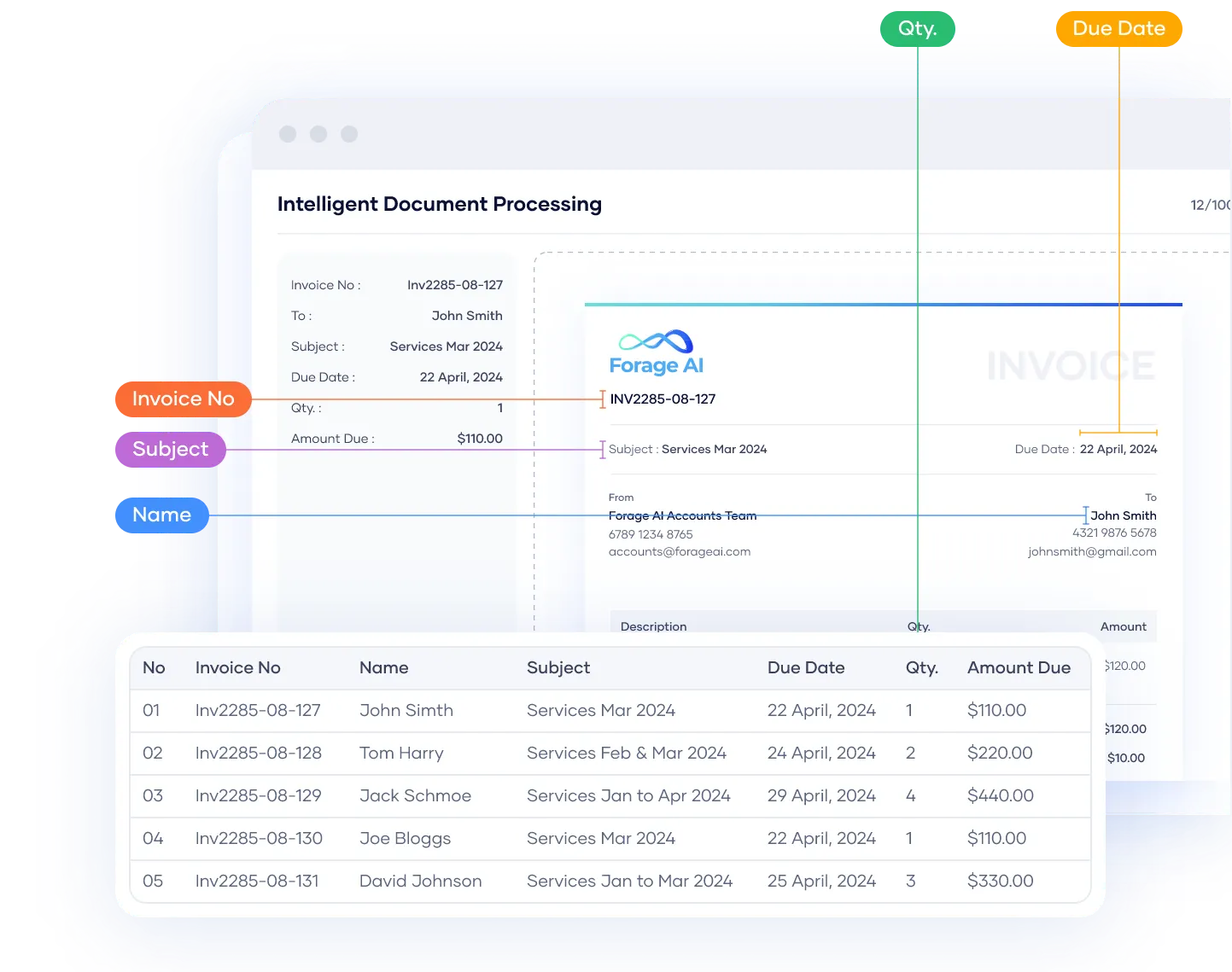
Intelligent Document Processing: Forage AI automates extraction from PDFs, scanned images, and complex financial documents.
Intelligent Document Processing (IDP) is Forage AI's service for converting unstructured documents into structured, usable data. The system handles Word documents, PDFs, and image files, including handwritten and faded text and complex images.
Source: Forage AI
The pipeline moves through several stages: document capture and pre-processing (sharpening blurry text, correcting skewed images), enhanced OCR for text recognition, ML-based classification and parsing using NLP for context and intent identification, pattern recognition-based data extraction (using zero-shot and few-shot learning via LLMs for unfamiliar formats), and validation with human-in-the-loop review.
Forage AI claims 99% precision on data extraction, 97% accuracy on table extraction, and 10X faster document parsing compared to traditional approaches. The system can process documents of over 2,000 pages or large document volumes without losing accuracy.
Document types covered include agreements, contracts, loan applications, financial statements, K-1 documents, tax forms, legal documents, invoices, medical records, and emails.
Financial specialization includes customized extraction for Statement of Operations, Schedule of Investments, Balance Sheets, Income Statements, Cash Flow Statements, Tax Filings, and Auditor Reports.
For healthcare, Forage AI reports 99.9% data accuracy at scale with HIPAA-compliant processing. Output formats include CSV, XLS, or any other desired format.
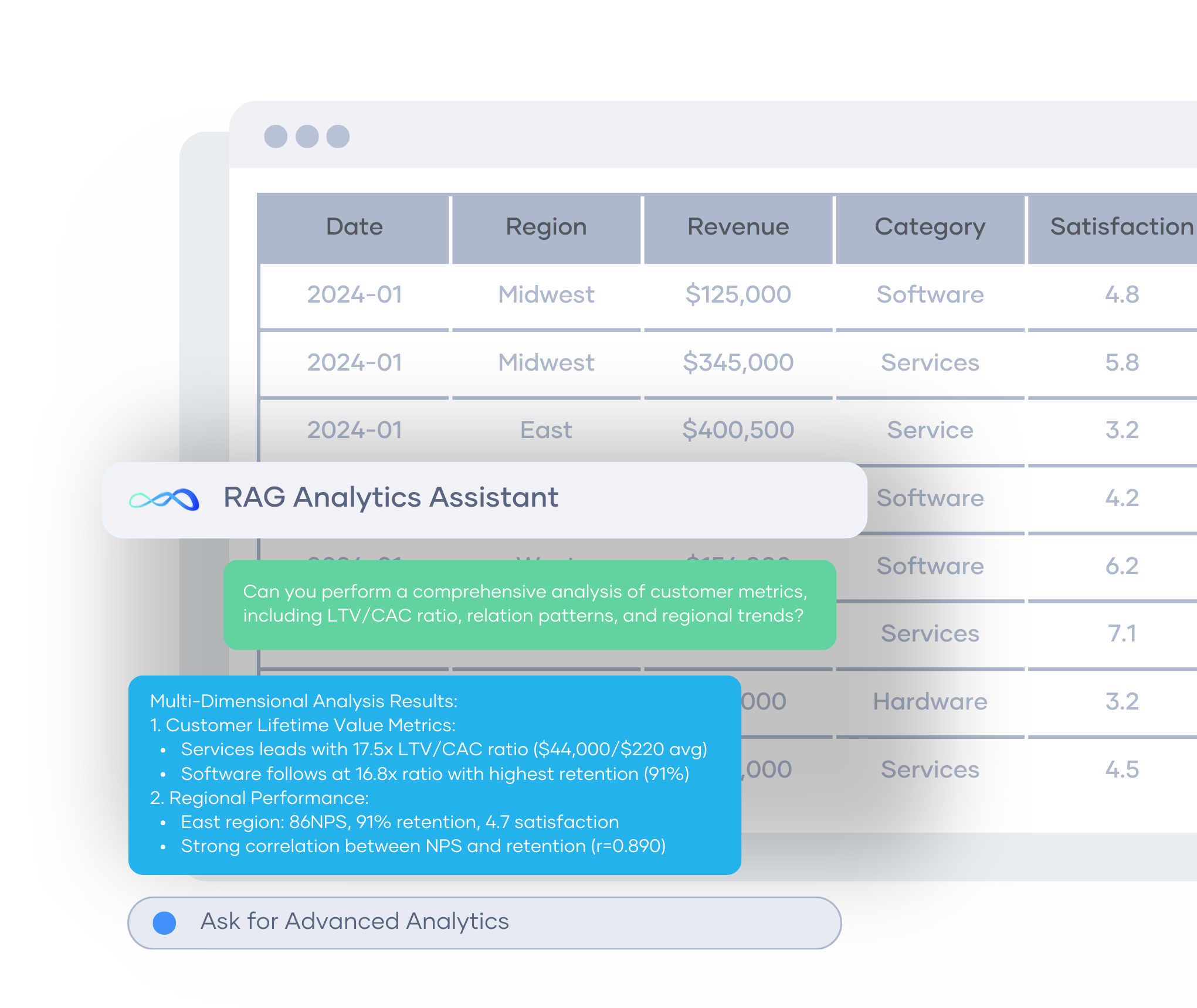
AI-Powered Solutions: Forage AI layers Agentic AI, RAG, and Entity Matching on top of its extraction infrastructure.
Forage AI's AI-Powered Solutions extend the company's work from raw extraction into applied AI.
Agentic AI targets the limitations of traditional RPA. Where RPA falters with unstructured data and dynamic workflows, Forage AI's agents interpret context, and adapt on their own. The company is LLM-agnostic, selecting models per use case, and claims 15+ years of automation experience.
Retrieval-Augmented Generation (RAG) combines LLMs with active retrieval to integrate real-time, specific data into every response.
The architecture includes dynamic chunking for large corpora, contextual prompting, re-ranking for relevance, and knowledge graphs for relational search. All data remains in the customer's infrastructure.
Source: Forage AI
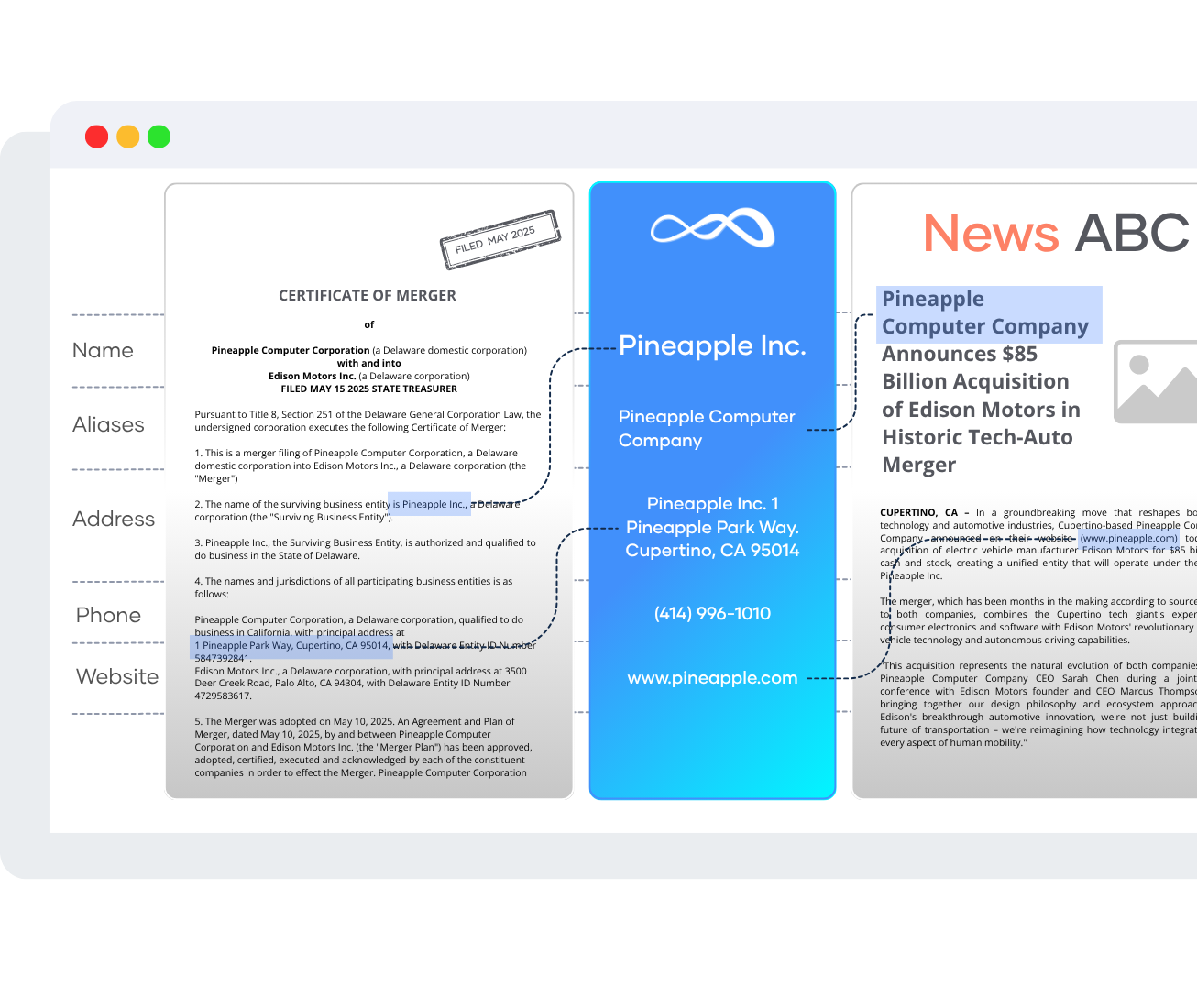
Entity Matching uses graph networks that recognize when the same entity appears differently across systems. For people matching, the agent evaluates contextual evidence like career stage consistency, commute plausibility, and immigration timeline alignment.
Source: Forage AI
Forage AI claims this approach can cut manual review time by up to 80% and identify matches with up to 90% precision compared to rule-based systems. Forage AI offers on-premises deployment for organizations that require data residency.
Pricing: Forage AI uses custom, project-based pricing with no published rates.
Forage AI does not publish pricing on its website. There is no pricing page, no listed tiers, no free trial, and no self-serve checkout. Every inquiry goes through a "Talk to Us" contact form. The company positions its model as custom: "We customize each project to your specific requirements."
This is a classic enterprise services pricing model where the company defines scope per engagement and negotiates pipeline build-out, QA, automation consulting, and delivery as line items.
The only exception is the Firmographic Data API, which appears to operate as a self-serve product, though Forage AI doesn't list pricing for it either.
The lack of published pricing means prospective buyers cannot independently compare costs against self-serve alternatives without first committing to a sales conversation.
Where Forage AI Falls Short
Forage AI works well as a managed extraction partner for organizations with complex, domain-specific data needs. But several limitations show up depending on your use case and buying preferences.
No Self-Serve Access or Transparent Pricing. Every engagement requires a sales conversation. There is no published pricing, no free trial, and no sandbox to evaluate the service independently.
For teams used to signing up, testing, and seeing costs before committing, this creates friction. Buyers who need to compare vendors quickly will find evaluation slower than with transparent-pricing alternatives.
UI and Documentation Gaps. G2 reviewers note that "the platform could improve its user interface for easier navigation" and that "more documentation and tutorials would help users maximize its capabilities." This fits a company whose primary model is managed service, not self-serve tooling.
Customers who want to monitor pipelines, adjust extraction rules, or debug issues on their own will find few self-service options.
Vendor Dependency in the Managed Model. The fully managed approach means clients cannot modify extraction rules, adjust schedules, or troubleshoot failures without engaging Forage AI's team. This creates switching costs and operational dependency.
If your data pipeline needs change quickly, or if you need to iterate on extraction logic without waiting for a third party, the managed model can slow things down.
Limited Third-Party Validation. While Forage AI carries a 4.8/5 stars rating on G2, the review volume is small. Tracxn ranks Forage AI 260th among 471 active competitors in the data extraction category, with 52 funded competitors ahead of it.
Enterprise procurement teams evaluating multi-year contracts may weigh this relative scale against larger, better-funded alternatives.
B2B Data Without Go-to-Market Intelligence. Forage AI can scrape professional profiles and firmographic data, but the output is raw extracted data.
It doesn't come with the intent signals, buying committee mapping, org charts, technographics, or go-to-market workflows that sales and marketing teams need to act on that data.
Teams focused on B2B prospecting or pipeline generation would need to pair Forage AI's output with other tools to match what dedicated GTM platforms provide out of the box.
These limitations follow from building a managed extraction service rather than a self-serve data platform. For teams with custom data needs, the trade-offs are worth it. For teams whose needs center on B2B sales and marketing intelligence, a different approach may be more efficient.
A Different Approach to B2B Data: ZoomInfo
ZoomInfo takes a different approach to B2B data. Where Forage AI builds custom pipelines to extract and structure data from scratch, ZoomInfo has already done that work at scale and layered go-to-market intelligence on top.
ZoomInfo is an all-in-one AI GTM platform built on a broad B2B data foundation: 500M contacts, 100M companies, 135M+ verified phone numbers, and 200M+ verified business email addresses. This data flows through a verification process backed by 300+ human researchers and reaches up to 95% accuracy on first-party data.

In a Fortune 500 competitive RFP analyzing 25 million contacts across vendors, an independent consultant concluded that "no other competitor came even close."
For go-to-market teams, ZoomInfo removes the extraction step. Instead of defining a scraping target, waiting for pipeline configuration, and receiving raw data that still needs processing, ZoomInfo provides verified, structured B2B data on demand.
Pre-Built B2B Data at Scale: ZoomInfo's database covers contacts, companies, intent signals, and technographics without requiring any extraction infrastructure.
ZoomInfo's data spans three areas: identity data (who buyers are, where they work, how to reach them), company context (firmographics, org charts, technographics across 100M companies), and dynamic signals (buying activity and behavioral data indicating when a company is in-market).
The data isn't static. ZoomInfo's collection system scans 28 million site domains daily, incorporates third-party partner data covering 95 million businesses, and draws from 200,000+ ZoomInfo Lite users who contribute data.
In 2025 alone, ZoomInfo added 10.2 million contacts through enhanced title classification, expanded international mobile coverage by 1.8 million numbers across six European markets, and verified location data for 160 million contacts.
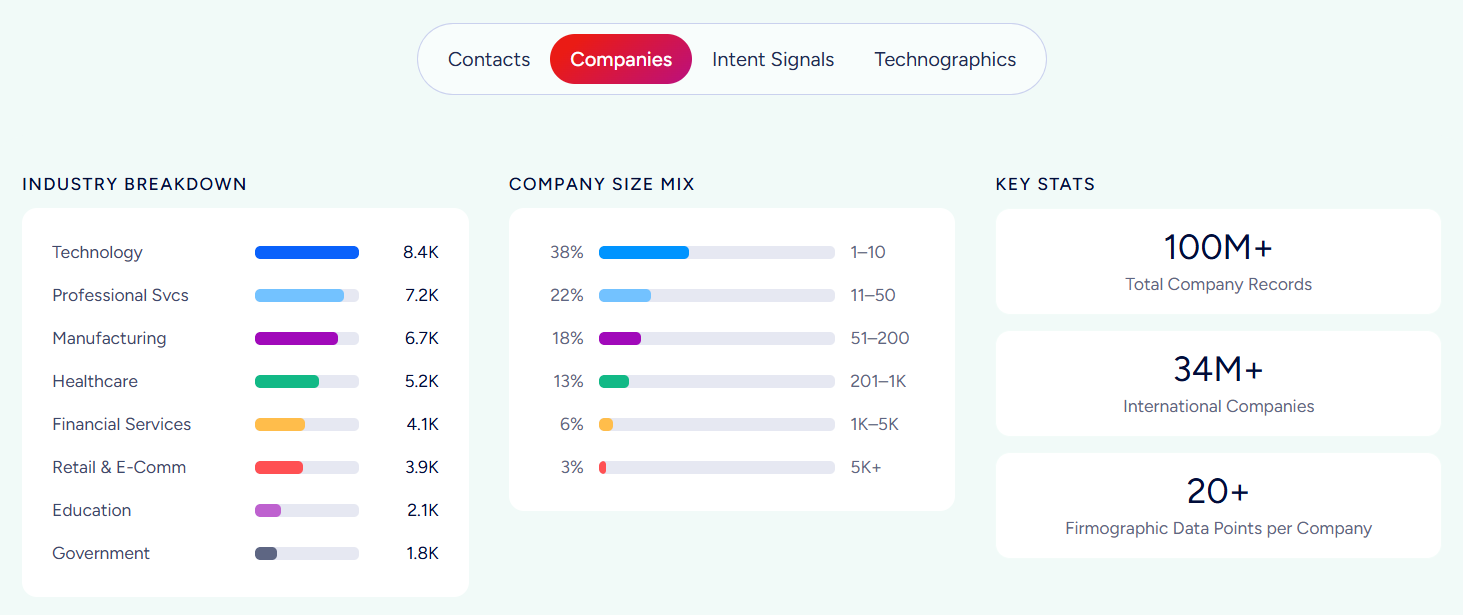
Where Forage AI's Firmographic Data API covers 8M+ companies with USA-only coverage, ZoomInfo provides 100M companies globally, with 34M+ company profiles outside North America and 200M+ professional profiles outside NA.
Source: ZoomInfo
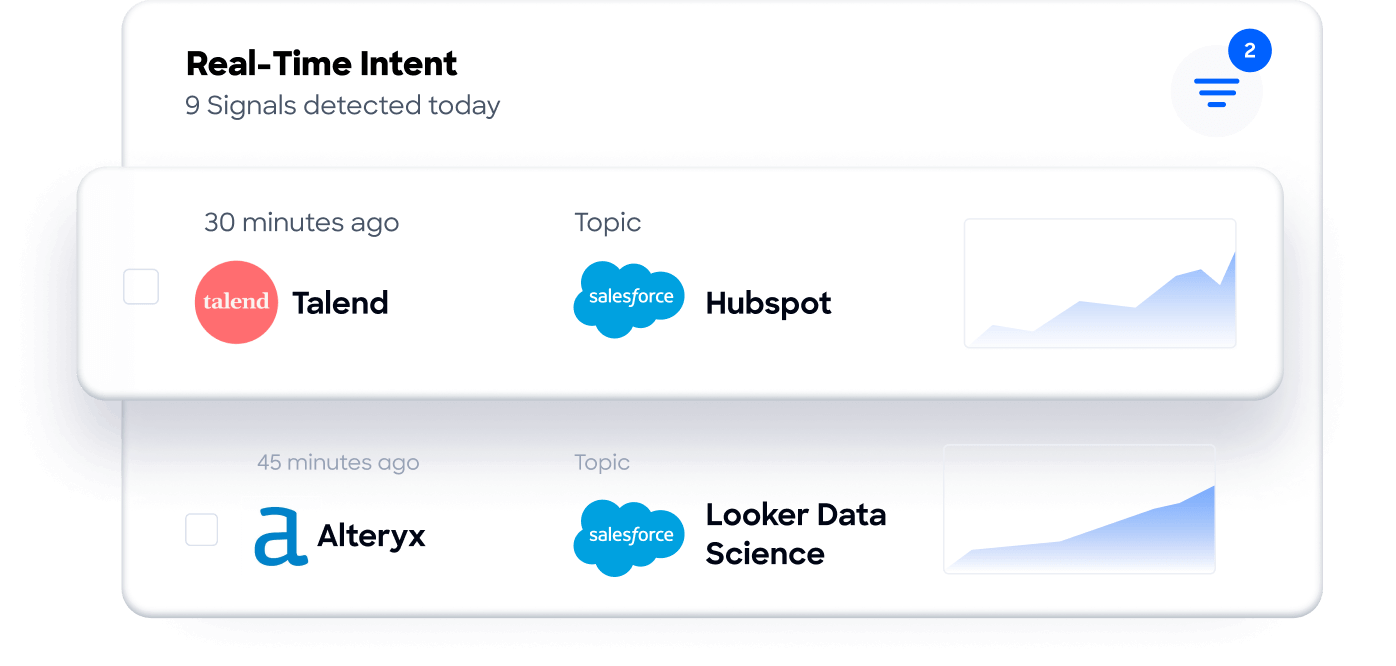
The data includes technographics tracking 30,000+ technologies across 200+ categories for 30+ million companies, buyer intent signals from 210 million IP-to-Organization pairings, and department org charts with decision-makers' direct dials and verified emails.
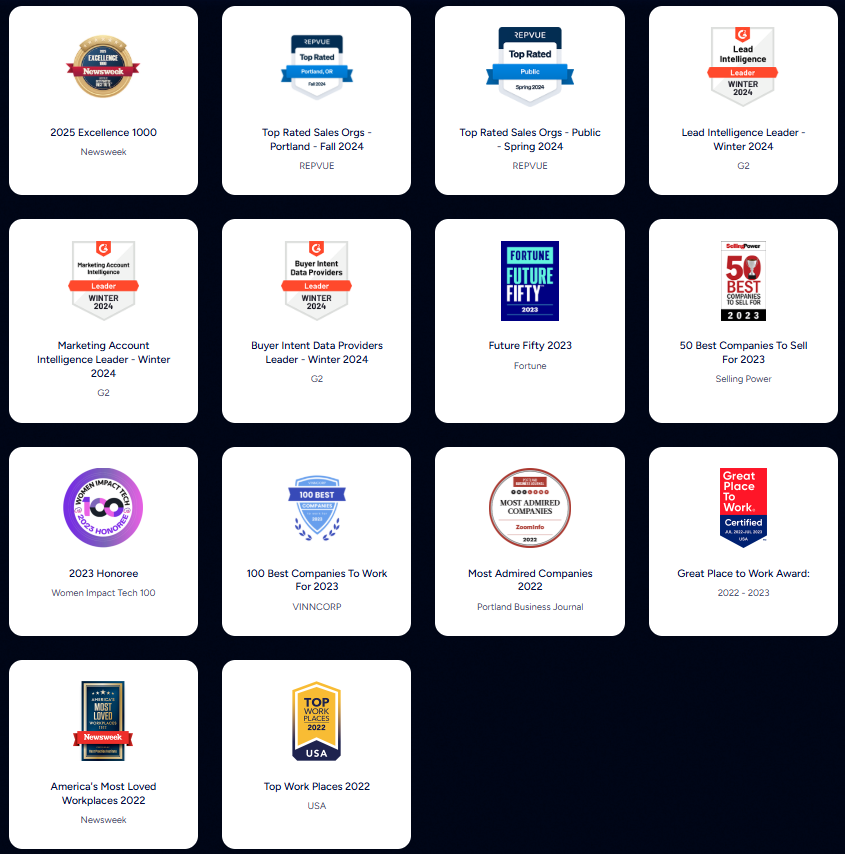
Third-party analysts confirm this: Leader in the Gartner Magic Quadrant for ABM Platforms (2024 & 2025), Leader in Forrester Wave for Intent Data Providers B2B (Q1 2025), and 133 No. 1 rankings on G2.
SpringDB saw 2x-3x increases in campaign conversions, a 300% increase in database usability, and 30-50% uplift in average deal size using ZoomInfo's enriched data across channels. (SpringDB Case Study)
The GTM Context Graph: ZoomInfo fuses B2B data with CRM records, conversation intelligence, and behavioral signals into an intelligence layer that captures why deals move or stall.
Raw data, whether extracted by Forage AI or pulled from ZoomInfo's database, tells you what exists. ZoomInfo's GTM Context Graph goes further by processing 1.5B+ data points daily and unifying a customer's CRM records, conversation transcripts from Chorus (ZoomInfo's conversation intelligence engine), email threads, and product usage data with ZoomInfo's third-party data.
As ZoomInfo's Chief Product Officer Dominik Facher writes: "The CRM recorded the state change. It has no record of why it happened." The GTM Context Graph makes that decision context machine-readable, capturing connections between signals and outcomes across people, actions, patterns, and exceptions.
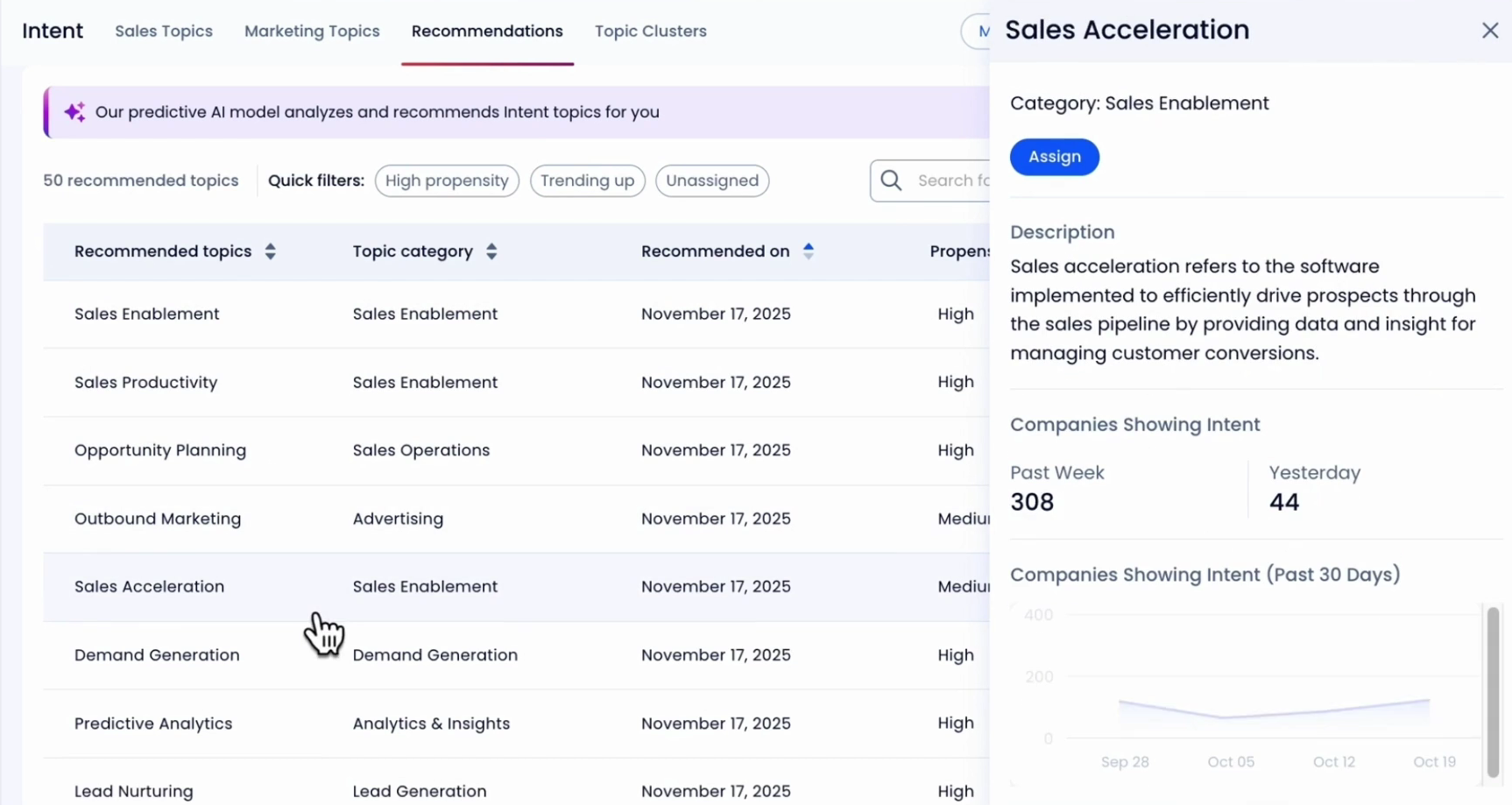
The intelligence layer feeds ZoomInfo's products. Guided Intent identifies topics historically correlated with deal success rather than requiring manual topic selection.
Source: ZoomInfo
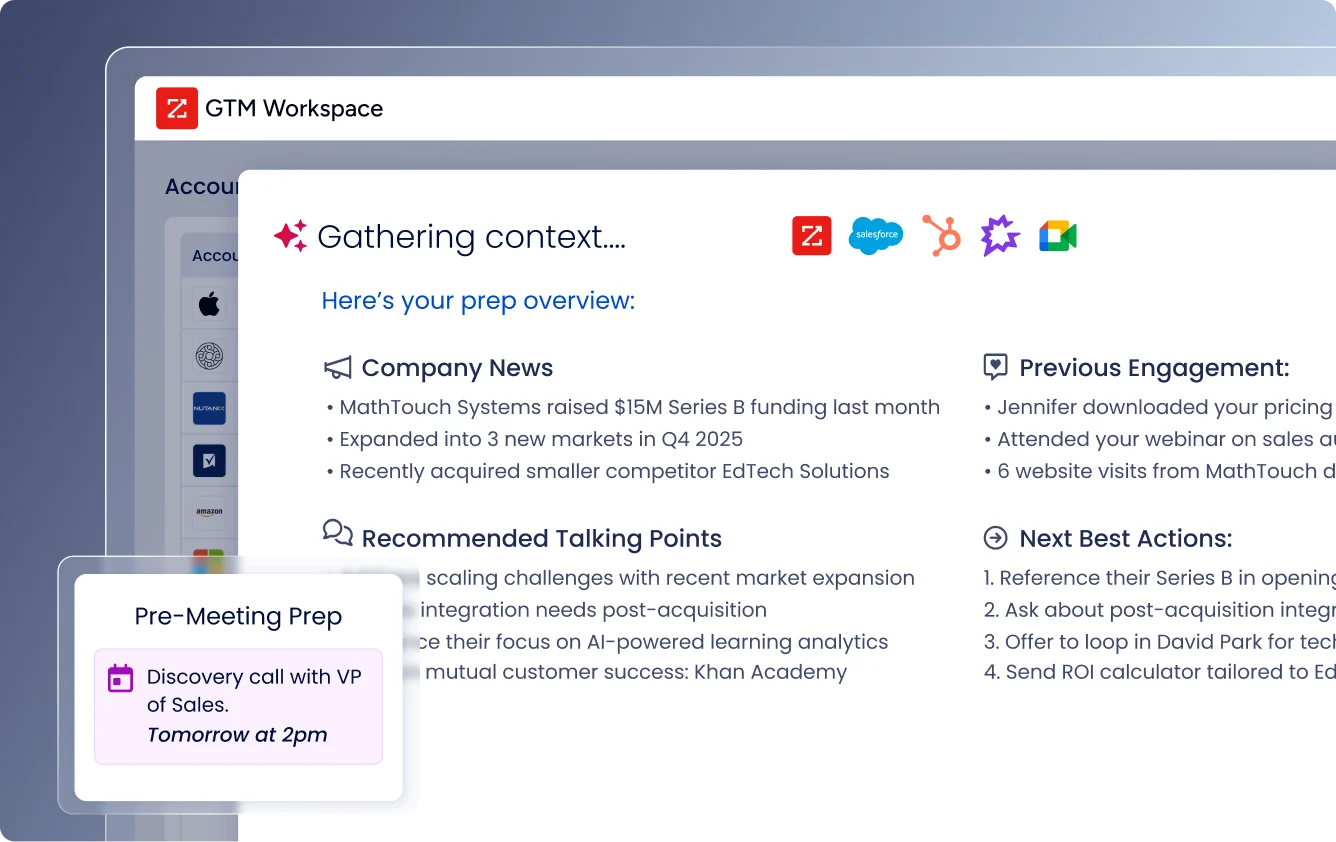
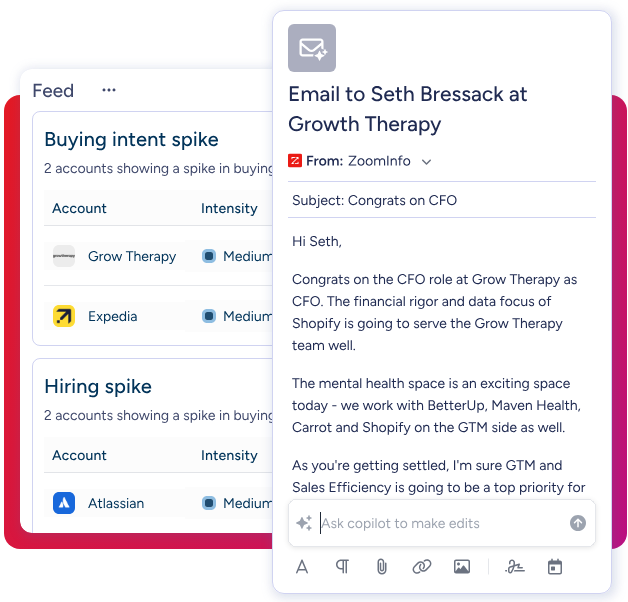
The AI agents inside GTM Workspace use this context to draft outreach that addresses specific concerns identified in previous conversations, prioritize accounts whose signals match past win patterns, and update CRM fields automatically.
Source: ZoomInfo
Seismic attributed 39% of active pipeline to opportunities identified or influenced by ZoomInfo signals, reported 54% productivity gains, and saved 11.5 hours per week per seller. (Seismic Case Study)
Universal Access: ZoomInfo delivers its intelligence through native products for sellers and marketers, plus APIs and MCP for any third-party tool.
ZoomInfo provides three access lanes, all drawing from the same GTM Context Graph:
GTM Workspace gives sellers a workspace where prioritized accounts, AI-drafted outreach, and deal execution come together. Built on Anthropic's Claude, the AI agents handle researching accounts, generating follow-ups, monitoring signals, and suggesting next steps.
Source: ZoomInfo
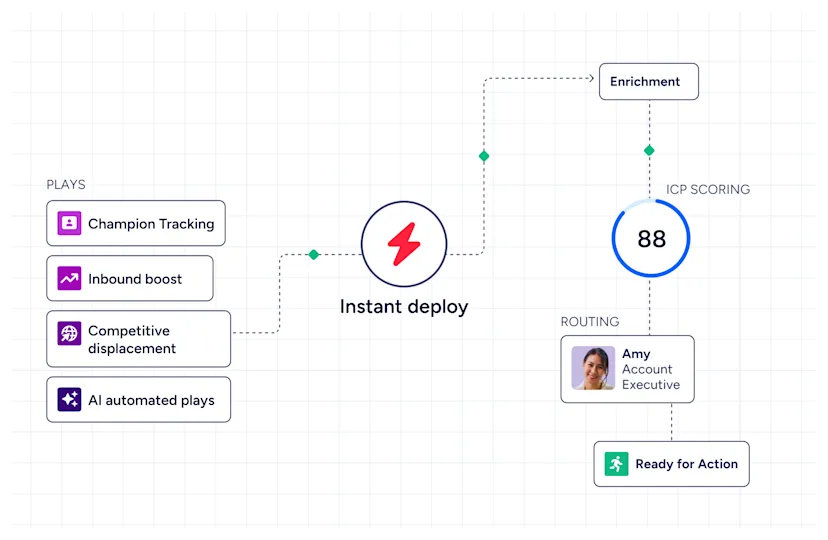
GTM Studio gives marketers, RevOps, and GTM engineers a builder where teams define audiences, run campaigns, and measure pipeline in natural language. Expansion plays that used to take 3 weeks now launch in 30 minutes.
Source: ZoomInfo
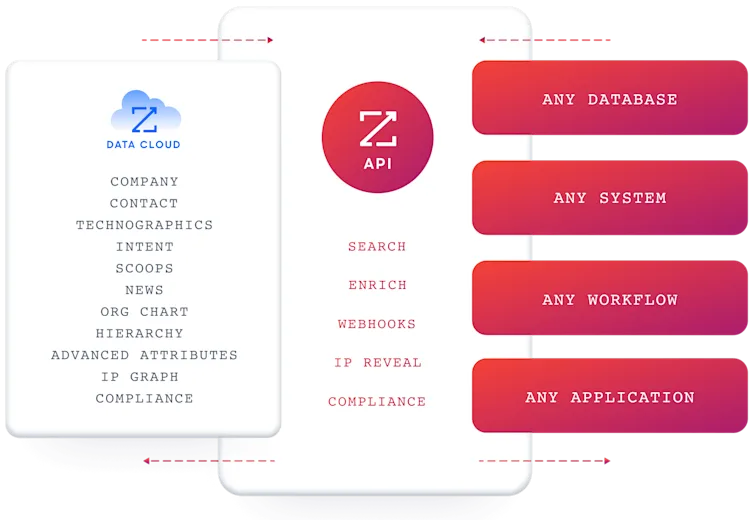
APIs and MCP open the same data to any custom agent, internal tool, or partner platform. The Enterprise API provides search, enrich, AI intelligence, marketing audience, and engagement endpoints.
Source: ZoomInfo
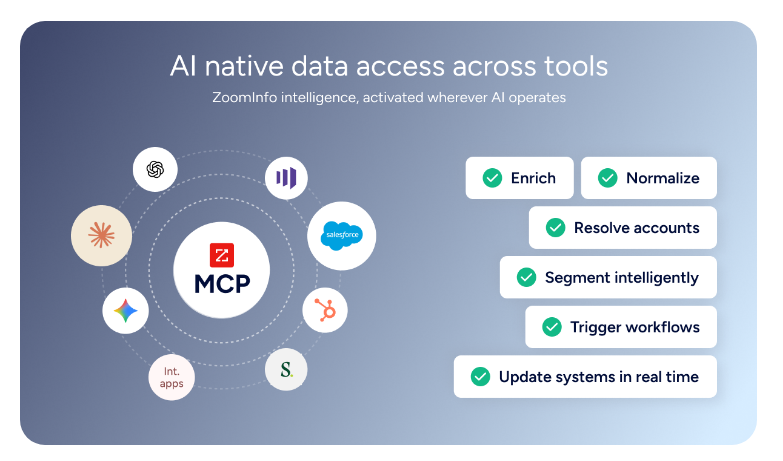
The MCP server connects AI models directly to ZoomInfo's data through natural language, currently supporting Claude and ChatGPT.
Source: ZoomInfo
All relevant plans include API access, meaning teams that want to build custom applications or power AI agents with ZoomInfo data can do so without separate API licensing.
BDO Canada's Jerry Wilson, Senior Marketing Intelligence Analyst: "The plug-and-play aspect of the API means I can integrate it very easily into any process and get information at a moment's notice." The company achieved an 87% reduction in time spent on updates to their internal data dashboards. (BDO Canada Case Study)
Pricing and Entry Points: ZoomInfo offers free access tiers alongside custom enterprise pricing.
ZoomInfo uses a custom-quoted, seat-and-credit-based subscription model for paid plans. Like Forage AI, specific dollar amounts are not publicly listed. However, ZoomInfo provides two free entry points that Forage AI does not:
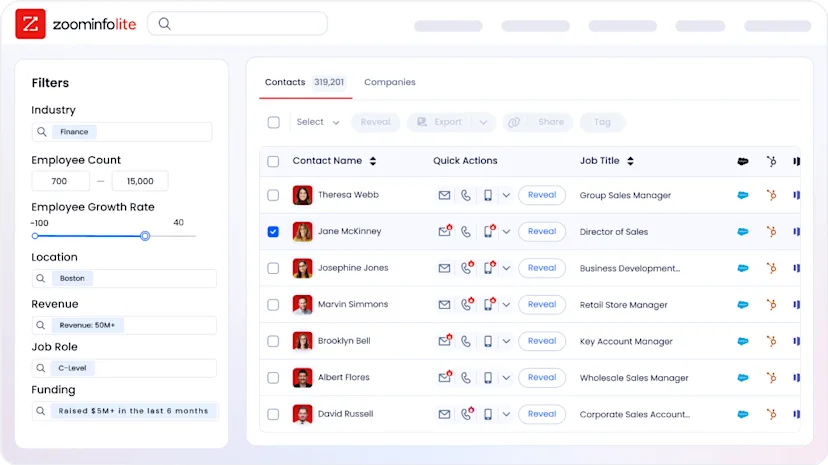
ZoomInfo Lite is a permanent free tier (no credit card, no time limit) that includes access to ZoomInfo's B2B database with 100M+ verified profiles, 10 monthly export credits, the ReachOut Chrome Extension, WebSights Lite (up to 10 website visitor reveals per day), built-in email sending, and HubSpot integration.
Source: ZoomInfo
Free Trial provides 7 days of access to core platform features including contact and company search, intent signals, and email outreach, with no credit card required.
Paid plans are organized into Sales tiers (Professional, Advanced, Enterprise) and Marketing tiers (Marketing Demand, ABM Lite, ABM Enterprise), with credits consumed only when exporting data out of the platform. Searching and viewing data within ZoomInfo does not consume credits.
ZoomInfo also holds ISO 27001, ISO 27701, SOC 2 Type II, TRUSTe GDPR, and TRUSTe CCPA certifications, all renewed annually. The company is a registered data broker in California and Vermont.
Forage AI or ZoomInfo: Comparison Summary
Aspect | Forage AI | ZoomInfo |
|---|---|---|
Approach | Managed data extraction service (custom pipelines built per engagement) | Pre-built B2B intelligence platform with AI-powered GTM tools |
Primary use case | Custom web scraping, document processing, AI automation | Sales prospecting, pipeline generation, ABM, revenue operations |
B2B contact data | Extracted per project (e.g., 3M+ profiles in 3 months) | 500M contacts, 200M+ verified emails, 135M+ verified phones available instantly |
Company data | 8M+ companies via Firmographic API (USA only) | 100M companies globally with firmographics, technographics, org charts |
Intent signals | Not available | 210M IP-to-Organization pairings, Guided Intent, buyer intent clusters |
Document processing | Not available (B2B data platform, not a document processing service) | |
Self-serve access | No self-serve product (sales conversation required) | ZoomInfo Lite (free, permanent), 7-day free trial, self-serve search |
Transparent pricing | No published pricing | No published pricing, but free tier available |
AI capabilities | Agentic AI, RAG, Entity Matching for data extraction | GTM Context Graph, AI agents for sales/marketing execution, MCP |
Integrations | Custom pipeline delivery (CSV, XLS, API) | 120+ integrations, Salesforce, HubSpot, Snowflake, APIs, MCP |
Compliance | GDPR, CCPA, on-premise options | ISO 27001, ISO 27701, SOC 2 Type II, TRUSTe GDPR/CCPA |
Team size | Public company (NASDAQ: GTM), $1.25B annual revenue, | |
Analyst recognition | KuppingerCole vendor listing for IDP | Gartner MQ Leader (ABM), Forrester Wave Leader (Intent Data), |
Best for | Custom data extraction projects in regulated industries | Go-to-market teams needing instant, verified B2B intelligence |
Final Verdict
Forage AI and ZoomInfo serve different needs, and the right choice depends on what kind of data problem you're solving.
Choose Forage AI if your data requirements are custom and cannot be served by an existing database.
If you need to extract structured data from thousands of financial PDFs, scrape niche industry sources that no pre-built platform covers, or process complex documents with domain-specific layouts, Forage AI's managed service model handles the infrastructure so your team doesn't have to.
The managed approach works well for organizations in regulated industries where extraction logic must be tailored to specific document formats and compliance requirements.
Choose ZoomInfo if your primary data need is B2B intelligence for sales, marketing, or revenue operations. Rather than building extraction pipelines to assemble contact lists, company profiles, and market signals from scratch, ZoomInfo provides all of that instantly through a verified, continuously updated database of 500M contacts and 100M companies.
The GTM Context Graph captures why deals move, and the three access lanes (GTM Workspace, GTM Studio, APIs and MCP) deliver the data to every team and tool.
Get started with ZoomInfo here.
The distinction is between building data infrastructure and using data intelligence. Forage AI builds the pipes. ZoomInfo provides the water, already flowing.
Forage AI FAQ
What does Forage AI do?
Forage AI is a managed data extraction and automation service. The company handles web scraping, intelligent document processing, and AI-powered automation on behalf of enterprise clients.
Rather than selling software you operate yourself, Forage AI's team builds and maintains custom data pipelines, delivering structured output in the client's preferred format. The company targets industries including finance, healthcare, real estate, and e-commerce.
How much does Forage AI cost?
Forage AI does not publish pricing. There are no listed tiers, no self-serve checkout, and no free trial. Every engagement is custom-scoped through a sales consultation, with pricing determined by project requirements. This makes it difficult to compare costs against self-serve alternatives without first committing to a sales conversation.
ZoomInfo also uses custom pricing for paid plans but offers a permanent free tier (ZoomInfo Lite) and a 7-day free trial, so buyers can evaluate before committing to a sales call.
What industries does Forage AI serve?
Forage AI targets regulated and data-intensive industries including finance (financial PDFs, SEC filings, alternative data), healthcare (provider directories, medical records, claims processing), real estate (listing aggregation, property records), e-commerce (product prices, inventory monitoring), and AI/ML (training data pipelines). The company claims coverage across 15+ industries for web data extraction and 20+ industries for AI training data.
Does Forage AI have a self-serve platform?
No. Forage AI operates primarily as a managed service. The only self-serve product is the Firmographic Data API, which provides access to B2B data on 8M+ companies via REST API. All other products require custom engagement through the company's sales team. G2 reviewers have noted that the platform could improve its user interface and documentation.
ZoomInfo, by contrast, provides self-serve access through its web platform, Chrome extension, mobile app, and APIs.
How accurate is Forage AI's data extraction?
Forage AI claims 99% precision on document data extraction, 97% accuracy on table extraction, and 99.9% data accuracy at scale for healthcare data. The company uses a human-in-the-loop process where custom-trained models capture errors and human reviewers reinforce accurate extraction over time.
These claims are backed by throughput numbers including 10K+ financial PDFs processed in 10 weeks and 10M+ total documents parsed.
Can Forage AI replace a B2B data platform like ZoomInfo?
For custom extraction projects involving non-standard sources, Forage AI fills gaps that pre-built databases miss.
However, for standard B2B intelligence needs (verified contacts, company data, intent signals, org charts, technographics), ZoomInfo provides instant access to 500M contacts and 100M companies without requiring any pipeline build-out.
ZoomInfo also adds go-to-market capabilities (AI-powered sales tools, marketing automation, buyer intent tracking) that Forage AI does not offer. The two platforms address different problems rather than competing directly.
What is Forage AI's Entity Matching Agent?
The Entity Matching Agent uses AI-powered graph networks to resolve fragmented records across databases.
For people matching, it evaluates contextual evidence such as career stage consistency and commute plausibility. For company matching, it handles corporate structures including legal entities, "doing business as" names, and mergers.
Forage AI claims the agent can cut manual review time by up to 80% and identify matches with up to 90% greater precision than rule-based systems. Forage AI offers on-premises deployment for organizations that require data residency.
Does Forage AI comply with data privacy regulations?
Forage AI states GDPR and CCPA compliance on its website, offers on-premise deployment options, and guarantees complete data ownership for customers. Healthcare document processing is HIPAA-compliant. The privacy policy specifies dual applicability to EU and US data subjects.
However, no ISO 27001, SOC 2, or other named third-party security certifications are publicly listed on the Forage AI website. ZoomInfo holds ISO 27001, ISO 27701, SOC 2 Type II, TRUSTe GDPR, and TRUSTe CCPA certifications, all renewed annually.
Other Forage AI comparisons and reviews:
