
Choosing between Grata and PitchBook for deal intelligence comes down to a few questions:
Are you sourcing bootstrapped, founder-owned companies that never appear in traditional databases, or tracking VC/PE-backed deal flow across the full capital stack?
How deep do your research needs go? Finding companies, or benchmarking valuations, analyzing fund performance, and tracking LP commitments?
Once you identify a target company, do you have the contact data and outreach tools to reach the founder or CEO?
Does your team need proprietary deal timing signals before the rest of the market sees them?
Is your work purely deal screening and research, or does it extend into business development and go-to-market execution?
In short, here's what we recommend:
Grata is built for dealmakers who need to find private companies before anyone else does. Its AI reads company websites to surface bootstrapped, founder-led businesses in the lower middle market that traditional databases miss.
With 21M+ company profiles, Seller Intent signals that predicted 98% of U.S. mid-market deals in 2025, and a live deal network connecting buyers with sell-side advisors, Grata turns the private market's biggest problem (visibility) into a sourcing advantage.
However, Grata lacks the VC/PE fund data, LP intelligence, and credit market coverage that firms tracking the full capital stack require.
PitchBook is the established authority on private capital markets, covering nearly 6 million companies, 2.7 million investments, 570,000 investors, 56,000 limited partners, and 147,000 funds.
Backed by 1,800+ researchers and 60+ institutional analysts, PitchBook offers depth across PE, VC, M&A, private credit, and leveraged finance that no competitor matches.
The trade-off: PitchBook's strength in funded and publicly visible companies means bootstrapped businesses in the lower middle market often slip through its coverage, and enterprise pricing puts it out of reach for smaller teams.
Both platforms handle deal intelligence well, each from a different angle. But identifying a target and researching a deal is only half the workflow. Deal teams still spend hours tracking down direct phone numbers, verifying email addresses, and building outreach sequences to reach decision-makers at target companies. That's where a different kind of platform comes in.
ZoomInfo is a B2B go-to-market platform built on the largest contact dataset in the industry: 500M contacts, 100M companies, 135M+ verified phone numbers, and 200M+ verified business email addresses.
For corporate development and business development professionals whose work extends beyond deal screening into target engagement, ZoomInfo's GTM Context Graph combines company intelligence with buyer intent signals, conversation data, and CRM records to reveal not just who to contact, but when and why they're likely to respond.
Whether your team accesses this intelligence through the GTM Workspace for sellers, GTM Studio for operations, or the API and MCP inside any third-party tool, ZoomInfo bridges the gap between finding deals and starting conversations.
If reaching decision-makers faster sounds like your bottleneck, see how ZoomInfo works.
Grata vs. PitchBook at a glance
Grata | PitchBook | ZoomInfo | |
|---|---|---|---|
Primary focus | Private company discovery and deal sourcing | Capital markets data, research, and analytics | B2B go-to-market intelligence and execution |
Company database | ~6M companies (private and public) | ||
Contact data | |||
Deal and fund data | Deal comps, live deal teasers, seller intent | 2.7M investments, 147K funds, 56K LPs, credit data | Not a deal data platform |
Intent signals | (predicts sale readiness) | None | (identifies in-market companies) |
Research and analytics | Market fragmentation, public comps | 60+ analysts, institutional research, daily valuations | GTM Context Graph, AI account research |
AI capabilities | Agentic Search, contextual AI, MCP server | Navigator (natural language), AI summaries, ML valuations | GTM Context Graph, AI agents, MCP server |
CRM integrations | Salesforce, HubSpot, DealCloud, Affinity, Dynamics | Salesforce, HubSpot, Dynamics, DealCloud, Affinity | 120+ integrations, Salesforce, HubSpot, Dynamics |
Pricing | Quote-based, no free tier | Quote-based, limited free trial | Consumption-based, |
Best for | PE deal sourcing, M&A advisory, lower middle market | Full capital markets intelligence, LPs, credit investors | Corporate development, business development, target engagement |
Database coverage: finding hidden companies vs. mapping the capital stack
Grata and PitchBook look at the private market through different lenses.
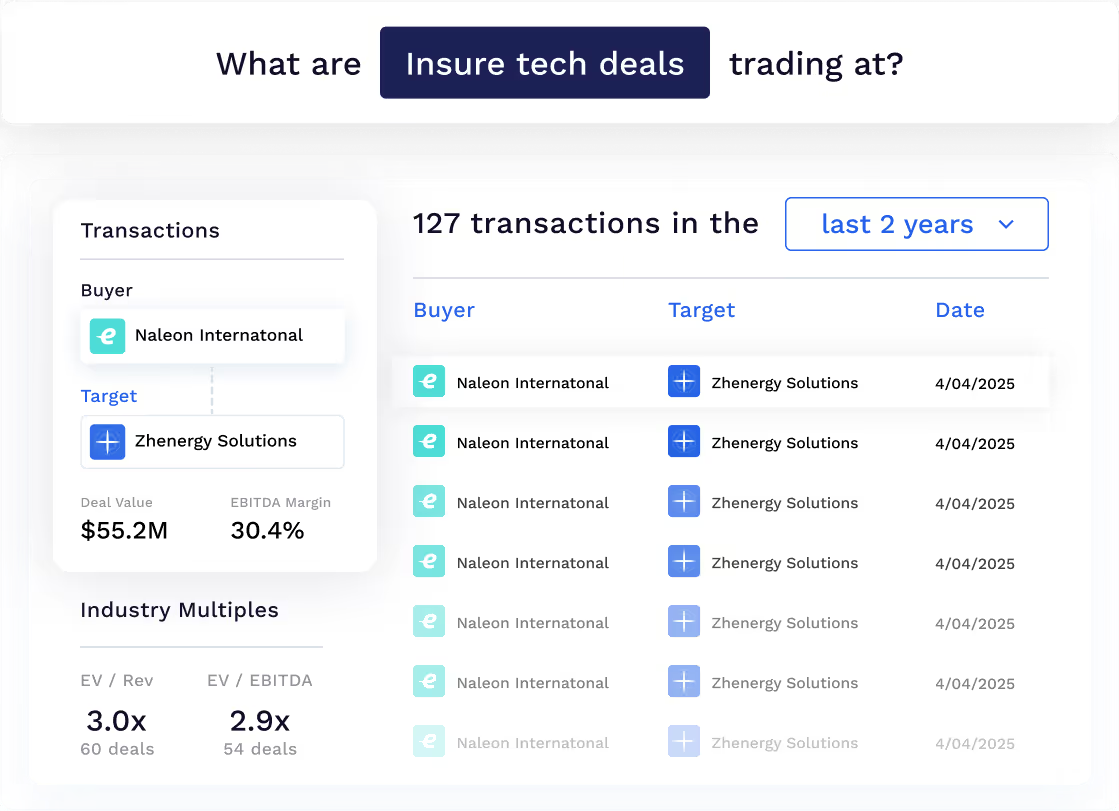
Grata's contextual AI engine crawls and reads millions of company websites to determine what a business does, how it generates revenue, and who it serves.
Source: Grata
A query like "bootstrapped commercial HVAC services in the Southeast" returns companies that no industry code filter could find, because most of those businesses have never appeared in a public filing or a press release.
The result: 21M+ company profiles weighted toward the lower middle market, including the bootstrapped, founder-led, and family-owned businesses that represent 99% of U.S. businesses and 50% of GDP but remain invisible to traditional databases.
Grata maintains data quality through field standardization, continuous cleaning, anomaly detection with human review, and multi-source entity resolution, with a stated 99% accuracy rate.
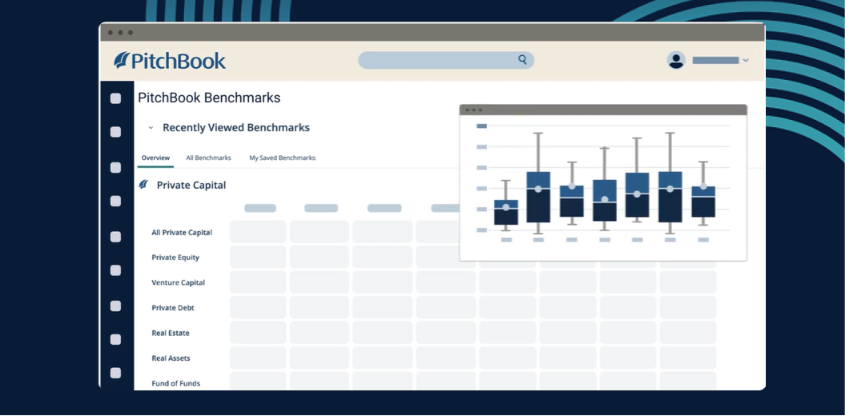
PitchBook approaches coverage from the capital markets side. Its nearly 6 million companies are tracked alongside 2.7 million investments, 570,000 investors, 56,000 limited partners, and 147,000 funds.
Source: PitchBook
The company database is smaller than Grata's by headcount, but the surrounding data is what makes PitchBook essential for many firms.
You can trace a company's full financing history, see who invested at what valuation, track the fund that led the round, and examine that fund's performance relative to vintage-year benchmarks. This connected view across companies, deals, investors, and funds is something Grata does not attempt.
PitchBook's data operations team includes 1,800+ professionals who have logged over 10 million hours of research, and datasets update six times a day.
The practical divide: Grata finds companies PitchBook misses (unfunded, sub-$50M revenue, no press coverage), and PitchBook contextualizes companies Grata cannot (cap tables, fund performance, LP commitments, credit structures). If your mandate is "find every HVAC services company in the Midwest with $10M-$50M revenue," Grata will return a fuller list. If your mandate is "show me every PE-backed HVAC platform, their funding history, the fund IRRs behind them, and comparable deal multiples," PitchBook is the only answer.
Search and discovery: reading websites vs. querying the capital stack
How you find companies on each platform reflects their underlying architecture.
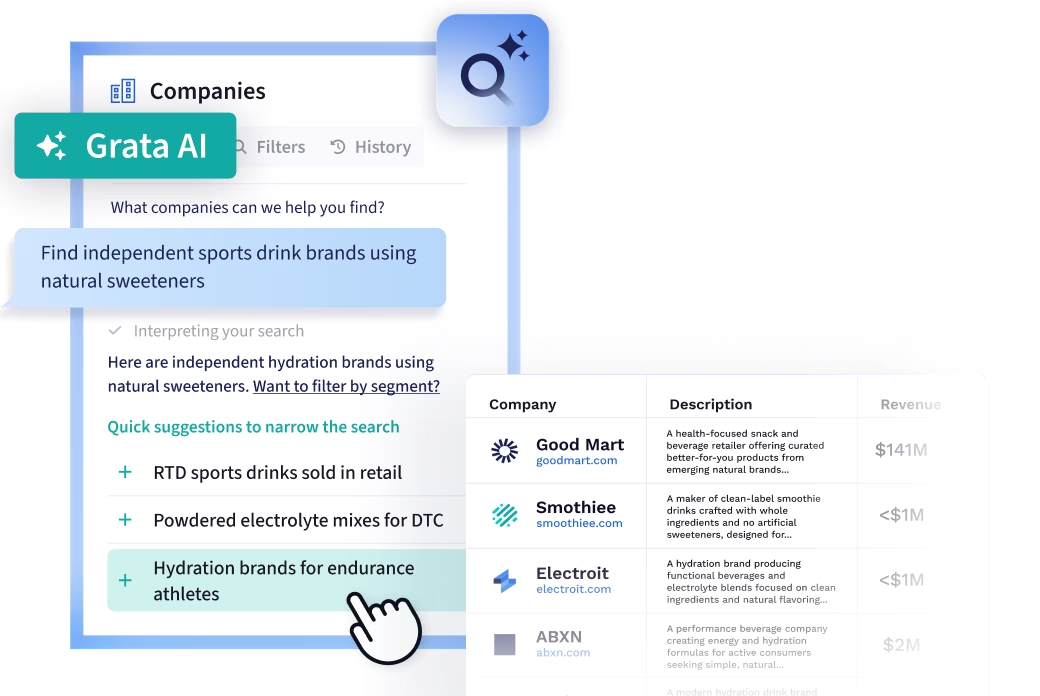
Grata's Agentic Search accepts plain-language deal theses and generates structured filter sets automatically. Because the AI reads full company websites rather than relying on SIC or NAICS codes, it catches companies that describe themselves in ways no taxonomy anticipates.
Source: Grata
The Similar Search feature takes a known company and finds others with matching commercial profiles, useful when a deal team has a thesis but can't articulate it in keywords.
Agentic Search goes further with a four-phase reasoning loop: perception (gathering context from company profiles, CRM records, and market data), reasoning (comparing companies against sourcing criteria), action (producing structured target lists), and learning (adapting fit criteria based on deal team feedback).
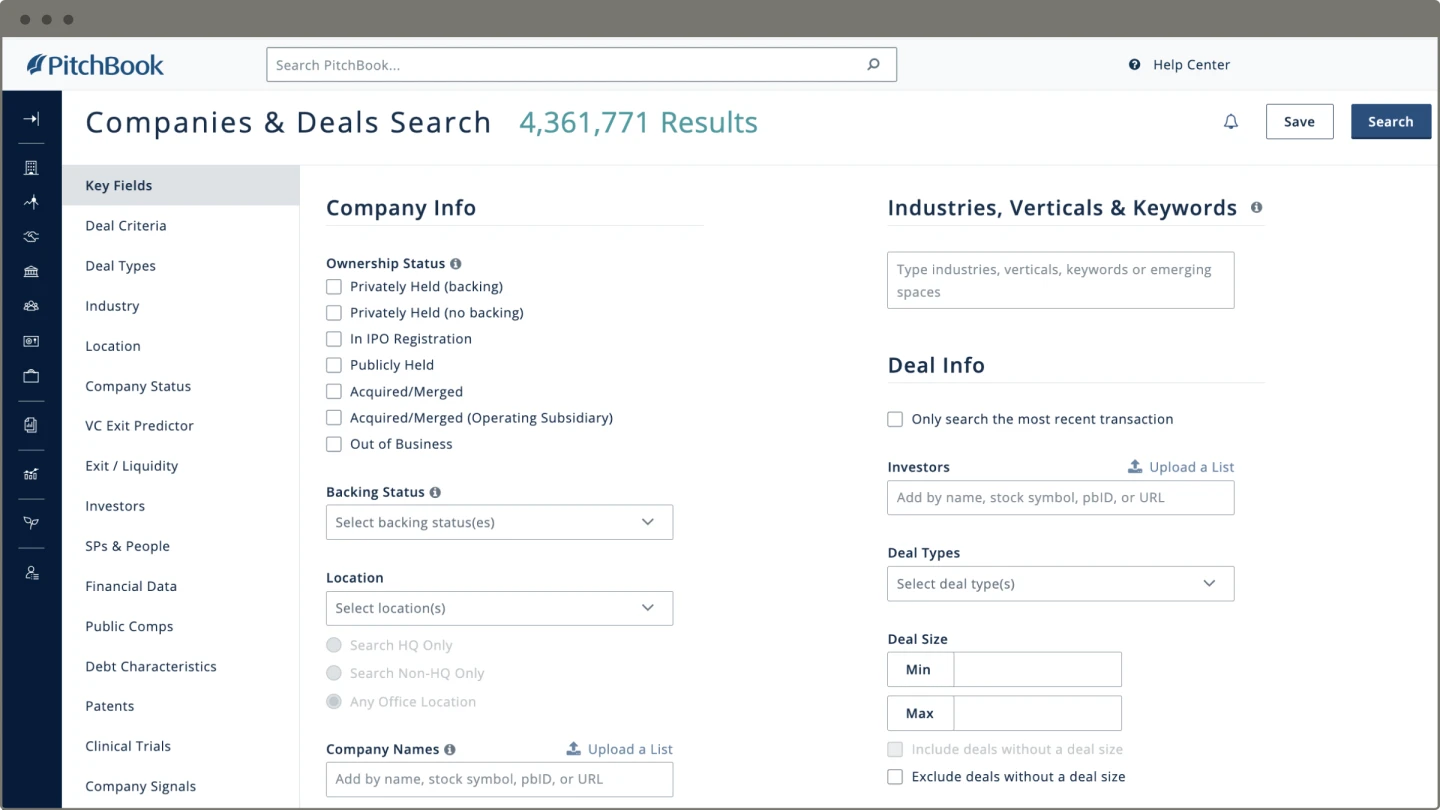
PitchBook's Advanced Search takes the opposite approach: structured filters across companies, deals, investors, funds, LPs, debt, lenders, service providers, and people.
Source: PitchBook
The strength is precision. Filter by EBITDA range, investor type, funding stage, deal status, geography, and dozens of other parameters. Saved searches are dynamic, refreshing automatically as new matching entities enter the database.
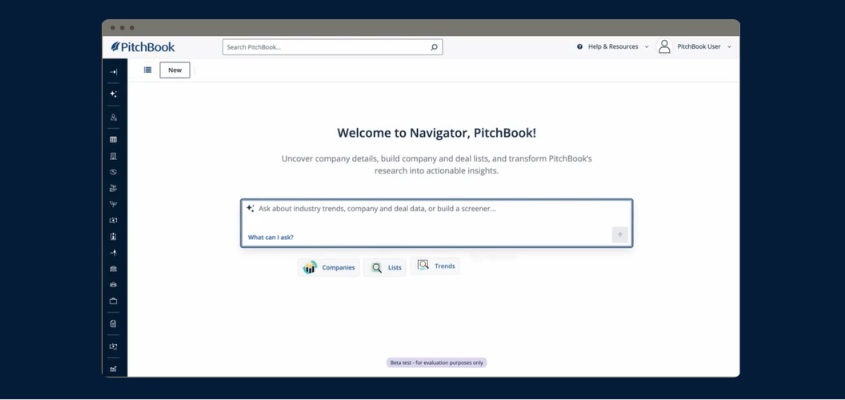
PitchBook's Navigator, launched in late 2025, adds a natural-language layer on top, letting users ask questions and receive answers grounded in PitchBook data.
Source: PitchBook
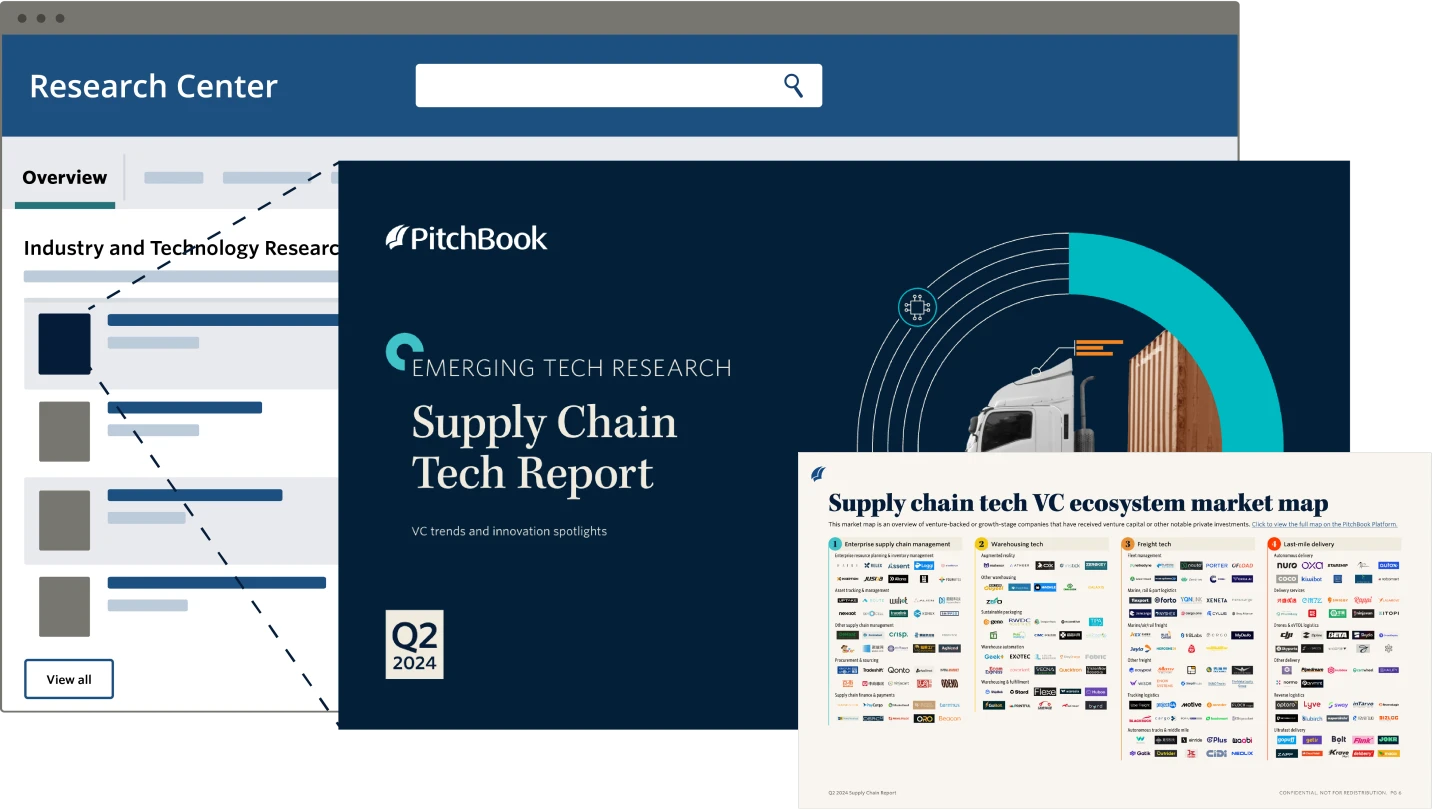
PitchBook also offers 90+ emerging technology market maps and 100+ Emerging Spaces, surfacing nascent sectors too fluid for existing industry classifications.
For discovery-led sourcing ("show me companies I didn't know existed"), Grata's AI approach is the stronger tool. For hypothesis-driven research ("validate my thesis with data across the capital stack"), PitchBook's structured search and connected datasets are hard to match.
Deal data, research, and market intelligence
PitchBook's research depth is its defining advantage.
The PitchBook Institutional Research Group (PIRG) employs 60+ analysts with CFA, CAIA, and PhD credentials who publish dozens of reports daily across PE, VC, M&A, real assets, and credit.
Source: PitchBook
The PitchBook-NVCA Venture Monitor is the industry standard for U.S. venture data. The VC Exit Predictor uses machine learning to predict exit probability with 75% accuracy, and top-decile companies are 3.1x more likely to exit.
In early 2026, PitchBook launched Valuation Estimates, the first daily valuation model for VC-backed companies, covering 15,000+ companies.
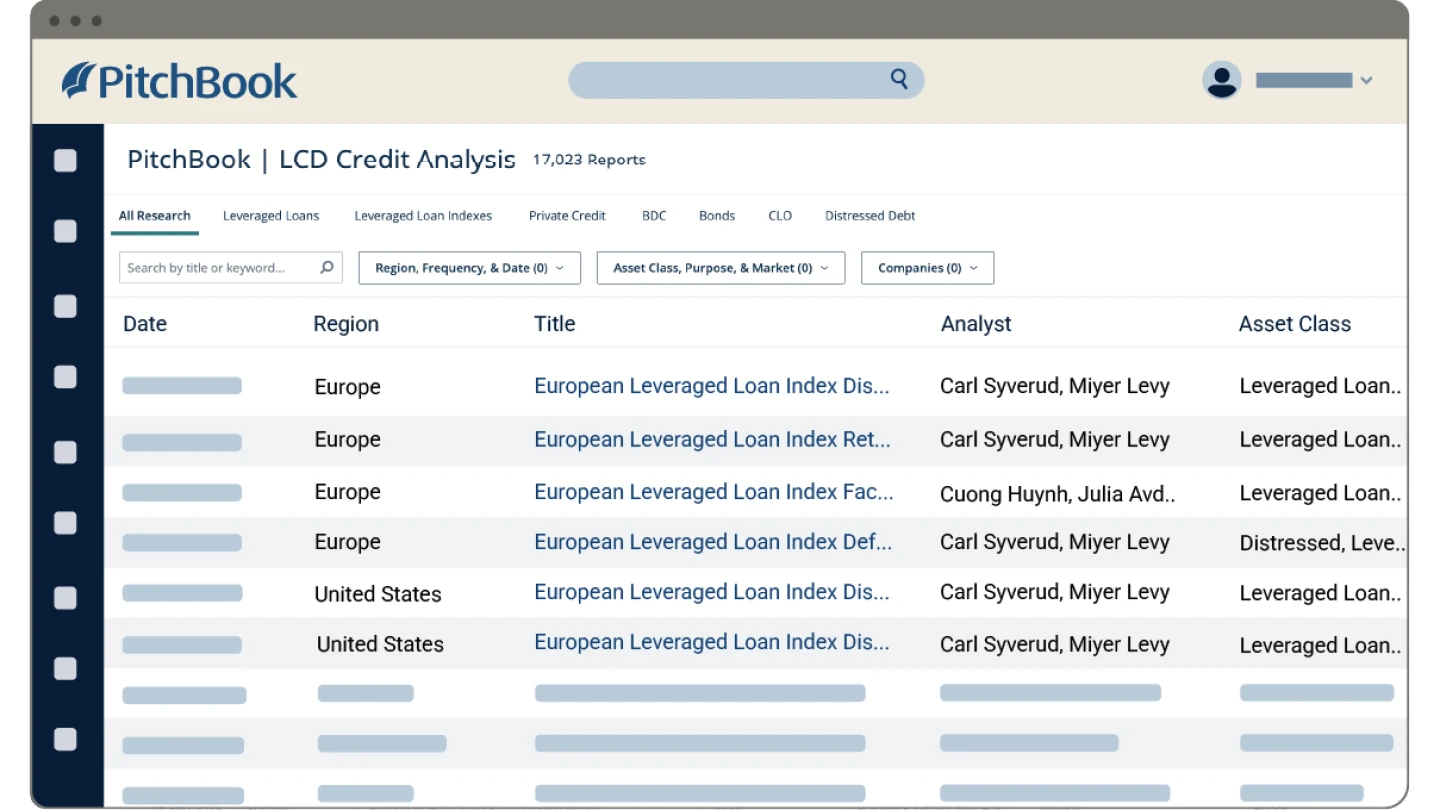
The credit side runs equally deep. PitchBook integrated LCD (Leveraged Commentary & Data) after Morningstar's $650M acquisition from S&P Global, adding the industry-standard leveraged loan dataset, 280+ credit indexes, the CLO Portfolio Holdings Universe, and BDC portfolio holdings.
Source: PitchBook
For credit investors, PitchBook is increasingly the single platform where private equity context meets private credit data.
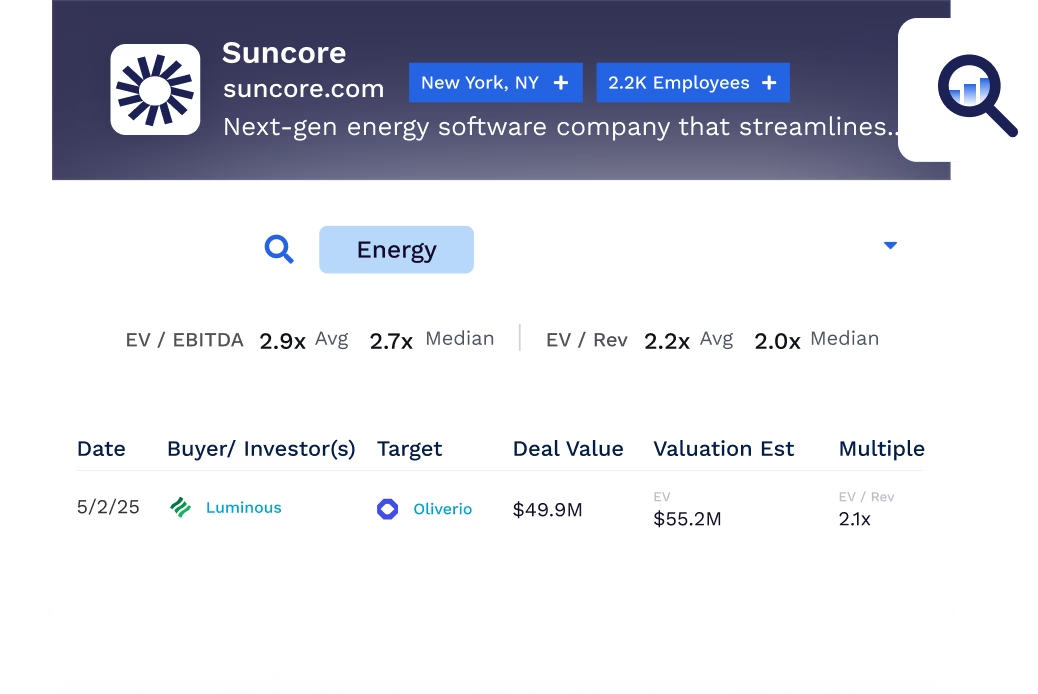
Grata's Market Intelligence takes a different approach, built for private market questions PitchBook handles less well.
Market Fragmentation shows ownership concentration and whitespace in any custom-defined segment, regenerating with every filter change. Deal Data covers PE acquisitions, corporate deals, and growth equity transactions, verified by 600 analysts.
Source: Grata
Public Comps surfaces relevant public company peers matched by business model rather than SIC codes.
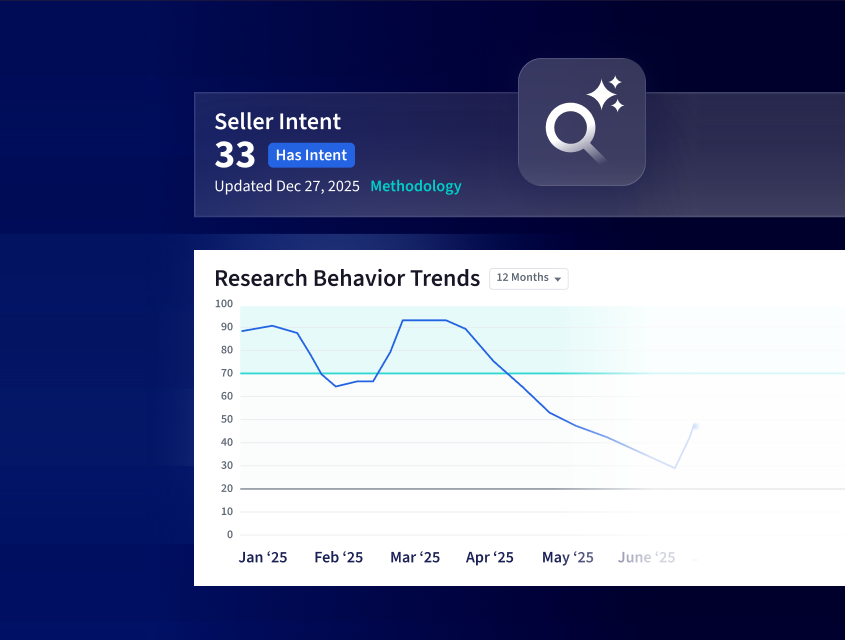
Grata's most distinctive intelligence feature is Seller Intent, which surfaces behavioral signals indicating a private company is preparing for a sale 6-12 months before it formally enters the market.
Source: Grata
When back-tested against completed transactions, the model predicted 98% of U.S. and 89% of EMEA mid-market to large-cap deals in 2025. PitchBook tracks deal activity after it becomes visible (filings, announcements, data sourced from deal participants) but does not provide predictive signals about companies that have not yet entered a process.
For buy-side firms where getting to a deal first is the competitive advantage, Seller Intent is worth evaluating on its own.
Contact data and outreach: the workflow gap both platforms leave open
Both Grata and PitchBook provide contact data. Neither provides enough for high-volume outreach.
Grata offers 10M+ executive contacts focused on founders, CEOs, and C-suite titles. But contact accuracy varies for smaller private companies, with some records missing owner data entirely.
Grata partially addresses this with an on-demand Contact Enrichment Program (up to 1,500 requests per week), but that adds friction for high-volume outreach.
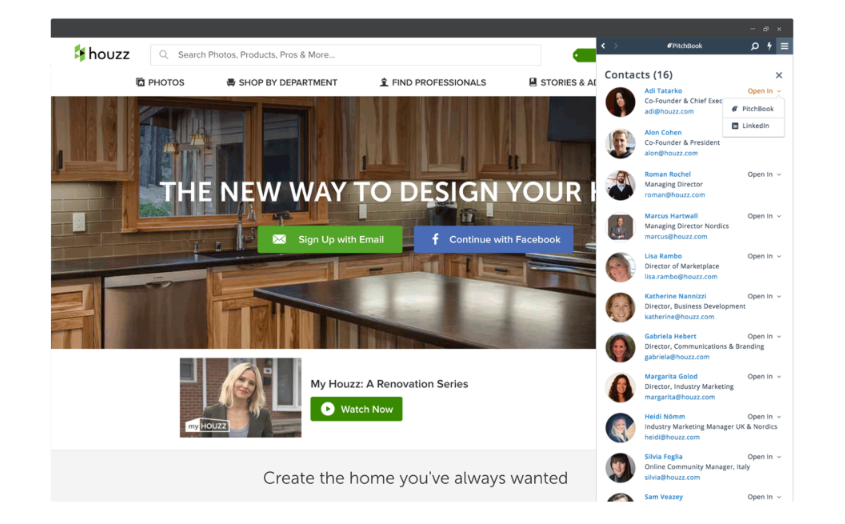
PitchBook covers 4.4 million people within its database, with contact details accessible through company and investor profiles. Its Chrome extension provides access to 900,000 companies and 1.5 million contacts while browsing.
Source: PitchBook
But PitchBook's contact data skews toward the investment community (GPs, LPs, deal professionals) rather than operating executives at target companies.
This is where the deal workflow breaks down. A team using Grata or PitchBook identifies 200 target companies. Now they need verified direct-dial phone numbers and business emails for the founders, CFOs, and VPs of Corporate Development at each one. Neither platform was built for this.
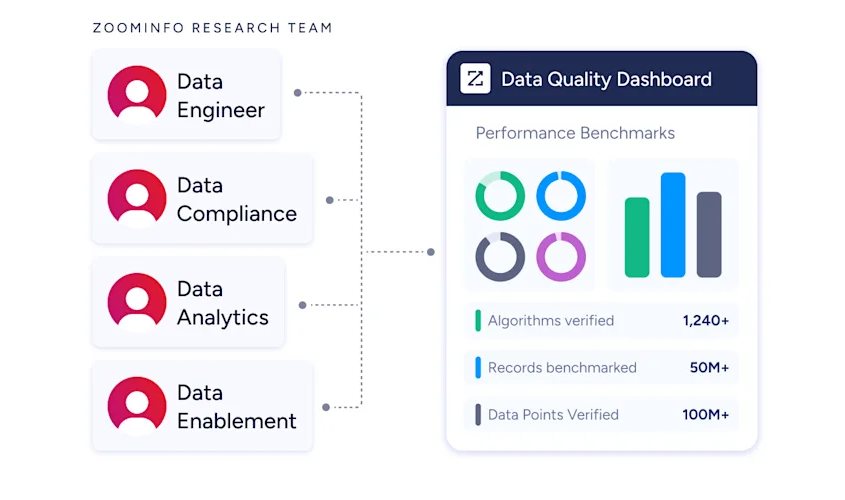
ZoomInfo was. With 500M contacts, 135M+ verified phone numbers, 120M direct dials, and 200M+ verified business email addresses, ZoomInfo's contact database is an order of magnitude larger than either competitor's people dataset.
The data is verified through a multi-source pipeline backed by 300+ human researchers, reaching up to 95% accuracy on first-party data.
Source: ZoomInfo
In a Fortune 500 competitive RFP analyzing 25 million contacts across vendors, an independent consultant concluded that "no other competitor came even close." For deal teams, the practical advantage is simple: the direct dial rings, and the email lands.
ZoomInfo's value extends beyond contact data. Buyer Intent tracks signals from 210 million IP-to-Organization pairings and 6 trillion+ new keyword-to-device pairings monthly, surfacing which companies are actively researching topics relevant to your deals.
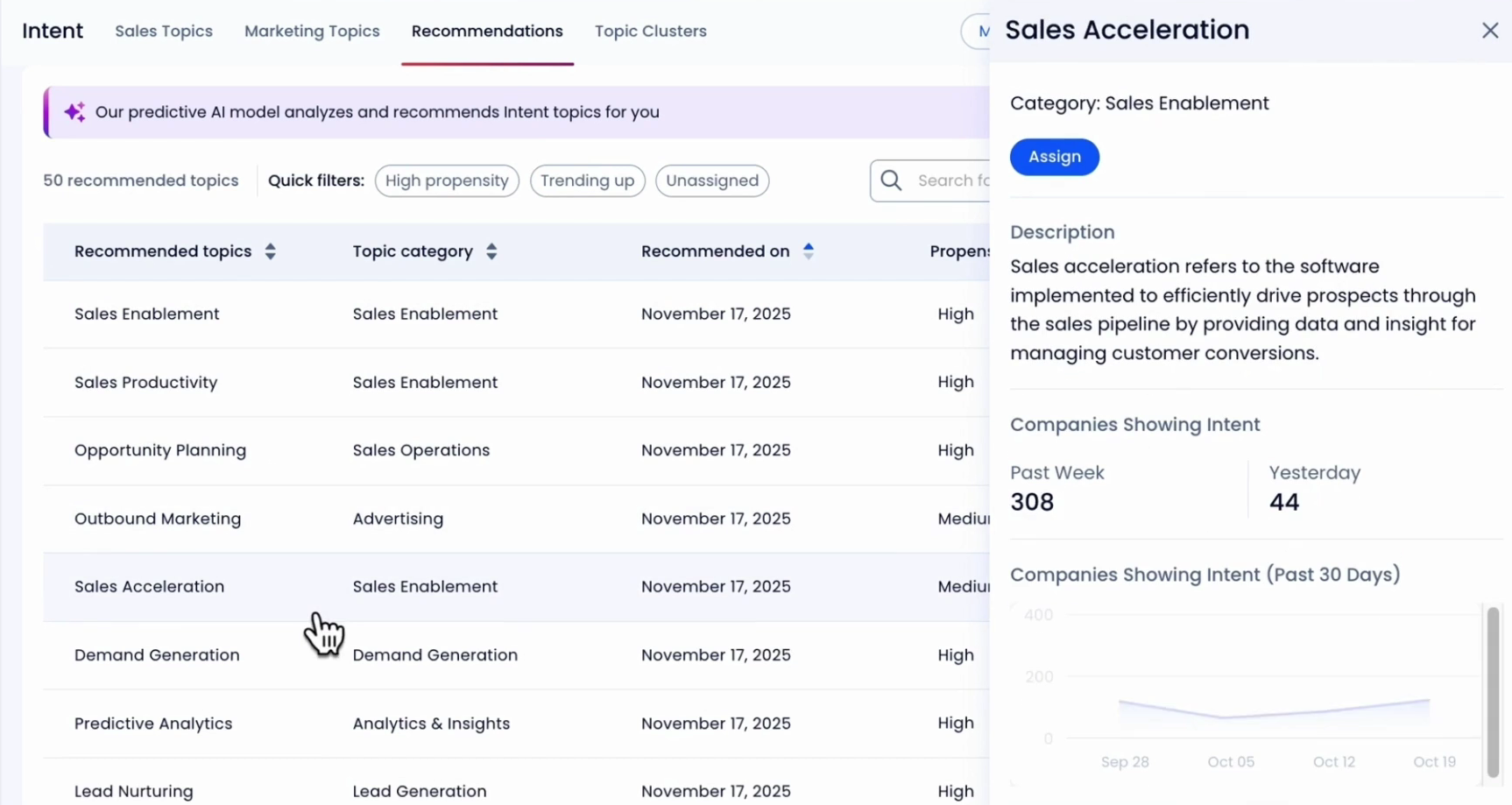
Technographics profile the tech stacks of 30+ million companies, useful for corporate development teams evaluating technology fit. And the GTM Context Graph combines all of this with CRM data, conversation intelligence, and behavioral signals, enabling AI agents in GTM Workspace to draft personalized outreach that addresses the context behind each target.
Vensure scaled prospecting with ZoomInfo's data. VP of Revenue Operations William Kenimer said the platform eliminated manual research time and put his team "three steps ahead" in reaching prospects. (Vensure)
AI capabilities: three approaches to a smarter workflow
Each platform brings AI to deal intelligence differently.
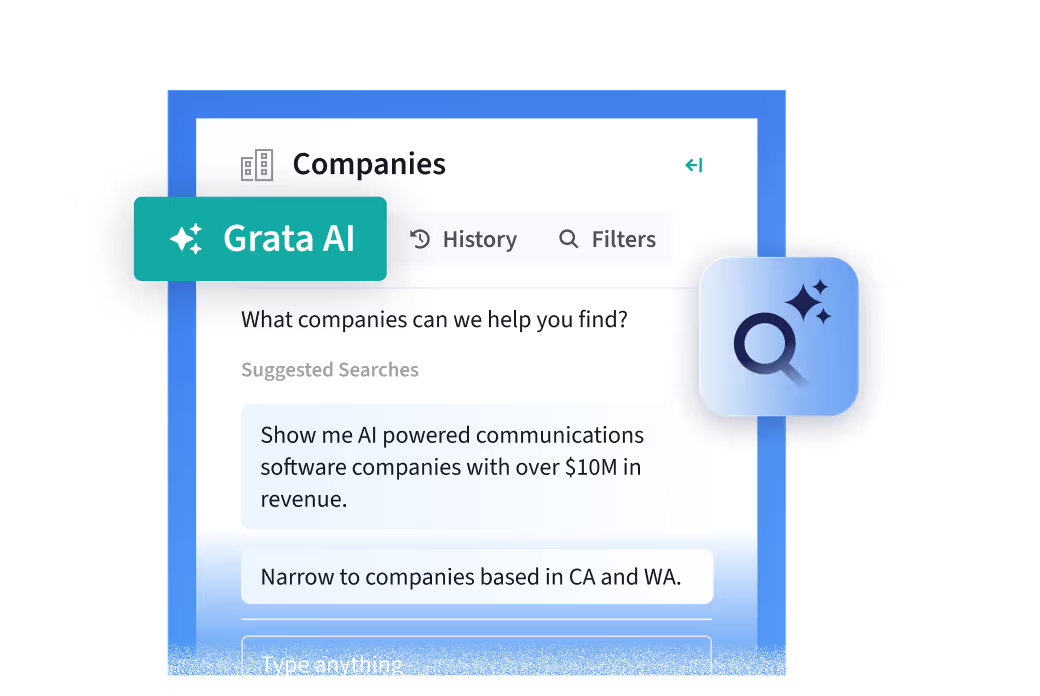
Grata built its AI from the ground up for private market search. The contextual AI engine reads company websites like an analyst, inferring business models, revenue sources, and customer profiles from commercial language rather than standardized codes.
Source: Grata
Agentic Search extends this into a reasoning loop that generates filter sets, ranks companies by thesis fit, and adapts to user feedback over time.
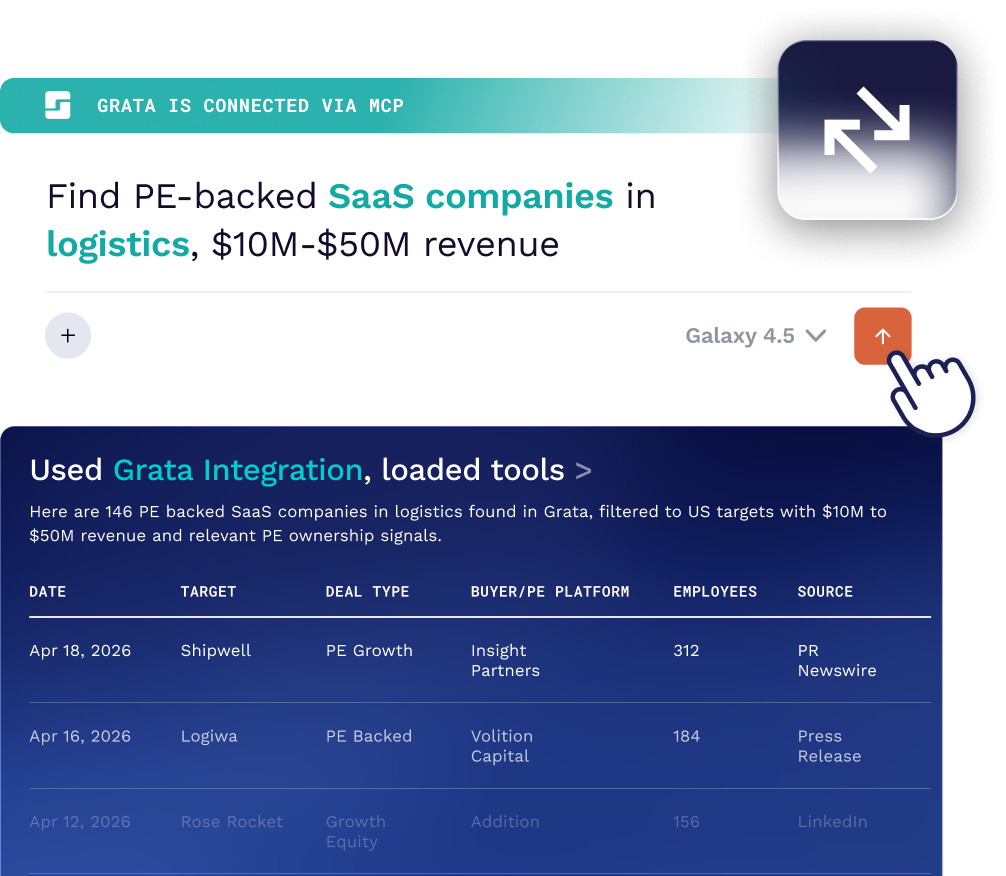
Grata also publishes an MCP server connecting its private market data to Claude, ChatGPT, and other AI assistants, with data audited and verified by 600 research analysts.
Source: Grata
PitchBook's AI strategy centers on Navigator, a natural-language interface powered by what PitchBook calls AI + HI (Artificial Intelligence + Human Insights).
The emphasis on human verification is deliberate, positioning against hallucination risks in pure LLM outputs. AI also powers Profile Summaries, Valuation Estimates, the VC Exit Predictor, and Advanced Search Suggestions.
PitchBook has partnered with Anthropic, OpenAI, Perplexity, Rogo, and Hebbia to embed its data into third-party AI tools.
ZoomInfo's AI operates at a different stage of the workflow. The GTM Context Graph processes 1.5B+ data points daily, unifying company intelligence, CRM records, conversation transcripts, and behavioral signals into one intelligence layer.
Where Grata's AI helps you find companies and PitchBook's AI helps you research them, ZoomInfo's AI helps you engage them.
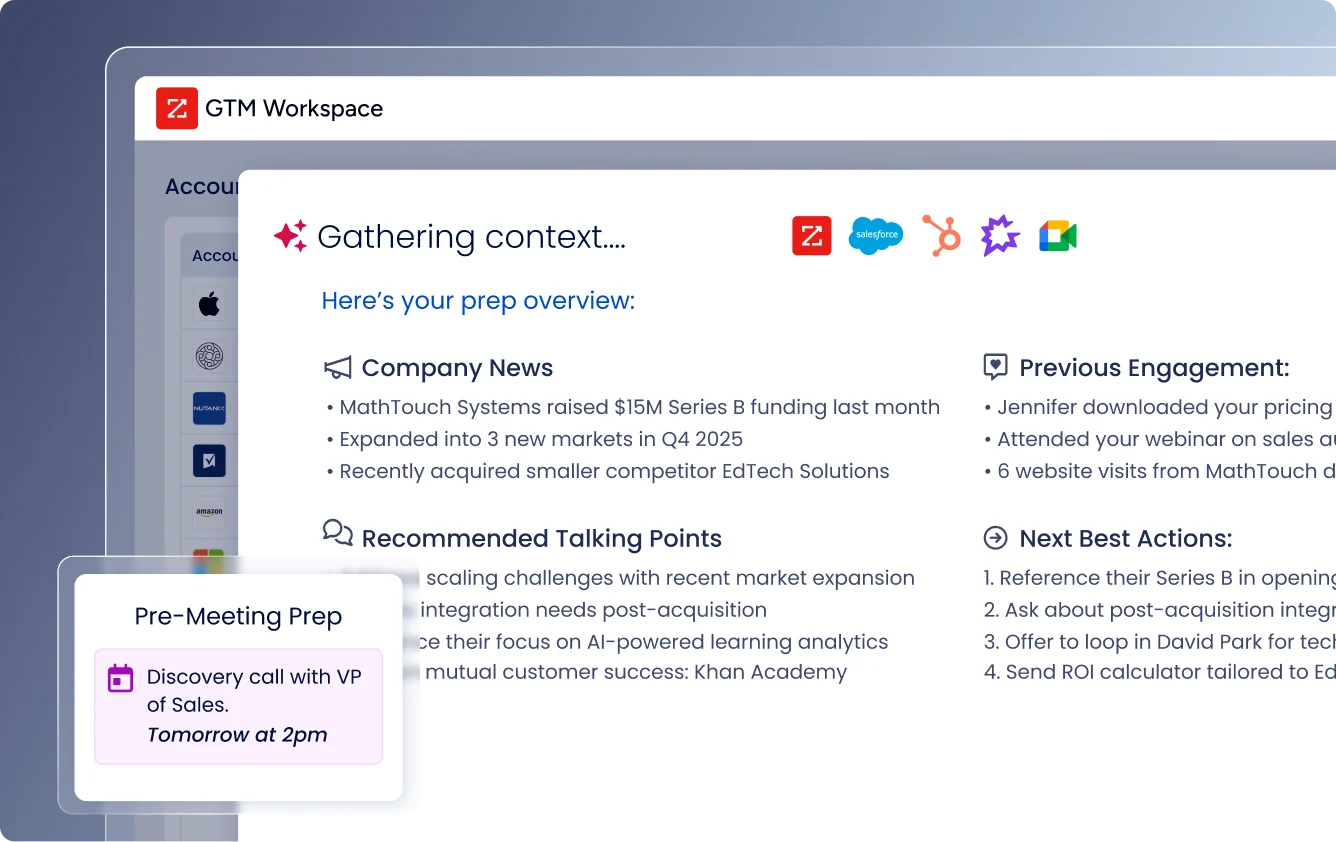
GTM Workspace delivers AI agents that research accounts, generate follow-ups, monitor signals, and draft outreach, all drawing from both ZoomInfo's data and your own internal records.
Source: ZoomInfo
GTM Studio lets marketers and RevOps teams describe audiences in plain language and launch multi-channel campaigns without engineering support.
Seismic attributed 39% of active pipeline to opportunities identified or influenced by ZoomInfo signals. Their sales team reported 54% productivity gains and 11.5 hours saved per week. (Seismic)
Integrations and platform access
How each platform connects to your existing tools shapes daily workflow.
Grata integrates natively with six CRM and deal-management platforms: Salesforce, HubSpot, DealCloud, Affinity, Microsoft Dynamics 365, and Dynamo Software.
The CRM Intelligence feature overlays relationship data inside Grata search results, showing whether a company is already in your CRM and who owns the relationship. An API and Data Warehouse option serve firms building proprietary systems.
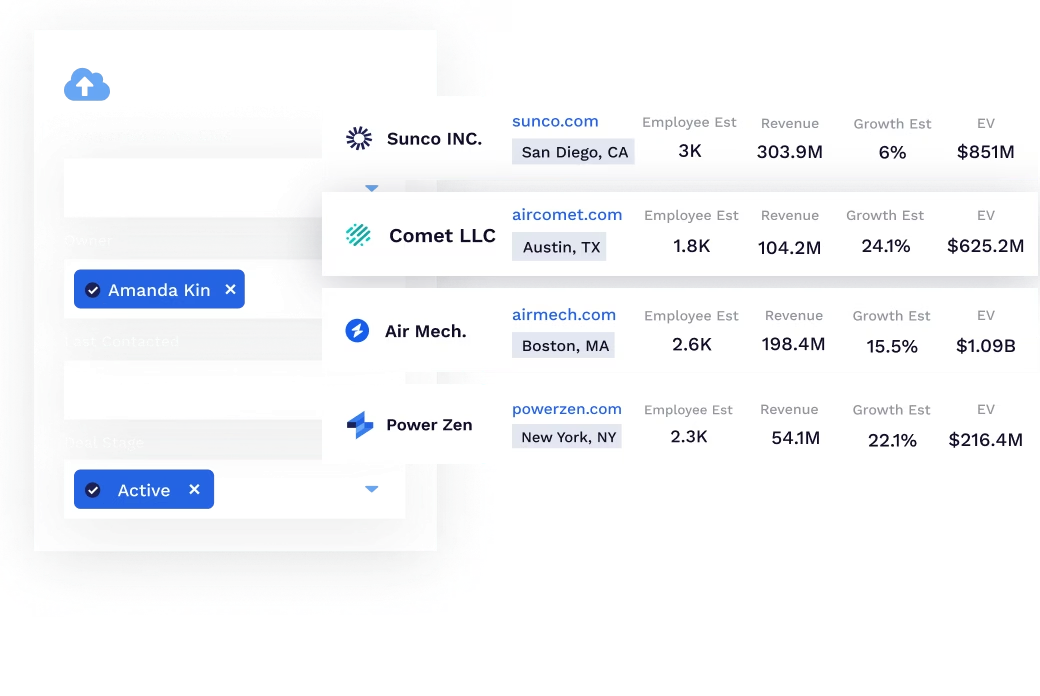
Source: Grata
The MCP server connects Grata data to LLMs. Grata also offers a Google Chrome extension, mobile apps on iOS and Android, and an Excel Add-In on the Scale tier.
PitchBook's integration stack is broader but tiered by pricing. The Excel plugin, PowerPoint plugin, and Chrome extension come free with all subscriptions. CRM integrations for Salesforce, HubSpot, and Dynamics are premium add-ons priced separately.
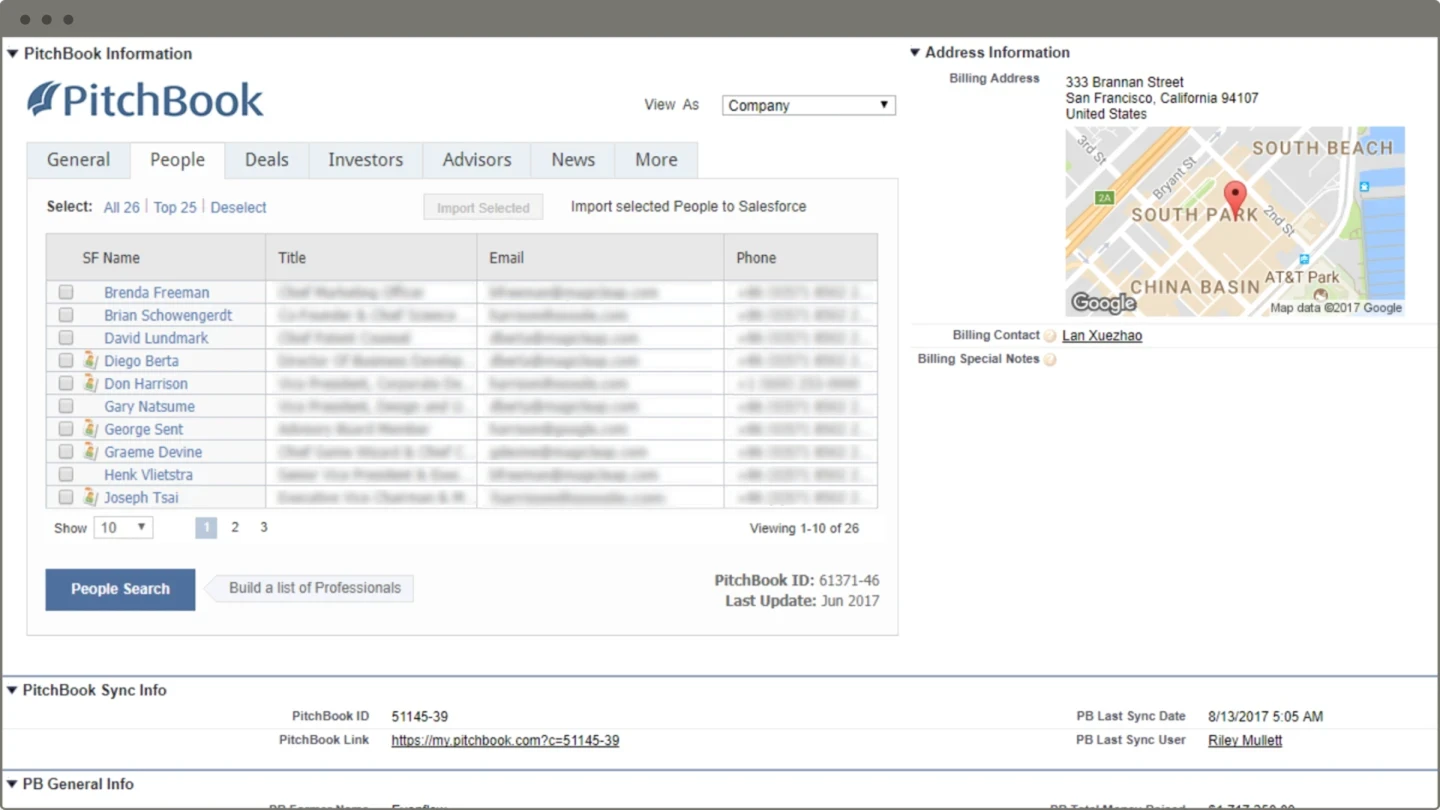
Source: PitchBook
The API and Data Feed require standalone contracts. Premium Connectors embed PitchBook data into Microsoft 365 Copilot, ChatGPT, Claude, and other AI platforms. PitchBook Mobile is available on iOS and Android for current subscribers.
ZoomInfo runs the largest integration ecosystem of the three, with 120+ partner integrations spanning CRM, marketing automation, sales engagement, data warehouses, and AI platforms. API access is included in all relevant plans, not sold as a premium add-on.
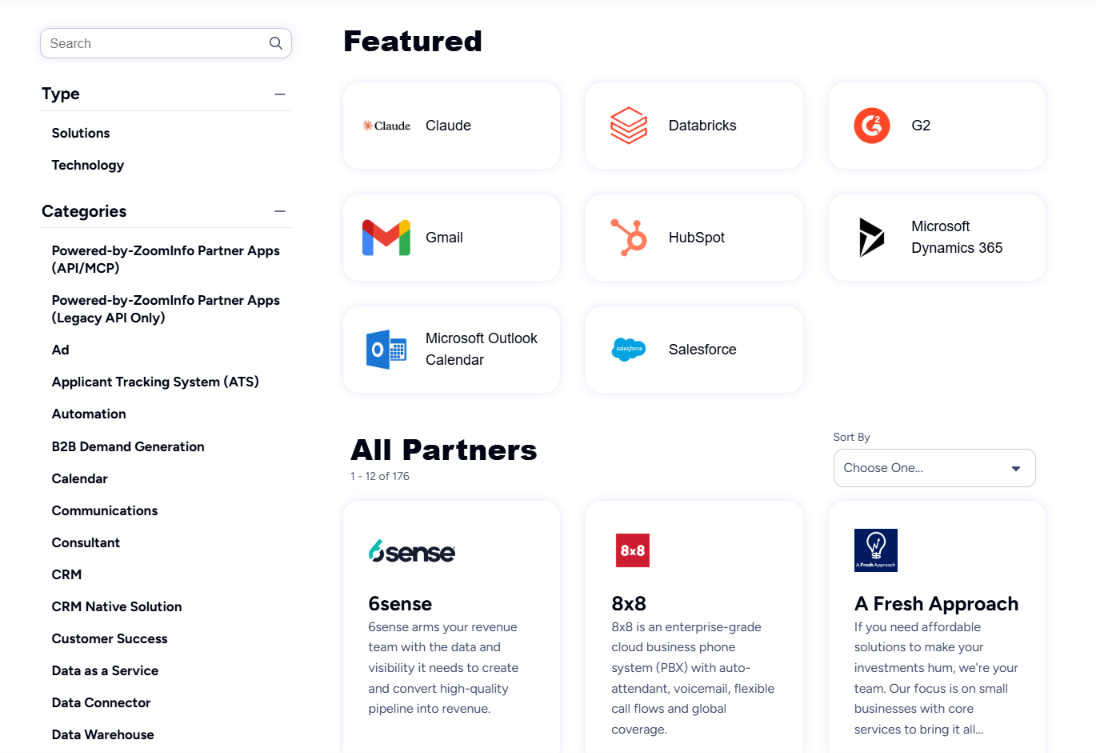
Source: ZoomInfo
The MCP server connects to Claude, ChatGPT, and other MCP-compatible AI clients. Cloud Partners push data into AWS, Google Cloud, Snowflake, and Databricks.
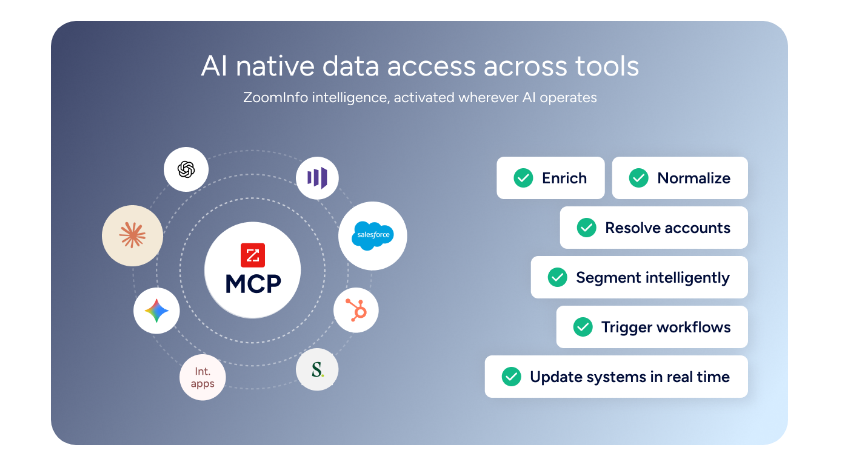
Source: ZoomInfo
For firms building proprietary tools, ZoomInfo's Enterprise API exposes the full data layer with OAuth 2.0 authentication, documented rate limits, and an interactive API reference.
BDO Canada activated ZoomInfo's data within their internal systems, achieving an 87% reduction in time spent on data dashboard updates through ZoomInfo's API. (BDO Canada)
Pricing and accessibility
All three platforms use quote-based pricing for their core subscriptions. None publish dollar amounts.
Grata offers three tiers: Growth, Scale, and Alpha. Growth is positioned for family offices and independent sponsors. Scale adds deal data, public comps, conference data, and automated CRM syncs for buy- and sell-side advisors, mid-market private equity, and corporate development.
Alpha adds Seller Intent and API access for investment banks and mega funds. Contracts are annual with automatic renewal and no mid-term cancellation. No free trial or free plan is offered.
PitchBook sells subscriptions on one- to three-year licenses. The core Desktop subscription includes all-inclusive data access with no feature tiering, though PitchBook Credit (LCD), CRM integrations, and Direct Data products are priced separately.
A limited free trial is available through the sales process. Academic licensing is widely used at business schools including Harvard, Columbia, and Stanford, though with significant usage restrictions.
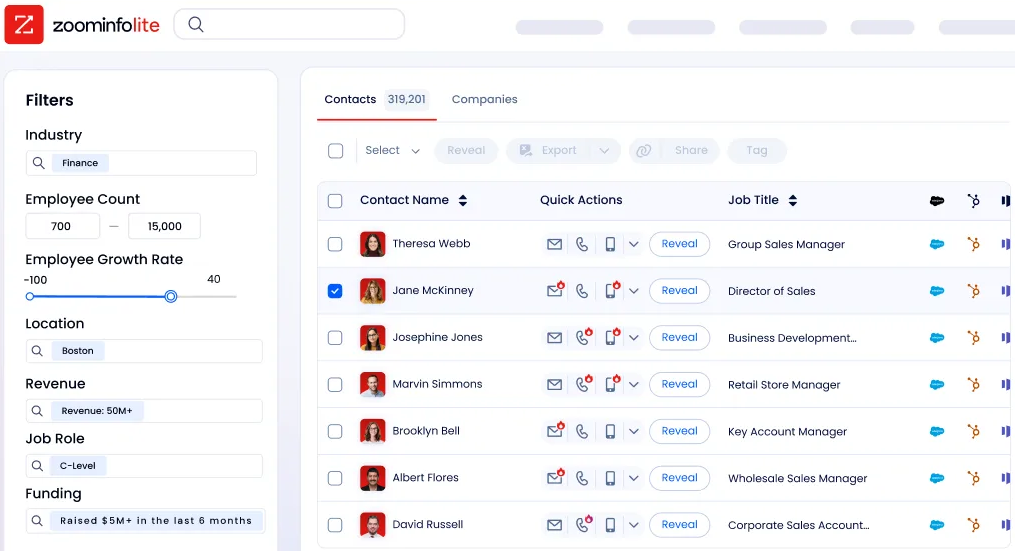
ZoomInfo uses consumption-based pricing scaling around seats, credits, and AI activity. Unlike Grata and PitchBook, ZoomInfo offers two free entry points: ZoomInfo Lite, a permanent free tier with access to the B2B database and 10 monthly export credits, and a 7-day free trial of the full platform.
Source: ZoomInfo
Paid tiers span Professional, Advanced, and Enterprise across Sales and Marketing product lines.
The practical pricing question for deal teams: can one platform replace the other two? For most firms, the answer is no. Grata and PitchBook serve deal intelligence needs that ZoomInfo does not attempt (private company deal data, fund performance, LP intelligence, seller intent). ZoomInfo serves contact data and outreach needs that neither Grata nor PitchBook matches at scale. The question is which combination your team needs.
Grata vs. PitchBook vs. ZoomInfo: Which should you choose?
The right platform depends on what your team does every day.
Choose Grata if:
Your mandate is sourcing bootstrapped, founder-owned companies in the lower middle market
You need to find companies that have never appeared in a public filing, press release, or funded round
Proprietary deal timing (Seller Intent) and live deal access (Grata Deal Network) are competitive advantages for your firm
Conference sourcing across 25,000+ tracked events is part of your workflow
You want an M&A-focused search engine with AI that interprets business models rather than industry codes
Choose PitchBook if:
You need coverage across PE, VC, M&A, private credit, and leveraged finance
Fund performance benchmarking, LP intelligence, and valuation estimates are core to your work
Your team relies on institutional-grade research and direct analyst access
You want a single platform covering both public and private markets with all-inclusive data access
Credit market data (LCD, CLOs, BDCs) is part of your mandate
Choose ZoomInfo if:
Your work extends beyond deal screening into active outreach and business development
You need the largest available contact database to reach founders, executives, and decision-makers directly
Buyer intent signals and technographic data would sharpen your target prioritization
You want AI-powered outreach tools that draft personalized messages from full account context
Your team needs a platform that integrates with any CRM, AI tool, or internal system through API and MCP
Try ZoomInfo free with ZoomInfo Lite.
For many deal teams, the most effective setup is a combination: Grata or PitchBook for deal intelligence, and ZoomInfo for the contact data and engagement tools that turn targets into conversations. Each platform solves a different part of the dealmaking workflow, and the right answer is often not one tool but the right pair.
Grata vs. PitchBook vs. ZoomInfo FAQ
What is the core difference between Grata, PitchBook, and ZoomInfo?
Grata is a private market intelligence platform that discovers bootstrapped and founder-owned companies in the lower middle market, using AI that reads company websites to surface businesses invisible to traditional databases.
PitchBook is a capital markets data platform covering companies, deals, investors, funds, limited partners, and credit across the full private capital stack.
ZoomInfo is a B2B go-to-market platform with the largest contact database in the industry (500M contacts, 135M+ verified phone numbers), buyer intent signals, and AI-powered outreach tools. Grata and PitchBook help you find and research deals; ZoomInfo helps you reach and engage the people behind them.
Which platform has the best private company coverage?
Grata covers 21M+ private companies with particular strength in bootstrapped and founder-led businesses that have never raised capital.
PitchBook covers roughly 6 million companies but with deeper surrounding data on each (financing history, cap tables, investor profiles).
ZoomInfo covers 100M companies but without the deal-specific intelligence (multiples, fund performance, LP commitments) that Grata and PitchBook provide.
For discovering unknown private companies, Grata leads. For researching known companies within a capital markets context, PitchBook leads. For contact data at target companies, ZoomInfo leads.
Does PitchBook have seller intent signals like Grata?
No. Grata's Seller Intent surfaces behavioral indicators that a private company is preparing for a sale 6-12 months before it enters the market, with 98% back-tested accuracy on U.S. mid-market deals.
PitchBook tracks deal activity after it becomes visible through filings, announcements, and data sourced from deal participants, but does not provide predictive signals about companies that have not yet entered a process.
Can ZoomInfo replace Grata or PitchBook for deal sourcing?
Not for most deal professionals. ZoomInfo does not provide deal multiples, fund performance data, LP intelligence, seller intent signals, or live deal teasers.
Its strength is in contact data (500M contacts vs. 10M for Grata or 4.4M people for PitchBook), buyer intent signals, and go-to-market execution tools.
Corporate development and business development teams often use ZoomInfo alongside Grata or PitchBook to bridge the gap between identifying targets and engaging decision-makers.
How do the pricing models compare?
All three platforms use quote-based pricing with no published dollar amounts. Grata offers three tiers (Growth, Scale, Alpha) with annual contracts and no free tier. PitchBook sells one- to three-year licenses with all-inclusive data access and offers a limited free trial.
ZoomInfo offers consumption-based pricing, a permanent free tier (ZoomInfo Lite with 10 monthly export credits), and a 7-day free trial.
PitchBook's all-inclusive model means no feature gating within the core platform; Grata gates deal data, conference data, and seller intent by tier.
Which platform has the strongest AI capabilities?
Each platform's AI serves a different stage of the workflow. Grata's Agentic Search translates natural-language deal theses into structured target lists using AI trained on commercial website content.
PitchBook's Navigator provides natural-language queries across the full capital markets database, with AI also powering daily private company valuations, exit predictions, and profile summaries.
ZoomInfo's GTM Context Graph processes 1.5 billion data points daily, combining company data with CRM records and conversation intelligence to power AI agents that research accounts, draft outreach, and prioritize engagement.
Which platform integrates best with DealCloud?
Both Grata and PitchBook integrate with DealCloud, which is widely used by PE firms. Grata's DealCloud integration lets users sync companies to watch lists and tag by thesis directly from the platform.
PitchBook lists DealCloud as a supported CRM option. ZoomInfo does not have a native DealCloud integration but connects to Salesforce, HubSpot, and Microsoft Dynamics, and offers API access for custom integrations with any system.
Which platform is best for LP intelligence and fund benchmarking?
PitchBook is the only option among the three for LP intelligence and fund performance benchmarking. It tracks 56,000 limited partners with commitment history, mandate breakdowns, and allocation preferences, alongside Manager Scores (quantitative fund manager evaluation on a 1-100 scale), Custom Benchmarks, and performance data from 5,000+ funds. Neither Grata nor ZoomInfo provides LP or fund-level data.
