

If you're comparing Groove vs. Salesloft in 2026, know this first: they're now owned by the same company. Clari acquired Groove in August 2023, then merged with Salesloft in December 2025. The two platforms that once competed directly now share a corporate parent, a leadership team, and an unfinished product roadmap.
That merger changes this comparison. Instead of choosing between two independent competitors, you're choosing between two overlapping products inside one company, with no public clarity on which features will survive, which will merge, and which will be retired.
Before you commit to either, answer these questions:
Is your CRM exclusively Salesforce, or do you also use HubSpot or Microsoft Dynamics?
Do you need a focused sales engagement tool, or a platform that covers the full revenue lifecycle?
Do you already have a reliable source of prospect contact data and buying signals, or is that a gap in your stack?
How much does it matter that your platform understands why deals move, not just that they moved?
Are you comfortable betting on a product whose roadmap depends on a merger integration that hasn't been finalized?
In short, here's what we recommend:
Groove by Clari is built for enterprise Salesforce teams that prioritize CRM data integrity. Its Salesforce-native architecture writes every email, call, and meeting directly to Salesforce objects with no sync errors or data lag. 75,000+ users rely on Groove daily across companies like Cisco, Adobe, and Hewlett Packard Enterprise, and Groove held #1 in enterprise satisfaction on G2 for 19 consecutive quarters. However, Groove works only with Salesforce, includes no prospecting database, and faces an uncertain product future as Clari consolidates two overlapping engagement platforms.
Salesloft offers the broadest revenue orchestration platform of the three, covering multi-channel cadences, signal prioritization (Rhythm), conversation intelligence, deal management, and forecasting. Named a Leader in the Forrester Wave for Revenue Orchestration Platforms, Salesloft spans the revenue lifecycle from first touch to renewal. But it is complex to implement, publishes no pricing, and like Groove, requires separate tools for prospect data and buying signals.
Both platforms handle sales execution well: building sequences, tracking activity, and managing deals. But execution without intelligence is organized noise. A well-timed cadence sent to the wrong buyer, without context on why they might care, wastes everyone's time. That gap (the intelligence underneath execution) is what neither platform was designed to fill.
ZoomInfo is a combined AI GTM platform built on a B2B dataset of 500M contacts and 100M companies, 135M+ verified phone numbers, and 200M+ verified business emails. The GTM Context Graph processes 1.5B+ data points daily, joining this data with your CRM records, conversation transcripts, and behavioral signals to show what's happening across your accounts and deals. GTM Workspace gives sellers one place where prioritized accounts, drafted outreach, and deal context come together. GTM Studio lets marketers and RevOps build and launch plays, while APIs and MCP open the same intelligence to any custom tool. For teams that want intelligence and action in one platform rather than stitching together separate data and engagement tools, ZoomInfo closes the gaps.
If starting with the intelligence layer sounds right for your team, see how ZoomInfo works with a free trial.
Groove vs. Salesloft vs. ZoomInfo at a glance
Groove by Clari | Salesloft | ZoomInfo | |
|---|---|---|---|
Primary function | Salesforce-native sales engagement | Revenue orchestration platform | AI GTM platform |
Built-in prospect data | No (requires ZoomInfo, LinkedIn, etc.) | No (requires external data tools) | Yes (500M contacts, 100M companies) |
CRM compatibility | Salesforce only | Salesforce, HubSpot, Dynamics, Zoho | Salesforce, HubSpot, Dynamics |
AI capabilities | Smart Emails, Smart Priorities, Copilot | Rhythm prioritization, dozens of AI agents, forecasting | GTM Context Graph, AI agents, GTM Workspace |
Conversation intelligence | Via Clari Copilot | Built-in (Conversations) | Built-in (Chorus) |
Website visitor tracking | No | Yes (via Drift) | Yes (WebSights) |
Buyer intent data | No | No native intent data | Yes (210M IP-to-org pairings) |
Free tier | No | No | Yes (ZoomInfo Lite, permanent) |
Pricing transparency | Custom quote only | Custom quote only | Custom quote, but free tier available |
The merger changes everything
The most important fact about Groove vs. Salesloft in 2026 isn't a feature comparison. It's that Clari and Salesloft completed their merger in December 2025, creating a combined entity with two overlapping sales engagement products.
Clari acquired Groove in August 2023. Salesloft merged with Clari two years later. The combined company now calls itself "the industry's first Predictive Revenue System," processing more than 10 billion revenue interactions and 1 trillion data signals.
But for buyers, the practical question is: which product survives?
Groove's Flows and Salesloft's Cadence do the same job: run multi-step, multi-channel outreach sequences. The joint product roadmap is under development, with details expected "in the coming months." Groove customers face the real possibility that their product becomes the secondary platform, or gets folded into Salesloft's architecture. Salesloft customers face the reverse: Groove's Salesforce-native data model could reshape the combined platform's design.
For organizations evaluating either platform today, this uncertainty is a material risk. A sales engagement tool is a 12-to-24 month commitment at minimum. Choosing one whose roadmap depends on an unfinished merger adds a variable you can't control.
ZoomInfo sidesteps this. As a publicly traded company with $1.25 billion in annual revenue and $455 million in free cash flow, its product direction is transparent and self-funded. GTM Workspace, GTM Studio, and the API/MCP infrastructure are publicly stated strategic bets, not merger compromises.
Salesforce-native vs. multi-CRM vs. data-first
The core architectural difference between Groove and Salesloft is how they relate to your CRM.
Groove was built as a Salesforce managed package. It doesn't sync data to Salesforce from a parallel database. It writes directly to Salesforce objects: emails become Task records, meetings become Event records, new contacts become Contact records, all in real time. This eliminates the sync errors and reconciliation problems that arise when tools maintain their own database alongside Salesforce.
For enterprise RevOps teams in regulated industries (financial services, healthcare, life sciences), this architecture matters. When data governance teams audit CRM activity, every Groove-created record is identifiable via an "Is Created by Groove" checkbox on Salesforce Task and Event objects.
But that same architecture is Groove's ceiling. There is no integration path for HubSpot, Pipedrive, or any other CRM. If you're not on Salesforce, Groove is not an option.
Salesloft takes the opposite approach. It maintains its own database and syncs bidirectionally with Salesforce, HubSpot, Microsoft Dynamics 365, and Zoho. This serves teams running multiple CRMs or those mid-migration between platforms. The tradeoff is the sync itself: maintaining data parity between two systems requires ongoing attention to field mapping, deduplication, and conflict resolution.
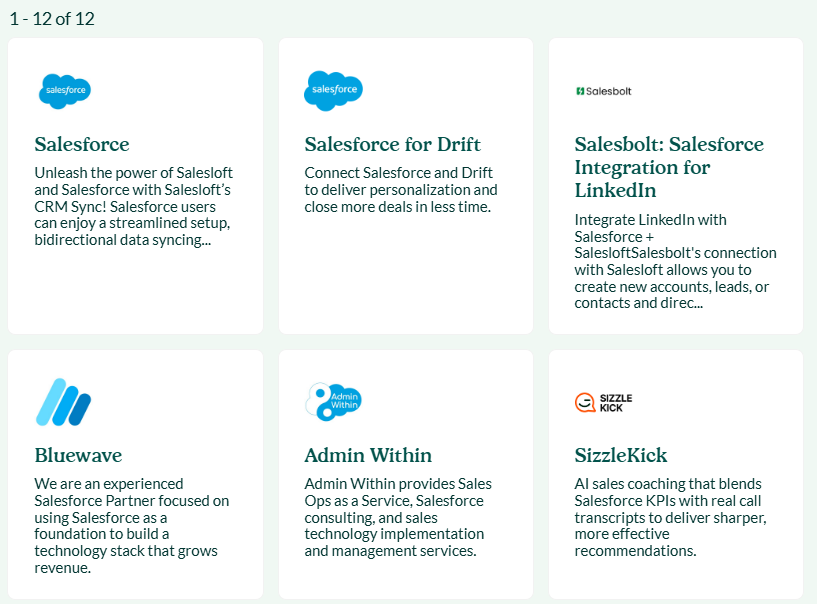
Source: Salesloft
ZoomInfo approaches the CRM question differently. Rather than sitting on top of a CRM as an engagement layer, ZoomInfo works alongside it as the intelligence layer. GTM Workspace integrates natively with Salesforce, HubSpot, and Microsoft Dynamics, pulling CRM data into a single view enriched with ZoomInfo's contact data, intent signals, and conversation intelligence. The CRM remains the system of record. ZoomInfo adds the context that CRM records lack.
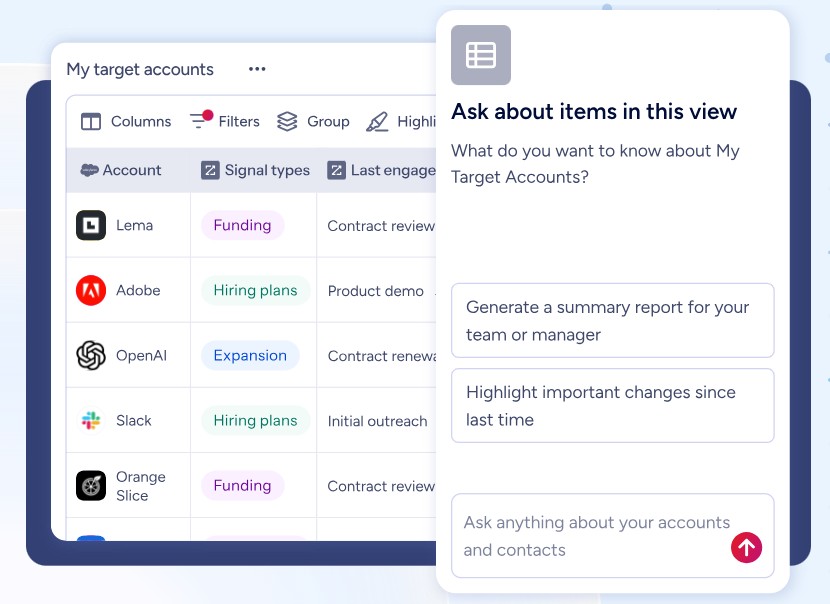
Source: ZoomInfo
Platform scope: engagement tool vs. orchestration platform vs. intelligence platform
Groove is focused. It runs multi-channel outreach sequences (Flows), captures activity to Salesforce, and gives reps tools to work from their inbox via the Groove Omnibar Chrome extension. That's its job, and it does it well.
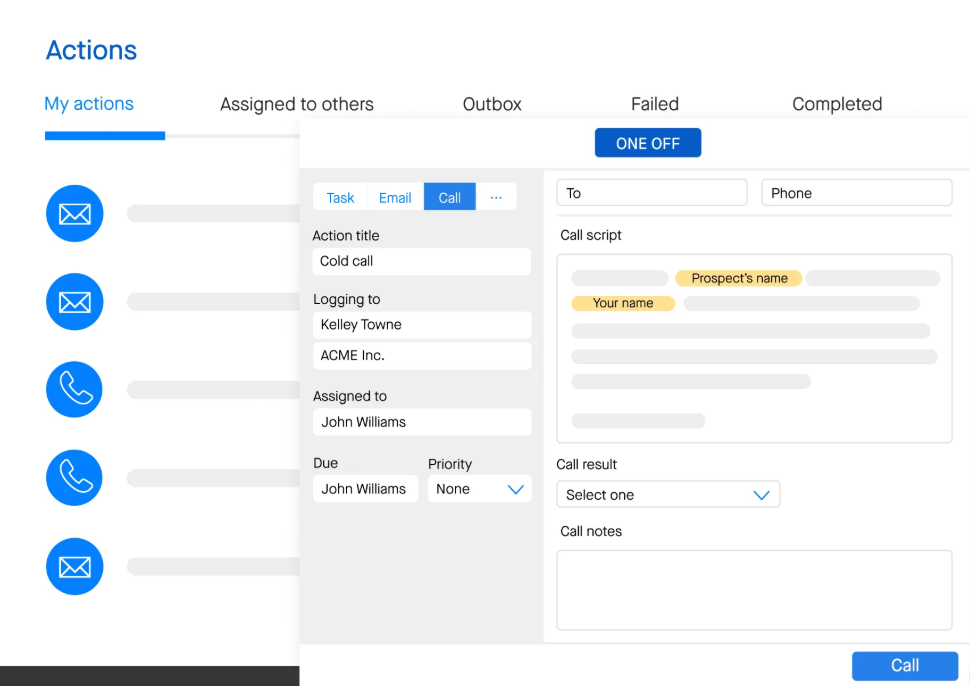
Source: Clari
But Groove's scope ends at engagement and activity capture. Conversation intelligence comes through the separate Clari Copilot module, which reviewers describe as behind dedicated tools like Gong. Deal management, forecasting, and website visitor engagement live in other parts of the Clari platform or in external tools.
Salesloft covers more ground. Cadence handles multi-channel sequences. Rhythm prioritizes daily seller actions based on buyer signals. Conversations records and analyzes calls, replacing the need for a separate conversation intelligence tool.
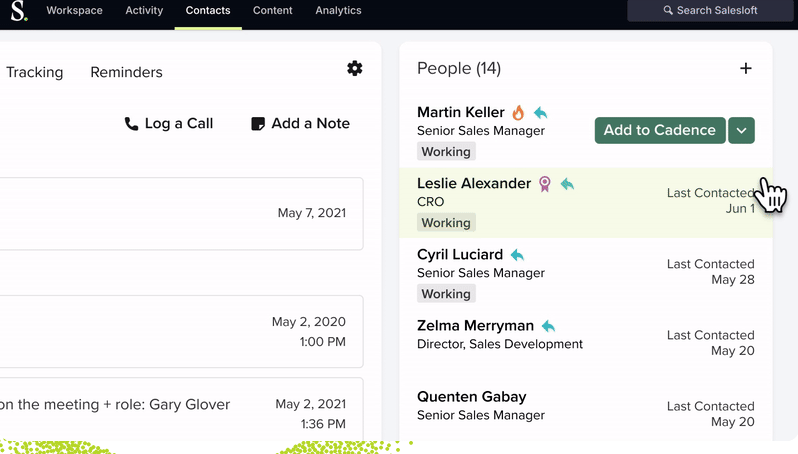
Source: Salesloft
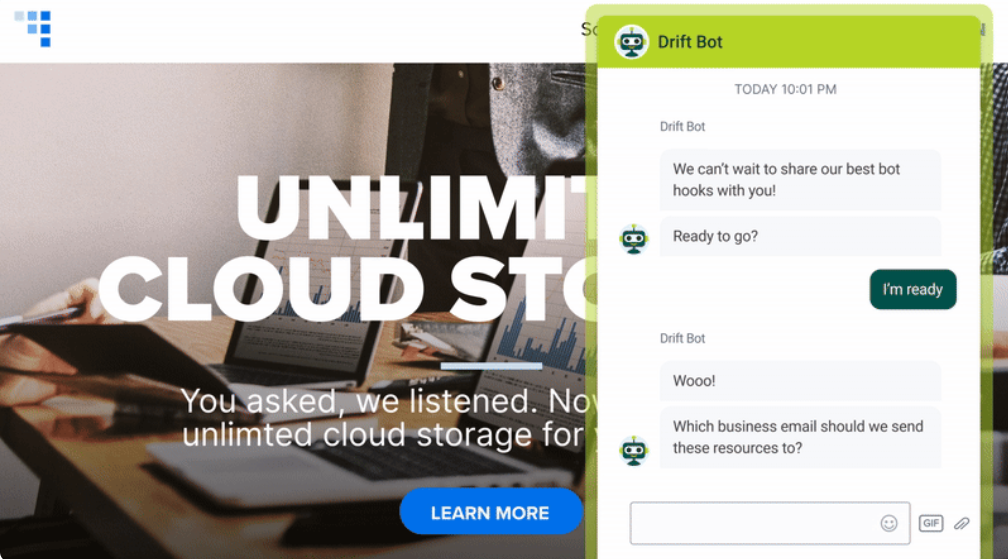
Drift engages website visitors with AI chat trained on 100M+ B2B conversations. Deals manages pipeline with AI risk detection. Forecast predicts revenue outcomes. It is the broadest platform of the three for sales execution, serving 4,000+ customers including 3M, IBM, and Stripe.
Source: Salesloft
That breadth comes with complexity. Salesloft offers Professional Services for implementation, daily Office Hours for customer Q&A, and a full Academy with role-specific training for administrators, SDRs, AEs, and sales managers. This platform requires investment to deploy well.
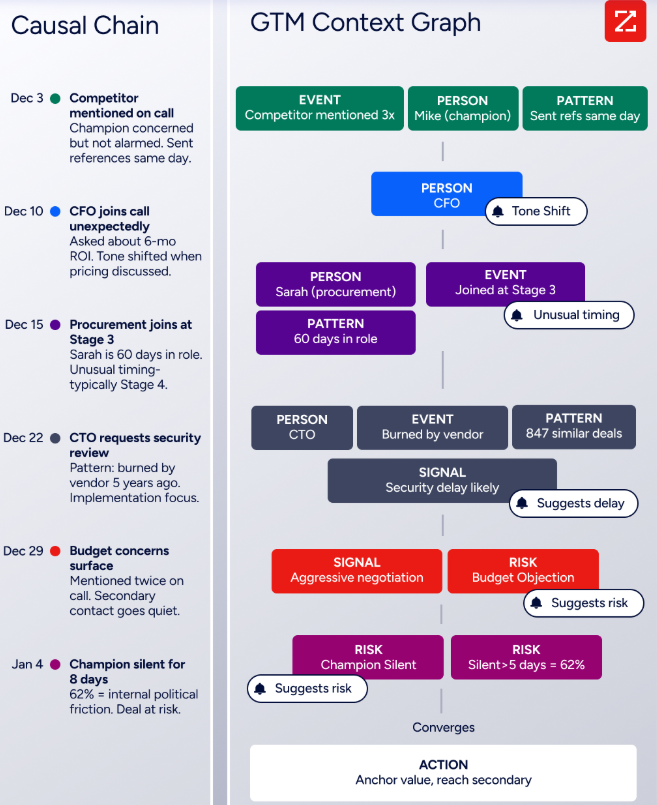
ZoomInfo operates at a different level. Where Groove and Salesloft start with "how do we engage buyers?", ZoomInfo starts with "who should we engage, and why now?" The platform's core is the GTM Context Graph, an intelligence layer that joins ZoomInfo's B2B data with a customer's CRM records, conversation transcripts, and behavioral signals. It captures how deals progress, giving AI what it needs to recommend actions that move revenue.
Source: ZoomInfo
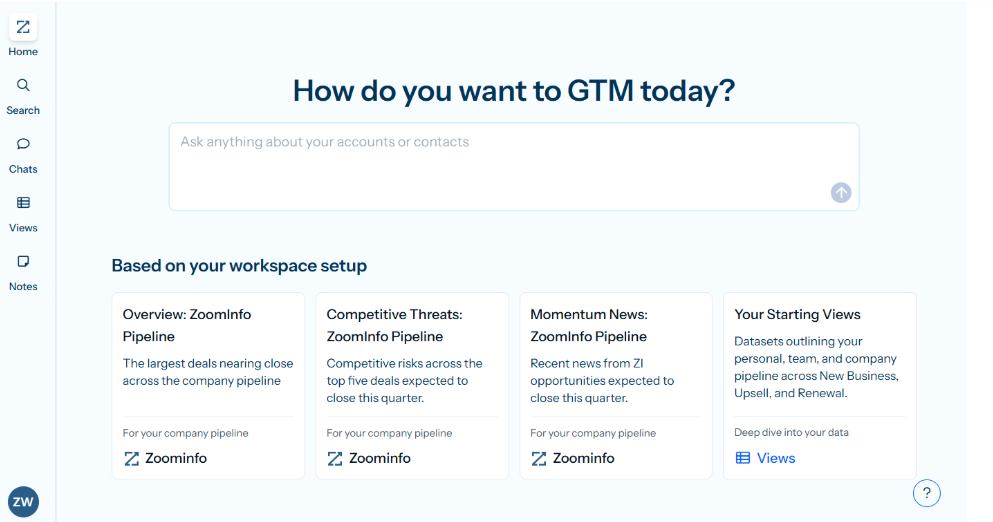
GTM Workspace translates that intelligence into seller action: prioritized account feeds, AI-drafted outreach, signal monitoring, and CRM updates in one place.
Source: ZoomInfo
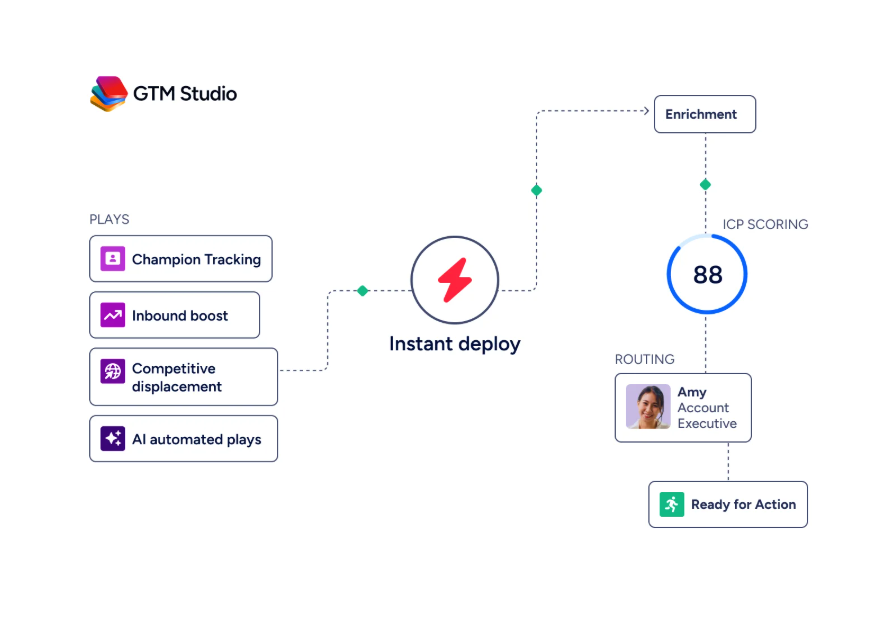
GTM Studio lets marketers and RevOps build and launch plays without engineering support. For teams that build beyond ZoomInfo's native products, APIs and MCP expose the same intelligence to any custom agent or partner platform.
Source: ZoomInfo
"That combination of our internal CRM data, external signals, and AI that's given all that context has helped us craft very specific account- and persona-based messages. And people have responded to them right away." (Seismic)
The data problem neither engagement tool solves
Here is the gap in both Groove and Salesloft: neither includes a prospecting database.
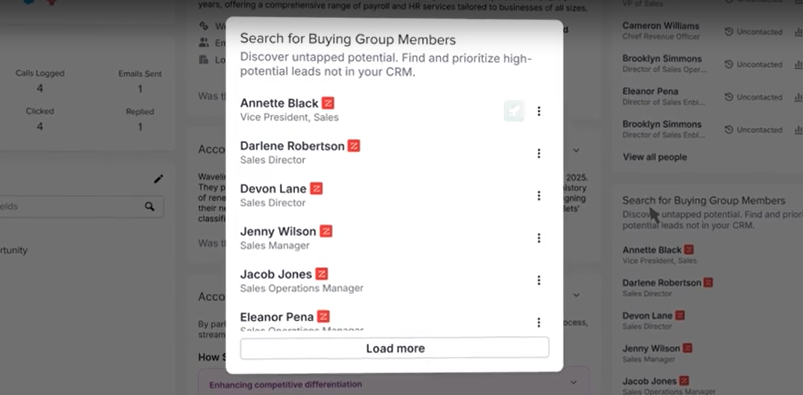
Groove surfaces account context from ZoomInfo and LinkedIn within its workflow, but those integrations require separate licenses.
Salesloft's Buyer Identification Agent integrates with ZoomInfo for the same purpose. Both platforms treat prospect data as someone else's problem.
Source: Salesloft
The practical consequence: your engagement platform can run sequences, but it can't tell you who belongs in those sequences. It can track activity, but it can't identify which accounts are in-market. It can automate follow-ups, but it can't supply the direct dials and verified emails that make those follow-ups land.
ZoomInfo was built to solve this. The data layer covers three dimensions:
Identity data: 500M contacts with 135M+ verified phone numbers, 120M direct-dial phone numbers, and 200M+ verified business email addresses
Company context: 100M companies with company attributes, org charts, and technographics covering 30,000+ technologies across 200+ categories
Dynamic signals: Buyer Intent data tracking 210 million IP-to-Organization pairings and 6 trillion+ new keyword-to-device pairings monthly, plus Guided Intent (exclusive to ZoomInfo), which identifies topics historically correlated with deal success

Source: ZoomInfo
ZoomInfo verifies this data through a pipeline backed by 300+ human researchers, achieving up to 95% accuracy on first-party data. In a Fortune 500 competitive RFP analyzing 25 million contacts across vendors, the independent consultant concluded that "no other competitor came even close."
For sales teams, the difference is direct: the phone number connects, the email reaches the inbox, and the account is showing buying behavior. Without that foundation, even the best cadence is guessing.
"ZoomInfo's not just a contact data company anymore. They've built a full system of execution. GTM Intelligence actually works the list, writes the outreach, triggers the play, and helps drive predictable growth." (Levanta)
AI capabilities follow different strategies
All three platforms invest in AI, but their approaches reflect what each was built to do.
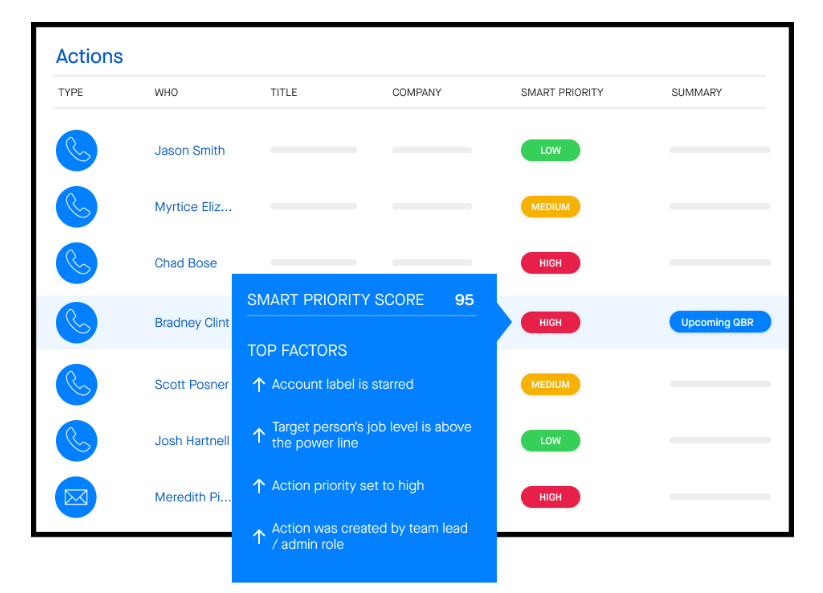
Groove's AI focuses on seller productivity within the Salesforce workflow. Smart Priorities ranks action queues by engagement impact. Smart Emails generates prospecting copy from web-sourced insights and Salesforce merge fields.
Source: Clari
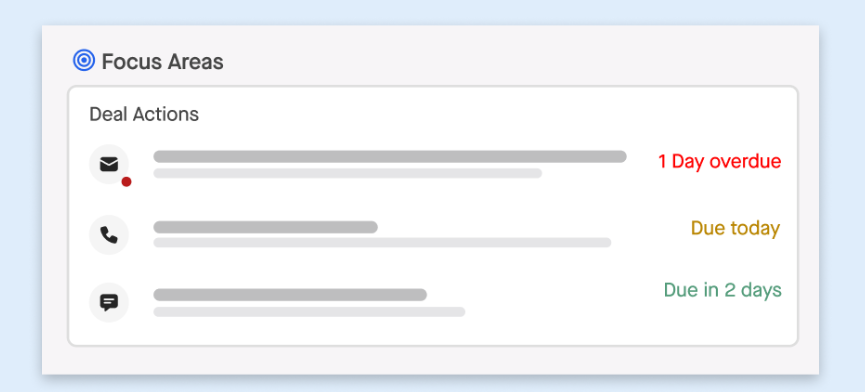
The Deal Inspection Agent reviews open opportunities continuously against deal criteria and flags gaps. The broader Clari platform adds AI Projections that analyze historical win rates to predict outcomes. These tools help reps work faster, but they draw primarily on CRM data and engagement activity.
Source: Clari
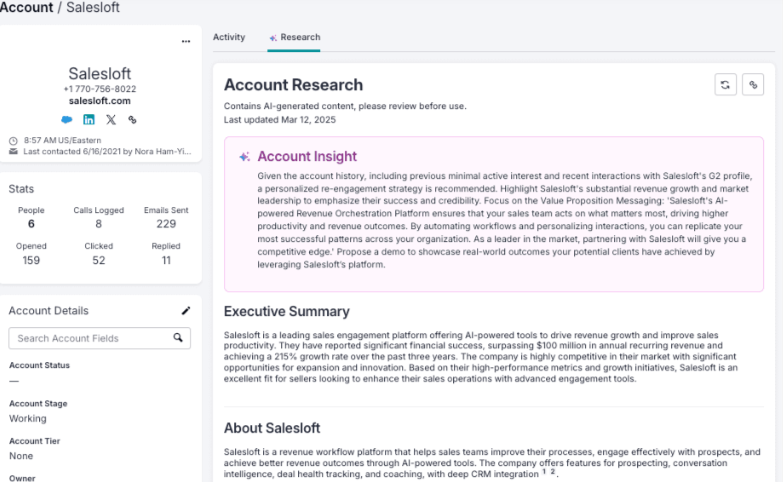
Salesloft's AI covers the most ground. Its AI agents include a Prioritizer that organizes daily actions from buyer signals, Email Steps that draft personalized messages from account research, Conversation Summaries that extract key moments from calls, and Methodology Extraction that auto-populates MEDDPICC fields from transcripts.
Source: Salesloft
With dozens of agents and a Create Your Own Agent capability, Salesloft has the broadest AI footprint of the engagement platforms. The AI trains on 5B+ buyer-seller interactions, and agents explain why each recommendation was surfaced.
ZoomInfo's AI starts from a different data foundation. The GTM Context Graph connects ZoomInfo's B2B data, CRM records, conversation intelligence, and behavioral signals to capture why deals move or stall. As ZoomInfo's CPO Dominik Facher writes: "The CRM recorded the state change. It has no record of why it happened."
This distinction matters. Groove's and Salesloft's AI operates on engagement data and CRM records, which are often incomplete. Reps forget to log activities, log to the wrong record, or skip logging entirely.
ZoomInfo's AI operates on the full picture: verified third-party data (contacts, companies, intent signals, technographics) joined with first-party data from the CRM and conversation intelligence. The GTM Context Graph processes 1.5B+ data points daily, enabling questions the other platforms can't answer: Which accounts in your territory are researching your competitors right now? Which buying committee members haven't been contacted? Which signal pattern predicts a deal is about to stall?

Source: ZoomInfo
"It's not just the data itself. It's more about the right data at the right time to help us reach out with the right message across that full buyer journey." (Redwood Logistics)
Pricing and contract flexibility
None of these platforms publish prices. All three require contacting sales for a quote.
Groove's pricing page shows only a quote request form. No tiers, no per-seat rates, no plan names. The MSA confirms multi-year subscriptions committed for the full term, with all fees non-refundable except in specific breach scenarios.
Salesloft's pricing page describes two packages (Advanced and Elite) but lists no dollar amounts. Its MSA similarly makes all fees non-cancelable and non-refundable, with multi-year subscriptions locked for the full term. Additional costs apply for dialer usage exceeding 3,000 minutes per user per month, Drift volume tiers, and professional services.
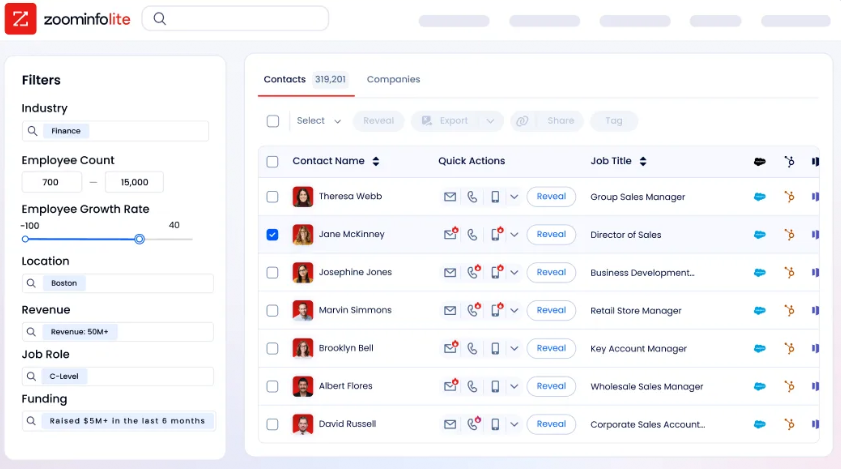
ZoomInfo also uses custom quoting, but offers two entry points the others don't. ZoomInfo Lite is a permanent free tier with access to the B2B database, 10 monthly export credits, contact and company search, the ReachOut Chrome extension, WebSights Lite (up to 10 website visitor reveals per day), and a HubSpot integration. No credit card, no time limit.
Source: ZoomInfo
A separate 7-day free trial provides access to more advanced features. These free options let teams validate ZoomInfo's data quality before committing budget, something neither Groove nor Salesloft offers.
Both Groove and Salesloft also carry a hidden cost that compounds over time. Because neither includes prospect data, teams must separately license data tools (often ZoomInfo itself) to feed their engagement platform. That means two vendor contracts, two renewals, and two integrations to maintain. ZoomInfo consolidates both layers into one commercial relationship.
Groove vs. Salesloft vs. ZoomInfo: Which should you choose?
The right platform depends on what problem you're solving.
Choose Groove by Clari if:
Salesforce is your only CRM and CRM data integrity is your top priority
You need a focused engagement tool, not a full-lifecycle platform
Your organization operates in a regulated industry where Salesforce-native data storage matters
You're comfortable with the risk of product changes following the Clari-Salesloft merger
You already have separate tools for prospect data, intent signals, and conversation intelligence
Choose Salesloft if:
You need the broadest sales execution platform covering cadences, conversations, deals, and forecasting
Your CRM is Salesforce, HubSpot, or Dynamics and you need multi-CRM support
You have RevOps resources to implement and maintain a complex platform
Website visitor engagement via Drift is important to your pipeline strategy
You're willing to invest in the merged Clari-Salesloft platform as a long-term bet
Choose ZoomInfo if:
You want buyer intelligence and seller execution in one platform, without stitching together separate vendors for data and engagement
Accurate prospect data, buying signals, and buyer intent are gaps in your current stack
You want to try before you buy, with a permanent free tier or a 7-day trial
Your strategy depends on knowing who to engage and why, not just automating how
You need access to intelligence through your CRM, AI agents, APIs, or ZoomInfo's native products
Start with ZoomInfo Lite for free or request a demo.
The sales engagement market has consolidated. Groove and Salesloft are now part of one company, navigating a merger that will reshape both products. While that integration unfolds, ZoomInfo represents a different thesis: that the intelligence underneath your sales motion matters more than the engagement layer on top of it. Sequences, cadences, and flows are standard. Knowing who to target, when they're in-market, and what they care about is the advantage that compounds.
Groove vs. Salesloft vs. ZoomInfo FAQ
What is the main difference between Groove, Salesloft, and ZoomInfo?
Groove is a Salesforce-native sales engagement platform focused on outreach sequences and CRM activity capture. Salesloft is a broader revenue orchestration platform covering cadences, conversation intelligence, deal management, forecasting, and website visitor engagement. ZoomInfo is an AI GTM platform that starts with a large B2B dataset and the GTM Context Graph, then provides seller execution through GTM Workspace. Groove and Salesloft handle how you engage buyers. ZoomInfo handles who you should engage and why, then provides the tools to act on that intelligence.
Are Groove and Salesloft owned by the same company?
Yes. Clari acquired Groove in August 2023, then merged with Salesloft in December 2025. Both products now operate under the combined Clari-Salesloft entity. The two platforms have overlapping sales engagement capabilities (Groove Flows and Salesloft Cadence), and the joint product roadmap is still in development. Buyers should factor in the possibility of product consolidation when making long-term commitments.
Which platform works with CRMs other than Salesforce?
Groove works only with Salesforce. There is no integration path for other CRMs. Salesloft syncs bidirectionally with Salesforce, HubSpot, Microsoft Dynamics 365, and Zoho. ZoomInfo's GTM Workspace integrates natively with Salesforce, HubSpot, and Microsoft Dynamics, and its APIs and MCP server allow data to flow into virtually any system.
Do any of these platforms include built-in prospect data?
Only ZoomInfo. Groove and Salesloft are engagement platforms that require external data tools (often ZoomInfo itself) for prospect contact information, company intelligence, and buyer intent signals. ZoomInfo includes 500M contacts, 135M+ verified phone numbers, 200M+ verified business emails, buyer intent data, and technographic profiles as part of the core platform.
Which platform has the best AI capabilities?
Each takes a different approach. Groove's AI focuses on seller productivity within Salesforce: email drafting, action prioritization, and deal inspection. Salesloft's AI covers the most ground, with dozens of specialized agents for prospecting, engagement, conversation analysis, deal management, and coaching, trained on 5B+ buyer-seller interactions. ZoomInfo's AI operates on the GTM Context Graph, an intelligence layer that joins third-party B2B data with CRM records, conversation intelligence, and behavioral signals. This gives ZoomInfo capabilities like identifying in-market accounts, mapping buying committees, and understanding why deals progress or stall, not just tracking that they do.
Can I try any of these platforms for free?
ZoomInfo offers two free options: ZoomInfo Lite (a permanent free tier with 10 monthly export credits, contact and company search, and HubSpot integration) and a 7-day free trial with expanded features. Neither Groove nor Salesloft offers a free plan or publicly available trial. Both require contacting sales for access.
Which platform publishes its pricing?
None of the three publishes dollar amounts. All require custom quotes through sales conversations. ZoomInfo organizes its pricing page into Sales and Marketing plan tiers (Professional, Advanced, Enterprise) with feature descriptions but no prices. Groove shows only a quote request form. Salesloft lists two package names (Advanced and Elite) without pricing details. All three typically require annual contracts, and both Groove and Salesloft lock in multi-year commitments for the full term with non-refundable fees.
How does ZoomInfo work with Salesloft?
ZoomInfo and Salesloft have a formal partnership. ZoomInfo's buyer data and intent signals flow directly into Salesloft's Rhythm engine for AI-prioritized engagement, and ZoomInfo contacts can be exported into Salesloft cadences. This is one example of how ZoomInfo makes its intelligence available inside partner platforms through native integrations. Teams can use both together, or use ZoomInfo's GTM Workspace as a self-contained execution layer.
