
Highspot has built one of the most recognized names in sales enablement. The platform brings content management, training, coaching, and buyer engagement into a single system, giving GTM teams one place to find the right materials, sharpen their skills, and track what actually moves deals forward.
To write this Highspot review, we've analyzed the platform extensively. We believe it's the ideal choice if:
You need a unified system for sales content, training, coaching, and buyer engagement
You want AI-powered content recommendations and search across your entire sales library
You have dedicated enablement teams who can build and manage sales plays and training programs
You need Digital Sales Rooms to collaborate with buyers throughout the deal cycle
Enterprise security and compliance (GDPR, SOC 2, ISO 27001) are requirements
However, Highspot might not be the best choice if:
You need help identifying which accounts to target and when to engage them
You lack reliable contact data, direct dials, and verified emails for your target buyers
You want buyer intent signals that reveal which companies are actively researching solutions
You need a B2B data foundation to power prospecting before enablement even begins
You want AI that reasons across your CRM, conversations, and third-party signals to explain why deals move or stall
In that case, you should consider pairing Highspot with ZoomInfo: an all-in-one AI GTM platform that provides the intelligence layer Highspot doesn't cover. While Highspot equips your reps with the right content, training, and engagement tools, ZoomInfo answers the questions that come before enablement: who should we be talking to, when are they ready to buy, and what do we know about them?
With 500M contacts, 100M companies, 135M+ verified phone numbers, and 200M+ verified business emails, ZoomInfo's data feeds the prospecting and signal detection that makes enablement efforts land with the right people at the right time.
Because of that, we've included a look at how ZoomInfo complements Highspot later in this review. If you want to explore ZoomInfo's data and intelligence capabilities, you can start a free trial.
What is Highspot?
Highspot is a revenue enablement platform founded in 2012 by Robert Wahbe, Dr. Oliver Sharp, and David Wortendyke, three former Microsoft executives who saw that siloed content, training, and coaching tools were keeping sales teams from executing consistently. The company is headquartered in Seattle and has grown to approximately 1,000 employees with over 20 million users connected through the platform.
The platform spans seven core use cases: AI Role Play, Sales Content Management, Sales Plays and Playbooks, Buyer Engagement, Sales Training, Sales Coaching, and Partner Enablement. At the center is Nexus, Highspot's proprietary AI and analytics engine, which powers content recommendations, adaptive learning, coaching insights, and deal intelligence across the platform.
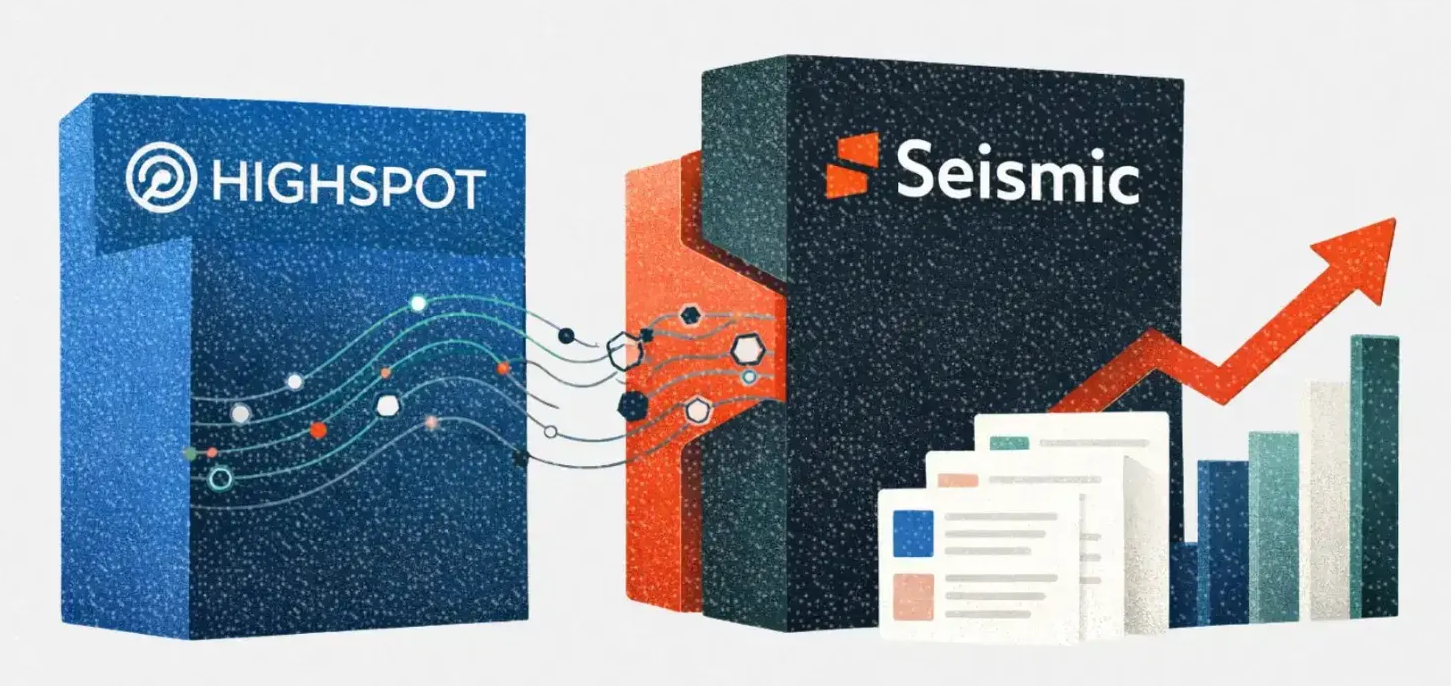
Highspot targets enterprise and mid-market B2B companies with complex sales motions. Its customer base includes Uber, Siemens, Vodafone, Visa, Nvidia, Samsung, AWS, OpenAI, MetLife, HSBC, and FedEx. The company has raised $648 million in total funding at a $3.5 billion valuation, and in February 2026, announced a merger with Seismic, creating a combined entity valued at over $6 billion.
Source: Highspot
Highspot Pros & Cons
Pros | Cons |
|---|---|
- Unified platform for content, training, coaching, and buyer engagement | - Custom pricing with no published rates |
- AI-powered search that understands context, not just keywords | - Limited customization options for workflows and UI |
- Digital Sales Rooms for structured buyer collaboration | - Steep learning curve for administrators |
- 100+ integrations including Salesforce, Microsoft, and Slack | - Reporting can be difficult to extract for presentations |
- Enterprise-grade security (SOC 2, ISO 27001, GDPR) | - No built-in prospecting data or buyer intent signals |
- Adaptive learning paths with AI Role Play | - No free trial or self-service plan available |
- Analyst recognition from Gartner and Forrester | - Requires dedicated enablement resources to fully leverage |
Highspot Review: How It Works & Key Features
Sales Content Management: Highspot centralizes sales content with AI-powered search and automated governance.
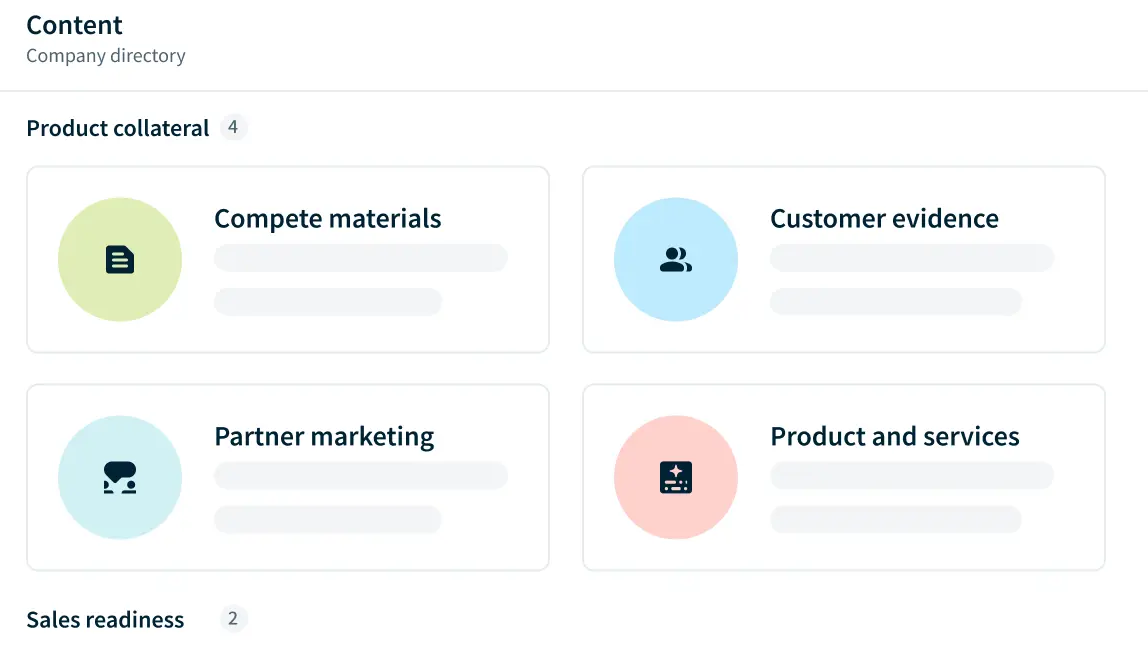
Sales teams waste time hunting for the right deck, case study, or proposal across scattered drives and folders. Highspot addresses this with a centralized content platform that organizes, governs, and surfaces materials based on context rather than keywords.
Source: Highspot
The platform syncs assets from existing repositories including SharePoint, Google Drive, Box, Dropbox, and Adobe Experience Manager. Once content is in Highspot, AI agents categorize and index uploaded assets so sellers can find what they need without memorizing file names or folder structures.
The search engine understands context, deal stage, and persona, delivering relevant results rather than keyword matches. Reps can also ask natural language questions and receive answers drawn from across the Highspot library.
Governance happens through AI-powered agents that enforce publishing rules, archive outdated assets, reassign owners, and apply labels automatically. For larger organizations, the enterprise tier adds advanced approval workflows, watermarks, and custom vanity URLs.
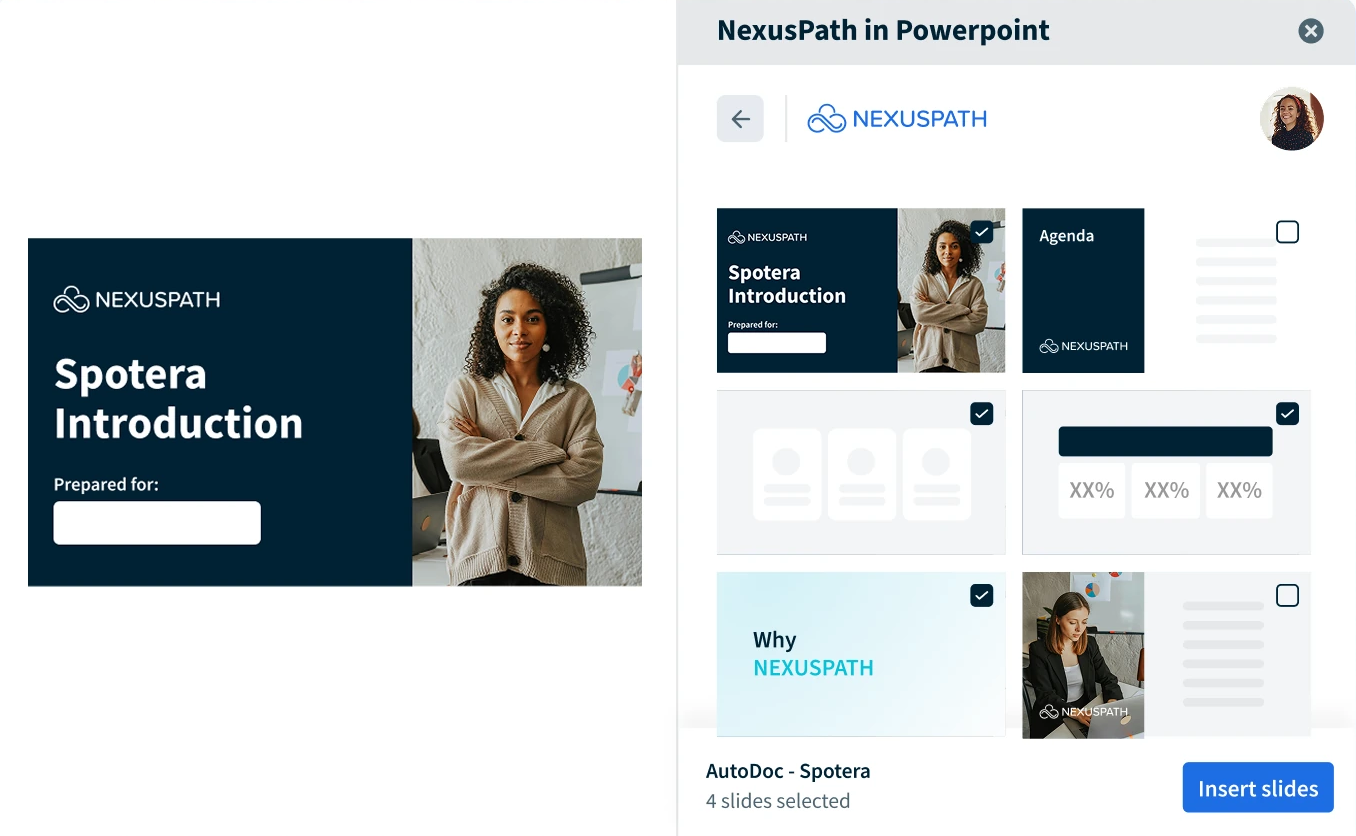
AutoDocs handles content creation at scale, generating custom proposals, presentations, and documents from templates populated with CRM data. This keeps materials on-brand while letting sellers personalize for specific buyers.
Source: Highspot
Analytics provide real-time content insights into how content is used, what drives engagement, and how it influences deal outcomes.
Sales Training and Coaching: Highspot delivers adaptive learning and AI-powered coaching that connect practice to performance.
Traditional sales training treats every rep the same. Highspot's approach is different: the platform's Adaptive Learning system uses its Nexus AI engine to tailor training paths based on each rep's role, skill level, and identified gaps. Reps who've already mastered a topic can test out and skip ahead, while those who need reinforcement receive targeted content.
Training formats are flexible: on-demand, instructor-led, blended, and in-person sessions are all supported. AI-assisted authoring helps enablement teams to create courses quickly, and the platform supports SCORM and third-party content for teams that already have materials in other systems.
AI Role Play lets reps practice against realistic, industry-specific scenarios that reflect talk tracks, objections, and target personas. The system provides instant feedback on delivery and tone and evaluates performance against the team's coaching and competency frameworks.

Source: Highspot
On the coaching side, Highspot provides managers with a 360-degree assessment system that pulls from self-reviews, manager reviews, practice role-playing, real-world meetings, and buyer surveys. Meeting Intelligence captures real sales calls and delivers instant recaps and transcripts with smart follow-up tools, while flagging delivery elements like filler words and pacing and pitch variation.
Buyer Engagement: Highspot creates shared digital spaces where sellers and buyers collaborate through the deal.
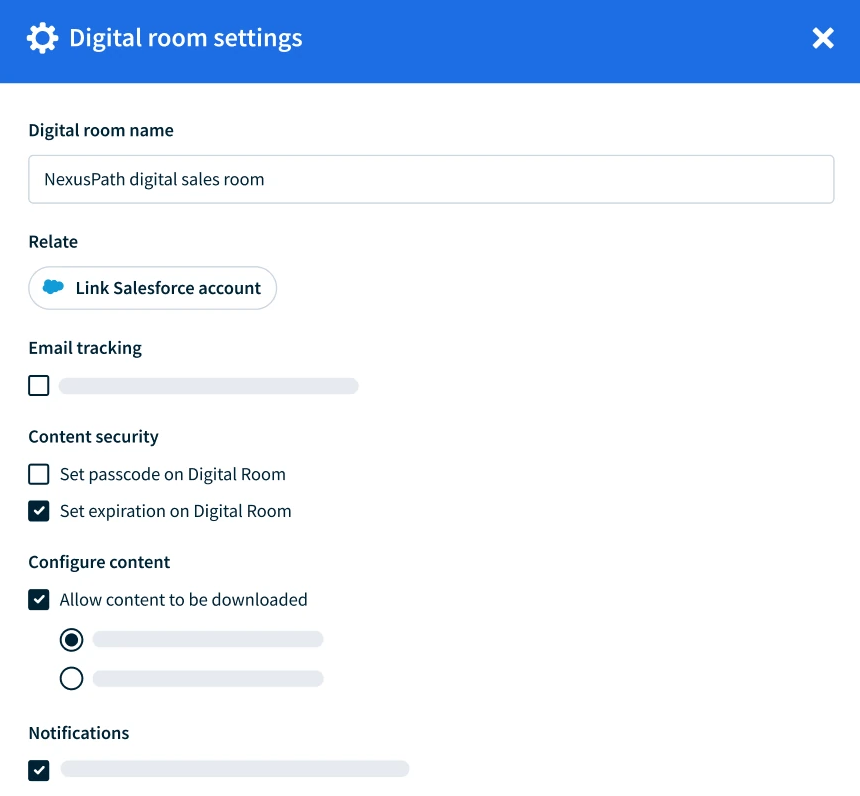
Modern B2B deals involve multiple stakeholders, and keeping everyone aligned on next steps is one of the hardest parts of closing. Highspot's Digital Sales Rooms are secure, branded microsites where sellers centralize deal-critical content, simplify collaboration with stakeholders, and stay aligned throughout the sales process.
Source: Highspot
Sellers create rooms quickly using marketing-approved templates preloaded with on-brand messaging and content, then personalize by buyer role, industry, or need. Security features include password protection, watermarking, email verification, and domain controls.
A key feature is Mutual Action Plans embedded in Digital Sales Rooms. These define shared objectives and milestones tied directly to the purchase decision, with named owners and dated targets, preventing the common scenario where one side thinks the next step is a demo while the other is preparing for a contract review.
The platform provides real-time engagement visibility, including views, time spent, and shares, so sellers know which stakeholders are engaged and which content resonates.
Sales Plays and AI Agents: Highspot packages guidance, content, and AI-driven actions into repeatable plays.
Sales Plays package messaging, objection handling, content, and training into a single destination for every selling scenario. Rather than scrambling through Slack threads and old notes before a call, reps get role-specific guidance and AI-recommended content surfaced based on deal stage and buyer persona.
Plays are built from customizable templates and can embed call recordings and best practices from top performers directly into the flow. The platform surfaces plays directly in the CRM based on persona, industry, and deal stage, so guidance appears where reps already work.
Highspot Agents, powered by the Nexus engine, act as specialized AI teammates. Role-based agents serve sellers, marketers, and enablement teams, while specialized agents focus on specific workflows like deal coaching, content management, and sales play optimization.
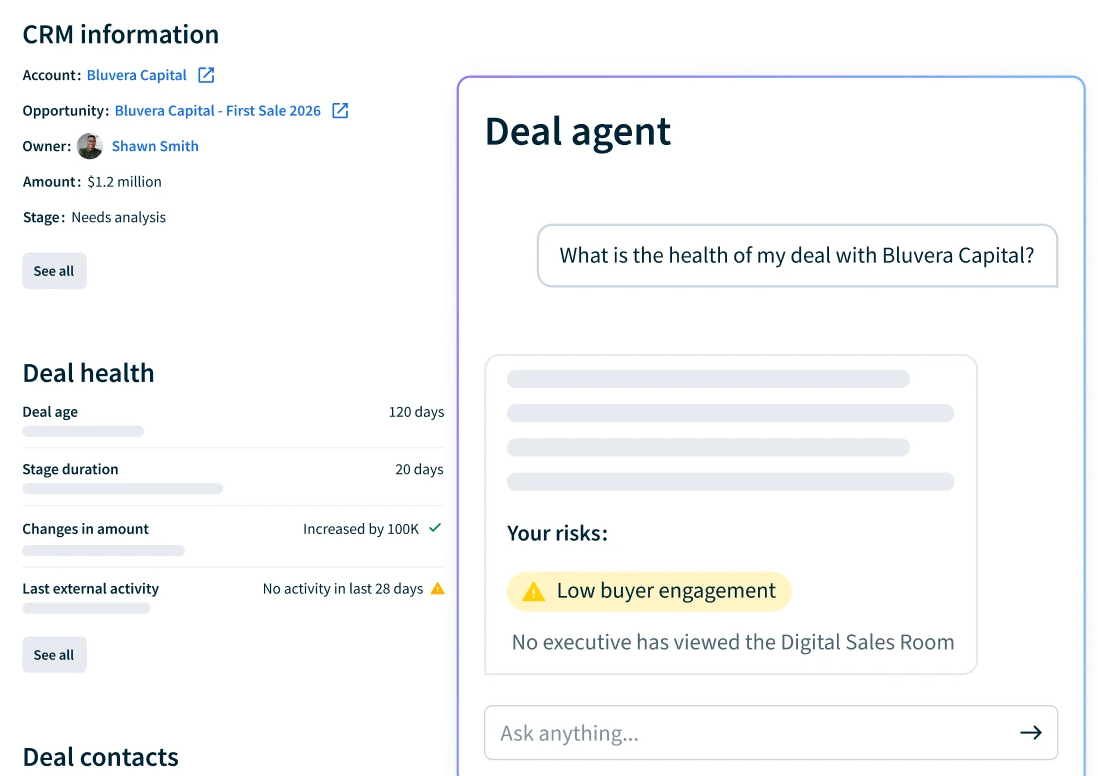
The Deal Agent provides 360-degree deal context by unifying CRM activity, buyer engagement, emails, meetings, and manager feedback into a single view, then recommends data-backed next steps so sellers know how to advance each opportunity.
Source: Highspot
Visual play scorecards track adoption and impact in real time, showing enablement teams which plays are being used and which are driving results.
Pricing: Highspot uses custom, quote-based pricing across three tiers.
Highspot does not publish pricing. All quotes are tailored to the capabilities, use cases, and services that fit your goals and the size and complexity of your organization.
The platform offers three tiers with progressively expanding capabilities:
Equip and Engage (foundation tier) includes AI-powered content management, search, Sales Plays, Digital Sales Rooms, CRM integration, analytics and scorecards, and Highspot Agents.
Train and Practice (mid tier) adds skills and competencies frameworks, adaptive learning, AI Role Play, AI-assisted training authoring, event-based and on-demand learning, and training-specific analytics.
Coach and Reinforce (top tier) adds Meeting Intelligence, Delivery Intelligence, meeting recap and follow-up, deal and performance context for agents, MCP Server, Insights Layer APIs, and integrations with Salesforce Agentforce, Microsoft Copilot for Sales, and Slack AI.
Enterprise capabilities like advanced content management, complex document autogeneration, domain-specific encryption keys, Data Lake access, and 24/7/365 support can be added to any tier at additional cost. CRM integrations do not cost extra.
Highspot does not offer a self-service free trial or freemium model. Prospective customers must schedule a demo to evaluate the platform.
Where Highspot Falls Short
Highspot excels at what happens after your team knows who to sell to. But several limitations become apparent when you look at the full go-to-market picture.
No Prospecting Data or Contact Intelligence. Highspot doesn't provide B2B contact data, company profiles, direct dials, or verified emails. It assumes your team already has a clean pipeline of the right targets. For organizations that struggle to identify, research, and reach the right buyers in the first place, enablement tools have limited impact if the upstream prospecting data isn't there.
No Buyer Intent Signals. Highspot tracks buyer engagement within its own Digital Sales Rooms and content, but it doesn't detect when companies are actively researching solutions before they enter your pipeline.
There's no way to know that a target account just started reading about your product category, hired three new VPs, or visited your pricing page. Without these signals, sellers rely on timing and luck rather than data-backed prioritization.
Limited Customization. According to G2 reviews, Highspot doesn't allow extensive customization, which makes it difficult to tailor workflows and interfaces for specific sales processes. Organizations with unique or complex selling motions may find the platform too rigid.
Steep Administrative Learning Curve. While end-user reviews are generally positive, some users find the interface challenging when it comes to page design, reporting, and asset organization. Gartner reviews note that new users need training to understand features like Spots and SmartPages. The platform requires dedicated enablement teams to configure and maintain effectively.
Reporting Challenges. Users have expressed concerns about reporting functionality, noting that analytics can be difficult to extract and visualize for stakeholder presentations. For a platform that emphasizes measurable outcomes, the gap between the data it captures and how easily teams can present that data is a friction point.
No Published Pricing and No Free Trial. Without published pricing or a self-service trial, evaluating Highspot requires going through sales. For teams that want to test a platform before committing, this creates a barrier, especially compared to GTM tools that offer free tiers or transparent pricing.
These limitations aren't failures of design. They reflect Highspot's focus: enabling sales teams that already have the right targets. But they leave a clear gap for tools that provide the data, intelligence, and signals that make enablement work land with the right people.
The Ideal Complement to Highspot: ZoomInfo
Highspot tells your reps what to say, what to share, and how to improve. ZoomInfo tells them who to talk to, when to reach out, and why a deal is moving. Together, they cover the full GTM workflow: intelligence first, then enablement.
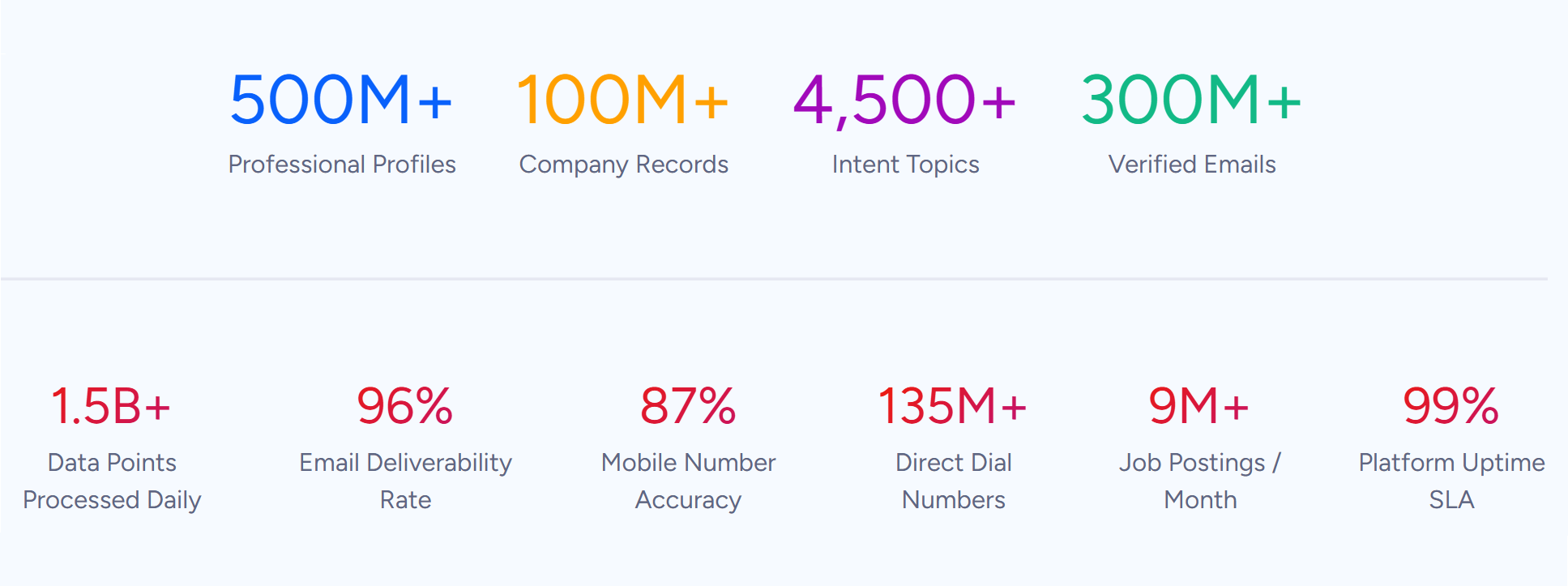
ZoomInfo is an all-in-one AI GTM platform built on the industry's most comprehensive B2B data foundation: 500M contacts, 100M companies, 135M+ verified phone numbers, and 200M+ verified business emails.
Source: ZoomInfo
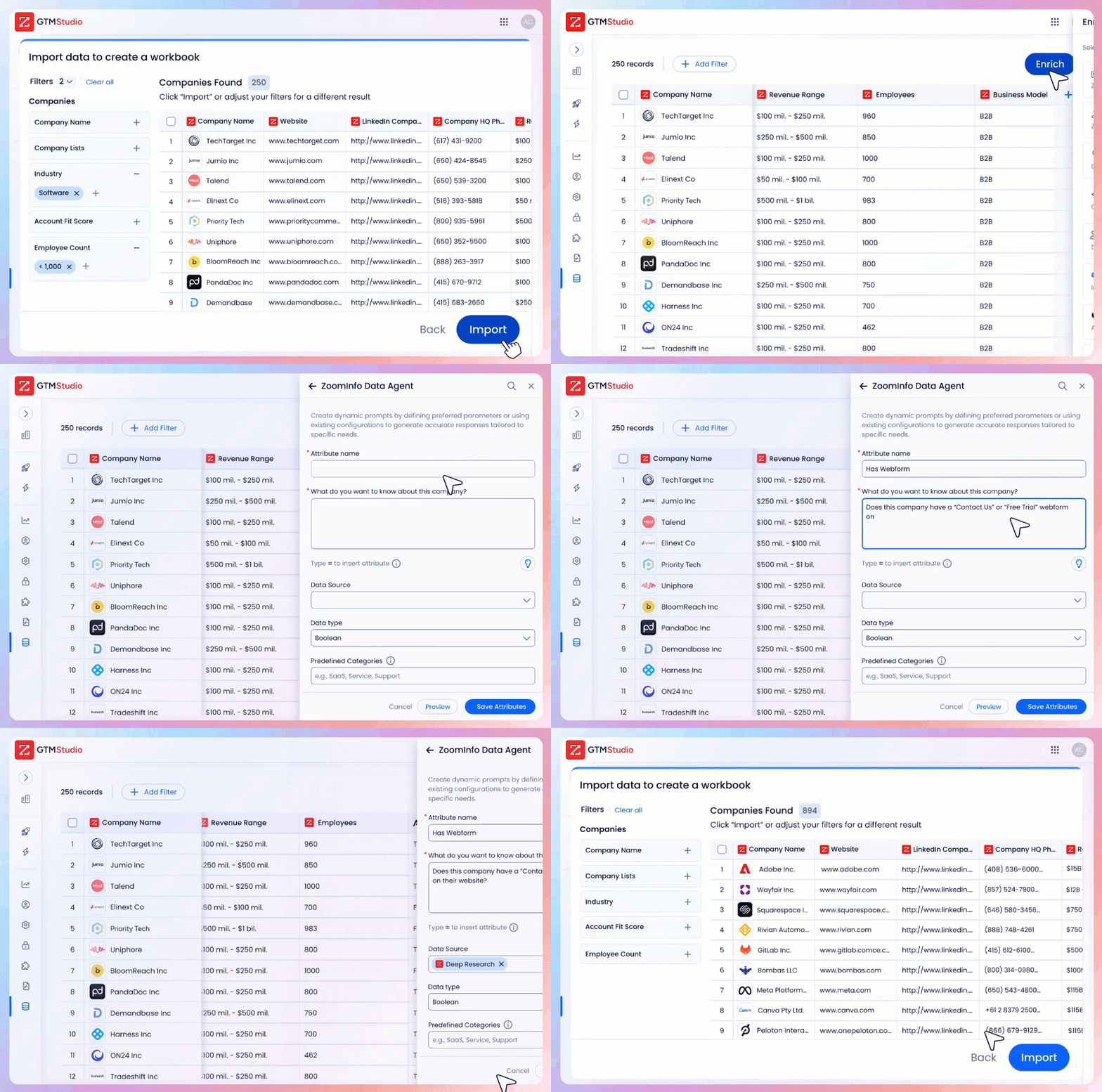
ZoomInfo’s GTM Context Graph, which processes 1.5B+ data points daily, unifies this data with your CRM records, conversation transcripts, and behavioral signals to capture not just what happened, but why. Teams access this intelligence through GTM Workspace for sellers, GTM Studio for marketers and RevOps, or APIs and MCP in any front-end.
Source: ZoomInfo
That data is verified through a proprietary collection and verification system backed by 300+ human researchers, reaching up to 95% accuracy on first-party data. In a Fortune 500 competitive RFP analyzing 25 million contacts across vendors, the independent consultant concluded that "no other competitor came even close."
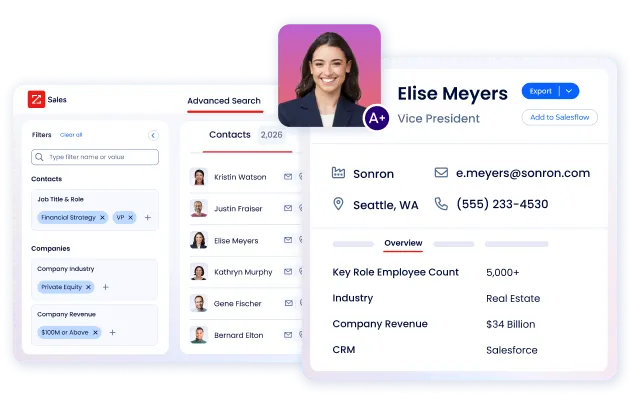
B2B Data That Feeds the Pipeline Highspot Enables: ZoomInfo provides the verified contacts, company intelligence, and direct dials that Highspot assumes you already have.
Highspot helps your sellers engage buyers effectively, but it doesn't help them find those buyers. ZoomInfo fills that gap with 120M direct-dial phone numbers and 200M+ verified business email addresses, along with 300+ company attributes for market segmentation, department org charts showing decision-makers, and job-change alerts that track when contacts move.
Source: ZoomInfo
For sales teams, this means the direct dial actually rings and the email actually lands. For RevOps, enrichment workflows don't require stitching together multiple vendors just to get a complete account picture. And for marketing, TAM modeling becomes a continuously verified census of the actual buyable market rather than a theoretical exercise built on stale snapshots.
"ZoomInfo gives us the information we need to execute. We don't have to go through and spend our time digging. It's already there, so we can be three steps ahead." (Vensure)
Buyer Intent and Signal Detection: ZoomInfo identifies in-market accounts before they enter your pipeline, so Highspot's enablement reaches buyers when they're ready.
Highspot tracks engagement within its own platform. ZoomInfo detects buying signals across the broader market. ZoomInfo Intent tracks signals from 210 million IP-to-Organization pairings and 6 trillion+ new keyword-to-device pairings sourced monthly. Guided Intent, exclusive to ZoomInfo, identifies topics historically correlated with deal success rather than requiring manual topic selection.

Source: ZoomInfo
WebSights resolves anonymous website traffic to companies, identifying the buying team and surfacing direct contact information. This means when a target account visits your pricing page, your seller can open a Highspot Digital Sales Room for those specific buyers within hours, not weeks.

Source: ZoomInfo
ZoomInfo was named a Leader in the Forrester Wave for Intent Data Providers B2B, Q1 2025, receiving the highest possible scores across eight criteria.
"That combination of our internal CRM data, external signals, and AI that's given all that context has helped us craft very specific account- and persona-based messages. And people have responded to them right away." (Seismic)
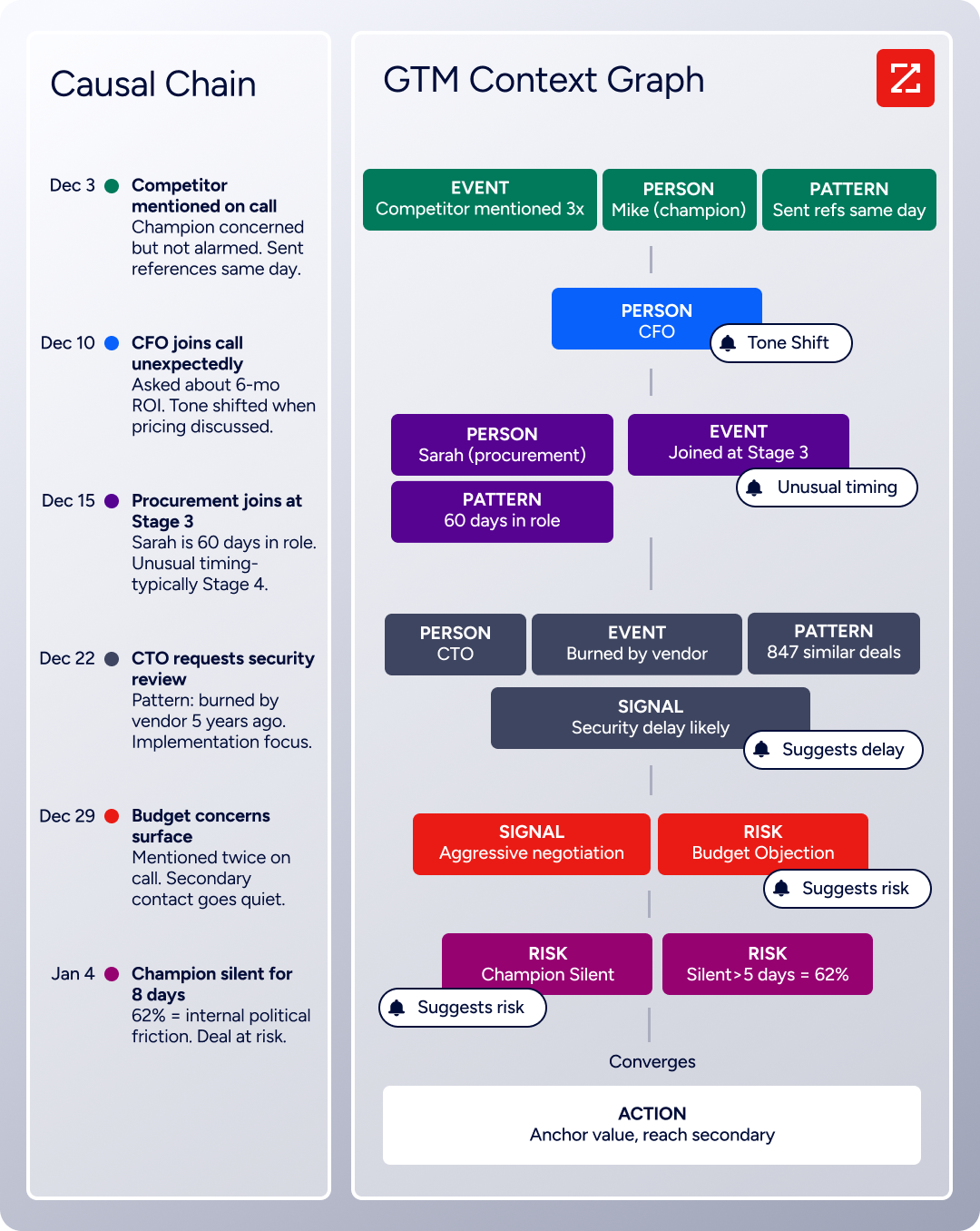
The GTM Context Graph: ZoomInfo reasons across your CRM, conversations, and signals to explain why deals move, so reps walk into every Highspot-enabled interaction with full context.
Beyond raw data, ZoomInfo's GTM Context Graph, the platform's intelligence layer, processing 1.5B+ data points daily, fuses its B2B data with a customer's CRM records, conversation transcripts, email threads, and behavioral signals, then extracts the connections between signals and outcomes. CRMs record that a deal moved to Stage 3.
Source: ZoomInfo
Conversation intelligence transcribes what the VP of Finance said. Intent platforms log a research spike. The GTM Context Graph reasons across all three to capture why the deal moved.
This context makes Highspot's enablement tools more effective. When a seller opens a Highspot sales play, they already know from ZoomInfo which stakeholders are engaged, what competitive threats have surfaced in conversations, and which signals suggest the deal is accelerating or stalling. The content they share through Digital Sales Rooms is informed by actual buying behavior, not guesswork.
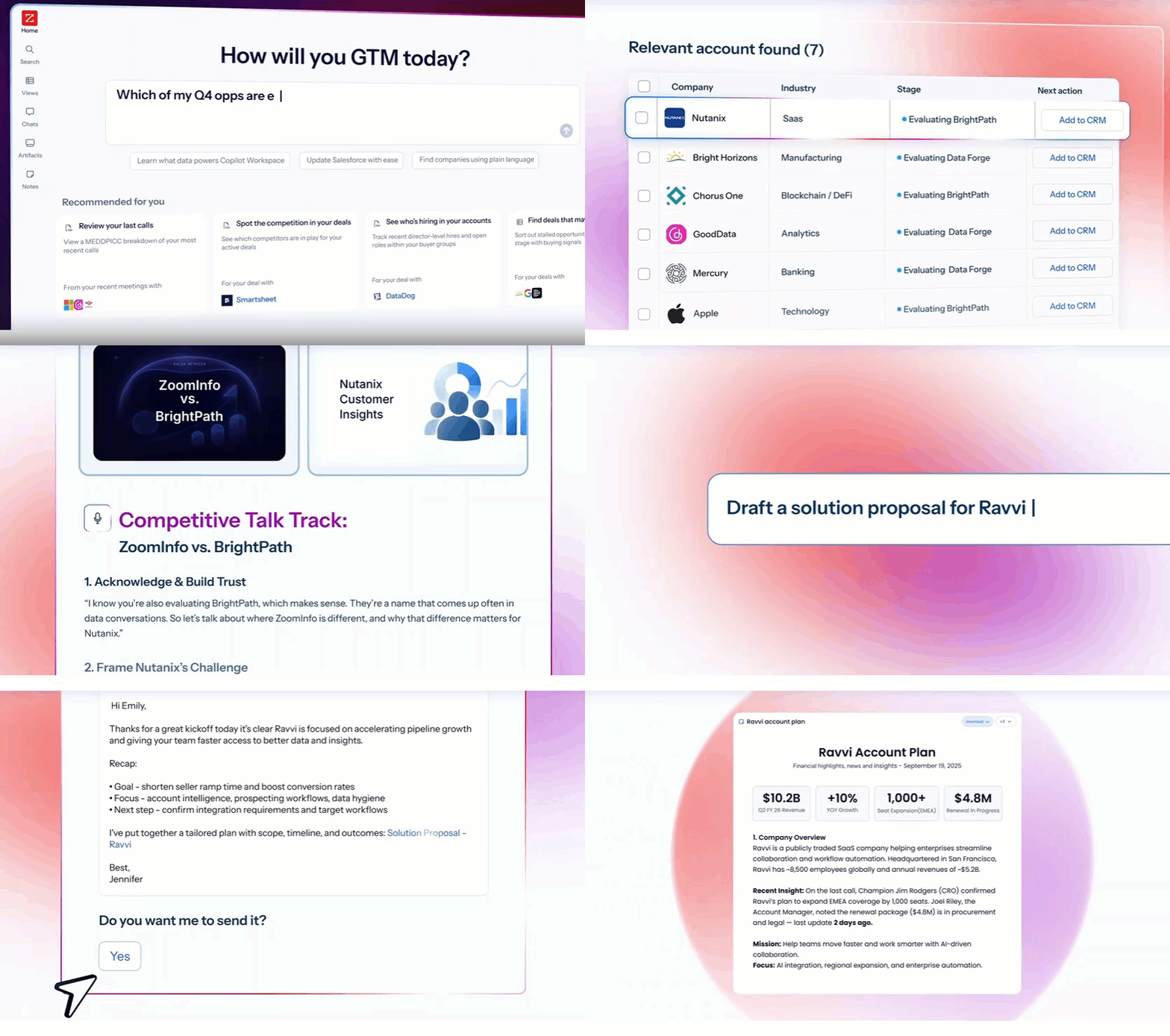
GTM Workspace puts this intelligence in front of sellers through an AI-powered execution surface with prioritized accounts, AI-drafted outreach, and deal context. GTM Studio gives marketers and RevOps teams a builder for audience definition, campaign orchestration, and pipeline measurement in natural language. And APIs and MCP expose the same intelligence to any custom agent or third-party platform.
Source: ZoomInfo
"It's not just the data itself. It's more about the right data at the right time to help us reach out with the right message across that full buyer journey." (Redwood Logistics)

Source: ZoomInfo
Accessible Pricing with a Free Tier: ZoomInfo offers multiple entry points, including a permanent free plan.
While Highspot requires a sales conversation to get started, ZoomInfo provides several ways to evaluate the platform.
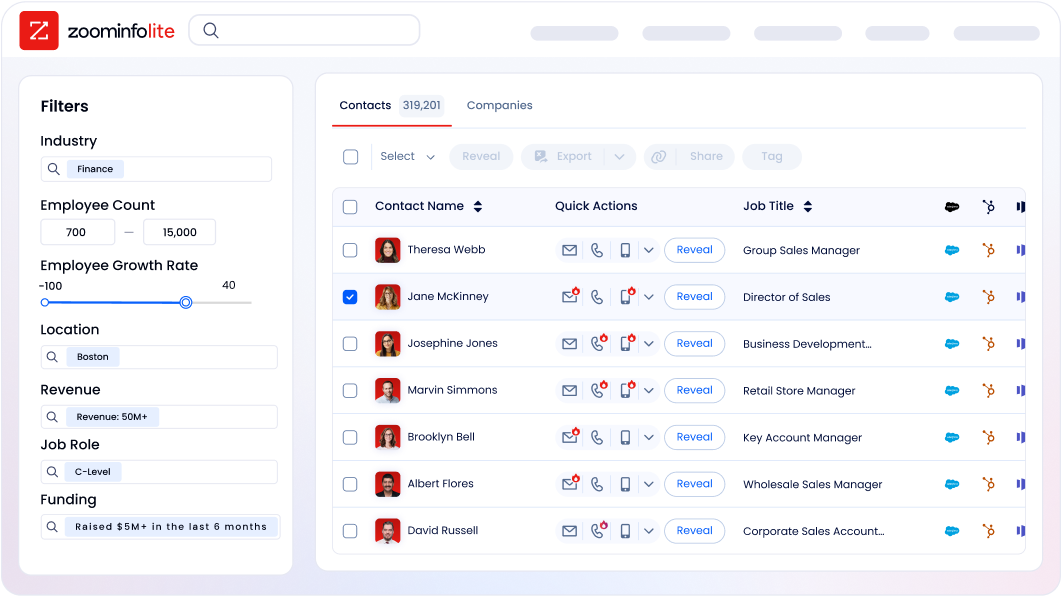
ZoomInfo Lite is a permanent free tier (no credit card, no time limit) that includes access to ZoomInfo's B2B database, 10 monthly export credits, individual and company searches with advanced filters, a Chrome extension, mobile app, and WebSights Lite for up to 10 website visitor reveals per day. A separate 7-day free trial provides broader access to core features.
Source: ZoomInfo
Paid plans are organized into Sales, Marketing, and Operations product lines, with Professional, Advanced, and Enterprise tiers. Like Highspot, ZoomInfo uses custom-quoted pricing, but with consumption-based pricing where customers pay based on seats and credit volume. API access is included in all relevant plans.
Highspot and ZoomInfo: How They Work Together
Aspect | Highspot | ZoomInfo |
|---|---|---|
Primary focus | Sales enablement: content, training, coaching, buyer engagement | GTM intelligence: B2B data, signals, prospecting, AI-driven execution |
Core question answered | "What should sellers say, share, and practice?" | "Who should sellers target, when, and why?" |
Data provided | Content usage and buyer engagement within Highspot | 500M contacts, 100M companies, intent signals, technographics |
AI capabilities | Content recommendations, adaptive learning, deal coaching, Role Play | GTM Context Graph, AI-drafted outreach, signal-to-action automation |
Buyer signals | Tracks content views and Digital Sales Room engagement | Tracks intent across 210M IP-to-Org pairings, 6T+ keyword signals monthly |
CRM integration | Salesforce, Microsoft Dynamics | Salesforce, HubSpot, Microsoft Dynamics |
Analyst recognition | Gartner MQ Leader (Revenue Enablement), Forrester Wave Leader | Gartner MQ Leader (ABM Platforms), Forrester Wave Leader (Intent Data) |
Free trial | No (demo only) | ZoomInfo Lite (permanent free) + 7-day trial |
Best for | Equipping sellers to execute with the right content and skills | Identifying the right targets, timing, and context for outreach |
Final Verdict
Highspot and ZoomInfo solve different parts of the same problem: helping GTM teams find, win, and grow customers.
Choose Highspot if your team already has a healthy pipeline but struggles with consistent execution. If your sellers can't find the right content, your new hires take too long to ramp, your coaching lacks structure, or your buyers lose track of deal milestones, Highspot provides the enablement infrastructure to fix those problems.
Its unified platform for content management, adaptive training, AI-powered coaching, and Digital Sales Rooms gives GTM teams a single system for turning strategy into consistent, measurable action.
Choose ZoomInfo if your team needs the data and intelligence layer that comes before enablement. ZoomInfo answers the foundational GTM questions: which accounts should we target, who are the decision-makers, when are they in-market, and why are deals moving or stalling?
With the industry's most comprehensive B2B data, buyer intent signals, and the GTM Context Graph that reasons across CRM, conversations, and signals, ZoomInfo provides the intelligence that makes every downstream tool, including Highspot, more effective.
Get started with ZoomInfo here.
The strongest GTM teams don't choose between intelligence and enablement. They use ZoomInfo to know who to pursue and why, then use Highspot to execute those pursuits with the right content, skills, and buyer experiences. Intelligence without enablement leaves reps improvising. Enablement without intelligence sends polished pitches to the wrong people.
Highspot FAQ
What is Highspot used for?
Highspot is a revenue enablement platform that helps sales teams manage content, build sales plays, train and coach reps, and engage buyers through Digital Sales Rooms.
It centralizes everything sellers need to execute deals consistently, from messaging guidance and competitive materials to adaptive learning paths and AI-powered coaching. The platform is designed for enterprise B2B organizations with dedicated enablement teams.
How much does Highspot cost?
Highspot does not publish pricing. All quotes are customized based on the capabilities, number of licenses, and services selected. The platform offers three tiers: Equip and Engage (content and engagement), Train and Practice (adds training and adaptive learning), and Coach and Reinforce (adds meeting intelligence, advanced coaching, and API access).
Enterprise features like 24/7 support and advanced security are available as add-ons. Highspot claims customers see an average of 4x ROI in 15 months.
Does Highspot offer a free trial?
No. Highspot does not offer a self-service free trial or freemium plan. Prospective customers must schedule a demo with a sales representative to evaluate the platform. ZoomInfo, by contrast, offers ZoomInfo Lite as a permanent free tier with access to its B2B database, plus a separate 7-day free trial for broader feature access.
What integrations does Highspot support?
Highspot integrates with over 100 technology partners, including Salesforce, Microsoft Dynamics, Microsoft Teams, Outlook, SharePoint, Slack, and LinkedIn. CRM integrations are included at no extra cost across all tiers. The top tier adds integrations with Salesforce Agentforce, Microsoft Copilot for Sales, and Slack AI. The platform also supports MCP and Insights Layer APIs for enterprise customers.
Does Highspot provide buyer intent data?
No. Highspot tracks buyer engagement within its own platform, such as content views and time spent in Digital Sales Rooms, but it does not provide third-party buyer intent signals that reveal when companies are actively researching solutions.
For intent data, tools like ZoomInfo track signals from 210 million IP-to-Organization pairings and over 6 trillion new keyword-to-device pairings monthly, identifying in-market accounts before they enter your pipeline.
Is Highspot merging with Seismic?
Yes. In February 2026, Highspot announced a definitive agreement to merge with Seismic, creating a combined entity valued at over $6 billion. The combined company will operate under the Seismic name.
The merger brings together two of the largest revenue enablement platforms, with the stated goal of accelerating performance for modern revenue organizations. If you're evaluating how the two platforms compare as standalone tools, see our Highspot vs Seismic analysis.
What is the difference between Highspot and ZoomInfo?
Highspot and ZoomInfo serve different functions in the go-to-market workflow. Highspot is a sales enablement platform focused on content management, training, coaching, and buyer engagement, helping sellers execute effectively once they know who to target.
ZoomInfo is an all-in-one AI GTM platform providing B2B contact data, company intelligence, buyer intent signals, and AI-powered prospecting, helping teams identify the right accounts and timing before enablement begins. The two platforms complement each other: ZoomInfo answers "who, when, and why," while Highspot answers "what to say, share, and practice."
Who is Highspot best suited for?
Highspot is designed for mid-market to enterprise B2B organizations with complex sales motions and dedicated enablement teams. It serves industries including financial services, manufacturing, healthcare, life sciences, technology, and medical devices.
The platform is well-suited for companies with large, distributed sales teams that need consistent execution across regions and segments. Organizations with fewer than 20 sales reps or without dedicated enablement resources may find the platform more than they need.
