

Hightouch is a leader in the customer data platform space, with a Gartner MQ Leader placement in the January 2026 Gartner Magic Quadrant for Customer Data Platforms. Its warehouse-native architecture lets enterprise marketing teams build audiences, sync data, and activate campaigns on top of Snowflake, BigQuery, or Databricks without duplicating data into a proprietary store.
But a warehouse-native CDP has limits. Hightouch requires a pre-existing, well-modeled cloud data warehouse and a data engineering team to maintain it. Advanced transformations demand SQL. And the platform doesn't send messages; it syncs audiences to the tools that do.
Whether you're looking to:
Enrich your B2B pipeline with prospect intelligence and AI-driven GTM execution
Route customer data to 750+ downstream tools with proactive schema governance
Run eCommerce lifecycle automation without standing up a data warehouse
Stream behavioral events in real time for mobile-first consumer personalization
Activate warehouse data on an open-source platform with a generous free tier
Sync data bidirectionally between databases and business tools without full CDP complexity
Improve paid media signal quality through server-side tracking and conversion engineering
We'll explore Hightouch alternatives that excel in each area.
Some teams might complement Hightouch with a specialized tool for one of these jobs. Others might replace it with a platform better matched to their use case. This isn't about finding a "better" CDP; it's about finding the right fit for how your team works with data.
The Best Hightouch Alternatives |
|---|
Best Alternative for B2B Prospect Intelligence and GTM Execution We chose ZoomInfo because it takes a different approach: instead of syncing data you already have, it provides a B2B dataset of 500M+ contacts and powers your go-to-market motion with AI intelligence. |
Best Alternative for Enterprise Integration Breadth and Data Governance We chose Segment because its 750+ integrations and proactive schema enforcement via Protocols give enterprise teams the broadest connector catalog and tightest data quality controls among CDPs. |
Best Alternative for eCommerce Marketing Without a Data Warehouse We chose Klaviyo because it bundles a CDP, email, SMS, and AI-driven automation in a single product built for consumer brands, with no warehouse prerequisite. |
Best Alternative for Real-Time Mobile Event Streaming We chose mParticle because its streaming-first architecture routes behavioral events from mobile, web, and OTT sources to 300+ destinations in real time, with mobile-native identity resolution built in. |
Best Alternative for Open-Source Warehouse-Native Activation We chose RudderStack because its open-source AGPL core, generous free tier (250K events/month), and full-stack CDP architecture give engineering-led teams full pipeline transparency. |
Best Alternative for Bidirectional Data Sync Without CDP Complexity We chose Polytomic because it unifies ETL, Reverse ETL, and CDC streaming in a single product with no-code configuration, covering data movement needs without full CDP overhead. |
Best Alternative for Paid Media Signal Quality We chose CustomerLabs because it fixes what conversion signals reach your ad platforms through server-side tracking and signal engineering, improving paid media efficiency without requiring a data warehouse. |
What is Hightouch?
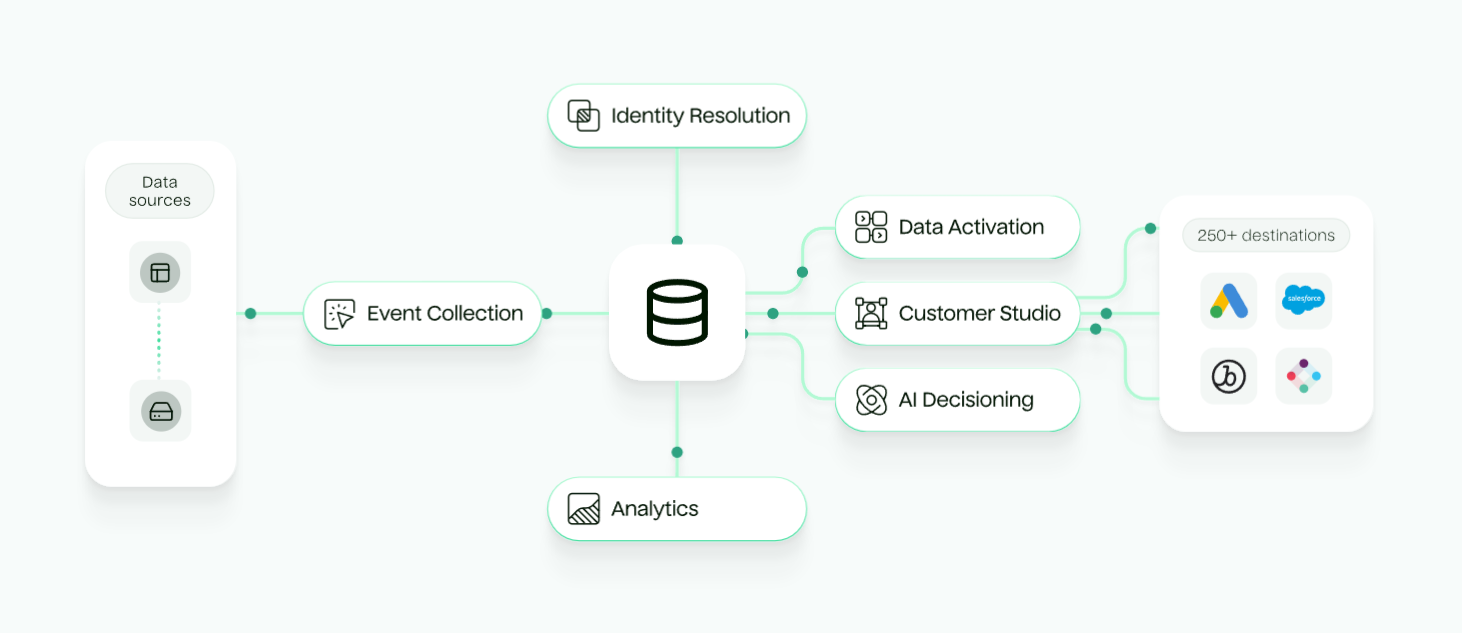
Source: Hightouch
Hightouch is a customer data platform built for enterprise marketing teams. Its warehouse-native architecture operates on top of a company's existing data infrastructure (Snowflake, Databricks, BigQuery, Redshift, Azure Synapse) rather than duplicating data into a proprietary store. The platform organizes around six components:
Composable CDP: A warehouse-native alternative to traditional CDPs that lets teams build audiences, define customer traits, and orchestrate journeys from data already in their warehouse
Reverse ETL: The core data movement layer that syncs warehouse data to 250+ destinations, processing over 1 million daily sync jobs at 99.99% uptime
AI Decisioning: A reinforcement learning engine that replaces manual campaign logic with autonomous AI agents that optimize 1:1 personalization across email, push, in-app, and advertising
Customer Studio: A no-code audience builder and traits engine that gives marketers self-serve access to warehouse data for segmentation without engineering tickets
Identity Resolution: Deterministic and probabilistic matching that stitches fragmented customer records into unified Customer 360 profiles, processed and stored in the customer's own warehouse
Real-time Personalization: A sub-second Personalization API (p99 under 30ms) that combines live session signals with historical customer data for in-the-moment experiences
The warehouse-native approach keeps the data warehouse as the single source of truth, eliminating data duplication and giving teams access to any data object their warehouse contains: not just users and events, but ML model outputs, product catalogs, inventory, and account hierarchies. Hightouch says 90% of customers onboard fully in days or weeks, far faster than traditional CDPs that often take 6-9 months.
That said, some teams need capabilities outside Hightouch's scope: B2B contact data, built-in message execution, broader integration coverage, or activation without a pre-existing warehouse. That's why we focused on platforms that serve specific needs where Hightouch may not fit.
Looking for an AI GTM platform that provides the data, intelligence, and execution your B2B revenue team needs? Learn more about ZoomInfo and see how prospect data and the GTM Context Graph can strengthen your pipeline.
How We Curated Our List of Hightouch Alternatives
After testing Hightouch and researching the customer data and activation market, we focused on tools that serve specific needs well. While Hightouch excels at warehouse-native data activation for marketing teams, some businesses need different capabilities for:
Generating B2B pipeline with verified contact data, intent signals, and AI-driven GTM execution
Routing event data to a broader set of downstream tools with built-in schema governance
Running lifecycle marketing without a cloud data warehouse
Streaming mobile and web behavioral events in real time for in-session personalization
Activating data on a fully open-source, self-hostable platform
Syncing data bidirectionally between production databases and business tools
Improving ad platform signal quality through server-side tracking and conversion engineering
Each tool on this list leads in one of these areas. You might use them alongside Hightouch or as a standalone replacement; it depends on your team's data activation needs.
DISCLAIMER: We aren't covering every data activation platform on the market. Our focus is on alternatives that address specific use cases where Hightouch's warehouse-native approach may not be the ideal fit. |
|---|
1. ZoomInfo - Best Alternative for B2B Prospect Intelligence and GTM Execution
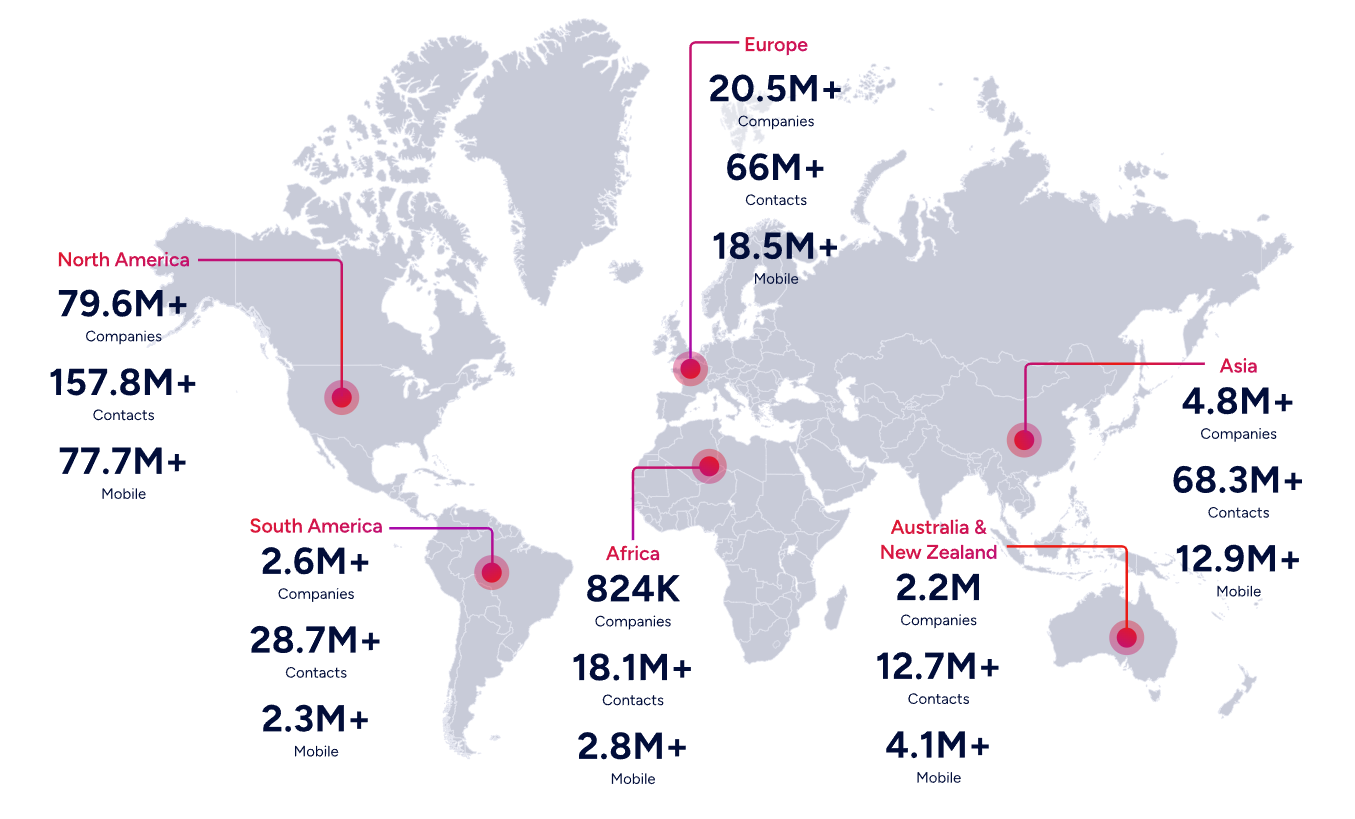
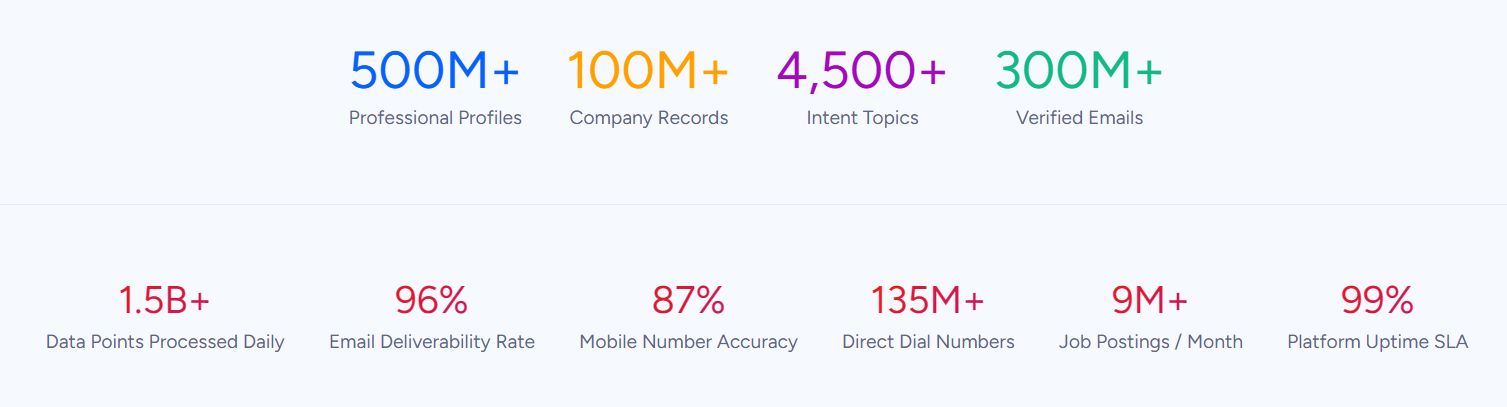
ZoomInfo is an AI GTM platform built on a B2B data foundation of 500M contacts, 100M companies, 135M+ verified phone numbers, and 200M+ verified business emails. Its GTM Context Graph processes 1.5B+ data points daily, unifying this data with your CRM records, conversation transcripts, and behavioral signals to reveal not just what happened in your accounts, but why it happened and what to do next. That intelligence reaches your team through the GTM Workspace for sellers, GTM Studio for marketers and RevOps, or the Enterprise API and MCP in any other front-end.
Where Hightouch sits on top of your existing data warehouse and syncs what you already have, ZoomInfo provides the data itself, the intelligence to interpret it, and the execution environments to act on it. Its key capabilities include:
B2B data: Identity data, company context, and dynamic buying signals, verified through a proprietary collection system backed by 300+ human researchers
GTM Context Graph: An intelligence layer that fuses ZoomInfo's B2B data with your CRM records, conversation transcripts, and behavioral signals, processing 1.5B+ data points daily to reveal not just what happened in a deal, but why
GTM Workspace: A workspace for sellers where prioritized accounts, AI-drafted outreach, and deal execution converge in one surface
GTM Studio: An AI orchestration canvas for marketers, RevOps, and GTM engineers to design, enrich, and activate go-to-market plays
APIs and MCP: Enterprise API and MCP access that deliver ZoomInfo's intelligence into any custom agent, internal tool, or partner platform
For B2B teams that evaluated Hightouch expecting it to solve their pipeline and prospecting needs, ZoomInfo offers an alternative built for that job. Hightouch activates data you already own; ZoomInfo supplies the data and the intelligence to use it.
Why Choose ZoomInfo Over Hightouch for B2B Go-to-Market Intelligence
Hightouch and ZoomInfo solve different problems at different layers of the data stack. Hightouch is a warehouse activation tool for B2C marketing teams. ZoomInfo is a B2B intelligence platform for revenue teams. The following sections explain why B2B teams searching for a Hightouch alternative should consider a fundamentally different approach.
Comprehensive B2B Data: Access Verified Contacts Instead of Just Syncing What You Have
Hightouch starts at the warehouse. If your warehouse doesn't contain verified B2B contact data (direct-dial phone numbers, business email addresses, org charts, technographic profiles), Hightouch can't create it. The platform moves data; it doesn't generate or enrich it with prospect intelligence.
ZoomInfo removes this dependency. Its data spans three dimensions: identity data (500M contacts, 120M direct-dial phone numbers), company context (100M companies with firmographics, org charts, and technographics covering 30,000+ technologies), and dynamic signals that reveal when accounts are actively in market. Verification includes automated ML scanning of 28 million domains daily, third-party partner data from 95 million businesses, and an in-house Data Training Lab.
Third parties confirm the quality. In a Fortune 500 competitive RFP analyzing 25 million contacts across vendors, the independent consultant concluded that "no other competitor came even close." ZoomInfo also earned Forrester Wave Leader placement for Intent Data Providers and 133 No. 1 G2 rankings across Sales Intelligence, Buyer Intent, Data Quality, and Account Data Management.
ZoomInfo in Action: A RevOps manager at a SaaS company needs to build a target account list for a new territory. Instead of waiting for a data engineering team to model prospect data in a warehouse, they open ZoomInfo and access verified contact information, org charts, and technographic profiles for every account. They export qualified contacts to their CRM with accurate emails and direct dials, ready for outreach the same day.
"ZoomInfo gives us the information we need to execute. We don't have to go through and spend our time digging. It's already there, so we can be three steps ahead." (Vensure)
GTM Context Graph: Understand Why Deals Move, Not Just That They Moved
Hightouch syncs data faithfully from a warehouse to downstream destinations. It does not interpret or add intelligence to that data. If your CRM records that a deal moved from Stage 3 to Stage 4 and the close date slipped two weeks, Hightouch syncs that state change accurately. But neither the warehouse nor Hightouch captures why it happened.
ZoomInfo's GTM Context Graph closes that gap. It fuses ZoomInfo's B2B data with a customer's first-party data (CRM records, conversation intelligence from calls and meetings, email interactions, product usage signals, and behavioral events) into a unified graph that captures the connections between signals and outcomes. The CFO joined the last call and asked about six-month ROI; that's what accelerated the deal. The VP went quiet for eight days during an internal budget battle; that's what almost stalled it. The GTM Context Graph makes this decision context machine-readable.
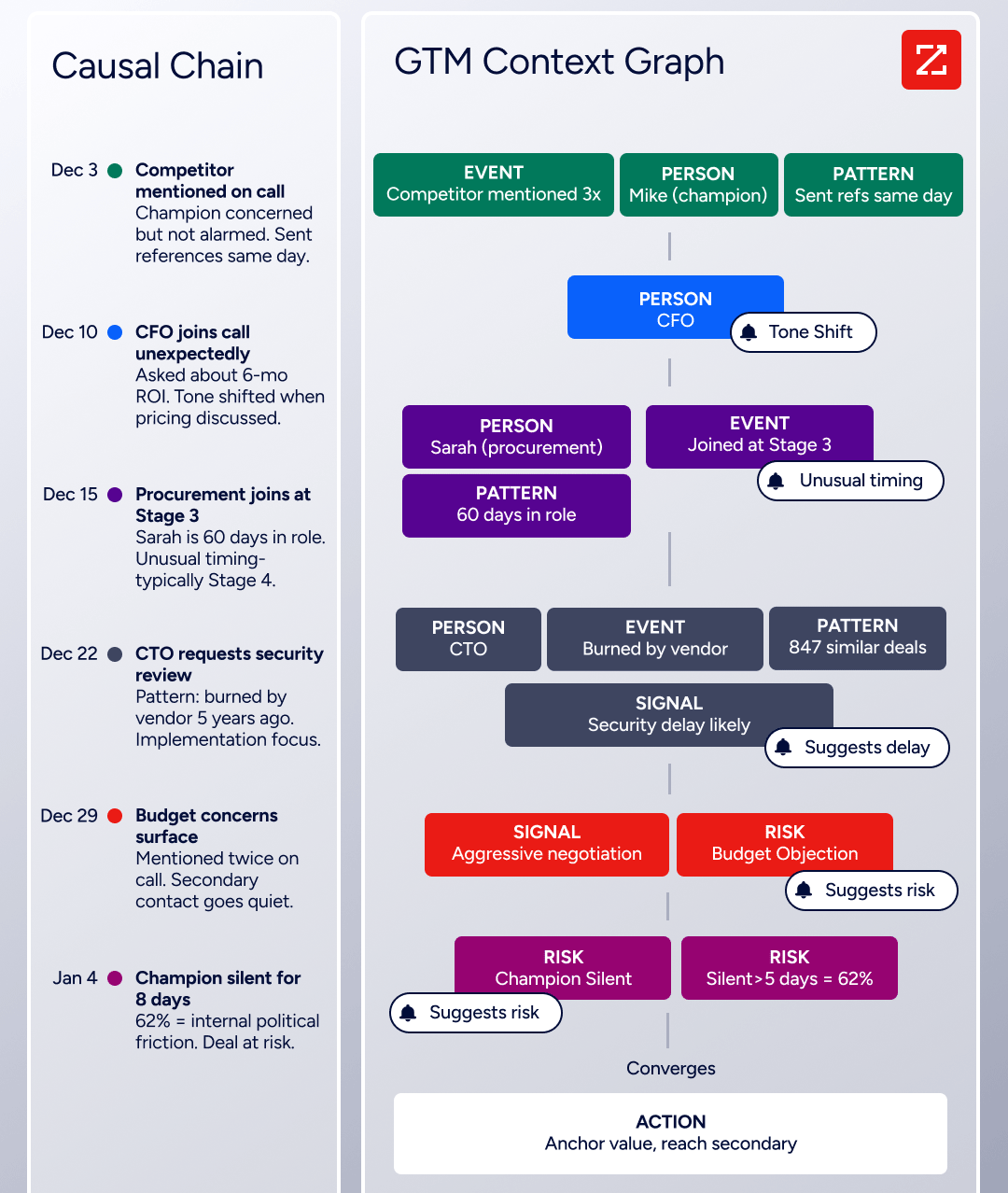
This is why generic AI applied to CRM data often falls short. Without a layer that connects entities, signals, conversations, and outcomes, AI can see the CRM fields but can't reason about what they mean for the next step.
ZoomInfo in Action: Your enterprise AE has a deal in Stage 3. The GTM Context Graph surfaces that the CFO joined the last call and asked ROI-focused questions, while intent signals show the account is researching a competitor. AI-drafted follow-up in GTM Workspace addresses the CFO's specific concerns rather than sending a generic check-in. The deal accelerates because the rep understood the context, not just the stage label.
"That combination of our internal CRM data, external signals, and AI that's given all that context has helped us craft very specific account- and persona-based messages. And people have responded to them right away." (Seismic)
Universal Access: Power Any Tool With B2B Intelligence
Hightouch delivers data to 250+ integrations as a sync-to-destination tool. ZoomInfo takes a broader approach: the same intelligence that powers its own products is available in any tool, any workflow, any AI agent.
GTM Workspace gives sellers a single surface where prioritized accounts, AI-drafted outreach, and deal execution converge without toggling between tools. GTM Studio gives marketers and RevOps a builder where audience definition, campaign orchestration, and pipeline measurement happen in natural language. For teams building beyond ZoomInfo's own products, Enterprise APIs and MCP expose the same intelligence to any custom agent, internal tool, or partner platform.
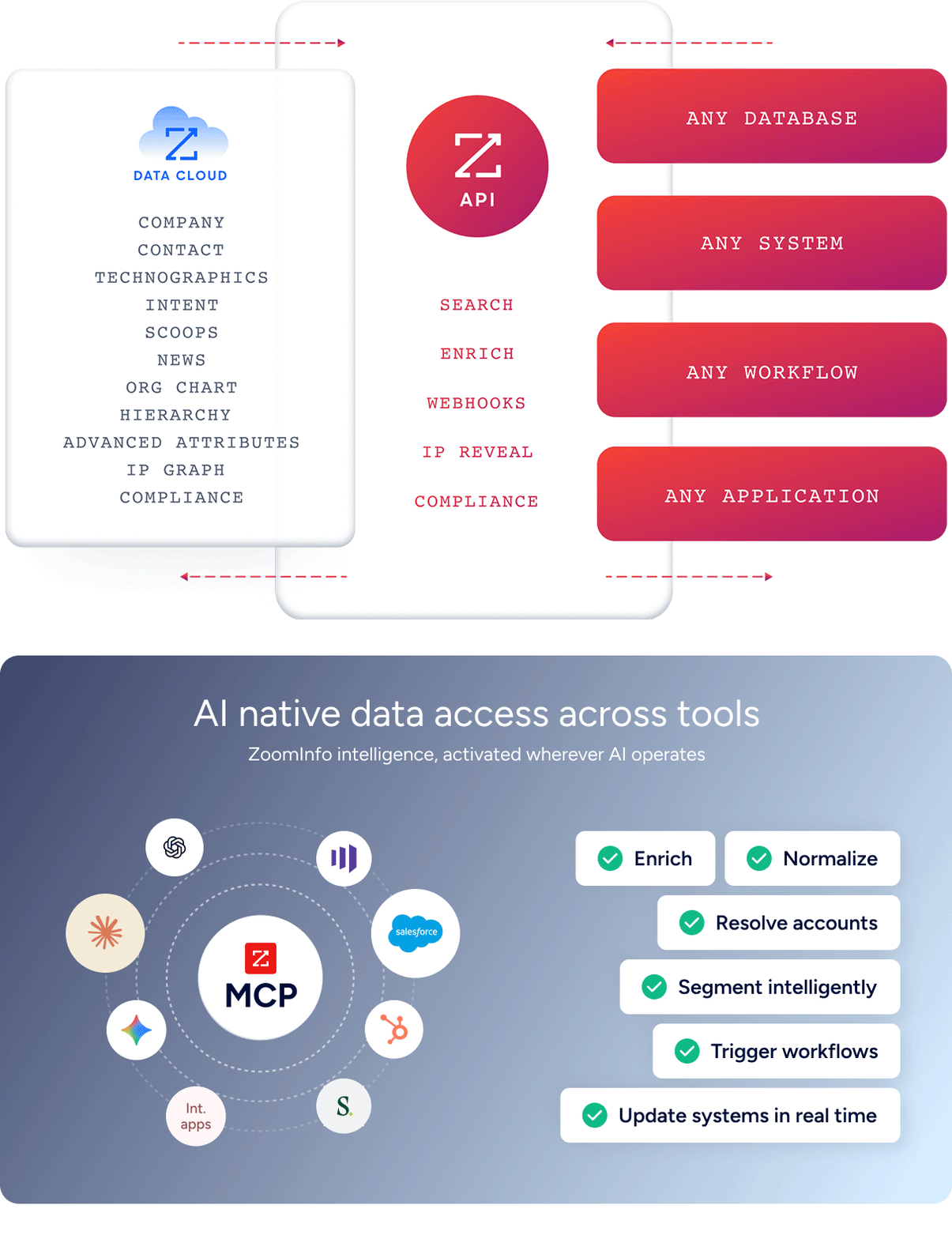
All three (GTM Workspace, GTM Studio, and the APIs) draw from one GTM Context Graph. Same data, same intelligence, same continuously learning model. The choice of where to work never limits the quality of intelligence available.
ZoomInfo in Action: A RevOps engineer at an enterprise company builds a custom internal tool using ZoomInfo's MCP server. The tool enriches incoming leads with verified contact data, scores accounts using intent signals, and routes high-priority accounts to the right rep. The same intelligence powering ZoomInfo's GTM products now powers the company's proprietary system.
"The plug-and-play aspect of the API means I can integrate it very easily into any process and get information at a moment's notice." (BDO Canada)
ZoomInfo Pricing
ZoomInfo uses consumption-based pricing with no publicly listed prices. Costs depend on usage patterns, number of users, monthly credit volume, features, company size, and contract length. The platform organizes into three product lines:
Sales plans (Professional, Advanced, Enterprise): Ranging from contact and company data access at Professional to AI-driven account prioritization and intent signals at Enterprise
Marketing plans (Marketing Demand, ABM Lite, ABM Enterprise): From audience targeting and B2B data to full enterprise ABM with AI insights and unlimited Display Network campaigns
Chorus and Chat: Available as standalone products for conversation intelligence and data-powered website chat
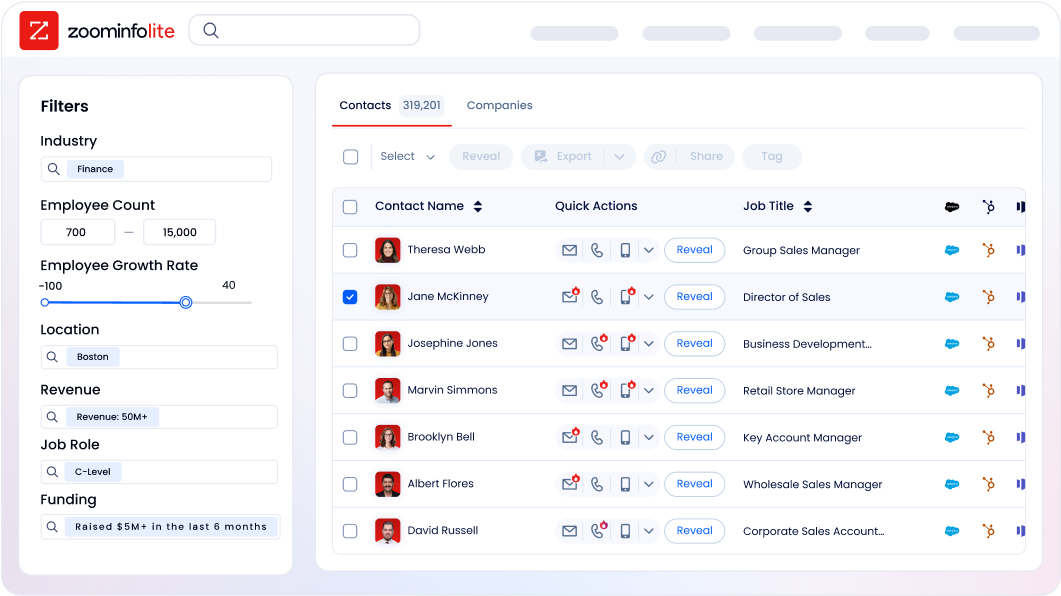
ZoomInfo also offers ZoomInfo Lite, a permanent free tier (not a trial) that includes access to the B2B database with 10 monthly export credits, individual and company searches, the ReachOut Chrome Extension, and built-in email sending. A 7-day free trial with broader feature access is also available, no credit card required.
Who Should Use ZoomInfo?
Choose ZoomInfo if:
You're a B2B revenue team that needs verified prospect data (contacts, direct dials, business emails, org charts, technographics) rather than a tool that only syncs data you already own in a warehouse.
Your sales, marketing, and RevOps teams need an intelligence layer that captures why deals move or stall, not just a data pipe that moves records between systems.
You want execution environments built for your go-to-market motion: GTM Workspace for sellers, GTM Studio for marketers and RevOps, plus APIs and MCP for any custom tool or AI agent.
You operate in the enterprise or upper mid-market B2B segment and need a platform that scales from prospecting through account-based marketing, conversation intelligence, and website visitor identification.
Start with ZoomInfo Lite for free or request a demo to explore the full platform.
2. Segment - Best Alternative for Enterprise Integration Breadth and Data Governance
Source: Twilio
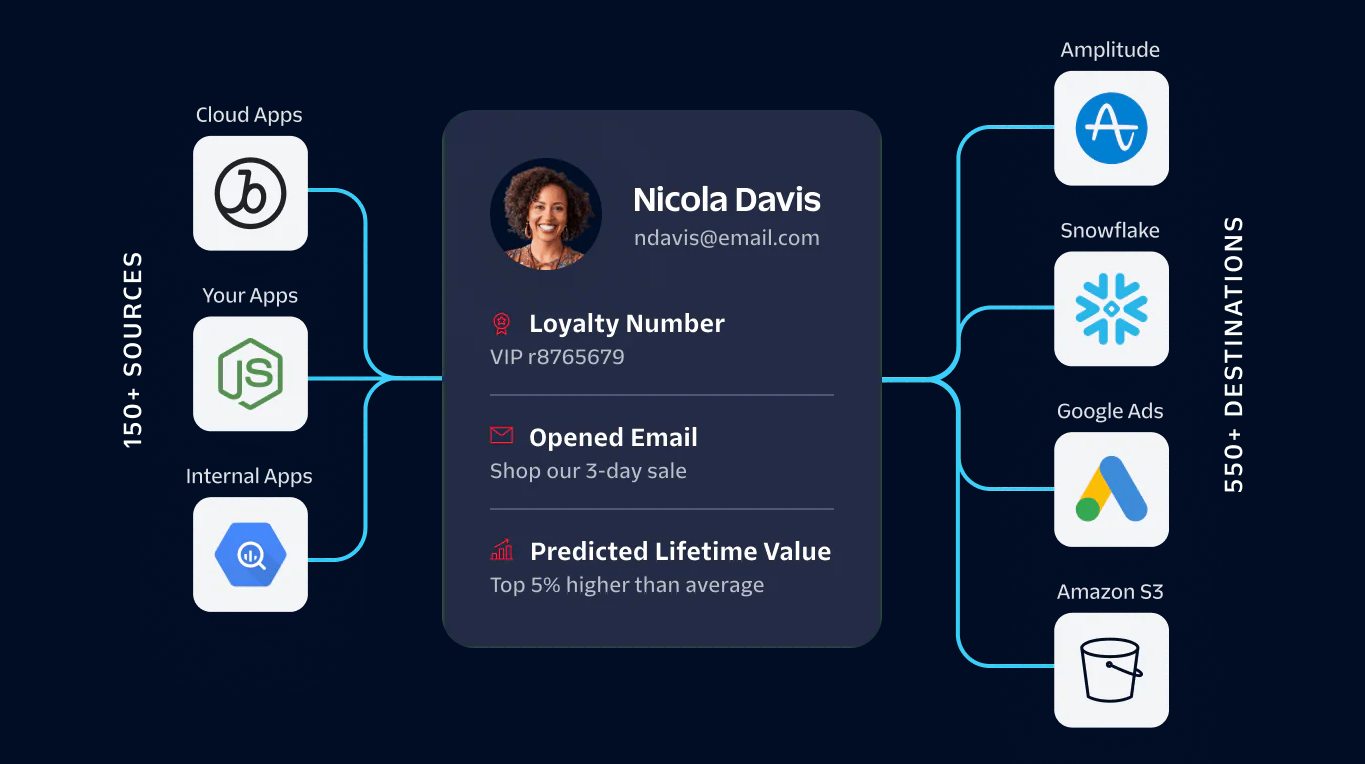
Twilio Segment is a customer data platform that collects first-party behavioral data from every digital touchpoint, resolves customer identities, and routes unified data to any downstream tool, all without requiring a pre-existing data warehouse. Its key capabilities include:
750+ pre-built integrations spanning every major ad platform, marketing automation tool, analytics platform, and CRM
Protocols for real-time schema validation that enforces tracking plans and blocks malformed data before it reaches downstream destinations
Unify for built-in identity resolution that stitches anonymous and known identifiers into persistent unified profiles without custom SQL
CustomerAI Predictive Traits for ML-powered propensity scores surfaced as profile traits
Generative Audiences for natural language audience building without SQL or engineering tickets
Teams that lack the data engineering resources to maintain a clean, well-modeled warehouse will find Segment's self-contained architecture more accessible than Hightouch, while still getting enterprise governance and a destination catalog that covers edge-case tools.
Why Choose Segment Over Hightouch for Integration Breadth and Data Governance
Segment stands out in the following areas:
The Broadest Integration Catalog in the Category Hightouch ships 250+ connectors, a strong catalog for core activation use cases. But enterprise teams frequently hit gaps when syncing to niche tools, legacy CRM systems, or emerging ad networks, falling back to Hightouch's HTTP Request destination for custom engineering. Segment's 750+ integrations cover analytics, warehouses, advertising, CRM, customer support, and raw data destinations, making custom workarounds far less common.
Proactive Data Governance at the Collection Layer Hightouch's warehouse-native architecture assumes the data in your warehouse is already clean. If upstream data is dirty or inconsistently named, Hightouch faithfully syncs the problem to every downstream destination. Segment's Protocols takes a different approach: teams build a centralized tracking plan that defines every event, property, and data type, and the system validates every incoming event the moment it arrives. Events that fail validation are flagged, quarantined, or blocked before they reach any destination.
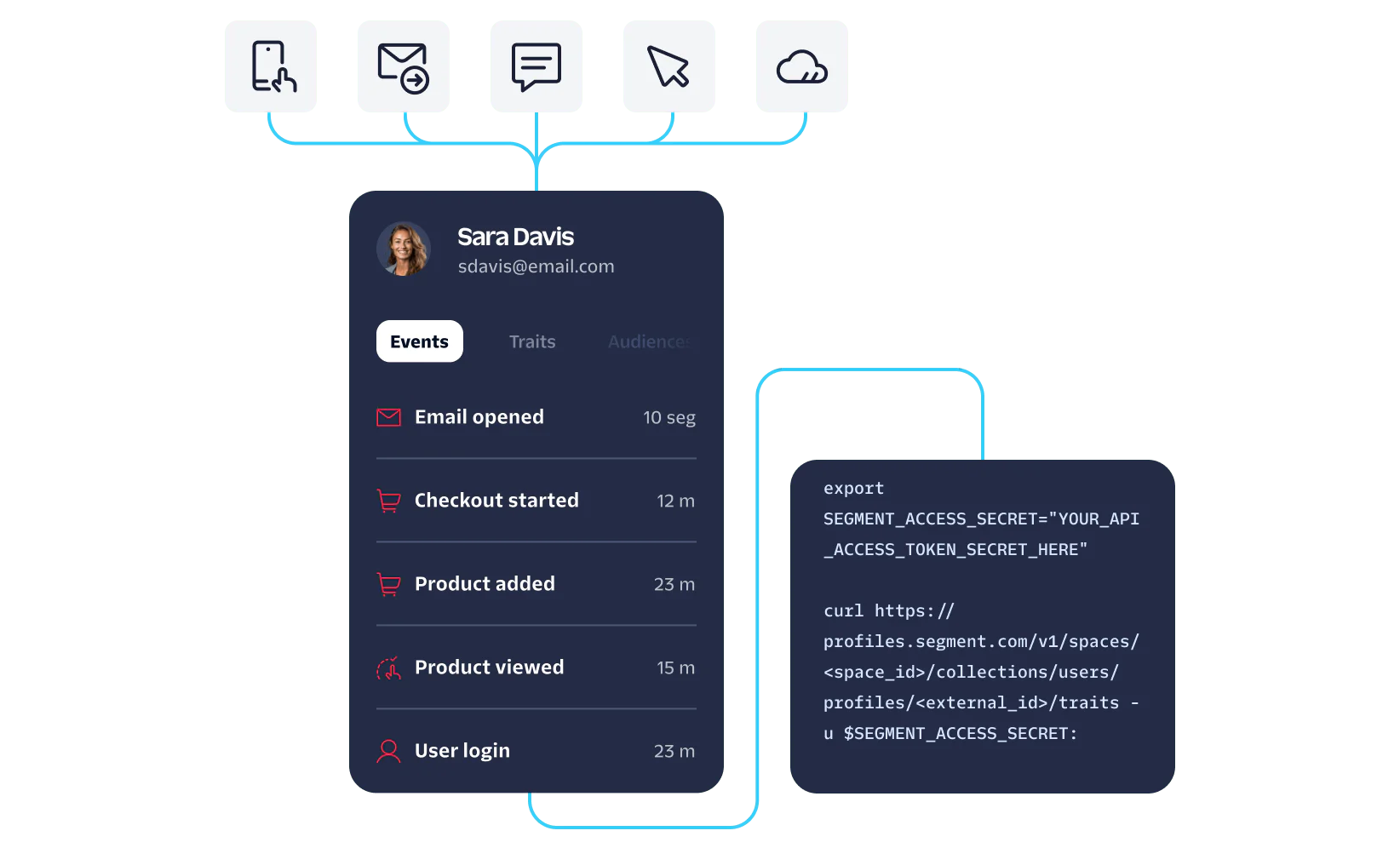
Built-In Identity Resolution Without Warehouse Pre-Configuration Hightouch's Adaptive Identity Resolution requires the warehouse data to be organized in a way that supports identity rule configuration. Segment's Unify works from day one. As data flows through Connections, Unify's Identity Graph automatically merges every interaction (including anonymous pre-registration sessions) into persistent unified profiles using cookie IDs, device IDs, emails, and user IDs, with no SQL required.
Source: Twilio
NOTE: We also evaluated Adobe Real-Time CDP and Salesforce Data Cloud. Adobe wins on cross-channel personalization depth for teams already in the Adobe Experience Cloud stack, and Salesforce Data Cloud is strongest when Salesforce is the unquestioned system of record. Segment offers the broadest integration library, the most flexible deployment across mixed stacks, and is the most cited alternative among data teams making a first CDP purchase.
Segment Pricing
Segment's pricing model is usage-based and tied to Monthly Tracked Users (MTUs). Seats are unlimited on all paid plans.
Free Plan: $0/month, up to 1,000 MTUs, 2 sources, 1 data warehouse destination, 500,000 Reverse ETL records/month
Team Plan: Starts at $120/month for 10,000 MTUs, unlimited sources, 14-day free trial available
Business Plan: Custom pricing, includes Protocols, advanced roles and permissions, HIPAA eligibility, and dedicated support
Full CDP (Connections + Unify + Engage): Custom pricing for the complete platform including AI Predictions, Generative Audiences, and unlimited seats
Who Should Use Segment?
Choose Segment if:
Your team needs to route customer data to a broad set of tools, including edge-case analytics platforms and legacy CRM systems, without building custom HTTP integrations for everything outside a 250-connector catalog.
You're building your first CDP and don't yet have a mature, well-modeled cloud data warehouse that Hightouch's architecture requires.
Data governance is a hard requirement: you need schema validation, tracking plans, and malformed data blocking enforced at the collection layer before bad data reaches downstream tools.
3. Klaviyo - Best Alternative for eCommerce Marketing Without a Data Warehouse
Source: Klaviyo
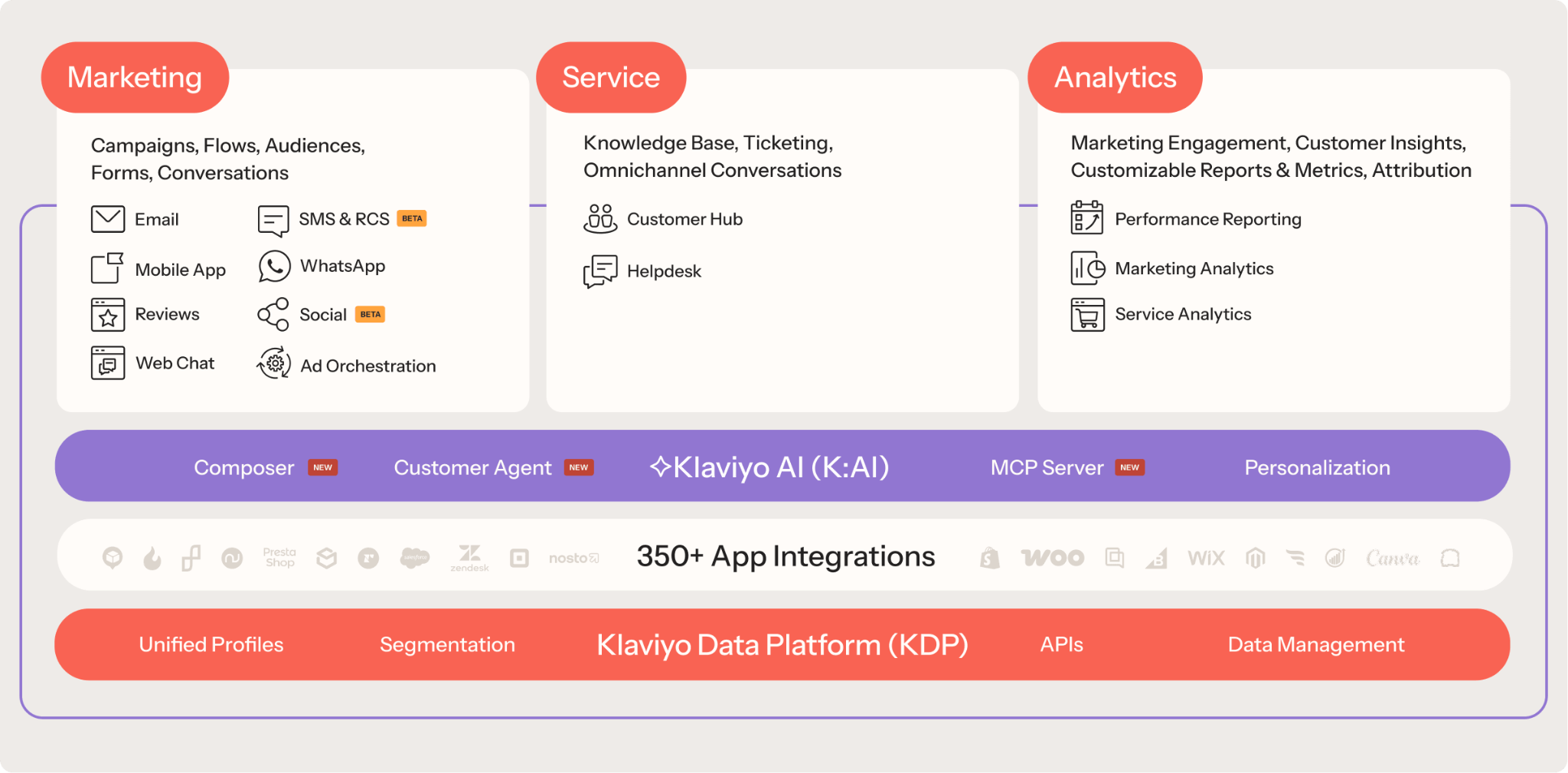
Klaviyo is a B2C CRM and marketing automation platform that bundles customer data management, email, SMS, and AI-driven automation into a single product built for consumer brands. Unlike Hightouch, which requires a pre-existing data warehouse and functions purely as a data activation layer, Klaviyo internalizes both the data layer and the message execution layer. Its key capabilities include:
Built-in CDP with 350+ native integrations covering Shopify, WooCommerce, BigCommerce, Magento, and Salesforce Commerce Cloud
Email, SMS/MMS, mobile push, WhatsApp, and RCS campaigns managed from a single platform
Predictive analytics (CLV, churn risk, next purchase date) surfaced directly as segment filters
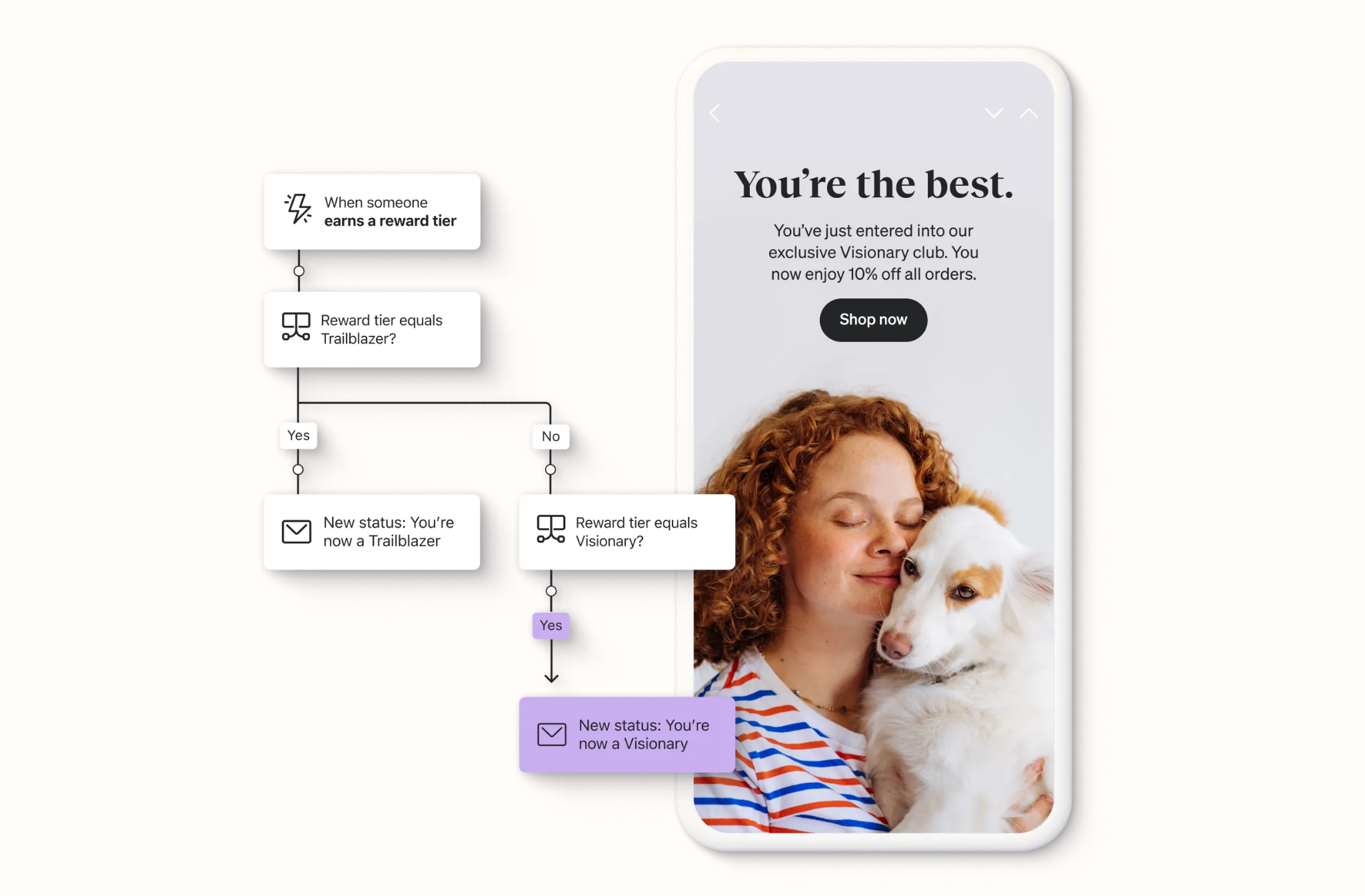
60+ flow templates for abandoned cart, welcome series, post-purchase, and win-back sequences
Marketing Agent that scans a brand's website and generates on-brand campaigns without manual prompting
For eCommerce brands that lack a mature data warehouse or a dedicated data engineering function, Klaviyo delivers the easiest path to personalized lifecycle automation.
Why Choose Klaviyo Over Hightouch for eCommerce Marketing
Klaviyo stands out in the following areas:
No Data Warehouse Required Hightouch's architecture assumes a cloud data warehouse already exists, is well-modeled, and is maintained by a data engineering team. For a marketing team at an eCommerce brand without a Snowflake or BigQuery environment, Hightouch is inaccessible. Klaviyo's Data Platform is a built-in CDP that stores customer data natively, ingesting events and purchases from 350+ integrations with no warehouse to configure, no dbt models to write, and no separate ESP to integrate.
Predictive Analytics Without a Data Science Team Hightouch's AI Decisioning uses reinforcement learning at enterprise scale, but it's priced as a separate module and inherits the warehouse dependency. Klaviyo's predictive capabilities are available on all plans: predicted CLV, churn risk scores, and next purchase date generated automatically from transaction history. The Channel Affinity model learns each customer's per-channel engagement preference and routes messages accordingly.
Pre-Built eCommerce Automation and Faster Time to Value Hightouch's Customer Studio requires understanding what data exists in the warehouse and how it's modeled before flows can launch. Klaviyo's 60+ flow templates deploy immediately for common lifecycle sequences: abandoned cart recovery, welcome series, post-purchase upsell, browse abandonment, and replenishment reminders. A team connecting Shopify can have an abandoned cart flow live within a day.
Source: Klaviyo
NOTE: We also evaluated Braze and HubSpot Marketing Hub. Braze excels at mobile push and in-app messaging for consumer apps, but carries enterprise-level pricing that places it out of reach for smaller eCommerce brands. HubSpot Marketing Hub bundles CRM and marketing tools well but lacks the eCommerce data depth that brands with complex transaction histories need. Klaviyo offers the most accessible alternative for eCommerce teams at the small to mid-market scale.
Klaviyo Pricing
Klaviyo uses a contact-volume-based pricing model that scales with the number of active profiles.
Free Plan: $0/month for up to 250 active profiles and 500 email sends, with 150 mobile message credits
Paid Marketing Plans: Scale from 251 active profiles upward; exact pricing calculated via Klaviyo's pricing tool
Data + Analytics Add-on: Separately priced, includes warehouse sync, no-code data transformation, custom RFM analysis, funnel and cohort analysis
Enterprise: Custom pricing with dedicated support, Solutions Architect, and custom SLAs
Who Should Use Klaviyo?
Choose Klaviyo if:
Your team operates an eCommerce brand on Shopify, WooCommerce, or BigCommerce and needs a CDP, email automation, and SMS in a single platform without a data warehouse.
You want predictive analytics (CLV, churn risk, next purchase date) available as segment filters out of the box, without separate ML infrastructure.
Your marketing team needs to launch lifecycle flows within days using pre-built templates designed for eCommerce trigger logic.
4. mParticle - Best Alternative for Real-Time Mobile Event Streaming
Source: mParticle
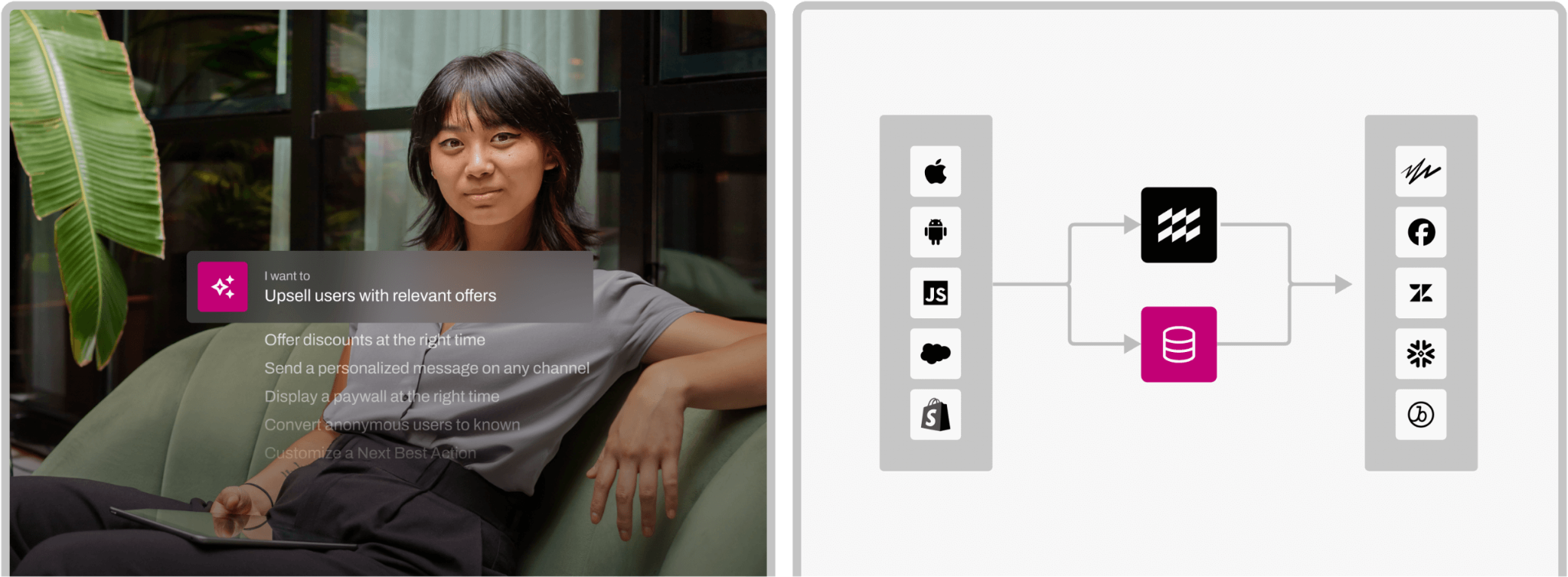
mParticle is a hybrid customer data platform that combines real-time event streaming across mobile, web, and server-side channels with warehouse-native composable activation. Now operating as "mParticle by Rokt" following a 2025 merger, its architecture differs from Hightouch's: where Hightouch treats the warehouse as its source of truth and syncs outward, mParticle collects events directly from native SDKs and routes them to downstream destinations in real time. Its key capabilities include:
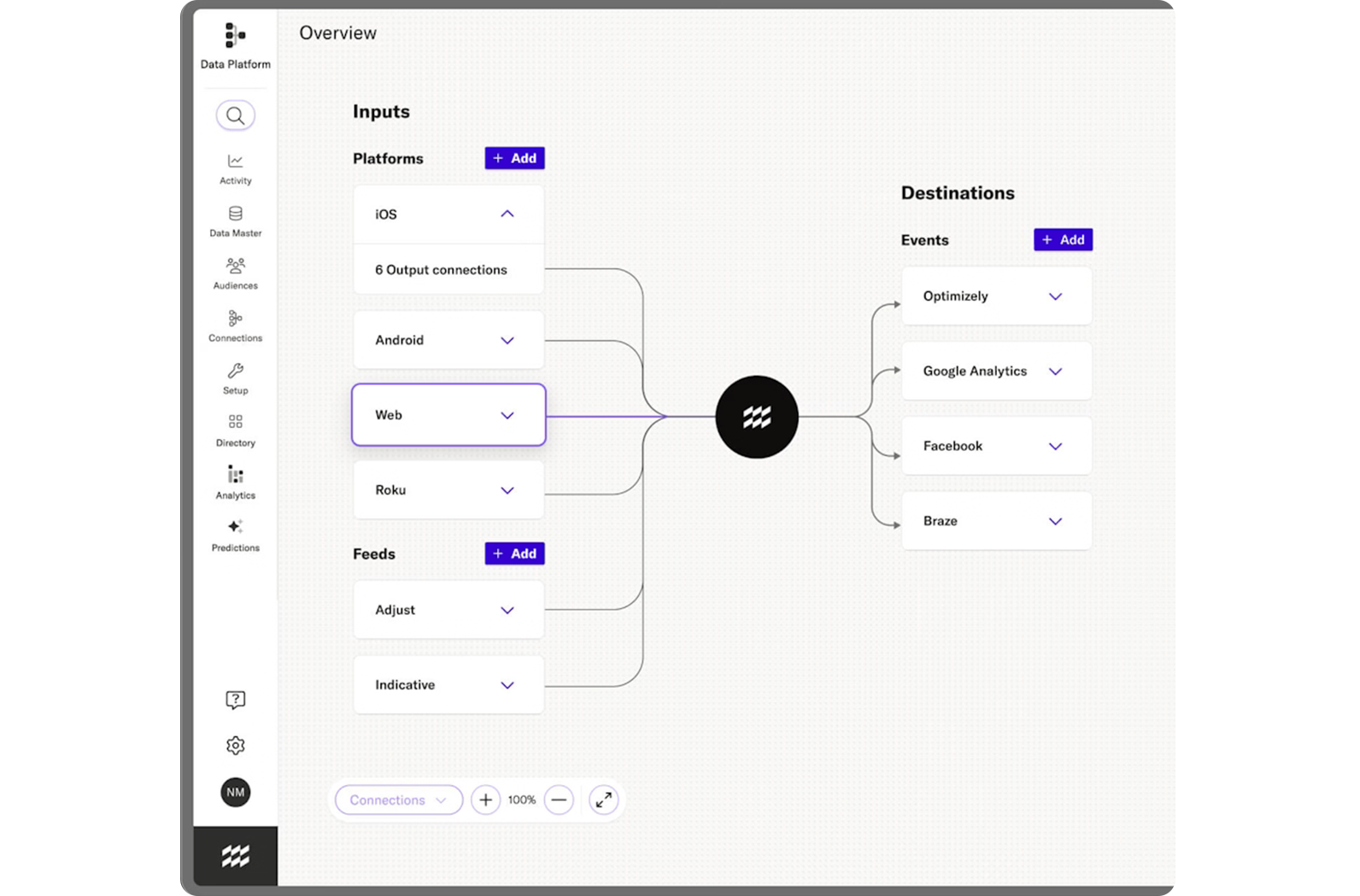
Real-time event streaming from mobile, web, OTT/CTV, and server-side sources to 300+ destinations
IDSync for configurable deterministic identity resolution built for multi-device, multi-app mobile identity complexity
Data Plans for schema enforcement that validates events in real time before they reach any downstream tool
Cortex AI/ML engine with embedded predictive audiences, churn scoring, and lookalike modeling
Match Boost for first-party identifier enrichment that improves ad audience match rates by 25-100%
Why Choose mParticle Over Hightouch for Real-Time Mobile-First Activation
mParticle stands out in the following areas:
Real-Time Streaming Architecture, Not Reverse ETL Hightouch's core function is reverse ETL: it processes data that already exists in a warehouse and syncs it outward on a scheduled or CDC-triggered basis. For consumer brands where the gap between a behavioral signal and its activation determines success (in-session cart abandonment, real-time push triggers, instant retargeting suppression), this architecture introduces delay. mParticle was built as a streaming event pipeline. Events from iOS, Android, web, and Roku enter the platform as a continuous stream, are validated against Data Plans, identity-resolved via IDSync, and forwarded to 300+ destinations simultaneously without a warehouse intermediary.
Mobile-First Identity Resolution at the Point of Collection Hightouch's identity resolution works well for brands whose data arrives cleanly to the warehouse. For mobile-first brands, the identity problem starts earlier: a single user generating events in a native iOS app appears under an IDFA, a vendor device identifier, and an anonymous SDK-generated ID before login. mParticle's IDSync resolves identities inside the SDK layer, before any event touches a warehouse, stitching together pre-login anonymous sessions with post-login known profiles using five configurable strategies.
Schema Governance Before Data Reaches Any Destination Hightouch Events includes data contracts for schema governance within its events pipeline, but the core reverse ETL engine faithfully syncs whatever is already in the warehouse. mParticle's Data Plans enforce schemas at event ingestion, catching instrumentation drift before it propagates to downstream tools.
Source: mParticle
NOTE: We also evaluated Amplitude and Fivetran Activations (formerly Census). Amplitude excels at product analytics with CDP-adjacent activation suited to product-led growth companies, and Fivetran Activations works well for teams already embedded in the Fivetran ecosystem. mParticle offers the strongest platform for consumer brands with mobile apps as a primary channel, combining real-time streaming, mobile identity resolution, and embedded AI predictions in one system.
mParticle Pricing
mParticle operates on a value-based pricing model with no published rates. All pricing comes through a custom quote.
Credits-Based Model: Pricing builds around pre-purchased mParticle Credits consumed against actual platform usage across all products. All features are accessible with any credit purchase; no gated feature tiers or forced bundles.
Higher upfront commitments unlock lower per-unit credit rates
All pricing obtained via contact form; no self-serve signup or posted pricing exists
Who Should Use mParticle?
Choose mParticle if:
Your brand is a consumer-facing company (retail, streaming media, fintech, or travel) with a mobile app as a primary touchpoint, and your data activation challenge is behavioral event velocity across fragmented mobile surfaces.
You need sub-second activation on in-session behavioral signals where batch reverse ETL latency is a structural mismatch.
You want production-ready AI predictions (churn scoring, purchase likelihood, lookalike modeling) embedded in the same platform your marketing team uses for segmentation.
5. RudderStack - Best Alternative for Open-Source Warehouse-Native Activation
Source: RudderStack
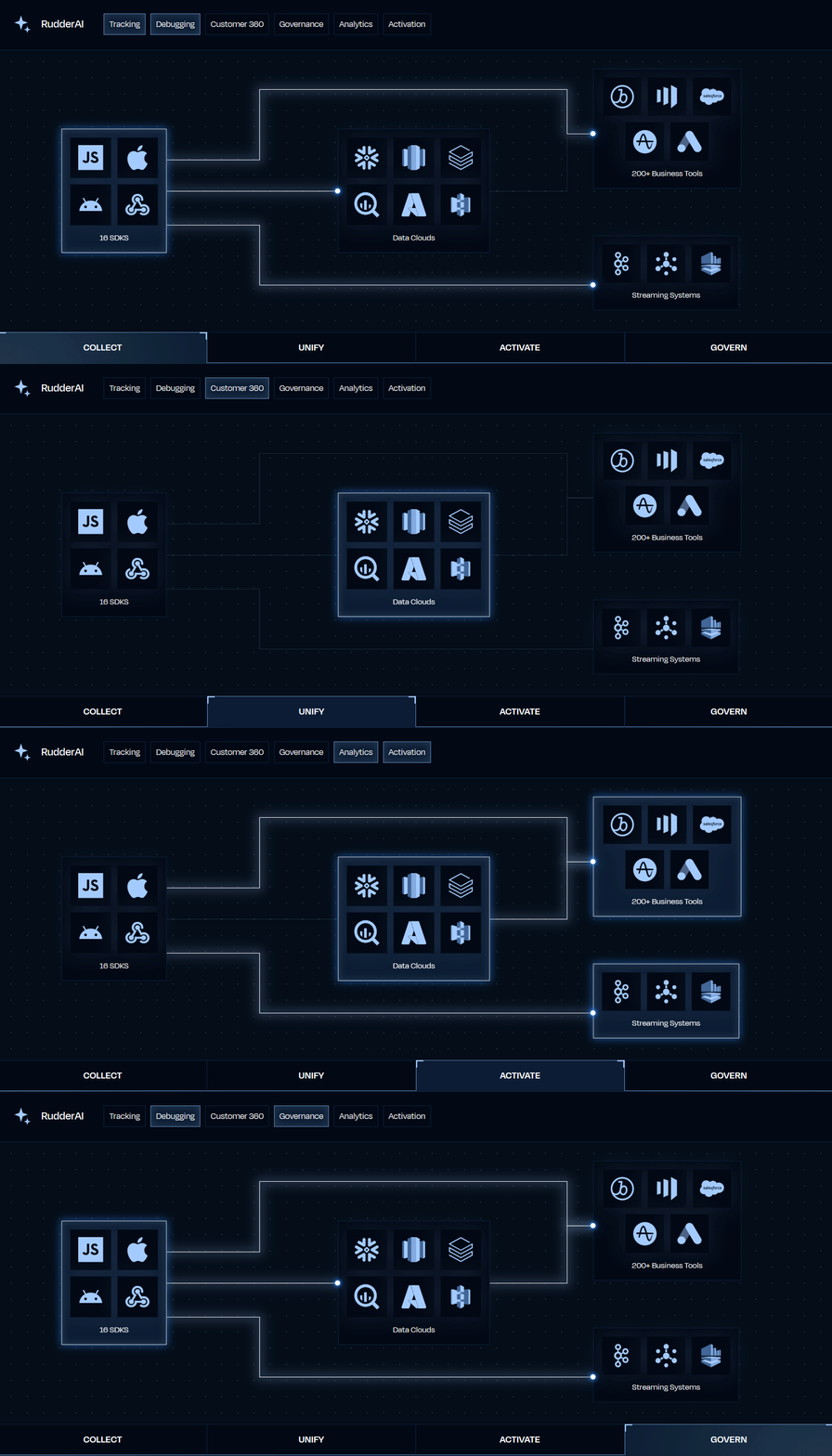
RudderStack is a warehouse-native CDP that covers the full first-party data pipeline (from event collection through identity resolution through reverse ETL) built on an open-source AGPL core. It functions as a Hightouch alternative for teams that want data activation without restricting themselves to a closed, proprietary tool. Its key capabilities include:
Open-source AGPL v3 codebase with 170+ community contributors and full self-hosting support
Permanent free tier with 250,000 monthly events, 10 Reverse ETL connections, and access to all 200+ destinations
Event Stream with 16+ SDKs and real-time delivery to 200+ destinations
Profiles for warehouse-native identity resolution and Customer 360 profile building
Transformations for real-time JavaScript functions that modify events in-flight before they reach any destination
Why Choose RudderStack Over Hightouch for Open-Source Data Activation
RudderStack stands out in the following areas:
Open-Source Codebase With Full Self-Hosting Hightouch is a proprietary, closed-source SaaS platform with no option to inspect the sync engine code or run it in your own cloud environment. RudderStack's entire data plane server is available on GitHub under the AGPL v3 license. Engineering teams at regulated companies (healthcare, financial services, government contractors) can audit the exact code responsible for collecting, transforming, and routing their customer events. They can run the full data plane in their own AWS, GCP, or Azure environment, keeping customer event data off third-party infrastructure entirely.
A Free Tier Built for Real-World Usage Hightouch's free plan caps at 2 active syncs per month with hourly sync frequency maximum, no access to Customer Studio, and no identity resolution. RudderStack's free tier includes 250,000 monthly events, 10 Reverse ETL connections, access to all 200+ destination integrations, and full event collection via all 16+ SDK sources, permanently with no time limit. A team can test RudderStack's full capability set on production-like traffic entirely within the free tier.
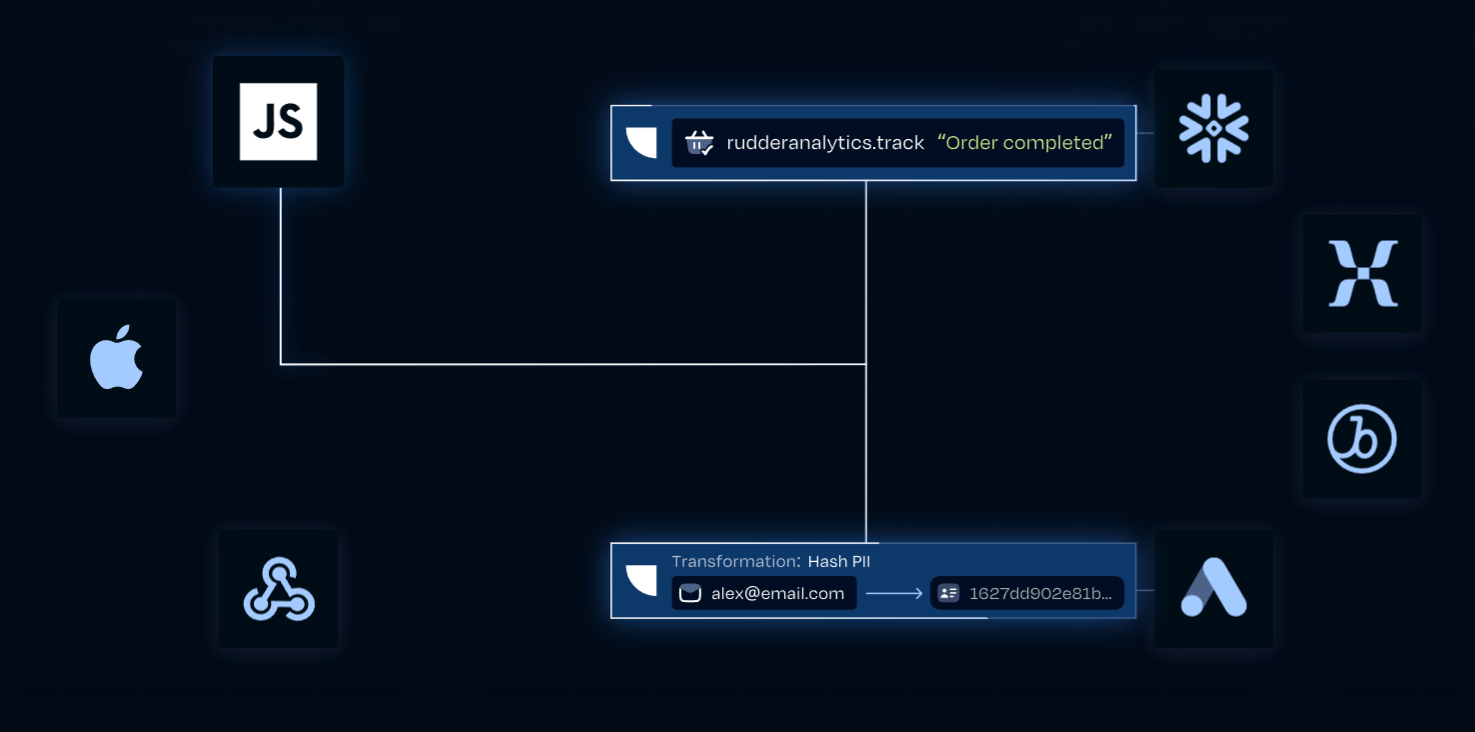
Full-Stack Customer Data Infrastructure in a Single Platform Hightouch is built as an activation-first tool. RudderStack's architecture is full-stack CDP from day one: Event Stream for behavioral data collection, Profiles for identity resolution, Reverse ETL for downstream activation, and Transformations for real-time in-pipeline data shaping. Over 75% of RudderStack customers use Transformations, a real-time in-flight code execution layer that filters, enriches, masks PII, or reshapes payloads before events reach any destination.
Source: RudderStack
NOTE: We also evaluated Mage and Airbyte. Mage is a strong open-source data orchestration tool but lacks the CDP feature set (no event collection, no identity resolution, no Reverse ETL to marketing destinations). Airbyte covers ELT well but has limited activation capabilities. RudderStack offers the most complete open-source CDP, covering event collection, identity resolution, Reverse ETL, and destination routing in a single platform.
RudderStack Pricing
RudderStack uses an event-volume-based pricing model with four tiers.
Free: $0/month permanently, with 250,000 monthly events, 10 Reverse ETL connections, community Slack support, 3-hour warehouse sync time
Starter: $220/month for 1,000,000 monthly events, unlimited tracking plans, email support, 99.95% uptime SLA, 1-hour warehouse sync time
Growth: Custom pricing with unlimited team members, unlimited JavaScript Transformations and Reverse ETL connections, dedicated support, 30-minute warehouse sync time
Enterprise: Custom pricing with Python Transformations, access to Profiles and Data Apps, HIPAA compliance, SSO, dedicated VPC hosting, 5-minute warehouse sync time
Who Should Use RudderStack?
Choose RudderStack if:
Your team is migrating off Segment and wants full API compatibility, with existing SDK instrumentation that works without rewriting code.
You need a free tier that supports real-world testing at 250K events/month rather than a 2-sync sandbox.
Your compliance or security posture requires the option to self-host the data pipeline on your own infrastructure, with no customer data touching a third-party vendor's servers.
6. Polytomic - Best Alternative for Bidirectional Data Sync Without CDP Complexity
Source: Polytomic
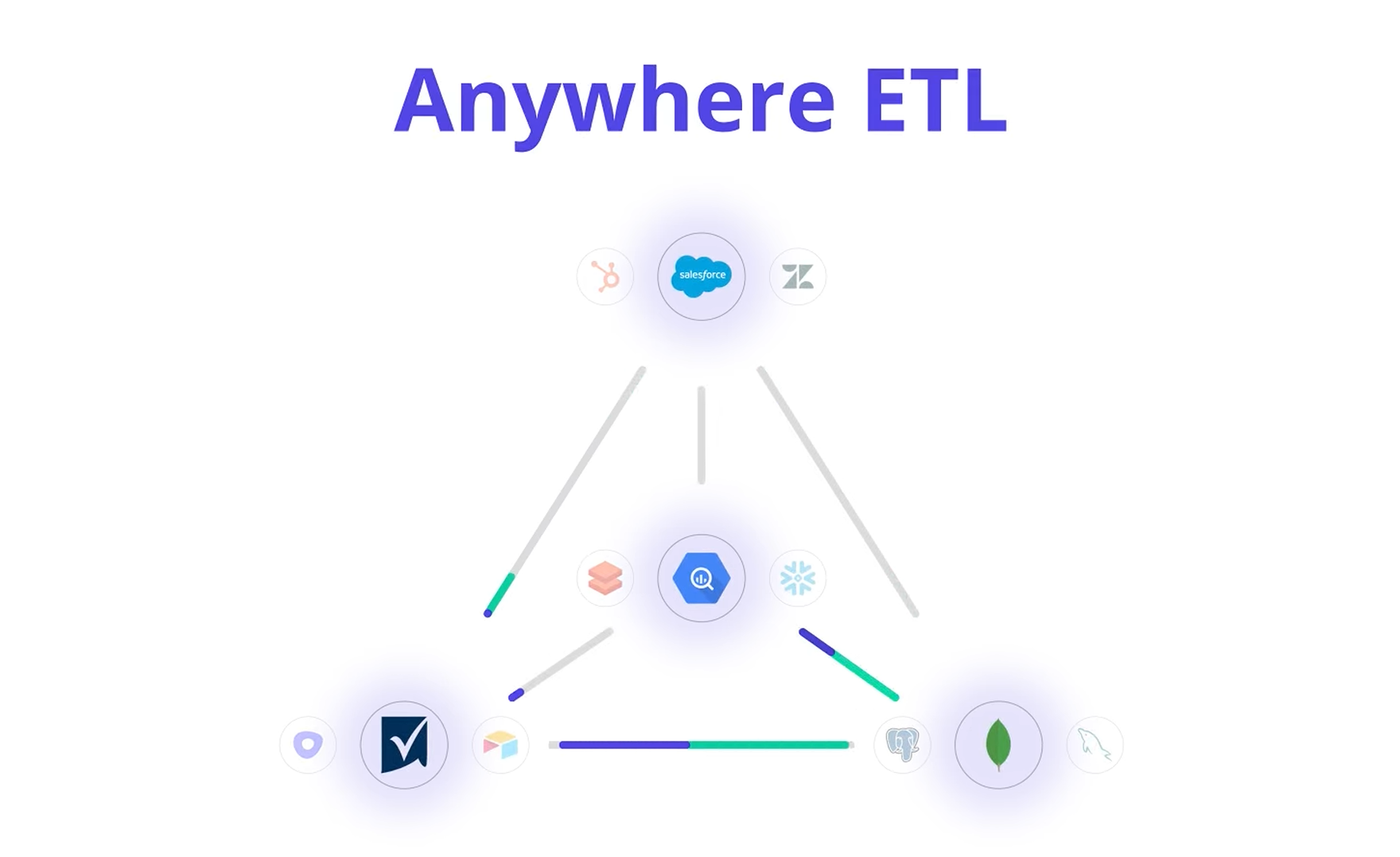
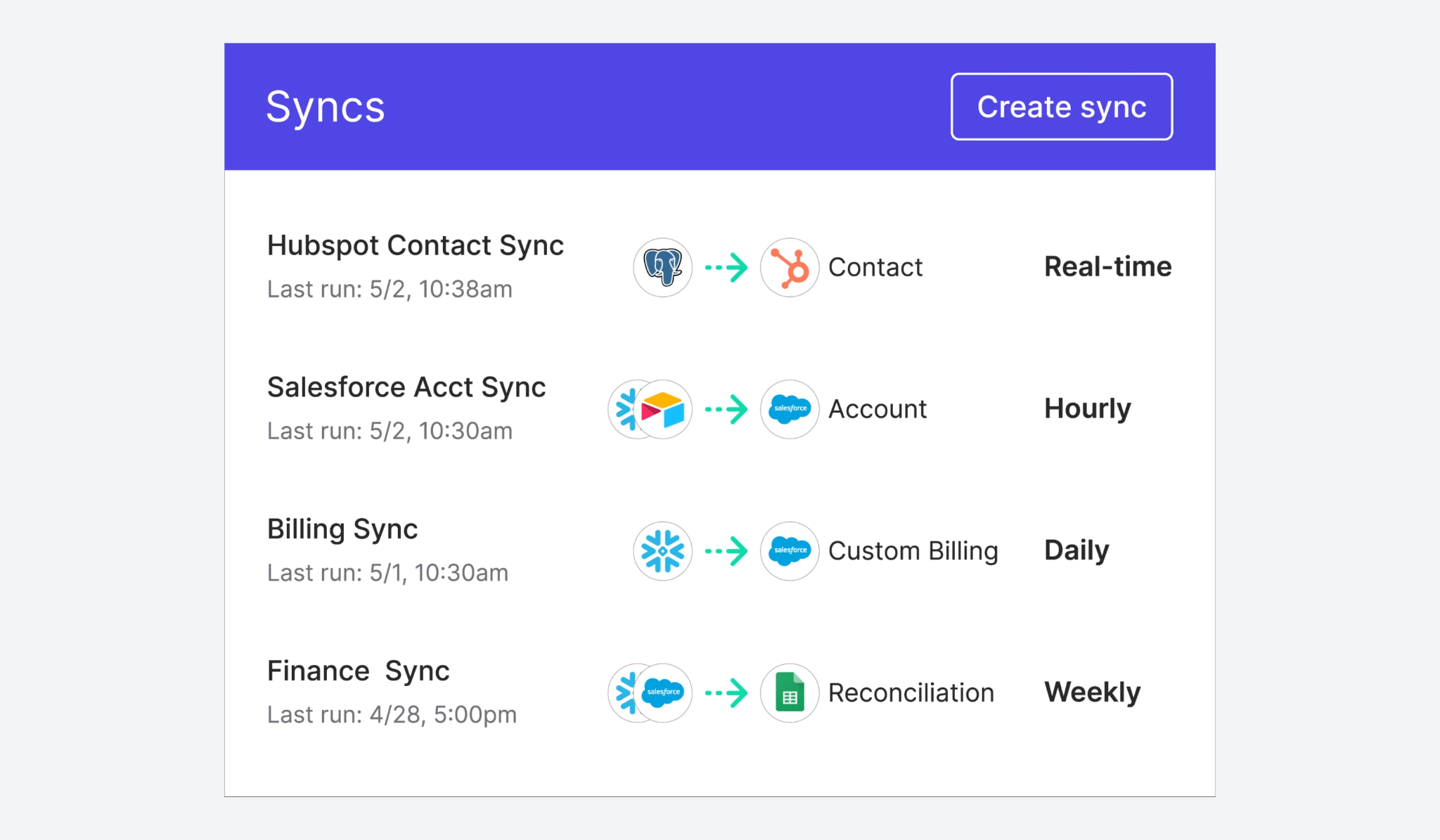
Polytomic is a bidirectional ETL platform that covers the core Reverse ETL use case Hightouch was built for, and extends in two directions Hightouch doesn't serve: inbound ETL (pulling data into the warehouse) and CDC streaming (real-time change capture from production databases). Its key capabilities include:
ETL, ELT, Reverse ETL, and CDC streaming unified in a single product
No-code sync configuration for RevOps and marketing teams (point-and-click, no SQL required)
Full SQL transformations and SOQL for engineering teams who need precise control
First-class Terraform provider for infrastructure-as-code pipeline management
Self-hosted deployment option for data-sensitive and regulated environments
Why Choose Polytomic Over Hightouch for Bidirectional Data Sync
Polytomic stands out in the following areas:
Full Bidirectional ETL Coverage Hightouch's architecture assumes you already have a mature, well-modeled data warehouse. Teams migrating off fragile homegrown ETL scripts, or those that haven't yet built reliable inbound pipelines, can't use Hightouch's activation features until they solve the upstream problem independently. Polytomic's Bulk Syncs feature handles inbound ETL alongside Reverse ETL in a single interface. For Series A-C companies whose warehouse data modeling is still maturing, Polytomic can help build the warehouse and then activate from it.
Native CDC Streaming for Real-Time Database Replication Hightouch's incremental sync works on data that has already landed in the warehouse. Polytomic's CDC Streaming is log-based replication built natively into the platform. For PostgreSQL, it reads directly from the Write-Ahead Log via the pgoutput plugin. For MySQL, it uses binary log replication with GTID-based resumption. Supported CDC sources include PostgreSQL, MySQL, Azure SQL, Microsoft SQL Server, MongoDB, Amazon DynamoDB, and Amazon DocumentDB. Log-based CDC captures deletes, which timestamp-based incremental tracking structurally cannot do.
Self-Hosted Deployment and Infrastructure-as-Code Hightouch is SaaS-hosted with private networking options but no self-hosted deployment. Polytomic offers self-hosted deployment at the Enterprise tier, combined with SOC 2 Type II, GDPR, HIPAA, and CCPA compliance. Its first-class Terraform provider lets every sync configuration change be committed to a Terraform repo, targeting engineering teams that manage infrastructure declaratively.
Source: Polytomic
NOTE: We also evaluated Fivetran Activations (formerly Census) and Airbyte. Fivetran Activations is a natural fit for teams already running Fivetran for ELT, and Airbyte offers a broad open-source connector catalog. Polytomic offers the most consolidated bidirectional data movement stack (ETL, Reverse ETL, and CDC) for teams that want clean data pipes without full CDP complexity.
Polytomic Pricing
Polytomic uses flat-fee subscription pricing with no self-serve checkout.
Standard: Starts at $500/month with syncing to and from databases, warehouses, spreadsheets, applications, and APIs; multiple sync destinations; live chat support
Enterprise: Custom pricing, includes everything in Standard plus self-hosted deployment, SSO, dedicated engineer, and phone support
Who Should Use Polytomic?
Choose Polytomic if:
Your team needs both inbound ETL and outbound Reverse ETL in one platform, eliminating the overhead of managing separate vendors for each direction.
You need real-time CDC streaming from production databases, including log-based change capture with delete propagation that timestamp-based sync cannot provide.
Your engineering team manages infrastructure as code via Terraform and expects pipeline configuration to live in the same version-controlled, code-reviewed workflow as your cloud resources.
7. CustomerLabs - Best Alternative for Paid Media Signal Quality
Source: CustomerLabs
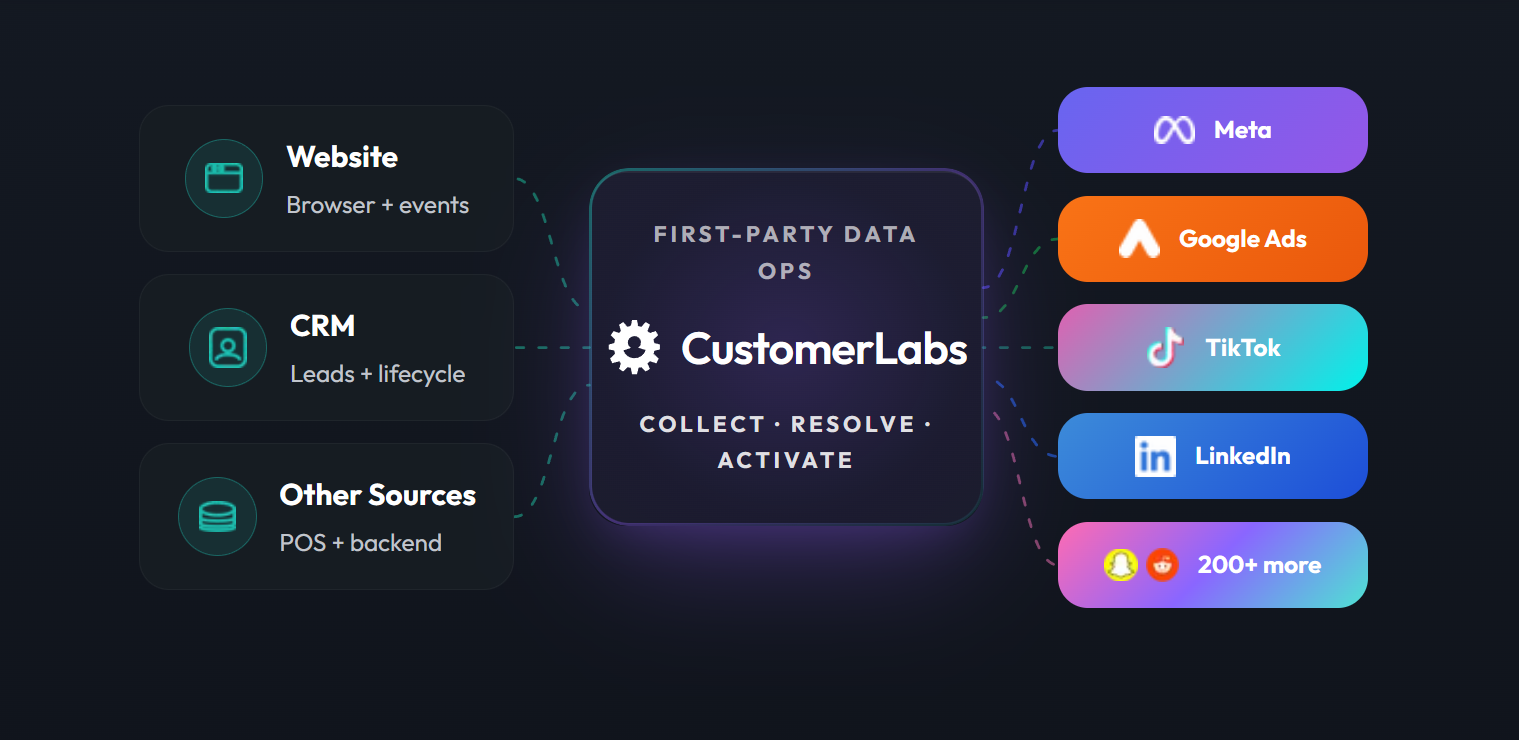
CustomerLabs is a First-Party Data Ops Platform that collects, resolves, and routes first-party customer signals directly to ad platforms through server-side pipelines, without requiring a pre-existing data warehouse. Its key capabilities include:
Server-side event tracking that bypasses ad blockers, ITP, and browser privacy restrictions
Signal Engineering that routes business-specific conversion events (new-customer purchase, prepaid order, SQL pipeline stage) rather than generic signals
Deep Conversions API (CAPI) integrations with Meta, Google, TikTok, and LinkedIn with active Event Match Quality monitoring
First-party domain tracking that serves cookies from the brand's own subdomain, bypassing Safari ITP's 7-day cap
No-code identity resolution that stitches browser, CRM, and offline identifiers without engineering involvement
CustomerLabs is built for performance marketing teams, particularly eCommerce brands and digital agencies, who need to improve paid media efficiency through higher-quality conversion signals.
Why Choose CustomerLabs Over Hightouch for Ad Signal Quality
CustomerLabs stands out in the following areas:
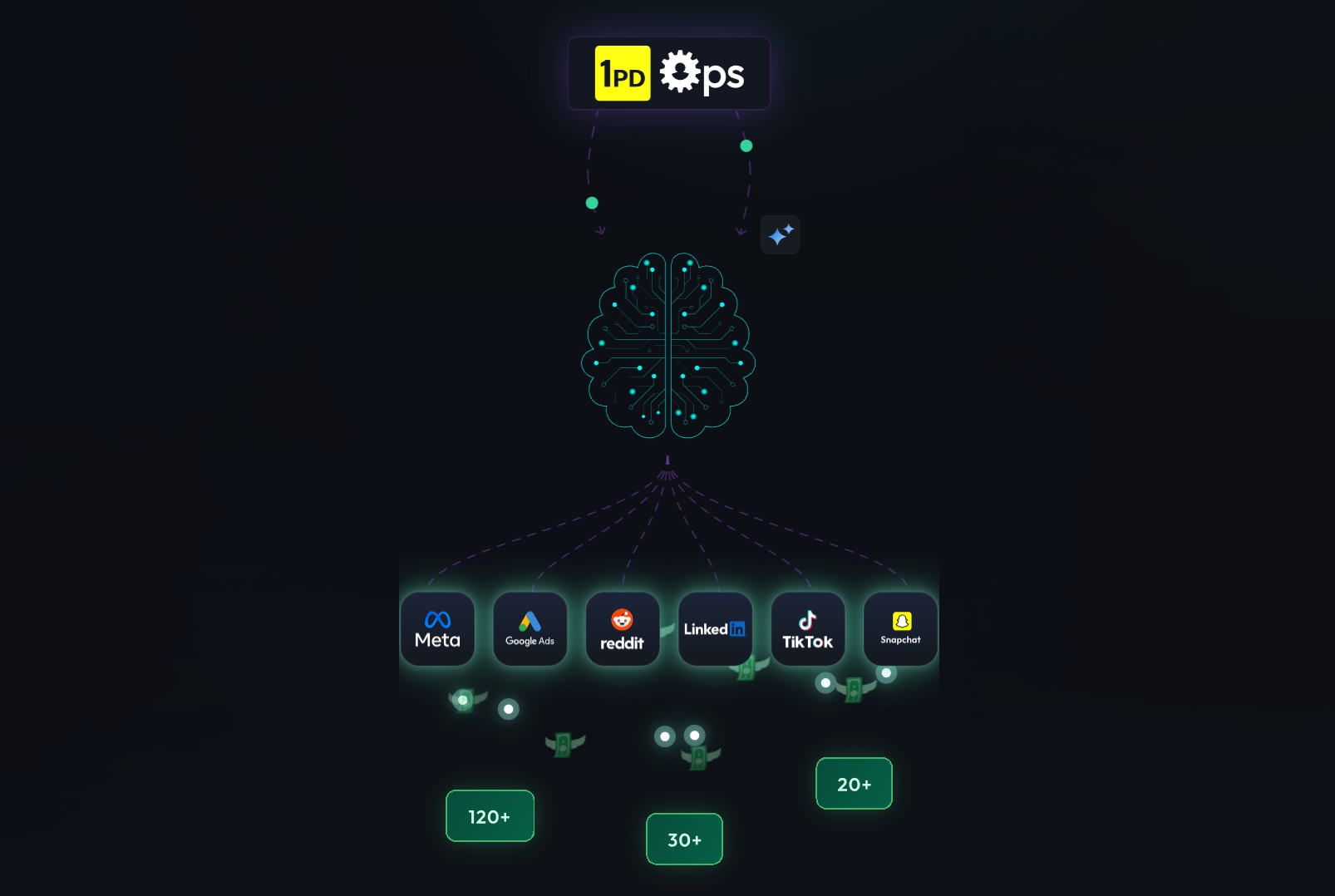
Server-Side Tracking That Recovers Lost Conversion Data Hightouch can only work with data that was collected and landed in a warehouse. If a conversion event was dropped by an ad blocker, suppressed by Safari's Intelligent Tracking Prevention, or lost because a pixel was killed before it fired, it never reaches the warehouse. CustomerLabs attacks this problem at the root with first-party domain tracking, routing all event collection through a CNAME subdomain on the brand's own domain. Server-side first-party cookies set via HTTP headers persist for up to one year, compared to JavaScript-set cookies capped at 7 days by Safari ITP. CustomerLabs quantifies the combined recovery at 15-30% of previously lost data.
Signal Engineering: Teaching the Algorithm What Matters Even when Hightouch sends conversion events to Meta or Google, it sends whatever the warehouse already contains, typically a generic "purchase" or "lead_created" event. CustomerLabs' Signal Engineering governs which business outcomes reach the ad platform and in what form. The New Customer Signals feature resolves each buyer's identity server-side against a permanent first-party identity graph and tags each purchase as new or repeat before the event reaches CAPI. Prepaid Order Signals splits a single generic purchase event into distinct signals (prepaid_order, cod_order, return_order, order_delivered), so the algorithm stops sourcing low-quality buyers at the campaign level.
No Data Warehouse Required Hightouch explicitly lists companies without a warehouse among those it is not designed for. CustomerLabs removes that prerequisite entirely. The platform ingests event data from website tracking, CRM webhooks (HubSpot, Salesforce, Zoho, Pipedrive), Shopify and WooCommerce plugins, and one-click checkout tools, then performs identity resolution, consent enforcement, and routing to ad platforms in a single pipeline. Most Shopify implementations are fully live within a day.
Source: CustomerLabs
NOTE: We also evaluated Artie and Dinmo. Artie offers real-time database replication but doesn't address ad signal quality. Dinmo is a newer warehouse-native activation platform but remains early-stage with limited published evidence. CustomerLabs offers the most actionable solution for performance marketing teams who need to fix paid media signal quality without a data warehouse.
CustomerLabs Pricing
CustomerLabs uses flat-fee pricing anchored to monthly event volume. All tiers include the full feature set.
Growth: $129/month for 500,000 events/month, 5 sources, 5 destinations, 5 audience segments
Agency Lite: $499/month for 5 client accounts, 2.5M events/month, 25 sources and destinations
Agency Premium: $999/month for 10 client accounts, 5M events/month, 50 sources and destinations, custom branding
A free trial is available on all tiers without a sales call required.
Who Should Use CustomerLabs?
Choose CustomerLabs if:
Your team runs active paid media campaigns on Meta, Google, TikTok, or LinkedIn and needs to improve conversion signal quality, particularly if your Meta EMQ score is below 6.
You don't have a cloud data warehouse or data engineering team, and need a tool that activates first-party data without that infrastructure prerequisite.
Your CRM data (HubSpot, Salesforce, GoHighLevel) never feeds back into your ad platforms, and you need real-time server-side offline conversion routing without CSV exports or manual uploads.
The Final Verdict
While Hightouch excels as a warehouse-native customer data platform for enterprise marketing teams, different organizations have different data activation needs. Based on our research, here are the best alternatives:
ZoomInfo for B2B revenue teams that need prospect intelligence, verified contact data, and AI-driven GTM execution rather than just warehouse data activation
Segment for enterprise teams that need the broadest integration catalog (750+ destinations) and proactive data governance at the collection layer
Klaviyo for eCommerce brands that want a bundled CDP, email, SMS, and AI automation without a data warehouse prerequisite
mParticle for mobile-first consumer brands that need sub-second event streaming and mobile-native identity resolution
RudderStack for engineering-led teams that want an open-source, full-stack customer data infrastructure with a generous free tier
Polytomic for teams that need bidirectional data sync (ETL + Reverse ETL + CDC) without the complexity of a full CDP
CustomerLabs for performance marketers looking to improve paid media signal quality through server-side tracking and conversion engineering
You don't have to choose between Hightouch and these alternatives exclusively. Many teams use multiple tools to cover different parts of their data stack. Consider your requirements, technical maturity, and growth plans when deciding which solution fits.
Start with ZoomInfo Lite for free, or request a demo to explore the full platform.
Hightouch Alternatives FAQ
Why do businesses look for Hightouch alternatives?
Hightouch's main limitations are its hard requirement for a pre-existing, well-modeled cloud data warehouse, the SQL knowledge needed for advanced transformations beyond the no-code audience builder, the lack of native message sending (it syncs to tools that send, rather than sending itself), and usage-based pricing that can escalate quickly as data volume and destination count grow.
What is the best overall Hightouch alternative?
There is no single best alternative because Hightouch covers a specific niche (warehouse-native data activation). The right alternative depends on your use case: ZoomInfo is the top choice for B2B teams needing prospect intelligence, Segment leads for integration breadth and data governance, and Klaviyo is the strongest option for eCommerce brands that want marketing automation without a warehouse.
Is there a free alternative to Hightouch?
Several alternatives offer meaningful free tiers. RudderStack's free plan includes 250,000 monthly events and 10 Reverse ETL connections permanently. Segment's free plan supports 1,000 MTUs with access to all 750+ integrations. Klaviyo's free plan covers 250 active profiles with email and SMS. ZoomInfo Lite offers permanent free access to its B2B database with 10 monthly export credits.
Which Hightouch alternative is best for B2B sales and marketing teams?
ZoomInfo is built for B2B revenue teams. Unlike Hightouch, which activates data you already have in a warehouse, ZoomInfo provides B2B data (500M contacts, 100M companies, 135M+ verified phone numbers, and 200M+ verified business emails), enriches it with the GTM Context Graph intelligence layer, and powers execution through GTM Workspace for sellers and GTM Studio for marketers.
Can I use Hightouch alongside one of these alternatives?
Yes. Many teams use Hightouch for warehouse-native audience activation alongside a specialized tool. A B2B team might use Hightouch for syncing warehouse segments to marketing automation while using ZoomInfo for prospect intelligence and pipeline generation. An eCommerce team might pair Hightouch with CustomerLabs to improve ad signal quality. The tools serve different layers of the data stack.
Which alternative works best for mobile-first consumer brands?
mParticle is designed for multi-channel consumer brands with mobile apps as a primary touchpoint. Its real-time streaming architecture routes events from iOS, Android, web, and OTT sources to 300+ destinations without a warehouse intermediary. Its IDSync framework resolves mobile identities at the SDK layer (before data touches a warehouse), and its Cortex AI engine provides embedded predictive audiences and churn scoring.
Which Hightouch alternative is most cost-effective for smaller teams?
CustomerLabs starts at $129/month with full feature access for performance marketing teams. Klaviyo offers a free plan for up to 250 active profiles. RudderStack's free tier covers 250,000 monthly events with 10 Reverse ETL connections. For B2B teams, ZoomInfo Lite provides permanent free access to the B2B database. The right choice depends on which data activation capability you need most.
