
Choosing between HubSpot and Instantly for your go-to-market strategy comes down to a few questions:
Are you looking for a full CRM platform to manage the customer lifecycle, or a specialized tool to run high-volume cold email?
Is outbound email your primary growth channel, or do you need marketing automation, service, and pipeline management under one roof?
How critical is your B2B contact data accuracy to your outreach results?
Do you need outreach informed by deal context, intent signals, and conversation history, or are you running volume plays against broad lists?
Are you a small team optimizing for speed and cost, or a growing organization that needs enterprise security and compliance?
In short, here's what we recommend:
HubSpot is the CRM platform for companies that need marketing, sales, and service in one system. Its Smart CRM connects 288,706 customers' workflows across six product hubs, with Breeze AI handling everything from customer support to sales prospecting. HubSpot suits teams that want to manage the buyer journey from first touch to renewal.
The tradeoff: its B2B prospecting data comes from enrichment partners rather than a proprietary database, pricing escalates across hubs and seats, and mandatory onboarding fees add thousands before you send a single email.
Instantly is the cold email engine for outbound volume. Unlimited email accounts, a deliverability network of 1,000,000+ warmup accounts, and a 450M+ B2B contact database let agencies and SDR teams launch campaigns fast, starting at $47/month. Instantly gets cold emails into primary inboxes at scale.
But its CRM is basic, its contact data lacks the enrichment and intent signals of larger platforms (by Instantly's own admission), and it has no public security certifications for enterprise buyers.
Both platforms solve real problems, but they share a limitation: outreach quality depends on data quality. HubSpot captures and manages customer relationships but wasn't built to identify who to target next. Instantly sends emails at volume but acknowledges its own gaps in enrichment and intent signals. The difference between productive outreach and wasted effort often comes down to the data underneath.
ZoomInfo is a B2B data and GTM platform with 500M contacts, 100M companies, 135M+ verified phone numbers, and 200M+ verified business emails.
Its GTM Context Graph combines this data with your CRM records, conversation transcripts, and behavioral signals (processing 1.5B+ data points daily) to reveal not just what's happening in your accounts, but why.
That intelligence flows into GTM Workspace for sellers, GTM Studio for marketers and RevOps, or directly into HubSpot and other tools through native integrations, APIs, and MCP.
If building your GTM strategy on verified data sounds like the missing piece, see ZoomInfo in action with a free trial.
HubSpot vs. Instantly vs. ZoomInfo at a glance
HubSpot | Instantly | ZoomInfo | |
|---|---|---|---|
Core function | CRM platform (marketing, sales, service) | Cold email outreach and lead intelligence | B2B data intelligence and GTM platform |
B2B contact database | Relies on enrichment partners | 200M+ verified emails | |
Phone numbers | Not a primary data provider | Not a core feature | |
Intent data | Limited (third-party via integrations) | Basic buying signals (job listings, news, funding) | Proprietary intent from 210M IP-to-Org pairings |
Email sending | Marketing Hub email and Sales sequences | Unlimited accounts with inbox rotation | Via GTM Workspace and Salesloft partnership |
CRM | Full-featured Smart CRM | Basic pipeline with unlimited seats | Integrates with Salesforce, HubSpot, Dynamics |
AI capabilities | Breeze (agents, assistant, embedded AI) | AI Copilot, AI Reply Agent | GTM Context Graph, AI agents in Workspace |
Starting price | Free CRM; paid from $15/seat/month | (outreach only) | Custom-quoted; |
Security certifications | SOC 2 Type II, HIPAA attestation | No public certifications | ISO 27001, ISO 27701, SOC 2 Type II |
Best for | Full-lifecycle customer management | High-volume cold email at low cost | Data-driven GTM across sales and marketing |
Three platforms, three different problems
These tools solve different problems. Understanding that is the first step to choosing right.
HubSpot is a CRM platform. It manages the customer relationship: marketing campaigns that attract leads, sales pipelines that close them, and service tools that retain them.
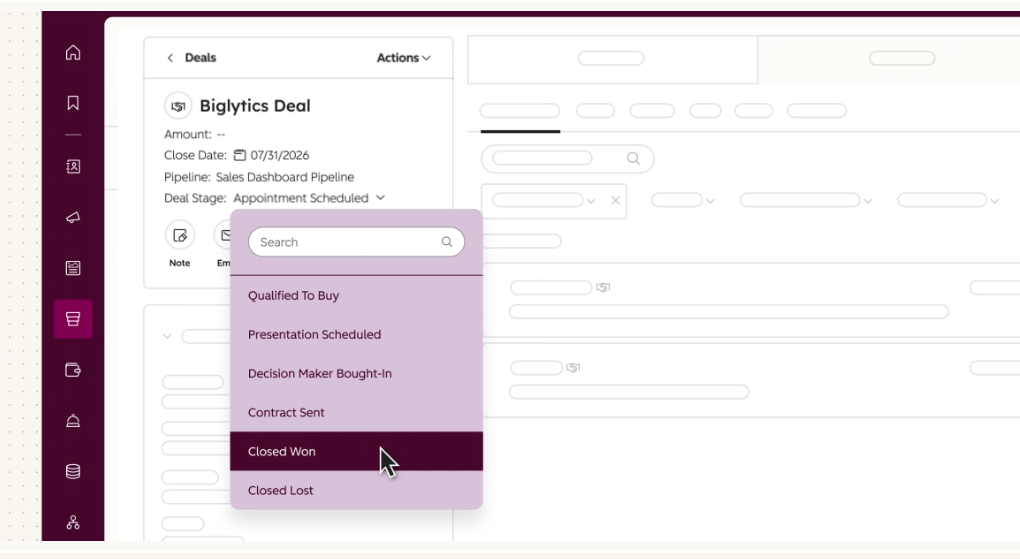
The value is consolidation. Instead of stitching together separate tools for email marketing, sales automation, help desk, and content management, HubSpot puts them on one data layer with one interface.
For companies with established inbound programs, marketing teams running campaigns, and service teams handling tickets, HubSpot is a natural fit.
Instantly is a cold email tool. It does one thing well: send outbound emails at volume while landing in primary inboxes.
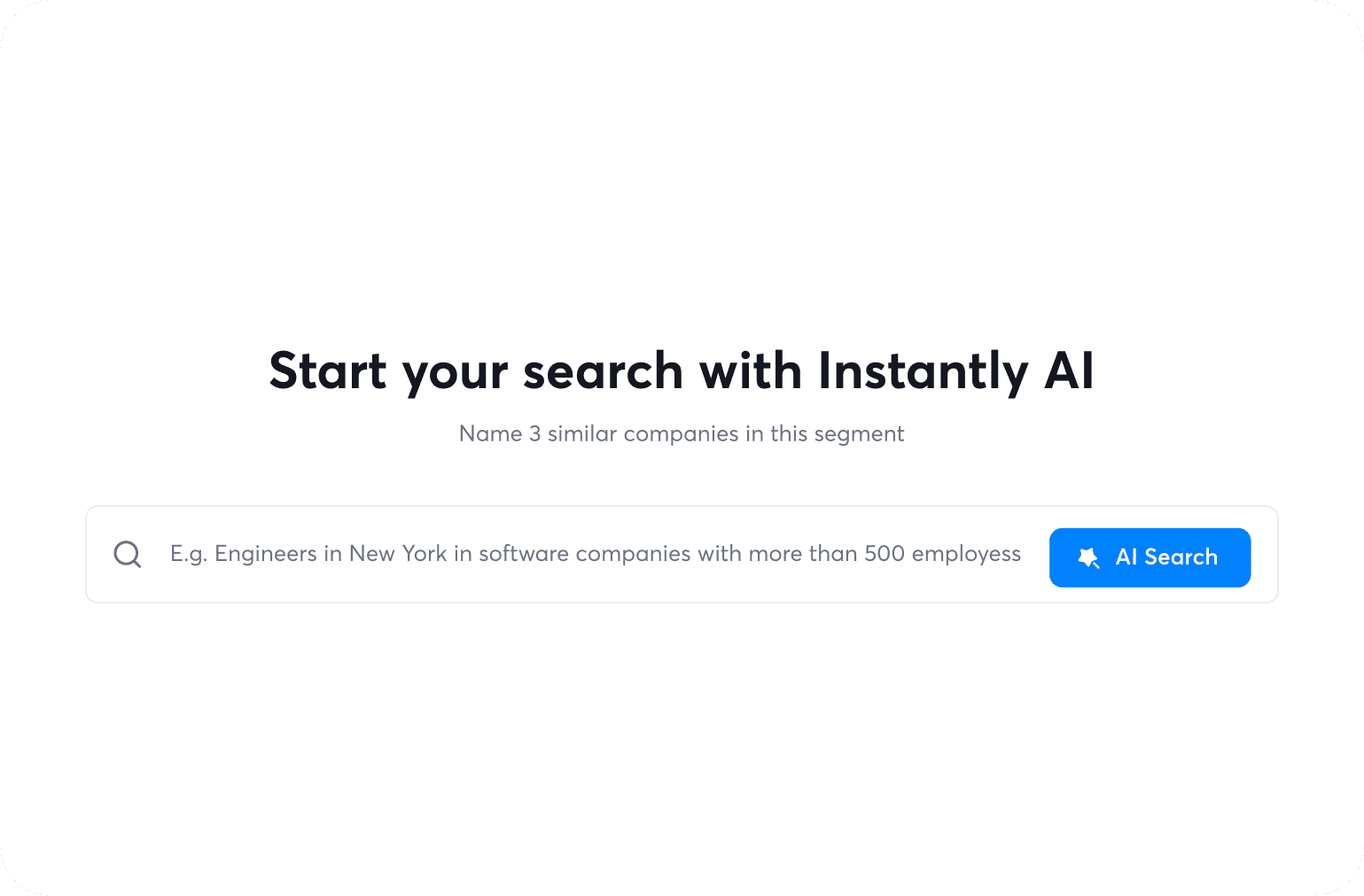
Source: Instantly
The founding story tells you everything: the founders ran lead generation agencies, got tired of paying per email account, and built a tool with unlimited accounts on one subscription.
Instantly serves agencies, SDRs, and founders who need to book meetings through cold outreach. It has since added a lead database, a CRM, and AI automation, but email remains the center of gravity.
ZoomInfo is a data intelligence platform. Founded in 2007 on the premise that go-to-market teams need accurate, verified B2B data, its data foundation has grown over nearly two decades to cover contacts, companies, intent signals, technographics, org charts, and conversation intelligence.

ZoomInfo doesn't replace your CRM or your email tool. It makes them smarter. It integrates directly with HubSpot, Salesforce, and other CRMs, while also offering its own products (GTM Workspace for sellers, GTM Studio for marketers and ops teams).
This is not an apples-to-apples comparison. HubSpot and Instantly overlap in sales outreach. But HubSpot is far broader, Instantly is far narrower, and ZoomInfo operates on a different layer: the data and intelligence that fuel both.
Contact data quality separates productive outreach from noise
Every sales team depends on contact data. The question is where it comes from and how accurate it is.
HubSpot is not a B2B data provider. Its Smart CRM stores and enriches the data you bring to it, with AI-powered enrichment that pulls from email threads, call recordings, and external sources. HubSpot's Data Hub can sync with third-party data providers and data warehouses.
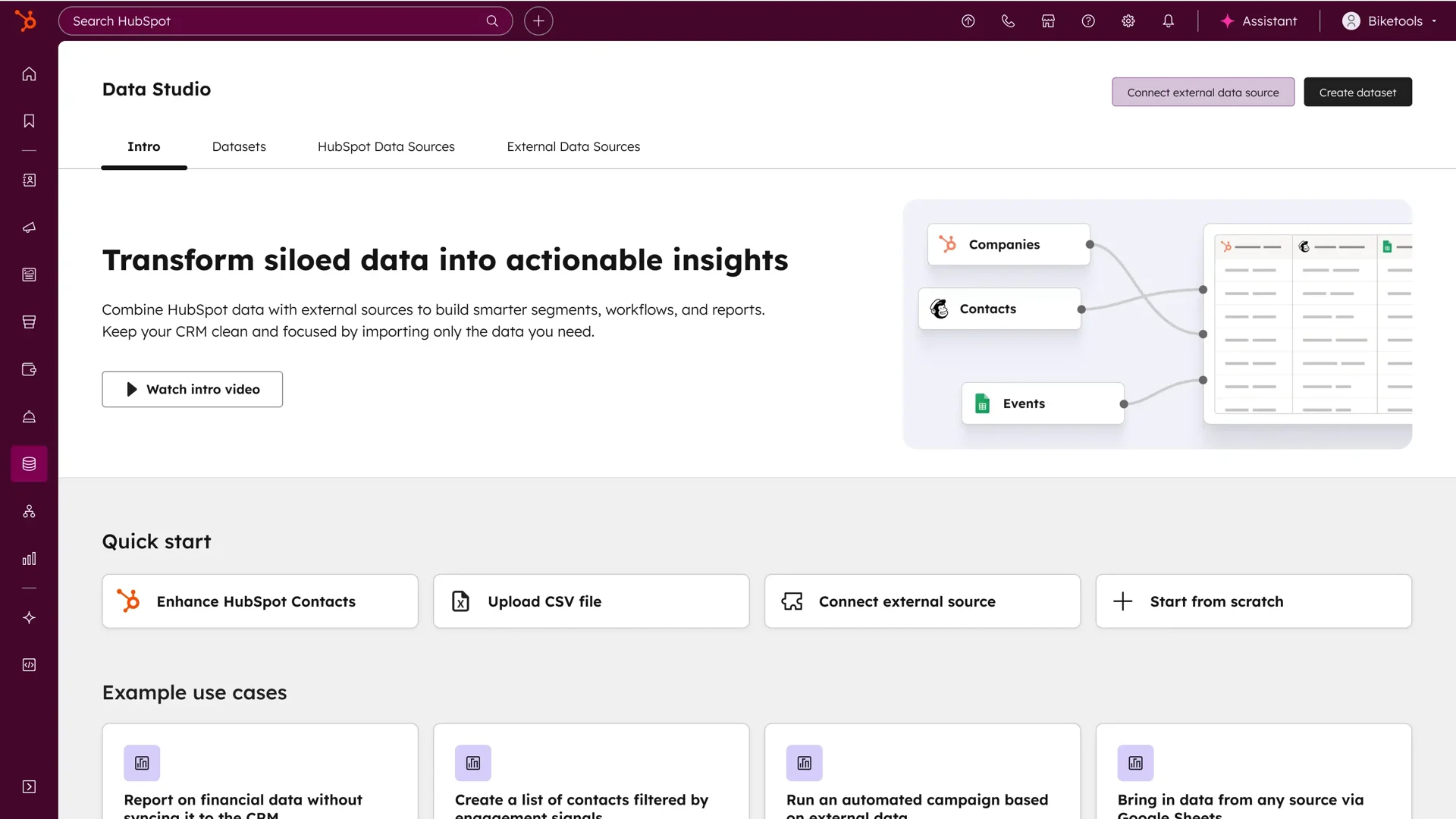
Source: HubSpot
But HubSpot doesn't maintain its own contact database with verified phone numbers and emails at scale. If you need new prospect data, you need to source it elsewhere.
Instantly offers SuperSearch, a database of 450M+ B2B contacts with waterfall enrichment from 5+ providers. It works for building prospect lists quickly.
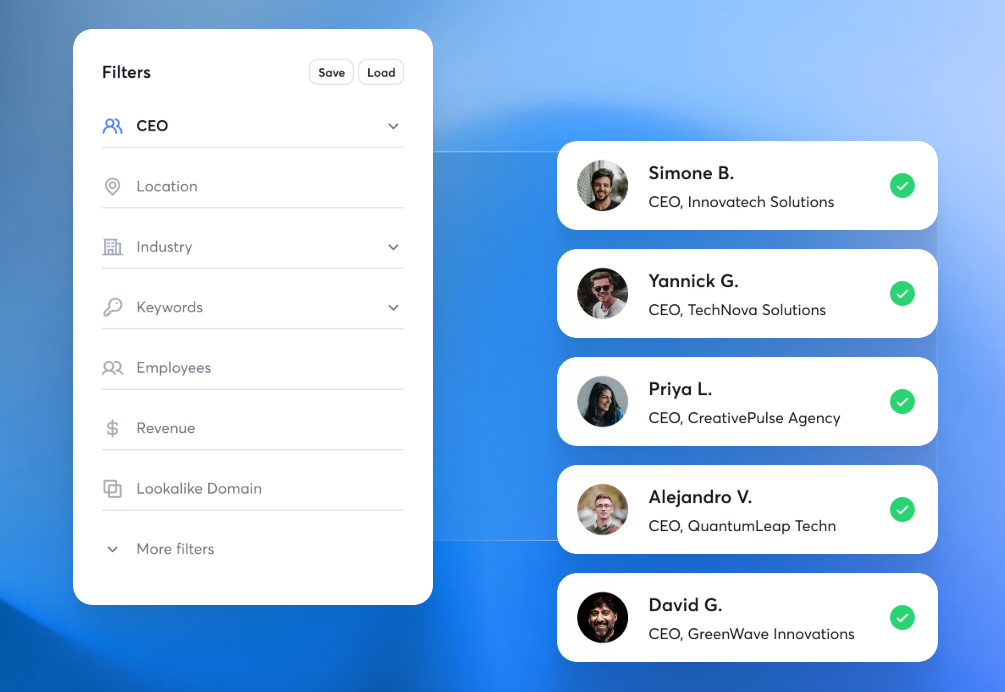
Source: Instantly
But Instantly itself acknowledges that SuperSearch "may not provide the level of deep enrichment and prospecting features that platforms like Apollo or ZoomInfo offer" and that users needing "highly specialized information (like detailed behavioral data or intent signals)" may require additional tools.
Contact upload limits are capped by plan: 1,000 on Growth, 25,000 on Hypergrowth, and those are lifetime limits, not monthly resets.
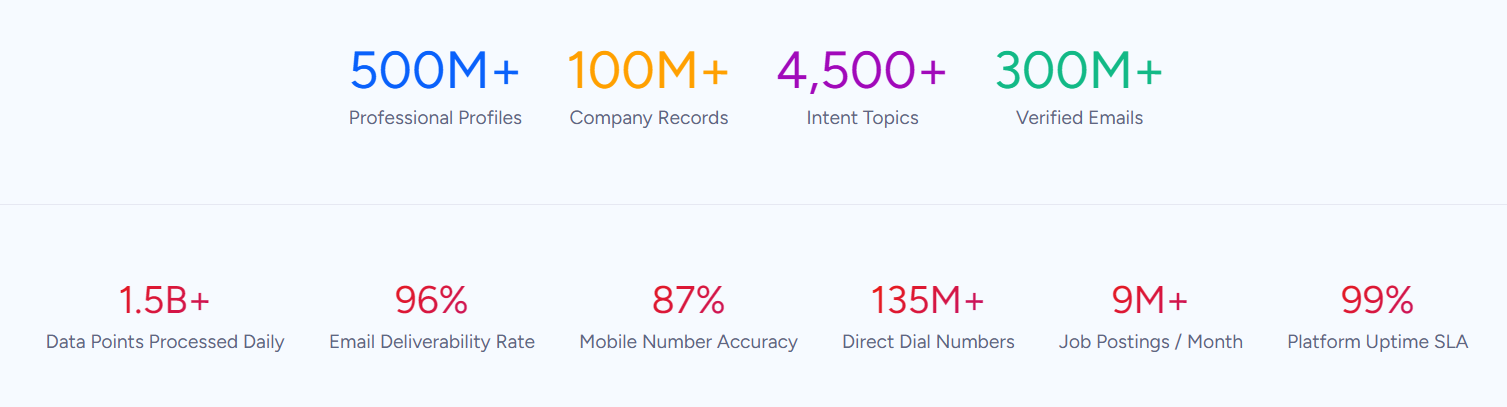
ZoomInfo started as a data company and remains one. Its 500M contacts and 200M+ verified business emails are maintained through a verification pipeline that includes automated ML scanning of 28 million site domains daily, a community of 200,000+ ZoomInfo Lite users who share data back, and an in-house Data Training Lab of 300+ human researchers. First-party data reaches up to 95% accuracy.
Source: ZoomInfo
In a Fortune 500 competitive RFP analyzing 25 million contacts across vendors, the independent consultant concluded that "no other competitor came even close."
The practical difference: ZoomInfo provides 135M+ verified phone numbers and 120M direct dials, so reps can reach prospects by phone, not just email. Instantly doesn't offer phone numbers as a core feature. HubSpot stores whatever phone data you import but doesn't generate it.
For a detailed look at how HubSpot and ZoomInfo compare on data, features, and pricing, see our HubSpot vs. ZoomInfo comparison.
"ZoomInfo gives us the information we need to execute. We don't have to go through and spend our time digging. It's already there, so we can be three steps ahead," said William Kenimer, Vice President of Revenue Operations at Vensure. (Vensure Case Study)
Intent signals reveal who's ready to buy
Sending emails to the right people matters. Sending them at the right time matters more.
HubSpot captures behavioral signals from contacts already in your system: website visits, email opens, form submissions, content downloads. These are first-party signals, valuable but limited to people who have already engaged with your brand.
To identify new accounts showing buying intent across the wider web, HubSpot relies on third-party integrations.
Instantly offers basic buying signals through SuperSearch filters: job listings, news mentions, and funding type. Its Website Visitors feature identifies anonymous traffic, but it's limited to US-based traffic only and does not collect information from EU or Canadian users.
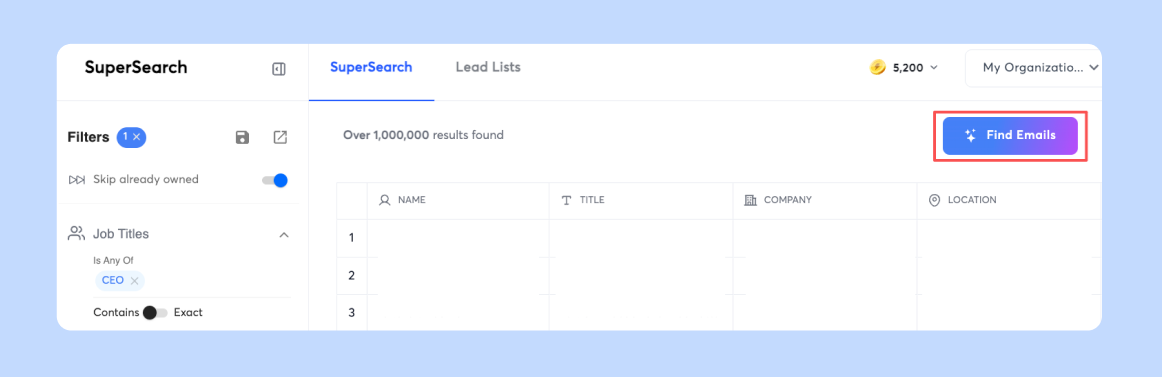
Source: Instantly
These signals help surface active companies, but they don't reveal which accounts are researching solutions like yours across the broader internet.
ZoomInfo runs a dedicated intent data engine that tracks signals from 210 million IP-to-Organization pairings and 6 trillion+ new keyword-to-device pairings sourced monthly.
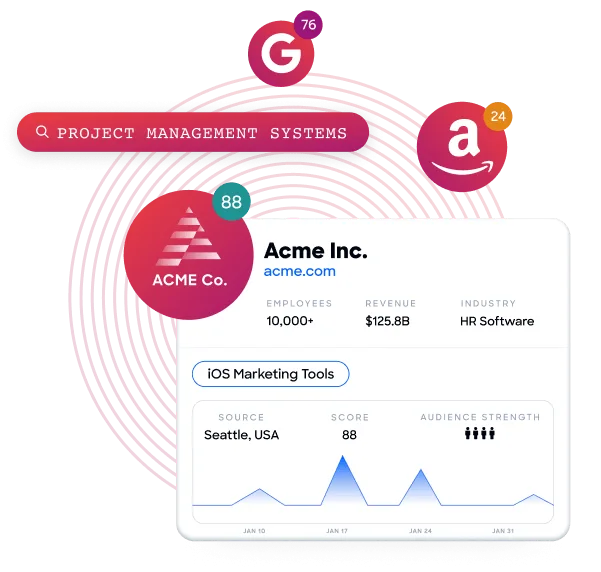
Source: ZoomInfo
Its Guided Intent feature identifies topics historically correlated with deal success, rather than requiring you to pick topics manually.
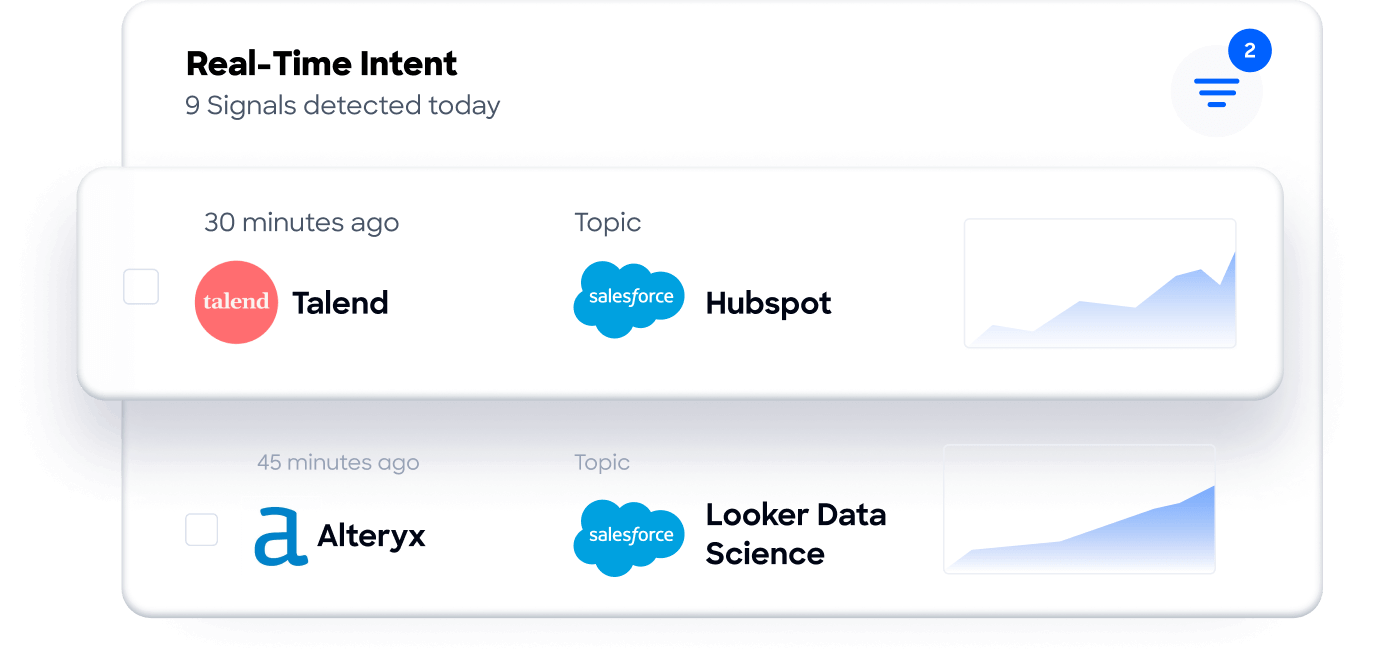
Source: ZoomInfo
WebSights resolves anonymous website visitors to companies and identifies buying teams, with automatic traffic filtering that separates real visitors from bots.
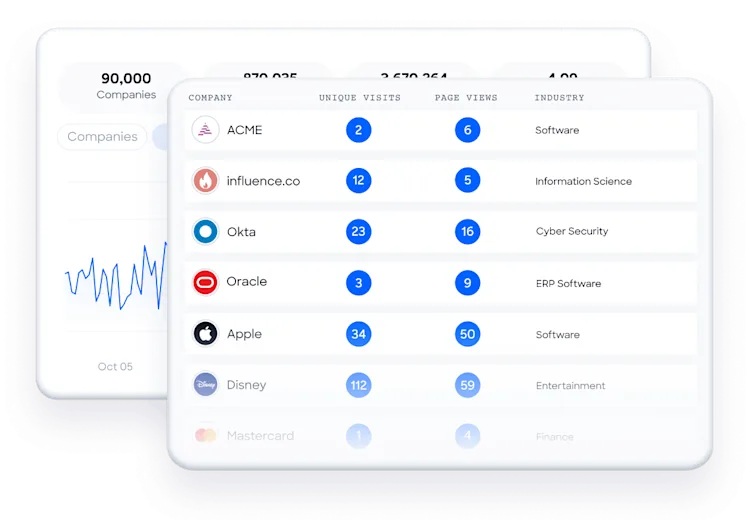
Source: ZoomInfo
Forrester named ZoomInfo a Leader in Intent Data Providers for B2B (Q1 2025), awarding the highest possible scores across eight criteria and noting ZoomInfo had "the largest R&D investment of any provider in this evaluation."
Seismic attributed 39% of active pipeline to opportunities identified or influenced by ZoomInfo signals, while sales productivity improved by 54%. "That combination of our internal CRM data, external signals, and AI that's given all that context has helped us craft very specific account- and persona-based messages," said Toby Carrington, Chief Business Officer. (Seismic Case Study)
Sales outreach: unified platform vs. volume engine vs. intelligence-driven execution
How each platform handles the work of reaching prospects reveals their design priorities.
HubSpot Sales Hub provides a full sales workflow: lead management workspace, email sequences (up to 10 email templates per sequence), call tracking, CPQ, and AI Guided Selling.
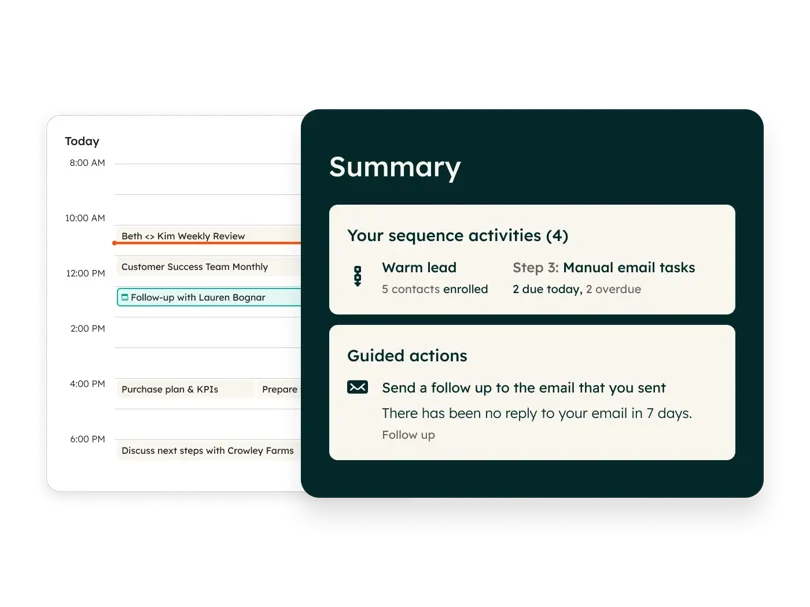
Source: HubSpot
The Breeze Prospecting Agent researches prospects, monitors buying signals, and drafts personalized outreach using your HubSpot customer history.
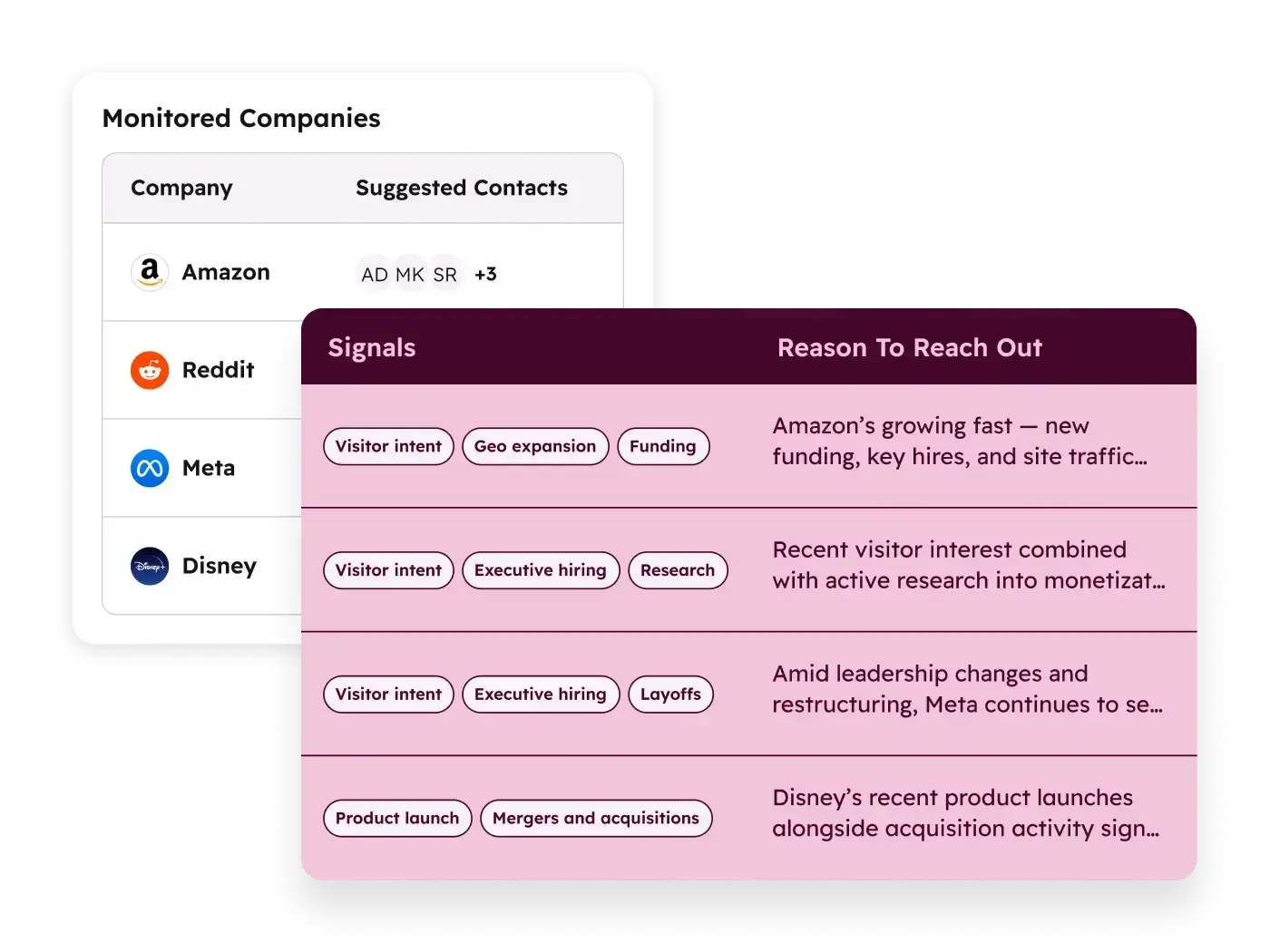
Source: HubSpot
The advantage is context. Because Sales Hub sits on the same CRM as Marketing Hub and Service Hub, every prior interaction informs outreach: marketing engagement, support tickets, deal history. The limitation is volume. HubSpot sequences are designed for targeted selling, not mass outbound.
Instantly is built for volume. Unlimited email accounts with automatic sending rotation let you scale daily sends by adding inboxes.
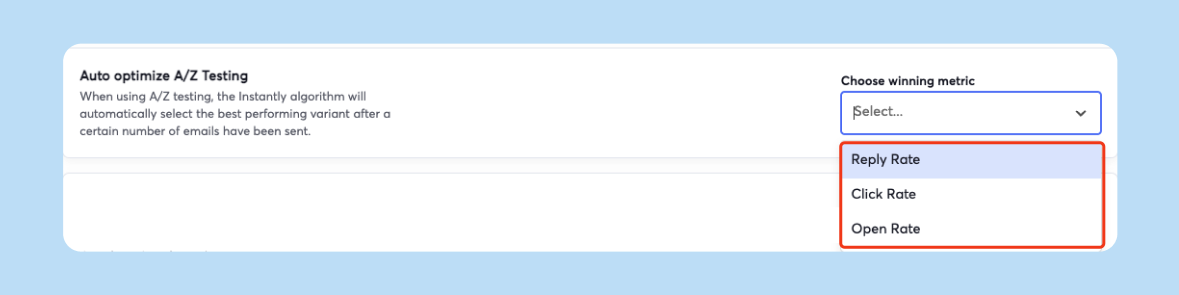
The platform supports A/Z testing with up to 26 variants per step, subsequences triggered by prospect behavior (Hypergrowth plan and above), and AI out-of-office detection that pauses and auto-resumes sequences.
Source: Instantly
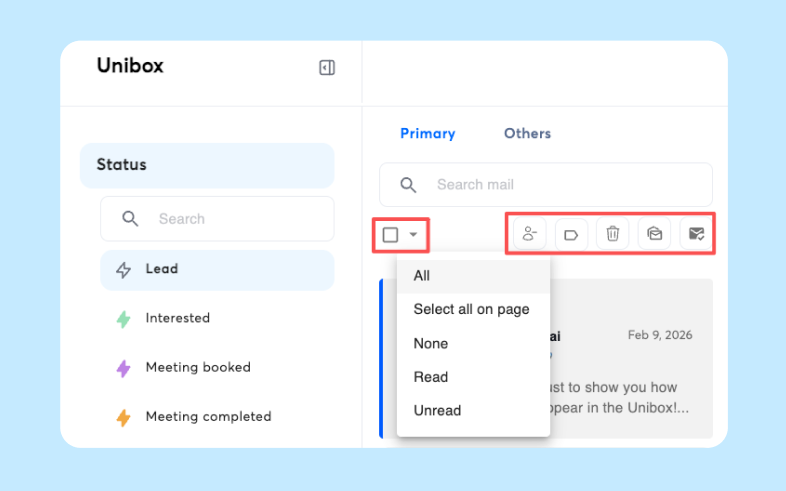
The Unibox consolidates replies across all accounts. The AI Reply Agent can respond on its own and book meetings directly via Calendly.
Source: Instantly
The advantage is throughput and deliverability. Instantly's deliverability network uses 1,000,000+ real email accounts for warmup, with Premium Pool accounts delivering 9% more replies than standard warmup.
The limitation is channel. Instantly is email first. Calling and SMS exist in the CRM add-on, but the platform wasn't designed for multi-channel outreach.
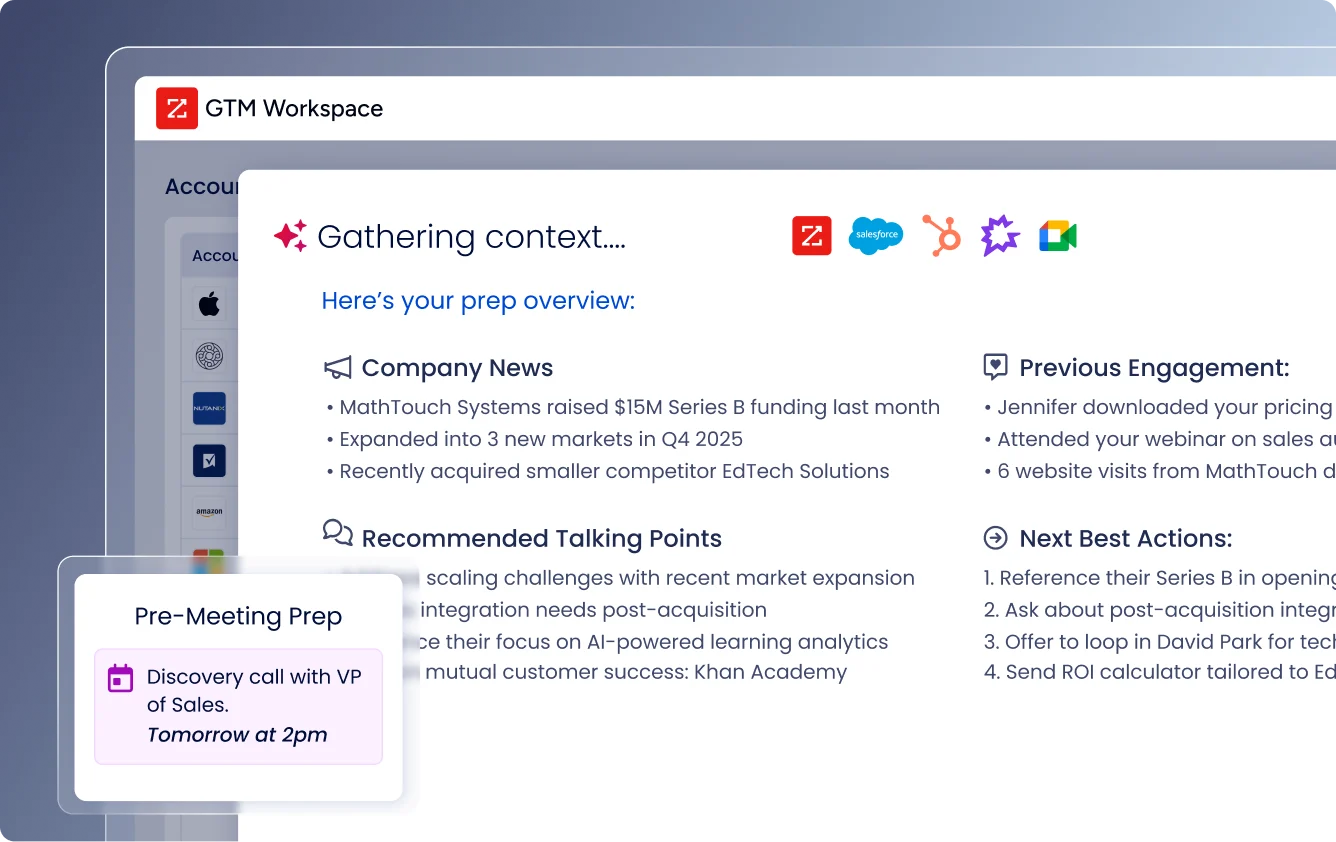
ZoomInfo approaches outreach through intelligence rather than volume. GTM Workspace gives sellers one place where prioritized accounts, AI-drafted outreach, and deal execution converge.
Source: ZoomInfo
The AI agents in Workspace answer three questions (who to contact, when to engage, and what to say) by drawing on the full GTM Context Graph rather than generic templates.
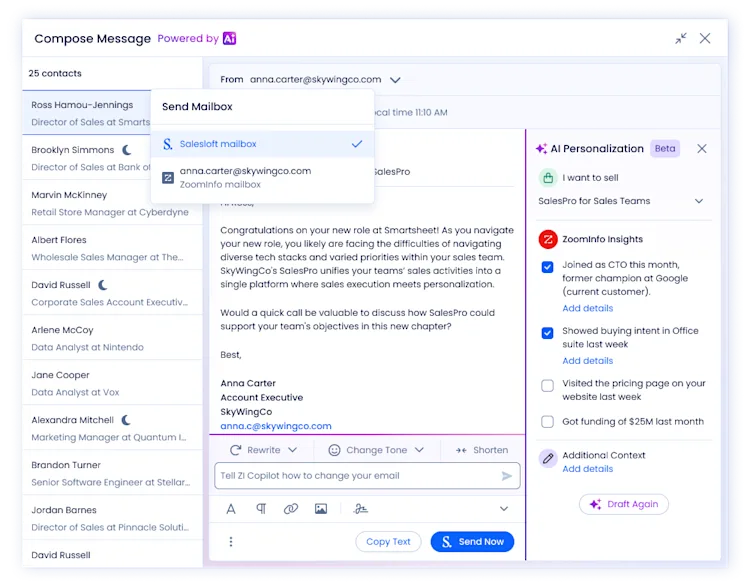
For outreach at scale, ZoomInfo partners with Salesloft for multi-touch sequencing, with ZoomInfo buying signals syncing directly to Salesloft Rhythm for AI-prioritized engagement.
Source: ZoomInfo
The difference is precision. GTM Workspace users report booking nearly 60% more meetings per week and being first to engage with an account in over half of cases.
AI approaches reflect each platform's DNA
All three platforms feature AI prominently. Their implementations reveal what each company knows about your business.
HubSpot's Breeze works across the full platform: Customer Agent for support (reportedly resolving 65%+ of customer inquiries), Prospecting Agent for outbound, Data Agent for natural-language CRM queries, and embedded AI writing tools across all hubs. Breeze draws on HubSpot's CRM data, giving it context about your existing contacts and deals.
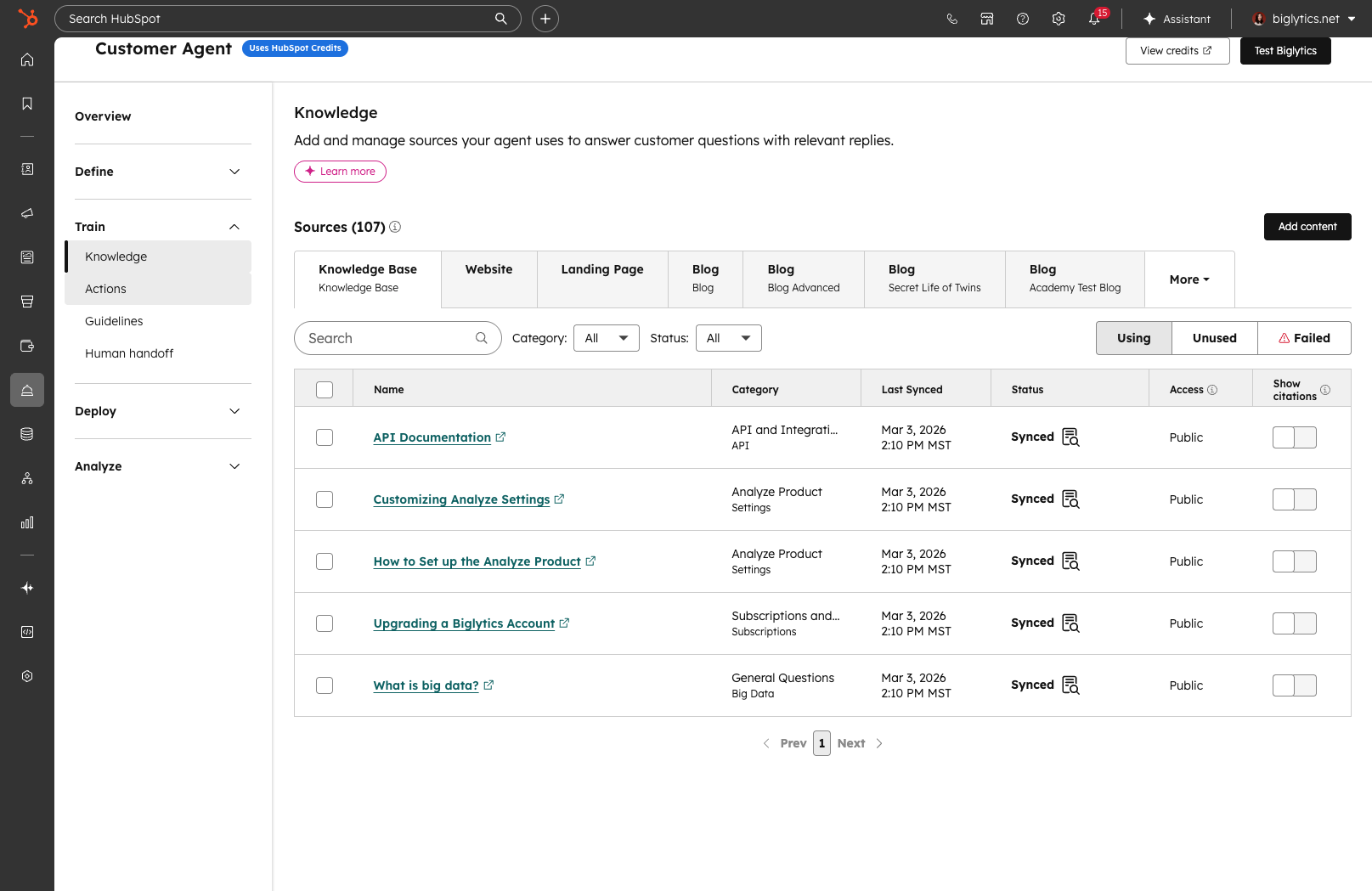
Source: HubSpot
The Fall 2025 Spotlight positions Breeze around HubSpot's claim to capture "100% of a business's data" versus the 20% that most CRMs see. Several features (AI-Powered Segmentation, Personalization, Marketing Studio) remain in Beta.
Instantly's AI Copilot focuses on outreach automation. It uses Memory (stored business context), ICPs, and guidance rules to generate campaigns end-to-end.
WARP Mode compresses what normally takes 6-13+ hours (from ICP definition to campaign launch) into 45-80 minutes.
Copilot Tasks run scheduled recurring AI actions for autonomous operation. The AI works within its scope, but that scope is cold email: it doesn't analyze call transcripts, correlate deal patterns, or predict account outcomes.

Source: Instantly
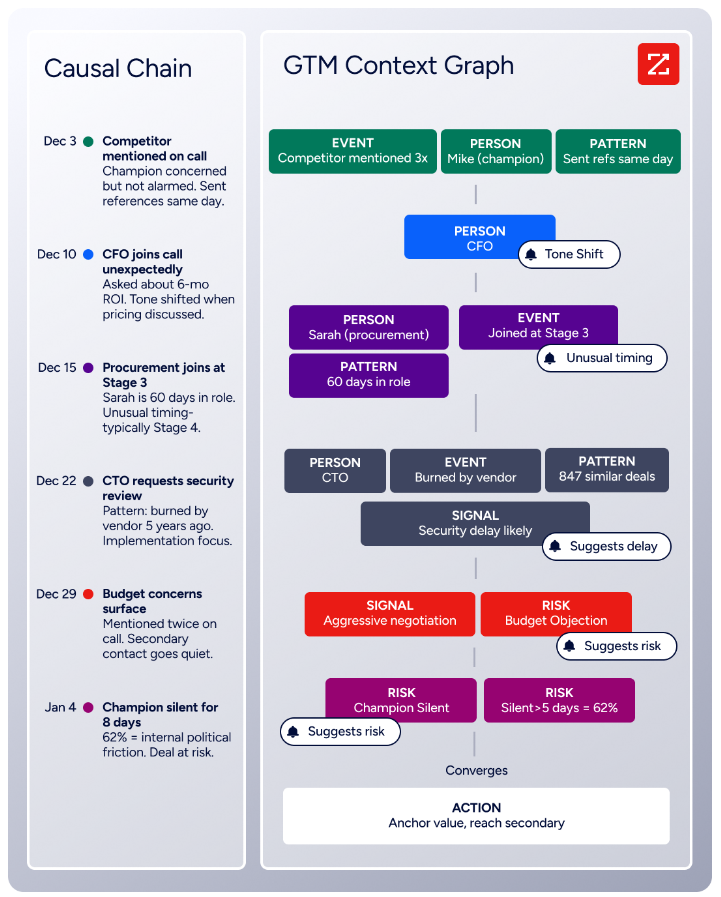
ZoomInfo's GTM Context Graph is what sets its AI apart. It combines your CRM data, conversation intelligence (via Chorus), intent signals, and ZoomInfo's B2B data into a single intelligence layer that captures why deals move or stall.
Source: ZoomInfo
As ZoomInfo's CPO Dominik Facher writes: "The CRM recorded the state change. It has no record of why it happened." The GTM Context Graph captures that context, so the AI drafting your next follow-up understands the concern behind the conversation, and the play targeting your next accounts reflects your actual win patterns rather than keyword thresholds.
The structural difference: HubSpot's Breeze knows your CRM data. Instantly's Copilot knows your outreach patterns. ZoomInfo's intelligence layer connects first-party data with the largest third-party B2B dataset, then draws insights across both.
Pricing: what you actually pay
The sticker price is never the full story.
HubSpot combines per-seat, per-hub, and per-contact pricing. The free CRM is useful (unlimited contacts, basic tools, capped at 2 users). But paid plans add up. Sales Hub Professional costs $100/seat/month with a $1,500 mandatory onboarding fee. Marketing Hub Professional is $890/month with a $3,000 onboarding fee.
Need both? Mixed-tier seat pricing means all Core Seats are billed at the highest tier's rate. A mid-sized team using Sales Hub Professional and Marketing Hub Professional can cross $2,000/month before adding contacts or credits.
Instantly starts low but is modular. Email Outreach begins at $47/month (Growth) with 1,000 uploaded contacts and 5,000 emails/month.
But you also need Instantly Credits for lead sourcing (starting at $47/month for 1,500 credits), and the CRM is a separate subscription ($47/month). A working stack (Outreach + Credits + CRM) costs $141/month minimum.
Scale to Hypergrowth outreach ($97) + Supersonic credits ($97) + Hyper CRM ($97) and you're at $291/month, plus $5/month per DFY account and $15/year per domain for email infrastructure. The uploaded contacts limit is a fixed lifetime cap, so heavy users need add-ons at $87/month each.
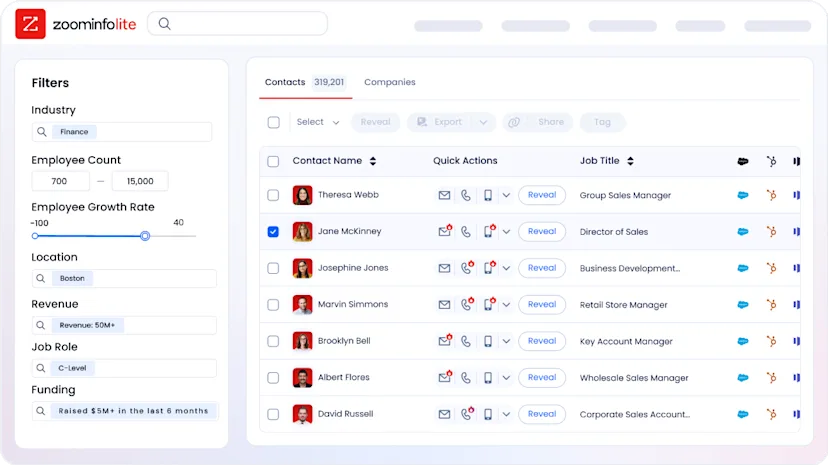
ZoomInfo uses custom-quoted pricing with no published rates, which makes direct cost comparison difficult. The company offers ZoomInfo Lite (permanently free: 10 monthly export credits, database access, Chrome extension, HubSpot integration, WebSights Lite) and a 7-day free trial of the full platform.
Source: ZoomInfo
Paid plans are seat-and-credit-based, with pricing tied to features, credits, and contract length. ZoomInfo is premium-priced, built for teams where the ROI of better data justifies the investment.
Note: ZoomInfo is transitioning toward a consumption-based pricing model.
The right comparison isn't monthly cost in isolation. It's cost per qualified opportunity. Verified direct dials and intent-informed targeting reduce the volume of outreach needed, which reduces email infrastructure costs, which changes the total cost of generating pipeline.
Enterprise readiness and compliance
For organizations with procurement processes, security reviews, and compliance requirements, the differences matter.
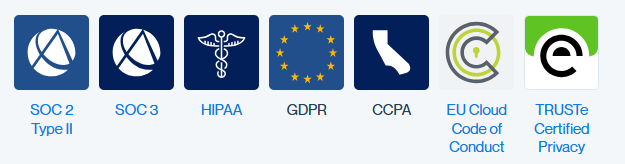
HubSpot holds SOC 2 Type II certification and a HIPAA independent attestation. It hosts data on AWS in the United States with an EU Data Center option. It supports SSO, 2FA, field-level permissions, and centralized audit logging.
Source: HubSpot
Encryption uses AES-256 at rest and TLS 1.2/1.3 in transit. For regulated industries, HubSpot's Trust Center and GDPR/CCPA compliance make it viable for most enterprise procurement.
Instantly references SOC 2 and ISO reports in its DPA but does not maintain a public security certifications page. The platform is GDPR compliant with a published DPA, and CCPA compliant.
However, HIPAA and PCI DSS are explicitly excluded. For enterprise buyers with formal security review processes, the absence of publicly verifiable certifications is a gap.
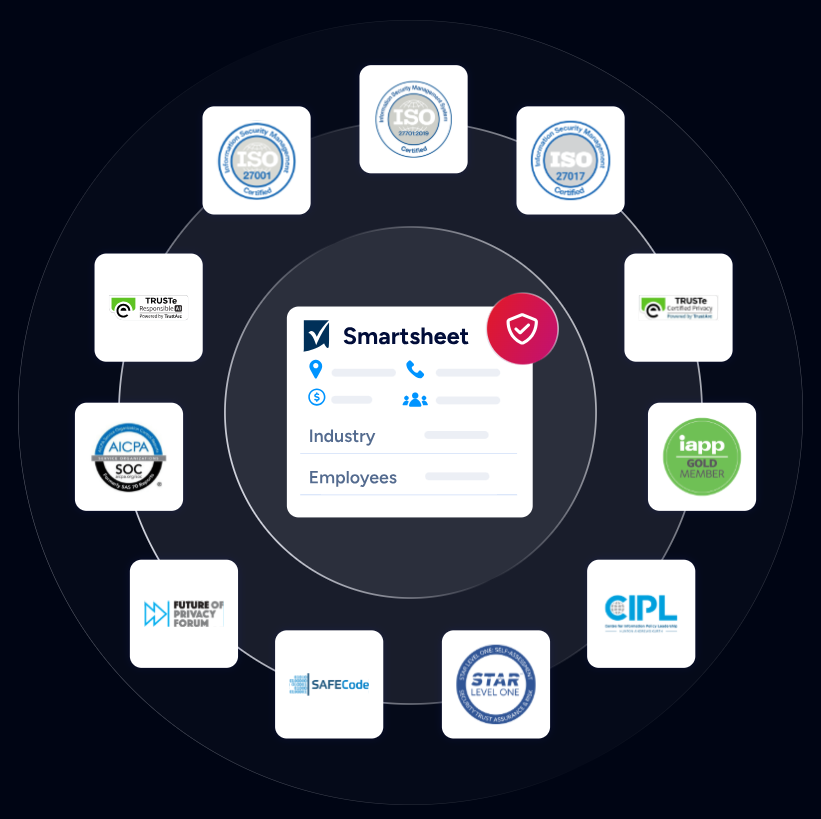
ZoomInfo maintains the broadest compliance stack of the three: ISO 27001, ISO 27701, SOC 2 Type II, TRUSTe GDPR Practices Validation, and TRUSTe CCPA Practices Validation, all renewed annually.
Source: ZoomInfo
The company is a registered data broker in California and Vermont and maintains a dedicated Trust Center. For enterprises handling sensitive B2B data at scale, this certification depth is expected.
Integration ecosystems determine long-term flexibility
No platform exists in isolation. How each connects to your tech stack matters for the long run.
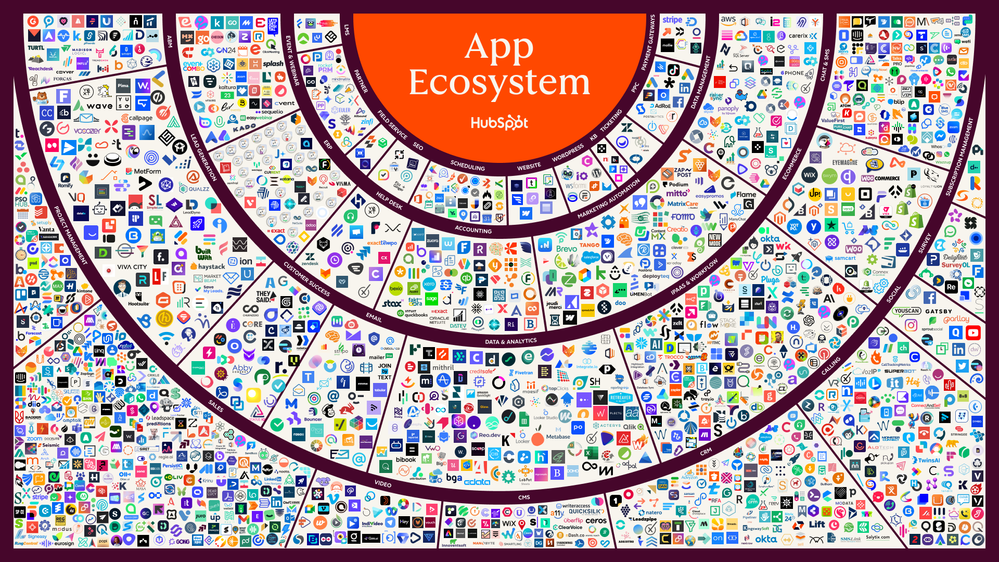
HubSpot has the largest marketplace with over 2,000 app integrations and 2.5 million active installs. Its REST API covers the full CRM data model, and a mature developer platform supports custom apps, UI extensions, and CMS development.
Source: HubSpot
The ecosystem is HubSpot's moat: once your tech stack is wired into HubSpot, switching costs are high.
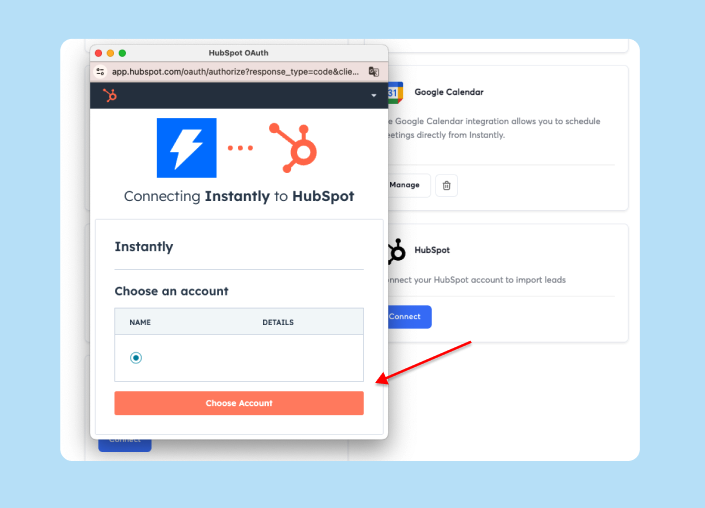
Instantly integrates with HubSpot, Salesforce, and Pipedrive for lead imports and status syncing. Zapier and Make extend the connectivity. The API V2 is documented with REST standards and an interactive reference.
Source: Instantly
But the integration ecosystem is young. There's no Chrome extension, and the integrations marketplace is curated rather than open.
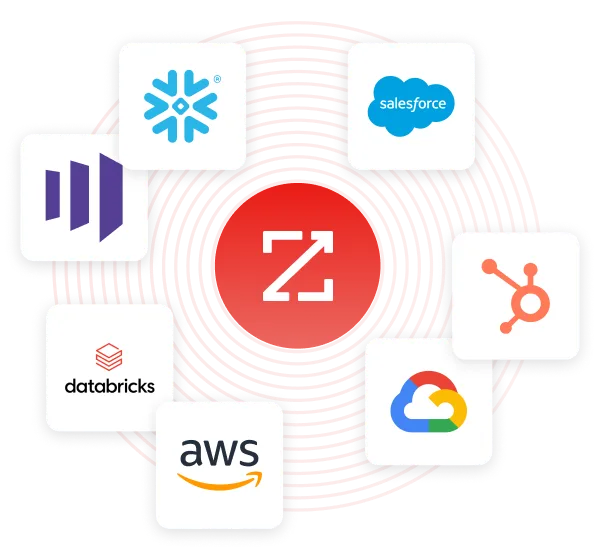
ZoomInfo integrates with 120+ partners across CRM, marketing automation, sales engagement, and data warehouse categories. The native HubSpot integration, Salesforce integration, and Salesloft partnership cover the core GTM stack.
Source: ZoomInfo
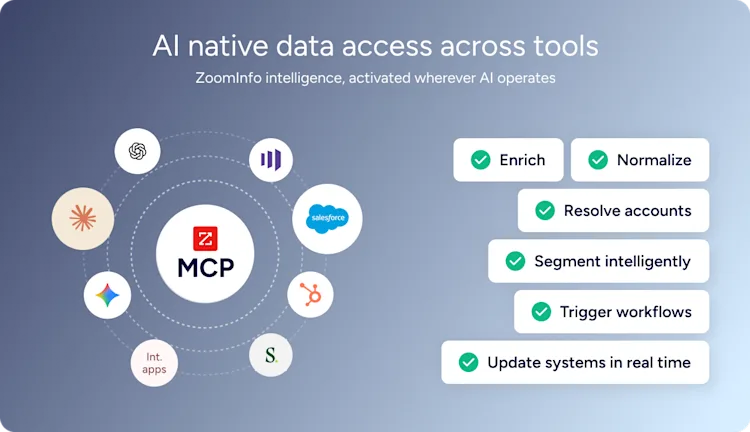
The Enterprise API and MCP server deliver ZoomInfo's data and GTM Context Graph into any tool or AI agent, including Claude and ChatGPT. API access is included in all relevant plans.
Source: ZoomInfo
The architectural difference: HubSpot is the hub that other tools connect to. Instantly connects to your CRM to sync leads. ZoomInfo is the data layer that powers whatever tools you choose, whether that's HubSpot, Salesforce, a custom AI agent, or ZoomInfo's own products.
"Anything that minimizes our team's need to switch contexts is beneficial. ZoomInfo offers a unified view, eliminating the need to navigate between systems," said Ben Perceval, RevOps Manager at Spekit. (Spekit Case Study)
HubSpot vs. Instantly vs. ZoomInfo: Which should you choose?
The best choice depends on the problem you're solving.
Choose HubSpot if:
You need one platform for marketing, sales, and customer service
Your growth strategy combines inbound content with outbound sales
You want your CRM to be the system of record for the full customer lifecycle
Your team values a polished interface and low learning curve for daily work
You're willing to invest in a platform that grows with your business (and your budget)
Choose Instantly if:
Cold email is your primary or sole outbound channel
You need to scale send volume with unlimited email accounts
You're an agency managing multiple client campaigns under one subscription
Budget is tight and you need to launch outreach fast
You want a focused tool rather than a full GTM platform
Choose ZoomInfo if:
Your B2B contact data accuracy directly affects your revenue
You need intent signals to identify in-market accounts before competitors reach them
You want intelligence that makes your existing CRM and outreach tools more effective
Your GTM strategy spans prospecting, ABM, deal acceleration, and account management
You need enterprise security and compliance for formal procurement
You want to access data through your own tools via APIs and MCP, not just a vendor's UI
Start with ZoomInfo Lite for free, or request a full trial to see the full platform.
The HubSpot vs. Instantly comparison frames a choice between a broad platform and a specialized tool. ZoomInfo reframes the question. Instead of choosing where to manage relationships or how to send emails, start with the intelligence that tells you who to target, when to engage, and why.
The execution layer (whether HubSpot, Instantly, Salesloft, or ZoomInfo's own GTM Workspace) works better when it's built on verified data and contextual signals rather than static lists and generic templates.
"ZoomInfo's not just a contact data company anymore. They've built a system that works the list, writes the outreach, triggers the play, and helps drive predictable growth," said Ian Brodie, CEO & Co-Founder of Levanta. (Levanta Case Study)
HubSpot vs. Instantly vs. ZoomInfo FAQ
What is the core difference between HubSpot, Instantly, and ZoomInfo?
HubSpot is a CRM platform that manages marketing, sales, and customer service across six product hubs on a single data layer.
Instantly is a cold email outreach tool for high-volume sending with unlimited email accounts and a 450M+ contact database.
ZoomInfo is a B2B data intelligence platform with 500M contacts, 200M+ verified emails, 135M+ verified phone numbers, and a GTM Context Graph that combines CRM data with intent signals and conversation intelligence to reveal why deals move or stall.
Which platform has the best B2B contact data?
ZoomInfo has the most verified B2B data, with up to 95% accuracy on first-party data maintained by 300+ human researchers and automated ML scanning of 28 million site domains daily. In a Fortune 500 competitive RFP analyzing 25 million contacts across vendors, an independent consultant concluded no competitor came close.
Instantly offers 450M+ contacts with waterfall enrichment but acknowledges its data lacks the depth of platforms like ZoomInfo.
HubSpot is not a data provider and relies on third-party enrichment.
Can I use ZoomInfo with HubSpot or Instantly?
ZoomInfo integrates directly with HubSpot through a native marketplace integration, syncing contact and company data into HubSpot's CRM.
Instantly also integrates with HubSpot for lead imports and status syncing. Z
oomInfo does not have a direct Instantly integration, but you can export ZoomInfo data and import it into Instantly, or connect them through tools like Zapier.
Which platform is cheapest for a small team starting outbound sales?
Instantly has the lowest entry point for outbound email at $47/month for unlimited email accounts and 5,000 sends.
HubSpot offers a free CRM with basic sales tools, though paid Sales Hub starts at $20/seat/month (Starter) with limited automation.
ZoomInfo offers ZoomInfo Lite permanently free with 10 monthly export credits, database access, a Chrome extension, and HubSpot integration. Paid ZoomInfo plans are custom-quoted and premium-priced.
Which platform has the strongest AI capabilities?
Each platform's AI serves a different purpose. HubSpot's Breeze AI covers customer support, prospecting, content creation, and CRM queries across the platform, drawing on CRM data for context.
Instantly's AI Copilot automates campaign creation and can respond to emails on its own within minutes.
ZoomInfo's GTM Context Graph connects CRM data, conversation intelligence, and the largest third-party B2B dataset to explain why deals move or stall, powering AI-generated outreach, account prioritization, and buying group identification.
Does Instantly have intent data like ZoomInfo?
Instantly offers basic buying signals through SuperSearch filters including job listings, news mentions, and funding type.
ZoomInfo runs a dedicated intent engine that tracks signals from 210 million IP-to-Organization pairings and 6 trillion+ new keyword-to-device pairings monthly, with Guided Intent that identifies topics correlated with deal success automatically. Forrester named ZoomInfo a Leader in Intent Data Providers for B2B in Q1 2025, with the highest possible scores across eight criteria.
Which platform is best for agencies managing multiple client campaigns?
Instantly fits agencies best for cold email campaigns across multiple clients, with unlimited email accounts, done-for-you account provisioning, and agency view features under one subscription.
HubSpot supports multi-client management through its Solutions Partner program but charges per seat and per hub.
ZoomInfo typically serves agencies as the underlying data source for prospecting across client accounts, not as a campaign management tool.
Which platform meets enterprise security and compliance requirements?
ZoomInfo has the broadest certification stack: ISO 27001, ISO 27701, SOC 2 Type II, and TRUSTe GDPR/CCPA validations, all renewed annually.
HubSpot holds SOC 2 Type II and a HIPAA independent attestation.
Instantly references SOC 2 and ISO reports in its DPA but does not maintain a public security certifications page, and explicitly excludes HIPAA and PCI DSS compliance.
