
Choosing between HubSpot vs. LeadSquared often comes down to these five questions:
Do you need a platform that manages the full customer lifecycle, or one built for high-volume sales in specific industries?
Is your team selling to other businesses, or running high-velocity consumer-facing sales at scale?
How important is having accurate, verified contact data before your reps pick up the phone?
Would you rather pay per user seat, per account, or based on what you actually consume?
Is your biggest challenge organizing your sales process, or knowing which prospects to pursue and why?
In short, here's what we recommend:
HubSpot is the platform for growing companies that want marketing, sales, service, and content under one roof. Its Smart CRM connects six product hubs on a shared data layer, and its AI engine, Breeze, handles everything from drafting prospecting emails to resolving support tickets on its own. With 288,706 customers across 135+ countries and a permanently free CRM tier, HubSpot has the ecosystem to serve most businesses. But pricing climbs fast once you mix hubs and add seats, mandatory onboarding fees apply at Professional and Enterprise tiers, and the platform's breadth means no single capability goes as deep as a specialist tool.
LeadSquared is built for organizations running high-velocity, high-volume sales in specific industries. Its Sales CRM ships with pre-configured workflows for financial services, healthcare, education, and automotive, and its Mobile CRM equips field agents with GPS tracking, offline data entry, and geo-fenced task verification, so managers know reps actually visited the client site. For Indian enterprises and growing APAC businesses processing thousands of leads daily, LeadSquared offers vertical depth that horizontal CRMs cannot match. But performance issues under heavy load, limited analytics, and early-stage AI constrain its ceiling, and its international footprint outside India remains thin.
Both platforms help you manage relationships and processes once a lead enters your system. But neither answers a more basic question for B2B teams: are you targeting the right accounts with the right information in the first place?
ZoomInfo is an AI-powered GTM platform that tells your reps which accounts to pursue and why before they pick up the phone. Built on 500M contacts, 100M companies, 135M+ verified phone numbers, and 200M+ verified business emails, ZoomInfo's GTM Context Graph processes 1.5B+ data points daily, combining this data with your CRM records, conversation transcripts, and behavioral signals to capture not just what happened in a deal, but why it happened. Your team accesses this intelligence through GTM Workspace (a workspace for sellers), GTM Studio (an orchestration canvas for marketers and RevOps), or APIs and MCP that pipe the same intelligence into HubSpot, Salesforce, or any other front-end.
If starting with intelligence rather than workflows sounds like the right foundation for your revenue team, see ZoomInfo in action with a free trial.
HubSpot vs. LeadSquared vs. ZoomInfo at a glance
HubSpot | LeadSquared | ZoomInfo | |
|---|---|---|---|
Core focus | Unified CRM platform (marketing, sales, service, content) | High-velocity sales CRM for specific verticals | AI-powered GTM platform |
Best for | B2B/B2C companies wanting everything in one place | Consumer-facing sales teams in BFSI, healthcare, education | B2B revenue teams that need accurate data and buyer intelligence |
B2B contact data | Basic enrichment via Smart CRM | Lead capture and scoring from inbound sources | 500M contacts, 200M+ verified emails, 135M+ verified phones |
AI capabilities | Breeze agents for marketing, sales, and service | AI propensity scoring, early-stage knowledge base bot | GTM Context Graph: captures why deals move or stall |
Marketing tools | Full marketing automation with AEO | Email, WhatsApp, SMS campaigns with journey builder | ABM, intent-driven orchestration, native display advertising |
Sales tools | Pipeline management, sequences, CPQ | Lead routing, field sales mobile CRM, distribution engine | GTM Workspace, prospecting, Chorus conversation intelligence |
Pricing model | Per-seat, per-hub + marketing contacts | Per-seat (sales) / per-account (marketing), annual | Consumption-based, custom-quoted |
Starting price | Free CRM; Starter from $15/seat/mo | $60/user/month (billed annually) | Free Lite tier; paid plans custom |
Integration ecosystem | 2,000+ apps | 162 integrations | 120+ integrations + API/MCP for any tool |
Geographic strength | Global (135+ countries) | India and APAC; growing US presence | Global enterprise B2B |
Three platforms, three starting points
These three platforms approach revenue growth from different directions.
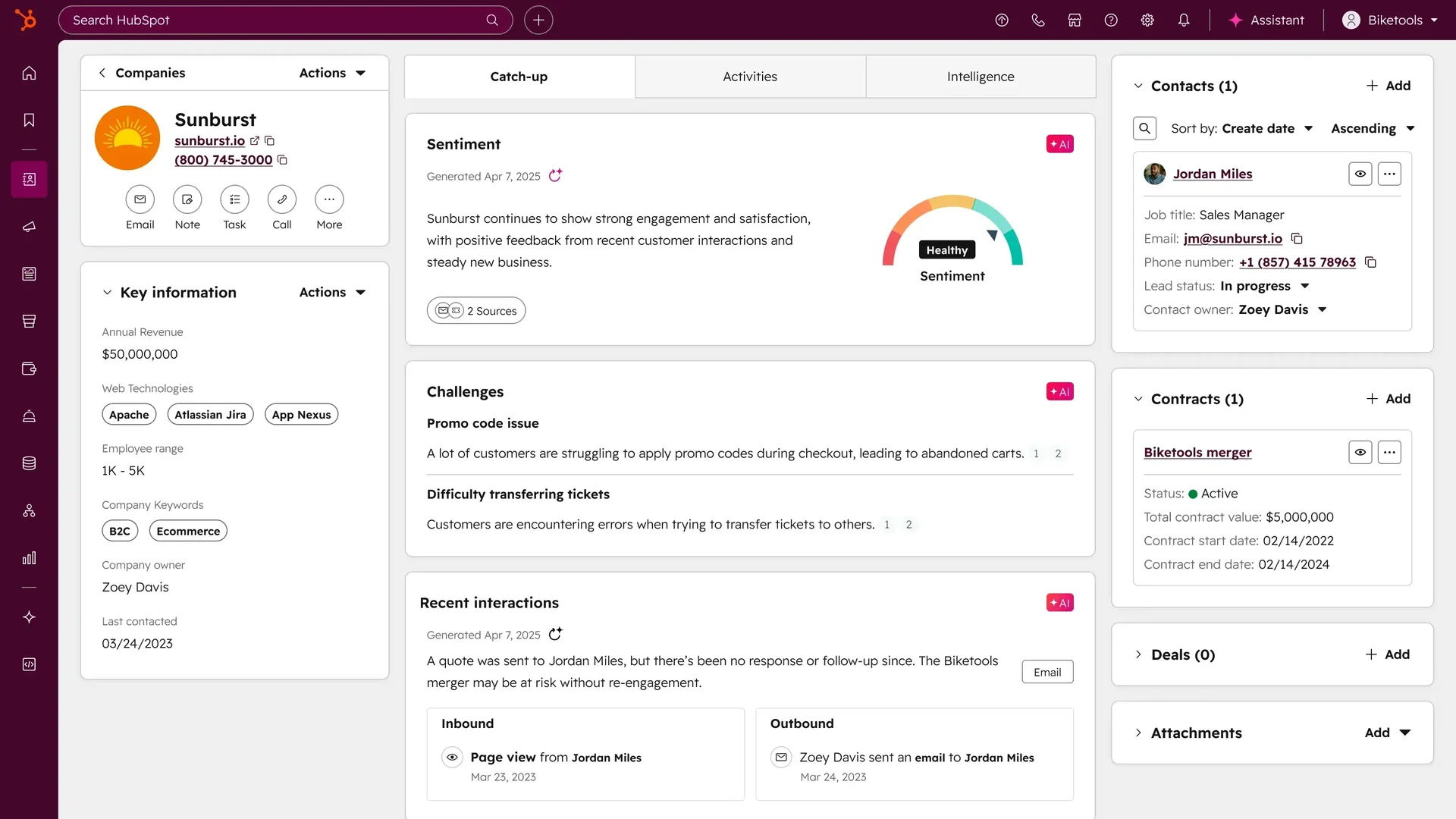
HubSpot starts with the customer lifecycle. The original thesis, coined by co-founders Dharmesh Shah and Brian Halligan at MIT in 2006, was that buyers now research products themselves before talking to sales, and businesses need software that supports that shift.
Source: HubSpot
HubSpot grew from a marketing automation tool into a full CRM platform spanning Marketing Hub, Sales Hub, Service Hub, Content Hub, Data Hub, and Commerce Hub, all sharing one database. The pitch: replace your five to fifteen disconnected point solutions with a single connected platform, and let the shared data make every team smarter.
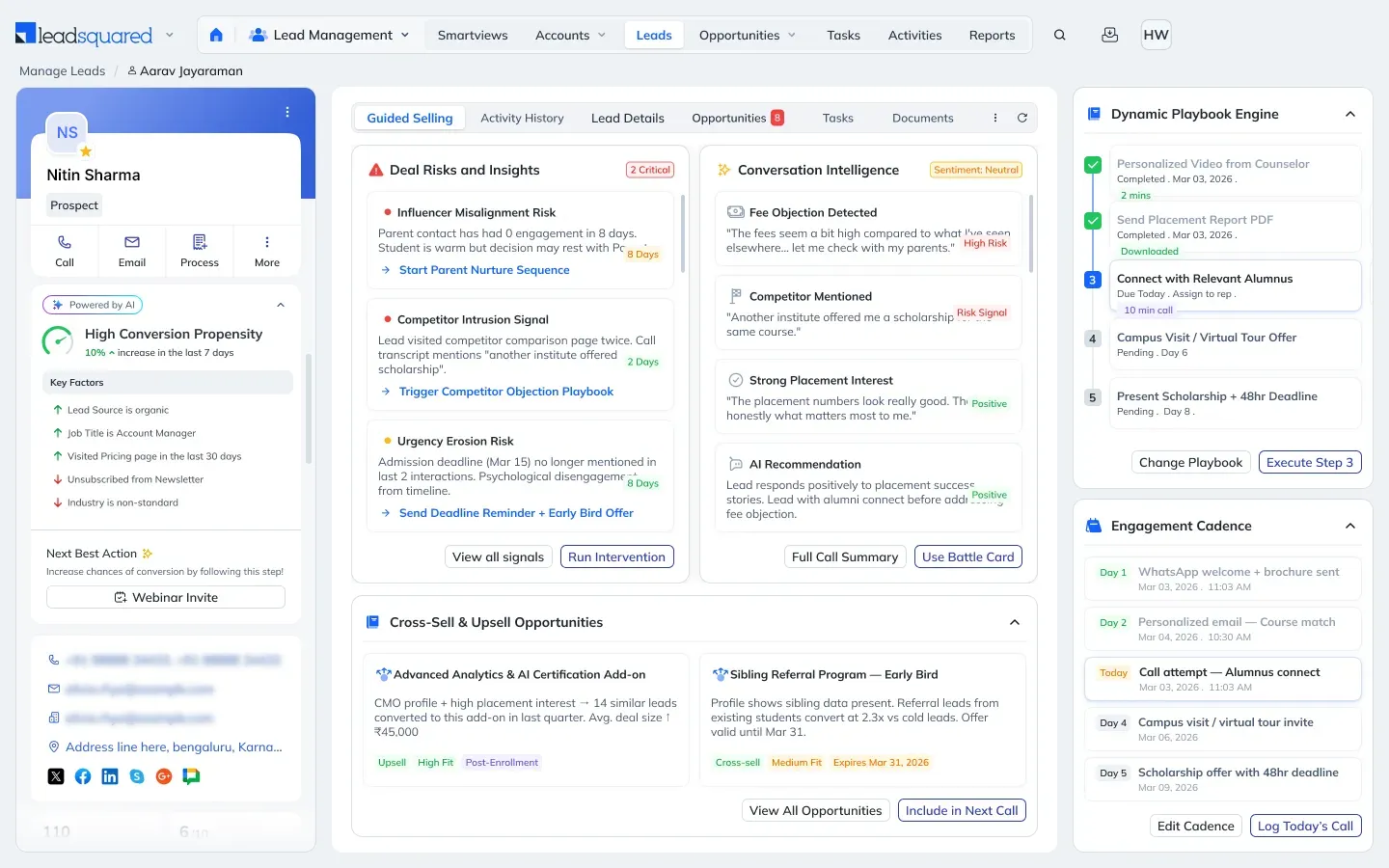
LeadSquared starts with sales velocity. Founded in 2011 in Bengaluru by three veterans who had spent years running demand generation campaigns for clients, the founders saw that traditional CRMs recorded sales activity but did not drive performance.
Source: LeadSquared
LeadSquared was designed for environments where thousands of leads arrive daily and speed of response determines conversion: lending, insurance, healthcare, and education. The platform starts with consumer behavior rather than internal workflows, "built for how people actually buy."
ZoomInfo starts with intelligence. Founded in 2007 by Henry Schuck, ZoomInfo was built on the conviction that go-to-market teams need accurate, verified data to execute well.
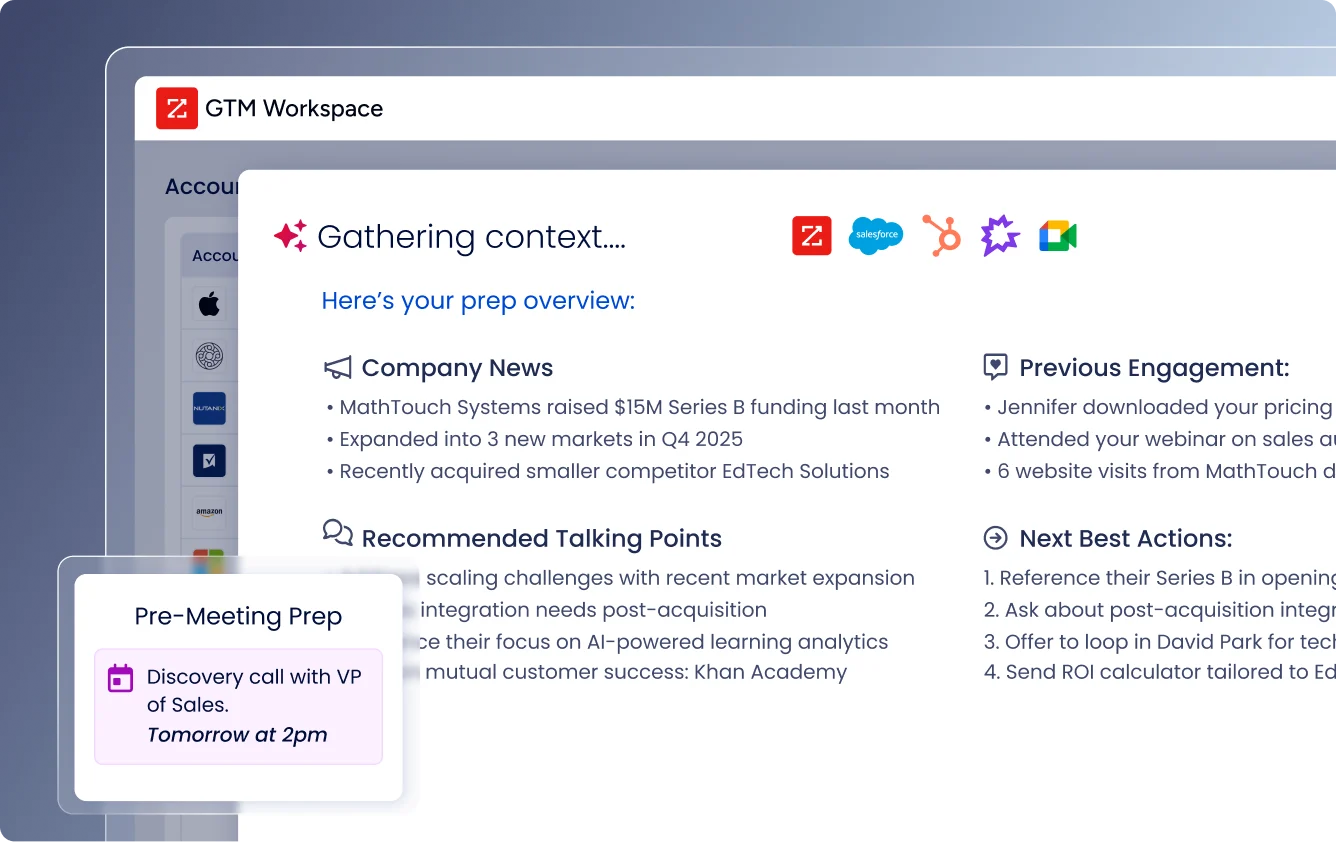
Over nearly two decades, ZoomInfo assembled the largest B2B data platform in the world through automated ML scanning of 28 million domains daily, 300+ human researchers, and a community of 200,000+ users who share data back. The data is the foundation; the GTM Context Graph built on top of it captures not just what happened, but why deals move or stall.
For organizations that primarily need to manage inbound leads and customer relationships, HubSpot's lifecycle approach or LeadSquared's velocity approach makes sense. For B2B teams where the bigger problem is identifying the right accounts, reaching verified decision-makers, and understanding buyer intent, ZoomInfo addresses the bottleneck that CRMs alone cannot.
HubSpot covers the full lifecycle, LeadSquared goes deep in verticals
HubSpot and LeadSquared both call themselves CRM platforms, but they serve different buyers.
HubSpot is broad by design. The platform serves businesses from solopreneur to enterprise, across every industry, in 135+ countries. Its Marketing Hub handles email campaigns, landing pages, SEO, social media, and ads.
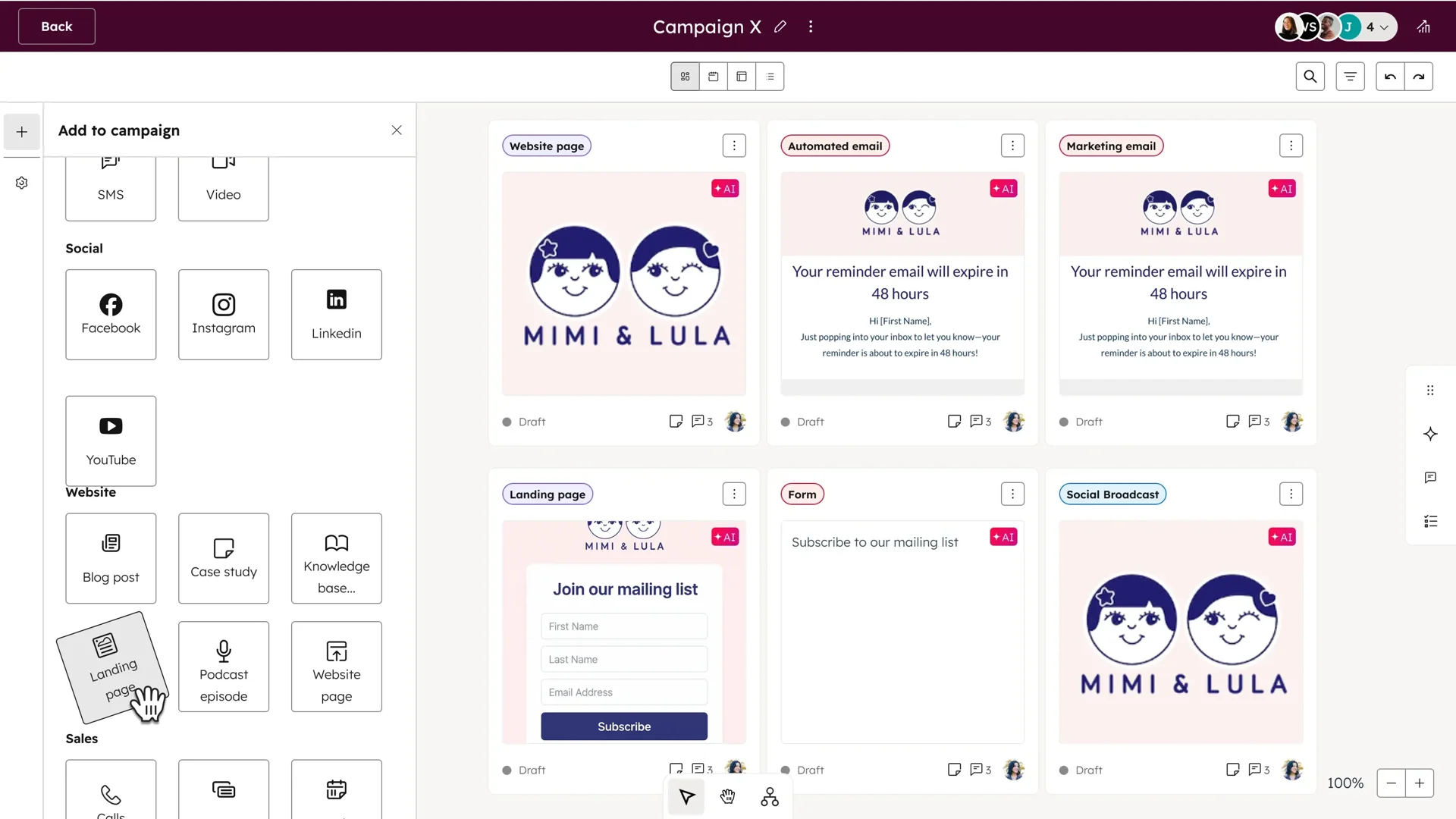
Source: HubSpot
Sales Hub manages pipelines, sequences, and CPQ (configure, price, quote).
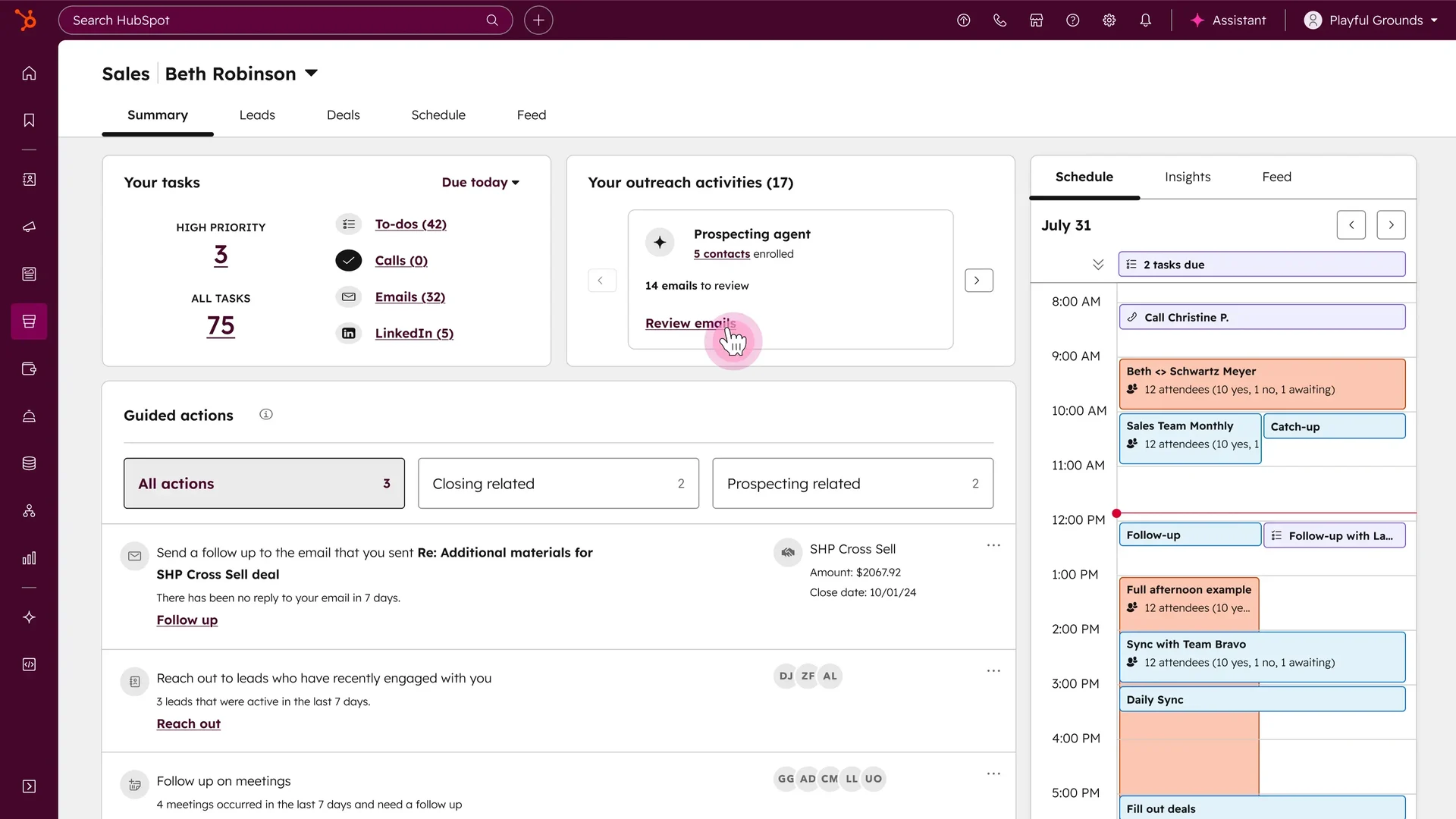
Source: HubSpot
Service Hub runs help desk operations and customer success.
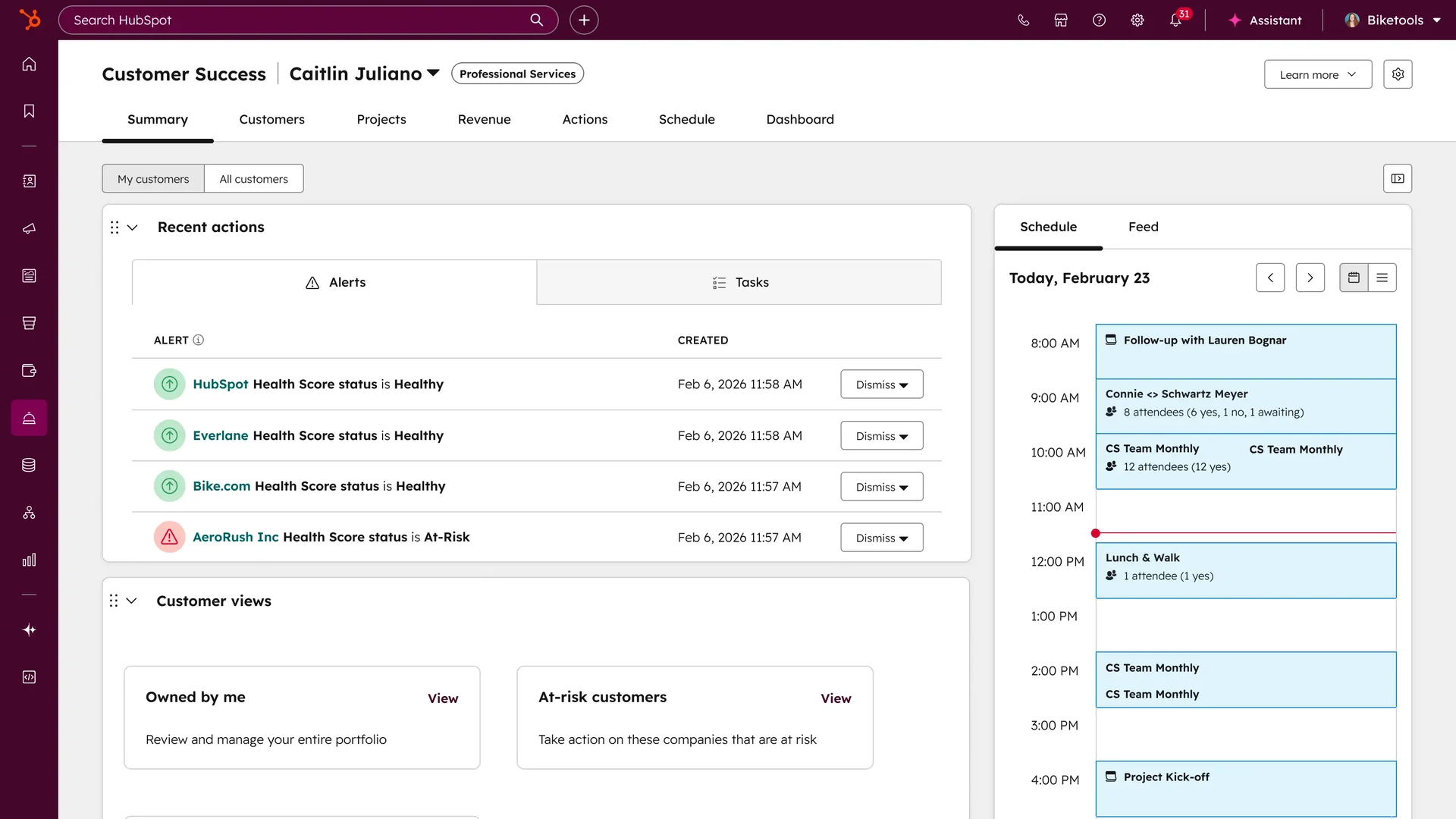
Source: HubSpot
Content Hub publishes websites, blogs, and podcasts.
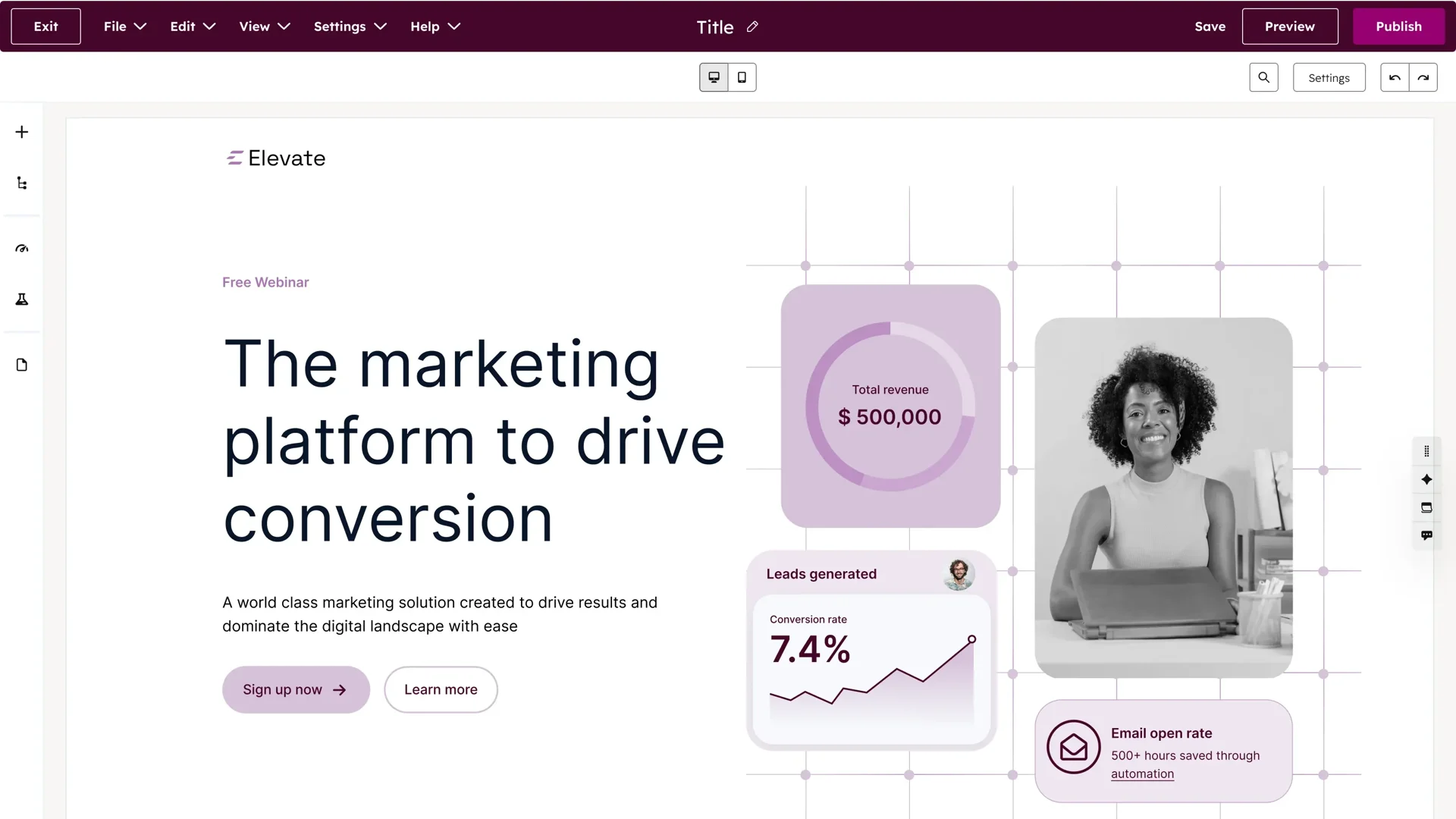
Source: HubSpot
Commerce Hub processes payments and subscriptions. This breadth is real: a company can run its entire go-to-market operation on HubSpot without leaving the platform.
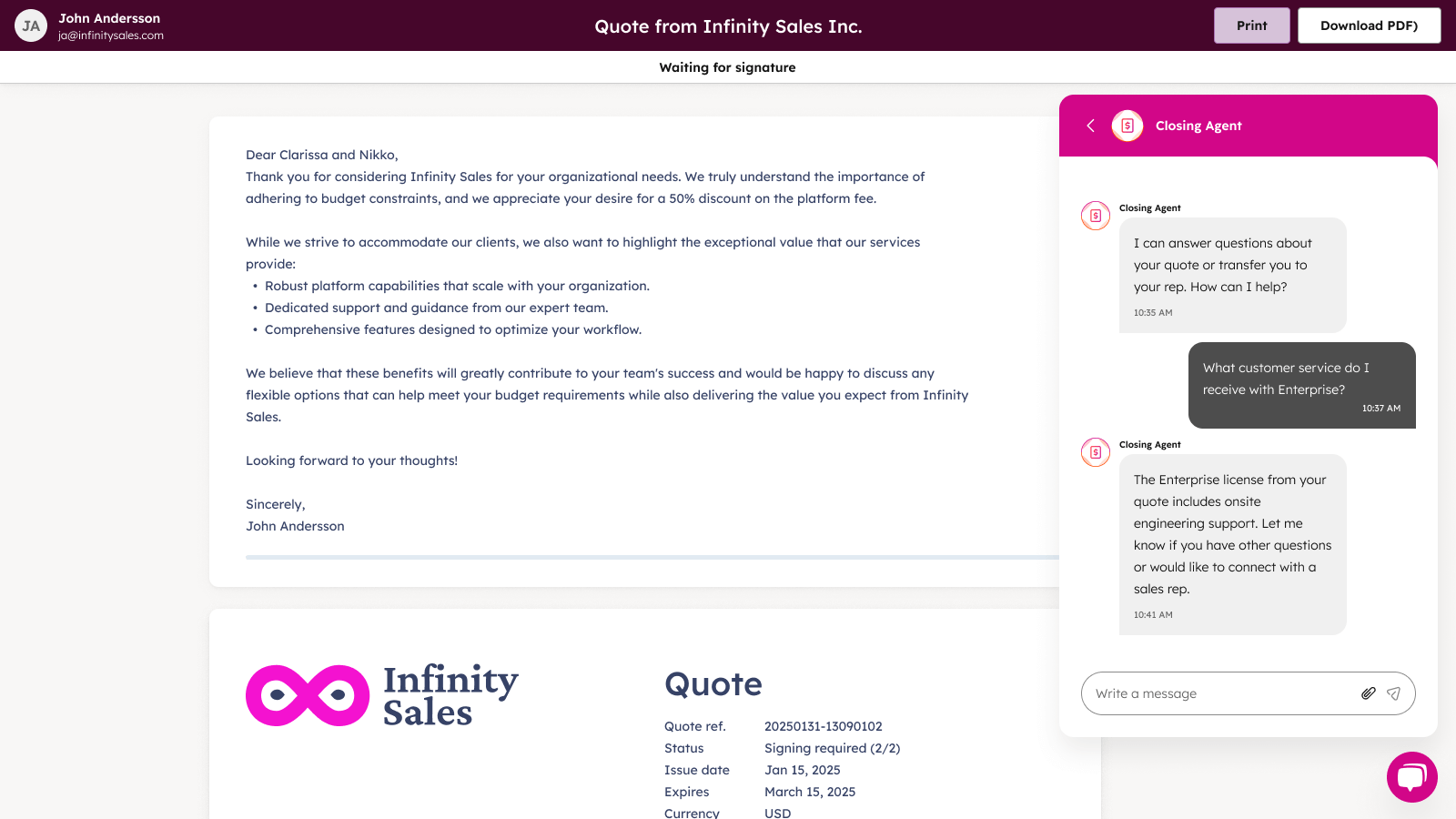
Source: HubSpot
The trade-off is that each hub, while capable, competes with dedicated tools that go deeper. HubSpot's marketing automation is strong but not Marketo-level for complex enterprise campaigns. Its sales sequences work but are less sophisticated than dedicated sales engagement platforms.
The CRM handles up to 15 million contacts (expandable to 50 million), but companies with highly specific CRM requirements may find HubSpot's customization options younger than Salesforce's 25-year feature set.
LeadSquared is narrow by design. Instead of serving every industry, LeadSquared ships with configurations for specific verticals. Its financial services CRM covers lending, insurance, broking, fintech, and banking as separate sub-verticals.
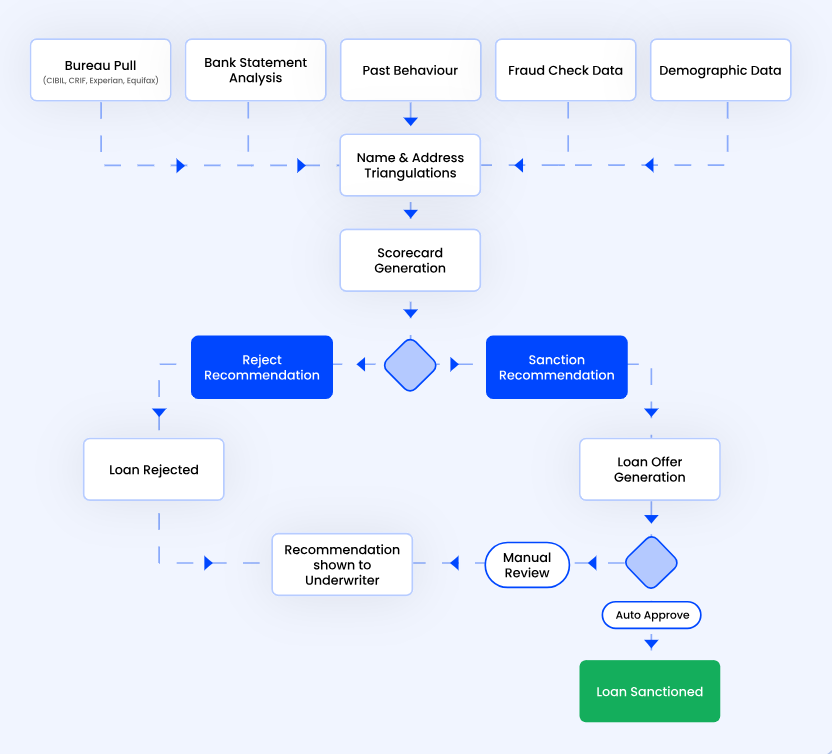
Source: LeadSquared
Its education CRM handles higher education, overseas admissions, K-12, EdTech, and training institutes. Each vertical gets relevant workflows, forms, fields, and routing logic out of the box.
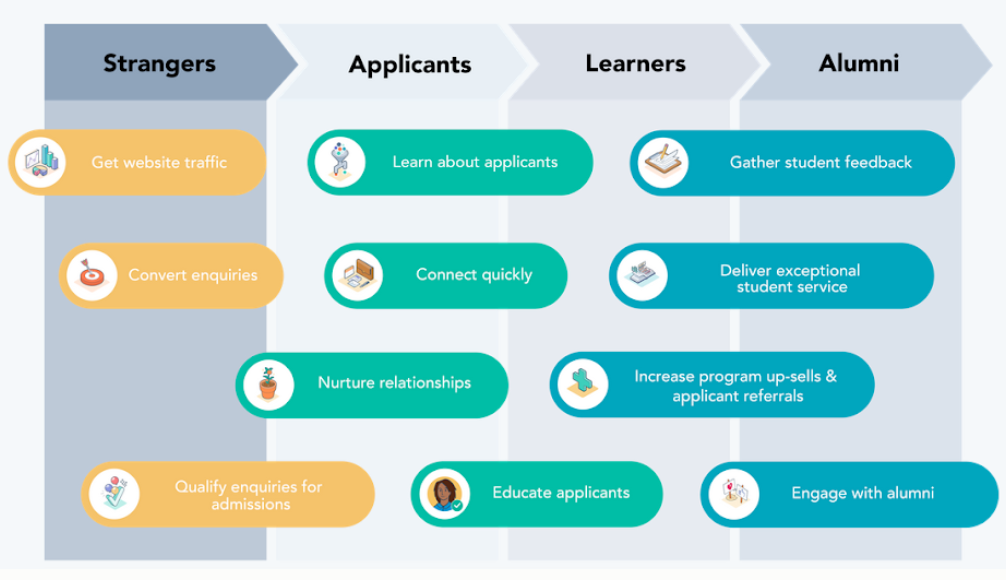
Source: LeadSquared
The field sales capabilities set LeadSquared apart from most web-first CRMs. The Mobile CRM (with 500K+ users) includes Leads Near Me (a map showing prospects within 15 kilometers), activity geo-fencing (reps must be physically present to complete a CRM task), image-linked check-in/check-out (selfie verification before a visit is recorded), and offline mode for low-connectivity areas.
For NBFC loan officers visiting rural branches or pharmaceutical reps covering remote territories, these features solve real problems.
But LeadSquared's vertical focus also limits its reach. The platform lacks native CPQ for complex B2B deal cycles. Its reporting suite works in silos, with G2 reviewers noting that advanced custom reports sometimes require developer work or extra fees. And its customer base is mostly Indian, with US expansion focused on healthcare and higher education.
The data problem CRMs weren't built to solve
HubSpot and LeadSquared both manage data you put into them. Neither generates the data your sales team needs to target the right prospects.
HubSpot's Smart CRM enriches records using information from email threads, recorded calls, and company websites. It deduplicates contacts, auto-fills missing fields, and answers natural-language questions about your customers through its Data Agent.
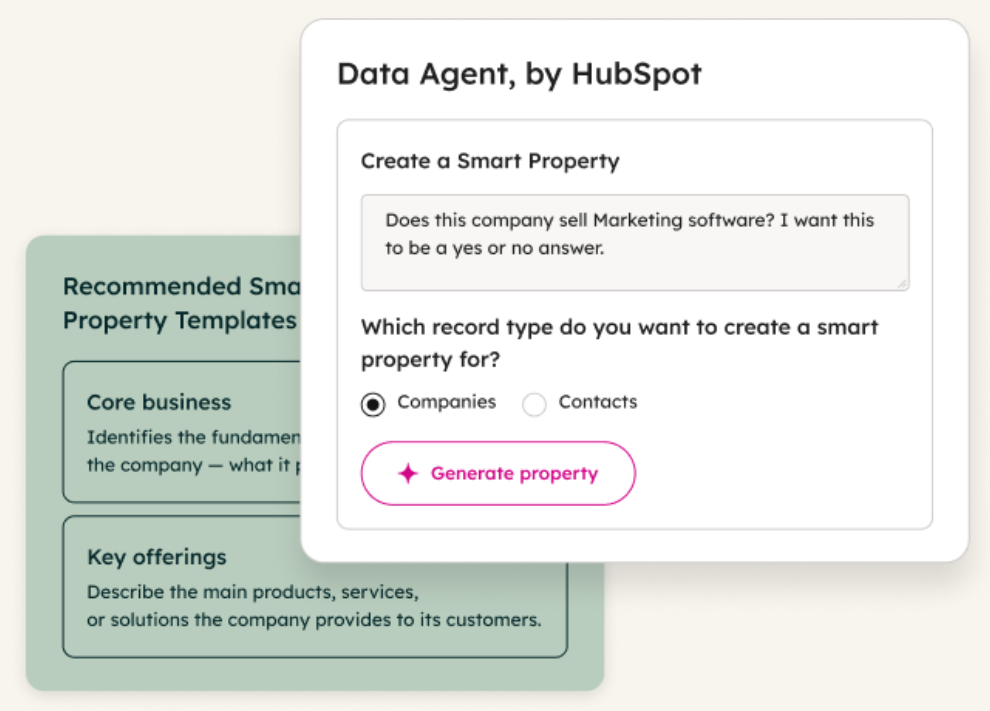
Source: HubSpot
But HubSpot's enrichment works with data already in your system. If a prospect never visited your website, never opened your email, and never filled out a form, HubSpot has no record to enrich.
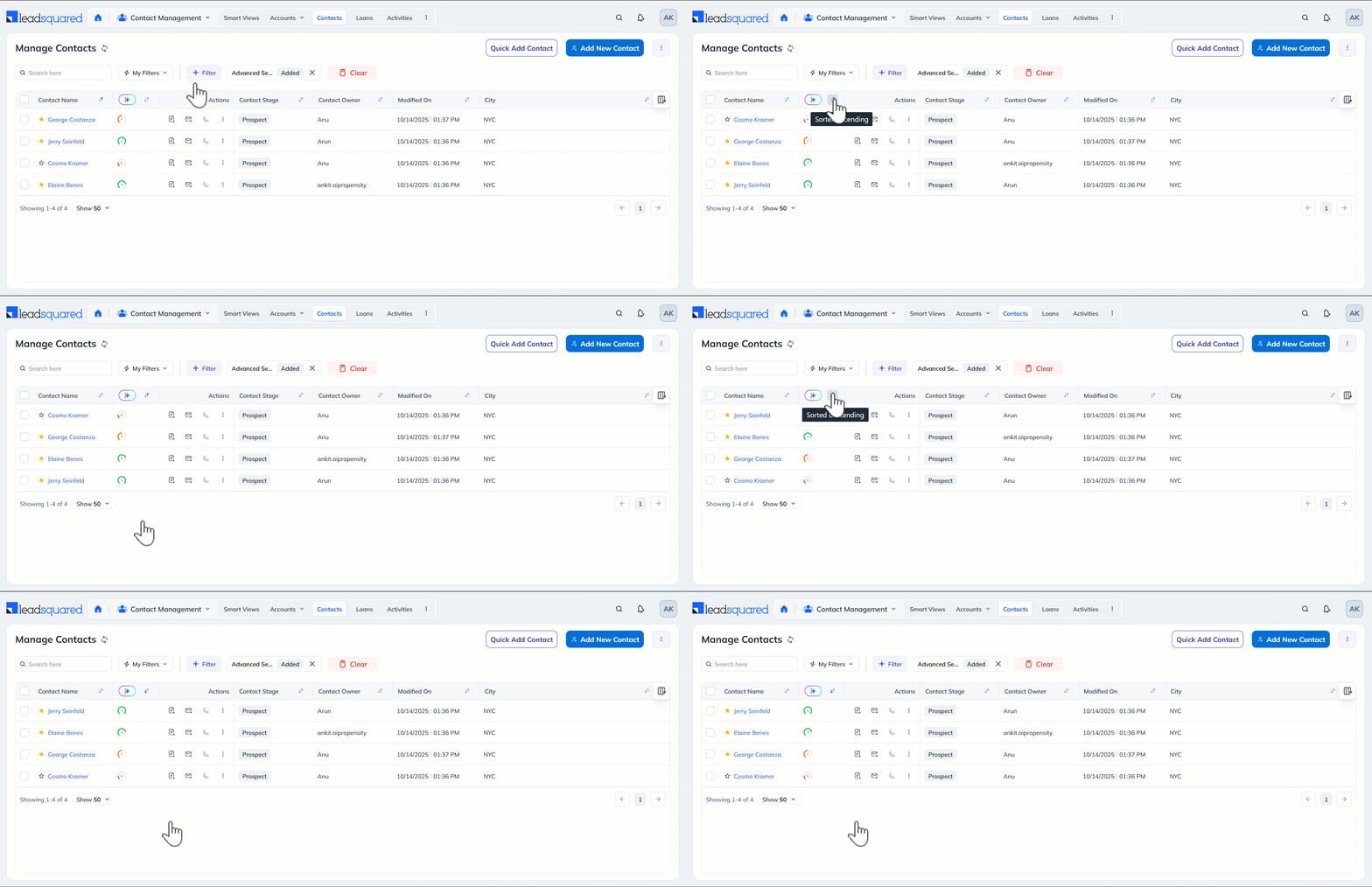
LeadSquared captures leads from website forms, chatbots, social ads, phone calls, and third-party aggregators, then scores them using a three-layer system (quality score, engagement score, and an AI propensity score that predicts conversion likelihood).
Source: LeadSquared
This works when leads are already flowing in. But for B2B teams that need to identify and reach decision-makers at target accounts, LeadSquared does not provide its own contact database or intent signals.
ZoomInfo exists to solve this gap. The platform maintains 500M contacts and 100M companies with 120M direct-dial phone numbers and 200M+ verified business email addresses, verified through a multi-source pipeline backed by 300+ human researchers and achieving up to 95% accuracy on first-party data.
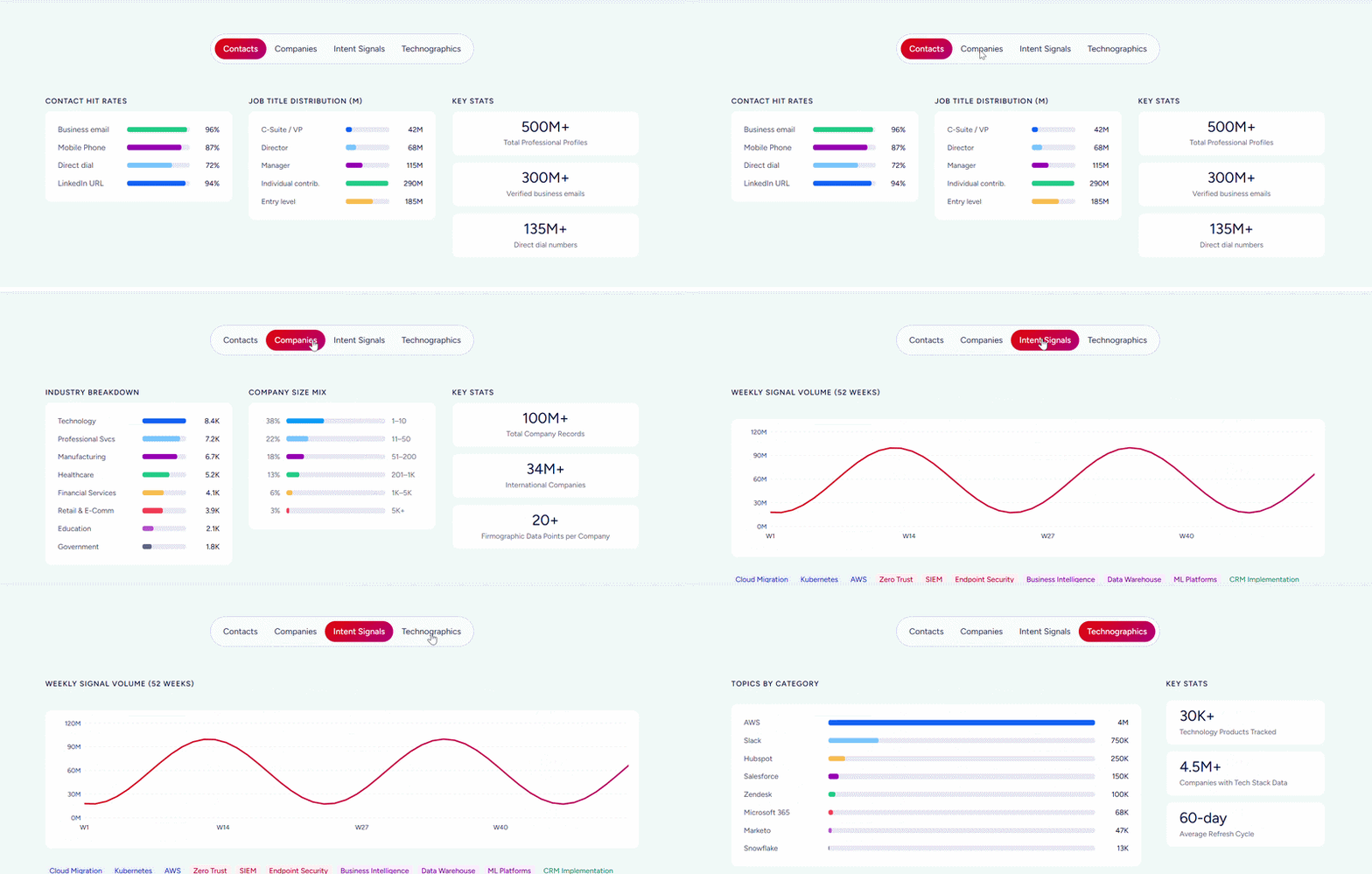
Beyond contact records, ZoomInfo tracks technographics across 30+ million companies, buyer intent signals from 210 million IP-to-Organization pairings, and website visitor identification that reveals which companies visit your site before they fill out a form.
This data advantage holds up under scrutiny. In a Fortune 500 competitive RFP analyzing 25 million contacts across vendors, an independent consultant concluded that "no other competitor came even close." Forrester named ZoomInfo a Leader in Intent Data Providers for B2B (Q1 2025), awarding it the highest possible scores across eight criteria.
For B2B sales teams, the practical difference is clear. A rep using HubSpot or LeadSquared works from the leads that arrive. A rep with ZoomInfo can identify every company in their target market, find the verified direct dial of the VP who owns the buying decision, and see whether that company is actively researching their product category, all before making the first call.
For a detailed side-by-side of how HubSpot and ZoomInfo compare on data, prospecting, and more, see our HubSpot vs. ZoomInfo comparison.
Vensure scaled its prospecting with ZoomInfo's B2B data. VP of Revenue Operations William Kenimer noted: "ZoomInfo gives us the information we need to execute. We don't have to go through and spend our time digging. It's already there, so we can be three steps ahead." (Vensure Case Study)
Three approaches to AI
All three platforms have invested in AI, but they apply it to different problems.
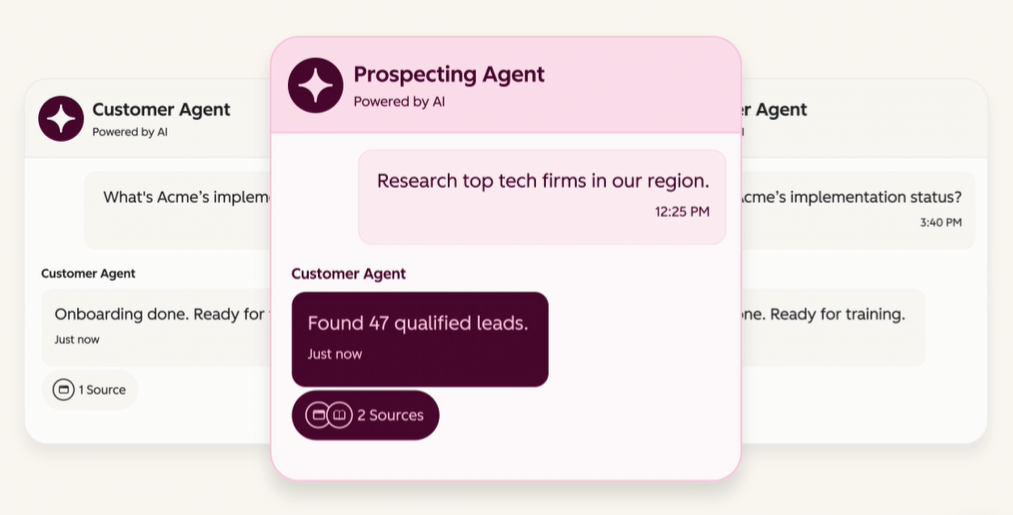
HubSpot's Breeze is an AI assistant layer across every hub. Breeze includes a Customer Agent that reportedly resolves 65%+ of customer inquiries on its own, a Prospecting Agent that monitors buying signals and drafts personalized outreach, and a Data Agent that answers natural-language questions about your CRM records.
Source: HubSpot
The Fall 2025 Spotlight introduced additional agents for content creation, knowledge base management, and quote closing. Breeze draws its context from HubSpot's CRM data, so its outputs improve as your platform usage deepens.
The limitation: Breeze's intelligence is bounded by what's inside your HubSpot instance. Several AI features (AI-Powered Segmentation, Personalization, Marketing Studio) are still in Beta as of late 2025, and the AI runs on HubSpot Credits, a consumption-based currency that resets monthly.
LeadSquared's AI focuses on scoring and automation. The AI Propensity Score classifies each lead's conversion likelihood as High, Medium, or Low based on historical data, retraining as new outcomes arrive.
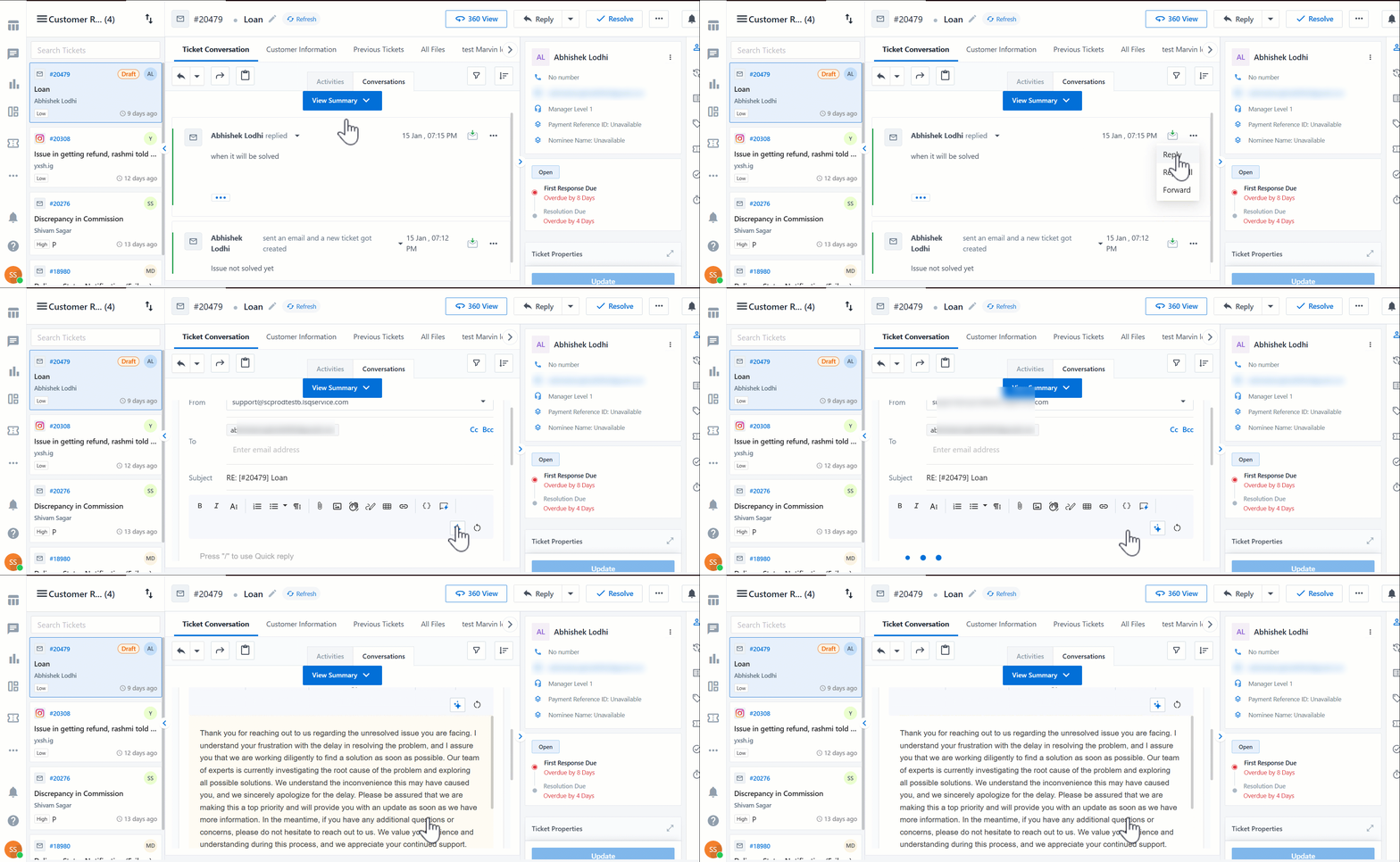
The Service Cloud includes Lexi AI for conversation summaries, reply drafts, and real-time sentiment tracking.
Source: LeadSquared
However, the 2024 Gartner Magic Quadrant evaluation noted that LeadSquared's AI and GenAI features were not yet present at time of evaluation, though they appeared on the roadmap. The platform's AI capabilities are growing but remain narrower than HubSpot's or ZoomInfo's.
ZoomInfo's AI operates on deal context, not just CRM fields. The GTM Context Graph combines ZoomInfo's third-party B2B data with a customer's CRM records, conversation transcripts from Chorus, email interactions, and behavioral signals.
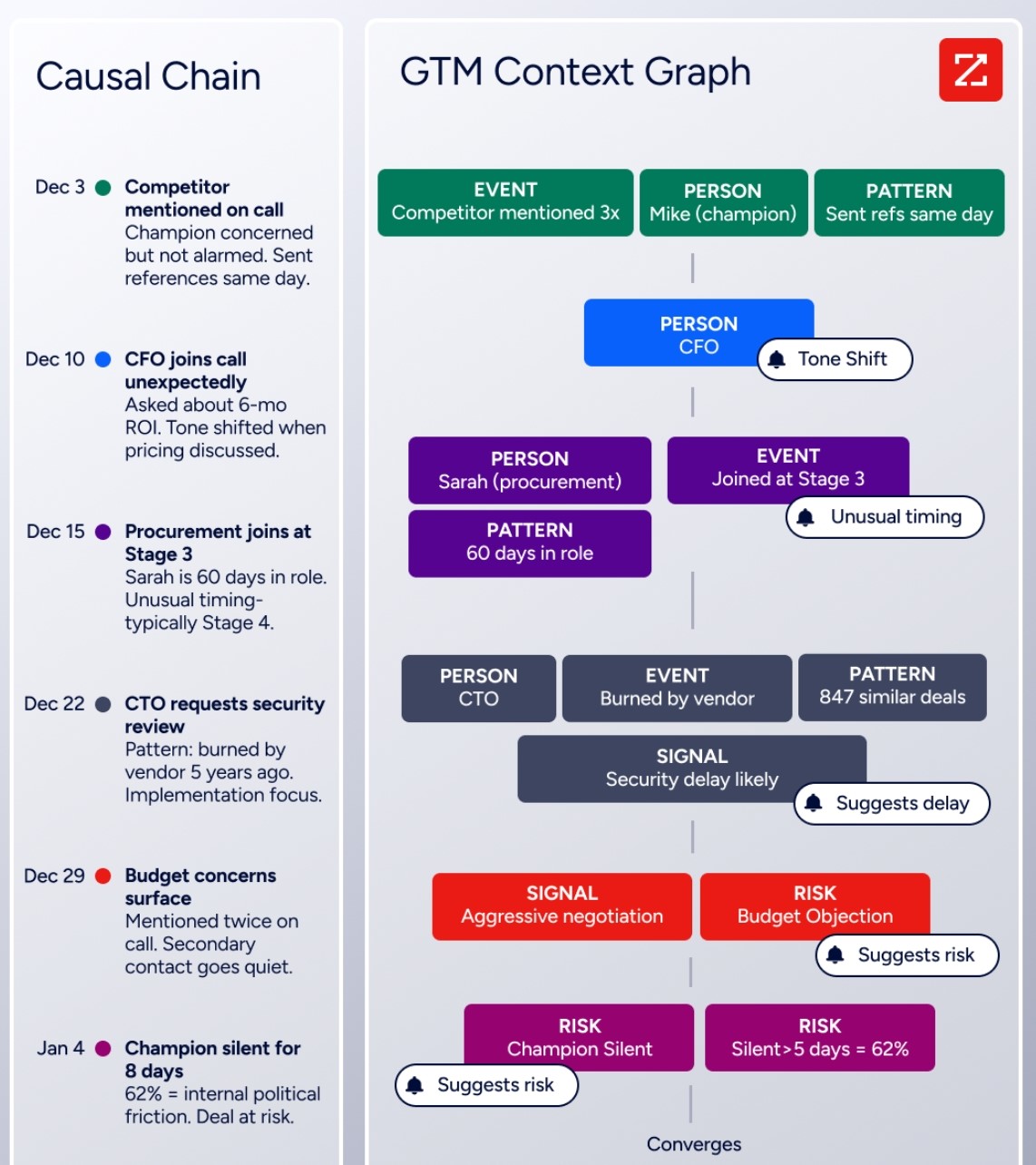
As ZoomInfo's CPO Dominik Facher explains: "The CRM recorded the state change. It has no record of why it happened." Perhaps the CFO joined the last call and asked about six-month ROI, and that's what actually accelerated the deal. The GTM Context Graph captures that decision context, making it machine-readable so AI can find patterns across thousands of deals.
In practice, ZoomInfo's AI doesn't just tell a rep that an account is active. It tells them why the deal is moving, which stakeholders matter, and what outreach message addresses the specific concern the buying committee raised last week.
Guided Intent, exclusive to ZoomInfo, identifies topics historically correlated with deal success rather than requiring teams to manually select keywords.
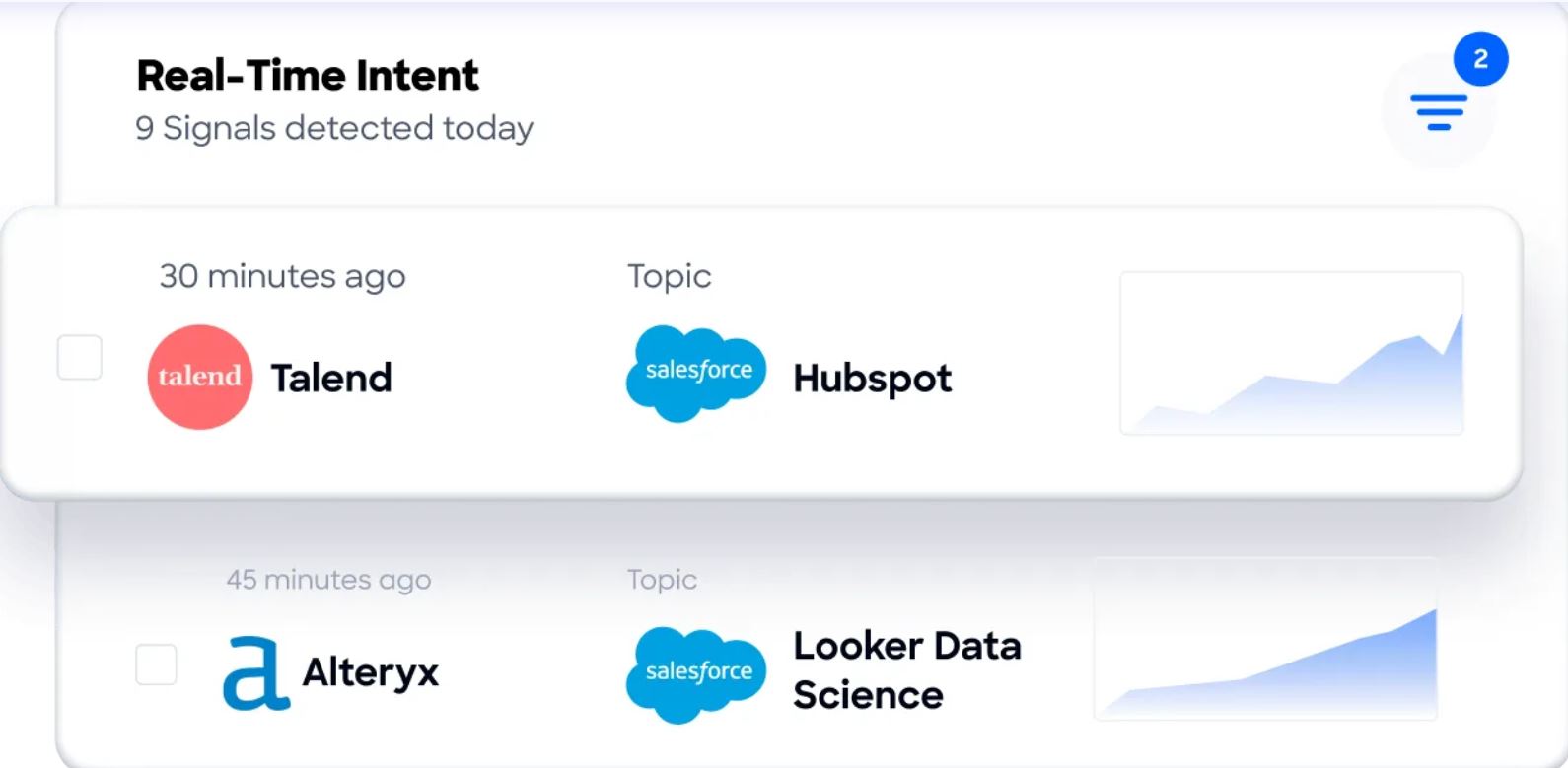
Seismic attributed 39% of active pipeline to opportunities identified by ZoomInfo signals and boosted seller productivity by 54%. CBO Toby Carrington noted: "That combination of our internal CRM data, external signals, and AI has helped us craft very specific account- and persona-based messages." (Seismic Case Study)
Pricing tells you who each platform serves
Each platform's pricing model reveals its target buyer.
HubSpot uses a hybrid model that combines seat-based, contact-based, and flat-tier pricing across its hubs. The free CRM includes unlimited contacts (up to 1M records) with basic tools, capped at two users. From there, costs rise:
Starter: $15–20/seat/month across all hubs, with basic features
Marketing Hub Professional: $800–890/month (3 Core Seats included, 2,000 marketing contacts) plus a $3,000 one-time onboarding fee
Sales Hub Professional: $90–100/seat/month plus a $1,500 one-time onboarding fee
Enterprise tiers run $150/seat/month for Sales and $3,600/month for Marketing, with onboarding fees of $3,500 and $7,000 respectively
A hidden cost multiplier: when subscribing to multiple hubs at different tiers, all Core Seats are billed at the rate of the highest tier. A team mixing Marketing Hub Professional with Sales Hub Enterprise would see every core seat priced at the Enterprise rate.
LeadSquared prices sales per seat and marketing per account. Sales Pro starts at $60/user/month and Sales Super at $100/user/month, billed annually only. Marketing Pro is $2,000/account/month and Marketing Super is $3,500/account/month, also annual. Service Cloud pricing is not published.
The base numbers look straightforward, but G2 and Capterra reviewers consistently flag that add-on costs for connectors, custom reports, and feature builds (Sandbox, Territory Management, White-Labelled App) compound the total spend. There is no published free plan or self-serve trial.
ZoomInfo uses consumption-based pricing with no publicly listed prices. Costs depend on seat count, monthly credit volume, features selected, and contract length.
What ZoomInfo does offer is a permanent free tier: ZoomInfo Lite includes access to the B2B database, 10 monthly export credits, individual and company search, the Chrome extension, WebSights Lite (up to 10 website visitor reveals per day), and a HubSpot integration.
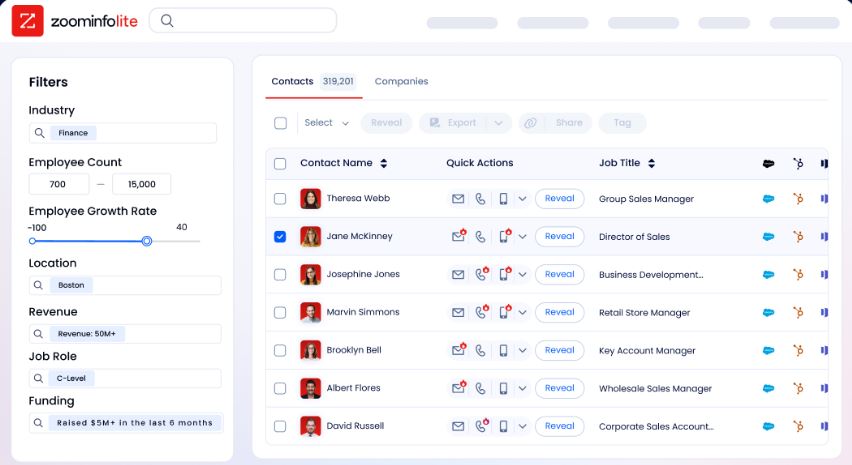
No credit card, no time limit. A separate 7-day free trial provides access to broader features.
The absence of published pricing means ZoomInfo requires a sales conversation, which adds friction for smaller buyers. But for enterprise teams evaluating data providers, the custom model lets them pay for what they actually use rather than a fixed tier that over- or under-serves them.
Integration and access determine where intelligence lives
The value of any platform depends partly on how well it connects to the rest of your stack.
HubSpot has the largest ecosystem of the three. The HubSpot App Marketplace offers 2,000+ integrations with 2.5 million active installs. Native bidirectional Salesforce sync is available. A REST API covers the full CRM data model, and developers can build custom apps, UI extensions, and marketplace listings through the developer platform.
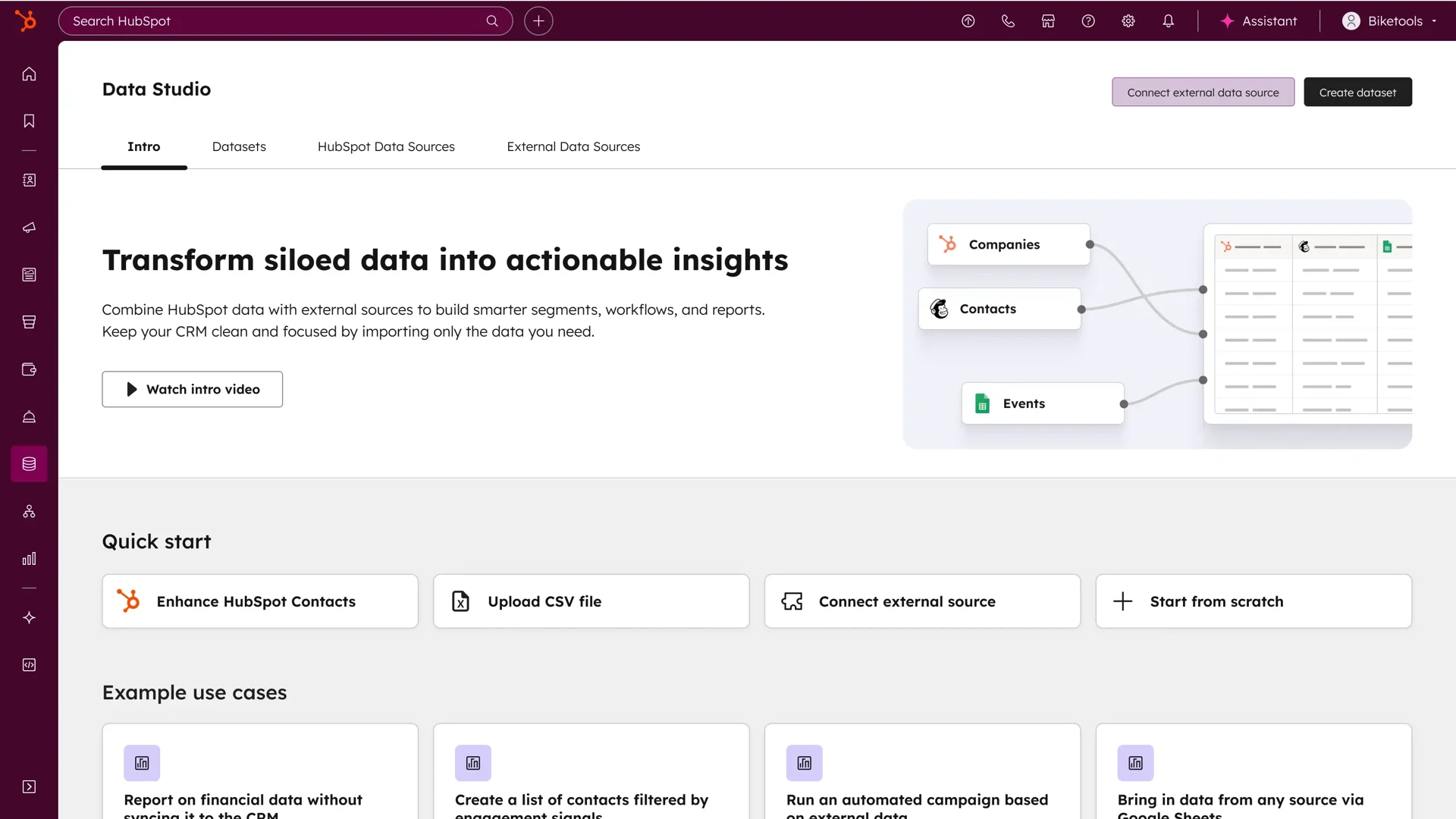
HubSpot's Data Hub adds 100+ data sync connectors and lets teams run custom JavaScript or Python natively inside workflows, without external middleware.
Source: HubSpot
LeadSquared has a smaller but vertically relevant ecosystem. The integrations directory lists 162 integrations filterable by industry and region, including connectors for Indian payment gateways, telecom APIs, and regional lead aggregators. The REST API covers lead, opportunity, activity, and user management.
For developers, LAPPS (LeadSquared Application Development Platform) provides a serverless custom logic environment, available only on the Super tier.
ZoomInfo treats access as a first-class product. Beyond the 120+ marketplace integrations (Salesforce, HubSpot, Microsoft Dynamics, Snowflake, and more), ZoomInfo delivers its intelligence through three channels: GTM Workspace for sellers who want a native workspace, GTM Studio for marketers and RevOps who build plays and audiences, and APIs plus MCP for teams that want ZoomInfo's data and intelligence inside their own tools and AI agents.
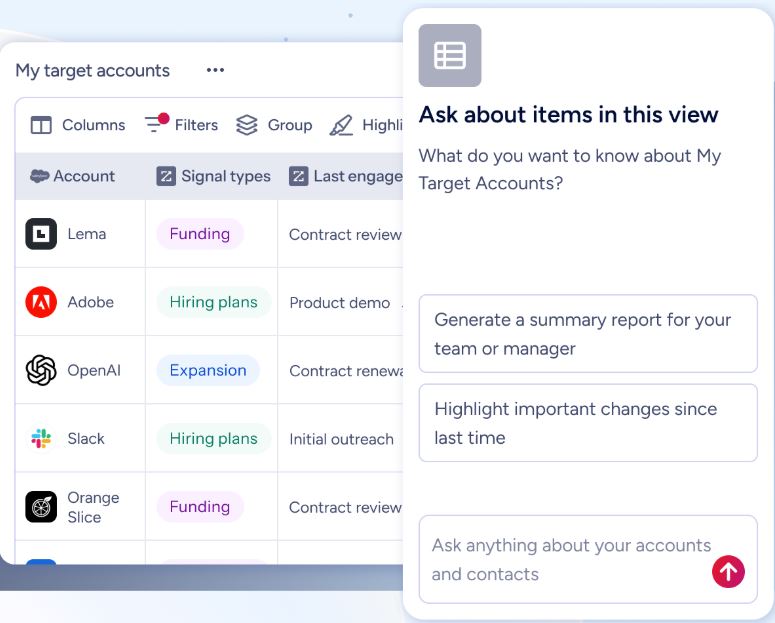
The MCP (Model Context Protocol) server is the newest channel. It connects AI models directly to ZoomInfo's B2B data as a native tool, currently supporting Claude and ChatGPT.
A RevOps engineer can build a custom AI agent that enriches leads, researches accounts, and recommends contacts, all powered by the same GTM Context Graph that runs ZoomInfo's own products. API access is included in all relevant plans, not gated behind an enterprise tier.
The architectural difference matters. HubSpot's integrations connect its CRM to external tools. LeadSquared's integrations connect its CRM to external tools. ZoomInfo pushes its intelligence into any tool (including both HubSpot and LeadSquared), so the quality of the data isn't determined by which CRM you chose.
BDO Canada cut time spent updating internal data dashboards by 87% by integrating ZoomInfo's API directly into their systems. Senior Marketing Intelligence Analyst Jerry Wilson noted: "The plug-and-play aspect of the API means I can integrate it very easily into any process and get information at a moment's notice." (BDO Canada Case Study)
HubSpot vs. LeadSquared vs. ZoomInfo: Which should you choose?
The right platform depends on what your team needs most.
Choose HubSpot if:
You want marketing, sales, service, and content managed in a single connected platform
Your business spans B2B and B2C across multiple industries
You value ease of use and a large integration ecosystem
You need a free CRM tier to start and can scale into paid plans as you grow
Your team is willing to invest in learning a broad platform to get the most from its shared data
Choose LeadSquared if:
You run high-velocity, high-volume sales in financial services, healthcare, education, or automotive
Your team includes field agents who need mobile CRM with offline mode, GPS tracking, and geo-fencing
You operate primarily in India or Southeast Asia and need integrations with regional payment and telecom systems
Pre-configured vertical workflows matter more than building custom processes from scratch
You need a platform that enforces sales discipline across large distributed teams
Choose ZoomInfo if:
Your biggest constraint is finding and reaching verified decision-makers at target accounts
You need B2B data at scale (500M contacts, 135M+ verified phone numbers, 200M+ verified emails)
Buyer intent signals and contextual deal intelligence would change how your team prioritizes accounts
You want intelligence that works inside your existing CRM (HubSpot, Salesforce, Dynamics) or through your own AI agents
You are building a B2B revenue operation where data quality and prospect intelligence matter as much as process management
Start with ZoomInfo Lite for free, or request a full trial to experience the complete platform.
HubSpot and LeadSquared both excel at managing the workflows that move a deal from first contact to close. But workflows are only as good as the information feeding them. For B2B revenue teams, the question isn't just how you manage your pipeline. It's whether the right accounts and the right contacts are in your pipeline at all.
ZoomInfo ensures they are, whether you use it as a standalone platform or as the intelligence layer powering whatever CRM you already have.
HubSpot vs. LeadSquared vs. ZoomInfo FAQ
What is the core difference between HubSpot, LeadSquared, and ZoomInfo?
HubSpot is a unified CRM platform that connects marketing, sales, service, content, and commerce in one system for growing companies. LeadSquared is a CRM designed for high-velocity, high-volume sales in specific verticals like financial services, healthcare, and education, with strong field sales capabilities.
ZoomInfo is a B2B data intelligence and GTM execution platform that provides verified contact data, buyer intent signals, and AI-driven deal intelligence, accessible through its own products or any CRM via API and MCP.
Which platform is cheapest to get started with?
HubSpot and ZoomInfo both offer permanently free tiers. HubSpot's free CRM includes unlimited contacts (up to 1M records), basic sales and marketing tools, and two user seats.
ZoomInfo Lite provides access to the B2B database, 10 monthly export credits, a Chrome extension, and a HubSpot integration with no time limit. LeadSquared has no published free plan or self-serve trial; pricing starts at $60/user/month for Sales Pro, billed annually, and requires a sales conversation.
Which platform is best for B2B prospecting and outbound sales?
ZoomInfo is the strongest choice for B2B prospecting. Its database of 500M contacts with 120M direct-dial phone numbers and 200M+ verified business emails gives outbound teams the contact data they depend on. Buyer intent signals identify companies actively researching relevant topics, and GTM Workspace gives sellers AI-drafted outreach based on full account context.
HubSpot's Sales Hub supports outbound through sequences and a Prospecting Agent, but relies on data already in the CRM. LeadSquared is oriented toward inbound lead processing rather than outbound prospecting.
Which platform works best for companies in India or Southeast Asia?
LeadSquared has the strongest presence in India and APAC, with pre-configured workflows for Indian BFSI, healthcare, and education companies, integrations with regional payment gateways and telecom APIs, and a mobile CRM designed for field-heavy operations in low-connectivity areas. HubSpot serves 135+ countries with localized platforms in several languages.
ZoomInfo's core strength is global B2B data with 34M+ international company profiles and 45M+ mobile numbers outside North America, though its field sales tools are not comparable to LeadSquared's.
Can I use ZoomInfo alongside HubSpot or LeadSquared?
Yes. ZoomInfo integrates natively with HubSpot and complements CRM platforms rather than replacing them. ZoomInfo's data enriches CRM records with verified contact information, company attributes, and technographics. Intent signals and buyer intelligence flow into the CRM to prioritize accounts.
The API and MCP channels let teams pipe ZoomInfo's intelligence into any system. LeadSquared has API support but no published native ZoomInfo integration.
How do the platforms compare on AI maturity?
ZoomInfo's GTM Context Graph takes a different approach to AI, analyzing CRM data, conversation transcripts, intent signals, and behavioral data to surface why deals move or stall.
HubSpot's Breeze is a broad AI assistant layer with agents for marketing, sales, and service tasks, though several features remain in Beta and run on a credit-based consumption model. LeadSquared's AI focuses on lead propensity scoring and early-stage service automation; the 2024 Gartner Magic Quadrant evaluation noted its AI features were not yet present at time of assessment.
Which platform offers the best marketing automation?
HubSpot provides the most complete marketing automation suite, including email campaigns, landing pages, social media management, SEO tools, and a visual workflow builder, all connected to CRM data for full-funnel attribution. LeadSquared's marketing suite handles email, WhatsApp, and SMS campaigns with a customer journey builder optimized for high-volume B2C funnels.
ZoomInfo Marketing focuses on account-based marketing with native display advertising, intent-driven audience targeting, and form optimization, with orchestration capabilities expanding through GTM Studio.
What security certifications does each platform hold?
All three platforms maintain strong security certifications.
HubSpot holds SOC 2 Type II certification and HIPAA attestation, uses AES-256 encryption at rest and TLS 1.2/1.3 in transit, and offers EU data center residency. LeadSquared is ISO 27001:2022 and SOC 2 Type 2 certified, HIPAA compliant with a BAA available, and hosts on AWS with AES-256 encryption and per-customer database isolation.
ZoomInfo maintains ISO 27001, ISO 27701, and SOC 2 Type II certifications, plus TRUSTe GDPR and CCPA validations, all renewed annually.
