
Choosing between HubSpot vs. MailerLite for your marketing often comes down to these five questions:
Are you running B2B sales cycles where knowing who to contact matters more than designing the perfect newsletter?
Do you need a full CRM with sales, service, and marketing under one roof, or is email marketing the main job?
Is your budget $20/month or $800/month, and does the gap in capability justify the price?
How much of your marketing challenge is reaching people versus finding the right people to reach?
Would your team benefit more from automation and AI agents, or from a clean editor and fast setup?
In short, here's what we recommend:
HubSpot is the customer platform for scaling B2B companies that need marketing, sales, service, and CRM in one place. Its Marketing Hub handles email, automation, landing pages, social, and multi-touch attribution, all connected to a Smart CRM that shares data across every team. Breeze AI agents draft outreach, resolve support tickets, and research prospects.
The tradeoff: pricing starts at $800/month for Marketing Hub Professional with a $3,000 onboarding fee, and the per-seat, per-hub model gets expensive as your team grows.
MailerLite is the email marketing platform for creators, solopreneurs, and small businesses who want professional campaigns without enterprise complexity. Its drag-and-drop editor, visual automation builder, and built-in website and landing page tools cover the full email marketing lifecycle at a fraction of HubSpot's cost.
Plans start at $10/month with unlimited sends and a generous free tier. The tradeoff: MailerLite doesn't include a CRM, its automation logic has a lower ceiling than HubSpot's, and its integration ecosystem is narrower.
Both platforms help you send emails and nurture contacts. But for B2B teams, the harder problem often isn't how to send the message. It's knowing who to send it to, when they're ready to buy, and what to say. That's a data problem, and it's where a different kind of platform becomes essential.
ZoomInfo is a B2B data and GTM platform built on a data foundation of 500M contacts, 100M companies, 135M+ verified phone numbers, and 200M+ verified business email addresses. Its GTM Context Graph (an intelligence layer processing 1.5B + data points daily) unifies this data with your CRM records, conversation transcripts, and behavioral signals to show the full context of your accounts.
That context tells AI not just what happened, but why, and which actions to take next. Your team can run sales motions from the GTM Workspace, launch plays from GTM Studio, or power their own tools through the API and MCP. For B2B teams whose marketing depends on reaching the right accounts at the right time, ZoomInfo makes every downstream tool, including HubSpot, more effective.
If building your marketing on verified data and real buying signals sounds like the missing piece, see how ZoomInfo works.
HubSpot vs. MailerLite vs. ZoomInfo at a glance
HubSpot | MailerLite | ZoomInfo | |
|---|---|---|---|
Core function | CRM + marketing automation platform | Email marketing + website builder | B2B data intelligence + GTM execution |
Email marketing | Full-featured with AI writing and send-time optimization | Full-featured with drag-and-drop, rich-text, and HTML editors | Not an email sending platform; powers outreach through GTM Workspace and integrations |
CRM | Native Smart CRM included | No CRM | Integrates with Salesforce, HubSpot, Dynamics 365 |
Automation depth | Multi-step workflows with branching logic | Visual workflows with 9+ triggers; ceiling on complex branching | AI agents that automate prospecting, outreach, and account research |
B2B contact data | CRM stores what you put in; AI enrichment from emails and calls | Subscriber list management only | 500M contacts with verified emails and direct dials |
Buyer intent signals | Limited (website activity tracking) | None | Intent data from 210M IP-to-Organization pairings |
Starting price | $15/seat/month (Starter); $800/month (Professional) | $0 (Free); $10/month (Growing Business) | Free (ZoomInfo Lite); custom-quoted paid plans |
Free plan | Free CRM with basic tools, no time limit | Up to 500 subscribers, 12,000 emails/month | ZoomInfo Lite: 10 monthly export credits, no time limit |
Integrations | 2,000+ apps | 100+ native integrations | 120+ marketplace partners; API and MCP access |
Best for | Scaling B2B companies needing one platform | Creators, solopreneurs, small businesses | B2B teams that need to find and engage the right buyers |
The tools solve different problems
HubSpot and MailerLite both send emails. That's roughly where the similarity ends.
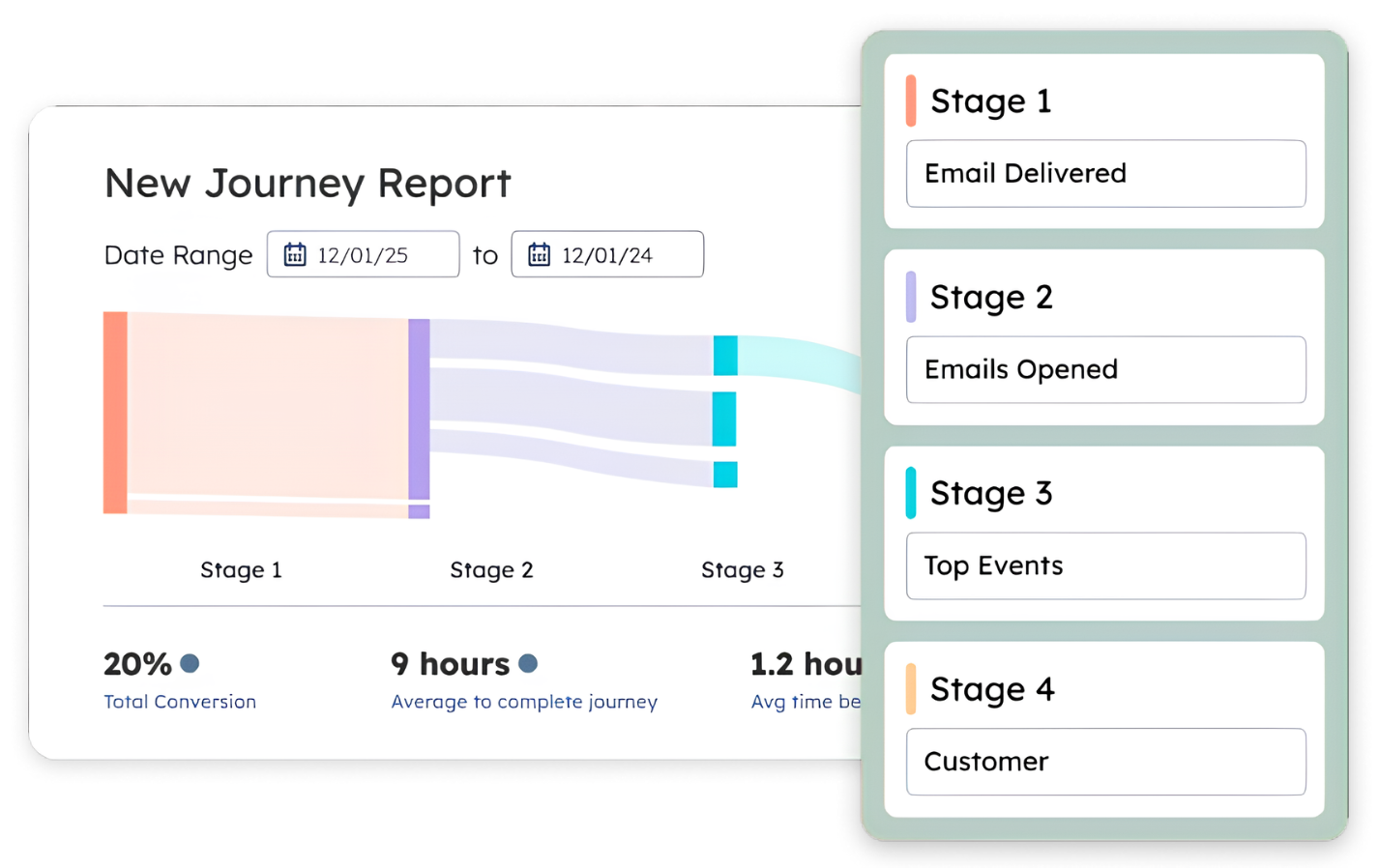
HubSpot is a CRM platform that happens to include email marketing. When a contact opens an email, clicks a link, visits a pricing page, talks to a sales rep, and submits a support ticket, HubSpot tracks all of it in one record.
Marketing teams use that shared data to build segments, trigger workflows, and attribute revenue to specific campaigns. Sales teams see the same contact history and can follow up with context. This shared data model is HubSpot's core advantage over using separate tools for each function.
Source: HubSpot
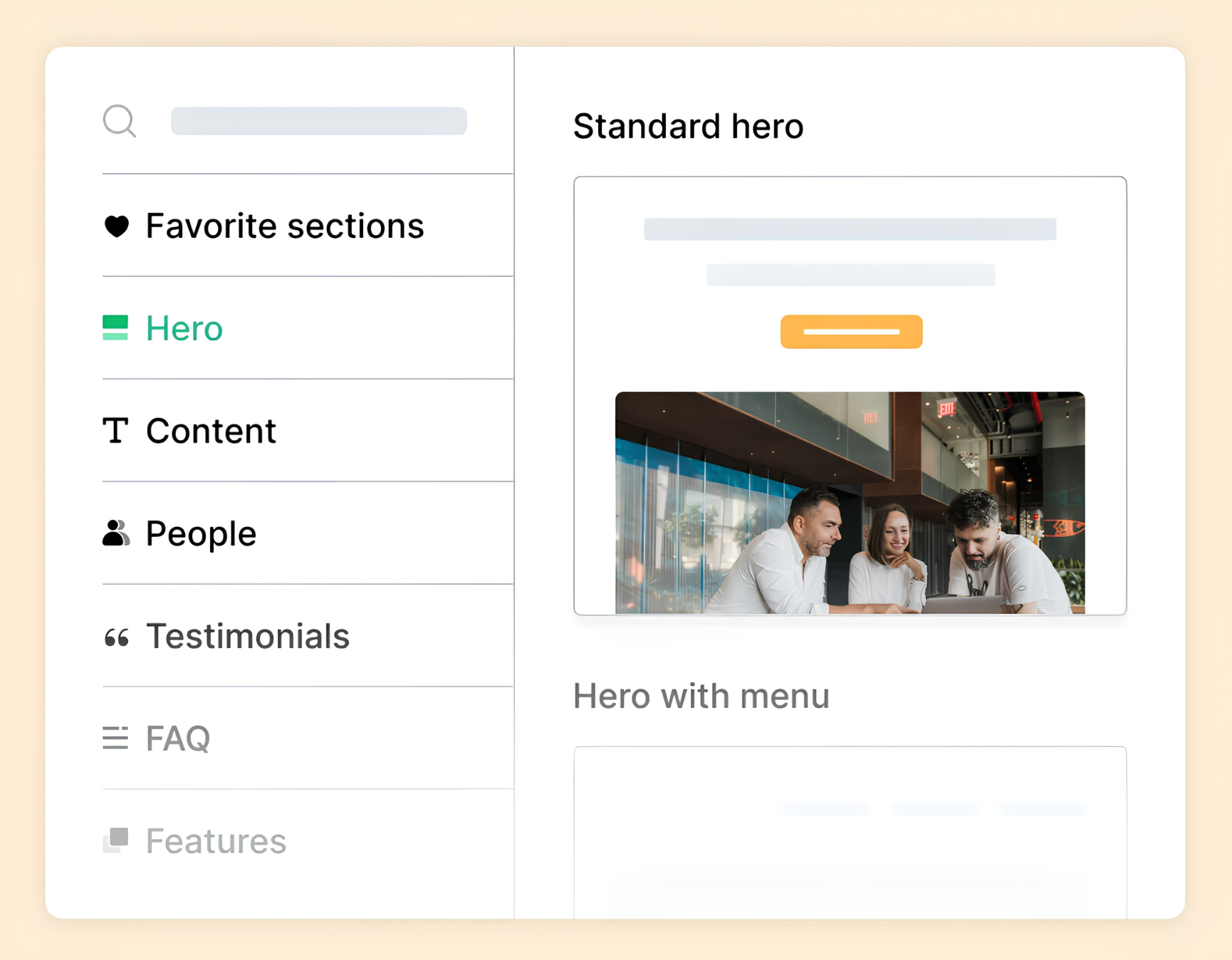
MailerLite is an email marketing tool that has expanded into adjacent territory. It includes a website builder, landing pages, digital product sales, paid newsletter subscriptions, and appointment booking. For a solopreneur or small business, MailerLite can replace four or five separate subscriptions. But it doesn't track deals, manage a sales pipeline, or connect marketing activity to revenue.
Source: MailerLite
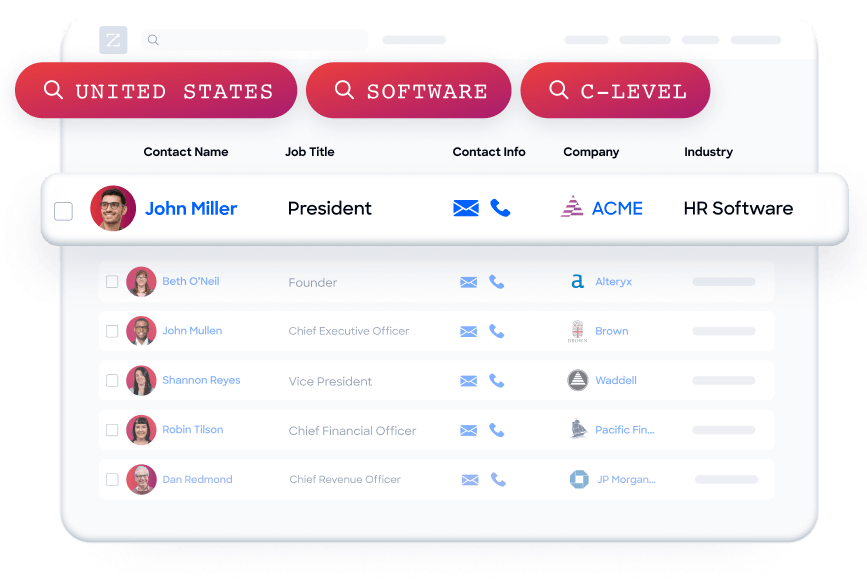
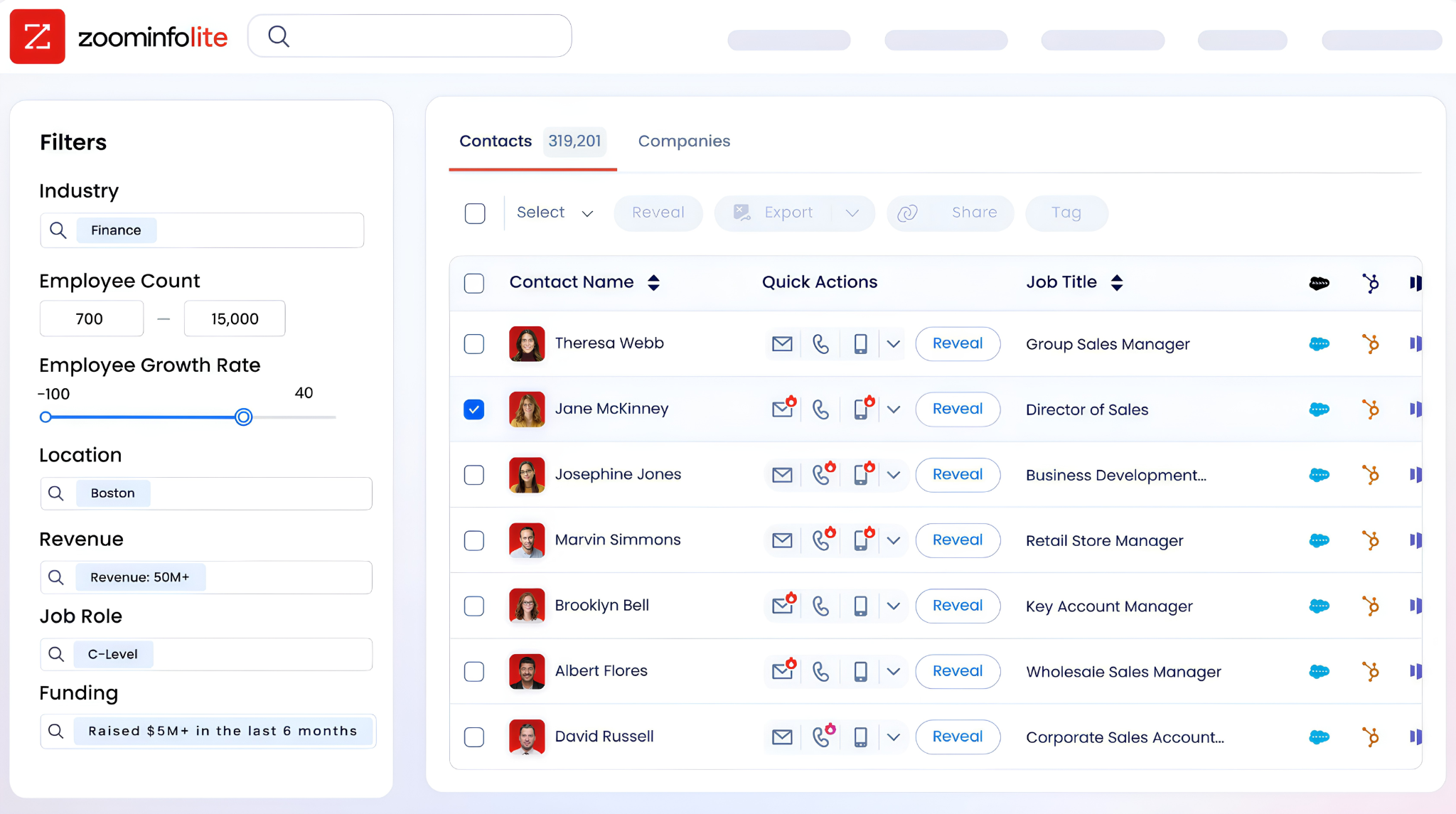
ZoomInfo operates upstream of both. Before you can send an email, you need to know who to send it to. ZoomInfo's contact and company search covers 300+ company attributes, and its buyer intent data reveals which companies are actively researching solutions like yours.
Source: ZoomInfo
That intelligence feeds into HubSpot through a native integration, enriching CRM records with verified contacts, direct dials, and buying signals. For B2B teams, ZoomInfo doesn't replace the email platform. It makes the email platform smarter by ensuring the right people receive the right message at the right time.
Seismic's sales team attributed 39% of active pipeline to opportunities identified or influenced by ZoomInfo signals, while boosting productivity by 54%. (Seismic)
Email marketing: MailerLite wins on simplicity, HubSpot on scale
For pure email marketing, MailerLite is hard to beat at its price point.
MailerLite offers three editors: a drag-and-drop builder, a rich-text editor, and a custom HTML editor. The drag-and-drop editor includes blocks for countdown timers, embedded surveys, product listings, and an AI writing assistant built into the workflow.
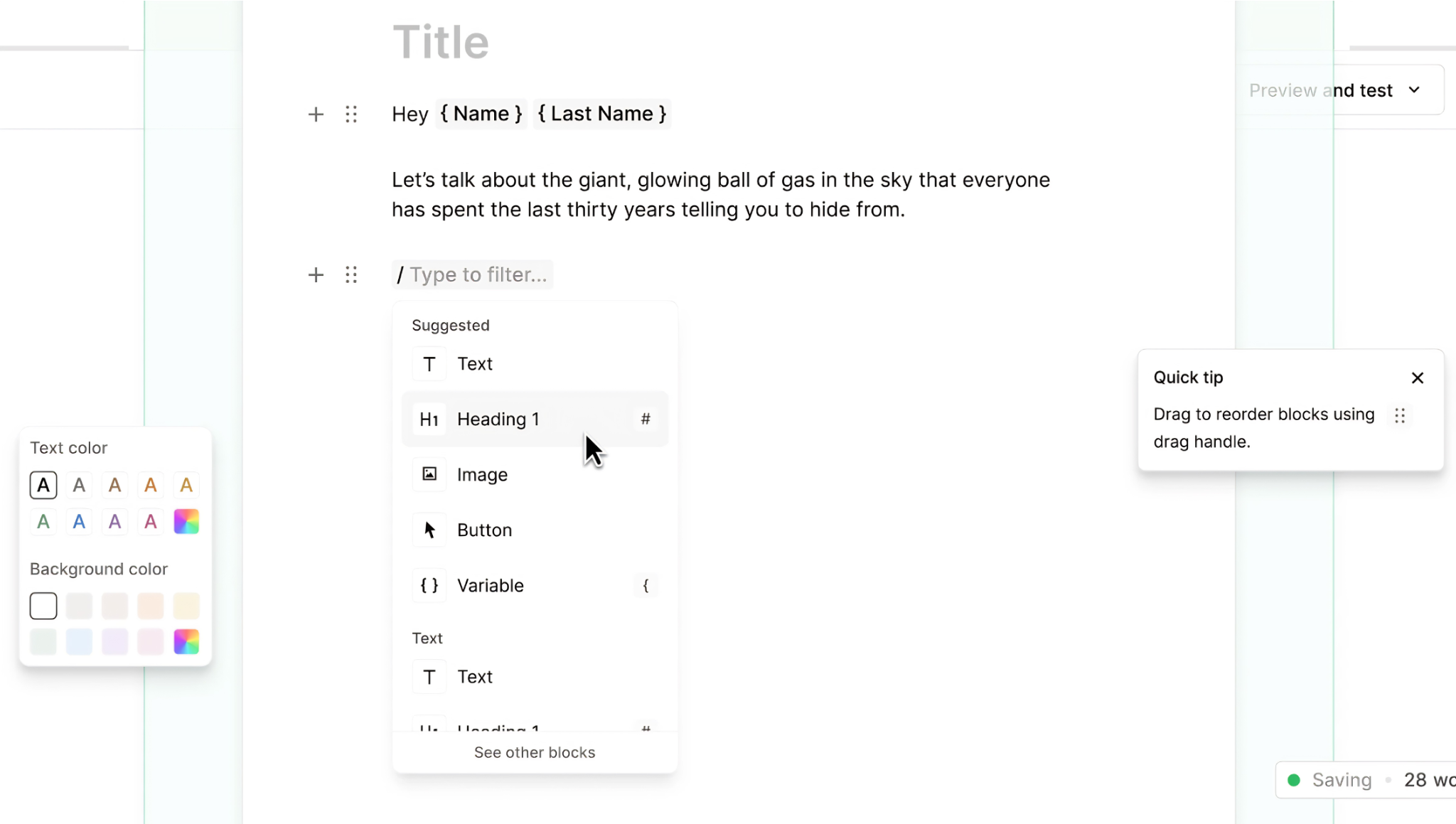
Source: MailerLite
Dynamic content blocks show different content to different subscriber segments from a single send. A/B testing is available on paid plans, with multivariate testing on the Advanced tier. Smart Sending, available on the Advanced plan, uses machine learning to deliver each email at the best time for each subscriber.
MailerLite's deliverability backs up the editing experience. EmailToolTester awarded MailerLite Best of 5 Deliverability in 2024, and G2 named it Email Deliverability Leader.
HubSpot's email marketing is equally capable but designed for a different workflow. Because every email sends from the Smart CRM, marketers can segment by deal stage, support ticket history, website behavior, and dozens of other CRM properties, not just email engagement.
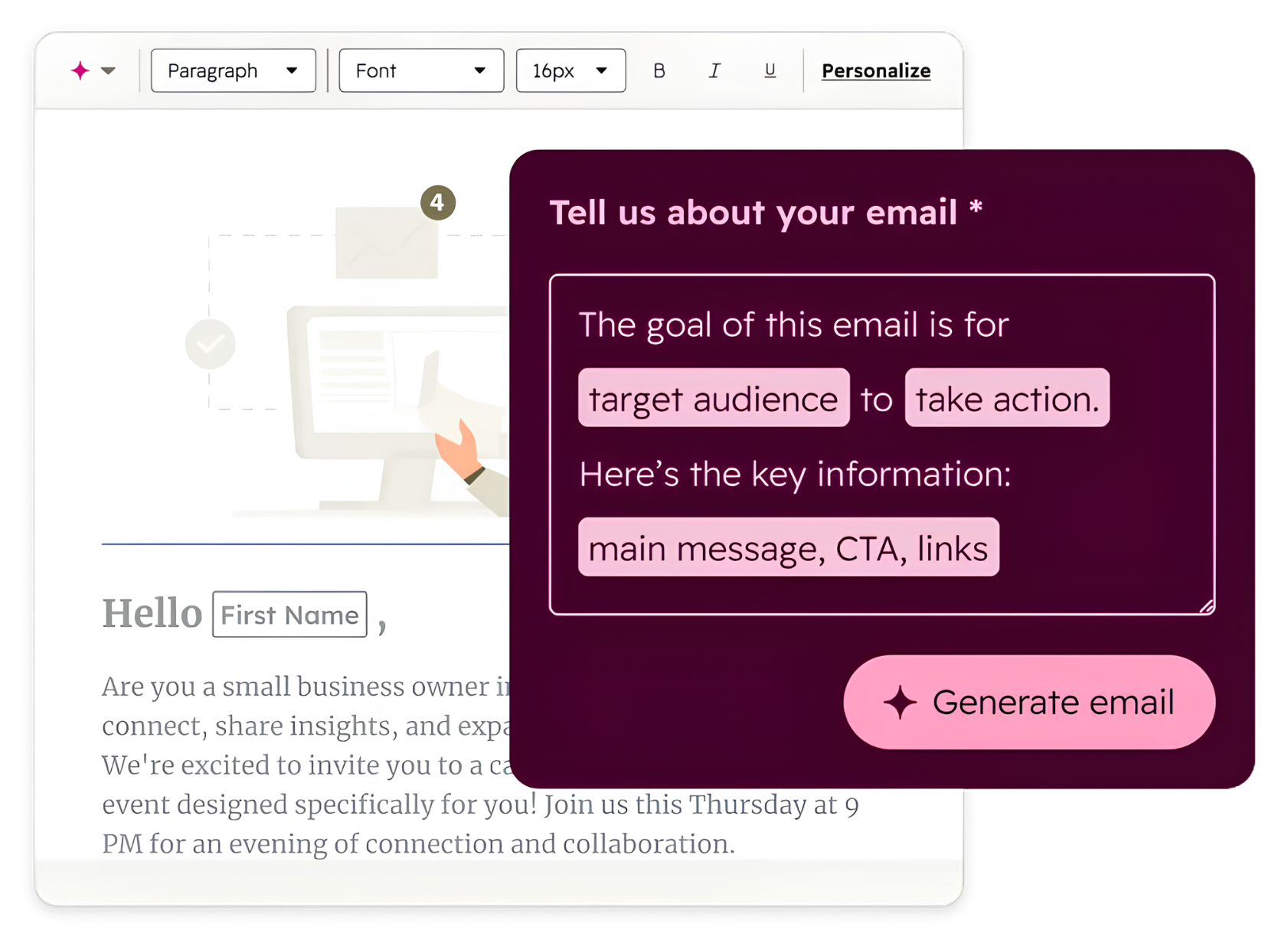
Source: HubSpot
Marketing automation workflows can trigger emails on virtually any CRM event, and reporting ties email performance to revenue through multi-touch attribution.
The gap between them is context. MailerLite knows what a subscriber did with your emails. HubSpot knows what a contact did across your entire business. For a newsletter or e-commerce store, MailerLite's context is sufficient. For a B2B company running multi-touch sales cycles, HubSpot's CRM-connected context changes what's possible.
ZoomInfo approaches email differently. It doesn't send marketing newsletters. Instead, GTM Workspace lets sellers send AI-generated outreach emails that draw on ZoomInfo's data and the GTM Context Graph, referencing specific pain points, company events, and buying signals. This is one-to-one sales outreach, not one-to-many campaigns, and it runs on data that neither HubSpot nor MailerLite generates on its own.
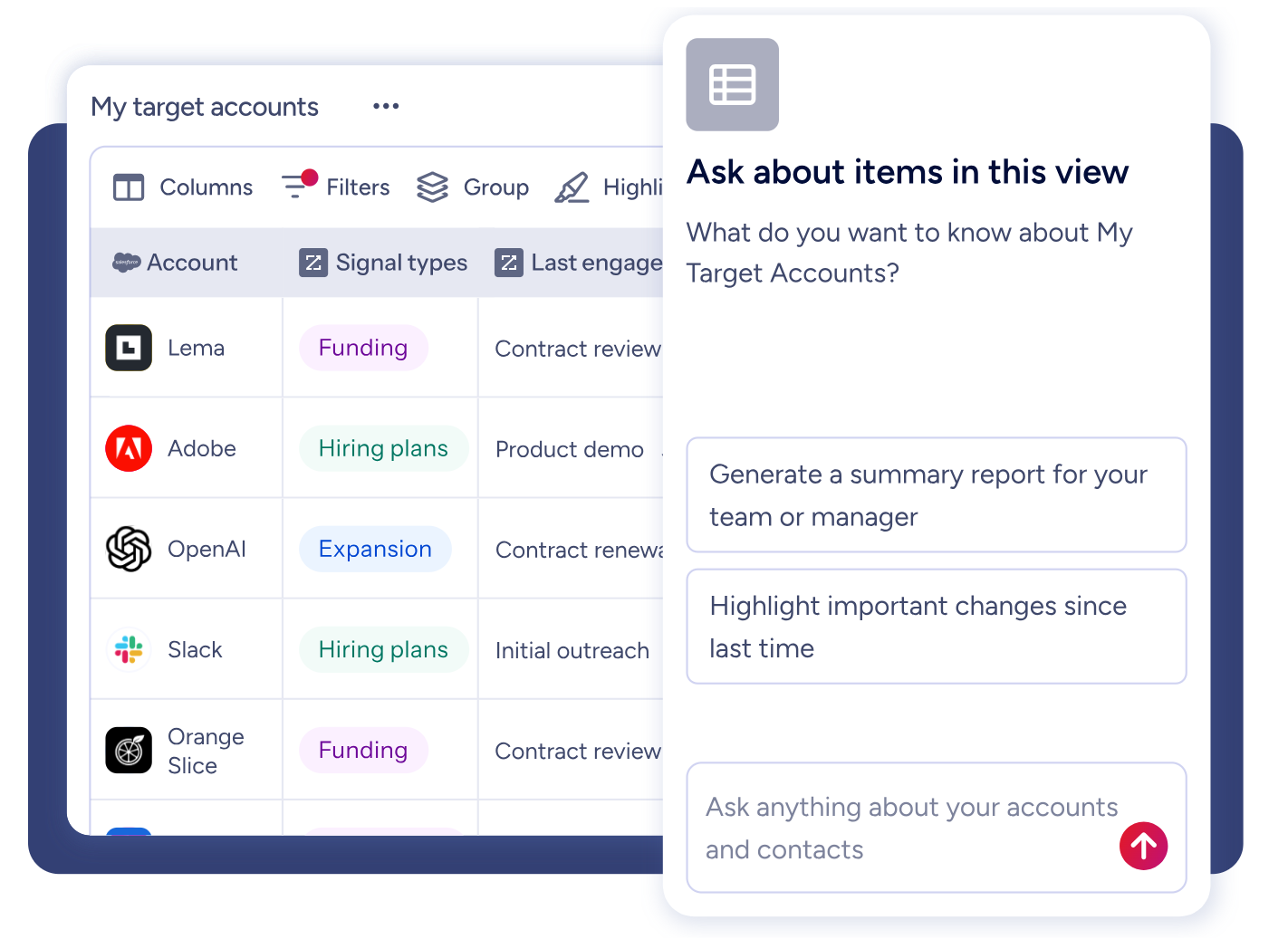
Source: ZoomInfo
Automation: three different ceilings
MailerLite's automation builder is visual, approachable, and generous. Even the free plan includes automations with up to 100 steps.

Source: MailerLite
Triggers cover e-commerce events (abandoned cart, product purchase), subscriber behavior (form completion, link click), and date-based events (birthdays, anniversaries). Pre-built templates handle welcome sequences, post-purchase follow-ups, and re-engagement campaigns.
Where MailerLite hits its ceiling is complex branching logic. G2 reviewers note that multi-condition workflows with many paths, lead scoring, and CRM-synced sequences are limited compared to HubSpot or ActiveCampaign.
For a creator sending a welcome sequence or an e-commerce store recovering abandoned carts, this ceiling rarely matters. For a B2B marketing team routing leads by company attributes and engagement scores, it will.
HubSpot's workflows operate on a different scale. Because they run on the Smart CRM, triggers can fire on deal stage changes, support ticket escalations, form submissions, page views, email engagement, and custom object events.
Workflows can branch on any combination of CRM properties, update records across objects, trigger internal notifications, and hand off tasks between human team members and Breeze AI agents. The Breeze Customer Agent reportedly resolves over 50% of conversations autonomously, and the Breeze Prospecting Agent monitors buying signals and drafts personalized outreach around the clock.
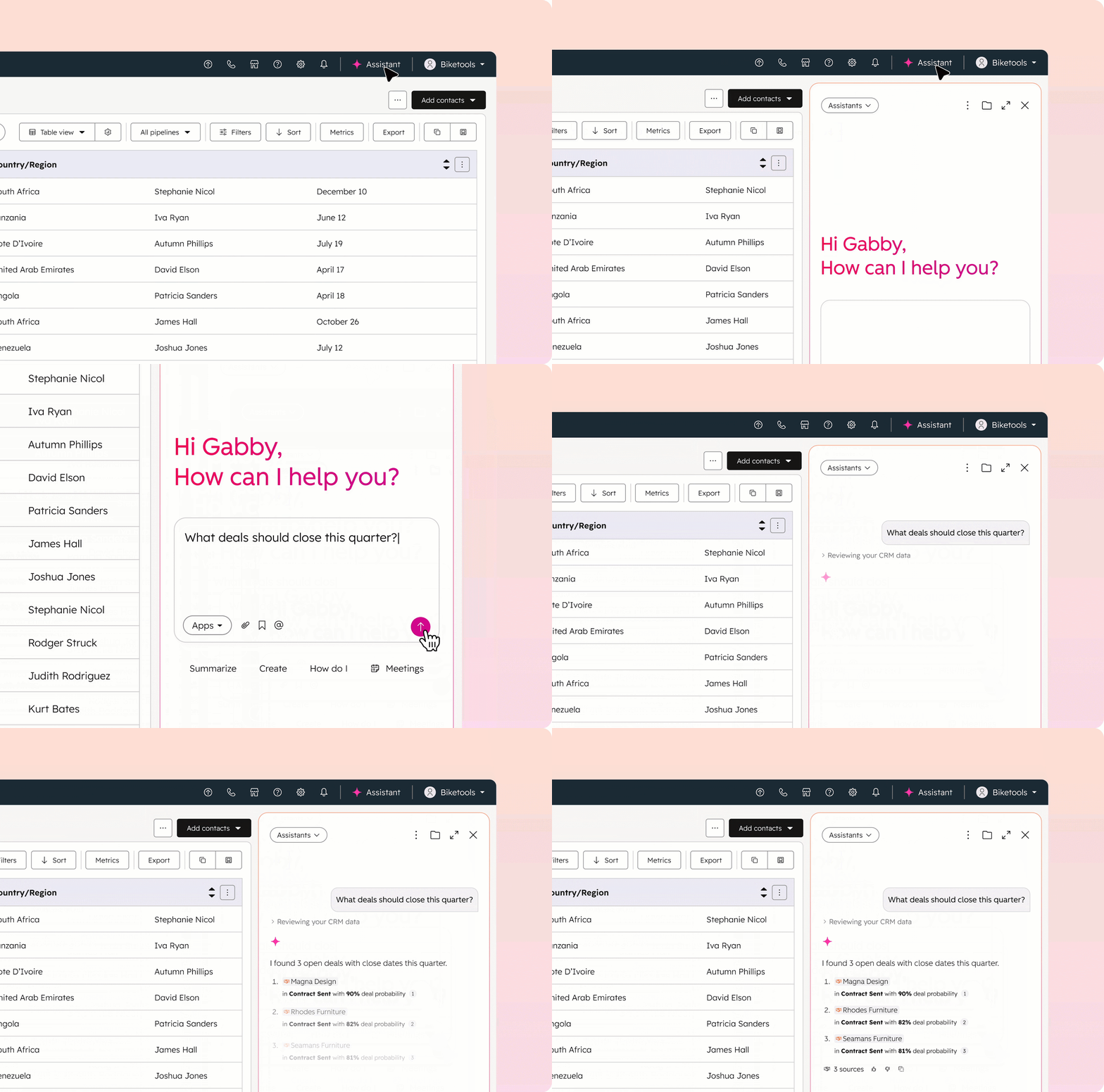
Source: Hubspot
This power comes with complexity. HubSpot workflows require understanding the CRM data model, and building sophisticated automations takes time.
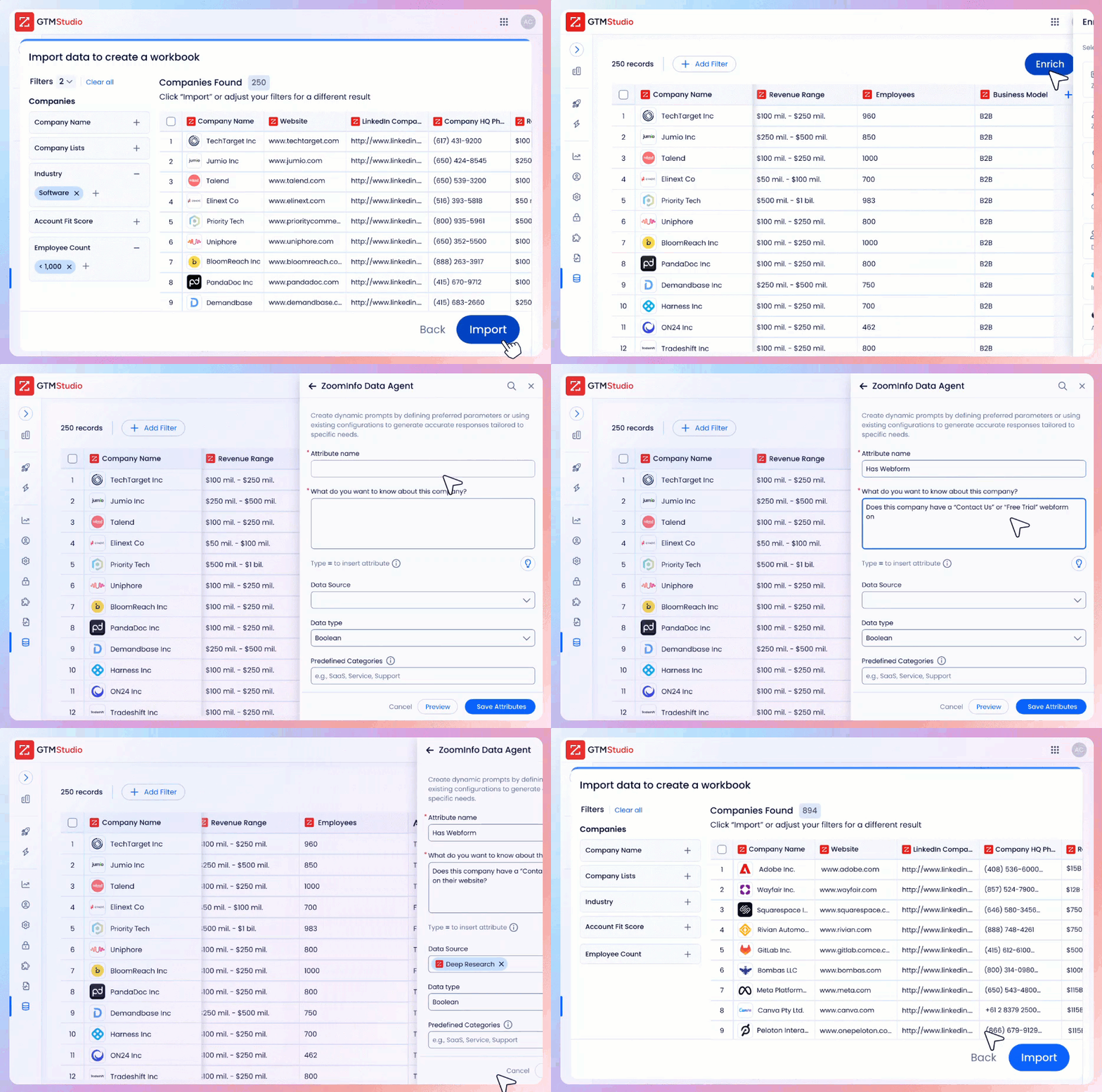
ZoomInfo's automation is signal-driven rather than workflow-driven. GTM Studio lets marketers and RevOps teams describe audiences in natural language, launch multi-channel plays targeting accounts that match proven win patterns, and track pipeline impact in real time. Pre-built GTM plays cover inbound acceleration, champion tracking, competitive displacement, and ICP targeting.
Source: ZoomInfo
The platform reports that expansion plays that used to take 3 weeks now launch in 30 minutes. Where HubSpot automates based on what contacts do inside your system, ZoomInfo automates based on what's happening in the broader market: funding rounds, leadership changes, technology adoption, and active research behavior.
The data question B2B teams can't ignore
This is where the comparison shifts.
MailerLite and HubSpot both store the contacts you give them. MailerLite manages subscriber lists. HubSpot manages a CRM database. Both rely on you to bring the data in, whether through form submissions, imports, or integrations.
ZoomInfo generates the data.
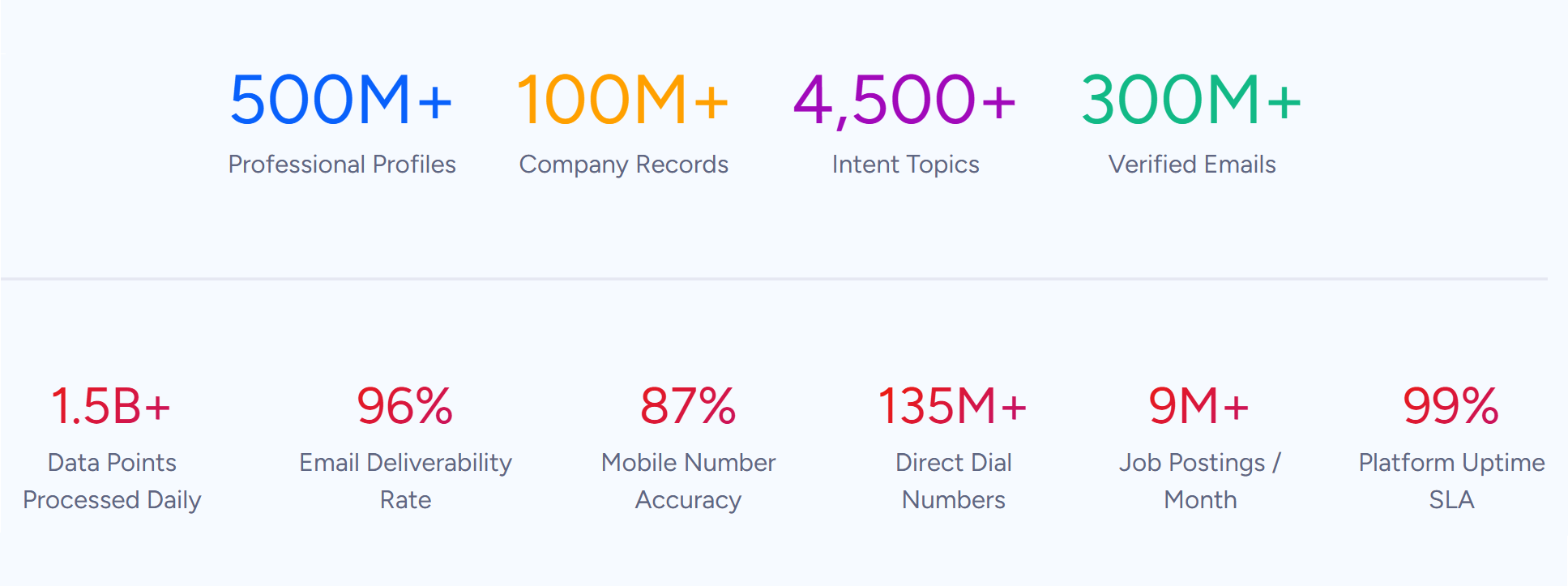
Its database covers 500M contacts and 100M companies, verified through a multi-source pipeline: automated ML scanning of 28 million site domains daily, third-party partner data covering 95 million businesses, a community of 200,000+ users who share data back, and an in-house Data Training Lab of 300+ human researchers. First-party data reaches up to 95% accuracy.
Source: ZoomInfo
For B2B marketing and sales teams, this changes the equation. Instead of waiting for prospects to find you and fill out a form, you can identify companies already researching solutions in your category.
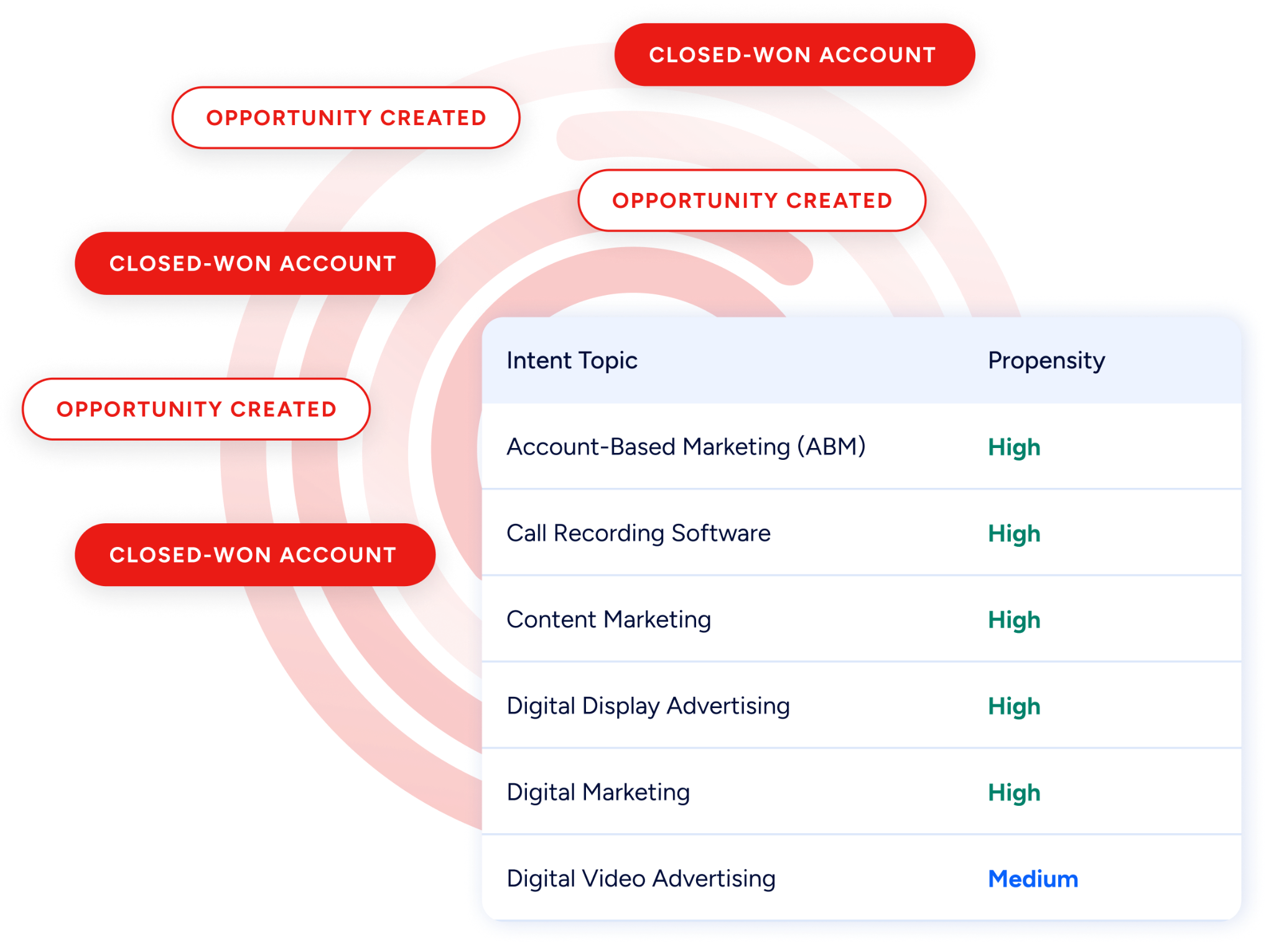
ZoomInfo's buyer intent data tracks signals from 210 million IP-to-Organization pairings and 6 trillion+ new keyword-to-device pairings sourced monthly. Guided Intent, exclusive to ZoomInfo, identifies topics historically correlated with deal success rather than requiring manual topic selection.
Source: ZoomInfo
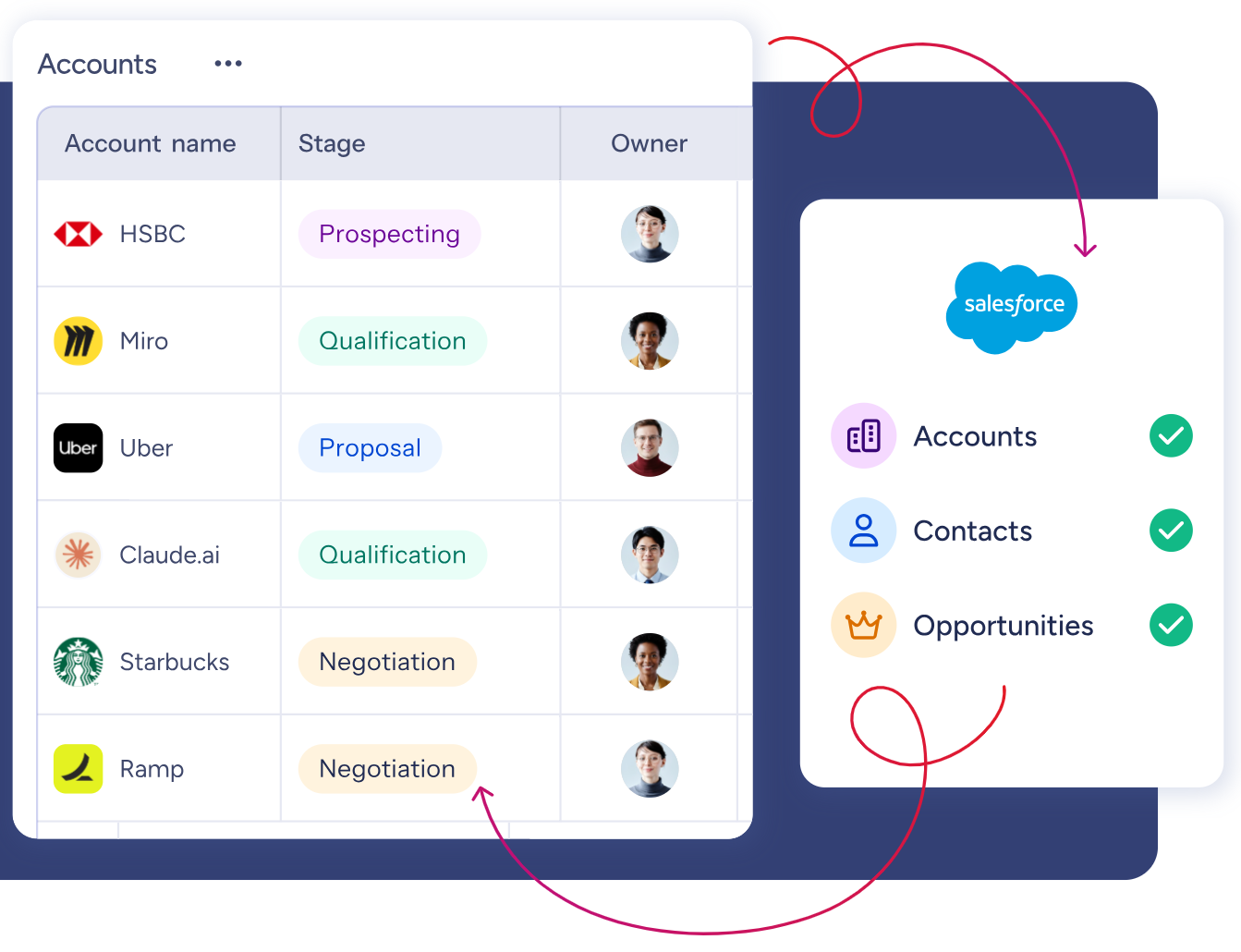
That data flows into the tools you already use. ZoomInfo integrates natively with Salesforce, HubSpot, and Microsoft Dynamics 365, enriching CRM records with verified contacts, org charts, technographics, and buying signals. For teams using HubSpot as their CRM, ZoomInfo doesn't replace it. ZoomInfo fills it with the data that makes HubSpot's automation, segmentation, and reporting useful.
Source: ZoomInfo
For a closer look at how these two platforms compare, see our HubSpot vs. ZoomInfo comparison.
Vensure scaled prospecting by enriching their database with ZoomInfo's B2B data. "ZoomInfo gives us the information we need to execute. We don't have to go through and spend our time digging. It's already there, so we can be three steps ahead." (Vensure)
Pricing reflects different markets
The pricing structures tell you exactly who each platform serves.
MailerLite charges by subscriber count with unlimited sends on paid plans. The free plan supports up to 500 subscribers with 12,000 emails per month. Growing Business starts at $10/month for 500 subscribers; Advanced starts at $20/month. Even at 50,000 subscribers, the Growing Business plan costs $289/month.
MailerLite does not charge per seat on the Growing Business plan (3 seats included) or the Advanced plan (unlimited seats). Subscribers are only counted once even if they appear in multiple segments, a pain point on some competing platforms.
HubSpot uses a hybrid model that combines per-seat pricing, per-hub pricing, and contact-based pricing. Marketing Hub Starter costs $15/seat/month. Marketing Hub Professional costs $800/month (annual) with 3 Core Seats included, 2,000 marketing contacts, and a $3,000 onboarding fee.
Enterprise costs $3,600/month with a $7,000 onboarding fee. Additional marketing contacts at the Professional tier cost $250 per 5,000 contacts/month.
There's a pricing subtlety that catches many HubSpot buyers: when you subscribe to multiple Hubs at different tiers, all Core Seats are billed at the rate of the highest subscription tier. A company using Marketing Hub Professional and Sales Hub Enterprise would pay the Enterprise seat rate for all users, not just those using Sales Hub.
HubSpot does offer a permanent free CRM with genuine utility and a Starter Customer Platform bundle at $15/seat/month that includes Starter editions of all Hubs. For small teams, this is a reasonable entry point. But the jump from Starter to Professional is steep.
ZoomInfo uses custom-quoted, consumption-based pricing with no published prices. ZoomInfo Lite is a permanent free tier with access to the B2B database and 10 monthly export credits.
Source: ZoomInfo
A 7-day free trial provides broader access. Paid plans are tiered (Professional, Advanced, Enterprise) with pricing based on seats, credits, features, and contract length. ZoomInfo is priced for organizations where the revenue impact of better data justifies the investment.
The comparison isn't straightforward because these platforms serve different budgets and deliver different kinds of value. A solopreneur spending $10/month on MailerLite is not the same buyer as a B2B sales team evaluating ZoomInfo. The question is which investment matches your business model.
Integration ecosystems show different philosophies
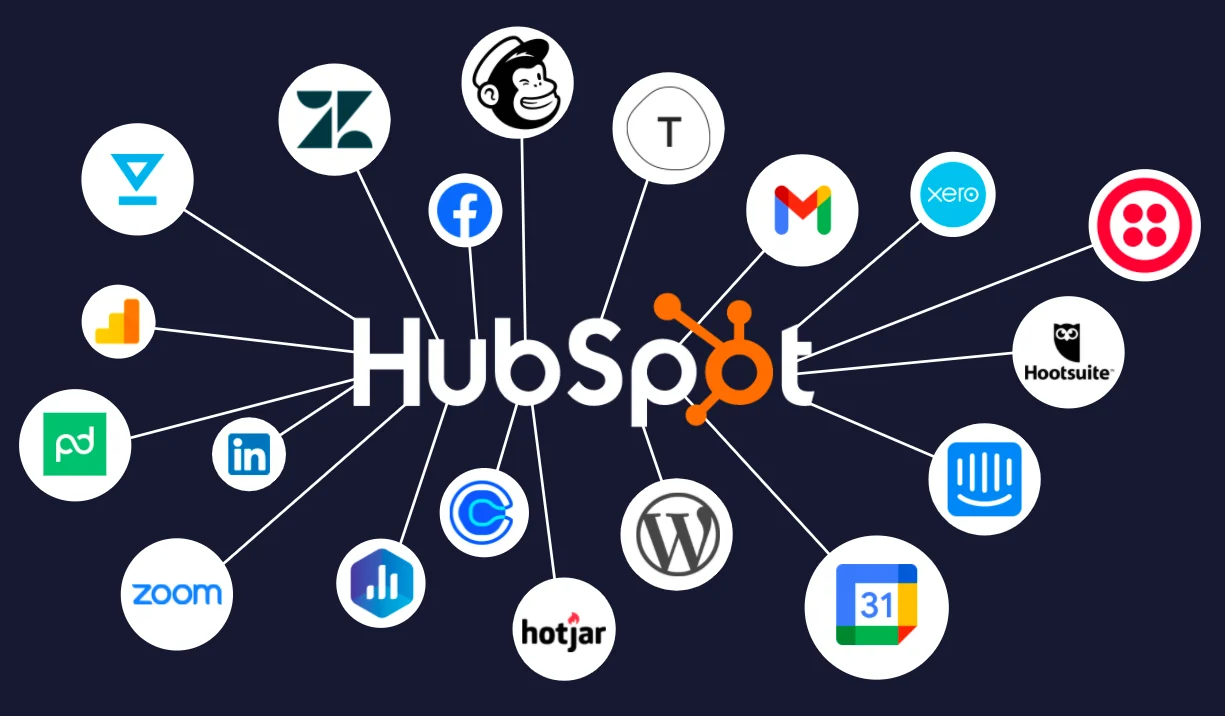
HubSpot leads in ecosystem size. The HubSpot App Marketplace has surpassed 2,000 apps with over 2.5 million active installs. The marketplace covers CRM, e-commerce, analytics, advertising, customer support, and virtually every other category.
Source: Hubspot
For teams already invested in a tech stack, HubSpot likely connects to it. The REST API covers the full CRM data model with official SDKs for six languages (PHP, Java, Ruby, Go, TypeScript, Python).
MailerLite takes a focused approach. The integrations directory lists over 100 connections across 17 categories, including native integrations with Shopify, WooCommerce, WordPress, Stripe, and Canva. For connections beyond the native list, Zapier bridges MailerLite to 5,000+ apps.
The MailerLite API is RESTful with official SDKs for six languages (PHP, Go, Node.js, Python, Ruby, Rust). MailerLite has also moved early on AI-native integrations, offering an MCP server that connects to Claude, ChatGPT, and other AI assistants.
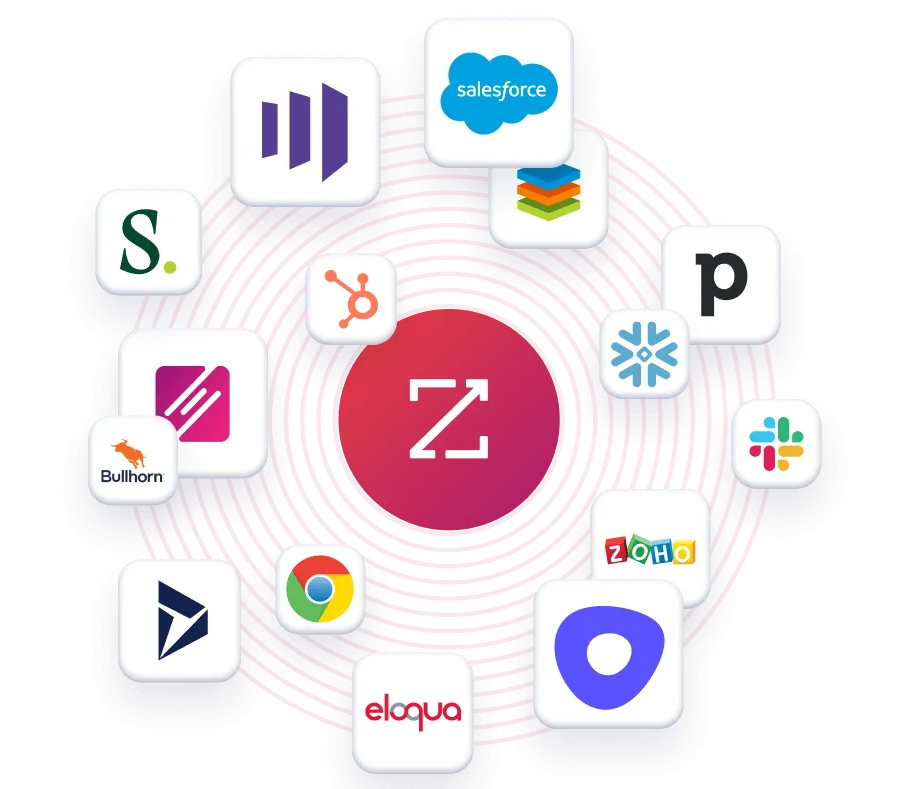
ZoomInfo approaches integrations as infrastructure. The ZoomInfo Marketplace lists 172+ integration partners, but the real story is programmatic access. The Enterprise API exposes search, enrichment, intent, and AI intelligence endpoints.
Source: ZoomInfo
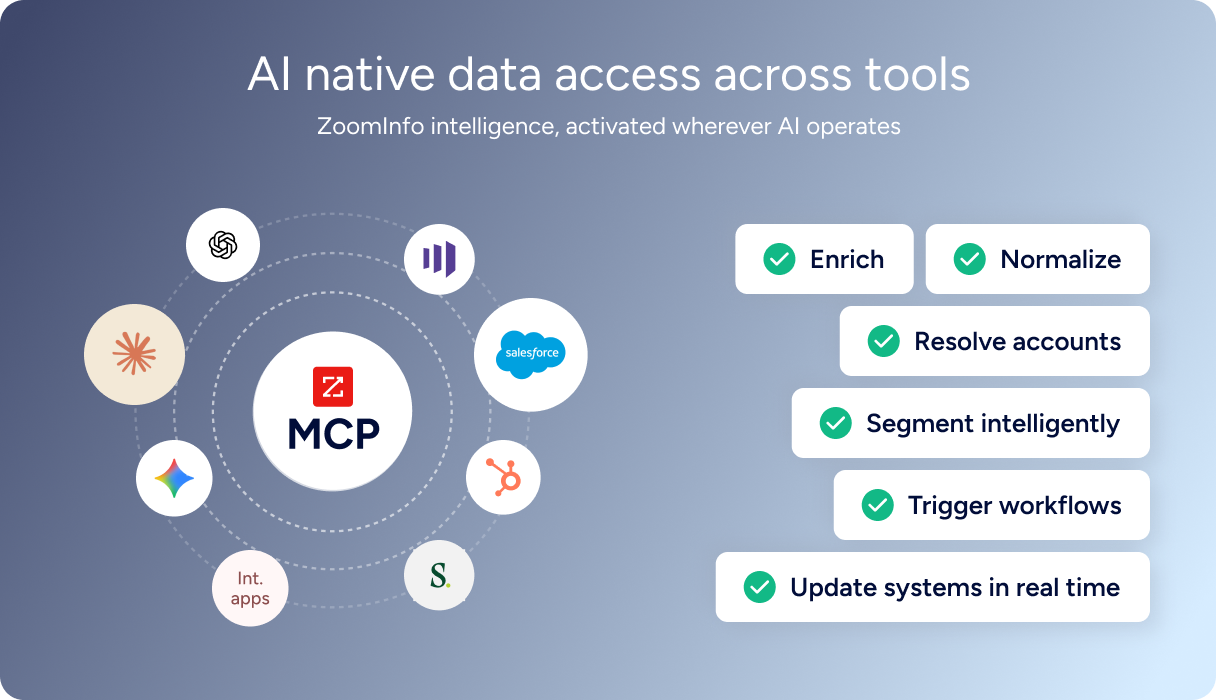
The ZoomInfo MCP server connects AI models to ZoomInfo's B2B data with no custom coding. Cloud Partners deliver ZoomInfo data into AWS, Google Cloud, Snowflake, and Databricks. API access is included in all relevant plans, positioning ZoomInfo as infrastructure that any tool can draw from.
Source: ZoomInfo
"The plug-and-play aspect of the API means I can integrate it very easily into any process and get information at a moment's notice," said Jerry Wilson, Senior Marketing Intelligence Analyst at BDO Canada, whose team cut dashboard update time by 87%. (BDO Canada)
Ease of use depends on what you're trying to do
MailerLite is the easiest to learn. G2 ranks it Easiest to Use for 2025, and Capterra users describe the experience as intuitive even for non-technical operators.
The platform is designed so a business owner who is also the marketer, the content writer, and the support rep can set up campaigns, build a website, and launch automations without reading documentation. MailerLite offers 24/7 live chat support with a 5-minute average response time and 97% satisfaction rate.
HubSpot is easy to start, harder to master. The free CRM and Starter tools are approachable. But extracting full value from Marketing Hub Professional or Enterprise requires understanding the CRM data model, building workflow logic, and configuring multi-touch attribution.
HubSpot addresses this with HubSpot Academy, which has certified over 200,000 professionals through free courses. The company says customers achieve meaningful value within 90 days, compared to traditional enterprise systems that can take 12+ months to implement.
ZoomInfo has the steepest learning curve. The platform spans data search, intent monitoring, conversation intelligence, AI-powered outreach, and multi-channel orchestration. ZoomInfo redesigned its onboarding program from 30 to 90 days, structured across planning, technical implementation, education, and adoption phases.
That redesign produced a 25% improvement in customer satisfaction scores. ZoomInfo University provides role-specific learning paths, certifications, and live training. The learning curve is real, but so is the payoff for teams that use the platform fully.

Source: ZoomInfo
Who each platform actually serves
The clearest way to think about these three platforms is by the problem they solve and the team they serve.
MailerLite serves the independent operator. A newsletter writer monetizing through paid subscriptions at 0% commission. An e-commerce store owner sending abandoned cart emails through a Shopify integration.
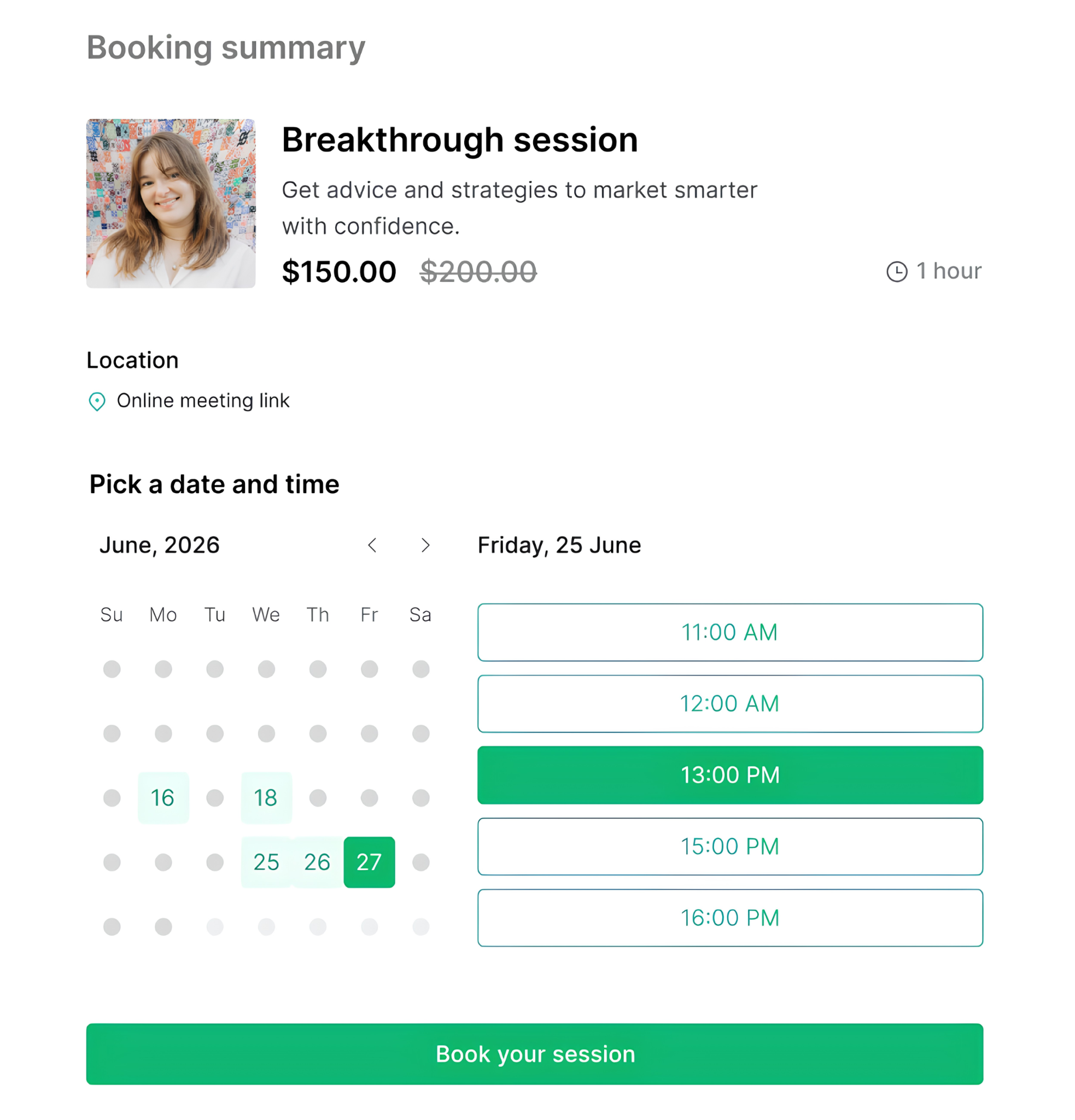
A coach booking paid sessions through MailerLite Bookings and automatically triggering a prep email sequence. These users need a tool that does many things adequately at a price that doesn't require budget approval.
Source: MailerLite
HubSpot serves the scaling B2B company. A 50-person SaaS company where marketing generates leads, sales works a pipeline, and service handles renewals, all needing shared customer data.
A marketing team that needs to prove which campaigns drive revenue, not just clicks. A growing company that wants to consolidate its tech stack onto one platform rather than managing integrations between five tools.
ZoomInfo serves the data-driven B2B team. A sales organization that needs verified direct dials and emails for the buying committee at target accounts. A marketing team building ABM plays based on real buying signals rather than assumptions. A RevOps team that needs to enrich, score, and route leads automatically.
These teams aren't choosing between sending tools. They're investing in the intelligence layer that makes every sending tool more effective.
HubSpot vs. MailerLite vs. ZoomInfo: Which should you choose?
Choose MailerLite if:
Email marketing is your primary need, not CRM or sales pipeline management
You're a solopreneur, creator, or small business with a limited budget
You want to monetize through paid newsletters, digital products, or bookings without paying platform commissions
You value simplicity and fast setup over feature depth
Your subscriber list is the center of your marketing, not a CRM database
Choose HubSpot if:
You need marketing, sales, and service teams working from shared customer data
Multi-touch attribution and revenue reporting matter to your marketing team
You want automation that triggers on CRM events, not just email activity
You're prepared to invest in the platform (both dollars and learning time) for long-term ROI
You're consolidating a fragmented tech stack onto one platform
Choose ZoomInfo if:
Your biggest marketing challenge is finding the right accounts and contacts to target
You need verified B2B contact data, direct dials, and business emails at scale
Buyer intent signals would change how you prioritize outreach and campaigns
You want an intelligence layer that enriches your CRM (including HubSpot) with data you can't generate internally
Your team is ready to build data-driven GTM plays rather than relying on inbound alone
Try ZoomInfo Lite for free or request a demo to see the full platform.
These three platforms aren't interchangeable options on the same spectrum. MailerLite is the right tool for businesses whose marketing lives inside the inbox. HubSpot is the right platform for companies that need marketing connected to sales and service. ZoomInfo is the right foundation for B2B teams that need to know who to target before they decide how to reach them.
For many B2B companies, the strongest setup combines ZoomInfo's data intelligence with HubSpot's CRM and automation, using ZoomInfo to fill HubSpot with verified, signal-enriched contacts and HubSpot to nurture them through the pipeline. That combination turns two good platforms into something neither achieves alone.
SpringDB used ZoomInfo to enrich data for their clients, achieving 2x-3x increases in campaign conversions, a 300% increase in database usability, and 30-50% uplift in average deal size. "You'll get 10x the value if you think of ZoomInfo as a full platform and not just a tool for one team." (SpringDB)
HubSpot vs. MailerLite vs. ZoomInfo FAQ
What is the fundamental difference between HubSpot, MailerLite, and ZoomInfo?
HubSpot is a CRM platform with integrated marketing automation, sales tools, and customer service, designed for scaling B2B companies that need all teams working from shared data. MailerLite is an email marketing platform with a website builder, landing pages, and monetization tools, designed for creators and small businesses who need professional campaigns at an affordable price.
ZoomInfo is a B2B data intelligence platform that provides verified contact data, company information, and buyer intent signals for go-to-market teams that need to identify and reach the right accounts.
Which platform is cheapest for email marketing?
MailerLite is significantly cheaper. Its free plan supports up to 500 subscribers with 12,000 emails per month, and the Growing Business plan starts at $10/month with unlimited sends. HubSpot's Marketing Hub Starter costs $15/seat/month with basic features; Marketing Hub Professional jumps to $800/month plus a $3,000 onboarding fee.
ZoomInfo is not an email marketing platform and is priced for B2B data intelligence use cases, with custom-quoted plans.
Can ZoomInfo replace HubSpot or MailerLite?
No. ZoomInfo does not send marketing newsletters or manage subscriber lists. It works alongside CRM and email marketing tools, providing the B2B contact data, company intelligence, and buying signals that make those platforms more effective. ZoomInfo integrates natively with HubSpot, enriching CRM records with verified contacts and intent data.
Which platform has the best automation capabilities?
HubSpot has the deepest automation, with workflows that trigger on any CRM event, branch on complex logic, and orchestrate tasks between human team members and AI agents. MailerLite's automation is visual and easy to use with nine trigger types, but lacks the complex branching and CRM integration that HubSpot offers.
ZoomInfo's automation is signal-driven through GTM Studio, which launches multi-channel plays based on buying signals and account behavior rather than traditional workflow logic.
Which platform is best for B2B lead generation?
ZoomInfo is built for B2B lead generation. Its database of 500M contacts with verified emails and direct dials, combined with buyer intent data tracking signals from 210M IP-to-Organization pairings, lets teams identify and reach in-market buyers before they fill out a form.
HubSpot supports inbound lead generation through content, forms, and landing pages, and its Breeze Prospecting Agent automates outbound outreach. MailerLite supports lead capture through signup forms, landing pages, and pop-ups, but does not provide B2B contact databases or intent data.
How do the free plans compare?
MailerLite's free plan includes up to 500 subscribers, 12,000 emails per month, 1 website, 10 landing pages, and automation with up to 100 steps. HubSpot's free CRM includes unlimited contacts (up to 1M records), basic email tools with 2,000 sends per month (with HubSpot branding), and a limited feature set capped at 2 users.
ZoomInfo Lite provides access to the B2B database with 10 monthly export credits, individual and company searches, the Chrome extension, and WebSights Lite for up to 10 website visitor reveals per day. All three free plans are permanent with no time limit.
Do HubSpot and ZoomInfo integrate with each other?
Yes. HubSpot is a featured native integration in ZoomInfo's marketplace. ZoomInfo enriches HubSpot CRM records with verified contact data, company attributes, technographics, and buyer intent signals. This integration lets B2B teams use ZoomInfo for data intelligence and account identification while using HubSpot for CRM management, automation, and campaign execution.
Which platform is best for e-commerce businesses?
MailerLite is the strongest fit for small e-commerce businesses, with native integrations for Shopify, WooCommerce, BigCommerce, and PrestaShop, plus built-in abandoned cart automations, product blocks in emails, and campaign-level sales tracking.
HubSpot supports e-commerce through its Commerce Hub (CPQ, invoicing, payments) and marketplace integrations, but suits B2B commerce better than direct-to-consumer retail. ZoomInfo is designed for B2B companies and does not serve e-commerce use cases.
