
Choosing between HubSpot vs. Nutshell for your CRM often comes down to these five questions:
Do you need a full marketing-sales-service platform, or a focused CRM that your team will actually use?
Is your priority consolidating tools into one system, or keeping things simple so reps stay productive?
How important is B2B data quality and prospecting intelligence to your sales process?
Are you willing to pay more upfront for breadth, or do you need an affordable entry point that still covers the basics?
Does your team need advanced automation and AI, or would that complexity slow adoption?
In short, here's what we recommend:
HubSpot is a customer platform spanning marketing, sales, service, content, and commerce, all connected through a shared Smart CRM.
With 288,706 customers and a 2,000+ app marketplace, it offers broad reach for teams that want marketing automation, sales pipelines, customer service, and AI in one place. The tradeoff: pricing complexity scales fast, mandatory onboarding fees at higher tiers add friction, and teams that only need CRM and sales tools end up paying for capabilities they may never touch.
Nutshell is an AI-powered CRM built for small and mid-size B2B teams who want to get set up in days, not months. It bundles sales pipelines, email marketing, webchat, an AI chatbot, and landing pages into every plan starting at $13/user/month, with free live support on every tier.
The tradeoff: reporting lacks depth for power users, the mobile app trails the desktop experience, and teams needing enterprise-level compliance or international prospecting data will hit the platform's ceiling.
Both platforms focus on what happens after you have a lead in your pipeline. But the quality of data flowing into your CRM determines whether your reps spend their time selling or chasing dead ends. That's where a different kind of tool comes in.
ZoomInfo is an AI-powered go-to-market platform that solves the problem neither HubSpot nor Nutshell was designed to address: your sales reps walking into every call knowing why the deal is moving, who's championing it, and what's likely to happen next.
Your marketers describing audiences in plain language and launching plays against accounts that match your proven win patterns. Your leaders seeing deal risk before it shows up in CRM stage fields.
That depth comes from the GTM Context Graph, an intelligence layer built on 500M contacts, 100M companies, 135M+ verified phone numbers, and 200M+ verified business emails, unified with your CRM records, conversation transcripts, and behavioral signals. Your team accesses this intelligence through GTM Workspace for sellers, GTM Studio for marketers and RevOps, or APIs and MCP in any tool you already use.
If accurate B2B data and deal intelligence would change how your team sells, see ZoomInfo in action.
HubSpot vs. Nutshell vs. ZoomInfo at a glance
HubSpot | Nutshell | ZoomInfo | |
|---|---|---|---|
Primary function | All-in-one customer platform (CRM + marketing + sales + service) | CRM + sales + marketing automation for SMBs | B2B data intelligence + GTM execution platform |
Starting price | Free CRM; paid Sales Hub from $20/seat/month | $13/user/month (annual) | Custom-quoted; free tier available (ZoomInfo Lite) |
Contact database | Stores your contacts (up to 15M–50M records) | Unlimited contacts and storage on every plan | 500M contacts, 100M companies with verified direct dials and emails |
Marketing tools | Full marketing automation (Marketing Hub) | Email, SMS, forms, landing pages included on all plans | Account-based marketing, cross-channel advertising, FormComplete |
AI capabilities | Breeze AI agents across all hubs | AI notetakers, lead researcher, chatbot, email drafting | GTM Context Graph, AI account summaries, AI agents (via GTM Workspace) |
Prospecting data | No native B2B contact database | Nutshell IQ (US-only, 200M+ records) | 500M contacts, 135M+ verified phone numbers, global coverage |
Intent signals | Limited | Not available | Buyer Intent from 210M IP-to-org pairings, Guided Intent |
Integrations | 2,000+ marketplace apps | Native + Zapier (managed by Nutshell) | 120+ partner integrations + API/MCP for any tool |
Support | Tiered by plan (community to phone) | Free live support on every plan | Tiered; dedicated CSM on Enterprise |
Best for | Scaling companies consolidating their GTM stack | Small teams that need simplicity and fast adoption | Teams that need accurate B2B data, buyer signals, and deal intelligence |
HubSpot offers breadth, Nutshell offers simplicity
HubSpot and Nutshell approach the CRM problem from opposite ends.
HubSpot is built for companies that want one platform for everything.
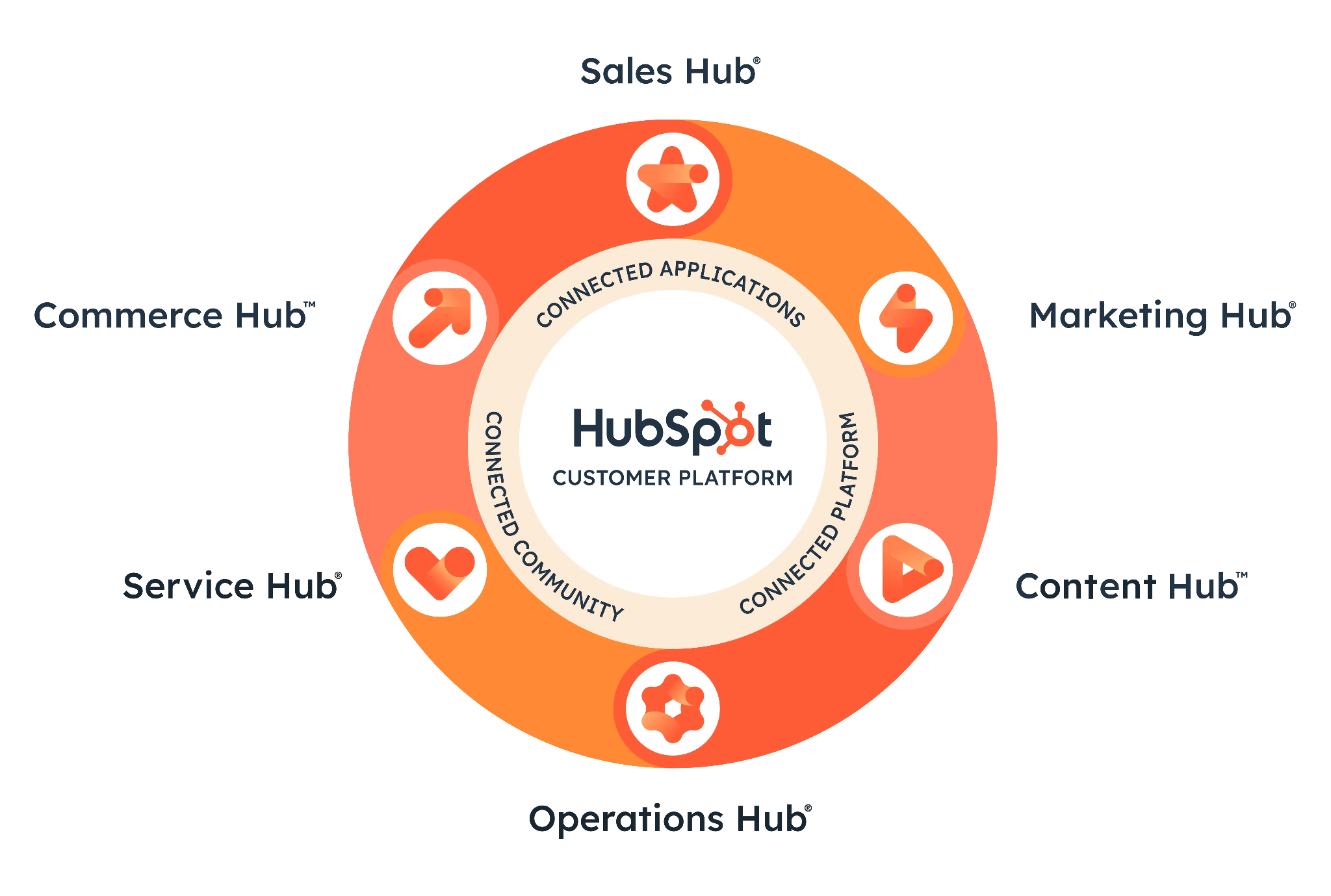
Marketing automation, sales pipelines, customer service ticketing, content management, commerce, and data operations all share a single Smart CRM database. When a lead fills out a marketing form, the sales rep picking up the phone sees their full history. When that deal closes, the service team sees the context without asking the customer to repeat themselves.
Source: Simple Start
This breadth comes at a cost.
HubSpot's pricing model combines per-seat fees, contact-based tiers for marketing, mandatory onboarding fees at Professional and Enterprise levels, and a credit system for AI features. Marketing Hub Professional alone costs $800/month (annual) with a $3,000 one-time onboarding fee.
And if you subscribe to multiple Hubs at different tiers, all Core Seats are billed at the rate of the highest tier, a detail that catches many buyers off guard.
Nutshell chose the opposite path.
The platform was founded on the idea that the CRM market lacked good user experience and automation that powers a structured sales process without requiring a dedicated administrator. Where HubSpot sells you the full kitchen, Nutshell hands you the tools you use every day and keeps the drawer organized.
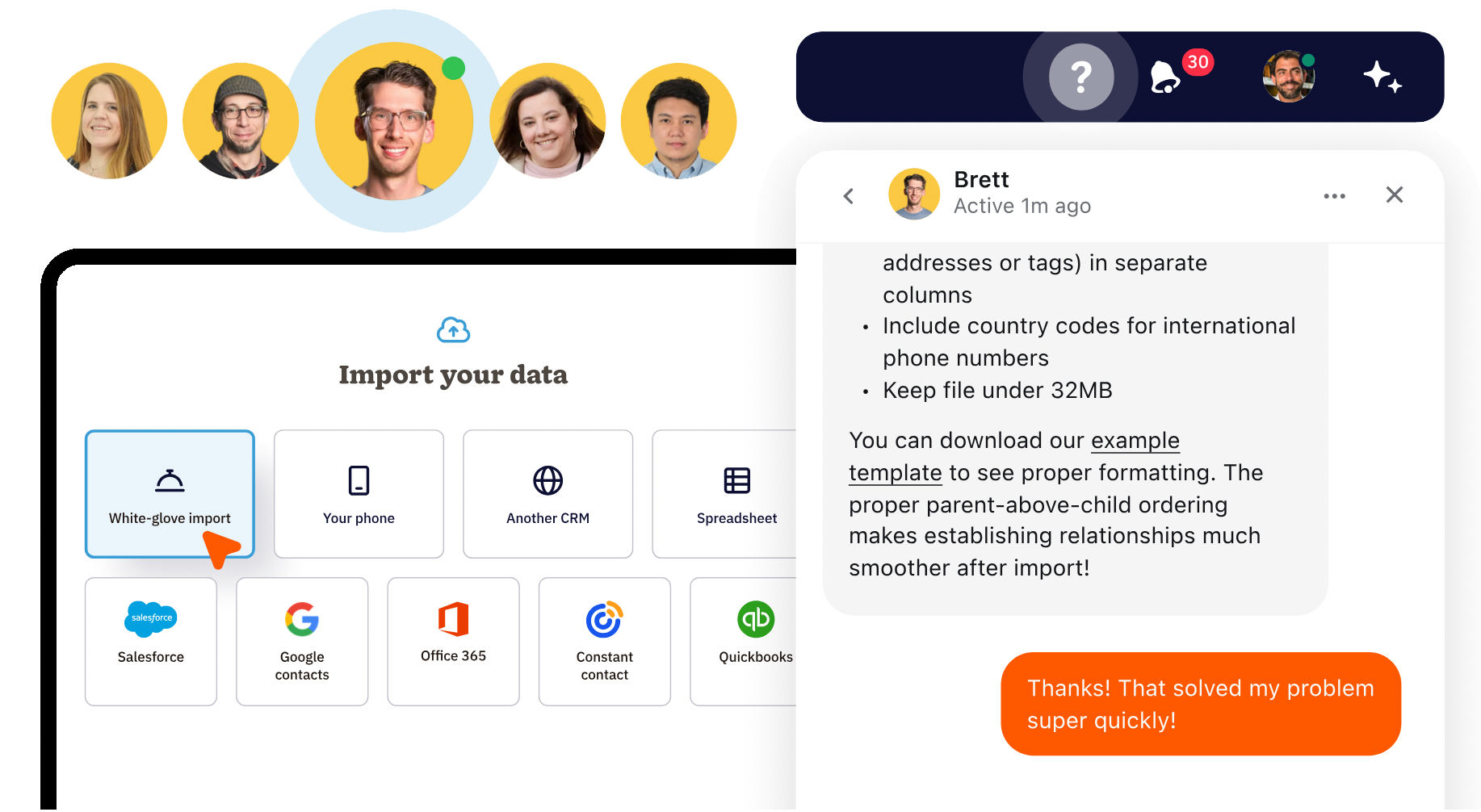
Every Nutshell plan includes webchat, chatbot, forms, landing pages, and email marketing. There are no mandatory onboarding fees, no seat minimums, and free data migration. The Foundation plan at $13/user/month gets a small team running in days.
Source: Nutshell
The tradeoff is ceiling. Teams that grow past 100 seats, need multi-language support (Nutshell is English-only), or require advanced compliance features will eventually outgrow the platform. HubSpot, with enterprise data capacity supporting up to 15–50 million contacts, sandbox environments, and SSO, has more room to scale.
Your CRM is only as good as the data inside it
This is the gap that both HubSpot and Nutshell leave open.
HubSpot stores and organizes your customer data. Nutshell does the same with less complexity. But neither platform was built to answer a more basic question: who should your sales team be talking to right now, and why?
HubSpot's Smart CRM enriches records from emails, calls, and web activity.
Its Breeze AI can draft emails and automate workflows. But the intelligence is limited to data that already exists inside HubSpot. If a prospect hasn't filled out a form or replied to an email, HubSpot doesn't know they exist.
Nutshell offers Nutshell IQ as a prospecting add-on, with access to 200M+ people and companies.
Source: Nutshell
It's a useful tool at its price point ($37/month), but the database is restricted to US data, and it lacks intent signals that reveal when a company is actively researching solutions.
ZoomInfo exists at a different layer of the GTM stack.
Its 500M contacts, 100M companies, 135M+ verified phone numbers, and 200M+ verified business emails aren't just a bigger database. They're verified through a proprietary collection system backed by 300+ human researchers and reach up to 95% accuracy on first-party data.
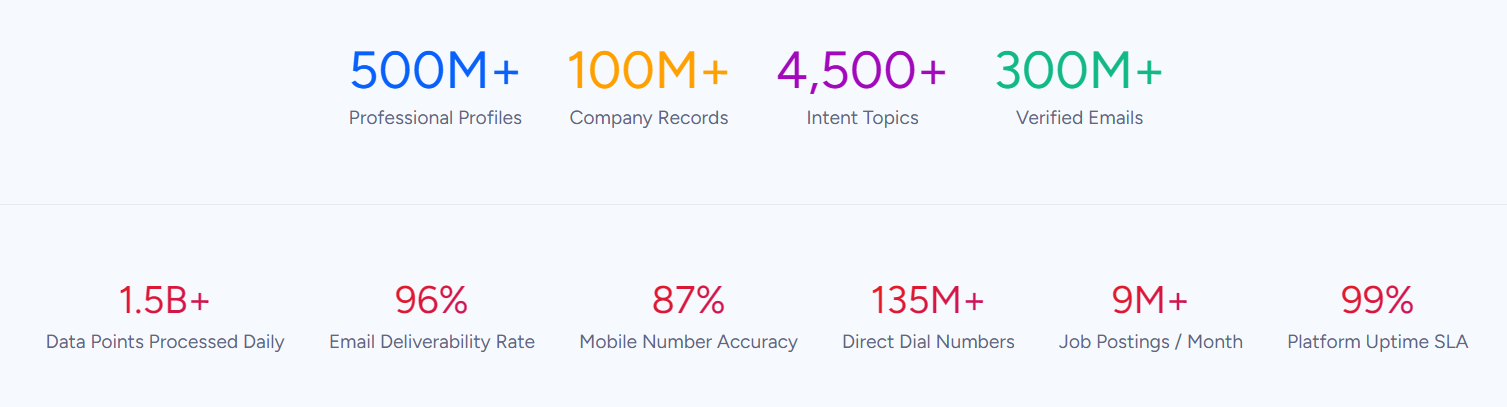
In a Fortune 500 competitive RFP analyzing 25 million contacts across vendors, an independent consultant concluded that "no other competitor came even close."
For sales reps, the difference is practical: direct dials that actually ring and emails that actually land, rather than a 30% bounce rate that damages your sender reputation. For RevOps teams, enrichment workflows don't require stitching together multiple vendors to get a complete account picture.
Vensure scaled prospecting with ZoomInfo's data: "ZoomInfo gives us the information we need to execute. We don't have to go through and spend our time digging. It's already there, so we can be three steps ahead." (Vensure case study)
AI capabilities take different approaches
All three platforms have invested in AI, but the depth and application differ.
HubSpot's Breeze AI runs across all hubs with several specialized agents.
The Customer Agent resolves over 50% of customer conversations on its own. The Prospecting Agent monitors buying signals and drafts outreach. The Data Agent answers natural-language questions about CRM data. These agents draw on HubSpot's shared CRM data, which gives them context about your existing customers.
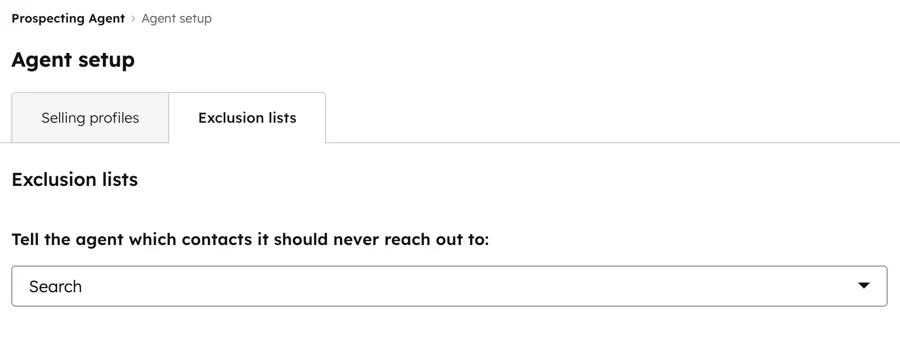
Source: HubSpot
However, several features (AI-Powered Segmentation, Personalization, AI-Powered Email, Marketing Studio) remain in Beta as of the Fall 2025 Spotlight, and AI features consume HubSpot Credits that reset monthly with no rollover.
Nutshell's AI focuses on eliminating the most time-consuming parts of CRM usage.
Its nine notetaker integrations cover Zoom, Google Meet, Teams, Aircall, RingCentral, Dialpad, and more, automatically transcribing calls and pushing summaries to lead timelines. The Lead Researcher pulls company overviews, recent news, and a fit signal (Ideal, Possible, or Unlikely) based on your configured ICP.
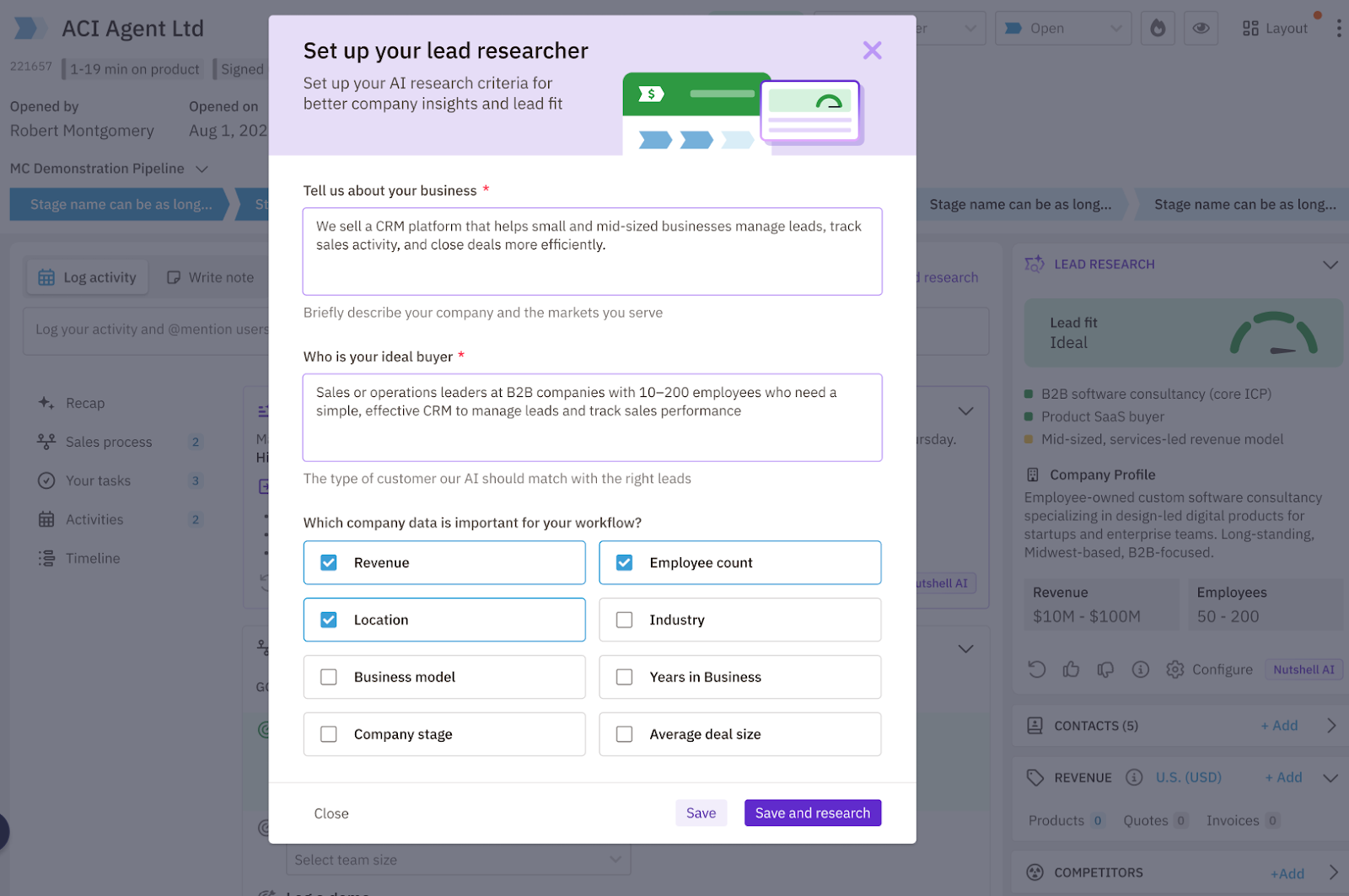
Source: Nutshell
Nutshell structures AI into unlimited Assists and metered Outcomes (email drafting, lead recaps, smart reports vs. call summaries, research runs), avoiding what it calls "confusing credit math."
ZoomInfo's AI operates at a different level because it reasons across a different dataset.
The GTM Context Graph processes 1.5B+ data points daily, combining your CRM records, conversation transcripts, and behavioral signals with ZoomInfo's third-party intelligence.
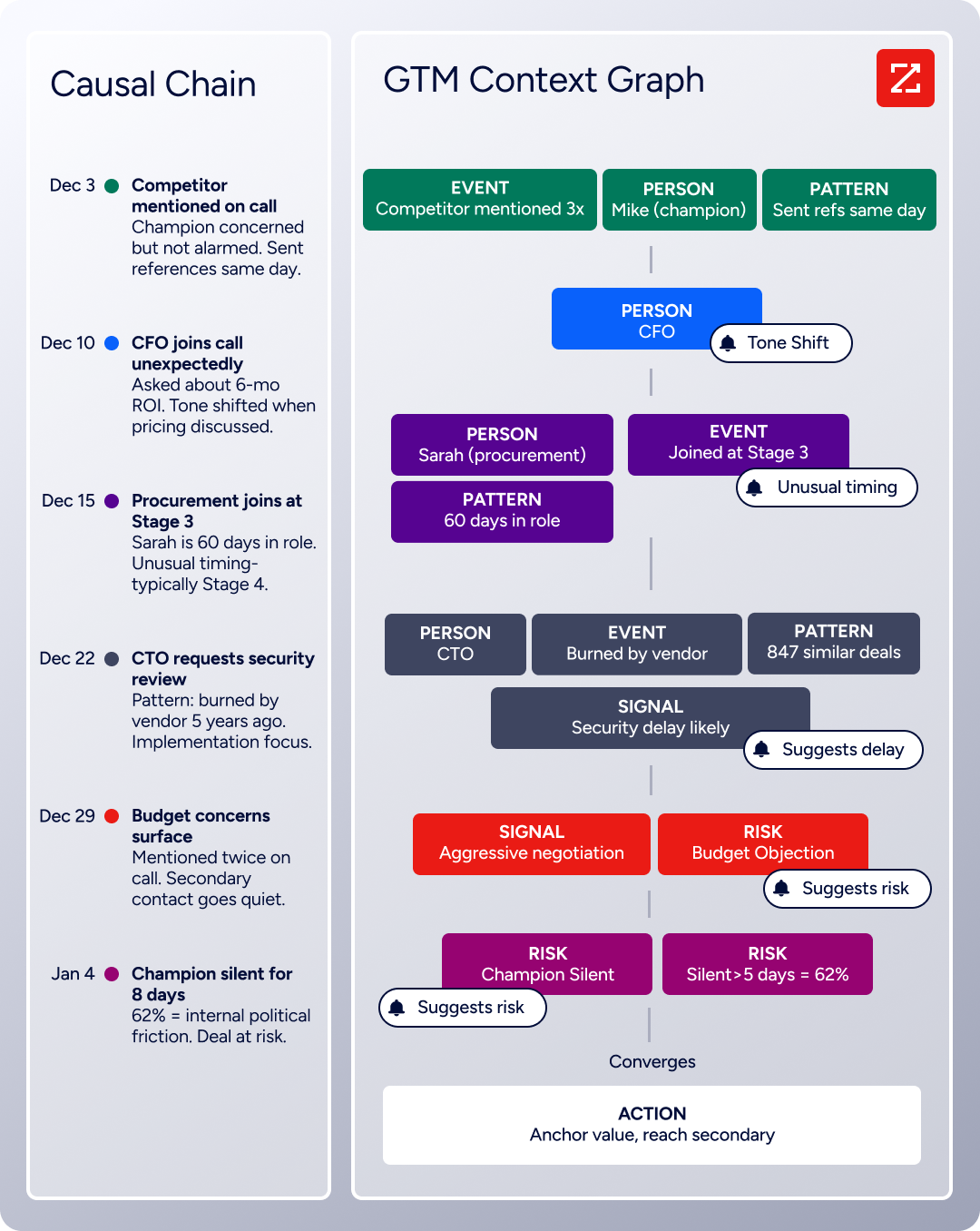
Where HubSpot's and Nutshell's AI are limited to the data you've already captured, ZoomInfo's AI sees the full context of your deals: who's championing, who's blocking, what signals historically correlate with closed-won outcomes, and what the next best action should be.
In GTM Workspace, sellers see AI-drafted outreach that addresses specific concerns identified in call transcripts. The Action Feed surfaces in-market buyers with pre-drafted actions on every signal. And because all of this runs on APIs and MCP, the same intelligence powers any custom agent or third-party tool your team uses.
Seismic's sales team attributed 39% of active pipeline to opportunities identified or influenced by ZoomInfo signals and boosted productivity by 54%. (Seismic case study)
Prospecting and buyer intent set them apart
This is where the three platforms diverge most sharply.
HubSpot is not a prospecting data provider.
It stores contacts you've already acquired through forms, imports, or integrations. The Breeze Prospecting Agent can research prospects and draft outreach, but it works with contacts already in your CRM, not a third-party database.
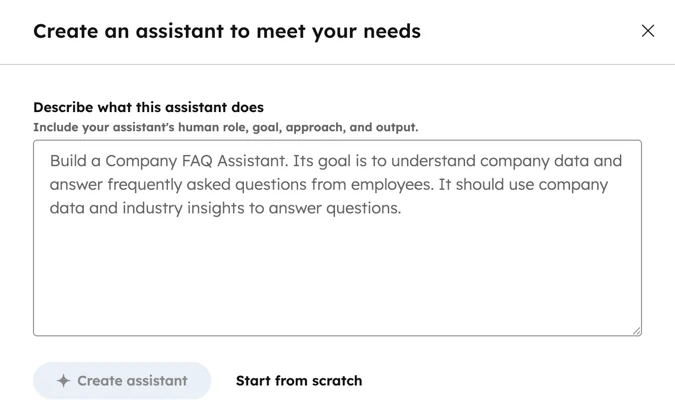
Source: HubSpot
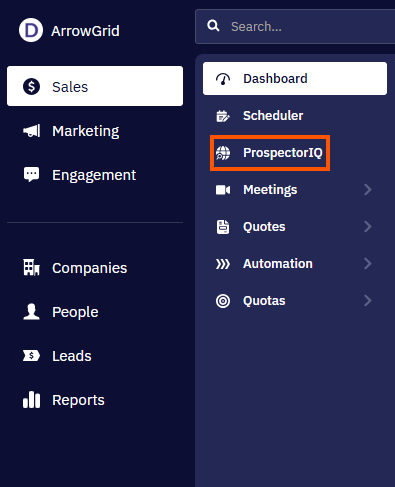
Nutshell IQ bundles three tools into a $37/month add-on: ProspectorIQ for outbound search, VisitorIQ for identifying anonymous website visitors, and PeopleIQ for enriching existing company records with additional contacts.
All three share a credit pool, with 10 free credits/month included on every plan. The database covers 200M+ people and companies in the US. For US-focused small teams, it's a practical addition. But international coverage isn't available yet, and there are no buyer intent signals to tell you which companies are actively researching solutions.
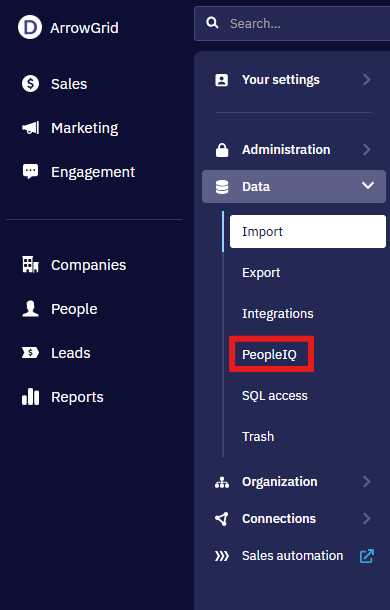
Source: Nutshell
ZoomInfo was built for this.
Buyer Intent data tracks signals from 210 million IP-to-org pairings and 6 trillion+ new keyword-to-device pairings sourced monthly. Guided Intent, exclusive to ZoomInfo, identifies topics historically correlated with deal success rather than requiring manual topic selection.
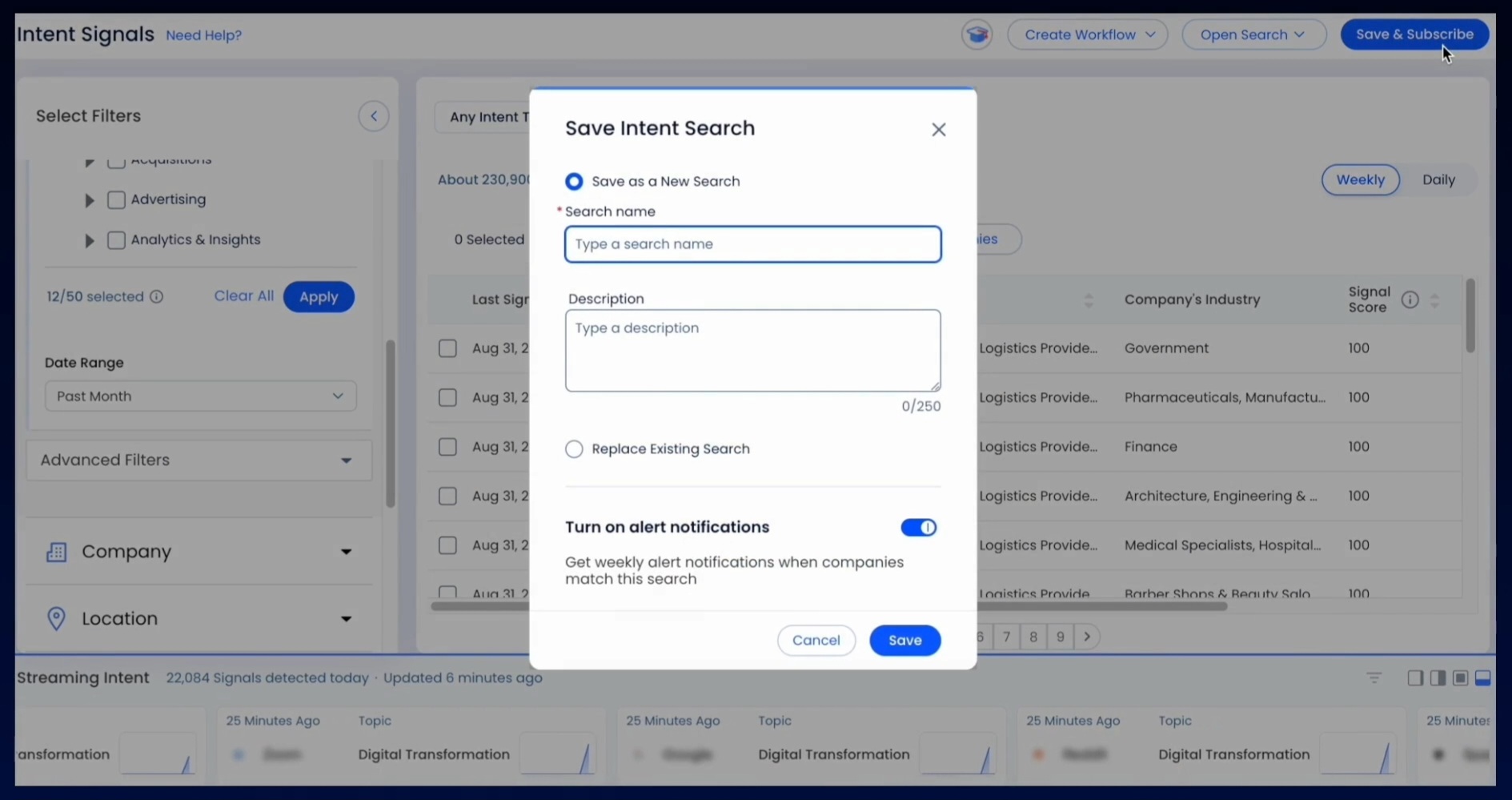
Source: ZoomInfo
WebSights resolves anonymous website traffic to companies with buying team identification and direct contact info. And the global coverage (34M+ company profiles outside North America, 200M+ professional profiles outside NA, 45M+ mobile numbers outside NA) means international teams aren't left guessing.
The practical effect: your reps know who's in-market before the prospect has even visited your website, and they have verified direct dials and emails to reach the right people immediately.
Levanta's CEO Ian Brodie: "ZoomInfo's not just a contact data company anymore. They've built a full system of execution. GTM Intelligence actually works the list, writes the outreach, triggers the play, and helps drive predictable growth." (Levanta case study)
Pricing philosophies reflect different buyers
HubSpot uses a hybrid model combining per-seat fees, contact tiers, mandatory onboarding, and AI credits.
The free CRM is genuinely useful (unlimited contacts up to 1M records, basic tools, 2 users). But scaling costs add up quickly:
Sales Hub Professional: $90/seat/month (annual) + $1,500 onboarding fee
Marketing Hub Professional: $800/month (annual) + $3,000 onboarding fee
Enterprise tiers require annual commitments, and cancellation is only allowed at the end of the contract term
A mid-size team using multiple Hubs at Professional tier can easily reach $2,000–$3,000/month before adding contacts or credits.
Nutshell keeps it straightforward.
Five tiers from $13 to $79/user/month (annual), no mandatory onboarding fees, no seat minimums. Marketing is a flat $49/month add-on (not per-seat), Quotes & Invoices is $67/month for the company, and Nutshell IQ starts at $37/month. Customers can cancel at any time and retain access through the end of the billing cycle, with a 7-day refund window on renewals.
ZoomInfo uses consumption-based pricing with no publicly listed prices.
Costs depend on seats, credit volume, features, and contract length. The pricing reflects the depth of intelligence: this isn't a CRM subscription but access to a comprehensive B2B data platform. ZoomInfo Lite offers a permanent free tier with access to the B2B database, 10 monthly export credits, and a 7-day free trial is available for the full platform.
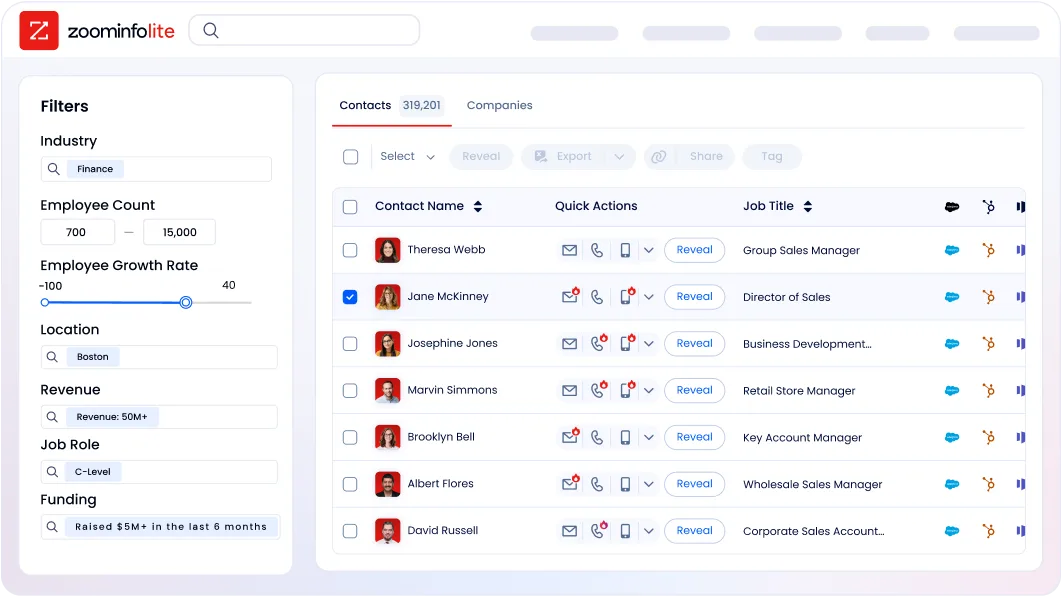
For teams evaluating ROI, the question isn't just the subscription cost. It's what bad data costs you in wasted rep time, bounced emails, missed opportunities, and deals that stall because you're talking to the wrong people.
Integration ecosystems and data access
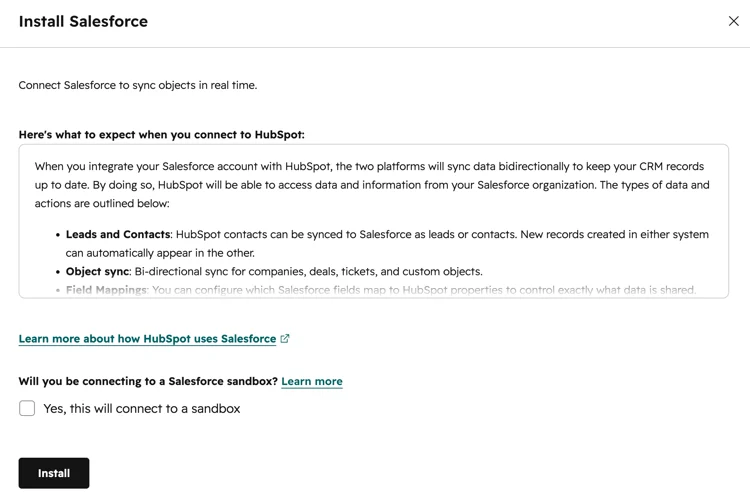
HubSpot has the largest integration marketplace of the three, with over 2,000 apps and 2.5 million active installs.
Salesforce, Slack, Zoom, and nearly every tool in a modern sales stack connect natively. The REST API is well-documented, and the developer ecosystem is mature. For companies that want one hub connecting dozens of tools, HubSpot's marketplace is hard to beat.
Source: HubSpot
Nutshell takes a practical approach.
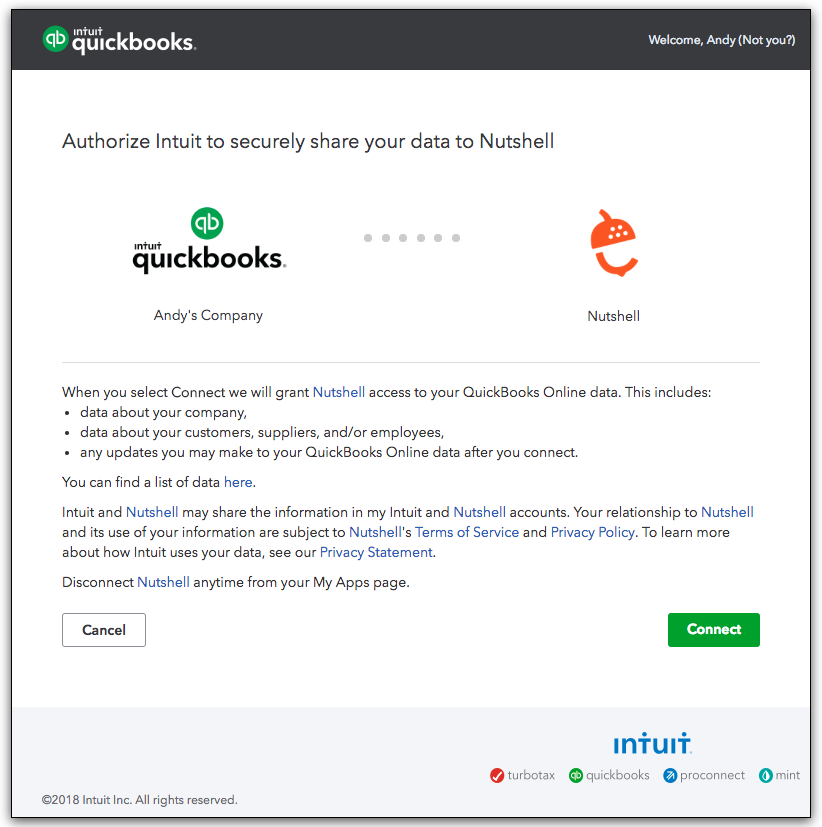
Native integrations cover the most common needs (QuickBooks, Aircall, Calendly, Apollo), while an App Marketplace service lets Nutshell's team set up and manage Zapier-based integrations on your behalf, absorbing the Zapier cost. API access is available to all customers regardless of plan tier, which is notable since many CRMs gate API access behind enterprise plans.
Source: Nutshell
ZoomInfo approaches integration differently.
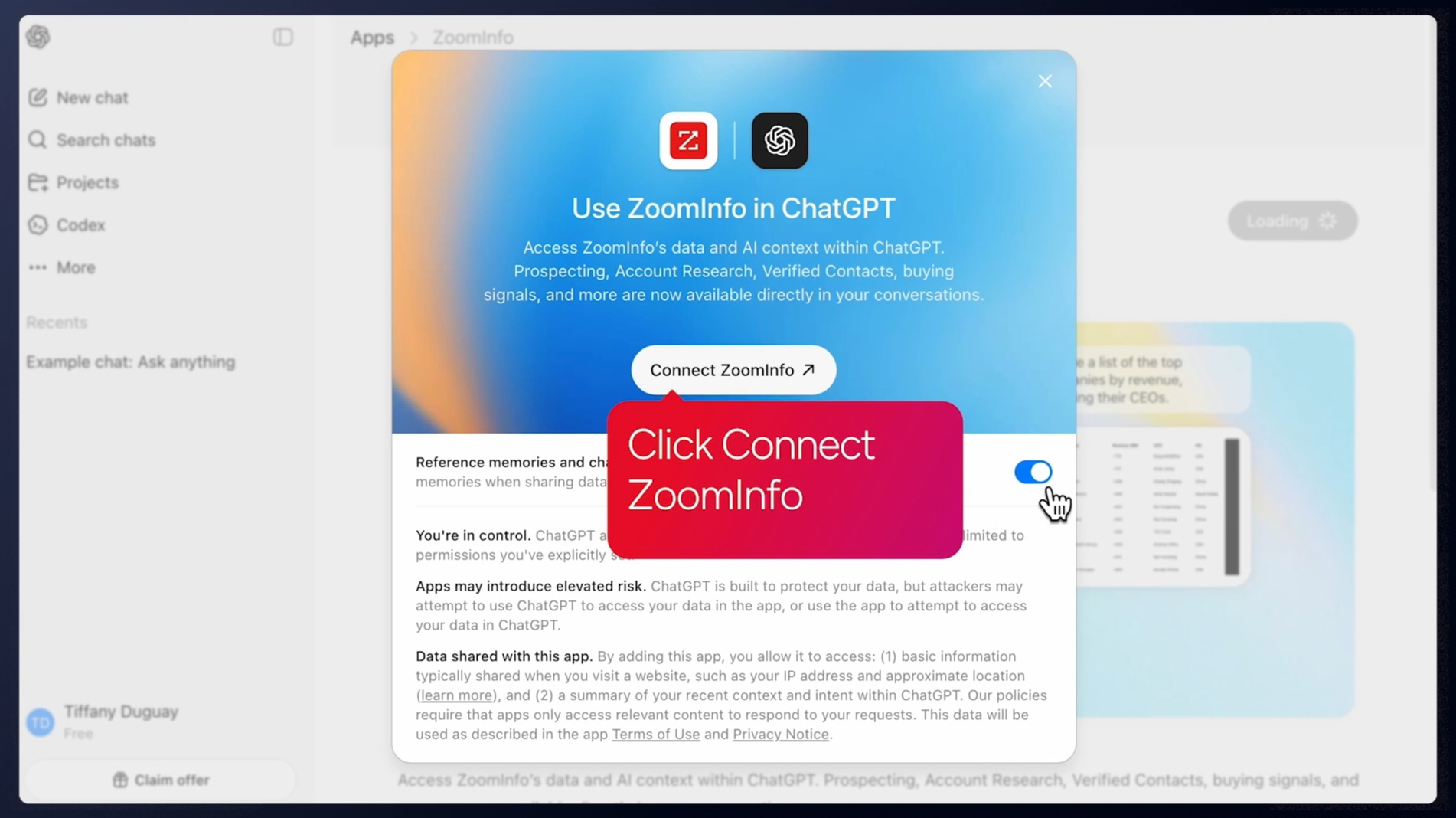
Rather than connecting to your tools, ZoomInfo powers them. API access is included in all relevant plans, with the Enterprise API covering search, enrichment, intelligence, and audience management.
The MCP server connects AI models directly to ZoomInfo's B2B data, currently supporting Claude and ChatGPT. The App Marketplace covers 120+ integrations with CRMs, marketing automation, sales engagement tools, and data warehouses.
Source: ZoomInfo
ZoomInfo integrates natively with both HubSpot and Salesforce, so teams using either CRM can layer ZoomInfo's intelligence directly into their existing workflow.
BDO Canada's Jerry Wilson: "The plug-and-play aspect of the API means I can integrate it very easily into any process and get information at a moment's notice," resulting in an 87% reduction in time spent on internal data dashboard updates. (BDO Canada case study)
Support and onboarding reflect different philosophies
HubSpot tiers support by subscription level.
Free users get community forums only. Starter adds email and chat. Professional and Enterprise add phone support. The HubSpot Academy offers free certifications with over 200,000 certified professionals, and the knowledge base spans 17+ languages.
For complex implementations, HubSpot leans on its Solutions Partner ecosystem, which makes sense given that professional services represent just 2.1% of revenue.
Nutshell includes free live chat and email support on every plan, including during the 14-day free trial. That's not common.
Qualifying customers receive a dedicated Onboarding Advisor with video calls and a 30-day post-onboarding check-in. The data import service is free. On G2, Nutshell holds a 4.3/5 rating across 1,400+ reviews, with support quality repeatedly flagged as a differentiator. Phone support, however, is reserved for Enterprise plan admins.
ZoomInfo redesigned its onboarding from 30 to 90 days, structured across planning, technical implementation, education, and adoption phases.
The redesign produced a 25% improvement in CSAT. ZoomInfo University offers role-specific learning paths, certifications, and a Certified Trainer program. Enterprise customers get a dedicated customer service manager. GTM Workspace is designed to deploy in weeks, not months.

Security and compliance comparison
All three platforms take security seriously, but the depth of certifications differs based on their target markets.
HubSpot holds SOC 2 Type II, HIPAA attestation, GDPR and CCPA compliance, EU Cloud Code of Conduct Level 2, and TRUSTe certification.
Data is encrypted with AES-256 at rest and TLS 1.2/1.3 in transit. An EU Data Center is available for data residency requirements.
Nutshell has completed a SOC 2 audit (Type 1, verified via Vanta) and a CASA assessment.
Data is encrypted in transit (256-bit TLS 1.2) and at rest on AWS. SAML-based SSO and Directory Sync are Enterprise-only. The platform supports GDPR compliance with data processing agreements available on request.
ZoomInfo maintains the broadest certification stack of the three: ISO 27001, ISO 27701, SOC 2 Type II, TRUSTe GDPR, and TRUSTe CCPA, all renewed annually.

Source: ZoomInfo
ZoomInfo is a registered data broker in California and Vermont. For enterprises in regulated industries, this certification depth is often a procurement requirement.
HubSpot vs. Nutshell vs. ZoomInfo: Which should you choose?
The right choice depends on what problem you're solving.
Choose HubSpot if:
You want to consolidate marketing, sales, service, and content into one platform
You have the budget for Professional or Enterprise tiers and the team to use the features
You're scaling past the point where simple tools can manage your customer lifecycle
Integration breadth matters more than pricing simplicity
You value a large ecosystem of apps, partners, and educational resources
Choose Nutshell if:
Your team needs a CRM they'll actually adopt, without months of training
You're a small or mid-size B2B team (2–100 employees) that's outgrown spreadsheets
You want email marketing, webchat, and an AI chatbot included from day one
Transparent, affordable pricing with no mandatory onboarding fees matters
Free live support is important to your evaluation
Add ZoomInfo if:
Your sales team needs accurate, verified B2B data to prospect effectively
You want buyer intent signals that reveal who's in-market before they contact you
Your CRM (HubSpot, Nutshell, Salesforce, or others) needs better data flowing into it
You need global contact coverage, not just US data
You want AI that understands why deals move, not just what happened in your CRM
See ZoomInfo in action with a free trial or explore ZoomInfo Lite at no cost.
HubSpot and Nutshell are both strong CRMs for their target audiences. But neither was designed to solve the data quality problem that determines whether your sales team talks to the right people at the right time.
ZoomInfo fills that gap with a comprehensive B2B data platform, intelligence that captures why deals succeed or stall, and the flexibility to deliver that intelligence into any tool your team already uses. The best CRM in the world can't close a deal with the wrong contact. ZoomInfo makes sure you start with the right one.
HubSpot vs. Nutshell vs. ZoomInfo FAQ
What is the core difference between HubSpot, Nutshell, and ZoomInfo?
HubSpot is a customer platform that consolidates marketing, sales, service, and content into one CRM.
Nutshell is a focused CRM and marketing automation tool built for small B2B teams that prioritize ease of use and fast setup.
ZoomInfo is a B2B data intelligence and GTM execution platform that provides verified contact data, buyer intent signals, and AI deal intelligence, designed to make any CRM more effective by improving the quality of data flowing into it.
Which platform is best for a small team on a tight budget?
Nutshell offers the lowest barrier to entry at $13/user/month (annual) with no mandatory onboarding fees, unlimited contacts, and free live support on every plan.
HubSpot's free CRM is also a viable starting point, though meaningful features require paid tiers that start at $20/seat/month and scale quickly.
ZoomInfo Lite is a permanent free tier with 10 monthly export credits for teams that need B2B prospecting data.
Can ZoomInfo work alongside HubSpot or Nutshell?
Yes. ZoomInfo integrates natively with HubSpot through its App Marketplace and connects with other CRMs like Salesforce and Dynamics 365. ZoomInfo's data enrichment, intent signals, and prospecting intelligence flow into your CRM to improve record quality and surface opportunities your team would otherwise miss. API and MCP access lets you connect ZoomInfo data to virtually any tool.
For a deeper look at how these two platforms compare on their own, see our HubSpot vs. ZoomInfo comparison.
Which platform has the best prospecting and contact data?
ZoomInfo has the largest B2B dataset, with 500M contacts, 100M companies, 135M+ verified phone numbers, and 200M+ verified business emails with global coverage.
Nutshell IQ provides access to 200M+ US-only contacts at $37/month.
HubSpot does not include a native prospecting database, relying instead on contacts you capture through marketing or import manually.
How do the AI features compare?
HubSpot's Breeze AI includes agents for customer service, prospecting, data queries, and content creation, all drawing on CRM data, though several features remain in beta.
Nutshell's AI focuses on call transcription, lead research with ICP scoring, and email drafting, with a clear two-tier model of unlimited assists and metered outcomes.
ZoomInfo's AI reasons across a comprehensive B2B dataset combined with your CRM and conversation data, providing account intelligence, deal context, and recommended actions that go beyond what CRM-only AI can deliver.
Which platform is easiest to get started with?
Nutshell is the fastest to deploy, with customers reporting they can start using it in days.
HubSpot's free tier is easy to sign up for, but scaling to Professional or Enterprise requires onboarding that typically takes weeks to months.
ZoomInfo's GTM Workspace is designed to deploy in weeks, and ZoomInfo Lite provides immediate free access to the B2B database.
How does pricing compare for a 10-person sales team?
With Nutshell Pro (the most popular plan), a 10-person team pays roughly $420/month (annual).
With HubSpot Sales Hub Professional, the same team pays about $900/month plus a $1,500 one-time onboarding fee.
ZoomInfo pricing is custom-quoted based on usage, seats, and features. Each platform solves a different problem, so many teams use a CRM (HubSpot or Nutshell) alongside ZoomInfo for data and intelligence.
Does ZoomInfo replace a CRM like HubSpot or Nutshell?
No. ZoomInfo complements your CRM. HubSpot and Nutshell manage your customer relationships, pipelines, and workflows. ZoomInfo provides the B2B data, buyer intent signals, and deal intelligence that feed into those systems. Teams typically use ZoomInfo alongside their CRM, with ZoomInfo powering the top of the funnel and the CRM managing the middle and bottom.
