
If you're searching for "HubSpot vs Prospect," you should know that Prospect.io rebranded to Overloop in 2021 and was acquired by Sortlist in December 2025. The product still exists, but it has changed since its Prospect.io days.
The comparison holds up. Both platforms help B2B teams find and engage prospects, but they solve the problem from opposite directions. The questions worth asking before choosing:
Do you need a full CRM with built-in prospecting, or a dedicated outbound tool that plugs into your existing CRM?
Is LinkedIn automation a critical part of your sales motion, or do you rely more on email and phone?
How important is contact data accuracy versus the automation that acts on it?
Are you a small team running founder-led outbound, or a scaling org that needs marketing, sales, and service on one platform?
Do you need buyer intent signals to know when to reach out, or just the contact info to reach out at all?
In short, here's what we recommend:
HubSpot is the platform for teams that want prospecting, CRM, marketing, and service under one roof. Its Sales Hub handles pipeline management, email sequences, call tracking, and AI-powered quoting, all connected to the same database your marketing and service teams use. The tradeoff: HubSpot is not a prospecting data provider. It ships without a B2B contact database, intent signals, or verified direct dials. You bring your own data or buy it elsewhere.
Overloop (formerly Prospect.io) is an outbound tool built for small B2B teams running LinkedIn-first prospecting. It bundles a 450M+ contact database, AI-written cold emails, and what it calls the most advanced LinkedIn automation on the market. For solo founders and small SDR teams, it gets campaigns running fast. But Overloop is not a CRM, it has no phone channel, its email features lag behind dedicated cold email tools, and its 93% email accuracy claim is self-reported without independent validation.
Both platforms assume you either have your own data or can get by with basic contact information. But the quality of your prospecting data determines everything downstream: whether your emails land, whether your calls connect, and whether you're targeting accounts that are ready to buy. That's the gap neither HubSpot nor Overloop was built to close.
ZoomInfo is an AI GTM platform built on a B2B data foundation of 500M contacts, 100M companies, 135M+ verified phone numbers, and 200M+ verified business email addresses, all verified through a pipeline backed by 300+ human researchers with up to 95% accuracy on first-party data. ZoomInfo's GTM Context Graph combines this data with your CRM records, conversation transcripts, and behavioral signals, processing 1.5B+ data points daily to reveal not just who to contact, but why they're likely to buy right now. Your team accesses this intelligence through GTM Workspace for sellers, GTM Studio for marketers and RevOps, or APIs and MCP in any front-end.
If knowing who to target, when to engage, and what to say sounds like the foundation your outbound needs, see how ZoomInfo works.
HubSpot vs. Overloop vs. ZoomInfo at a glance
HubSpot | Overloop | ZoomInfo | |
|---|---|---|---|
Primary strength | Unified CRM + sales + marketing platform | LinkedIn + email outbound automation | B2B data intelligence + AI-powered GTM execution |
Contact database | None built-in | 450M+ contacts (self-reported 93% email accuracy) | 500M contacts, 200M+ verified emails, 135M+ verified phones (up to 95% accuracy) |
Direct-dial phone numbers | None | None | 120M direct dials |
Buyer intent data | None native | None | Yes (210M IP-to-Org pairings, 6T+ keyword signals monthly) |
LinkedIn automation | No | Yes (cloud-based, multichannel sequences) | No native (integrates with Salesloft and other SEPs) |
CRM included | Yes (full-featured Smart CRM) | No (integrates with HubSpot, Pipedrive, Salesforce) | No native CRM (integrations with Salesforce, HubSpot, Dynamics) |
AI capabilities | Breeze AI (agents for marketing, sales, service) | AI-written emails, AI campaign design | GTM Context Graph, GTM Workspace AI agents, API/MCP |
Free tier | Yes (permanent, generous) | 14-day trial only | ZoomInfo Lite (permanent) + 7-day full trial |
Starting price | $0 (free CRM); $20/seat/mo (Starter) | $69/user/mo | Consumption-based pricing (enterprise-focused) |
Best for | Teams needing CRM + prospecting + marketing in one system | Small teams running LinkedIn-first cold outbound | Revenue teams that need strong data and buyer intelligence to drive pipeline |
The data underneath your prospecting determines everything
This is the comparison that matters most, and the one most buyers underweight.
HubSpot does not include a B2B prospecting database. Its CRM stores the contacts you put into it, but it doesn't help you find new ones. You can enrich records through 2,000+ marketplace integrations, but data quality depends on whichever third-party provider you choose.
HubSpot's Smart CRM does offer AI-powered data enrichment from email threads and recorded calls, which helps keep existing records current. But for new prospecting data, HubSpot relies on its ecosystem, not its own database.
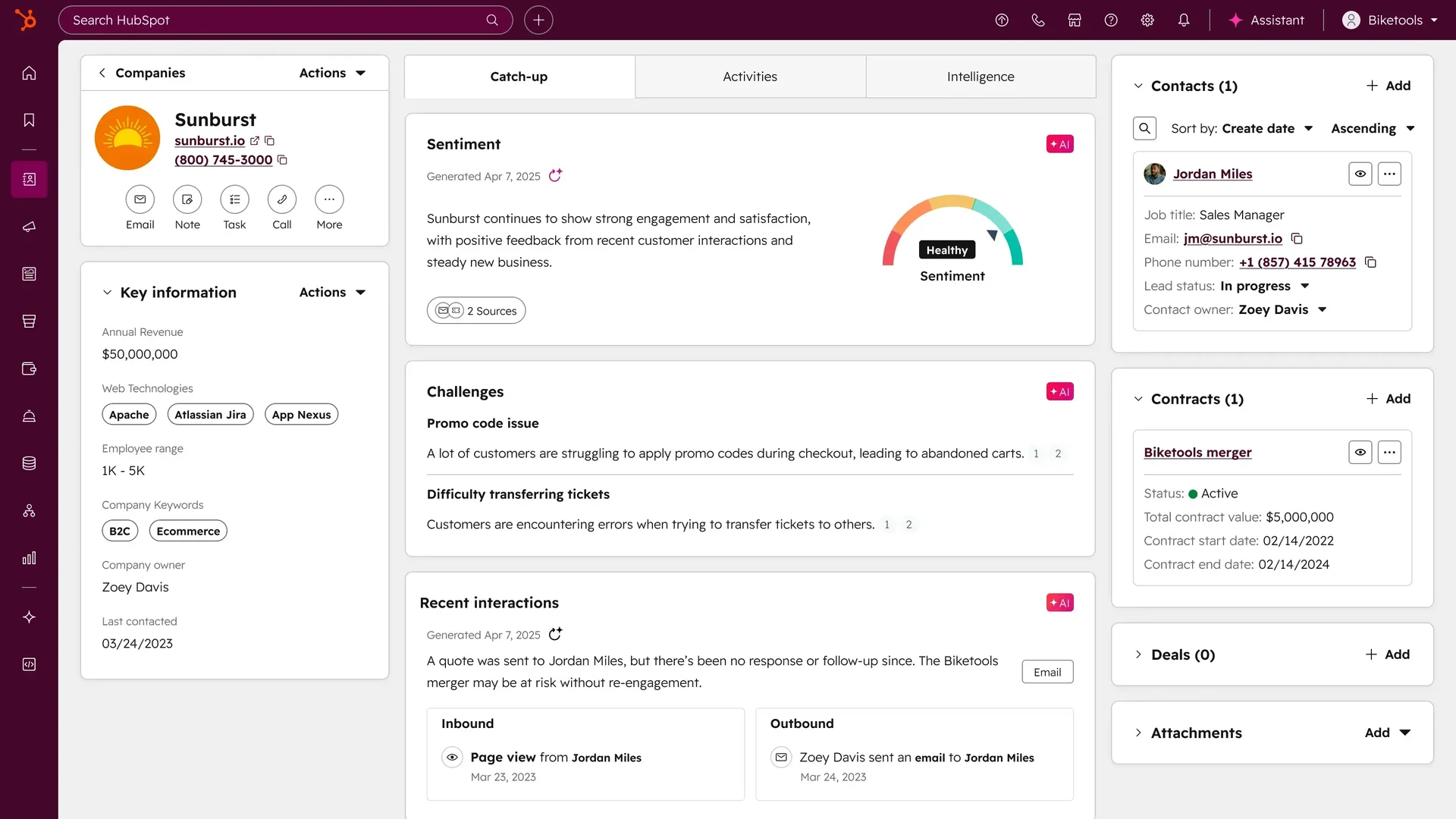
Source: HubSpot
Overloop bundles a 450M+ B2B contact database with real-time email verification. The verification process runs a syntax check, domain/MX health check, SMTP handshake, and catch-all detection at the point of contact selection, so you only consume credits on contacts with a known deliverability status.
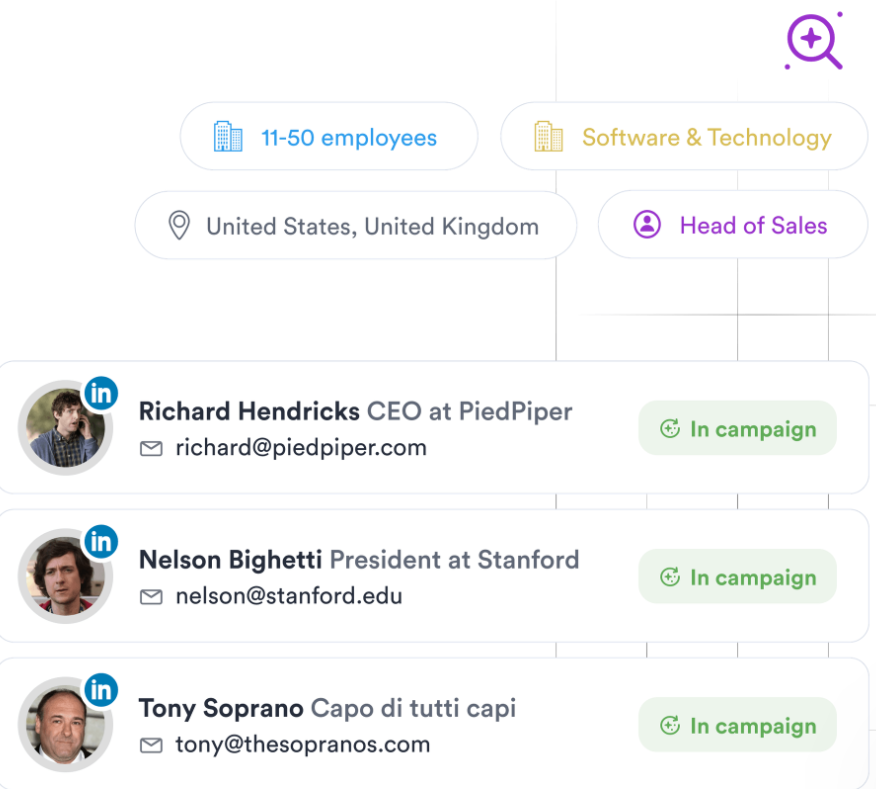
Source: Overloop
That's a reasonable approach for a small tool. But the database lacks phone numbers entirely, and the 93% email accuracy claim comes from Overloop itself, not independent evaluation.
ZoomInfo operates at a different scale. The platform spans 500M contacts, 100M companies, 135M+ verified phone numbers, 120M direct dials, and 200M+ verified business email addresses. Data flows through multiple sources: automated ML scanning of 28 million site domains daily, third-party partner data covering 95 million businesses, a community of 200,000+ ZoomInfo Lite users who share data back, and 300+ human researchers performing manual verification.
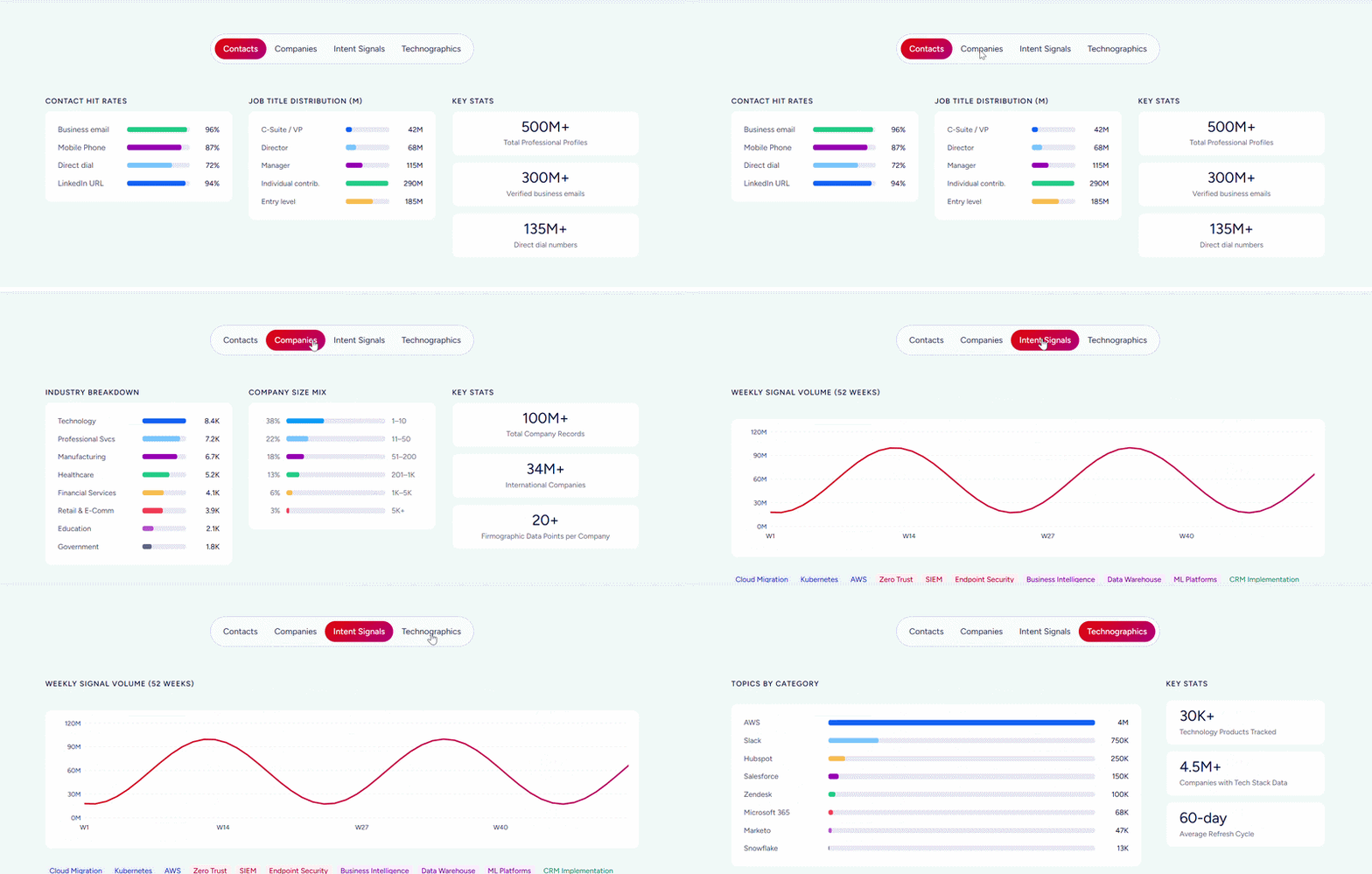
First-party data reaches up to 95% accuracy, and that accuracy has been externally validated: in a Fortune 500 competitive RFP analyzing 25 million contacts across vendors, the independent consultant concluded that "no other competitor came even close."
The practical impact is simple. Overloop gives you email addresses. ZoomInfo gives you emails, direct dials, org charts, technographics, company attributes, and the intent signals that tell you which accounts are researching solutions like yours. HubSpot gives you a place to store all of it, but none of the raw intelligence.
"ZoomInfo gives us the information we need to execute. We don't have to go through and spend our time digging. It's already there, so we can be three steps ahead." (Vensure)
Prospecting and outreach work differently on each platform
How each tool handles the work of reaching prospects reveals its design priorities.
HubSpot Sales Hub is built for structured, CRM-connected outreach. Sequences support automated emails, manual email tasks, call tasks, and LinkedIn Sales Navigator tasks, with auto-unenrollment on reply or meeting booking.
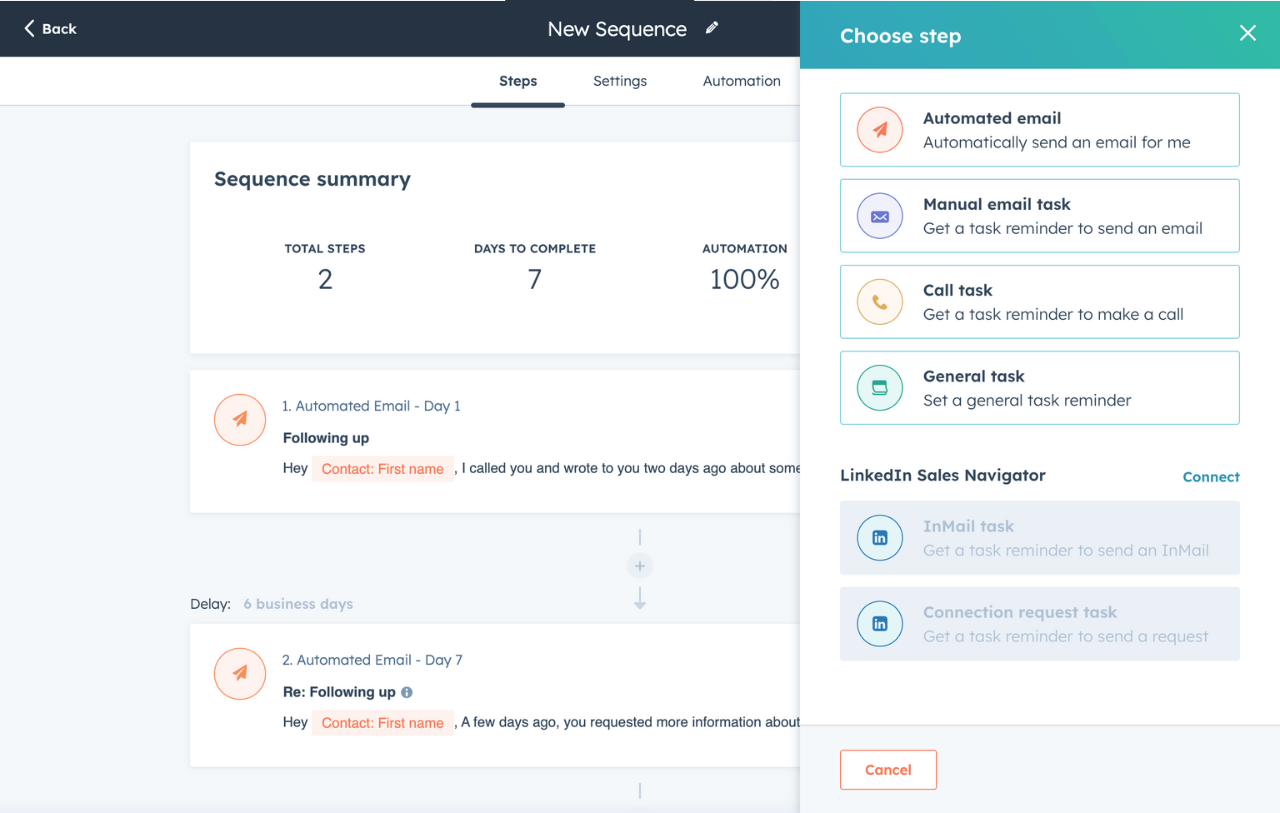
Source: HubSpot
The Breeze Prospecting Agent monitors enrolled prospects for buying signals and drafts personalized outreach using the complete HubSpot customer history. HubSpot claims this agent's emails outperform some US-based BDRs in quality and engagement (per ResellerRatings).
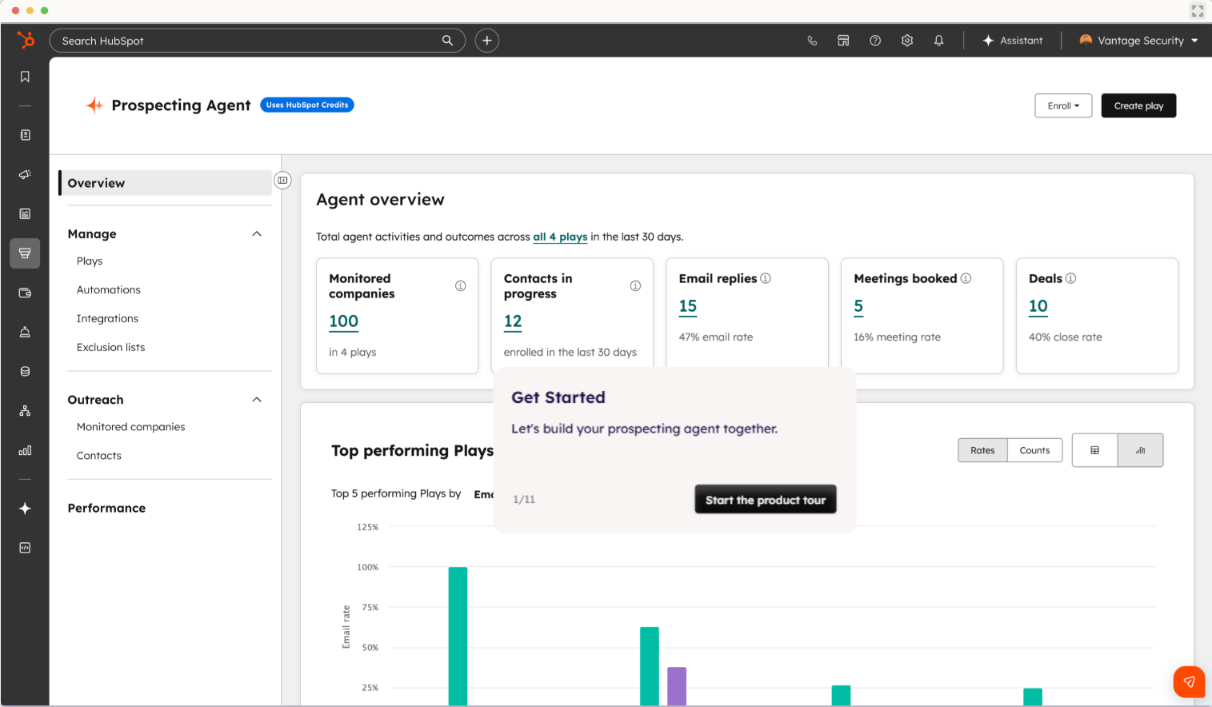
Source: HubSpot
The strength: every touchpoint connects back to the CRM record, so marketing engagement, deal history, and support tickets all inform the next email.
The limitation: HubSpot has no LinkedIn automation. Sequences include LinkedIn Sales Navigator tasks (reminders to take manual actions), but the platform does not automate connection requests, profile visits, or LinkedIn messages.
Overloop was born as a LinkedIn-first prospecting tool, and it shows. Its cloud-based LinkedIn automation runs 24/7, handling connection requests, profile visits, post likes, and direct messages with human-like delays and Smart Limits that ramp from 5 actions per day to safe maximums.
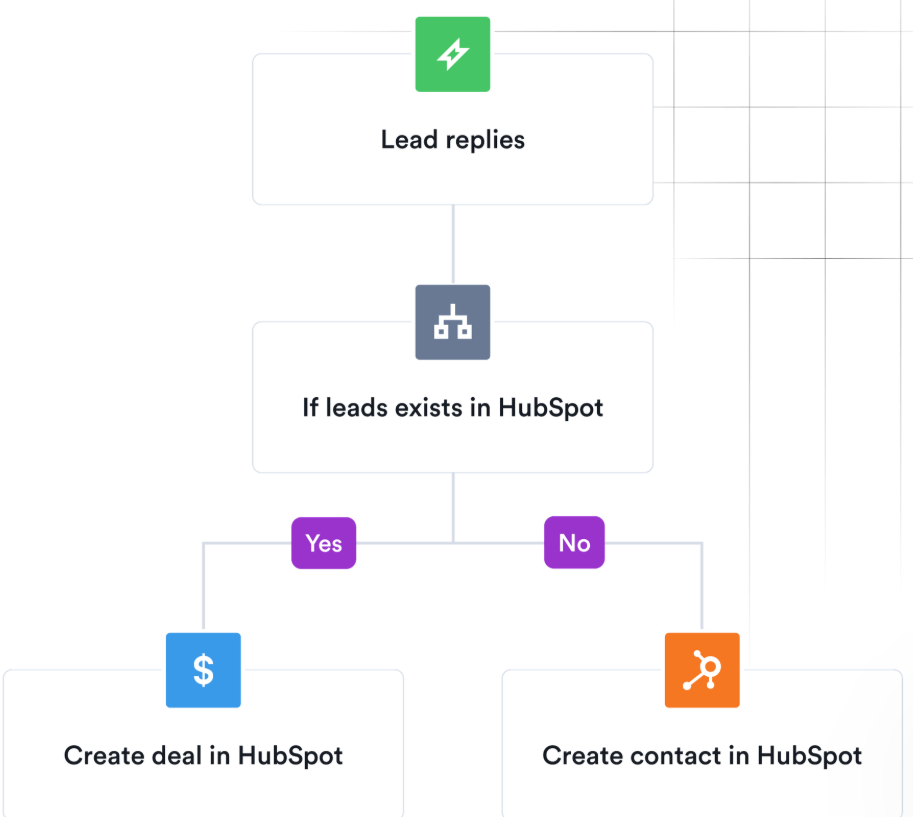
Source: Overloop
The visual Sequence Editor lets users build multichannel flows combining email and LinkedIn steps with conditional branching. If a prospect doesn't accept a connection request, the system switches to email follow-up.
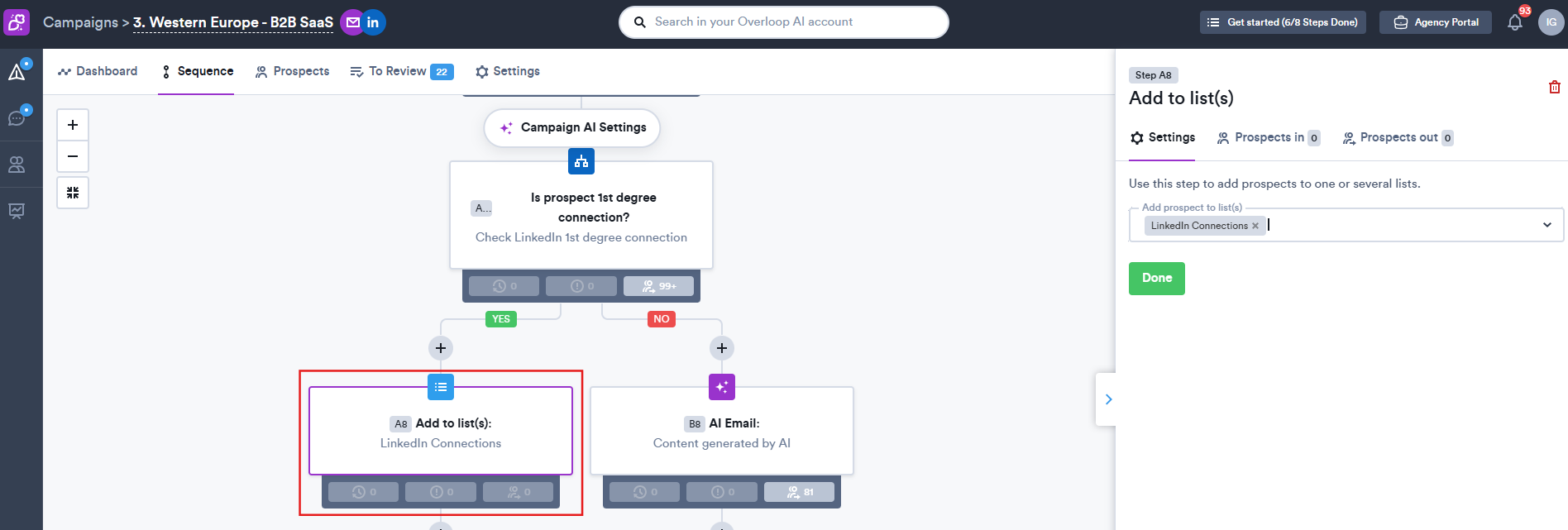
Source: Overloop
The limitation: Overloop has no phone channel. Teams that rely on cold calling need a separate tool. And while Overloop's AI writes emails by analyzing each prospect's website and social profiles, G2 reviewers have noted that the emailing section of Overloop is "the worst of its competitors" compared to dedicated cold email platforms.
ZoomInfo approaches prospecting from the intelligence layer up. GTM Workspace gives sellers a single view of their book of business: prioritized accounts, AI-drafted outreach, buying group intelligence, and deal execution, all powered by the GTM Context Graph.
The AI doesn't just know a prospect's title and company. It draws on CRM data, call transcripts, intent signals, and engagement history to identify why an account is worth pursuing right now.
For outreach execution, ZoomInfo integrates natively with Salesloft for multi-touch sequencing, feeding buyer intent signals directly into Salesloft's engagement engine.
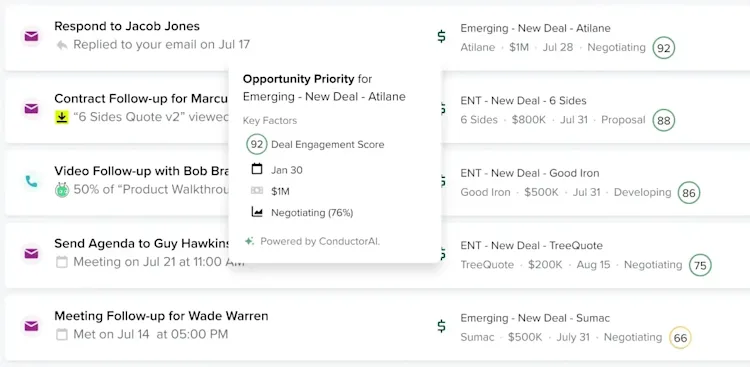
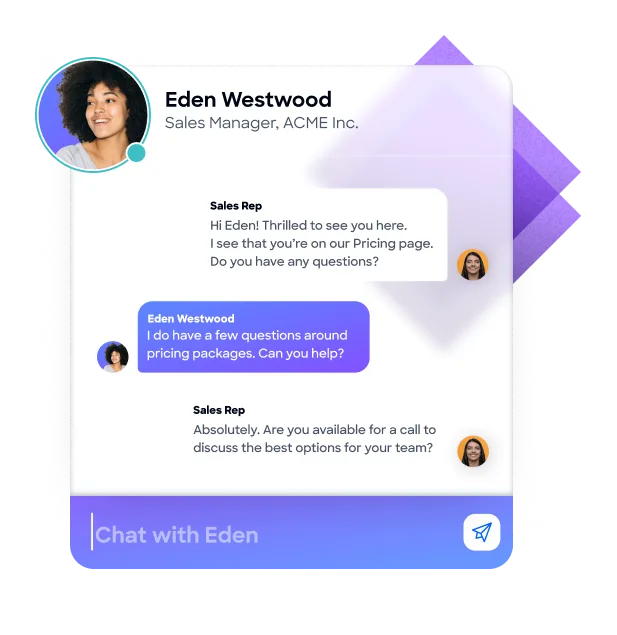
ZoomInfo Chat identifies anonymous website visitors by company before they fill out a form, triggering live chat or bot conversations based on company profile and intent signals.
And with 120M direct-dial phone numbers, ZoomInfo gives reps the ability to call prospects, a channel neither HubSpot nor Overloop provides data for.
"That combination of our internal CRM data, external signals, and AI that's given all that context has helped us craft very specific account- and persona-based messages. And people have responded to them right away." (Seismic)
CRM and platform breadth: one tool or a focused stack?
This is where HubSpot's real advantage lives, and where Overloop and ZoomInfo serve different purposes.
HubSpot is the only full CRM here. Its Smart CRM connects Marketing Hub, Sales Hub, Service Hub, Content Hub, Data Hub, and Commerce Hub through a single data layer. A lead captured on a landing page flows into a sales sequence, then into a service ticket, then into a renewal pipeline, all without switching tools or manually transferring data.
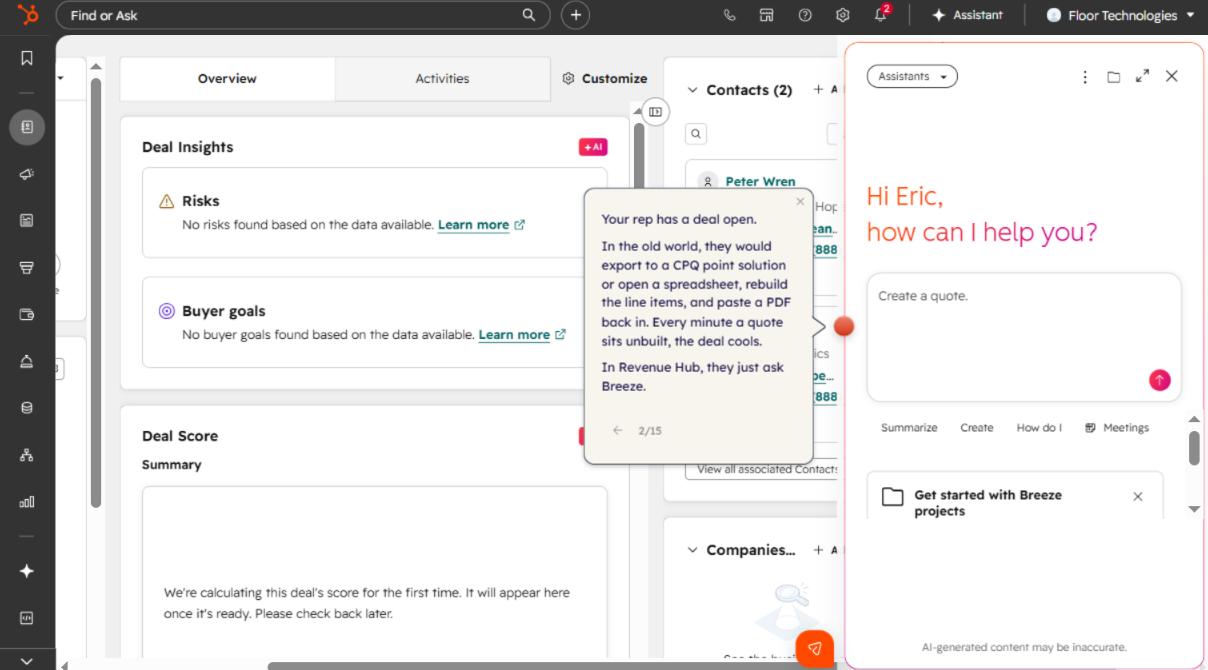
Source: HubSpot
The tradeoff is scope. When you need to do everything (marketing automation, sales sequences, service tickets, content management, billing), you spread development resources across a lot of surface area. HubSpot's sales prospecting features are good, but they're one part of a much larger platform.
And HubSpot's pricing complexity (per-seat, per-hub, with mandatory onboarding fees at Professional and Enterprise tiers) means costs escalate quickly as teams grow.
Overloop makes no attempt to be a CRM. It's an outbound execution layer. You source prospects, build campaigns, and run sequences. When a prospect replies, you move the conversation into your CRM through native integrations with HubSpot, Pipedrive, or Salesforce (Salesforce requires the Enterprise plan). This keeps the tool simple, but it means Overloop handles only one slice of the revenue process.
ZoomInfo sits between these two models. It's not a CRM, but it's far more than a prospecting database. ZoomInfo provides the intelligence layer that makes CRMs and outreach tools more effective. GTM Workspace consolidates a seller's complete book of business (pulling from CRM, ZoomInfo data, conversation history, and market signals) into one interface.
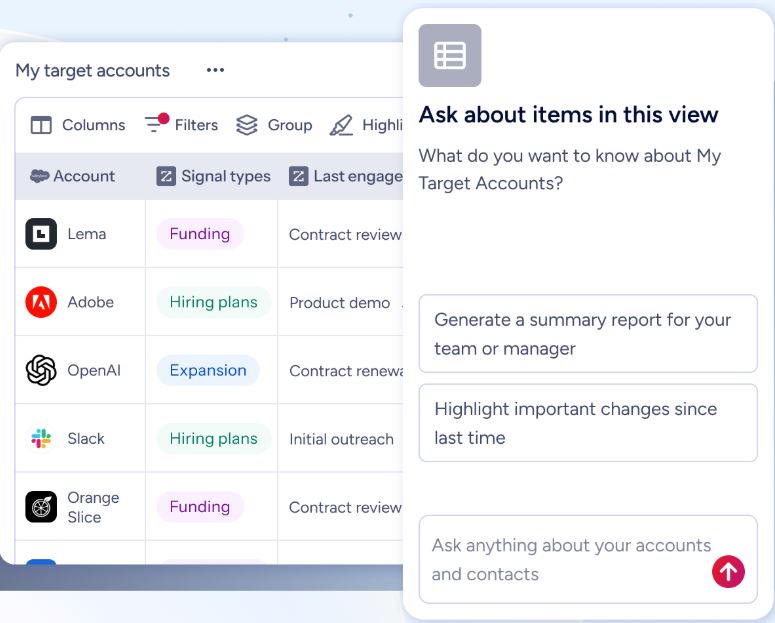
GTM Studio gives marketers and RevOps a canvas to design, enrich, and activate GTM plays in natural language.
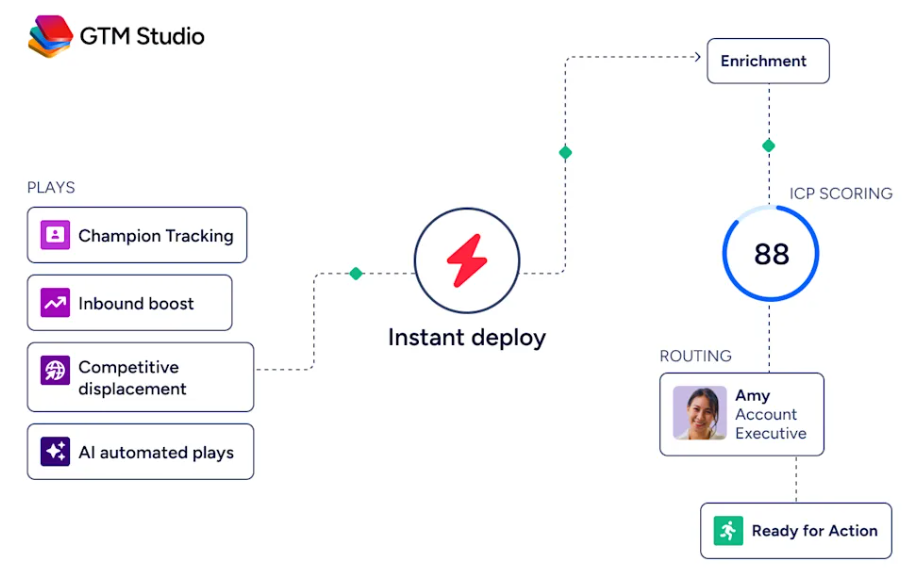
And because ZoomInfo integrates natively with Salesforce, HubSpot, and Microsoft Dynamics, the intelligence flows into whatever CRM you already use rather than replacing it.
Buyer intent: knowing when to reach out changes everything
This is where the gap between these platforms is widest.
HubSpot tracks engagement within its own ecosystem well. You can see which contacts opened emails, visited pages, filled out forms, and clicked CTAs. The Breeze Prospecting Agent monitors enrolled prospects for buying signals like leadership changes, funding rounds, and engagement spikes. But HubSpot does not track third-party buyer intent. It doesn't know that a company spent last week researching your product category on industry publications. Its signals stop at HubSpot's walls.
Overloop has no intent data capabilities. It tells you how your campaigns are performing (opens, clicks, replies) but nothing about whether a prospect was already researching your category before you reached out.
ZoomInfo operates a dedicated intent data infrastructure. ZoomInfo Intent tracks signals from 210 million IP-to-Organization pairings and 6 trillion+ new keyword-to-device pairings sourced monthly.
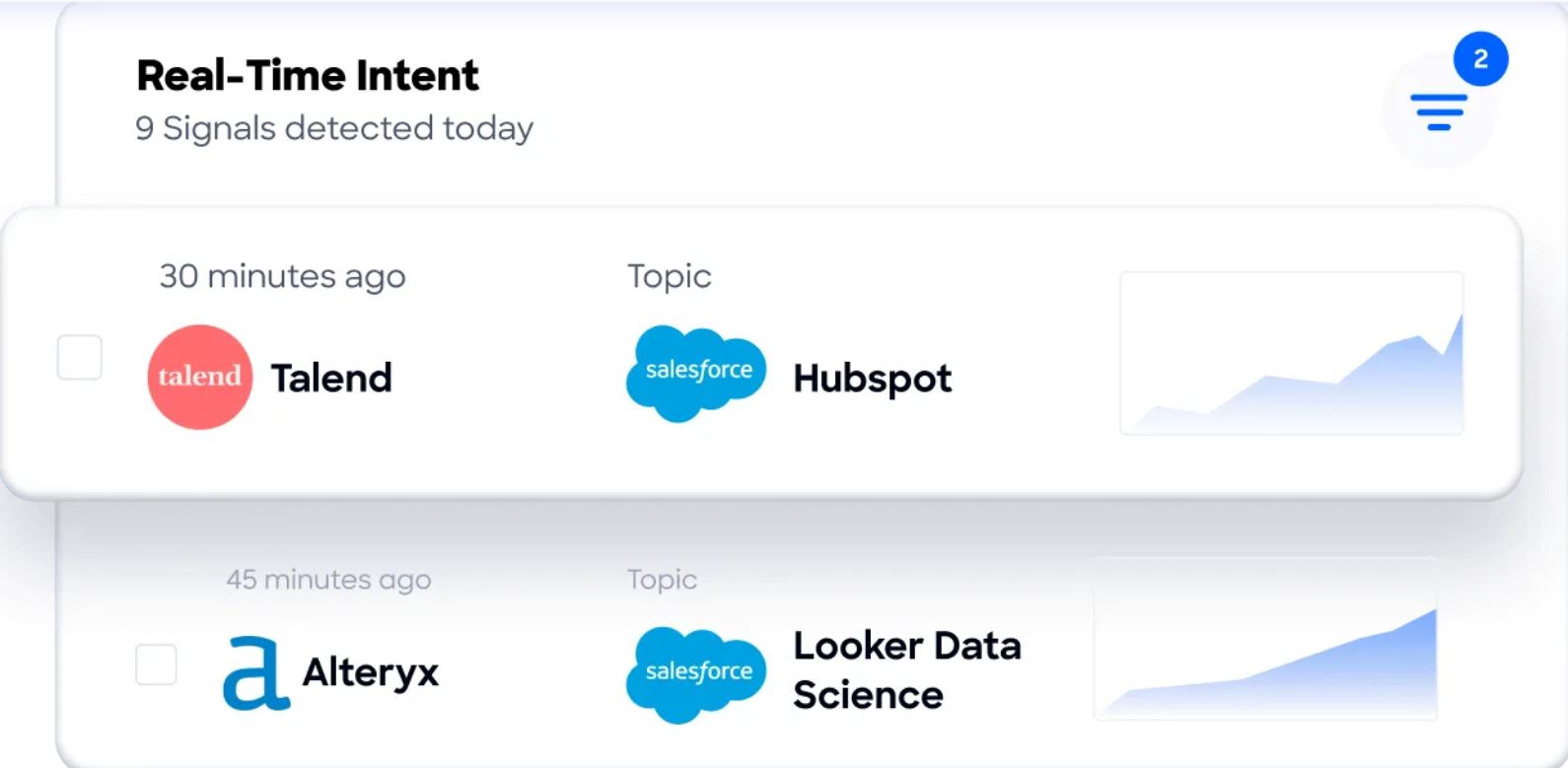
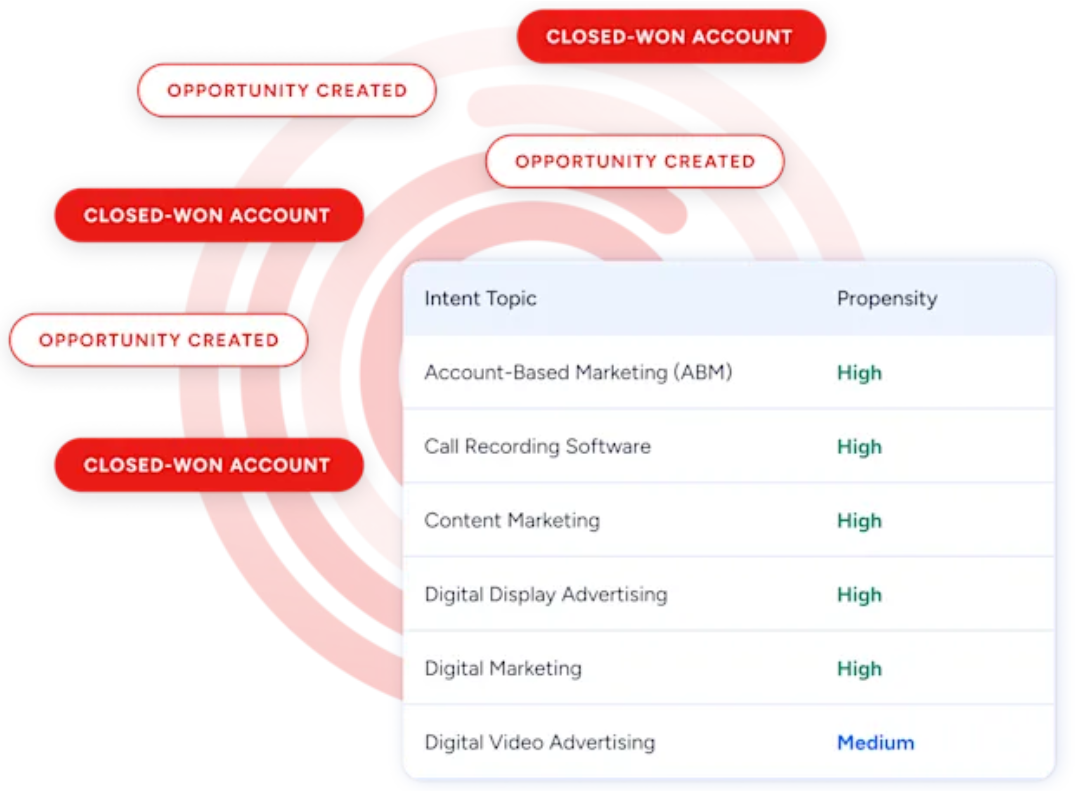
Guided Intent, exclusive to ZoomInfo, identifies topics historically correlated with deal success rather than requiring manual topic selection.
WebSights resolves anonymous website traffic to companies and specific buying team members.
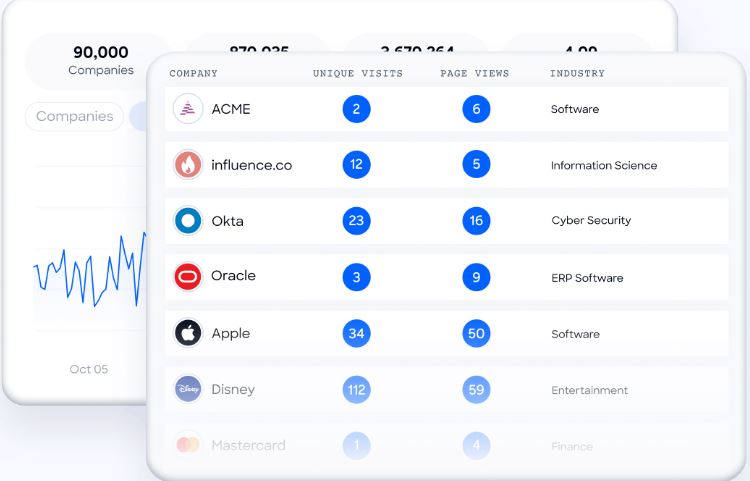
The difference is measurable. Intent data means your reps contact accounts that are in-market, not just accounts that match a filter. ZoomInfo was named a Leader in the Forrester Wave for Intent Data Providers (Q1 2025), receiving the highest possible scores across eight criteria. Forrester noted ZoomInfo had "the largest R&D investment of any provider in this evaluation."
"It's not just the data itself. It's more about the right data at the right time to help us reach out with the right message across that full buyer journey." (Redwood Logistics)
For a deeper look at how HubSpot and ZoomInfo compare on data, intent signals, and AI capabilities, see our HubSpot vs. ZoomInfo comparison.
AI capabilities reflect each platform's data depth
AI in sales tools is only as useful as the data it can reason about.
HubSpot's Breeze AI runs across all hubs and includes several specialized agents: Customer Agent (resolves customer inquiries), Prospecting Agent (researches prospects and drafts outreach), Data Agent (natural language CRM queries), and a general Breeze Assistant for in-app help.
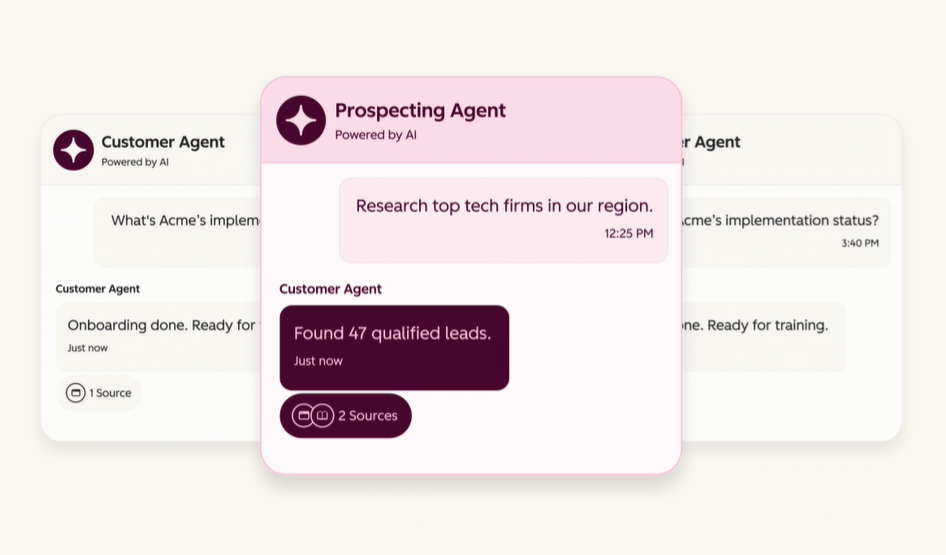
Source: HubSpot
These agents work well within HubSpot's ecosystem. However, several features (AI-Powered Segmentation, Personalization, Marketing Studio) are still in Beta, and the AI's context is bounded by what's inside HubSpot's platform.
Overloop's AI focuses on email writing. It analyzes each prospect's website and social profiles to generate personalized cold emails without templates or merge tags. Campaign design is also AI-assisted, drawing on what the company describes as 10 years of outbound expertise and 100,000+ campaigns.
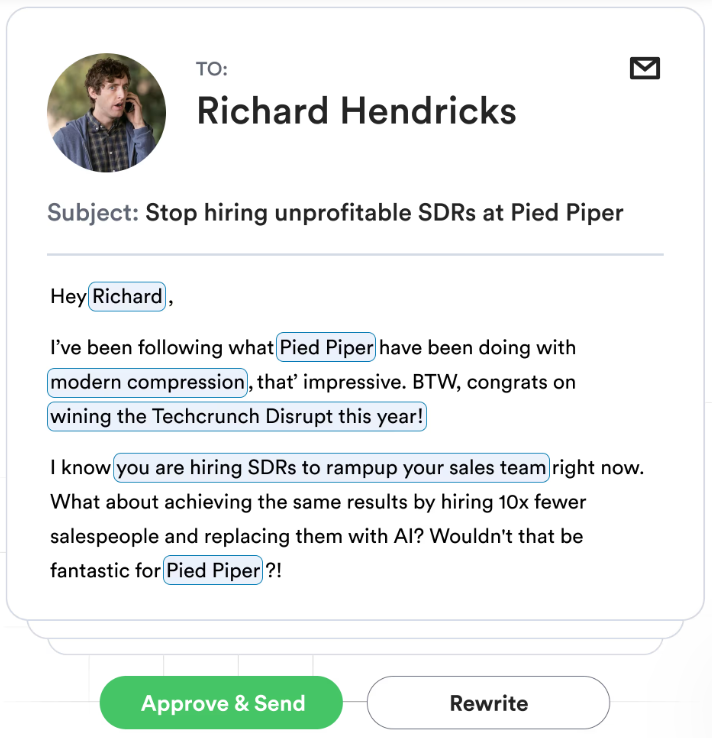
Source: Overloop
For a small team that needs personalized outreach fast, it works. But there's no AI for account research, deal analysis, or strategic recommendations.
ZoomInfo's AI operates on a richer data layer. The GTM Context Graph combines ZoomInfo's third-party intelligence with a customer's CRM records, conversation transcripts, and behavioral signals.
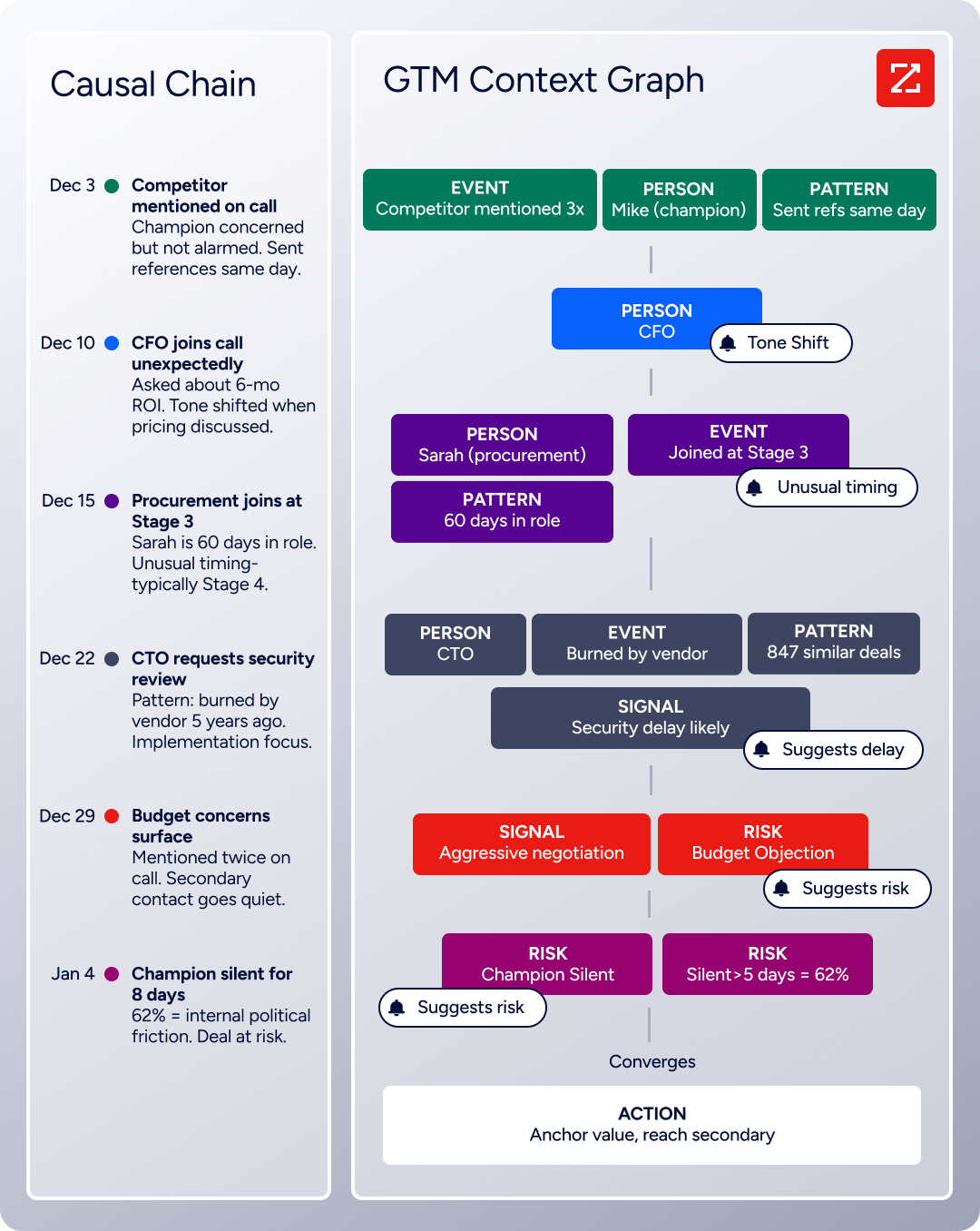
As ZoomInfo's CPO Dominik Facher explains: "The CRM recorded the state change. It has no record of why it happened." The GTM Context Graph captures that "why" by connecting signals, relationships, and patterns from thousands of deals.
In GTM Workspace, AI agents handle account research, outreach drafting, CRM updates, and signal monitoring. The AI Assistant generates 10-second account briefs pulling CRM history, company news, ZoomInfo signals, and stakeholder context.
And because the same intelligence is available via API and MCP, teams can build custom AI agents that access ZoomInfo's data natively (currently supported in Claude and ChatGPT).
"ZoomInfo's not just a contact data company anymore. They've built a full system of execution. GTM Intelligence works the list, writes the outreach, triggers the play, and helps drive predictable growth." (Levanta)
Pricing models reflect different markets
The pricing structures tell you who each platform was built for.
HubSpot uses a hybrid model combining seat-based and contact-based pricing. The free CRM is useful: unlimited contacts (up to 1M records), one deal pipeline, and basic tools. Starter plans begin at $20/seat/month (monthly billing). But costs climb at Professional ($100/seat/month for Sales Hub, plus a $1,500 onboarding fee) and Enterprise ($150/seat/month annual, plus a $3,500 onboarding fee).
A hidden cost: when subscribing to multiple Hubs at different tiers, all Core Seats are billed at the highest tier. Marketing Hub adds contact-based pricing on top of seat pricing, starting at $800/month for Professional with 2,000 marketing contacts.
Overloop is simpler. Starter costs $69/user/month (250 credits, 1 email account, 3 campaigns). Growth costs $99/user/month (500 credits, 3 email accounts, 10 campaigns, HubSpot/Pipedrive integration). Enterprise is custom-priced and required for Salesforce integration. Credits cover database lookups and email verification (1 credit each); campaign sends are free.
The catch: credits don't roll over, and there's no notification when depleted, a frustration flagged repeatedly in user reviews.
ZoomInfo uses consumption-based pricing with no published prices. All plans are custom-quoted based on usage patterns, seats, credit volume, and features. The entry point is higher than either HubSpot or Overloop, reflecting ZoomInfo's enterprise focus (1,921 customers at $100K+ annually).
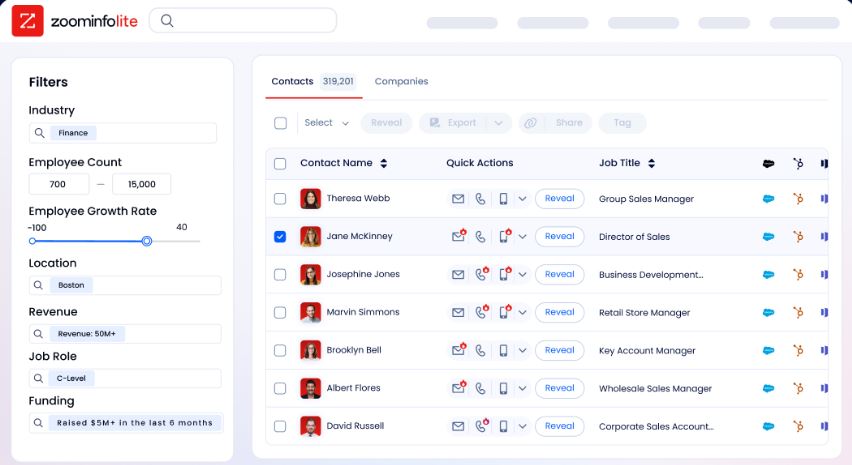
ZoomInfo also offers ZoomInfo Lite as a permanent free tier (no credit card, no time limit) with access to the B2B database, 10 monthly export credits, Chrome extension, and HubSpot integration. A 7-day free trial of the full platform is also available.
The ROI calculation differs by platform. HubSpot's value compounds when you use multiple Hubs together, replacing several point solutions. Overloop's value is direct: time saved on manual LinkedIn and email prospecting. ZoomInfo's value is upstream of both: better data and better targeting mean higher connection rates, more relevant conversations, and faster pipeline creation, regardless of which tools you use to execute.
Integration ecosystems determine how well each tool fits your stack
HubSpot has the largest ecosystem of the three, with over 2,000 app integrations and 2.5 million active installs. The marketplace covers CRM, marketing, sales, service, and operations tools. Native integrations with Salesforce, Gmail, Outlook, Slack, Zoom, and dozens more are mature and bidirectional.
For developers, HubSpot offers a REST API with versioning, official SDKs in six languages, and a remote MCP server for AI agent access. HubSpot's integration breadth is a real competitive advantage.
Overloop has a narrow but functional integration set. HubSpot and Pipedrive integrations are available on the Growth plan; Salesforce requires Enterprise. CRM integrations support user mapping and custom field mapping, but prospect replies cannot be synced from Overloop into HubSpot, a documented limitation. Zapier is available on all plans, and a REST API is available on Growth and above.
Slack integration handles notifications. For teams using Overloop alongside a CRM, the integrations work but don't run deep.
ZoomInfo operates a Marketplace with 172+ partners spanning CRM, marketing automation, sales engagement, data warehouses, and AI tools. Featured native integrations include Salesforce, HubSpot, Microsoft Dynamics 365, Snowflake, and Salesloft. The Cloud Partners program delivers ZoomInfo data directly into AWS, Google Cloud, Snowflake, and Databricks.
The ZoomInfo MCP server connects AI models directly to ZoomInfo's B2B data as a native tool, currently supporting Claude and ChatGPT.
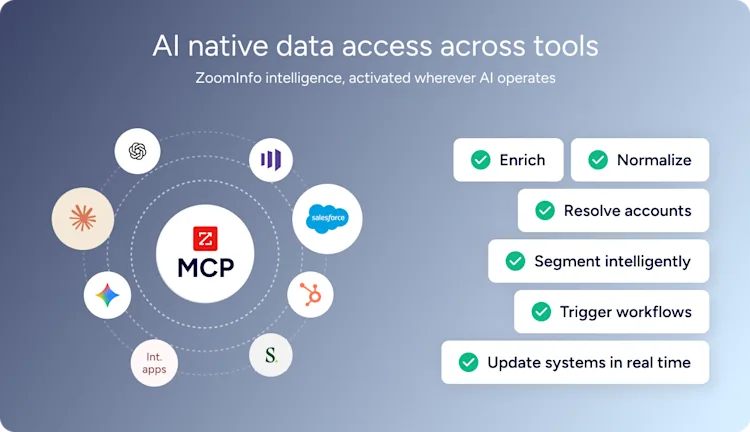
API access is included in all relevant plans, so ZoomInfo's data works wherever your team works, not just inside ZoomInfo's UI.
Security and compliance matter for enterprise buyers
HubSpot maintains SOC 2 Type II, HIPAA attestation, GDPR and CCPA compliance, EU Cloud Code of Conduct Level 2, and TRUSTe certification. Data is encrypted with AES-256 at rest and TLS 1.2/1.3 in transit. An EU Data Center is available for data residency requirements.
Overloop is GDPR compliant and CASA Tier 2 certified, with all data hosted in EU infrastructure (Brussels, Belgium). A Data Processing Agreement is publicly available. The EU-native posture is a real differentiator for European buyers. However, SOC 2 is noted as "in progress" rather than certified, and ISO 27001 is not mentioned.
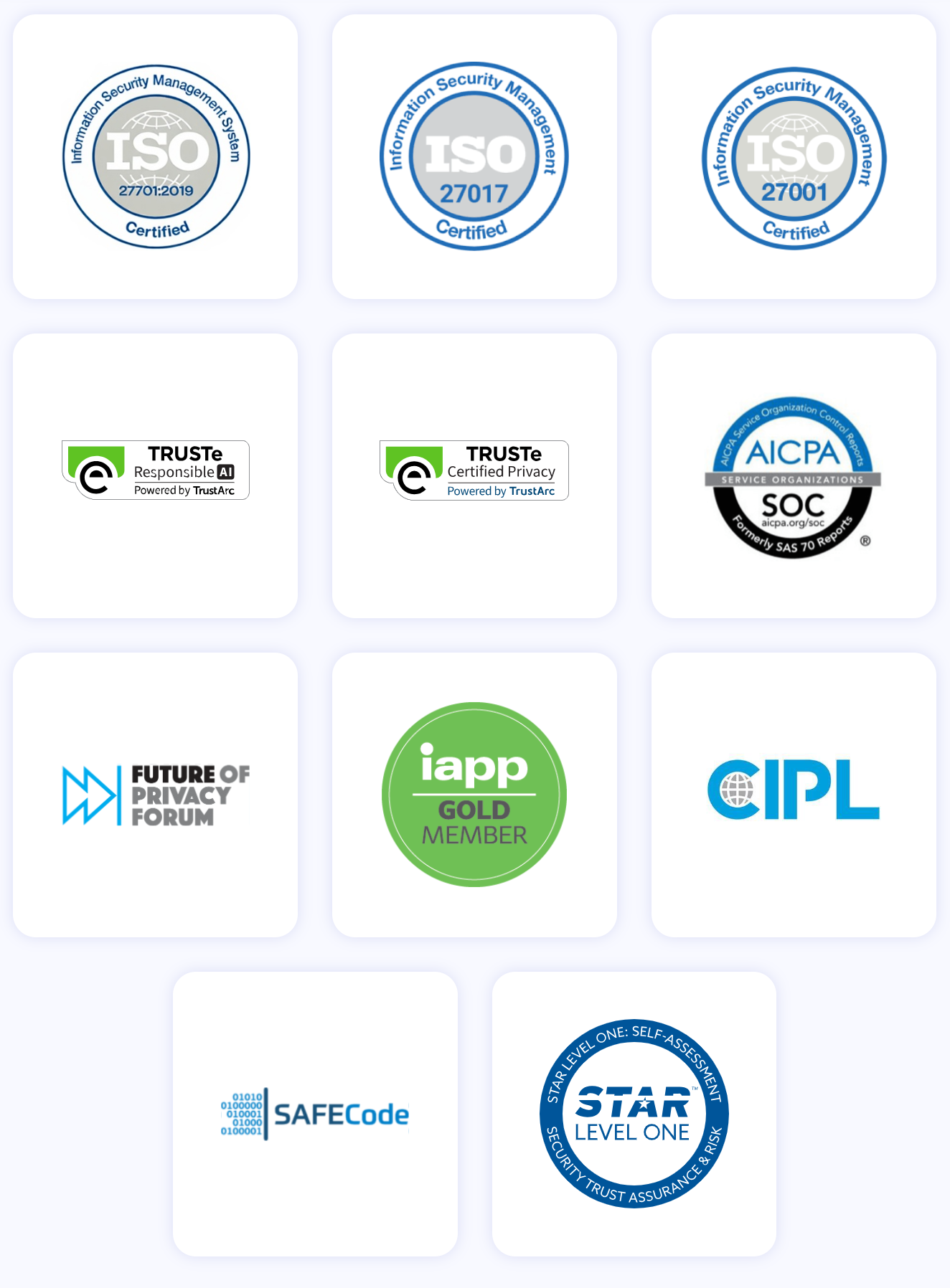
ZoomInfo carries the broadest certification stack: ISO 27001, ISO 27701, SOC 2 Type II, TRUSTe GDPR, and TRUSTe CCPA, all renewed annually. ZoomInfo is a registered data broker in California and Vermont and maintains a dedicated Trust Center. For regulated industries and enterprise procurement, ZoomInfo's security posture is the strongest of the three.
HubSpot vs. Overloop vs. ZoomInfo: Which should you choose?
The right platform depends on what role prospecting plays in your business and how much your outcomes depend on data quality.
Choose HubSpot if:
You need a unified CRM, marketing, sales, and service platform
Your team already has a reliable source of B2B contact data
Marketing automation and content-led inbound are central to your strategy
You want every team working from a single shared customer record
You value ease of use and can invest in the platform long-term
Choose Overloop if:
You're a small B2B team running LinkedIn-first outbound
You need a quick, affordable way to launch cold email and LinkedIn campaigns
You're based in Europe and GDPR compliance is a primary concern
You already have a CRM and need a dedicated outbound execution layer
Phone-based selling is not part of your workflow
Choose ZoomInfo if:
The quality and depth of your prospecting data is a competitive advantage
You need buyer intent signals to prioritize outbound and inbound together
Direct-dial phone numbers and verified contact data drive your sales motion
You want AI that reasons about your deals, not just your contact list
You need an intelligence platform that works inside any tool in your stack
See ZoomInfo in action with a free trial or start with ZoomInfo Lite at no cost.
HubSpot gives you the CRM. Overloop gives you the outbound automation. ZoomInfo gives you the data intelligence that makes both more effective. For teams serious about pipeline generation, the question is less "which one" and more "what's the foundation?" Your CRM is only as good as the data inside it. Your outreach is only as effective as the contacts you're targeting.
Your timing is only as sharp as the signals you can detect. ZoomInfo provides that foundation, and it works whether you run your prospecting through HubSpot, Overloop, or any other tool in your stack.
HubSpot vs. Overloop vs. ZoomInfo FAQ
What happened to Prospect.io?
Prospect.io rebranded to Overloop in 2021, shifting from an email-finding Chrome extension to a multichannel sales engagement platform. In December 2025, Overloop was acquired by Sortlist, a European marketplace connecting buyers with agencies. The product remains available under the Overloop name, and existing customer pricing and data were not changed by the acquisition.
Which platform has the best B2B contact data?
ZoomInfo has the largest and most verified B2B database: 500M contacts, 200M+ verified business emails, 135M+ verified phone numbers, and 120M direct dials, backed by 300+ human researchers and up to 95% accuracy on first-party data. Overloop offers a 450M+ contact database with self-reported 93% email accuracy but no phone numbers.
HubSpot does not include a prospecting database; it stores and manages contacts you import from other sources.
Can I use ZoomInfo with HubSpot or Overloop?
Yes. ZoomInfo has a native integration with HubSpot for CRM enrichment, lead routing, and data sync. Overloop also integrates with HubSpot on its Growth plan. Many teams use ZoomInfo as the data and intelligence layer feeding contacts and signals into HubSpot for CRM management or Overloop for outbound execution.
Which platform is best for LinkedIn prospecting?
Overloop is the strongest for automated LinkedIn outreach, with cloud-based automation handling connection requests, profile visits, and messages within safety limits. HubSpot supports LinkedIn Sales Navigator tasks within its sequences but does not automate LinkedIn actions.
ZoomInfo does not include native LinkedIn automation but provides the verified contact data and intent signals that inform which prospects to target on LinkedIn.
Which platform offers buyer intent data?
Only ZoomInfo provides buyer intent data, tracking signals from 210 million IP-to-Organization pairings and 6 trillion+ new keyword-to-device pairings sourced monthly. ZoomInfo was named a Leader in the Forrester Wave for Intent Data Providers (Q1 2025). HubSpot tracks engagement within its own platform but does not monitor third-party buying behavior. Overloop has no intent data capabilities.
How do the pricing models compare?
HubSpot uses a hybrid seat-plus-contact model starting free, with paid plans from $20/seat/month (Starter) up to $150/seat/month (Enterprise), plus mandatory onboarding fees at Professional and Enterprise tiers. Overloop charges $69-99/user/month with credit-based prospecting limits.
ZoomInfo uses consumption-based pricing (no published prices) but offers a permanent free tier (ZoomInfo Lite) with 10 monthly export credits and a 7-day full trial.
Which platform is best for small teams versus enterprise?
Overloop is designed for small B2B teams (1-50 employees) running founder-led or small-team outbound, with per-seat pricing and a simple feature set. HubSpot scales from solopreneur to enterprise, with its Starter tier targeting small businesses and Enterprise tier supporting complex organizations.
ZoomInfo focuses on enterprise and upper mid-market, with 1,921 customers spending $100K+ annually, though ZoomInfo Lite provides a free entry point for smaller teams.
Do any of these platforms include a phone dialer or direct-dial numbers?
ZoomInfo is the only platform with a verified direct-dial phone database (120M numbers). HubSpot Sales Hub includes call tracking and a power dialer but does not provide phone number data. Overloop does not support phone as a channel, covering only email and LinkedIn outreach.
See how HubSpot compares against other CRMs and platforms:
