
Choosing between HubSpot and Salesflare for your B2B sales process comes down to five questions:
Do you need a full customer platform covering marketing, sales, and service, or a CRM built for selling?
Is your sales team closer to 5 people or 50, and how fast do you expect it to grow?
How much time are your reps willing to spend maintaining the CRM versus selling?
Are you working only with contacts you've already met, or do you need to find and reach new buyers at scale?
Is the quality of your sales intelligence (knowing who to contact, when to engage, and why) as important as where you track those interactions?
In short, here's what we recommend:
HubSpot is a customer platform for B2B companies that want marketing, sales, and service under one roof. Its Smart CRM connects six product hubs with a shared data layer, so every team sees the same contact record from first website visit through closed deal and ongoing support. With a permanent free CRM tier, 2,000+ app integrations, and an AI layer called Breeze that automates tasks from prospect outreach to customer support, HubSpot offers depth for growing teams.
That depth comes with pricing complexity, though. Per-seat, per-hub billing with mandatory onboarding fees at Professional and Enterprise tiers means costs climb faster than most buyers expect.
Salesflare is a CRM for small B2B sales teams who refuse to do data entry. It automatically logs emails, meetings, and phone calls from your connected inbox and calendar, keeping your pipeline current without asking reps to type a note. With pricing starting at $29/user/month and G2's Fastest Implementation award, Salesflare gets teams selling in under 30 minutes.
But its strength is also its ceiling: limited reporting, no native dialer, and no marketing or service tools mean teams with broader needs will eventually look elsewhere.
Both platforms handle the CRM side of B2B sales well. HubSpot manages it with platform breadth, Salesflare with automated simplicity. But a CRM only manages the relationships you already have. The harder question: how do you find the right buyers to fill your pipeline, and how do you know when they're ready to engage?
ZoomInfo is a go-to-market platform that lets your sales reps walk into every call knowing why the deal is moving, who champions it, and what to do next. Where HubSpot and Salesflare manage the contacts you've already captured, ZoomInfo tells you which new relationships to build and when to act.
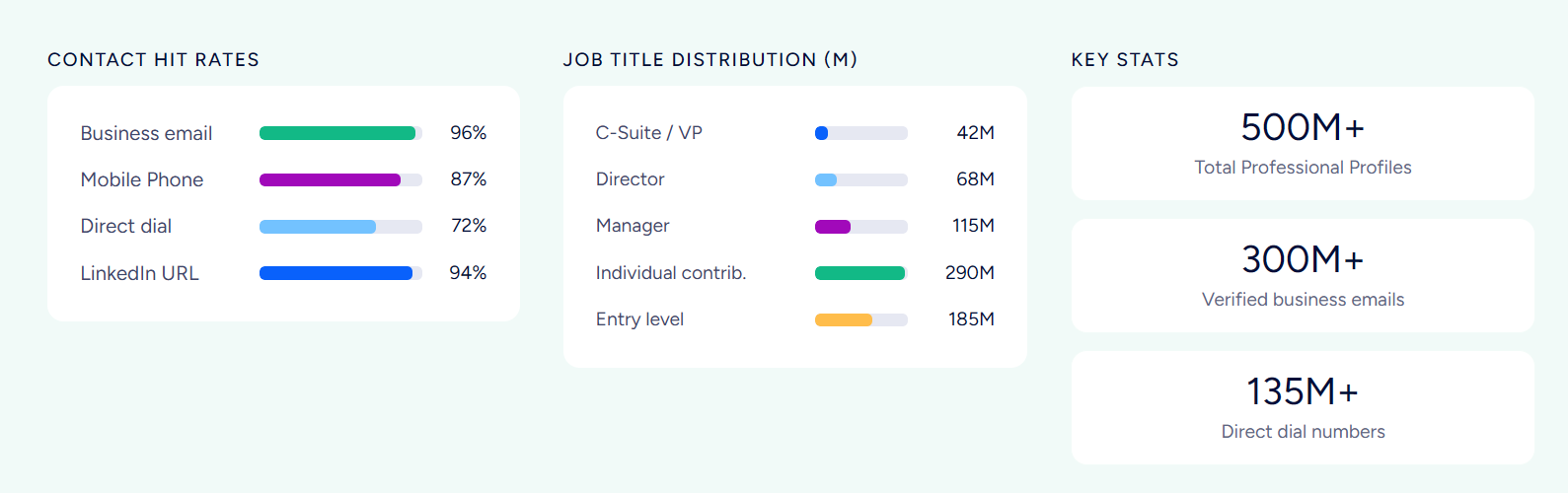
That capability comes from the GTM Context Graph, an intelligence layer built on a B2B dataset of 500M contacts, 100M companies, 135M+ verified phone numbers, and 200M+ verified business emails, combined with your CRM records, conversation transcripts, and behavioral signals.
Sales teams access this through GTM Workspace, which drafts outreach and prioritizes accounts based on buying signals. Marketers and RevOps use GTM Studio to build and launch go-to-market plays in minutes. For teams that want ZoomInfo's intelligence inside their existing tools, APIs and MCP deliver the same data into any front-end, including HubSpot.
If your sales team needs better intelligence on who to contact and when to engage, start a free trial to see how ZoomInfo works.
HubSpot vs. Salesflare vs. ZoomInfo at a glance
HubSpot | Salesflare | ZoomInfo | |
|---|---|---|---|
Primary function | CRM + marketing + sales + service platform | Automated sales CRM | B2B data, intelligence, and go-to-market platform |
Best for | Growing teams needing one platform | Small B2B teams (under 50 employees) | Teams that need to find and reach buyers at scale |
Starting price | Free CRM; Sales Hub from $20/seat/mo | $29/user/mo (annual) | Free (ZoomInfo Lite); paid plans custom-quoted |
Contact database | Stores your contacts (up to 15M) | Stores your contacts (unlimited) | 500M contacts, 100M companies, 135M+ verified phones, 200M+ verified emails |
Data approach | Manual entry + some AI enrichment | Automated from email, calendar, LinkedIn | Third-party B2B data + intent signals |
Buyer intent signals | Website tracking, email engagement | Email opens, link clicks, website visits | Intent data: 210M IP-to-Org pairings, 6T+ keyword signals monthly |
AI capabilities | Breeze AI (agents, assistant, content) | AI timeline summaries, email drafting | GTM Context Graph + AI agents in GTM Workspace |
Integrations | 2,000+ native apps | Zapier, Make, REST API | 120+ native integrations + API + MCP |
Free plan | Yes (permanent) | No (free trial with extension) | Yes (ZoomInfo Lite, permanent) |
A full platform, a focused CRM, and an intelligence layer
The three platforms sit in different parts of the sales technology stack. Understanding where each fits clarifies the real decision.
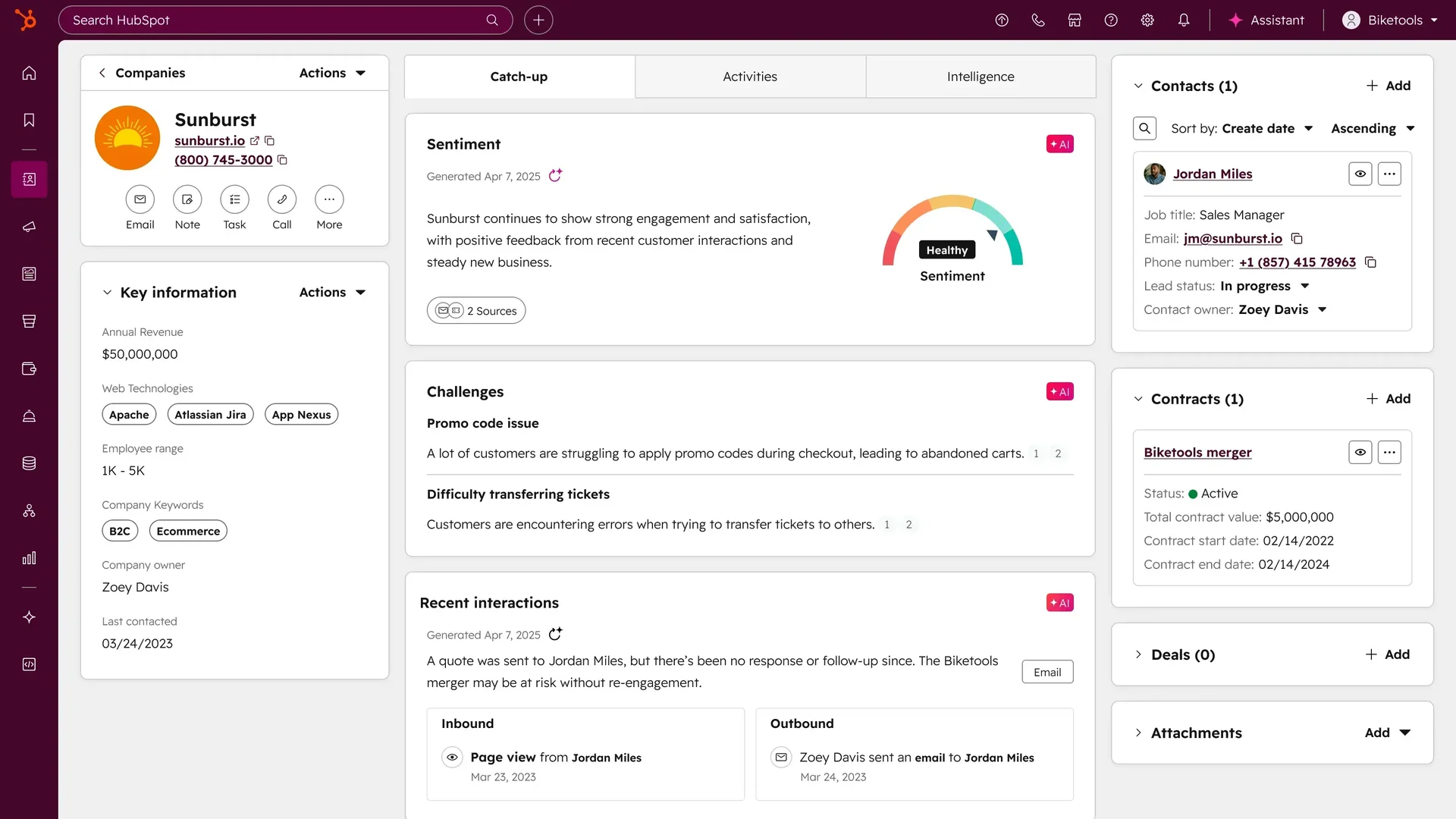
HubSpot is a horizontal platform. Marketing Hub handles lead generation and email campaigns. Sales Hub manages pipeline and outreach. Service Hub runs customer support. Content Hub publishes website pages. Data Hub cleans and connects records. Commerce Hub handles quotes and payments. All six share a single Smart CRM, so a marketing-qualified lead flows into the sales pipeline without a data handoff, and a closed deal becomes a support ticket without switching tools. For teams that want one system for everything customer-facing, this integration is an advantage.
Source: HubSpot
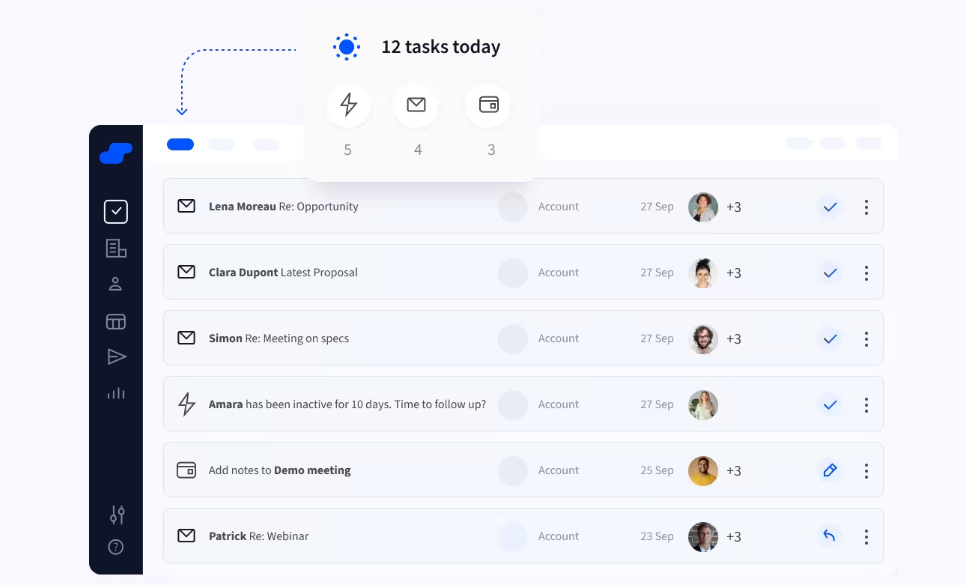
Salesflare is deliberately narrow. It handles one job: helping small B2B teams track and close deals. No marketing hub, no service desk, no content management. Instead, Salesflare puts its entire product into making that one job frictionless. Its automated data capture (pulling contacts from email signatures, logging meetings from calendars, tracking LinkedIn interactions through a sidebar) means reps spend time selling rather than updating records. For a five-person sales team at a B2B services firm, this focus matters more than a platform suite they'll never fully use.
Source: Salesflare
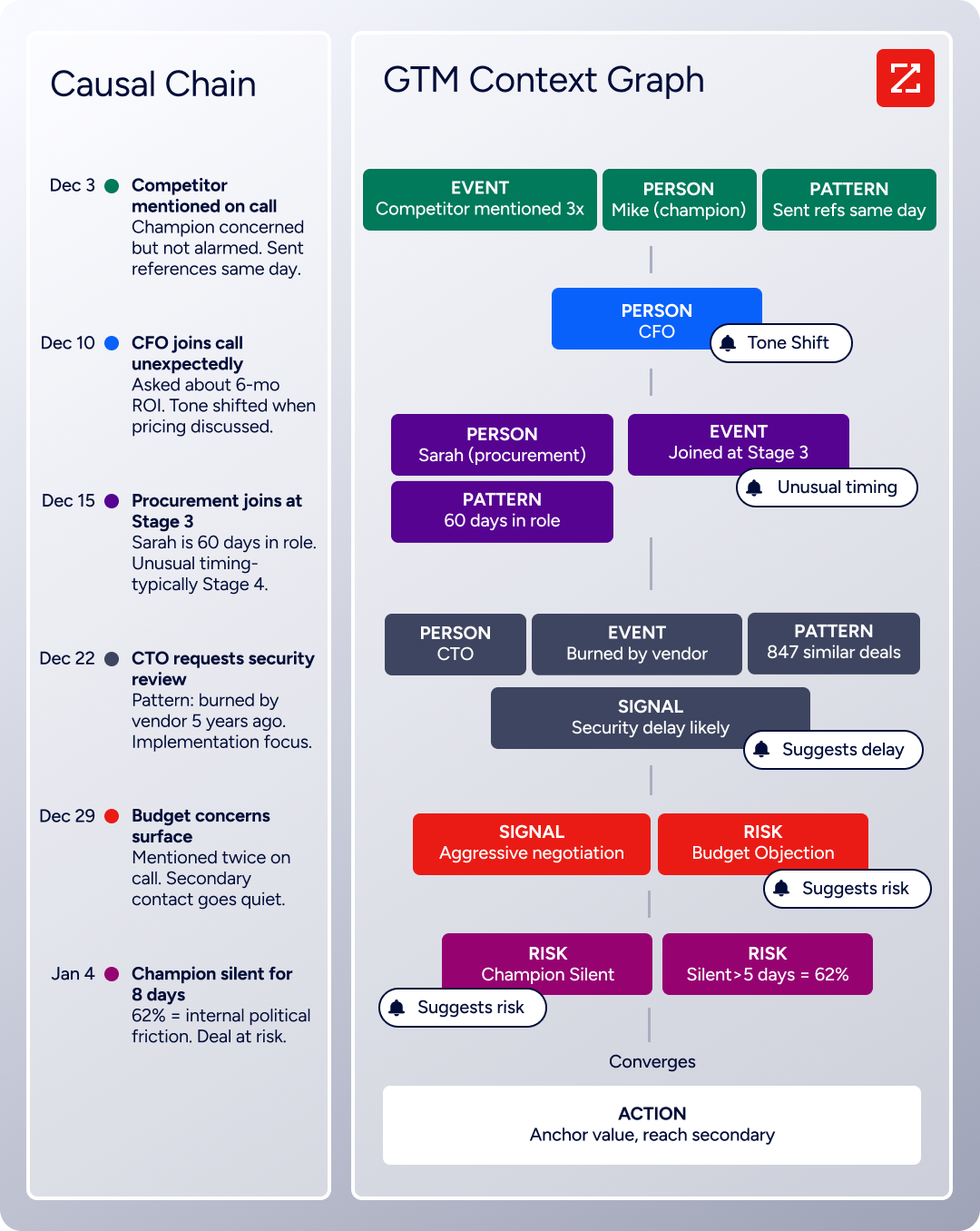
ZoomInfo operates at a different layer. Rather than storing your customer interactions (the CRM job), ZoomInfo provides the intelligence that tells you where to direct those interactions. Its B2B data platform identifies which companies match your ideal customer profile, which contacts hold buying power, and which accounts are researching solutions like yours. The GTM Context Graph connects these signals with CRM history, call transcripts, and third-party data to show why deals move and what to do next. ZoomInfo isn't competing with HubSpot or Salesflare for the CRM job. It solves the intelligence problem that both CRMs depend on but neither fully addresses.
The data gap that neither CRM fills on its own
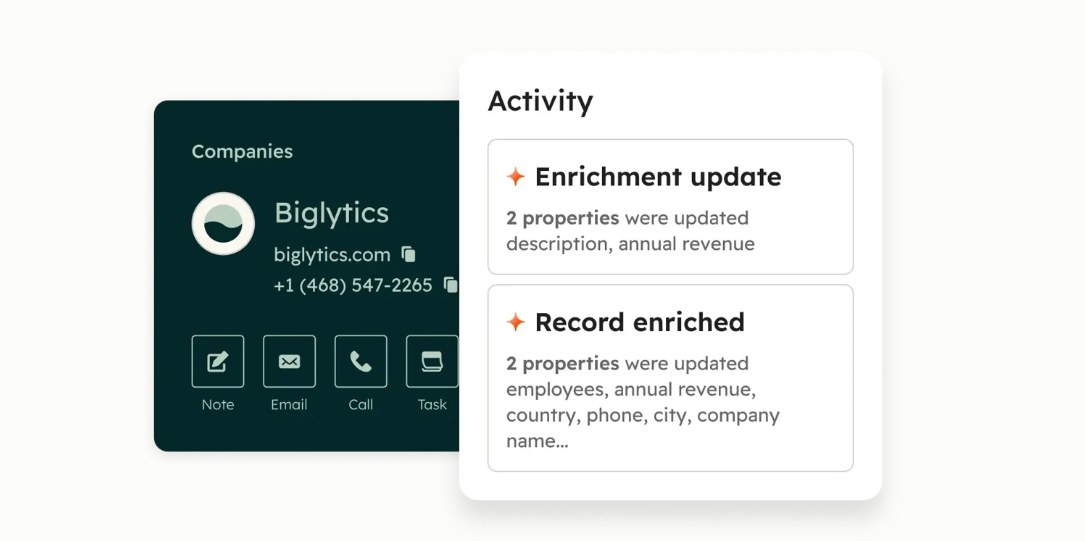
Both HubSpot and Salesflare capture data from sources your team already touches. HubSpot logs form submissions, email opens, and website visits. Salesflare pulls contacts from email threads, calendar invites, and LinkedIn profiles. Both give you a clear picture of people who have already engaged with your business.
Source: HubSpot
The problem is what they don't show you. Your CRM has no record of the 47 other companies researching your category right now who haven't visited your website yet. It doesn't know that a VP at a target account just changed jobs and is rebuilding their tech stack. It can't tell you which of your open deals has a buying pattern that matches your last 200 closed-won opportunities.
HubSpot's Smart CRM enrichment pulls some contact details from emails and public sources, and its Breeze AI layer adds context to records. Salesflare's data enrichment extracts phone numbers, titles, and company details from email signatures and public data. Both improve what's already in the system. Neither generates new prospect intelligence at volume.

Source: Salesflare
ZoomInfo was built to close this gap. Its data platform is backed by 300+ human researchers and achieves up to 95% accuracy on first-party data. Where Salesflare's Email Finder offers an email lookup with over 72% accuracy and a small monthly credit allotment (5 on Growth, 100 on Pro), ZoomInfo delivers 200M+ verified business email addresses and 120M direct-dial phone numbers. The scale difference isn't incremental. It's structural.
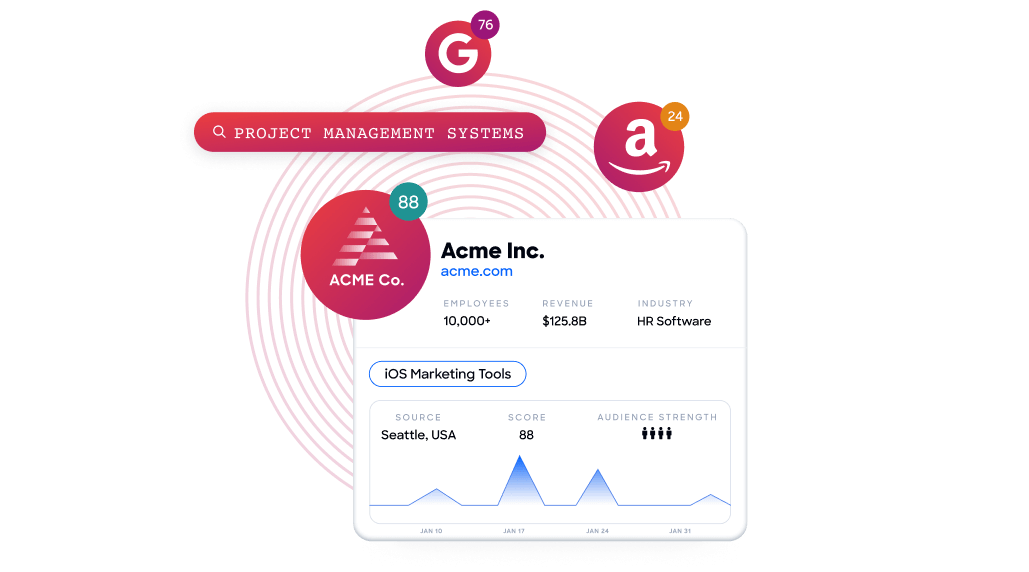
ZoomInfo's Intent data tracks signals from 210M IP-to-Org pairings and 6T+ new keyword-to-device pairings monthly, identifying companies researching topics related to your product before they fill out a form. The GTM Context Graph processes 1.5B+ data points daily, combining all of this with your CRM records and behavioral signals to reveal which accounts are in-market. Guided Intent, exclusive to ZoomInfo, identifies the research topics historically correlated with your closed-won deals rather than requiring you to guess which keywords matter.
"ZoomInfo gives us the information we need to execute. We don't have to go through and spend our time digging. It's already there, so we can be three steps ahead." (Vensure)
For a detailed look at how HubSpot and ZoomInfo compare on data and sales intelligence, see our HubSpot vs. ZoomInfo comparison.
Prospecting and pipeline management compared
Getting contacts into your pipeline and moving them through it is the core sales workflow. Each platform handles it differently.
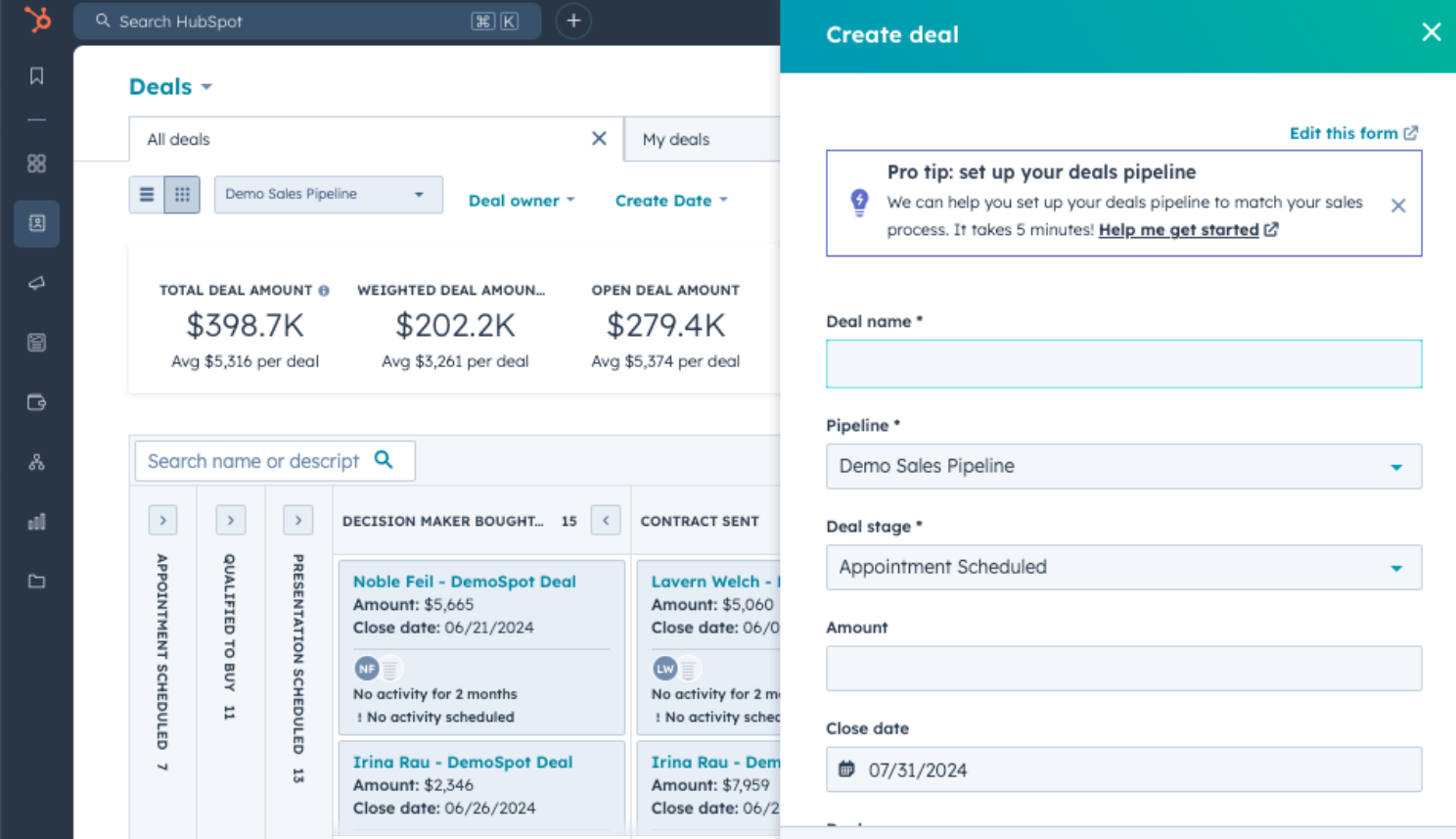
HubSpot Sales Hub provides a Lead Management workspace, customizable deal pipelines, and a Breeze Prospecting Agent that researches prospects and drafts personalized outreach from your CRM history. Sequences automate multi-step email follow-ups with call and LinkedIn tasks. Conversation Intelligence records and transcribes calls for coaching. The system covers the full sales cycle from prospecting through quoting and payment.
But the depth unlocks gradually: the free tier offers basic pipeline management, Starter adds email tracking and meeting links, and the features that make HubSpot powerful (sequences, AI prospecting, forecasting) require Professional at $100/seat/month plus a $1,500 onboarding fee.
Source: HubSpot
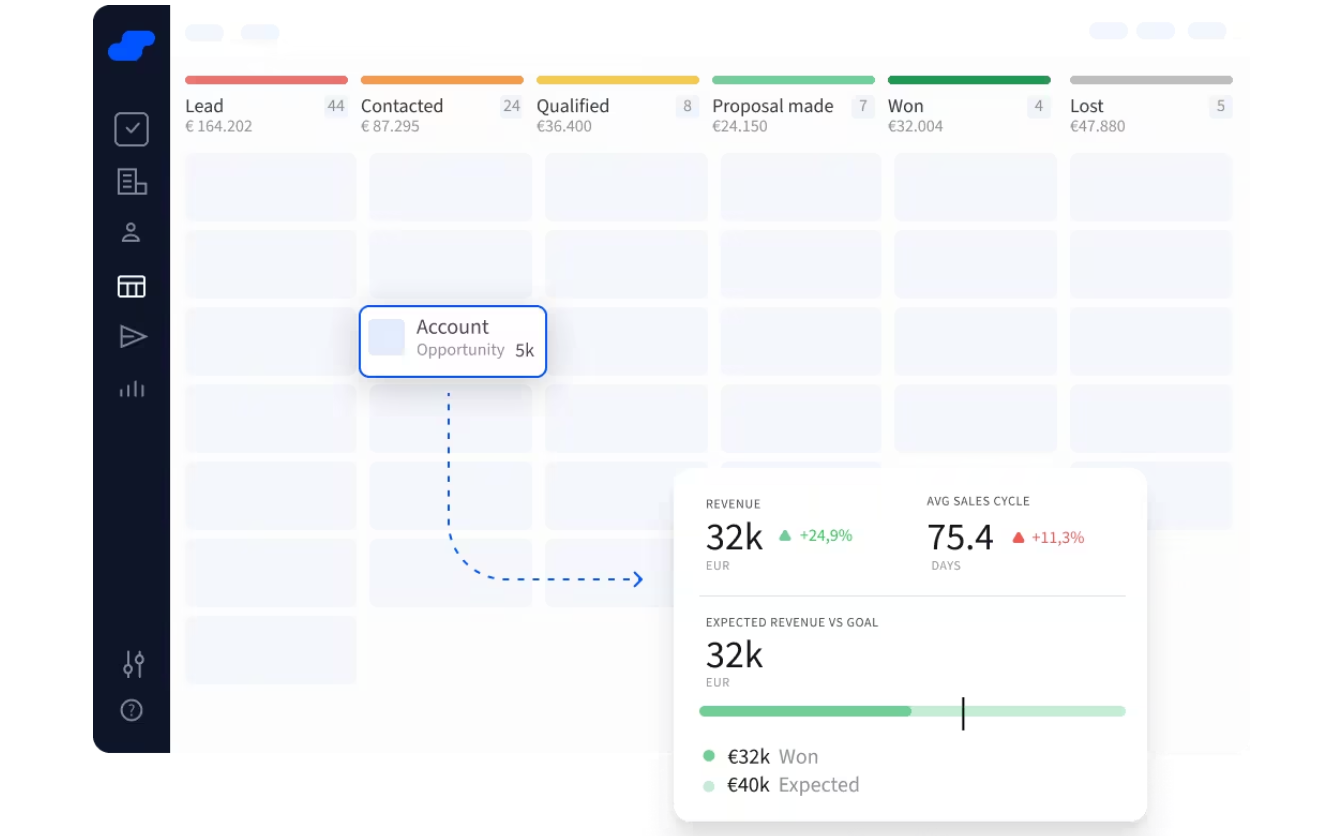
Salesflare centers its pipeline on visual kanban boards where reps drag deals between customizable stages. The system keeps the pipeline honest: automated follow-up reminders surface when a lead goes quiet, and live notifications alert reps when a prospect opens an email or visits the website. Salesflare's LinkedIn sidebar lets reps create accounts and contacts with one click while browsing profiles, and the built-in Lead Finder provides a basic prospect search inside the CRM. The workflow is clean and fast for small teams.
Where it falls short is scale: the Lead Finder database has limited coverage in some geographies and company sizes, and there is no conversation intelligence, no AI deal scoring, and no forecasting beyond basic pipeline reports.
Source: Salesflare
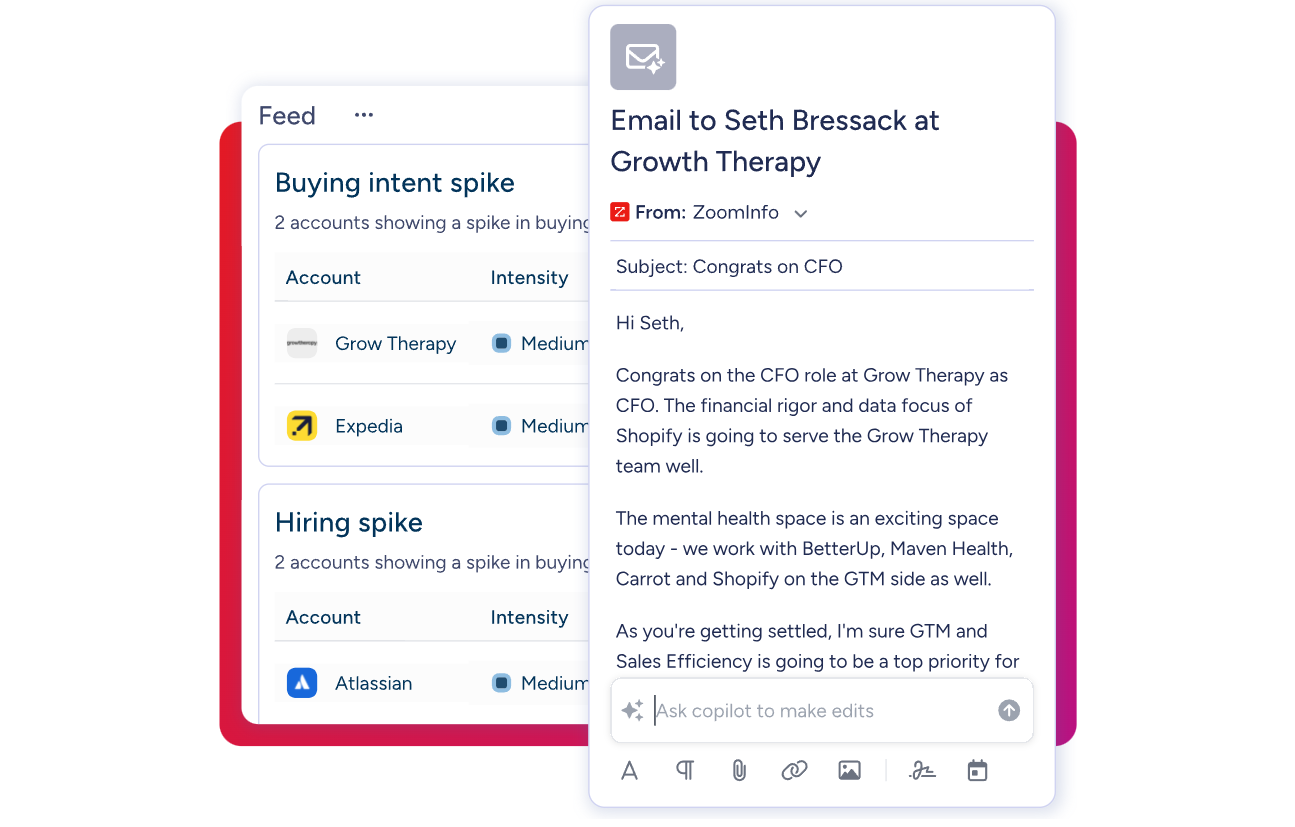
ZoomInfo reframes prospecting from "search and add" to "signal and act." GTM Workspace gives sellers a prioritized Action Feed of in-market buyers, with pre-drafted outreach for every signal, whether that's a G2 comparison, a funding event, or an executive hire. AI agents handle account research, draft personalized emails from full account context, and update CRM fields without the rep leaving the workspace. For pipeline management, ZoomInfo integrates natively with Salesforce, HubSpot, and Microsoft Dynamics, pushing intelligence and contact data into the CRM where deals are tracked.
The core difference: HubSpot and Salesflare help you manage the pipeline you've built. ZoomInfo helps you build a better pipeline in the first place.
"That combination of our internal CRM data, external signals, and AI that's given all that context has helped us craft very specific account- and persona-based messages. And people have responded to them right away." (Seismic)
Automation and AI capabilities
All three platforms invest in automation and AI, but their scopes differ.
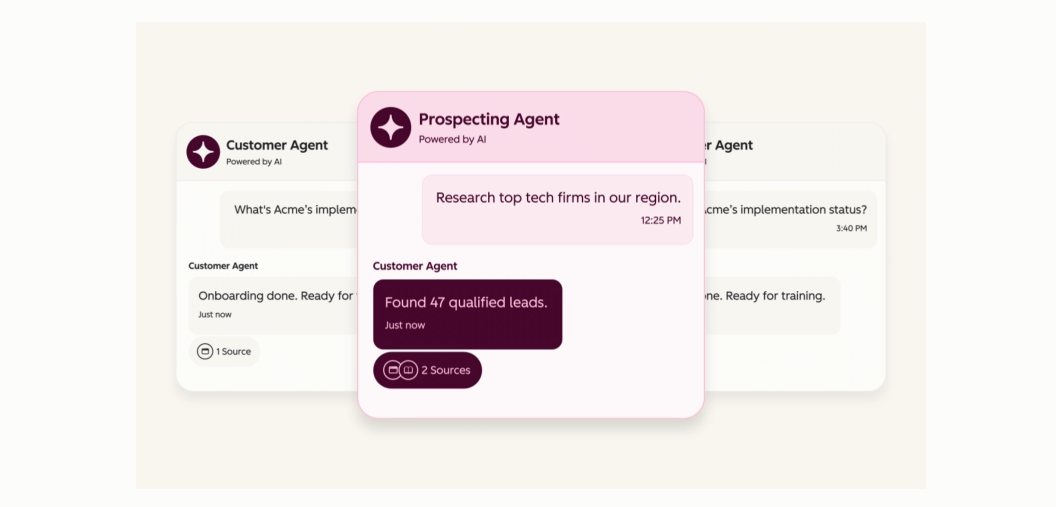
HubSpot offers the broadest automation footprint. Workflows trigger across marketing, sales, and service based on contact behavior, lifecycle stage changes, or deal properties. Breeze AI spans the full platform: the Customer Agent handles support inquiries across chat, email, and WhatsApp. The Prospecting Agent drafts outreach using CRM context. The Content Agent generates blog posts and social content. HubSpot's AI draws on your actual contact and deal data because it's built into the Smart CRM.
One limitation: several Breeze features (including AI-Powered Segmentation and Marketing Studio) are still in Beta. AI features also run on a credit system with monthly allotments that reset without rolling over.
Source: HubSpot
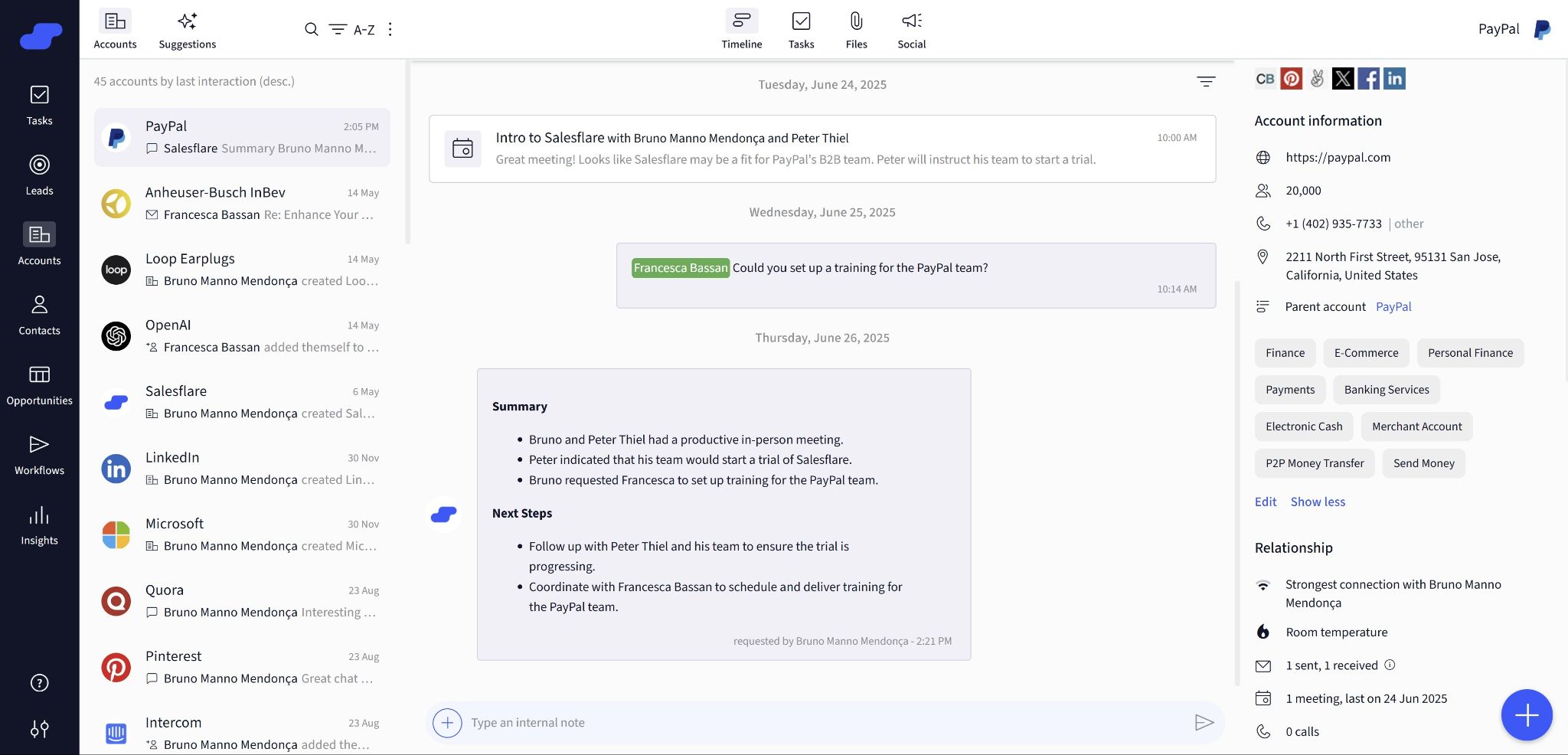
Salesflare automates CRM maintenance rather than the selling process itself. Email and meeting logging happens without rep action. Workflows send automated email sequences triggered by CRM filters, with configurable goals that stop the sequence when a prospect replies or clicks. The AI assistant summarizes timelines, suggests next steps, and answers questions about specific accounts. Salesflare has also announced upcoming MCP integration with ChatGPT and Claude, letting users interact with their CRM through AI assistants.
The automation is practical for small teams, but it stays within the boundaries of CRM data.
Source: Salesflare
ZoomInfo automates differently: instead of automating tasks inside a CRM, it automates the intelligence that drives those tasks. GTM Studio lets marketers and RevOps teams describe audiences in natural language, then enriches, scores, and routes those audiences into multi-channel plays (email, calls, ads, and direct mail) triggered by buyer behavior.
These plays run around the clock and get smarter as prospects respond. In GTM Workspace, AI agents monitor buying signals, draft outreach with full context, and surface next-best actions for every account. The intelligence behind all of this comes from the GTM Context Graph, which captures patterns across thousands of deals to predict what works next (a capability neither HubSpot nor Salesflare can replicate without access to the same third-party data and cross-customer deal patterns).
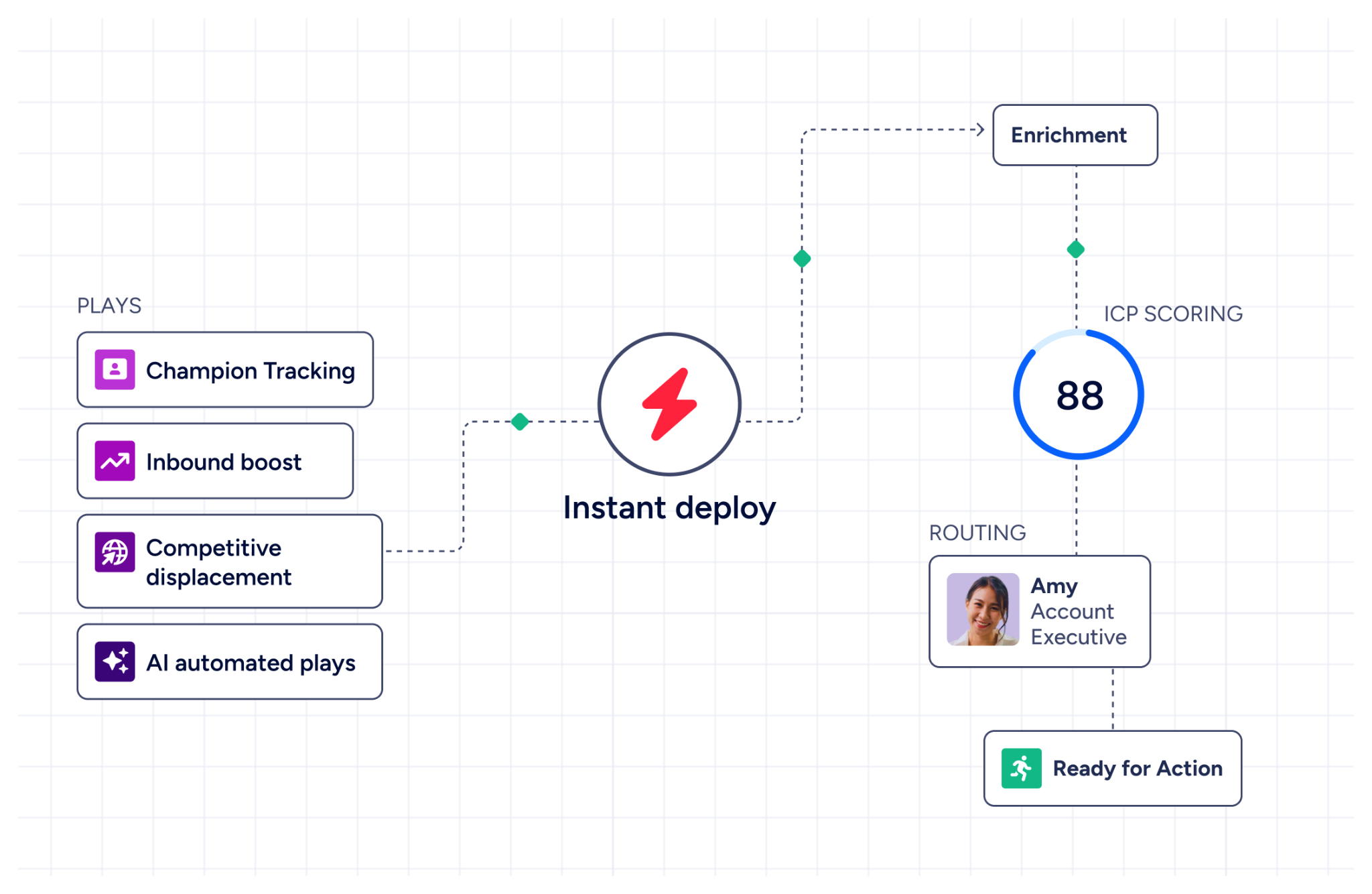
"ZoomInfo's not just a contact data company anymore. They've built a full system of execution. GTM Intelligence actually works the list, writes the outreach, triggers the play, and helps drive predictable growth." (Levanta)
Pricing tells you who each platform was built for
Each platform's pricing structure reveals its target buyer.
HubSpot uses a per-seat, per-hub model that starts generous and scales steeply.
The free CRM tier is useful: unlimited contacts (up to 1M records), basic pipeline management, meeting scheduling, and email tracking. But Sales Hub Professional at $100/seat/month is where most growing teams land, and it requires a $1,500 onboarding fee. Enterprise runs $150/seat/month with a $3,500 onboarding fee. Add Marketing Hub Professional at $800/month (annual) with its own $3,000 onboarding fee, and costs compound fast for teams that want the full platform.
A hidden cost: when subscribing to multiple Hubs at different tiers, all Core Seats are billed at the highest tier rate. A team using Marketing Hub Professional and Sales Hub Enterprise pays Enterprise seat prices across the board.
Salesflare keeps pricing simple.
Growth at $29/user/month, Pro at $49/user/month, Enterprise at $99/user/month (all annual). No onboarding fees. No contact limits. No per-hub stacking. Key features like email tracking, pipeline management, and data enrichment are included from the first tier. The Enterprise plan requires a minimum of 5 users and adds dedicated onboarding, data migration, and a dedicated account manager. For a five-person team on Pro, total cost is $245/month, roughly what one HubSpot Sales Hub Professional seat costs with the onboarding fee amortized over a year.
ZoomInfo uses custom-quoted, consumption-based pricing.
No prices are published for paid tiers. Pricing scales around data access, user seats, credit volume, and feature tier (Professional, Advanced, Enterprise). ZoomInfo offers two free entry points: ZoomInfo Lite is a permanent free tier with access to the B2B database, 10 monthly export credits, and basic search. A separate 7-day free trial provides broader access. The premium pricing reflects ZoomInfo's positioning as intelligence infrastructure for go-to-market teams, not a per-user CRM subscription.
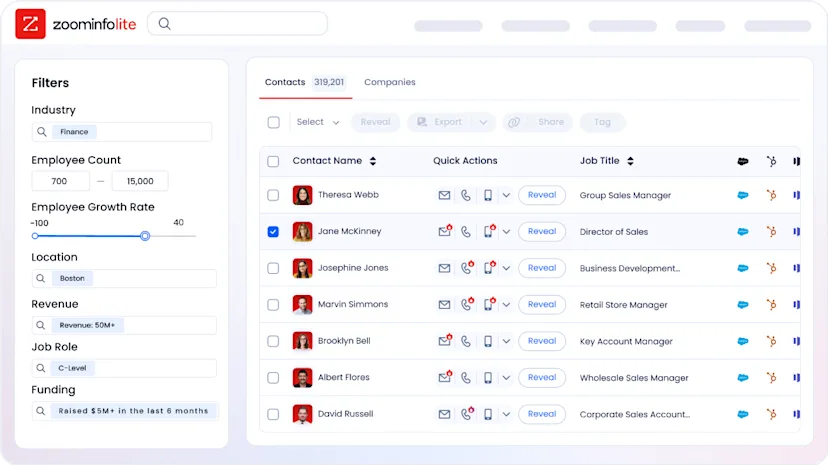
For teams deciding between HubSpot and Salesflare, the CRM pricing comparison is straightforward: Salesflare costs less at every seat count. ZoomInfo enters the equation as a separate line item, the intelligence layer that feeds whichever CRM you choose with better data, sharper targeting, and buying signals.
Integrations and ecosystem
How each platform connects to your broader tech stack affects long-term flexibility.
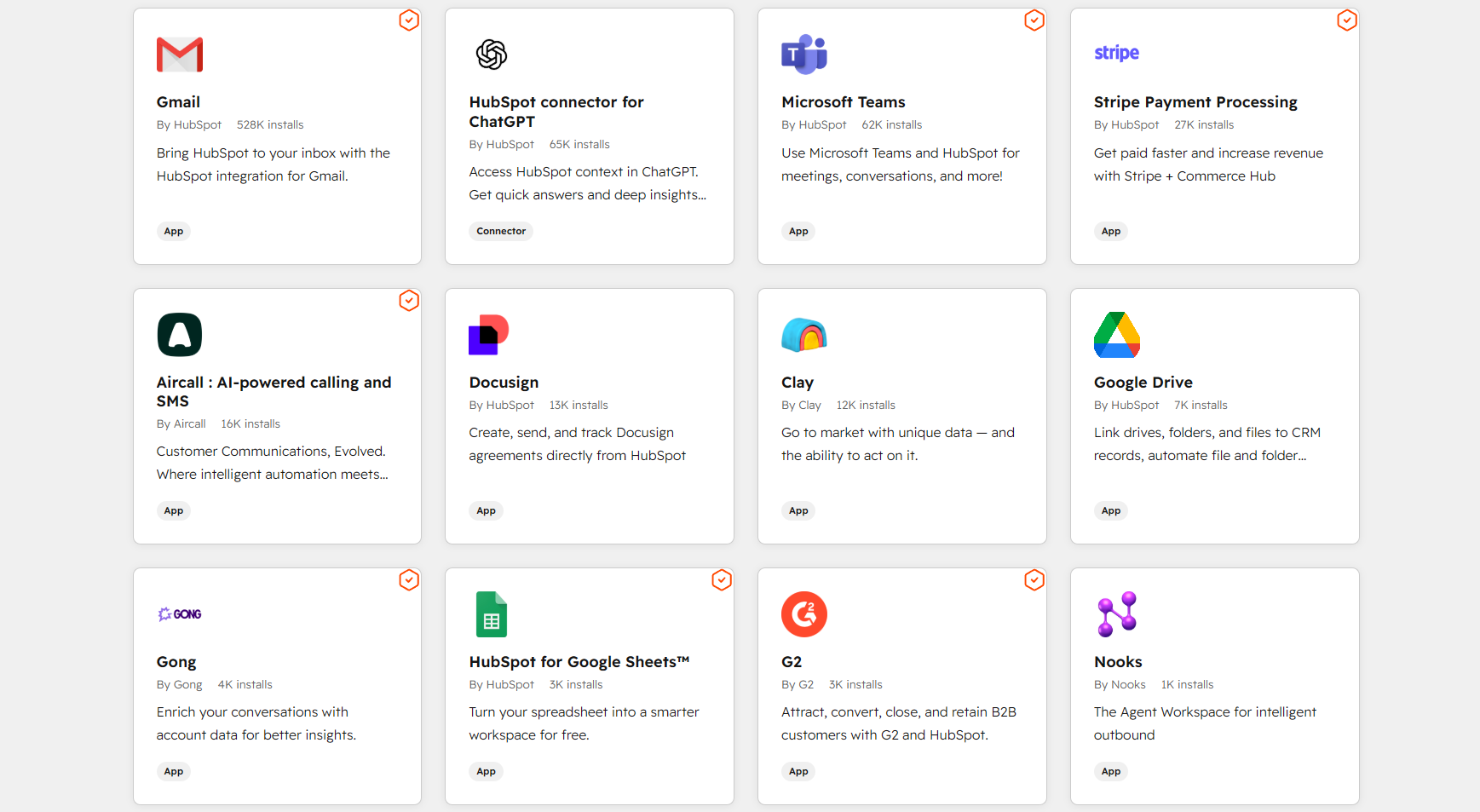
HubSpot's App Marketplace offers over 2,000 integrations with 2.5 million active installs. The ecosystem is mature: native connectors for Salesforce, Slack, Google Workspace, Microsoft 365, Shopify, and hundreds more. A documented REST API covers the full CRM data model. Solutions Partner and Technology Partner programs mean implementation help is widely available. For teams building a multi-tool stack, HubSpot connects to almost anything.
Source: HubSpot
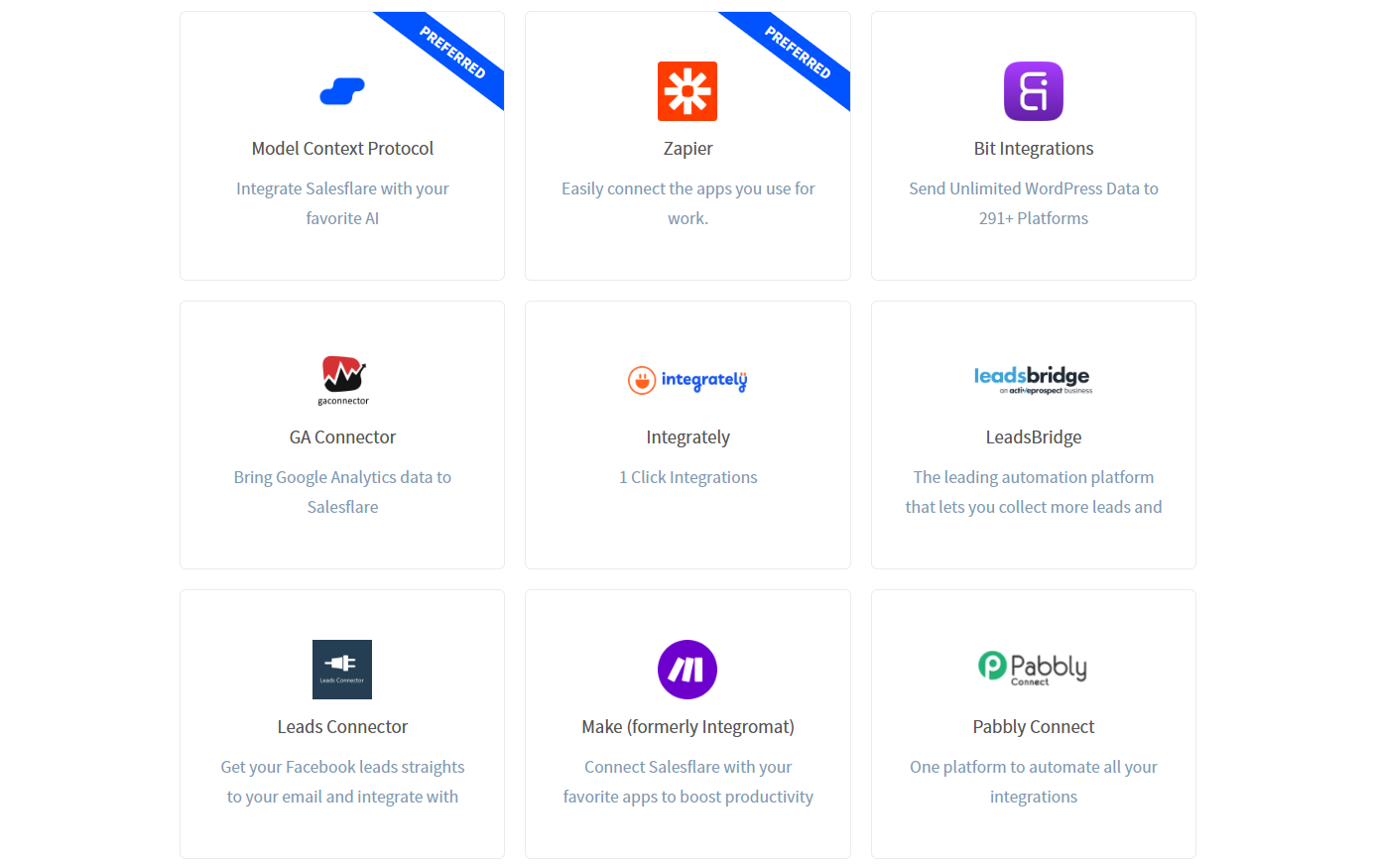
Salesflare takes a leaner approach. Zapier connects over 2,000 apps to Salesflare, with Make and Blendr.io available for more complex workflows. Native integrations are limited to a handful of partners including Better Proposals, Landingi, and StoryChief. A REST API with full documentation is available for custom builds. A recently launched MCP server (beta) allows AI assistants like ChatGPT and Claude to interact with CRM data directly. For small teams, Zapier covers most integration needs. Teams requiring deep native connections may find the ecosystem limiting.
Source: Salesflare
ZoomInfo connects through 120+ native integrations covering CRMs, marketing automation, sales engagement, data warehouses, and communications platforms. The native HubSpot integration pushes enriched contact data and signals into HubSpot records. The Enterprise API provides programmatic access to the full data platform, and the MCP server lets AI agents query ZoomInfo data in natural language. API access is included in all relevant plans, reinforcing ZoomInfo's position as infrastructure that works inside any tool.
One practical note: ZoomInfo integrates natively with HubSpot, making the combination straightforward. With Salesflare, ZoomInfo data flows through Zapier or API, which works but adds a middleware step.
"The plug-and-play aspect of the API means I can integrate it very easily into any process and get information at a moment's notice." (BDO Canada)
HubSpot vs. Salesflare vs. ZoomInfo: Which should you choose?
The right choice depends on what your team needs most.
Choose HubSpot if:
You need marketing, sales, and service in a single platform
Your team is growing and you want a system that scales from 10 to 500 users
You value a large integration ecosystem and established partner network
You're willing to invest in onboarding and configuration for long-term payoff
You want AI features across marketing, sales, and service
Choose Salesflare if:
You're a small B2B sales team (under 50 people) and CRM data entry is your biggest friction point
You need a tool the team will actually use, and simplicity matters more than feature count
Your budget is tight and transparent pricing matters
You sell through email, LinkedIn, and meetings, and you want those interactions logged automatically
You don't need marketing automation, help desk, or content management from your CRM
Choose ZoomInfo if:
You need to find and reach buyers beyond the contacts already in your CRM
Verified phone numbers and emails that connect matter to your outreach
You want to know which accounts are researching your category before they raise their hand
You're ready to power your sales process with AI that understands why deals move, not just that they moved
You want intelligence that works inside your CRM, inside custom tools, or inside ZoomInfo's own platform
Start with ZoomInfo Lite for free, or request a demo of the full platform.
The most effective B2B sales teams don't choose between a CRM and an intelligence platform. They use both. HubSpot or Salesflare tracks your relationships and manages your deals. ZoomInfo tells you which relationships to build and which deals to pursue. The CRM is your system of record. ZoomInfo is your system of intelligence. Together, they cover the full sales workflow from finding the right buyer to closing the deal.
HubSpot vs. Salesflare vs. ZoomInfo FAQ
What is the core difference between HubSpot, Salesflare, and ZoomInfo?
HubSpot is a customer platform with integrated marketing, sales, service, and content tools, all built on a shared CRM. Salesflare is a sales CRM for small B2B teams that automates data entry by logging emails, meetings, and calls from connected inboxes and calendars. ZoomInfo is an AI go-to-market platform providing access to 500M contacts, 100M companies, verified phone numbers and emails, buyer intent signals, and AI-powered sales execution tools. HubSpot and Salesflare manage your existing customer relationships. ZoomInfo helps you find and reach new buyers.
Which platform is cheapest for a small sales team?
Salesflare is the most affordable CRM option, starting at $29/user/month on annual billing with no onboarding fees and no contact limits. HubSpot's free CRM offers basic functionality at no cost, but Sales Hub Professional, where most useful features live, costs $100/seat/month plus a $1,500 onboarding fee. ZoomInfo offers a permanent free tier (ZoomInfo Lite) with 10 monthly export credits, but paid plans are custom-quoted and positioned for mid-market and enterprise budgets.
Can I use ZoomInfo with HubSpot or Salesflare?
ZoomInfo integrates natively with HubSpot through a marketplace connector, pushing enriched contact data, company intelligence, and buying signals into HubSpot records. With Salesflare, ZoomInfo data can flow through Zapier or API integrations. ZoomInfo also offers an MCP server that lets AI assistants interact with ZoomInfo data in any environment, and API access is included in all relevant ZoomInfo plans.
How does each platform handle data enrichment?
HubSpot's Smart CRM enriches records using data from emails, calls, and public web sources, and auto-detects duplicates. Salesflare automatically imports phone numbers, titles, and addresses from email signatures and enriches company records from public data. ZoomInfo maintains a large B2B data verification operation with 300+ human researchers covering 500 million contacts and 100 million companies at up to 95% accuracy on first-party data.
Which platform has the best AI capabilities?
Each platform applies AI differently. HubSpot's Breeze AI spans marketing, sales, and service with agents for customer support, prospecting, and content creation, though several features remain in Beta. Salesflare uses AI for timeline summaries, next-step suggestions, and email drafting, with upcoming MCP integration for ChatGPT and Claude. ZoomInfo's GTM Context Graph processes CRM data, conversation transcripts, and third-party signals to reveal why deals move and which accounts to prioritize, powering AI agents in GTM Workspace that draft outreach and surface actions based on real buying patterns.
Is Salesflare too limited for growing teams?
Salesflare is designed for B2B teams under 50 people. Its automated data capture and simple pipeline management work well for that audience. Teams that outgrow it typically need deeper reporting, multi-channel sequences, native dialing, or marketing automation. At that point, HubSpot's broader platform becomes a more natural fit, and ZoomInfo's intelligence layer becomes increasingly valuable as the volume of accounts and contacts exceeds what manual research can handle.
Which platform is best for B2B prospecting?
ZoomInfo offers the broadest prospecting capabilities, with 500 million contacts, 120 million direct-dial phone numbers, and buyer intent signals from 210 million IP-to-Organization pairings. HubSpot's Breeze Prospecting Agent drafts outreach from CRM data but depends on the contacts already in your system. Salesflare's Lead Finder provides basic prospect search inside the CRM with limited monthly credits (5 on the Growth plan, 100 on Pro). For teams where outbound prospecting is central to revenue, ZoomInfo provides data at a scale neither CRM matches.
Do I need both a CRM and ZoomInfo?
ZoomInfo is not a CRM replacement. It provides the data and intelligence layer (verified contacts, intent signals, AI-driven account prioritization) that feeds your CRM with higher-quality opportunities. ZoomInfo's GTM Workspace offers AI-powered execution tools for sellers, but deal management and customer record-keeping still happen in a CRM like HubSpot or Salesflare. The most effective B2B sales teams use both: a CRM as the system of record and ZoomInfo as the system of intelligence.
