
If you're comparing HubSpot vs. Tray.ai, you're looking at two different approaches to go-to-market infrastructure. HubSpot is a CRM and customer platform where teams run campaigns, manage pipelines, and handle support. Tray.ai is an enterprise integration and AI orchestration platform that connects applications, automates cross-system workflows, and governs how AI agents access business data.
Before choosing, ask yourself these questions:
Do you need a platform that manages customer relationships, or one that connects the platforms already managing them?
Is your primary challenge executing marketing and sales motions, or orchestrating data and workflows across a complex tech stack?
Do your teams need a shared CRM with built-in automation, or enterprise-grade integration across 20+ applications?
How important is verified B2B intelligence (knowing who to target, when to engage, and why deals move) in every tool your team uses?
Would you rather consolidate your stack into one platform or keep specialized tools connected by an orchestration layer?
In short, here's what we recommend:
HubSpot is the choice for teams that want marketing, sales, and service in one platform with a shared CRM. Its six integrated Hubs (Marketing, Sales, Service, Content, Data, and Commerce) all run on a single data layer, so a lead captured by a marketing form is immediately visible to the sales rep without integration work.
Breeze AI adds automation across the platform, from AI-generated outreach to a customer agent that handles support conversations around the clock. With 288,706 customers and a free CRM tier, HubSpot is a proven path for growing companies.
But pricing scales steeply: per-seat costs compound when mixing tiers across departments, mandatory onboarding fees range from $1,500 to $7,000, and the platform's built-in integrations can't match a dedicated iPaaS for complex multi-system environments.
Tray.ai serves enterprises running complex application ecosystems that need to automate data flows, build AI agents, and govern how those agents access business systems. With 700+ connectors, a visual workflow builder, and the Agent Gateway for MCP (which manages how AI agents connect to enterprise tools under IT oversight), Tray.ai handles integration complexity that HubSpot's native automation can't reach.
The platform claims customers achieve 3× faster integration delivery and 60% cost savings compared to legacy iPaaS. But Tray.ai is not a CRM. It doesn't manage contacts, run email campaigns, or track deals. It connects the systems that do, and it requires real investment in both learning and configuration.
Both platforms are strong at what they do. HubSpot gives you the front-end for customer relationships. Tray.ai gives you the backend connecting your systems. But neither provides the verified B2B intelligence that determines whether your outreach reaches the right person, your automation targets the right accounts, or your AI agents have the data they need to produce useful results. That's where ZoomInfo changes the equation.
ZoomInfo is an AI-powered GTM platform built on the largest B2B dataset in the industry: 500M contacts, 100M companies, 135M+ verified phone numbers, and 200M+ verified business email addresses. That data feeds the GTM Context Graph, an intelligence layer that captures not just what happened in your pipeline, but why deals moved or stalled.
Sales teams access this intelligence through GTM Workspace, where AI agents research accounts, draft personalized outreach, and surface next actions. Marketers and RevOps teams work in GTM Studio, building audiences and launching GTM plays in natural language. And for teams running HubSpot, Tray.ai, or any other tool, ZoomInfo's APIs and MCP server deliver the same intelligence into any workflow or AI agent.
If verified B2B data and contextual intelligence sound like the foundation your GTM stack is missing, see how ZoomInfo works.
HubSpot vs. Tray.ai vs. ZoomInfo at a glance
HubSpot | Tray.ai | ZoomInfo | |
|---|---|---|---|
Core function | CRM and marketing/sales/service platform | Enterprise iPaaS and AI orchestration | B2B data intelligence and GTM execution |
Primary users | Marketing, sales, and service teams | IT, RevOps, and GTM engineers | Sales, marketing, RevOps, and data teams |
AI capabilities | Breeze AI (CRM-native agents and assistants) | Merlin Agent Builder and Agent Gateway for MCP | GTM Context Graph with AI-powered execution |
Integrations | 2,000+ app marketplace | 700+ connectors | 172+ marketplace partners, API, and MCP |
Data included | Stores customer data you create (no third-party B2B data) | Moves data between systems (no proprietary data) | 500M contacts, 100M companies, 135M+ verified phones |
Learning curve | Low to moderate | Steep for non-technical users | Moderate (structured 90-day onboarding) |
Free plan | Yes (permanent, 2 users max) | No public trial or free plan | Yes (ZoomInfo Lite, permanent; plus 7-day trial) |
Pricing model | Per-seat + per-contact tiers (published prices) | Task-based consumption (custom quoted) | Consumption-based (custom quoted) |
Best for | Teams wanting all-in-one CRM and execution | Enterprises needing cross-system integration and AI governance | Teams that need intelligence-driven GTM powered by verified B2B data |
These platforms solve three different problems
HubSpot, Tray.ai, and ZoomInfo each occupy a distinct layer of a modern go-to-market stack.
HubSpot is the execution layer.
It's where your team sends emails, tracks deals, responds to support tickets, and publishes content. Everything happens inside a single platform with a shared customer database. A marketer creates a campaign, a lead fills out a form, and a sales rep sees that lead with full engagement history. No integration required.
Tray.ai is the orchestration layer.
It connects systems that don't natively talk to each other and automates workflows spanning multiple applications.
When a company outgrows HubSpot's built-in automation (say, they need to sync data between Salesforce, Snowflake, Workday, and a data warehouse based on conditional logic), Tray.ai fills the gap. The platform handles everything from simple app-to-app syncs to multi-step workflows with branching and approval gates.
ZoomInfo is the intelligence layer.
It answers the questions that execution and orchestration platforms cannot: Which companies should we target? Who are the decision-makers? Are they in-market right now? What happened in the last deal that looked like this one?
ZoomInfo's GTM Context Graph processes 1.5B+ data points daily, combining verified B2B data with CRM records, conversation transcripts, and behavioral signals to give every GTM motion an informed starting point.
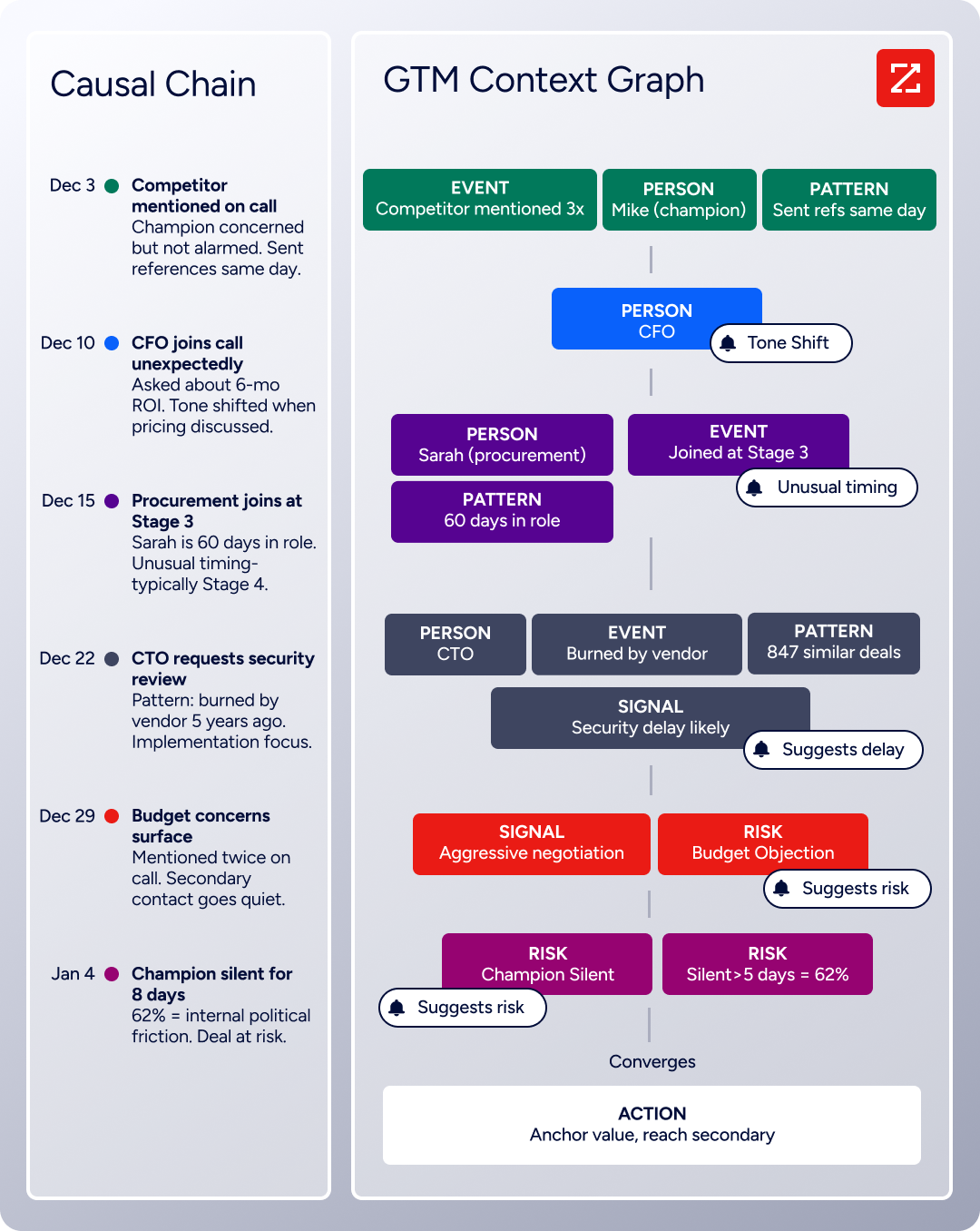
Many enterprises use all three. ZoomInfo feeds intelligence into HubSpot through a native integration. Tray.ai orchestrates data flows between ZoomInfo, HubSpot, and dozens of other systems. The platforms are complementary. The question is which layer your team needs most right now.
HubSpot excels at unified CRM execution
HubSpot's core strength is that everything lives in one place.
Marketing automation, deal pipelines, service tickets, website pages, and payment processing all share a single Smart CRM. This eliminates the data synchronization problems that plague companies stitching together separate tools for each function.
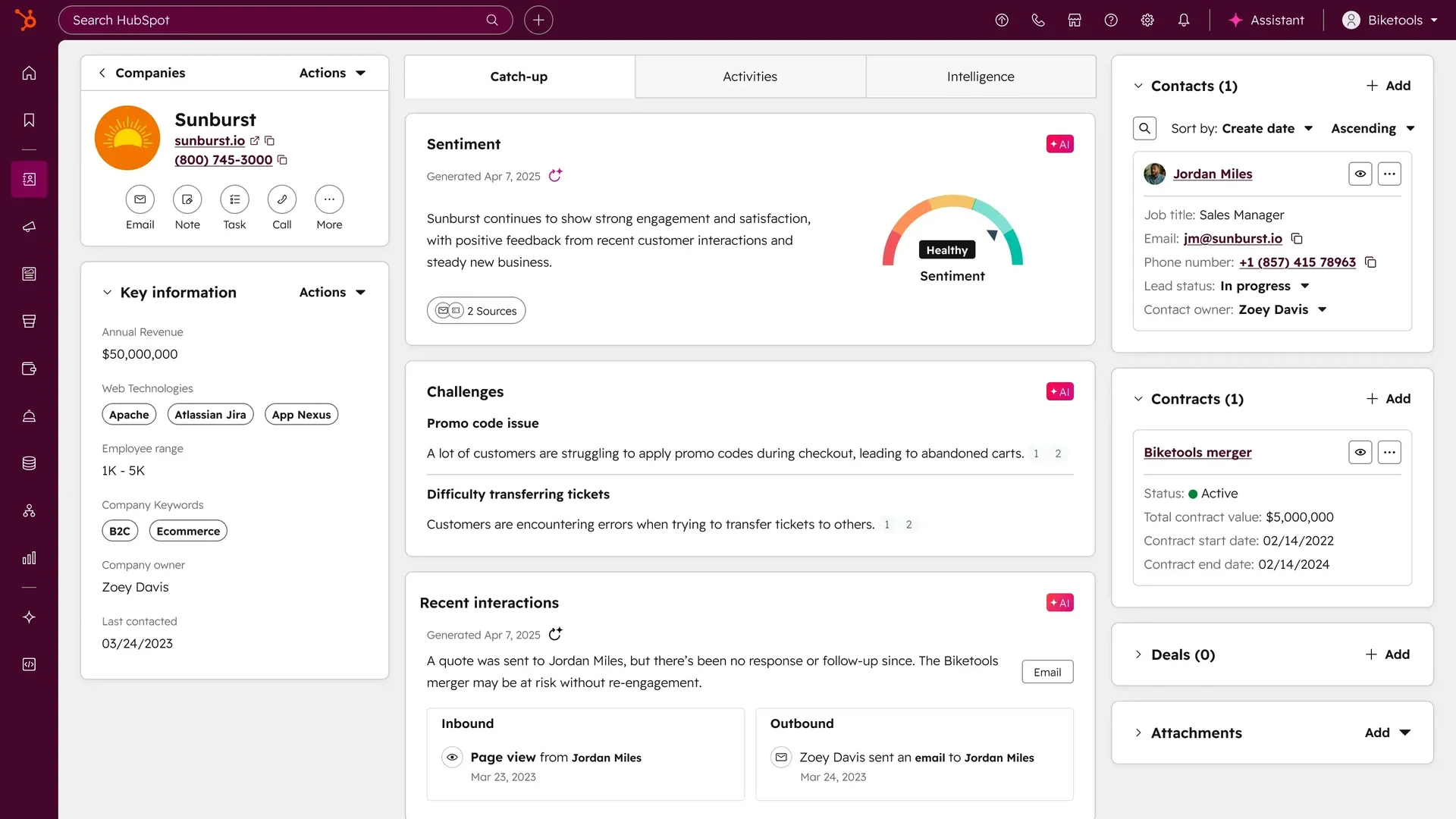
Source: HubSpot
The platform's breadth is real. Marketing Hub covers email campaigns, landing pages, social publishing, and multi-touch attribution. Sales Hub handles pipeline management, sequences, call tracking, and CPQ. Service Hub runs help desk ticketing, knowledge bases, and customer health scores. Content Hub provides a drag-and-drop CMS with AI content generation.
And Commerce Hub closes the loop with quoting, invoicing, and payment collection, all connected to the same contact database.
For companies moving from fragmented point solutions to a consolidated stack, HubSpot delivers fast results. The company claims customers achieve meaningful value within 90 days, compared to the 12+ months typical of legacy enterprise CRM implementations.
The limitations show at scale. HubSpot's per-seat, per-hub pricing means costs compound as teams grow. When subscribing to multiple Hubs at different tiers, all Core Seats are billed at the highest tier, which can raise total costs for organizations with mixed needs. Marketing Hub Enterprise runs $3,600 per month with a $7,000 mandatory onboarding fee.
And while the 2,000+ app marketplace covers many common integrations, complex multi-system workflows still push organizations toward dedicated integration tools.
Tray.ai excels at enterprise orchestration
Where HubSpot runs the front-end of customer engagement, Tray.ai runs the backend connecting everything together. The platform isn't trying to replace your CRM. It's the layer that makes your CRM, and every other system in your stack, work as one.
Tray.ai's Intelligent iPaaS combines process automation, data integration, and API management into a single platform, with 700+ pre-built connectors spanning CRM, marketing automation, databases, cloud storage, HR systems, and AI/LLM platforms. The visual workflow builder handles branching logic, parallel processing, approval gates, and error handling that HubSpot's native workflows can't match.
What sets Tray.ai apart from older integration platforms is its AI-native architecture. The Merlin Agent Builder lets teams create AI agents that don't just answer questions but take real actions across connected systems (unlocking accounts, provisioning software, updating CRM records).
Builders choose their own LLM (OpenAI, Anthropic Claude, AWS Bedrock, or Google Gemini) and configure agents with guardrails, approval workflows, and multi-channel deployment across Slack, Microsoft Teams, and HTTP APIs.
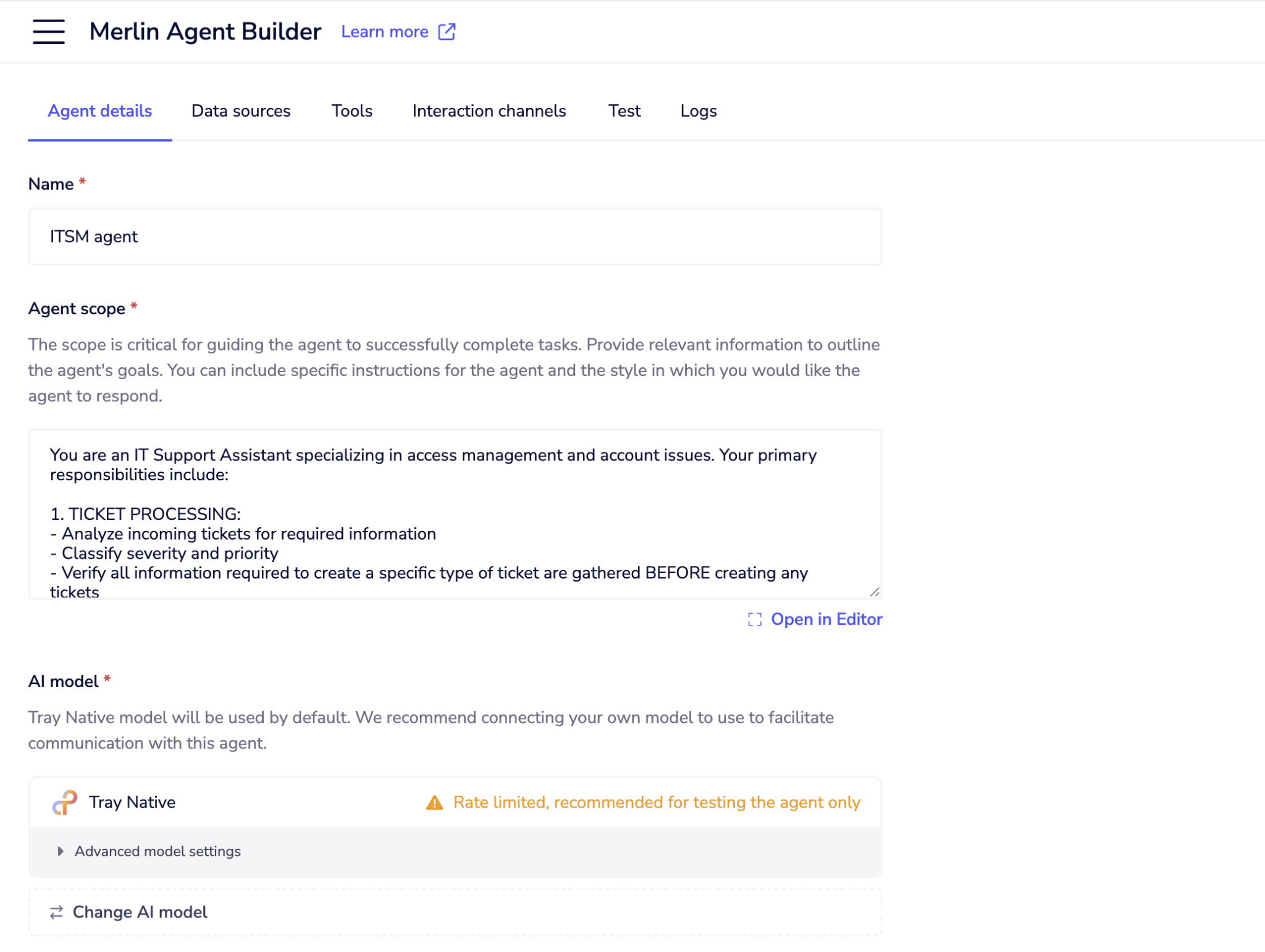
Source: Tray.ai
The Agent Gateway for MCP addresses a growing enterprise concern: when AI agents connect to business systems without IT oversight, they create security and compliance exposure. Tray.ai's Gateway provides managed MCP servers with role-based access, audit trails, and dynamic per-user authentication.
The analyst community has validated this positioning. Tray.ai has been named a Visionary in the Gartner Magic Quadrant for iPaaS three consecutive years and received the highest score among all evaluated vendors for AI Implementation Support in Gartner's Critical Capabilities report. In 2026, Gartner placed Tray.ai as a Pioneer in the Emerging Market Quadrant for No-Code Agent Builders.
The tradeoffs are real. Tray.ai has a steep learning curve for non-technical users. Task-based pricing makes costs difficult to forecast, since every workflow branch, loop, and retry consumes tasks. No public prices are listed; all plans require a sales conversation. And while the platform's debugging interface has improved, users report it still needs work for complex, high-volume workflows.
The intelligence gap both platforms leave open
HubSpot stores whatever customer data your team creates.
Tray.ai moves that data between systems. Neither generates the verified B2B intelligence that tells you whether the data you're acting on is accurate, complete, or timely.
A marketing automation workflow is only as good as the contact data feeding it. A lead routing integration is only as fast as the company data enriching each record. An AI agent can only produce useful outreach if it knows who the decision-makers are, what technology the account runs, and whether they're actively evaluating solutions.
This is where ZoomInfo occupies a layer that neither HubSpot nor Tray.ai covers.
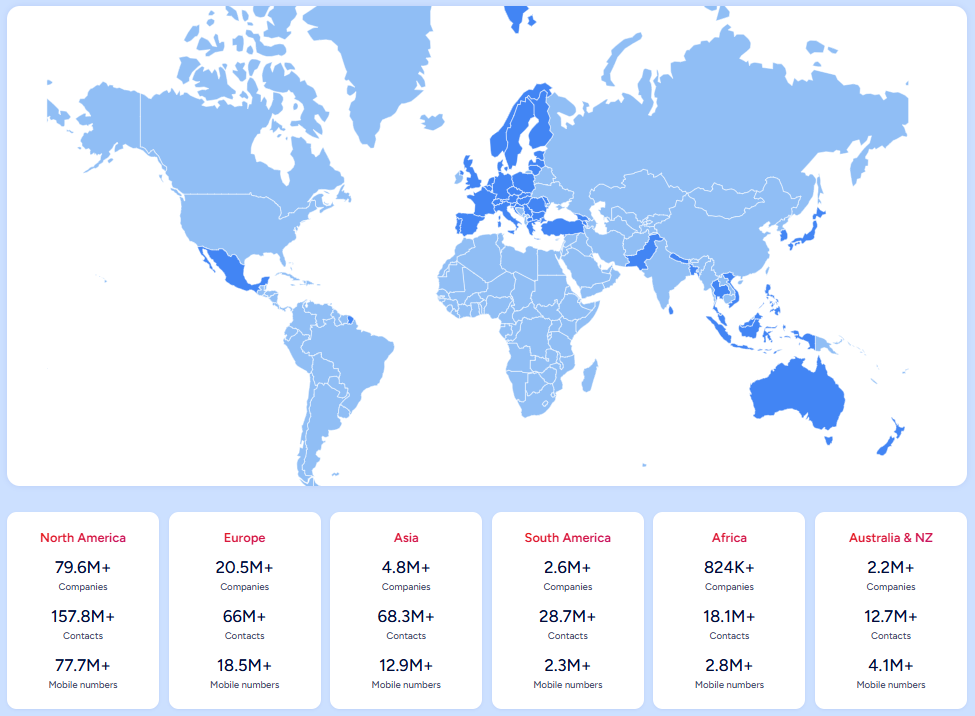
ZoomInfo's data spans 500M contacts and 100M companies, verified through a multi-source pipeline backed by 300+ human researchers and reaching up to 95% accuracy on first-party data.
The data includes 120M direct-dial phone numbers, 200M+ verified business email addresses, department org charts, technographic profiles tracking 30,000+ technologies across 30+ million companies, and buyer intent signals from 210 million IP-to-organization pairings.
Source: ZoomInfo
The GTM Context Graph takes this data further.
It combines ZoomInfo's third-party intelligence with a customer's own CRM records, conversation transcripts, and behavioral signals, then identifies the connections between signals and outcomes.
As ZoomInfo's CPO Dominik Facher writes: "The CRM recorded the state change. It has no record of why it happened." The GTM Context Graph captures that "why" (whether executive sponsorship entering at a certain stage, a champion going quiet during a budget review, or intent spikes correlating with competitive evaluation) and makes it actionable across every tool in the stack.
This intelligence was independently validated when a Fortune 500 competitive RFP analyzed 25 million contacts across vendors, with the independent consultant concluding that "no other competitor came even close." ZoomInfo also holds 133 No. 1 rankings on G2 across Sales Intelligence, Buyer Intent, Data Quality, and Account Data Management categories.
Seismic's sales team attributed 39% of active pipeline to opportunities identified or influenced by ZoomInfo signals, while boosting productivity by 54%. As CBO Toby Carrington explained: "That combination of our internal CRM data, external signals, and AI that's given all that context has helped us craft very specific account- and persona-based messages." (Seismic)
For a head-to-head look at how HubSpot and ZoomInfo stack up across data, features, and pricing, see our HubSpot vs. ZoomInfo comparison.
AI capabilities serve different purposes
All three platforms have invested in AI, but their approaches reflect the layer each one occupies.
HubSpot's Breeze AI automates CRM-native tasks.
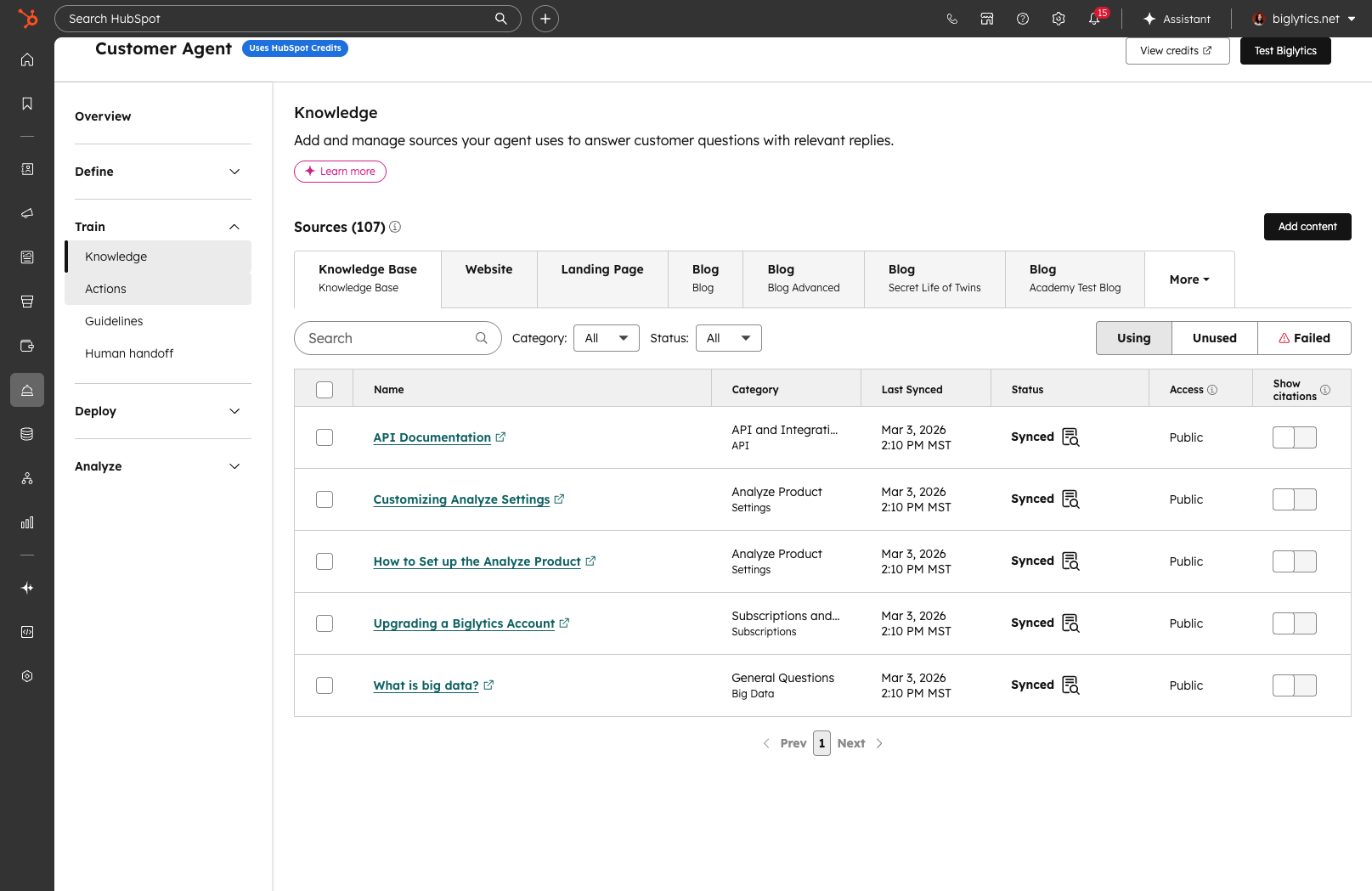
The Customer Agent handles support conversations across chat, email, and WhatsApp. The Prospecting Agent monitors buying signals and drafts personalized outreach using HubSpot's customer history. The Data Agent answers natural-language questions about CRM data.
Source: HubSpot
Breeze draws its advantage from HubSpot's unified platform: because all customer interactions flow through one CRM, the AI has context from marketing, sales, and service interactions in a single record. Several capabilities, including AI-Powered Segmentation, Personalization, and Marketing Studio, are still in beta.
Tray.ai's Merlin Agent Builder creates agents that act across systems, not within a single CRM.
A Merlin agent can reason about a problem, pull data from multiple connected applications via 700+ connectors, and execute actions in one coordinated workflow. The composable agent hub supports multi-agent architectures where a master agent delegates to specialized sub-agents.
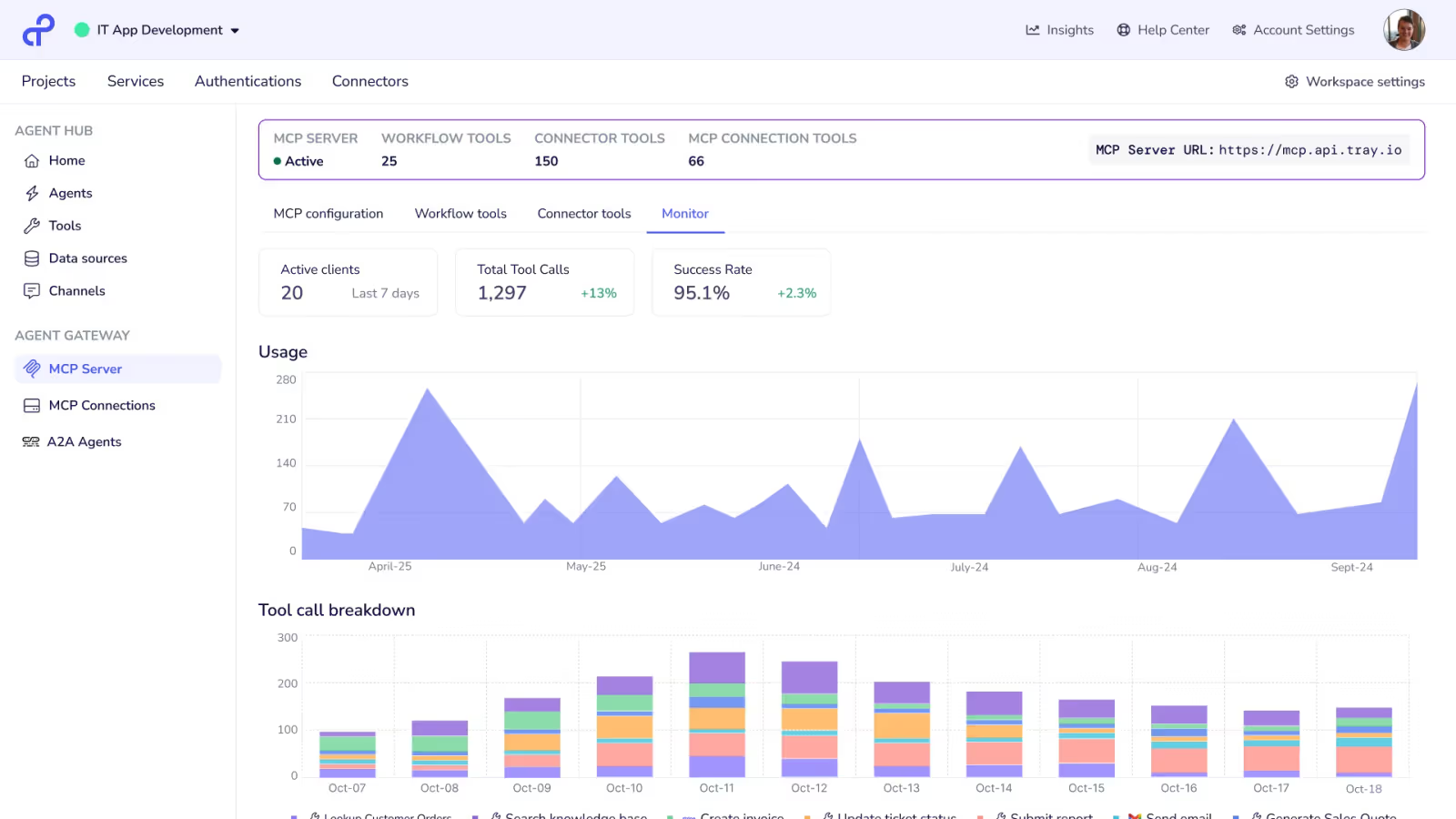
The Agent Gateway for MCP adds governance: composite workflow tools reduce token costs by ~10× compared to raw MCP servers while enforcing role-based access and audit trails on every tool invocation.
Source: Tray.ai
ZoomInfo's GTM Context Graph is an intelligence layer, not an automation tool.
It doesn't just automate tasks; it understands buyer context. When a deal moves forward, the GTM Context Graph captures why: the CFO joined the call and asked about ROI, the VP went quiet during a budget review, intent signals spiked around a competitor.
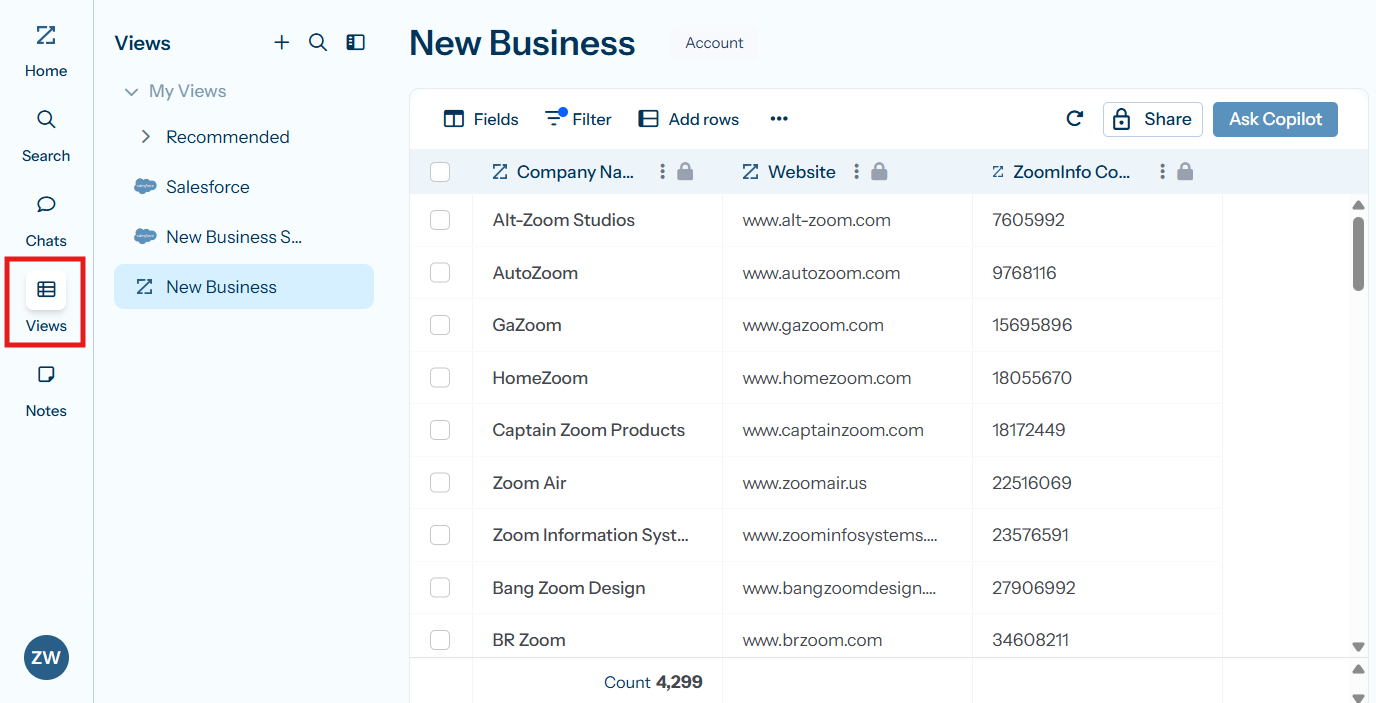
That understanding flows into GTM Workspace, where AI agents draft outreach addressing the specific concern identified in the last conversation, and into GTM Studio, where plays target accounts whose signal combinations match your actual win patterns. Guided Intent, exclusive to ZoomInfo, identifies topics historically correlated with deal success rather than requiring manual topic selection.
Source: ZoomInfo
The distinction matters. HubSpot's AI automates what you're already doing inside the CRM. Tray.ai's AI orchestrates actions across connected systems. ZoomInfo's AI tells you what you should be doing and why.
Redwood Logistics saw a 99% reduction in CPC and a 310% increase in CTR after applying ZoomInfo's audience insights, saving 20-25 hours per week. "It's not just the data itself. It's more about the right data at the right time to help us reach out with the right message across that full buyer journey," said Chelsea Kenyon, Senior Director of Digital Strategy. (Redwood Logistics)
Pricing models reflect different businesses
Each platform's pricing structure reveals who it's built for.
HubSpot is the most transparent.
Published tiers make it easy to estimate costs before talking to sales. The free CRM includes unlimited contacts and basic tools for up to two users. Starter plans begin at $15–$20 per seat per month.
Marketing Hub Professional costs $800 per month (annual billing) with a $3,000 mandatory onboarding fee. Marketing Hub Enterprise jumps to $3,600 per month with a $7,000 onboarding fee. Sales and Service Hub Professional seats run $90 per seat per month each.
The hidden cost is mixing tiers. An organization with Marketing Hub Enterprise and Sales Hub Professional pays Enterprise-rate pricing for every Core Seat across the entire account. Contact overages are billed immediately upon exceeding the included tier. Mid-contract cancellations are not permitted, and all payment obligations are non-refundable.
Tray.ai publishes no prices.
Three tiers (Pro, Team, Enterprise) are available, differentiated by workspace limits, log retention, and add-on eligibility. All pricing is custom-quoted, and the task-based consumption model makes budgeting hard. Every workflow branch, loop, retry, and multi-app step consumes tasks, so a five-step workflow with retries costs far more than a two-step automation.
The Agent Development add-on (Merlin Agent Builder and Agent Gateway for MCP) is a separate bundle available on Team and Enterprise plans. No public free trial or free plan is documented.
ZoomInfo is also custom-quoted, with pricing scaling around seats, credit volume, and features.
Sales tiers (Professional, Advanced, Enterprise) gate access to capabilities like intent signals, AI features, and advanced integrations, not just data volume.
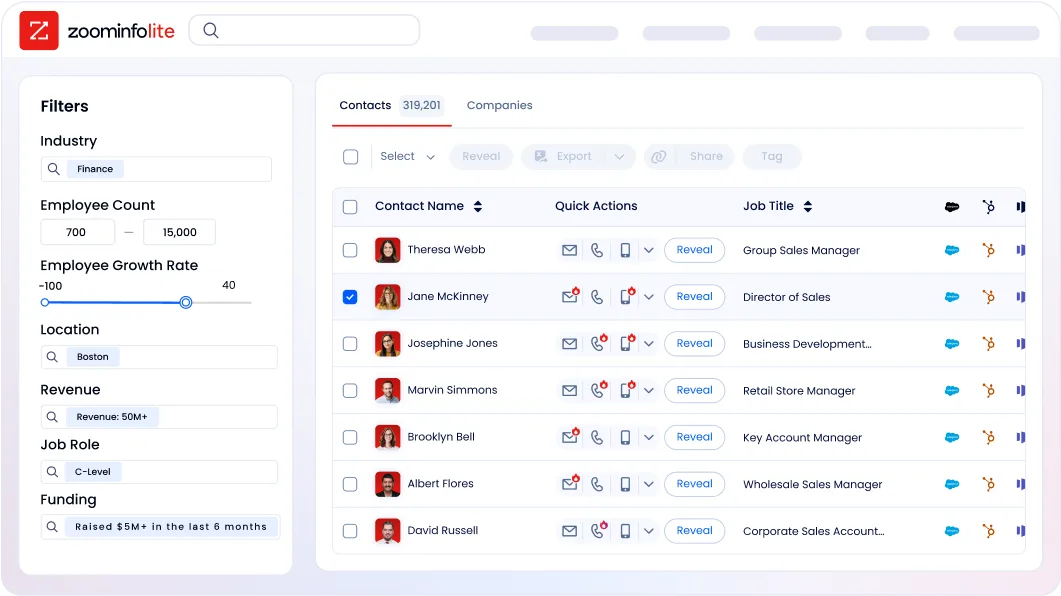
The permanent ZoomInfo Lite tier provides free access to the B2B database with 10 monthly export credits, and a separate 7-day free trial offers broader platform access. The credit system (1 credit = 1 exported profile) means searching and viewing data within ZoomInfo is free; credits are consumed only on export.
Integration and data access
How each platform connects to the rest of your stack shapes what you can build.
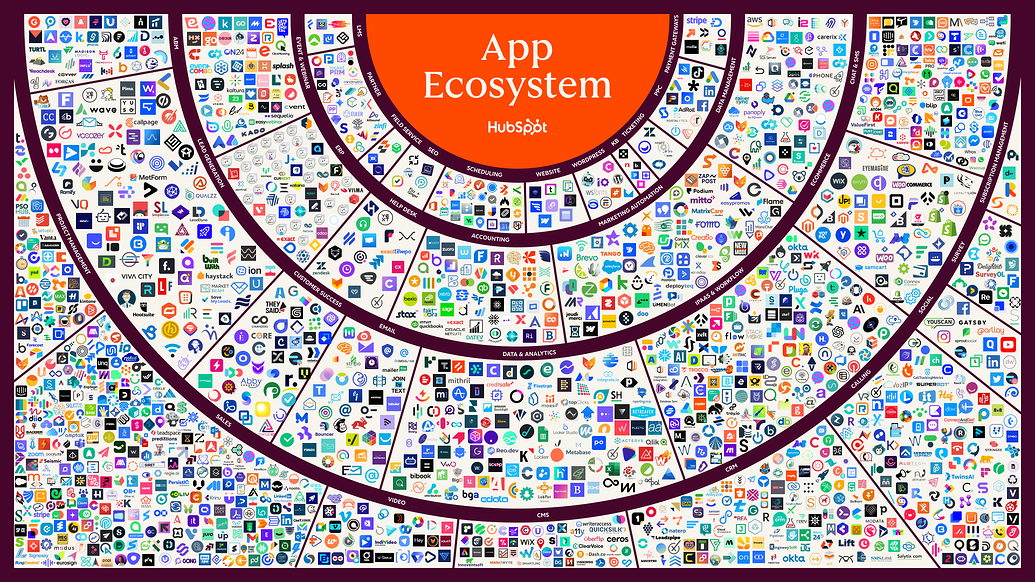
HubSpot has the largest integration ecosystem of the three.
Source: HubSpot
The App Marketplace offers 2,000+ integrations with 2.5 million active installs. The REST API covers the full CRM data model with official SDKs in six languages (Python, TypeScript, Java, Ruby, Go, PHP) and a date-based versioning system that guarantees 18 months of support per version.
A remote MCP server gives AI agents read and write access to HubSpot CRM data. Rate limits scale by plan: 250,000 API calls per day on Free and Starter, up to 1,000,000 on Enterprise.
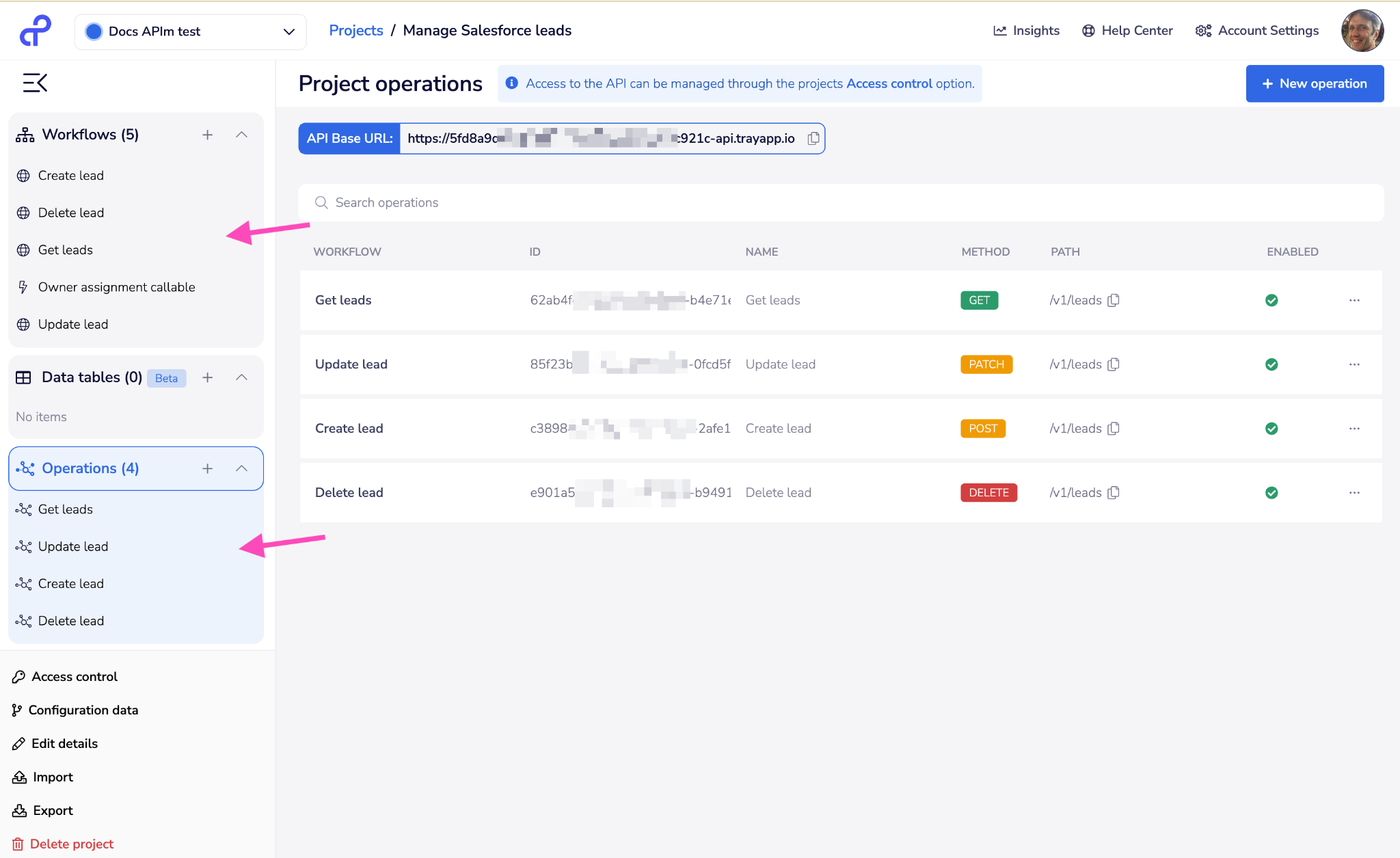
Tray.ai is designed to be the integration layer itself.
700+ pre-built connectors cover CRM, marketing, databases, cloud storage, HR, and AI platforms, including connectors for both HubSpot and Salesforce. The Agent Gateway for MCP exposes these connectors as governed MCP tools for AI agents.
Tray Headless lets developers build workflows from within Claude Code or Codex using dedicated plugins, with regional MCP endpoints for EU and APAC compliance. The platform also includes an API management module for publishing, versioning, and rate-limiting your own internal APIs.
Source: Tray.ai
ZoomInfo delivers intelligence through multiple paths.
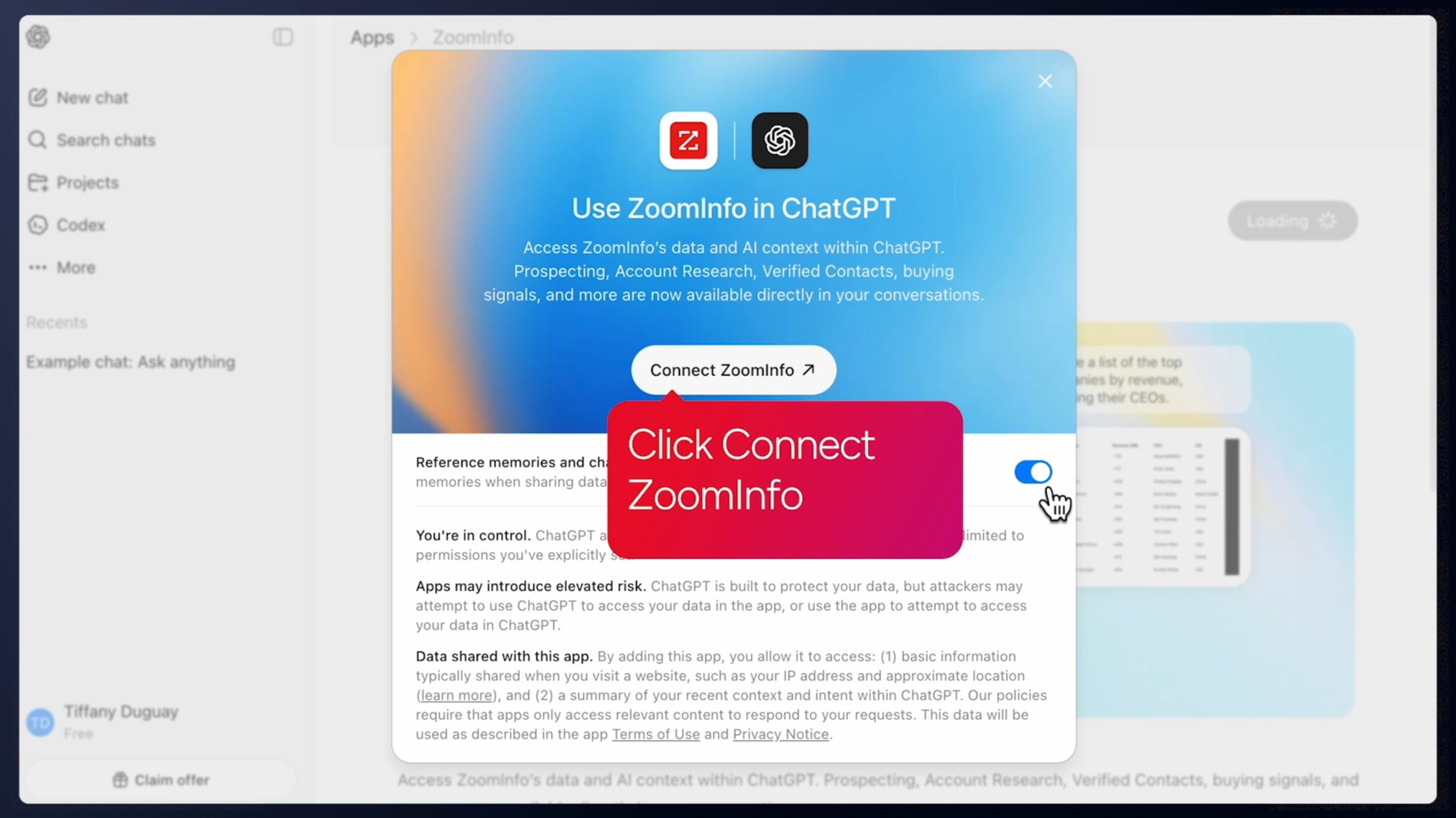
The Enterprise API (GTM API) provides search, enrichment, intent, and AI intelligence endpoints. The MCP server at mcp.zoominfo.com connects to Claude, ChatGPT, and other MCP-compatible AI clients. Cloud Partners deliver ZoomInfo data directly into AWS, Snowflake, Databricks, and Google Cloud as structured Data Cubes.
Source: ZoomInfo
The App Marketplace lists 172+ integration partners, with native connectors for Salesforce, HubSpot, and Microsoft Dynamics 365. API access is included in all relevant plans.
The practical result: ZoomInfo's intelligence flows into both HubSpot and Tray.ai. HubSpot receives enriched contact and company data through a native integration. Tray.ai can orchestrate ZoomInfo API calls as part of multi-system workflows. For teams working outside both platforms, ZoomInfo's MCP server and Data Cubes deliver the same intelligence wherever it's needed.
"The plug-and-play aspect of the API means I can integrate it very easily into any process and get information at a moment's notice," said Jerry Wilson, Senior Marketing Intelligence Analyst at BDO Canada, which achieved an 87% reduction in time spent on data dashboard updates through ZoomInfo's API. (BDO Canada)
HubSpot vs. Tray.ai vs. ZoomInfo: Which should you choose?
The right choice depends on which layer of your go-to-market stack needs the most investment.
Choose HubSpot if:
You need marketing, sales, and service tools in one platform with a shared CRM
Your team values a low learning curve and fast time to value
Your integration needs are covered by standard marketplace apps
You're scaling from a small team and want to start with a free CRM
Unified reporting across marketing, sales, and service matters more than customization
Choose Tray.ai if:
Your organization runs 20+ applications that need automated data flows between them
You need to build and govern AI agents that take actions across multiple business systems
Integration complexity has outgrown what HubSpot's native automation can handle
MCP governance and enterprise compliance (SOC 2, HIPAA) are critical requirements
You have technical resources to configure and maintain workflows
Choose ZoomInfo if:
Verified B2B data and buyer intelligence are the foundation your GTM motions need
You want AI that understands why deals move, not just what happened
Your team needs an intelligence layer that works inside HubSpot, Tray.ai, or any other tool
Sales execution and marketing orchestration should run on the same data and contextual intelligence
You want to start with a free tier and scale into enterprise capabilities
Start with ZoomInfo Lite for free, or request a demo of the full platform.
HubSpot and Tray.ai are strong platforms for execution and integration. The teams seeing the best results, though, aren't just executing faster or connecting more systems. They're executing on better intelligence: knowing which accounts to target, which contacts to reach, and why now is the right time. That's the layer ZoomInfo provides, and it works regardless of which execution or orchestration platform you choose.
"Without ZoomInfo, it would be very difficult to achieve our business objectives. Without it, we wouldn't be able to understand the market, have the right contact data, and make meaningful connections," said Thor Sanderson, Senior Manager of Sales Technology Enablement at Smartsheet. (Smartsheet)
HubSpot vs. Tray.ai vs. ZoomInfo FAQ
What is the fundamental difference between HubSpot, Tray.ai, and ZoomInfo?
HubSpot is a CRM and customer platform where teams manage marketing campaigns, sales pipelines, and customer service from a single shared database. Tray.ai is an enterprise iPaaS and AI orchestration platform that connects applications, automates cross-system workflows, and governs AI agent access to business data with 700+ connectors.
ZoomInfo is a B2B data intelligence platform that provides verified contact and company data, buyer intent signals, and a GTM Context Graph for identifying who to target, when to engage, and why deals move.
Can you use these platforms together?
Yes. Many enterprises use all three as complementary layers. ZoomInfo feeds verified B2B data and buyer intelligence into HubSpot through a native integration, enriching CRM records and triggering sales workflows. Tray.ai can orchestrate data flows between ZoomInfo, HubSpot, and dozens of other systems using its connector library.
ZoomInfo's APIs and MCP server deliver intelligence into any tool in the stack, so the choice between HubSpot and Tray.ai doesn't limit access to ZoomInfo's data.
Which platform is cheapest to get started with?
HubSpot and ZoomInfo both offer permanent free tiers. HubSpot's free CRM includes unlimited contacts and basic tools for up to two users. ZoomInfo Lite provides access to the B2B database with 10 monthly export credits and no time limit. ZoomInfo also offers a separate 7-day free trial with broader platform access. Tray.ai has no publicly documented free tier or trial; all plans require contacting sales.
Which platform has the strongest AI capabilities?
Each excels in its own layer. HubSpot's Breeze AI automates CRM tasks like email generation, customer support, and prospect research within HubSpot's platform. Tray.ai's Merlin Agent Builder creates AI agents that take actions across 700+ connected business systems, with configurable guardrails and LLM flexibility.
ZoomInfo's GTM Context Graph processes 1.5B+ data points daily, combining third-party B2B data with CRM records and conversation intelligence to understand why deals move, then powers AI-generated outreach and GTM plays that target accounts matching actual win patterns.
Which platform provides B2B data for prospecting?
Only ZoomInfo includes proprietary B2B data. Its database covers 500M contacts, 100M companies, 135M+ verified phone numbers, and 200M+ verified business emails, verified through 300+ human researchers with up to 95% accuracy on first-party data.
HubSpot stores customer data your team creates but does not provide third-party contact or company databases. Tray.ai moves data between systems but does not include any proprietary data.
How do the integration ecosystems compare?
HubSpot has the largest app marketplace with 2,000+ integrations, 2.5 million active installs, and official SDKs in six programming languages. Tray.ai offers 700+ connectors designed for complex multi-system workflows, with an Agent Gateway that exposes connectors as governed MCP tools for AI agents.
ZoomInfo has 172+ marketplace partners, native CRM integrations with Salesforce, HubSpot, and Microsoft Dynamics, and delivers data directly into cloud platforms like Snowflake, AWS, Databricks, and Google Cloud.
Is Tray.ai a competitor to HubSpot?
Not directly. HubSpot is a CRM and execution platform where teams run marketing, sales, and service. Tray.ai is an integration and orchestration platform that connects systems like HubSpot to other applications.
Organizations commonly use both: HubSpot for customer-facing operations, Tray.ai for complex multi-system automation that goes beyond what HubSpot's native workflows support. Tray.ai counts HubSpot among its 700+ connectors.
Which platform should I choose if I already use Salesforce instead of HubSpot?
ZoomInfo integrates natively with Salesforce and provides the same intelligence layer regardless of which CRM you use.
Tray.ai includes Salesforce among its 700+ connectors and can orchestrate workflows across Salesforce and any other system in your stack. HubSpot also offers a bidirectional Salesforce sync, but adopting HubSpot primarily makes sense if you're considering it for marketing automation alongside Salesforce or evaluating a CRM migration.
