
Choosing between LeadGenius and ZoomInfo for your B2B data needs often comes down to these five questions:
Do you need custom, human-verified contact data for specific accounts, or a comprehensive database you can search and filter on demand?
Is your priority precision in hard-to-reach global markets, or breadth across millions of contacts with built-in buying signals?
Do you want a managed data sourcing partner, or a self-service platform your team can use directly?
Are you focused specifically on contact data enrichment, or do you need sales automation, marketing automation, and conversation intelligence in the same platform?
Would you rather invest in a specialized data supplier or a platform that covers prospecting and engagement?
In short, here's what we recommend:
LeadGenius is a B2B contact data provider that combines AI with Human-in-the-Loop sourcing to deliver custom, on-demand contact data.
With research teams active in 37 countries and a focus on hard-to-reach markets and niche verticals, LeadGenius works well for enterprise teams that need custom contact lists built to specific criteria. The platform has served over 400 customers including Microsoft, Autodesk, and Snowflake.
However, its scope is limited to contact data sourcing and enrichment, with no built-in sales engagement, marketing automation, or buying signals.
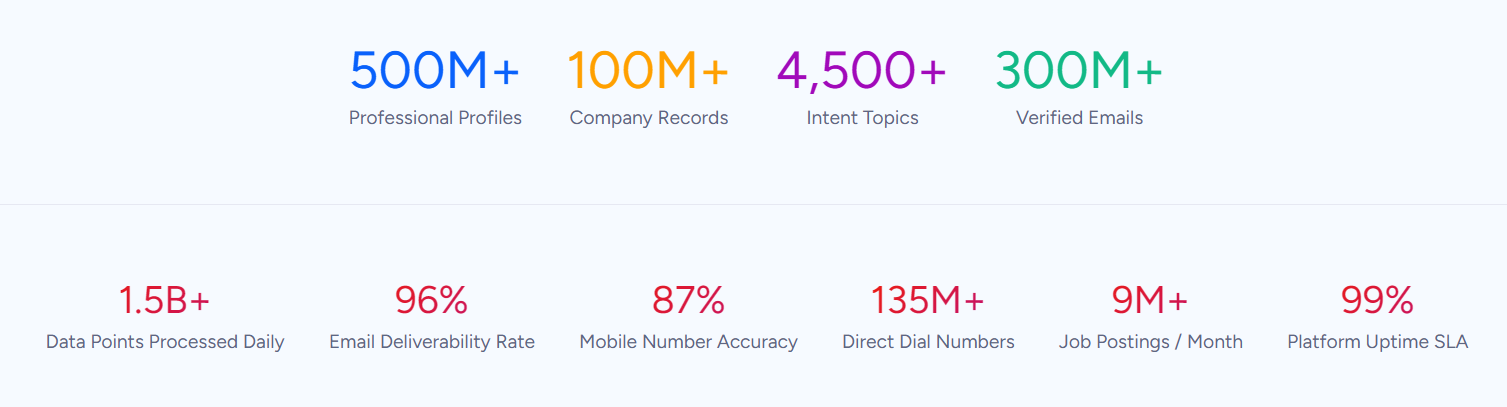
ZoomInfo is a go-to-market platform built on a broad data foundation: 500M contacts, 100M companies, 135M+ verified phone numbers, and 200M+ verified business emails.
Its GTM Context Graph processes 1.5B+ data points daily, connecting this data with your CRM records, conversation transcripts, and behavioral signals to show not just what happened, but why deals move or stall. Teams access this through GTM Workspace for sellers, GTM Studio for marketers and RevOps, or the API and MCP in any third-party tool.
Both platforms deliver B2B contact data, but they serve different purposes. LeadGenius is a data sourcing specialist. ZoomInfo is a go-to-market platform that includes data as its foundation.
LeadGenius vs. ZoomInfo at a glance
LeadGenius | ZoomInfo | |
|---|---|---|
Core Focus | Custom contact data sourcing | Go-to-market platform |
Data Approach | On-demand, human-verified | Comprehensive database + AI verification |
Database Scale | Custom-sourced per engagement | 500M contacts, 100M companies |
Phone Numbers | Sourced on request | 135M+ verified, 120M direct dials |
Verified Emails | Sourced on request | 200M+ verified business emails |
Global Coverage | 37 countries with local research teams | 34M+ company profiles outside NA, 200M+ international profiles |
Buying Signals | Not included | Intent data, website visitors, job changes |
Sales Automation | Not included | GTM Workspace with AI-driven outreach |
Marketing Tools | Not included | ABM, display ads, form optimization |
Conversation Intelligence | Not included | Chorus (call recording and analysis) |
API Access | RESTful API (50 req/min) | Enterprise API, MCP server, Data as a Service |
Analyst Recognition | Limited public recognition | Gartner MQ Leader (ABM), Forrester Leader (Intent Data) |
Pricing | Custom (~$22K/year average) | Custom (free tier available) |
Best For | Enterprise teams needing custom-sourced data | Revenue teams needing a full GTM platform |
The core difference: Data sourcing partner vs. GTM platform
The difference between LeadGenius and ZoomInfo isn't just scale. It's what each platform does.
LeadGenius operates as a data sourcing partner that builds contact lists to order.
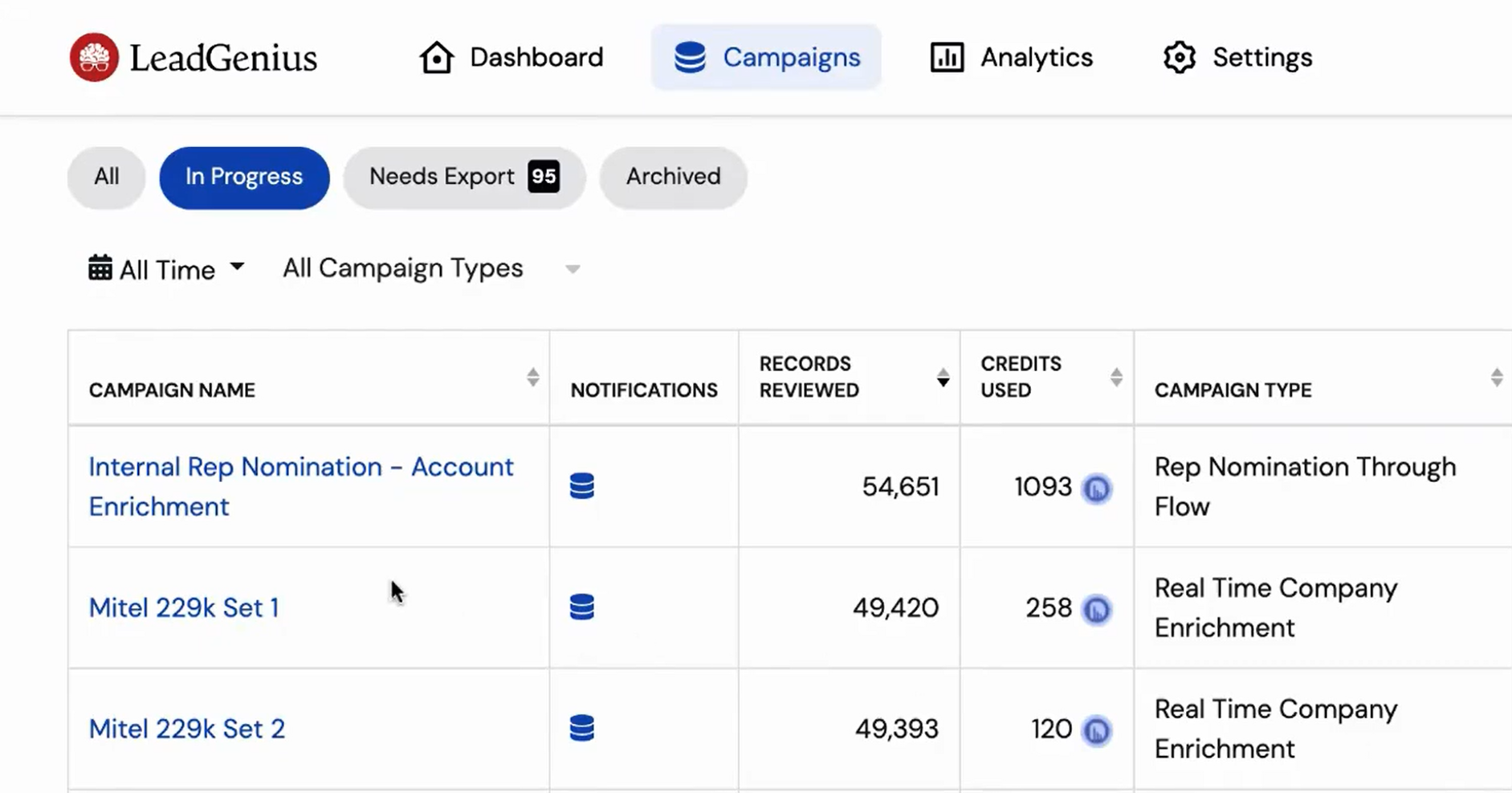
When your existing database can't reach the specific buyers you need (a VP of Procurement at mid-market construction firms in Southeast Asia, for instance), LeadGenius deploys native-language research teams to find and verify those contacts manually.
Source: LeadGenius
The company describes its approach as "live, on-demand data" rather than a static database, which means you're paying for research capacity, not database access.
This model made LeadGenius valuable for a specific use case: filling data gaps that no pre-built database covers. The platform excels when teams have narrow ideal customer profiles, complex buyer personas, and non-standard data needs that fall outside what conventional providers track.
ZoomInfo is built on a different premise.
Rather than sourcing contacts one engagement at a time, ZoomInfo maintains a continuously verified B2B database and layers intelligence on top of it. The GTM Context Graph processes 1.5B+ data points daily, combining ZoomInfo's third-party data with customers' CRM records, conversation transcripts, and behavioral signals.
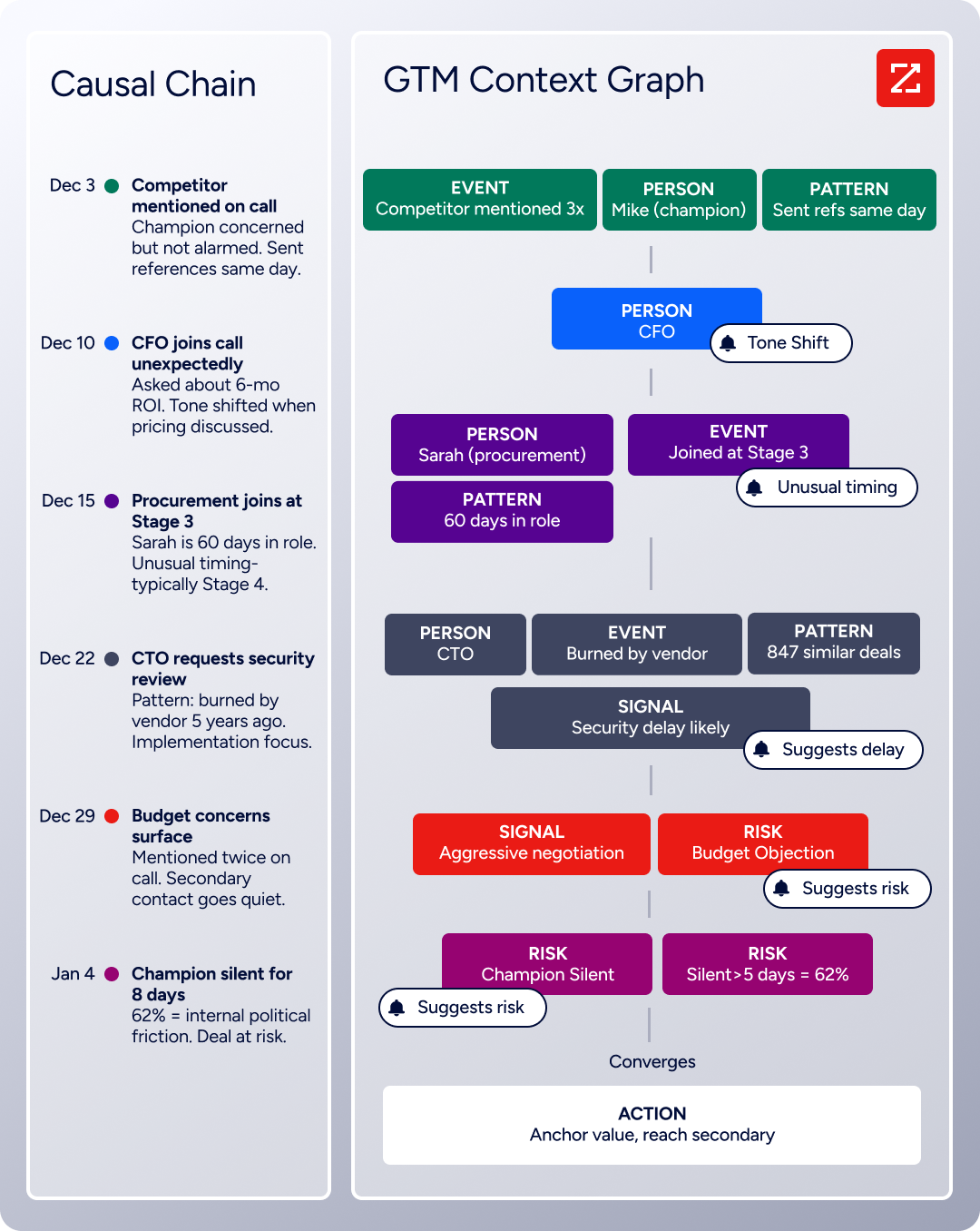
Where LeadGenius delivers contacts, ZoomInfo delivers context. The platform tells you not just who to call, but when they're actively researching solutions, what technologies they currently use, who else sits on the buying committee, and which engagement patterns match your closed-won deals.
LeadGenius focuses on custom, precision data sourcing
LeadGenius built its reputation on doing what databases cannot: sourcing contacts that don't exist in any pre-built dataset.
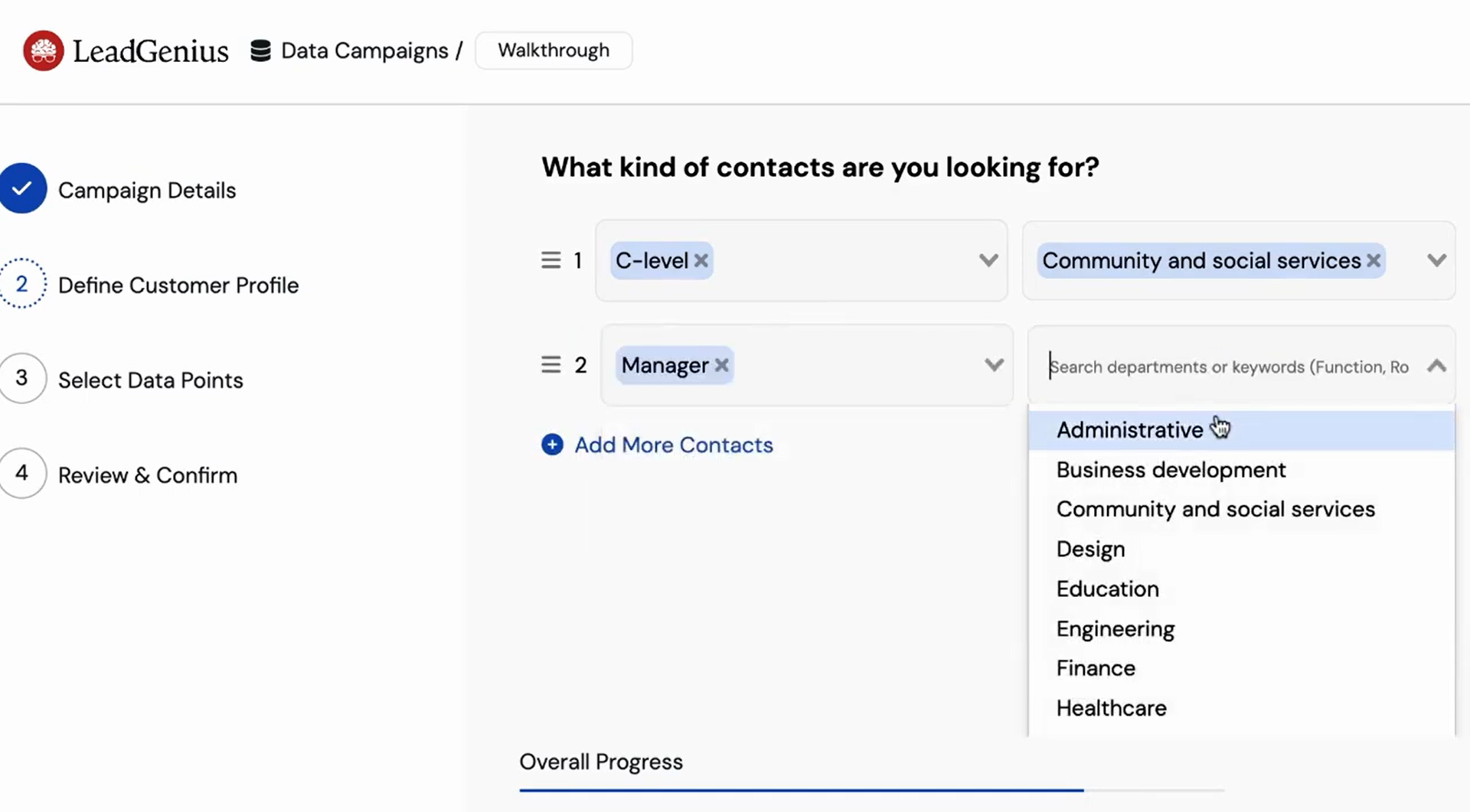
The company's AI + Human-in-the-Loop methodology combines automated data collection with human researchers in over 30 countries who verify and enrich records through public sources like professional profiles, speaker rosters, and authored content. This approach produces accurate data for specific requests, particularly in markets where automated scraping falls short.
The platform offers seven solution areas: Contact Monitoring (tracking role changes), Contact Activation (turning engagement into opted-in contacts), Contact Coverage & Buying Committees (mapping all decision-makers), behavioral intelligence, advanced tagging, social tracking, and privacy compliance.
Source: LeadGenius
Every enterprise engagement includes a dedicated support team of researchers, QA specialists, engineers, and program managers supporting the client's team.
Where LeadGenius stands out is geographic reach in difficult markets. The company targets emerging markets, niche verticals, and industries where conventional databases have thin coverage, including SMBs, brick-and-mortar businesses, and other hard-to-find segments.
For organizations selling into hospitality, construction, franchises, or similar verticals in non-English-speaking countries, this capability solves a real problem.
The compliance approach also matters. LeadGenius acts as a data processor rather than a data controller, sourcing data uniquely for each customer and never reselling it. The platform provides configurable compliance matrices for GDPR, LGPD, and other regulations with URL-level transparency showing exactly where each data point was sourced.
However, LeadGenius's scope stops at data. The platform doesn't include buying signals, sales automation, conversation intelligence, or marketing tools. Teams still need separate platforms for everything that happens after the contact is sourced.
ZoomInfo covers the full go-to-market workflow
ZoomInfo starts where LeadGenius starts (contact and company data) but extends into every stage of the go-to-market process.
The data foundation alone operates at a larger scale. A multi-source verification pipeline backed by 300+ human researchers and automated ML systems scanning 28 million site domains daily reaches up to 95% accuracy on first-party data. In a Fortune 500 competitive RFP analyzing 25 million contacts across vendors, an independent consultant concluded that "no other competitor came even close."
But data is only the first layer. What makes ZoomInfo a platform rather than a database is what sits on top of it.
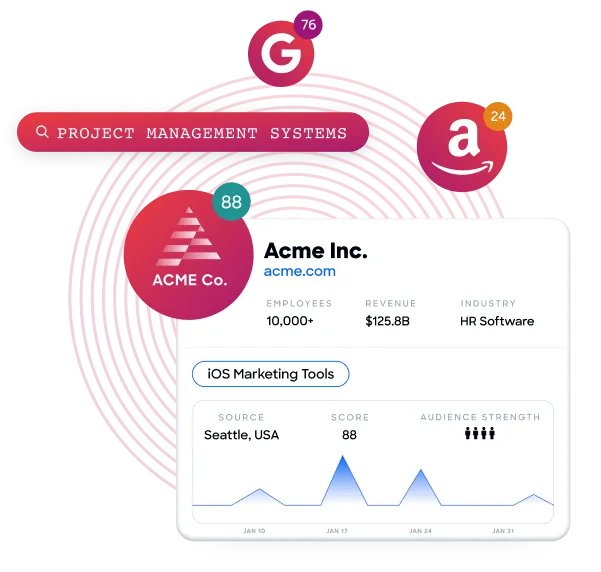
Buyer Intent data tracks signals from 210 million IP-to-Organization pairings and 6 trillion+ keyword-to-device pairings sourced monthly, showing which companies are actively researching solutions like yours.
Source: ZoomInfo
Guided Intent, exclusive to ZoomInfo, identifies the topics historically correlated with deal success rather than requiring manual topic selection. WebSights resolves anonymous website traffic to specific companies and contacts. Technographics profile the tech stacks of over 30 million companies across 30,000+ technologies.
The GTM Context Graph ties all of this together with your internal data. This intelligence layer captures not just what happened in a deal (a stage moved, a meeting was held) but why it happened (the CFO joined the call and asked about ROI, the champion went quiet due to an internal budget battle).
That context feeds directly into GTM Workspace, where AI agents draft outreach, prioritize accounts, and recommend next steps for sellers, and into GTM Studio, where marketers and RevOps teams build and launch campaigns using natural language.
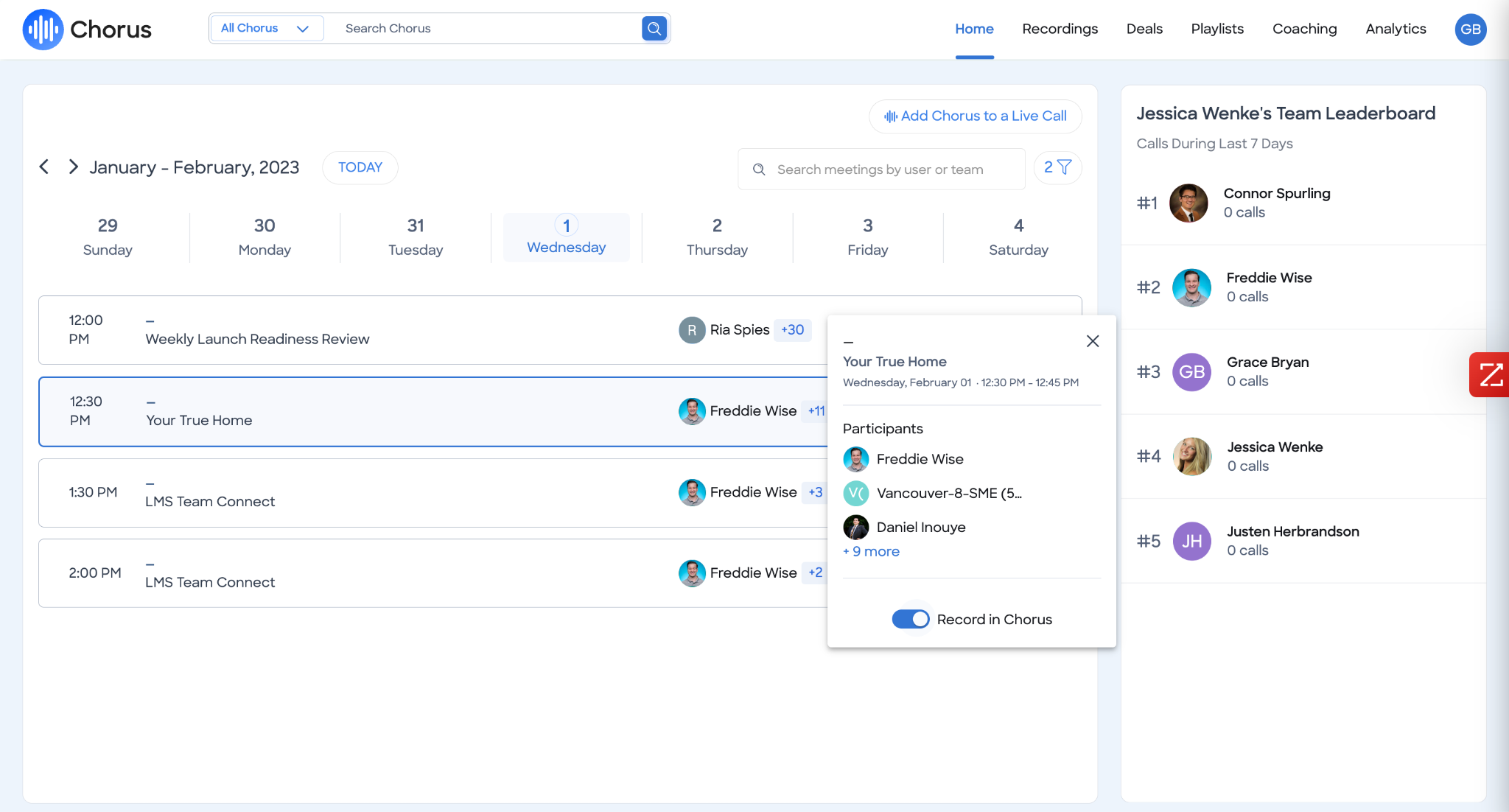
Chorus adds conversation intelligence, automatically recording, transcribing, and analyzing every sales call and meeting. Marketing tools include a native demand-side platform for display advertising, FormComplete (which reduces web forms to a single field while auto-appending the rest), and account-based campaigns across email, ads, and direct mail.
Source: ZoomInfo
Seismic attributed 39% of active pipeline to opportunities identified or influenced by ZoomInfo signals, with sales teams reporting 54% productivity gains. (Seismic)
Data quality and verification
Both platforms verify data, but through different methods and at different scales.
LeadGenius verifies contacts through its Human-in-the-Loop process, where researchers check records against professional profiles, speaker rosters, authored content, and domain-level validation.
The platform offers an optional "precision" mode that adds human review before delivery for higher accuracy. Users on G2 praise the accuracy of business emails and direct dials, noting bounce problems are minimal. However, some users also report receiving outdated leads that are no longer on the market, and the platform has only 14 G2 reviews, making it hard to draw broad quality conclusions.
The human-verification approach works well for small batches of high-value contacts. When you need 500 verified contacts for a strategic ABM campaign, having a researcher confirm each one adds accuracy. But this model doesn't scale the way an automated verification pipeline does when teams need millions of records.
ZoomInfo processes data through a multi-layered system: automated ML scanning 28 million site domains daily, third-party partner data covering 95 million businesses, a contributory community of 200,000+ ZoomInfo Lite users sharing contact info from email signatures, and 300+ human researchers.
Multiple independent sources have validated ZoomInfo's data quality. The platform earned 133 No. 1 rankings on G2 Summer 2025 across categories including Sales Intelligence, Data Quality, and Account Data Management.
Gartner named it the only vendor in the Customers' Choice quadrant on Voice of the Customer 2025, with a 4.7/5.0 average rating and the highest volume of reviews. TrustRadius gave ZoomInfo Buyer's Choice Awards in 2025, based on 2,000+ combined reviews.
SpringDB used ZoomInfo's enriched data to achieve 2x-3x increases in campaign conversions, a 300% increase in database usability, and 30-50% uplift in average deal size. (SpringDB)
Global coverage and hard-to-reach markets
Global reach is one area where the comparison gets interesting.
LeadGenius built its global coverage around native-language research teams active in 37 countries, with operations spanning over 42 countries.
This human-driven approach gives it an advantage in markets where automated data collection struggles (non-English-speaking regions, emerging economies, and niche verticals like hospitality, construction, and franchise operations). When you need contacts in Southeast Asian brick-and-mortar businesses or Latin American mid-market manufacturing firms, LeadGenius's local researchers can find them.
That said, coverage quality can vary. Users have noted that LeadGenius sometimes shows weaker depth in certain markets despite advertising global capability, and a Capterra reviewer recommended the company more clearly explain geographical coverage before engagement.
ZoomInfo approaches global coverage through scale.
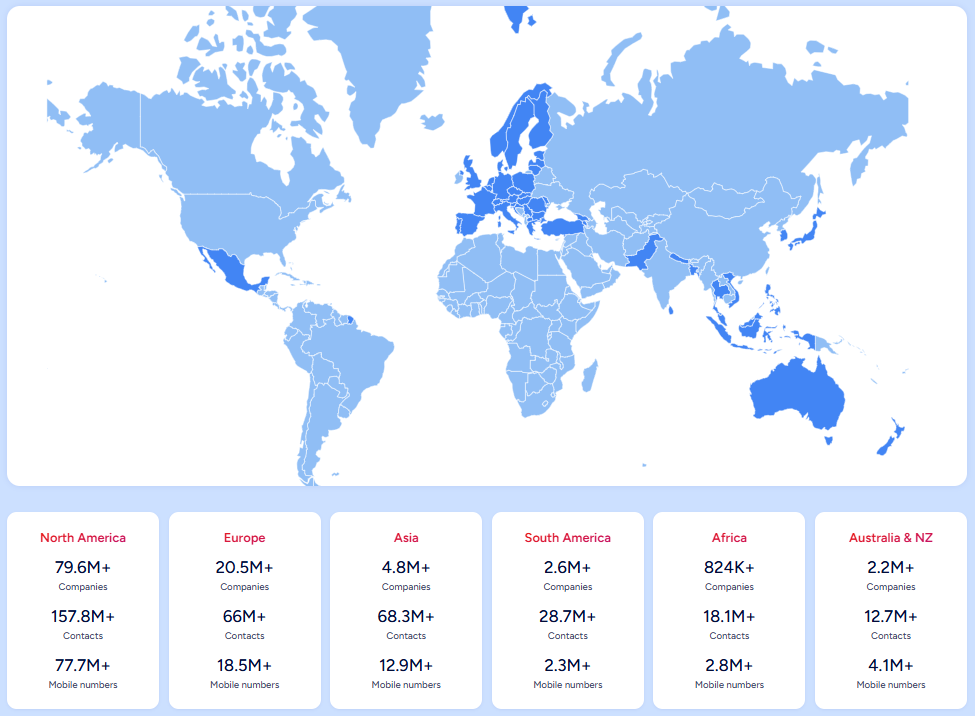
The platform maintains 34M+ company profiles outside North America, 200M+ professional profiles outside NA, and 45M+ mobile numbers outside NA. In 2025, ZoomInfo expanded international mobile coverage by 1.8 million numbers across six European markets and launched nine vertical datasets covering franchise ownership, restaurant operations, and commercial fleet intelligence.
Source: ZoomInfo
ZoomInfo's coverage is broader but database-driven. For standard markets and industries, 500M contacts makes the choice clear. For truly niche segments in non-standard geographies where no database has existing records, LeadGenius's custom research model can fill gaps that automated collection hasn't reached.
The practical difference: ZoomInfo gives your team immediate self-service access to a searchable dataset. LeadGenius requires placing a research request and waiting for delivery. For most go-to-market workflows, the speed of self-service access outweighs the precision of custom sourcing.
Buying signals and intelligence capabilities
This is where the comparison becomes lopsided.
LeadGenius doesn't offer buying signals.
The platform focuses on contact data sourcing and enrichment. It can monitor role changes, promotions, and champion shifts, and provides some behavioral intelligence about buyer communication styles. But it doesn't track intent data, website visitors, technology adoption, or other buying signals that indicate when a company is actively in-market.
Teams using LeadGenius for contact data still need separate tools for intent monitoring, website visitor identification, and engagement tracking. This means additional vendors, additional costs, and the complexity of stitching signals across systems.
ZoomInfo treats buying signals as core to the platform.
Intent data draws from 210 million IP-to-Organization pairings and 6 trillion+ keyword-to-device pairings monthly. Guided Intent automatically identifies the intent topics that correlate with your actual closed-won deals, removing the guesswork of manual topic selection.
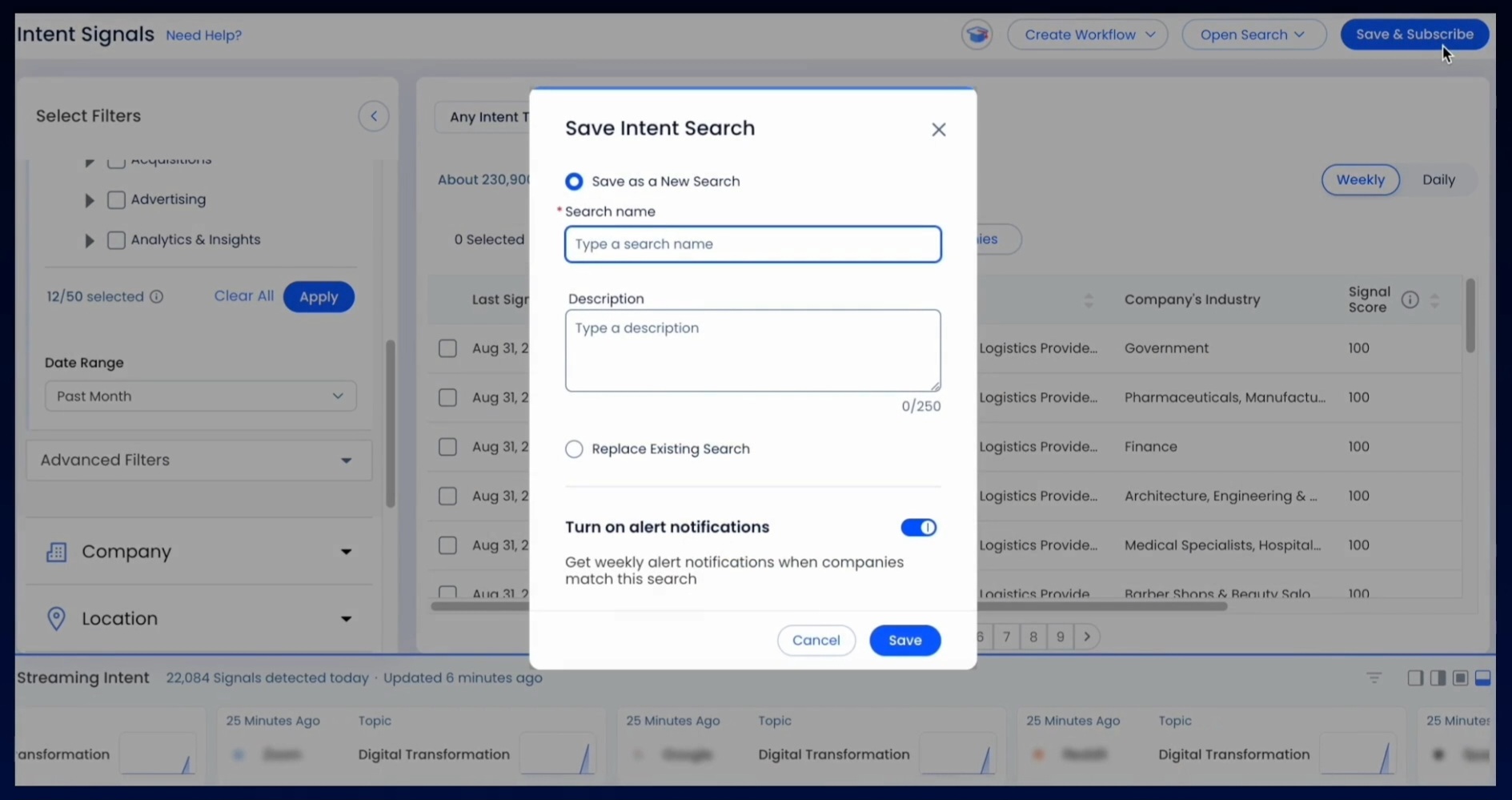
Source: ZoomInfo
WebSights identifies which companies visit your website, down to the individual contact level, with automatic bot filtering distinguishing real visitors from bots.
The GTM Context Graph connects these signals to CRM data, conversation intelligence, and engagement history. A spike in research activity from a target account isn't just a notification. ZoomInfo contextualizes it against that account's deal history, buying committee composition, and the patterns behind similar deals that closed.
LeadGenius has partnered with Bombora to integrate intent data, which suggests the company recognizes this gap. But bolting on a third-party intent feed is different from having intent, contacts, conversations, and engagement data combined in one platform.
Redwood Logistics achieved a 99% reduction in cost-per-click and a 310% increase in clickthrough rate using ZoomInfo's data-driven audience insights. (Redwood Logistics)
Platform access and integrations
LeadGenius offers a RESTful API with campaign-based data delivery, rapid enrichment endpoints, and webhook notifications.
The API has rate limits of 50 requests per minute with up to 200 records per request. Native integrations include Salesforce, HubSpot, Outreach, Marketo, and Zapier, all included at no additional cost. A Chrome browser extension enables real-time contact lookups while browsing LinkedIn profiles.
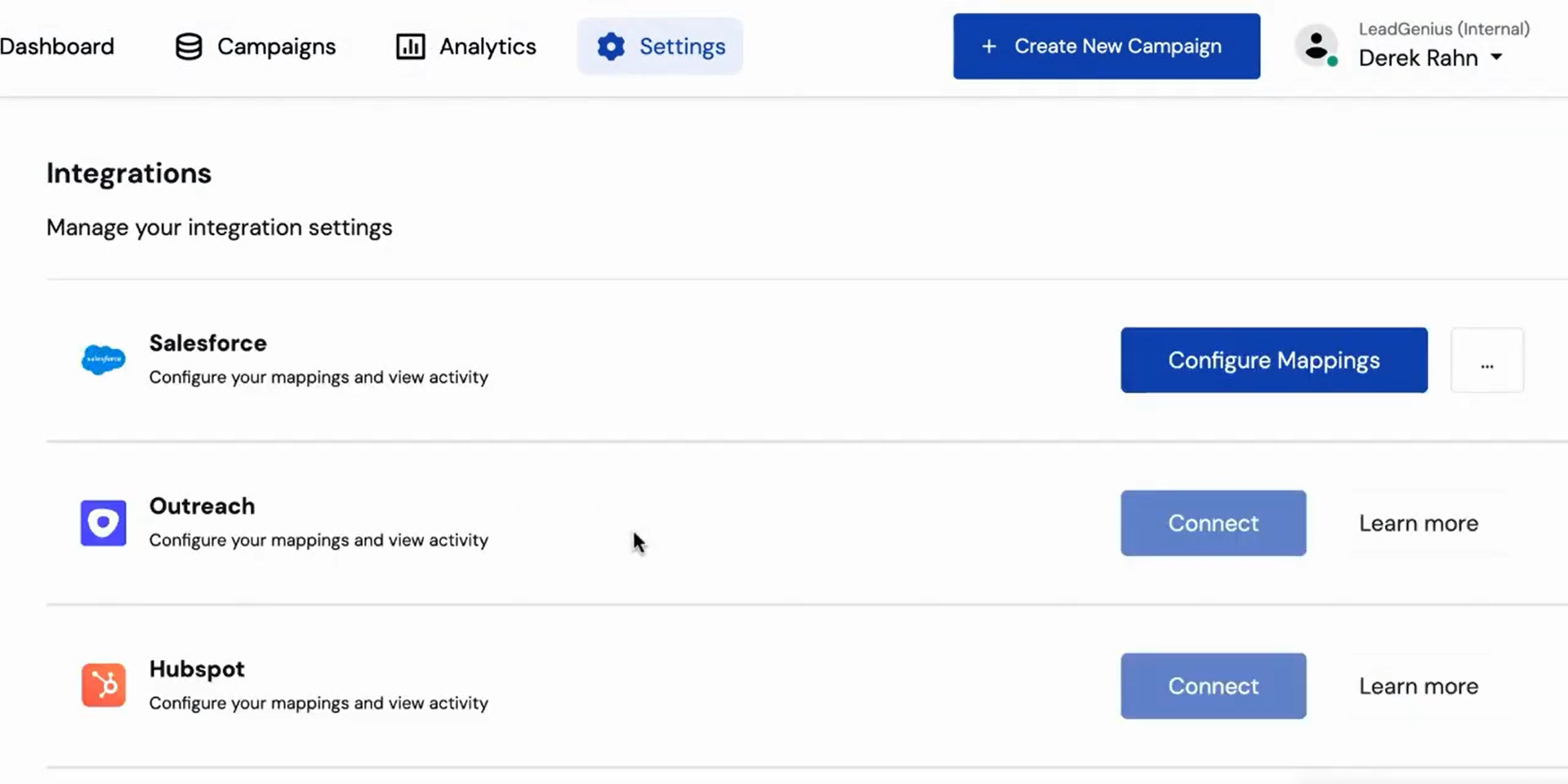
Source: LeadGenius
The platform also offers a freemium self-serve option that lets new users create an account and explore the platform, with the ability to enrich up to 1,000 records or acquire up to 500 new leads. For enterprise users, the dedicated delivery model provides ongoing support throughout the engagement.
ZoomInfo provides broader access options.
The Enterprise API is organized into four categories: Data API (search and enrich), Copilot API (AI intelligence including account summaries and lookalike expansion), Marketing API (audience management), and Platform API (engagement data). Authentication uses OAuth 2.0 with PKCE, and rate limits scale from 25 to 35 requests per second depending on tier.
The ZoomInfo MCP server connects AI models to ZoomInfo's data without custom coding, supporting Claude and ChatGPT. The App Marketplace lists 120+ partner integrations across CRM, marketing automation, sales engagement, data warehouse, and communications categories.
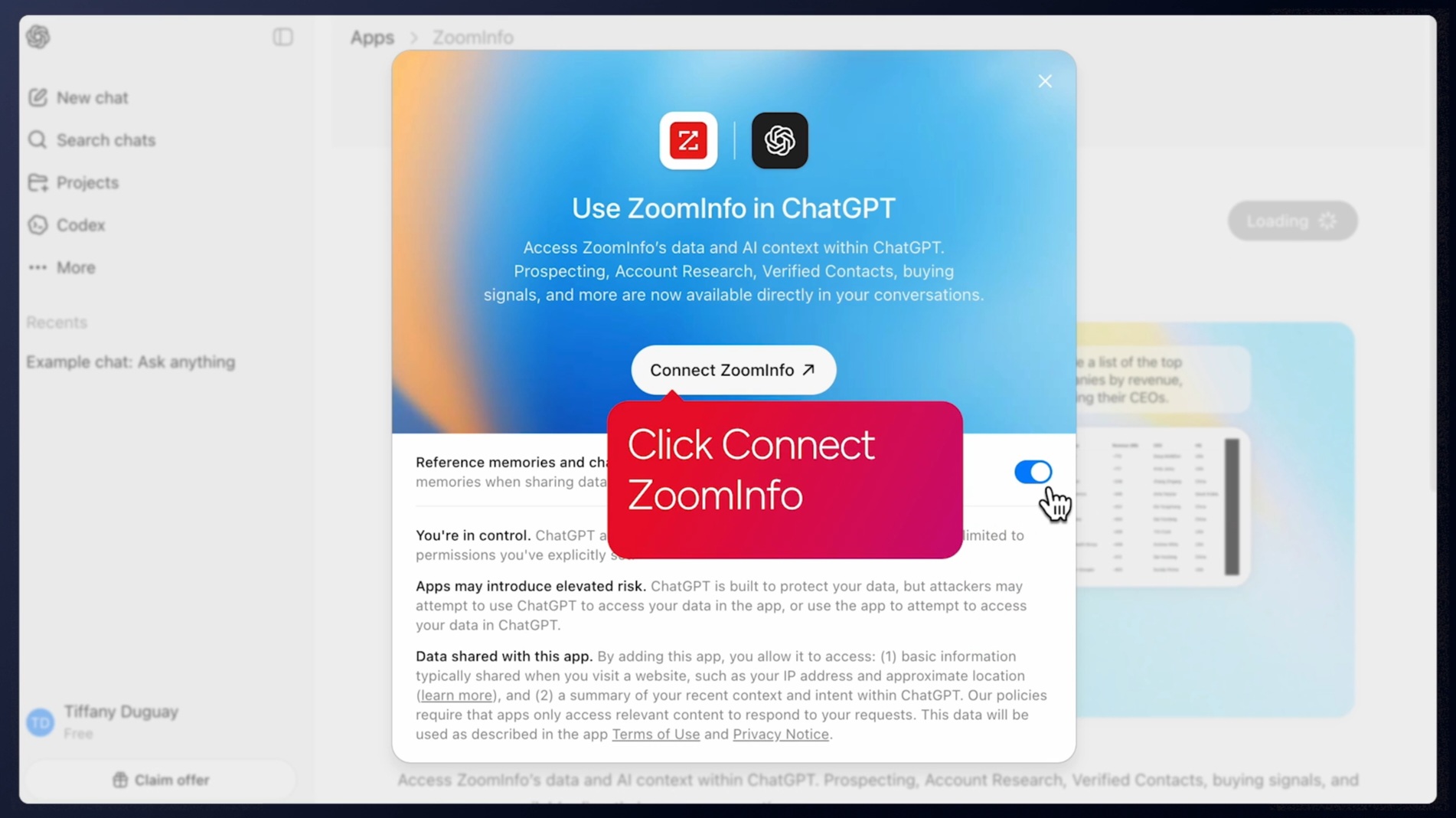
Source: ZoomInfo
Cloud Partners enables direct data ingestion into AWS, Google Cloud, Snowflake, and Databricks. API access is included in all relevant ZoomInfo plans, making it a standard feature rather than an add-on.
BDO Canada's Senior Marketing Intelligence Analyst noted: "The plug-and-play aspect of the API means I can integrate it very easily into any process and get information at a moment's notice," achieving an 87% reduction in time spent on internal data dashboard updates. (BDO Canada)
Pricing and cost structure
Neither platform publishes detailed pricing, but the models differ.
LeadGenius operates on a subscription-based model with custom packages.
The average contract runs about $22K per year, with observed contracts ranging from roughly $18K to $81K+. The company offers a free data sample for evaluation but does not appear to offer a standard free trial for the full platform. Some users have noted that pricing is high compared to other tools in the space.
The pricing reflects LeadGenius's service-intensive model. You're paying for human researchers to source and verify contacts specifically for your accounts, which inherently costs more per record than accessing a pre-built database.
For organizations with specific data needs that no database covers, this premium can deliver strong ROI. For organizations whose data needs can be met by an existing database, the premium may not be justified.
ZoomInfo uses a seat-and-credit-based model with pricing based on users, monthly credit volume, features, and contract length.
The platform offers two free entry points: ZoomInfo Lite, a permanent free tier with 10 monthly export credits and access to the B2B database, and a 7-day free trial with access to core features.
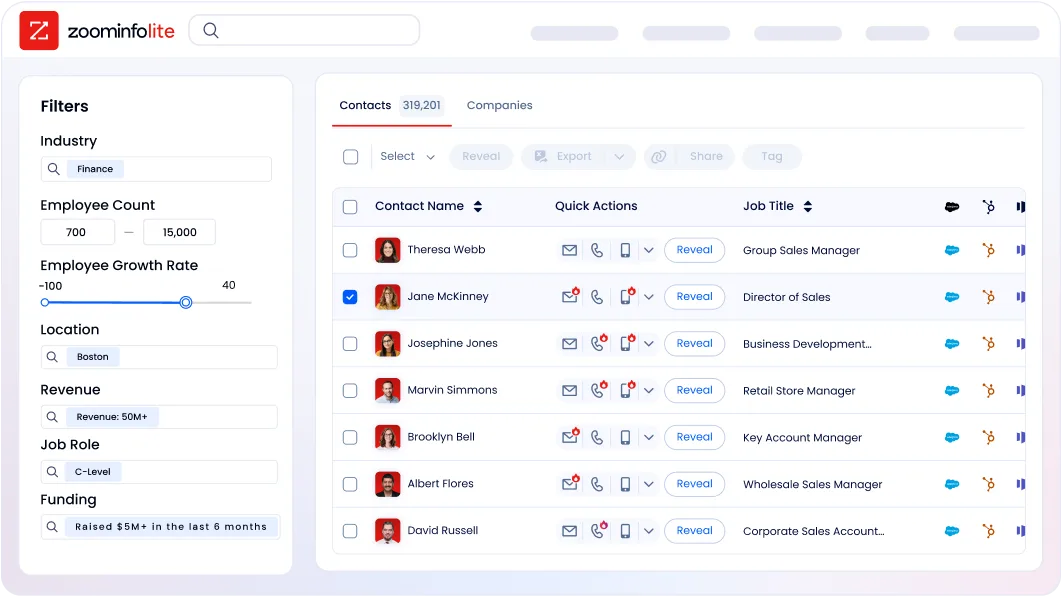
ZoomInfo's paid plans span three product lines (Sales, Marketing, and standalone products like Chorus and Chat), each with tiered feature sets. The pricing is premium, but it covers far more than contact data: intent signals, conversation intelligence, sales automation, marketing automation, and AI tools are included depending on the tier.
Note: ZoomInfo is transitioning toward a consumption-based pricing model.
The cost comparison depends on what you're buying. If you only need custom contact data for a handful of strategic accounts, LeadGenius's focused pricing may make sense. If you need contact data plus intent signals, conversation intelligence, sales automation, and marketing tools, ZoomInfo consolidates what would otherwise require multiple vendors into one platform.
Security and compliance
Both platforms address privacy, though they approach it differently.
LeadGenius emphasizes privacy and compliance.
The company acts as a data processor rather than a data controller, sources data uniquely for each customer (never reselling it), and provides a configurable compliance matrix for GDPR, LGPD, CCPA, and other regulations with URL-level transparency for full audit trails.
This transparency is valuable for regulated organizations that need to trace exactly where each data point originated. The company does not publicly list specific security certifications such as SOC 2 or ISO 27001.
ZoomInfo holds several certifications, all renewed annually: ISO 27001 (Information Security Management System), SOC 2 Type II, ISO 27701 (Privacy Information Management System), TRUSTe validation for GDPR and CCPA practices, and registration as a data broker in California and Vermont. The dedicated Trust Center provides transparent access to compliance documentation.
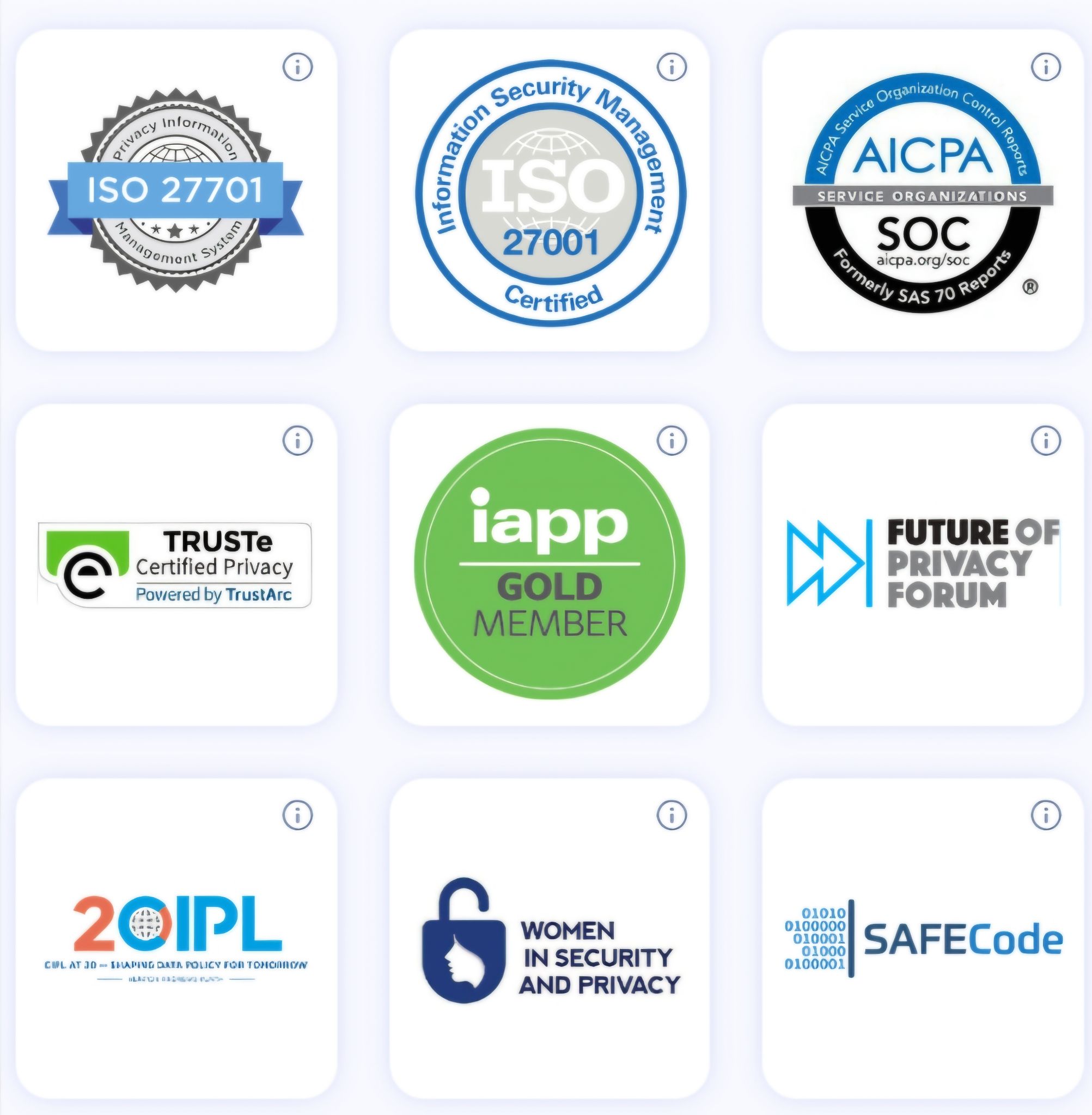
Source: ZoomInfo
Both platforms comply with major privacy regulations. LeadGenius's per-customer sourcing model offers a distinct compliance approach for organizations that require it, while ZoomInfo's certified infrastructure meets the security requirements of Fortune 500 enterprises.
LeadGenius vs. ZoomInfo: Which should you choose?
Choose LeadGenius if:
Your primary need is custom contact data for niche verticals or hard-to-reach markets where no existing database has coverage
You operate in emerging markets or non-English-speaking regions where local research teams provide a clear advantage
Your organization needs custom data sourced to specific criteria that standard databases can't match
Transparent, per-customer data sourcing is a compliance requirement for your industry
You already have separate tools for intent data, sales engagement, and marketing automation and only need to fill contact data gaps
Your team prefers a managed data delivery model with dedicated research support
You have the budget for custom data sourcing (averaging $22K+ annually) and need precision over volume
Choose ZoomInfo if:
You need a go-to-market platform that covers data, intelligence, and action in one system
Buying signals like intent data, website visitor identification, and job change alerts are important to your sales and marketing process
Your team values self-service access to a searchable database with immediate results
You want AI tools for account research, outreach generation, and pipeline prioritization through GTM Workspace
Conversation intelligence and sales call analysis are part of your workflow
You need marketing capabilities like ABM, display advertising, and form optimization alongside your data
Integration flexibility matters, whether through native apps, APIs, MCP, or data warehouse delivery
You want free entry points (ZoomInfo Lite or a 7-day trial) to evaluate the platform before committing
Start with ZoomInfo Lite for free or request a full trial to experience the platform.
The decision comes down to one question: do you need a data supplier or a platform? LeadGenius excels at sourcing contacts that nobody else has, particularly in markets and verticals where automated collection falls short. For organizations with specific, hard-to-fill data gaps, that capability is worth the investment.
ZoomInfo covers the broader range of go-to-market needs. The combination of its B2B dataset, the GTM Context Graph, and multiple access options means teams can prospect, prioritize, engage, and measure from one platform. For most revenue organizations comparing these two options, ZoomInfo's breadth and self-service access will serve them better.
The right choice depends on whether your bottleneck is finding specific contacts or running an entire go-to-market process. If the former, LeadGenius deserves a look. If the latter, ZoomInfo is built for it.
LeadGenius vs. ZoomInfo FAQ
What is the main difference between LeadGenius and ZoomInfo?
LeadGenius is a specialized B2B contact data provider that uses human researchers and AI to source custom, on-demand contacts for specific accounts and markets.
ZoomInfo is a go-to-market platform with a database of 500M contacts, buying signal tracking, conversation intelligence, sales automation, and marketing tools. LeadGenius delivers contact data. ZoomInfo delivers data plus intelligence and action across the full go-to-market workflow.
Which platform has better data quality?
Both platforms verify data, but through different methods. LeadGenius uses human-in-the-loop verification with researchers in 37 countries, producing accurate results for targeted batches.
ZoomInfo combines automated ML scanning of 28 million domains daily, 300+ human researchers, and a contributory network of 200,000+ users, achieving up to 95% accuracy at a scale of 500M contacts. Gartner, Forrester, G2, and Fortune 500 competitive evaluations have all validated ZoomInfo's quality.
Does LeadGenius include intent data or buying signals?
No. LeadGenius focuses on contact data sourcing and enrichment. It can monitor role changes and promotions but does not track buying intent, website visitors, technology adoption, or other signals that indicate when a company is actively in-market. Teams using LeadGenius need separate tools for signal detection.
ZoomInfo includes intent data, website visitor identification, technographics, and job change alerts as core platform features.
How do the pricing models compare?
Both use custom, quote-based pricing. LeadGenius contracts average about $22K per year, ranging from $18K to $81K+, covering custom data sourcing and enrichment.
ZoomInfo is also custom-quoted based on seats, credits, and features. ZoomInfo offers a permanent free tier (ZoomInfo Lite with 10 monthly export credits) and a 7-day free trial, while LeadGenius offers a freemium self-serve option with limited records and a free data sample on request.
Which platform is better for international markets?
LeadGenius has an advantage in hard-to-reach, non-English-speaking markets through native-language research teams active in 37 countries. For niche verticals and emerging economies where automated data collection is thin, LeadGenius can source contacts that databases don't cover.
ZoomInfo offers broader overall international coverage with 34M+ company profiles and 200M+ professional profiles outside North America, making it the stronger choice for standard international markets where automated collection works well.
Can LeadGenius replace ZoomInfo or vice versa?
LeadGenius cannot replace ZoomInfo because it only covers contact data sourcing, not intent signals, conversation intelligence, sales automation, or marketing tools.
ZoomInfo can replace LeadGenius's core function of providing B2B contact data for most use cases given its database scale. Organizations with niche targeting requirements in hard-to-reach markets may still benefit from LeadGenius's custom sourcing as a supplement alongside ZoomInfo.
Which platform offers better integrations?
ZoomInfo provides more integration options, with 120+ partner integrations in its App Marketplace, native connections to Salesforce, HubSpot, and Microsoft Dynamics, an Enterprise API, an MCP server for AI assistants, and direct data warehouse delivery through Cloud Partners.
LeadGenius integrates with Salesforce, HubSpot, Outreach, Marketo, and Zapier, covering common platforms but with a narrower overall ecosystem.
Does either platform offer a free tier?
ZoomInfo offers ZoomInfo Lite, a permanent free tier with access to its B2B database, 10 monthly export credits, a Chrome extension, and limited website visitor tracking. ZoomInfo also provides a 7-day free trial of paid features.
LeadGenius offers a freemium self-serve option allowing users to enrich up to 1,000 records or acquire up to 500 new leads, along with a free data sample, but does not advertise a permanent free plan with ongoing access.
