
Comparing Leads360 vs. Salesforce is less about picking the better CRM and more about understanding what kind of business you're running. These two platforms serve different markets, and choosing the wrong one wastes money and time on a tool that wasn't built for your workflow.
The real questions to ask before deciding:
Are you running a local service business or selling B2B to other companies?
Do you need an all-in-one marketing and CRM suite, or a platform that scales with complex sales processes?
Is your sales cycle measured in days (booking appointments) or months (closing enterprise deals)?
How important are third-party integrations and a large software ecosystem?
Do you need a platform you can set up in a week, or are you willing to invest months for long-term capability?
In short, here's what we recommend:
Leads360 is an all-in-one sales and marketing platform built for local service businesses. It bundles CRM, email and SMS marketing, website building, appointment booking, reputation management, and sales pipelines into a single subscription starting at $197/month. For small business owners juggling multiple tools, Leads360 puts everything in one dashboard with hands-on setup support. However, its lack of public reviews, limited integrations, and dependence on GoHighLevel's underlying infrastructure may give some buyers pause.
Salesforce is the world's #1 CRM, serving over 150,000 companies from startups to global enterprises. With Sales Cloud, Service Cloud, Marketing Cloud, Commerce Cloud, and the AI-powered Agentforce platform, Salesforce offers depth that no local-business tool can match. But that depth comes with complexity: real implementations require dedicated administrators, annual contracts, and budgets that can reach thousands per month before add-ons.
Both platforms manage customer relationships and sales pipelines. But for B2B companies, there's a gap neither CRM fills on its own: knowing who to sell to, when they're ready to buy, and what message will resonate. Your CRM records interactions. It doesn't generate them.
ZoomInfo is a B2B data and go-to-market platform built on 500M contacts, 100M companies, 135M+ verified phone numbers, and 200M+ verified business email addresses. Its GTM Context Graph processes 1.5B+ data points daily, combining this data with your CRM records, conversation transcripts, and behavioral signals to show the full context of your accounts (not just what happened, but why). That intelligence reaches your team through GTM Workspace for sellers, GTM Studio for marketers and RevOps, or APIs and MCP in any front-end, including native Salesforce integration. For B2B companies, ZoomInfo isn't a CRM replacement. It's the intelligence layer that makes your CRM productive.
If your sales team spends more time searching for prospects than talking to them, see how ZoomInfo works.
Leads360 vs. Salesforce vs. ZoomInfo at a glance
Leads360 | Salesforce | ZoomInfo | |
|---|---|---|---|
Core function | All-in-one local business CRM + marketing | Enterprise CRM + AI platform | B2B data intelligence + GTM platform |
Target market | Local service SMBs (1-20 employees) | SMB to global enterprise | B2B sales and marketing teams |
Starting price | $197/month (flat rate) | Free (2 users), $25/user/month (Starter) | Free (Lite), custom-quoted paid plans |
CRM | Included in all plans | Core product | Not a CRM; enriches your CRM |
Marketing tools | Email, SMS, social media, funnels included | Separate Marketing Cloud (from $1,500/org/month) | ABM, display ads, audience targeting via GTM Studio |
B2B contact database | None | None native | 500M contacts, 200M+ verified emails |
AI capabilities | AI Sales Bot ($347/month add-on) | Agentforce (embedded + consumption pricing) | GTM Context Graph, AI agents |
Integrations | Limited; no public API | 9,000+ apps (AppExchange) | |
Best for | Local service businesses (dental, HVAC, medspa) | B2B companies with complex sales processes | B2B teams needing prospect data and intelligence |
These platforms solve different problems
Leads360 and Salesforce operate at different scales for different markets. The comparison matters because many small business owners hear "CRM" and assume all CRMs compete head-to-head. They don't.
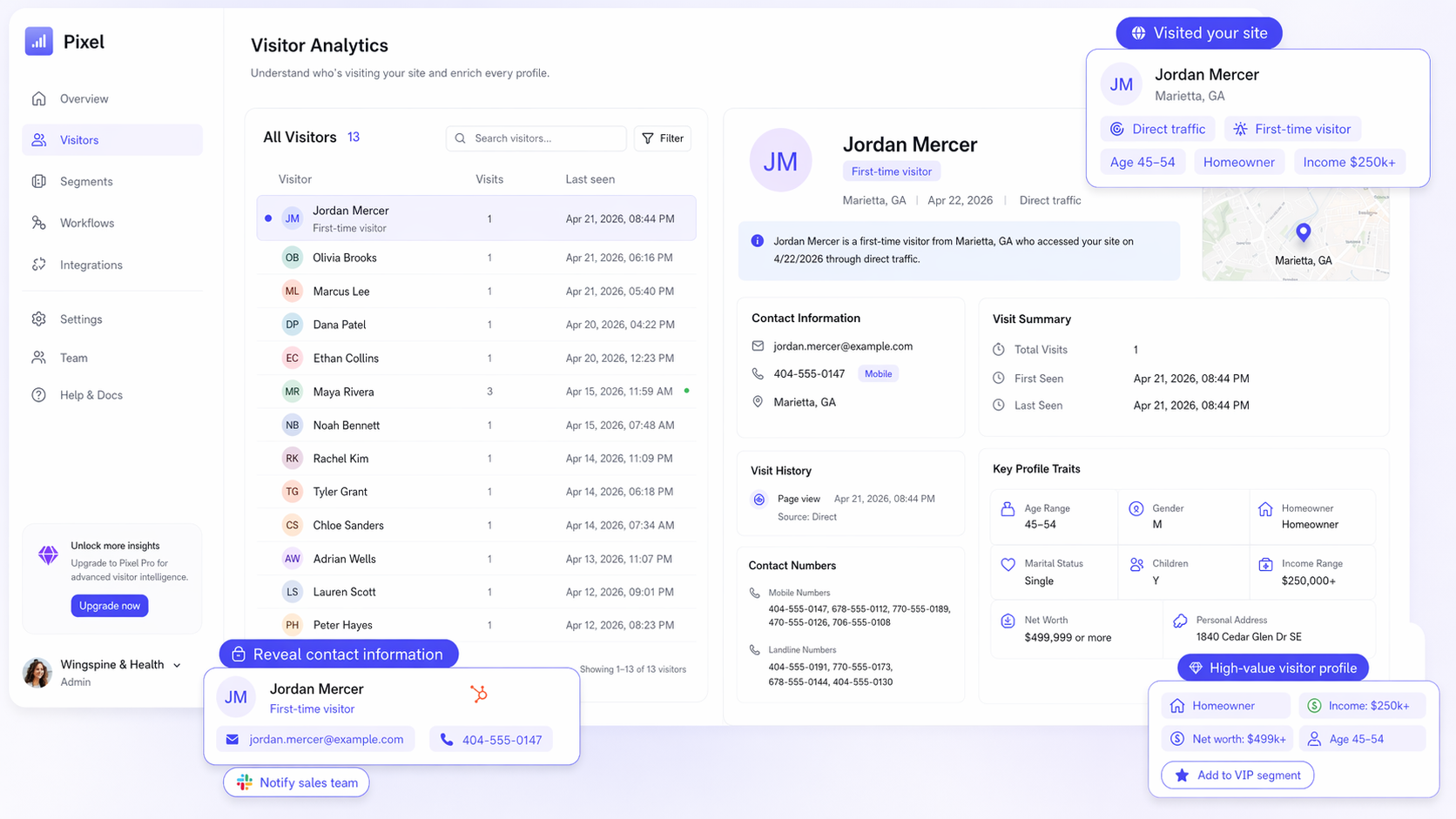
Leads360 targets local service businesses: the HVAC contractor who needs to capture leads from Google, the dental practice sending appointment reminders, the medspa running a social media campaign. These businesses need marketing and CRM in one place because they can't afford (or manage) separate tools for each function.
Source: Leads360
Leads360's 19 named industry verticals (medical spas, dental, chiropractors, plumbing, auto detailing, and more) make its intended audience clear.
Salesforce targets a different universe. From a free CRM for two users to enterprise deployments powering global organizations, Salesforce is built for businesses where the sales process itself is complex, involving multiple stakeholders, long deal cycles, and cross-departmental coordination.
Source: Salesforce
The platform's $41.5 billion in annual revenue and 76,000+ employees reflect a company serving a different scale of customer.
Leads360 is a marketing-first platform with CRM built in. Salesforce is a CRM-first platform with everything else available as modules. The right choice depends on whether your primary challenge is generating local leads or managing a complex sales pipeline.
Leads360 bundles everything for local businesses
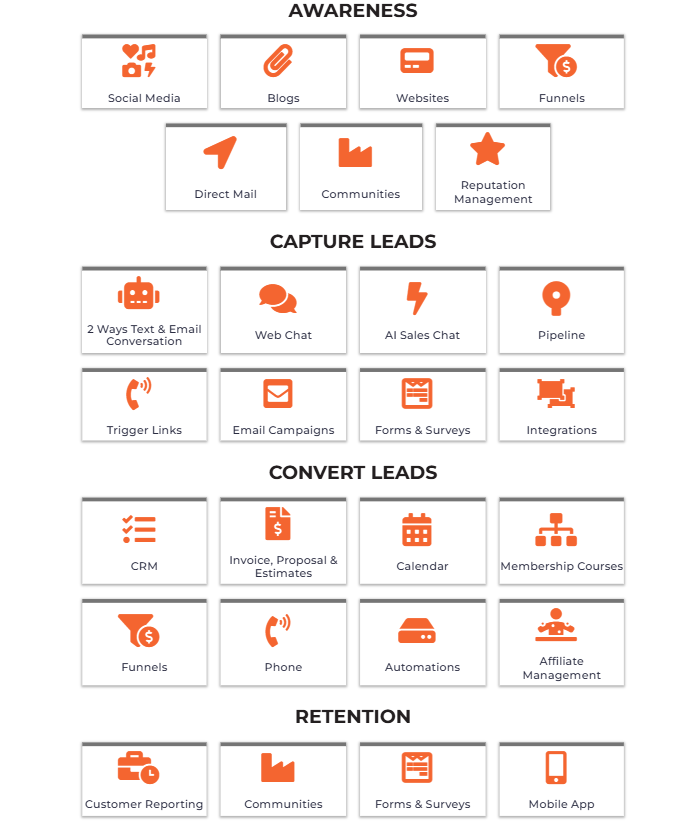
Leads360's pitch is consolidation. The homepage frames the problem directly: "Juggling sales, marketing and communication platforms? Feeling Overwhelmed?" The solution is 30+ features: CRM, email campaigns, website building, calendar booking, reputation management, social media scheduling, and invoicing, all under one login.
Source: Leads360
For a plumber or chiropractor who currently pays separately for Mailchimp, Calendly, a website host, a review management tool, and a CRM, the math is straightforward. Leads360's $197/month Elevate Pro plan replaces multiple subscriptions with "one price that doesn't grow when you do."
The done-with-you setup model sets Leads360 apart from self-serve platforms. Higher-tier plans include Leads360's team configuring pipelines, building email campaigns, setting up automation triggers, and integrating domains. The $847/month Elevate Ultimate plan bundles 10 hours per month of marketing virtual assistance and three one-on-one onboarding sessions.
For business owners without marketing expertise, this hands-on support can be the difference between a platform that collects dust and one that generates leads.
Two features stand out for appointment-driven businesses. The Missed Call Text Back feature sends an SMS to callers who go unanswered, recovering leads that a CRM would simply log as missed.
The AI Sales Bot handles appointment booking around the clock, syncing with Leads360 calendars to offer available slots without human involvement. For businesses where every missed call is a lost customer, these automations have real revenue impact.
Where Leads360 shows its limits is in transparency and ecosystem depth. The platform has no presence on review sites like G2, Capterra, or Trustpilot, and publishes no named case studies or verifiable customer results.
It is built on GoHighLevel's white-label infrastructure, meaning its capabilities and product roadmap are governed by GoHighLevel's development. No public API documentation or third-party app marketplace exists. For businesses evaluating long-term platform choices, this limited visibility is worth noting.
Salesforce goes deep where Leads360 goes wide
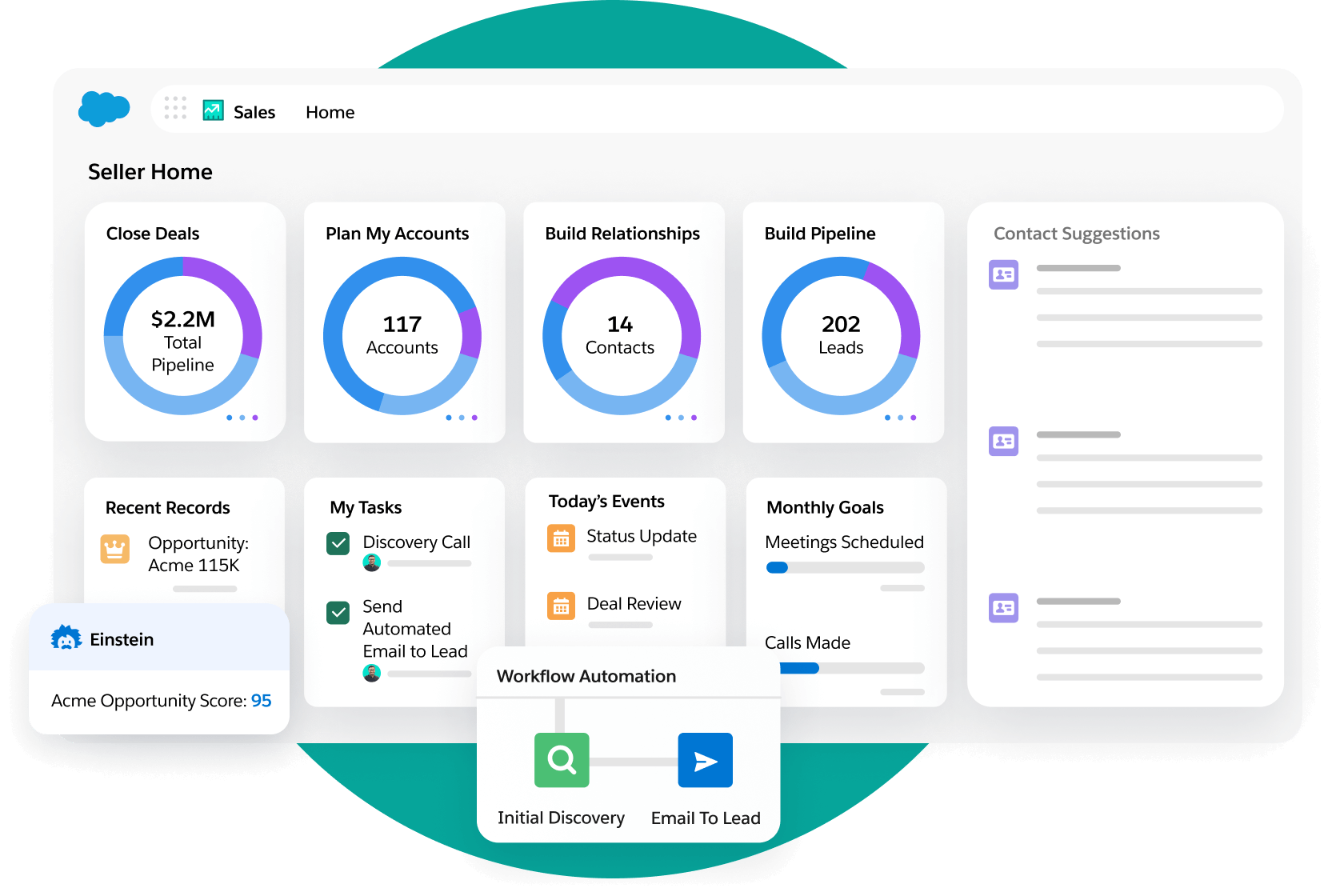
Salesforce doesn't try to be everything in one box. Instead, it provides a foundation with Sales Cloud and lets you add modules as your needs grow: Service Cloud for customer support, Marketing Cloud for campaigns, Commerce Cloud for storefronts, Data Cloud for analytics, and Slack for team communication.
Source: Salesforce
This modular architecture is why IDC has ranked Salesforce #1 in CRM market share for over a decade and why Gartner has named it a Magic Quadrant Leader across six product categories. It scales from a free tier for two users to enterprise deployments with custom AI agents, 17 industry-specific solutions, and compliance certifications for regulated industries.
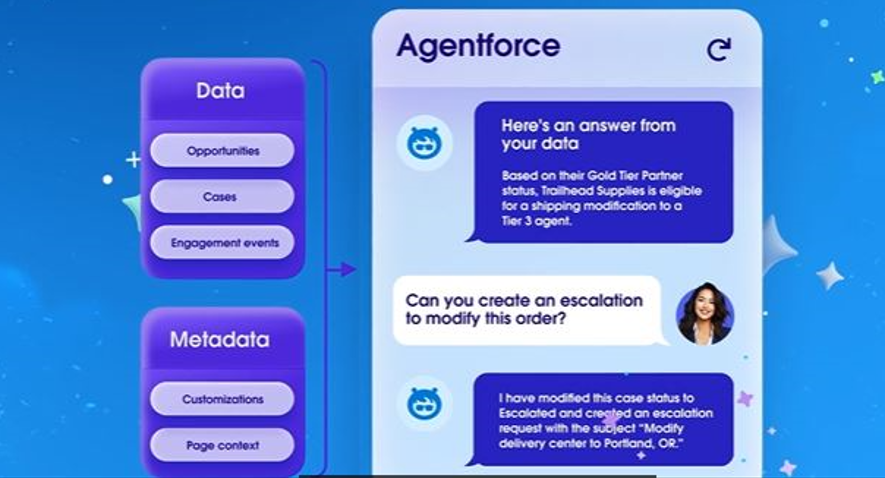
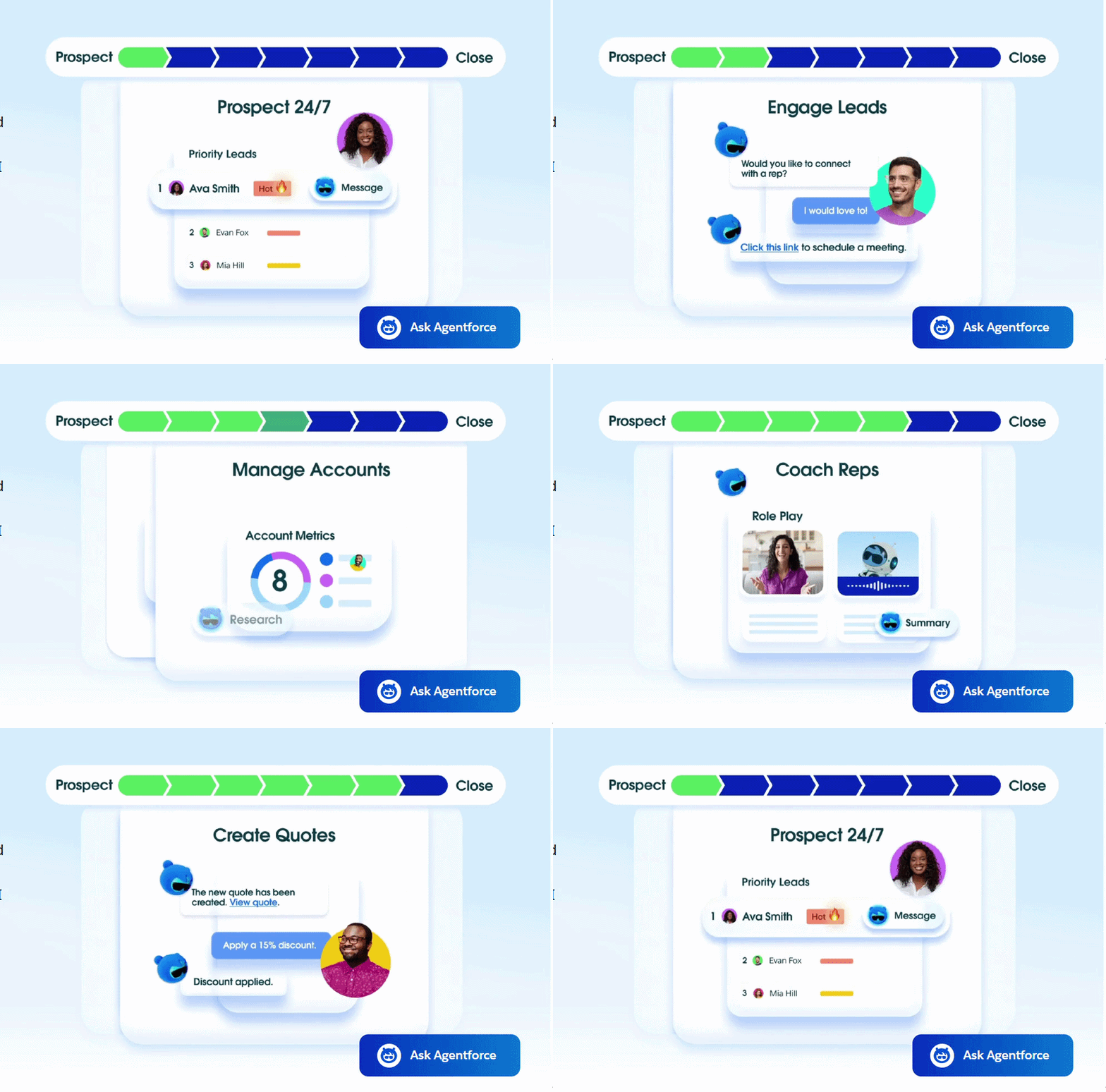
AI is where Salesforce has invested most heavily. Agentforce, powered by the Atlas Reasoning Engine, deploys AI agents that handle customer service inquiries, draft sales emails, research accounts, and update CRM records on their own.
Source: Salesforce
Salesforce reports that Agentforce resolves 85% of its own support requests without human escalation and has delivered 2.4 billion Agentic Work Units across its customer base.
The AppExchange marketplace extends Salesforce with 9,000+ partner apps and 14+ million installs. Whether you need document signing, analytics, project management, or industry-specific workflows, someone has likely already built the integration.
The cost of this depth is complexity. Real Salesforce implementations require trained administrators. Trailhead, the company's free learning platform, has 6+ million learners and 60+ certifications, which tells you something about the learning curve. Over 70% of deployments are led by implementation partners, adding cost beyond the license fees.
For a five-person plumbing company, this is overhead that shouldn't exist. For a 200-person B2B company with enterprise deals, it's the cost of doing business properly.
For B2B sales, the CRM is only half the equation
Here's what the Leads360 vs. Salesforce debate misses for B2B companies: neither platform tells you who to sell to next.
Leads360's CRM captures leads that come to you (website forms, missed calls, Facebook ads). It manages the relationship after first contact.
Salesforce does the same at enterprise scale, with deeper workflow automation and analytics. Both platforms organize what you already have.
But B2B sales teams face a different problem. Their prospects don't walk through the door or fill out a form. They need to identify decision-makers at target companies, find accurate contact information, and reach out before the competition does. A CRM full of stale data and wrong phone numbers doesn't generate pipeline, no matter how many features the interface offers.
This is the problem ZoomInfo was built to solve. With 500M contacts, 100M companies, 135M+ verified phone numbers, and 200M+ verified business email addresses, ZoomInfo provides the verified B2B data that fills your CRM with real prospects.
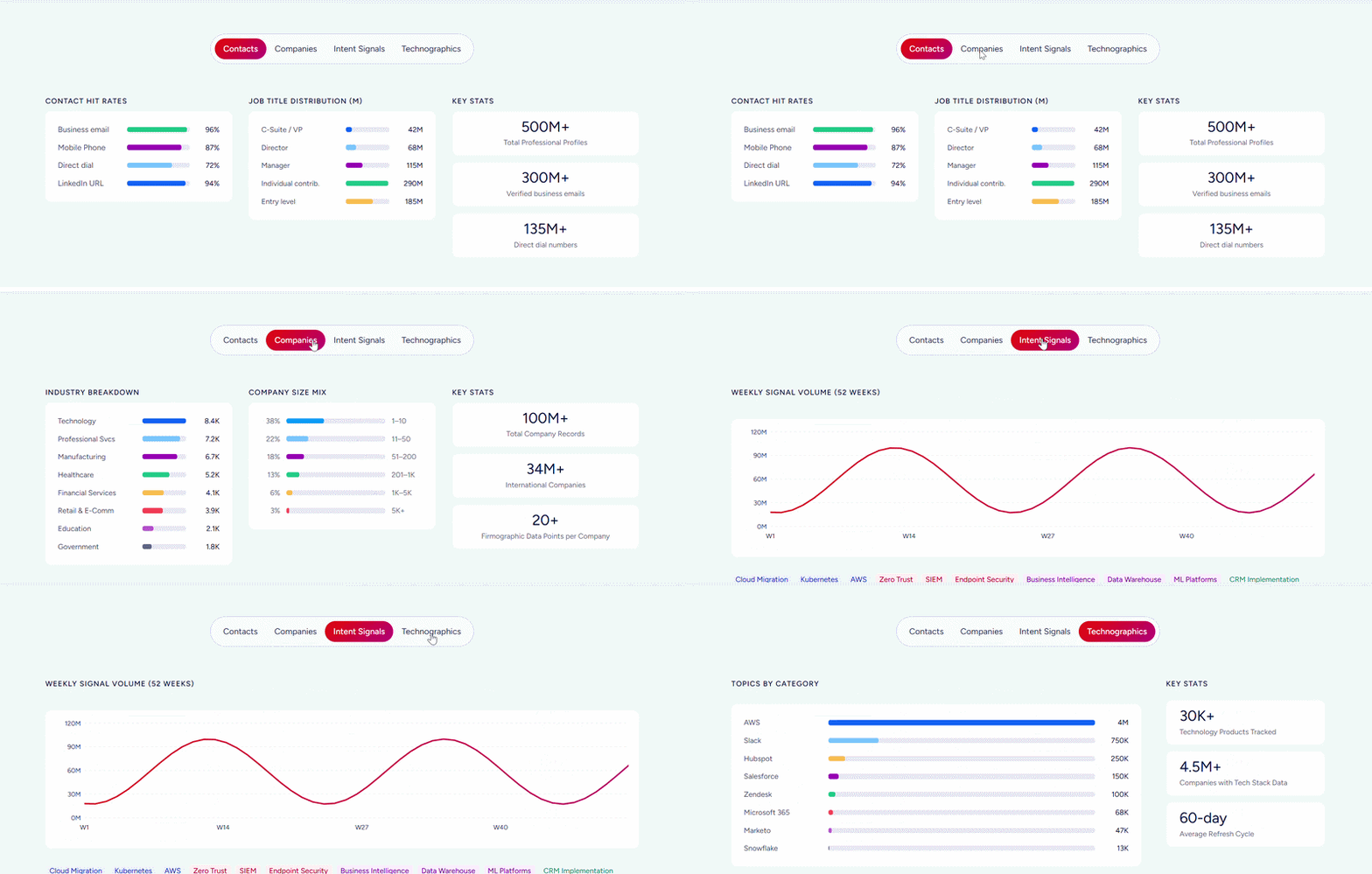
The data is maintained through automated ML scanning of 28 million site domains daily, third-party partner data from 95 million businesses, and a Data Training Lab of 300+ human researchers. First-party data reaches up to 95% accuracy.
But data alone is a starting point. ZoomInfo's GTM Context Graph fuses this B2B data with a customer's own CRM records, conversation transcripts, and behavioral signals to capture not just what happened in a deal, but why it happened.
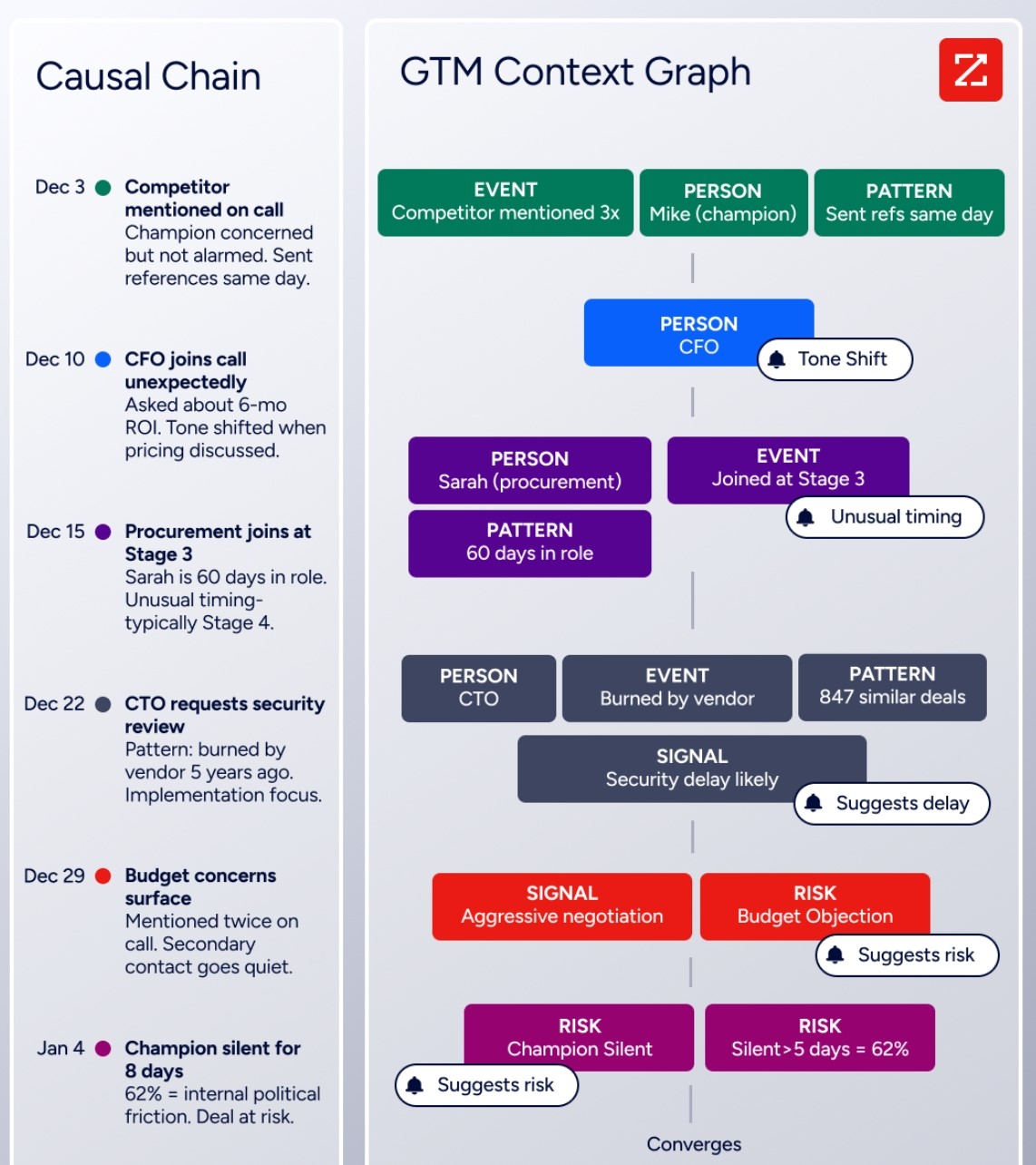
Your CRM records that a deal moved to Stage 4. ZoomInfo's intelligence layer identifies that the CFO joined the last call and asked about six-month ROI (the actual signal behind the stage change).
For sales teams, GTM Workspace surfaces prioritized accounts with AI-drafted outreach that addresses the specific concerns this intelligence uncovers.
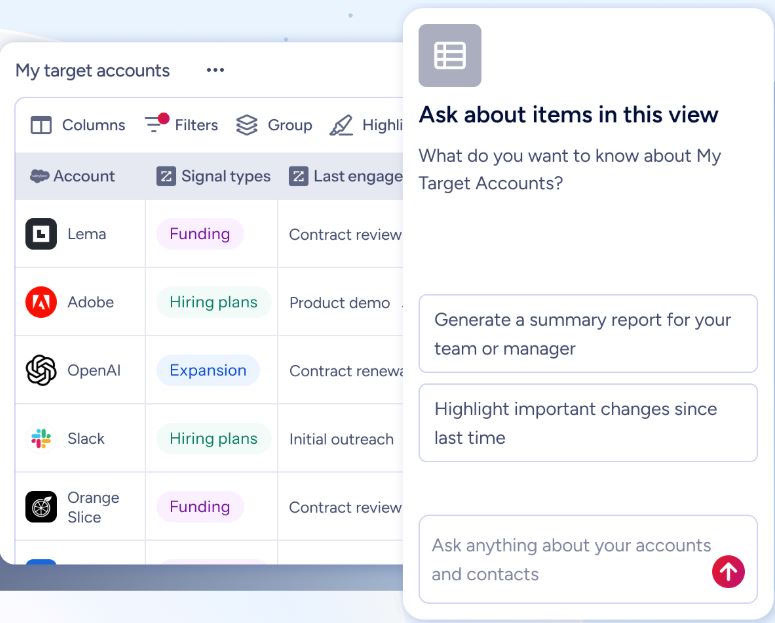
For marketers and RevOps, GTM Studio lets them build audiences and orchestrate campaigns in natural language.
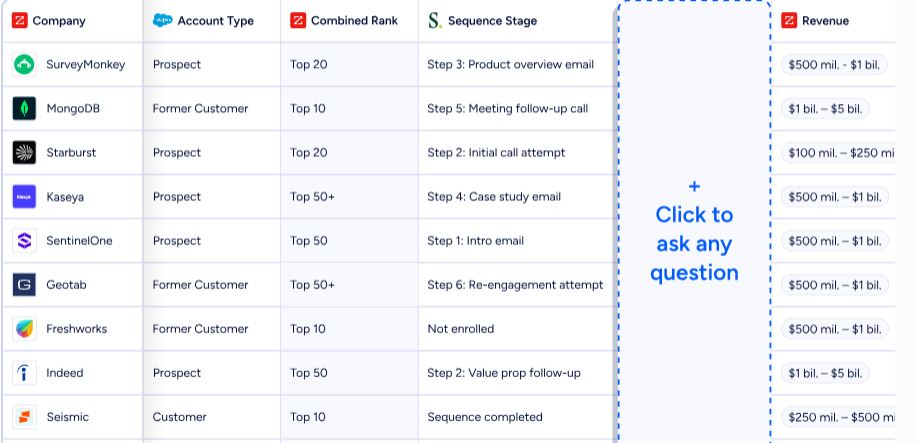
For teams building their own tools, APIs and MCP deliver the same intelligence into any application.
"That combination of our internal CRM data, external signals, and AI that's given all that context has helped us craft very specific account- and persona-based messages. And people have responded to them right away." (Seismic)
For a closer look at how Salesforce and ZoomInfo compare as standalone platforms, see our Salesforce vs. ZoomInfo comparison.
Pricing reflects each platform's audience
The pricing structures make each platform's target customer obvious.
Leads360 uses flat-rate monthly pricing with a promise that the price "doesn't grow when you do." Three tiers are available:
Elevate Pro: $197/month (no setup fee), includes landing page, CRM, 2-way text and email, reputation management, social scheduler
Elevate Premium: $497/month + $397 setup fee, adds website (up to 10 pages), funnels, campaigns, calendar, blogging, invoicing, and done-for-you marketing services
Elevate Ultimate: $847/month + $397 setup fee, adds 10 hours/month of marketing virtual assistance, sales pipeline setup, automation triggers, and three onboarding sessions
The flat-rate model works for small teams. But usage fees for SMS (via Twilio) and email (via Mailgun) sit outside the monthly rate. The AI Agent add-on costs $347/month on top of the base plan, pushing the total for a business wanting AI capabilities to $544/month or more. A $397 setup fee applies at the Premium and Ultimate tiers.
Salesforce uses per-user, per-month pricing with annual contracts:
Free Suite: $0 (max 2 users)
Starter Suite: $25/user/month
Pro Suite: $100/user/month
Enterprise: $175/user/month
Unlimited: $350/user/month
Marketing Cloud, Service Cloud, and Data Cloud are priced separately. Marketing Cloud starts at $1,500/org/month. Agentforce adds further costs: $2 per conversation or $500 per 100,000 Flex Credits. Premier Support adds 30% of net license fees. For a 10-person sales team on Enterprise, CRM licenses alone reach $21,000+ per year before add-ons.
ZoomInfo uses consumption-based pricing with no publicly listed prices. ZoomInfo Lite provides permanent free access with 10 monthly export credits and basic search.
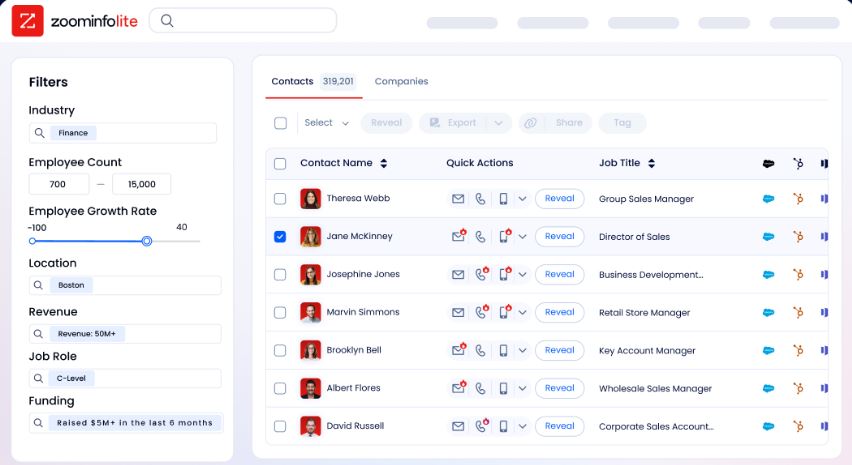
Paid plans scale based on seats, credit volume, and features. A 7-day free trial is available for full platform access.
The takeaway: Leads360 is the simplest option for a local business wanting everything in one bill. Salesforce's free and Starter tiers are accessible, but costs climb quickly with users and modules. ZoomInfo's pricing is separate from your CRM choice. It's an intelligence layer that sits alongside either platform, justified when the pipeline it generates covers its cost.
"ZoomInfo gives us the information we need to execute. It's already there, so we can be three steps ahead." (Vensure)
AI and automation serve different purposes
All three platforms offer AI, but what "AI" means varies widely.
Leads360's AI focuses on appointment booking and customer communication. The AI Sales Bot syncs with calendars to handle booking requests around the clock, useful for a medspa that gets inquiries at 11 PM. The broader $347/month AI Agent add-on extends to voice AI, review response automation, workflow building, content generation, and funnel creation.
For local businesses, these automations replace tasks that would otherwise require hiring a receptionist or marketing coordinator.
Salesforce's AI operates at a different scale. Agentforce deploys AI agents across sales, service, marketing, and commerce that research accounts, draft proposals, resolve support cases, and coach sales reps. The Atlas Reasoning Engine lets agents reason, plan, and take multi-step actions rather than just respond to prompts.
Agentforce has closed 29,000 deals and reached $800M ARR. This is enterprise AI for organizations where the volume and complexity of work justify autonomous systems.
ZoomInfo's AI solves the prospecting intelligence problem. The GTM Context Graph processes 1.5B+ data points daily, fusing CRM data, conversation transcripts, intent signals, and behavioral data to tell sales teams who to contact, when to engage, and what to say.
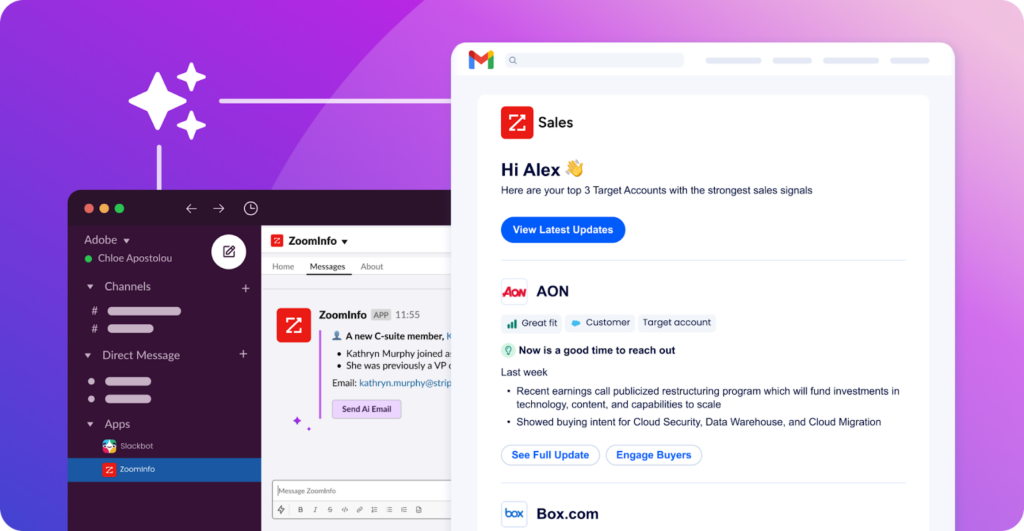
In GTM Workspace, AI agents handle account research, generate personalized outreach, monitor buying signals, and update CRM fields. Seismic attributed 39% of active pipeline to ZoomInfo-identified opportunities and saw 54% productivity gains.
The pattern: Leads360 automates the receptionist. Salesforce automates the enterprise workflow. ZoomInfo automates the intelligence that feeds both.
"ZoomInfo's not just a contact data company anymore. They've built a full system that works the list, writes the outreach, and drives predictable growth." (Levanta)
Integration depth determines long-term flexibility
Leads360 describes integration with several application categories (CRM, payments, social media) but does not publish a third-party app marketplace, API documentation, or named integration partners beyond Facebook ads and Google Calendar.
The platform handles email through Mailgun and SMS through Twilio at wholesale rates, and syncs with Google Calendar and Outlook for scheduling. For a single-location business using basic tools, this coverage may suffice. For businesses with existing tech stacks, the limited options create a ceiling.
Salesforce has the largest integration ecosystem of any CRM. AppExchange offers 9,000+ apps with 14+ million installs, covering everything from document management to analytics. MuleSoft provides enterprise integration with hundreds of pre-built connectors.
Native integrations cover Google Workspace, Microsoft Outlook and Teams, and Slack with bidirectional CRM data. The APIs include REST, SOAP, Bulk, Metadata, and Pub/Sub. For enterprises, this ecosystem is a clear advantage.
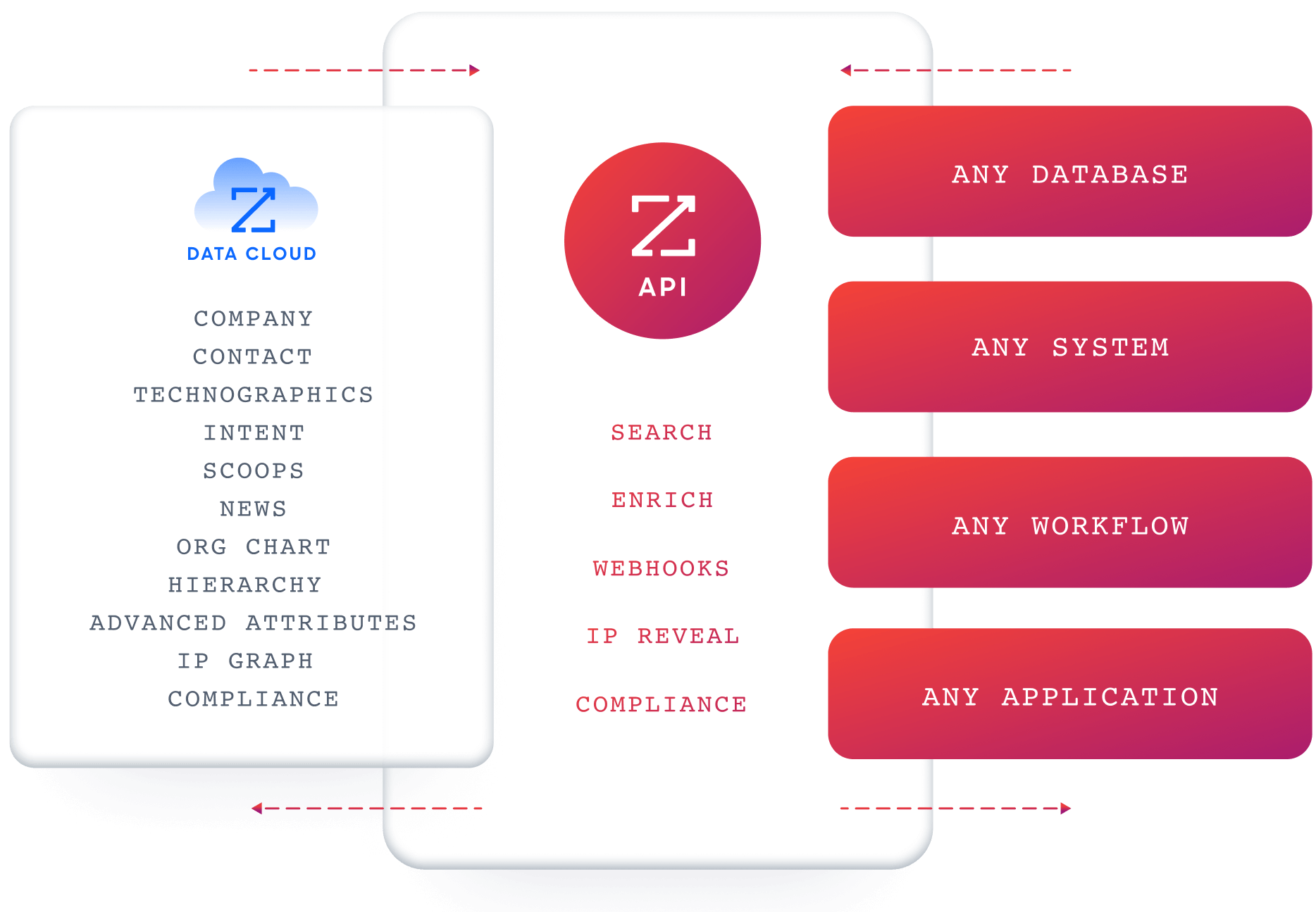
ZoomInfo integrates with the tools B2B teams already use: Salesforce, HubSpot, Microsoft Dynamics 365, Snowflake, and 120+ other platforms across CRM, marketing automation, sales engagement, and data warehouses.
The Enterprise API provides programmatic access for custom integrations, while the MCP server connects AI models directly to ZoomInfo's data without custom coding. API access is included in all relevant plans, so ZoomInfo's intelligence is available in any tool, not locked inside one UI.
"ZoomInfo is our one source of truth for account data, and even more so for contact data. There's no other provider in the market that provides you with that level of detail." (Smartsheet)
Support and onboarding match each platform's complexity
Leads360 takes a hands-on approach to onboarding. Every new user must complete two one-hour onboarding and coaching calls before gaining full access, framed as a prerequisite for success rather than an optional extra. Live chat support runs 11 AM to 7 PM ET, seven days a week, with an online ticket system and how-to video library available outside those hours.
The Elevate Ultimate plan adds three one-on-one training sessions. For non-technical business owners, this guided approach removes the risk of buying software and never properly configuring it.
Salesforce offers three Success Plan tiers: Standard (free, with Trailhead and community resources), Premier (30% of net license fees, with one-on-one coaching and one-hour response time for critical issues), and Signature (custom pricing, with a dedicated Customer Success Manager and 24/7 support with 15-minute response for critical issues).
The Trailblazer Community spans 1,300+ local groups in 90 countries, and Trailhead provides 1,500+ learning badges. The support infrastructure is large, but it needs to be, given the platform's complexity.
ZoomInfo redesigned its onboarding program from 30 to 90 days, structured across planning, technical implementation, education, and adoption phases. The program produced a 25% improvement in customer satisfaction scores.
ZoomInfo University provides role-specific learning paths, certifications, and live webinars. Enterprise tiers include dedicated customer service managers. Support resources include a Help Center, Knowledge Center, and phone support at +1 866-904-9666.

Leads360 vs. Salesforce vs. ZoomInfo: Which should you choose?
The right platform depends on what your business does and who you sell to.
Choose Leads360 if:
You run a local service business (dental, HVAC, medspa, auto detailing)
You need marketing automation, CRM, and website building in one place
Your sales cycle is short and appointment-based, not deal-based
You want hands-on setup support rather than DIY configuration
Your budget is under $500/month for all marketing and CRM tools
Choose Salesforce if:
You run a B2B or enterprise business with complex sales processes
You need a CRM that scales from small teams to thousands of users
Industry compliance (HIPAA, SOC 2, FedRAMP) is a requirement
Your team can invest in proper implementation and administration
You need integrations with an established software ecosystem
Add ZoomInfo if:
You're a B2B company that needs verified prospect data to fill your pipeline
Your sales team spends too much time researching accounts instead of selling
You want buyer intent signals that identify which companies are ready to buy now
You need AI-driven outreach grounded in real account intelligence, not generic templates
You want one intelligence layer that works inside Salesforce, HubSpot, or any CRM
See ZoomInfo in action with a free trial.
The comparison between Leads360 and Salesforce comes down to business type and scale. Leads360 does what local service businesses need: consolidated marketing and CRM without enterprise overhead. Salesforce provides the depth that B2B companies require for complex, multi-stakeholder sales processes.
For B2B teams choosing Salesforce (or any other CRM), ZoomInfo adds a dimension neither platform provides on its own. The CRM manages the relationship. ZoomInfo helps you find the right relationships to build. With verified data, contextual intelligence, and AI that understands why deals move, it turns your CRM from a record-keeping system into a productive sales operation.
Leads360 vs. Salesforce vs. ZoomInfo FAQ
What is the fundamental difference between Leads360 and Salesforce?
Leads360 is an all-in-one marketing and CRM platform built for local service businesses (dental practices, HVAC companies, medical spas). It bundles 30+ features, including website building, SMS marketing, appointment booking, and reputation management, into a flat-rate subscription. Salesforce is the world's largest CRM platform, designed for B2B companies and enterprises with complex sales processes, offering modular products across sales, service, marketing, commerce, and AI.
Is Leads360 a good alternative to Salesforce for small businesses?
They serve different markets, so it depends on your business. For a local service business that needs marketing tools, appointment scheduling, and basic CRM in one affordable package, Leads360 is a practical fit.
For a B2B company managing multi-stakeholder deals, forecasting revenue, or requiring enterprise integrations and compliance certifications, Salesforce is the right choice. Comparing them directly is less useful than identifying which category your business falls into.
How does ZoomInfo work with Salesforce?
ZoomInfo integrates natively with Salesforce to enrich CRM records with verified B2B contact data, company intelligence, buyer intent signals, and technographic information. Sales reps access ZoomInfo's data directly within Salesforce, and automated workflows keep records current as contacts change jobs, companies grow, or buying signals emerge.
ZoomInfo's GTM Context Graph also unifies Salesforce CRM data with conversation transcripts and third-party signals to surface insights about why deals are progressing or stalling.
Which platform is cheapest to get started with?
Salesforce offers a free CRM for up to two users and a Starter Suite at $25 per user per month. Leads360 starts at $197 per month with flat-rate pricing that includes unlimited users. ZoomInfo offers a permanent free Lite tier with 10 monthly export credits and basic search. For a single-person operation, Salesforce's free tier is the lowest-cost entry.
For a small team wanting all-in-one marketing and CRM, Leads360 may cost less than assembling equivalent Salesforce modules.
Can Leads360 handle B2B sales processes?
Leads360 includes sales pipelines, CRM, and automation features that could technically support a B2B workflow. However, it lacks native B2B data, pipeline analytics, multi-touch attribution, role-based access controls, and the enterprise integrations that B2B sales teams typically need.
Its target verticals (HVAC, dental, medspa, auto detailing) and setup model are designed for local, consumer-facing businesses rather than B2B sales organizations.
Does Salesforce include marketing automation like Leads360?
Salesforce offers marketing automation through Marketing Cloud, but it's a separate product starting at $1,500 per org per month, not bundled with the CRM. Leads360 includes email campaigns, SMS marketing, social media scheduling, funnel building, and reputation management in its base subscription.
For a local business, Leads360's bundled approach is simpler and cheaper. For enterprises running multi-channel campaigns with sophisticated segmentation, Marketing Cloud provides capabilities Leads360 cannot match.
Who should consider adding ZoomInfo to their tech stack?
ZoomInfo is most valuable for B2B companies whose sales teams need to find and engage prospects at other businesses. If your sales depends on accurate contact data, understanding buyer intent, and knowing which companies are actively researching solutions like yours, ZoomInfo provides intelligence that no CRM generates on its own.
It is less relevant for local service businesses whose customers come through Google search, referrals, or walk-ins.
What is ZoomInfo's GTM Context Graph?
The GTM Context Graph is ZoomInfo's intelligence layer that fuses its B2B data (500M contacts, 100M companies) with a customer's own CRM records, conversation transcripts, email interactions, and behavioral signals. It processes over 1.5 billion data points daily to capture not just what happened in a deal, but why. This includes identifying patterns like executive involvement correlating with deal acceleration or competitive mentions predicting churn risk.
This intelligence powers ZoomInfo's AI agents and is accessible through GTM Workspace, GTM Studio, or any third-party tool via API and MCP.
