

Leadspace sits between your data sources and your revenue tools. It unifies, enriches, and activates buyer data across CRM, MAP, data warehouses, and ad platforms. For enterprise teams struggling with fragmented data spread across a dozen systems, that promise matters.
To write this Leadspace review, we analyzed the platform in detail. We believe it's the right choice if:
You need to unify buyer data from 30+ sources into continuously refreshed profiles
Your priority is identity resolution and lead-to-account matching across complex hierarchies
You want to map full buying committees, not just individual contacts
You already have dedicated RevOps or marketing operations staff to manage the platform
Your GTM stack spans multiple CRMs, MAPs, and data warehouses that need a connective layer
However, Leadspace might not be the best choice if:
You need a direct-access contact database with verified phone numbers and emails for prospecting
You want native sales engagement tools (email sequencing, calling, meeting scheduling)
You prefer self-serve access or transparent pricing before engaging sales
You need conversation intelligence or AI-powered seller workflows alongside your data layer
You want a single platform that covers data, intelligence, and execution without heavy integration work
In this case, consider ZoomInfo: an AI GTM platform built on 500M contacts, 100M companies, 135M+ verified phone numbers, and 200M+ verified business email addresses. That data fuels the GTM Context Graph, an intelligence layer that fuses ZoomInfo's data with your CRM records, conversation transcripts, and behavioral signals to capture not just what happened in a deal, but why.
Your team can use this intelligence through GTM Workspace for sellers, GTM Studio for marketers and RevOps, or APIs and MCP in any third-party tool.
We've included a detailed look at ZoomInfo later in this review as the broader alternative for teams that need data, intelligence, and execution in one platform. If you're ready to explore it, start with ZoomInfo's free trial here.
What is Leadspace?
Leadspace is a GTM Data Intelligence Cloud founded in 2007 under the original name Data Essence by Amnon Mishor and Yaron Karasik, both with backgrounds in Israeli intelligence and cyber-warfare.
They established the company at the Technion Entrepreneurial Incubator in Israel, adapting data intelligence techniques from military applications to B2B sales and marketing.
The first commercial product launched in 2012 as a sales prospecting application, followed by ideal buyer profile-based list generation in 2013.
Over the next decade, Leadspace shifted positioning several times: from predictive lead scoring (2012–2016), to B2B audience management (2015–2017), to B2B Customer Data Platform after acquiring ReachForce in 2019, and now to its current identity as a GTM Data Intelligence Cloud.
Today, Leadspace calls itself "The Dynamic Data Intelligence Solution for Modern GTM Teams." The platform works in three stages: Sense (gathering signals from 30+ proprietary B2B data sources), Transform (building buyer profiles), and Activate (pushing enriched intelligence into sales workflows and connected systems).
The target buyer is the enterprise B2B revenue team: RevOps leaders, demand generation managers, and marketing operations professionals inside large organizations with complex, multi-system GTM stacks.
Named enterprise customers include Tipalti, Sovos, N3, RingCentral, Bloomreach, and Ford Pro UK. The company has raised approximately $102–110M across seven rounds and appointed Eric Presbrey as CEO in April 2025.
Leadspace Pros & Cons
Pros | Cons |
|---|---|
Integrates 30+ B2B data sources into unified buyer profiles | No published pricing; sales engagement required |
Real-time continuous enrichment, not batch-based | No self-serve tier, free trial, or SMB access path |
Strong identity resolution and lead-to-account matching | Requires mature RevOps infrastructure to implement |
Buying group intelligence maps full committees | No native sales engagement or prospecting tools |
Data-agnostic architecture preserves existing investments | AI Agents announced but not yet available |
Forrester-recognized for implementation quality | No direct contact database for self-service lookup |
Multi-system activation across CRM, MAP, and ad platforms | Limited publicly available user reviews |
Leadspace Review: How it Works & Key Features
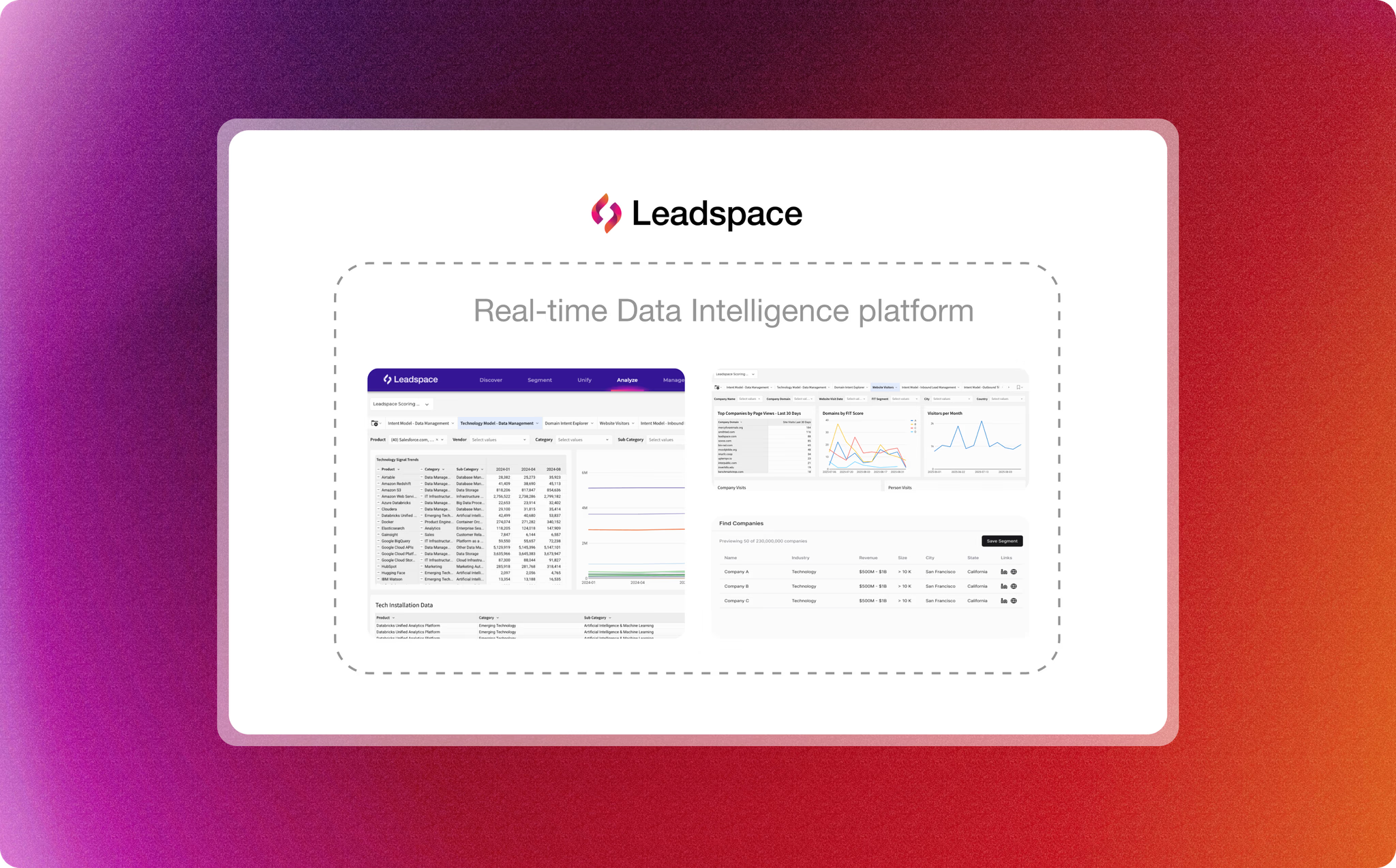
Dynamic Data Intelligence: Leadspace replaces fragmented, static B2B data with a continuously updated unified view of buyers and accounts.
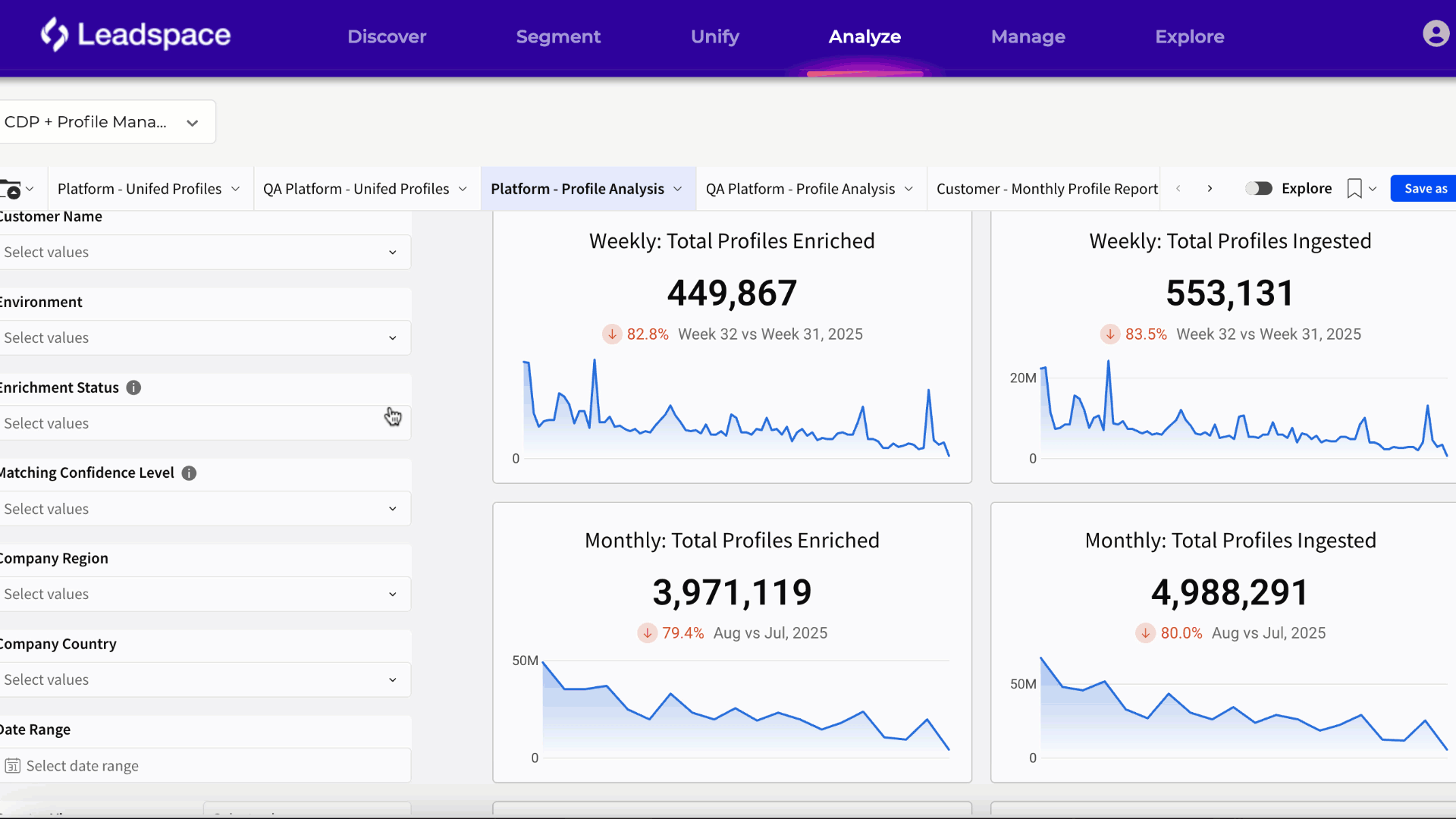
Dynamic Data Intelligence is Leadspace's foundational layer.
Source: Leadspace
It integrates data from 30+ embedded B2B sources covering 800M+ buyer identities and 240M+ companies, combined with a customer's own CRM, MAP, and data warehouse records.
The platform resolves identities across systems through deduplication, normalization, and cross-system matching using persistent identifiers. Person identifiers include work email, social profiles, phone, and cookie/device ID. Company identifiers include domain, DUNS/ID, social profile, and IP. The result is unified account and contact structures that stay consistent across every connected system.
What sets this apart from standard enrichment tools is the continuous refresh model. Instead of quarterly or monthly batch cycles, profiles update dynamically as changes happen: title shifts, team reorganizations, account mergers, or intent signal spikes. Real-Time Signals capture live buyer activity and update profiles immediately so connected systems reflect current information.
The platform is data agnostic, meaning customers can layer internal systems on top of any third-party provider alongside the embedded sources. This architecture adds to existing data investments rather than replacing them.
Inbound Marketing Intelligence: Leadspace qualifies and routes inbound leads at the moment of conversion, not hours later.
Inbound Marketing Intelligence addresses a specific operational failure: 79% of inbound leads never receive follow-up, often because lead records arrive incomplete and routing decisions rely on insufficient data.
Source: Leadspace
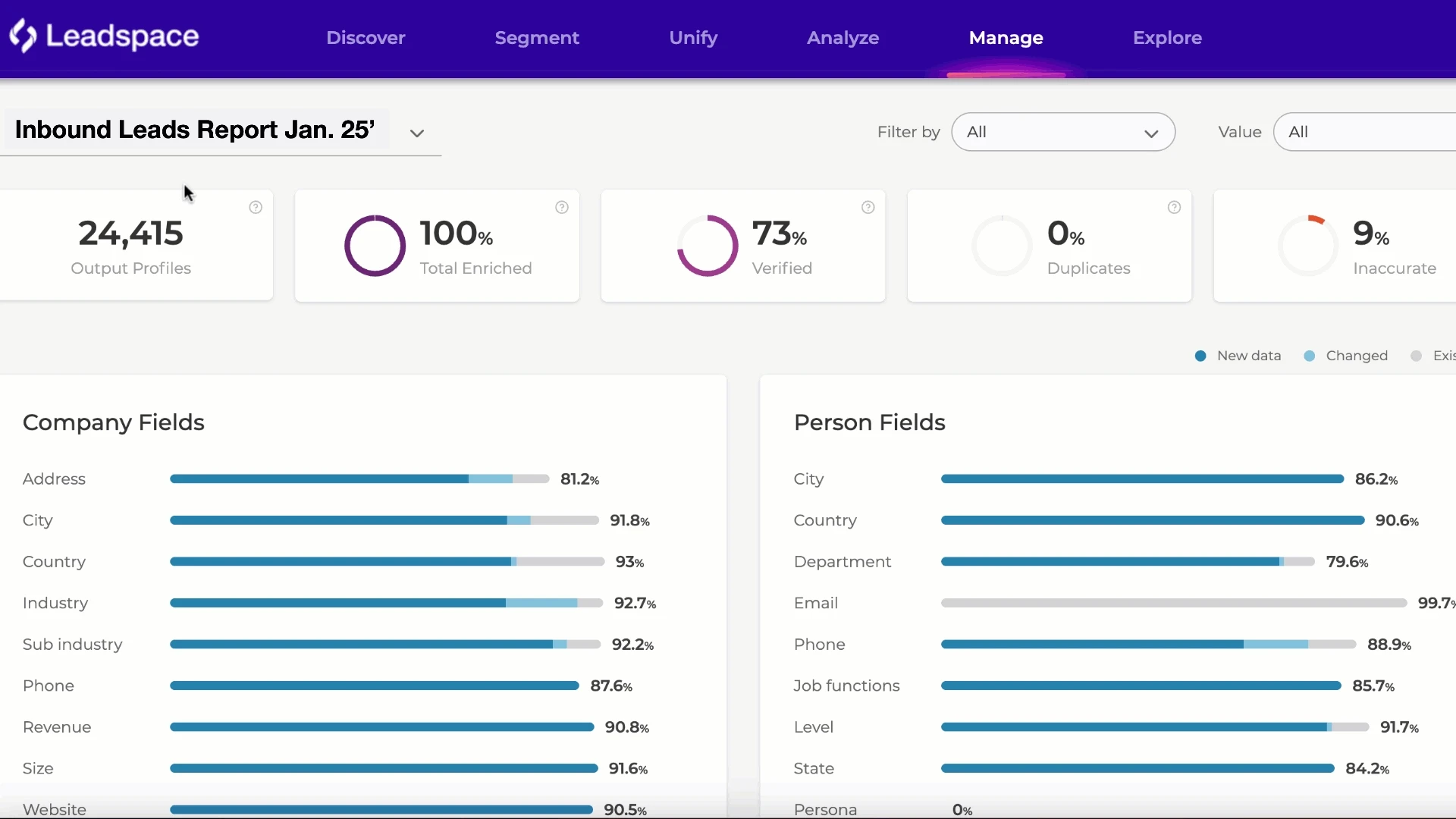
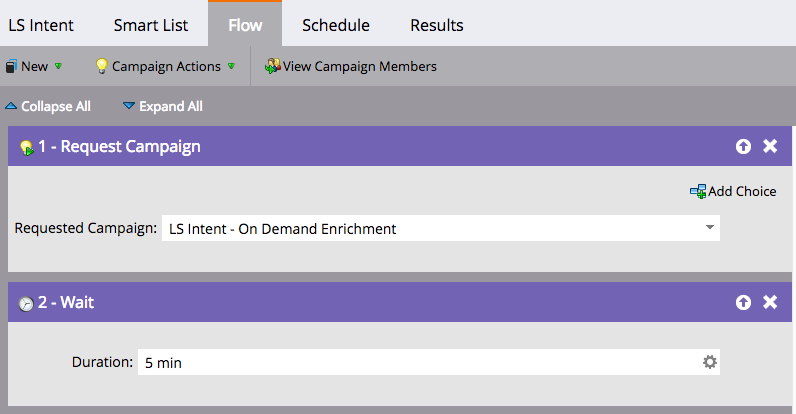
When a lead submits a form, the system enriches it immediately with person, company, and signal data drawn from unified profiles.
It performs lead-to-account matching, applies scoring across multiple dimensions (ICP fit, intent, persona relevance, buying-group activity), and routes the lead to the correct rep. The entire chain executes at the moment of conversion, enabling response within seconds rather than hours.
Scoring draws from four intent layers: first-party website engagement, company-level behavioral data, product-level interest patterns, and metro-intent. When someone converts, the system also surfaces buying group context, showing whether other members of that account's buying team are engaging at the same time. This lets SDRs treat an inbound lead as an account-level signal, not an isolated contact.
Source: Leadspace
Outbound Prospecting Intelligence: Leadspace identifies and ranks best-fit accounts using predictive fit models and live intent signals.
Outbound Prospecting Intelligence replaces static target lists with continuously updated account prioritization. The solution begins with ICP, TAM, and fit discovery, enriching accounts with firmographic, technographic, persona, and hierarchy attributes across the total addressable market.
On top of the fit layer, Real-Time Signals surface behavioral indicators that detect which accounts are becoming active: intent topic surges, research behavior patterns, and buying-group activity. Analytics combine fit, intent, and persona signals into prioritization models that rank accounts by readiness and update continuously.
The output feeds into dynamic segments that auto-refresh as signals change. These segments can be fit-based, persona-based, or buying-stage-triggered, and they sync across CRM, MAP, and connected tools.
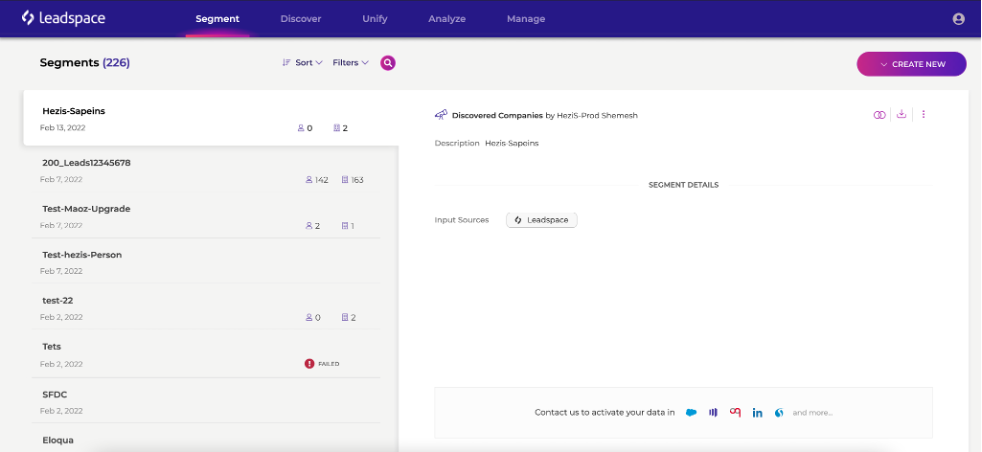
Source: Leadspace
Buying Team Intelligence: Leadspace maps full buying committees inside target accounts, including stakeholders not yet in the CRM.
Buying Team Intelligence addresses a structural gap in B2B selling: purchase decisions typically involve around 10 people, with roughly 40% joining from outside the end-user department. Most CRM systems store contacts as flat lists without encoding their roles in a purchase decision.
Leadspace distinguishes between contacts and buying roles as separate data constructs.
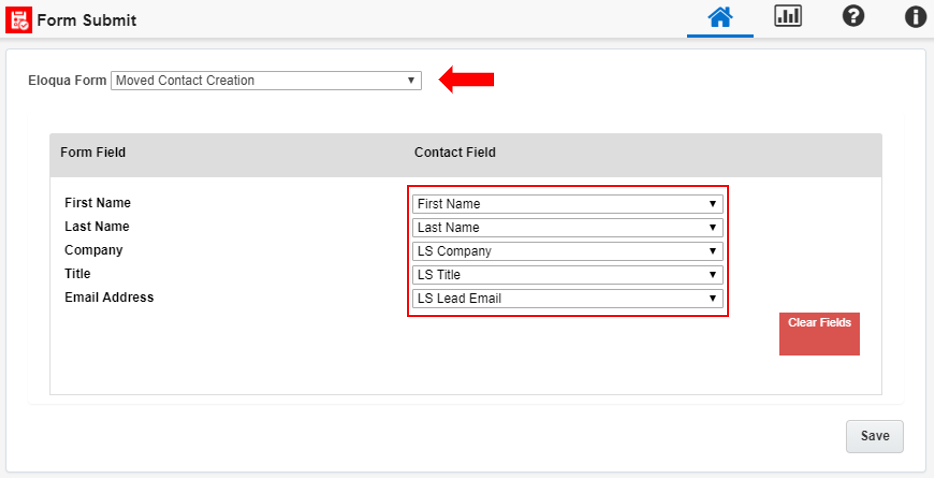
Source: Leadspace
A buying role defines the function a person serves in a purchase decision (economic buyer, technical evaluator, champion, approver) and connects them to a specific decision path inside an account.
The platform maps stakeholder identification, multi-contact engagement patterns, and cross-functional involvement. It also surfaces coordinated engagement patterns, detecting when multiple buying group members show correlated activity across channels at the same time. This group-level signal differs from a single contact showing high intent and can identify accounts where a purchase evaluation is underway.
Opportunity expansion insights surface additional contacts and internal influencers who can accelerate deals: gaps in buying group coverage, hidden influencers, and multithreading opportunities.
Where Leadspace Falls Short
Leadspace excels at data unification and buyer intelligence, but several limitations appear for teams that need more than a data layer.
These constraints reflect a platform built for intelligence rather than end-to-end execution.
No Direct Contact Database for Prospecting: Leadspace is an enrichment and intelligence layer, not a contact export tool. Sales reps who need to search for prospects by title, industry, or location and export verified phone numbers and emails must use a separate platform.
Leadspace manages 300M+ person profiles, but these serve as enrichment records, not a self-service prospecting database with direct dials and verified business emails.
Pricing Opacity and Enterprise-Only Access: Leadspace publishes no pricing on its website. Every entry point routes through a "Contact Us" form, indicating a sales-led, custom-quote model. There is no free trial, freemium plan, or self-service sign-up.
For buying committees that need budget validation before engaging sales, or for mid-market companies exploring options, this creates a real evaluation barrier.
Implementation Complexity: The platform's strength in integrating 30+ data sources across CRM, MAP, data warehouses, and ad platforms is also its complexity risk.
Organizations without dedicated marketing operations, RevOps, or data engineering staff will face long implementation timelines and ongoing administration overhead. This platform is built for teams that already have the operational infrastructure to support it.
No Native Sales Engagement Tools: Leadspace orchestrates intelligence into other tools but does not include email sequencing, calling, pipeline management, or conversation intelligence. Buyers who want a single platform from data through execution must integrate separate tools like Outreach or Salesloft, adding cost and integration work.
AI Agents Still Forthcoming: The Leadspace platform navigation lists "AI Agents (coming soon)" as a capability, but no launch date or feature detail has been published. Customers who want autonomous GTM workflow execution today must look elsewhere or wait.
Limited Independent Review Data: User review data on platforms like G2 and TrustRadius is limited for Leadspace. Prospective buyers who rely on peer reviews to validate purchasing decisions may struggle to gather broad independent perspectives.
These limitations follow naturally from building a specialized data intelligence layer rather than a full GTM execution platform. But they create a clear opening for platforms that combine data, intelligence, and native execution tools in a single system.
Top Leadspace Alternative: ZoomInfo
ZoomInfo addresses Leadspace's gaps by providing not just a data intelligence layer, but a complete go-to-market platform spanning data, intelligence, and execution.
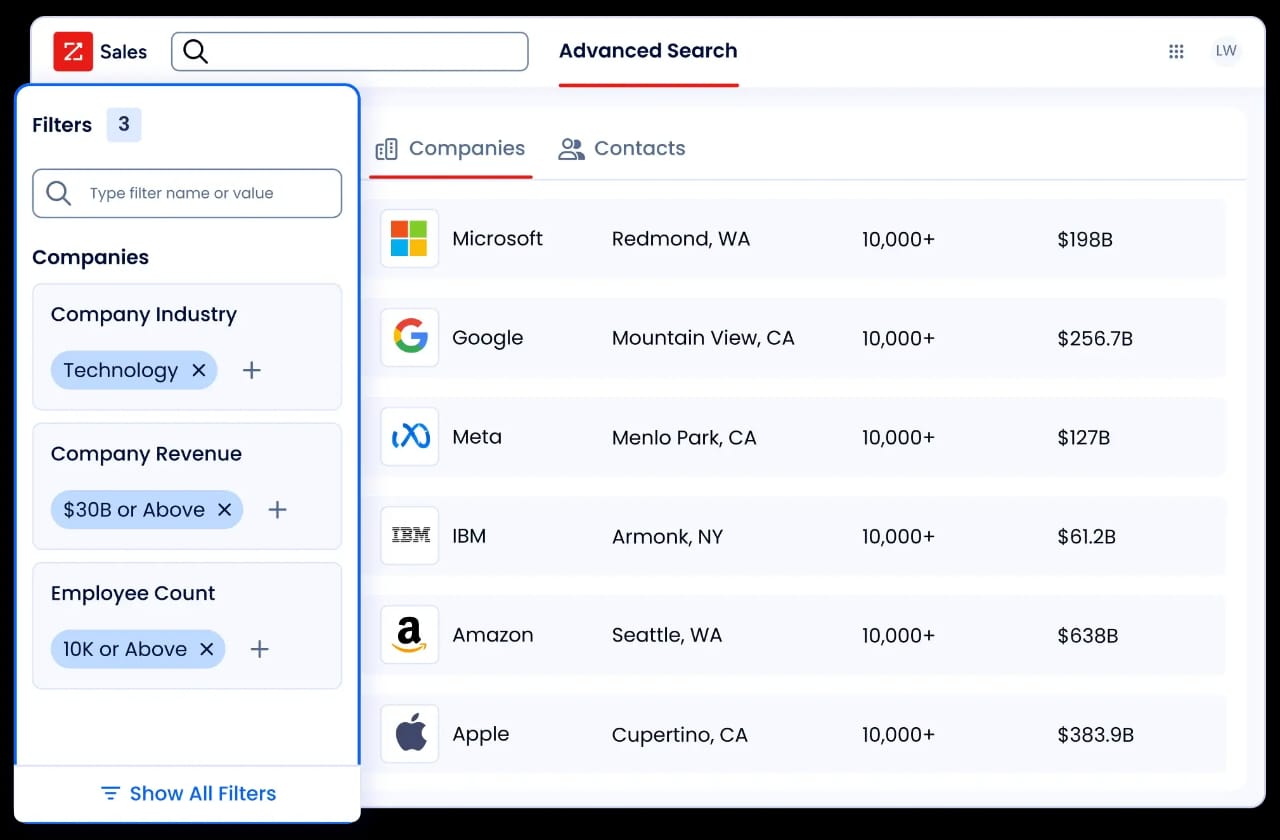
Where Leadspace offers connective tissue between your data sources and your execution tools, ZoomInfo is an AI GTM platform built on three pillars: B2B data, the GTM Context Graph intelligence layer, and access through native front-ends and open APIs.
The Industry's Largest B2B Data Platform: ZoomInfo provides verified, actionable contact data backed by multi-source collection and continuous verification.
ZoomInfo's data foundation covers 500M contacts, 100M companies, 135M+ verified phone numbers, 120M direct-dial phone numbers, and 200M+ verified business email addresses.
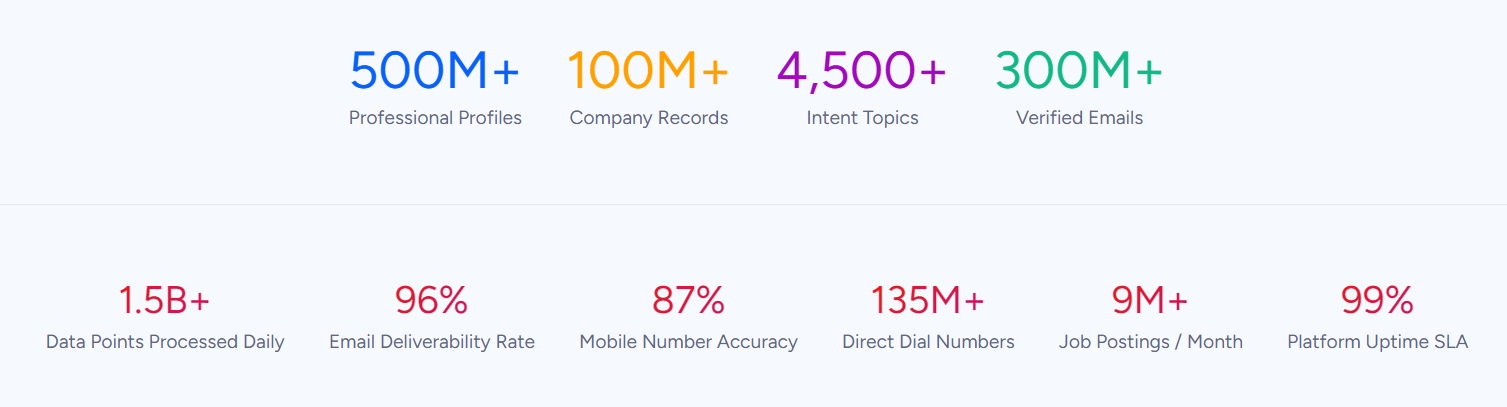
This isn't enrichment data sitting behind an API. Sales reps can search, filter, and export verified direct dials and business emails. Marketers can build audiences from 300+ company attributes. RevOps teams can enrich CRM records with technographics, org charts, and corporate hierarchies.
ZoomInfo builds its data through a multi-source pipeline: automated ML scanning of 28 million site domains daily, third-party partner data covering 95 million businesses, a network of 200,000+ ZoomInfo Lite users who share data back, and an in-house Data Training Lab of 300+ human researchers. First-party data reaches up to 95% accuracy.
Independent testing has validated this data advantage. In a Fortune 500 competitive RFP analyzing 25 million contacts across vendors, the independent consultant concluded that "no other competitor came even close." ZoomInfo was named a Forrester Wave Leader for Intent Data Providers B2B (Q1 2025) and a Gartner Magic Quadrant Leader for ABM Platforms for two consecutive years.
Beyond static records, ZoomInfo tracks buyer intent through 210 million IP-to-Organization pairings and 6 trillion+ new keyword-to-device pairings sourced monthly. Guided Intent, exclusive to ZoomInfo, identifies topics historically correlated with deal success rather than requiring manual topic selection.
SpringDB saw 2x–3x increases in campaign conversions, a 300% increase in database usability, and 30–50% uplift in average deal size after enriching their clients' data with ZoomInfo. (SpringDB)
The GTM Context Graph: ZoomInfo fuses third-party data with your CRM records, conversations, and behavioral signals to capture why deals move or stall.
Leadspace unifies data sources into enriched profiles.
ZoomInfo goes further with the GTM Context Graph, which processes 1.5B+ data points daily and fuses ZoomInfo's B2B data with a customer's CRM records, conversation transcripts from Chorus, email interactions, and behavioral signals into one intelligence layer.
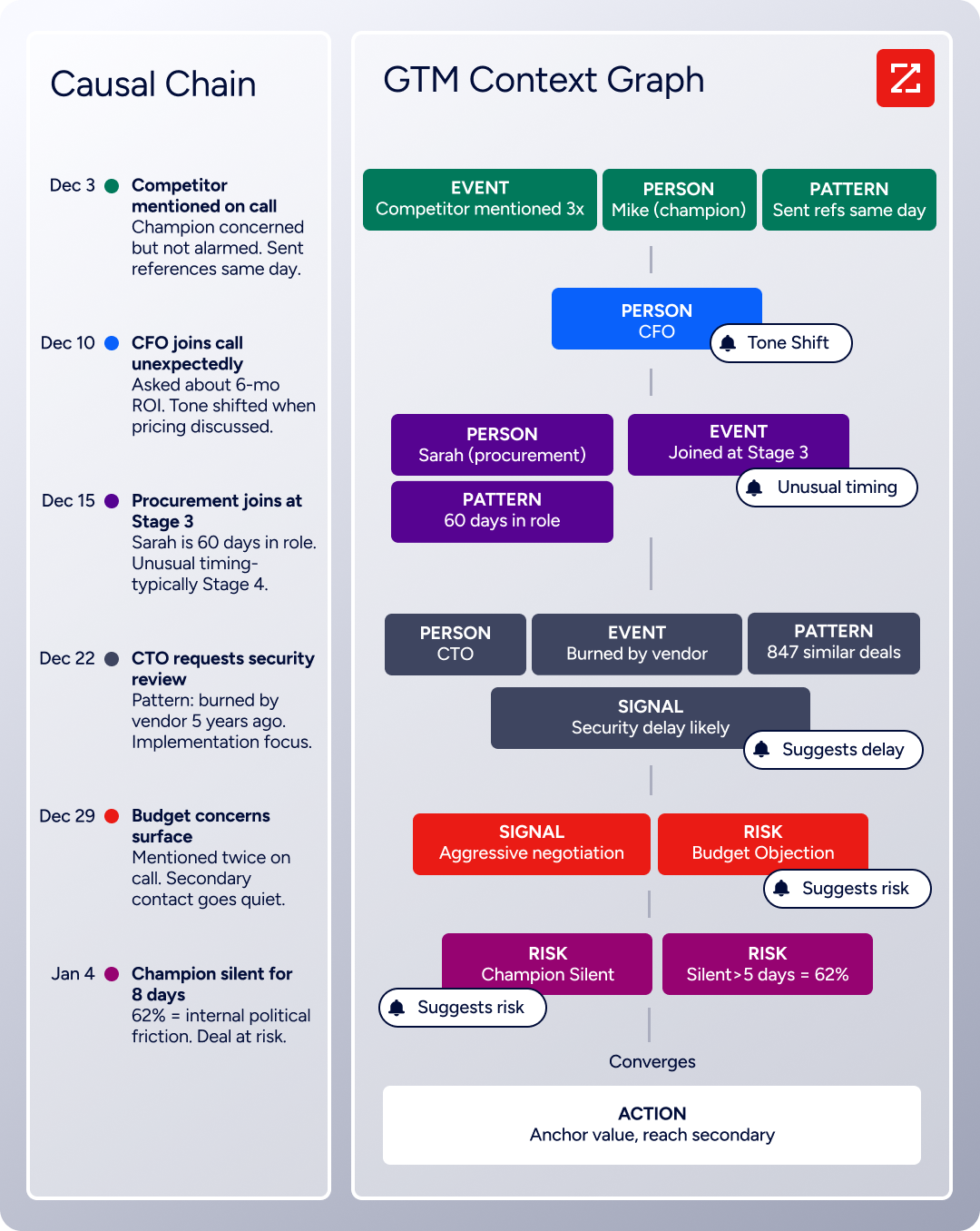
The difference: one system tells you a deal moved to Stage 3; the other tells you why it moved. As ZoomInfo's CPO Dominik Facher writes: "The CRM recorded the state change. It has no record of why it happened."
The GTM Context Graph captures the connections between signals and outcomes: people and their relationships, actions and their results, patterns across thousands of deals, and explanations for why things slipped.
This context powers AI that drafts outreach addressing the specific concern a prospect raised, targets accounts matching actual win patterns rather than keyword thresholds, and forecasts deals based on buying evidence rather than rep optimism. ZoomInfo built the GTM Context Graph on 20 years of B2B data unification infrastructure, then acquired Chorus and Workbounce for context capture and reasoning.
Seismic attributed 39% of active pipeline to opportunities identified or influenced by ZoomInfo signals, reported 54% productivity gains, and saved 11.5 hours per week per seller. (Seismic)
GTM Workspace and GTM Studio: ZoomInfo includes native execution tools for sellers, marketers, and RevOps, not just a data layer.
Where Leadspace activates intelligence into other tools, ZoomInfo provides its own front-ends for execution.
GTM Workspace is the seller's execution environment. It consolidates a rep's full book of business (CRM data, ZoomInfo intelligence, conversation history, market signals) into one workspace. AI agents handle account research, outreach drafting, CRM updates, and signal monitoring.
The Action Feed delivers a live stream of in-market buyers with pre-drafted actions on every signal. The AI Assistant generates one-click account briefs that pull CRM history, company news, and stakeholder context into a 10-second summary.
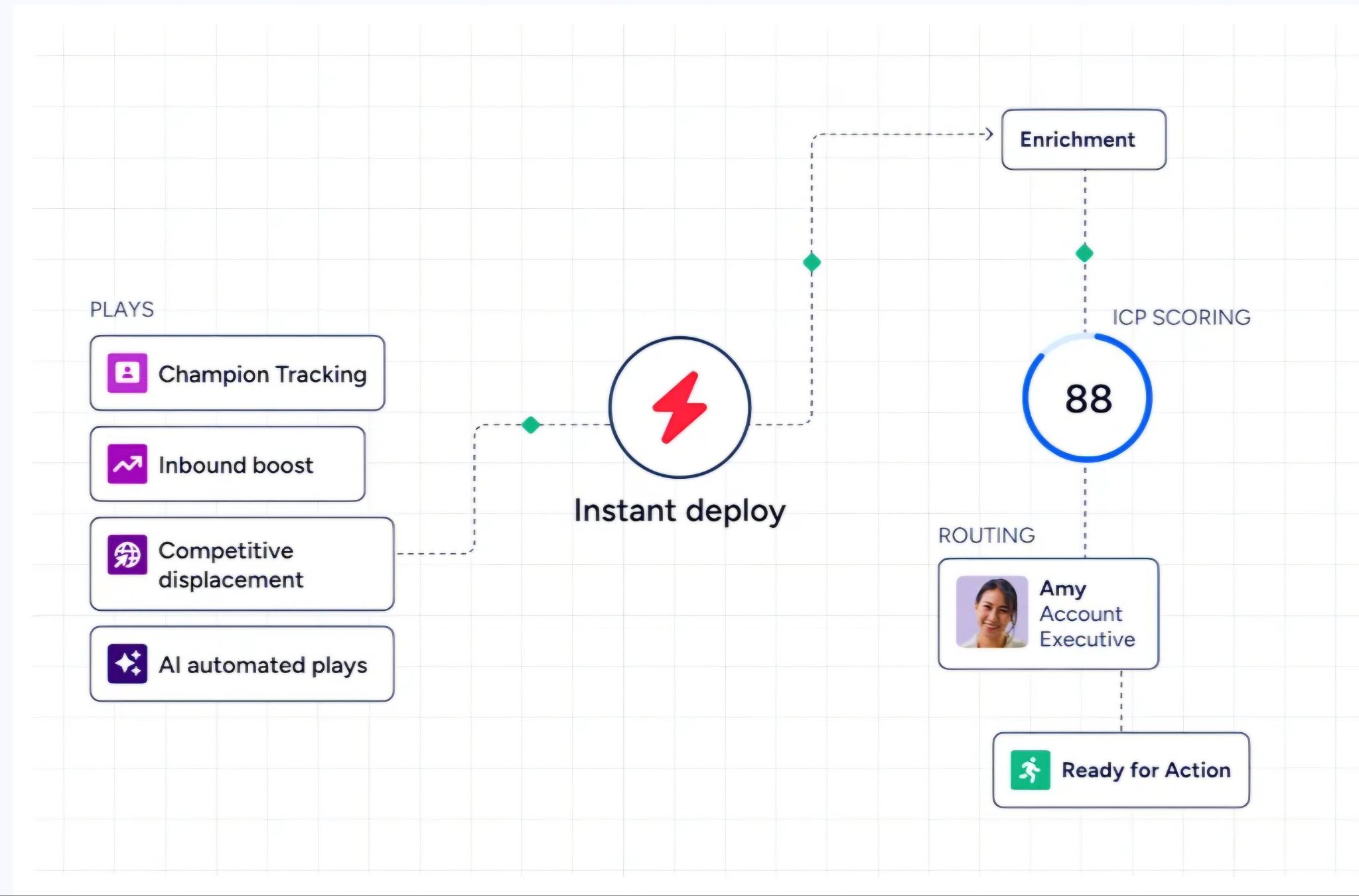
GTM Studio is the orchestration canvas for marketers, RevOps, and GTM engineers. Teams build audiences using natural language, enrich with first- and third-party data, define triggers, and activate plays across email, calls, ads, and direct mail, all without engineering support.
Source: ZoomInfo
Pre-built plays cover inbound acceleration, champion tracking, competitive displacement, and ICP targeting. Expansion plays that used to take 3 weeks now launch in 30 minutes.
For teams that build beyond ZoomInfo's own products, APIs and MCP expose the same intelligence to any custom agent, internal tool, or partner platform. API access is included in all relevant plans.
BDO Canada reduced time spent on internal data dashboard updates by 87% using ZoomInfo's API. "The plug-and-play aspect of the API means I can integrate it very easily into any process and get information at a moment's notice," said Jerry Wilson, Senior Marketing Intelligence Analyst. (BDO Canada)
Transparent Access and Pricing: ZoomInfo offers free entry points and tiered plans that Leadspace does not.
ZoomInfo provides several ways to evaluate the platform before committing.
ZoomInfo Lite is a permanent free tier (not a trial) that includes access to the B2B database, 10 monthly export credits, individual and company searches, the ReachOut Chrome Extension, and WebSights Lite for up to 10 website visitor reveals per day. A separate 7-day free trial gives broader access to core platform features with no credit card required.
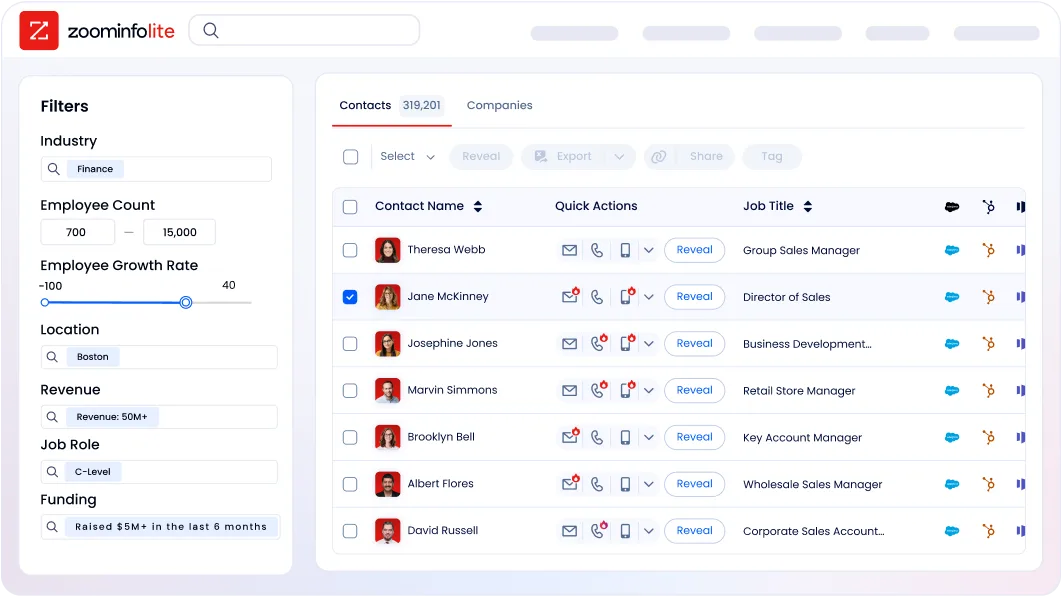
ZoomInfo's pricing is based around usage and consumption as part of its PLG motion.
Leadspace, by contrast, publishes no pricing, offers no free plan or trial, and requires a sales conversation to evaluate the product.
Leadspace or ZoomInfo: Comparison Summary
Leadspace | ZoomInfo | |
|---|---|---|
Primary focus | Data intelligence layer for GTM stacks | AI GTM platform (data + intelligence + execution) |
Contact database | 800M+ buyer identities (enrichment-focused) | 500M contacts with 135M+ verified phones and 200M+ verified emails (prospecting-ready) |
Data sources | 30+ embedded B2B providers + customer first-party data | Multi-source pipeline with 300+ human researchers, ML scanning, partner data, and contributory network |
Identity resolution | Forrester-recognized; cross-system deduplication and matching | Entity resolution, hierarchy management, and identity matching across 20 years of infrastructure |
Intent data | Multi-layer intent (first-party, company-level, product-level, metro) | 210M IP-to-Org pairings, 6T+ keyword-to-device signals monthly; Guided Intent (exclusive) |
Buying group intelligence | Buying role modeling and committee mapping | Buying group identification and multi-threaded selling support |
Conversation intelligence | Not included | Chorus (14 patents, context capture engine) |
Sales engagement | Not included (requires separate tools) | GTM Workspace with AI agents, outreach drafting, and CRM sync |
Marketing orchestration | Activates into external MAPs and ad platforms | GTM Studio with native DSP, multi-channel plays, and natural-language audiences |
API and programmatic access | REST API, Bulk API, SFTP | Enterprise API, MCP, Cloud Partners (AWS, Snowflake, Databricks) |
Free plan | None | ZoomInfo Lite (permanent, no credit card) |
Free trial | None | 7-day trial (no credit card required) |
Pricing transparency | No published pricing; sales engagement required | Consumption-based pricing model |
Target buyer | Enterprise RevOps and marketing operations | Enterprise to upper mid-market; sales, marketing, RevOps, and GTM engineers |
Analyst recognition | Forrester Strong Performer (B2B CDPs, 2023; Data Providers, 2024) | Gartner Leader (ABM Platforms, 2024 & 2025); Forrester Leader (Intent Data, 2025); G2: 133 No. 1 rankings |
Best for | Enterprise teams needing data unification and an intelligence layer | Teams needing data, intelligence, and execution in one platform |
Final Verdict
The choice between Leadspace and ZoomInfo depends on whether you need a specialized data intelligence layer or a complete go-to-market platform.
Choose Leadspace if you are an enterprise organization with an established, multi-system GTM stack and dedicated RevOps or marketing operations staff, and your primary challenge is data fragmentation rather than data access.
Leadspace works well as connective tissue between your existing systems, unifying buyer data from dozens of sources, resolving identities across CRM and MAP, and mapping buying committees for complex enterprise sales cycles. If you already have the execution tools you need and want an intelligence layer to make them work better together, Leadspace is built for that role.
Choose ZoomInfo if you need a platform that covers the full journey from data to intelligence to execution. ZoomInfo gives your sellers a direct-access database with verified phone numbers and emails, an AI-powered workspace that handles research, outreach, and CRM updates, and an intelligence layer (the GTM Context Graph) that captures why deals move or stall.
Your marketers and RevOps teams get an orchestration canvas where they can build audiences in natural language and launch plays across channels without engineering tickets. And your developers can access the same intelligence through APIs and MCP in any tool they choose. For teams that want one platform rather than a stack of specialized tools, ZoomInfo delivers data, context, and execution from one system.
Get started with ZoomInfo here.
Leadspace FAQ
What does Leadspace do?
Leadspace is a GTM Data Intelligence Cloud that unifies buyer data from 30+ B2B data sources with a customer's own CRM, MAP, and data warehouse records.
It resolves identities across systems, builds continuously enriched buyer profiles, maps buying committees, and pushes updated intelligence into connected GTM tools. It functions as a data layer between your sources and your execution systems, not as a standalone prospecting or sales engagement tool.
How much does Leadspace cost?
Leadspace does not publish pricing on its website. All commercial entry points route through sales conversations, indicating a custom-quote model typical of enterprise B2B data platforms. No free trial or freemium plan is available.
ZoomInfo, by comparison, offers a permanent free tier (ZoomInfo Lite) and a 7-day free trial with no credit card required, alongside published tier structures for Sales and Marketing plans.
Who is Leadspace designed for?
Leadspace targets mid-market to large enterprise B2B companies with complex GTM stacks and dedicated RevOps or marketing operations teams. Named customers include Tipalti, Sovos, RingCentral, Bloomreach, and Ford Pro UK. The platform is not designed for SMBs, early-stage startups without existing CRM/MAP infrastructure, or sales teams seeking a self-service prospecting database.
Does Leadspace include a contact database for prospecting?
No. Leadspace manages 300M+ person profiles for enrichment purposes, but it does not function as a self-service contact lookup tool with exportable phone numbers and emails. Sales reps cannot search for prospects by title or industry and pull direct dials.
ZoomInfo provides a direct-access database with 500M contacts, 135M+ verified phone numbers, and 200M+ verified business email addresses that reps can search, filter, and export.
What makes Leadspace different from a standard data enrichment tool?
Leadspace positions itself as a continuous intelligence layer rather than a point-in-time data append service. Profiles update dynamically as changes occur (title shifts, team reorganizations, intent spikes) instead of relying on quarterly batch refreshes.
The platform also treats buying groups as a first-class data object, distinguishing between contacts and buying roles, and provides identity resolution across multiple systems.
Does Leadspace include sales engagement or conversation intelligence features?
No. Leadspace orchestrates intelligence into execution tools but does not include email sequencing, calling, meeting scheduling, or conversation recording and analysis. Teams that want these capabilities alongside their data intelligence must integrate separate platforms.
ZoomInfo includes GTM Workspace (with AI-powered outreach and CRM updates for sellers), GTM Studio (multi-channel orchestration for marketers), and Chorus (conversation intelligence that captures and analyzes calls, meetings, and emails).
What analyst recognition has Leadspace received?
Leadspace was named a Leader in the Forrester New Wave for B2B Standalone CDPs in Q4 2021, a Strong Performer in the Forrester Wave for B2B CDPs in Q4 2023, and a Strong Performer in the Forrester Wave for Marketing and Sales Data Providers for B2B in Q1 2024, where it received the highest possible scores in Data Discovery, Data Management, and Vision. It was also included in the Forrester B2B CDP Landscape report for 2025.
Does Leadspace integrate with Salesforce, HubSpot, and Marketo?
Yes. Leadspace offers native integrations with Salesforce (available on the Salesforce AppExchange), Marketo (via webhook-triggered API calls), HubSpot (writing enriched data into Contact and Company objects), and Eloqua. The platform also supports data warehouse connections (Snowflake, BigQuery) and offers REST API, Bulk API, and SFTP data delivery options.
