
If you're comparing LeanData vs. RingLead, start with this: RingLead no longer exists as a standalone product. ZoomInfo acquired RingLead in September 2021 and folded its capabilities into ZoomInfo Operations, the data quality and routing module within ZoomInfo's GTM intelligence platform. The ringlead.com domain now redirects to ZoomInfo's Operations page.
That changes the comparison. You're not choosing between two independent tools. You're choosing between LeanData (a Salesforce-native orchestration specialist) and ZoomInfo (a full GTM intelligence platform that absorbed RingLead and expanded well beyond it).
The real questions you should be asking:
Do you need a dedicated routing and orchestration layer, or a platform that also provides the underlying B2B data?
Is Salesforce your only CRM, or do you work across multiple systems?
Are you looking for deep routing logic alone, or do you also need data enrichment, intent signals, and buyer intelligence?
How important is it that your orchestration tool has native access to verified contact and company data?
Do you want to manage separate vendors for data quality, routing, and engagement, or consolidate them into one platform?
In short, here's what we recommend:
LeanData is the specialist choice for Salesforce-centric organizations that need sophisticated lead routing, lead-to-account matching, and buying group orchestration. Its visual FlowBuilder lets RevOps teams design complex workflows without code, and its BookIt scheduling tool eliminates friction in buyer-to-rep handoffs. More than 1,000 organizations use LeanData, including Uber, Snowflake, and Palo Alto Networks. However, LeanData is an orchestration layer only. It cannot orchestrate actions across external platforms like MAPs, enrichment vendors, intent platforms, or customer success systems, meaning you'll need separate tools for data enrichment, intent signals, and multi-channel engagement.
RingLead (now ZoomInfo Operations) brought strong data quality capabilities to the table: deduplication, normalization, and codeless data management for Salesforce and Marketo environments. As a standalone product, it earned recognition in 10 consecutive G2 Grid Reports with leadership status in Data Quality and Lead-to-Account Matching. Those capabilities now live inside ZoomInfo Operations, enhanced with access to ZoomInfo's proprietary B2B database and multi-vendor enrichment from 60+ data sources.
Both LeanData and the original RingLead were built to solve pieces of the same puzzle: getting the right data to the right rep at the right time. The difference is that one remained a point solution while the other was absorbed into something much larger. For teams that want orchestration and the data powering it in one place, ZoomInfo is where those paths converge.
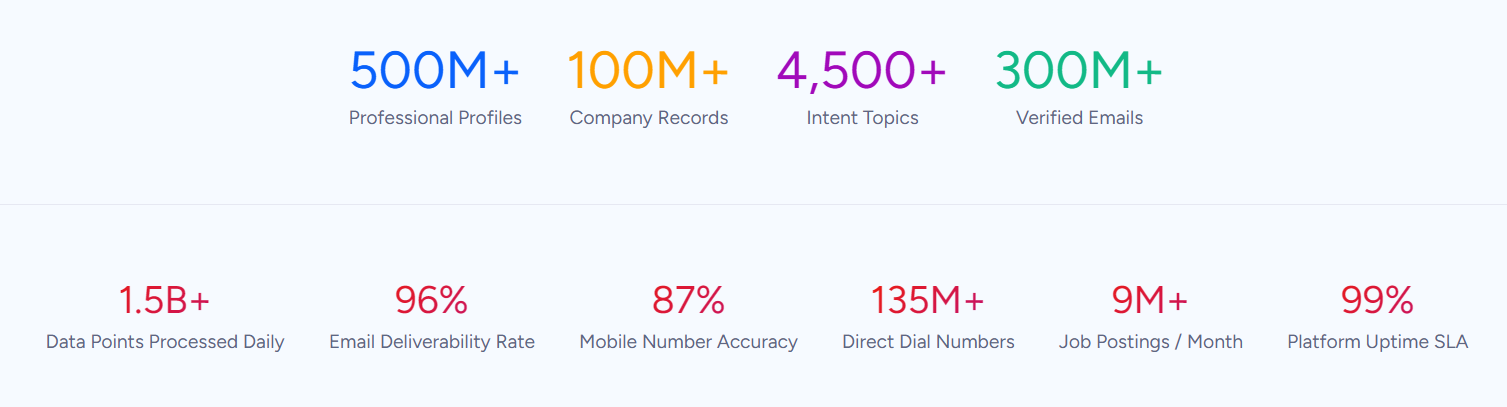
ZoomInfo is an all-in-one AI GTM platform built on the industry's most comprehensive B2B data foundation: 500M contacts, 100M companies, 135M+ verified phone numbers, and 200M+ verified business emails. RingLead's original data quality and routing capabilities are now part of this platform, enhanced well beyond their original scope. ZoomInfo's GTM Context Graph, which processes 1.5B+ data points daily, unifies this data with your CRM records, conversation transcripts, and behavioral signals to reveal the full context of your accounts. That context gives AI the fuel to show not just what happened, but why it happened, and which actions you need to capitalize on that momentum. Teams access this intelligence through GTM Workspace for sellers, GTM Studio for marketers and RevOps, or APIs and MCP in any front-end.
If combining data quality, lead routing, and GTM intelligence in one platform fits your strategy, explore ZoomInfo with a free trial.
LeanData vs. RingLead vs. ZoomInfo at a glance
LeanData | RingLead (ZoomInfo Operations) | ZoomInfo (Full Platform) | |
|---|---|---|---|
Primary function | GTM orchestration (routing, matching, scheduling) | Data quality + lead routing (now a ZoomInfo module) | All-in-one AI GTM platform (data + intelligence + orchestration + engagement) |
CRM focus | Salesforce-native only | Salesforce primary; HubSpot and Dynamics supported | Salesforce, HubSpot, Microsoft Dynamics |
Data enrichment | Not included (requires external vendors) | ZoomInfo database + 60+ third-party vendors | ZoomInfo database + 25+ waterfall vendors + proprietary intent signals |
Lead routing | Visual FlowBuilder with deep conditional logic | No-code routing with territory, round-robin, and account-based rules | Operations routing + GTM Studio orchestration + AI-powered plays |
Buying signals | Limited to CRM data and connected tool signals | ZoomInfo intent, website visitors, funding events | Full intent suite (210M IP-to-Org pairings, 6T+ keyword-to-device pairings monthly) |
Scheduling | BookIt (forms, handoff, links) | Not a standalone feature | ZoomInfo Chat + FormComplete (form optimization) |
Buying groups | Dedicated product (Blueprint + Edition) | Not a standalone feature | AI-powered buying group intelligence in GTM Workspace |
Pricing transparency | Tiers listed, prices require demo | No public pricing (part of ZoomInfo contract) | No public pricing; consumption-based; permanent free Lite tier available |
Standalone availability | Yes | No (ZoomInfo module only) | Yes |
RingLead became ZoomInfo Operations: what that means
Anyone searching "LeanData vs. RingLead" in 2026 is working with outdated information. RingLead, founded in 2003 and headquartered in Melville, New York, spent nearly two decades building a reputation as a data orchestration platform for deduplication, normalization, and lead routing. ZoomInfo acquired the company in September 2021 and fully absorbed it. The RingLead brand is gone.
ZoomInfo CEO Henry Schuck explained the rationale: "A clean and unified view of the customer is absolutely critical for go-to-market teams, often the difference between winning and losing a sale. The acquisition of RingLead allows our customers to marry ZoomInfo intelligence with other data sources to create a unified view of their customers and shorten the path from data to engagement."
RingLead's core capabilities (deduplication, normalization, lead-to-account matching, perimeter protection against bad data at entry) are now features inside ZoomInfo Operations. But they've been augmented significantly.
Where RingLead could only clean and route the data your CRM already had, ZoomInfo Operations enriches records from ZoomInfo's own proprietary database and cascades through 60+ third-party sources when gaps remain. The routing engine now factors in ZoomInfo's intent signals, funding events, and technographic data, not just CRM field values.
This means the real comparison has shifted. The question is no longer "LeanData or RingLead?" It's "Do I need a specialist orchestration tool, or a platform that bundles orchestration with comprehensive B2B data and intelligence?"
LeanData leads in routing depth and flexibility
If routing complexity is your primary challenge, LeanData has the edge.
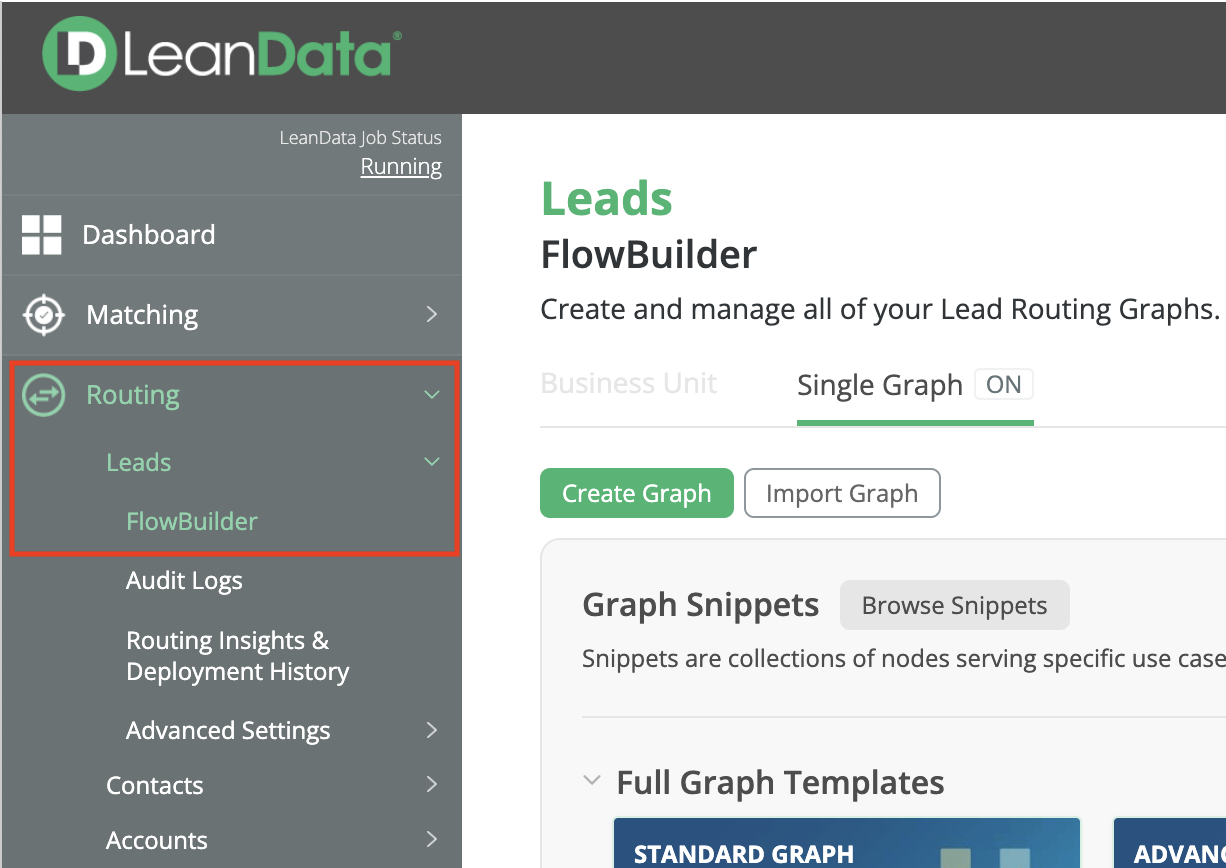
LeanData's FlowBuilder is a visual, drag-and-drop interface that creates a visual workflow display of lead and contact routing inside Salesforce.
Source: LeanData
Operations teams can build multi-condition routing logic spanning territory rules, account ownership, deal stage, round-robin assignment, and SLA enforcement, all without writing code. The routing logic lives natively inside Salesforce, so data never leaves the CRM environment.
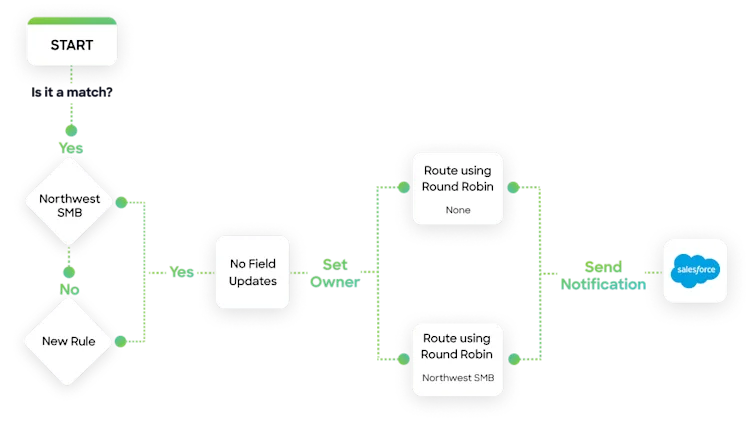
ZoomInfo Operations offers its own no-code routing with multiple assignment methods including territory-based, round-robin, account-based, and lead score-based rules, plus dynamic team management and rep availability via Slack. It's capable.
Source: ZoomInfo
But LeanData's routing builder has greater depth for enterprises with deeply layered territory structures and multi-object routing needs. LeanData supports routing for any Salesforce object, including custom objects, at its Premium tier. LeanData holds a 4.6/5 G2 rating from 997+ reviewers, confirming its routing depth.
That said, LeanData's Graph Builder has its own limitations. The UI can become unresponsive on complex routing graphs, and the lack of formula support on entry criteria forces workarounds. Users also report a steep learning curve during initial setup.
The gap narrows when you consider what feeds the routing engine. LeanData routes based on whatever data exists in your CRM. If that data is incomplete or stale, even the most sophisticated routing logic sends leads to the wrong rep.
For a more detailed look at LeanData's capabilities and what users say about it in practice, see our LeanData Review.
Data quality is the foundation routing depends on
Routing accuracy is only as good as the data behind it. This is where ZoomInfo changes the equation.
LeanData's AI-powered matching engine achieves 95% accuracy when connecting leads to existing accounts, using fuzzy logic across company name, email, website, address, and phone. That's strong. But it's matching against whatever data already lives in your Salesforce instance.
If a lead's company name is misspelled, the industry field is blank, or the account record hasn't been updated in six months, even 95% accuracy won't save you from routing failures.
ZoomInfo Operations solves this by treating data quality as a prerequisite, not an afterthought. Before any routing rule fires, automated cleansing tasks catch bad data at the point of entry. Records are deduplicated, normalized, and enriched with verified data from ZoomInfo's database of 500M contacts and 100M companies, then supplemented by 25+ waterfall vendors when gaps remain.
Territory fields, company-context segments, and account match keys are populated with verified data rather than whatever the prospect self-reported on a form.
This data-before-routing architecture creates a compounding advantage. When Datto deployed ZoomInfo Operations, 330,000 leads were matched and converted to accounts in Salesforce and 230,000 duplicate records were merged. No routing-only tool could have accomplished that because the data cleanup had to happen first.
ZoomInfo's data isn't just large. In a Fortune 500 competitive RFP analyzing 25 million contacts across vendors, the independent consultant concluded that "no other competitor came even close." That data is maintained by a multi-source pipeline backed by 300+ human researchers and verified to up to 95% accuracy on first-party data.
Snowflake uses ZoomInfo for at least one-third of the most critical data features in their Account Propensity Scoring model, feeding over 70 company-context and technographic data fields. Accounts monitored using ZoomInfo-powered scores showed 90% higher opportunity open rates and 2x higher customer conversion rates. (Snowflake Case Study)
Buying signals and intelligence separate the two approaches
LeanData orchestrates actions based on signals your existing tools generate. ZoomInfo generates the signals.
LeanData's orchestration can trigger alerts and follow-ups using intent and campaign data from connected systems. Its Q1 2026 release introduced AI Inference Nodes that embed AI reasoning directly into routing decisions.

Source: LeanData
And its Buying Groups product uses AI to identify buying committee members, assign roles, and track engagement across opportunity lifecycles.
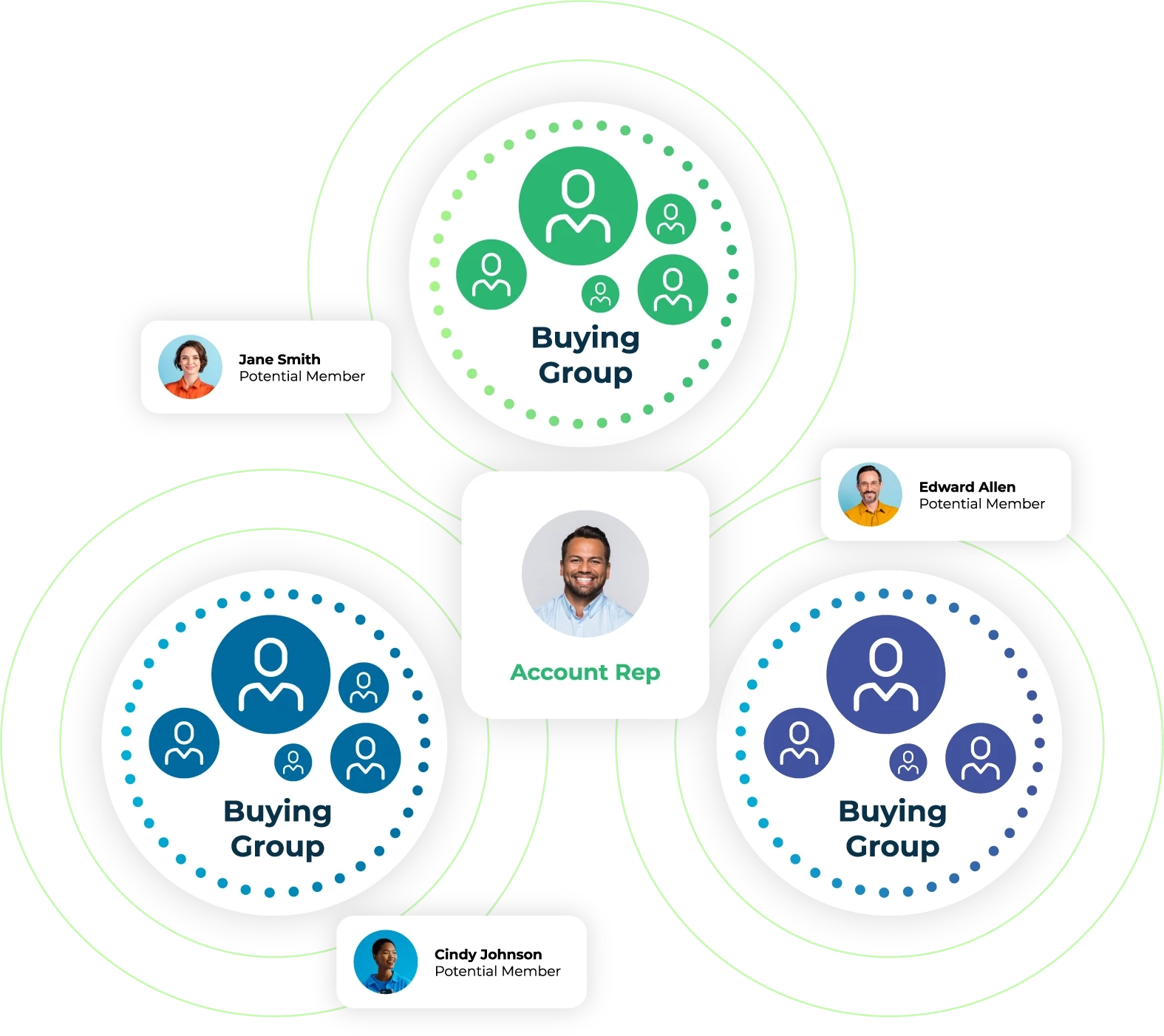
Source: LeanData
But LeanData depends on external systems to provide those signals. It cannot orchestrate across external platforms like MAPs, enrichment vendors, intent platforms, or CS systems. Complex scoring models or dynamic ICP updates must be handled outside LeanData. That means your signal chain has gaps between tools, and each gap is a place where context gets lost.
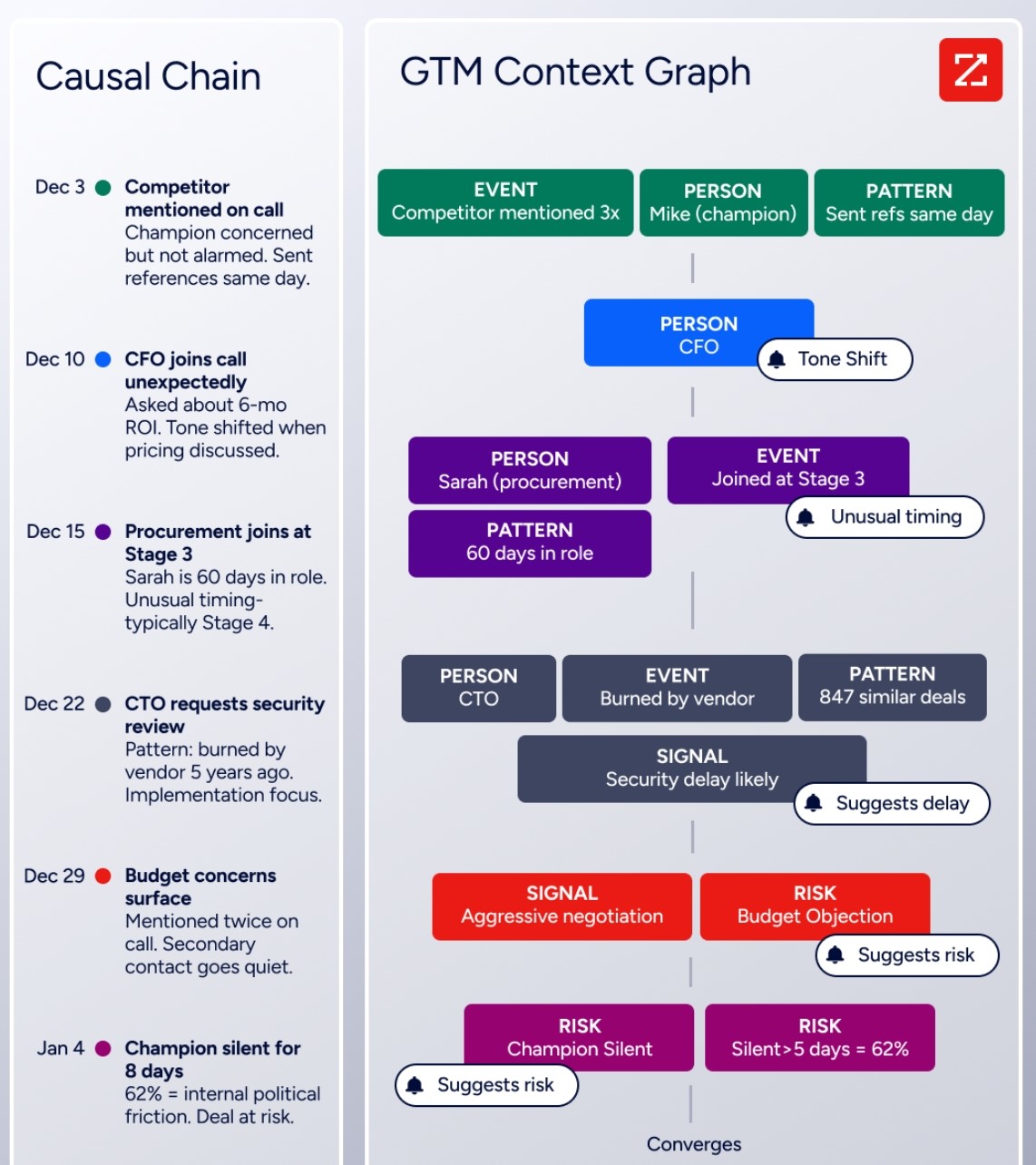
ZoomInfo eliminates those gaps. Its GTM Context Graph processes 1.5B+ data points daily, fusing CRM records, conversation transcripts, and behavioral signals with ZoomInfo's third-party intelligence.
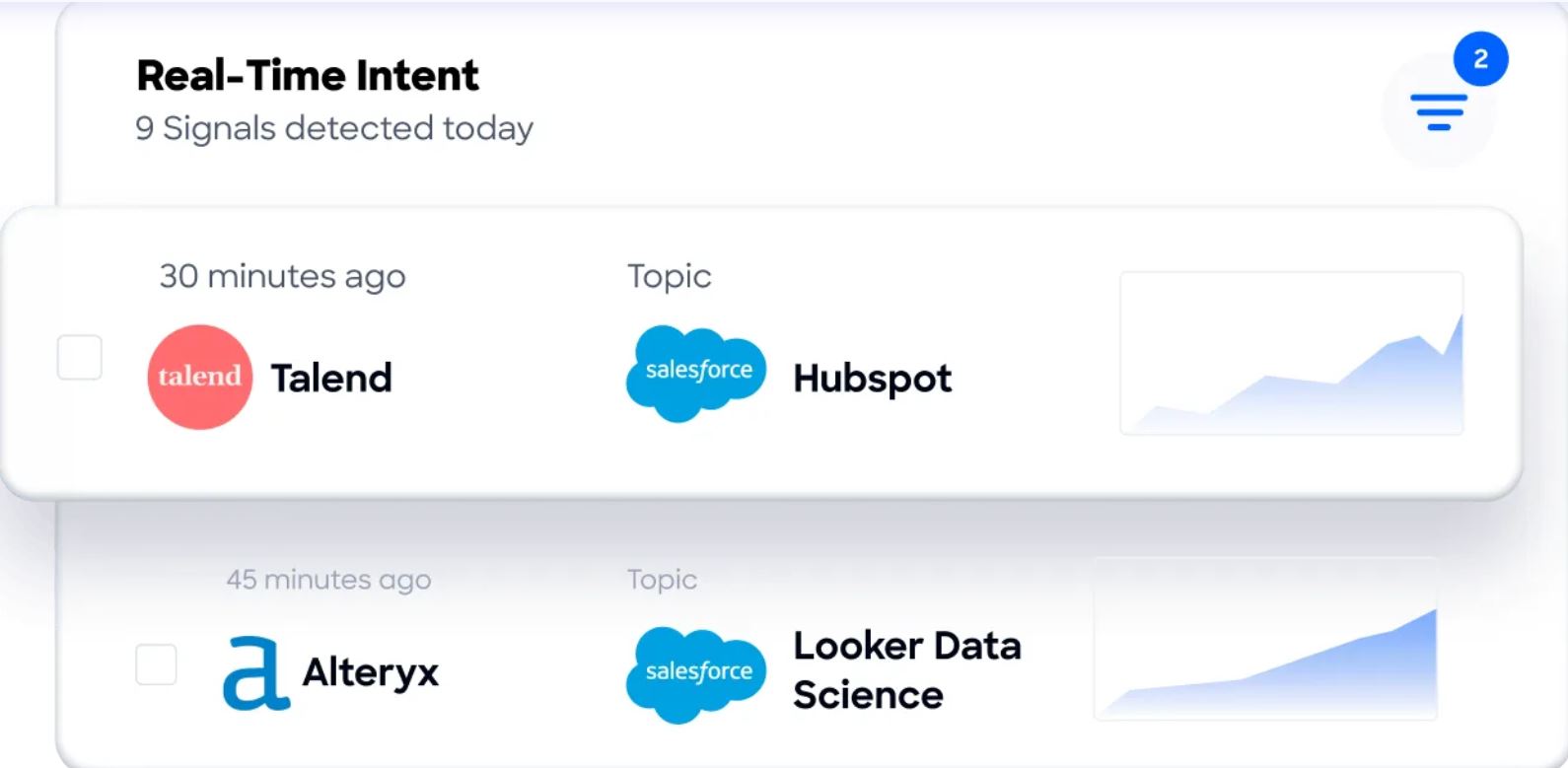
Buyer Intent tracks signals from 210 million IP-to-Organization pairings and 6 trillion+ keyword-to-device pairings sourced monthly.
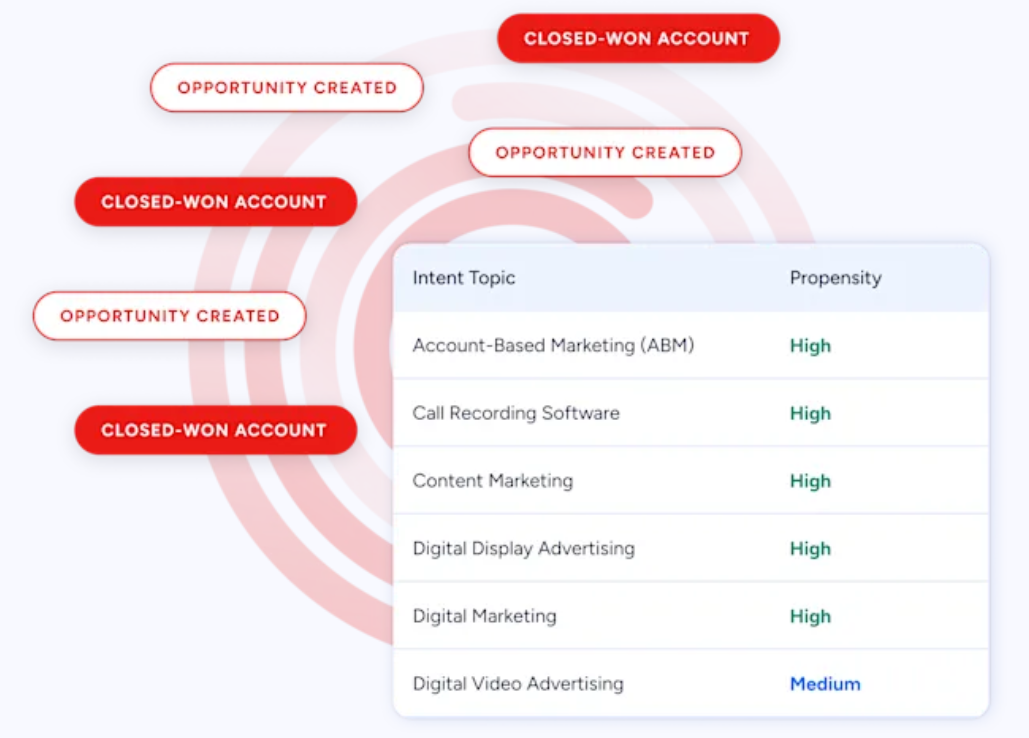
Guided Intent, exclusive to ZoomInfo, identifies topics historically correlated with deal success rather than requiring manual topic selection.
WebSights resolves anonymous website traffic to companies and individual buying team members.
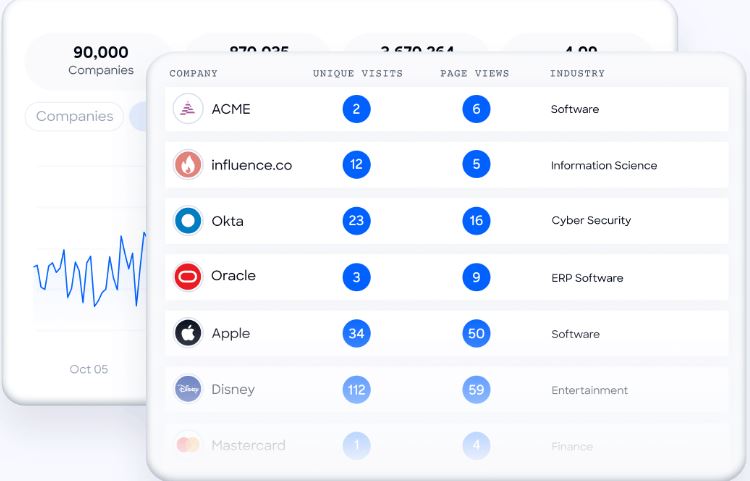
The practical difference: LeanData tells you a lead came in and routes it to the right rep. ZoomInfo tells you that the lead's company has been researching your category for two weeks, their VP of Engineering changed jobs three months ago, they just raised a Series C, and two other stakeholders from the same account visited your pricing page yesterday. Then it routes the lead, enriched with all of that context.
Seismic's sales team attributed 39% of active pipeline to opportunities identified or influenced by ZoomInfo signals, reported 54% productivity gains, and saved 11.5 hours per week per seller. (Seismic Case Study)
Scheduling and speed to lead
LeanData's BookIt is a purpose-built scheduling suite with three products: BookIt for Forms (instant meeting booking from webforms), BookIt Handoff (inter-rep scheduling from within Salesforce), and BookIt Links (shareable booking links).
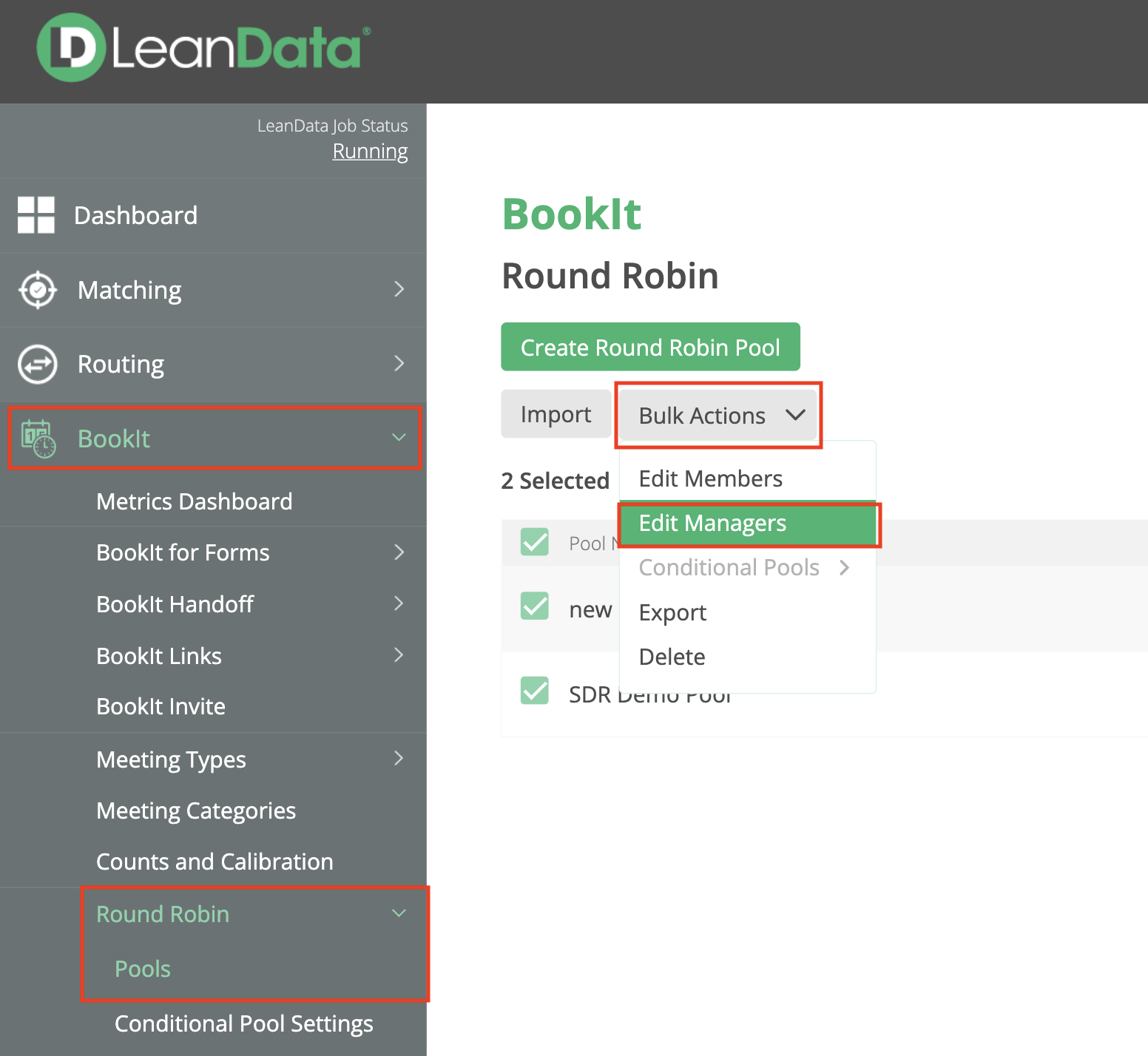
Source: LeanData
LeanData also introduced Agentic Scheduling APIs in Q1 2026, enabling AI agents to check meetings, retrieve time slots, and complete bookings within conversational surfaces. Uber's Agentforce implementation demonstrates this working in production.
ZoomInfo doesn't offer a direct equivalent to BookIt's scheduling suite. Its speed-to-lead approach works differently: by enriching and routing leads before they reach a rep, ZoomInfo compresses the gap between form submission and meaningful first contact.
FormComplete reduces forms to a single field and auto-appends the rest, which Smartsheet credits for a 40%+ increase in form fills and 84% increase in MQLs.

ZoomInfo Chat identifies anonymous website visitors using ZoomInfo's company data and triggers real-time rep alerts via Slack, with an embedded meeting scheduler built into the chat flow.
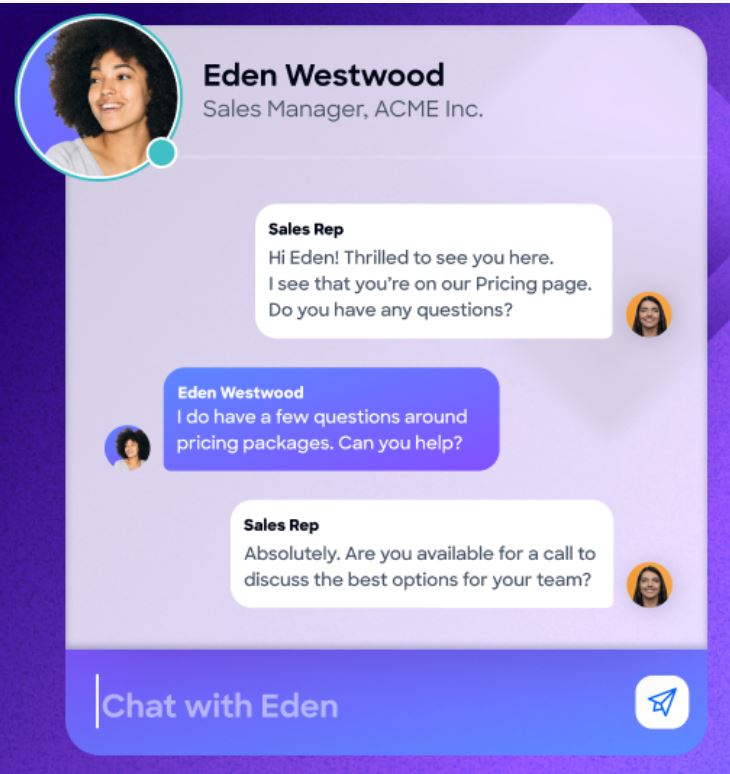
If instant post-form scheduling is critical to your workflow, LeanData's BookIt is the more mature solution. If you want to capture more leads in the first place (through shorter forms and visitor identification) and ensure the data behind those leads is complete before routing, ZoomInfo addresses the broader funnel.
Platform scope and the consolidation question
LeanData is a specialist. It does orchestration and does it well. But it occupies one layer of a RevOps stack that typically includes separate tools for data enrichment, intent signals, conversation intelligence, sales engagement, and marketing automation. Each additional tool adds cost, integration complexity, and potential points of failure.
ZoomInfo consolidates multiple layers. Its Operations module handles data quality and routing (the job LeanData and the original RingLead were designed for). GTM Studio handles campaign orchestration, audience building, and multi-channel activation.
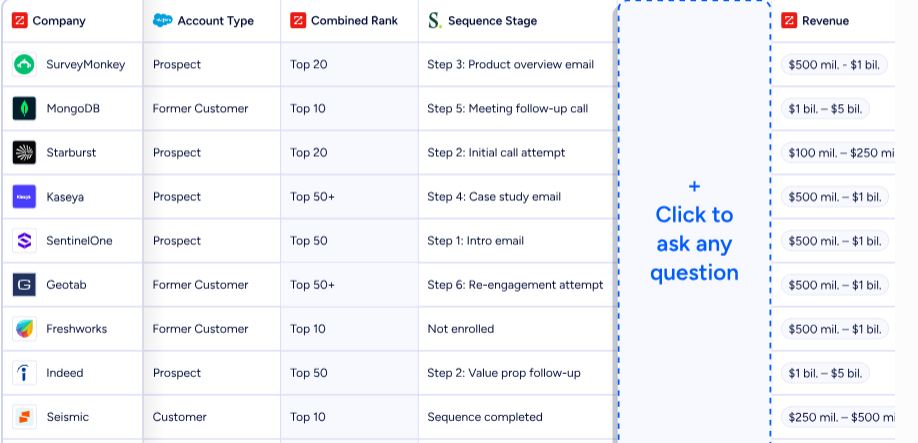
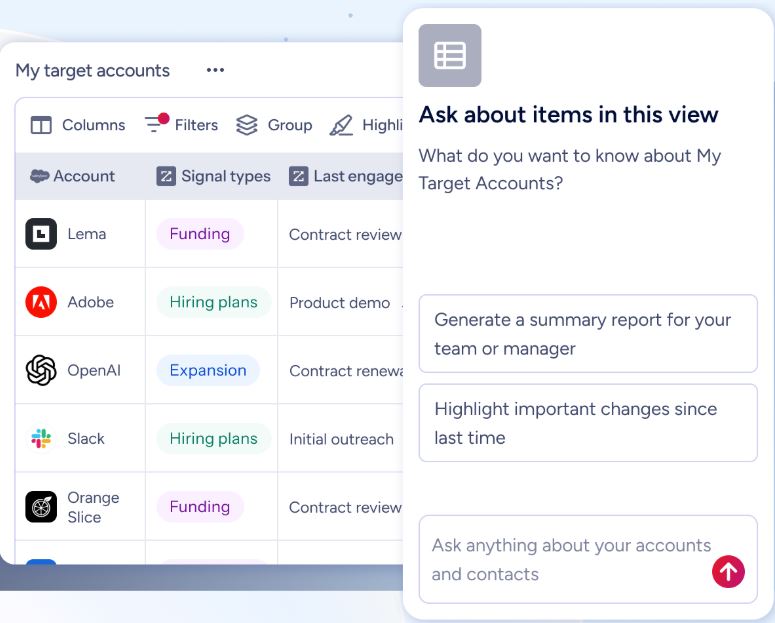
GTM Workspace gives sellers AI-powered account intelligence and outreach.
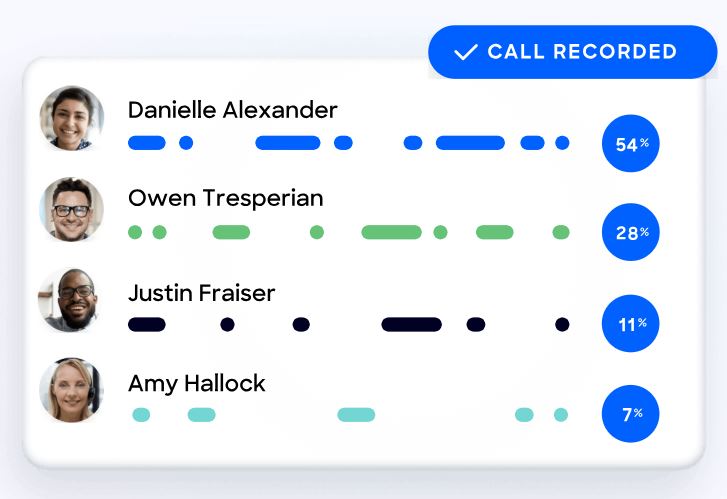
Chorus captures conversation intelligence.
And the Enterprise API and MCP server make ZoomInfo's data accessible inside any third-party tool or AI agent.
This matters financially. Every point solution in a RevOps stack carries its own subscription, its own integration maintenance, and its own learning curve. ZoomInfo's approach means one vendor relationship and one data model feeding everything downstream.
For LeanData's part, its strength lies in doing one thing deeply within Salesforce. Organizations with simple data quality needs but complex routing requirements may find LeanData's specialist approach more practical than paying for ZoomInfo's broader platform when they only need the orchestration layer.
LeanData's OpsStars community of 5,000+ members and 2,300+ certified experts also indicate a mature ecosystem for Salesforce-native RevOps practitioners.
SpringDB reported 2x-3x increases in campaign conversions across channels, a 300% increase in database usability, 30-50% uplift in average deal size, and 20-40% reductions in customer churn after implementing ZoomInfo. Founder John Kotsuros noted: "You'll get 10x the value if you think of ZoomInfo as a full platform and not just a tool for one team." (SpringDB Case Study)
Pricing and cost considerations
Neither LeanData nor ZoomInfo publishes dollar amounts publicly.
LeanData offers four Orchestration tiers (Standard, Advanced, Premium, Enterprise), differentiated by which Salesforce objects you can route and the level of support included. Pricing is based on features, objects, and number of Salesforce users or queues. BookIt and Buying Groups Blueprint are available as add-ons or standalone purchases.
Implementation is billed separately with packages ranging from 4-hour QuickStart to custom multi-week engagements. Pricing reportedly increases with additional modules, and unlocking account matching, deduplication, or SLA logic typically requires add-ons.
For a full breakdown of LeanData's tiers and what each level includes, see our LeanData Pricing guide.
ZoomInfo uses consumption-based pricing with custom quotes. The pricing page lists tier names (Professional, Advanced, Enterprise for Sales; Marketing Demand, ABM Lite, ABM Enterprise for Marketing) but no prices.
ZoomInfo does offer ZoomInfo Lite, a permanent free tier with access to ZoomInfo's database, 10 monthly export credits, WebSights Lite, and HubSpot integration.
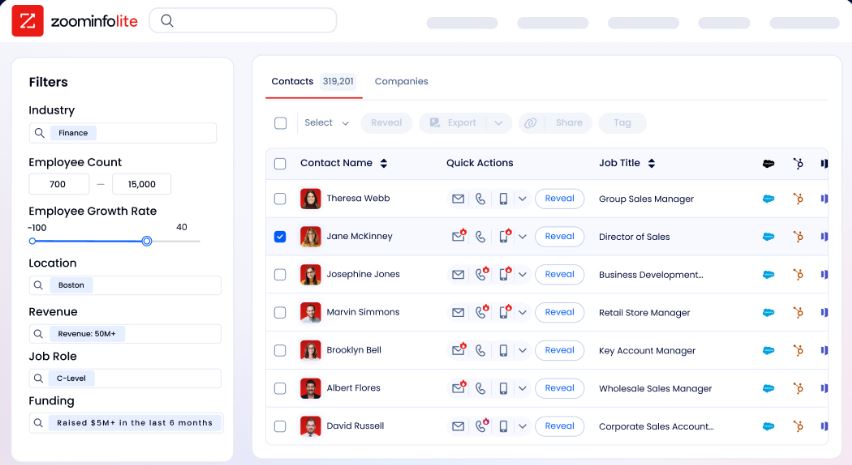
A 7-day free trial of the full platform is also available.
The total cost comparison depends on what you'd otherwise buy separately. A LeanData subscription covers orchestration only. To match ZoomInfo's functionality, you'd also need a data enrichment vendor, an intent data provider, a conversation intelligence tool, and possibly a sales engagement platform. ZoomInfo bundles these into one contract.
Whether that bundle costs more or less than the sum of individual tools depends on your specific needs, but the consolidation math tends to favor platforms over point solutions at scale.
LeanData vs. RingLead vs. ZoomInfo: Which should you choose?
Choose LeanData if:
Salesforce is your CRM and you have no plans to change
Complex, multi-object routing logic is your primary operational challenge
You already have a data enrichment vendor you're satisfied with
Instant scheduling through BookIt is critical to your sales process
You need buying group orchestration deeply integrated with Salesforce
You have dedicated RevOps resources to manage the platform
Choose ZoomInfo if:
You need data quality, enrichment, routing, and intelligence in one platform
Your routing failures stem from incomplete or stale CRM data, not routing logic alone
Buyer intent signals and account intelligence would improve your targeting
You want to consolidate multiple RevOps tools into a single vendor
Your team needs verified B2B contact and company data alongside orchestration
You use multiple CRMs or want flexibility beyond Salesforce
See how ZoomInfo combines data, intelligence, and orchestration with a free trial.
A note on RingLead: If you were previously evaluating or using RingLead, its capabilities now live inside ZoomInfo Operations. There is no standalone RingLead product to purchase. Evaluating ZoomInfo Operations is evaluating what RingLead became, enhanced with ZoomInfo's data and platform capabilities.
The choice between LeanData and ZoomInfo comes down to scope. LeanData is the right tool when your data is already clean and complete, and your challenge is purely one of routing logic and orchestration within Salesforce. ZoomInfo is the right platform when the problem is broader: when you need the data itself, the intelligence around it, and the orchestration to act on it, all working from the same foundation.
LeanData vs. RingLead vs. ZoomInfo FAQ
Is RingLead still available as a standalone product?
No. ZoomInfo acquired RingLead in September 2021 and fully absorbed it into ZoomInfo Operations. The RingLead brand, website, and standalone product no longer exist. RingLead's core capabilities (deduplication, normalization, lead-to-account matching, and perimeter protection) are now features within ZoomInfo Operations, enhanced with ZoomInfo's proprietary B2B database and multi-vendor enrichment from 60+ data sources.
Which platform has better lead routing capabilities?
LeanData has deeper routing logic for Salesforce environments. Its visual FlowBuilder supports complex multi-condition routing across any Salesforce object, and customers like Uber have reported a 95% reduction in MQL time-to-assignment. ZoomInfo Operations offers solid routing with territory, round-robin, account-based, and signal-based rules, but its primary advantage is enriching records with verified data before routing fires, which eliminates data-driven routing failures that no amount of routing logic can fix.
Does LeanData include data enrichment?
No. LeanData is an orchestration platform that routes and matches records based on data already in your CRM. It does not provide contact or company data enrichment. Teams using LeanData typically pair it with a separate enrichment vendor. ZoomInfo Operations includes native enrichment from ZoomInfo's database of 500M contacts and 100M companies, plus waterfall enrichment from 25+ additional vendors.
Which platform works with CRMs other than Salesforce?
ZoomInfo Operations supports Salesforce, HubSpot, and Microsoft Dynamics with native integrations for enrichment and routing. LeanData is Salesforce-native and primarily built for Salesforce environments. While LeanData offers some HubSpot integration, users report it is challenging to configure due to data structure conflicts between HubSpot and Salesforce.
How do the platforms compare on buying group capabilities?
LeanData has a dedicated Buying Groups product with two components: Blueprint (analyzes historical patterns to identify buying group roles) and Edition (automates creation, tracking, and orchestration of buying groups in Salesforce).
ZoomInfo provides buying group intelligence through its GTM Workspace, where AI surfaces hidden stakeholders, recommends contacts by motion (prospecting, deal acceleration, renewals), and maps buying committees using its contact database.
What does ZoomInfo's free tier include?
ZoomInfo Lite is a permanent free tier (not a trial) that includes access to ZoomInfo's B2B database, 10 monthly export credits, individual and company searches with advanced filters, the ReachOut Chrome Extension, WebSights Lite (up to 10 website visitor reveals per day), built-in email sending, and HubSpot integration.
It does not include mobile phone numbers, full intent signals, advanced workflow automation, or Salesforce integration.
Can I use LeanData and ZoomInfo together?
Yes. Some organizations use ZoomInfo for data enrichment and intent signals alongside LeanData for routing and orchestration. LeanData integrates with data enrichment vendors through its partner directory. However, ZoomInfo Operations offers its own native routing, which may reduce the need for a separate orchestration tool depending on your routing complexity requirements.
Which platform is better for organizations without dedicated RevOps resources?
ZoomInfo is generally more accessible for organizations without dedicated RevOps teams, especially with its GTM Studio product that lets marketers and ops teams build audiences and launch plays using natural language.
LeanData's power comes from its routing depth, but users report a steep learning curve and note that the platform can feel overwhelming during initial setup, typically requiring close collaboration with LeanData's advisory team.
