

Choosing between lemlist and Outreach comes down to five questions:
Do you need a focused outbound tool or a full revenue lifecycle platform?
Is your team 5 reps running their own pipeline, or 500 reps with dedicated RevOps?
How important is it that your platform includes its own prospecting database, or do you already have a data source?
Do you need deal management, forecasting, and conversation intelligence alongside your outreach, or just the outreach itself?
Are you optimizing for cost per seat or for revenue intelligence across your entire sales org?
In short, here's what we recommend:
lemlist is the right choice for SMB and mid-market sales teams that want outbound prospecting and multichannel outreach in a single tool.
Its 650M+ contact database with waterfall enrichment across 10+ email providers lets reps find contacts and launch campaigns without leaving the platform. Built-in deliverability tools (domain warm-up, inbox rotation, spam monitoring through lemwarm) round out the package.
But lemlist has no deal management, no forecasting, and no conversation intelligence. Once a reply comes in, the platform's job is done.
Outreach is built for enterprise revenue teams that manage the full sales cycle, from first touch to closed deal. Its platform combines sales engagement, deal management, conversation intelligence (Kaia), pipeline management, and forecasting in one system.
The trade-off: Outreach costs more, requires real training, and doesn't publish its pricing, making evaluation harder for smaller teams.
Both platforms are strong execution engines. But outreach quality depends on the data feeding it. Without accurate contacts, verified direct dials, and signals showing which accounts are researching solutions, even a well-built sequence is organized guessing.
ZoomInfo is a GTM platform built on the largest B2B data foundation in the category: 500M contacts, 100M companies, 135M+ verified phone numbers, and 200M+ verified business email addresses.
By combining this data with your CRM records, conversation transcripts, and behavioral signals, ZoomInfo's GTM Context Graph (processing 1.5B+ data points daily) shows not just what happened in a deal, but why, and what to do next. Teams can run outreach from the GTM Workspace, build automated plays in GTM Studio, or feed data into any external tool (including lemlist and Outreach) through APIs and MCP.
If starting from the intelligence layer sounds right, see ZoomInfo in action with a free trial.
lemlist vs. Outreach vs. ZoomInfo at a glance
lemlist | Outreach | ZoomInfo | |
|---|---|---|---|
Primary focus | Multichannel outbound execution | Full revenue lifecycle platform | B2B data intelligence + GTM execution |
Contact database | 650M+ contacts | No native database (uses enrichment partners) | 500M contacts, 100M companies |
Verified phone numbers | 77%+ find rate via 14 providers | Not a core capability | 135M+ verified, 120M direct dials |
Outreach channels | Email, LinkedIn, phone, WhatsApp, SMS | Email, phone, LinkedIn, SMS | Via GTM Workspace + Salesloft partnership |
Deal management | None | Full deal management + health scoring | Chorus conversation intelligence + pipeline signals |
Forecasting | None | AI-powered forecasting with scenario planning | Pipeline visibility via GTM Context Graph |
Email deliverability | lemwarm + Deliverability Hub (built-in) | Standard infrastructure | Data accuracy prevents bounces at the source |
AI capabilities | AI Copilot, Intent Signals, MCP | Revenue Agent, Deal Agent, Research Agent | GTM Context Graph, AI agents in Workspace |
Pricing | From $39/month | Custom (not published) | Custom (free tier available) |
Ideal buyer | SMB and mid-market outbound teams | Enterprise revenue organizations | Teams needing data intelligence + execution |
The data behind your outreach determines its quality
The gap between a productive sales team and one burning through prospect lists shows up in the data layer. How many contacts can you actually reach? How many phone numbers connect? How many emails land in the inbox instead of the spam folder?
lemlist approaches this as an outbound tool with built-in prospecting.
Its 650M+ contact database paired with a 63M+ company database gives reps a single place to find and engage targets. The waterfall enrichment model stands out: for email, lemlist queries 10+ data providers in sequence until it finds a verified address, achieving roughly 80% coverage. For phone numbers, it runs across 14 providers for a 77%+ average find rate. Users pay only when enrichment succeeds.
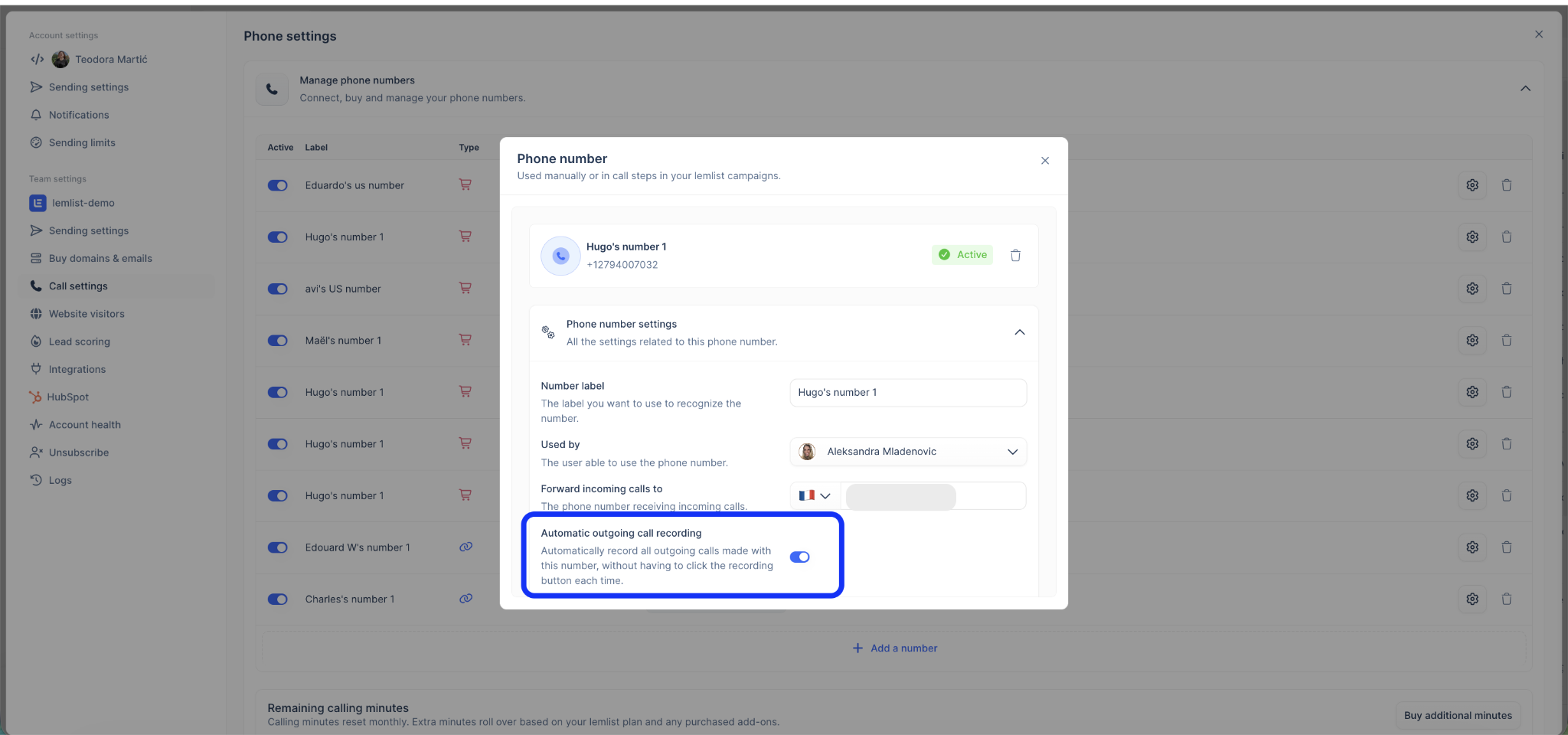
Source: lemlist
Outreach doesn't maintain its own contact database.
It relies on third-party integrations and its Smart Data Enrichment capabilities to pull contact information into the platform. Its Revenue Agent can identify high-intent accounts and source contacts, but the prospecting data itself comes from external sources. For teams already using a separate data provider, this works fine. For teams without one, it's a gap.
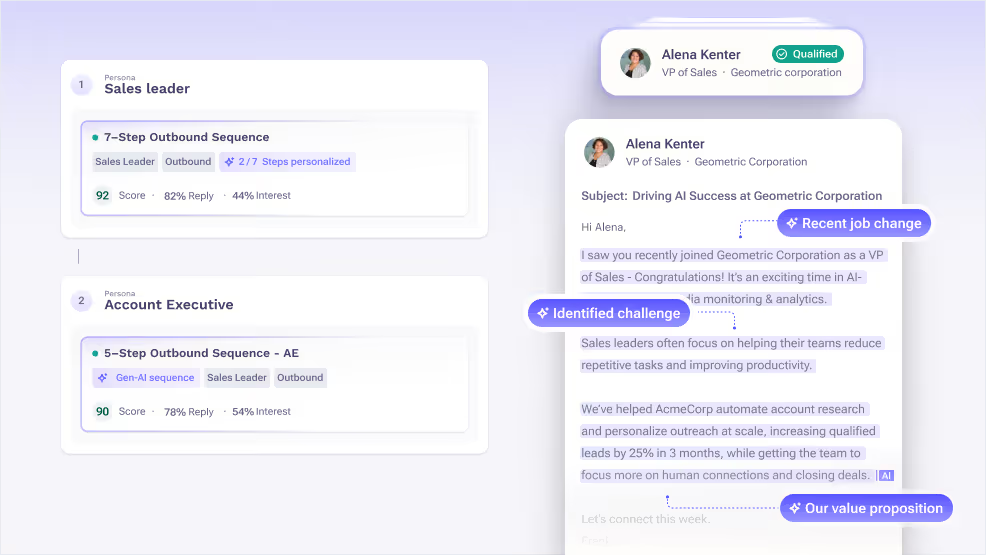
Source: Outreach
ZoomInfo is the data layer.
With 500M contacts, 100M companies, 135M+ verified phone numbers, 120M direct dials, and 200M+ verified business email addresses, it has the largest dataset in B2B. But scale without accuracy is noise.
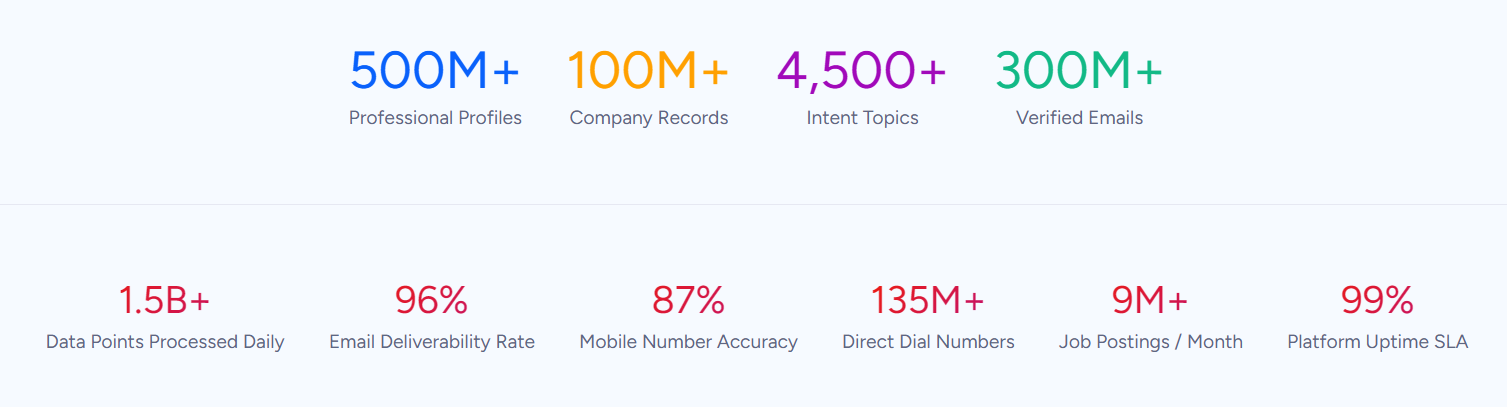
ZoomInfo backs its data with a multi-source verification pipeline (including 300+ human researchers) and reports up to 95% accuracy on first-party data. In a Fortune 500 competitive RFP analyzing 25 million contacts across vendors, the independent consultant concluded that "no other competitor came even close."
Beyond contacts, ZoomInfo adds dimensions neither competitor offers: buyer intent data tracking signals from 210 million IP-to-Organization pairings, technographics profiling 30,000+ technologies across 30+ million companies, and Guided Intent that identifies topics historically correlated with deal success. This data doesn't populate a lead list. It tells reps which accounts are worth calling today.
Seismic's sales team attributed 39% of active pipeline to opportunities identified or influenced by ZoomInfo signals, while saving 11.5 hours per week per seller. "That combination of our internal CRM data, external signals, and AI that's given all that context has helped us craft very specific account- and persona-based messages. And people have responded to them right away." (Seismic Case Study)
Multichannel outreach: different approaches to the same goal
All three platforms help sales teams reach prospects across multiple channels. The difference is how central outreach execution is to each platform's identity.
lemlist was built for this.
A single sequence can combine email, LinkedIn (profile visits, connection requests, messages, voice notes), phone calls, WhatsApp, and SMS in a multichannel sequence with conditional branching that adapts based on how each lead responds.
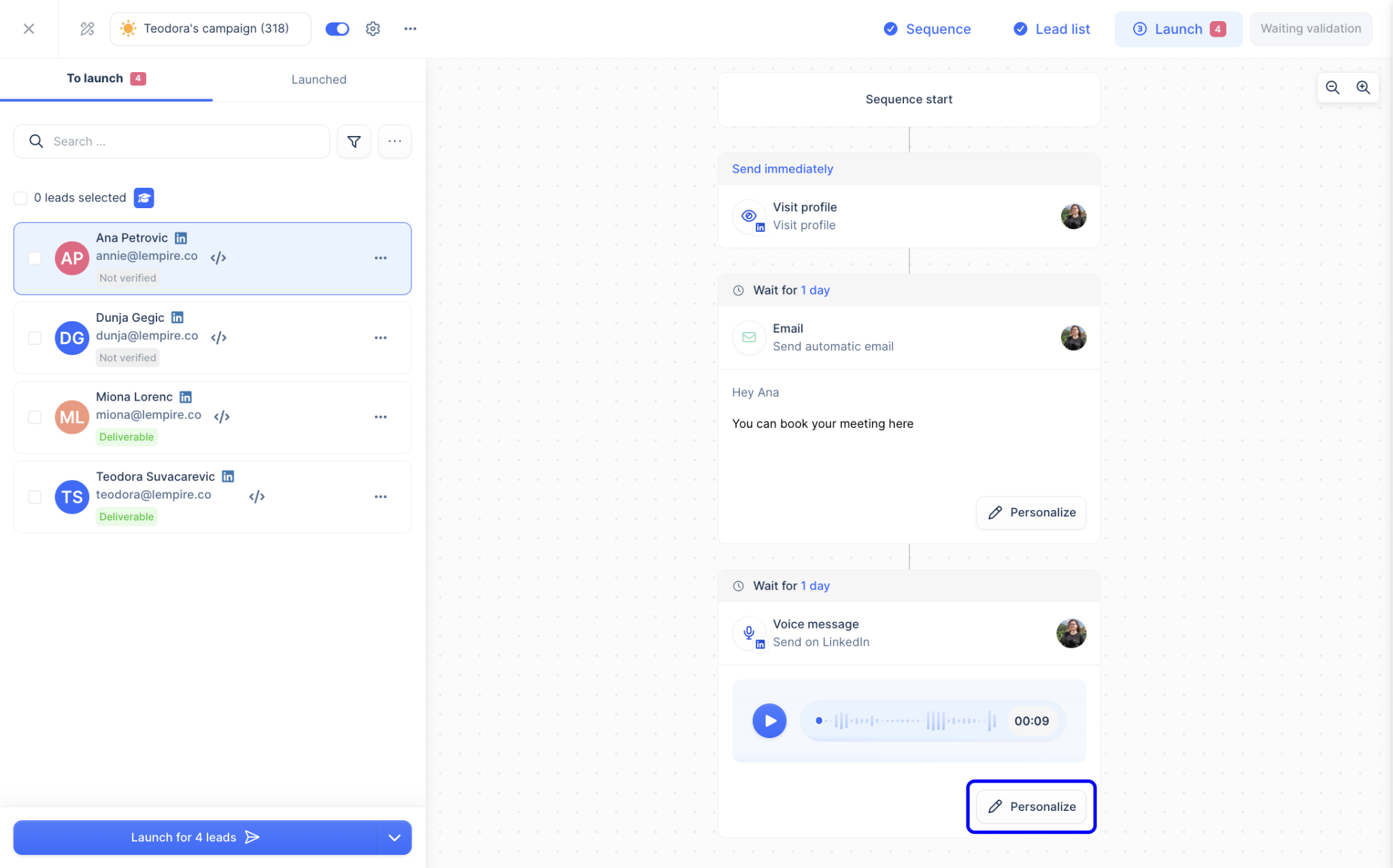
Source: lemlist
The LinkedIn automation is detailed: automated voice messages (including AI-cloned voice notes), connection requests, and messages all run with paced delays and rate limits designed to protect accounts from restrictions. A Unified Inbox consolidates replies across all channels into one view.
The 37,000+ community campaign templates also lower the barrier to getting started. New users can duplicate a proven sequence rather than building from scratch.
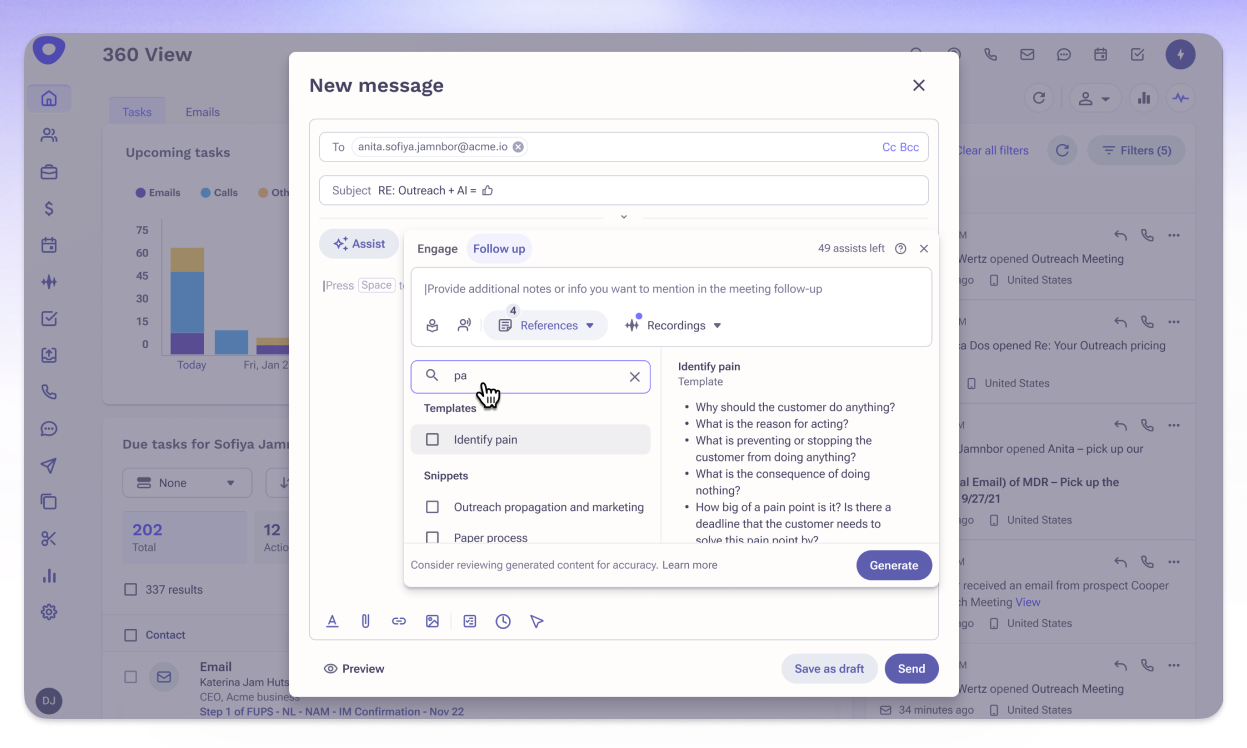
Outreach handles multichannel execution through Sequences, which support Auto Email, Manual Email, Phone Call, Generic Task, and LinkedIn steps.
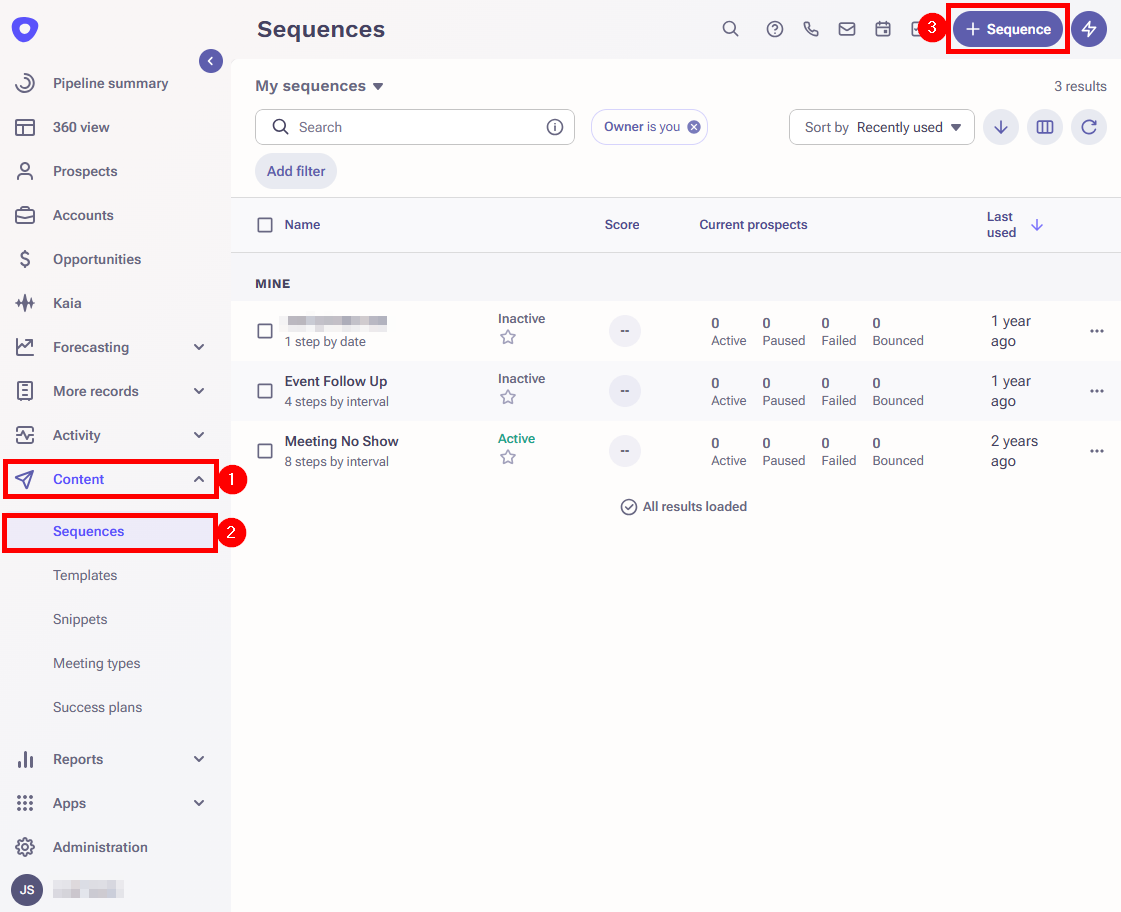
Source: Outreach
The platform automatically pauses sequences when prospects are out of office and re-engages when they return. Its Personalization Agent uses live web search to tailor emails, LinkedIn messages, and call scripts automatically. But Outreach's multichannel execution is one piece of a larger platform, not the entire product.
ZoomInfo approaches outreach through GTM Workspace, which surfaces prioritized accounts with AI-drafted outreach based on each deal's context.
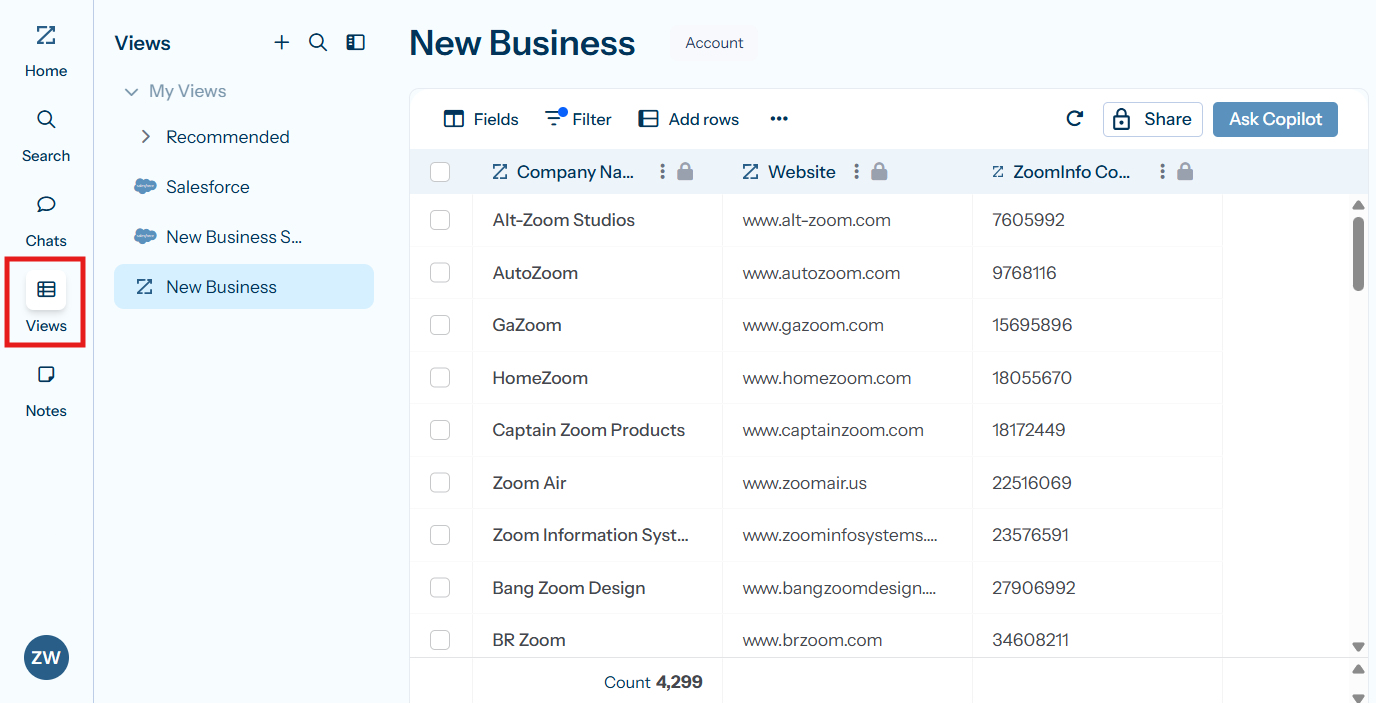
Source: ZoomInfo
Rather than requiring reps to build sequences manually, AI agents handle account research, outreach drafting, CRM updates, and signal monitoring.
For teams that prefer a dedicated sequencing tool, ZoomInfo's partnership with Salesloft feeds buyer intent signals directly into Salesloft's sequencing engine, and ZoomInfo's Advanced tier includes export to Outreach or Salesloft. The intelligence travels with the contact.
AI takes different forms across the three platforms
Each platform has invested in AI, but with different aims.
lemlist's AI operates within the outbound workflow.
Its AI Copilot (powered by Claude) builds complete multichannel campaigns from a single prompt. Intent Signal Agents detect buying triggers (job postings, funding events, competitor activity) and trigger personalized outreach automatically.
The lemlist MCP server lets AI agents like Claude and ChatGPT manage the full outbound workflow from natural language, reportedly cutting campaign launch time from 45 minutes to 90 seconds. lemlist's AI is practical but limited to the outbound cycle. It can't reason about deal progression or forecast revenue.
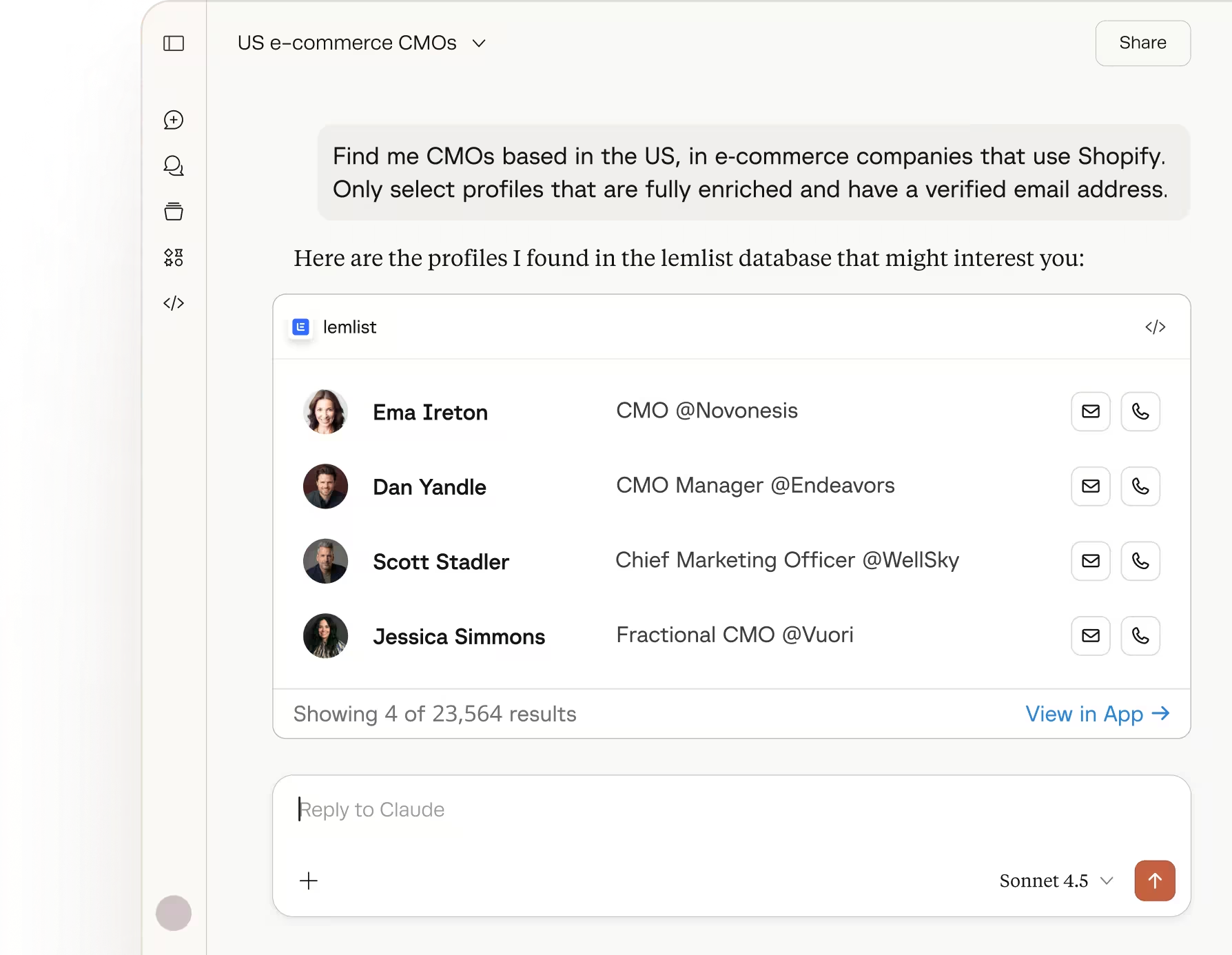
Source: lemlist
Outreach's AI covers more ground.
Its AI Agents suite includes a Revenue Agent (automated prospecting), Research Agent (account research), Deal Agent (automatic deal updates from call signals), and Personalization Agent (tailored messaging).
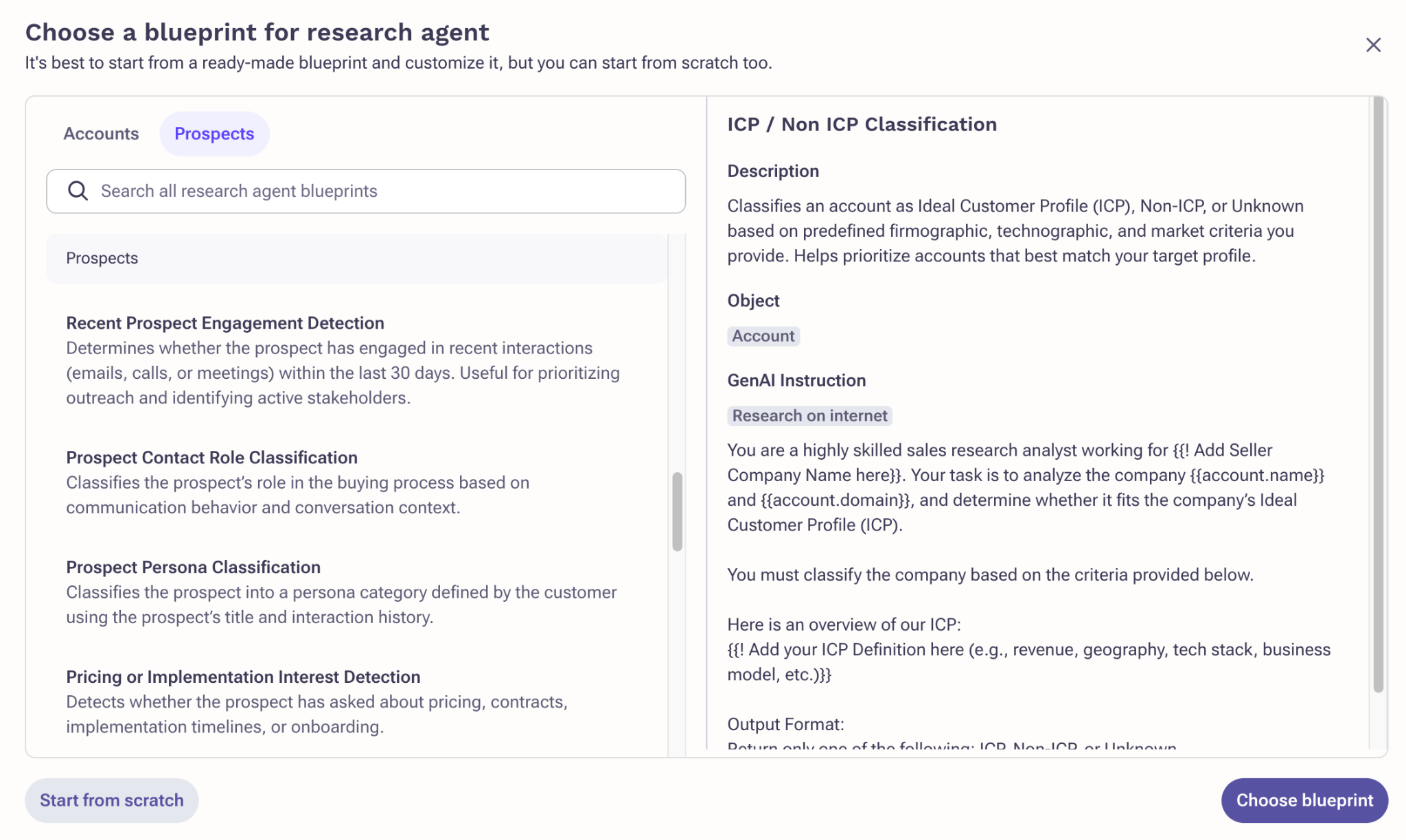
Source: Outreach
These agents are built on best practices drawn from 33 billion interaction signals captured weekly across 6,000 customers. Outreach also became the first revenue tech company to achieve ISO/IEC 42001 certification for responsible AI.
ZoomInfo's AI is built on the GTM Context Graph, a different starting point.
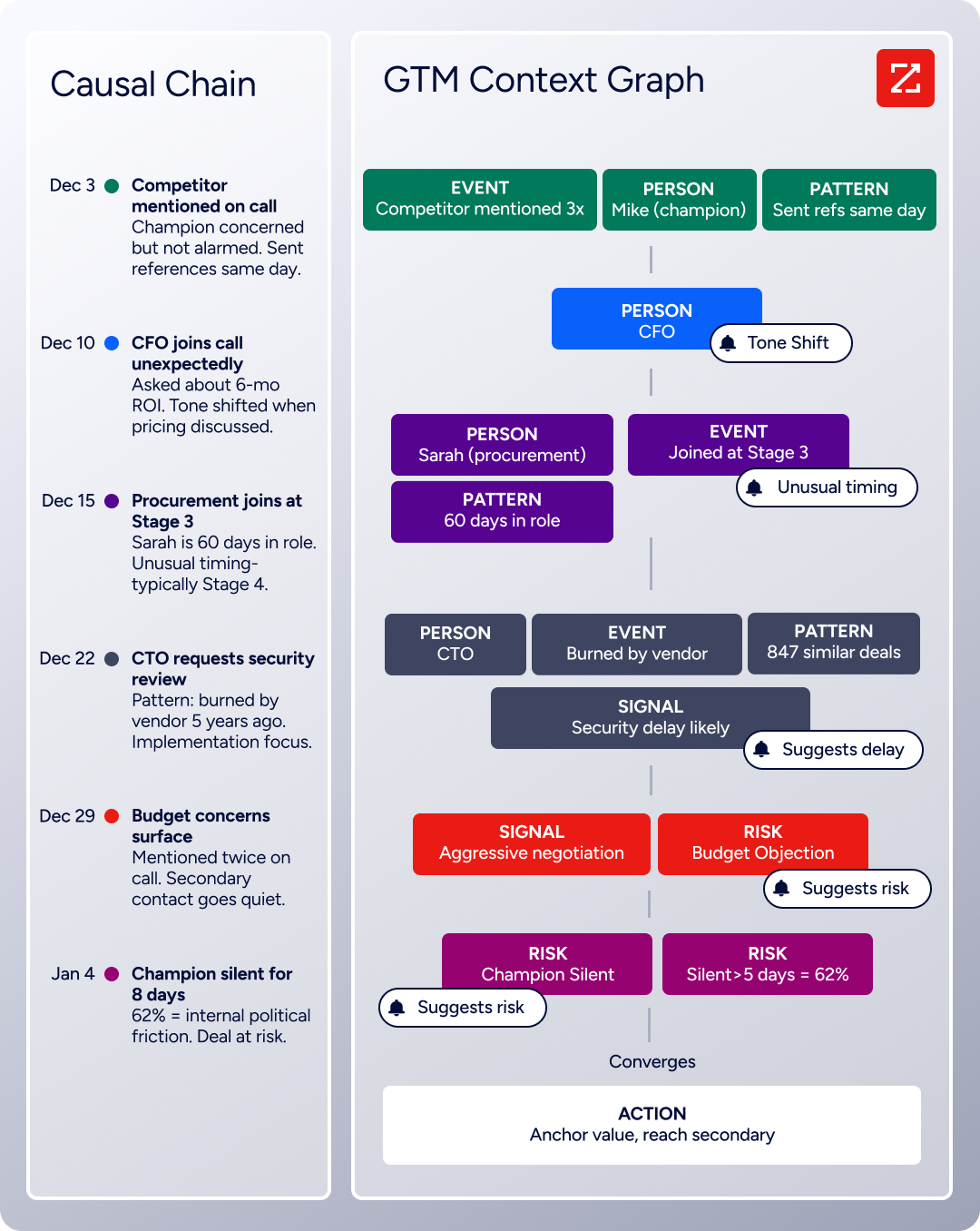
As ZoomInfo's CPO Dominik Facher writes: "The CRM recorded the state change. It has no record of why it happened." The GTM Context Graph fuses ZoomInfo's B2B data with CRM records, conversation transcripts, email threads, and product usage data, then maps the connections between signals and outcomes.
ZoomInfo's AI doesn't just send better emails. It identifies which accounts match the patterns behind your closed-won deals, surfaces hidden stakeholders in buying committees, and alerts reps when a combination of signals (executive sponsorship, competitor research, budget allocation) suggests a deal is ready to accelerate.
The difference is scope: lemlist's AI optimizes outreach execution, Outreach's AI optimizes the revenue workflow, and ZoomInfo's AI analyzes the full go-to-market picture.
"ZoomInfo's not just a contact data company anymore. They've built a full system of execution. GTM Intelligence actually works the list, writes the outreach, triggers the play, and helps drive predictable growth." (Levanta Case Study)
Beyond outbound: deal management and revenue intelligence
This is where lemlist and Outreach diverge, and where ZoomInfo offers a different kind of value.
lemlist stops at the reply. It's an outbound tool.
Once a prospect responds, the conversation moves to CRM or email. There's no deal tracking, no pipeline view, no forecasting. For teams that handle deals inside their CRM and just need help filling the top of the funnel, this is fine. For teams that need visibility into what happens after the first meeting, it's a gap.
Outreach covers the full revenue lifecycle.
Its Deal Management provides a grid view of every opportunity with AI-recommended field updates and deal health scoring powered by ML models that outperform traditional rules-based models (81% vs. 34% precision). Conversation intelligence through Kaia provides real-time transcription, live battlecards during calls, and AI-generated meeting summaries.
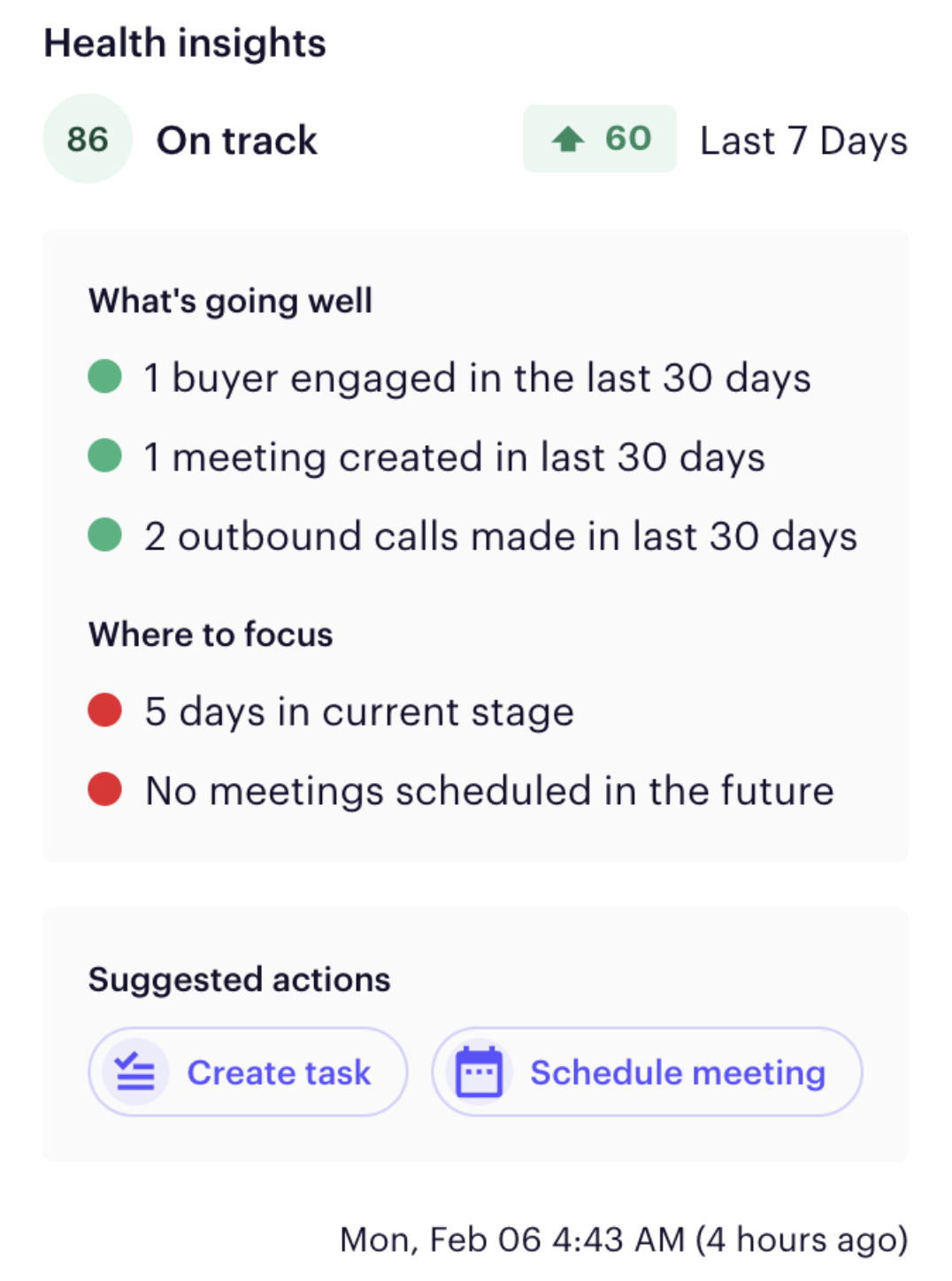
Source: Outreach
The forecasting engine runs over 10,000 simulations for scenario planning and claims forecast accuracy within 5%. For enterprise sales teams managing complex deal cycles, this is Outreach's strongest differentiator over lemlist.
ZoomInfo approaches revenue intelligence from the data and context layer.
Chorus captures and analyzes every sales call, meeting, and email, extracting the signals underneath (why a deal accelerated, why a champion went quiet, what a competitive mention predicts about deal risk).
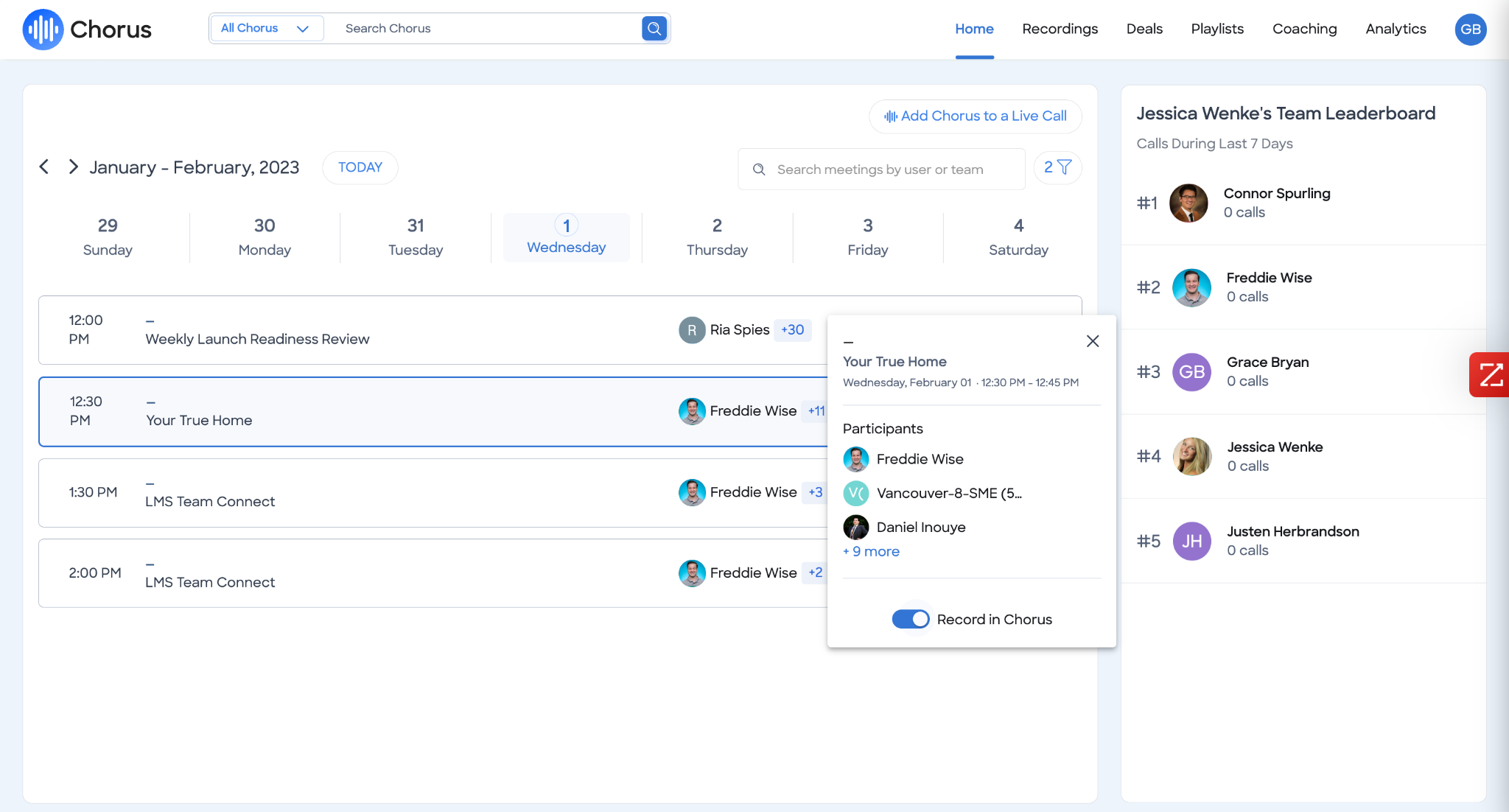
Source: ZoomInfo
This context feeds into the GTM Context Graph, which connects conversation insights with third-party signals like intent spikes, org chart changes, and funding events to build a complete picture of deal momentum. ZoomInfo doesn't offer Outreach-style inline deal grids or forecast rollups, but it provides an intelligence layer that explains why deals move rather than just tracking that they did.
Email deliverability: the invisible differentiator
Bad deliverability quietly destroys outbound performance. If emails land in spam, open rates collapse and sender reputation degrades further, creating a cycle that's hard to reverse.
lemlist has the most deliverability tooling of the three.
lemwarm automatically exchanges real emails with real inboxes to build sender reputation before campaigns launch.
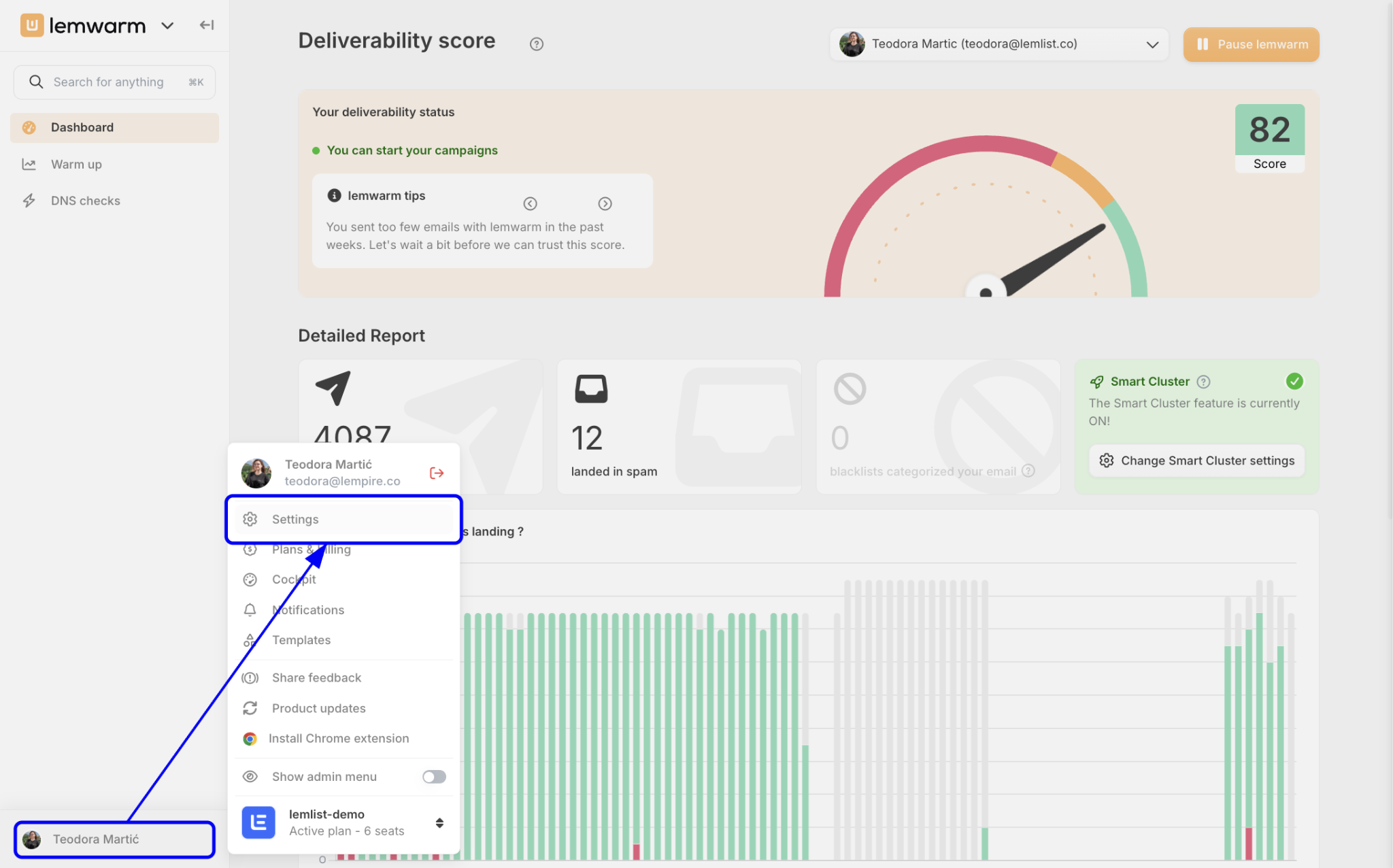
Source: lemlist
The platform handles domain purchase, SPF/DKIM/DMARC configuration, inbox rotation across multiple mailboxes, provider-matched sending (routing Gmail-to-Gmail and Outlook-to-Outlook automatically), and pre-send audits that check copy and technical setup before the first email goes out.
lemwarm is included in all plans, not an add-on. For teams where cold email is the primary channel, this is a differentiator.
Outreach provides standard email infrastructure but doesn't position deliverability as a core competency. Its enterprise buyers typically have their own email infrastructure and IT teams managing deliverability.
Source: Outreach
ZoomInfo addresses deliverability from a different angle: data accuracy.
A 30% bounce rate doesn't come from poor warm-up. It comes from bad data. With 200M+ verified business email addresses maintained through continuous verification, ZoomInfo prevents deliverability problems at the source. When the contact data going into any outreach tool (whether lemlist, Outreach, or another sequencer) is verified, bounce rates stay low and sender reputation stays intact.
Pricing reflects different markets and different ambitions
lemlist is the most accessible.
The Email plan starts at $39/month ($31/month billed annually) with unlimited users and 5,000 emails per month. The Multichannel plan is $109/month per user ($87/month annually) and adds LinkedIn automation, SMS, a built-in call dialer, and unlimited emails.
Enrichment credits are pay-as-you-go: 5 credits ($0.05) per verified email, 20 credits ($0.20) per phone number. A 14-day free trial with full Multichannel access and no credit card required lowers the evaluation barrier.
Outreach doesn't publish pricing.
Its three tiers (Amplify Core, Amplify Plus, Amplify Pro) are sold per user with annual contracts, and customers must contact sales for custom quotes. Voice calling is billed separately on a usage-based model.
Professional services (implementation, training, managed services) add cost. No free trial is publicly advertised; evaluation happens through demos. Third-party analysis describes Outreach as a premium platform built for organizations with enterprise budgets.
ZoomInfo uses consumption-based pricing with no published list prices.
Unlike Outreach, ZoomInfo offers two free entry points: ZoomInfo Lite (a permanent free tier with database access, 10 monthly export credits, Chrome extension, and HubSpot integration) and a 7-day free trial of the full platform.
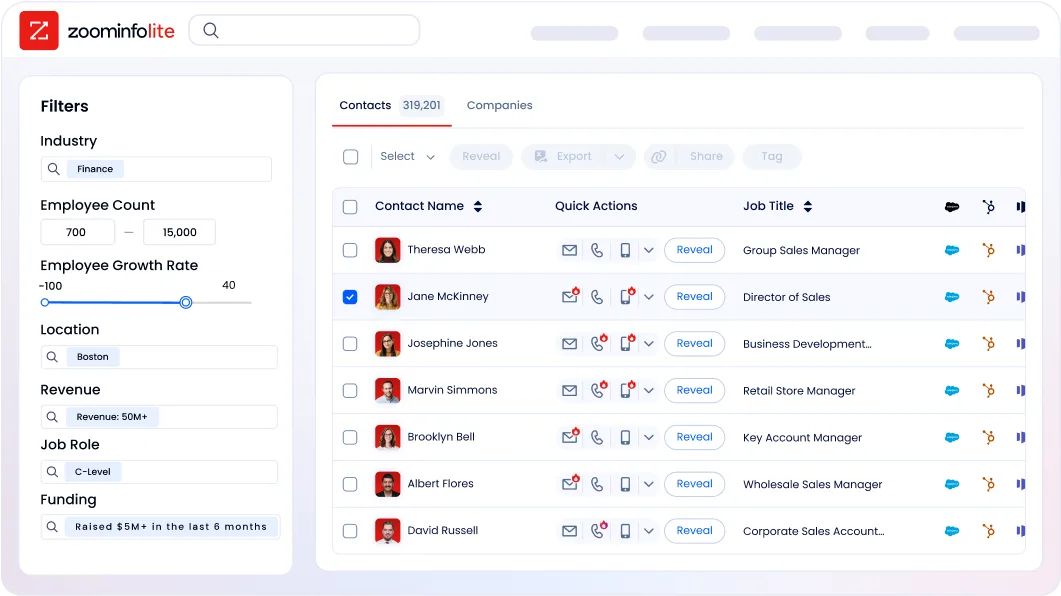
Paid plans are organized across Sales, Marketing, and Operations product lines, each with Professional, Advanced, and Enterprise tiers. API access is included in all relevant plans, so teams can feed ZoomInfo's data into any outreach tool at no extra integration cost.
The pricing comparison is less about dollar-for-dollar equivalence and more about what you're buying. lemlist's price covers outbound execution with built-in data. Outreach's price covers the full revenue lifecycle. ZoomInfo's price covers the data and intelligence that make every sales tool in your stack work better.
lemlist vs. Outreach vs. ZoomInfo: Which should you choose?
The right platform depends on what you're solving for.
Choose lemlist if:
You're an SMB or mid-market team focused on outbound prospecting
You want lead sourcing, multichannel outreach, and deliverability in one tool
Your budget is under $150/user/month
You don't need deal management, forecasting, or conversation intelligence
You want to be running campaigns within hours, not weeks
Choose Outreach if:
You're an enterprise sales organization managing complex deal cycles
You need sales engagement, deal management, forecasting, and coaching in one platform
Your team can invest in training to use the full feature set
Revenue visibility across the full pipeline is a priority
You have budget for enterprise-grade tooling and custom pricing
Choose ZoomInfo if:
You need the largest B2B dataset as the foundation for your GTM strategy
You want intelligence that tells you who to contact, when, and why, not just a list of names
You want one platform for data, intent signals, conversation intelligence, and AI-powered execution
You need your data and intelligence accessible in any tool (your CRM, your sequencer, your custom AI agents) via APIs and MCP
You're building for the long term, where the quality of your data compounds into better targeting, better outreach, and better forecasting over time
See ZoomInfo in action with a free trial, or explore the platform at no cost with ZoomInfo Lite.
These platforms aren't always competing for the same slot in your stack. lemlist and Outreach are execution tools. ZoomInfo is the intelligence layer. Many teams use ZoomInfo alongside their sequencing platform, feeding verified contacts and intent signals into lemlist or Outreach.
For teams ready to consolidate, ZoomInfo's GTM Workspace now provides its own execution layer, so the intelligence and the action happen in one place.
"Without ZoomInfo, it would be extremely difficult, if not impossible, to achieve our business objectives. Without it, we wouldn't be able to understand the market, have the right contact data, and make meaningful connections." (Smartsheet Case Study)
lemlist vs. Outreach vs. ZoomInfo FAQ
What is the fundamental difference between lemlist, Outreach, and ZoomInfo?
lemlist is a multichannel outbound sales platform focused on prospecting, sequencing, and email deliverability, built for SMB and mid-market teams.
Outreach is an enterprise revenue platform covering the full sales cycle from engagement through deal management, forecasting, and coaching.
ZoomInfo is a B2B data intelligence platform with the largest contact and company database in the category, a contextual intelligence layer (the GTM Context Graph), and execution tools that feed intelligence into any sales workflow.
Which platform has the best prospecting data?
ZoomInfo has the largest dataset: 500M contacts, 100M companies, 135M+ verified phone numbers, and 200M+ verified business email addresses, backed by 300+ human researchers and up to 95% accuracy on first-party data.
lemlist offers a 650M+ contact database with waterfall enrichment achieving roughly 80% email find rates.
Outreach does not maintain its own contact database and relies on third-party enrichment.
Can I use ZoomInfo with lemlist or Outreach?
Yes. ZoomInfo works alongside execution tools. Its API and MCP access are included in all relevant plans, so teams can push ZoomInfo's verified contacts and intent signals directly into lemlist, Outreach, or any other sequencing tool. ZoomInfo's Advanced sales tier specifically includes export to Outreach or Salesloft.
Which platform is cheapest for a small team?
lemlist is the most affordable, starting at $39/month for the Email plan with unlimited users.
ZoomInfo offers a permanent free tier (ZoomInfo Lite) with 10 monthly export credits and basic database access.
Outreach does not publish pricing or offer a free tier, and is generally positioned for enterprise budgets.
Which platform is best for managing deals after the first reply?
Outreach is the strongest for post-reply deal management, with deal health scoring, AI-powered forecasting, conversation intelligence (Kaia), and mutual action plans.
ZoomInfo offers conversation intelligence through Chorus and deal-level context through the GTM Context Graph, but its primary strength is the intelligence layer rather than inline deal management.
lemlist does not offer deal management or forecasting.
Which platform has the best email deliverability tools?
lemlist has the most built-out deliverability stack: lemwarm (automated warm-up), inbox rotation, provider-matched sending, domain purchase inside the platform, and pre-send deliverability audits, all included in every plan.
Outreach provides standard email infrastructure without a dedicated deliverability toolset.
ZoomInfo addresses deliverability through data accuracy, reducing bounces by verifying contact data before it enters any outreach tool.
How do the AI capabilities compare?
lemlist's AI focuses on outbound execution: building campaigns from prompts, detecting buying signals, and generating personalized voice notes.
Outreach's AI agents cover prospecting, deal updates, research, and personalization across the revenue lifecycle.
ZoomInfo's AI operates on the GTM Context Graph, reasoning across CRM data, conversation transcripts, and third-party signals to identify patterns behind deal outcomes and recommend next actions. The three work at different levels: outbound execution, revenue workflow, and intelligence analysis.
Does ZoomInfo require an annual contract?
ZoomInfo's paid plans typically involve annual contracts with custom pricing. ZoomInfo Lite, however, is a permanent free tier with no contract, no credit card, and no time limit, offering database access, 10 monthly export credits, a Chrome extension, and a HubSpot integration. A separate 7-day free trial of the full platform is also available.
