
Choosing between LivePerson and Salesforce for enterprise customer engagement comes down to five questions:
Do you need a conversational AI platform for your contact center, or a full CRM that includes customer service as one of many capabilities?
Does bringing your own large language model matter, or are you comfortable with a vendor's proprietary AI engine?
Are you automating inbound messaging and support, or do you also need sales pipeline management, marketing automation, and commerce?
How heavily does vendor financial stability weigh in your procurement decisions?
Does your team have the B2B intelligence to identify and prioritize the right accounts before engaging them?
In short, here's what we recommend:
LivePerson is the conversational AI specialist, built for large enterprises that want to move high-volume contact centers from phone calls to digital messaging. Its Conversational Cloud handles over 1 billion messages per month across 14+ messaging channels, and its "open by design" architecture lets brands bring their own LLM from OpenAI, Google, Meta, Cohere, or Anthropic.
The Syntrix simulation platform lets teams stress-test AI agents with thousands of synthetic conversations before they reach a real customer. However, revenue declined roughly 23 to 26% year over year in 2025, a pending acquisition by SoundHound AI raises platform continuity questions, and the steep learning curve demands dedicated implementation resources.
Salesforce is the platform play. With $41.5 billion in revenue and the #1 CRM market share by IDC, Salesforce wraps customer service into an ecosystem spanning Sales Cloud, Marketing Cloud, Commerce Cloud, and Data Cloud. Its Agentforce autonomous AI agents resolve 85% of Salesforce's own support cases without human escalation.
For organizations that want sales, service, marketing, and commerce data in one system, Salesforce is hard to match. The trade-off is complexity: full value requires investment across multiple clouds, paid add-ons, and implementation that is partner-led over 70% of the time.
Both platforms help you manage customer conversations. But effective engagement starts before the first message. Who should you target? Which accounts are in-market? Who are the decision-makers, and how do you reach them? Neither LivePerson nor Salesforce was built to answer these questions.
ZoomInfo is an AI-powered go-to-market platform that lets your sales reps walk into every call knowing why the deal is moving, who's championing it, and what's likely to happen next. Your marketers can describe audiences in plain language and launch plays against accounts matching your proven win patterns.
That depth comes from the GTM Context Graph, an intelligence layer built on ZoomInfo's B2B dataset (500M contacts, 100M companies, 135M+ verified phone numbers, and 200M+ verified business emails) unified with your CRM records, conversation transcripts, and behavioral signals.
Whether your team engages through LivePerson's messaging or Salesforce's Service Cloud, ZoomInfo delivers that intelligence through GTM Workspace for sellers, GTM Studio for marketers and RevOps, or APIs and MCP in any third-party tool.
If verified B2B intelligence sounds like the missing piece, see how ZoomInfo works with your existing stack.
LivePerson vs. Salesforce at a glance
LivePerson | Salesforce | ZoomInfo | |
|---|---|---|---|
Primary function | Conversational AI for contact centers | Full CRM + customer engagement platform | B2B data intelligence and GTM execution |
AI approach | Predictable AI with BYOLLM flexibility | Agentforce autonomous agents (proprietary Atlas engine) | GTM Context Graph processing 1.5B+ daily data points |
Messaging channels | 14+ natively supported | Omnichannel via Digital Engagement add-on ($75/user/mo) | N/A (feeds intelligence into engagement platforms) |
Customers | 18,000+ brands | 150,000+ companies | 8 of the 10 largest companies in the world |
Pricing model | Custom quote (Bronze/Silver/Gold tiers) | Published tiers from $25 to $550/user/mo + add-ons | Custom quote, consumption-based |
CRM relationship | Connects to Salesforce, Dynamics, ServiceNow, Oracle, Zendesk | Is the CRM | Native Salesforce, HubSpot, Dynamics integration |
AI safety | Syntrix pre-deployment simulation + hallucination detection | Einstein Trust Layer (zero data retention with LLM partners) | ISO 27001, SOC 2 Type II, ISO 27701 |
Best for | Enterprises modernizing high-volume contact centers | Organizations wanting unified CRM + service + sales + marketing | B2B teams needing account intelligence and prospecting data |
A specialist versus a platform: fundamentally different bets
LivePerson and Salesforce approach customer engagement from opposite ends.
LivePerson does one thing: enterprise conversational AI. Founded in 1995 as the inventor of live web chat, it has spent three decades refining how brands communicate with customers through digital channels.
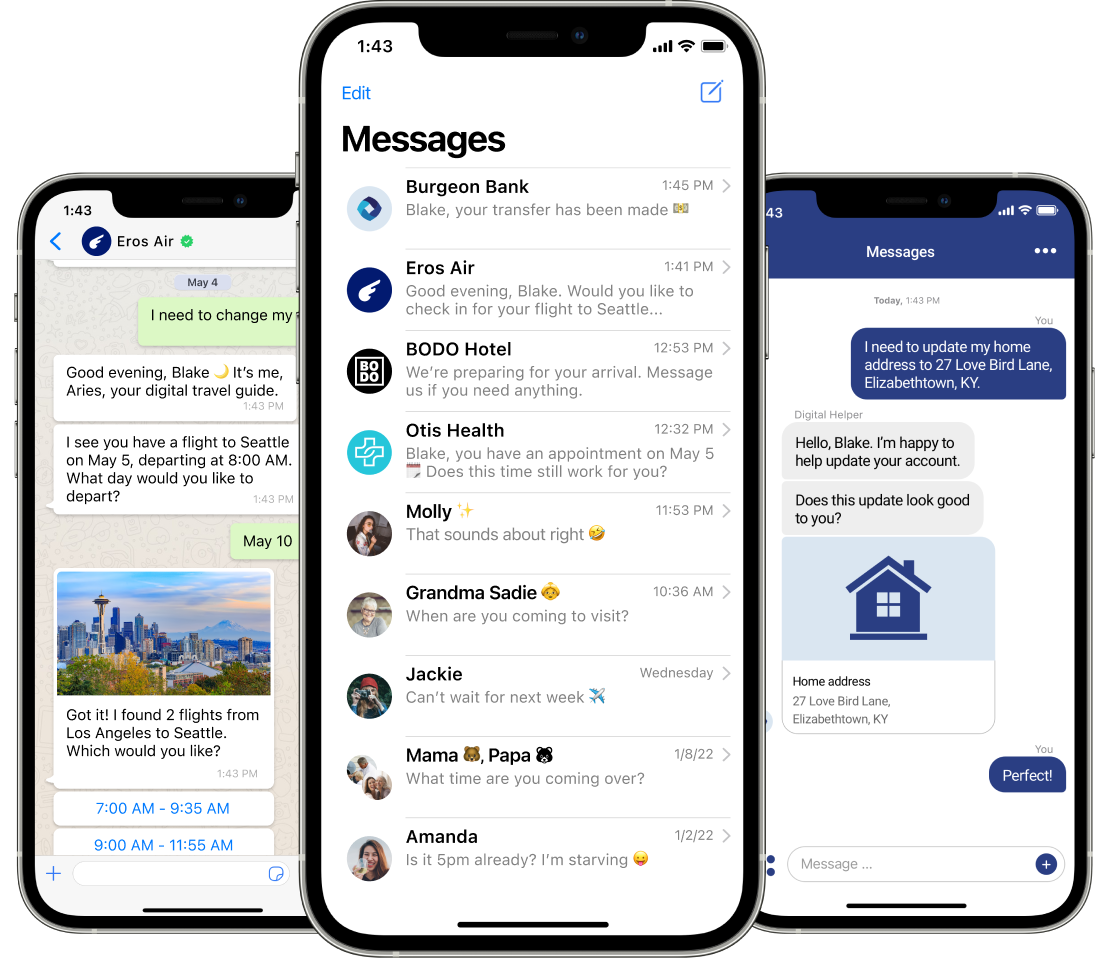
The Conversational Cloud unifies messaging channels (web, in-app, SMS, WhatsApp, Apple Messages for Business, Facebook Messenger, Instagram, Line, WeChat, Viber, KakaoTalk, and more) into a single agent workspace. That focus shows in the reviews: G2 reviewers rate LivePerson's core live chat at 9.4, citing AI features and multi-channel management as top strengths.
Source: LivePerson
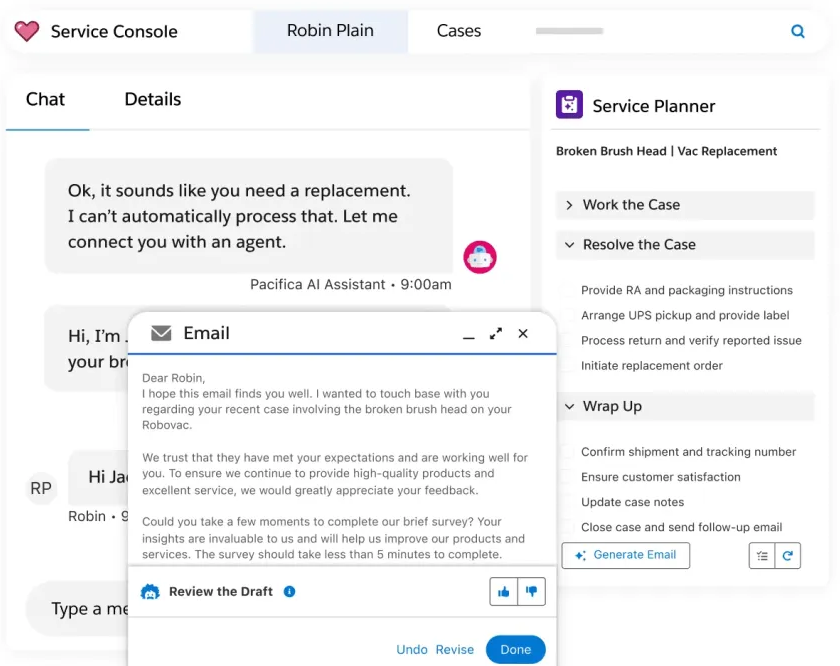
Salesforce does everything. Service Cloud handles customer service, but it sits alongside Sales Cloud, Marketing Cloud, Commerce Cloud, Data Cloud, Tableau, Slack, and MuleSoft on one platform. A service agent in Salesforce sees the customer's purchase history, open marketing campaigns, sales pipeline status, and commerce activity without switching tools.
Source: Salesforce
The trade-off is straightforward. LivePerson gives you the deepest conversational AI tooling for your contact center. Salesforce gives you a complete business operating system with service built in. Your choice depends on whether your primary problem is modernizing how customers reach you, or unifying how your entire organization engages with them.
AI philosophies reflect each platform's DNA
Both platforms have invested heavily in AI, but their approaches reveal different priorities.
LivePerson's thesis is "Predictable AI": AI you can trust because you've tested it before customers see it. The platform lets brands bring their own LLM from any major provider, then applies guardrails through the LLM Gateway, including PII masking and hallucination detection.
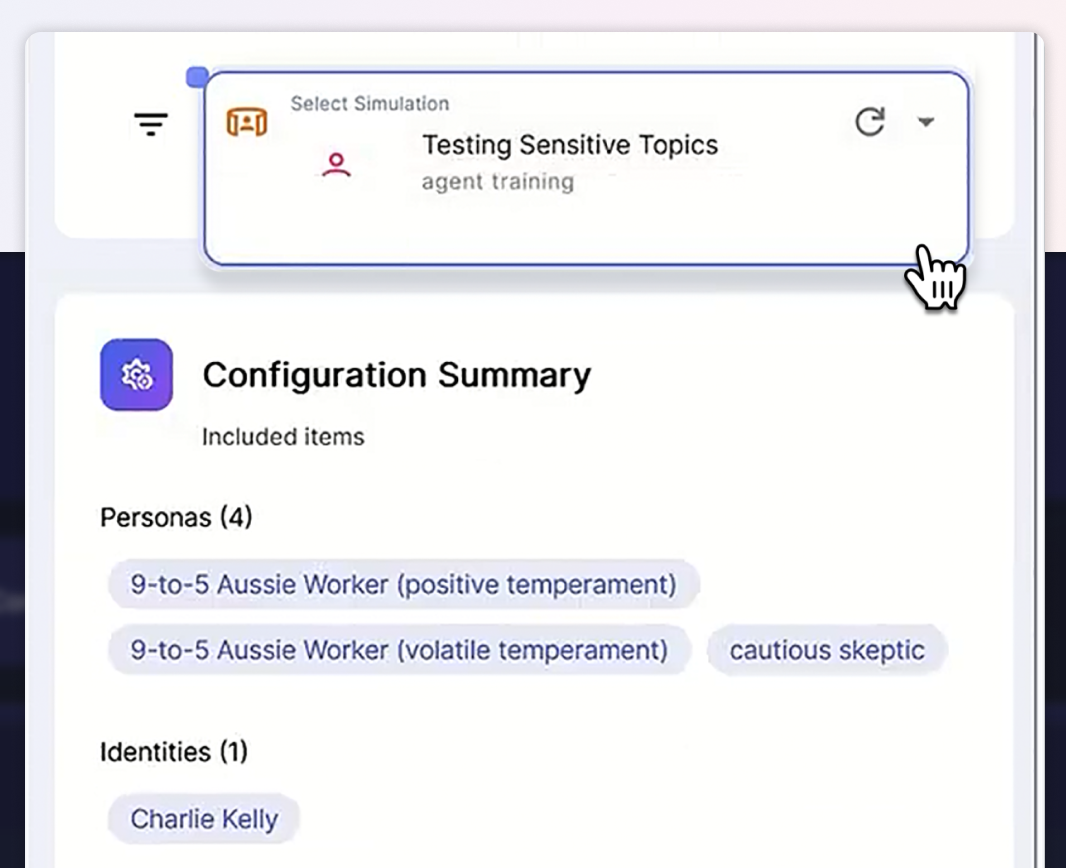
Syntrix generates thousands of synthetic customer interactions using adversarial personas (frustrated payers, skeptical shoppers, hostile users trying to manipulate the AI) to catch failure modes before go-live, claiming 60% faster AI agent testing. Copilot keeps a human in the loop: agents review, edit, and approve every LLM-generated response before it reaches a customer.
Source: LivePerson
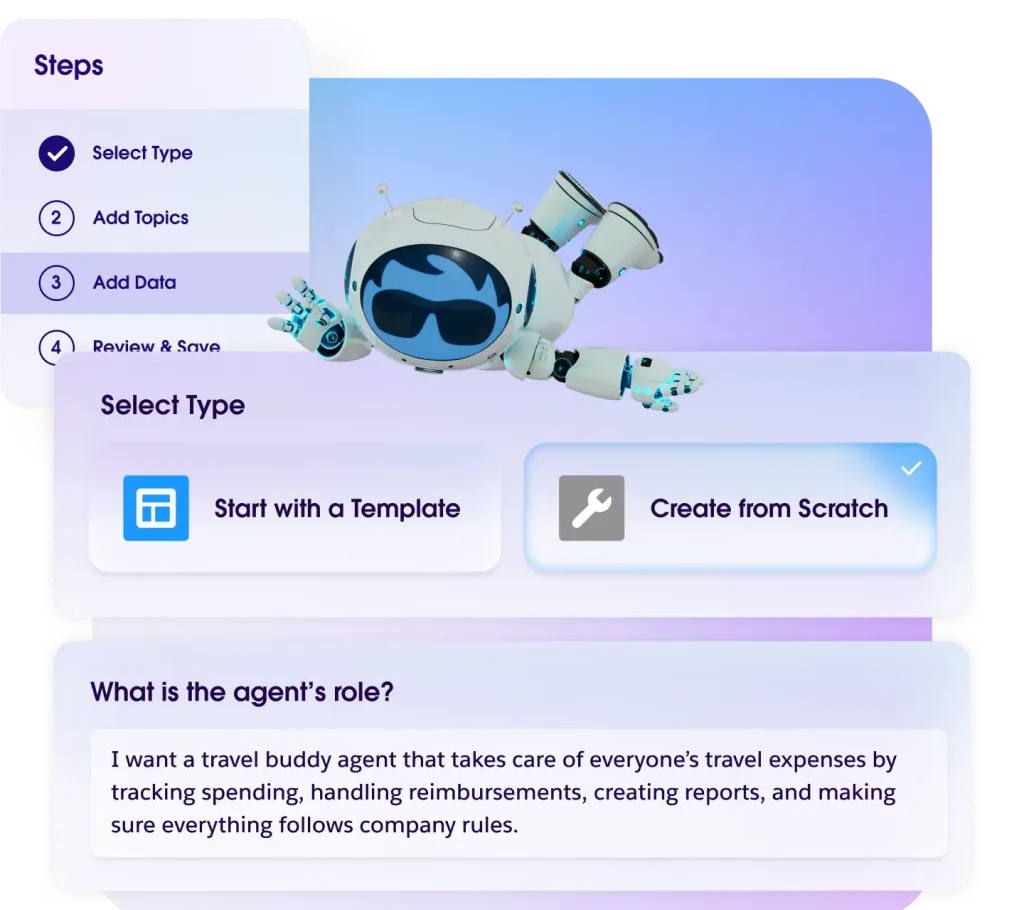
Salesforce's thesis is autonomous action. Agentforce uses the proprietary Atlas Reasoning Engine, which follows a reason-act-observe-adapt loop to handle multi-step tasks without constant human prompting. Pre-built agents cover service, sales coaching, shopping, campaigns, IT, and more.
Source: Salesforce
The Einstein Trust Layer provides safety (zero data retention with LLM partners, PII masking, toxicity detection, audit trails), but the design intent is AI that executes, not AI that waits for approval. Salesforce reports 4M+ conversations handled by Agentforce with 66% autonomous case resolution.
For a regulated bank or healthcare system that must validate every AI response before deployment, LivePerson's simulation-first approach and BYOLLM flexibility may fit better.
For a company that wants AI resolving routine inquiries on its own at scale, Salesforce's Agentforce has a head start, with pre-built agents for dozens of use cases and the ability to build custom agents through Agent Builder at no additional cost.
Channel coverage is a question of architecture
LivePerson was built messaging-first. The platform natively supports 14+ channels, and agents handle conversations across all of them from a single workspace without extra fees.
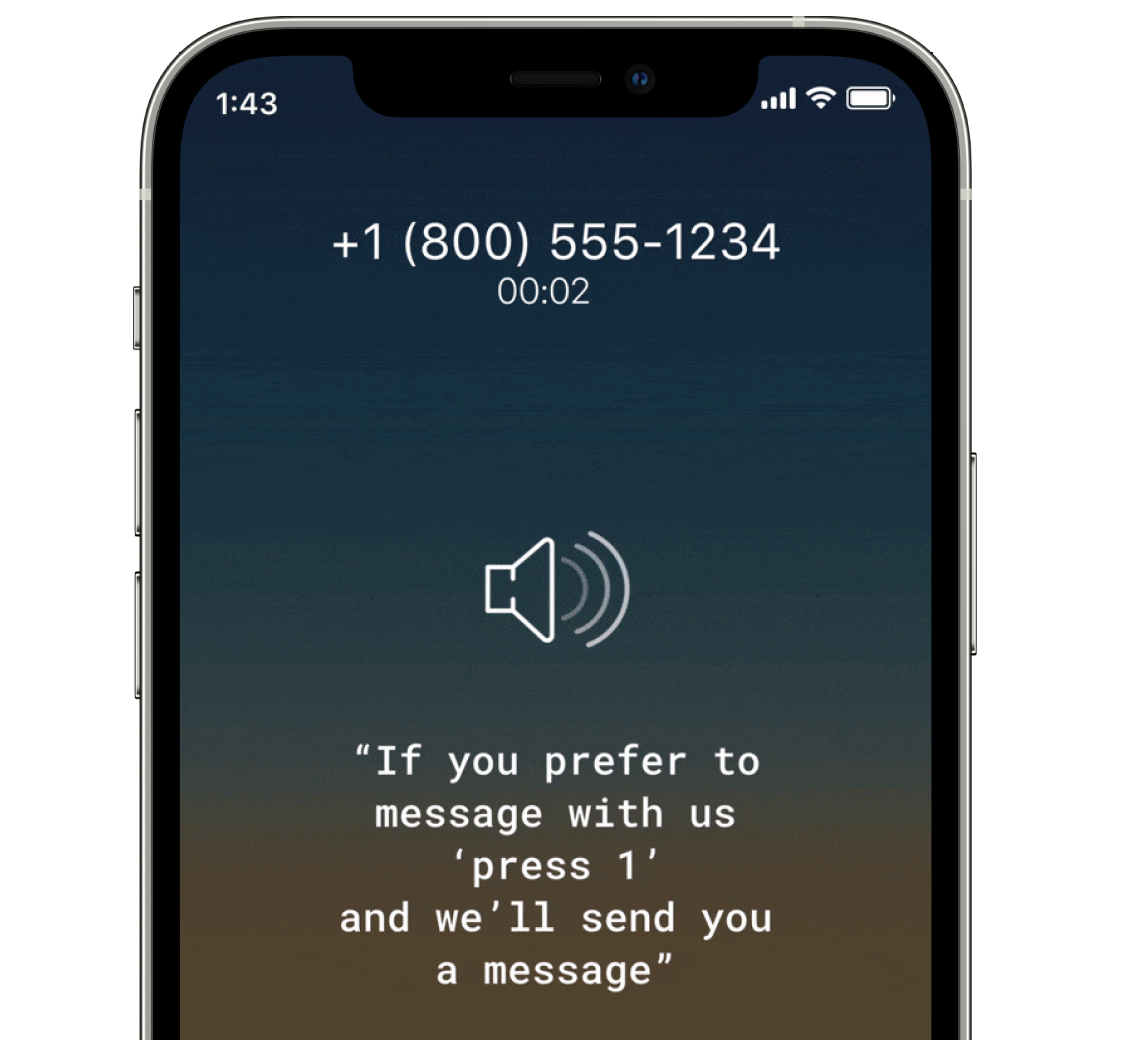
Connect to Messaging (C2M) converts inbound phone calls to messaging sessions; LivePerson claims brands can cut call volume in half within 100 days.
Source: LivePerson
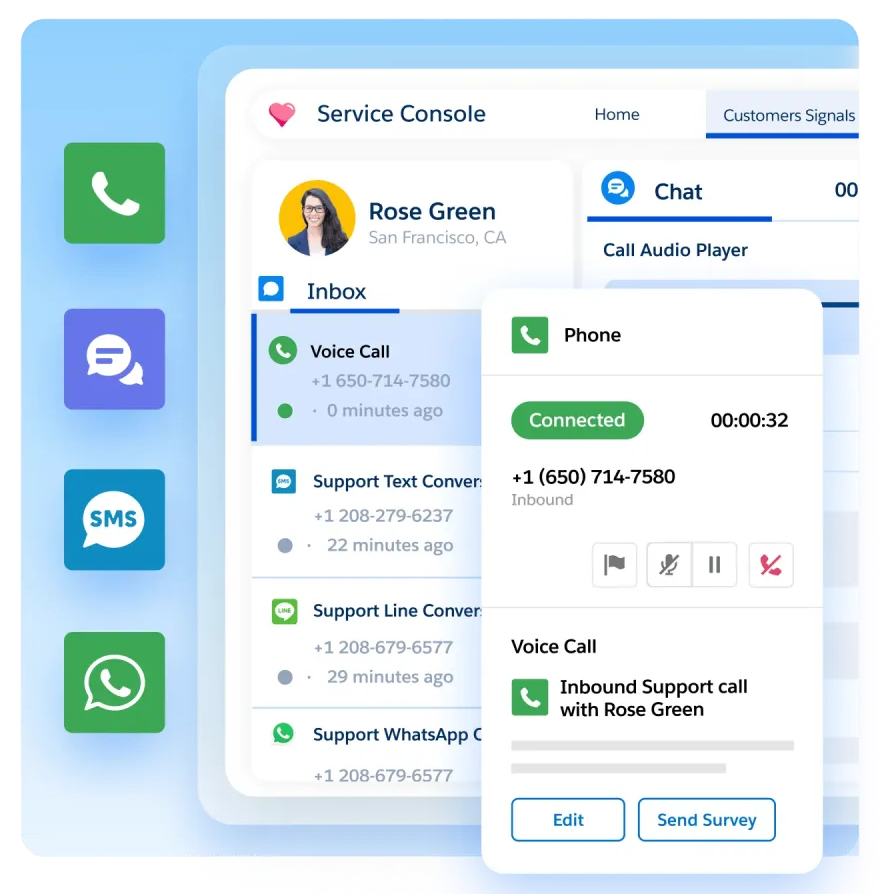
Salesforce approaches channels modularly. The base Service Cloud covers cases, knowledge management, and the agent console. Adding digital messaging (chat, SMS, WhatsApp, Facebook Messenger, Apple Messages, LINE) requires the Digital Engagement add-on at $75/user/month.
Voice capabilities require the Contact Center add-on at $150/user/month, compatible with Amazon Connect, Five9, NICE, and Vonage. You pay only for what you need, but matching LivePerson's native channel breadth requires stacking several paid add-ons.
Source: Salesforce
The practical difference: LivePerson gives you every messaging channel out of the box and optimizes for the conversation experience. Salesforce gives you channels as needed, but wraps each conversation in full CRM context (who is this customer, what did they buy, what's their pipeline status, which campaigns touched them).
For contact centers where channel variety and messaging volume are the primary concern, LivePerson's native breadth wins. For organizations where service interactions need to connect to the rest of the customer relationship, Salesforce's CRM foundation matters more.
The intelligence gap neither platform fills
Both LivePerson and Salesforce help you engage customers who reach out. Neither helps you find the right ones to pursue.
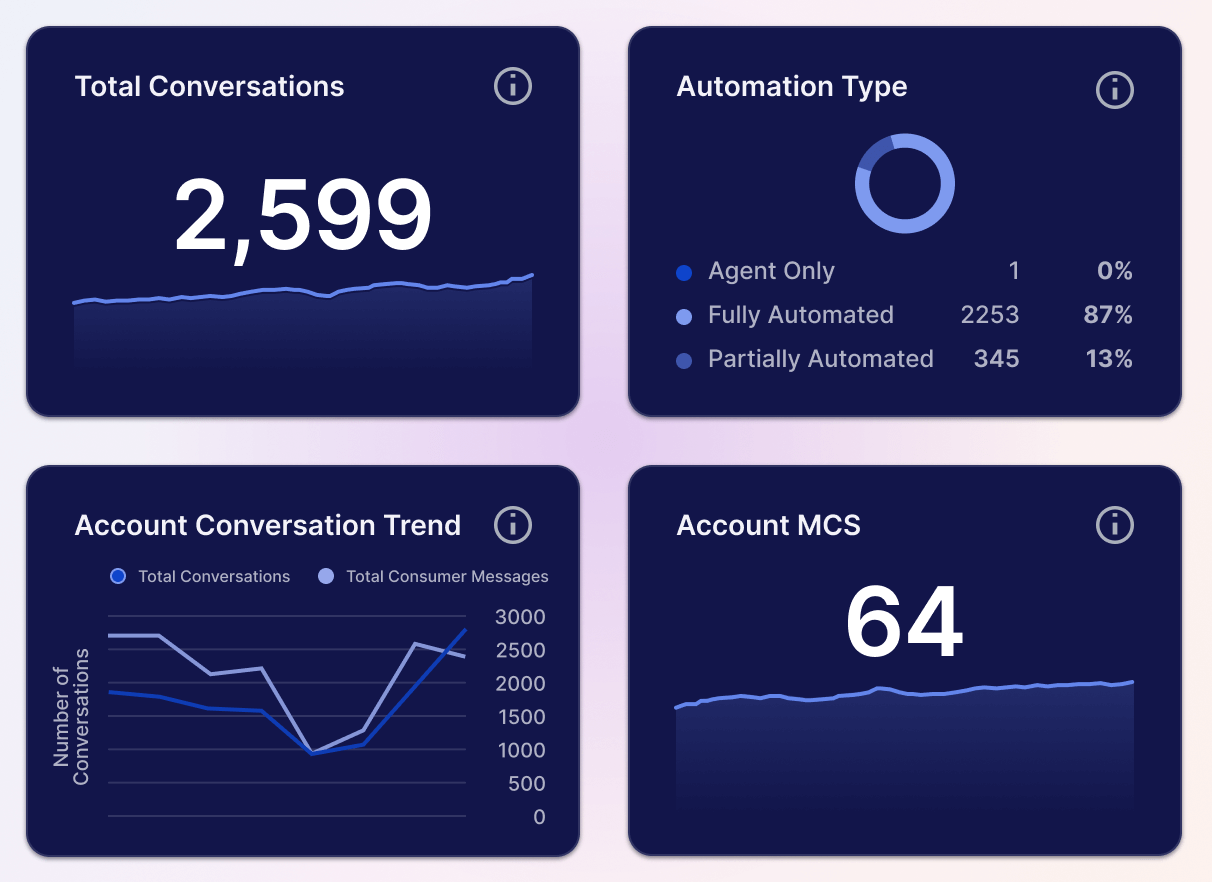
LivePerson's Conversational Intelligence analyzes what happens during conversations: intents, sentiment, handle time, agent performance. It surfaces insights from 100% of conversations versus the roughly 3% captured by traditional QA methods.
Source: LivePerson
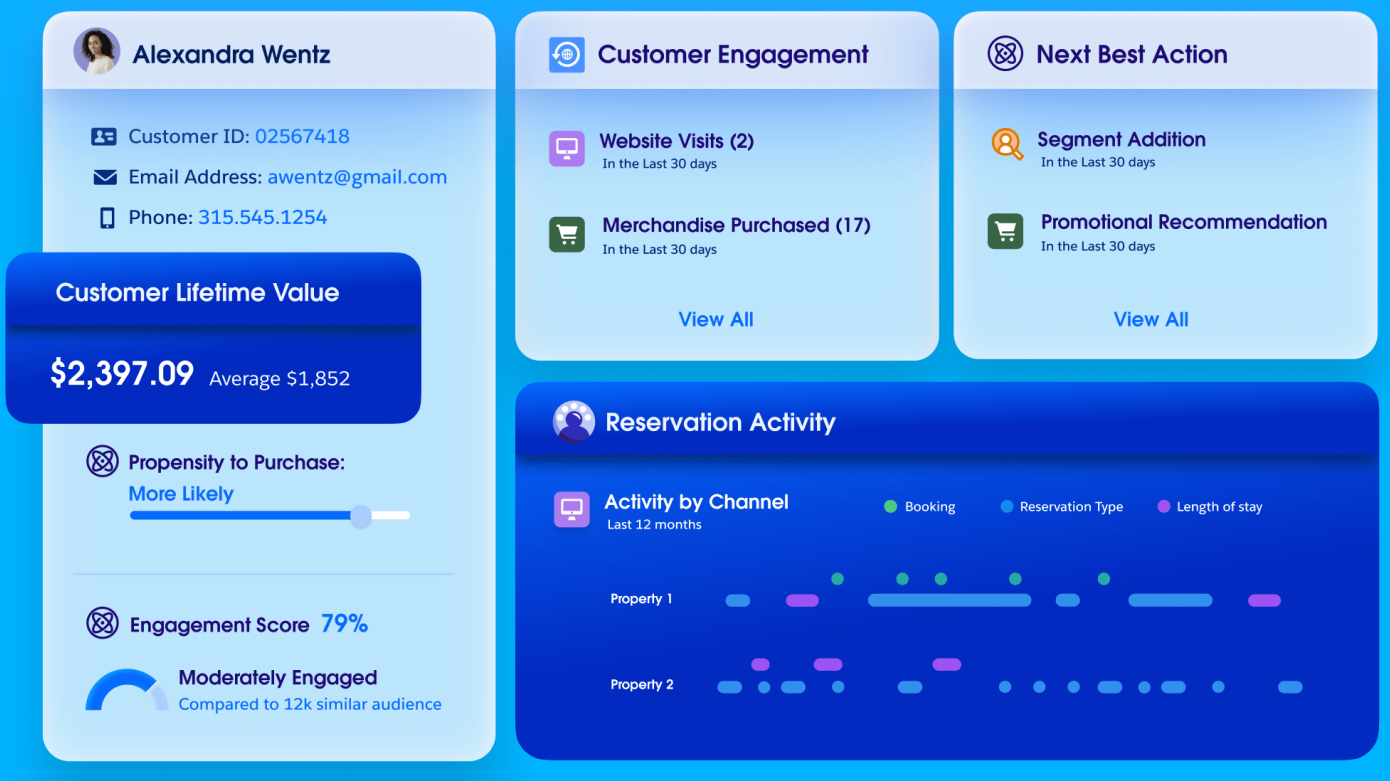
Salesforce's Data Cloud unifies first-party customer data into profiles, with 112 trillion records ingested in FY26. Both are valuable, but they operate on data about customers you already have.
Source: Salesforce
The questions they don't answer: Which companies should you pursue right now? Who are the decision-makers? What are they researching? Which accounts match the patterns behind your closed-won deals?
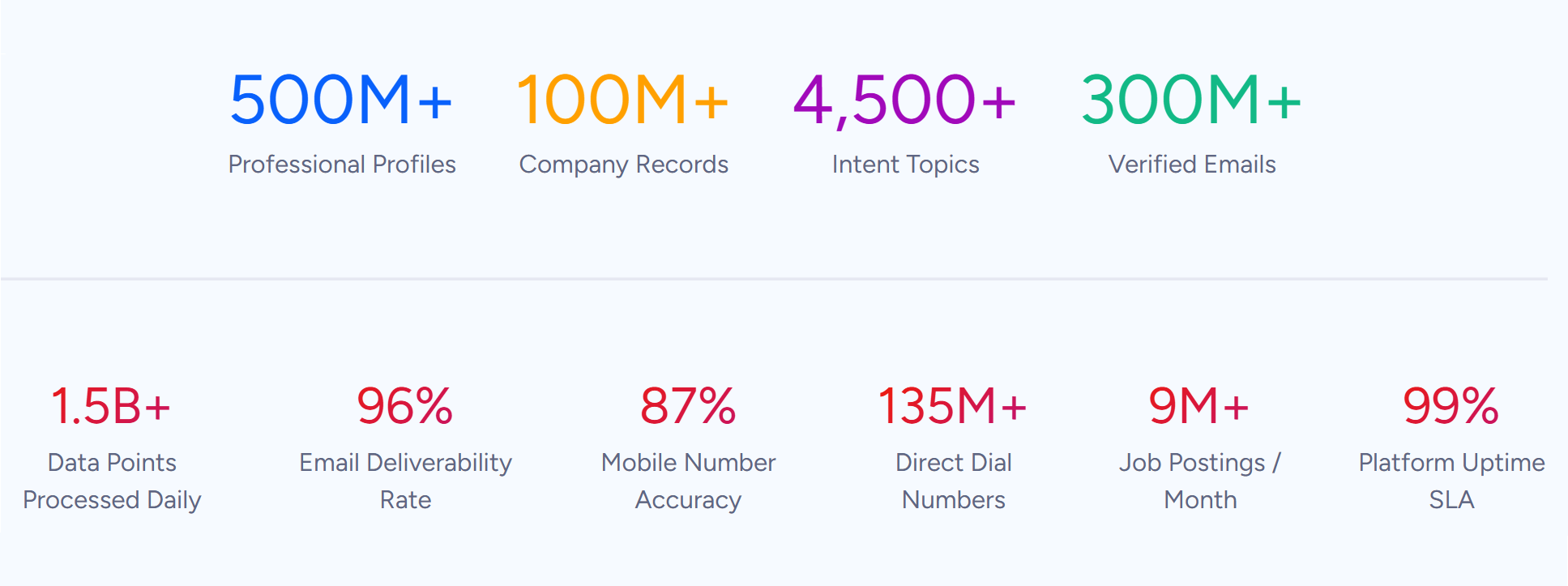
ZoomInfo was built to answer these questions. Its B2B data platform covers 500M contacts, 100M companies, 135M+ verified phone numbers, and 200M+ verified business emails, verified through a multi-source pipeline backed by 300+ human researchers with up to 95% accuracy on first-party data.
Source: ZoomInfo
In a Fortune 500 competitive RFP analyzing 25 million contacts across vendors, the independent consultant concluded that "no other competitor came even close." Buyer Intent data tracks signals from 210 million IP-to-Organization pairings and 6 trillion+ new keyword-to-device pairings sourced monthly, identifying companies researching solutions before they contact you.

Source: ZoomInfo
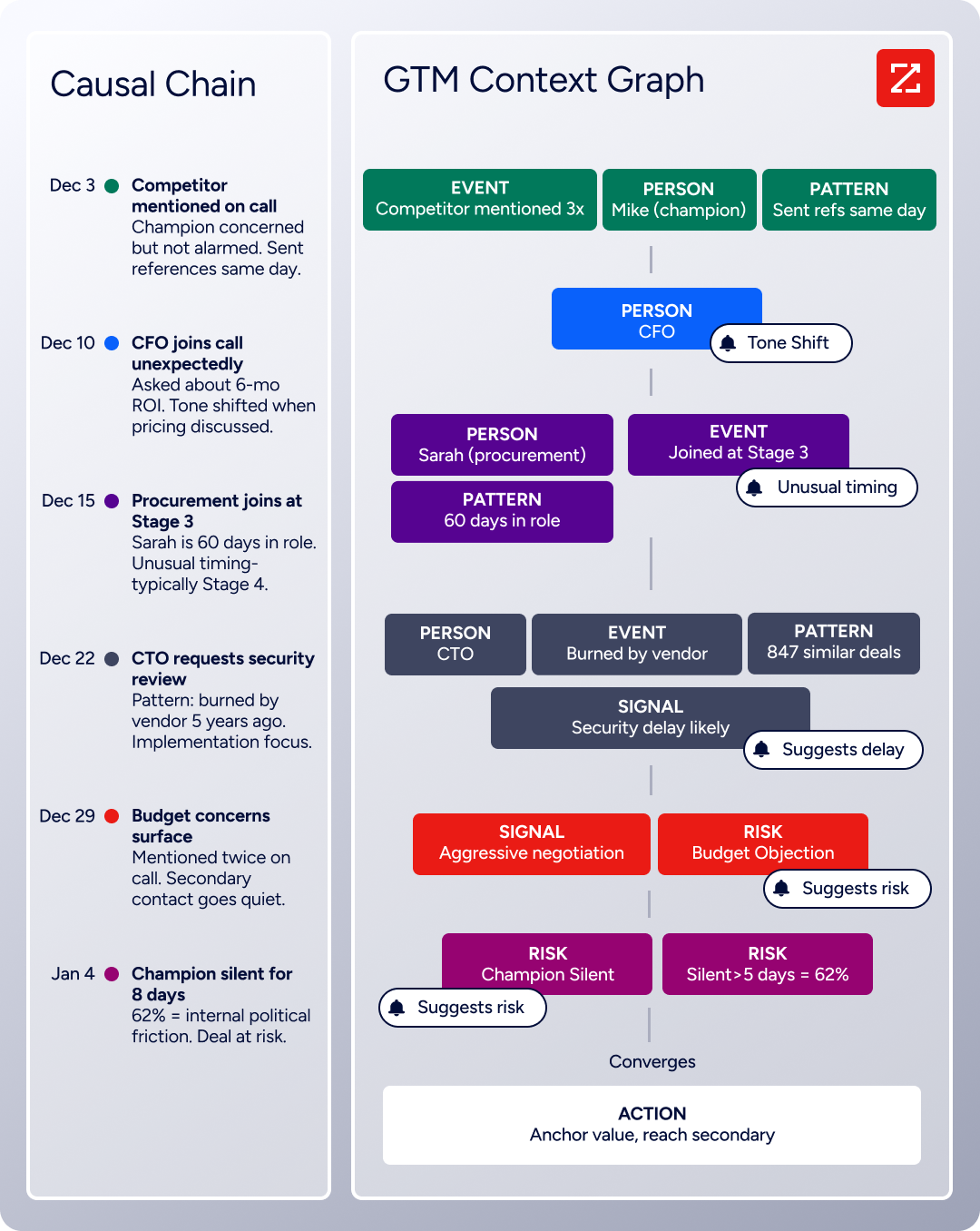
The GTM Context Graph goes further. It fuses ZoomInfo's third-party data with your CRM records, conversation intelligence from calls and meetings, and behavioral signals into a single intelligence layer, processing 1.5B + data points daily to capture why deals move or stall. A CRM records that a deal moved to Stage 3.
Source: ZoomInfo
The GTM Context Graph identifies that the CFO joined the last call and asked about six-month ROI, and that executive sponsorship entering at this stage matches the pattern behind closed-won deals in your segment. ZoomInfo built this capability over two decades of B2B data infrastructure investment, then extended it to first-party data through Chorus for conversation intelligence and other acquisitions.
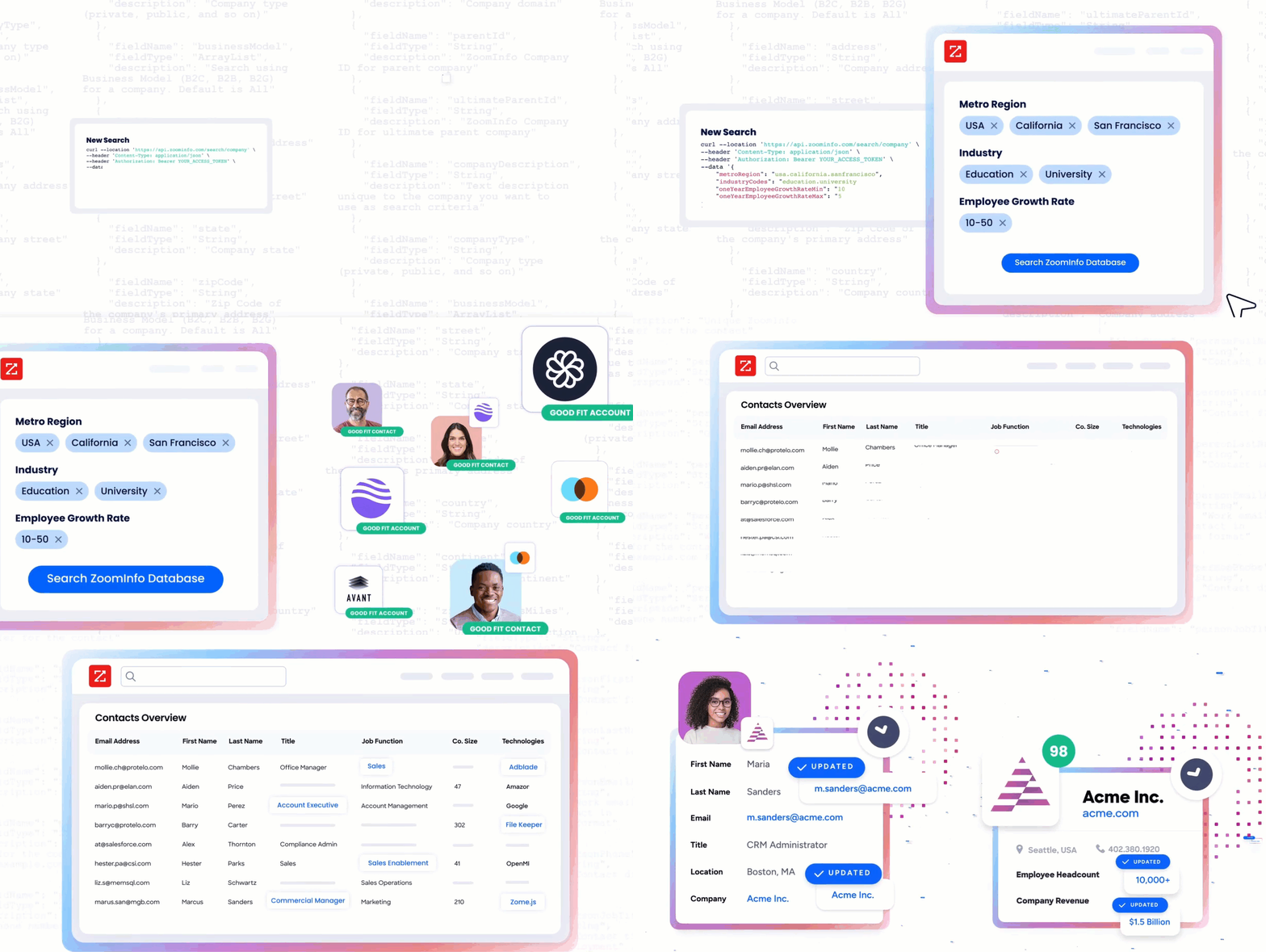
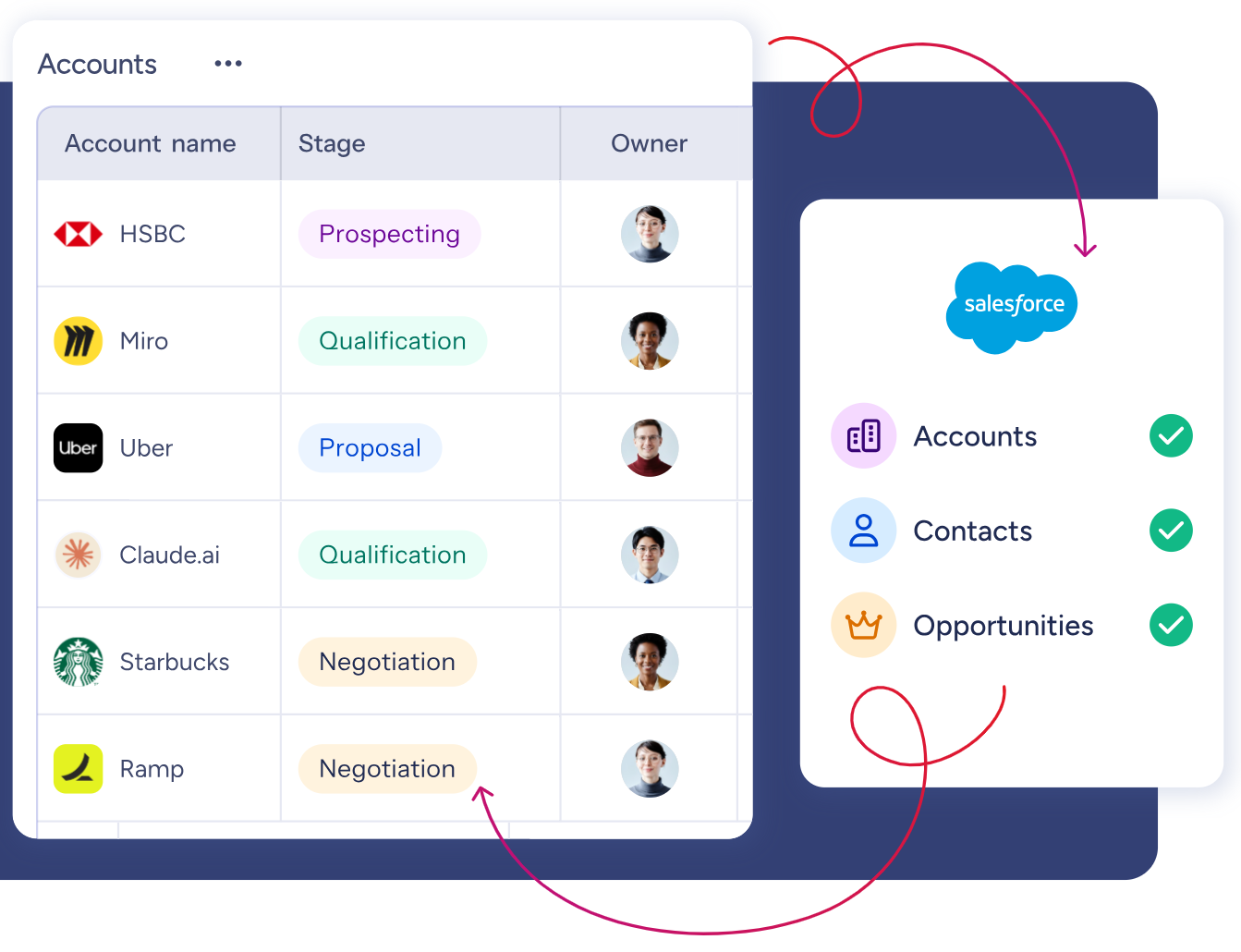
For teams using Salesforce, ZoomInfo integrates directly into the CRM, enriching records with verified contacts, company attributes, technographics, and intent signals. For teams using LivePerson's B2B Sales & Marketing solution, ZoomInfo's data determines which prospects enter the conversation funnel. And through APIs and MCP, the same intelligence flows into any tool in the stack.
Source: ZoomInfo
Seismic's sales team attributed 39% of active pipeline to opportunities identified or influenced by ZoomInfo signals and boosted productivity by 54%, saving 11.5 hours per week per seller. "That combination of our internal CRM data, external signals, and AI that's given all that context has helped us craft very specific account- and persona-based messages." (Seismic)
Pricing transparency varies, but complexity is universal
None of these platforms make pricing simple.
LivePerson publishes no dollar amounts. Its three tiers (Bronze, Silver, Gold) require a quote. Bronze covers basic messaging and the agent workspace. Silver adds KnowledgeAI, Conversation Orchestrator, dynamic routing, and proactive messaging. Gold unlocks generative AI features: Copilot, AI Agents, hallucination detection, and BYOLLM.
Additional costs stack on top: implementation fees, a 15% handling fee on WhatsApp outbound messages (on top of Facebook's rate card), SMS carrier rates, additional fees for X (Twitter), and a data export fee for formatted XML transcripts. LivePerson also reserves the right to increase fees by up to 5% per renewal term. G2 reviewers call it expensive, especially when you factor in setup and ongoing optimization.
Salesforce publishes tier prices but builds complexity through add-ons. Service Cloud starts at $25/user/month (Starter) and runs to $350/user/month (Unlimited). But useful AI requires either the Enterprise tier ($175/user/month) or the Agentforce add-on at $125/user/month. Digital Engagement is $75/user/month. Contact Center Voice is $150/user/month.
Agentforce consumption adds $2 per conversation or $0.10 per action via Flex Credits. Premier Support adds 30% of net license fees. A mid-sized service deployment with AI, messaging, and voice can reach $400 to $600 per agent per month before implementation, which is typically partner-led. Salesforce also applied a 6% price increase to Enterprise and Unlimited tiers in August 2025.
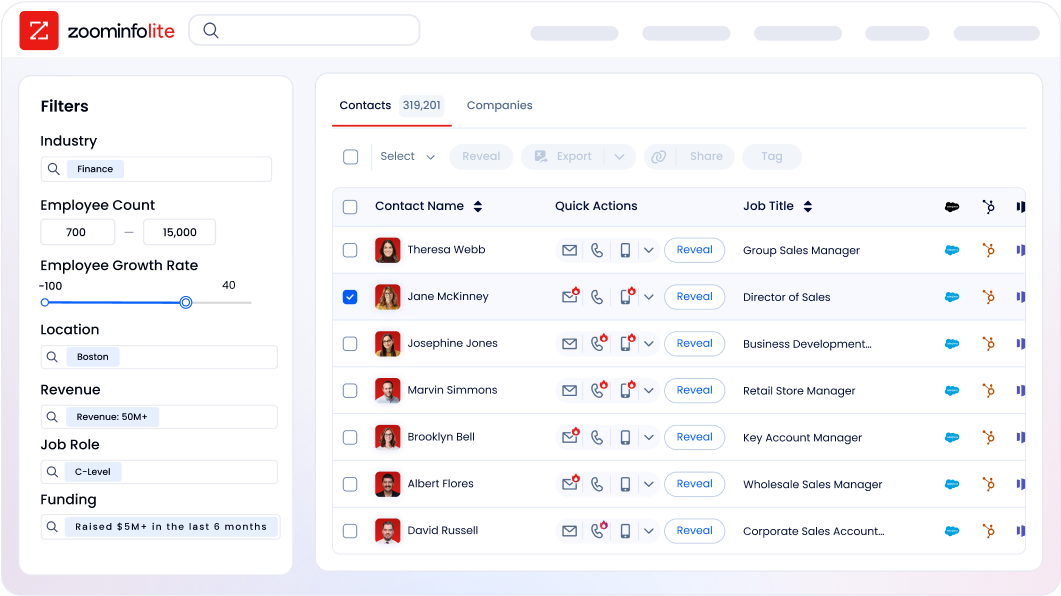
ZoomInfo uses consumption-based pricing with no published prices. Credits determine data export volume (1 credit = 1 export), and feature access depends on tier (Professional, Advanced, Enterprise for Sales; Marketing Demand, ABM Lite, ABM Enterprise for Marketing).
A permanent free tier, ZoomInfo Lite, provides access to the B2B database with 10 monthly export credits at no cost. A 7-day free trial with broader feature access is also available. API access is included in all relevant plans.
Source: ZoomInfo
Ecosystem and implementation shape the real experience
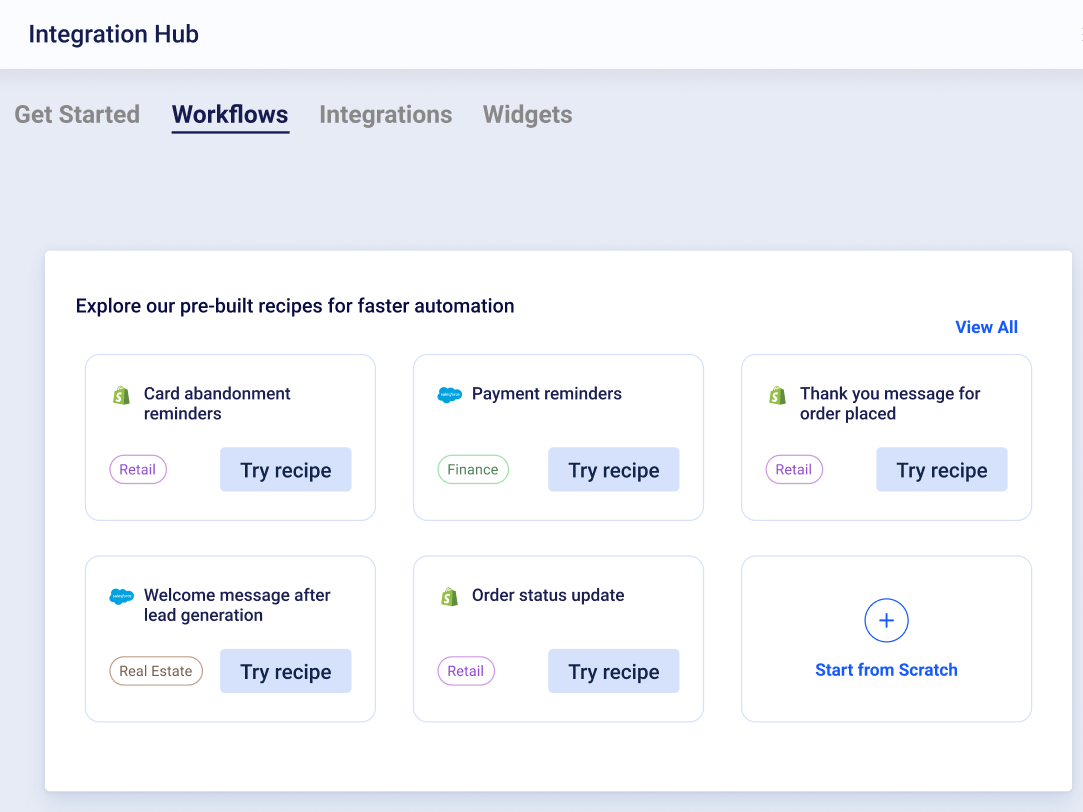
LivePerson's ecosystem focuses on flexibility within the contact center stack. Its Integration Hub (iHub), powered by Workato, provides thousands of connectors with pre-built recipes for commerce, marketing, and care workflows. LivePerson Sync connects bidirectionally to Salesforce, Microsoft Dynamics, ServiceNow, Oracle, and Zendesk.
Source: LivePerson
Third-party bot connectors support IBM Watson, Google Dialogflow, Amazon Lex, and Microsoft Copilot Studio. But implementation demands investment: G2 reviewers consistently cite a steep learning curve, and organizations that want a shortcut can engage LP 360, a managed service where LivePerson builds, staffs, and operates the contact center on their behalf.
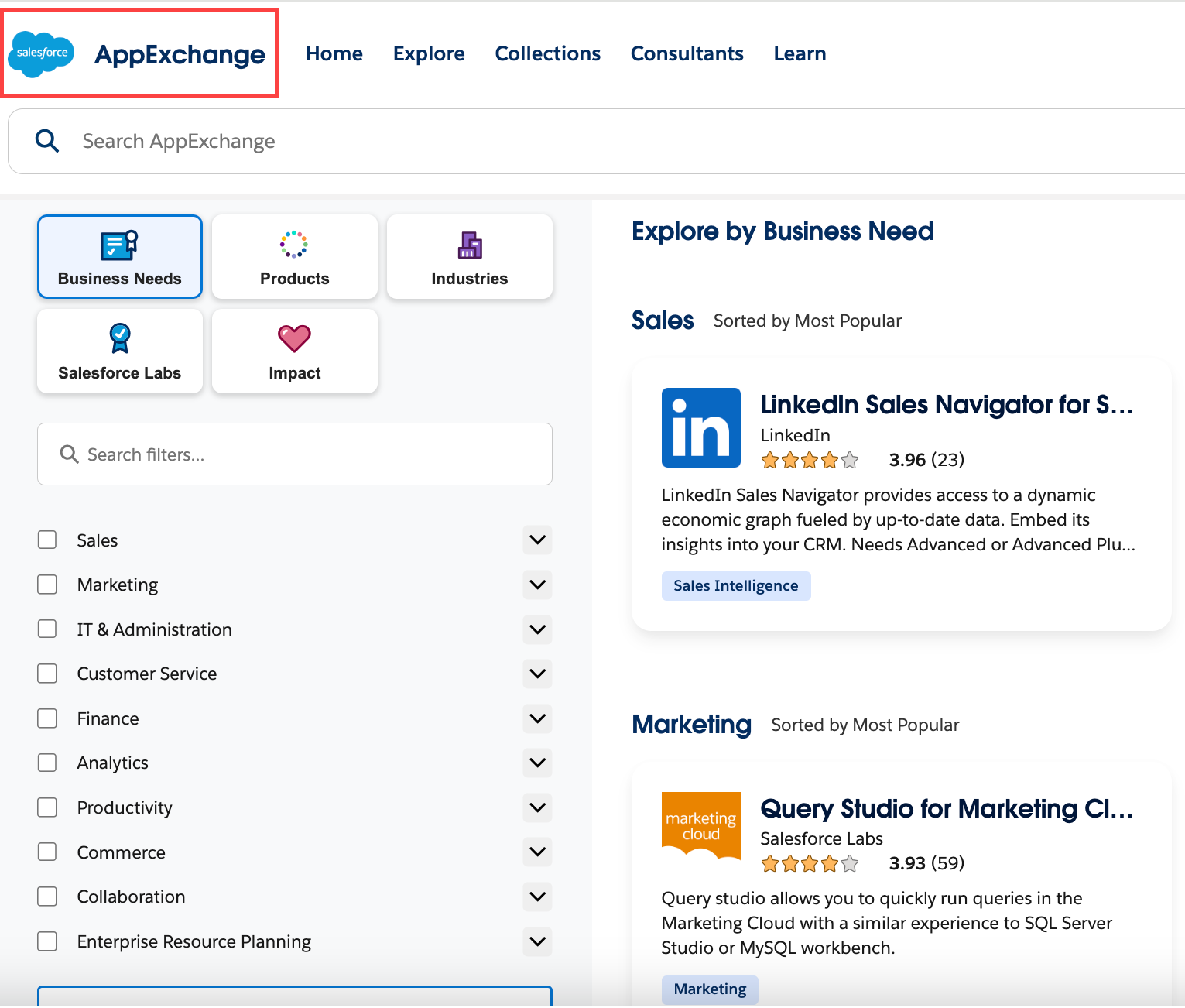
Salesforce's ecosystem is in a different category. AppExchange hosts 9,000+ partner apps with 14+ million installs, and 91% of customers use at least one AppExchange app. MuleSoft handles enterprise API management and integration, with customers reporting 78% faster time to market.
Source: Salesforce
Trailhead provides 1,500+ badges and 6+ million learners for training. The Trailblazer Community spans 20 million members. That scale is unmatched, but it cuts both ways: over 70% of implementations are partner-led, making quality and cost dependent on which partner you choose.
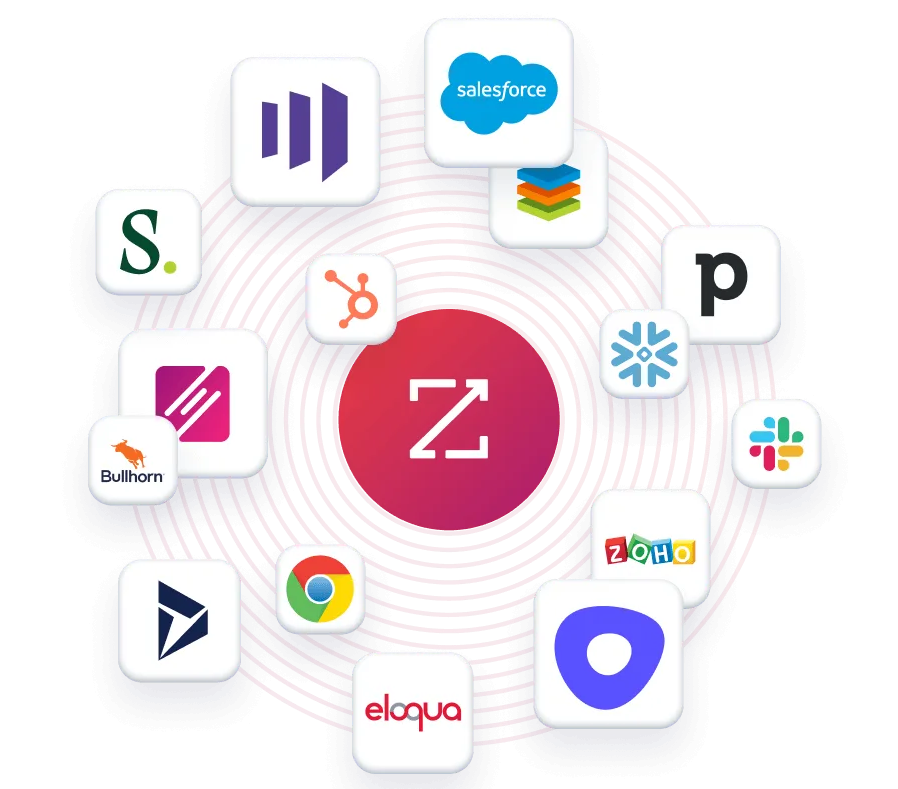
ZoomInfo takes a different approach to implementation. Its products deploy faster: GTM Workspace "deploys in weeks, not months". The App Marketplace lists 172+ integration partners spanning CRM, marketing automation, sales engagement, and data warehouses.
Source: ZoomInfo
Native integrations with Salesforce, HubSpot, Microsoft Dynamics, and cloud data platforms (Snowflake, AWS, Databricks) mean ZoomInfo fits whatever tech stack you already run. The ZoomInfo MCP server connects to AI assistants like Claude and ChatGPT, letting teams query B2B intelligence through natural language without custom coding.
Source: ZoomInfo
"The plug-and-play aspect of the API means I can integrate it very easily into any process and get information at a moment's notice," said Jerry Wilson of BDO Canada, who saw an 87% reduction in time spent on internal data dashboard updates. (BDO Canada)
LivePerson vs. Salesforce vs. ZoomInfo: Which should you choose?
These platforms solve different problems. The right answer depends on which problem is most urgent.
Choose LivePerson if:
Your primary challenge is modernizing a high-volume contact center with AI-powered messaging
You need native support for 14+ messaging channels without per-channel add-on fees
Bring-your-own-LLM flexibility is a compliance or strategic requirement
AI validation tooling (Syntrix) matters for your regulated industry
You are comfortable with the platform continuity implications of the pending SoundHound acquisition
Choose Salesforce if:
You need customer service unified with sales, marketing, and commerce on a single platform
Agentforce's autonomous AI agents align with your automation goals
AppExchange and MuleSoft integration depth matters for your tech stack
Financial stability and long-term vendor viability are top procurement criteria
You can invest in the implementation and add-on costs that unlock the full platform
Add ZoomInfo if:
Your go-to-market teams need verified B2B data to identify and prioritize accounts
Intent signals and buying committee intelligence would improve your pipeline quality
You want AI-powered prospecting and account insights beyond what your CRM provides
You need a data intelligence layer that works across your entire tech stack, not locked inside one platform
You're ready to move from reactive engagement to proactive, intelligence-driven go-to-market
Start with ZoomInfo Lite for free, or request a demo to see the full platform.
LivePerson and Salesforce both help you manage conversations with customers who find you. ZoomInfo helps you find the right customers and understand why they're worth pursuing. For most B2B enterprises, the question is not which engagement platform to choose in isolation, but whether the intelligence feeding that platform is strong enough to make the investment pay off.
Smartsheet uses ZoomInfo as its "one source of truth for account data, and even more so for contact data," calling it impossible to achieve their business objectives without ZoomInfo's ability to help them "understand the market, have the right contact data, and make meaningful connections." (Smartsheet)
LivePerson vs. Salesforce vs. ZoomInfo FAQ
What is the fundamental difference between LivePerson and Salesforce?
LivePerson is a specialist conversational AI platform for enterprise contact centers. It focuses on digital messaging, AI automation, and agent-assisted conversations across 14+ channels. Salesforce is a full CRM platform where customer service (Service Cloud) is one capability alongside Sales, Marketing, Commerce, and Data Cloud.
LivePerson goes deeper on conversational AI; Salesforce goes wider across the entire customer lifecycle.
Can LivePerson and Salesforce work together?
Yes. LivePerson integrates with Salesforce through LivePerson Sync, a bidirectional connector that surfaces CRM data in the agent workspace without requiring agents to switch systems.
Many enterprises use Salesforce as their CRM and LivePerson for the conversational layer, particularly when they need LivePerson's messaging capabilities or BYOLLM flexibility beyond what Salesforce Service Cloud offers natively.
How does ZoomInfo complement LivePerson or Salesforce?
ZoomInfo provides the B2B data intelligence that neither platform was built to deliver. It identifies which accounts to target using 500M contacts and 100M company profiles, surfaces buyer intent signals from 210 million IP-to-Organization pairings, verifies contact information including 135M+ phone numbers, and maps buying committees.
For Salesforce users, ZoomInfo integrates natively to enrich CRM records. For LivePerson users, ZoomInfo's account intelligence helps prioritize which prospects enter conversational channels. Through APIs and MCP, ZoomInfo's intelligence flows into any tool in the stack.
For a closer look at how the two platforms stack up head to head, see our Salesforce vs. ZoomInfo comparison.
Which platform has stronger AI for customer service?
For conversational AI with flexibility, LivePerson offers bring-your-own-LLM support, Syntrix simulation for pre-deployment testing, and NLU trained on over one billion customer service conversations.
For autonomous AI agents that act across the full customer lifecycle, Salesforce's Agentforce handles more use cases, with pre-built agents for service, sales, IT, commerce, and marketing. LivePerson emphasizes human-in-the-loop validation; Salesforce emphasizes autonomous execution.
What is happening with LivePerson's acquisition by SoundHound?
In April 2026, SoundHound AI announced it would acquire LivePerson for approximately $43 million in equity value (roughly $250 million enterprise value including debt adjustments), pending regulatory approval expected to close in H2 2026.
SoundHound plans to combine its voice AI with LivePerson's digital messaging platform to create a unified voice-plus-digital offering. The Conversational Cloud and Syntrix products are expected to continue operating, but enterprise buyers should evaluate whether the combined company's roadmap aligns with their multi-year requirements.
How does pricing compare across the three platforms?
LivePerson publishes no prices; all three tiers (Bronze, Silver, Gold) require a custom quote, with additional fees for certain channels, implementation, and outbound messaging. Salesforce publishes tier prices for Service Cloud from $25 to $350 per user per month, but AI, messaging, and voice add-ons can push per-agent costs to $400 to $600 per month before implementation.
ZoomInfo uses consumption-based pricing with no published rates; a permanent free tier (ZoomInfo Lite) provides 10 monthly export credits, and a 7-day free trial is available for broader access.
Which platform has the strongest ecosystem?
Salesforce leads by a wide margin, with 9,000+ AppExchange apps, 14+ million installs, MuleSoft for enterprise integration, Trailhead for training, and a 20-million-member Trailblazer Community. LivePerson integrates with major CRMs and bot platforms through its Workato-powered Integration Hub and supports third-party AI engines from IBM, Google, Amazon, and Microsoft.
ZoomInfo connects to 172+ partner tools across CRM, marketing automation, sales engagement, and cloud data platforms, with native Salesforce integration and MCP support for AI agents.
Is ZoomInfo only useful for sales teams?
No. While ZoomInfo's prospecting capabilities are most visible to sales teams, the platform serves marketers (account-based marketing, display advertising, audience building via GTM Studio), RevOps (data enrichment, lead routing, workflow automation), and developers (API and MCP access for custom AI agents and internal tools).
GTM Studio gives marketers and RevOps a dedicated environment to design and launch go-to-market plays in natural language. GTM Workspace serves sellers. APIs and MCP make the same intelligence available to any application.
