

LiveRamp is the neutral plumbing connecting brands, publishers, and platforms in an advertising ecosystem that fragments further every year. Its promise is simple: let organizations collaborate on data without exposing raw records to each other.
That means resolving customer identities across devices and channels, activating audiences across 500+ media partners, and measuring campaign impact in privacy-safe clean rooms.
To create this LiveRamp review, we analyzed the platform in depth. We believe it's the right choice if:
You need to activate first-party audience data across a fragmented media landscape without third-party cookies
You operate in a regulated industry and require privacy-safe data collaboration (clean rooms, governed access)
You manage advertising across streaming, CTV, social, and programmatic channels
You want a neutral, cloud-agnostic identity resolution layer that works across walled gardens
You're a publisher looking to monetize authenticated first-party audiences at scale
However, while LiveRamp connects audience data to advertising platforms well, it doesn't provide the verified B2B contact intelligence that sales and outbound marketing teams need.
LiveRamp can tell you that an account fits your target segment and serve an ad to it, but it won't give you the direct dial of the VP making the buying decision, the intent signals showing the company is researching your category, or the AI-drafted outreach to engage that person at the right moment.
This is where ZoomInfo enters the picture: a GTM platform built on B2B data covering 500M contacts and 100M companies (including 135M+ verified phone numbers and 200M+ verified business emails), a GTM Context Graph that captures why deals move or stall, and access through APIs, MCP, GTM Workspace for sellers, and GTM Studio for marketers, RevOps, and GTM engineers.
We've included a detailed look at ZoomInfo later in this review as the complement for B2B teams that need prospecting intelligence alongside advertising activation. If you're ready to explore that, you can start with ZoomInfo's free trial here.
What is LiveRamp?
LiveRamp Holdings, Inc. is a publicly traded data collaboration platform (NYSE: RAMP) headquartered in San Francisco, California.
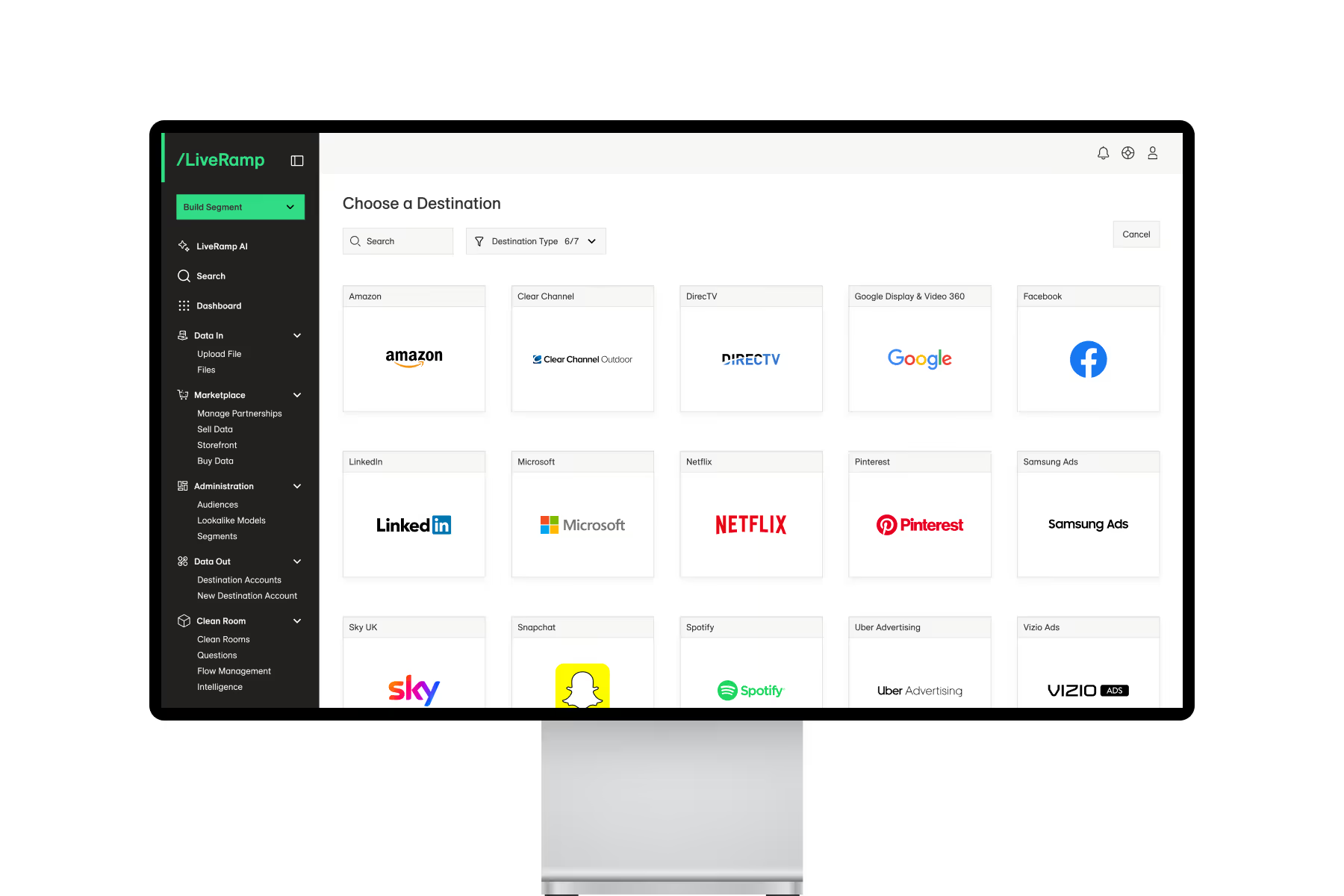
Founded in 2012 as a data onboarding startup, it was acquired by Acxiom in 2014 before becoming an independent public company on October 1, 2018, when Acxiom sold its marketing services division to Interpublic Group for $2.3 billion and kept the software and identity platform.
Today, LiveRamp calls itself a data collaboration platform for the AI era. It lets brands, publishers, retailers, agencies, and data platforms connect and work with data without exposing raw records.
At its core sits RampID, a pseudonymous, people-based identifier that connects customer identities across devices, channels, and partners without relying on third-party cookies or device fingerprinting.
The company's network spans 21,000+ publisher domains, 10 of 11 largest streaming platforms (including Disney, Hulu, Netflix, TikTok, and Spotify), 14 of the 15 largest retail and commerce media networks, 70+ agencies including all six largest global agencies, and 200+ adtech platforms.
With revenue of $813 million in fiscal year 2026 (up 9% year-over-year), ~1,760 employees across 9 countries, and 846 direct subscription customers (133 spending over $1 million annually), LiveRamp serves large enterprises with significant advertising and data collaboration needs.
On May 17, 2026, Publicis Groupe announced a definitive agreement to acquire LiveRamp in an all-cash deal at $38.50 per share, representing a total enterprise value of $2.167 billion (a 29.8% premium). After the acquisition closes, LiveRamp will continue to operate under CEO Scott Howe as a neutral, interoperable platform.
LiveRamp Pros & Cons
Pros | Cons |
|---|---|
Broad network (21,000+ publishers, 500+ partners) | Enterprise-only pricing; inaccessible for small and mid-market businesses |
RampID delivers up to 50% better match rates than competing identifiers | Steep learning curve with complex setup and proprietary terminology |
IDC MarketScape Leader for data clean room technology (2025) | No public pricing; all contracts require custom enterprise quotes |
Neutral position as a trusted intermediary | Customer support fragmentation with long wait times reported |
Cloud-agnostic (AWS, Azure, GCP, Snowflake, Databricks) | Platform performance issues (freezes, slow loading) reported by users |
Privacy-first architecture (SOC 2, ISO 27001, GDPR, CCPA, HIPAA) | Limited native analytics; users often need external BI tools |
No free trial or self-serve entry point | Acquisition by Publicis introduces neutrality uncertainty |
LiveRamp Review: How It Works & Key Features
Identity Resolution & RampID: LiveRamp connects fragmented customer identities across the advertising ecosystem using a persistent, privacy-safe identifier.
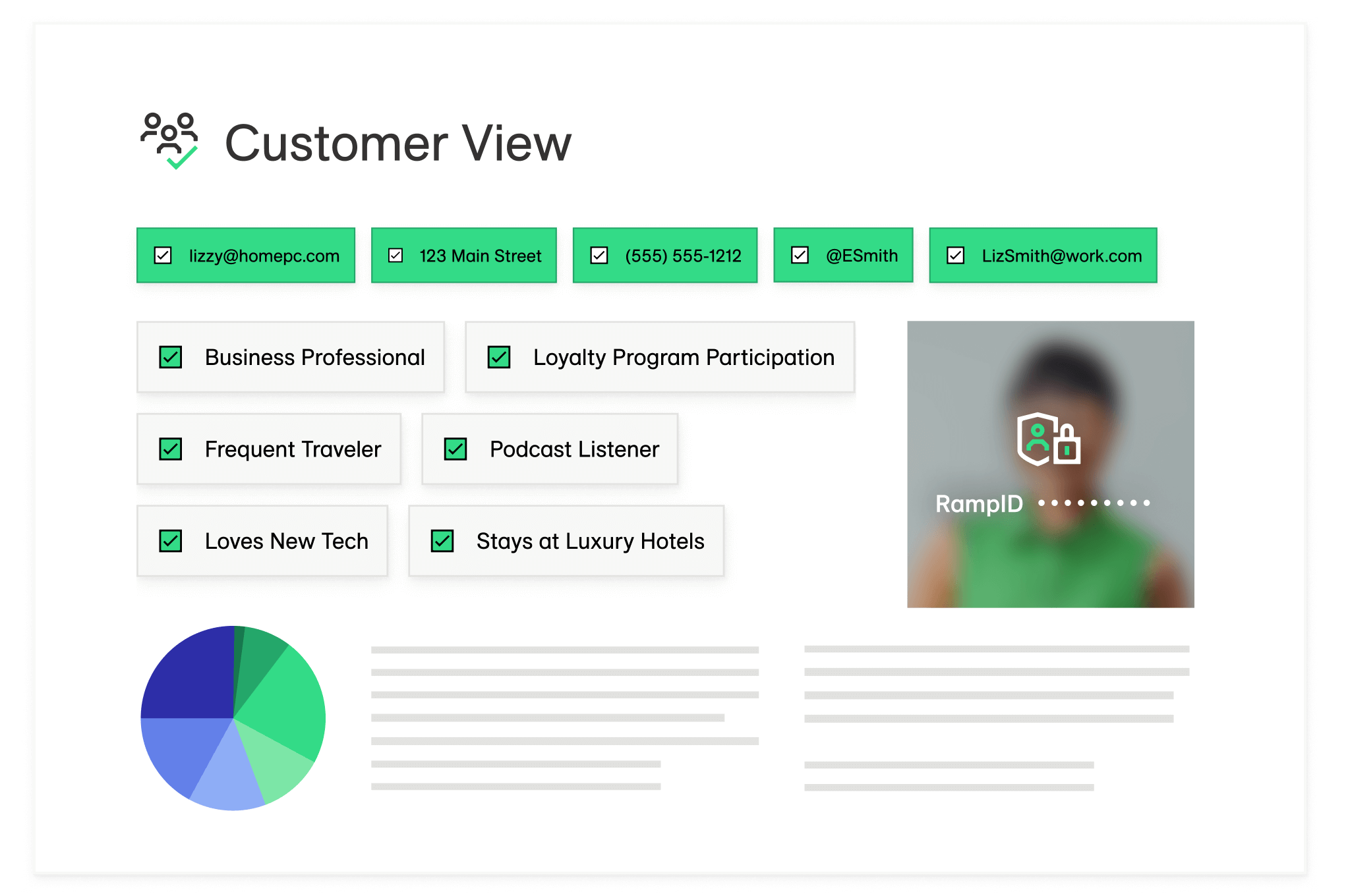
The core of LiveRamp's platform is Live/Identity, its identity infrastructure suite. The problem it solves is straightforward: consumer data sits in dozens of disconnected touchpoints, platforms, and identifiers, making it impossible to build an accurate picture of who a customer actually is.
Source: LiveRamp
The system works through three layers. First, LiveRamp's patented offline recognition technology, AbiliTec, resolves separate emails, names, addresses, and phone numbers to single individuals using a multi-billion-record set of historical reference data.
Second, online device linking matches disparate devices (browsers, mobile, CTV) to people-based identifiers through deterministic linking.
Third, these layers merge into RampID, a pseudonymized identifier that acts as a universal translator across platforms.
RampID delivers up to 50% better match rates than competing identifiers, a meaningful difference when match rate directly determines campaign reach and measurement accuracy.
It's embedded in Disney, Hulu, Netflix, TikTok, Spotify, Pinterest, and Snap, and is now available across Unity Exchange's 2.9 billion monthly active mobile devices.
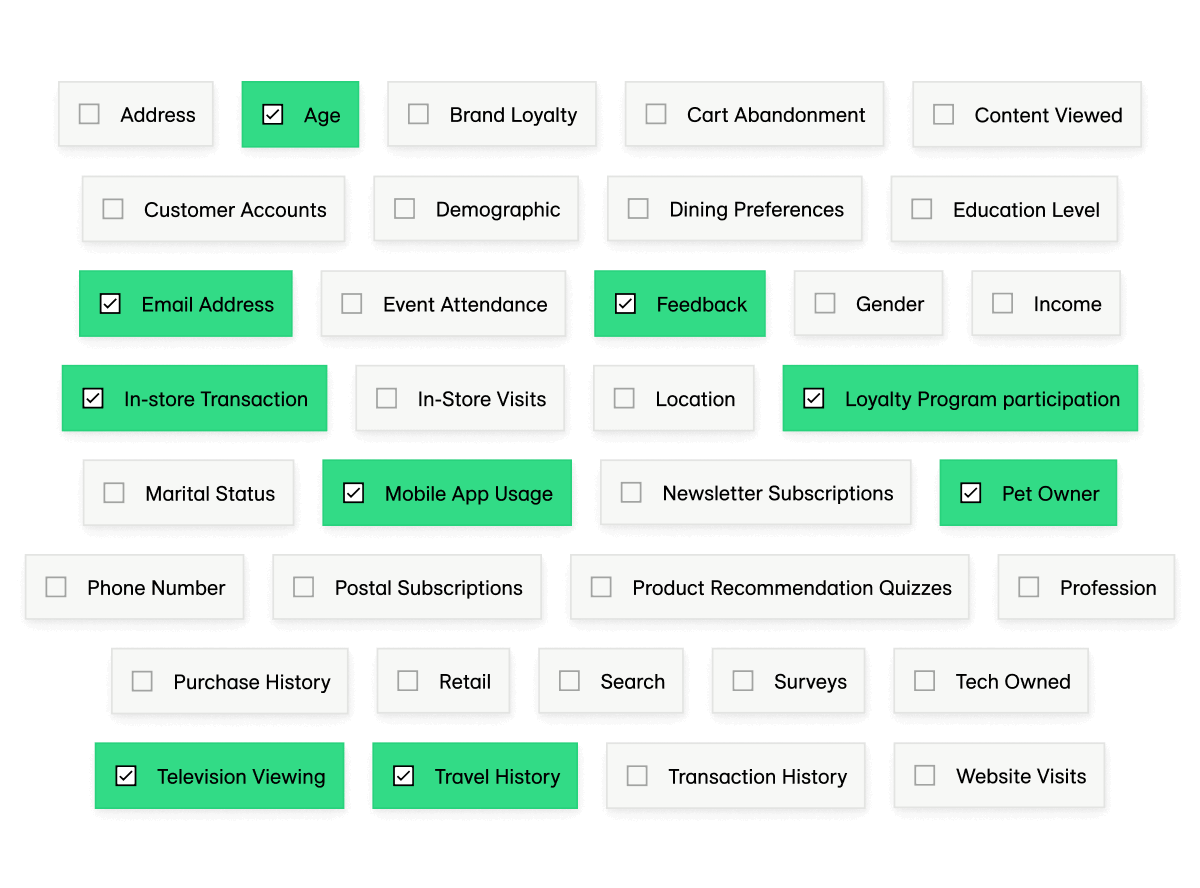
For organizations with internal data silos, the First-Party Identity Engine resolves and unifies CRM, CDP, eCommerce, and in-store POS data into a persistent enterprise ID.
Source: LiveRamp
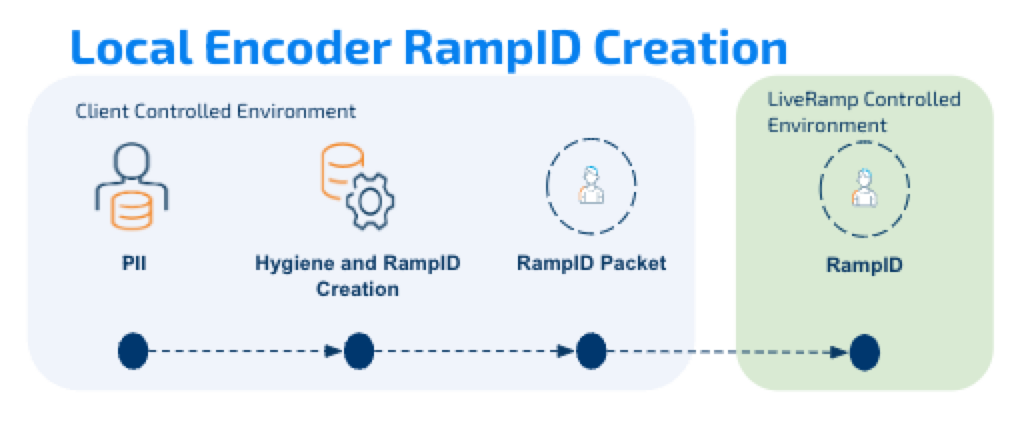
Resolution can arrive through several paths: Retrieval API for real-time resolution, cloud-embedded identity (inside Snowflake, BigQuery, AWS, Databricks without moving data), and a Local Encoder that generates RampIDs entirely within the customer's own environment so PII never leaves their perimeter.
Source: LiveRamp
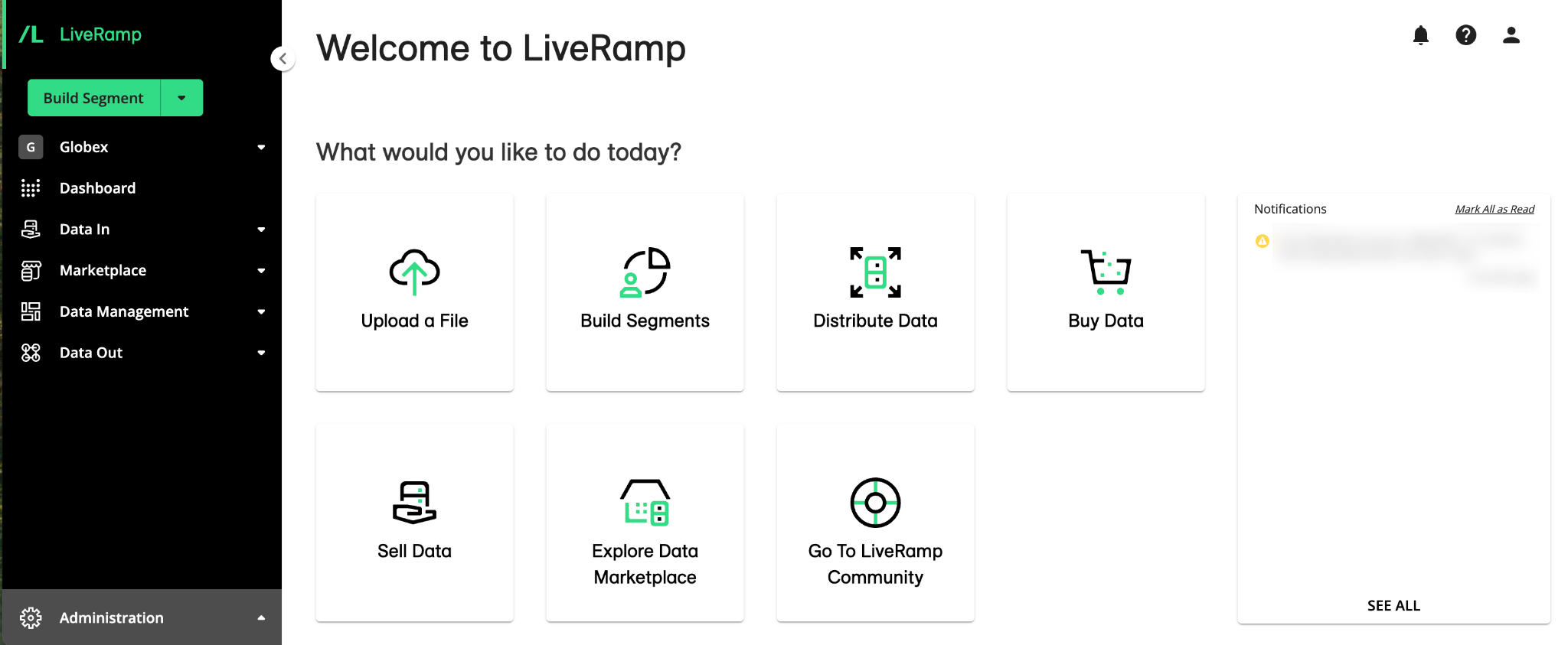
Segmentation & Activation: LiveRamp translates first-party audiences into addressable segments across 500+ media and adtech partners.
Live/Connectivity is the outbound layer that moves data from a brand's CRM into the advertising ecosystem. Brands upload first-party CRM data into LiveRamp Connect via SFTP, file upload, AWS S3, or Google Cloud Storage.
Source: LiveRamp
LiveRamp runs identity resolution, produces RampID-encoded audience segments, and pushes them to destination platforms, translating the ID into whatever identifier each platform uses natively.
The network is LiveRamp's real advantage. Activation reaches 500+ platforms and 21,000+ publishers, from social platforms to CTV, DSPs, and retail media. LiveRamp claims audiences can reach people across 92% of their engaged time with RampID.
On the publisher side, LiveRamp's Authenticated Traffic Solution (ATS) creates authenticated inventory at scale without third-party cookies. When a user logs into a publisher's site, ATS pseudonymizes their email into a RampID envelope passed into the bid stream.
This supports Prebid.js, Google Ad Manager, Google PAIR, and Amazon Publisher Services, plus CAPI connectors for Meta, Pinterest, Snapchat, and TikTok.
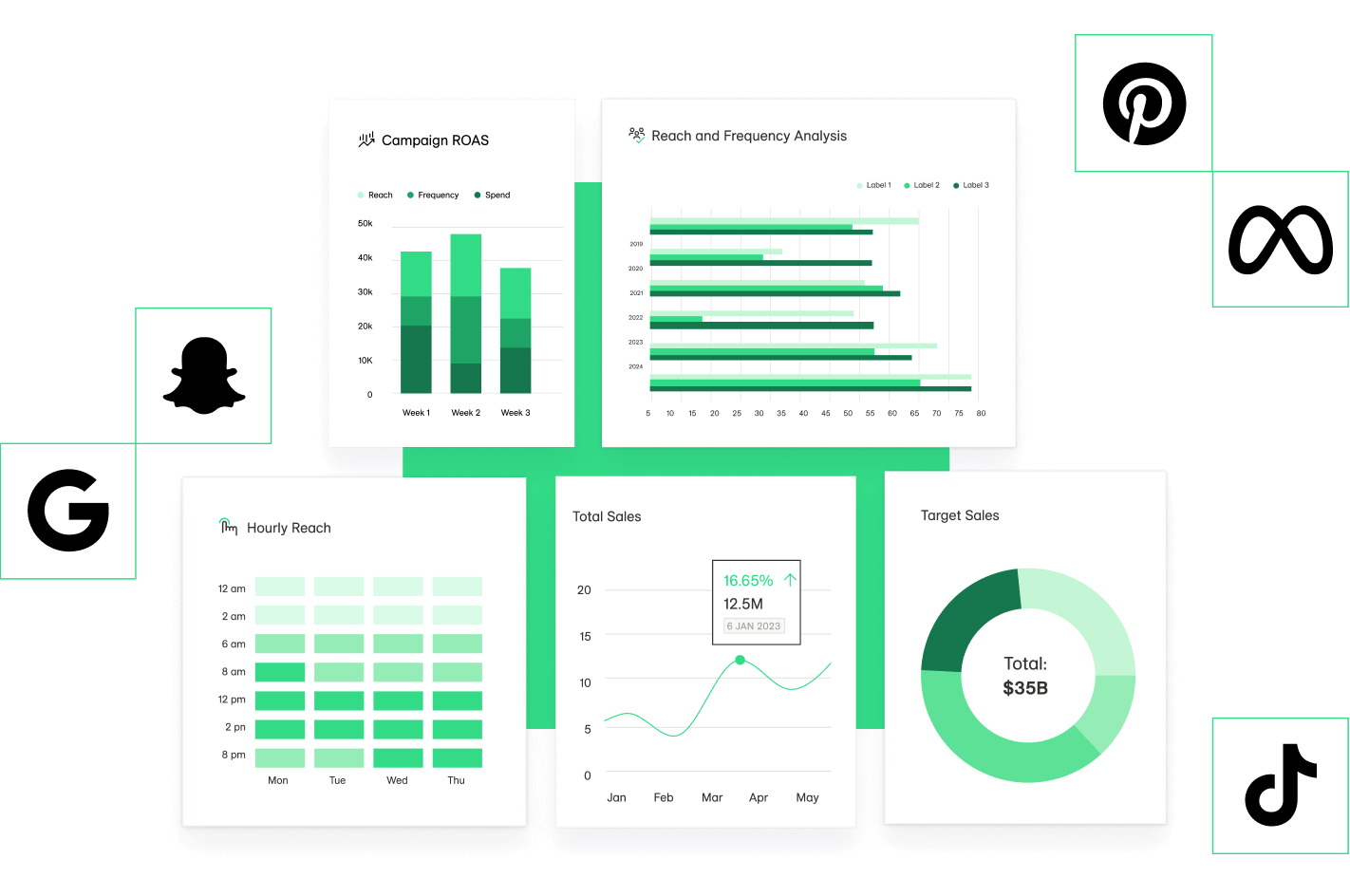
For centralized measurement, the Conversion Program routes first-party conversion signals server-side to ad platforms, bypassing browser restrictions.
Source: LiveRamp
By enriching signals with RampID rather than hashed emails alone, it achieves up to 52% higher match rates and enables cross-household attribution that hashed-email-only implementations cannot.
Data Marketplace & Enrichment: LiveRamp operates the world's largest data marketplace with 500+ providers and buyers.
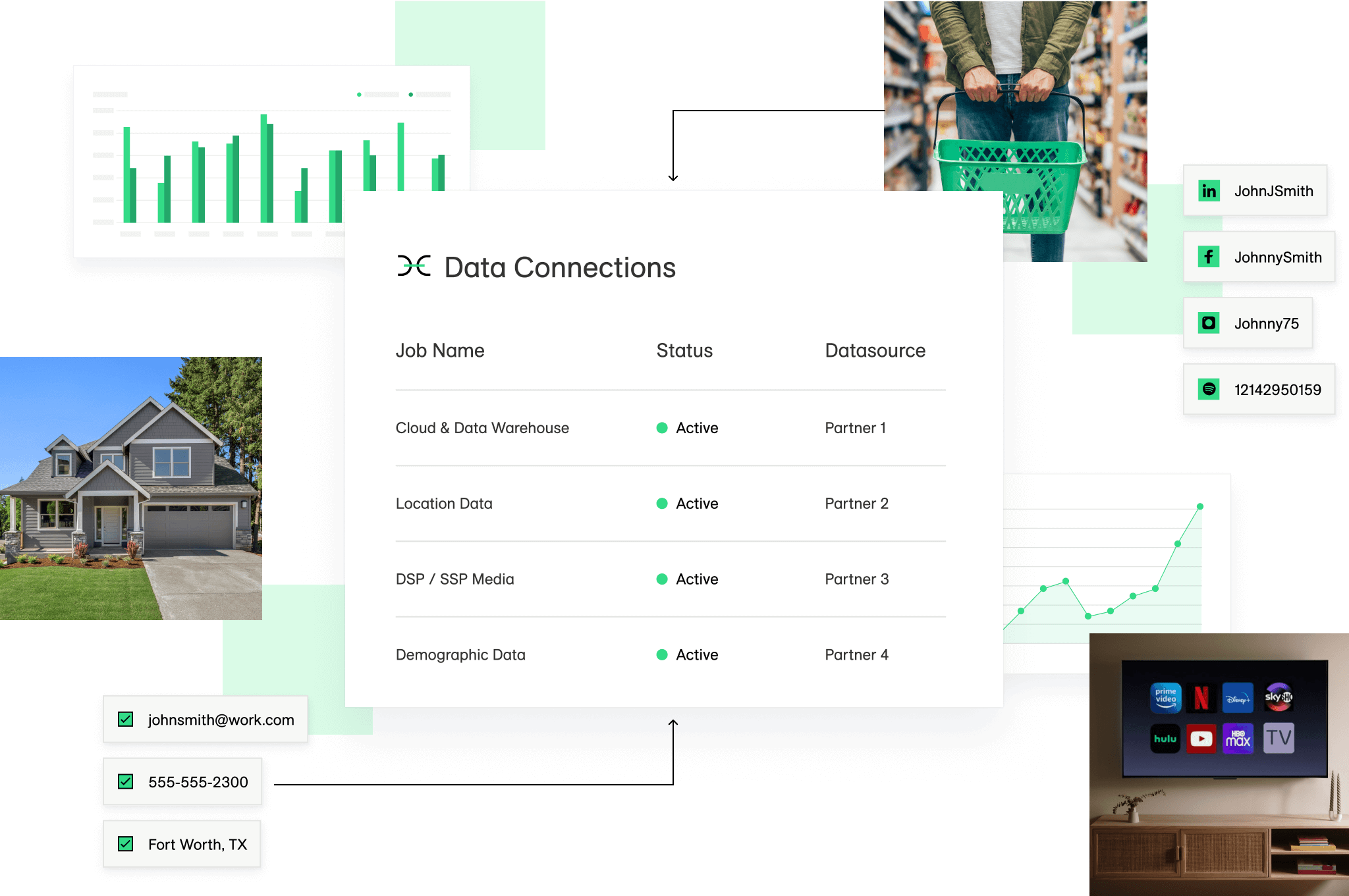
Live/Access serves two sides of the data equation. On the buy side, the Data Marketplace is a centralized hub for third-party and second-party audience data from 500+ providers and buyers.
Source: LiveRamp
Buyers browse pre-built syndicated segments or commission custom segments, with both available for delivery to hundreds of destinations via RampID.
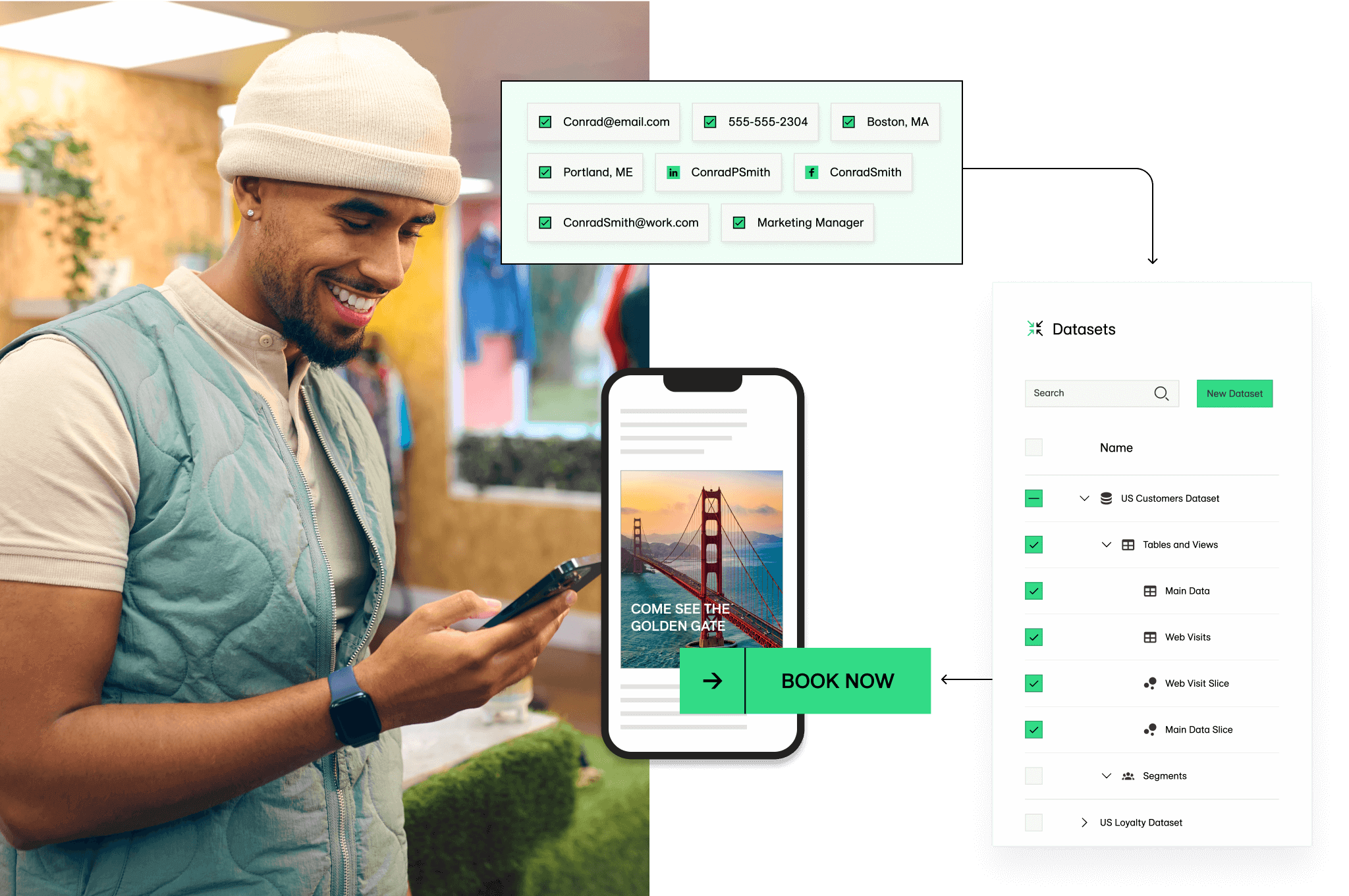
The Enrichment capability fills gaps in first-party records. Contact Enrichment adds missing fields (email, phone, address), while Attribute Enrichment appends demographic, behavioral, and interest signals. Enriched profiles feed directly into segmentation and campaign activation workflows.
Source: LiveRamp
On the sell side, Data Monetization gives data owners the infrastructure to package and sell their first-party data to 600+ advertisers and brands without exposing raw customer records.
Sellers configure pricing (CPM-based, percentage of media spend, or flat fee), set up a storefront profile, and LiveRamp handles distribution to buyers. Revenue is tracked through stats and reports in Connect.
A newer addition is the Google Ad Manager curation integration, which lets brands activate Marketplace segments across publisher inventory with Deal IDs and auction packages without relying on third-party cookies. All segments go through a data policy review and approval process before becoming available.
Clean Rooms & Measurement: LiveRamp provides secure environments for multi-party data collaboration without exposing raw PII.
Live/Insights houses the LiveRamp Clean Room, a secure, neutral environment where organizations can connect, analyze, and activate data together.
Named an IDC MarketScape Leader for Worldwide Data Clean Room Technology (2025) for the second consecutive year, the clean room connects to 1,000+ partners and runs natively across AWS, Azure, GCP, Snowflake, and Databricks without requiring data movement.
The workflow: participants connect data via credentials (not raw file transfers), match it using RampID, then pseudonymize it before analysis. Analysts run queries using the Question Builder (a visual/SQL interface) or via Clean Compute on Apache Spark for larger workloads.
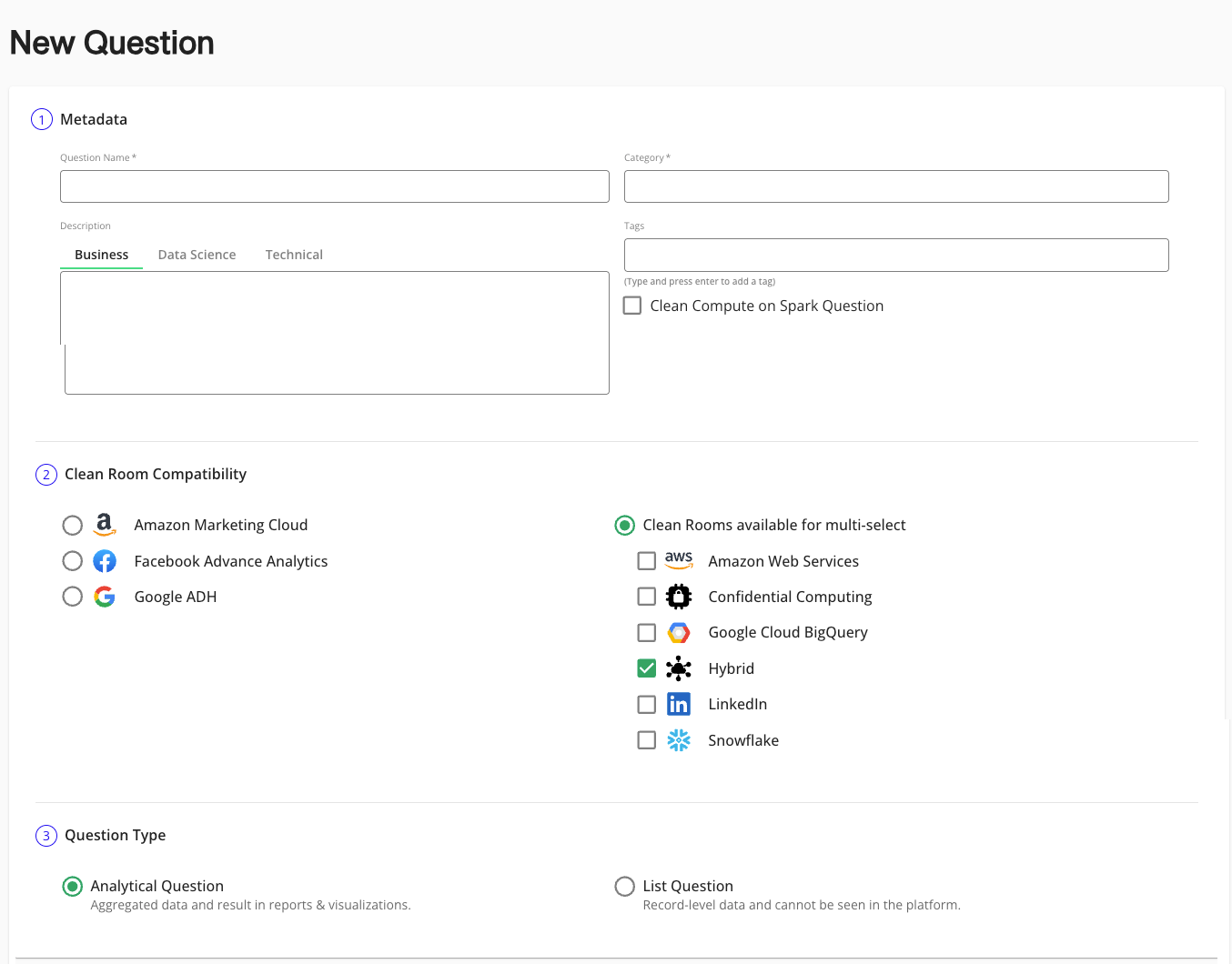
Source: LiveRamp
Flows allow automated, scheduled query pipelines. Governance controls (minimum row thresholds, aggregation limits) prevent re-identification.
What separates the clean room from analysis-only competitors is native activation: audiences built inside the clean room can flow directly into campaigns without the underlying data leaving the controlled environment. IDC cited this as a differentiator.
LiveRamp also integrated NVIDIA AI infrastructure into its clean room architecture, enabling AI model training at up to 15x the speed without exposing data or model weights. For quick deployment, Quick Start Media Insights provides pre-built measurement templates covering audience overlaps, optimal frequency, and attribution across premium publishers.
Agentic AI & Enterprise Features: LiveRamp is building an AI orchestration layer for governed multi-agent data collaboration.
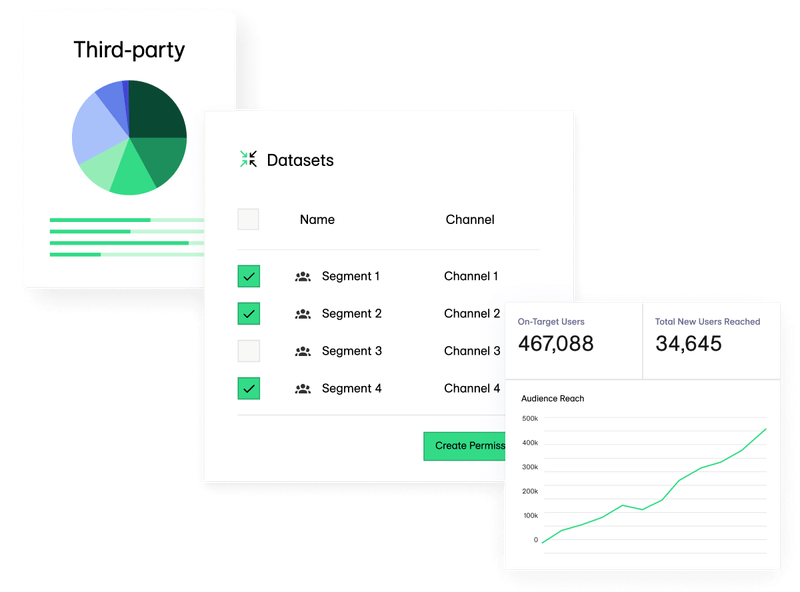
LiveRamp's newest bet is Agentic AI Orchestration, which lets specialized AI agents work together with governed access to identity, segmentation, activation, and measurement across a 900+ partner network. Natural language interfaces let users create audience segments within minutes.
Source: LiveRamp
The enterprise platform includes a full API suite with ten documented API families (Activation, ATS, Clean Room, Data Marketplace Buyer/Seller, AbiliTec, RampID, Privacy, Job Management, and Sidecar), all with OpenAPI specifications.
The platform enforces data governance at every layer, with the Privacy API handling opt-out and deletion requests programmatically.
Security certifications include SOC 2 Type II, ISO 27001, GDPR, CCPA, HIPAA, and EU-US Data Privacy Framework. LiveRamp operates a public vulnerability reporting program and maintains a data ethics program that goes beyond legal and regulatory compliance.
LiveRamp Pricing
LiveRamp uses consumption-based pricing billed on annual contracts. There are no publicly listed prices. The official pricing page states: "LiveRamp's annual pricing is determined by the volume of data utilized and the specific actions performed with it."
Three billing systems operate under this model. LiveRamp Units measure activation volume (unique records distributed to each destination per month). Records Under Management (RUM) is the total number of unique records in an audience, averaged daily over the month for billing.
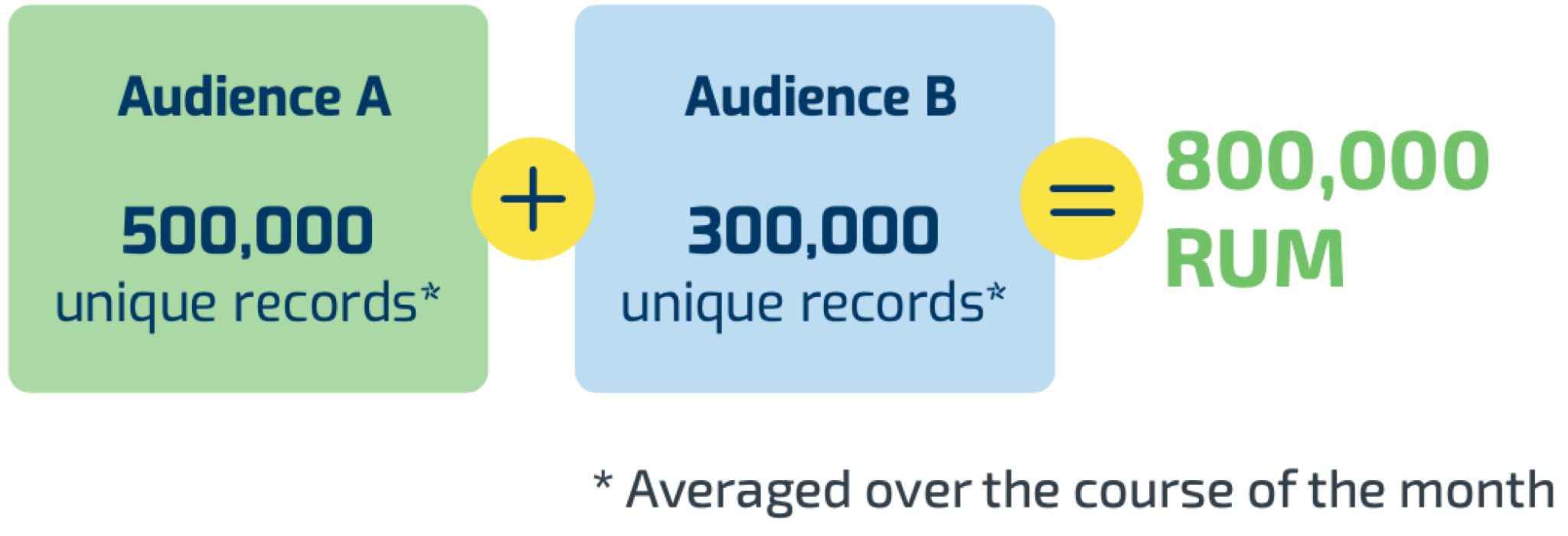
Source: LiveRamp
A newer Token-Based Billing Model serves as a unified consumption currency across Activation, Clean Room, Identity Engine, and Measurement, with 12 tier levels that determine conversion rates.
All contracts include a "foundational service tier", with enhanced support available as add-on services. Professional services (consulting, implementation, training) are priced as separate line items. There is no free trial, free plan, or self-serve entry point.
Exceeding contracted RUM volumes triggers CPM-based overage charges, and third-party data from the Marketplace is priced separately from the platform subscription.
Payment terms are strict: fixed fees invoiced quarterly in advance, variable fees monthly in arrears, payment due within 45 days. Termination is limited to material breach (with a 30-day cure period) or insolvency.
Where LiveRamp Falls Short
LiveRamp is strong advertising infrastructure, but several limitations appear depending on your GTM needs. These point to a platform built for media activation and data collaboration, not direct B2B prospect engagement.
No B2B Prospecting or Contact Database. LiveRamp connects audience data to advertising platforms, but it doesn't provide verified contact information for direct outreach.
If your GTM strategy includes outbound sales, account-based engagement, or prospecting for specific decision-makers, LiveRamp offers no path to those contacts.
You won't find direct-dial phone numbers, verified business emails, org charts, or buying committee intelligence. The platform activates ads against audiences; it doesn't tell your sales team who to call or email.
Enterprise-Only Accessibility. With 846 direct subscription customers globally, LiveRamp is built for large enterprises. There's no free trial, no self-serve signup, and no pricing transparency.
Mid-market companies and smaller teams face a sales process before they can assess whether the platform fits.
Steep Learning Curve and Complex Terminology. G2 reviewers consistently note that "learning is difficult with LiveRamp," citing complex setup and terminology. The platform relies on proprietary terms (RampID, AbiliTec, RUM, LiveRamp Units, LRU) that require dedicated study.
LiveRamp acknowledges this with LiveRamp University, offering structured learning across three levels and separate tracks for customers and partners.
Customer Support Fragmentation. G2 users report "poor customer support," with long wait times and ineffective communication. The ticket-based system routes requests across multiple groups and contacts, creating friction for time-sensitive campaign work.
Customers who purchase through a reseller don't have direct access to the support portal at all.
Platform Performance Issues. G2 reviewers note that "the platform almost always freezes and is very slow to load." For a system handling time-sensitive data activation workflows, interface lag directly hurts operational efficiency.
Limited Native Analytics. LiveRamp connects and activates data well but provides limited native reporting compared to what enterprise marketing teams expect. Users often need to export data to external BI tools for deeper campaign analysis.
TrustRadius reviewers also note that privacy information visibility could be improved.
Acquisition Uncertainty. The pending Publicis Groupe acquisition raises questions about LiveRamp's neutrality.
While Publicis has committed that no current or prospective customer will be blocked from its services, brands and publishers outside the Publicis ecosystem may question whether a holding-company-owned LiveRamp maintains the same neutral-broker credibility.
These limitations aren't failures. They reflect LiveRamp's deliberate focus on advertising infrastructure and data collaboration. But for B2B organizations that need direct prospect intelligence alongside advertising activation, they create a clear gap.
The Complement to LiveRamp for B2B Teams: ZoomInfo
LiveRamp connects your audience data to advertising platforms. ZoomInfo connects your sales team to the specific people they need to reach. For enterprise B2B organizations running both advertising and direct outreach, the two platforms cover different halves of the GTM equation.
ZoomInfo is a GTM platform built on a large B2B dataset, an intelligence layer called the GTM Context Graph, and access that delivers intelligence through any tool, workflow, or AI agent.
Comprehensive B2B Data: ZoomInfo provides the verified contact and company intelligence that LiveRamp's advertising infrastructure doesn't cover.
Where LiveRamp resolves anonymous consumer identities for advertising, ZoomInfo provides the identity layer for direct B2B engagement: 500M contacts, 100M companies, 135M+ verified phone numbers, 120M direct-dial phone numbers, and 200M+ verified business email addresses.
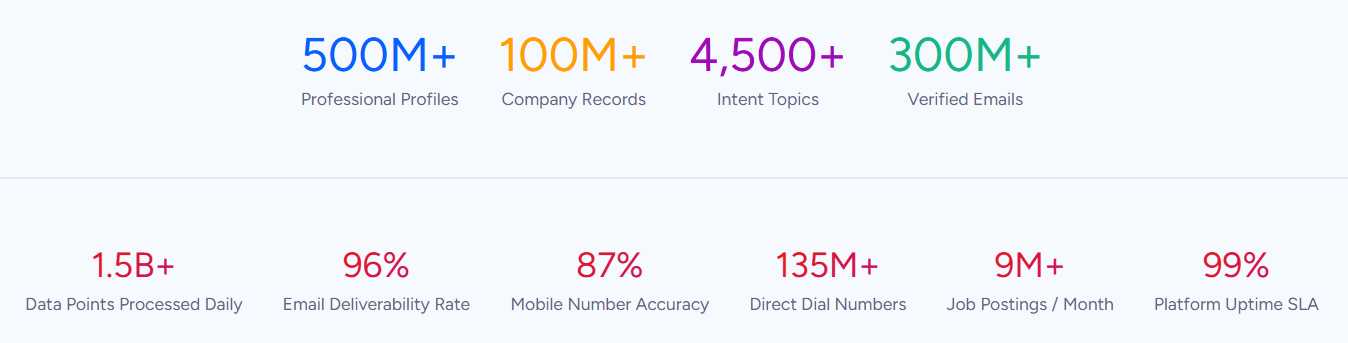
Source: ZoomInfo
This data flows through a multi-source verification pipeline backed by 300+ human researchers and reaches up to 95% accuracy on first-party data.
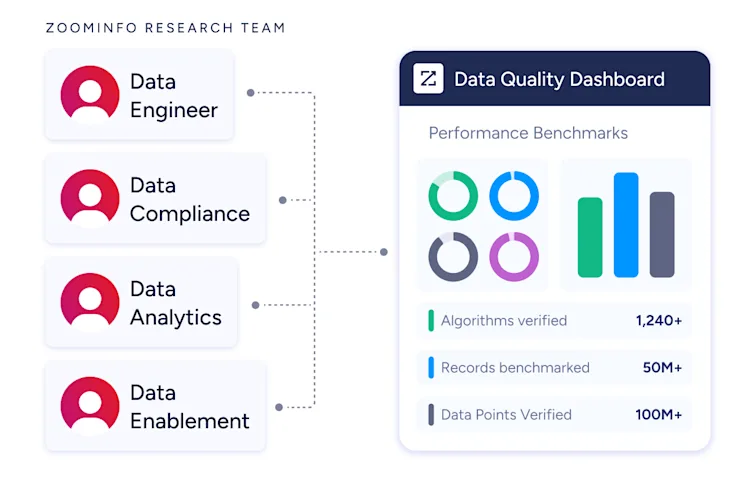
Source: ZoomInfo
Beyond static contact records, ZoomInfo tracks dynamic signals. Buyer Intent data monitors 210 million IP-to-Organization pairings and 6 trillion+ new keyword-to-device pairings sourced monthly.
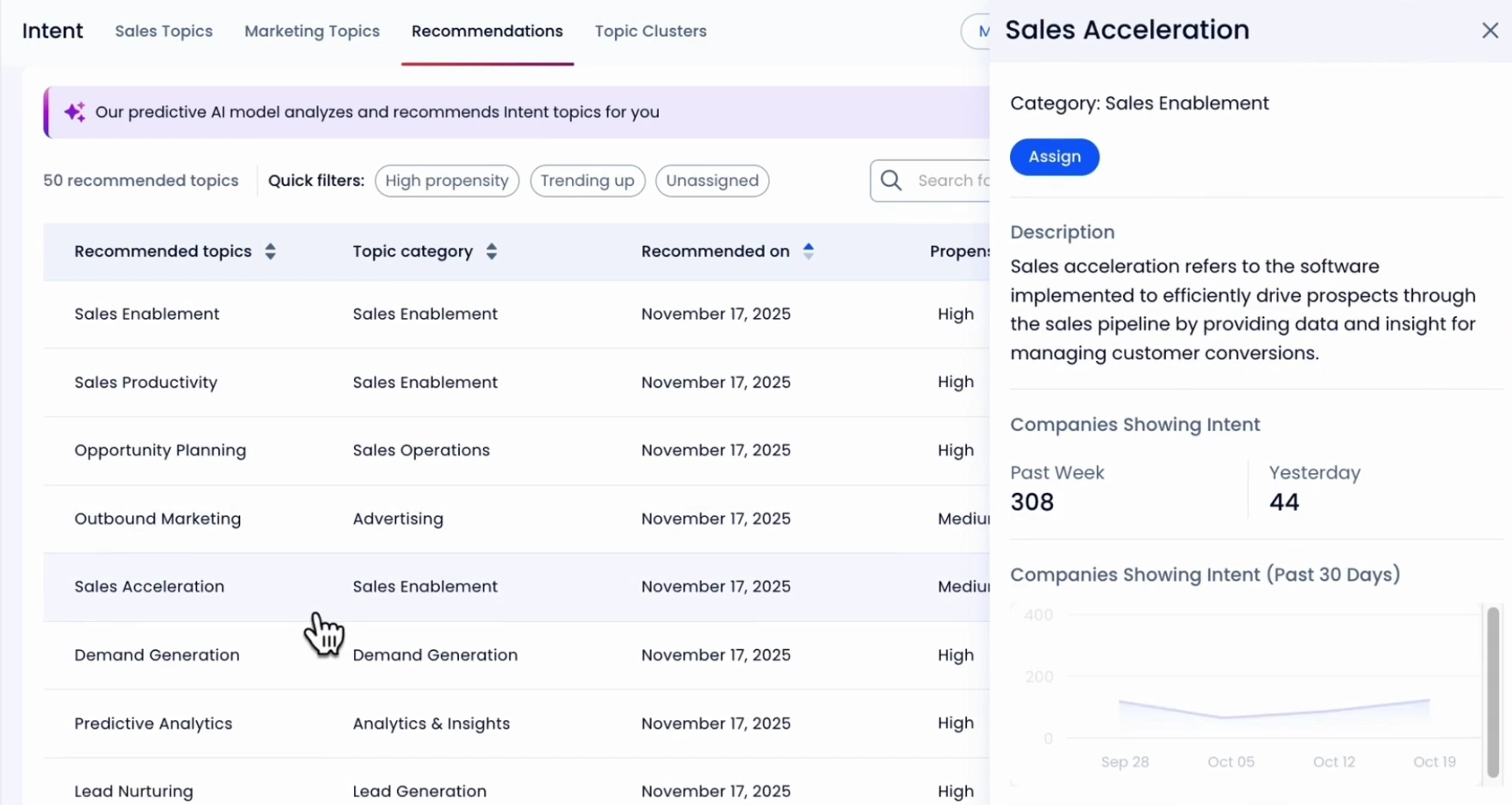
Guided Intent, exclusive to ZoomInfo, identifies topics historically correlated with deal success rather than requiring manual topic selection.
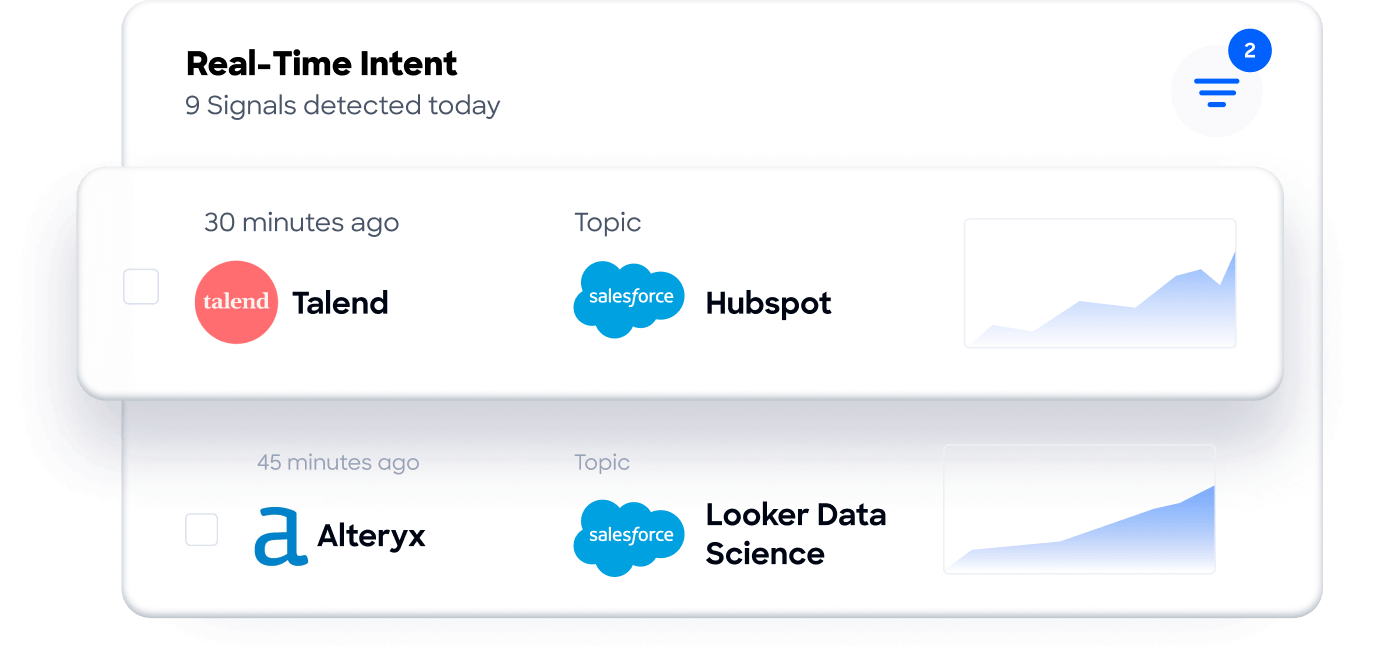
Source: ZoomInfo
Technographics profile the tech stack of 30+ million companies across 30,000+ technologies.
The data advantage isn't self-reported. In a Fortune 500 competitive RFP analyzing 25 million contacts across vendors, the independent consultant concluded that "no other competitor came even close."
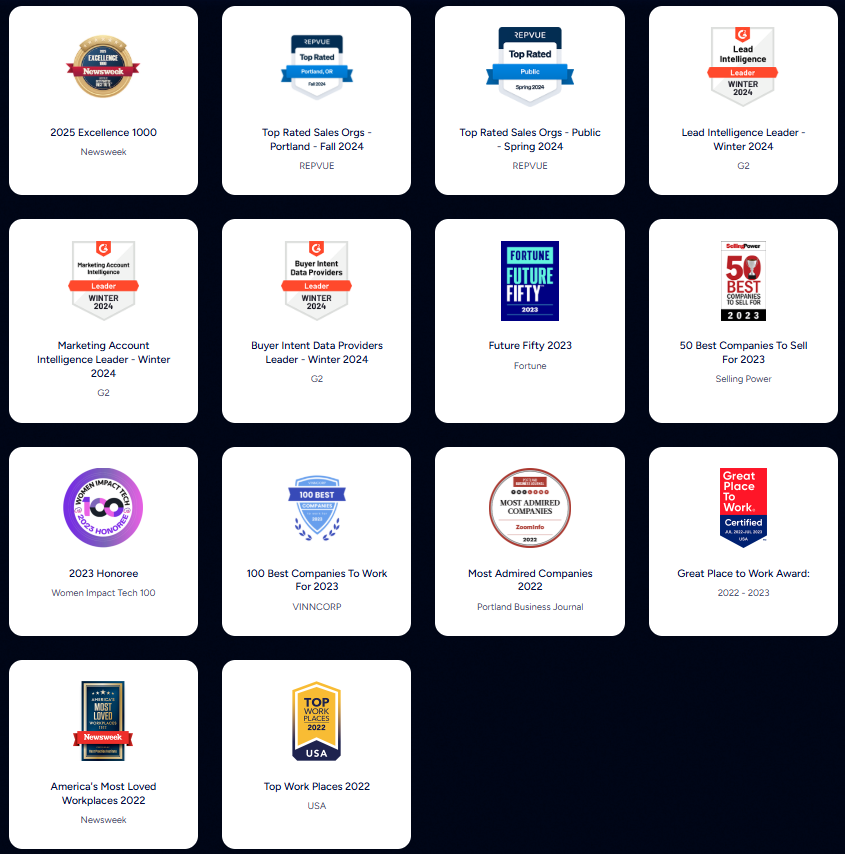
ZoomInfo was named a Leader by Forrester for Intent Data Providers in B2B (Q1 2025), receiving the highest possible scores across eight criteria.
Vensure's VP of Revenue Operations described the practical impact: "ZoomInfo gives us the information we need to execute. We don't have to go through and spend our time digging. It's already there, so we can be three steps ahead." (Vensure)
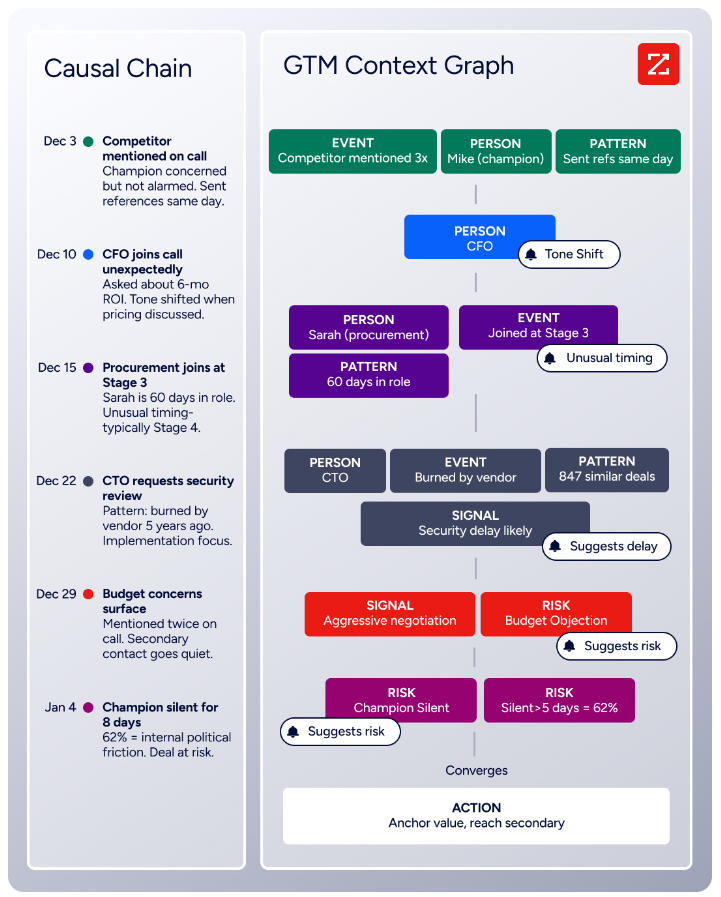
The GTM Context Graph: ZoomInfo's intelligence layer captures why deals move, not just what happened.
LiveRamp's identity resolution connects consumer signals across advertising platforms. ZoomInfo's GTM Context Graph connects a different set of signals: CRM records, conversation transcripts from calls and meetings, email interactions, product usage data, and behavioral signals, unified with ZoomInfo's third-party intelligence.
The result is an intelligence layer that processes 1.5B+ data points daily and captures not just what happened in a deal, but why.
Source: ZoomInfo
A CRM records that a deal moved stages. The GTM Context Graph reasons that the CFO joining the last call and asking about six-month ROI is what accelerated it, that executive sponsorship entering at this stage matches the pattern behind closed-won deals in your segment, and that third-party signals show the company is hiring three new VPs and researching your competitor.
That reasoning flows into every downstream action: the follow-up email addresses the specific concern, the play targets accounts whose signal combinations match actual win patterns, and the forecast weights deals by buying evidence rather than stage labels.
This context layer exists because of two decades of infrastructure investment. ZoomInfo built a B2B data unification platform (entity resolution, semantic normalization, identity matching at scale) and acquired Chorus and Workbounce for their context capture engines.
The same infrastructure that resolves hundreds of millions of companies and contacts now applies to a customer's calls, emails, and CRM data.
Seismic's Chief Business Officer, Toby Carrington, described what this means in practice: "That combination of our internal CRM data, external signals, and AI that's given all that context has helped us craft very specific account- and persona-based messages. And people have responded to them right away." Seismic attributed 39% of active pipeline to opportunities identified or influenced by ZoomInfo signals and reported 54% higher productivity. (Seismic)
Universal Access: ZoomInfo delivers its intelligence through seller workspaces, marketing tools, and open APIs.
Where LiveRamp's access model centers on managed activation to advertising platforms, ZoomInfo delivers its intelligence through three channels designed for different GTM roles.
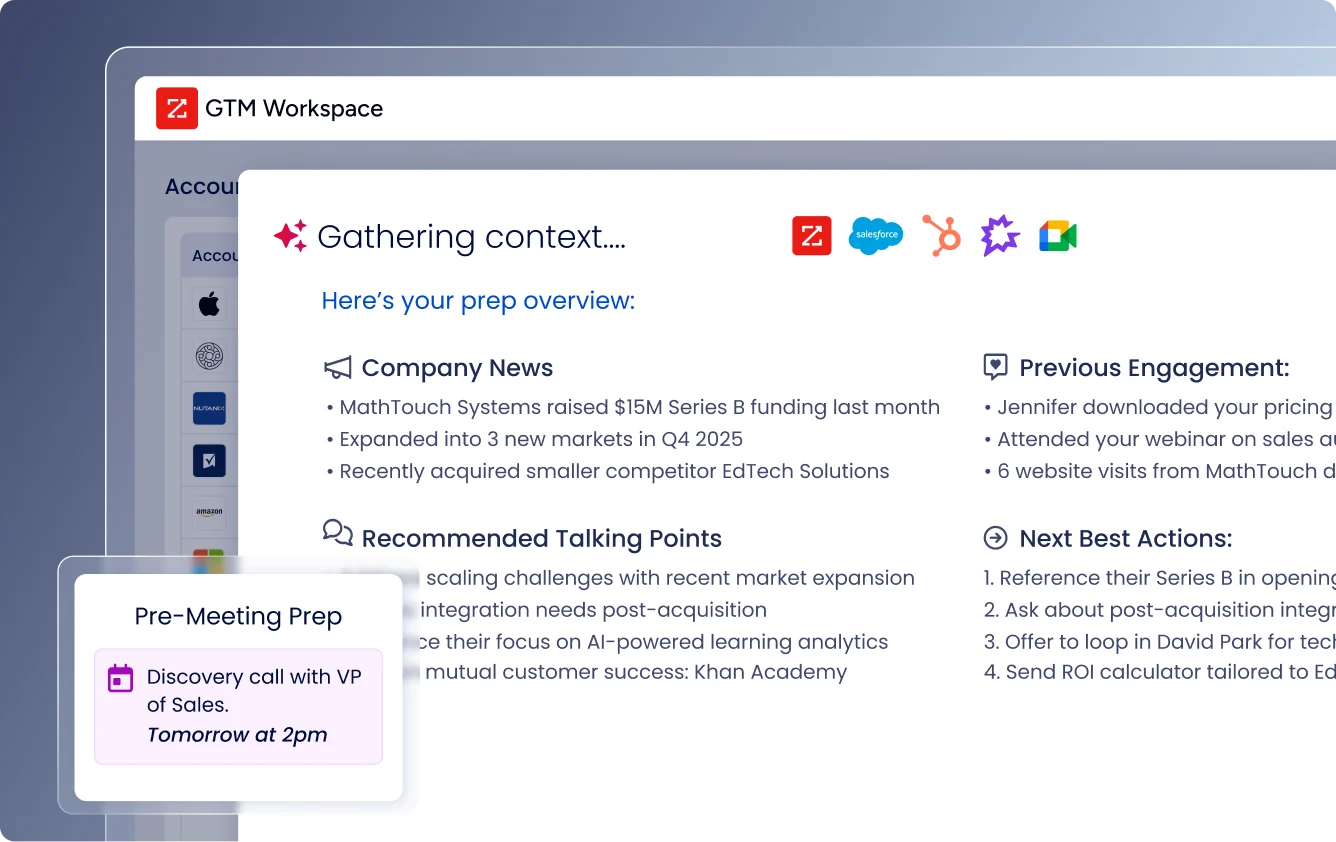
GTM Workspace is the seller's interface: a single surface where prioritized accounts, AI-drafted outreach, and deal execution converge without toggling between tools. AI agents handle account research, outreach drafting, signal monitoring, and CRM updates, drawing on the GTM Context Graph.
Source: ZoomInfo
Databricks reached prospects 50% faster, and Thomson Reuters increased closed-won deals by 40%.
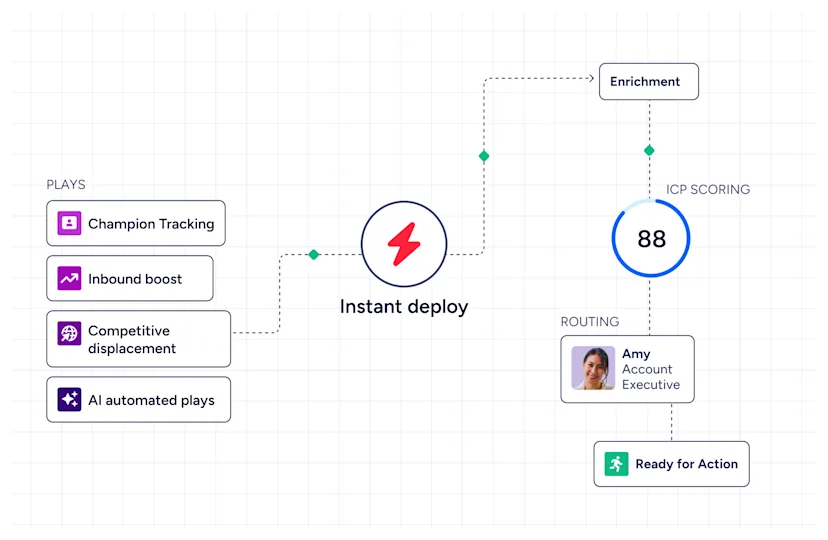
GTM Studio serves marketers, RevOps, and GTM engineers. Audience definition, campaign orchestration, and pipeline measurement happen in natural language rather than engineering tickets.
Pre-built GTM plays (inbound acceleration, champion tracking, competitive displacement) launch in one click, and expansion plays that used to take 3 weeks now launch in 30 minutes.
Source: ZoomInfo
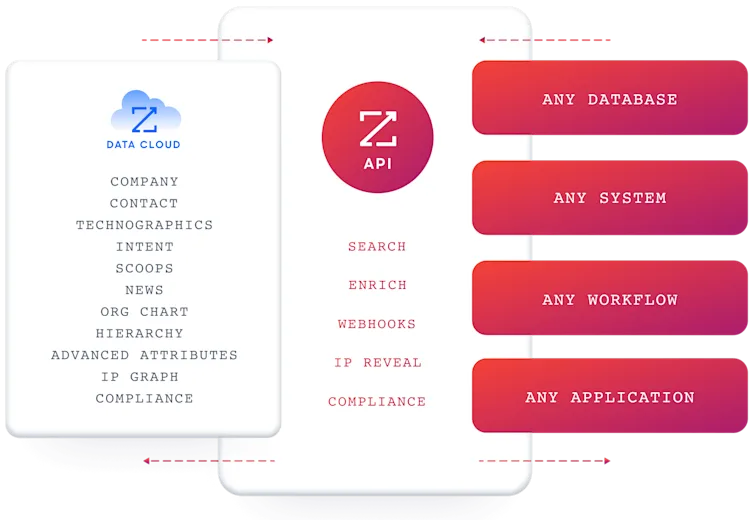
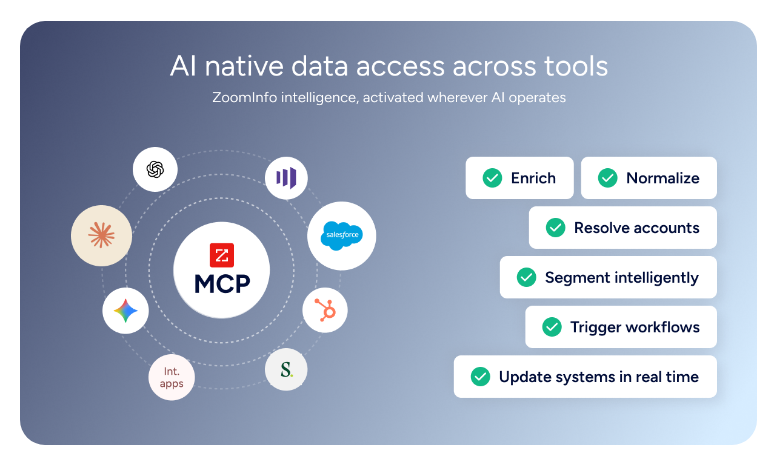
For teams building beyond ZoomInfo's own products, Enterprise APIs and MCP expose the same intelligence to any custom agent, internal tool, or partner platform. API Access is included in all relevant plans.
Source: ZoomInfo
The MCP server connects AI models directly to ZoomInfo's B2B data and is listed in the Claude directory, currently supporting Claude and ChatGPT.
Source: ZoomInfo
All three channels draw from the same GTM Context Graph. Nothing is degraded by surface.
BDO Canada's Senior Marketing Intelligence Analyst, Jerry Wilson, described the API experience: "The plug-and-play aspect of the API means I can integrate it very easily into any process and get information at a moment's notice." BDO Canada achieved an 87% reduction in time spent on updates to internal data dashboards. (BDO Canada)
ZoomInfo Pricing: Tiered plans with free entry points and consumption-based scaling.
ZoomInfo uses consumption-based pricing organized into Sales plans (Professional, Advanced, Enterprise) and Marketing plans (Marketing Demand, ABM Lite, ABM Enterprise). Like LiveRamp, specific dollar amounts aren't publicly listed. However, ZoomInfo offers two entry points that LiveRamp lacks entirely.
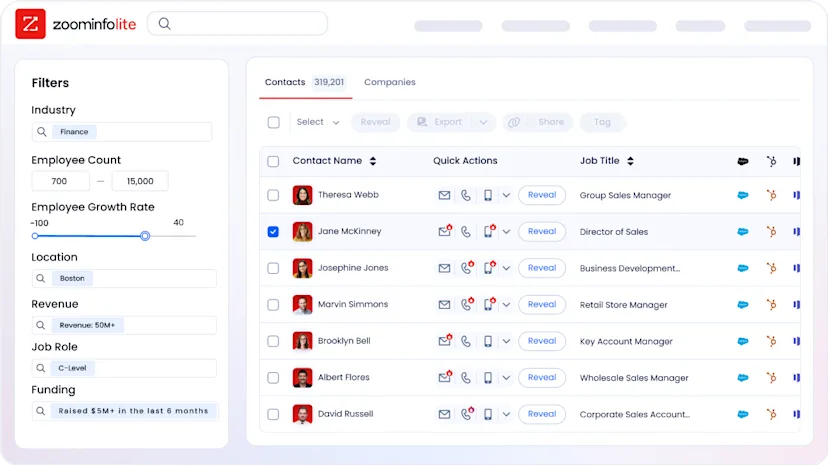
ZoomInfo Lite is a permanent free tier (not a trial) with access to ZoomInfo's B2B database, 10 monthly export credits, individual and company searches, email addresses, the Chrome extension, mobile app, and HubSpot integration.
Source: ZoomInfo
A separate 7-day free trial (no credit card required) provides access to core platform features including intent signals and email outreach with usage limits.
The credit system is transparent: 1 credit = 1 export of a professional or company profile. Searching and viewing data within ZoomInfo does not consume credits.
Feature access is tiered (intent signals, AI features, and advanced integrations are gated to higher tiers), but data quality is consistent across plans. Annual contracts are standard, with multi-year commitments offering pricing advantages.
LiveRamp and ZoomInfo: How They Work Together
Aspect | LiveRamp | ZoomInfo |
|---|---|---|
Primary purpose | Advertising data collaboration and identity resolution | B2B sales and marketing intelligence |
Core data type | Consumer identity signals across ad ecosystem | Verified B2B contacts, companies, and buying signals |
Identity resolution | Pseudonymous consumer IDs across devices and channels | Named B2B contacts with direct dials, emails, org charts |
Activation model | Audience segments pushed to 500+ media/adtech platforms | Direct outreach via email, phone, and multi-channel plays |
Signal types | Ad exposure, conversion events, audience overlap | Buyer intent, technology usage, hiring, funding, job changes |
Measurement | Clean rooms for privacy-safe cross-media attribution | Pipeline attribution, deal intelligence, conversion tracking |
AI capabilities | Agentic AI for governed data collaboration | GTM Context Graph powering AI-drafted outreach and deal reasoning |
Target buyer | Enterprise advertisers, publishers, retail media networks | B2B sales, marketing, and RevOps teams |
Pricing transparency | No public pricing, no free tier | No public pricing, but permanent free tier and 7-day trial |
Self-serve entry | No | Yes (Lite and free trial) |
Best for | Connecting audience data to advertising platforms | Finding, engaging, and converting B2B prospects |
Final Verdict
LiveRamp and ZoomInfo address different layers of the enterprise GTM stack. The choice isn't between them; it's about which layer your organization needs most, or whether you need both.
Choose LiveRamp if your primary challenge is connecting first-party audience data to a fragmented advertising ecosystem. It's the right platform when you need to activate CRM segments across streaming, social, CTV, and programmatic channels using a privacy-safe, cookie-independent identifier.
For enterprise brands spending heavily on media, publishers monetizing authenticated audiences, or retailers building commerce media networks, LiveRamp provides the neutral infrastructure connecting every party without conflicting interests.
Its clean room technology, identity resolution at scale, and network breadth across 21,000+ publishers are difficult to replicate.
Add ZoomInfo if your GTM strategy also depends on direct B2B outreach, prospecting, and sales intelligence. While LiveRamp tells the advertising ecosystem that an account matches your target segment, ZoomInfo tells your sales team who to call, what to say, and why now is the right moment.
Its verified B2B data, intent signals, and the GTM Context Graph provide the intelligence layer for the direct engagement side of the funnel.
For B2B organizations that run both advertising and outbound sales, the combination covers both sides: LiveRamp for advertising precision, ZoomInfo for prospect identification and direct execution.
Get started with ZoomInfo for free here.
Advertising activation and direct sales intelligence are not competing strategies but parallel channels that reinforce each other. LiveRamp makes your advertising data work across the media ecosystem. ZoomInfo gives your sales team the intelligence to act on what that advertising generates.
LiveRamp FAQ
What is LiveRamp used for?
LiveRamp is a data collaboration platform that helps organizations connect, activate, and measure their customer data across the advertising ecosystem.
Its primary use cases include resolving fragmented customer identities into a single pseudonymous identifier (RampID), activating first-party CRM audiences on advertising platforms without third-party cookies, enabling privacy-safe data collaboration through clean rooms, and measuring campaign performance across channels.
Enterprise brands, publishers, retailers building commerce media networks, and adtech platforms use it.
How much does LiveRamp cost?
LiveRamp does not publish pricing. All contracts require custom enterprise quotes through a sales process.
Pricing is consumption-based, determined by the volume of data used and the specific actions performed with it. Billing mechanisms include LiveRamp Units (for activation volume), Records Under Management (for audience size), and a Token-Based Billing Model with 12 tier levels.
Fixed fees are invoiced quarterly in advance, variable fees monthly in arrears. There is no free plan, free trial, or self-serve entry point.
Does LiveRamp offer a free trial?
No. LiveRamp does not offer a free trial, free plan, or freemium tier. All access requires an executed Order Form through the sales process. Some pre-commercial testing access may be provisioned, but only within a signed agreement.
This contrasts with B2B data platforms like ZoomInfo, which offers both a permanent free tier (ZoomInfo Lite) and a 7-day free trial with no credit card required.
What is RampID and how does it work?
RampID is LiveRamp's pseudonymous, people-based identifier that connects customer identities across devices, channels, and partners without exposing raw personal information. It combines offline identity resolution (through the AbiliTec Identity Graph, which draws on a multi-billion-record reference base) with online device linking.
LiveRamp prioritizes deterministic matching over probabilistic approaches, and claims RampID delivers up to 50% better match rates than competing identifiers. RampID is embedded in major streaming platforms, social networks, and retail media networks.
Who is LiveRamp designed for?
LiveRamp is designed for large enterprises. Its typical customer is a Fortune 500 brand spending heavily on media, operating in a regulated or privacy-sensitive category, and needing to connect data across multiple internal silos and external partners.
With 846 direct subscription customers globally and 133 spending over $1 million annually, the platform is calibrated for organizations with substantial data assets and advertising budgets. It is not well-suited for small or mid-market businesses, companies without meaningful first-party data, or teams looking for self-serve simplicity.
What is a LiveRamp clean room?
A LiveRamp clean room is a secure environment where two or more organizations can connect, analyze, and activate their data together without exposing raw records to each other. The clean room runs natively across AWS, Azure, GCP, Snowflake, and Databricks, using RampID as the matching key and pseudonymization to protect identities.
Analysts use a visual query builder or SQL interface to run analyses, with governance controls preventing re-identification. LiveRamp was named a Leader in the IDC MarketScape for Worldwide Data Clean Room Technology in both 2024 and 2025.
Is LiveRamp being acquired by Publicis?
Yes. On May 17, 2026, Publicis Groupe announced a definitive agreement to acquire LiveRamp in an all-cash deal at $38.50 per share, representing a total enterprise value of $2.167 billion. The acquisition is expected to close by the end of 2026, pending regulatory and shareholder approvals.
Publicis has committed that LiveRamp will continue to operate as a neutral, interoperable platform with open access, and CEO Scott Howe will continue leading the company.
Does LiveRamp provide B2B contact data for sales prospecting?
No. LiveRamp is advertising infrastructure, not a B2B sales intelligence platform. It resolves consumer identities for advertising activation and data collaboration but does not provide verified business contact information (direct-dial phone numbers, business email addresses, org charts) or sales prospecting tools.
B2B teams that need direct prospect engagement alongside advertising activation typically pair LiveRamp with a dedicated GTM intelligence platform like ZoomInfo, which offers 500M contacts, 100M companies, 135M+ verified phone numbers, and 200M+ verified business emails, plus intent signals and AI-powered sales execution.
