
Choosing between Marketingforce and Salesforce for your marketing and sales stack comes down to five questions:
Are you selling to buyers in China's digital ecosystem, or operating globally?
Do you need integration with WeChat, Douyin, and Baidu, or with Western tools like Gmail, Slack, and LinkedIn?
Is your priority a broad platform with hundreds of modules, or a system grounded in verified B2B intelligence?
How important is it that your sales team reaches the right buyer at the right time, with contact data that actually connects?
Do you want to build your go-to-market stack around an application, or around a data foundation that works across any application?
In short, here's what we recommend:
Marketingforce is China's largest domestic marketing and sales SaaS provider, built for enterprises in the Chinese digital ecosystem. Its six product clouds span marketing automation, SCRM, sales force automation, e-commerce, analytics, and AI content creation, all natively integrated with WeChat, Douyin, Baidu, and Tmall. With over 200,000 clients and a proprietary AI platform called AI-Agentforce, Marketingforce gives Chinese enterprises a complete solution for customer acquisition and retention. But the platform is almost entirely China-focused, with limited English documentation, no Western social channel integrations, and no presence on global software review platforms.
Salesforce is the world's #1 CRM by market share, serving over 150,000 companies across every industry and geography. Its Customer 360 suite covers sales, service, marketing, commerce, and analytics on one platform, with Agentforce bringing autonomous AI agents into every workflow. With a $41.5 billion revenue base, 9,000+ AppExchange partner apps, and solutions across 17 industry verticals, Salesforce offers wide coverage. The trade-off is complexity and cost: real deployments require dedicated administrators, partner-led implementations, and ongoing investment.
Both platforms give you tools to execute marketing and sales. But tools are only as effective as the data behind them. An email sequence that reaches the wrong person, a campaign targeting a stale account list, a pipeline forecast built on incomplete CRM records: these are execution failures rooted in data problems. That's where a different approach matters.
ZoomInfo is a B2B data and GTM platform built on the largest verified B2B data foundation in the industry: 500M contacts, 100M companies, 135M+ verified phone numbers, and 200M+ verified business email addresses. ZoomInfo's GTM Context Graph processes 1.5B+ data points daily, combining this data with your CRM records, conversation transcripts, and behavioral signals to reveal not just what happened in a deal, but why. That intelligence flows into the GTM Workspace for sellers, GTM Studio for marketers and RevOps, or through APIs and MCP into any third-party tool, including Salesforce itself.
If building your GTM strategy on verified intelligence sounds like the missing piece, see how ZoomInfo works with a free trial.
Marketingforce vs. Salesforce vs. ZoomInfo at a glance
Marketingforce | Salesforce | ZoomInfo | |
|---|---|---|---|
Primary focus | Full-stack marketing & sales SaaS (China) | Enterprise CRM & application platform (global) | B2B data intelligence & GTM execution (global) |
Geographic strength | China (WeChat, Douyin, Baidu native) | Global (105 offices in 92 cities) | Global (500M contacts worldwide) |
AI capability | Tforce LLM + AI-Agentforce agent platform | Agentforce + Atlas Reasoning Engine | GTM Context Graph + AI agents |
Data foundation | Customer-generated (CRM/CDP/SCRM) | Customer-generated (Data Cloud ingestion) | 500M contacts, 100M companies, 135M+ verified phones |
Pricing model | Custom-quoted, no public pricing | Per-user tiered + consumption credits | Custom-quoted, consumption-based |
Free option | Sales-gated trial only | Free CRM (2 users) + Starter at $25/user/mo | ZoomInfo Lite (permanent free tier) + 7-day trial |
CRM integrations | WeChat/WeCom, DingTalk, Feishu | Gmail, Outlook, Slack, 9,000+ AppExchange apps | Salesforce, HubSpot, Dynamics 365, 120+ integrations |
Best for | Chinese enterprises in retail, auto, finance | Global enterprises needing full-suite CRM | B2B teams that need verified data and intelligence |
These platforms solve different problems
Marketingforce, Salesforce, and ZoomInfo occupy distinct positions. Understanding those differences matters more than comparing feature lists.
Marketingforce is an execution platform for the Chinese market. Its 240+ standard modules across six product clouds handle everything from WeChat private-domain marketing to Douyin short-video campaigns to membership management across Tmall, JD.com, and Xiaohongshu. If your customers live in WeChat and your sales team prospects on Baidu, Marketingforce was designed for that reality.

Source: Marketingforce
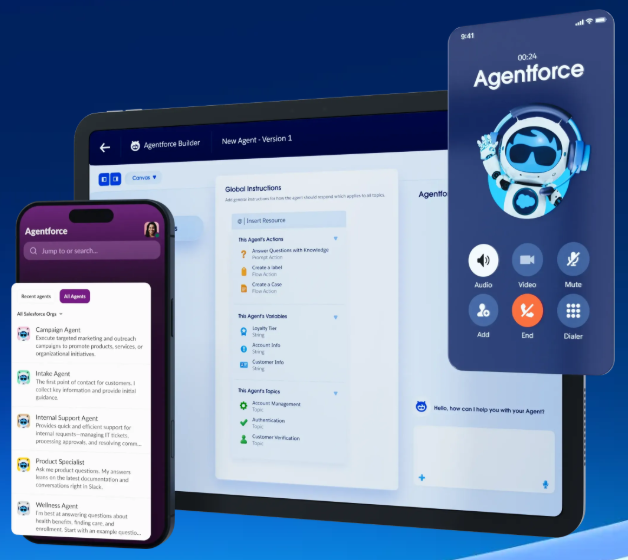
Salesforce is an application platform for global enterprises. Sales Cloud, Service Cloud, Marketing Cloud, and Commerce Cloud provide CRM and automation across every customer-facing function. The Agentforce layer adds autonomous AI agents, and the AppExchange ecosystem extends the platform in nearly any direction. Salesforce is the system of record that coordinates how large organizations interact with customers.
Source: Salesforce
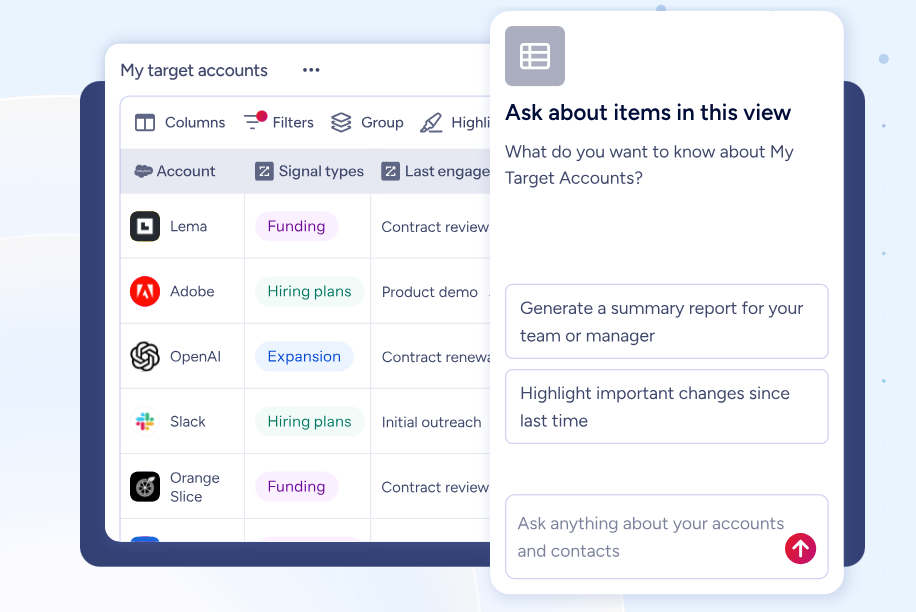
ZoomInfo starts from a different premise. Instead of building another CRM or marketing suite, ZoomInfo built a comprehensive B2B data platform, then layered intelligence and execution on top. The logic is simple: your CRM is only as good as the data inside it, and your outreach only works if it reaches real people at real companies. ZoomInfo ensures both, whether your team uses it through the native GTM Workspace, through GTM Studio, or directly inside Salesforce via native integration.
Source: ZoomInfo
Geographic reach determines your shortlist
This is the single biggest factor in this comparison.
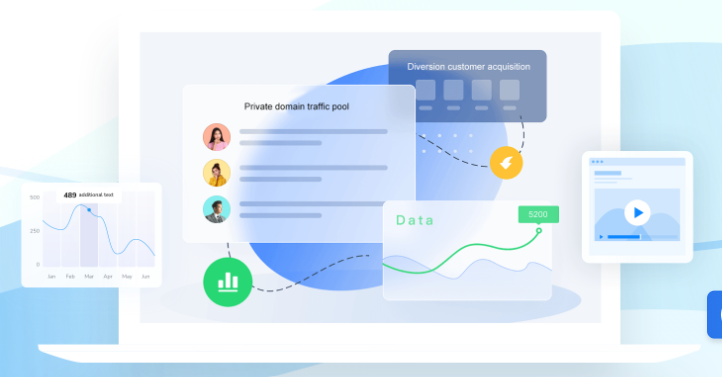
Marketingforce dominates in China. Its products are built around the Chinese digital ecosystem: SCRM connects to WeChat and WeCom, Smart Shop integrates with Tmall, JD.com, Kuaishou, and Douyin, and T-Cloud distributes content across Baidu, Toutiao, and Zhihu. The platform has served over 80 Fortune Global 500 companies in consumer goods, automotive, financial services, and education.
Source: Marketingforce
Outside China, Marketingforce is early-stage. The T-Cloud International Version targets Chinese companies expanding overseas, but there are no native integrations with LinkedIn, Google Ads, Meta Ads, or Western CRMs. The help center is Chinese-only and requires login. English product pages exist but provide surface-level descriptions with no technical depth.

Source: Marketingforce
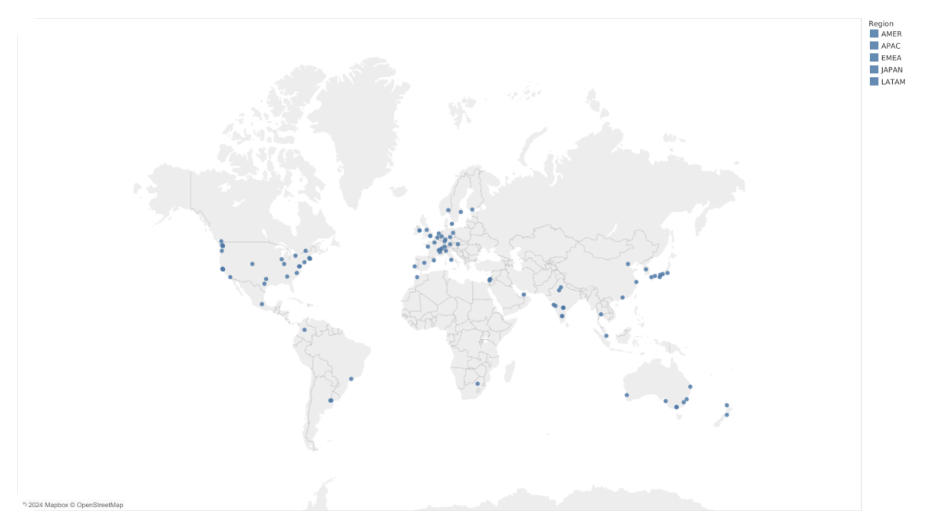
Salesforce operates in 105 offices across 92 cities and supports enterprises in every major market. Industry-specific clouds cover 17 verticals with localized data models and compliance features. Hyperforce enables regional data residency in the US, UK, Germany, India, Japan, and more.
Source: Salesforce
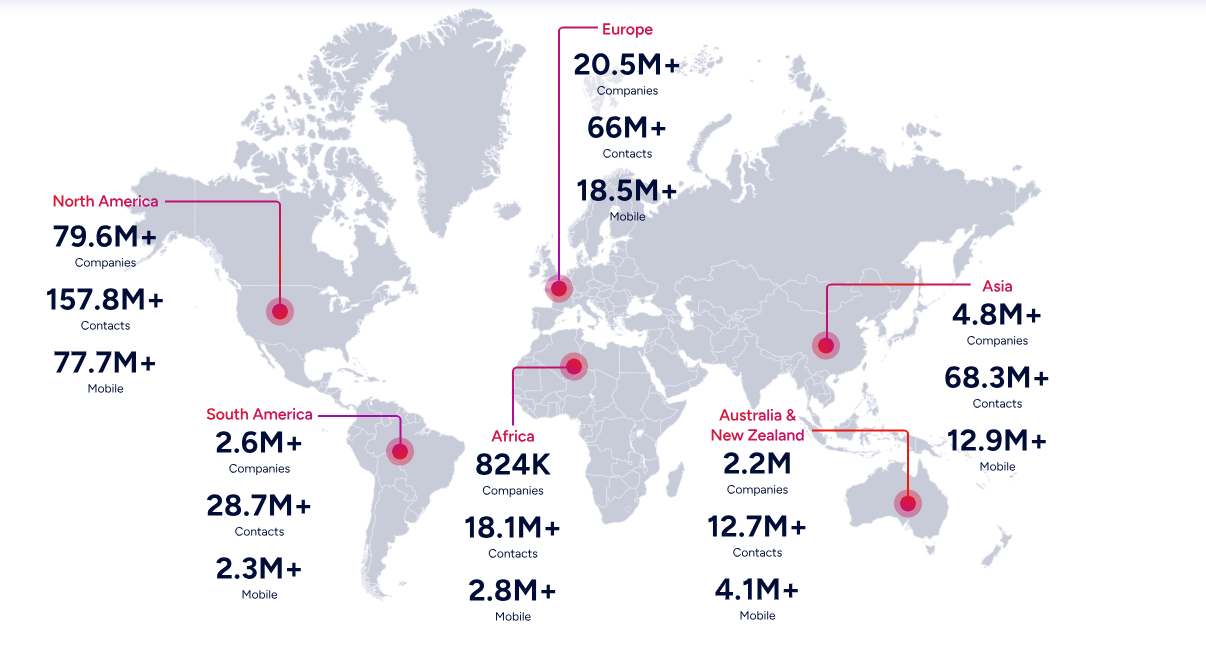
ZoomInfo covers global B2B with 34M+ company profiles outside North America, 200M+ professional profiles outside NA, and 45M+ mobile numbers outside NA. In 2025, ZoomInfo expanded mobile coverage by 1.8 million numbers across six European markets. The data is verified through a pipeline that includes 300+ human researchers and reaches up to 95% accuracy on first-party data.
Source: ZoomInfo
For companies operating exclusively in China, Marketingforce is the natural fit. For global operations, Salesforce and ZoomInfo cover the territory. For B2B companies that need both a CRM and verified intelligence to fuel it, ZoomInfo and Salesforce work together.
AI capabilities take three different forms
All three platforms have invested in AI, but each applies it differently.
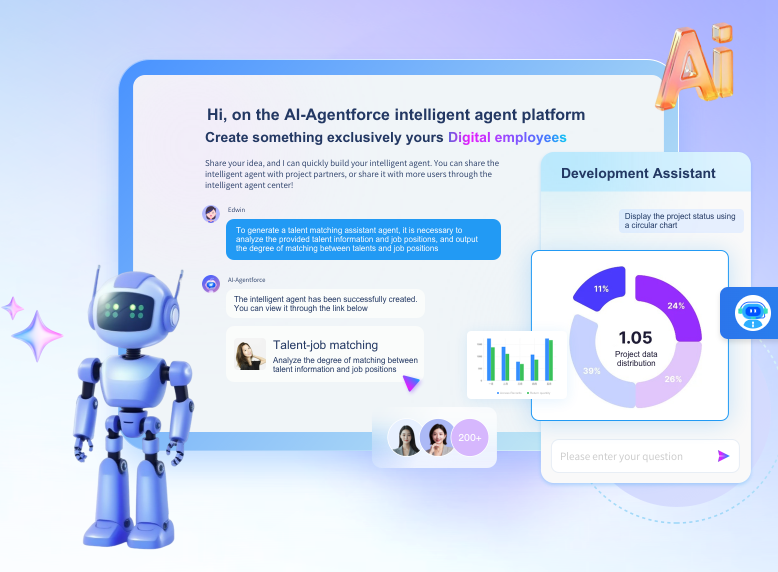
Marketingforce built Tforce, a proprietary large language model trained on marketing domain data. Its flagship AI product, AI-Agentforce, lets companies build, deploy, and manage custom AI agents for marketing, sales, and service.
Source: Marketingforce
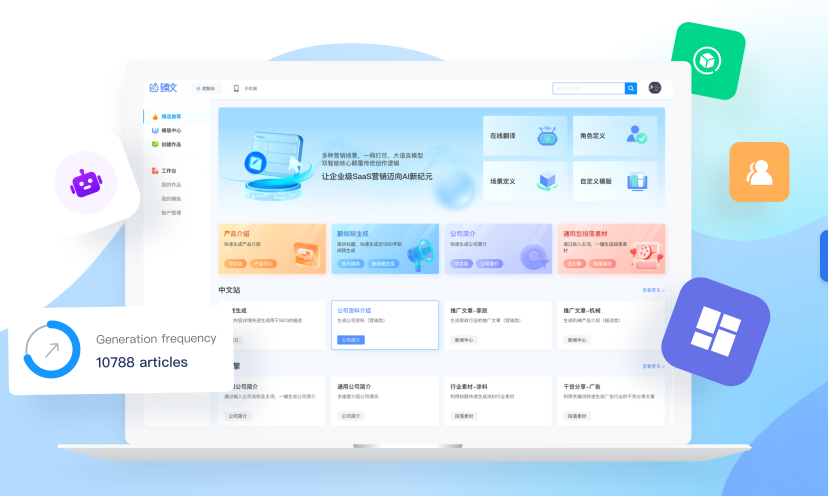
The platform also includes AI content creation tools: ZhenWen for articles, ZhenTu for images, and ZhenShi for video. According to the company, over 90% of customers now include AI modules, and Marketingforce ranked #4 on the "2025 China AI Agent Top 100."
Source: Marketingforce
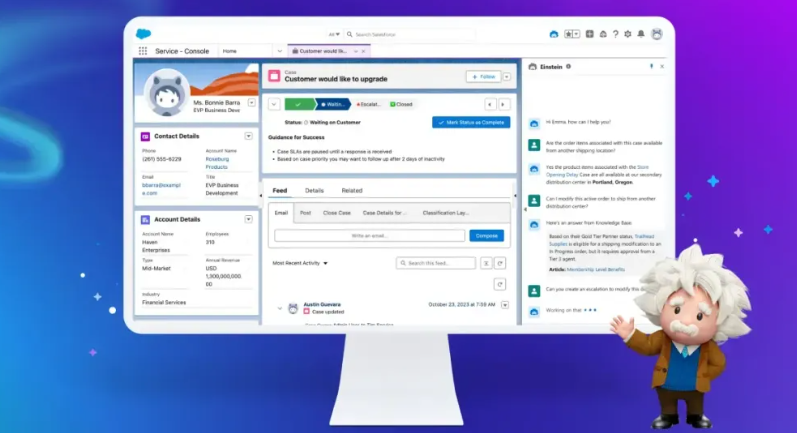
Salesforce launched Agentforce in October 2024, powered by the proprietary Atlas Reasoning Engine. The platform has reached $800M in ARR with 29,000 deals closed. Pre-built agents cover sales, service, marketing, commerce, and IT.
Source: Salesforce
The Einstein Trust Layer provides zero data retention with LLM partners, PII masking, and toxicity detection.
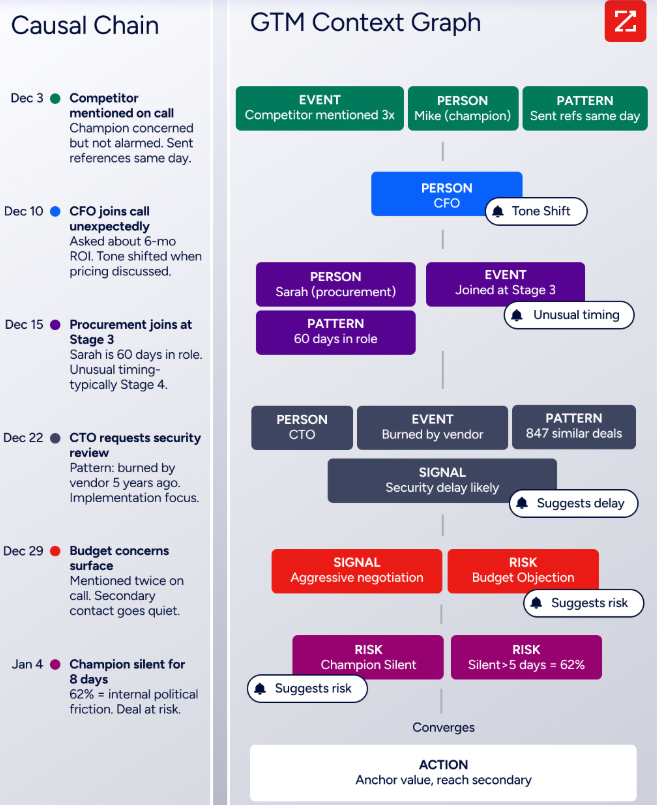
ZoomInfo takes AI in a different direction: intelligence, not just automation. The GTM Context Graph processes 1.5B+ data points daily, combining ZoomInfo's third-party B2B data with a customer's CRM records, conversation intelligence, and behavioral signals.
Source: ZoomInfo
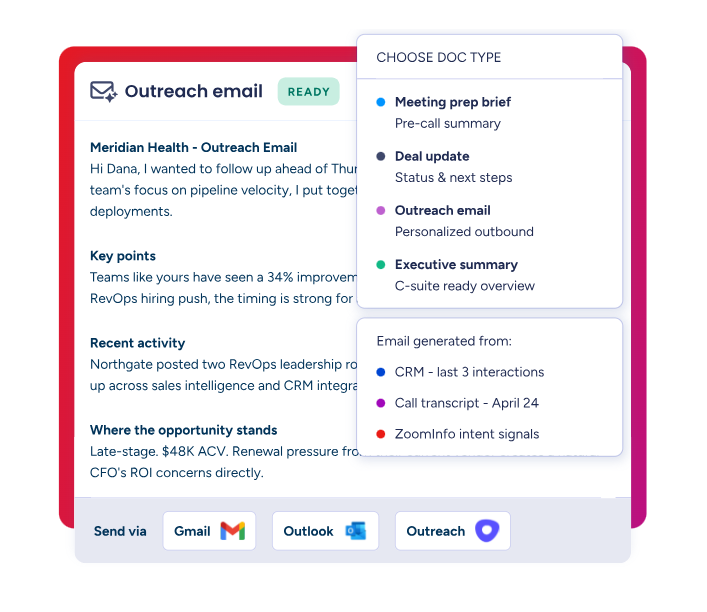
As ZoomInfo's Chief Product Officer Dominik Facher writes: "The CRM recorded the state change. It has no record of why it happened." The GTM Context Graph captures that "why," connecting people, actions, patterns, and outcomes across thousands of deals. AI agents inside GTM Workspace use this context to tell every rep who to contact, when to engage, and what to say.
Source: ZoomInfo
The distinction matters. Marketingforce's AI generates marketing content and automates customer service. Salesforce's AI automates CRM workflows and deflects support cases. ZoomInfo's AI reasons about your go-to-market motion to surface the actions most likely to generate revenue.
Seismic's sales team attributed 39% of active pipeline to opportunities identified or influenced by ZoomInfo signals, boosted productivity by 54%, and saved 11.5 hours per week per seller. (Seismic case study)
The data foundation separates these platforms
This is where the comparison becomes most revealing.
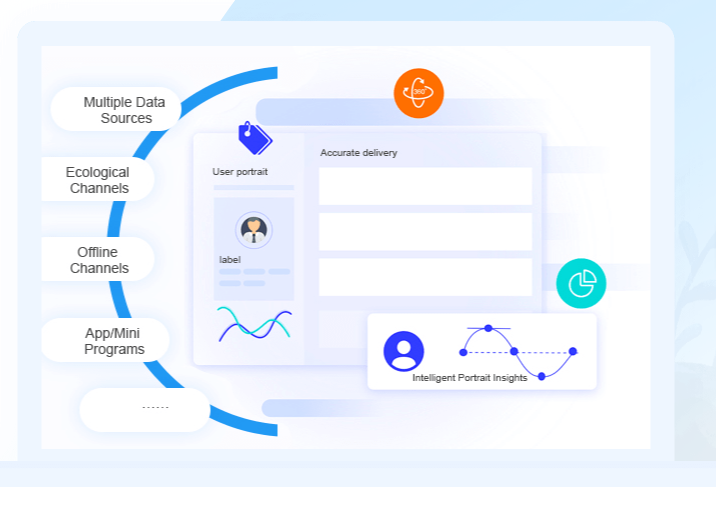
Marketingforce generates data through customer activity. Its CDP ingests from databases, Excel/CSV imports, and API integrations, then unifies records into 360-degree profiles.
Source: Marketingforce
ZhenXunKe provides a B2B prospecting database with reportedly over 200 million corporate profiles and over 60 million executive contacts. This data focuses on the Chinese market and is cross-verified from multiple domestic sources.
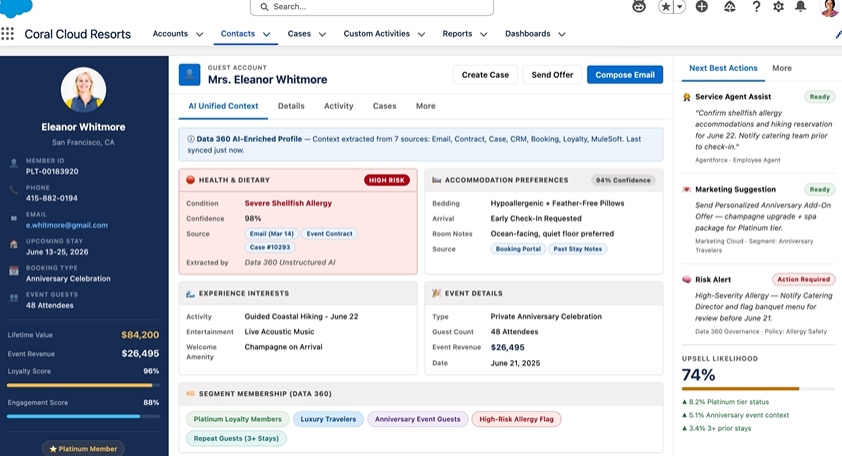
Salesforce collects data through its CRM and the Data Cloud layer, which ingested 112 trillion records in FY26. Data Cloud connects to Snowflake, Databricks, BigQuery, and AWS via zero-copy architecture, unifying customer profiles without duplicating data.
Source: Salesforce
But Salesforce depends on data flowing in from customer systems. As Marc Benioff acknowledged: "You have got to get your data right." The platform provides tools for data unification, but the data itself must come from somewhere.
ZoomInfo is the data. Its 500M contacts and 100M companies are collected through a proprietary pipeline that scans 28 million domains daily, aggregates from 95 million business records via third-party partners, and is verified by 300+ human researchers.

Source: ZoomInfo
The data spans identity (names, titles, verified emails, direct dials), company context (firmographics, technographics, org charts), and live signals (buyer intent, website visitors, job changes, funding events).
This is not just a difference in volume. It's a difference in kind. Marketingforce and Salesforce record what your customers do once they're in your system. ZoomInfo tells you who to target before they ever enter your pipeline, with contact details verified to reach actual people.
In a Fortune 500 competitive RFP analyzing 25 million contacts across vendors, an independent consultant concluded that "no other competitor came even close" to ZoomInfo's data quality.
Snowflake uses ZoomInfo for at least one-third of the most critical data features in its Account Propensity Scoring model, feeding over 70 firmographic and technographic data fields. Accounts monitored using ZoomInfo-powered scores showed 90% higher opportunity open rates and 2x higher customer conversion rates. (Snowflake case study)
Pricing models reflect different business models
Marketingforce does not publish pricing. The English-language homepage offers only "Apply for a trial" and "Consult" options. Based on financial disclosures, the company runs a subscription-based SaaS model with SMB and enterprise tiers.

Source: Marketingforce
SMBs purchase standardized T-Cloud modules with full prepayment. Enterprise accounts get customized implementations with consultative delivery. A separate advertising services layer adds CPM and CPC costs on top of the SaaS subscription.
Salesforce uses per-user tiered pricing that adds up quickly. Sales Cloud ranges from free (2 users) to $550/user/month for Agentforce 1. Most teams need at least the $175/user/month Enterprise edition for AI features and workflow automation. Marketing Cloud starts at $1,500/org/month. Agentforce AI consumption costs $2 per conversation or $500 per 100,000 Flex Credits. Data Cloud credits, Premier Support (30% of license fees), and partner implementation costs stack on top. A June 2025 restructuring raised Enterprise and Unlimited list prices by 6%.
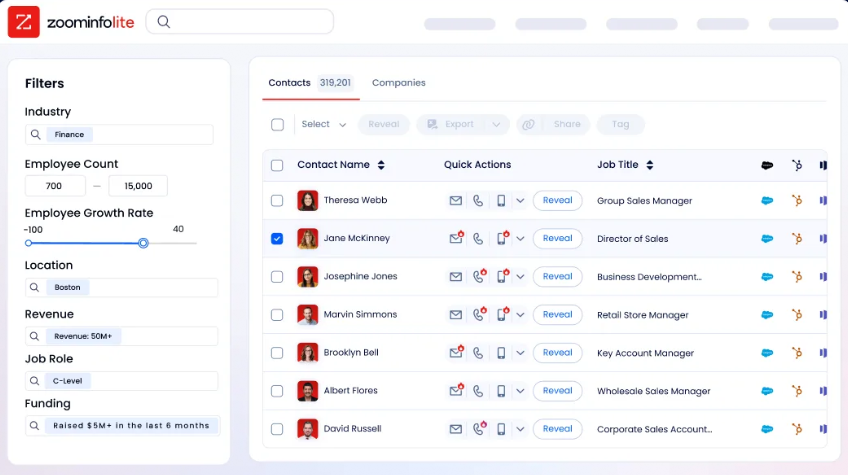
ZoomInfo uses consumption-based pricing scaled around seats, data credits, and AI activity. No prices are publicly listed. The permanent free tier, ZoomInfo Lite, provides access to the B2B database with 10 monthly export credits, individual and company searches, the Chrome extension, and HubSpot integration. A separate 7-day free trial offers broader access to intent signals, email outreach, and core platform features.
Source: ZoomInfo
None of these platforms is cheap at scale. Marketingforce's pricing is opaque to international buyers. Salesforce's layered pricing requires careful budgeting. ZoomInfo's custom quotes mean cost depends on usage volume and feature requirements. The right question isn't which is cheapest, but which delivers the most value for your specific go-to-market motion.
Integration ecosystems show where each platform lives
Marketingforce integrates with China's digital infrastructure. Named integrations include WeChat, WeCom, DingTalk, and Feishu for internal communication, and Tmall, JD.com, Kuaishou, Douyin, Xiaohongshu, and Meituan for e-commerce and membership management. A developer center provides REST APIs for CRM, ERP, and approval workflow integrations, plus a Cloud App Market for third-party enterprise applications. No integrations with Western platforms like Salesforce, HubSpot, Slack, or Zapier were documented.

Source: Marketingforce
Salesforce has the largest enterprise app ecosystem in CRM. AppExchange hosts 9,000+ partner apps with 14+ million installs, and 91% of customers use at least one. Native integrations cover Google Workspace, Microsoft Outlook and Teams, and Slack. MuleSoft extends the platform with hundreds of pre-built connectors for enterprise systems like SAP, Oracle, and Workday. The API portfolio spans 30+ distinct APIs including REST, SOAP, GraphQL, and gRPC.
ZoomInfo connects to 120+ tools through its App Marketplace, covering CRM, marketing automation, sales engagement, data warehouses, and communications platforms.
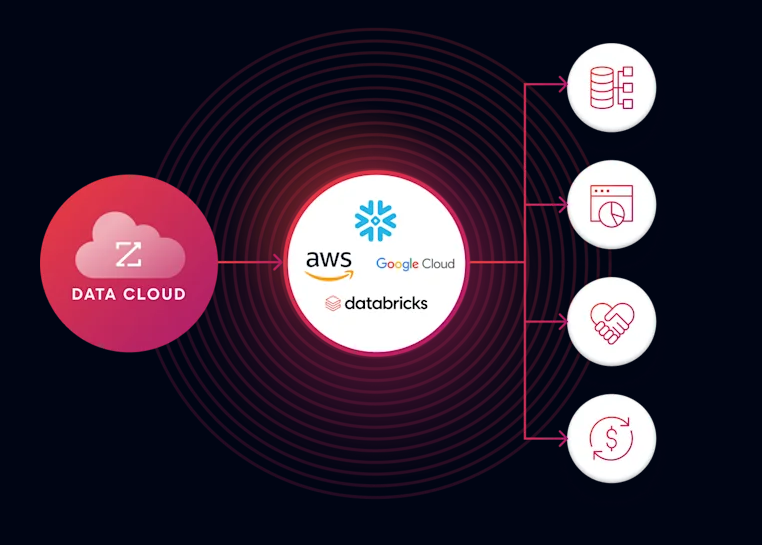
Featured integrations include Salesforce, HubSpot, Microsoft Dynamics 365, and Snowflake. The ZoomInfo MCP server enables AI models like Claude and ChatGPT to access ZoomInfo data natively. Cloud Partners deliver ZoomInfo data directly into AWS, Google Cloud, Snowflake, and Databricks.
Source: ZoomInfo
For Salesforce customers, ZoomInfo's integration means the data advantage doesn't require replacing your CRM. ZoomInfo enriches Salesforce records with verified contacts, company intelligence, and buying signals, making the existing platform more effective.
BDO Canada reduced time spent on internal data dashboard updates by 87% using the ZoomInfo API. "The plug-and-play aspect of the API means I can integrate it very easily into any process and get information at a moment's notice," said Jerry Wilson, Senior Marketing Intelligence Analyst. (BDO Canada case study)
Platform depth vs. intelligence depth
Both Marketingforce and Salesforce compete on breadth: how many modules, how many features, how many use cases they can cover from one platform.
Marketingforce offers 311 modules across Marketing Cloud, Sales Cloud, Business Cloud, Analysis Cloud, Smart Cloud, and DHR (digital HR). This covers marketing automation, social CRM, sales force automation, e-commerce management, business intelligence, AI content creation, and talent assessment and training. The breadth is designed to reduce tool fragmentation for Chinese enterprises.
Salesforce covers sales, service, marketing, commerce, analytics, field service, and ITSM through its Customer 360 suite. Add Slack for collaboration, Tableau for analytics, MuleSoft for integration, and Data Cloud for data unification. The platform can serve as the operating system for an enterprise's customer-facing operations.
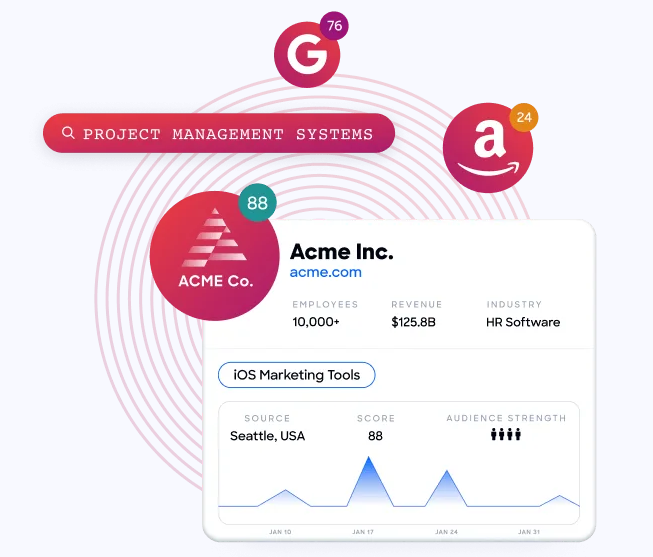
ZoomInfo chose a different competitive axis: intelligence depth. Rather than building another module for every use case, ZoomInfo built a B2B intelligence layer and made it accessible everywhere. Buyer Intent Data tracks signals from 210 million IP-to-Organization pairings and 6 trillion+ new keyword-to-device pairings monthly.
Source: ZoomInfo
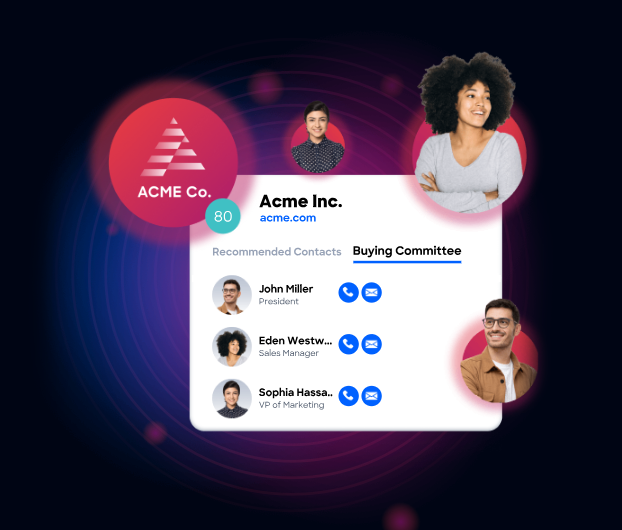
Guided Intent, exclusive to ZoomInfo, identifies topics historically correlated with deal success. Technographics profile the tech stack of 30+ million companies across 30,000+ technologies.
Source: ZoomInfo
The intelligence compounds. When your CRM knows a contact's name and email, you can send a message. When ZoomInfo adds that the contact's company just raised funding, hired three new VPs, and is actively researching your competitor's product category, you know what to say, when to say it, and why it matters now.
Levanta's CEO Ian Brodie described the shift: "ZoomInfo's not just a contact data company anymore. They've built a full system of execution. GTM Intelligence actually works the list, writes the outreach, triggers the play, and helps drive predictable growth." (Levanta case study)
Security and compliance considerations
All three platforms take security seriously, but the compliance landscapes differ.
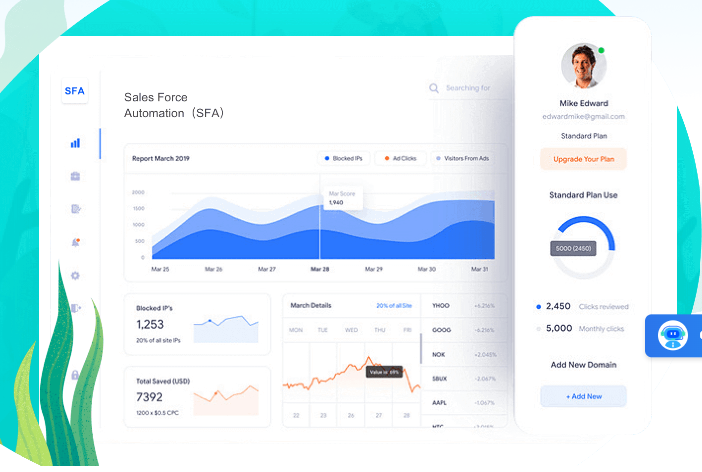
Marketingforce provides DDoS protection, Web Application Firewall, Cloud Security Center, VPC, and endpoint management through its cloud infrastructure. Its SFA product holds ISO 27001 certification and offers a private deployment option for compliance-constrained organizations.
Source: Marketingforce
The privacy policy states that personal information is stored in China, with cross-border transfers requiring explicit user consent. The primary compliance regime is Chinese law, including PIPL (Personal Information Protection Law).
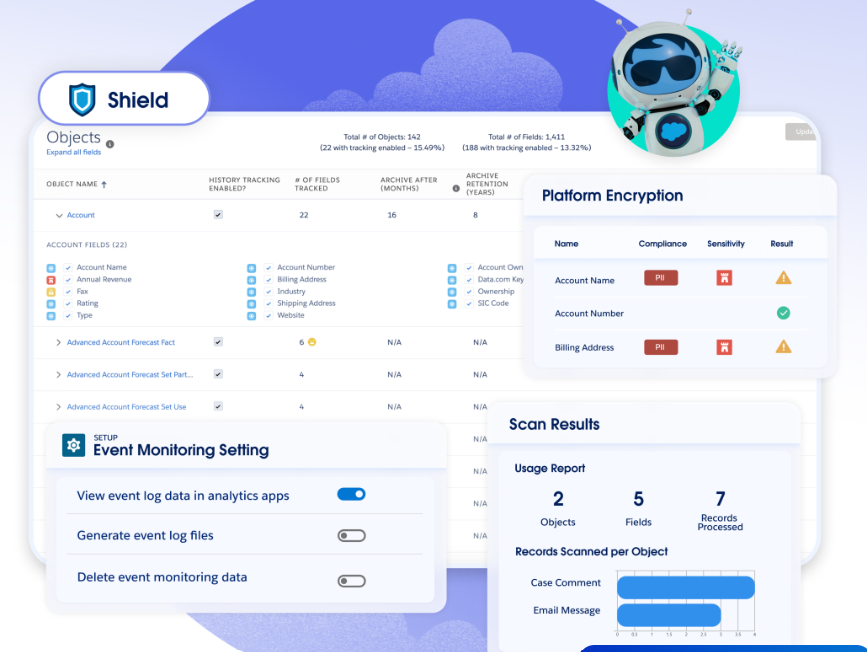
Salesforce holds ISO 27001/27017/27018, SOC 1/2/3, FedRAMP, and HITRUST certifications. Salesforce Shield provides platform encryption with BYOK, event monitoring across 50+ event types, and indefinite field audit trails. The Einstein Trust Layer enforces zero data retention with LLM partners. Hyperforce enables regional data residency, and trust.salesforce.com provides real-time system status.
Source: Salesforce
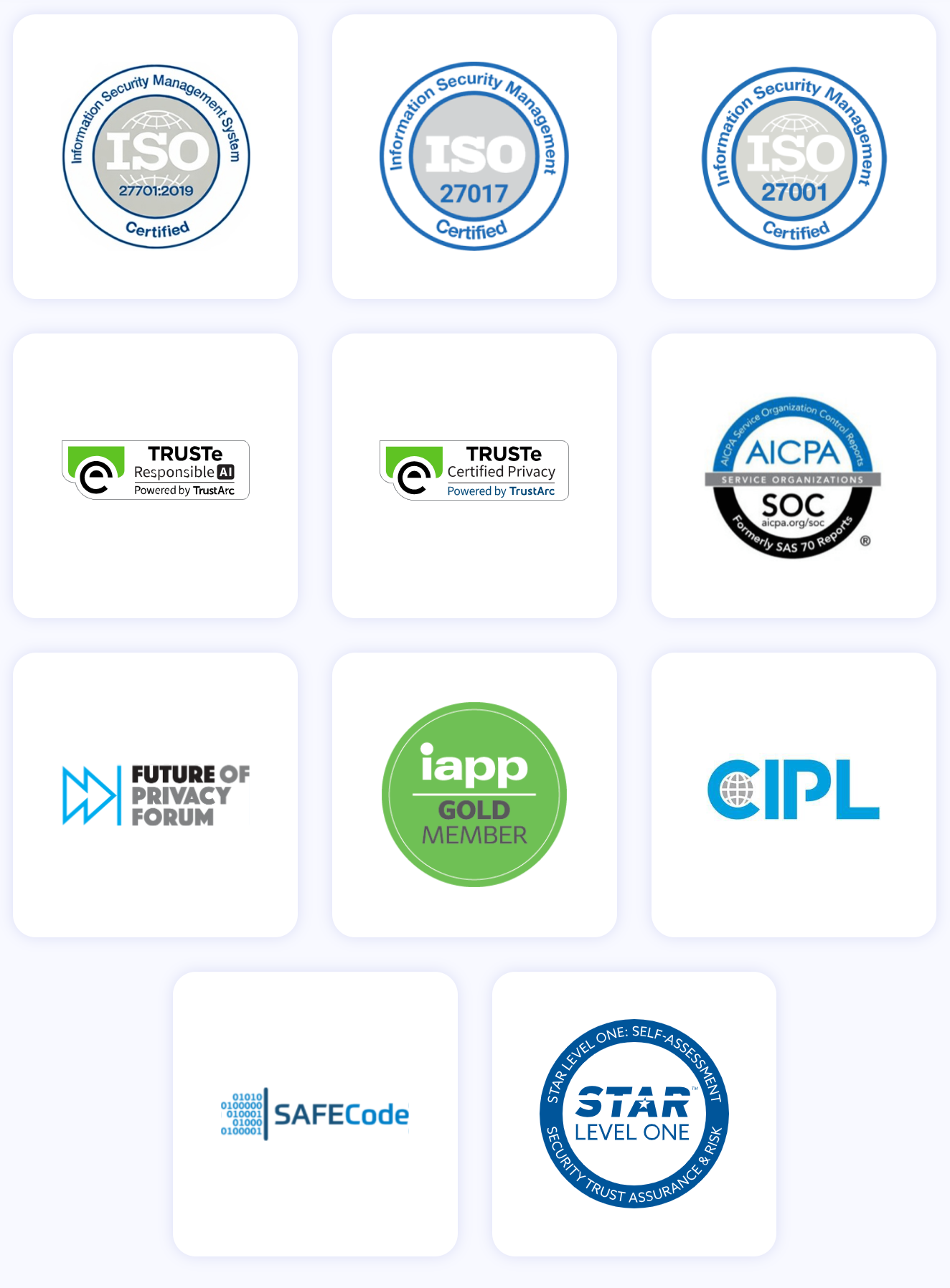
ZoomInfo maintains ISO 27001, ISO 27701, SOC 2 Type II, TRUSTe GDPR, and TRUSTe CCPA certifications, all renewed annually. As a B2B data platform, ZoomInfo is a registered data broker in California and Vermont and operates a dedicated Trust Center.
For multinational companies, Salesforce and ZoomInfo align with Western compliance frameworks (GDPR, CCPA, SOC 2). Marketingforce aligns with Chinese regulatory requirements. Organizations operating across both markets may need both compliance regimes.
Marketingforce vs. Salesforce vs. ZoomInfo: Which should you choose?
The right choice depends on where your customers are and what your go-to-market motion needs most.
Choose Marketingforce if:
Your business operates primarily in China's digital ecosystem
You need native integration with WeChat, Douyin, Baidu, and Tmall
Your marketing requires WeChat private-domain management and social commerce
You want a single Chinese-language platform covering marketing, sales, and e-commerce
Content creation for Chinese social platforms is a daily operational need
Choose Salesforce if:
You need a global enterprise CRM with the largest application ecosystem
Your organization spans multiple departments that all need customer data
You want industry-specific solutions with localized compliance
You have the budget and admin resources for a complex enterprise platform
Autonomous AI agents for service, sales, and marketing are a priority
Choose ZoomInfo if:
Verified B2B contact data and company intelligence are critical to your pipeline
You want AI that reasons about your deals, not just automates tasks
You need an intelligence layer that works inside Salesforce, HubSpot, or any tool via API
Your sales team needs direct dials and emails that actually connect
You want to build your go-to-market strategy on data, then choose where to execute it
See how ZoomInfo's data foundation powers your GTM with a free trial.
These are not always competing choices. Marketingforce serves a market that Salesforce and ZoomInfo do not cover natively. Salesforce and ZoomInfo work together: ZoomInfo provides the verified intelligence that makes Salesforce's CRM, marketing automation, and AI agents more effective. For B2B companies operating globally, the combination of Salesforce as the system of record and ZoomInfo as the system of intelligence is a proven pattern used by companies like Snowflake, Palo Alto Networks, and Seismic.
For a detailed breakdown of how Salesforce and ZoomInfo compare head to head, see our Salesforce vs. ZoomInfo comparison.
The real question isn't which platform has the most features. It's whether your go-to-market team has the data to find, reach, and understand their buyers. Without that foundation, every feature is guesswork.
Marketingforce vs. Salesforce vs. ZoomInfo FAQ
What is the core difference between Marketingforce, Salesforce, and ZoomInfo?
Marketingforce is a full-stack marketing and sales SaaS platform built for the Chinese digital ecosystem, with native WeChat, Douyin, and Baidu integrations. Salesforce is the world's largest CRM platform, serving global enterprises across sales, service, marketing, and commerce with 9,000+ partner apps. ZoomInfo is a B2B data intelligence and GTM execution platform built on the industry's largest verified contact database (500M contacts, 100M companies, 135M+ verified phone numbers).
Can ZoomInfo and Salesforce work together?
Yes. ZoomInfo has a native Salesforce integration that enriches CRM records with verified contacts, company intelligence, buyer intent signals, and technographic data. The two platforms complement each other: Salesforce is the system of record for customer interactions, and ZoomInfo is the intelligence layer that ensures the data inside Salesforce is accurate, complete, and actionable. Companies like Snowflake, Palo Alto Networks, and Seismic use both together.
Which platform is best for companies operating in China?
Marketingforce is the strongest choice for the Chinese market. It integrates natively with WeChat, WeCom, Douyin, Baidu, Tmall, JD.com, and other Chinese platforms. It serves over 200,000 clients in China across consumer goods, automotive, financial services, B2B, and education. Neither Salesforce nor ZoomInfo offers the same depth of integration with China's domestic digital ecosystem.
How does pricing compare across the three platforms?
None of the three publishes complete pricing. Marketingforce and ZoomInfo are entirely custom-quoted. Salesforce publishes list prices starting at $25/user/month for its Starter Suite, with enterprise plans reaching $550/user/month. Marketing Cloud starts at $1,500/org/month, with additional consumption costs for AI and data. ZoomInfo offers a permanent free tier (ZoomInfo Lite) with 10 monthly export credits, plus a 7-day free trial of broader capabilities.
Which platform has the best AI capabilities?
Each platform applies AI to different problems. Marketingforce's Tforce LLM and AI-Agentforce focus on content generation and marketing automation for the Chinese market. Salesforce's Agentforce focuses on autonomous agents for sales, service, and marketing workflows, with $800M in ARR and 29,000 deals closed. ZoomInfo's GTM Context Graph focuses on reasoning about your deals and go-to-market motion, processing 1.5B+ data points daily to reveal why deals move or stall. The best choice depends on whether your priority is content automation, workflow automation, or intelligence-driven selling.
Which platform provides the most comprehensive B2B data?
ZoomInfo leads in B2B data. Its database covers 500M contacts, 100M companies, 135M+ verified phone numbers, 120M direct-dial phone numbers, and 200M+ verified business email addresses globally. A Fortune 500 competitive evaluation of 25 million contacts across vendors concluded that no other competitor came close. Salesforce's Data Cloud unifies data from customer systems but does not provide third-party B2B contact data. Marketingforce's ZhenXunKe offers a Chinese-focused B2B prospect database with reportedly 200 million corporate profiles.
Is Marketingforce usable outside of China?
Marketingforce has limited readiness for international buyers. There are no native integrations with LinkedIn, Google Ads, Meta Ads, Salesforce, or HubSpot. The help center is Chinese-only and login-gated. English product pages provide surface-level descriptions without technical depth. The T-Cloud International Version exists for Chinese companies expanding overseas, but the platform's core strength and ecosystem remain China-focused.
Do any of these platforms offer a free tier?
Salesforce offers a free CRM for up to 2 users with basic lead and opportunity management. ZoomInfo offers ZoomInfo Lite, a permanent free tier with access to its B2B database, 10 monthly export credits, advanced search filters, the Chrome extension, and HubSpot integration. Marketingforce does not offer a publicly described free plan; trial access requires a sales contact form.
More Salesforce comparisons:
