
If you're comparing Marketo vs. Pardot for your B2B marketing automation, you're already asking the right question. Both are Gartner Magic Quadrant Leaders. Both handle lead scoring, email nurturing, and campaign orchestration. Both cost serious money.
But most comparisons leave out a key fact: neither platform can be better than the data feeding it. A perfectly orchestrated nurture sequence sent to the wrong people, at the wrong time, based on stale contact records is just well-automated waste.
The questions that actually determine which platform wins for your team:
Are you already deep in the Salesforce ecosystem, or do you need cross-CRM flexibility?
Does your team have a dedicated marketing operations resource, or do you need something approachable?
How complex are your nurture programs: simple drip sequences, or multi-stream engagement with content exhaustion logic?
Do you need marketing automation to live natively inside your CRM, or can it operate as a connected but separate system?
Is your biggest bottleneck building campaigns, or identifying the right accounts and contacts to target?
In short, here's what we recommend:
Marketo (Adobe Marketo Engage) is the workhorse for B2B marketing teams that need strong automation. Its Smart Campaign engine handles everything from multi-dimensional lead scoring to engagement programs with content exhaustion tracking. Native bidirectional sync with both Salesforce and Microsoft Dynamics gives it CRM flexibility that Pardot can't match. Add Interactive Webinars, Dynamic Chat, and multi-touch attribution via Marketo Measure, and you have the most capable marketing automation platform available.
The trade-off: a steep learning curve, an aging interface, and pricing that demands dedicated admin staffing to justify.
Pardot (Salesforce Marketing Cloud Account Engagement) is designed for B2B teams already running on Salesforce CRM. Because it shares the same data model as Sales Cloud and Service Cloud, marketing and sales work from identical records with zero sync lag. Its dual scoring-plus-grading system, Engagement Studio nurture builder, and Einstein AI scoring make it a capable automation platform. Recent additions through Agentforce bring AI-powered campaign creation and native SMS.
But Pardot's automation logic is less flexible than Marketo's, its email and landing page builders feel dated, and its newest features require purchasing additional consumption credits on top of already-premium pricing.
Both platforms execute campaigns well. But execution without intelligence is expensive guesswork. The best nurture program underperforms when it targets incomplete buying committees, misses decision-makers, or ignores accounts actively researching your category right now. That's the gap a data intelligence platform fills.
ZoomInfo is a B2B data intelligence and GTM platform that provides the data layer both Marketo and Pardot need to perform. With 500M contacts, 100M companies, and 135M+ verified phone numbers, plus 200M+ verified business email addresses, ZoomInfo gives marketing teams verified buying committees to target rather than the partial, decaying records sitting in most CRMs.
Its GTM Context Graph processes 1.5B+ data points daily, combining this B2B data with your CRM records, conversation transcripts, and behavioral signals to reveal which accounts are actively in-market and why deals move or stall.
That intelligence reaches your team through GTM Workspace for sellers, GTM Studio for marketers and RevOps, or API and MCP that pipe into Marketo, Pardot, or any other tool in your stack.
If building your campaigns on verified data and real-time buying signals sounds like the missing piece, see how ZoomInfo works with your marketing automation platform.
Marketo vs. Pardot vs. ZoomInfo at a glance
Marketo (Adobe) | Pardot (Salesforce) | ZoomInfo | |
|---|---|---|---|
Primary function | Enterprise marketing automation | CRM-native marketing automation | B2B data intelligence and GTM platform |
Best for | Complex, multi-touch B2B campaigns | Salesforce-native marketing-sales alignment | Identifying and enriching the right accounts and contacts |
CRM integration | Bidirectional sync with Salesforce and Microsoft Dynamics | Native on Salesforce (same data model) | Integrates with Salesforce, HubSpot, Dynamics, and 120+ tools |
Lead scoring | Multi-dimensional behavioral + demographic scoring | Dual scoring (engagement) + grading (fit) + Einstein AI | Intent signals, account fit scoring, buying group identification |
ABM capabilities | Lead-to-account mapping, Predictive Engagement Score | Einstein Key Account Identification, ABM dashboards | Intent data, website visitor ID, cross-channel ABM advertising |
AI features | Agentic Lead Orchestration (announced), GenAI email creation | Agentforce campaign creation, Einstein scoring | GTM Context Graph, AI-drafted outreach, predictive account scoring |
Email/campaign execution | Full campaign orchestration with Smart Campaigns | Engagement Studio nurture builder | Not a campaign execution tool (feeds data into your MAP) |
Pricing | Custom-quoted (contact-volume-based) | $1,250–$15,000/org/month | Custom-quoted (consumption-based) |
Free trial | No | No | 7-day free trial + permanent free tier (ZoomInfo Lite) |
Learning curve | Steep | Steep (Salesforce ecosystem knowledge required) | Moderate (90-day structured onboarding) |
Campaign automation: where Marketo leads and Pardot follows
Both platforms handle the core job of B2B marketing automation: capturing leads, nurturing them through sequences, scoring their readiness, and handing them to sales. The differences are in depth and flexibility.
Marketo's automation engine is built around the Smart Campaign, a building block that handles everything from sending emails to updating CRM fields to triggering webhooks.
Source: Adobe
Each Smart Campaign combines a Smart List (who qualifies), a Flow (what happens), and a Schedule (when it runs). Triggers and filters can coexist in the same campaign, so you can build targeted, real-time automations without creating separate campaign objects for each condition.
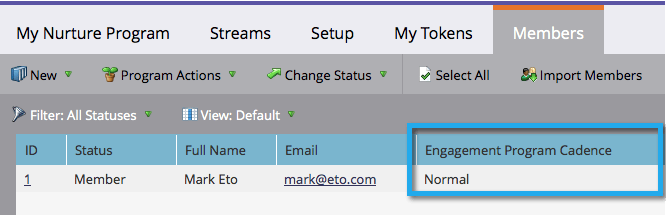
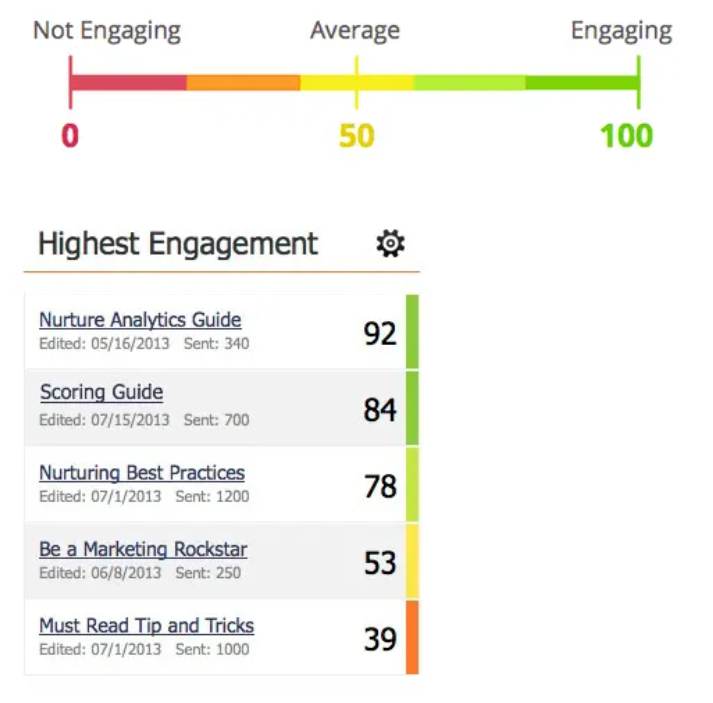
For structured nurture, Marketo's Engagement Programs deliver multi-stream content with configurable cadences, per-person pause and resume controls, and automatic exhaustion detection that flags when a lead has consumed all content in a stream.
Source: Adobe
The platform assigns a 0–100 Engagement Score to each piece of content, calculated from opens, clicks, unsubscribes, and program success metrics, so you know which assets work inside each nurture track.
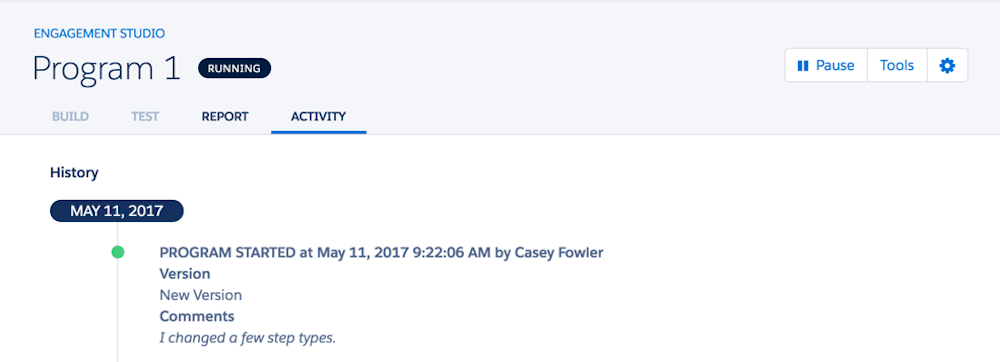
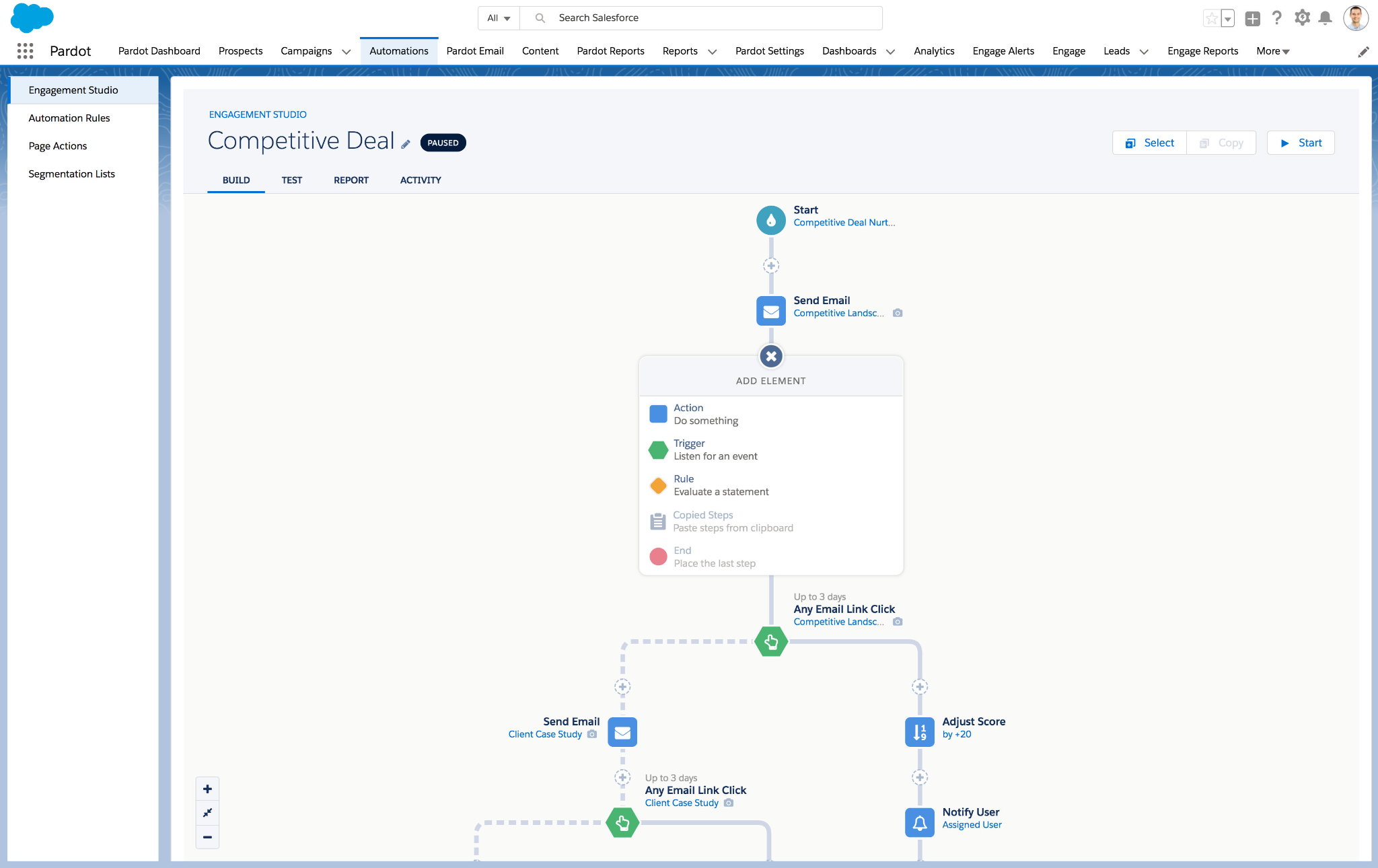
Pardot's automation runs through Engagement Studio, a visual builder using trigger, rule, and action steps. It's capable: you can branch based on prospect behavior, apply wait steps, and set up multi-path sequences.
Source: Salesforce
But TrustRadius reviewers note that Pardot is "very limited on the marketing automation aspect" compared to Marketo, and working around its constraints can be frustrating. Engagement Studio supports up to five conditions per rule step, which works for standard nurture programs but limits teams running complex, multi-dimensional campaign logic.
Where Pardot gains ground is in its Agentforce integration. Marketers can now build entire campaigns via natural language prompts, with AI generating campaign briefs, audience segments, email copy, and customer journeys. This collapses a multi-hour manual process into minutes, a real productivity gain for teams that don't need Marketo-level customization.

Source: Salesforce
The practical takeaway: Marketo gives you more control over how campaigns behave. Pardot gives you a faster path from idea to execution, especially if your campaigns follow common B2B patterns rather than requiring custom logic at every step.
For a deeper look at Marketo's campaign engine, scoring logic, and overall platform, see our Marketo Review.
CRM integration is Pardot's defining advantage
This is where Pardot's architectural decision pays off.
Pardot is built natively on the Salesforce platform. It shares the same data model, objects, and UI as Sales Cloud and Service Cloud. When a prospect fills out a form, their engagement data appears on the lead record in Salesforce immediately, not after a sync cycle.
Source: Salesforce
When sales updates a deal stage, marketing sees it in real time. TrustRadius reviewers consistently describe this as "using these two tools is like using only one."
This matters because the biggest source of friction in B2B marketing is the gap between marketing data and sales data.
When your marketing automation platform and CRM are separate systems connected by a sync, you get delays, field mapping errors, and the constant risk that sales and marketing are looking at different versions of the same lead. Pardot eliminates that category of problems for Salesforce organizations.
Marketo takes a different approach. Its native bidirectional sync with Salesforce runs continuously with a five-minute pause between sync cycles, covering leads, contacts, accounts, opportunities, and campaigns. It also supports native sync with Microsoft Dynamics and Veeva CRM for life sciences customers.
This CRM flexibility matters for organizations not locked into Salesforce, or those running multi-CRM environments. But the sync is still a sync: a separate system exchanging data with your CRM rather than living inside it.
The decision often comes down to a simple question: Is your company all-in on Salesforce? If yes, Pardot's native integration is hard to beat. If you're on Dynamics, use multiple CRMs, or might switch CRMs in the future, Marketo's cross-platform flexibility matters.
Neither platform solves the data problem
Here's the gap both Marketo and Pardot share: they automate what you give them, but they don't tell you who's missing.
A marketing automation platform can score the leads in your database. It can nurture the contacts on your lists. It can attribute revenue to campaigns that touched known prospects.
What it cannot do is identify the three other decision-makers on a buying committee who never filled out a form, or detect that a target account just started researching your competitor's category, or verify that the email addresses in your CRM still work.
Industry data shows email lists decay at roughly 22% per year. People change jobs, companies restructure, contacts go stale. Both Marketo and Pardot charge based on database or contact size, so you're paying to store and message addresses that bounce, drag down your sender reputation, and skew your engagement metrics.
This is the problem ZoomInfo was built to solve. Instead of waiting for prospects to identify themselves through form fills and website visits, ZoomInfo provides the picture upfront: 500M contacts, 100M companies, and 135M+ verified phone numbers, plus 200M+ verified business email addresses, verified through a multi-source pipeline backed by 300+ human researchers and achieving 95% accuracy on first-party data.
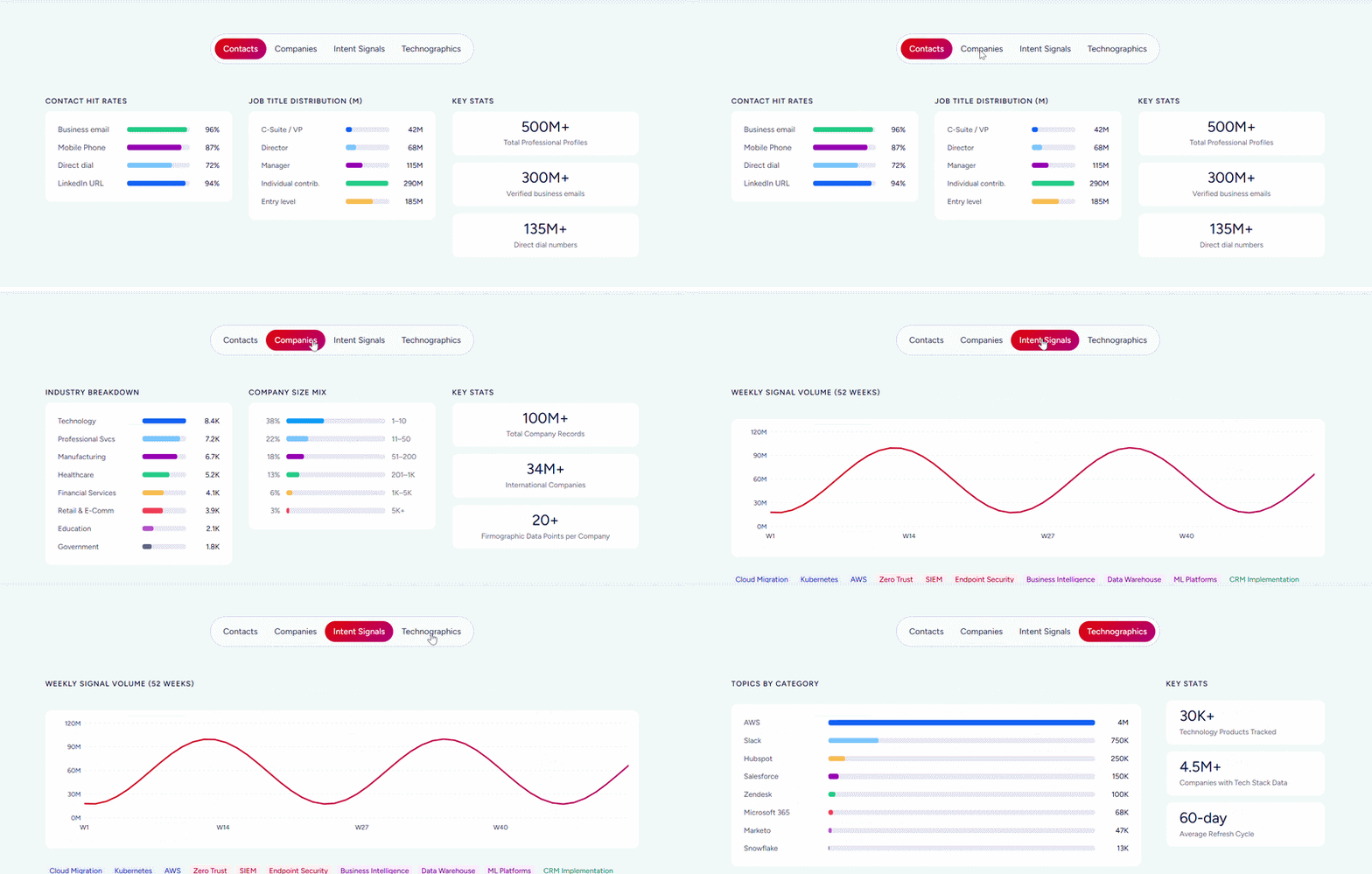
For marketing teams running Marketo or Pardot, ZoomInfo changes the starting point. Instead of building campaigns around whoever happens to be in your database, you build campaigns around the actual buying committee: verified contacts with direct dials and business emails, enriched with firmographics, technographics, and org chart data.
Vensure scaled prospecting with ZoomInfo's data: "ZoomInfo gives us the information we need to execute. We don't have to go through and spend our time digging. It's already there, so we can be three steps ahead." (Vensure Case Study)
Lead scoring approaches reflect different philosophies
All three platforms score leads, but from different vantage points.
Marketo uses multi-dimensional scoring where separate scores for behavioral activity and demographic/firmographic fit run in parallel. Smart Campaign flow steps increment or decrement numerical scores based on configurable rules: page visits, email clicks, form fills, job title, company size, and hundreds of other signals.
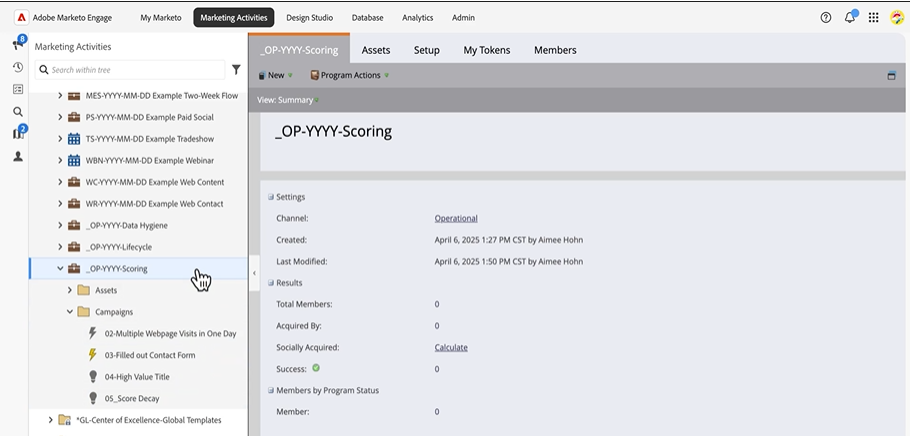
Source: Adobe
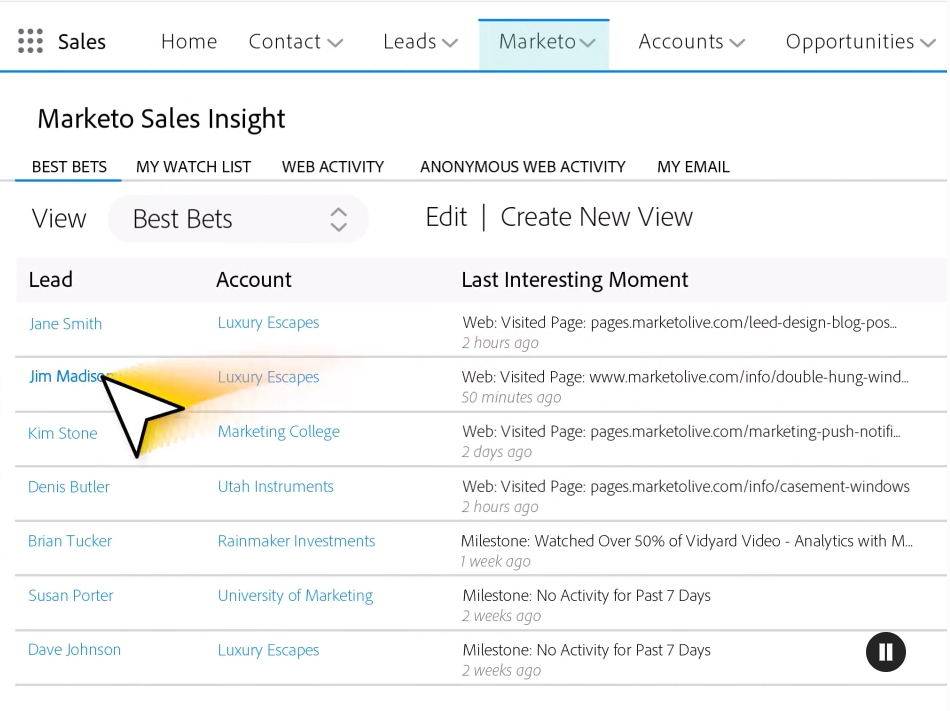
Scores can include decay logic that reduces values for inactivity, preventing stale leads from cluttering the pipeline. The system feeds into Sales Insight's "Best Bets", a ranked list of hot leads surfaced inside Salesforce for sales reps.
Pardot takes a dual approach: scoring measures implicit interest (what a prospect does), while grading measures explicit fit (who the prospect is). Grades run from F to A+ based on firmographic criteria like job title, company size, and industry. On top of this, Einstein Behavior Scoring assigns a 0–100 ML-powered score updated every four hours, while Einstein Lead Scoring analyzes historical conversion data to predict which current leads are most likely to convert. Three scoring layers working together is a real strength.
ZoomInfo scores from the opposite direction: not "how engaged is this lead with our content?" but "how likely is this account to buy?" Buyer Intent data tracks signals from 210 million IP-to-Organization pairings and 6 trillion+ new keyword-to-device pairings sourced monthly.
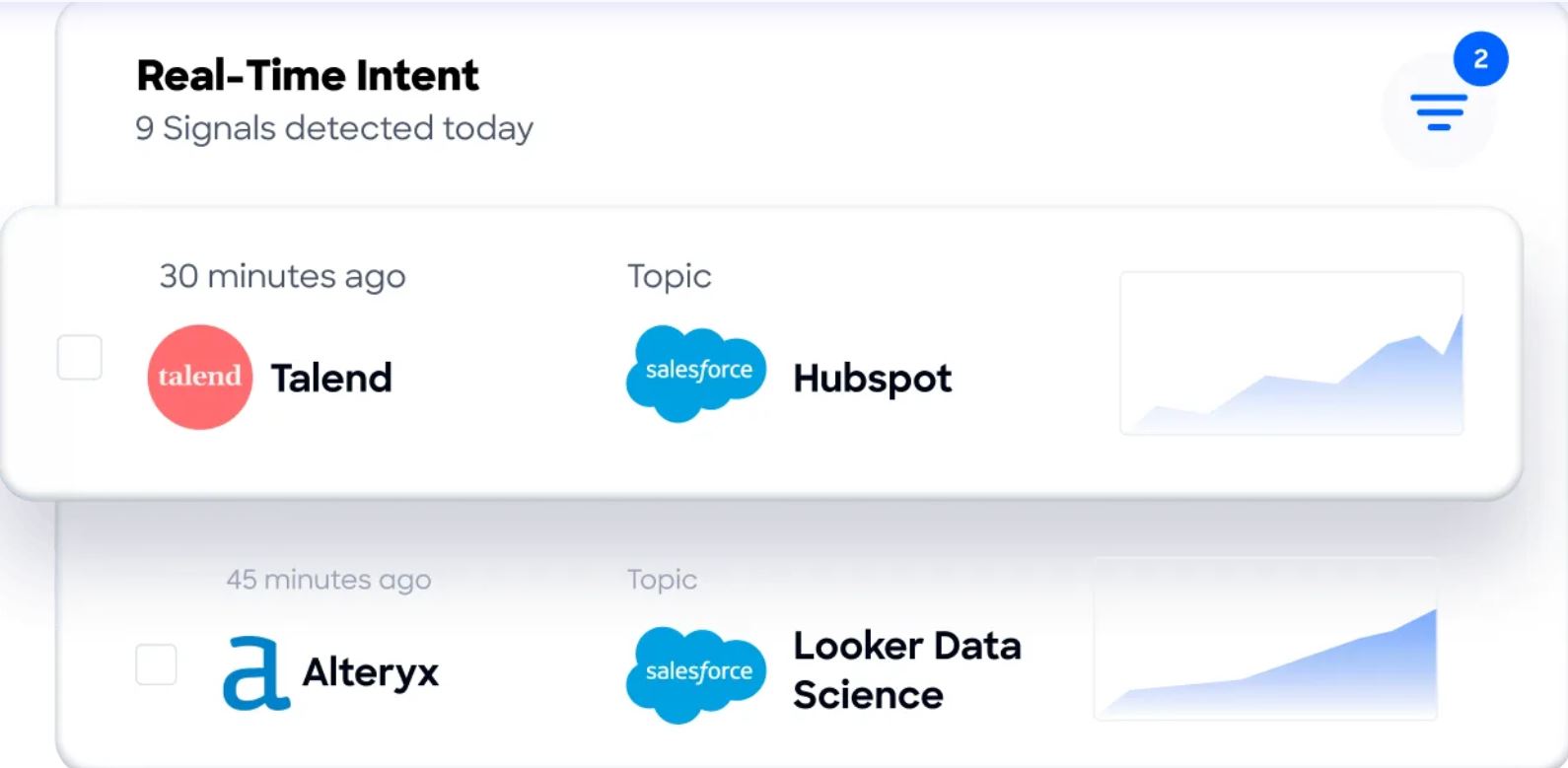
Guided Intent, exclusive to ZoomInfo, identifies topics historically correlated with deal success rather than requiring manual topic selection.
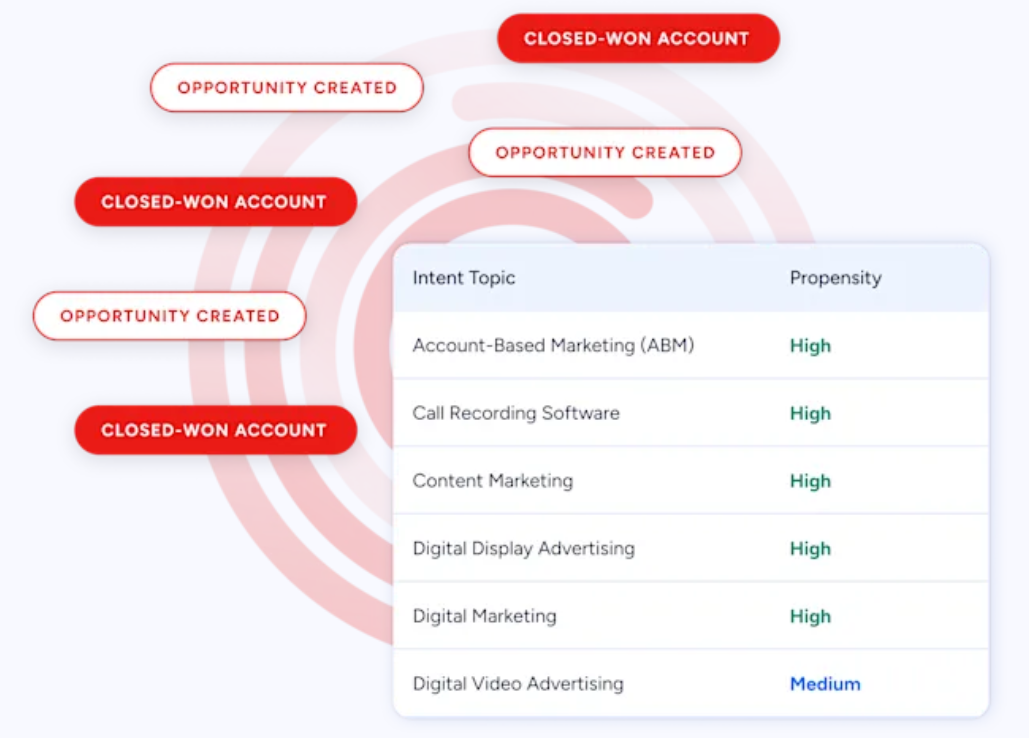
The Account Fit Score uses predictive AI to score accounts 0–100 based on which company attribute patterns predict conversion.
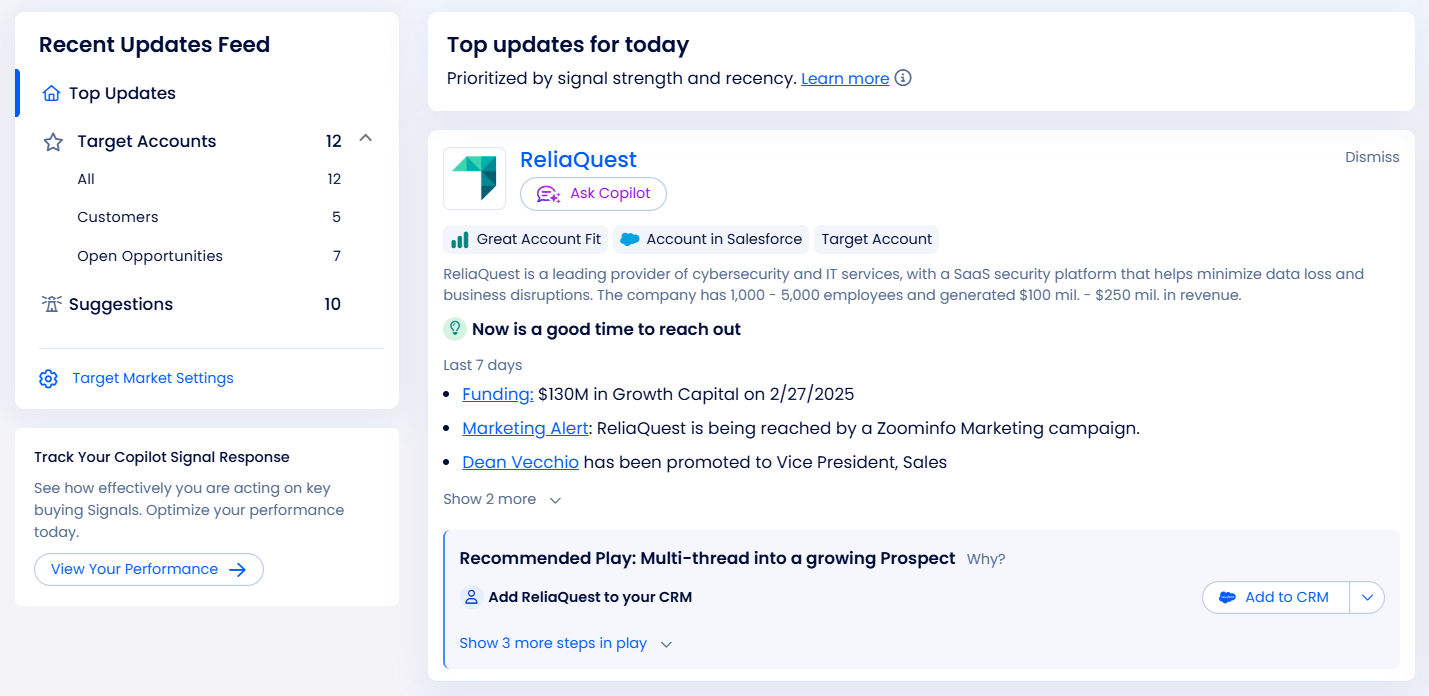
The three approaches complement each other.
ZoomInfo tells you which accounts are worth targeting before they've visited your website. Marketo or Pardot tells you how engaged those accounts become once they enter your database. Used together, you score on both readiness (ZoomInfo intent) and engagement (MAP behavioral scoring), giving sales a two-dimensional signal more reliable than either alone.
Seismic attributed 39% of active pipeline to opportunities identified or influenced by ZoomInfo signals, with their sales team boosting productivity by 54%. "That combination of our internal CRM data, external signals, and AI that's given all that context has helped us craft very specific account- and persona-based messages. And people have responded to them right away." (Seismic Case Study)
ABM capabilities compared
Account-based marketing is where these platforms' differences become most visible.
Marketo supports ABM through lead-to-account mapping with eight matching methods and a Predictive Engagement Score (PES) that scores account-level engagement using page views, contact count, recency, and historical deal data. The PES surfaces inside Salesforce page layouts, and Marketo Measure (available in the Ultimate tier) adds account-based attribution connecting ABM efforts to revenue outcomes.
Source: Adobe
The approach works but requires a data threshold (at least 25 accounts with closed-won opportunities and 25 without) to build an accurate model.
Pardot brings ABM natively into Salesforce with Einstein Key Account Identification, which builds scoring models from your historical opportunity data to rank accounts by purchase likelihood. It identifies when multiple users from the same company engage with marketing content and flags this as a buying committee signal.
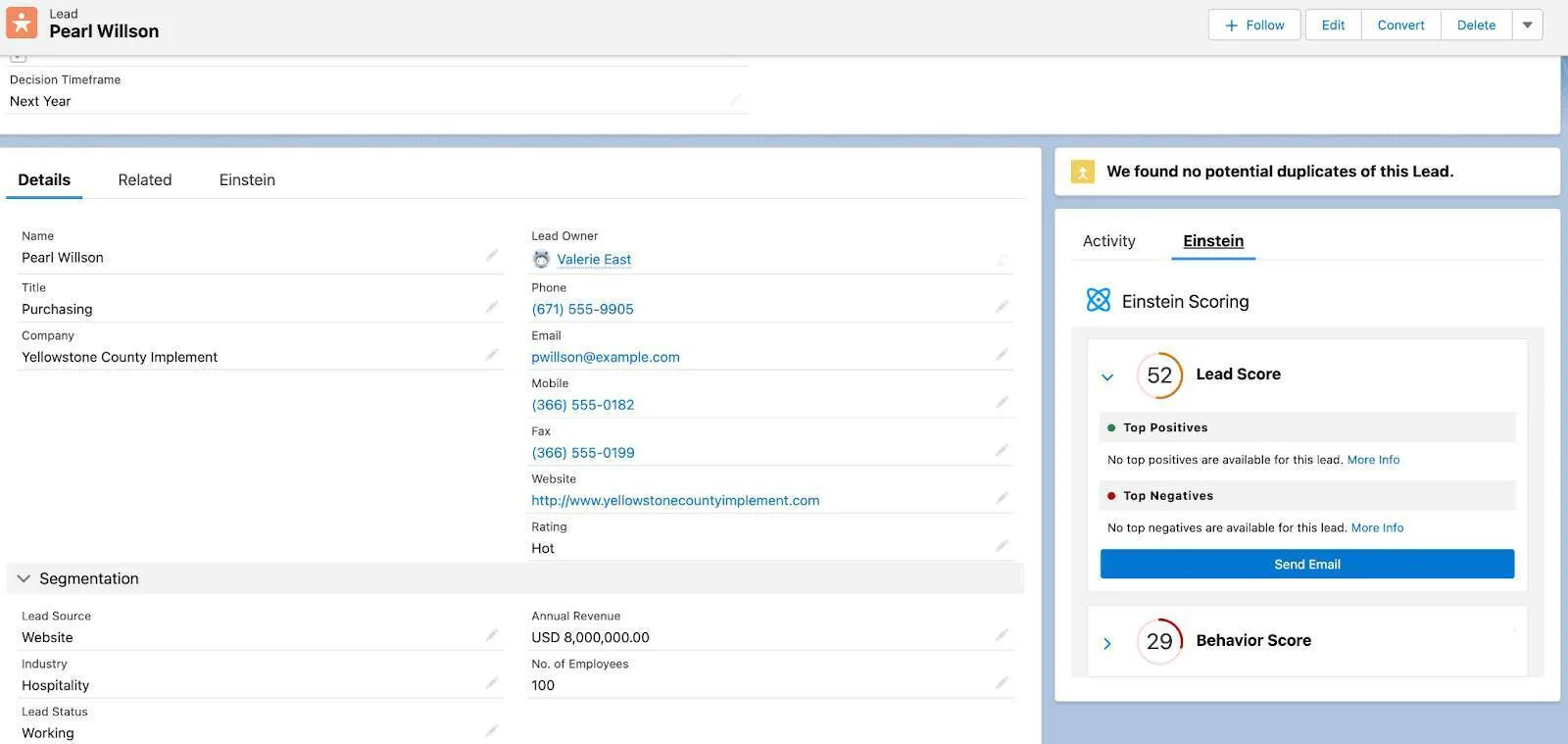
Source: Trailhead
The ABM dashboard tracks pipeline and revenue by target account.

Source: Salesforce
ZoomInfo approaches ABM from the intelligence layer. Where Marketo and Pardot score and nurture accounts already in your CRM, ZoomInfo identifies which accounts should be in your CRM. Buyer Intent detects when companies actively research relevant topics.
WebSights resolves anonymous website traffic to companies and surfaces individual contacts within those companies.
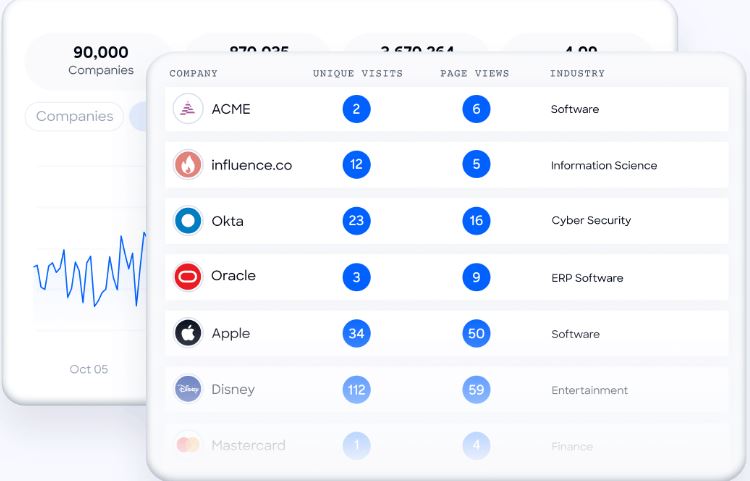
The native DSP deploys display ads targeting accounts based on 300+ company attributes. And FormComplete reduces forms to a single field while auto-appending the remaining data. Smartsheet reported a 40%+ increase in form fills, 84% increase in MQLs, and 59% increase in win rate after implementing it.
The most effective ABM programs use all three layers: ZoomInfo to identify and prioritize accounts showing buying signals, then Marketo or Pardot to orchestrate personalized campaigns against those accounts, with engagement data flowing back to refine targeting over time.
Impartner saw a 45% increase in website engagement and saved 15 hours through automation after implementing ZoomInfo for their ABM program. "ZoomInfo has literally changed the way we go to market." (Impartner Case Study)
AI features are evolving fast on all three platforms
All three vendors are investing in AI, but the capabilities differ.
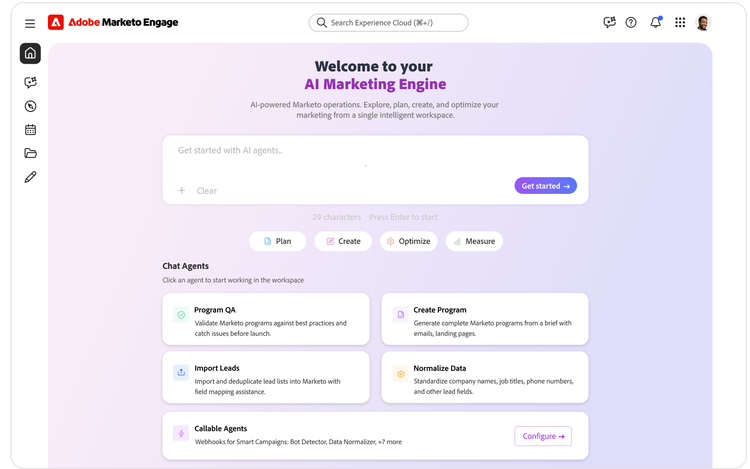
Marketo announced an Agentic Lead Orchestration engine at Adobe Summit 2025, a visual canvas where marketers collaborate with an AI-powered Journey Agent to design, execute, and optimize marketing journeys.
Source: Adobe
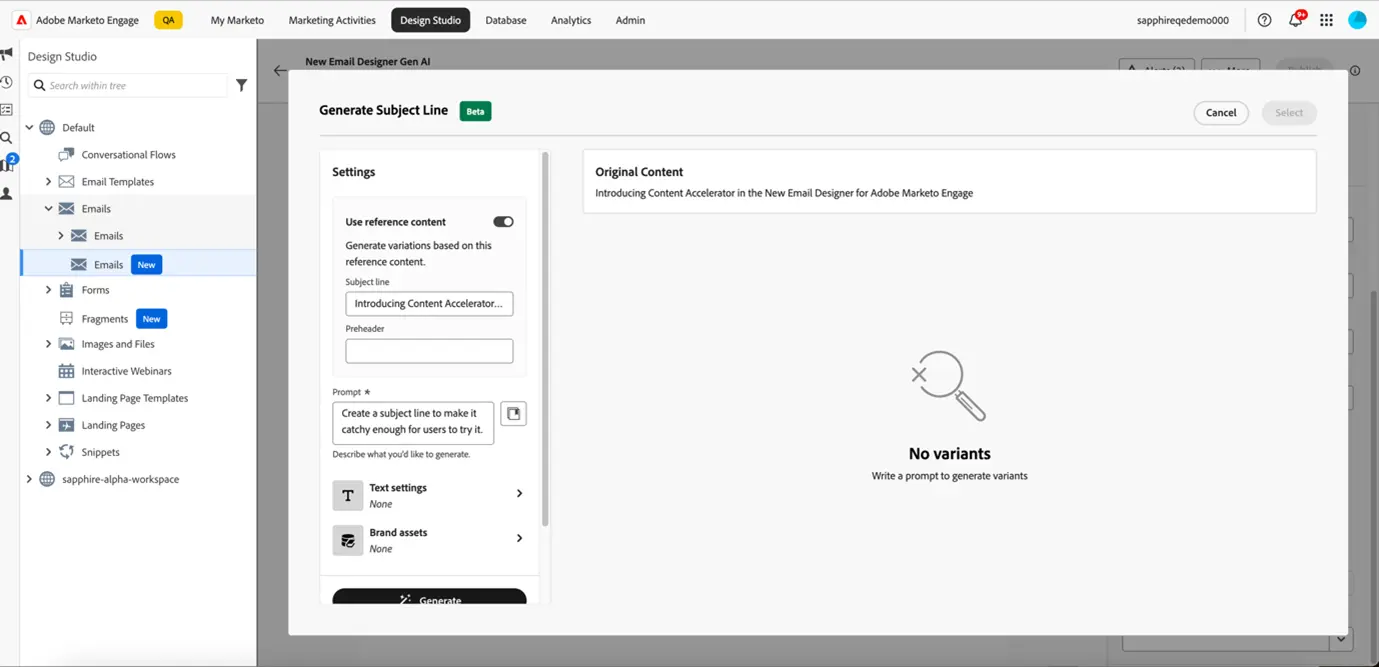
The platform also has a GenAI-powered Email Designer that generates subject lines, preheaders, and email copy using inputs like buying group role, journey stage, and brand tone.
Source: Adobe
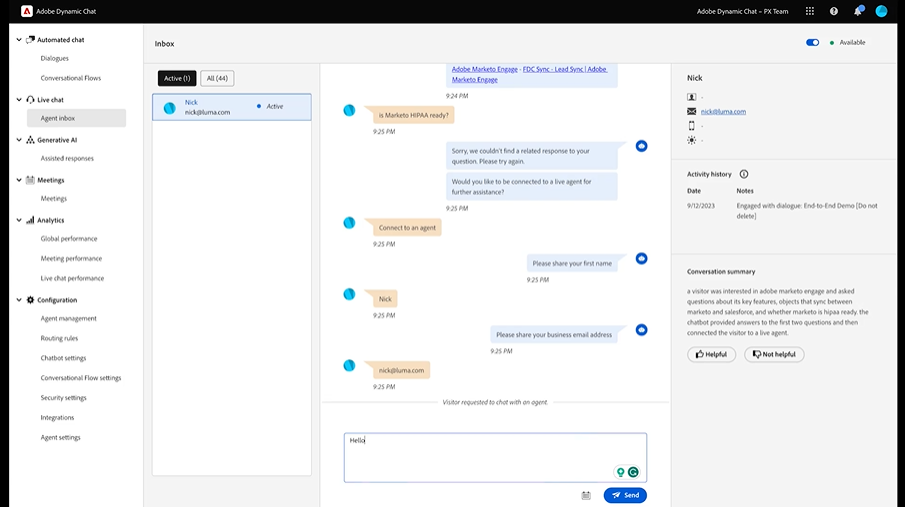
The Dynamic Chat module includes generative AI for automated visitor conversations trained on pre-approved content. These are useful capabilities, though the Agentic Orchestration engine was not publicly available as of the research date
Source: Adobe
Pardot's AI strategy centers on Agentforce, Salesforce's platform-wide AI agent layer. Agentforce Campaign Creation lets marketers describe a campaign in natural language and receive a complete brief, audience segments, email copy, and journey flows (available to all Account Engagement editions).
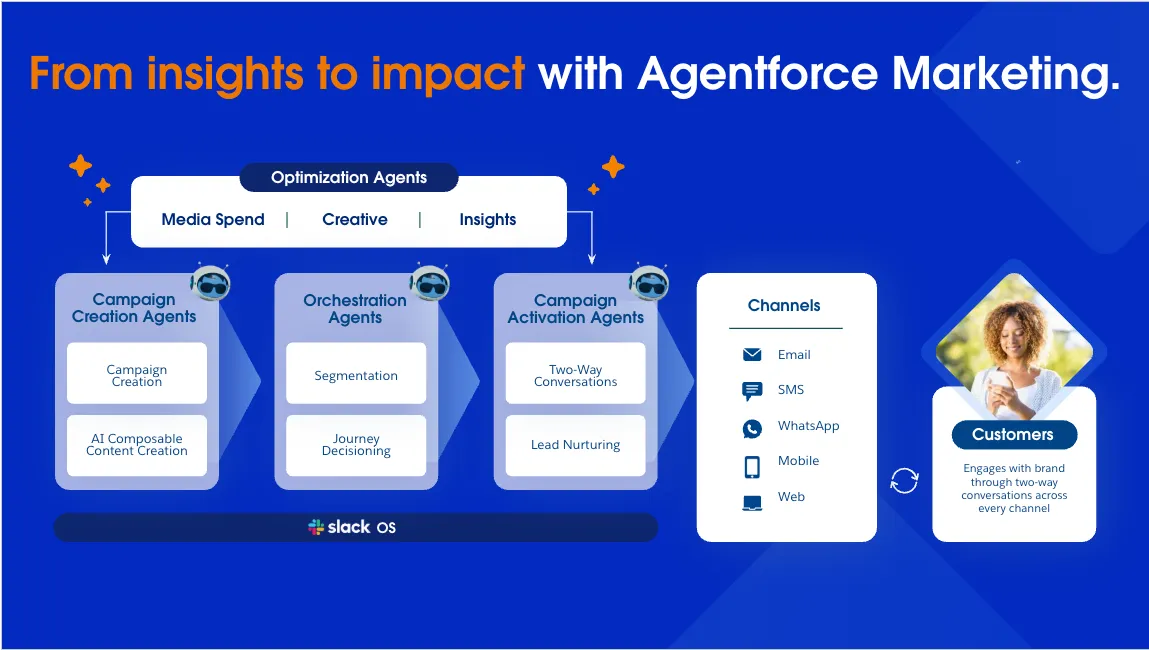
Source: Salesforce
Einstein Send Time Optimization schedules sends individually based on historical open patterns. Einstein Engagement Frequency identifies over- and under-saturated subscribers. And the Account Nurturing Agent (Summer '26) orchestrates nurturing touchpoints aligned to open opportunities.
ZoomInfo's AI operates through the GTM Context Graph, which processes 1.5B+ data points daily to capture not just what happened in deals but why.
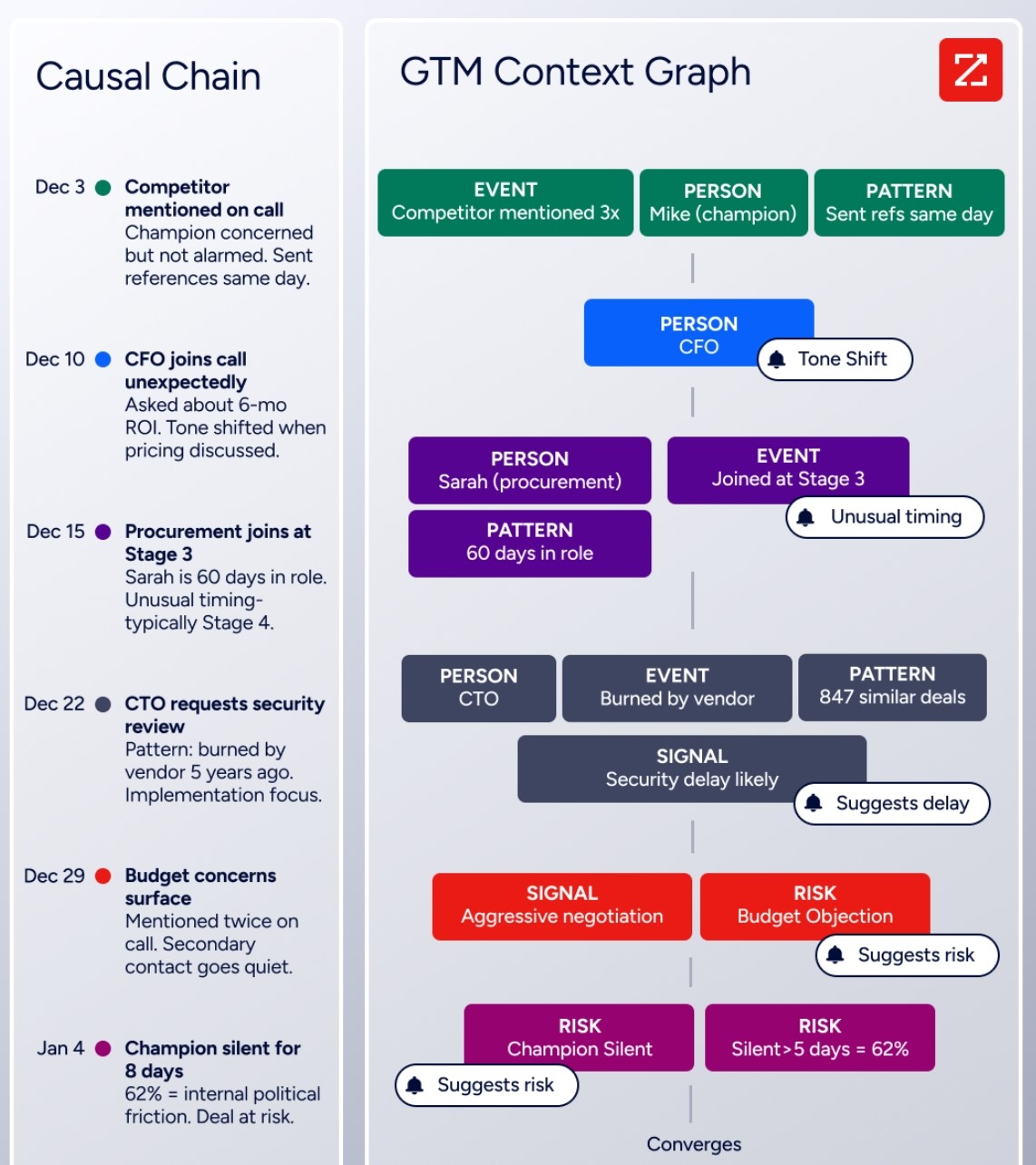
Built on Anthropic's Claude, the AI agents in GTM Workspace draft personalized outreach based on full account context, prioritize accounts based on signal combinations, and automate CRM updates.
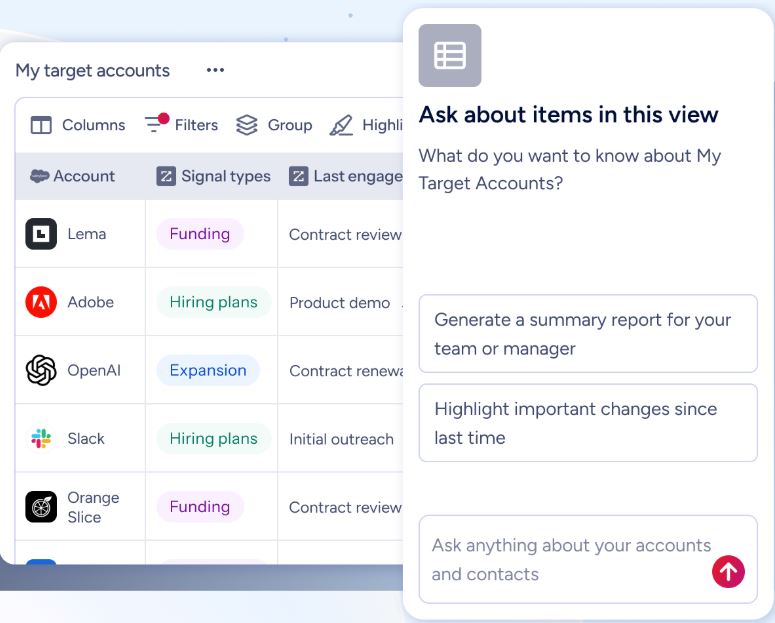
GTM Studio lets marketers describe audiences in natural language and launch multi-channel plays that improve as prospects respond.
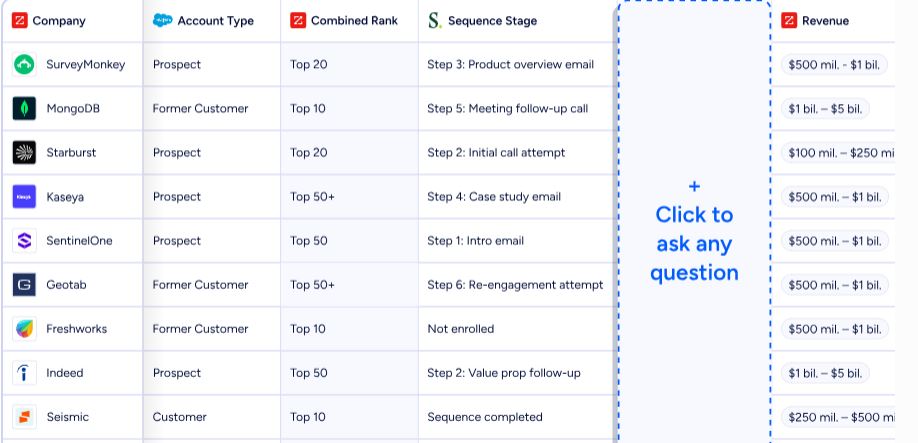
The key difference: ZoomInfo's AI reasons across both your internal data and the largest B2B dataset in the industry, while Marketo's and Pardot's AI is limited to whatever data exists in your own instance.
Pricing structures compared
Pricing is where these platforms diverge most and where total cost of ownership often surprises buyers.
Marketo uses a contact-volume-based subscription with four tiers: Grow, Select, Prime, and Ultimate. No prices are published; every deal is custom-quoted through Adobe Sales. Key tier gates: sandboxes and the Lifecycle Modeler require Prime or above.
Marketo Measure (multi-touch attribution) is only available in Ultimate. Dynamic Chat's full GenAI feature set requires the Prime add-on. Beyond the license, organizations typically need a dedicated Marketo administrator, as the platform is not self-serve for mid-market or enterprise teams.
For a detailed look at Marketo's pricing tiers and what each includes, see our Marketo Pricing guide.
Pardot publishes its pricing: Growth+ at $1,250/org/month, Plus+ at $2,750, Advanced+ at $4,400, and Premium+ at $15,000, all billed annually. Every tier includes only 10,000 contacts (except Premium+ with 75,000), with additional contacts at $100 per 10,000 contacts/month.
But the published base price is just the beginning. AI and SMS capabilities require separately purchased Einstein Request Credits, Messaging Credits, and Data 360 Credits.
The Premier Success Plan costs 30% of net license fees. B2B Marketing Analytics Plus runs $3,000/user/month. And accessing the newest features requires Sales Cloud or Service Cloud Enterprise Edition or higher; organizations on Professional Edition face a mandatory CRM upgrade.
ZoomInfo uses custom-quoted, consumption-based pricing. No published dollar amounts for paid tiers, though ZoomInfo Lite provides a permanent free tier with access to the B2B database, 10 monthly export credits, WebSights Lite, and HubSpot integration.
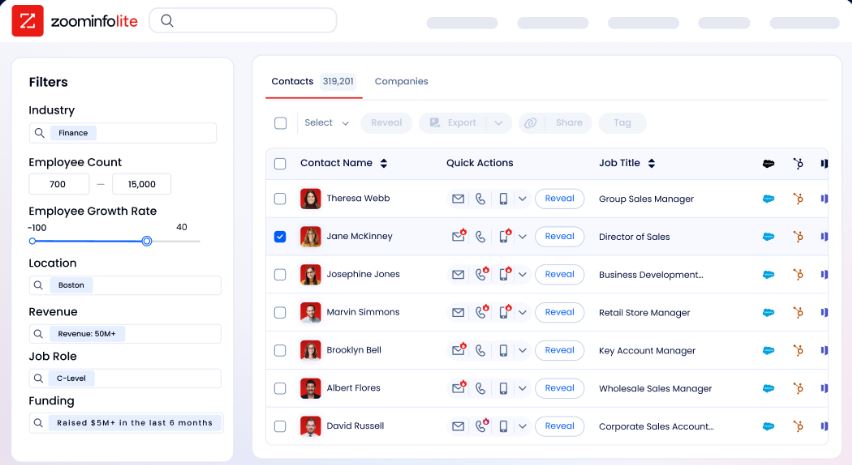
A 7-day free trial is also available for the full platform. Paid plans scale around seats, monthly credit volume, and feature access across Sales, Marketing, and Operations product lines. Chorus and Chat are priced separately.
Marketo and Pardot are campaign execution platforms you pay for whether your data is good or not. ZoomInfo is the data layer that makes those campaigns worth running. Many organizations find that investing in data quality yields better returns than upgrading to higher automation tiers.
The learning curve and team requirements
None of these platforms is casual software. Each requires real investment to operate.
Marketo has the steepest ramp. The platform is built around proprietary constructs (Smart Lists, Smart Campaigns, Programs, Workspaces, Tokens, and Engagement Streams) that have no direct equivalent in other tools.
Adobe maintains a formal Marketo Engage Glossary just to document the terminology. Adobe's own implementation guidance warns that "technical setup and planning can take longer than you think." Initial CRM sync can take hours or days. The platform requires a trained Marketo administrator; most organizations cannot run it without one.
Pardot inherits the complexity of the Salesforce ecosystem. Administrators need to understand Salesforce's data model, connector sync behavior, field mapping, and permission structures before the platform works correctly. Engagement Studio, automation rules, completion actions, and segmentation lists each follow distinct logic frameworks.
Salesforce maintains an entire certification track for Account Engagement Specialists, which signals the expertise required. Pardot is more approachable than Marketo for teams already fluent in Salesforce, but for newcomers, the combined learning curve of CRM plus marketing automation is substantial.
ZoomInfo redesigned its onboarding program from 30 to 90 days, structured across planning, technical implementation, education, and adoption phases. The redesign produced a 25% improvement in customer satisfaction scores.
ZoomInfo University provides role-specific learning paths for Sales, Marketing, Administrator, and Customer Success personas. For GTM Workspace, CEO Schuck noted it "deploys in weeks, not months." Searching, filtering, and exporting contacts is more intuitive than configuring marketing automation workflows; most users are productive with basic prospecting on day one.

Analytics and attribution: measuring what works
Proving that marketing drives revenue is a core requirement for B2B teams. The platforms approach it differently.
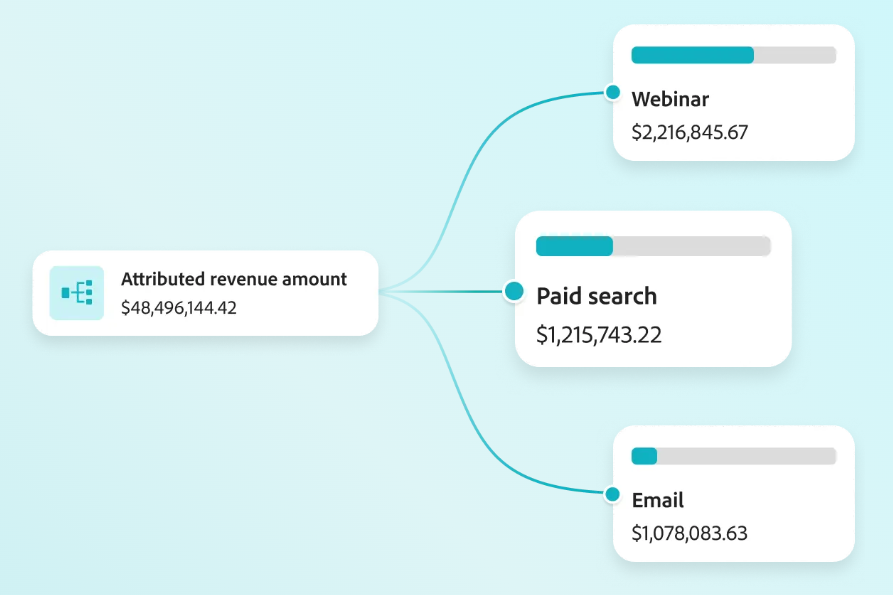
Marketo offers the deepest attribution through Marketo Measure (formerly Bizible), which runs six attribution models simultaneously: First Touch, Lead Creation, U-Shaped, W-Shaped, Full Path, and Custom. Teams can compare results across models without re-running analyses. The Ultimate tier adds Attribution AI that replaces rules-based models with AI pattern recognition and can train separate models per go-to-market segment.
Source: Adobe
However, Marketo Measure is only available in the Ultimate package; lower tiers rely on basic reporting that multiple review sources describe as needing third-party BI tools to supplement.
Pardot provides multi-touch attribution models and the B2B Marketing Analytics module built on Salesforce's CRM Analytics platform. Engagement History Dashboards embed on Campaign, Account, Lead, Contact, and Opportunity records in Salesforce, refreshing approximately every 10 minutes. Einstein Attribution trains a machine learning model on your historical deal data.
The strength: attribution data lives inside the CRM where sales and leadership already work, no separate login required. The weakness: B2B Marketing Analytics requires significant configuration, and the Plus tier or above is needed to access it.
ZoomInfo approaches measurement from the signal side. GTM Studio provides dashboards tracking engagement, funnel progression, and top-performing segments. But ZoomInfo's greater measurement value is in what it reveals upstream: which intent signals predicted pipeline, which data enrichment actions correlated with conversion, and which accounts were identified before competitors reached them.
Seismic attributed 39% of active pipeline to opportunities identified or influenced by ZoomInfo signals, a measurement that only becomes visible when you can trace the intelligence layer's contribution.
Marketo vs. Pardot vs. ZoomInfo: Which should you choose?
The answer depends on which problem is most urgent for your team.
Choose Marketo if:
You need the most capable marketing automation engine available
Your nurture programs require multi-stream engagement with content exhaustion logic
You use Microsoft Dynamics, Veeva CRM, or multiple CRMs
You have (or can hire) a dedicated Marketo administrator
Multi-touch revenue attribution is a core requirement, and you can invest in the Ultimate tier
Your marketing operations team values granular control over campaign behavior
Choose Pardot if:
Your company is committed to the Salesforce ecosystem
Native CRM integration with zero sync lag matters more than automation depth
Your campaigns follow standard B2B patterns (drip nurtures, score-based handoffs, ABM)
AI-generated campaign creation via Agentforce appeals to your team
Sales, marketing, and service teams need to work from one shared data model
You value Gartner Leader recognition and long-term vendor stability
Add ZoomInfo to either platform if:
Your CRM data is incomplete, stale, or missing key decision-makers
You need to identify in-market accounts before they fill out a form
Your ABM program requires verified buying committees, not just the contacts who self-identified
You want intent signals and real-time buying behavior feeding your scoring models
Your marketing team spends too much time on manual research instead of campaign strategy
You need data that works across your entire GTM stack, not just inside one platform
Start with a free trial or explore the permanent ZoomInfo Lite free tier to see the data firsthand.
The comparison between Marketo and Pardot is real: they're both capable marketing automation platforms with different architectural trade-offs. But the more productive question for most B2B teams isn't which automation tool to pick, it's whether they're feeding whichever tool they choose with data good enough to justify the investment.
The best nurture sequence, the best scoring model, and the best email template all underperform when built on incomplete, decaying data.
ZoomInfo doesn't replace your marketing automation platform. It makes it worth what you're paying for it.
Marketo vs. Pardot vs. ZoomInfo FAQ
What is the key difference between Marketo, Pardot, and ZoomInfo?
Marketo and Pardot are both B2B marketing automation platforms that handle email campaigns, lead nurturing, lead scoring, and campaign orchestration. Marketo offers more automation flexibility and supports Salesforce, Microsoft Dynamics, and Veeva CRM. Pardot is built natively on Salesforce, sharing the same data model for zero-lag integration with Sales Cloud.
ZoomInfo is a B2B data intelligence and GTM platform that provides verified contact data, company intelligence, and buying signals that feed into marketing automation platforms rather than replacing them.
Can I use ZoomInfo with Marketo or Pardot?
Yes. ZoomInfo integrates with both platforms. Marketo lists ZoomInfo as a LaunchPoint partner for data enrichment, and ZoomInfo syncs with Salesforce CRM (which Pardot sits on top of). ZoomInfo's API and MCP access also allow custom integrations. The typical use case is enriching your marketing database with verified contacts and companies, then using intent signals to trigger or prioritize campaigns in your MAP.
Which platform is best for account-based marketing?
Each handles a different layer of ABM. ZoomInfo is strongest at identification and intelligence: detecting in-market accounts through intent data, resolving anonymous website visitors to companies, and providing verified buying committee contacts. Marketo and Pardot are stronger at execution: orchestrating personalized email sequences, scoring engagement, and measuring attribution.
The most effective ABM programs use a data intelligence platform alongside a marketing automation platform.
How do Marketo and Pardot compare on pricing?
Marketo is entirely custom-quoted based on database size and does not publish prices. Pardot publishes starting prices from $1,250 to $15,000 per org per month (billed annually), but the base price excludes additional contacts beyond 10,000, AI credits, SMS credits, premium support, and potentially a required Salesforce CRM edition upgrade.
Both platforms carry high total cost of ownership that extends well beyond the license fee, including implementation, dedicated admin staffing, and add-on features.
Which platform has the steepest learning curve?
Marketo is widely considered the most complex, with proprietary concepts like Smart Campaigns, Tokens, and Engagement Streams that require months of dedicated training. Pardot is similarly complex for teams new to the Salesforce ecosystem, requiring understanding of its data model and sync behavior before the platform works correctly.
ZoomInfo has the gentlest ramp for basic use (searching and exporting contacts), though its full platform (including GTM Studio, GTM Workspace, and API/MCP integration) requires a structured 90-day onboarding.
Does Pardot work without Salesforce CRM?
No. Pardot requires a Salesforce CRM license. The newest AI and multichannel features specifically require Sales Cloud or Service Cloud Enterprise Edition or higher. Organizations on Salesforce Professional Edition would need to upgrade their CRM tier to access the full Account Engagement+ feature set.
Which platform has better AI capabilities?
Each platform's AI addresses different problems. Pardot's Agentforce generates complete campaigns from natural language prompts and includes three layers of AI scoring. Marketo's announced Agentic Lead Orchestration engine would enable AI-assisted journey design, and its GenAI Email Designer creates content aware of buying group roles and journey stages.
ZoomInfo's GTM Context Graph processes 1.5B+ data points daily to understand why deals move or stall, powering AI that identifies which accounts to target, what to say, and when to engage. The AI capabilities complement rather than overlap.
What is the biggest limitation each platform has?
Marketo's biggest limitation is complexity: it requires dedicated administrative expertise and has an interface that multiple review sources describe as dated. Pardot's biggest limitation is Salesforce dependency: without Sales Cloud Enterprise Edition, you can't access its best features, and its automation logic is less flexible than Marketo's.
ZoomInfo's biggest limitation in this context is that it doesn't execute marketing campaigns. It provides the data and intelligence layer but requires a separate MAP for email automation, nurture sequences, and campaign orchestration.
