

Meltwater is a media, social, and consumer intelligence platform. It monitors what the world says about your brand across news, social, broadcast, print, podcasts, and AI-generated answers, then turns that volume into dashboards, alerts, and reports your PR, comms, and marketing teams can act on.
This breakdown covers every feature, how it works, who it serves, and which plan unlocks it.
Meltwater's feature set has you covered if:
You need always-on brand monitoring across 270,000+ news sources, 15+ social channels, TV/radio, print, and 25,000+ podcasts
You run a PR or comms function that reports share of voice, sentiment, and earned media ROI to leadership
You want AI-powered crisis detection that alerts your team when mention volume spikes before the story breaks
You manage influencer campaigns from discovery through payment and ROI measurement in one platform
You need consumer intelligence that segments audiences by behavior and attitude from live social data, replacing slow survey cycles
You want to track how AI assistants like ChatGPT and Gemini portray your brand, an emerging category Meltwater calls Generative Engine Optimization
You'll reach the edges of its capabilities if:
You need a verified B2B contact and company database with direct dials and business emails to fuel outbound sales
You want buyer intent signals showing which companies are actively researching your category across the web before you contact them
You need conversation intelligence that records, transcribes, and coaches from sales calls
You require contact-level website visitor identification that tells you who specifically visited, not just which company
You want account-based marketing orchestration with native display advertising across channels
For those needs, the reference point is ZoomInfo: a go-to-market platform built on 500M contacts, 100M companies, 135M+ verified phone numbers, and 200M+ verified business emails. Its GTM Context Graph fuses B2B data with CRM records, conversation intelligence, and behavioral signals. Teams access it through APIs, MCP, GTM Workspace, and GTM Studio.
After the feature breakdown, this article covers where Meltwater stops and how ZoomInfo fills those gaps.
Meltwater Platform Overview
Meltwater serves 27,000 customers in 120+ countries from 50 offices across six continents. The platform targets PR and communications professionals, social media managers, marketing directors, and market research teams at mid-market to enterprise organizations. Named customers include The Economist, and the platform has held the #1 G2 ranking in media monitoring, PR analytics, and media & influencer targeting for multiple consecutive report cycles.
The suite is organized around eight solution areas:
Module | What It Does | Tier |
|---|---|---|
Brand monitoring, real-time alerting, PR reporting across news, social, broadcast, print, and podcasts | Essentials and above | |
Earned and owned social monitoring, sentiment analysis, image recognition, audience analytics | Essentials and above | |
Journalist database, AI pitch drafting, press release distribution via GlobeNewswire | Suite and above | |
Audience segmentation, trend forecasting, brand equity tracking from social data | Enterprise | |
Creator discovery, campaign management, in-platform contracts and payments, ROI measurement | Priced separately | |
B2B prospecting, trigger-event alerts, competitive intelligence graph | Priced separately | |
Tracks brand portrayal inside ChatGPT, Gemini, Claude, Perplexity, and other LLMs | Priced separately | |
REST API, BI connectors (Power BI, Looker Studio, Domo), MCP server, data streaming | Enterprise/Agency; mid-tier inclusive allowance |
Meltwater uses a quote-based pricing model with three named tiers (Essentials, Suite, Enterprise) and no published prices. All contracts require a minimum 12-month commitment, with 36 months as the standard term. With that structure in place, here is the full tour.
Meltwater Media Monitoring and Alerting
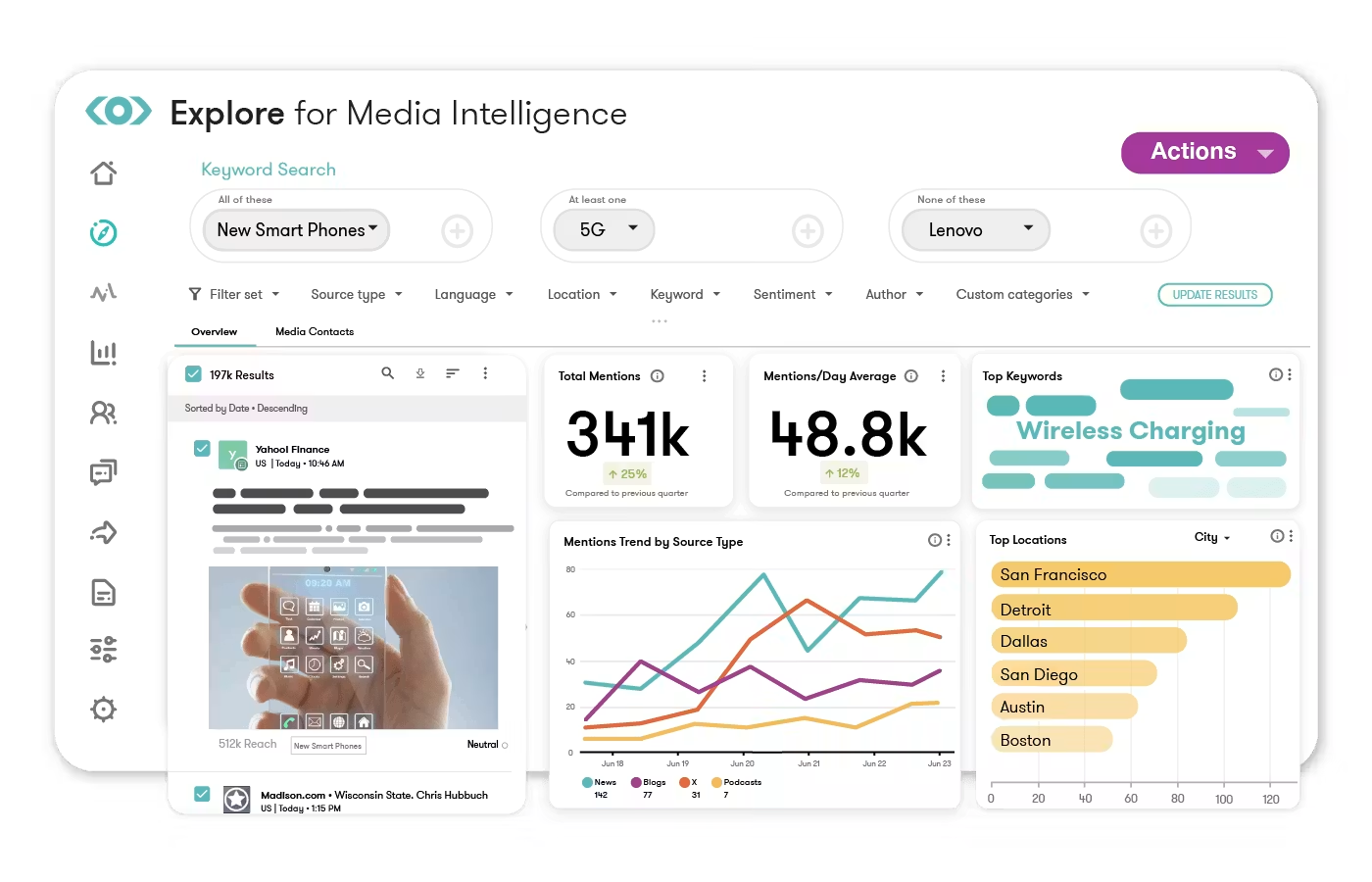
Media Intelligence is Meltwater's founding capability and still the product most buyers encounter first. The platform ingests over 500 million pieces of new content every day from 270,000+ global news sources, 15+ social media channels including full access to X's content, TV and radio broadcast, global print media, and 25,000+ podcasts.
Source: Meltwater
Each incoming document gets automated enrichment: sentiment classification, language detection, key-phrase extraction, reach scoring, and social echo signals.
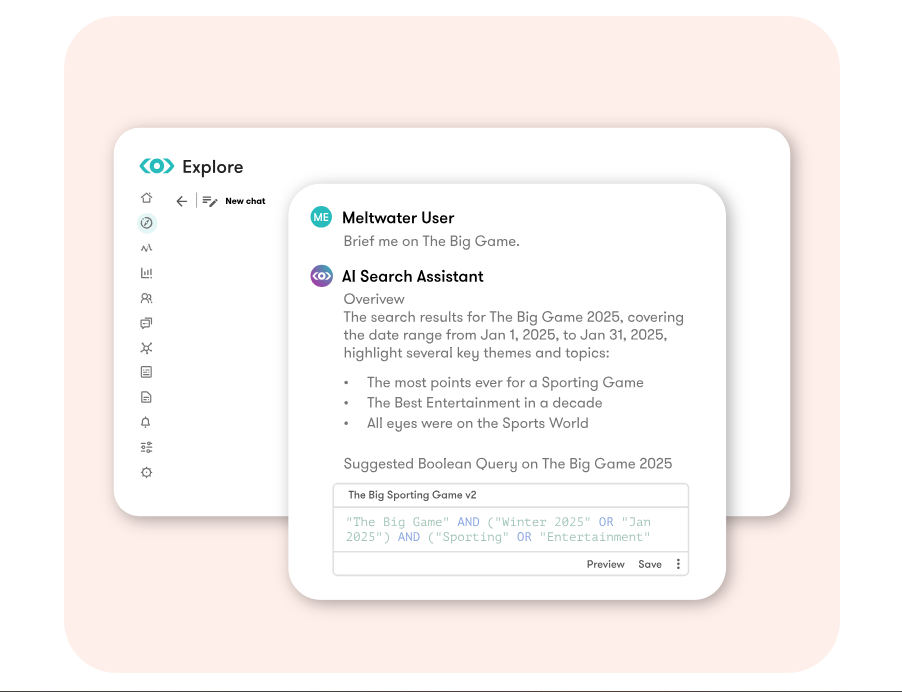
Users define what to monitor through Saved Searches (Boolean keyword queries that match documents in the platform's data store). The platform supports unlimited keyword monitoring, a structural difference from competitors that charge per query or enforce keyword caps at lower tiers.
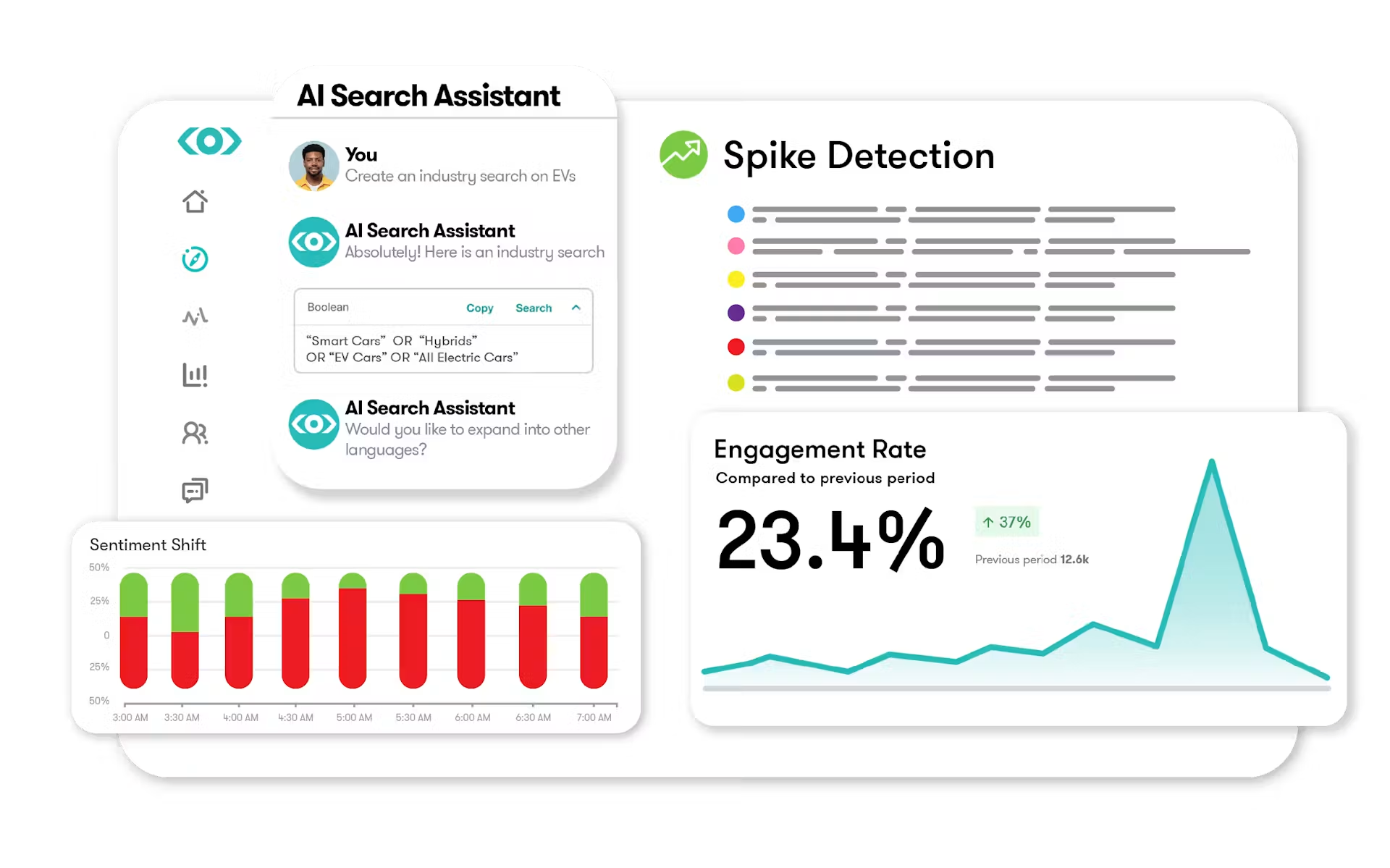
An AI Search Creation tool (a chatbot trained on Meltwater's Boolean syntax) helps users build and refine queries without mastering Boolean logic themselves. Historical editorial data is available from 2009 onwards depending on subscription, and social history spans a rolling 15 months.
Source: Meltwater
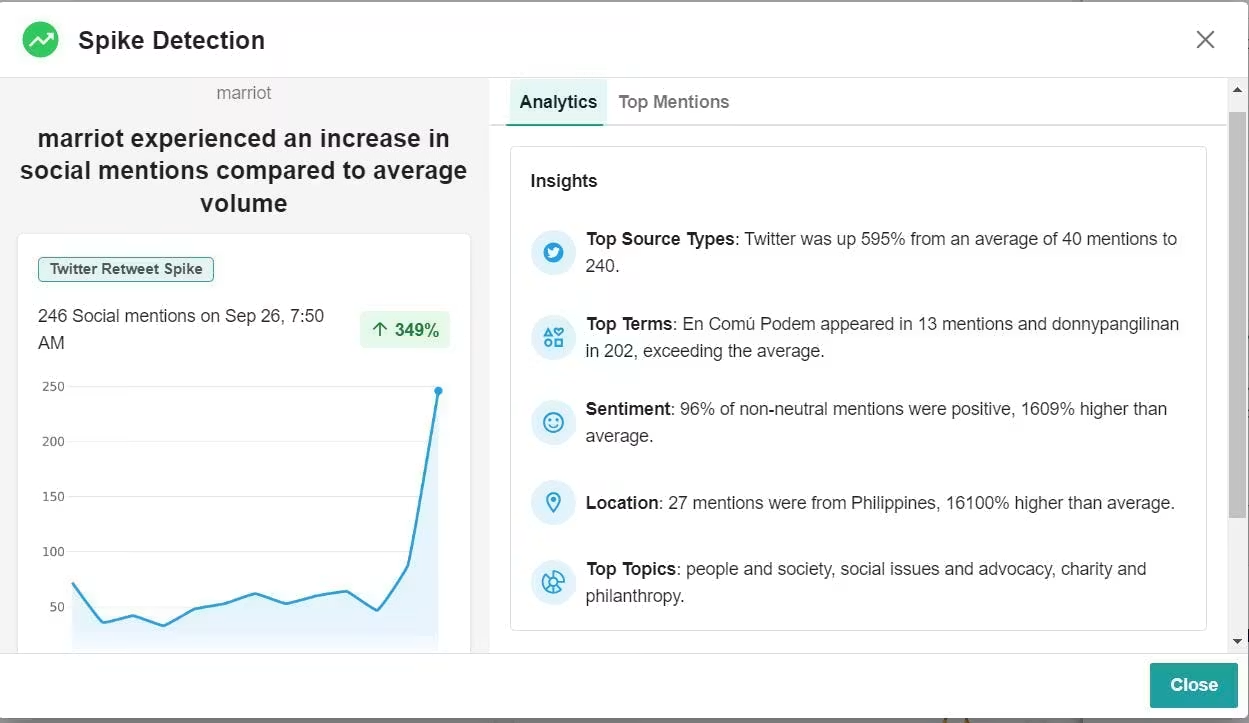
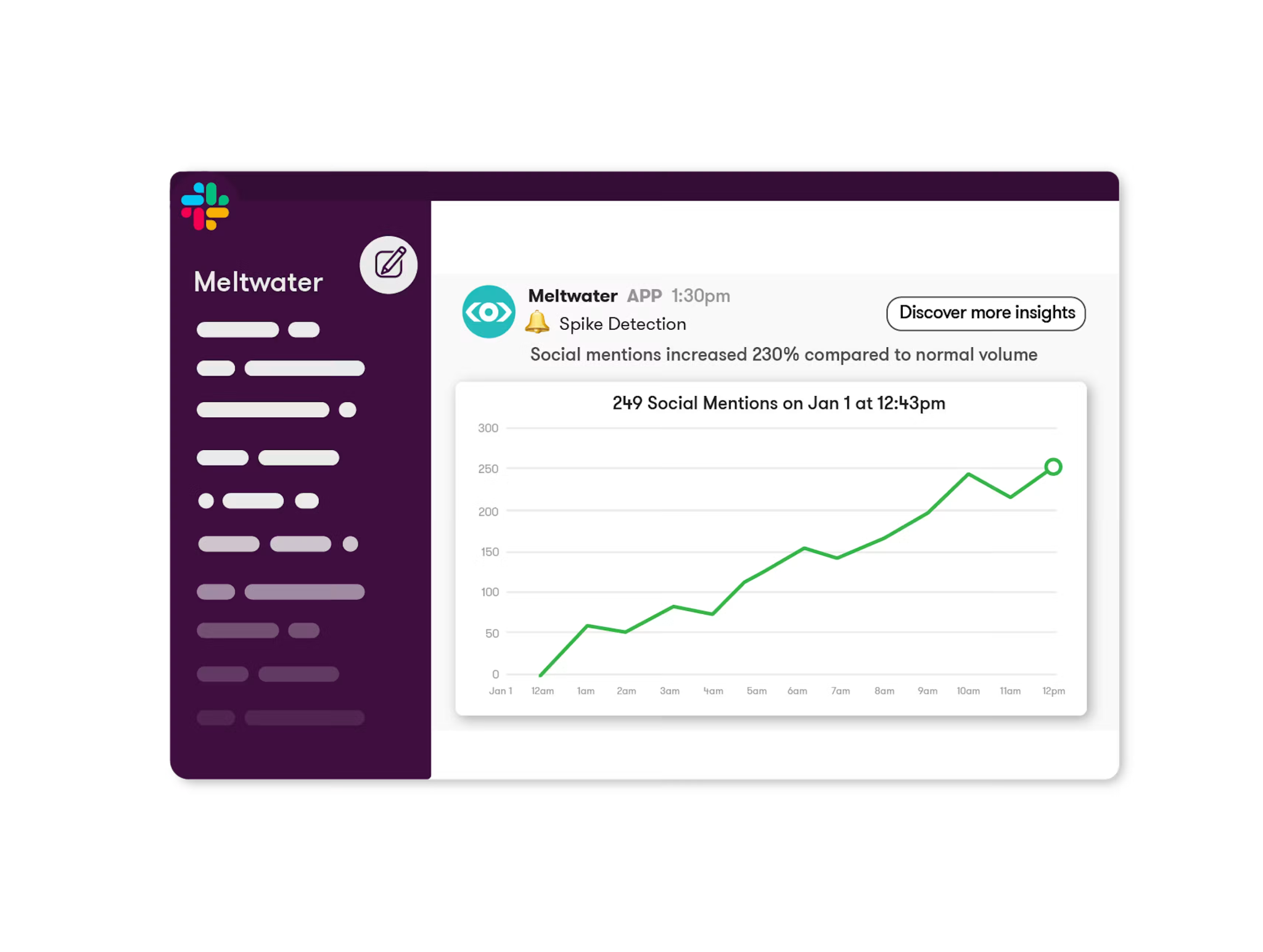
Real-time Alerting delivers notifications through email, the Meltwater app as push notifications, or Slack. Five alert types cover different signal intensities: Every Mention fires on each new match (capped at 200 per hour); Top Reach fires when a high-reach editorial source triggers the search; Spike Detection uses AI-driven detection of abnormal volume changes, calculating a rolling baseline from recent data rather than requiring manual threshold configuration; X Influencer fires when a high-engagement X account mentions tracked keywords; and Events fires on detected business events like partnerships, acquisitions, or headcount changes.
Source: Meltwater
Data access from monitoring runs through four patterns: search (fetch mentions sorted by date, reach, engagement, sentiment, relevance, prominence, or geography), export (one-time or recurring scheduled exports in JSON), streaming (real-time push to a destination URL via Data Streams), and analytics (synchronous analytics requests returning results in seconds). A Factiva partnership provides access to full-text paywalled sources, and a Dow Jones partnership added Wall Street Journal, Barron's, and MarketWatch content in 2025. A mobile app on iOS and Android extends monitoring access on the go.
Podcast monitoring uses AI speech recognition to identify brand mentions inside podcast audio, a source category most listening tools skip entirely.
Meltwater PR Reporting and Measurement
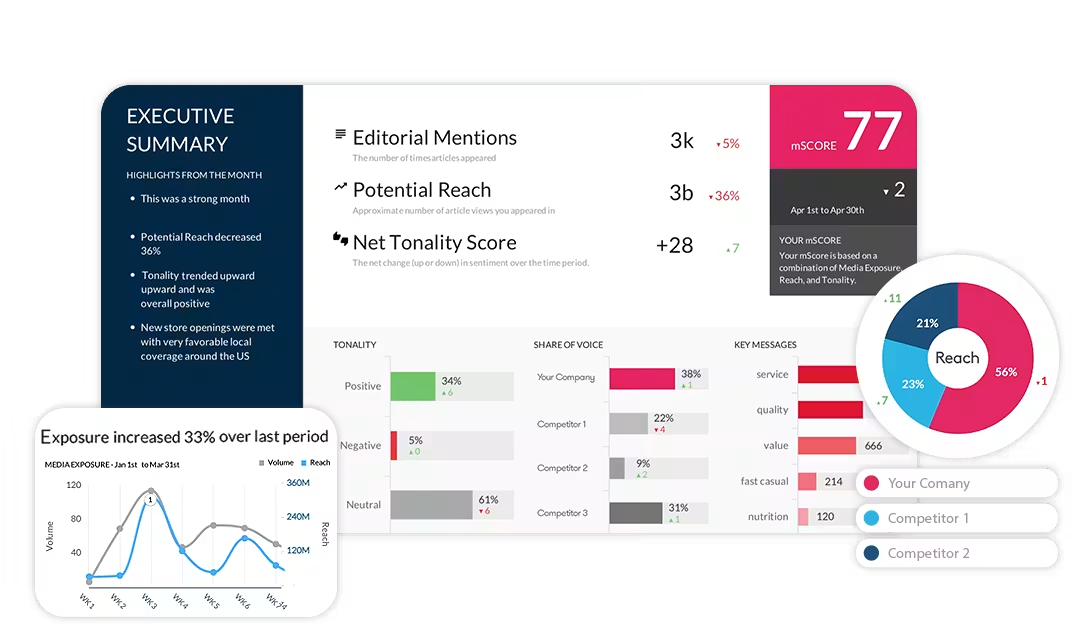
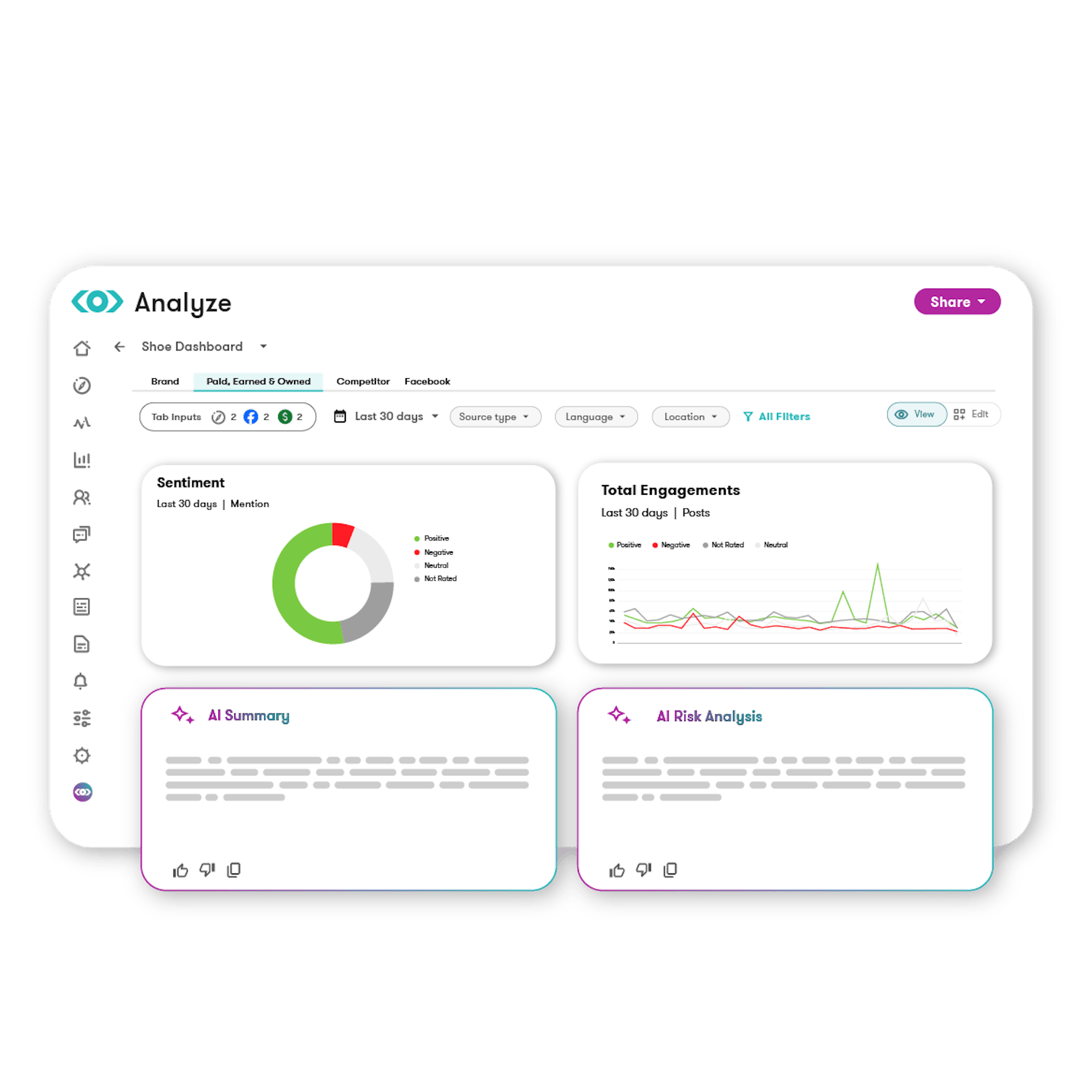
PR Reporting translates monitoring data into stakeholder-ready outputs. Interactive in-app dashboards are shareable with stakeholders, and AI-automated PR Insights reports generate a narrative summary in one click.
A Custom Scoring feature lets teams assign different weights to mentions based on publication priority, spokesperson mention, or other criteria, moving measurement beyond AVE metrics into a framework the team defines.
Source: Meltwater
Reports can be white-labeled, localized by country and language, and scheduled for automatic distribution. Data exports integrate with Tableau, Power BI, and Google Data Studio for teams that build reporting in external BI tools. The Year-End 2025 release added Unified Dashboards connecting paid, earned, and owned media into a single interactive view.
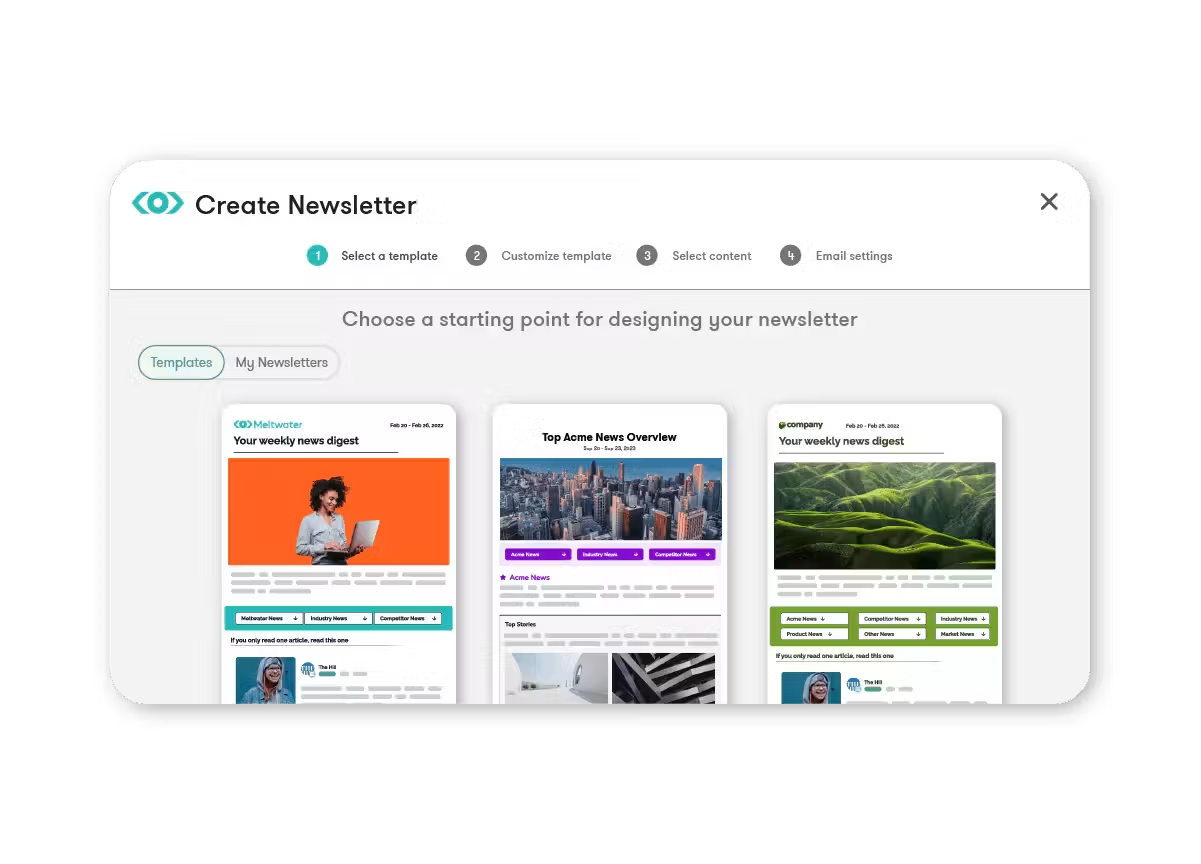
Newsletters & Website Newsfeeds let teams distribute curated coverage without leaving the platform. Curated email newsletters pull directly from monitoring search results with branded templates and scheduling. Website newsfeeds display curated media coverage on company websites or intranets, and can be integrated into Slack via RSS.
Source: Meltwater
For teams that need more than self-serve reporting, Custom Reports engages Meltwater analysts who produce tailored reports combining quantitative data with qualitative analysis, covering 275,000+ global online news sources, 300M+ blog posts, and social media.
Meltwater Social Listening and Analytics
Social Listening & Analytics extends monitoring beyond news into real-time social conversation. The suite covers both earned social mentions (what people say about your brand unprompted) and owned social performance (how your own accounts perform), eliminating the need for a separate publishing analytics tool.
Source: Meltwater
Source coverage spans Facebook, Instagram, X, YouTube, Reddit, LinkedIn, Twitch, Pinterest, blogs, forums, podcasts, online news, and consumer review sites, including Asian market platforms like Naver, VKontakte, and Line. The 15-month historical archive includes the full X (Twitter) Firehose, a data access level many competitors do not include in standard packages. Meltwater also earned Official Data Partner status with Reddit in February 2026, surfacing public posts and comments from 100,000+ communities. Like media monitoring, social listening supports unlimited searches and results with no caps on keyword searches or result volumes.
AI-powered sentiment and emotion analysis classifies positive and negative sentiment and identifies emotions including joy, sadness, surprise, anger, love, and fear. Visual Analytics goes beyond text: image and video enrichments include OCR, logo recognition, celebrity recognition, emotion recognition, gender/age classification, meme classification, object/scene recognition, and NSFW classification.
Source: Meltwater
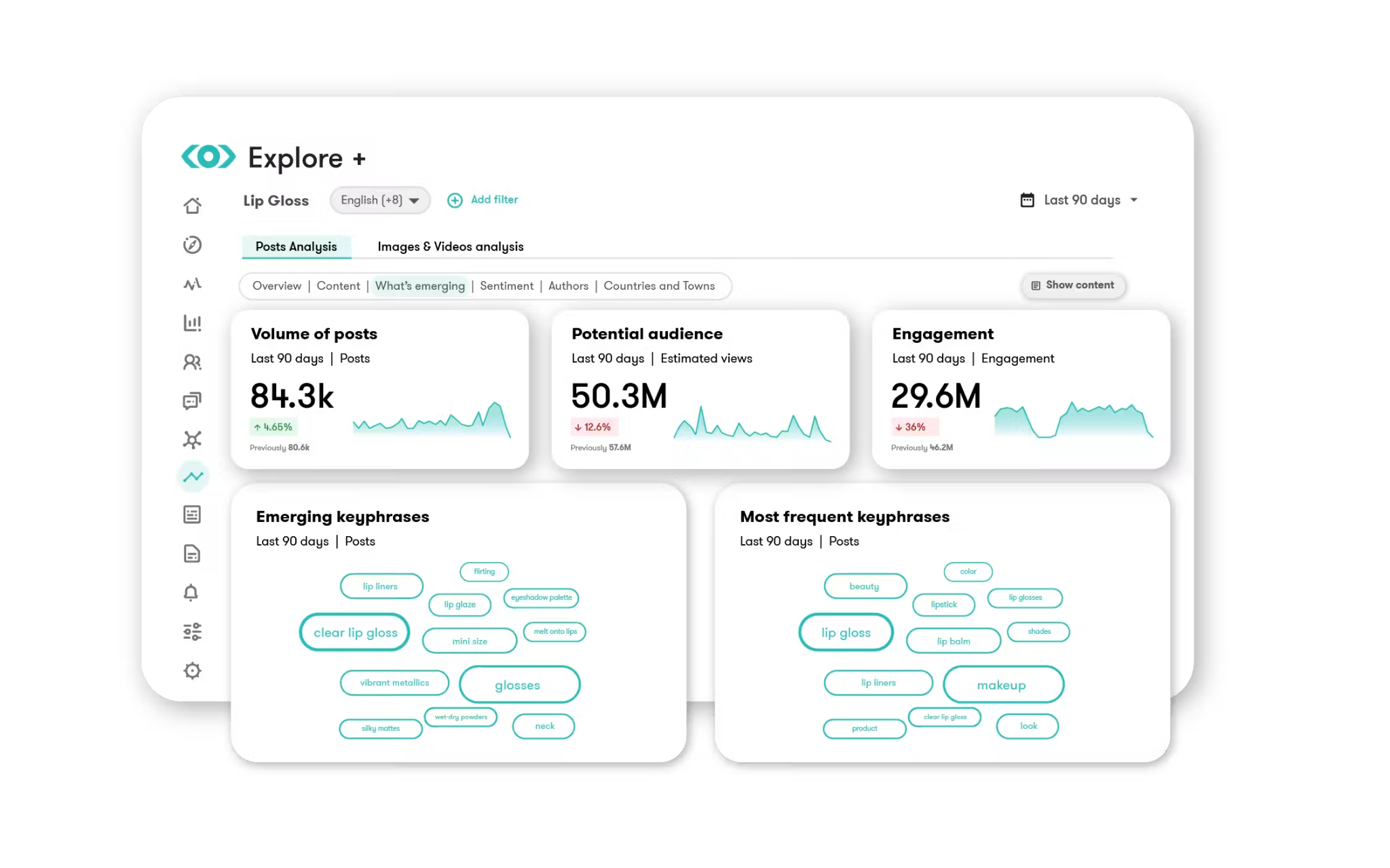
For enterprise customers, Explore+ provides a private data index hosted by Meltwater, fed by Optimized Searches that apply customer-specific data structuring (brand and product classifications) and additional enrichments. This private index enables analysis not possible with shared indexes, a distinctive architecture among social listening tools.
Owned social analytics connects to a brand's social accounts and fetches and analyzes content and performance data for those accounts, covering engagement, reach, and follower growth across Facebook, Instagram, X, LinkedIn, and TikTok.
Meltwater Consumer Intelligence
Consumer Intelligence occupies a different tier than standard social listening. Where social listening delivers mention counts and sentiment scores, Consumer Intelligence delivers strategic insight: audience segmentation, trend forecasting, brand equity tracking, and competitive benchmarking. It targets large, global organizations with multi-brand, multi-market research needs, and positions itself as a real-time alternative to surveys and focus groups.
Source: Meltwater
The platform combines a real-time social data pipeline with a team of data scientists, market researchers, and consumer insights specialists who have expertise across vertical industry sectors. Rather than treating all social content as flat text, the platform classifies content by brand, product, topic category, and market to enable multi-dimensional analysis.
Brand equity tracking taps into spontaneous, unprompted consumer discussions to measure brand perception, surfacing opinions consumers share when they think no one is listening.
Audience segmentation moves beyond demographics to segment by behaviors, attitudes, influence levels, brand affinities, media consumption, and the influencers audiences follow. Trend forecasting identifies emerging signals and turns them into predictions about changes in consumer behavior, including consumption moments, new social aspirations, and key cultural moments.
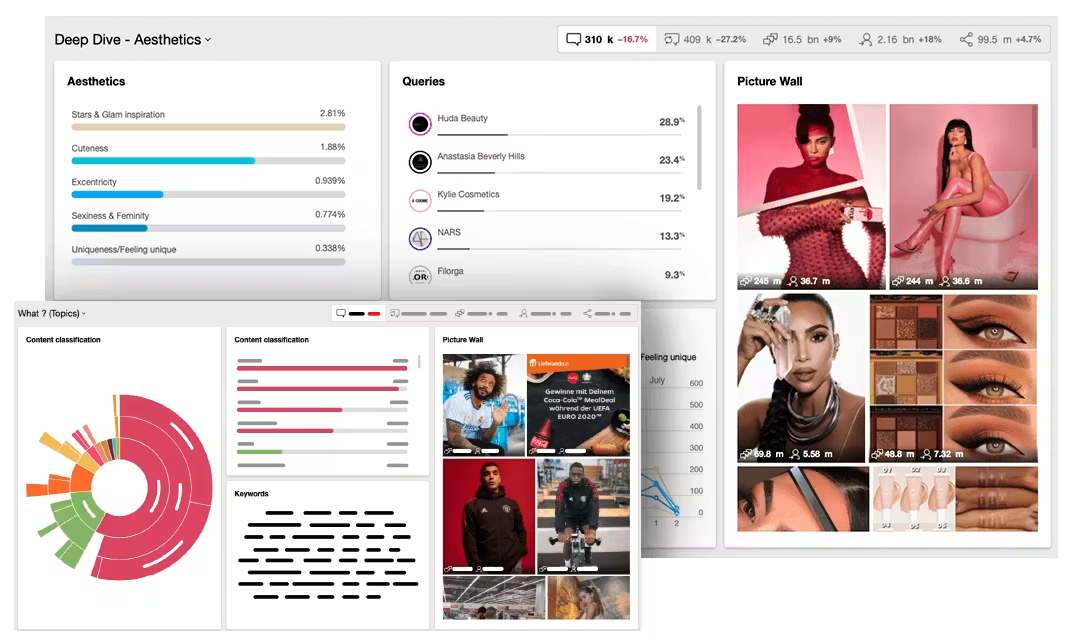
Source: Meltwater
The platform can automatically surface insights in data that users might not have thought to ask about, going beyond pre-formed questions to flag new strategic opportunities. Bring Your Own Content lets customers import first-party data such as NPS scores, surveys, and CRM data alongside social data, connecting internal performance signals with external social intelligence. Dashboards do not require a platform login for stakeholders to view.
Data sources include X, Facebook, Instagram, YouTube, Reddit, Twitch, Pinterest, LinkedIn, Naver, VKontakte, Line, online news, broadcasts, blogs, reviews, forums, and first-party data.
Meltwater Media Relations and Press Distribution
Media Relations handles the outbound side of PR: finding journalists, pitching them, distributing releases, and measuring the coverage that results.
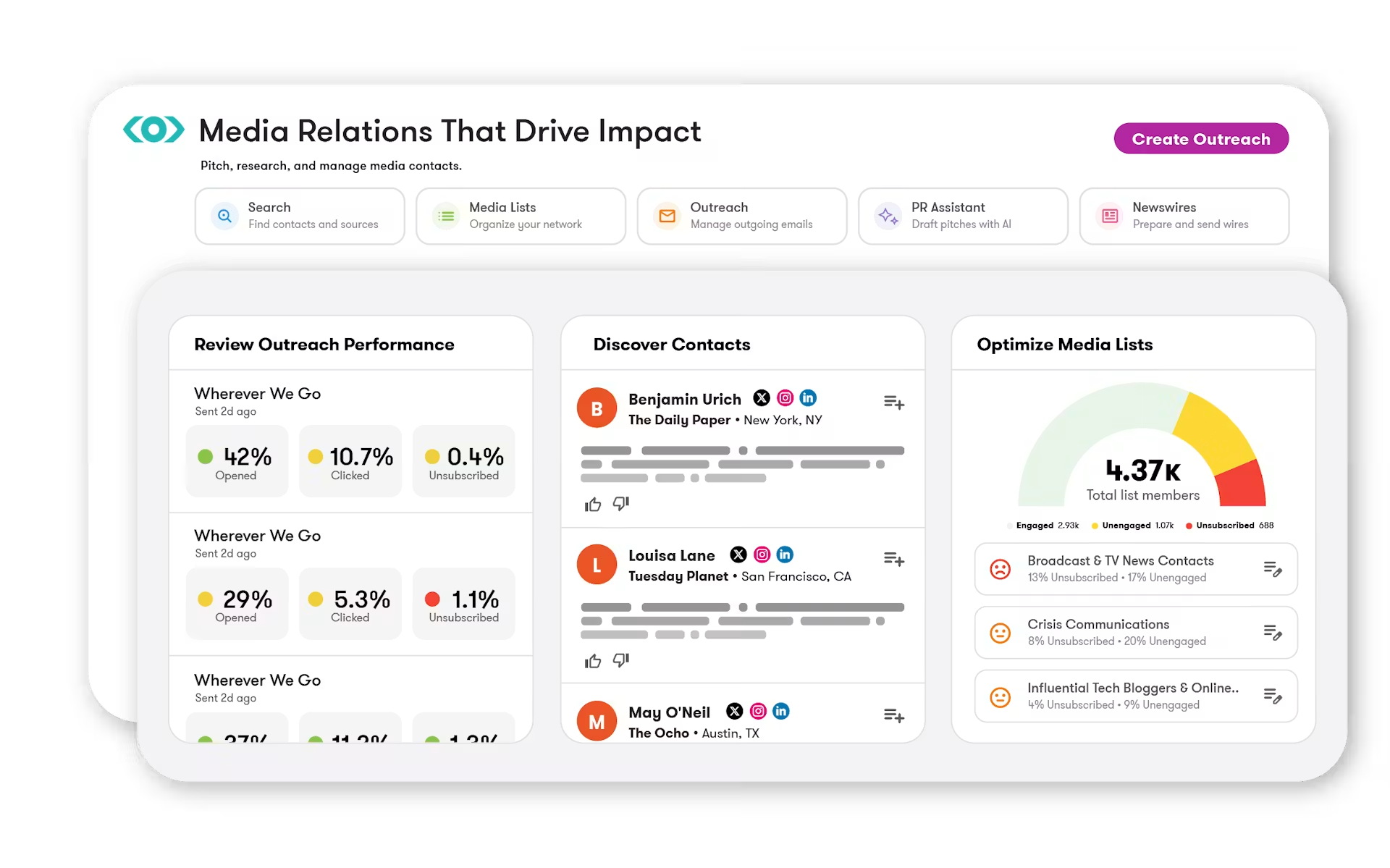
Source: Meltwater
The Media Database stores GDPR-friendly contact information for journalists, bloggers, podcasters, and influencers, searchable by keyword, beat, publication type, geography, language, and role.
AI Journalist Search goes beyond keyword filters: teams can find best-fit journalists by searching with key messages, pitch text, or a full press release, using semantic matching to connect a story to the reporters most likely to cover it. A PR Assistant powered by generative AI drafts pitches from a few inputs or refines existing drafts. A Collaborative Inbox tracks conversation history across team members to prevent double-pitching.
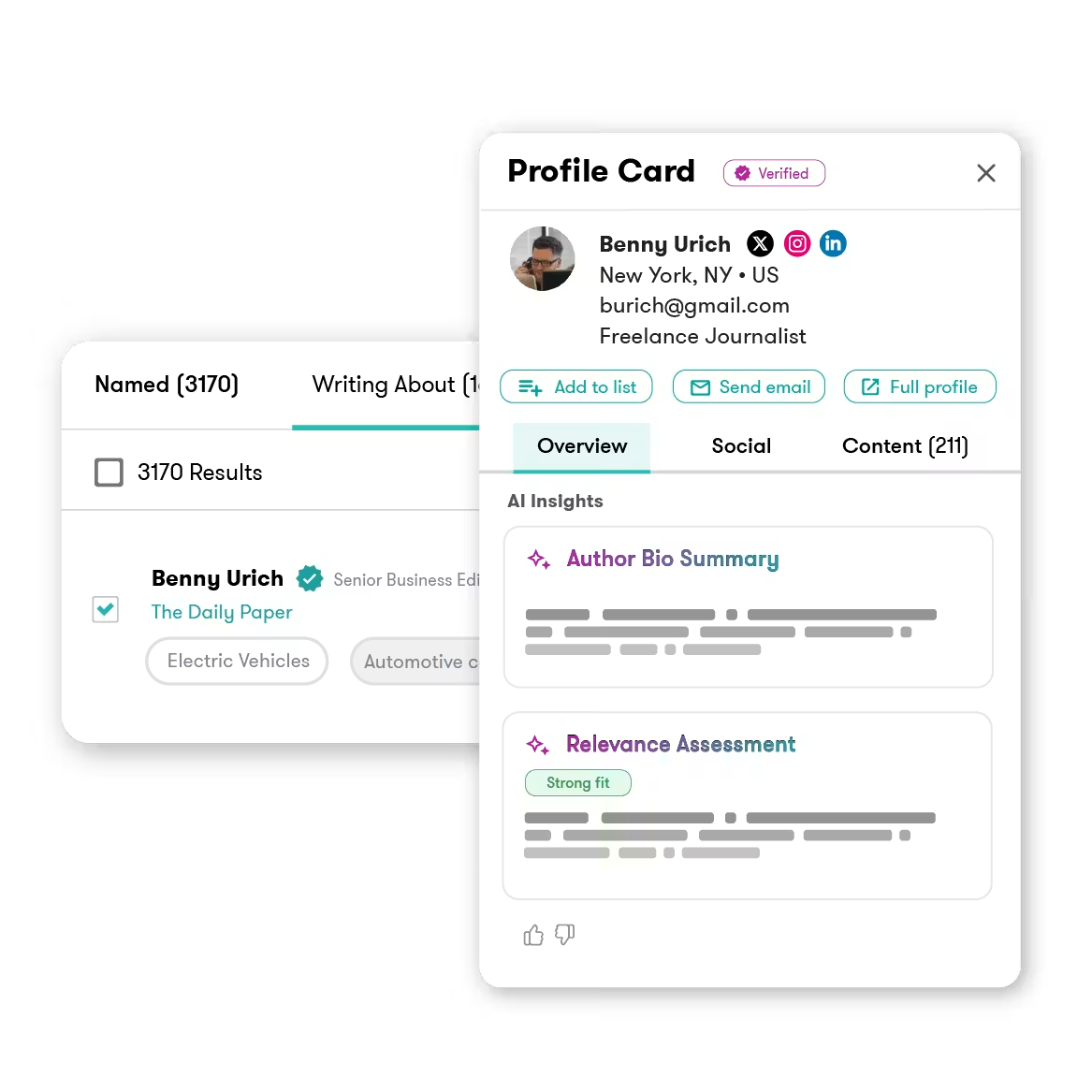
Source: Meltwater
For broad distribution, Meltwater integrates with GlobeNewswire for newswire distribution reaching print and broadcast outlets, online sites, databases, and industry trade publications via real-time full-text feeds including the complete AP satellite network. Meltwater offers over 100 newslines for targeting local, national, or global audiences, with fixed pricing, no word cap on non-financial releases, up to two images, and unlimited hyperlinks.
Outreach engagement is tracked at individual pitch level (open rates, click-through rates, bounces, unsubscribes) and at campaign level through PR Reporting dashboards.
Meltwater Influencer Marketing
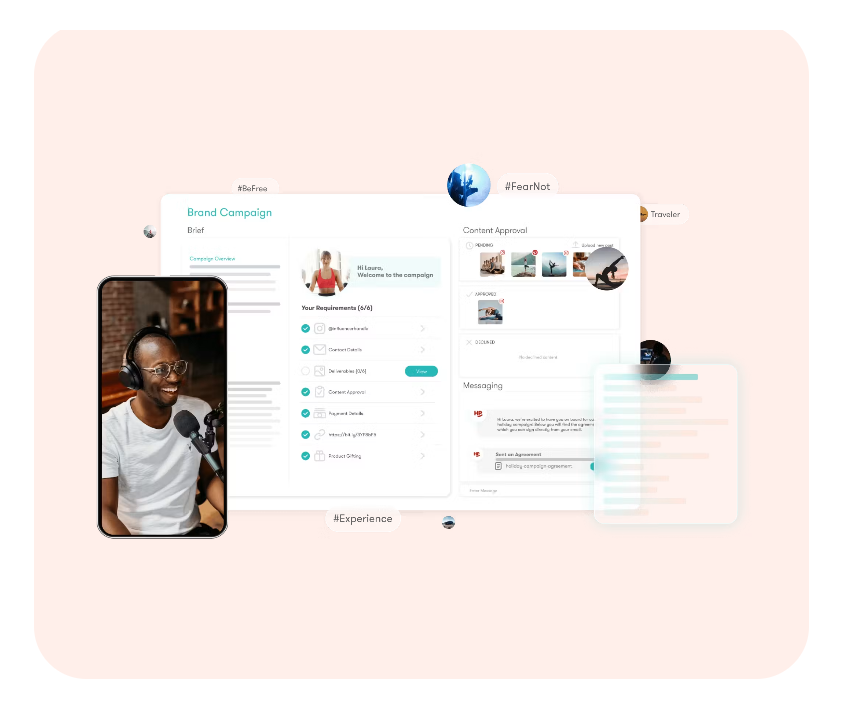
The Influencer Marketing suite, powered by Klear (acquired by Meltwater), covers the full lifecycle from discovery through payment and measurement in one platform. Meltwater claims that brands using the platform triple their ROI on average.
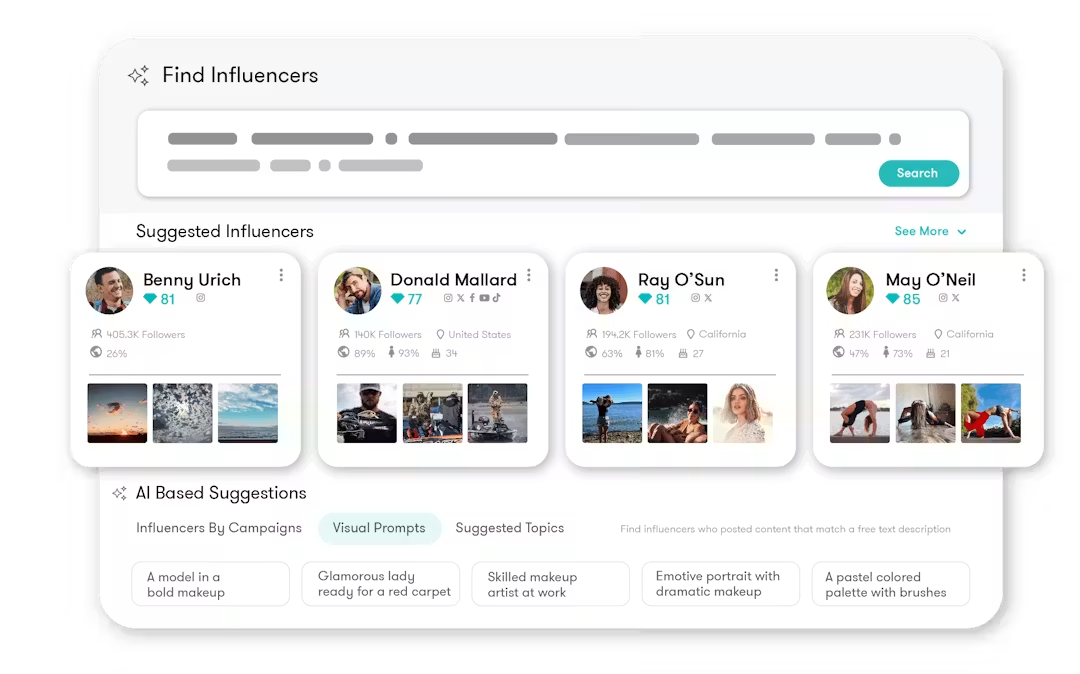
Source: Meltwater
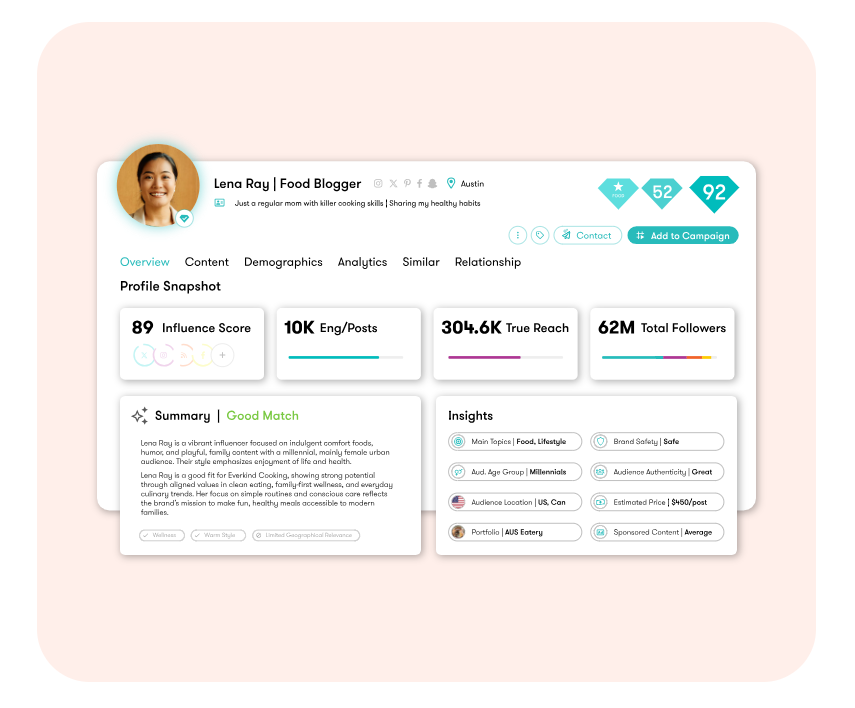
Discovery starts with AI that analyzes audience composition, content style, and brand safety signals based on campaign criteria and surfaces a ranked list of matched creators. The Meltwater Chrome Extension lets teams browse natively on Instagram and TikTok and vet creators in real time.
Source: Meltwater
Lookalike Creator Discovery finds similar creators based on shared audience profile, engagement patterns, and content themes. ROI Forecasting estimates campaign outcomes before contacting any creator, based on historical performance data.
Source: Meltwater
Campaign management runs through a shared inbox where influencer conversations, contracts, and campaign tasks are organized. Personalized AI Outreach generates brand-voice-aligned emails at scale, personalized to each creator's audience match. Contracts are created and managed in-platform, deliverables are tracked, and payments are processed through an automated payment system.
Measurement ties back to revenue. E-commerce integrations with Shopify and WooCommerce allow discount code creation and direct conversion tracking. Real-time dashboards track campaign ROI, reach, engagement, and conversions at both the campaign level and the individual post level. Instagram Stories Tracking captures Story performance metrics after the 24-hour expiry window, and Competitive Benchmarking lets teams monitor which influencers competitors work with. A Convert Customers to Influencers feature identifies existing fans and customers and recruits them into formal advocacy programs.
Meltwater AI: Mira and GenAI Lens
AI runs through the entire Meltwater platform, with two products at the front: Mira (the conversational assistant) and GenAI Lens (LLM brand monitoring).
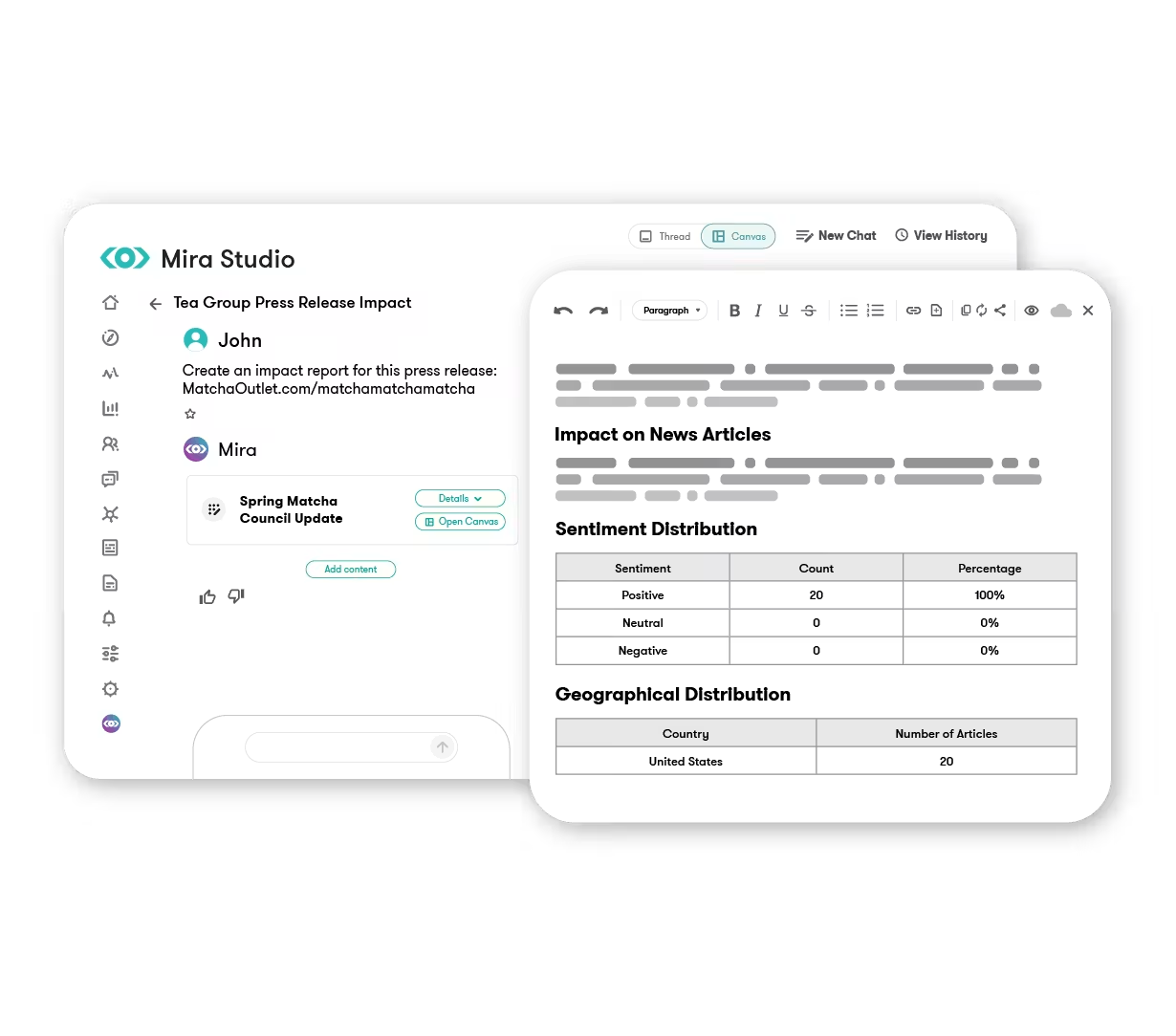
Mira is a chat interface trained on Meltwater's proprietary media and social data. Users ask natural-language questions and receive cited answers drawn from real news and social coverage. Meltwater says it returns 25% of a team's time each week. Inside the application, Mira Companion appears as a contextual assistant embedded in the workspace UI, filtering daily posts, mentions, and reactions to surface the moments that need attention.
Source: Meltwater
The broader AI layer includes several specialized capabilities:
Discovery AI Assistant: spots, explains, and highlights unusual changes in workspace datasets
Spike Discovery & Analysis: uses proprietary LLMs to explain causes and connections behind volume spikes
Smart Alerts: detects conversation shifts, brand sentiment spikes, major industry events, and competitor promotional activity
AI Content Clusters: reads, categorizes, and explains news stories and conversations to surface recurring themes
AI Daily Digests and AI Explainers: automated narrative overviews of data trends
Social Writing Assistant and DALL-E Image Generator: AI copy and image generation for social publishing
Mira Projects: context-aware AI that adapts to brand-specific goals
Mira Canvas: in-platform AI output editing
The Year-End 2025 release also introduced Predictive Analytics, using historical patterns and live conversation data to forecast whether a spike in mentions will grow or fade. This moves the platform from reactive monitoring to proactive forecasting.
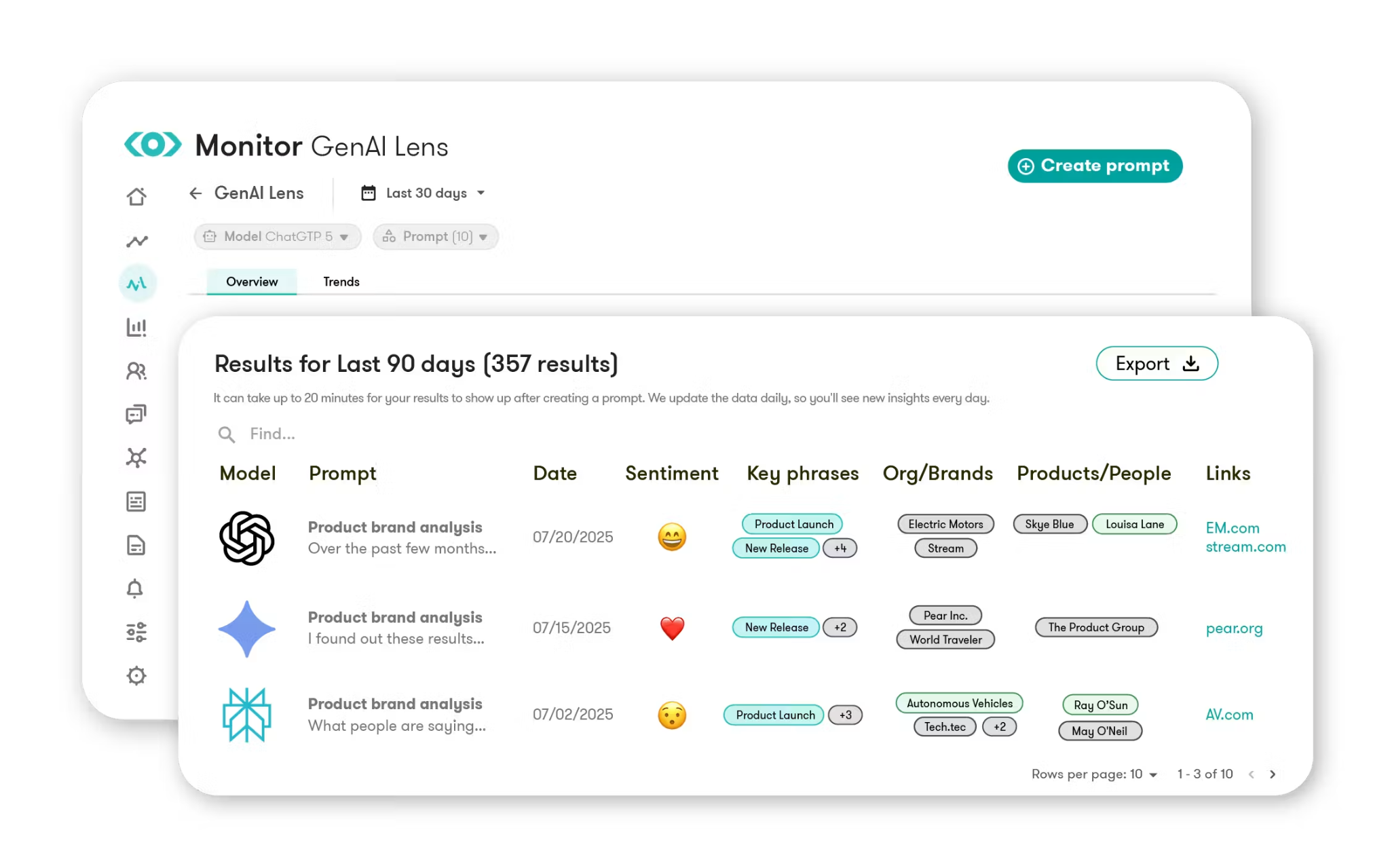
GenAI Lens addresses a category Meltwater calls Generative Engine Optimization. It tracks how major LLMs respond to prompts about a brand, covering ChatGPT, Gemini, Claude, Perplexity, DeepSeek, Grok, Meta Llama, and Google AI Overviews, which Meltwater says represents 90%+ of the LLM market.
Source: Meltwater
The product surfaces visibility, sentiment, source citations, and trend shifts in how AI describes a brand. The Wall Street Journal has cited Meltwater's data in coverage of AI-driven search adaptation. This is early-mover territory: as AI-generated search results shape brand perception, tracking what LLMs say about you becomes as necessary as tracking what journalists write.
For programmatic access, the Mira API provides a chat-completion endpoint supporting streaming and non-streaming modes, multi-turn conversation history, and structured citations referencing specific articles and social posts. It is also exposed as a remote MCP server at https://api.meltwater.com/mcp, enabling integration with Claude Desktop, OpenAI, and other LLM-native tools.
Meltwater's AI governance posture is notable: the company holds ISO 42001 certification (AI management systems standard, claimed as an industry first), has published formal AI Ethical Principles, and maintains a Scientific Advisory Board including researchers from MIT, Stanford, NYU, Oxford, and CMU. OpenAI recognized the Mira assistant for processing over 10 billion tokens.
Meltwater Sales Intelligence
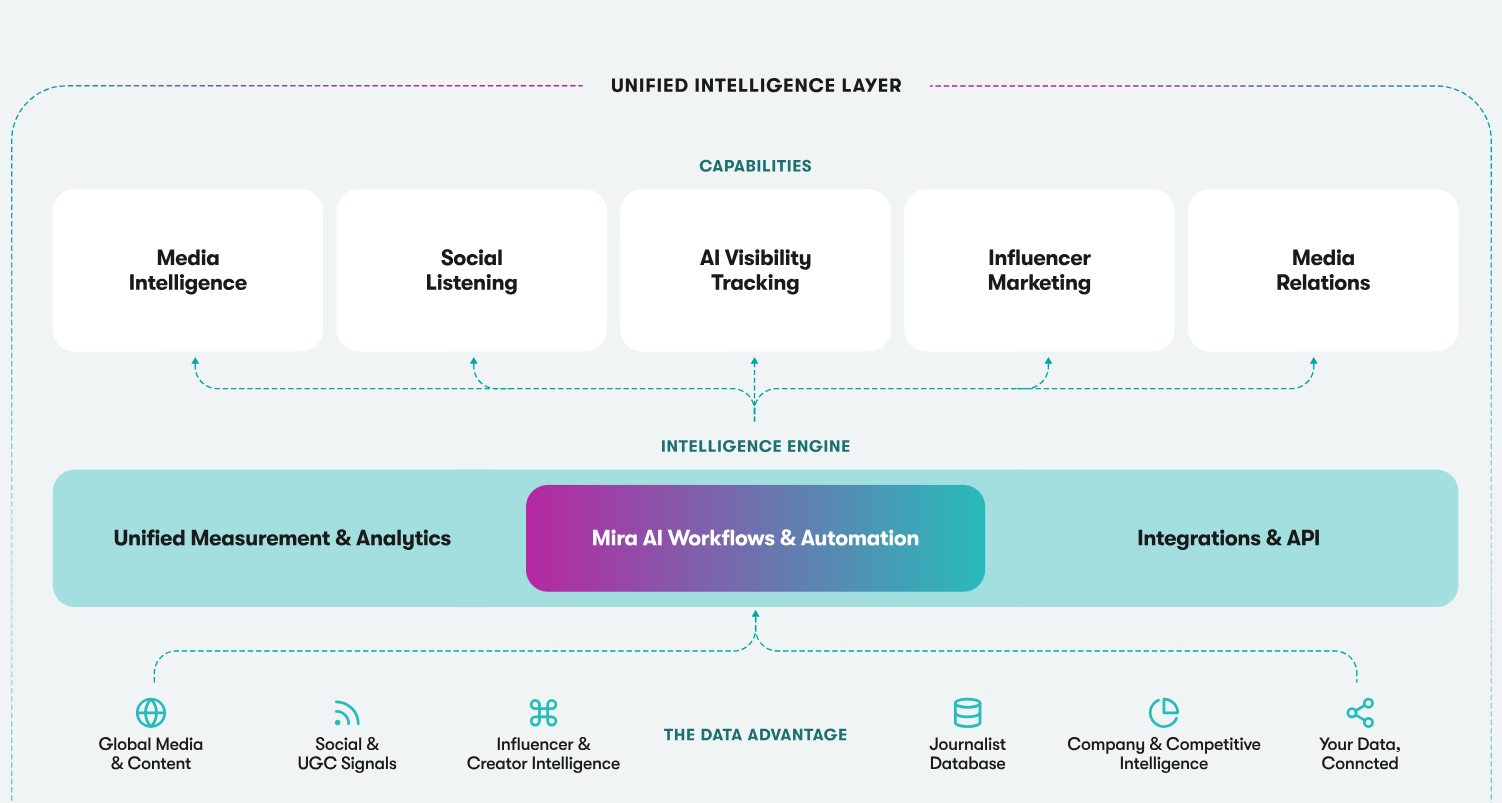
Sales Intelligence applies Meltwater's media and competitive data to B2B sales prospecting. It draws on a network of over 20 million private and public businesses and a Competitive Intelligence Graph covering over 45 million competitive relationships (sourced from Owler, acquired by Meltwater). Reps can search a contact database of over 150 million individuals with email addresses, direct phone numbers, and LinkedIn profiles.
Source: Meltwater
The module's distinctive approach is trigger-event alerting. Rather than relying on static firmographic filters alone, Meltwater monitors the open web and fires real-time alerts when qualifying business events occur: acquisitions, funding announcements, partnerships, ESG news, headcount growth, and leadership changes. Alerts arrive by email, Slack, or push notification. Competitive company insights surface inside the user's existing CRM, and curated insights are delivered to inbox in a digest format.
Sales Intelligence sits inside the same Meltwater suite as Media Intelligence and Social Listening, so teams can extend the same data and alert infrastructure to their sales motion without adopting a separate tool.
Meltwater Data, API, and Integrations
Data & API Integration is the programmatic access layer for teams that need Meltwater data inside their own systems. The REST API runs at api.meltwater.com with two active versions: V3 (established) and V4 (in development for newer features). The API covers Listening (earned media search, export, analytics, streaming), Explore+ (private instance analytics), Social Analytics (owned account performance), Mira API (AI insights), and Bring Your Own Content (importing external documents into Meltwater's enrichment pipeline).
Source: Meltwater
For teams that do not write code, no-code console tools (Exports Console, Search Console, Analytics Console, Streaming Console) provide GUI access. BI connectors are documented for Microsoft Power BI, Looker Data Studio, and Domo. The Tableau connector is deprecated.
Bring Your Own Content (BYOC) is a distinctive capability: customers push their own first-party content into Meltwater's platform, where it gets the same metadata tagging (sentiment, language, key phrases) as external media and becomes queryable alongside global coverage. Limits are 500 documents per request and 25MB per payload.
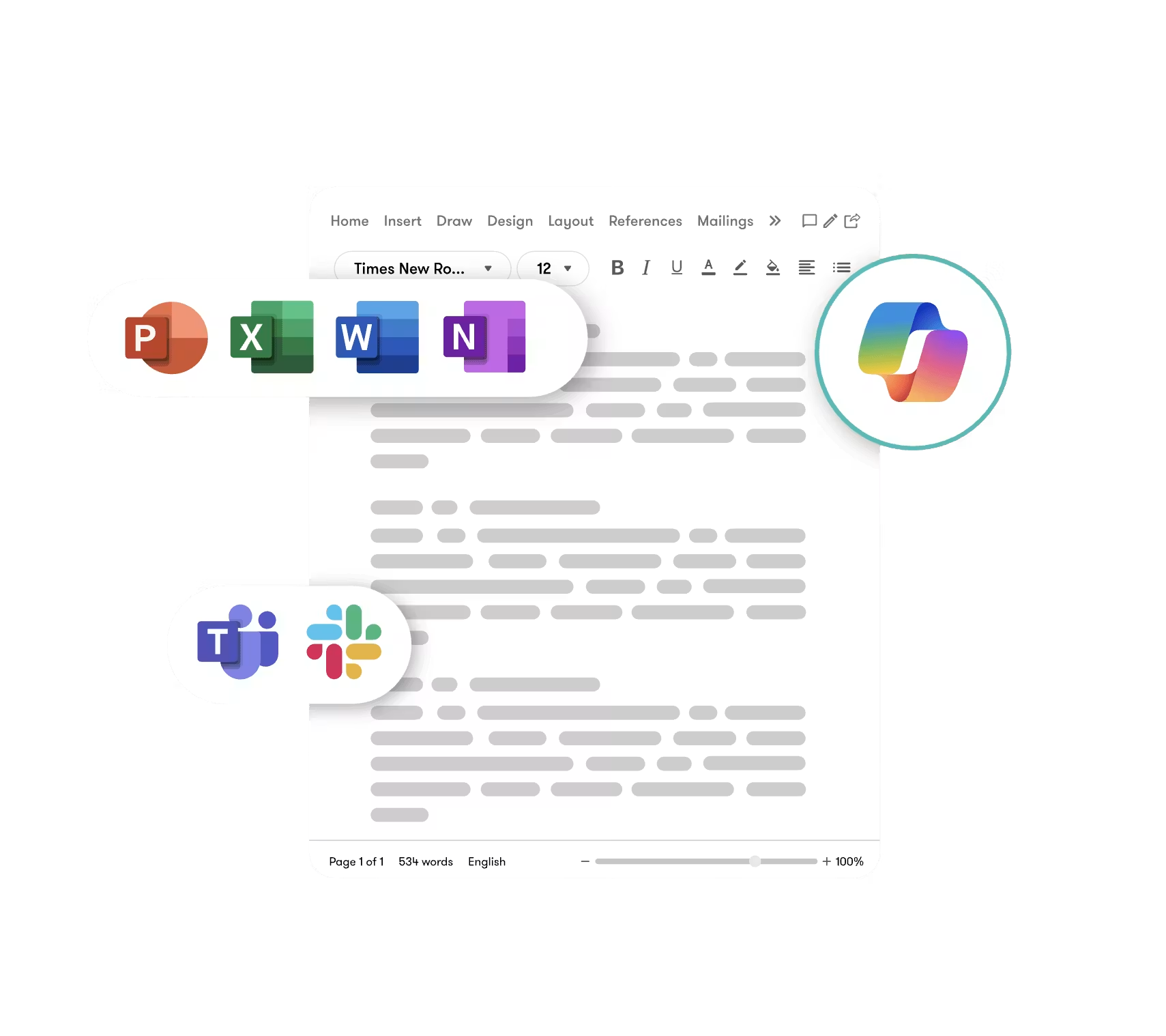
Collaboration integrations include a Meltwater Agent for Slack (real-time media alerts in channels, search and share insights without leaving Slack) and a Meltwater Agent for Microsoft (integration with Teams and Microsoft 365 Copilot, generating briefs and summaries within Word, PowerPoint, and Outlook).
Source: Meltwater
API usage limits are tier-dependent: core packages allow 30,000 documents/month, 50 exports/month, and 50 analytics calls/day; the separately purchased Insights API package raises those to 100,000 documents/month, 100 exports/month, and 100 analytics calls/day. A general rate limit of 100 calls/minute applies, with a ceiling of 2,000 requests/hour per IP. The Mira API runs at 60 requests/minute with conversations limited to 290,000 tokens.
The infrastructure runs on AWS for 90%+ of microservices, deployed as containers across multiple availability zones. Meltwater holds SOC 2 Type II, ISO 27001, ISO 27701, and ISO 42001 certifications, with all data in transit protected via TLS 1.2+ and all client PII encrypted at rest using AES-256.
Where Meltwater Stops: The Gaps
Meltwater centers on media, social, and consumer intelligence for PR, communications, and marketing teams. That focus shapes its strengths, but it also means the platform thins out in areas a go-to-market team eventually needs.
No verified B2B contact database at scale. Meltwater Sales Intelligence offers access to 150 million individuals with email addresses and phone numbers, but this is a fraction of the coverage a dedicated B2B data platform provides. The database fuels trigger-based sales prospecting alongside media intelligence. It was not built to serve as a primary source of verified direct dials and business emails for high-volume outbound.
No buyer intent signals from web-wide research activity. Meltwater tracks what people say about a brand in published media and social posts. It does not track which companies are researching specific topics across the web before they engage with any vendor (the behavioral layer that separates engagement signals from intent signals).
No conversation intelligence. Meltwater does not record, transcribe, or analyze sales calls. Teams that move from media-fueled prospecting to phone-based selling need a separate tool to capture what happened in the conversation and why a deal moved.
Company-level website visitor identification only. Meltwater's monitoring captures media and social mentions, and its Sales Intelligence module tracks trigger events, but the platform does not identify specific individuals visiting your website. Company-level identification from reverse IP lookup is part of the broader ecosystem, but contact-level resolution (who specifically visited, not just which company) is not.
No native marketing orchestration or display advertising. Meltwater covers the intelligence layer (what's being said, who's saying it, what's trending) but does not include campaign orchestration, display advertising audience management, or account-based marketing capabilities for activating that intelligence across advertising channels.
Limited multi-competitor benchmarking in native reports. Comparing more than two competitors in a single report requires exporting data and rebuilding charts externally, a constraint for teams managing competitive intelligence across crowded categories.
How ZoomInfo Covers the Gaps
The gaps above share a common thread: Meltwater excels at tracking what the world says, but the moment a team needs to know who to contact, who's in-market before any conversation starts, or how to orchestrate outbound across channels, those capabilities sit outside the platform. ZoomInfo covers those layers.
ZoomInfo's B2B Data Platform: Verified contacts and companies at a scale media intelligence cannot match
ZoomInfo operates the largest B2B data platform in the industry: 500M contacts, 100M companies, 135M+ verified phone numbers, 120M direct-dial phone numbers, and 200M+ verified business email addresses. The data flows through a verification pipeline backed by 300+ human researchers and automated ML scanning 28 million site domains daily, reaching up to 95% accuracy on first-party data.
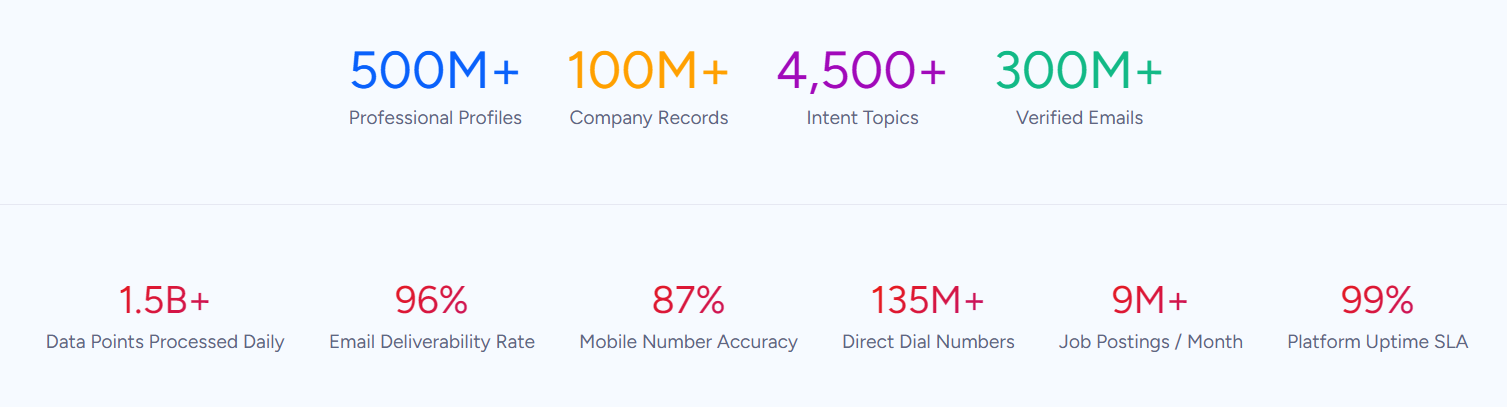
Where Meltwater's Sales Intelligence provides 150 million contacts alongside its media monitoring heritage, ZoomInfo's database was built from the ground up for outbound sales execution. It includes 300+ company attributes for segmentation, department org charts with decision-makers' direct dials and emails, contact tracking with job-change alerts, and technographic profiles covering 30,000+ technologies across 200+ categories for 30+ million companies. Global coverage extends to 34M+ company profiles outside North America, 200M+ professional profiles outside NA, and 45M+ mobile numbers outside NA.
In a Fortune 500 competitive RFP analyzing 25 million contacts across vendors, an independent consultant concluded that "no other competitor came even close."
ZoomInfo Intent and WebSights: In-market signals that work before any media mention exists
ZoomInfo Intent tracks signals from 210 million IP-to-Organization pairings and 6 trillion+ new keyword-to-device pairings sourced monthly. This reveals which companies are researching topics related to your product across the web, before any journalist writes about them and before any social post surfaces.
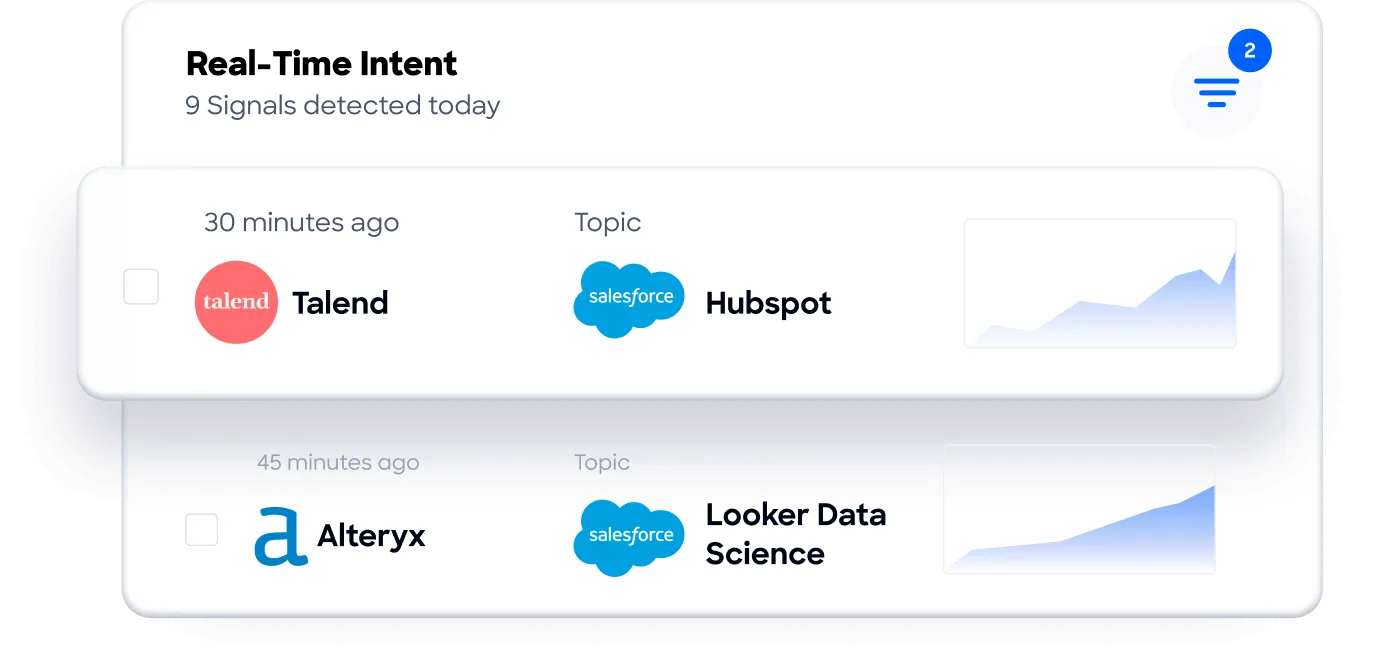
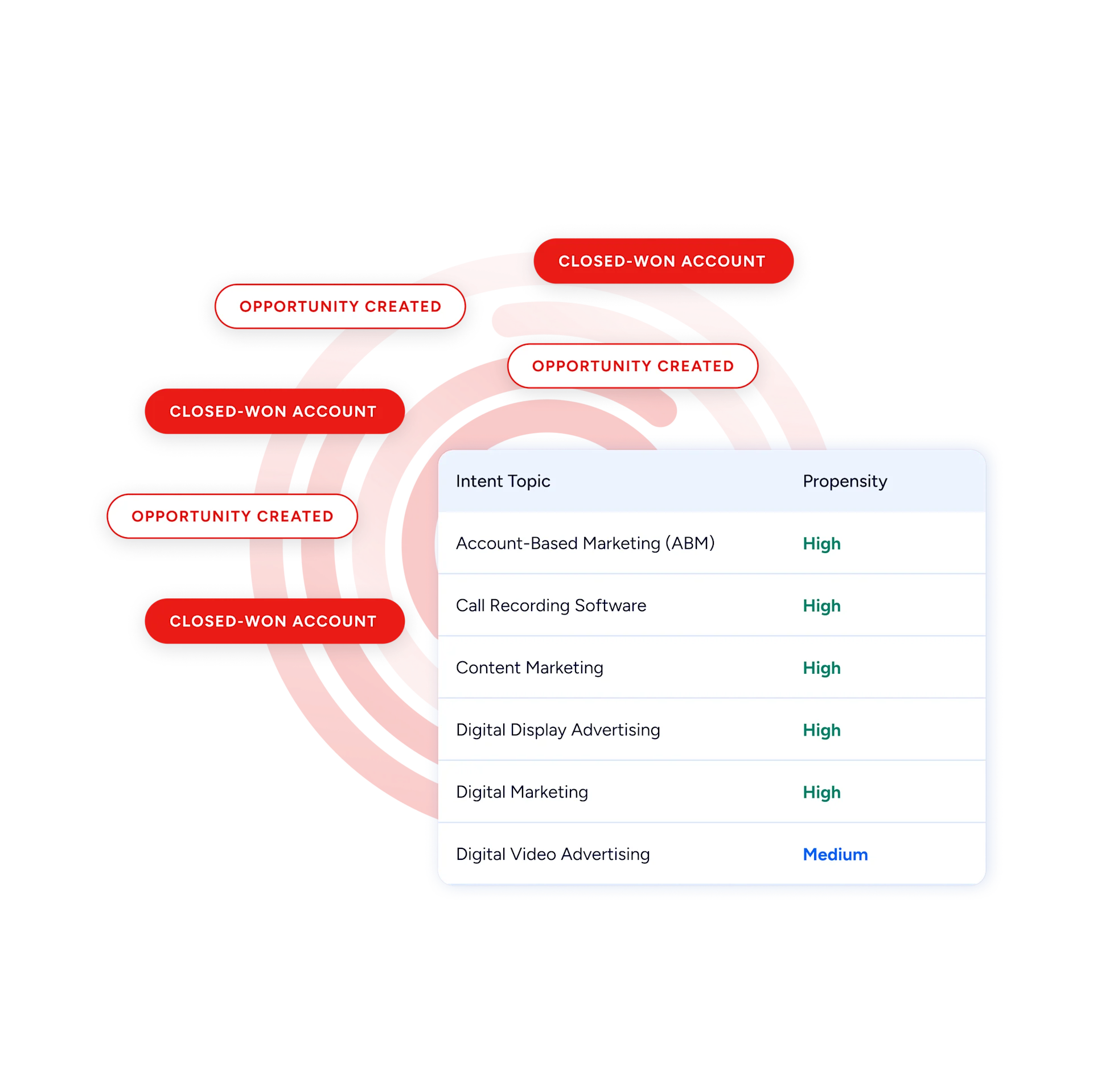
Guided Intent, exclusive to ZoomInfo, identifies topics historically correlated with deal success rather than requiring manual topic selection.
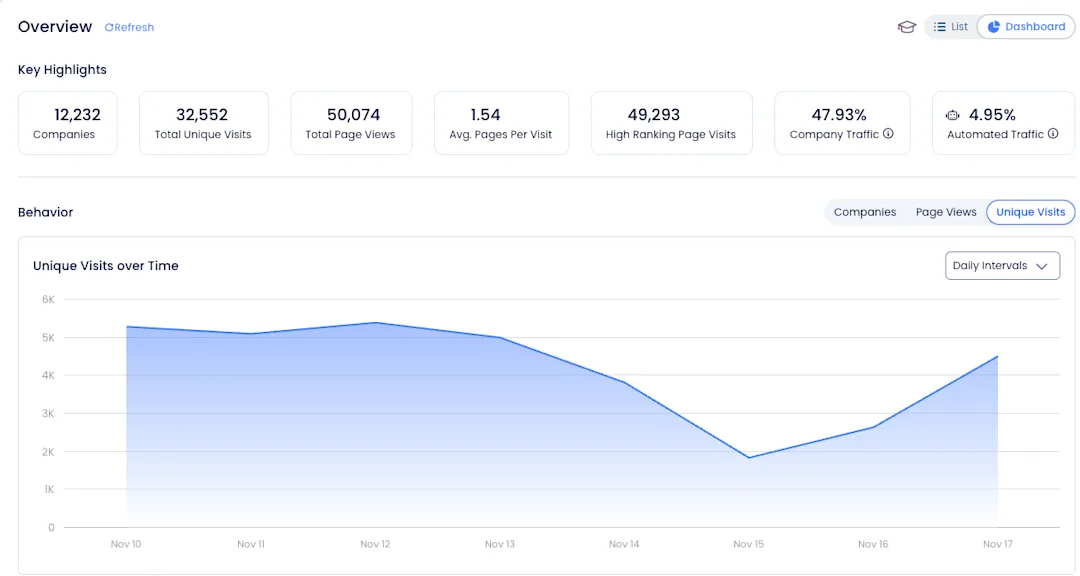
On the website side, WebSights resolves anonymous website traffic to companies with Automatic Traffic Filtering that distinguishes real visitors from bots.
ZoomInfo Marketing extends this with contact-level site visitor identification, identifying who specifically visited (not just which company) and triggering personalized outreach. Where Meltwater tells you what was said about your brand, ZoomInfo tells you who is researching your category.
ZoomInfo's GTM Context Graph and Chorus: Understanding why deals move, not just what was published about them
Meltwater captures external signals: media coverage, social conversation, audience trends. ZoomInfo's GTM Context Graph captures internal signals: processing 1.5B+ data points daily, it fuses B2B data with CRM records, conversation intelligence from Chorus, email interactions, and behavioral signals into one intelligence layer.
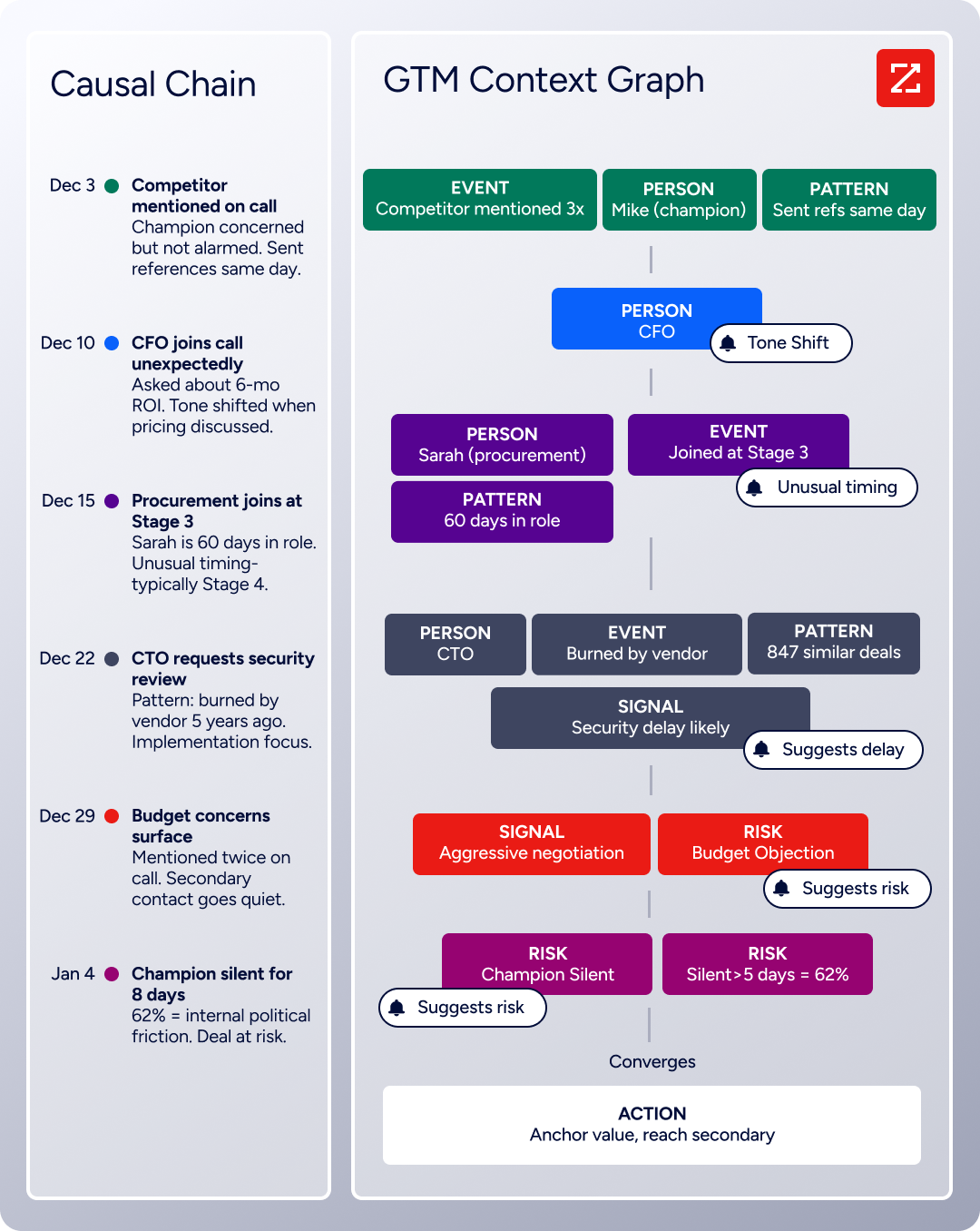
Chorus, ZoomInfo's conversation intelligence engine backed by 14 technology patents, records and transcribes sales calls, surfaces AI-generated insights (talk ratios, sentiment, objection detection), auto-syncs deal intelligence to the CRM, and provides coaching scorecards and clip sharing.
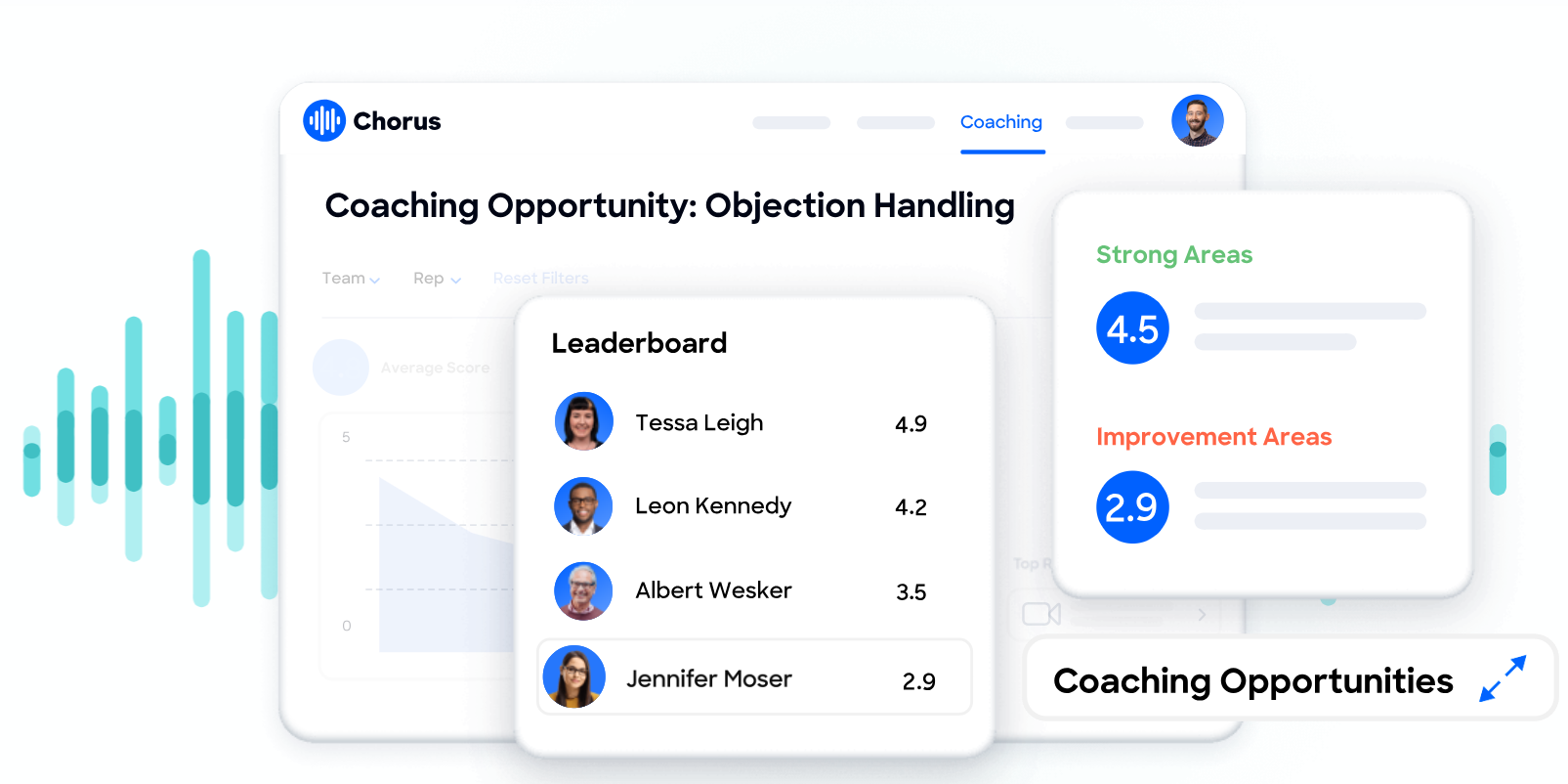
It captures the context media monitoring misses: why a champion went quiet, what a competitive mention means for deal risk, which objection patterns predict closed-lost outcomes.
Seismic's sales team attributed 39% of active pipeline to opportunities identified or influenced by ZoomInfo signals, boosted productivity by 54%, and saved 11.5 hours per week per seller. (Seismic Case Study)
ZoomInfo GTM Studio: Marketing orchestration and ABM that activates intelligence across channels
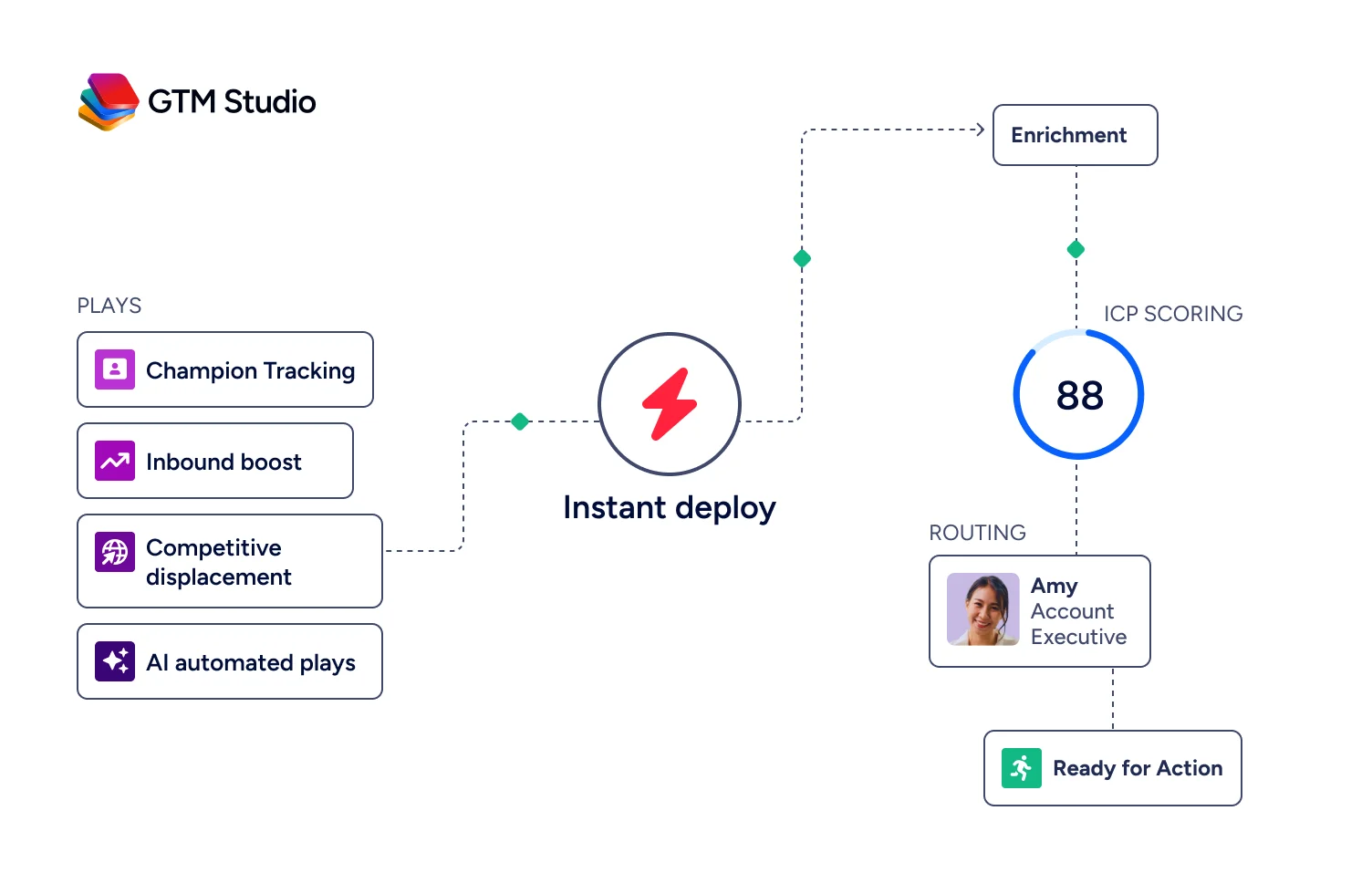
ZoomInfo’s GTM Studio addresses the marketing orchestration gap directly. Marketers, RevOps teams, and GTM engineers can build audiences using natural language, enrich with first- and third-party data, define triggers, and activate plays across channels (email, calls, display ads, direct mail, LinkedIn, Meta, Connected TV) without engineering support.
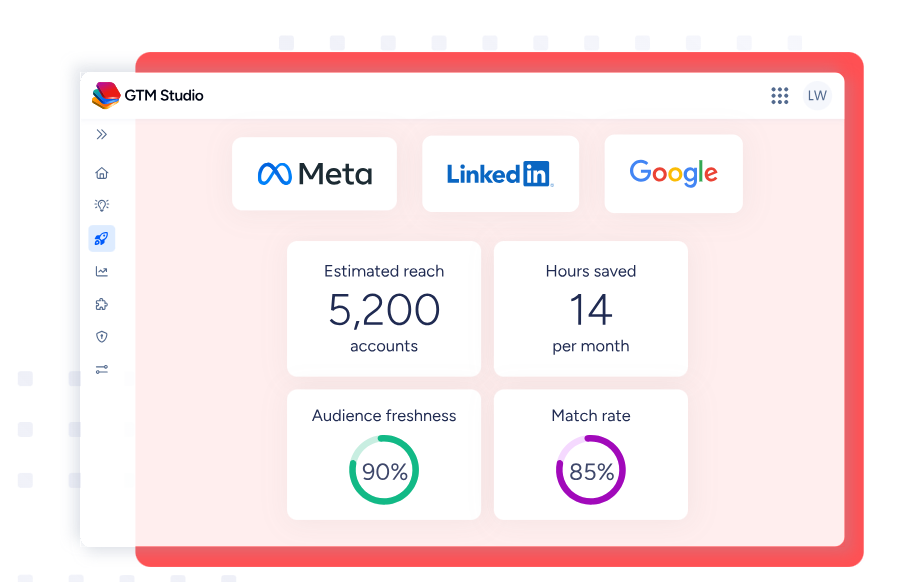
Pre-built GTM plays cover inbound acceleration, champion tracking, competitive displacement, and ICP targeting. Expansion plays that used to take 3 weeks now launch in 30 minutes.
ZoomInfo Marketing includes a native Demand-Side Platform deploying display ads based on 300+ company attributes and FormComplete, which reduces forms to a single field while auto-appending data.
ZoomInfo APIs and MCP: The same intelligence inside any tool or AI agent
ZoomInfo delivers its intelligence through APIs and MCP (Model Context Protocol), so the same data and GTM Context Graph powering ZoomInfo's own products is accessible inside any third-party tool or custom AI agent.
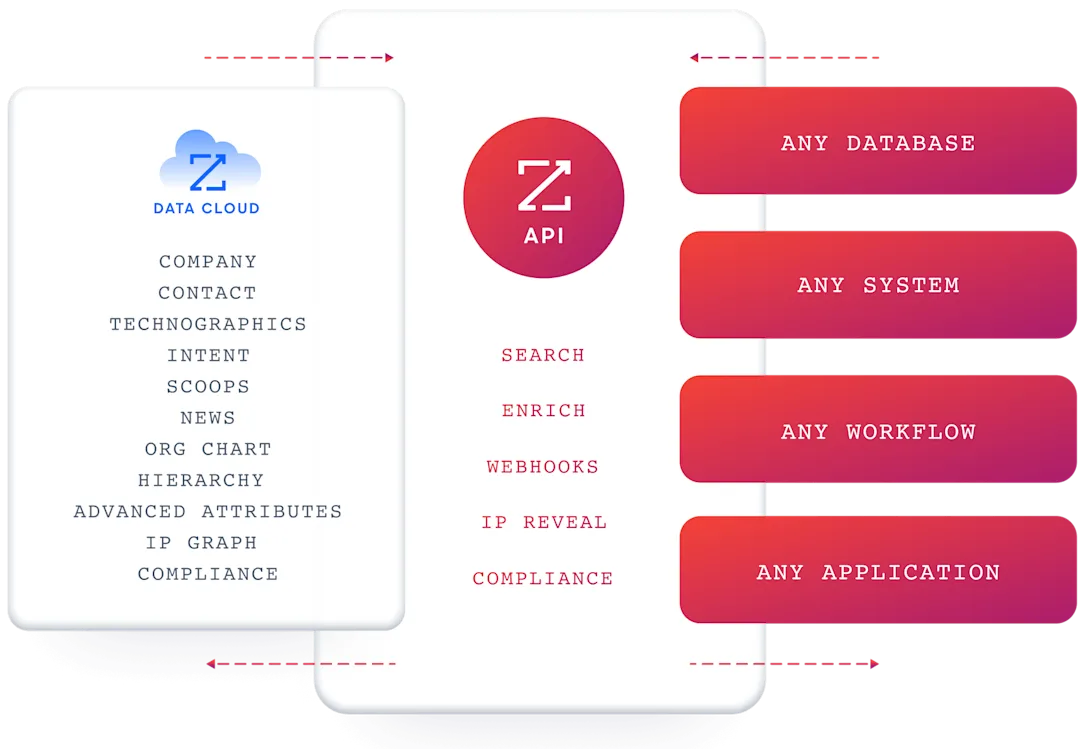
The MCP server connects AI models directly to ZoomInfo's B2B data as a native tool, currently supporting Claude and ChatGPT. API access is included in all relevant plans.
ZoomInfo's Free Entry Points: Evaluate the platform before any commitment
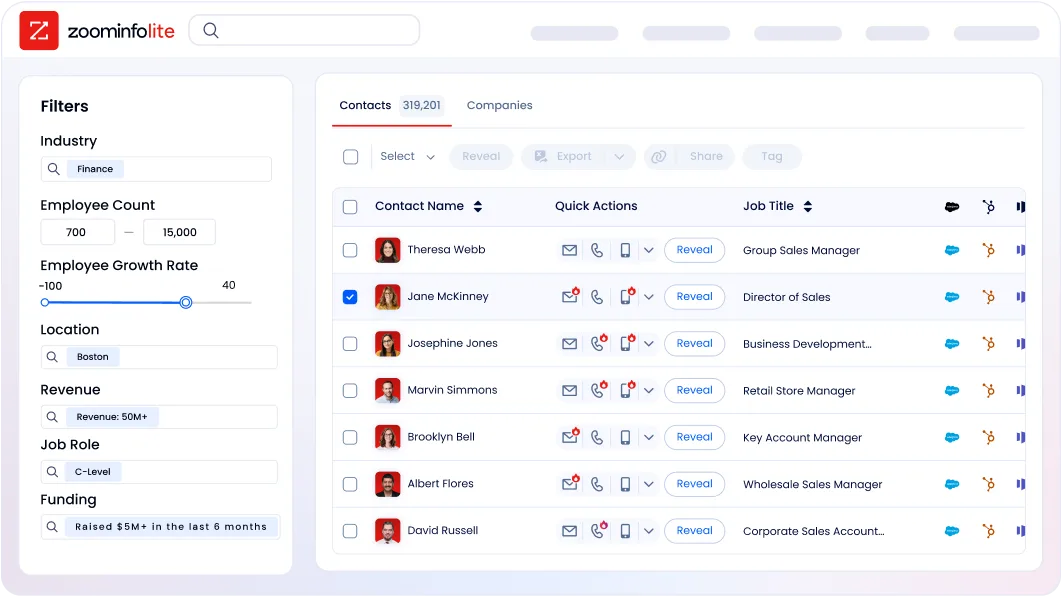
ZoomInfo offers what Meltwater does not: a path into the platform without a sales conversation. ZoomInfo Lite is a permanent free tier with access to ZoomInfo's B2B database, 10 monthly export credits, individual and company searches, a Chrome extension, and WebSights Lite with up to 10 website visitor reveals per day. A separate 7-day free trial provides broader access with no credit card required.
Final Summary
Meltwater is a thorough toolkit for media, social, and consumer intelligence: unlimited keyword monitoring across 270,000+ news sources and 15+ social channels, AI-powered crisis detection, semantic journalist matching, influencer campaign management from discovery through payment, consumer intelligence that replaces survey cycles with live social data, and a first-mover GenAI Lens tracking brand portrayal inside ChatGPT, Gemini, and other LLMs. It serves PR, communications, and marketing teams that need to monitor what the world says and prove the ROI of earned media.
It is lighter on the layers that sit before and after the conversation: no verified B2B contact database at sales-execution scale, no buyer intent signals from web-wide research activity, no conversation intelligence for sales calls, and no marketing orchestration or display advertising capabilities.
If your bottleneck sits upstream of coverage (knowing which companies are in-market before any mention surfaces) or downstream of monitoring (executing outbound, recording sales conversations, orchestrating multi-channel campaigns), that is the ground ZoomInfo covers. Its 500M-contact, 100M-company database supplies the verified emails and direct dials media intelligence cannot. ZoomInfo Intent surfaces accounts researching your category from 6 trillion+ keyword-to-device pairings monthly, a signal layer that works before any journalist writes about it. Chorus captures and reasons about every sales conversation. GTM Studio gives marketing teams multi-channel orchestration and ABM capabilities. And the GTM Context Graph fuses all of it into one intelligence layer that captures why deals move, not just what was said about the companies involved.
See what that intelligence adds to your monitoring stack: start with ZoomInfo Lite for free, or request a demo to see intent signals and verified contacts work alongside the coverage you already track.
FAQ
Does Meltwater include a B2B contact database for sales prospecting?
Yes. Meltwater's Sales Intelligence module provides access to over 150 million individuals with email addresses, direct phone numbers, and LinkedIn profiles, plus a Competitive Intelligence Graph covering over 45 million competitive relationships. The database complements Meltwater's media monitoring with trigger-event alerting for sales teams. For teams that need a primary B2B data platform at larger scale, ZoomInfo's database covers 500M contacts, 100M companies, and 135M+ verified phone numbers with up to 95% accuracy on first-party data.
Can Meltwater track how AI assistants like ChatGPT describe my brand?
Yes. GenAI Lens tracks brand portrayal across ChatGPT, Gemini, Claude, Perplexity, DeepSeek, Grok, Meta Llama, and Google AI Overviews, covering 90%+ of the LLM market. It surfaces visibility, sentiment, source citations, and trend shifts in AI-generated brand descriptions. This is an emerging category Meltwater calls Generative Engine Optimization, and the product is priced separately from the core platform.
Which Meltwater plan includes API access?
API access is available on Enterprise and Agency plans as a named feature. Several mid-tier packages (MI Advanced, Social Essentials, Social Advanced, Essentials Suite, Advanced Suite) include an API allowance with lower limits. Starter and Pro plans do not include API access. The Mira API (for AI-powered insights) is sold as a separate add-on regardless of plan tier.
Does Meltwater offer a free trial?
Meltwater offers no self-serve free trial and no free plan. A human-guided demo can be requested at no charge, and interactive product tours are available as a self-serve preview. All subscriptions require a minimum 12-month contract with annual invoicing. ZoomInfo, by contrast, offers both ZoomInfo Lite (a permanent free tier) and a 7-day free trial with no credit card required.
How does Meltwater's contract structure work?
The minimum contract length is 12 months, with 36 months as the standard term. Auto-renewal is offered as an opt-in; if not canceled at least 60 days before the end of the term, the contract renews at Meltwater's then-standard price for the same subscription length. All fees are invoiced annually in advance with net-14 payment terms.
Does Meltwater support social listening for Asian markets?
Yes. Meltwater's social listening and consumer intelligence modules cover Asian market platforms including Naver, VKontakte, and Line alongside global platforms. With 50 offices across six continents and customers in 120+ countries, the platform serves multinational teams needing multilingual monitoring across regions.
Can Meltwater integrate with my BI tools?
Meltwater provides native connectors for Microsoft Power BI (Desktop and Service), Looker Data Studio, and Domo. The Tableau connector was previously available but is now deprecated. The REST API and Data Streams support custom integrations with other BI platforms and data warehouses. No-code console tools (Exports, Search, Analytics, Streaming) are available for non-developer analysts.
Does Meltwater include buyer intent data showing which companies are researching my category?
No. Meltwater tracks what is published about your brand and competitors across media and social channels, but it does not track which companies are researching specific topics across the web before they engage with any vendor. ZoomInfo Intent fills this gap, tracking signals from 210 million IP-to-Organization pairings and 6 trillion+ keyword-to-device pairings sourced monthly, with Guided Intent identifying the topics historically correlated with deal success.
