
Choosing between MoEngage and Salesforce for customer engagement comes down to five questions:
Are you a mobile-first consumer brand, or do you need a full CRM spanning sales, service, and marketing?
Is your priority engaging app users with push notifications and in-app messages, or orchestrating enterprise campaigns across departments?
Do you need a platform your marketing team can run on its own, or are you prepared to invest in dedicated administrators?
Is speed to launch more important than platform depth?
Do you already know who your best prospects are, or is identifying the right accounts and contacts still unsolved?
In short, here's what we recommend:
MoEngage is built for consumer brands that live on mobile. Its insights-led approach combines behavioral analytics, AI-powered journey orchestration, and omnichannel messaging (push notifications, email, SMS, in-app, WhatsApp) in a single dashboard marketers can operate without engineering support.
But MoEngage focuses on engaging users already in your app or database. It doesn't provide CRM, sales pipeline, or customer service tools, and its B2C mobile strengths don't transfer cleanly to B2B go-to-market work.
Salesforce is the enterprise platform that does everything. Marketing Cloud, Sales Cloud, Service Cloud, Data Cloud, and Agentforce AI share a single data model across departments. For organizations that need journey orchestration alongside CRM, commerce, and customer service, Salesforce offers the widest breadth, backed by its position as the #1 CRM by IDC market share.
The trade-off is cost and complexity. Marketing Cloud starts at $1,500/org/month, implementations stretch to months, and getting full value requires dedicated Salesforce administrators.
Both platforms help you engage customers you already know. But for B2B companies, the harder problem is often upstream: knowing which accounts to target, understanding what prospects care about right now, and having verified contact data that reaches decision-makers. Neither MoEngage nor Salesforce solves that problem on its own.
ZoomInfo is an AI-powered go-to-market platform built on a B2B data foundation of 500M contacts, 100M companies, 135M+ verified phone numbers, and 200M+ verified business email addresses.
By combining this data with your CRM records, conversation transcripts, and behavioral signals, ZoomInfo's GTM Context Graph (processing 1.5B+ data points daily) reveals not just who your prospects are, but why deals move or stall, which accounts match your win patterns, and when buying committees are in-market.
Whether you run MoEngage, Salesforce, or another engagement platform, ZoomInfo tells you who to engage, when to engage them, and what to say. Your team accesses it through the GTM Workspace for sellers, GTM Studio for marketers and RevOps, or APIs and MCP in any front-end.
If identifying the right accounts and contacts is the bottleneck in your go-to-market motion, see how ZoomInfo works.
MoEngage vs. Salesforce vs. ZoomInfo at a glance
MoEngage | Salesforce | ZoomInfo | |
|---|---|---|---|
Core focus | Mobile-first customer engagement | Full CRM + marketing + service | B2B data intelligence and GTM execution |
AI capabilities | Sherpa (predictive) + Merlin AI (generative) | Einstein AI + Agentforce (autonomous agents) | GTM Context Graph + AI agents for account intelligence |
Channels | Push, email, SMS, in-app, WhatsApp, web | Email, SMS, ads, web, mobile, social, voice | Email, phone, ads, chat, multi-channel orchestration |
Analytics | Behavioral analytics, funnels, RFM | Tableau, CRM Analytics, Data Cloud | Intent signals, buyer behavior, deal intelligence |
Ease of use | Marketer-friendly, moderate learning curve | Steep learning curve, admin required | Moderate; GTM Workspace deploys in weeks |
Data foundation | Customer behavioral data | CRM + CDP (Data Cloud) | 500M contacts, 100M companies, intent signals |
Pricing | Custom (MTU-based), no public pricing | Starts at $25/user/mo (CRM); $1,500/org/mo (Marketing Cloud) | Custom (consumption-based), free tier available |
Integrations | 200+ App Marketplace | 9,000+ AppExchange apps, MuleSoft | 172+ Marketplace, native Salesforce integration |
Best for | Consumer brands engaging app users | Enterprises needing unified CRM and marketing | B2B teams that need prospect intelligence and verified contacts |
MoEngage wins on mobile engagement, Salesforce wins on enterprise breadth
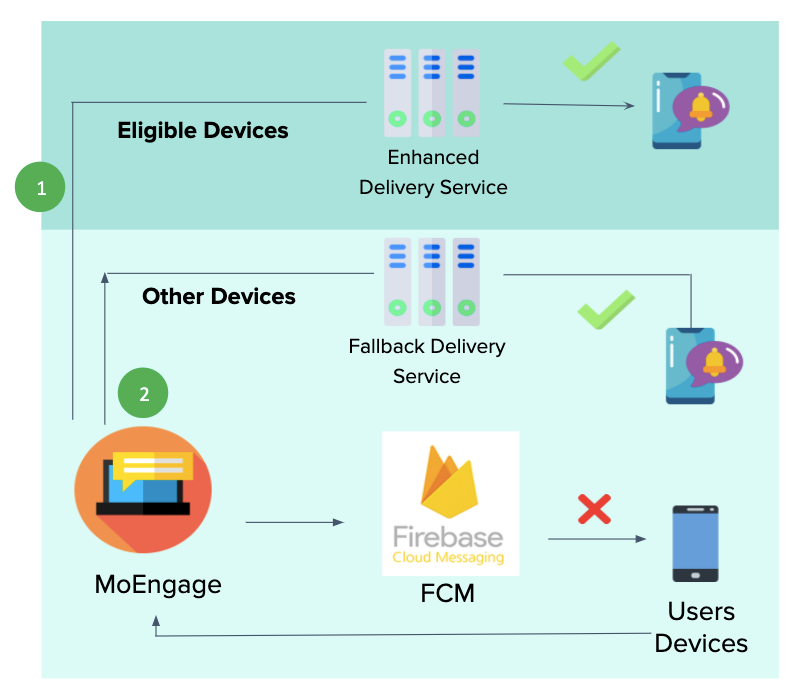
MoEngage was built for a mobile-first world. If your challenge is getting users to open your app, complete a purchase, or return after going quiet, MoEngage handles it well. The platform's Push Amplification technology improves Android push notification delivery in markets where custom OS skins kill background processes.
Source: MoEngage
Its in-app messaging guides users with contextual tooltips, banners, and full-screen messages triggered by real-time behavior. And its Flows visual journey builder lets marketers create cross-channel campaigns (push, email, SMS, WhatsApp, in-app) without writing code.
For a food delivery app trying to re-engage dormant users or an e-commerce platform nudging cart abandoners, MoEngage delivers faster and with less overhead than Salesforce.
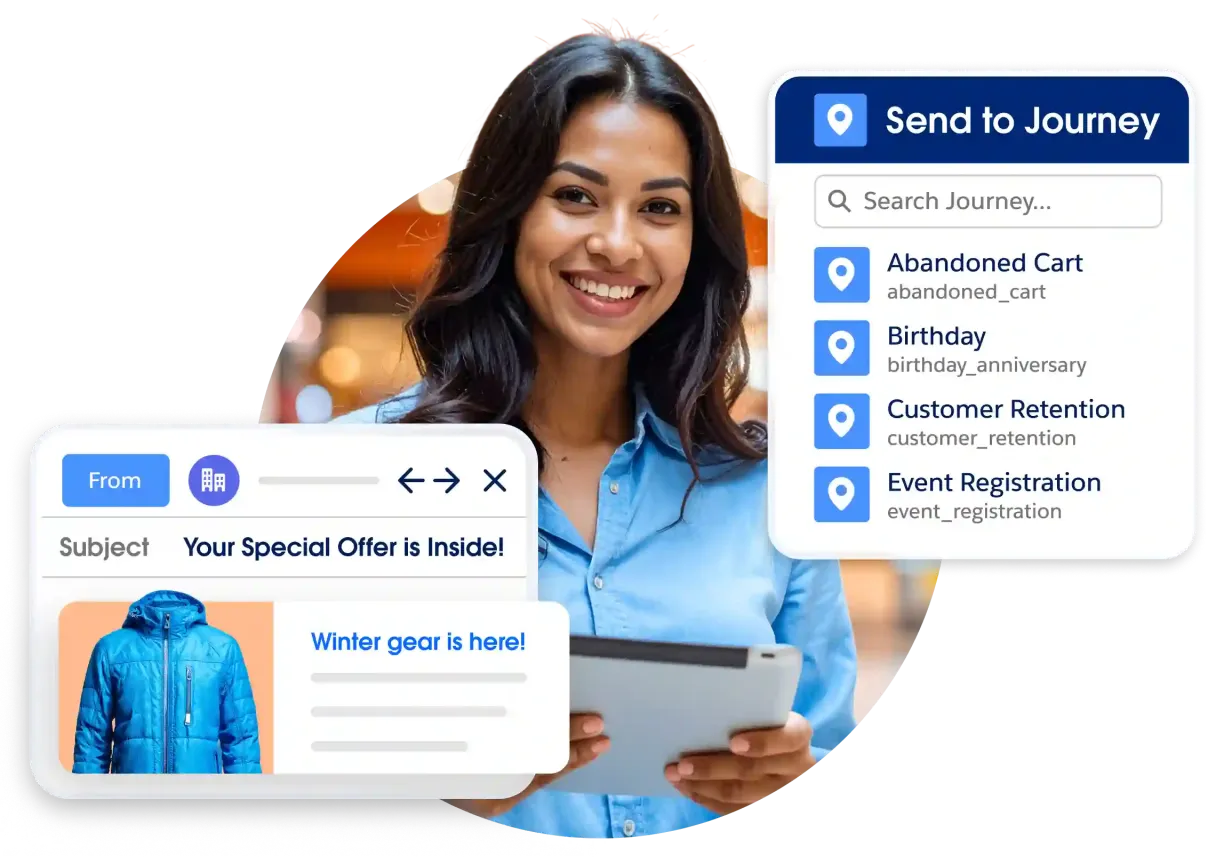
Salesforce operates at a different scale. Marketing Cloud Engagement handles B2C cross-channel journeys. Account Engagement (formerly Pardot) covers B2B lead nurturing and scoring. Personalization delivers real-time AI recommendations across web, email, and mobile. All of it connects to Sales Cloud, Service Cloud, and Commerce Cloud through a shared Data Cloud CDP.
Source: Salesforce
The trade-off is friction. Where MoEngage lets a marketer build and launch a cart abandonment flow in an afternoon, Salesforce requires more setup: configuring data extensions, building journey entries, aligning with CRM objects. It's more capable, but it demands more from the team running it.
Two different AI philosophies
MoEngage's AI runs on two engines. Sherpa, the predictive engine, optimizes send time, channel selection, and content for each user based on historical behavior.
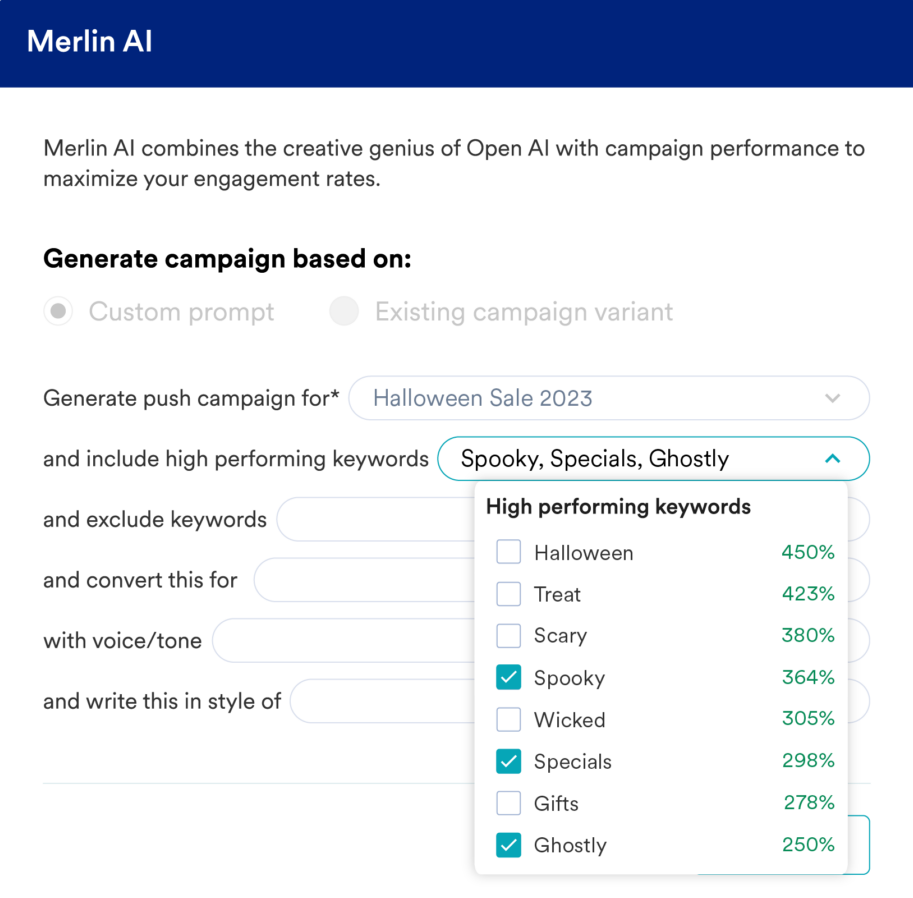
Merlin AI, the generative engine, creates campaign copy, subject lines, and images, learning from past campaign performance to suggest what works for your audience. Together, they automate decisions marketers would otherwise make by hand: which channel, what time, which message variant.
Source: MoEngage
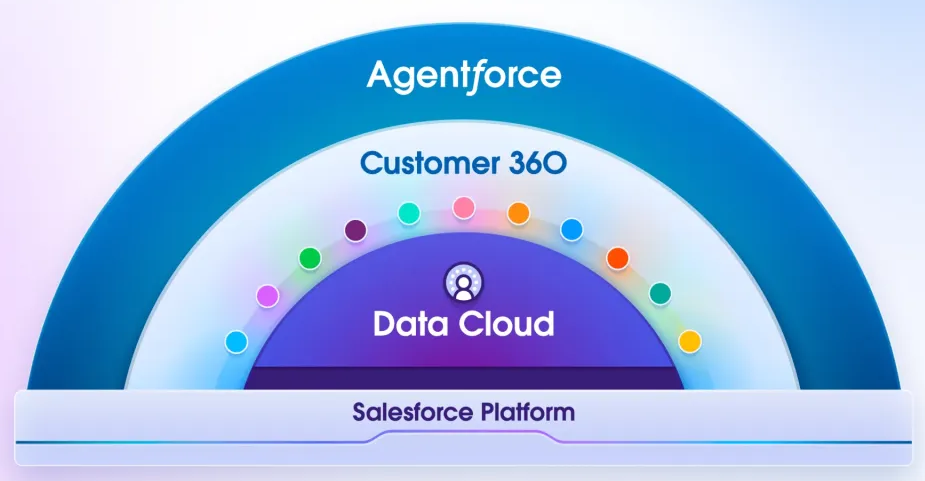
Salesforce's AI is broader. Einstein AI handles scoring, recommendations, and predictions across the entire CRM. Agentforce goes further, deploying autonomous AI agents that can resolve 85% of support requests without human escalation, generate account plans with SWOT analysis, and create marketing campaigns from natural language briefs.
Source: Salesforce
The Atlas Reasoning Engine powering Agentforce doesn't just predict; it reasons, plans, and acts across the full Salesforce platform.
The practical difference: MoEngage's AI makes your engagement campaigns smarter. Salesforce's AI aims to automate entire workflows across sales, service, and marketing. The scope matches the platform, and so does the complexity.
The data gap both platforms share
MoEngage and Salesforce both engage people well once they're in your system. MoEngage tracks behavioral data (app opens, purchases, cart events) and uses it to personalize messages. Salesforce unifies customer records across its CRM and Data Cloud, building profiles from 200+ pre-built connectors.
But neither platform tells you who your best prospects are before they enter your database. Neither identifies which companies are researching your product category right now. And neither provides verified direct-dial phone numbers and business emails for the decision-makers you need to reach.
This is the problem ZoomInfo was built to solve.
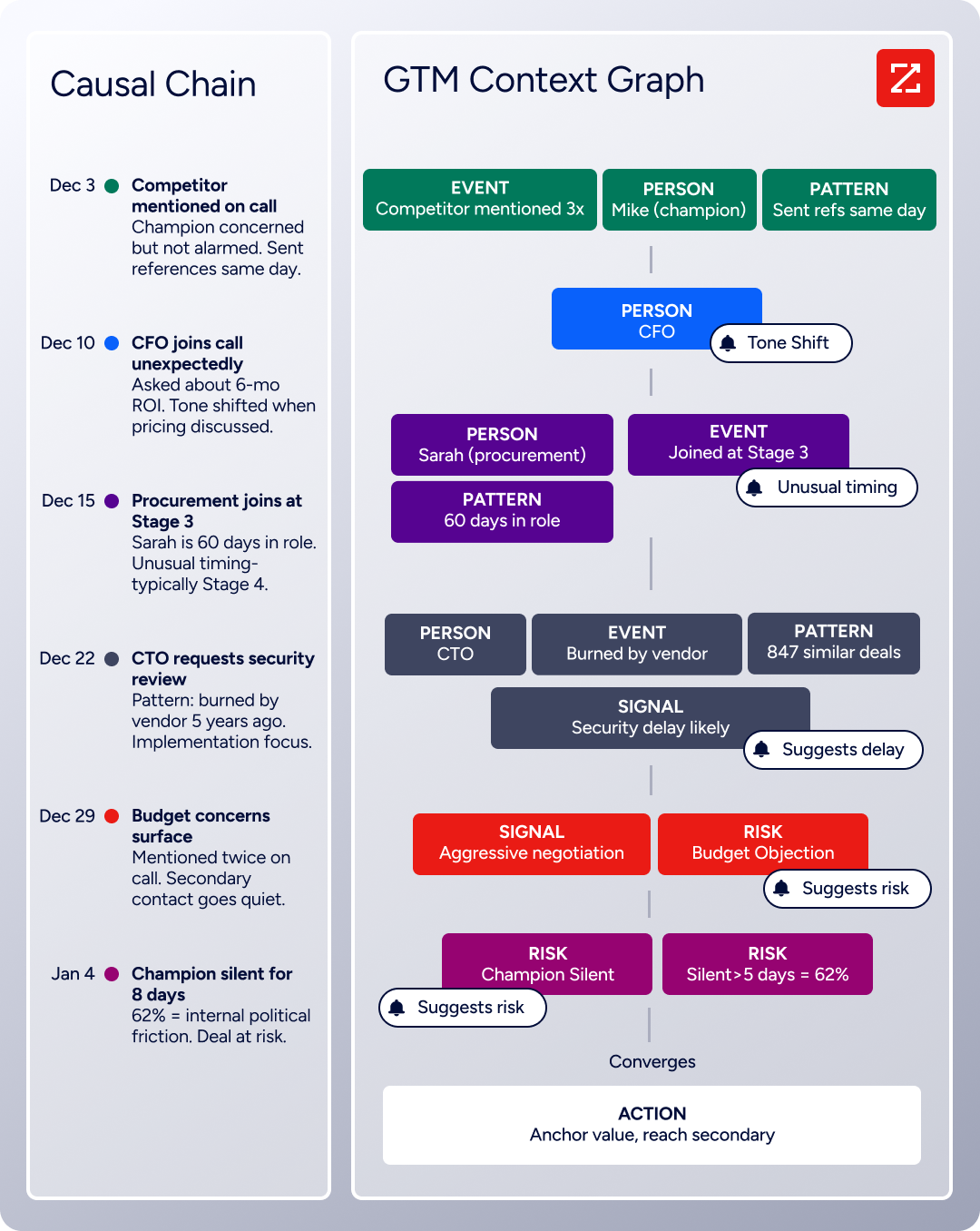
ZoomInfo's GTM Context Graph combines the largest B2B dataset (500M contacts, 100M companies, 135M+ verified phone numbers, 200M+ verified business email addresses) with your CRM records, conversation intelligence, and behavioral signals.
Source: ZoomInfo
The result is an intelligence layer that captures not just what happened in a deal, but why it happened. A CRM records that a deal moved to Stage 3. ZoomInfo's GTM Context Graph reveals that the deal moved because the CFO joined the last call and asked ROI-focused questions, a pattern that matches closed-won deals in your segment.
For B2B teams using either MoEngage or Salesforce for engagement, ZoomInfo answers the question those platforms can't: who should you be engaging in the first place?
Seismic's sales team attributed 39% of active pipeline to opportunities identified or influenced by ZoomInfo signals, while boosting productivity by 54%. (Seismic Case Study)
For a closer look at how Salesforce and ZoomInfo stack up one-on-one, see our Salesforce vs. ZoomInfo comparison.
Integration depth varies dramatically
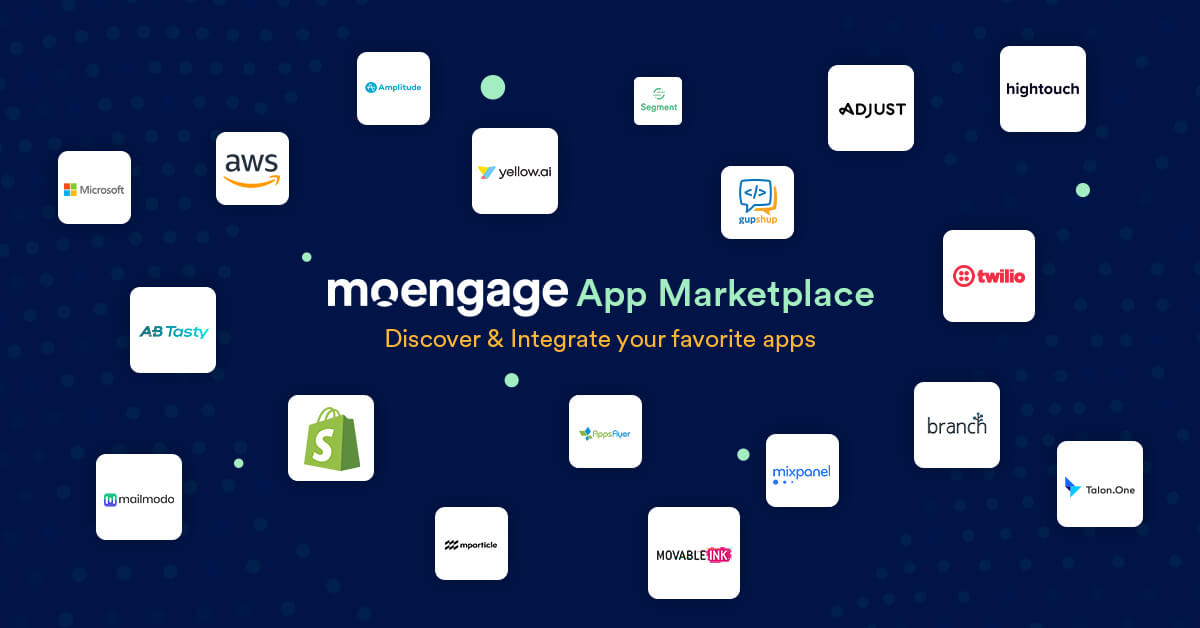
MoEngage maintains an App Marketplace with 200+ integrations spanning CDPs (Segment, mParticle, RudderStack), analytics platforms (Amplitude, Mixpanel), CRM systems (Salesforce, HubSpot), and messaging providers (Twilio, Gupshup). It also connects to data warehouses like Snowflake and BigQuery. For a mid-market company with a focused tech stack, these integrations cover the essentials.
Source: MoEngage
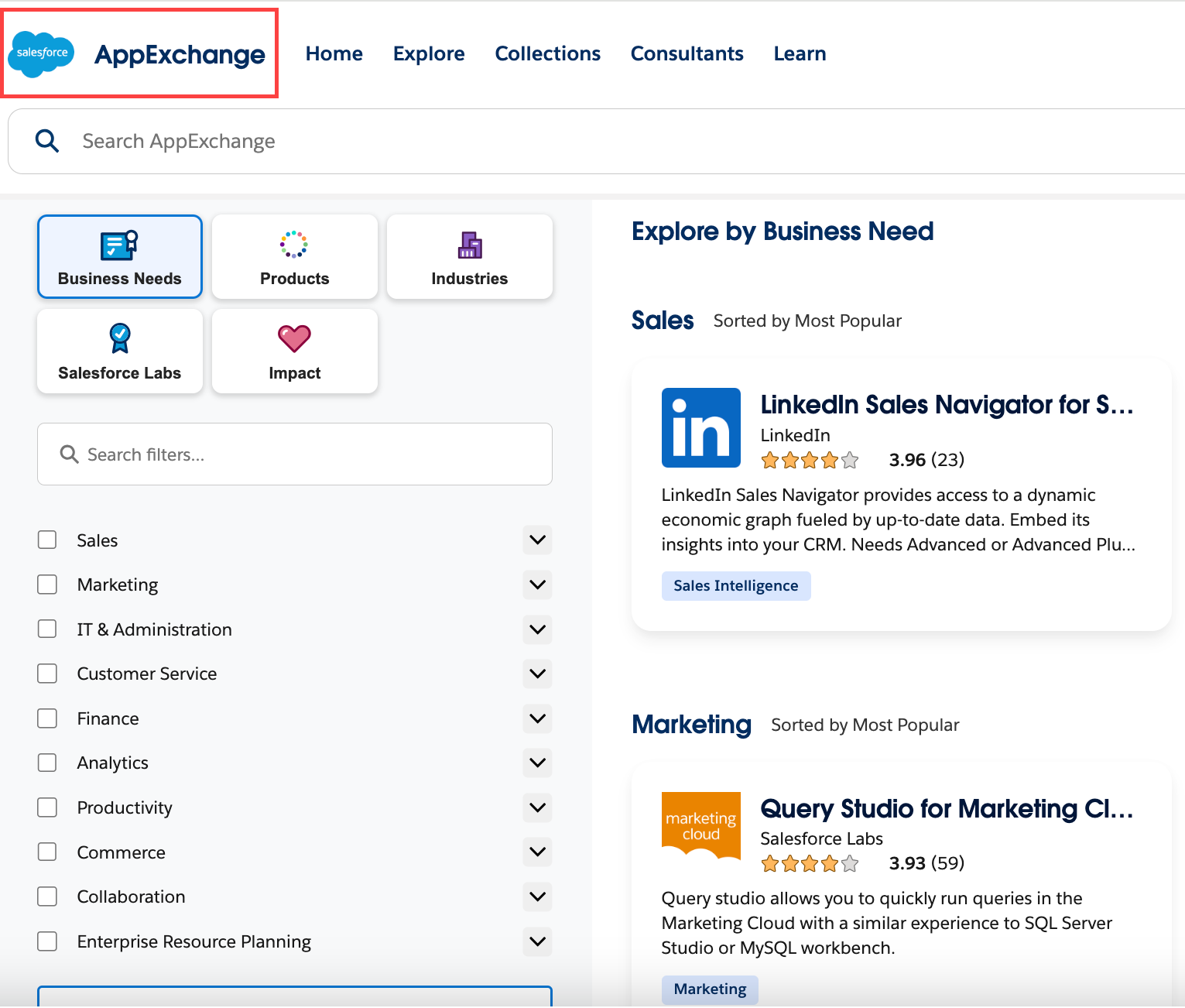
Salesforce's ecosystem is in a different league. AppExchange houses 9,000+ partner apps with 14+ million installs, and 91% of customers use at least one AppExchange app. MuleSoft provides API management with hundreds of pre-built connectors. If your company runs SAP, Oracle, ServiceNow, or custom internal systems, Salesforce has an established integration path.
Source: Salesforce
ZoomInfo provides a Marketplace with 172+ integration partners and takes a different approach to data sharing. Its native Salesforce integration enriches CRM records with verified contact data, company intelligence, and intent signals inside the Salesforce workflow.
Source: ZoomInfo
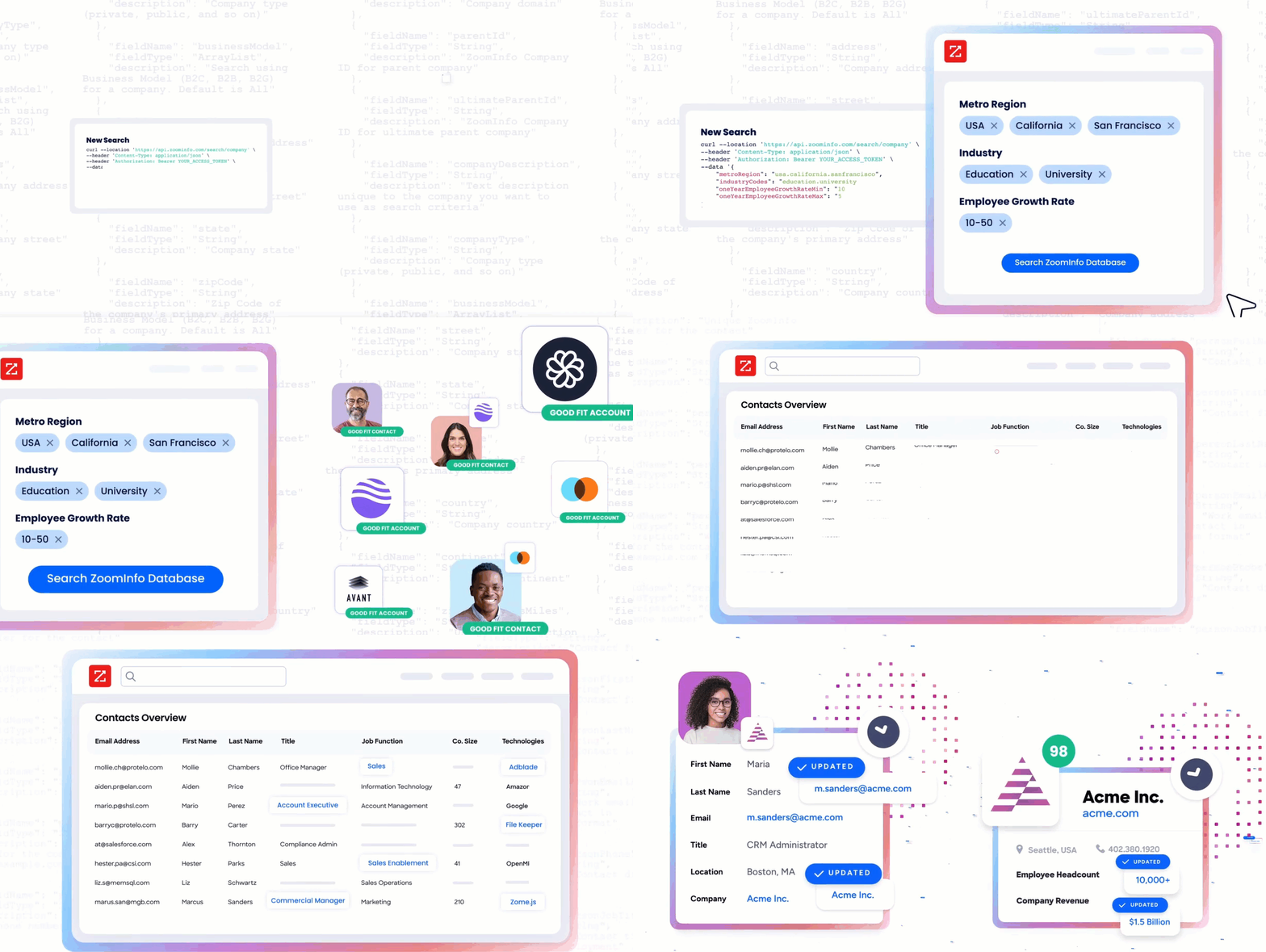
For teams using MoEngage, ZoomInfo connects through CDPs like Segment or via its Enterprise API and MCP server, which pipes B2B intelligence into any front-end, including AI agents built on Claude or ChatGPT.
Source: ZoomInfo
The key point: ZoomInfo's data flows into either platform. You don't have to choose between engagement tools and intelligence tools. They work together.
"The plug-and-play aspect of the API means I can integrate it into any process and get information at a moment's notice." Jerry Wilson, Senior Marketing Intelligence Analyst at BDO Canada, which saw an 87% reduction in time spent on data dashboard updates using ZoomInfo's API. (BDO Canada Case Study)
Analytics tell different stories
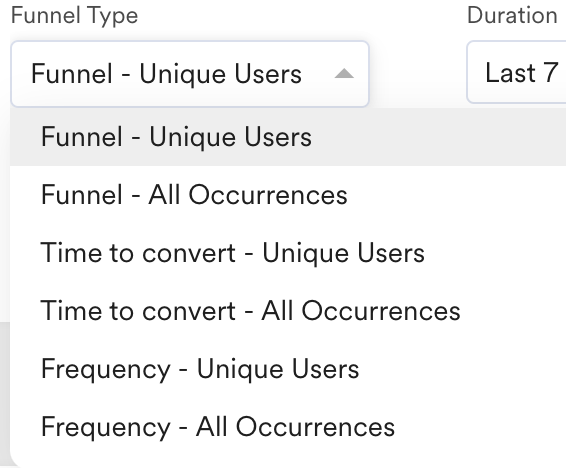
MoEngage's analytics do one job: show how users interact with your product and campaigns. Behavioral analysis tracks up to 10 events simultaneously with filtering by platform and app version. Funnel analysis identifies drop-off points in conversion paths.
Source: MoEngage
Retention cohorts show how many users return after their first interaction. RFM analysis segments users by recency, frequency, and monetary value. Every chart is actionable: you can create a segment from a data point and launch a campaign to that segment in clicks.
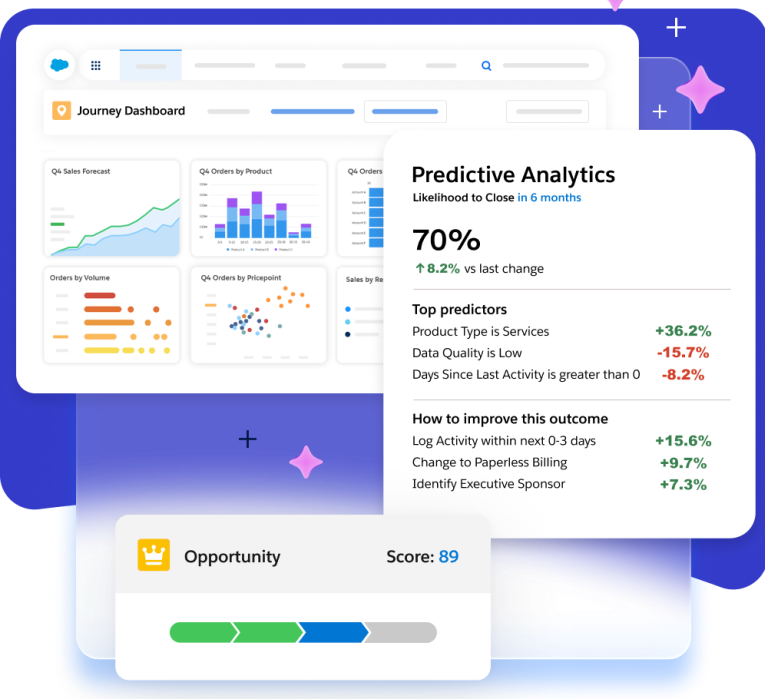
Salesforce's analytics span the full enterprise. Tableau handles data visualization and business intelligence. CRM Analytics embeds AI-powered dashboards into Salesforce records, and customers increase close rates by 28% using it.
Source: Salesforce
Marketing Intelligence connects 170 prebuilt API connectors and uses Agentforce to auto-pause underperforming ads. Data Cloud ingested 112 trillion records in FY26, providing raw material for analytics at scale.
ZoomInfo's analytics work upstream of both. Buyer Intent data tracks signals from 210 million IP-to-Organization pairings and 6 trillion+ new keyword-to-device pairings sourced monthly. Guided Intent (exclusive to ZoomInfo) identifies topics historically correlated with closed deals in your pipeline, rather than requiring you to guess which keywords matter.

Source: ZoomInfo
WebSights resolves anonymous website traffic to companies and buying team members. Technographics profiles the tech stack of 30+ million companies across 30,000+ technologies.

Source: ZoomInfo
MoEngage shows you what your users did. Salesforce shows you what happened across your business. ZoomInfo shows you what your market is doing before prospects enter your pipeline.
Journey orchestration and the engagement workflow
Both MoEngage and Salesforce offer visual journey builders, but they're designed for different scales.
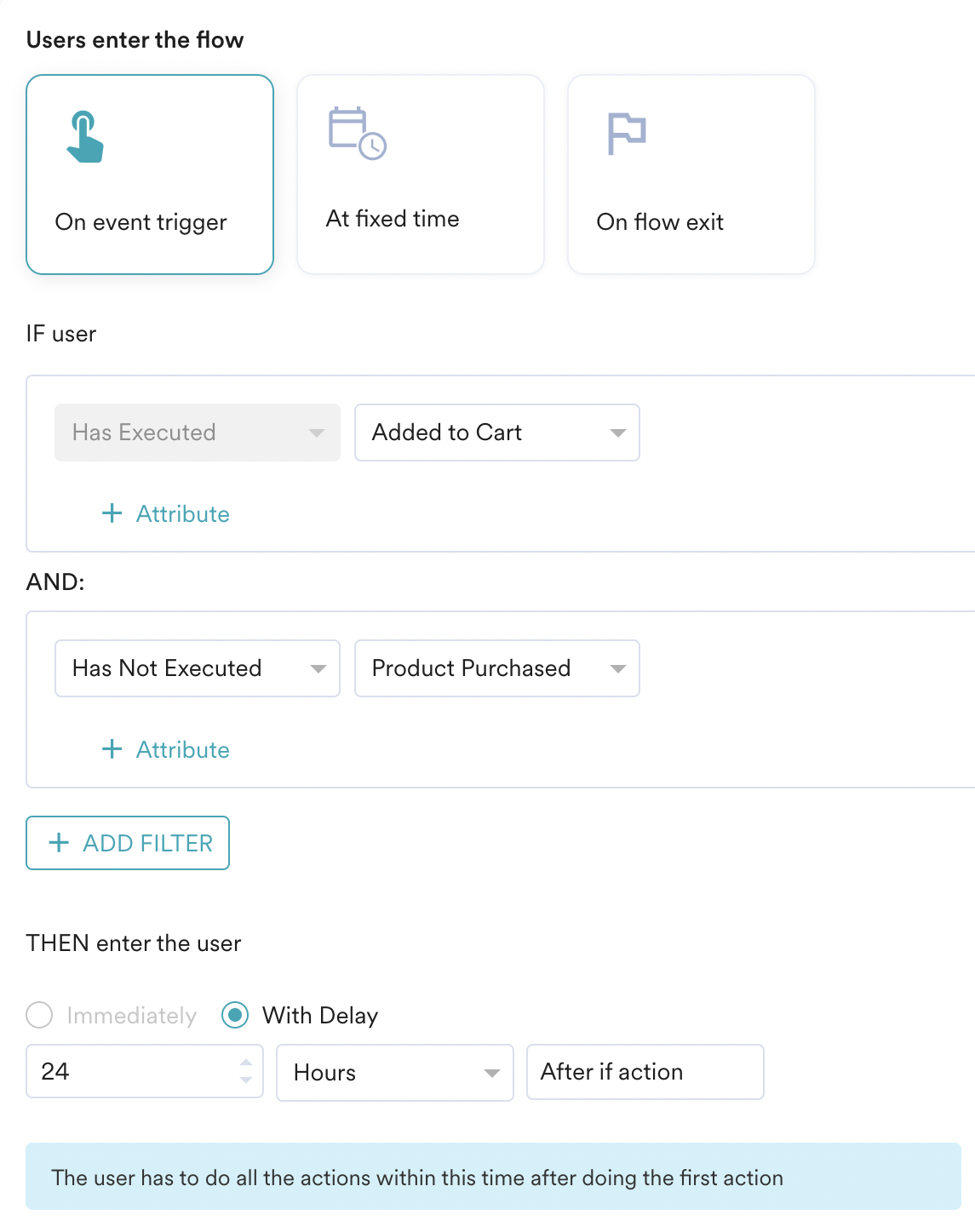
MoEngage Flows provides a drag-and-drop canvas where marketers create multi-step, cross-channel journeys triggered by user behavior. A user abandons a cart, and the system sends a push notification an hour later, follows up with an email the next day, and retargets with a WhatsApp message if neither gets a response.
Source: MoEngage
Flows Versioning lets marketers edit live journeys without rebuilding them. MoEngage's Sherpa AI picks the best next action for each user, selecting the right channel and send time automatically.
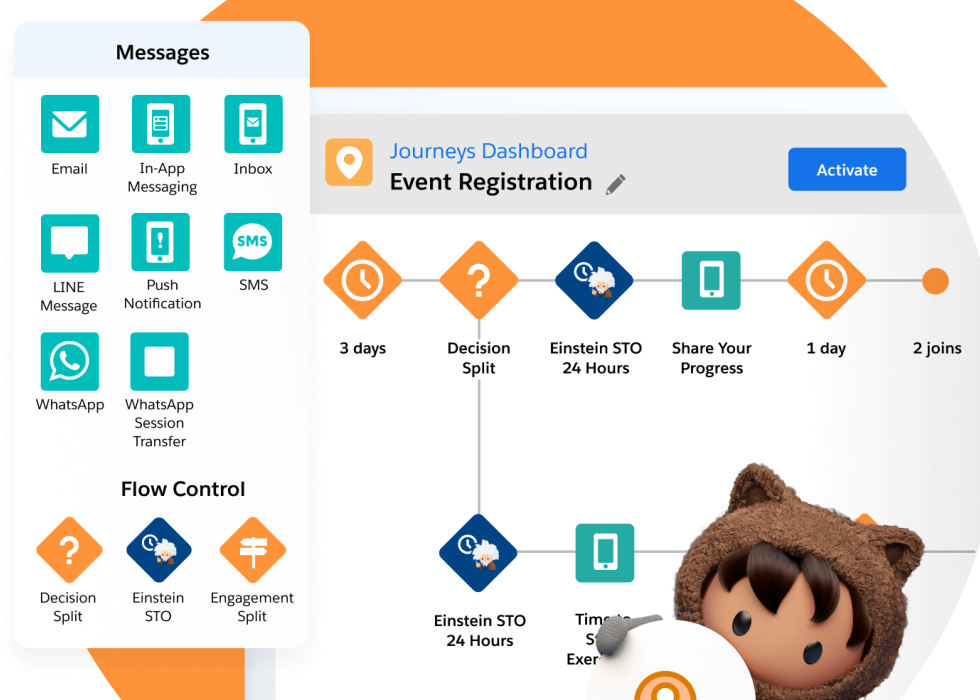
Salesforce Journey Builder operates at enterprise scale, orchestrating campaigns across email, SMS, ads, web, mobile, WhatsApp, and voice. The real power is in connections. A Salesforce journey can trigger Service Cloud case creation, update Sales Cloud opportunities, feed Commerce Cloud promotions, and fire Slack notifications, all from the same workflow.
Source: Salesforce
Agentforce Marketing adds autonomous agents that can create campaigns from natural language briefs and auto-pause underperforming ads.
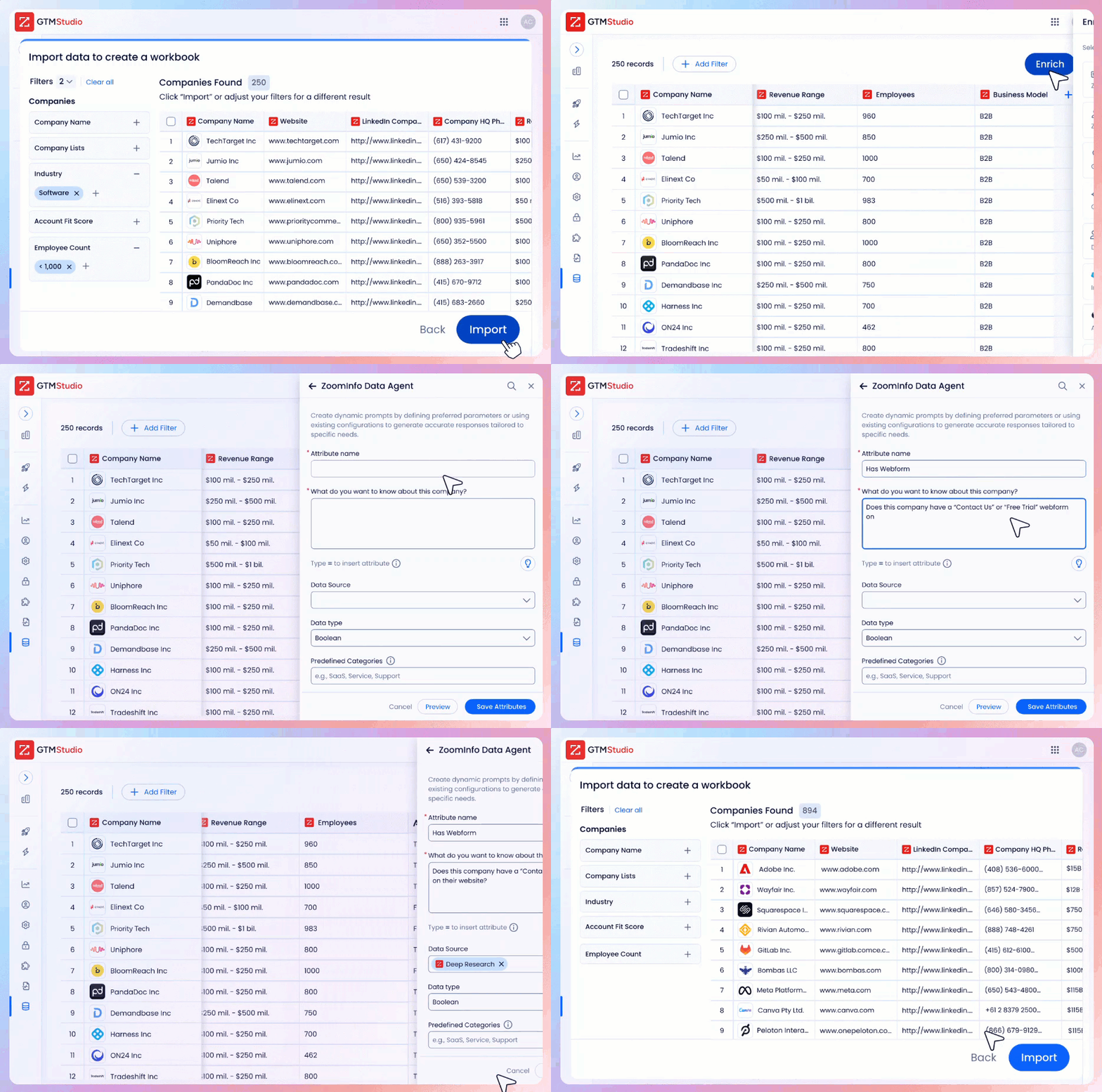
ZoomInfo's orchestration works differently. GTM Studio lets marketers and RevOps teams build audiences using natural language, define triggers based on buying signals, and launch multi-channel plays (email, calls, ads, direct mail) that run automatically.
Source: ZoomInfo
Where MoEngage and Salesforce orchestrate messaging to known contacts, GTM Studio orchestrates prospecting to the right accounts at the right time. Expansion plays that used to take 3 weeks now launch in 30 minutes, and the plays get smarter as prospects respond.
"ZoomInfo has literally changed the way we go to market." Jeremy Melius, Sr. Director of Marketing Operations at Impartner, which saw a 45% increase in website engagement. (Impartner Case Study)
Pricing reflects different markets
MoEngage prices by Monthly Tracked Users (MTUs) across two tiers (Growth and Enterprise) with no public pricing. All quotes require a sales conversation. The platform requires a minimum one-year commitment, and many features (predictive analytics, AI recommendations, analytics dashboards) cost extra as add-ons.
For a mid-market consumer brand, MoEngage typically costs less than Salesforce Marketing Cloud, but exact pricing depends on user volume and feature needs.
Salesforce pricing is layered and complex. Sales Cloud starts at $25/user/month for the Starter Suite and climbs to $550/user/month for Agentforce 1. Marketing Cloud Growth starts at $1,500/org/month, with Marketing Cloud Engagement Enterprise+ reaching $30,000/org/month. Personalization adds $8,000/org/month.
Add Data Cloud credits, Agentforce consumption ($2 per conversation or $500 per 100,000 Flex Credits), and Premier Support at 30% of net license fees, and enterprise deployments regularly reach six figures annually. Salesforce itself has acknowledged its pricing model "needed to be easier to understand, more predictable, and more flexible."
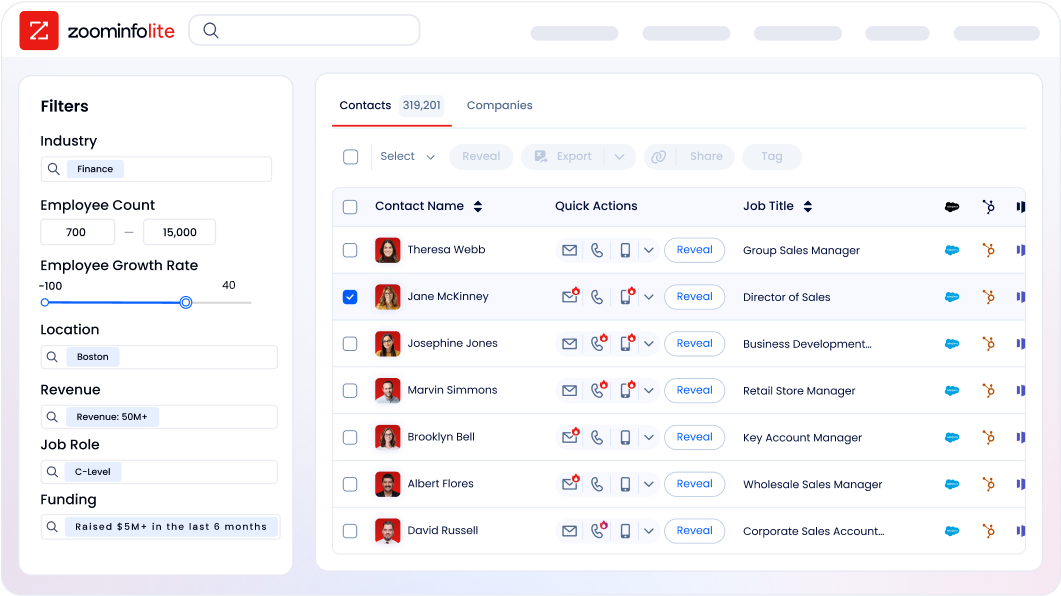
ZoomInfo uses consumption-based pricing with no published dollar amounts. Costs scale around data access (credits), user seats, and AI activity. A free tier (ZoomInfo Lite) provides permanent access to the B2B database with 10 monthly export credits, and a 7-day free trial unlocks core platform features with no credit card required.
Source: ZoomInfo
None of these platforms publish apples-to-apples pricing. But the framing matters: MoEngage and Salesforce charge for engagement capacity (users tracked, messages sent). ZoomInfo charges for intelligence consumed (contacts enriched, signals accessed). For B2B teams, the question is whether better data upstream reduces wasted engagement spend downstream.
Support and learning resources
Users frequently cite MoEngage's customer support as a strength. The platform provides a dedicated Customer Success Manager, an AI-powered support bot (AIRA), and the #GROWTH Academy, a free learning hub with certification courses. Users praise the support team's responsiveness. Some, however, have reported challenges with technical integration support and contract management.
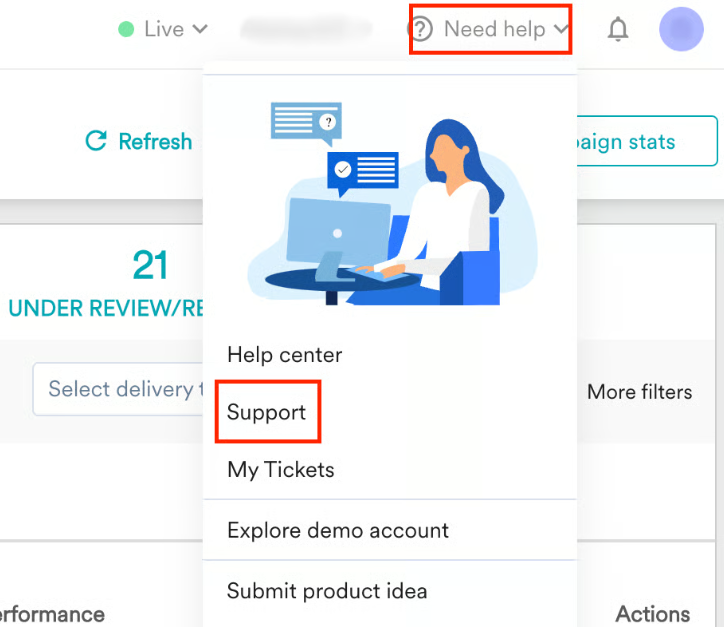
Source: MoEngage
Salesforce invests heavily in learning infrastructure. Trailhead offers 1,500+ badges and 6+ million learners across free interactive modules. The Trailblazer Community spans 20 million members.
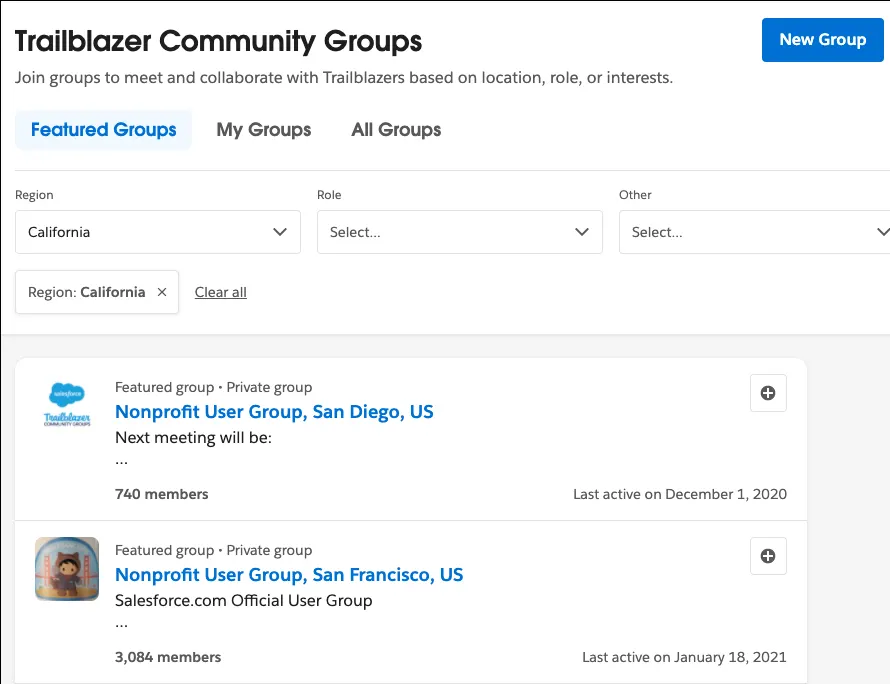
Source: Salesforce
Paid support tiers range from Standard (free, self-service) to Premier (30% of net license fees, 1-hour response time) to Signature (dedicated CSM, 15-minute response for critical issues). The depth is substantial, but so is the need. Salesforce's complexity means teams spend real time in Trailhead before they're productive.
ZoomInfo provides support through its Help Center, ZoomInfo University with role-specific learning paths, and professional services via ZoomInfo Labs. The company redesigned its onboarding from 30 to 90 days, producing a 25% improvement in customer satisfaction scores and winning Rocketlane's Golden Comet award for Best Customer Onboarding Team.

Source: ZoomInfo
MoEngage vs. Salesforce vs. ZoomInfo: Which should you choose?
The right choice depends on what problem you're solving.
Choose MoEngage if:
You're a consumer brand focused on mobile app engagement and retention
Push notifications, in-app messaging, and SMS are your primary channels
You want a platform your marketing team can run without dedicated administrators
Your challenge is engaging existing users, not finding new prospects
You need analytics tied directly to campaign execution
Choose Salesforce if:
You need a unified platform spanning CRM, marketing, service, and commerce
Your organization can invest in implementation, administration, and ongoing training
AI agents and autonomous workflows are priorities
You're running both B2B and B2C motions from a single platform
Integration with a large app ecosystem matters for your tech stack
Choose ZoomInfo if:
Your biggest bottleneck is identifying the right accounts and reaching verified decision-makers
You need B2B intent signals that reveal when companies are in-market
You want intelligence that feeds into your existing engagement platform (MoEngage, Salesforce, or anything else)
You need a GTM Context Graph that explains why deals move, not just that they moved
You want verified contact data (direct dials, business emails) that connects
Start with ZoomInfo's free trial and see how better data changes your go-to-market.
For many B2B companies, the answer isn't one platform. It's the right combination. MoEngage or Salesforce handles engagement. ZoomInfo provides the intelligence that tells you where to point that engagement. When your outreach reaches the right person at the right company at the right moment, every downstream metric improves: open rates, pipeline, and revenue.
Snowflake uses ZoomInfo data in its Account Propensity Scoring model, feeding over 70 company and technographic data fields. Accounts monitored with ZoomInfo-powered scores showed 90% higher opportunity open rates and 2x higher customer conversion rates. (Snowflake Case Study)
MoEngage vs. Salesforce vs. ZoomInfo FAQ
What is the core difference between MoEngage, Salesforce, and ZoomInfo?
MoEngage is a customer engagement platform for consumer brands, focused on mobile push notifications, in-app messaging, email, SMS, and behavioral analytics. Salesforce is a full enterprise CRM covering sales, service, marketing, commerce, and AI-powered autonomous agents on a unified platform.
ZoomInfo is a B2B data intelligence platform providing 500M contacts, 100M companies, buyer intent signals, and AI-driven account intelligence that feeds into either engagement platform.
Which platform is best for B2B marketing?
Salesforce Marketing Cloud offers the most complete B2B marketing suite with Account Engagement (formerly Pardot) for lead nurturing, AI scoring, and multi-touch attribution. ZoomInfo complements it by providing the prospect data and intent signals that identify which accounts to target. MoEngage is designed for B2C consumer engagement and is less suited for B2B pipeline generation.
How does pricing compare across the three platforms?
MoEngage uses MTU-based pricing with no published rates, requiring a sales conversation and a minimum one-year commitment. Salesforce starts at $25/user/month for basic CRM and $1,500/org/month for Marketing Cloud Growth, with enterprise deployments regularly exceeding six figures annually once add-ons, consumption credits, and support tiers are included.
ZoomInfo uses consumption-based pricing (also custom-quoted) but offers a permanent free tier (ZoomInfo Lite) with 10 monthly export credits.
Can ZoomInfo integrate with MoEngage or Salesforce?
ZoomInfo has a native integration with Salesforce that enriches CRM records with verified contacts, company data, and intent signals. For MoEngage, ZoomInfo connects through CDPs like Segment or via its Enterprise API and MCP server. ZoomInfo's API access is included in all relevant plans, and its MCP server works with any MCP-compatible AI assistant.
Which platform has the best AI capabilities?
Each excels in a different area. MoEngage's Sherpa AI optimizes send time, channel selection, and campaign content for individual users. Salesforce's Agentforce deploys autonomous agents that can resolve support cases, create marketing campaigns, and manage sales pipelines across the entire CRM.
ZoomInfo's GTM Context Graph uses AI to reveal why deals move or stall, identify accounts matching your win patterns, and surface buying committees with verified contact data.
Which platform is easiest to get started with?
MoEngage has the gentlest learning curve for marketers, with a drag-and-drop campaign builder and no-code journey orchestration.
ZoomInfo's GTM Workspace deploys in weeks rather than months. Salesforce has the steepest learning curve, with its own free learning platform (Trailhead) offering over 1,500 training badges, and most implementations requiring dedicated administrators or consulting partners.
Do I need all three platforms?
Not necessarily, but they solve different problems. If you're a B2C brand focused on app engagement, MoEngage may be enough on its own. If you need a unified enterprise CRM with marketing, Salesforce covers that.
If your challenge is identifying the right B2B prospects and understanding buying signals before engagement starts, ZoomInfo fills a gap that neither of the other platforms addresses. Many B2B companies pair ZoomInfo's intelligence with Salesforce's CRM and marketing capabilities.
Which platform offers the most comprehensive data?
ZoomInfo has the largest dedicated B2B data platform, with 500M contacts, 100M companies, 135M+ verified phone numbers, and 200M+ verified business email addresses, backed by 300+ human researchers and up to 95% accuracy on first-party data.
Salesforce's Data Cloud is a CDP for unifying customer records (with 112 trillion records ingested in FY26) but it organizes your data rather than providing third-party prospect intelligence. MoEngage's analytics track behavioral data from your own app and website users.
See how Salesforce compares against other CRMs and platforms:
