
Choosing between noCRM and Pipedrive for your sales team often comes down to five questions:
Do you need a lightweight lead tracker that stays out of your way, or a full CRM with contact management, automation, and reporting?
Is your main problem getting salespeople to actually use the tool, or getting more capability out of a tool they already use?
Are you primarily managing inbound leads and follow-ups, or running complex sales processes with multiple stages and stakeholders?
Do you need to find new prospects, or just manage the ones you already have?
Is your team five people sharing a pipeline, or a growing organization that needs forecasting, AI insights, and marketing alignment?
In short, here's what we recommend:
noCRM is built for salespeople who refuse to use traditional CRMs. Its philosophy centers on one idea: a lead should require a title and nothing else to create, and the system should force you to define your next action on every deal. With 45,000 customers and over 800,000 users, noCRM has proved that stripping away complexity gets reps to track their work. The visual pipeline, reminders, and native WhatsApp integration make it effective for small teams and telesales operations. The trade-off: limited reporting, no native contact database, and a single-next-step model that won't scale to complex B2B deals.
Pipedrive serves SMB sales teams that need more structure without enterprise complexity. Founded in 2010 by five salespeople frustrated with existing CRMs, Pipedrive pioneered the kanban-style pipeline view and has grown to 100,000+ companies across 179 countries. Beyond pipeline management, it offers contact management, email sync, workflow automation, AI-powered email writing, and a growing prospecting toolkit called Pulse. Starting at $14/seat/month, it packs more features per dollar than most competitors. But Pipedrive still assumes you know who to sell to. Its prospecting tools are new and limited, and it has no native intent data or buyer intelligence.
Both tools organize sales activity well once leads enter the pipeline. But pipeline management only works when the right leads are in the pipeline to begin with. Knowing which companies are researching solutions like yours, who the decision-makers are, and what triggered their interest separates cold outreach from timely, relevant selling.
ZoomInfo is a B2B intelligence and GTM platform that answers the questions noCRM and Pipedrive can't: who to sell to, when to engage, and what to say. Built on a B2B data foundation of 500M contacts and 100M companies, 135M+ verified phone numbers, and 200M+ verified business emails, ZoomInfo combines this data with your CRM records, conversation transcripts, and behavioral signals through its GTM Context Graph to reveal not just what's happening in your pipeline, but why deals move or stall. Sellers work from prioritized accounts with AI-drafted outreach in GTM Workspace. Marketers and RevOps teams design and launch plays in GTM Studio. Developers connect the same intelligence to any tool (including Pipedrive) through APIs and MCP.
If building your pipeline on verified data and real-time buyer signals sounds like the missing piece, see how ZoomInfo works.
noCRM vs. Pipedrive vs. ZoomInfo at a glance
noCRM | Pipedrive | ZoomInfo | |
|---|---|---|---|
Core purpose | Lead tracking with enforced follow-ups | Sales CRM with pipeline automation | B2B intelligence and GTM execution |
Target user | Small sales teams, solopreneurs, telesales | SMB sales teams across industries | Enterprise and mid-market GTM teams |
Contact database | No native database (lead-first model) | Full contact and company management | 500M contacts, 100M companies |
Pipeline views | Kanban, Compact, Extended | Kanban, List, Forecast | AI-prioritized account feeds |
Prospecting | Import-based Prospecting Lists | Pulse, LeadBooster, Prospector (400M+ profiles) | Native intent data, buyer signals, AI agents |
AI capabilities | AI-powered help center search | AI email writer, Sales Assistant, AI reports | GTM Context Graph, AI-drafted outreach, AI agents |
Email integration | Two-way sync (Expert+), BCC fallback | Two-way sync (Growth+), templates, tracking | Native email within GTM Workspace |
Native Chrome extension (Dream tier) | Via marketplace apps | Not applicable | |
Integrations | 5,000+ via Zapier/Make + native | 500+ marketplace + open API | 120+ native + API/MCP for any tool |
Free option | 15-day trial | 14-day trial | ZoomInfo Lite (permanent free tier) |
Starting price | Check nocrm.io/pricing | $14/seat/month | Custom-quoted |
Pipeline design: leads vs. deals vs. intelligence
noCRM, Pipedrive, and ZoomInfo approach the sales process from three different starting points.
noCRM starts with the lead. The product's defining design decision: the only information required to create a lead is a title. No contact record, no company record, no mandatory fields. Every lead enters a To Do / Standby status loop, where you either act on it now or schedule a reminder.
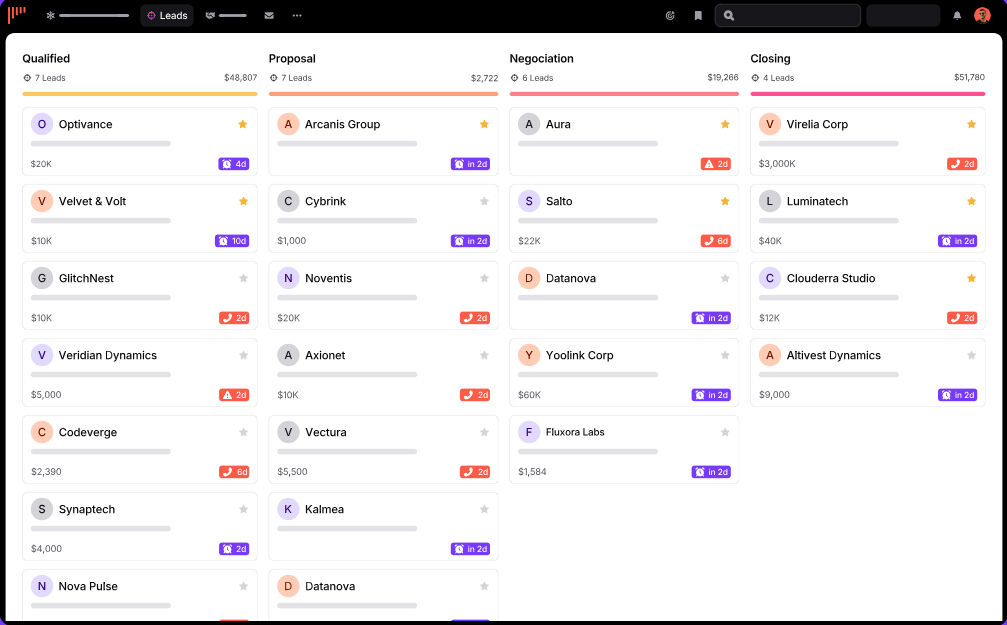
Source: noCRM
When the reminder fires, the lead surfaces at the top of your queue. An overdue counter shows how long a lead has sat without action.
This design eliminates the friction that kills CRM adoption. Reps create leads in seconds from WhatsApp conversations, business cards, web forms, or phone calls, and the system handles accountability.
The trade-off is architectural: noCRM separates unqualified contacts in Prospecting Lists from qualified leads in the pipeline, and it has no contact or company database connecting multiple deals to the same organization.
Pipedrive starts with the deal. Where noCRM optimizes for creating and acting on individual leads, Pipedrive builds a richer data model around each opportunity. A deal lives in a named pipeline stage, has an associated contact and organization record, carries a monetary value and win probability, and connects to a full activity history. The deal rotting feature flags stale opportunities with colored cues before they go cold.
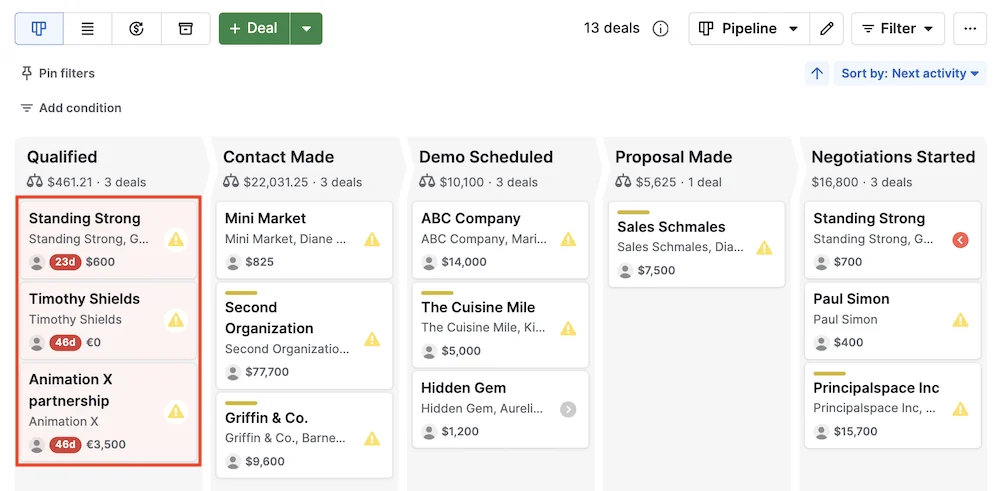
Source: Pipedrive
Pipedrive's contact management layer lets multiple deals link to the same person or company, creating a relationship history that persists across transactions. For teams with repeat customers or longer sales cycles, this context matters.
ZoomInfo starts with intelligence. Rather than waiting for leads to arrive or deals to be created, ZoomInfo's GTM Context Graph processes 1.5B+ data points daily to identify which companies are researching solutions, who the decision-makers are, and what signals suggest they're ready to buy.
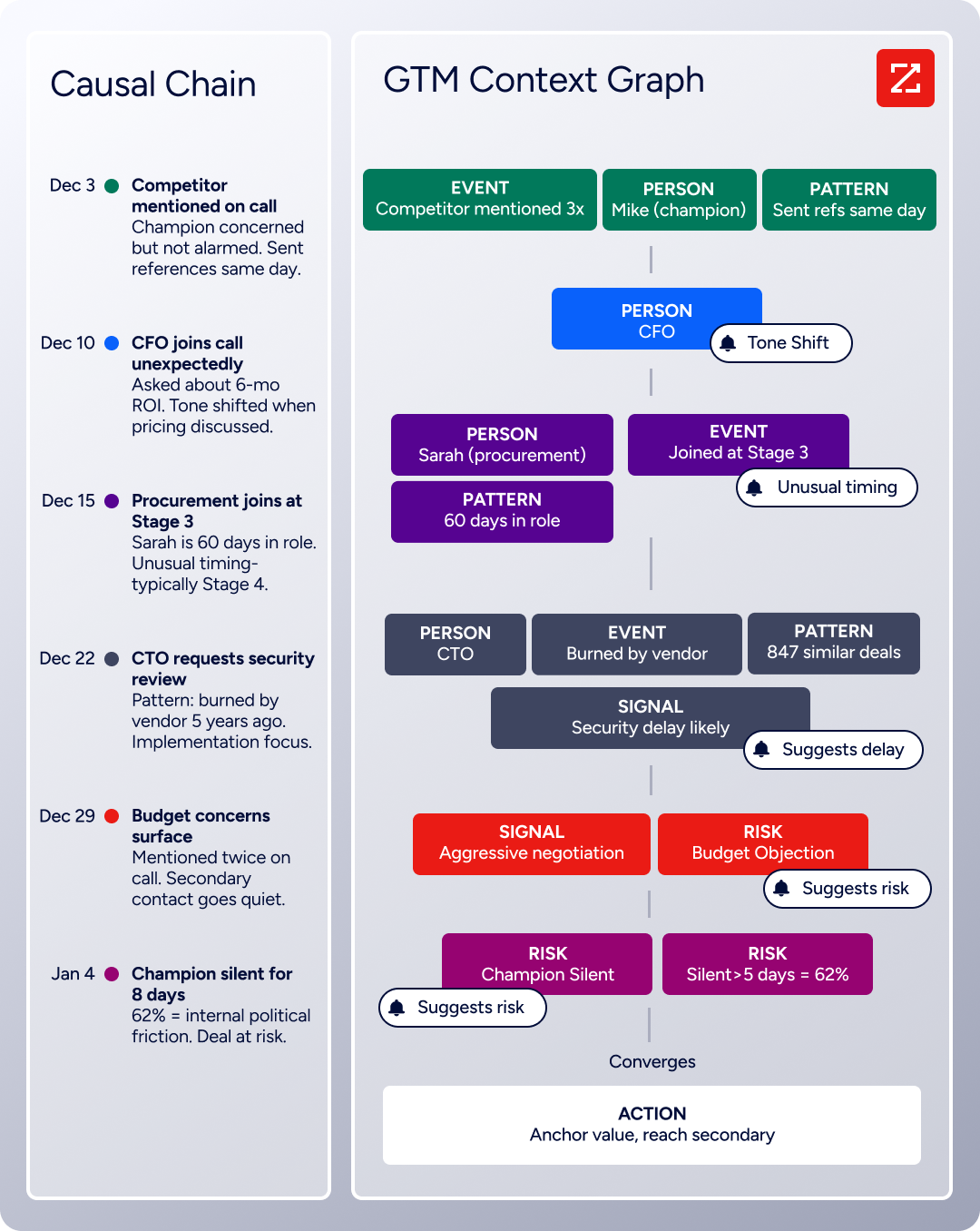
GTM Workspace then surfaces these prioritized accounts to sellers with AI-drafted outreach tailored to the buying signals detected.
This is a different question entirely. noCRM asks "what's my next action?" Pipedrive asks "what's happening in my pipeline?" ZoomInfo asks "who should be in my pipeline right now, and why?"
noCRM bets on simplicity, Pipedrive bets on depth
The core feature comparison between noCRM and Pipedrive reveals two products optimized for different stages of sales team maturity.
Setup and adoption. noCRM's admin onboarding involves five steps: define your sales process, configure the account, import data, set up integrations, and onboard the team. Most teams are operational the same day.
Pipedrive offers a similar self-service setup with a 14-day free trial, but the richer feature set means more configuration decisions upfront.
For hands-on implementation support, Pipedrive requires spending more than $1,000/month to qualify for a dedicated Customer Success Manager.
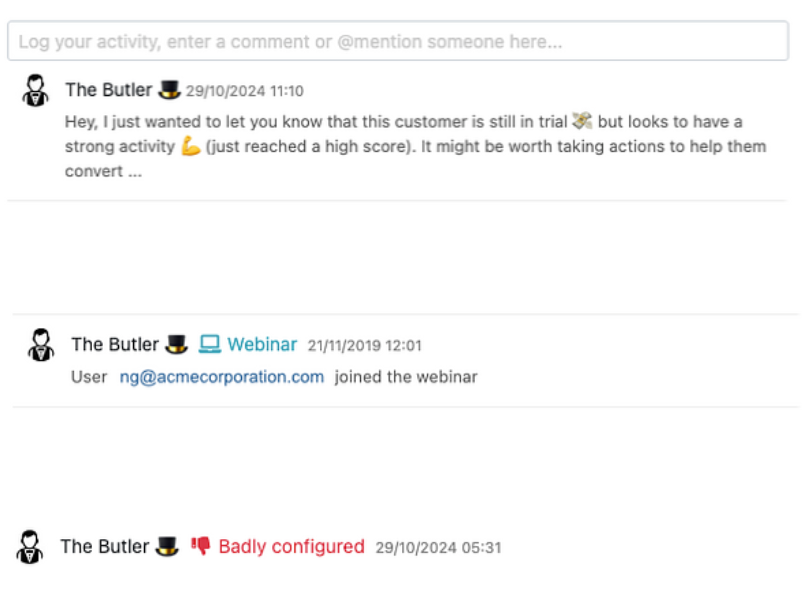
Automation. noCRM's built-in automations (available on the Dream tier) use an event-condition-action model with a system account called "The Butler" that executes automated actions while keeping activity logs clean.
Source: noCRM
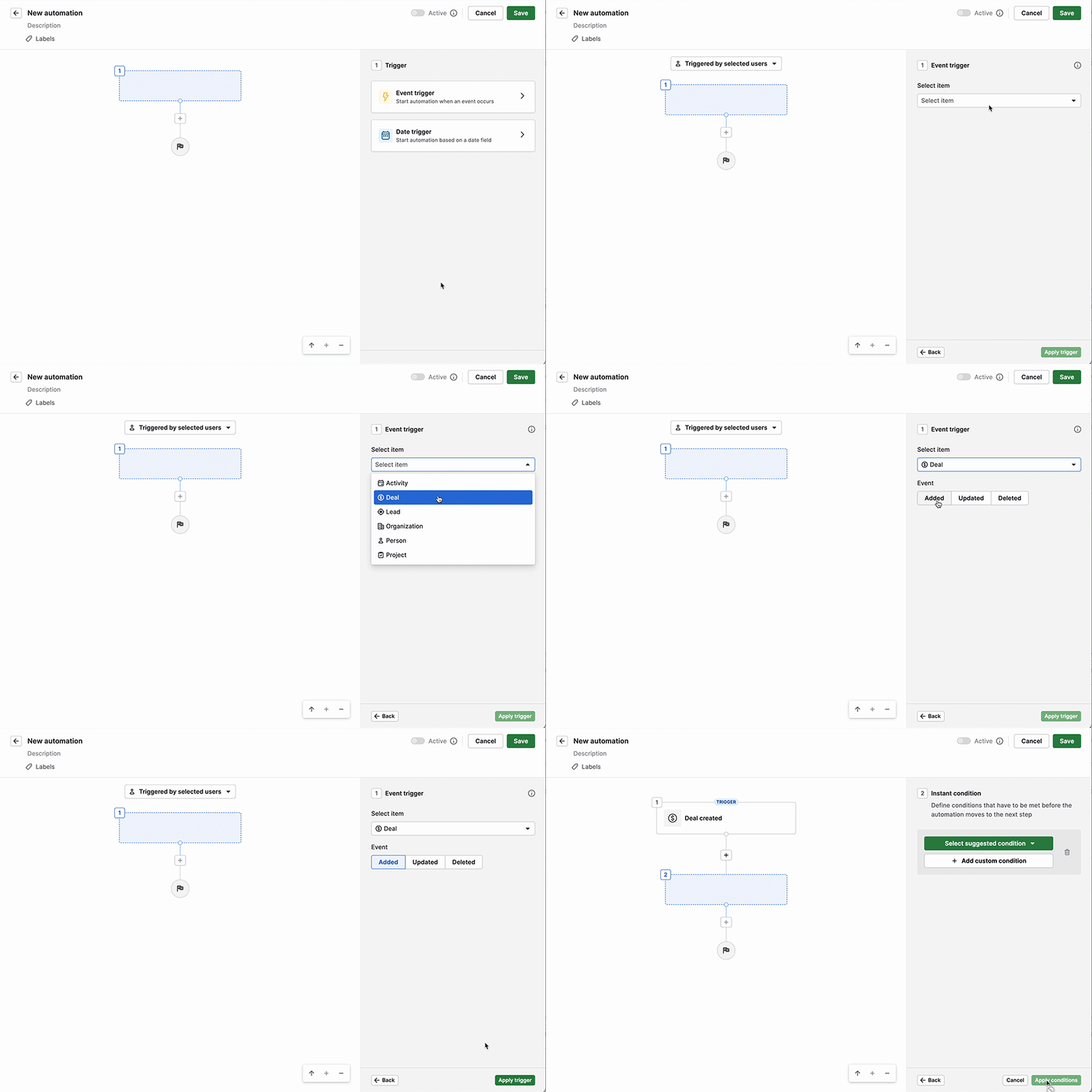
Pipedrive's automations (available from the Growth plan) offer more sophisticated logic, including if/else branching and "wait until event" conditions, plus native integrations with Slack, Teams, Trello, and Asana.
Source: Pipedrive
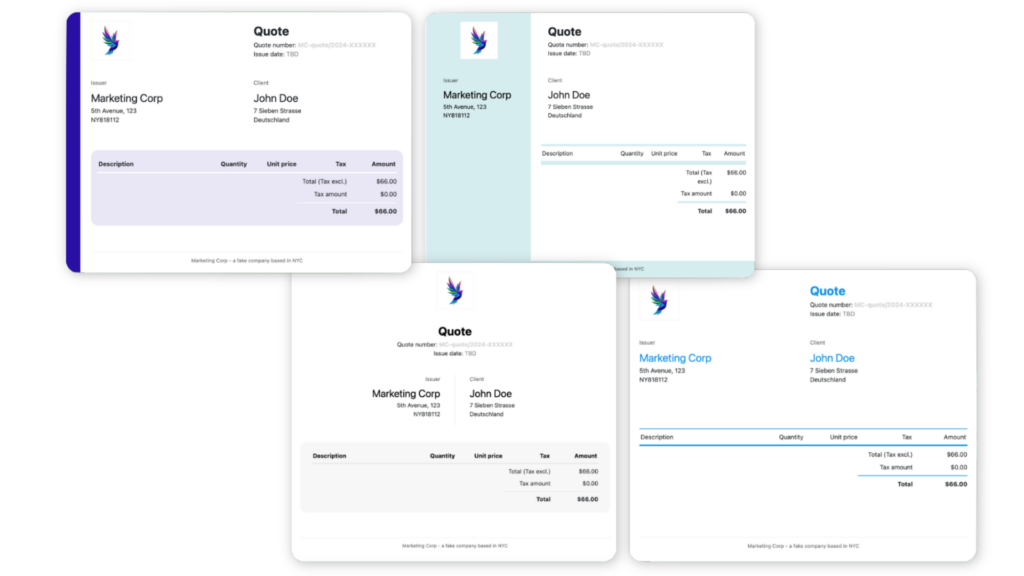
Document management. noCRM includes a native Quotes and Invoices module (Expert tier) that lets reps generate proposals from lead cards, with one-click quote-to-invoice conversion and automatic lead status updates tied to invoice events.
Source: noCRM
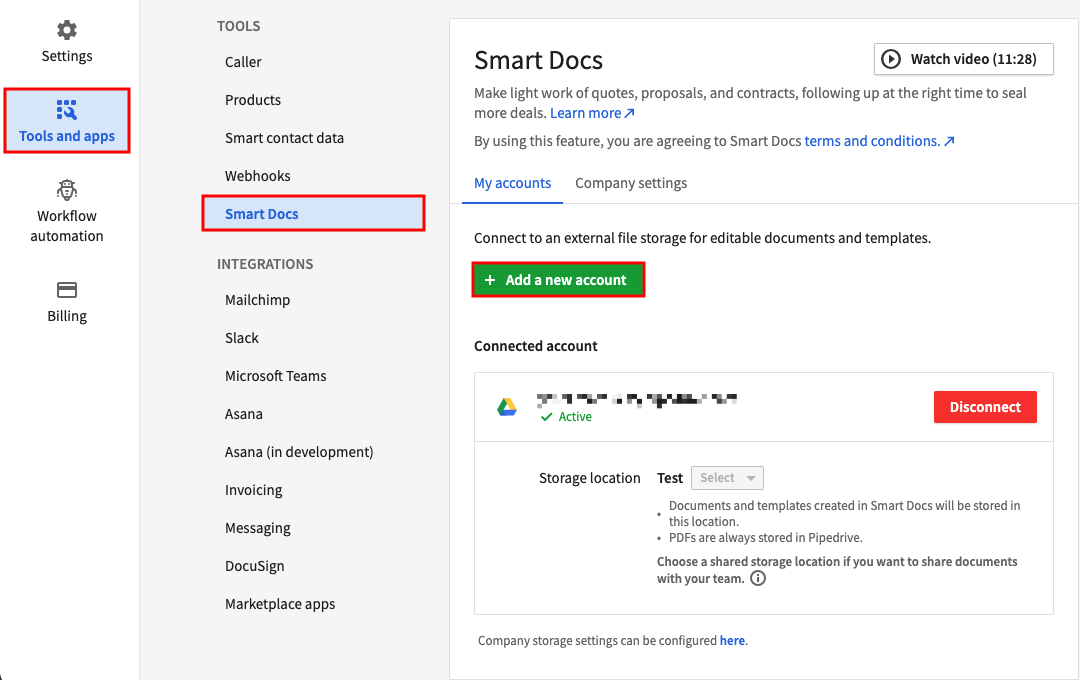
Pipedrive's equivalent, Smart Docs, goes further with template merge fields, version-tracked sharing links, and built-in eSignatures (including DocuSign integration).
Source: Pipedrive
Mobile. Both offer iOS and Android apps with offline functionality. noCRM's mobile app includes WhatsApp integration and voice-to-text note capture but lacks mobile reporting. Pipedrive's mobile app adds a "Nearby" feature that shows geographically close clients, in-app calling with automatic logging, and a business card scanner.
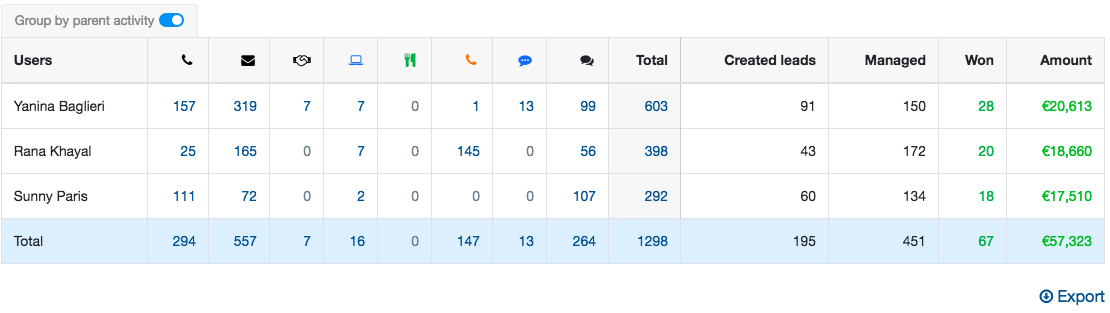
Reporting. This is where the gap widens.
noCRM offers pipeline performance, team activity, sales forecasting, and per-rep performance reports, but users consistently note that advanced customization is limited.
Source: noCRM
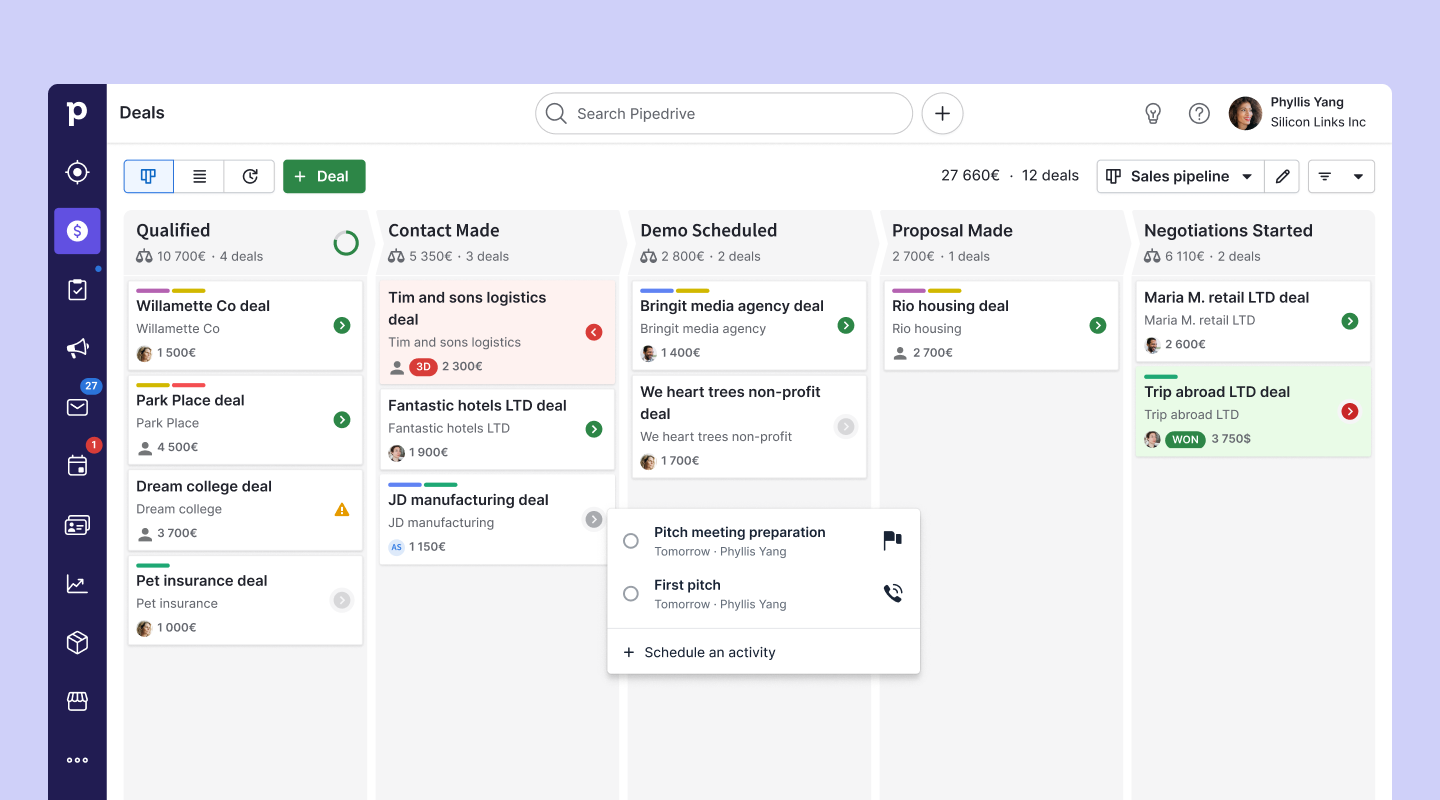
Pipedrive provides customizable reports and dashboards, including AI-generated reports via natural language, with the ability to share dashboards externally via link.
Source: Pipedrive
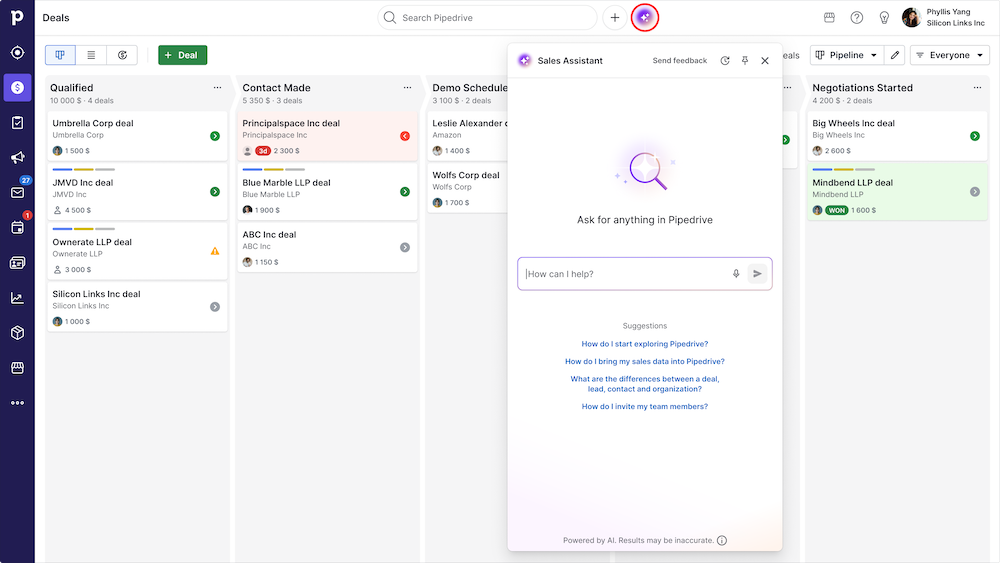
Pipedrive's AI Sales Assistant also surfaces deal recommendations and win probability predictions.
Source: Pipedrive
The pattern is consistent: noCRM minimizes complexity to maximize adoption, while Pipedrive adds capability for teams ready to use it. Neither approach is wrong. They serve different teams at different stages.
The prospecting problem neither pipeline tool solves
Both noCRM and Pipedrive are reactive tools. They help you manage opportunities that already exist. But where do those opportunities come from?
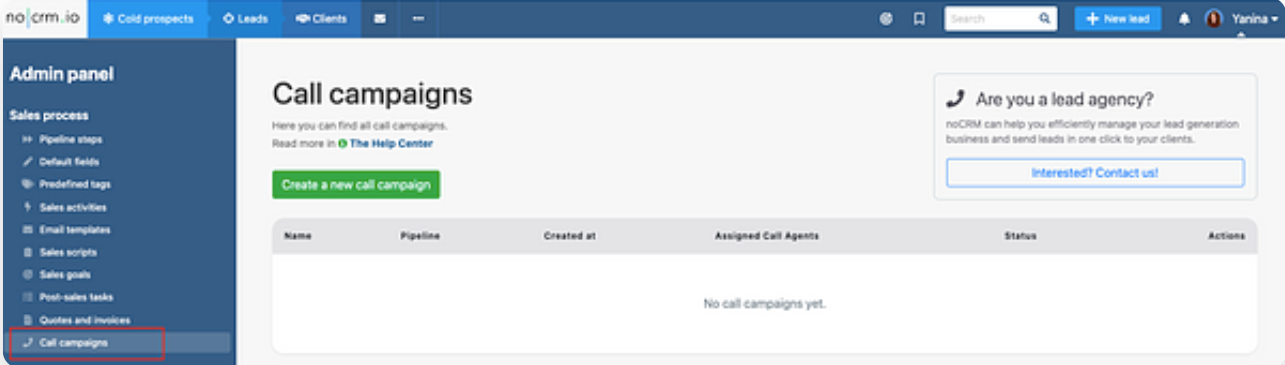
noCRM's prospecting consists of importing contacts into Prospecting Lists (via CSV, Excel, or Google Contacts) and working them through Call Campaigns. The system organizes and distributes these contacts efficiently, but the contacts themselves come from somewhere else. noCRM has no native way to discover new prospects.
Source: noCRM
Pipedrive's prospecting has grown with the Pulse toolkit and the Prospector database (part of LeadBooster), which offers access to over 400 million profiles and 10 million companies. An AI engine verifies and updates up to 800,000 profiles daily.
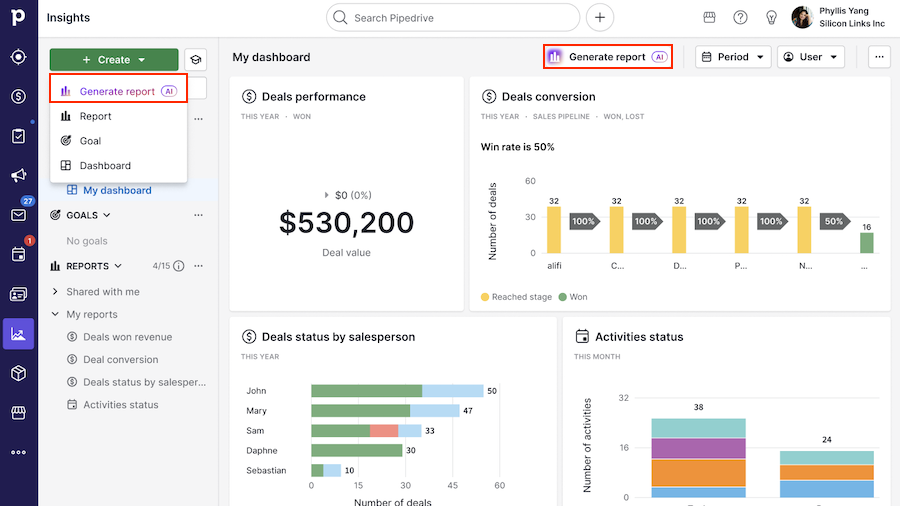
Source: Pipedrive
This is a meaningful step beyond noCRM's import-only model. But Prospector provides contact data without buyer intent signals, and LeadBooster is only included on Premium plans (or as a paid add-on on lower tiers).
ZoomInfo treats prospecting as an intelligence problem, not a data problem. The platform doesn't just tell you who exists. It tells you who's ready to buy, through buyer intent signals that track 210 million IP-to-Organization pairings and 6 trillion+ new keyword-to-device pairings monthly.
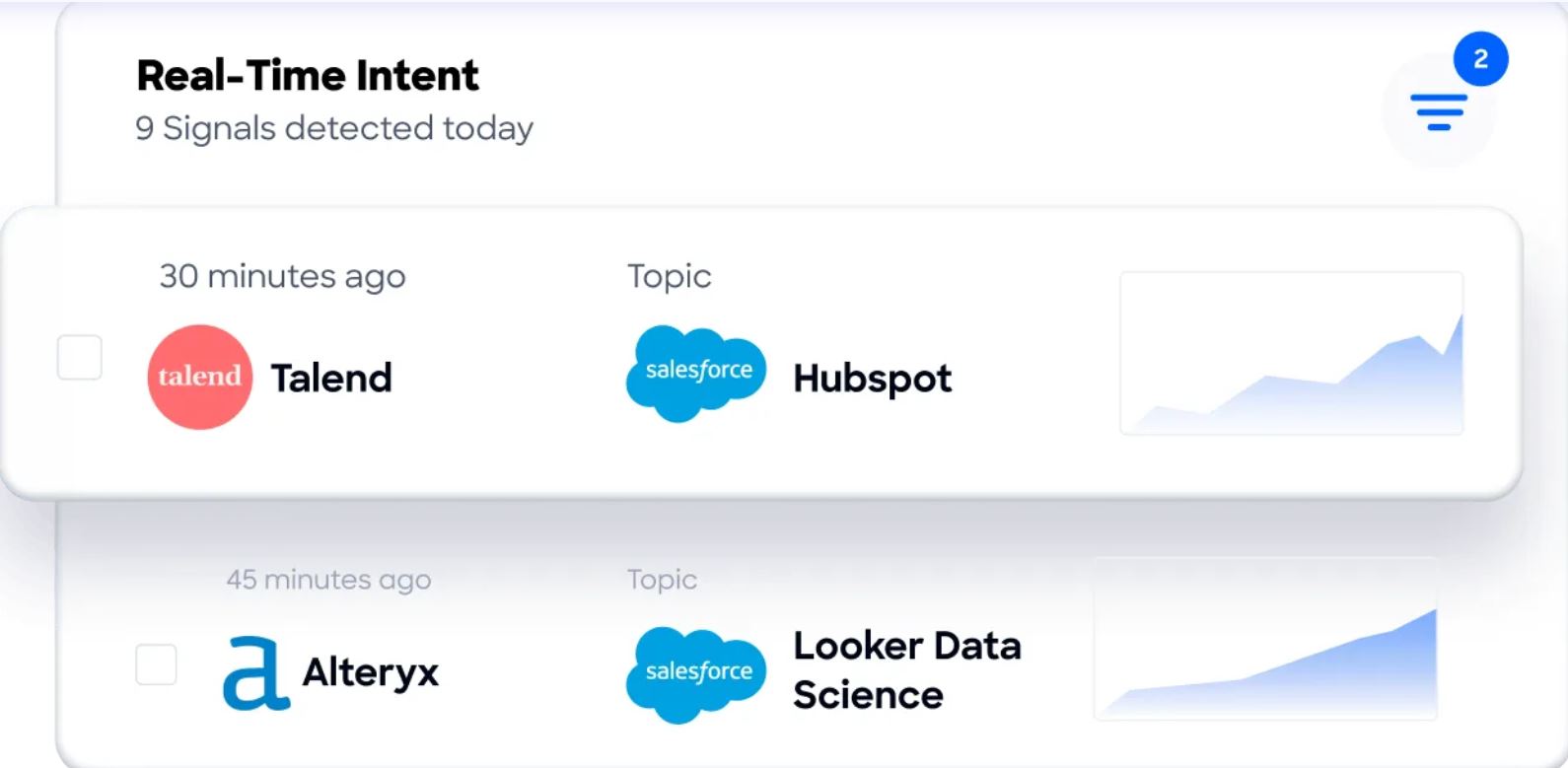
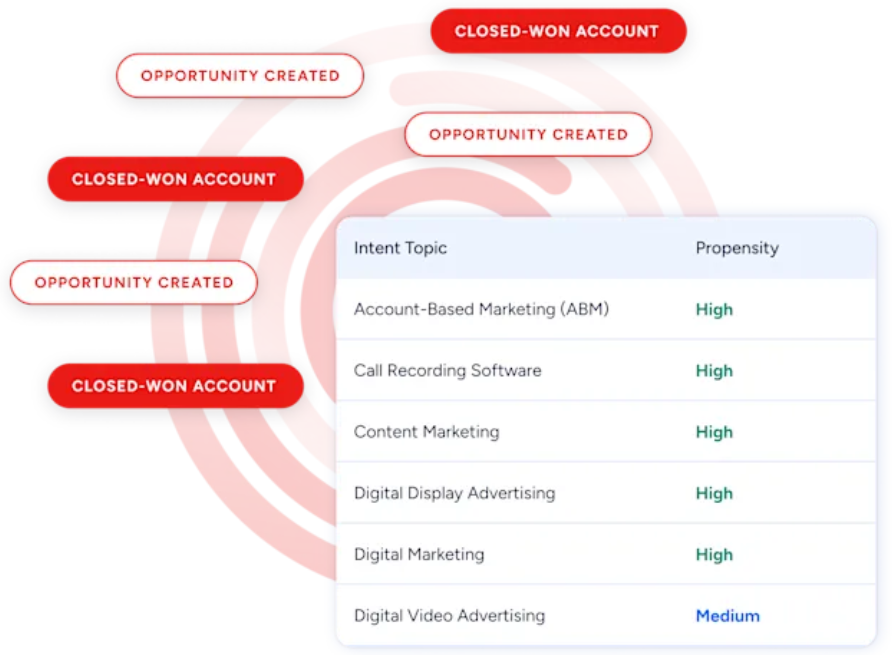
Guided Intent, exclusive to ZoomInfo, identifies the specific topics historically correlated with your deal wins rather than requiring manual topic selection.
Pipedrive's Prospector might tell you that a company has 500 employees and uses Salesforce. ZoomInfo tells you that same company started researching your product category two weeks ago, just hired a new VP of Sales, and the CFO who championed your competitor's deal last quarter left the company. That context transforms outreach from generic to relevant.
In GTM Workspace, these signals translate into action. Sellers see a prioritized account feed where AI agents have already drafted personalized outreach based on the signals detected. No manual research, no guessing who to call first.
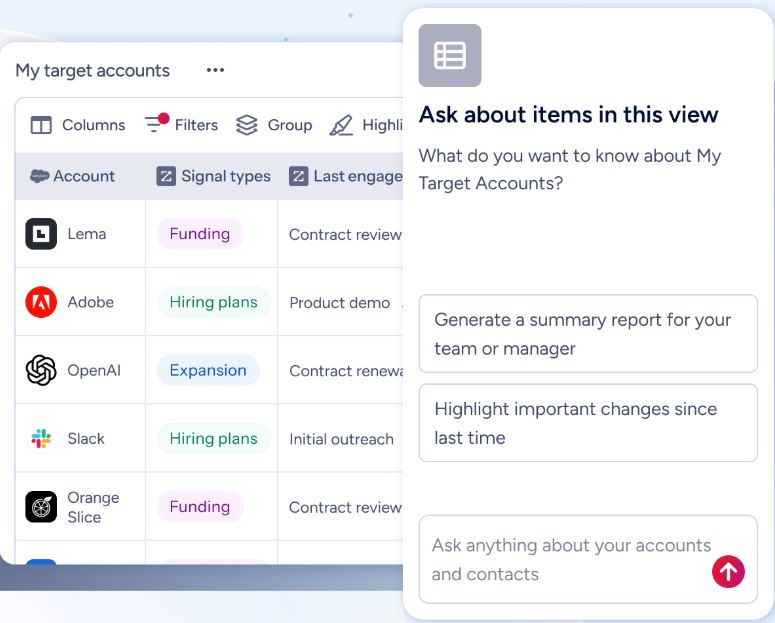
"ZoomInfo's not just a contact data company anymore. They've built a full system of execution. GTM Intelligence works the list, writes the outreach, triggers the play, and helps drive predictable growth." (Levanta)
AI capabilities range from basic to transformative
The three platforms sit at very different points on the AI maturity curve.
noCRM's AI is limited to an AI-powered search bar in its help center. Its parent company, Positive Group, has discussed an "Agentic CRM" vision where AI would recommend next actions automatically, but this remains a plan rather than a product. For a tool built around "always know your next move," AI-driven next-step suggestions would be a natural evolution.
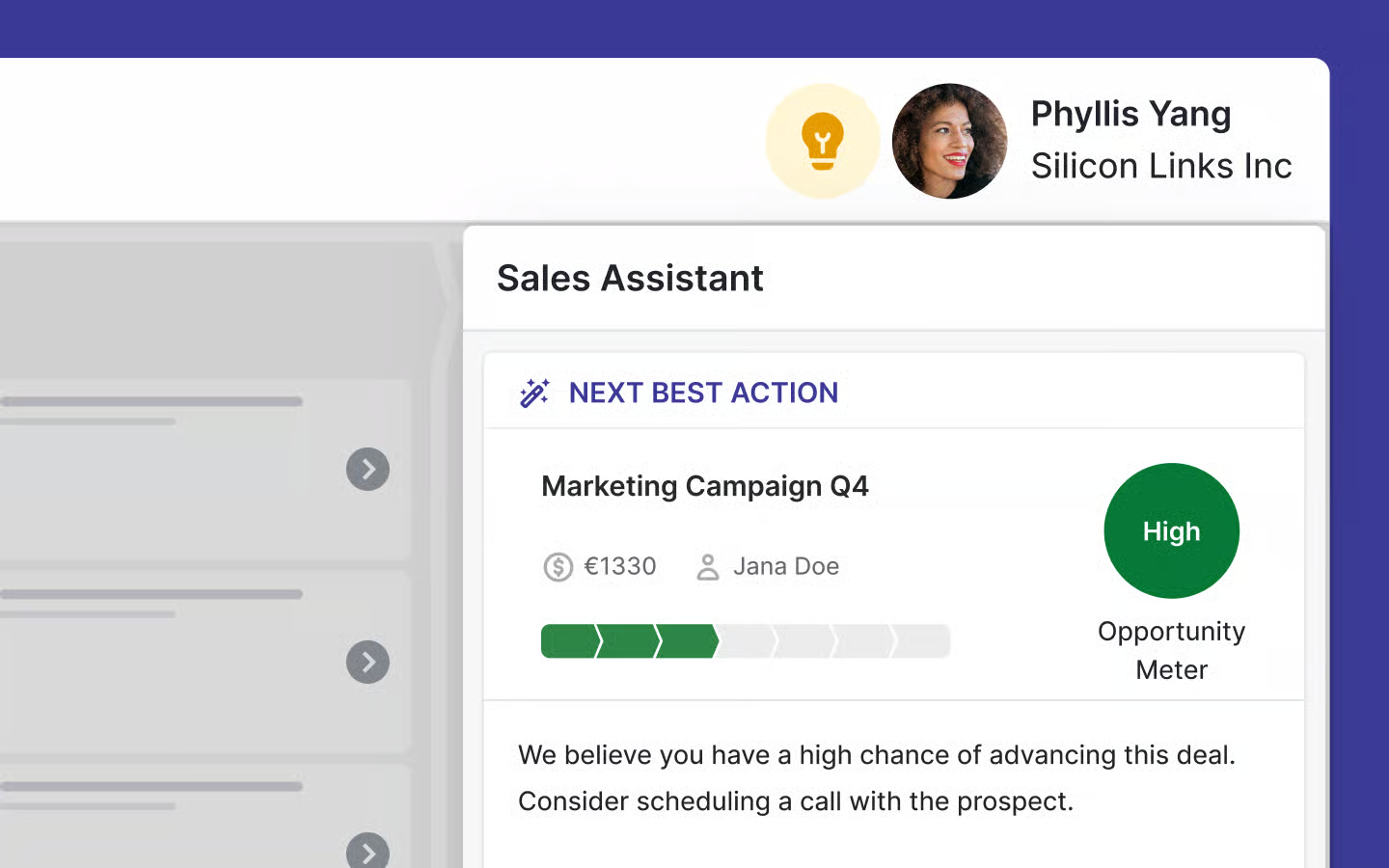
Pipedrive's AI is more substantial and improving. The AI Sales Assistant provides win probability predictions, deal activity reminders, and proactive notifications.
Source: Pipedrive
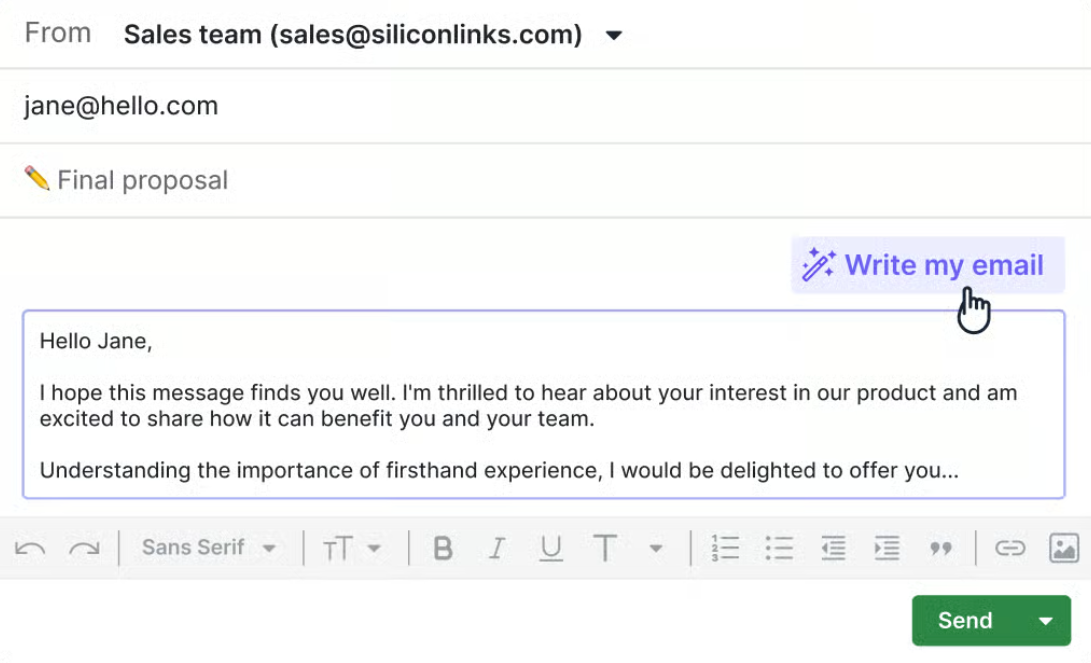
The AI email writer generates drafts from prompts with configurable tone and length.
Source: Pipedrive
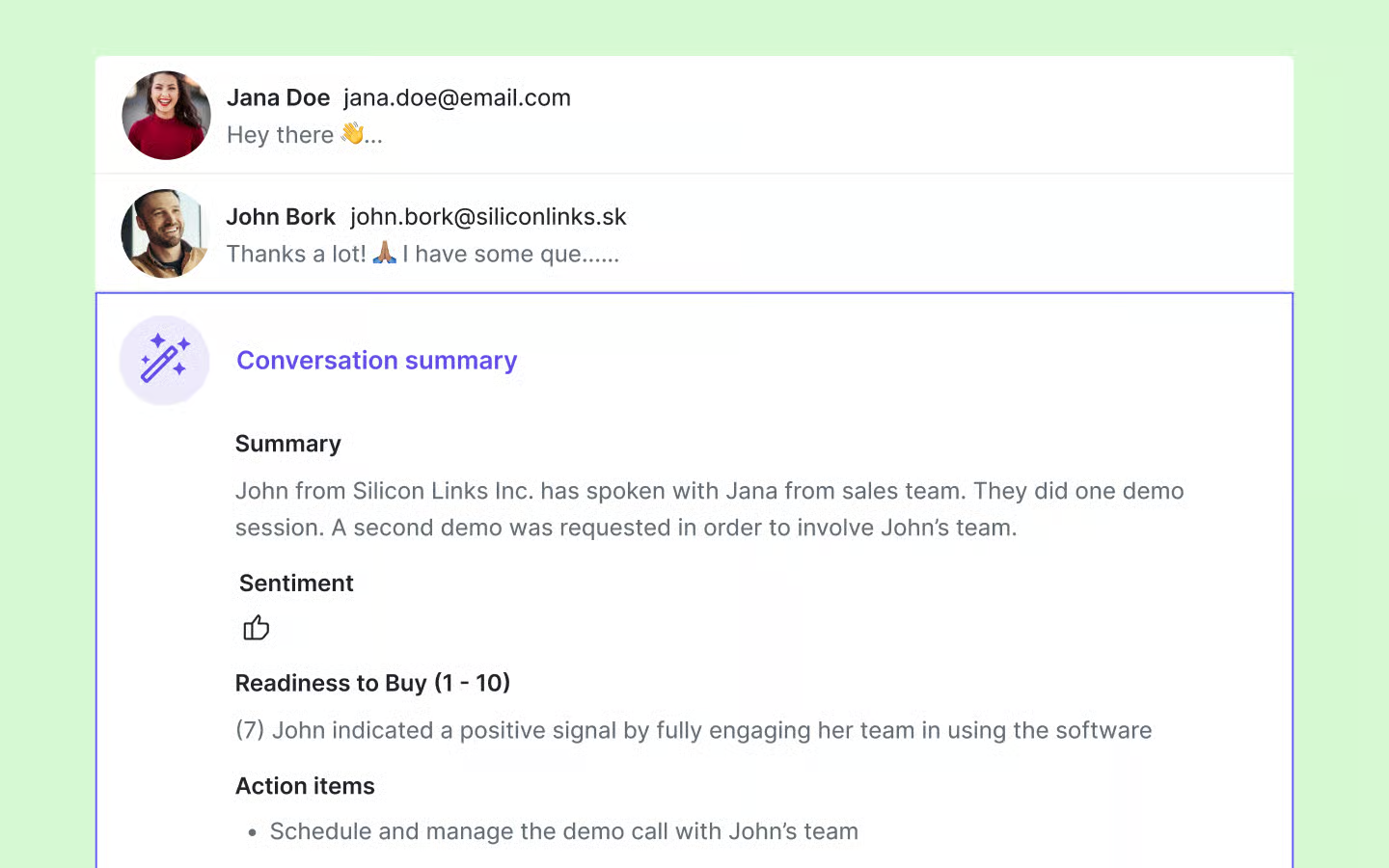
AI email summarization (still in beta) condenses threads into key themes with a readiness-to-buy score.
Source: Pipedrive
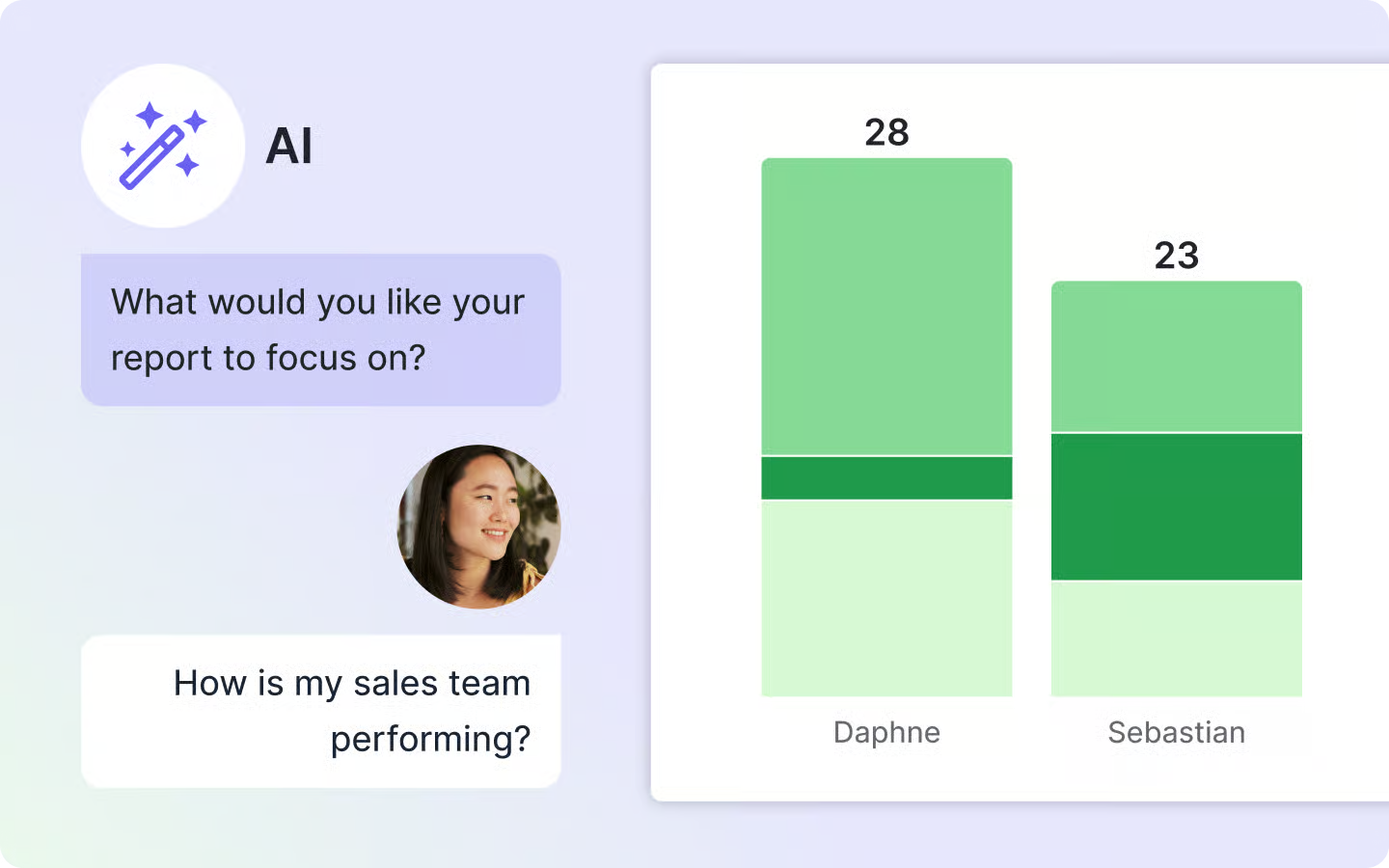
The AI report generator produces pipeline analyses from natural language requests.
Source: Pipedrive
A ChatGPT integration lets reps query CRM data conversationally.
Pipedrive frames its trajectory as "Pipedrive 3.0", with a stated goal of becoming an AI-native CRM.
ZoomInfo's AI operates at a different level because it draws on a different data set. While noCRM and Pipedrive's AI can only work with data inside their own systems (your deals, your emails, your activities), ZoomInfo's GTM Context Graph combines your CRM data with 500M contacts, 100M companies, conversation intelligence from Chorus, and real-time intent signals. \
The AI doesn't just analyze your pipeline. It identifies why deals move or stall by reasoning across thousands of similar deals.
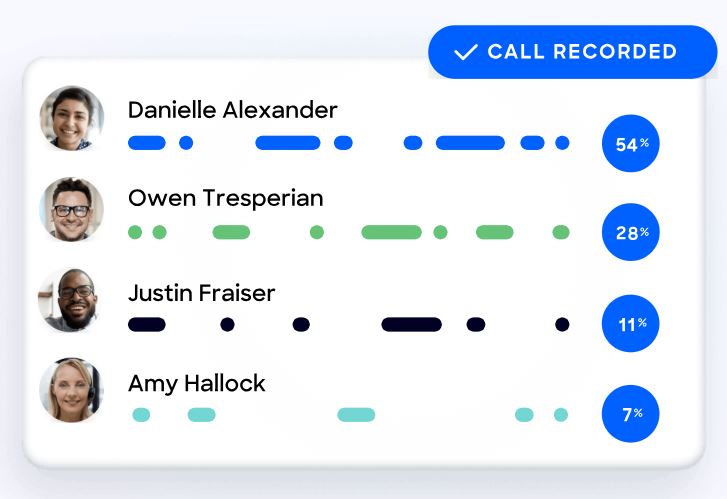
In practice, ZoomInfo's AI can identify that executive sponsorship entering at a specific deal stage, combined with ROI-focused questions on the last call, matches the pattern behind closed-won deals in your segment. It then connects that to third-party signals showing the account is hiring new leadership and researching your competitor.
That depth of reasoning is beyond what pipeline CRM data alone can support.
"That combination of our internal CRM data, external signals, and AI that's given all that context has helped us craft very specific account- and persona-based messages. And people have responded to them right away." (Seismic)
Communication tools reflect each platform's audience
How each platform handles sales communications reveals what kind of seller it's designed for.
noCRM prioritizes WhatsApp and phone. The WhatsApp Chrome extension works with both personal and business WhatsApp accounts (no API required), surfaces the full lead record inside WhatsApp Web, and creates leads from conversations in one click. N

Source: noCRM
ative VoIP integrations with CloudTalk, JustCall, and Aircall provide one-click dialing, automatic call logging, and AI-generated call summaries.
Call Campaigns add structured outbound dialing with conditional lead assignment across multiple prospecting lists. For email, noCRM offers two-way sync with Gmail and Outlook (Expert tier and above), email templates with performance reporting, and batch sending.
This communication stack serves markets where WhatsApp and phone calls are the primary sales channels (Southern Europe, Latin America, Middle East, Southeast Asia) and telesales operations running high-volume outbound.
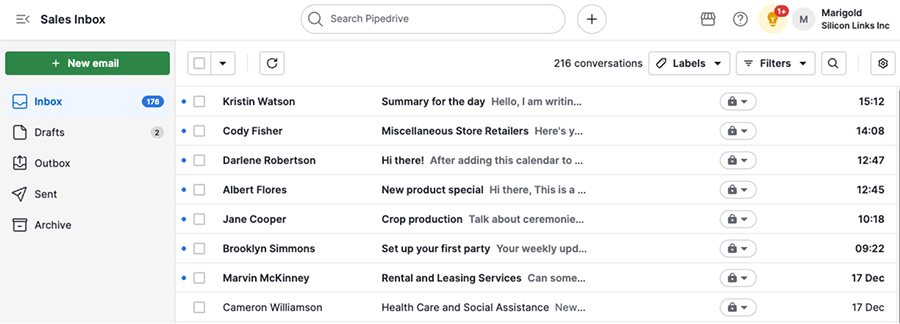
Pipedrive centers on email. The Sales Inbox is a full email client inside the CRM, with two-way sync for Gmail, Outlook, and any IMAP account.
Source: Pipedrive
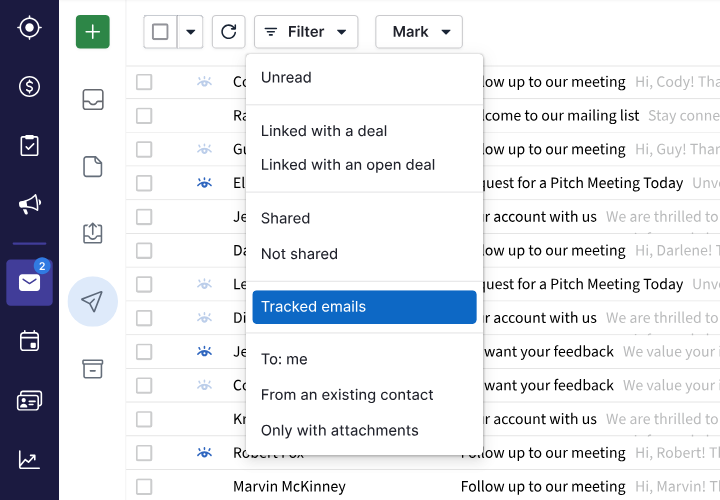
Email tracking delivers real-time open and click notifications.
Source: Pipedrive
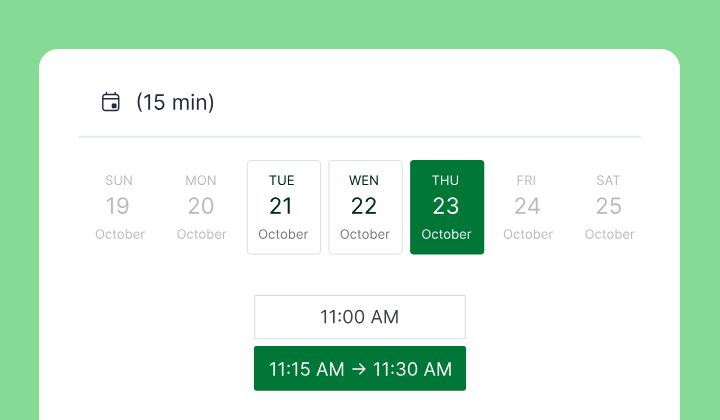
The AI email writer generates drafts from prompts. The meeting scheduler integrates with Zoom, Teams, and Google Meet.
Source: Pipedrive
Pipedrive also offers Smart Docs for sending trackable proposals with eSignatures. For calling, Pipedrive relies on third-party telephony integrations rather than a native dialer.
ZoomInfo provides multi-channel execution powered by intelligence. Through GTM Workspace, sellers access AI-generated outreach already contextualized to each account's buying signals. The Action Feed delivers a live stream of in-market buyers with pre-drafted actions on every signal.
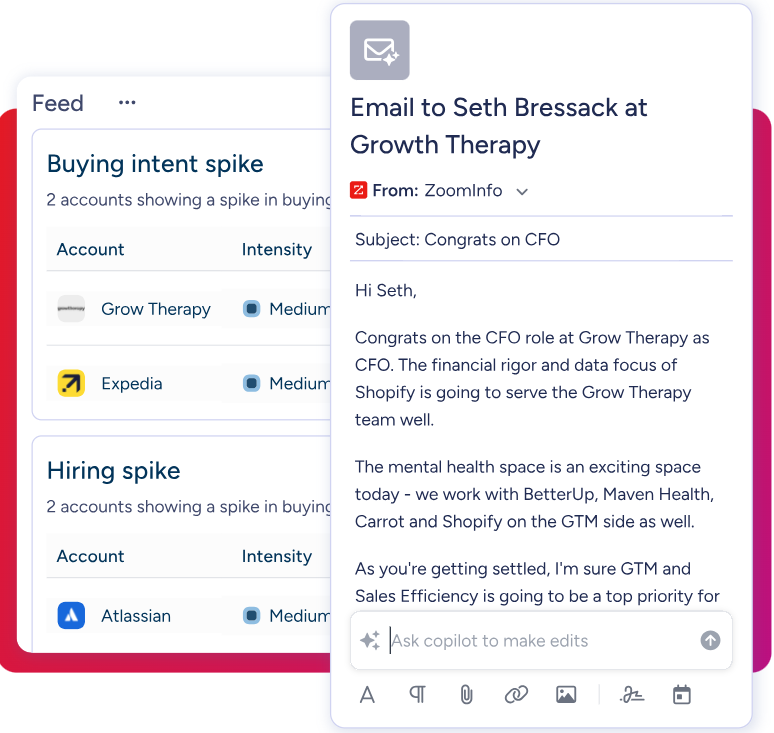
ZoomInfo also includes conversation intelligence through Chorus, which captures and analyzes all calls and meetings, extracting not just what was said but what it means for deal progression. For teams that prefer to keep their existing communication tools, ZoomInfo's API and MCP push the same intelligence into any platform.
"The plug-and-play aspect of the API means I can integrate it very easily into any process and get information at a moment's notice." (BDO Canada)
Pricing reflects three different markets
The cost structure of each platform tells you who it's built for.
noCRM offers three tiers (Starter, Expert, and Dream) billed per seat, with annual billing saving up to 40%. Starter is restricted to 500 leads and a single pipeline, with no email sync, no WhatsApp integration, and no automations. Expert unlocks unlimited leads, multiple pipelines, quotes and invoices, and two-way email.
Dream adds WhatsApp, VoIP, team management, advanced automations, and priority support. A 15-day free trial (no credit card required) lets you test any tier. All users in an account must be on the same plan.
Pipedrive restructured its pricing in 2025 into four tiers: Lite, Growth, Premium, and Ultimate. Lite starts at $14/seat/month but lacks email sync, automations, and the forecast view. Growth adds those core features.
Premium includes Smart Docs, Projects, and LeadBooster (all previously paid add-ons). Campaigns (email marketing) remains a separate paid add-on at every tier. Annual billing offers up to 42% savings.
Worth noting: Pipedrive's 2025 restructuring introduced per-seat usage limits that didn't exist before. Lite caps you at 2,500 leads plus deals per seat. Growth raises that to 5,000. Premium to 15,000. Ultimate introduced caps that the old Enterprise plan didn't have, though it is generally priced lower.
ZoomInfo uses custom-quoted, consumption-based pricing with no published prices. Costs scale around seats, credit volume, and the products selected (Sales, Marketing, Operations, Chorus, Chat). This reflects ZoomInfo's enterprise orientation: pricing fits usage patterns and company size.
For smaller teams or individual users, ZoomInfo Lite provides a permanent free tier with access to the B2B database, 10 monthly export credits, the ReachOut Chrome extension, and WebSights Lite for website visitor identification.
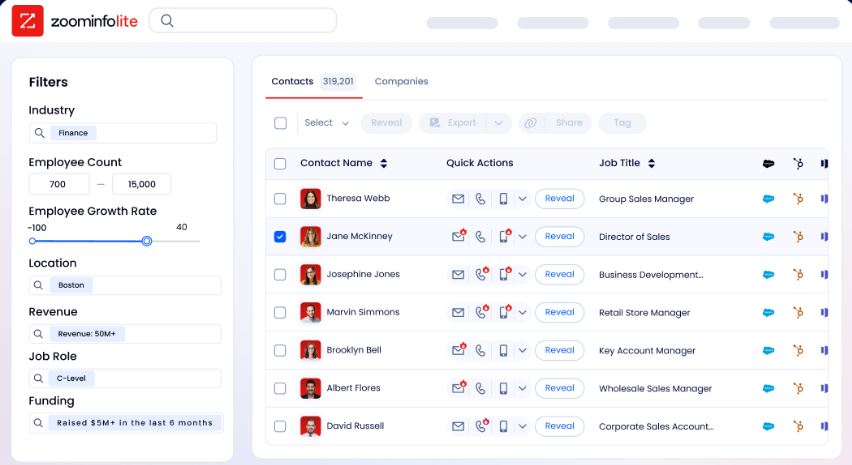
The right comparison isn't feature-for-feature at the same price point. noCRM and Pipedrive are priced to manage your existing pipeline. ZoomInfo is priced to build and enrich that pipeline with verified intelligence. Many teams use ZoomInfo alongside a CRM (Pipedrive is available in ZoomInfo's integration marketplace), making the tools complementary rather than mutually exclusive.
noCRM vs. Pipedrive vs. ZoomInfo: Which should you choose?
The best choice depends on what's holding your sales team back.
Choose noCRM if:
Your sales team avoids CRMs because they're too complex
You need a small team tracking leads and follow-ups the same day
WhatsApp and phone calls are your primary sales channels
You want follow-up discipline without database maintenance
European data sovereignty and ISO 27001 certification matter for compliance
You're a solopreneur or small team focused on closing, not configuration
Choose Pipedrive if:
You need a full CRM with contact management, automation, and reporting
Your team is growing and needs forecasting, goal tracking, and AI assistance
Email is your primary sales channel and you want it built into the CRM
You want access to 500+ integrations and a mature developer ecosystem
You need more pipeline depth than a lead tracker but less complexity than Salesforce
Choose ZoomInfo if:
You need to know who to sell to, not just how to manage existing deals
Buyer intent signals and real-time account intelligence would change how your team sells
You're building or scaling an outbound motion and need verified contact data at the scale of 500M contacts and 100M companies
Your pipeline decisions should be driven by market intelligence, not just internal CRM records
You want AI that understands why deals move, not just what happened
You need intelligence that works inside your existing tools via API and MCP, or through ZoomInfo's own GTM Workspace and GTM Studio
Get started with ZoomInfo for free.
noCRM and Pipedrive both solve the pipeline management problem well, in different ways for different teams. noCRM solves it with simplicity: create a lead, define the next step, repeat. Pipedrive solves it with structured depth: build a contact database, automate workflows, track performance over time.
But the larger question isn't how you manage your pipeline. It's whether the right accounts are in it. ZoomInfo provides the intelligence layer that makes every pipeline tool more effective, whether you access it through GTM Workspace, push it into Pipedrive through a native integration, or build it into custom workflows through the API.
In a market where sales teams have more tools than ever but still struggle to reach the right people at the right time, that's the gap worth closing.
"It brings time back to our day, something we're all begging for. And it helps us reach the company's goals and get more clients faster." (Vensure)
noCRM vs. Pipedrive vs. ZoomInfo FAQ
What is the fundamental difference between noCRM, Pipedrive, and ZoomInfo?
noCRM is a lightweight lead tracking tool built around forced follow-up discipline, requiring only a title to create a lead. Pipedrive is a full sales CRM with contact management, deal tracking, automation, and reporting for SMB teams.
ZoomInfo is a B2B intelligence platform that provides verified contact data on 500M professionals, buyer intent signals, and AI-driven account prioritization. noCRM and Pipedrive help you manage deals already in the pipeline. ZoomInfo answers who should be in the pipeline and when they're ready to buy.
Which platform is cheapest for a small sales team?
noCRM and Pipedrive are both affordable for small teams. Pipedrive's Lite plan starts at $14/seat/month, though it lacks email sync and automations. noCRM's pricing is available on their website and includes three tiers with annual discounts of up to 40%. ZoomInfo uses custom-quoted pricing for paid plans but offers ZoomInfo Lite, a permanent free tier with 10 monthly export credits and access to its B2B database, at no cost.
Can ZoomInfo work alongside noCRM or Pipedrive?
Yes. ZoomInfo integrates with Pipedrive through its marketplace and supports connections to virtually any CRM through its API and MCP server. Many sales teams use ZoomInfo for prospecting intelligence and data enrichment while managing their pipeline in a separate CRM. ZoomInfo also offers GTM Workspace as its own seller workspace for teams that prefer working from a single platform.
Which platform is best for a team that primarily sells via WhatsApp and phone?
noCRM is the strongest choice. Its WhatsApp Chrome extension works with both personal and business WhatsApp accounts without requiring API access, and native VoIP integrations with CloudTalk, JustCall, and Aircall provide one-click dialing, automatic call logging, and AI-generated call summaries. Its Call Campaigns feature adds structured outbound dialing with conditional lead assignment across multiple prospecting lists.
Pipedrive handles calling through third-party integrations and has no native WhatsApp support at the CRM level.
Which platform has the most advanced AI features?
ZoomInfo's AI operates on a different scale because it draws from a larger B2B data set, combined with CRM data and conversation intelligence through the GTM Context Graph. It can reason across thousands of deals to identify why opportunities move or stall.
Pipedrive's AI is solid and improving, with an email writer, Sales Assistant with win probability predictions, and a natural-language report generator. noCRM's AI is limited to an AI-powered help center search, though its parent company has discussed plans for AI-driven next-step recommendations.
Which tool is best for a solopreneur or very small team?
noCRM is designed for this use case. Its lead-first model, minimal setup, built-in quotes and invoices, and 100% European hosting with ISO 27001 certification make it a practical choice for individuals or small teams who want pipeline discipline without CRM overhead. Pipedrive works well at this scale too, with a broader feature set that becomes more valuable as the team grows.
Does Pipedrive have a prospecting database like ZoomInfo?
Pipedrive's Prospector (part of the LeadBooster add-on) provides access to over 400 million profiles and 10 million companies with an AI engine that verifies up to 800,000 profiles daily.
ZoomInfo's data layer is larger (500M contacts, 100M companies, 135M+ verified phone numbers, 200M+ verified business emails) and adds buyer intent signals, technographics, org charts, and real-time alerts that Prospector does not include.
Which platform is best for enterprise sales teams?
ZoomInfo is the clear choice for enterprise. Named customers include Adobe, Snowflake, PayPal, and Thomson Reuters, with 35,000+ companies served and 1,921 customers spending over $100,000 annually. The platform supports complex B2B selling with buying group intelligence, conversation analysis, and multi-channel orchestration.
Pipedrive targets SMBs and is not positioned for enterprise complexity. noCRM's lead-first model avoids the account hierarchies and multi-stakeholder tracking that enterprise sales requires.
