
If you're comparing noCRM and Salesforce, you're looking at two platforms that solve the same problem from opposite directions. noCRM strips sales management to leads, next steps, and a clean pipeline. Salesforce builds outward from the CRM, adding functionality until it touches every business process in your organization.
The comparison raises questions most reviews skip:
Is your sales team spending more time filling out CRM fields or selling?
Do you need a platform your reps can use on day one, or one that grows with your organization over years?
How many people in your company will rely on this tool (just the sales team, or marketing, service, and operations too)?
Are you managing existing pipeline, or do you need to find and prioritize new opportunities?
Is knowing who to call next more valuable than having a system to record what happened after the call?
In short, here's what we recommend:
noCRM is built for salespeople who want to sell, not manage a database. You can create a lead with nothing more than a title, set a next step, and move on. The visual pipeline, reminders, and enforced follow-up keep reps focused on closing rather than data entry. With 45,000 customers, 800,000+ users, and a 4.8 Trustpilot score across 4,500+ reviews, noCRM has proved that simplicity works for small-to-mid-market teams.
But simplicity has limits: reporting stays basic, each lead supports only one scheduled next step, and there's no account hierarchy for complex B2B selling.
Salesforce is the #1 CRM by IDC market share, serving over 150,000 companies worldwide with a platform spanning sales, service, marketing, commerce, and AI agents. Sales Cloud gives you lead scoring, forecasting, pipeline analytics, territory management, and customization that can model any sales process. The Agentforce platform now handles tasks on its own, from drafting follow-up emails to resolving service cases.
But Salesforce's breadth comes with real costs: Enterprise edition runs $175/user/month, implementation typically requires partners, and the platform demands dedicated administration to reach its full value.
Both platforms manage your pipeline after leads enter it. Neither tells you which accounts to target, whether those accounts are researching solutions, or what to say when you reach out. That gap between pipeline management and pipeline generation is where most sales teams lose deals before they begin.
ZoomInfo is a GTM platform that starts from the data: 500M contacts, 100M companies, 135M+ verified phone numbers, and 200M+ verified business email addresses. Its GTM Context Graph fuses this data with your CRM records, conversation transcripts, and behavioral signals to reveal not just who your buyers are, but why deals move or stall. Sellers work from GTM Workspace, where prioritized accounts, drafted outreach, and deal context sit in one place. Marketers and RevOps teams build plays in GTM Studio.
For teams already using a CRM, ZoomInfo's APIs and MCP deliver the same intelligence into Salesforce, noCRM, or any other tool.
If starting from intelligence rather than empty CRM fields sounds like a better approach, see how ZoomInfo turns data into pipeline.
noCRM vs. Salesforce vs. ZoomInfo at a glance
noCRM | Salesforce | ZoomInfo | |
|---|---|---|---|
Core function | Lead management and pipeline tracking | Full CRM and enterprise platform | GTM intelligence and execution |
Best for | Small sales teams (1–20 reps) | Mid-market to enterprise organizations | B2B revenue teams needing data-driven prospecting |
Pipeline management | Visual Kanban with enforced next steps | Customizable stages with AI deal insights | Prioritized accounts based on buying signals |
Data and prospecting | Captures leads from WhatsApp, email, web | Lead management with Einstein scoring | 500M contacts, intent signals, buyer identification |
AI capabilities | AI-powered help center search | Agentforce autonomous agents, Einstein AI | GTM Context Graph, AI-drafted outreach, signal-based prioritization |
Setup time | Same day | Weeks to months | |
Pricing | Three per-user tiers | Custom-quoted, consumption-based | |
Free option | Free Suite (max 2 users) | ||
Integrations | 5,000+ via Zapier, native VoIP | 9,000+ AppExchange apps, MuleSoft | 120+ native integrations, APIs, MCP for any AI agent |
Mobile app | iOS/Android with offline mode | iOS/Android | Mobile app and browser extension |
Two design philosophies with a shared blind spot
noCRM and Salesforce represent opposite design choices. Understanding the philosophy behind each explains why they work so differently in practice.
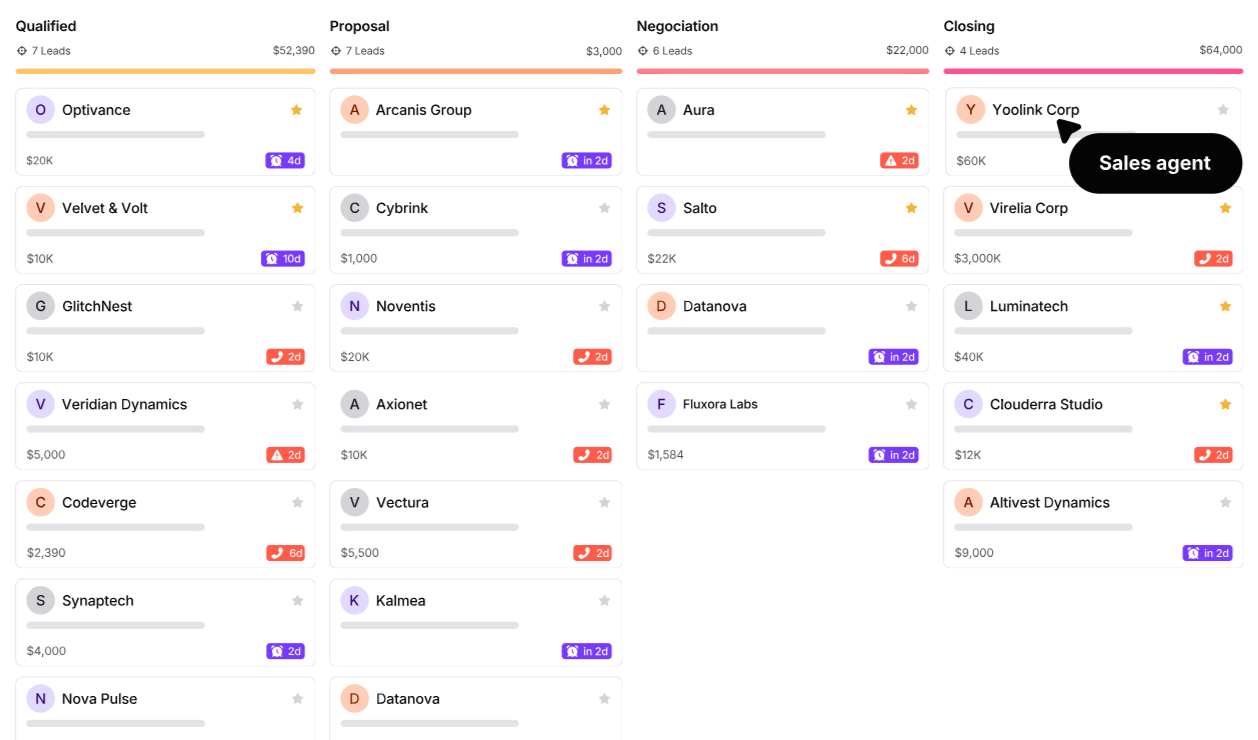
noCRM was born from a specific frustration: "Salespeople hate CRMs." The product's original name, "You Don't Need a CRM!", made that stance explicit. The design principle: leads, not contacts, are the core object.
Source: noCRM
Instead of building a contact database before you can start selling, noCRM lets you create a lead with just a title and start tracking it immediately. Everything revolves around one question: what's the next step on this deal?
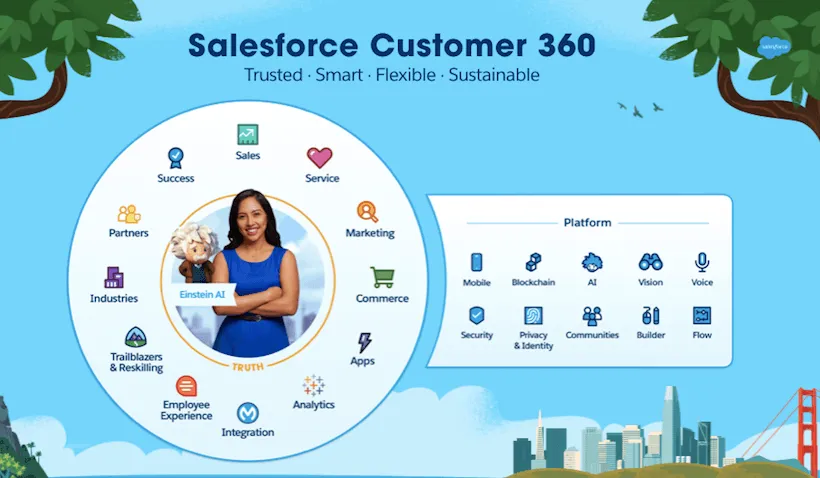
Salesforce was built on the opposite premise: collect enough data about your customers and their interactions, and you can optimize every touchpoint. The Customer 360 vision connects sales, service, marketing, and commerce on shared data. Sales reps see service tickets, marketing engagement, and purchase history alongside their pipeline, giving context a stripped-down tool cannot.
Source: Salesforce
Both philosophies have merit. noCRM is right that forcing salespeople to fill mandatory contact fields before they can track a deal kills adoption. Salesforce is right that disconnected data across departments creates blind spots. The question is which trade-off hurts your team more.
But both are reactive tools. They organize information after it arrives. Neither answers the question before pipeline management: which companies should you target right now, and why?
ZoomInfo fills that gap. Rather than waiting for leads to enter the pipeline, ZoomInfo's GTM Context Graph processes 1.5B+ data points daily to identify accounts showing buying signals, map their decision-makers, and surface the context behind each opportunity.
GTM Workspace brings those prioritized accounts, drafted outreach, and deal execution together for sellers.
"ZoomInfo's not just a contact data company anymore. They've built a full system of execution. GTM Intelligence actually works the list, writes the outreach, triggers the play, and helps drive predictable growth." (Levanta)
Pipeline management: simplicity vs. depth vs. intelligence
The daily selling experience differs across these three platforms.
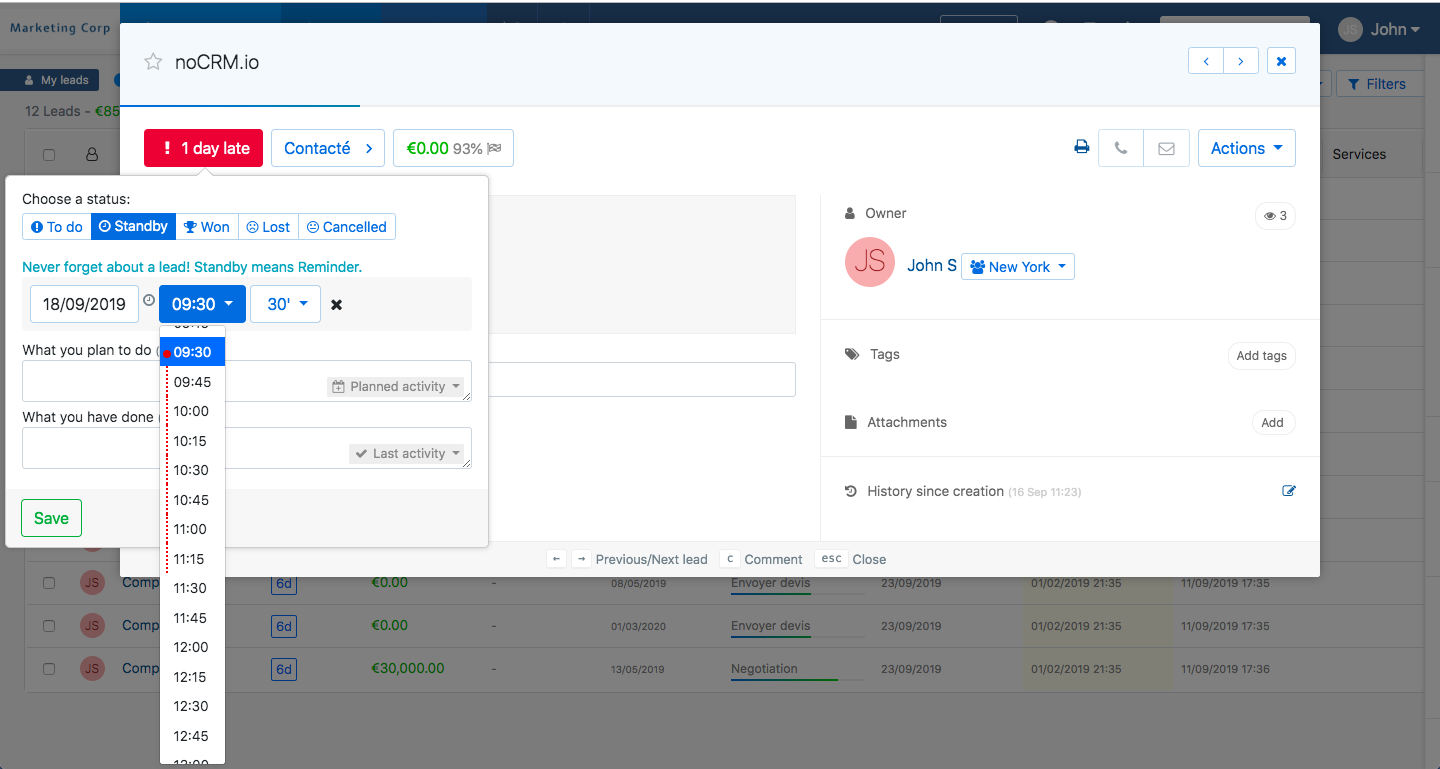
noCRM organizes every deal around a five-status system: To Do, Standby, Won, Cancelled, and Lost. When a rep acts on a lead, they set it to Standby with a reminder date. When the reminder fires, the lead returns to To Do and surfaces at the top of the queue. A visible counter shows how long overdue leads have sat without action. This loop is not optional. It is the core operating model.
Source: noCRM
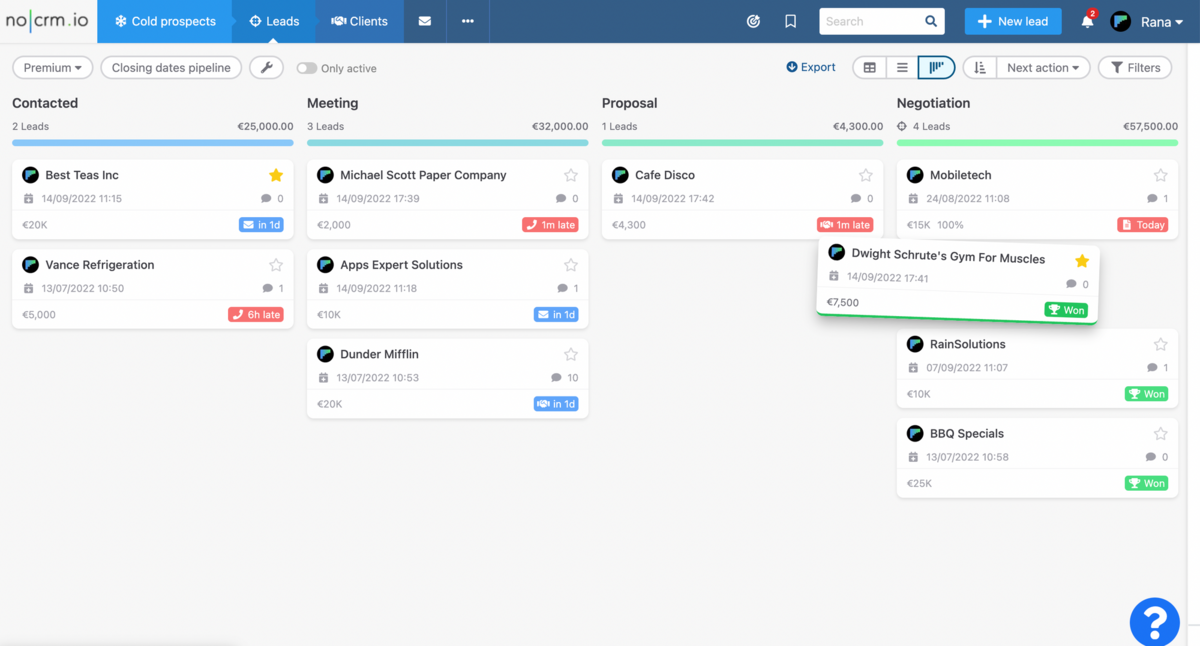
The pipeline itself is a drag-and-drop Kanban board with customizable stages. Reps can switch between Kanban, compact (spreadsheet-style), and extended views.
Source: noCRM
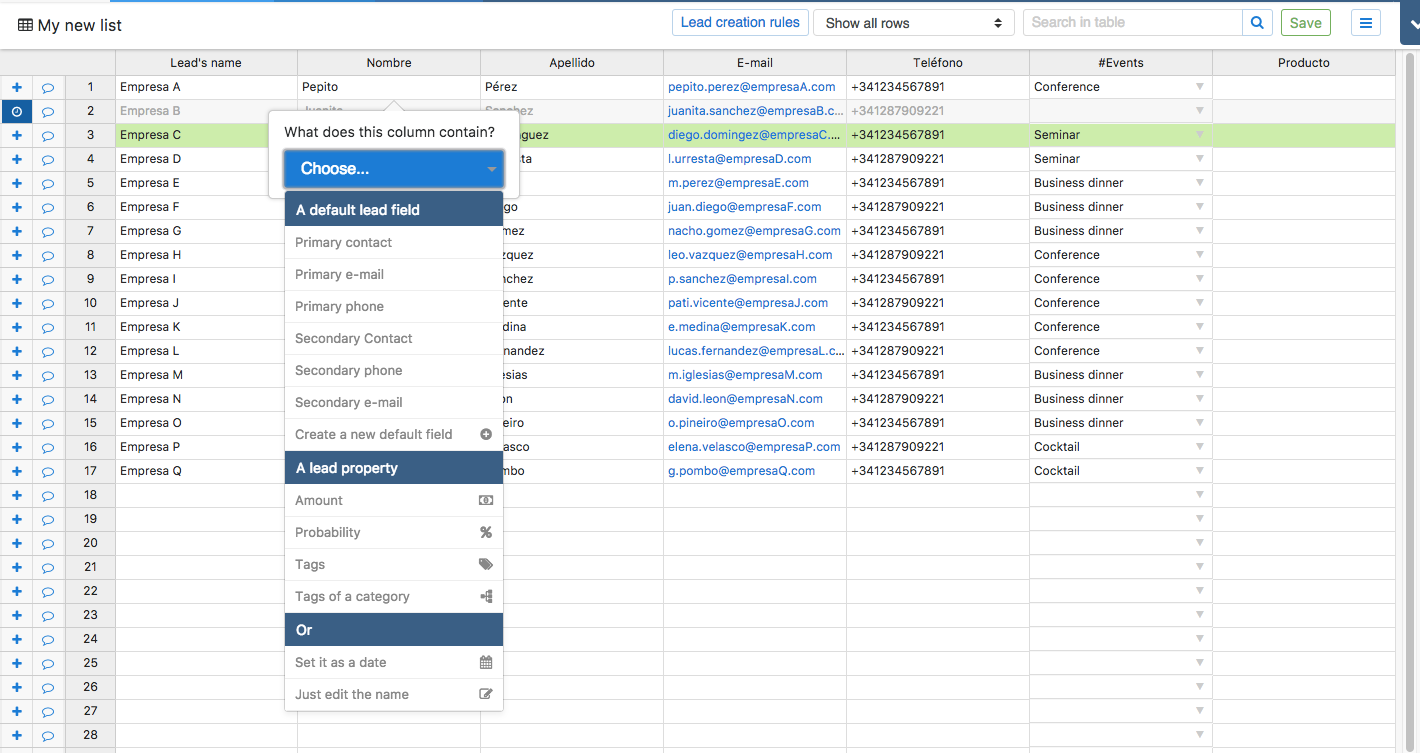
Prospecting Lists keep unqualified contacts separate from the active pipeline, so only real opportunities occupy the board.
Source: noCRM
This design makes it hard for a deal to sit idle without someone noticing. For teams of 1–20 reps running short sales cycles, that discipline is valuable.
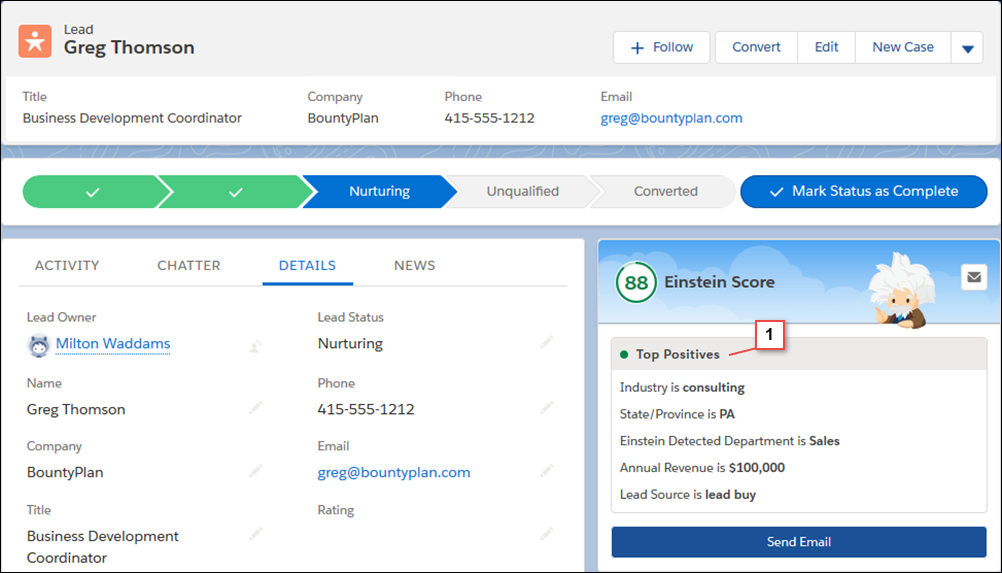
Salesforce Sales Cloud offers deeper pipeline management. Einstein Lead Scoring ranks leads by conversion likelihood.
Source: Salesforce
Pipeline Management provides a consolidated view with AI deal insights and change signals. Forecast Management gives real-time rollups across the team. Territory planning, quota management, and commission tracking (via Salesforce Spiff) round out the picture.
With Agentforce, Salesforce can now auto-generate account plans with SWOT analysis, draft follow-up emails, and flag deals showing signs of stalling.
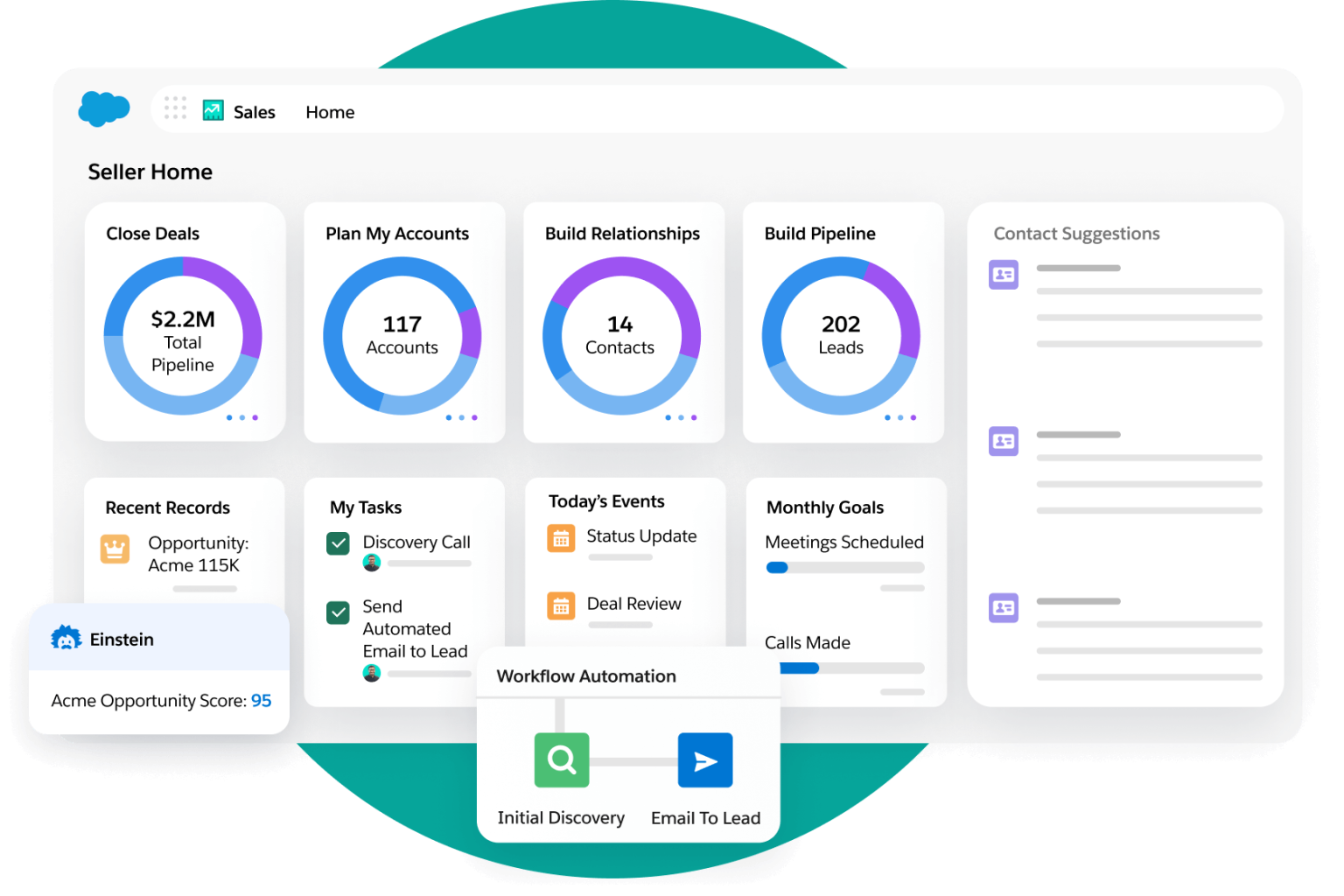
Source: Salesforce
The trade-off: this depth requires configuration. Sales processes, lead scoring models, forecast categories, and automation rules all need to be built and maintained. Most deployments are partner-led, adding time and cost before the first deal gets tracked.
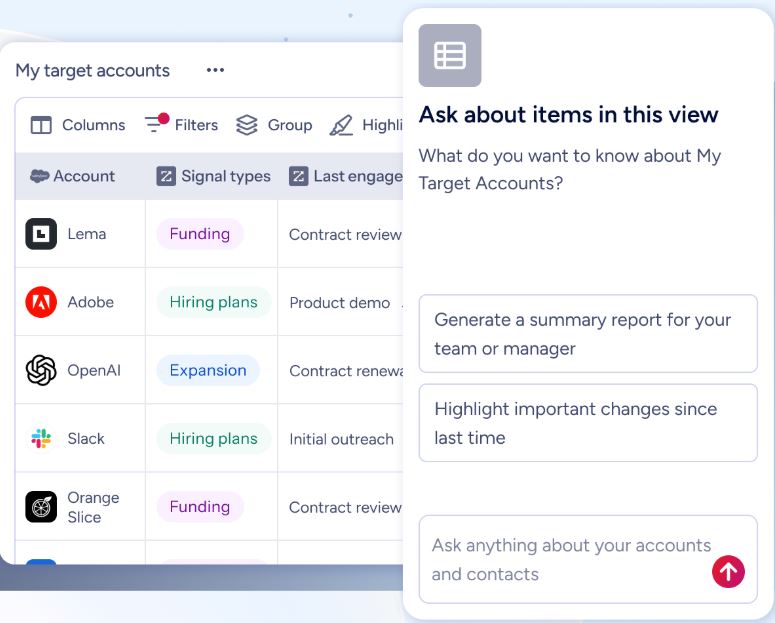
ZoomInfo approaches pipeline from the other direction. Instead of organizing leads that already exist, GTM Workspace starts by identifying which accounts deserve attention.
An Action Feed streams buying signals: G2 comparisons, funding events, executive hires, intent spikes. AI agents research accounts, draft personalized outreach, and update CRM fields without the rep switching tools.
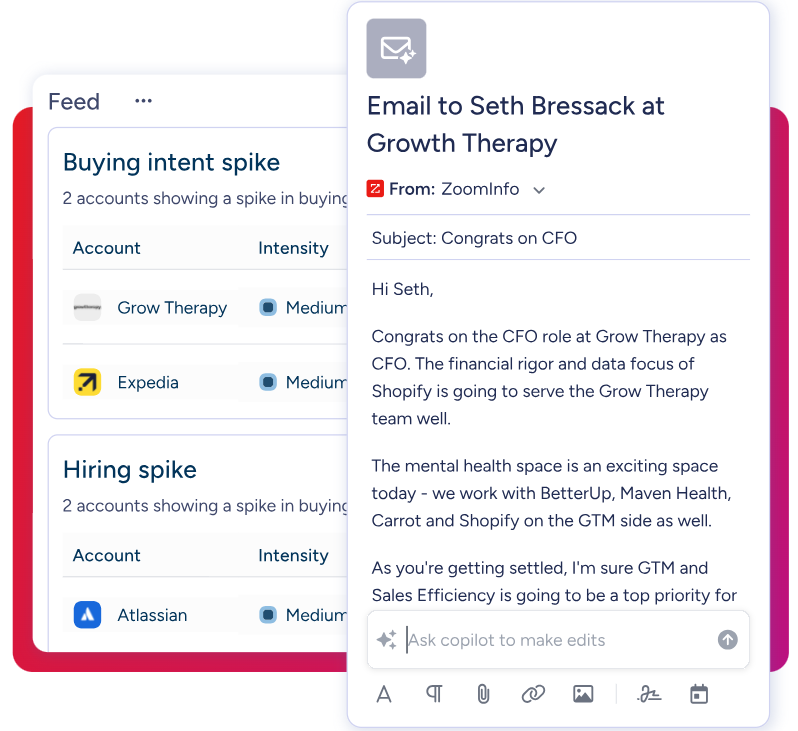
For teams using Salesforce as their CRM, ZoomInfo doesn't replace the pipeline. It feeds it with signal-driven opportunities and keeps the data current. For teams using noCRM, ZoomInfo can push leads via Zapier or API into the pipeline that noCRM manages.
Where your leads come from matters more than how you organize them
noCRM captures leads from nine sources: WhatsApp, email forwarding, business card scanning, web forms, a browser extension, prospecting lists, manual entry, duplication, and API. These are all ways to capture a lead that already exists (someone you've spoken to, a form submission, a card from a conference).
Salesforce captures leads through web-to-lead forms, email integrations, and the AppExchange ecosystem. Marketing Cloud adds campaign-driven lead generation, and Data Cloud ingested 112 trillion records in FY26. But the quality of leads entering Salesforce depends on the data and signals feeding it.
ZoomInfo solves a problem neither CRM was designed to address: finding the right leads before they find you. The platform maintains 500M contacts across 100M companies, verified by 300+ human researchers and reaching up to 95% accuracy on first-party data.
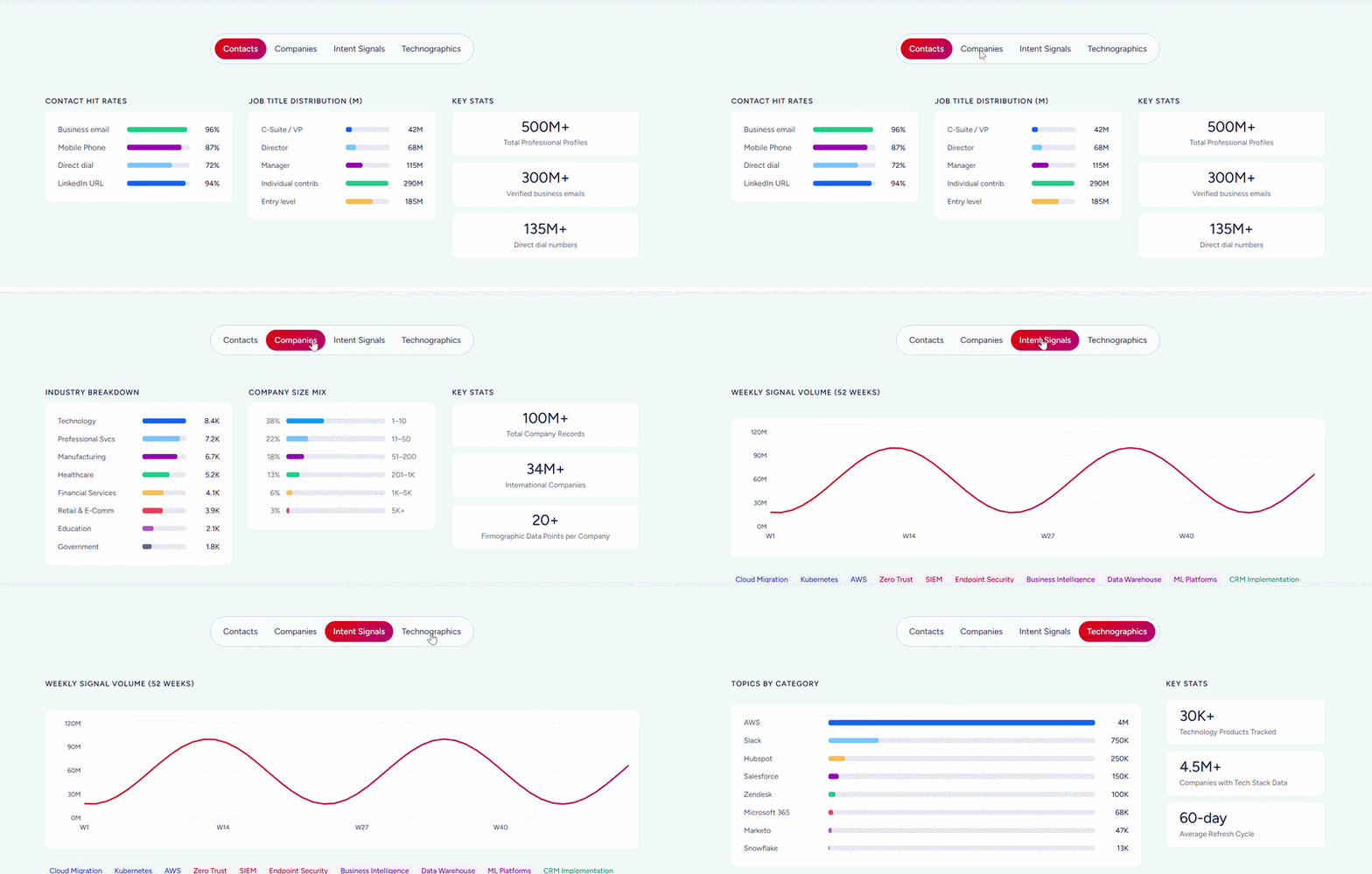
In a Fortune 500 competitive RFP analyzing 25 million contacts across vendors, the independent consultant concluded that "no other competitor came even close."
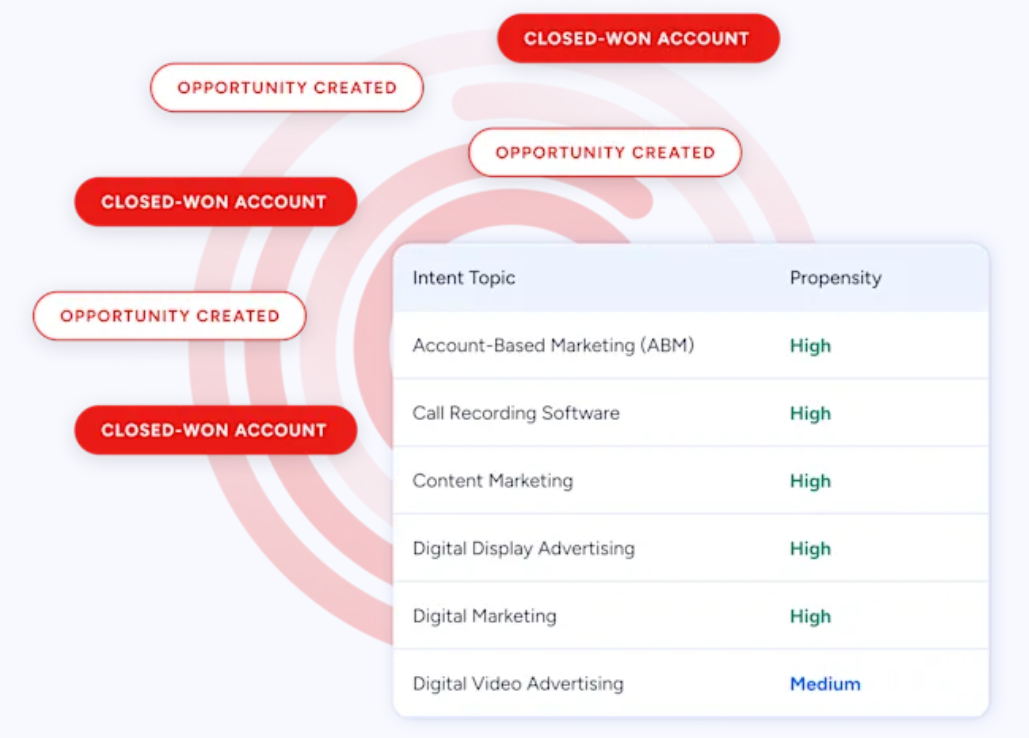
Beyond static contact data, ZoomInfo's Buyer Intent tracks signals from 210 million IP-to-Organization pairings and 6 trillion+ new keyword-to-device pairings monthly.
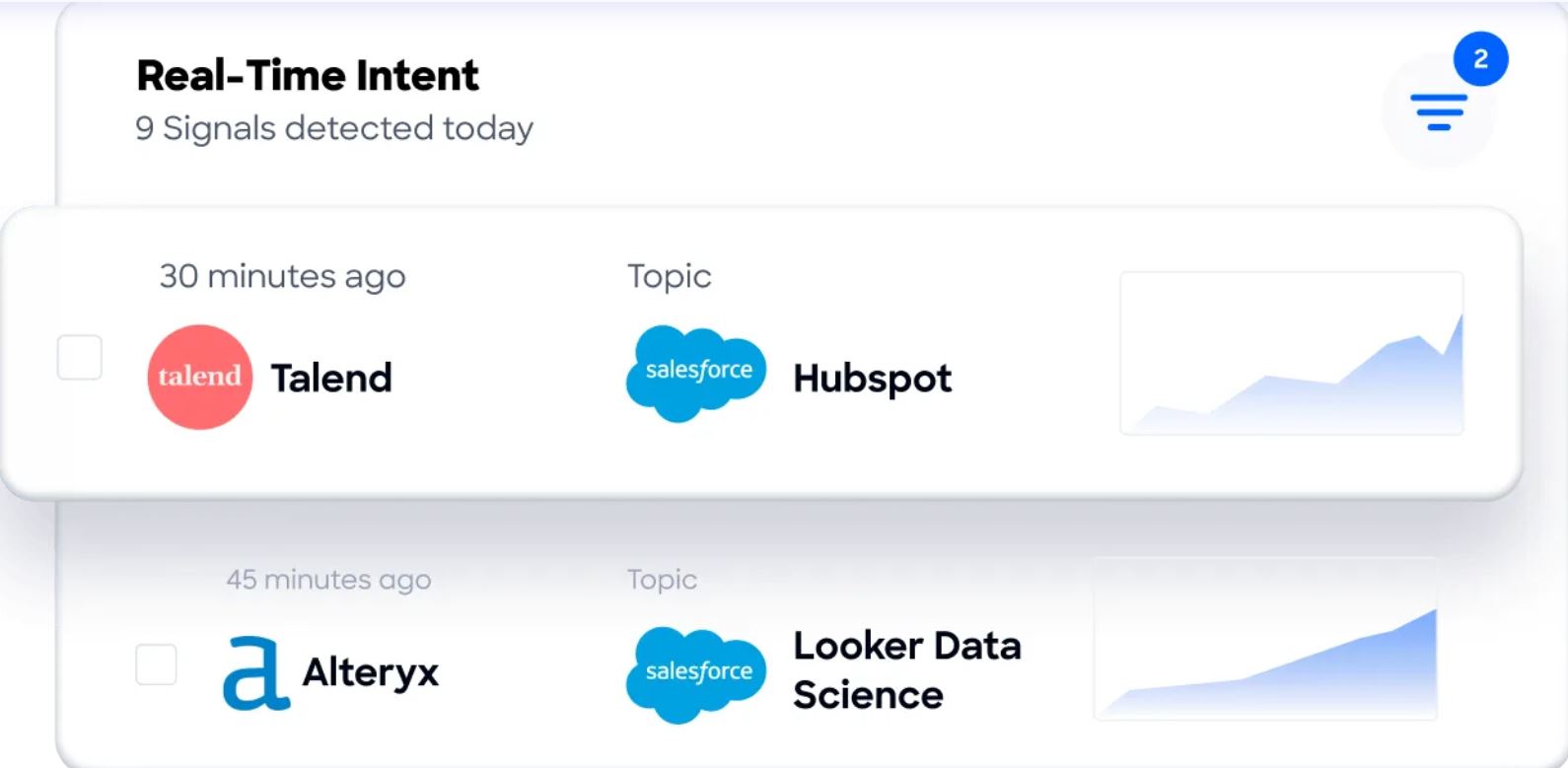
Guided Intent (exclusive to ZoomInfo) identifies topics historically correlated with deal success in your specific business, rather than requiring manual topic selection.
WebSights resolves anonymous website visitors to companies, including buying team identification.
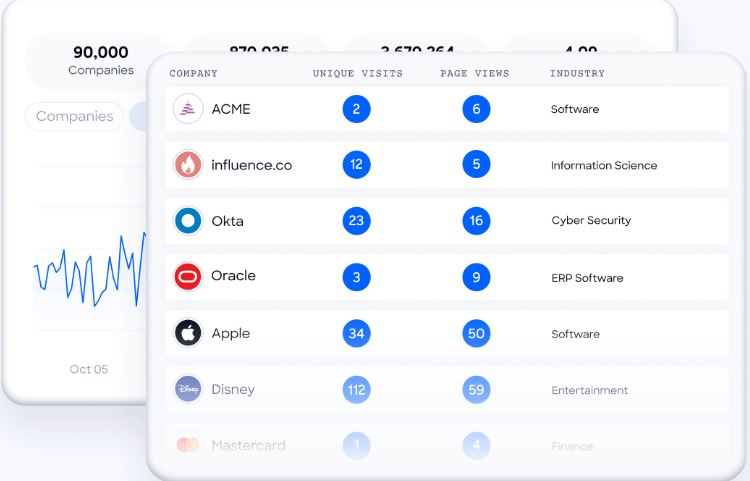
This data doesn't live in a silo. Through APIs and MCP, the same intelligence flows into Salesforce, noCRM via Zapier, or any AI agent your team builds.
"ZoomInfo is our one source of truth for account data, and even more so for contact data. There's no other provider in the market that provides you with that level of detail." (Smartsheet)
AI capabilities reflect each platform's ambitions
What AI can do in a sales tool depends on what data it can access.
noCRM is cautious with AI. The only confirmed feature is an AI-powered search bar in the help center. Positive Group (noCRM's parent company) has published a piece on "Agentic CRM" as its strategic direction, suggesting AI-driven recommendations may follow. For now, noCRM relies on structured process rather than intelligence, and for many small teams, that's enough.
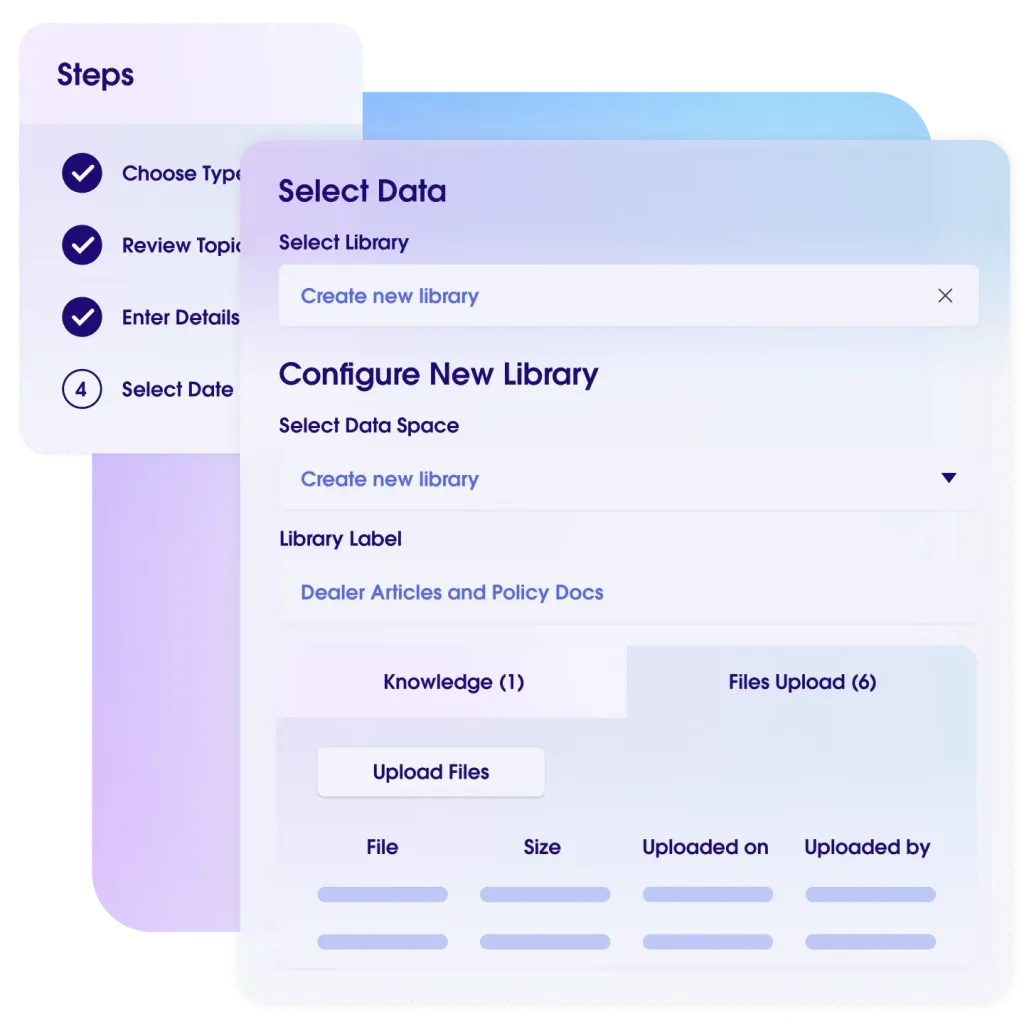
Salesforce has invested heavily in AI through Agentforce, which reached $800M in ARR, growing 169% year-over-year, with 29,000 deals closed. Pre-built agents cover sales development, coaching, prospecting, and service resolution. The Atlas Reasoning Engine handles multi-step tasks autonomously through a reason-act-observe-adapt loop.
Source: Salesforce
The limitation: Salesforce's AI reasons over CRM data. It knows what's recorded in fields and activity logs. It can tell you a deal moved from Stage 3 to Stage 4, but it can't explain why unless someone documented the reason.
ZoomInfo's AI operates on a broader foundation. The GTM Context Graph fuses CRM records with conversation intelligence (via Chorus), email interactions, intent signals, and behavioral data.
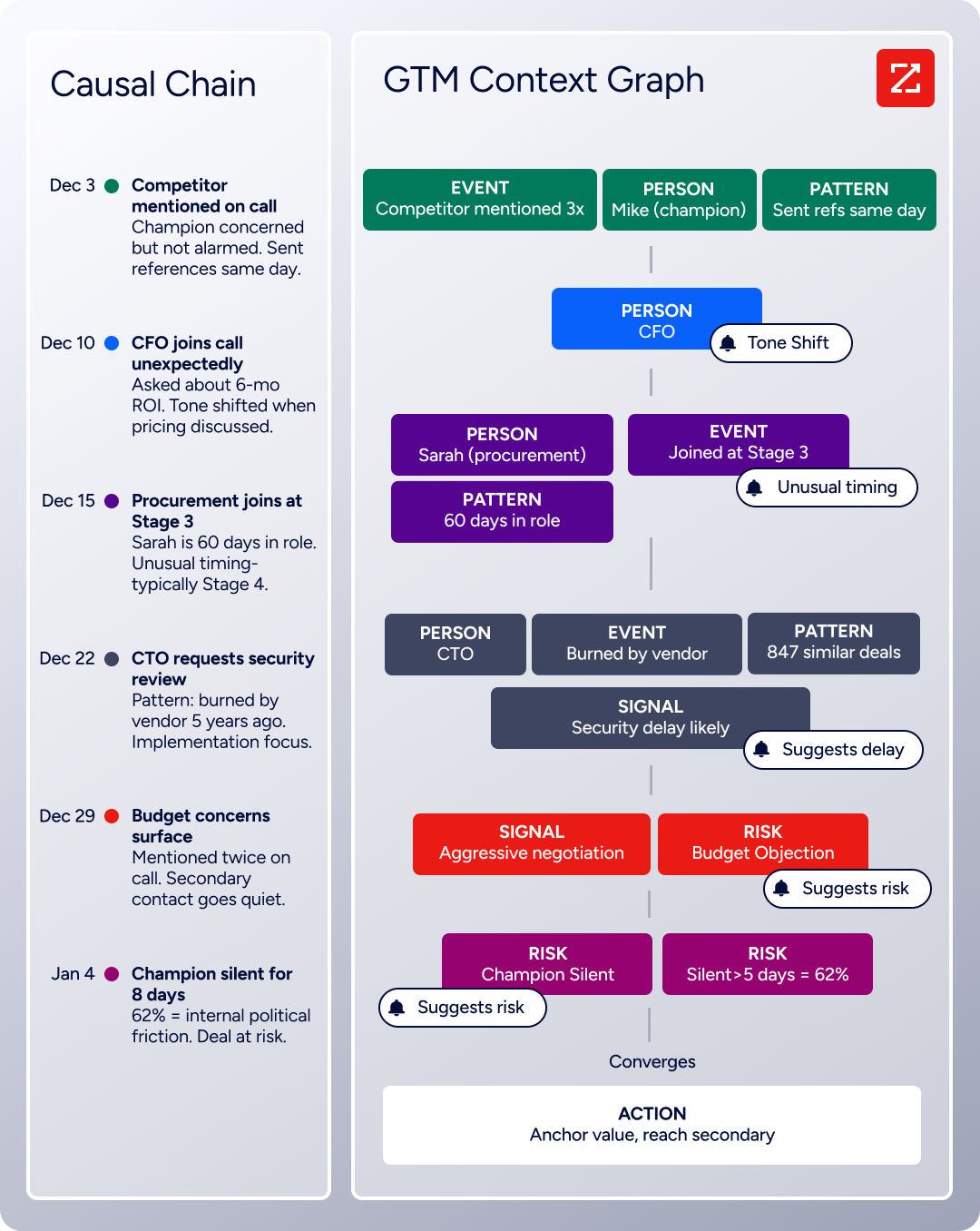
As ZoomInfo's CPO Dominik Facher wrote: "The CRM recorded the state change. It has no record of why it happened." The Context Graph captures that missing context: why a deal accelerated, why a champion went quiet, what a competitive mention predicts about deal risk.
In GTM Workspace, AI agents use this context to generate outreach addressing a prospect's concern, prioritize accounts whose signals match win patterns, and surface buying committee members the rep hasn't engaged. GTM Workspace users report boosting pipelines by 23% and booking nearly 60% more meetings per week.
"That combination of our internal CRM data, external signals, and AI that's given all that context has helped us craft very specific account- and persona-based messages. And people have responded to them right away." (Toby Carrington, Chief Business Officer, Seismic)
For a deeper look at how Salesforce and ZoomInfo compare across the full platform, see our Salesforce vs. ZoomInfo comparison.
Pricing tells you who each platform is built for
noCRM offers three tiers (Starter, Expert, and Dream) on a per-user basis with up to 40% savings on annual billing. The Starter plan caps users at 500 leads in a single pipeline and restricts email to BCC-only sync. Expert unlocks unlimited leads, multiple pipelines, quotes and invoices, and two-way email. Dream adds WhatsApp and VoIP integrations, team management, automations, and priority support.
A 15-day free trial (extendable to 30 days) requires no credit card. All users in an account must be on the same plan.
noCRM's pricing sits well below Salesforce for comparable seat counts, and the per-user model is straightforward.
Salesforce pricing reflects its enterprise DNA. The Starter Suite at $25/user/month covers the basics, but most sales teams need at least Pro Suite at $100/user/month for customization, quoting, and forecasting. Enterprise at $175/user/month adds AI and automation. Unlimited at $350/user/month includes the full AI suite and Premier Success support.
License fees are only the starting point. Agentforce consumption runs $500 per 100,000 credits. The Premier Success Plan costs 30% of net license fees on top of your subscription. Over 70% of implementations are partner-led, adding cost before the first rep logs in. Salesforce itself has acknowledged its pricing model "needed to be easier to understand, more predictable, and more flexible."
ZoomInfo uses custom-quoted, consumption-based pricing with no published dollar amounts. Pricing scales around enterprise license agreements, API consumption, and credit volume. ZoomInfo Lite offers a permanent free tier with access to the B2B database, 10 monthly export credits, individual and company searches, the Chrome extension, and HubSpot integration.
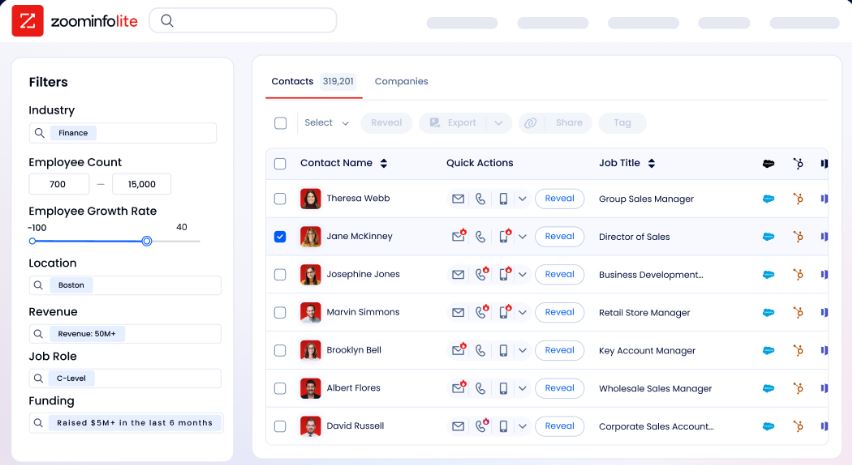
A separate 7-day free trial provides broader access to the full platform.
The pricing comparison isn't apples-to-apples. noCRM charges for pipeline management. Salesforce charges for a full CRM platform. ZoomInfo charges for data, intelligence, and execution tools. Whether ZoomInfo costs more or less than Salesforce depends on what you're buying and how much data you consume.
Setup and learning curve
noCRM gets teams working fastest. The admin onboarding guide structures setup in five steps: define your sales process, configure the account, import data, set up integrations, and onboard the team. The only required field to create a lead is a title. Reps can be productive on their first day.
The help center covers 120+ articles across 17 topic categories, and noCRM runs an Academy, live webinars, and a YouTube channel. The product is available in six languages.
Salesforce requires the most upfront investment. Over 70% of implementations are partner-led, and timelines range from weeks for simple Sales Cloud deployments to 3–12 months for multi-cloud enterprise rollouts. Trailhead offers 1,500+ learning badges and 60+ certifications, and the Trailblazer Community spans 20 million members. The resources are vast, but their existence reflects the platform's complexity.
Most small sales teams don't have a dedicated Salesforce administrator. Without one, the platform becomes an underutilized expense.
ZoomInfo sits between the two. The platform's breadth requires onboarding, which ZoomInfo structured into a redesigned 90-day program covering planning, technical implementation, education, and adoption. That redesign produced a 25% improvement in customer satisfaction scores and won Rocketlane's Golden Comet award for Best Customer Onboarding Team of 2024.
ZoomInfo University provides role-specific learning paths for sales, marketing, administrators, and customer success teams.

GTM Workspace itself "deploys in weeks, not months", faster than a typical Salesforce implementation but slower than noCRM's same-day activation.
Integrations and ecosystem reach
noCRM connects to 5,000+ tools via Zapier and Make, plus native integrations with CloudTalk, JustCall, Aircall (VoIP), Gmail, Outlook, Yahoo (email), Google Calendar, and Slack. The REST API supports authentication, leads, users, teams, pipelines, and webhook events.
On the Dream plan, built-in automations handle lead assignment, tagging, notifications, and email sequencing without third-party dependencies.
The integration model works well for small teams, but it depends on Zapier as the middleware for anything beyond native connections.
Salesforce has the broadest ecosystem in enterprise software. AppExchange lists 9,000+ apps with 14+ million installs, and 91% of customers use at least one AppExchange app. MuleSoft provides API management with hundreds of pre-built connectors. Native integrations with Google Workspace, Microsoft Outlook and Teams, and Slack cover the major collaboration platforms.
For large organizations, Salesforce's ecosystem is its strongest advantage. It can connect to almost anything in an enterprise stack.
ZoomInfo takes an infrastructure approach to integration. API Access is included in all relevant plans. The MCP server connects AI models to ZoomInfo's data without custom code. The App Marketplace lists 120+ integrations covering CRM, marketing automation, sales engagement, and data warehouses, with native connections to Salesforce, HubSpot, Microsoft Dynamics, Snowflake, and others.
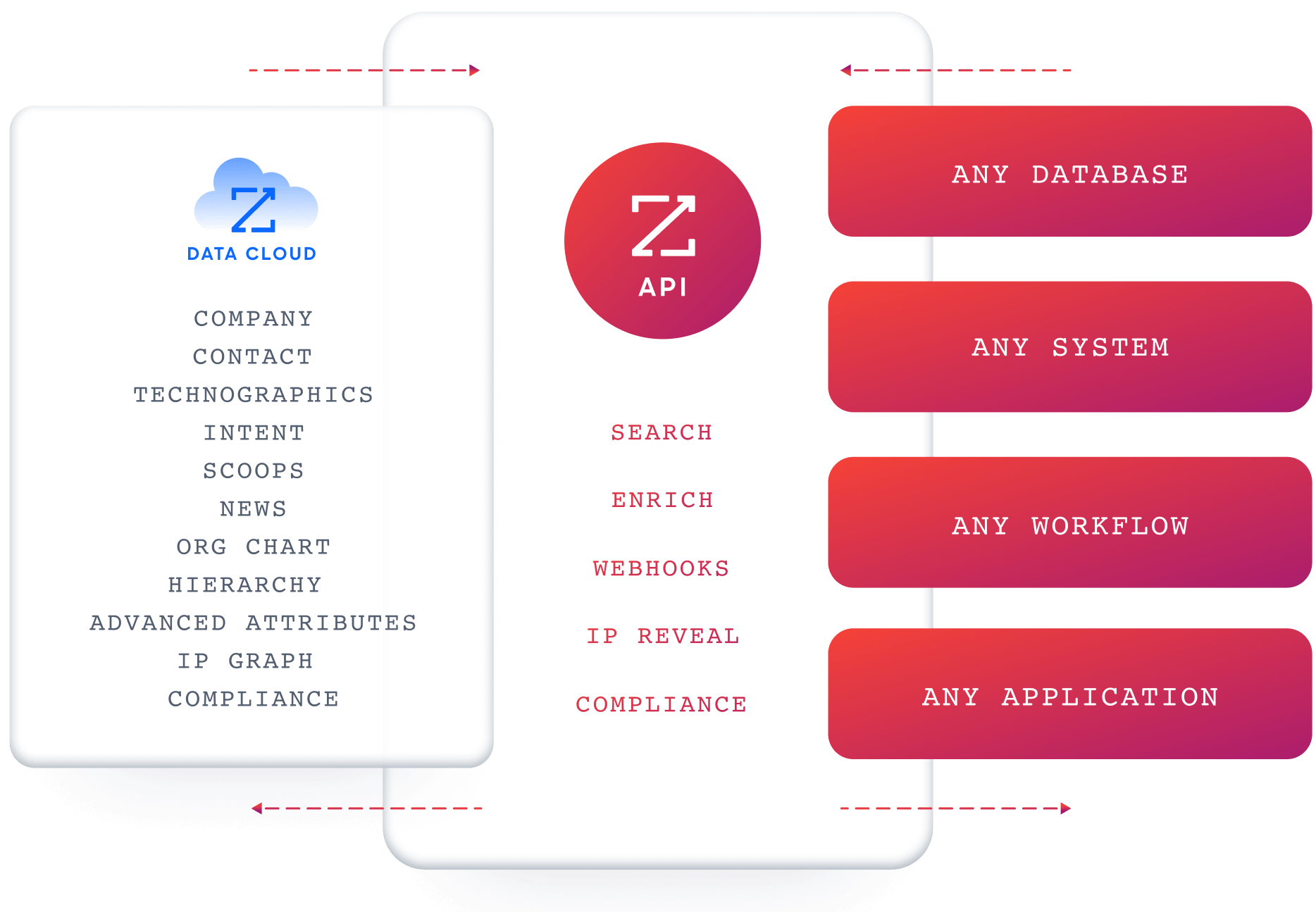
ZoomInfo works with both noCRM and Salesforce rather than replacing them. If your team uses Salesforce for CRM, ZoomInfo enriches it with verified data and buying signals. If your team uses noCRM for pipeline management, ZoomInfo can feed qualified leads into it through Zapier or API.
"The plug-and-play aspect of the API means I can integrate it very easily into any process and get information at a moment's notice." (Jerry Wilson, Senior Marketing Intelligence Analyst, BDO Canada, who saw an 87% reduction in time spent on data dashboard updates)
noCRM vs. Salesforce vs. ZoomInfo: Which should you choose?
The right choice depends on what's holding your sales team back.
Choose noCRM if:
Your sales team is small (1–20 reps) and needs to get organized fast
You want a tool reps will use without training
Pipeline visibility and follow-up discipline are your biggest gaps
You sell through short, transactional cycles where speed matters more than analytics
European data sovereignty and ISO 27001 certification are requirements
Your budget doesn't support an enterprise platform
Choose Salesforce if:
You need a full platform spanning sales, service, marketing, and commerce
Your organization has (or can hire) a dedicated Salesforce administrator
Forecasting, territory management, and pipeline analytics are critical
You're building for scale across hundreds of users and multiple departments
Autonomous agents represent your vision for how sales should work
Enterprise ecosystem integration is non-negotiable
Choose ZoomInfo if:
Your team's biggest challenge is finding the right accounts to target
You need verified contact data, direct dials, and business emails at scale
Knowing which accounts are researching solutions would change your outreach
You want AI that understands why deals move, not just what stage they're in
You need intelligence that works inside your existing CRM, not a replacement for it
Your growth depends on proactive prospecting rather than inbound alone
See how ZoomInfo turns data into pipeline with a free trial or demo.
noCRM, Salesforce, and ZoomInfo each solve a distinct piece of the sales puzzle. noCRM ensures your team follows up on every lead with discipline. Salesforce manages the full customer lifecycle with depth no other platform matches.
ZoomInfo gives your team the data and intelligence to fill that pipeline with the right opportunities from the start.
The strongest sales organizations don't pick just one. They build a stack where each tool handles what it does best.
noCRM vs. Salesforce vs. ZoomInfo FAQ
What is the core difference between noCRM, Salesforce, and ZoomInfo?
noCRM is a lightweight lead management tool that organizes sales around pipeline stages and enforced next steps, designed for small teams that want simplicity over features. Salesforce is a full enterprise CRM platform covering sales, service, marketing, and commerce, with AI agents that handle tasks on their own.
ZoomInfo is a GTM intelligence platform with 500M contacts, 100M companies, buyer intent signals, and execution tools, designed to identify the right accounts and tell sellers what to say and when.
Can ZoomInfo work alongside noCRM or Salesforce?
Yes. ZoomInfo is an intelligence layer, not a CRM replacement. It integrates natively with Salesforce and connects to noCRM through Zapier or API. ZoomInfo's data and signals feed into whichever CRM a team uses, enriching records and surfacing new opportunities. The APIs and MCP server extend this to any tool or AI agent.
Which platform is best for a small sales team just getting started?
noCRM gets small teams productive fastest. Reps can work on day one, no administrator is needed, and pricing is the most accessible of the three. ZoomInfo Lite provides a permanent free tier for prospecting data, which pairs well with noCRM for teams that need both pipeline management and contact intelligence on a tight budget.
How does pricing compare across the three platforms?
noCRM offers three per-user tiers (Starter, Expert, Dream) with up to 40% savings on annual billing. Salesforce starts at $25/user/month for Starter Suite, but most sales teams need at least Pro Suite ($100/user/month) or Enterprise ($175/user/month), plus additional costs for Agentforce consumption, the Premier Success Plan (30% of net license fees), and partner-led implementation.
ZoomInfo uses custom-quoted, consumption-based pricing with no published prices; ZoomInfo Lite is permanently free with 10 monthly export credits.
Which platform has the strongest AI capabilities for sales?
Salesforce has the broadest AI suite with Agentforce, covering autonomous case resolution, sales coaching, lead scoring, and more.
ZoomInfo's AI draws on a different foundation: the GTM Context Graph fuses CRM data, conversation intelligence, and behavioral signals to capture why deals move (not just that they moved) and delivers context-aware outreach and account prioritization through GTM Workspace. noCRM currently has minimal AI features, though its parent company has signaled an "Agentic CRM" direction for the future.
Is Salesforce too complex for small businesses?
Salesforce offers a Free Suite (max 2 users) and Starter Suite at $25/user/month for small teams. However, the platform's full value requires configuration and often a dedicated administrator. Over 70% of implementations are partner-led. Small teams with limited IT resources may find noCRM easier to adopt and maintain.
Which platform is best for European companies with data residency requirements?
noCRM has the strongest European positioning. It is 100% made and hosted in Europe, ISO 27001 certified, and its parent company Positive Group ranked top 3 in the EU Score sovereignty framework. Salesforce offers regional data residency through Hyperforce, with EU-based support available as a paid add-on.
ZoomInfo holds ISO 27001, ISO 27701, SOC 2 Type II, and TRUSTe GDPR certifications, though its infrastructure is US-headquartered.
Do any of these platforms help with finding new leads, not just managing existing ones?
ZoomInfo is the only platform built for lead discovery and prospecting. It maintains 500M contacts and 100M company profiles, tracks buyer intent signals from 210 million IP-to-Organization pairings, and identifies anonymous website visitors.
noCRM captures leads from existing channels (WhatsApp, email, web forms) but does not include a prospecting database. Salesforce manages leads through its CRM and offers Data Cloud for data unification, but sourcing new contact data typically requires third-party tools or AppExchange additions.
More noCRM comparisons:
