

Choosing between Nutshell vs. Salesforce for your CRM often comes down to five questions:
Do you need a CRM your team can start using in days, or one that can model a global sales organization?
Are you a team of 5-50 that wants everything included at a predictable price, or an enterprise willing to invest for full customization?
Is pipeline management your core need, or do you also require service, marketing, commerce, and analytics on one platform?
How important is the quality of the prospect data flowing into your CRM?
Do you want a tool that works out of the box, or a platform you'll hire consultants to configure?
In short, here's what we recommend:
Nutshell is the CRM for small and mid-size B2B teams that want to manage contacts, track deals, and run email campaigns from one affordable platform. With pricing starting at $13/user/month, no seat minimums, free live support on every plan, and features like an AI chatbot and email marketing included at every tier, Nutshell solves the problem that kills most CRM deployments: teams refusing to use the software. Its limitations surface when organizations need deeper reporting, complex automation logic, or enterprise compliance.
Salesforce is the world's #1 CRM by market share, serving over 150,000 companies with a platform spanning sales, service, marketing, commerce, analytics, and AI agents. It has held the Gartner Magic Quadrant Leader position for sales force automation for 19 consecutive years, offers a 9,000+ app marketplace, and runs an AI agent platform (Agentforce) that can resolve support cases and draft outreach on its own. The trade-off is real: complex pricing, steep learning curves, and implementation timelines measured in months.
Both platforms manage your pipeline. But a CRM is only as effective as the data inside it. Stale contacts, missing phone numbers, and incomplete company records mean your reps spend hours researching instead of selling, your sequences bounce, and your pipeline reports reflect guesswork. The intelligence feeding your CRM determines whether it's a productivity tool or an expensive filing cabinet.
ZoomInfo is a B2B data intelligence and GTM platform that provides the data layer both Nutshell and Salesforce need to perform. With 500M contacts, 100M companies, 135M+ verified phone numbers, and 200M+ verified business email addresses, ZoomInfo gives your CRM the verified, current information it was never designed to generate on its own. Beyond contact records, ZoomInfo's GTM Context Graph combines your CRM records with conversation intelligence, intent signals, and behavioral data to reveal not just who your buyers are, but when they're ready to buy and why deals move or stall. Your team accesses this through the GTM Workspace for sellers, GTM Studio for marketers and RevOps, or API and MCP inside any tool, including both Nutshell and Salesforce.
If feeding your CRM with verified data and buyer intelligence sounds like the missing piece, see how ZoomInfo works with your stack.
Nutshell vs. Salesforce vs. ZoomInfo at a glance
Nutshell | Salesforce | ZoomInfo | |
|---|---|---|---|
Primary function | CRM + marketing automation for SMBs | Enterprise CRM + multi-cloud platform | B2B data intelligence + GTM execution |
Best for | Teams of 2-100 wanting fast setup | Mid-market to enterprise with dedicated admins | Any sales team needing verified prospect data and buyer signals |
Starting price | |||
Contact database | None native; relies on third-party data | 500M contacts, 135M+ verified phones, 200M+ verified emails | |
Setup time | Days | Weeks to months | |
Learning curve | Low | Steep | Moderate |
AI capabilities | Meeting summaries, email drafts, chatbot | Agentforce (autonomous agents) | GTM Context Graph, AI-driven outreach, intent signals |
Free plan | 14-day trial | ||
Integrations | Native + 5,000+ via managed Zapier | ||
Support | Dedicated support + ZoomInfo University |
The CRM choice depends on your team's size and complexity
Nutshell and Salesforce solve the same core problem (managing your pipeline and customer relationships) at different scales.
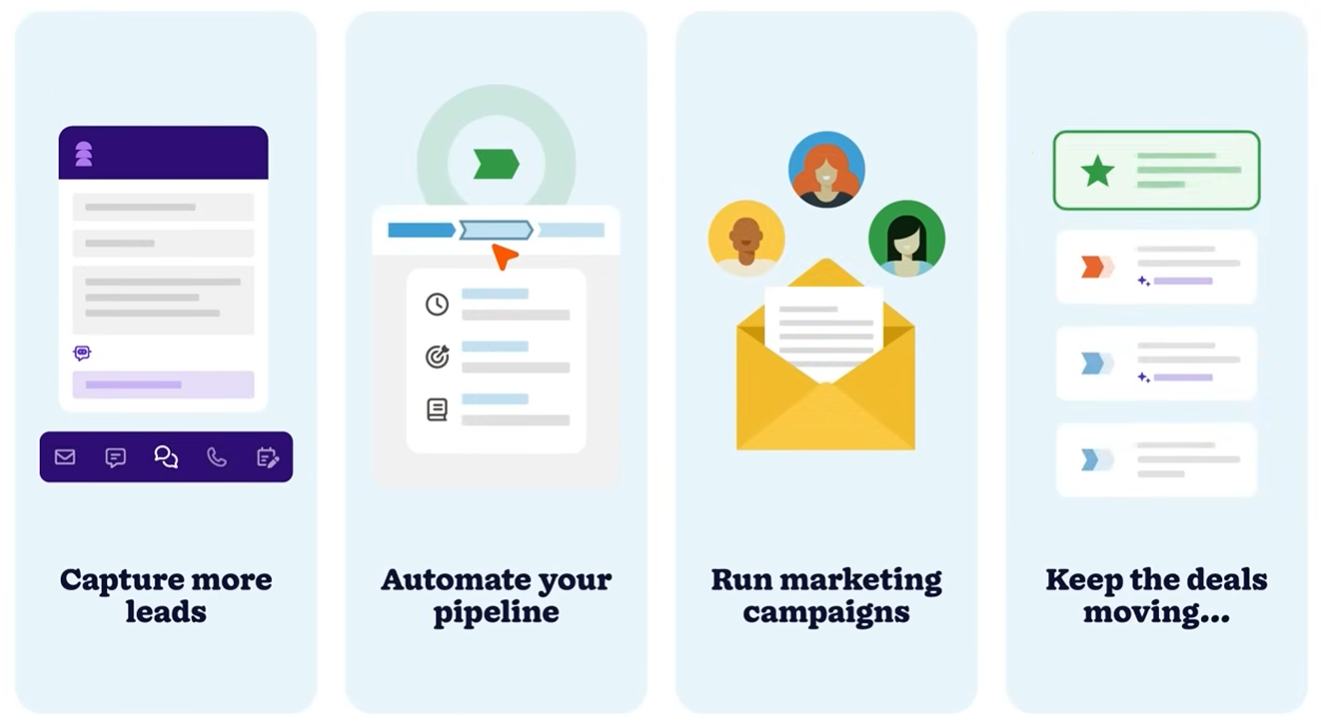
Nutshell was built by founders who had experienced CRM frustration with Salesforce, NetSuite, and Infusionsoft firsthand and concluded the market was missing three things: good user experience, native mobile apps, and automation that powers a structured sales process. The company's stated mission is "motivating teams to use" CRM software, which tells you everything about the problem they're solving. A CRM nobody uses is worse than a spreadsheet.
Source: Nutshell
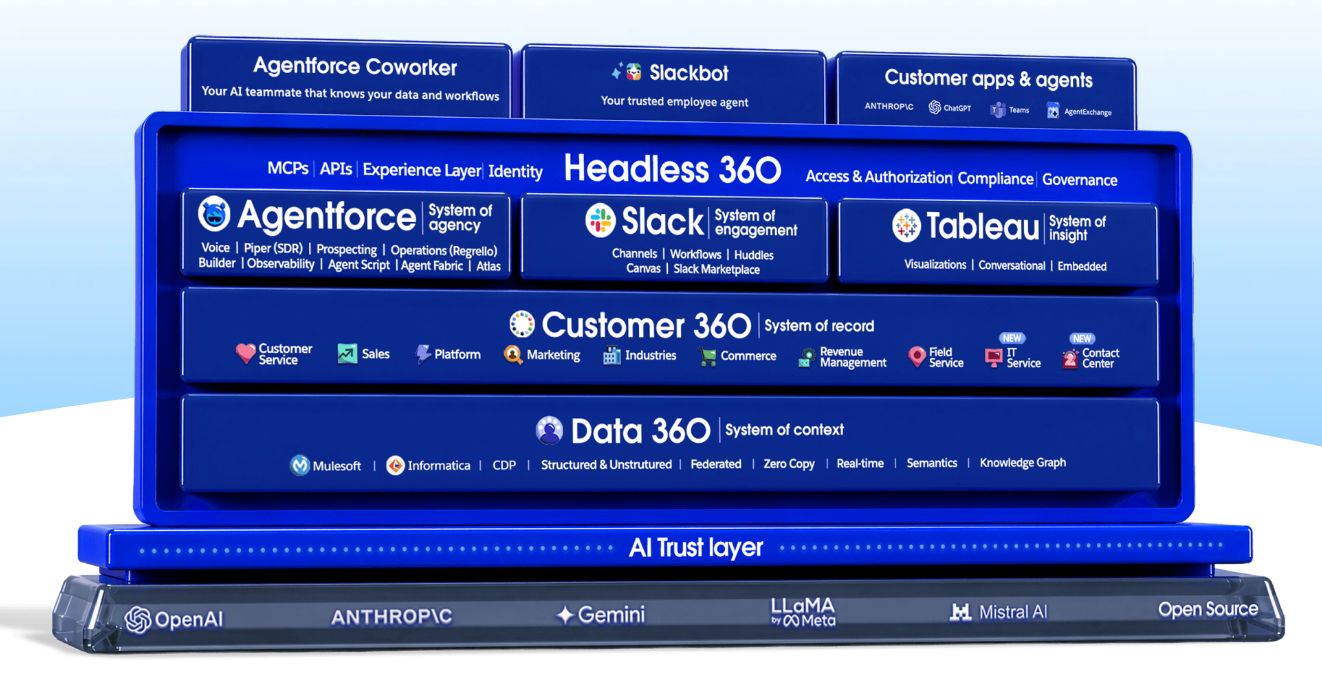
Salesforce takes the opposite approach. It can model virtually any business process, but that flexibility demands investment. Configuration requires dedicated, trained administrators. Over 70% of implementations are partner-led, and timelines range from weeks (simple Sales Cloud) to 3-12 months (enterprise multi-cloud). Salesforce acknowledges being "historically built for large enterprises."
Source: Salesforce
The gap isn't about quality. It's about fit. A 10-person sales team picking Salesforce Enterprise is like renting a warehouse to store a bookshelf. A 500-person organization picking Nutshell will outgrow it within a year.
Pipeline management: simplicity vs. infinite configuration
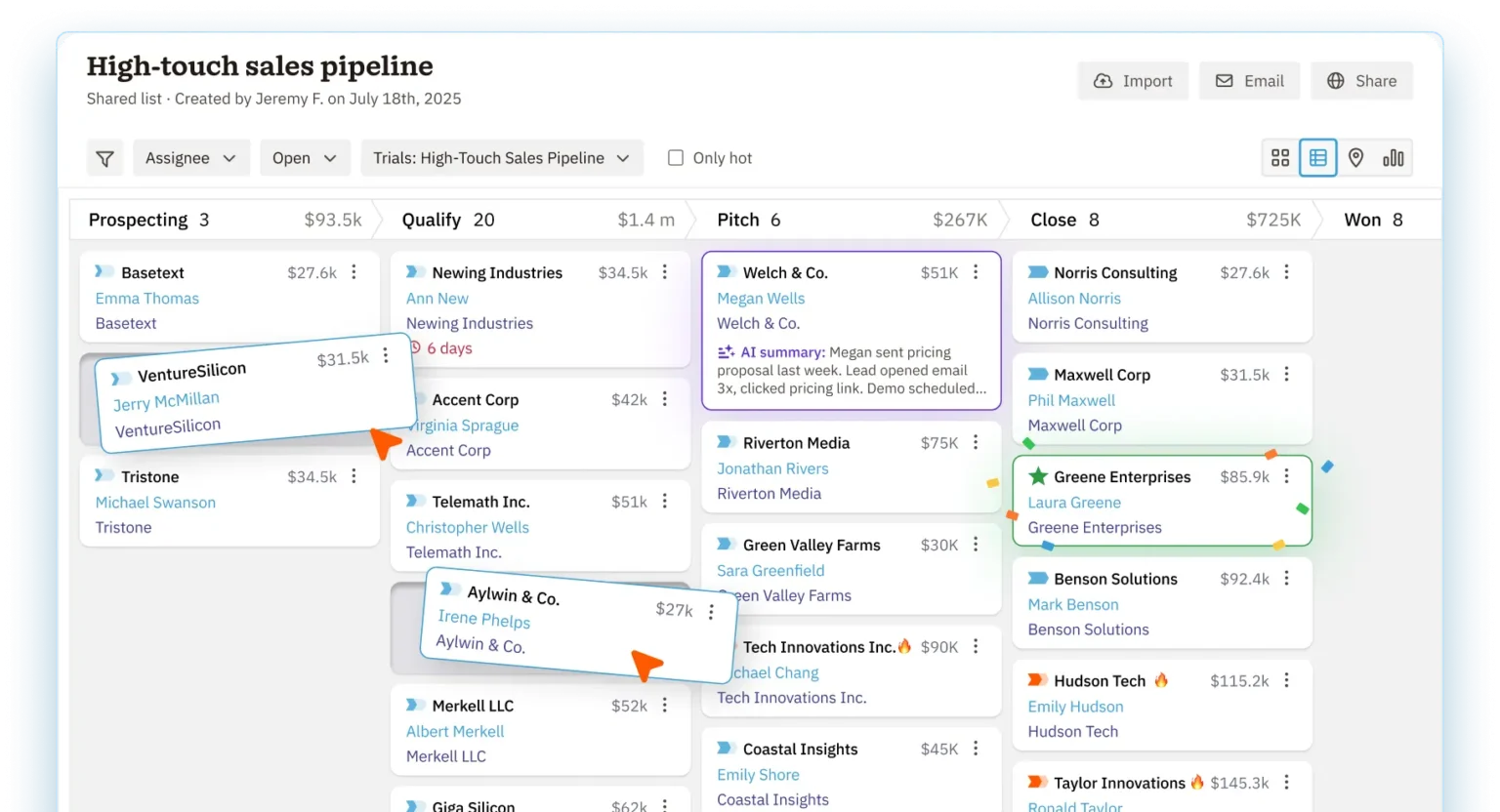
Nutshell structures deals as leads inside pipelines with configurable stages, goals, and automations. The standout feature is stage-goal-driven automatic advancement: when all stage goals are met (required info collected, activity completed), the lead advances without manual intervention. This keeps pipeline data accurate without relying on rep discipline.
Source: Nutshell
Nutshell offers four pipeline views: board (kanban), list, map (geographic, for field sales), and chart. Personal email sequences stop automatically when a lead replies, preventing awkward follow-ups. Draft pipeline mode lets teams test new processes before going live.
The limitation: Nutshell caps pipelines by plan (5 on Pro, 10 on Business, unlimited on Enterprise at $79/user/month), and automation triggers are more constrained than power users expect. Reviewers on Capterra note that certain conditions can't initiate automations, and email sequences lack multi-branch conditional logic.
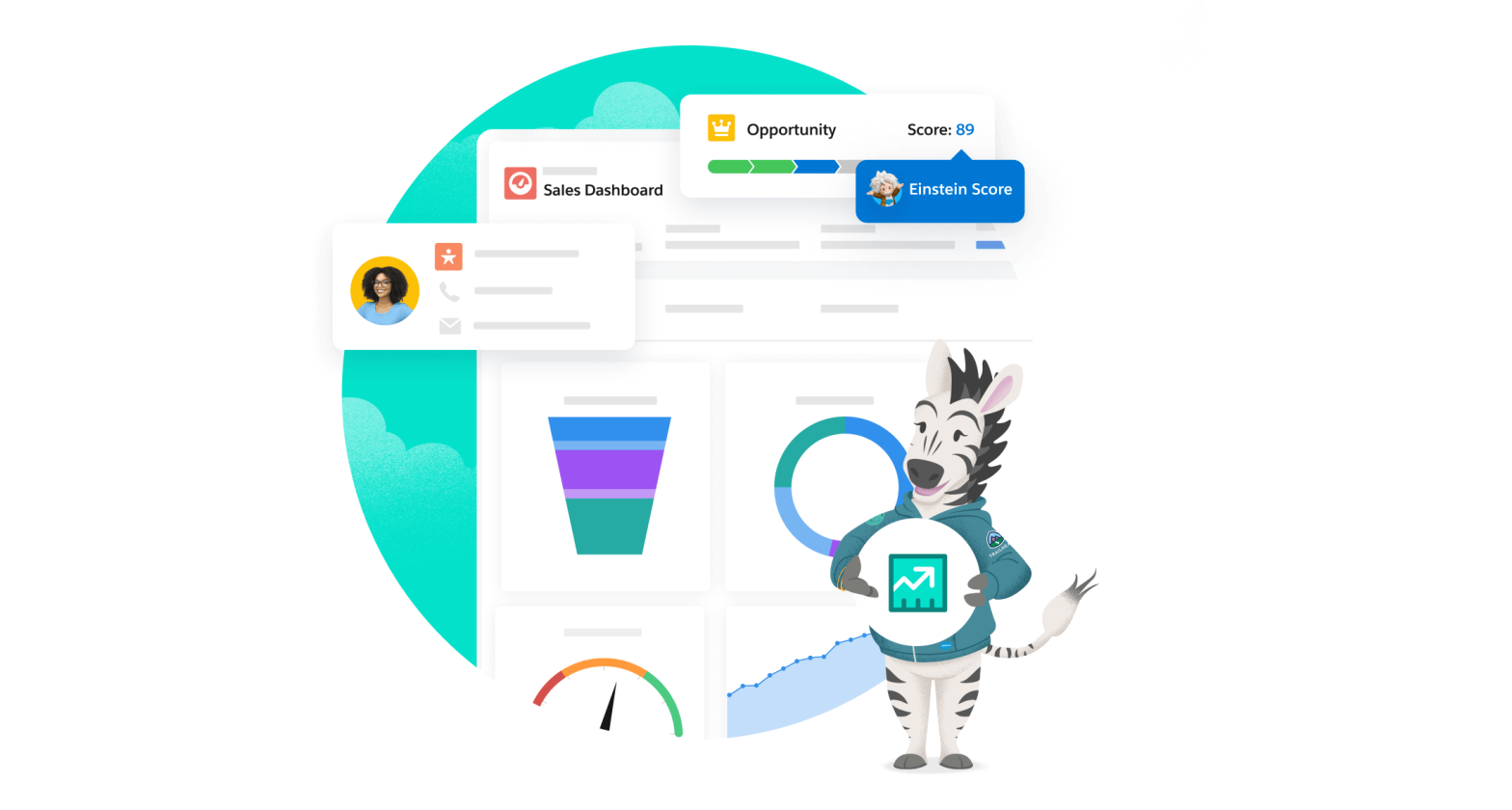
Salesforce's pipeline management operates on a different plane. Sales Cloud provides Einstein Lead Scoring, AI-generated account plans with SWOT analysis, pipeline health signals, real-time forecast rollups, and Agentforce Sales Agents that handle prospecting, pipeline management, and account research autonomously. The Revenue Lifecycle Management module covers CPQ, contract lifecycle, subscription management, and revenue analytics.
Source: Salesforce
The depth is real. But it requires configuration time, administrative overhead, and often paid consultants to unlock. For a team tracking 50 deals across one pipeline, most of Salesforce's power stays unused.
Your CRM's data problem is the real bottleneck
Here's what neither Nutshell nor Salesforce will tell you: a CRM only knows what you put into it. It doesn't generate prospect data. It doesn't verify phone numbers. It doesn't tell you which companies are researching solutions like yours right now.
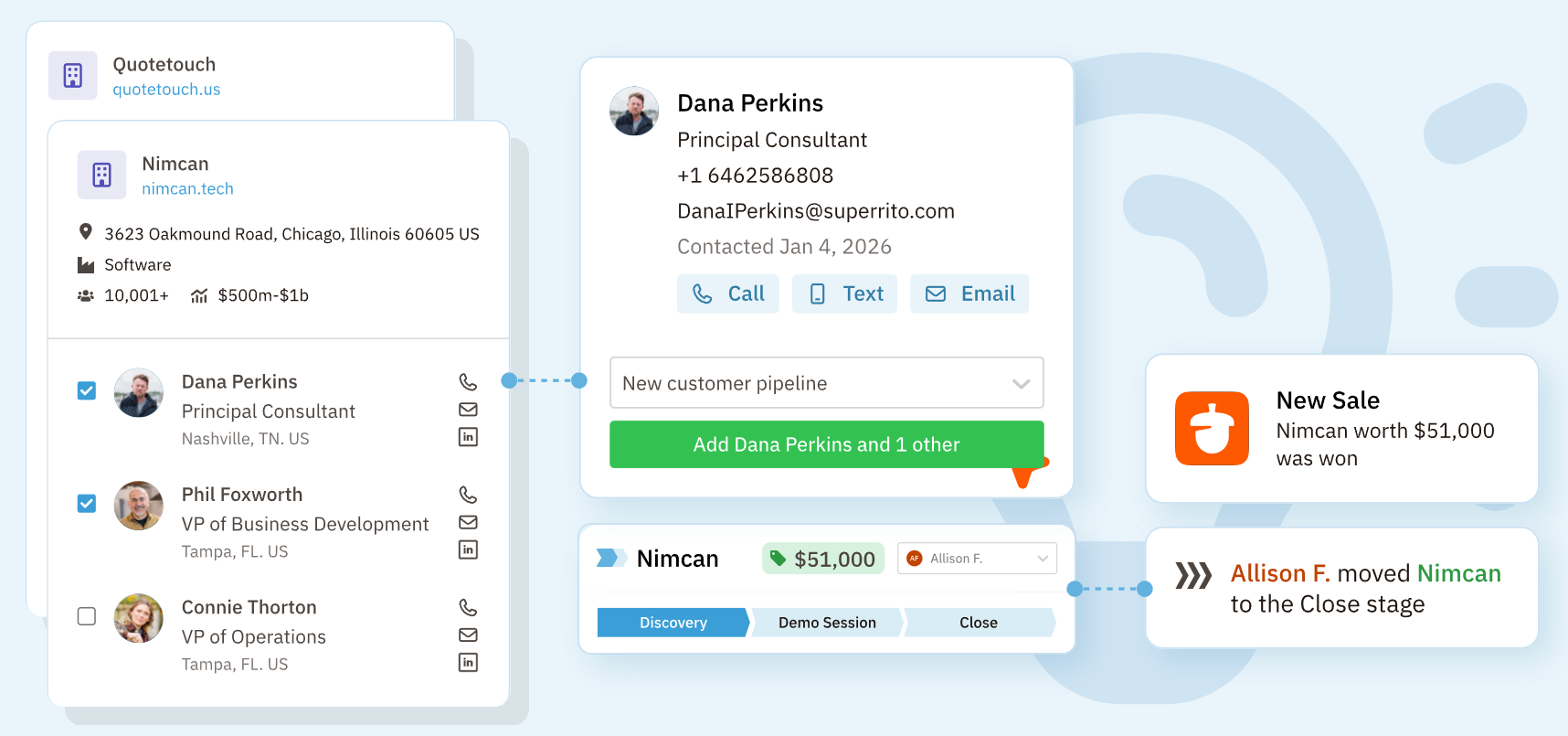
Nutshell partially addresses this with Nutshell IQ, a $37/month add-on offering ProspectorIQ (outbound search), VisitorIQ (website visitor identification), and PeopleIQ (contact enrichment). The database covers more than 200 million people and companies, but it's restricted to US data only. International expansion is planned but not available.
Source: Nutshell
Salesforce has no native contact database. It relies on data entered by reps, imported from spreadsheets, or enriched through third-party AppExchange apps. Salesforce acknowledged at Dreamforce 2025: "You have got to get your data right." Their own 2026 CIO AI Trends research found that trust in data is the #1 bottleneck for AI adoption.
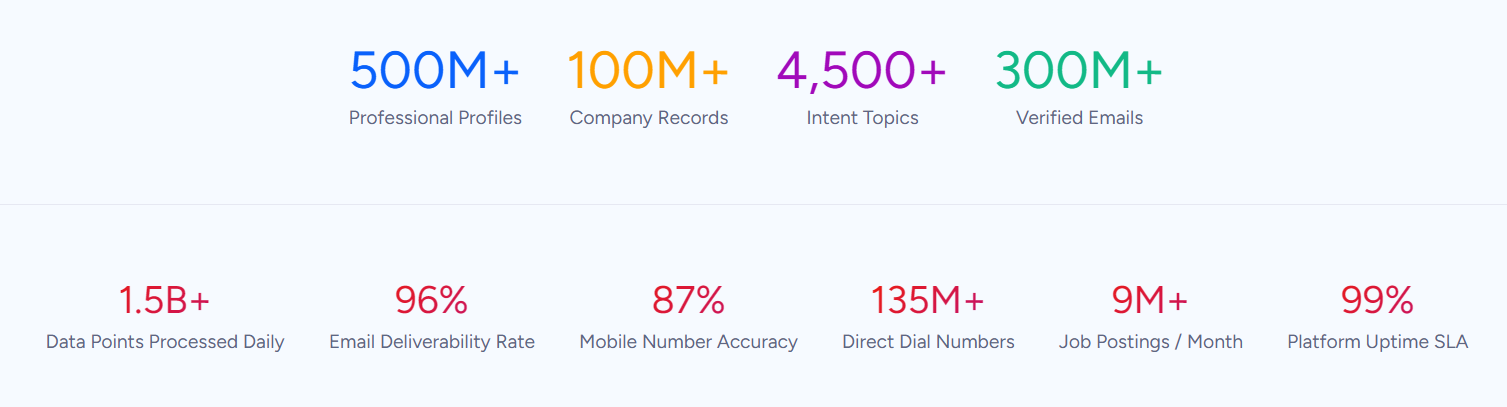
This is where ZoomInfo changes the equation. The platform provides 500M contacts, 100M companies, 135M+ verified phone numbers, 120M direct-dial phone numbers, and 200M+ verified business email addresses, verified through a multi-source pipeline backed by 300+ human researchers achieving up to 95% accuracy on first-party data. In a Fortune 500 competitive RFP analyzing 25 million contacts across vendors, an independent consultant concluded that "no other competitor came even close."
Beyond static contact records, ZoomInfo's Buyer Intent data tracks signals from 210 million IP-to-Organization pairings and 6 trillion+ new keyword-to-device pairings monthly. Guided Intent, exclusive to ZoomInfo, identifies topics historically correlated with deal success rather than requiring manual topic selection.
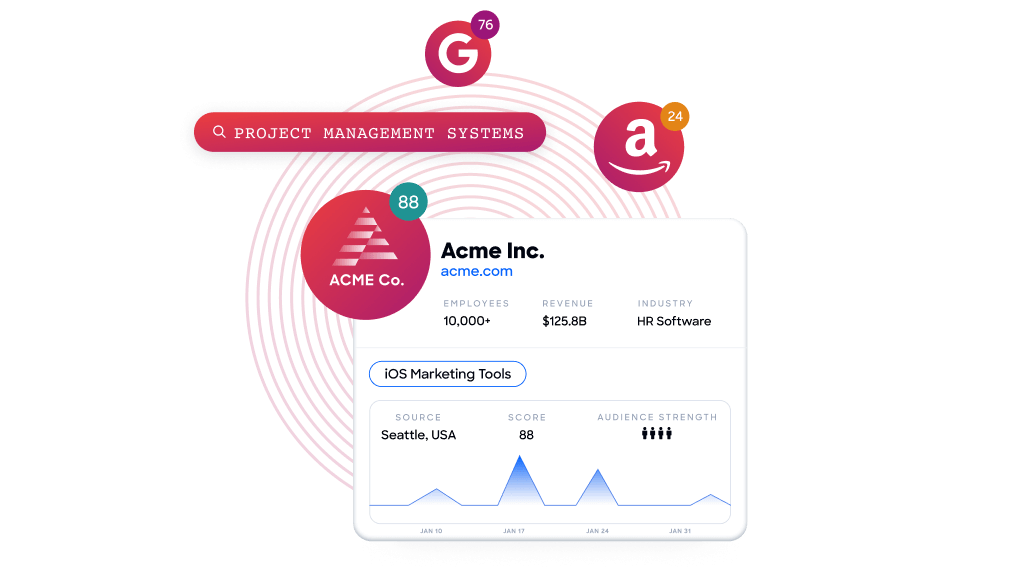
The practical difference: your reps open their CRM to see not just which deals exist, but which accounts are researching your category right now, who the decision-makers are, and how to reach them directly.
For a deeper look at how Salesforce and ZoomInfo compare as a data and intelligence layer, see our Salesforce vs. ZoomInfo comparison.
Snowflake uses ZoomInfo data for at least one-third of the most critical features in their Account Propensity Scoring model, feeding over 70 company and technographic data fields. Accounts monitored using ZoomInfo-powered scores showed 90% higher opportunity open rates and 2x higher customer conversion rates. (Snowflake Case Study)
AI capabilities: where each platform invests
All three platforms invest in AI, but their approaches reflect different priorities.
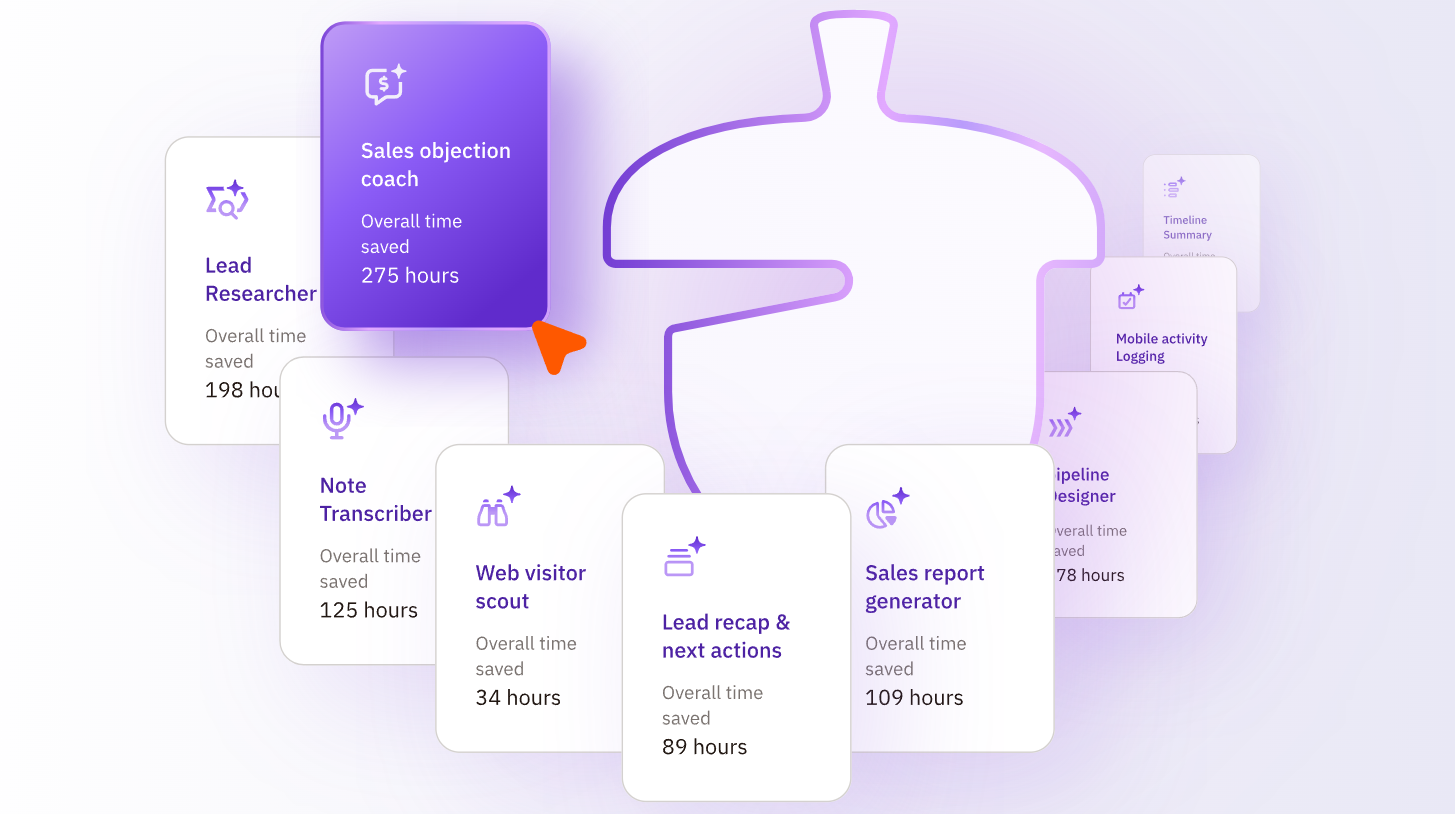
Nutshell embeds AI across its CRM with a two-tier model: AI Assists (unlimited) for frequent tasks like email reply drafting and lead recaps, and AI Outcomes (metered per month) for heavier tasks like call summarization and lead research. The platform supports nine notetaker integrations across Zoom, Google Meet, Teams, Aircall, and others, an ICP-configured Lead Researcher that returns fit signals (Ideal/Possible/Unlikely), and AI Smart Reports that generate charts from plain-English prompts.
Source: Nutshell
The AI outcomes quota scales from 10 per user/month on Foundation to 150 on Enterprise. Nutshell processes AI features through both OpenAI and Anthropic models.
Salesforce goes further with Agentforce, an autonomous agent platform powered by the proprietary Atlas Reasoning Engine. Unlike AI assistants that require constant prompting, Agentforce agents perceive, plan, and execute on their own. Pre-built agents cover service, sales development, coaching, shopping, and IT service.
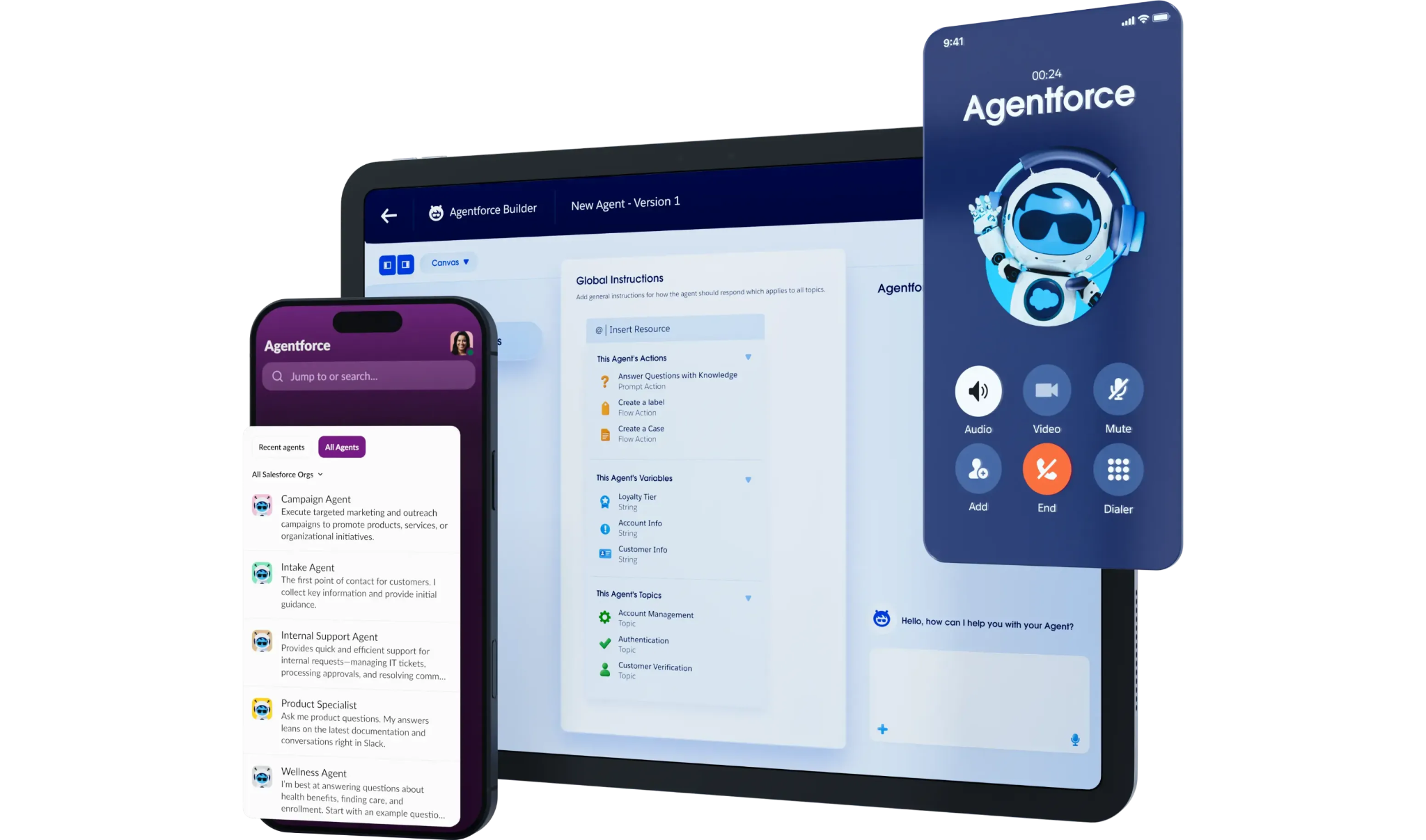
Source: Salesforce
The Einstein Trust Layer provides zero data retention with LLM partners, PII masking, and toxicity detection.
ZoomInfo's AI works differently from both. Rather than augmenting CRM activities, ZoomInfo's GTM Context Graph processes 1.5B+ data points daily, combining your CRM records, conversation transcripts, email threads, and behavioral signals with ZoomInfo's third-party intelligence. The result is AI that understands why deals move, not just that they moved.
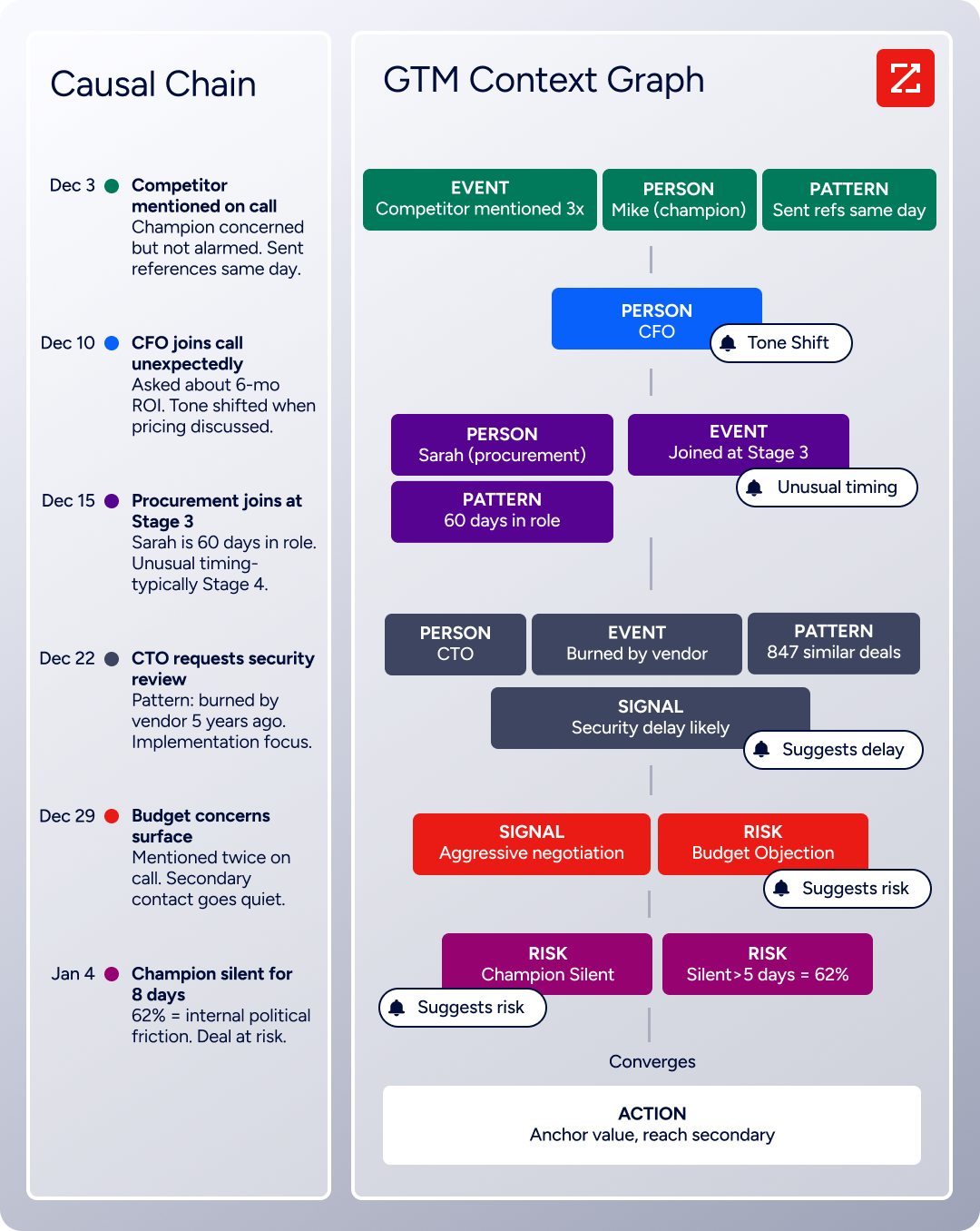
As ZoomInfo's CPO Dominik Facher writes: "The CRM recorded the state change. It has no record of why it happened." The GTM Context Graph captures whether the CFO joining the last call accelerated the deal, whether a champion going quiet signals internal friction, and what those patterns predict for your next step.
In GTM Workspace, this intelligence powers AI agents that draft personalized outreach based on the specific concern a prospect raised, surface accounts whose signal combinations match your actual win patterns, and update CRM without requiring reps to switch between tools.
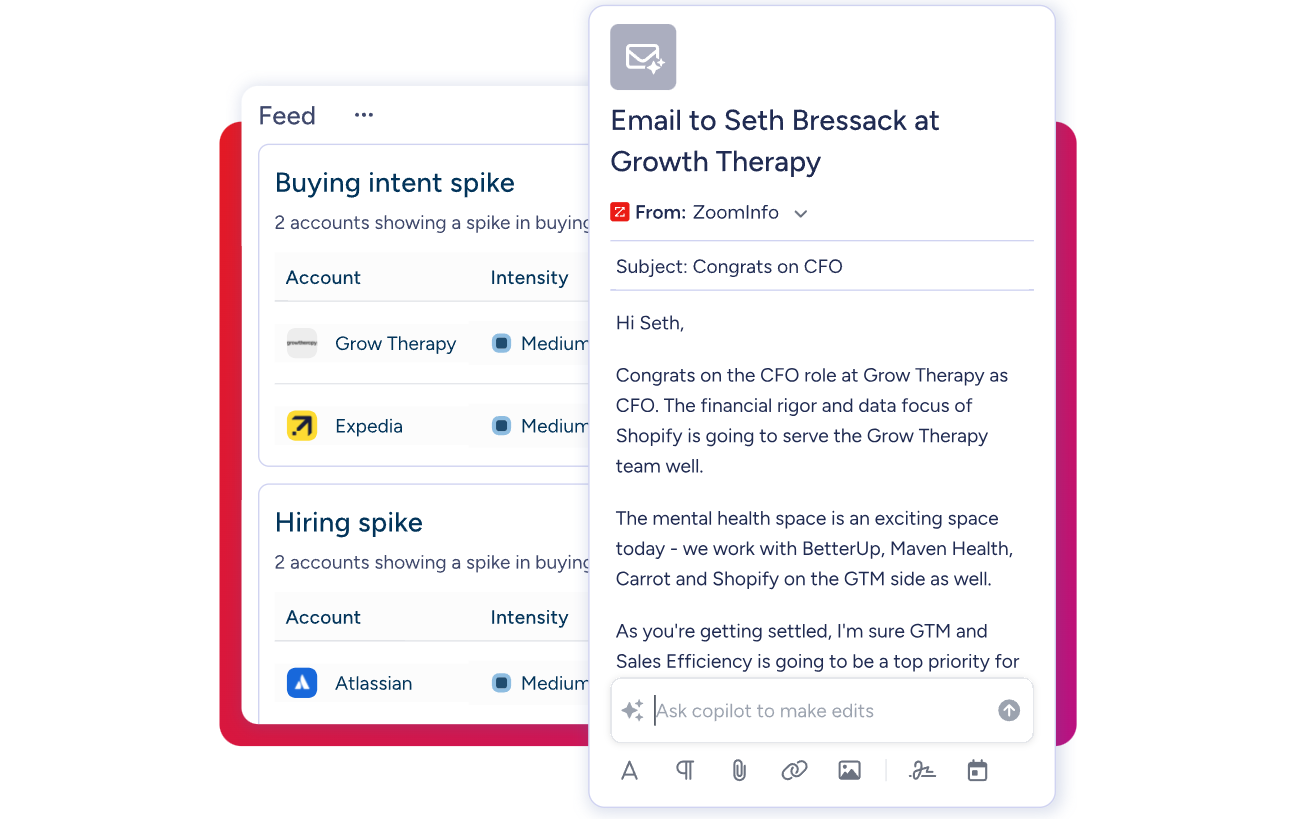
Seismic's sales team boosted productivity by 54%, saved 11.5 hours per week, and attributed 39% of pipeline to ZoomInfo signals. (Seismic Case Study)
Marketing and engagement capabilities
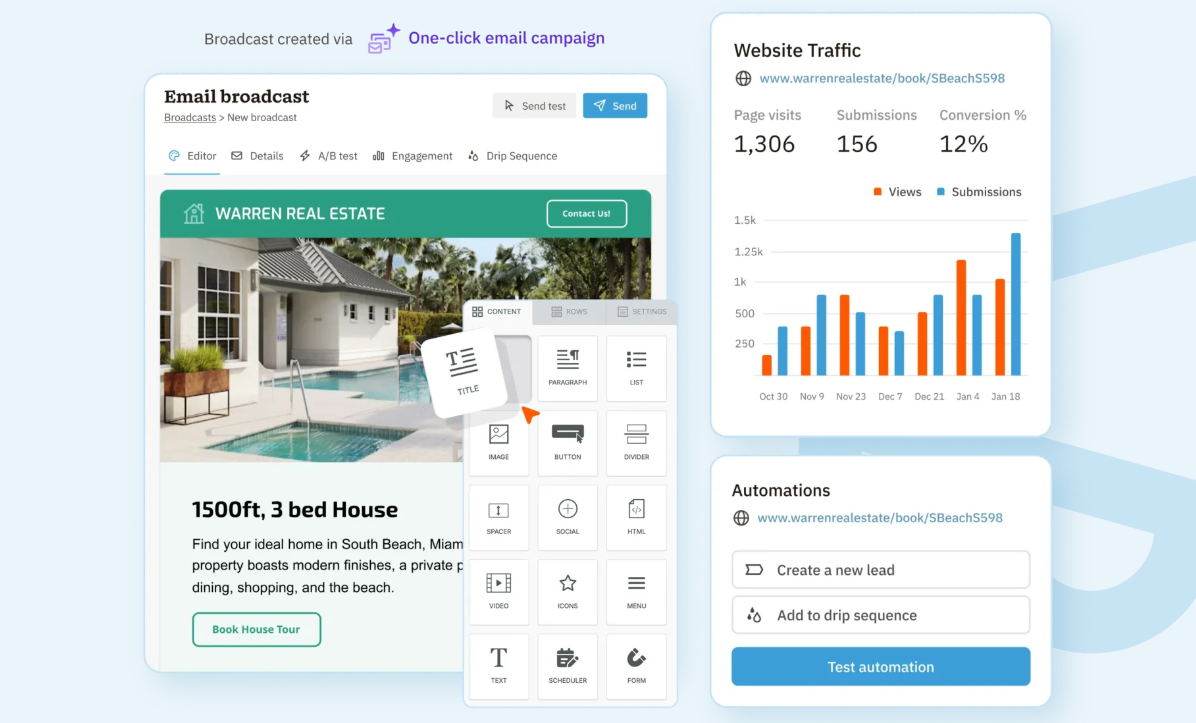
Nutshell includes marketing features that most CRMs charge extra for. Email marketing, form builder, and landing pages come with every plan. The Marketing Pro add-on ($49/month flat) adds A/B testing, SMS marketing, AI campaign builder, and page-based automations. The Engagement suite ($16/user/month) unifies webchat, SMS, WhatsApp, Facebook Messenger, and Instagram DMs in one inbox.
Source: Nutshell
What's notable is the native CRM integration: audiences build from live CRM data, updating automatically as contacts change tags or pipeline stages. Page-based automations can create leads, enroll contacts in drips, and notify reps when a known contact visits a single page.
Salesforce Marketing Cloud operates at enterprise scale. Marketing Cloud Growth starts at $1,500/org/month, with the full Engagement platform reaching $30,000/org/month for high-volume sending. Capabilities include journey orchestration, personalization, a CDP with identity resolution, loyalty management, and Agentforce-powered campaign creation from natural-language briefs.
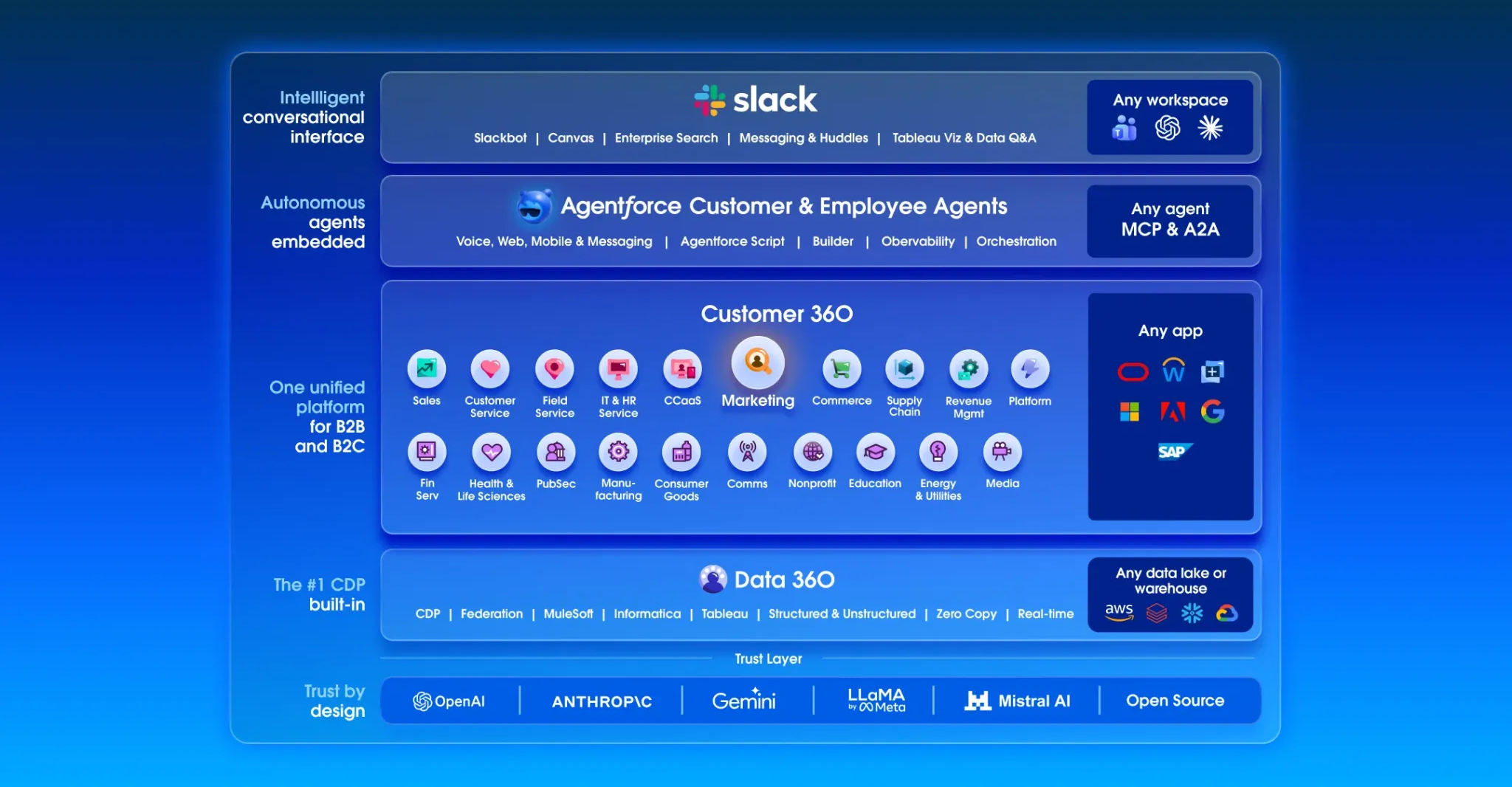
Source: Salesforce
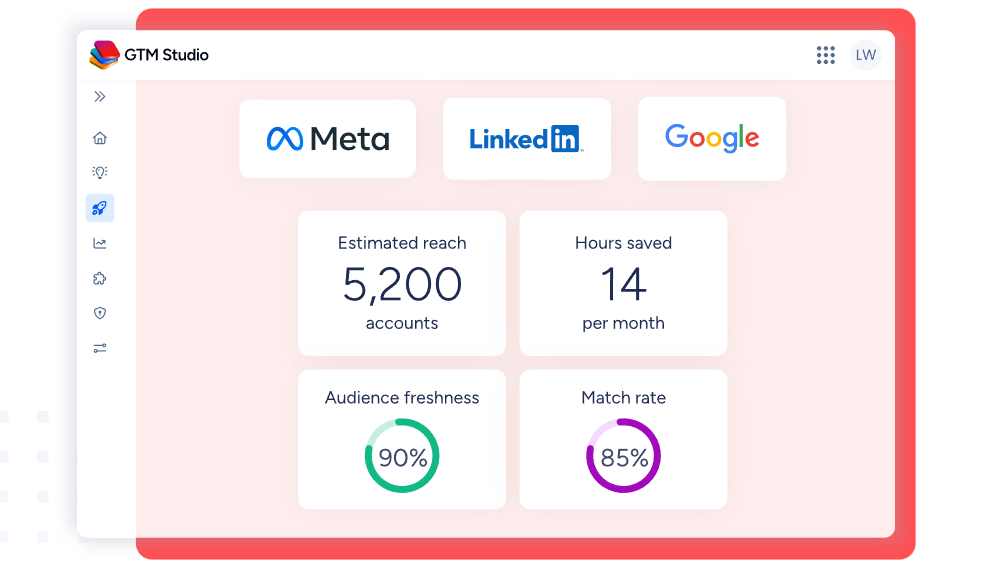
ZoomInfo approaches marketing from the intelligence side. ZoomInfo Marketing provides account-based advertising through a native Demand-Side Platform that deploys display ads based on 300+ company attributes. FormComplete reduces forms to a single field by auto-appending the rest from ZoomInfo's database. Contact-level website visitor identification reveals who specifically visited, not just which company. And GTM Studio lets marketers describe audiences in plain language and launch multi-channel plays without engineering support.
Smartsheet reported 40%+ increase in form fills, 84% increase in MQLs, 26% increase in opportunity rate, and 59% increase in win rate using ZoomInfo's marketing tools.
Integration and ecosystem depth
How well each platform connects to your existing tools matters more than feature lists.
Nutshell offers native integrations with tools like Aircall, Calendly, QuickBooks Online, and Apollo.io. Beyond native connections, Nutshell provides an App Marketplace service where their team sets up and manages Zapier-based integrations on your behalf, absorbing the Zapier cost. This enables 5,000+ app connectivity without requiring customers to manage Zapier themselves. API access is available to all customers regardless of plan tier, and Nutshell recently launched an MCP server connecting external AI tools to CRM data.
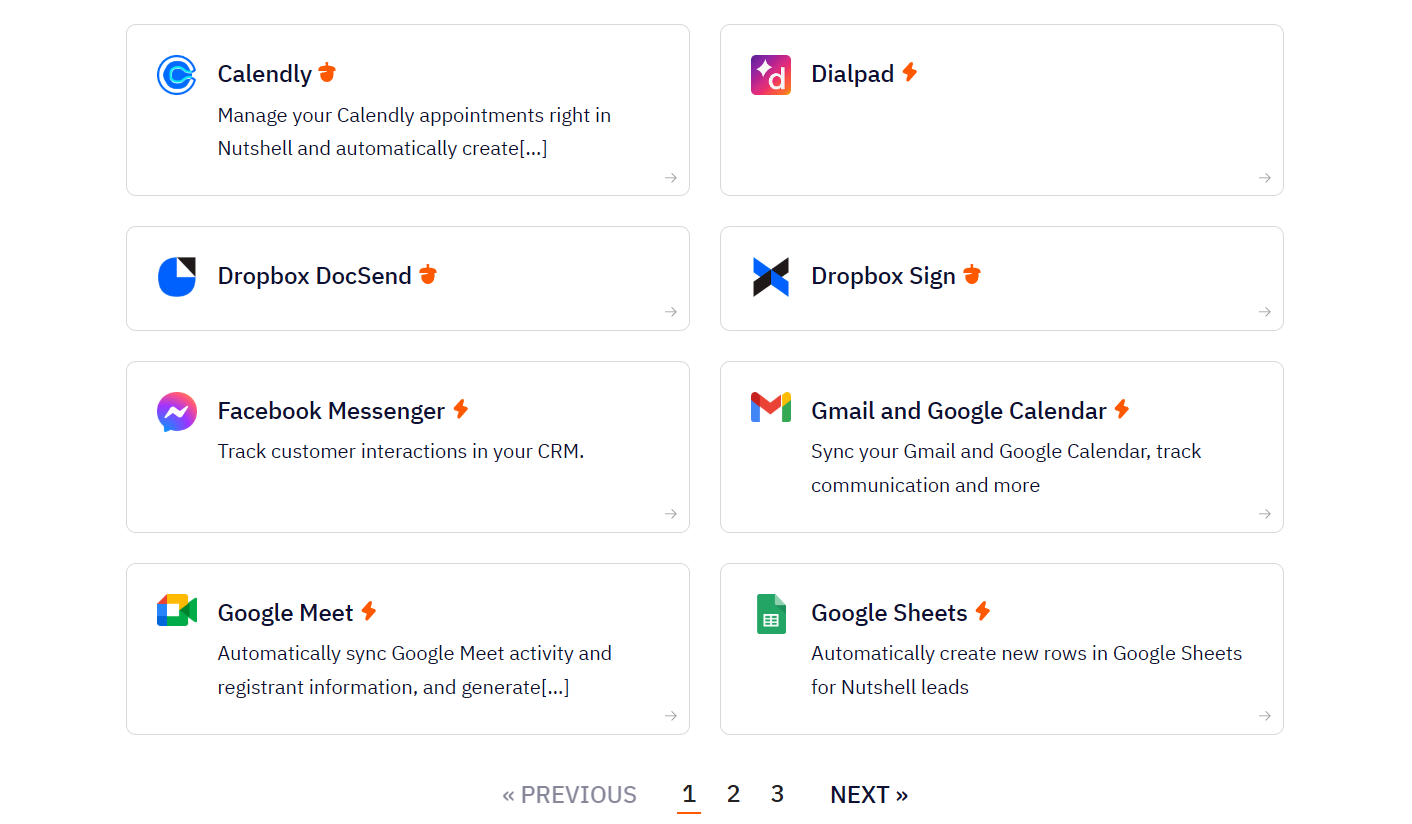
Source: Nutshell
Salesforce has the largest enterprise integration ecosystem. AppExchange hosts 9,000+ partner apps with 14+ million installs, and 91% of customers use at least one AppExchange app. MuleSoft (acquired for $6.5B) provides API management with hundreds of pre-built connectors. Native integrations cover Google Workspace, Microsoft Outlook and Teams, and Slack (bidirectional CRM data). Enterprise Edition allows 100,000 API requests per rolling 24-hour period.
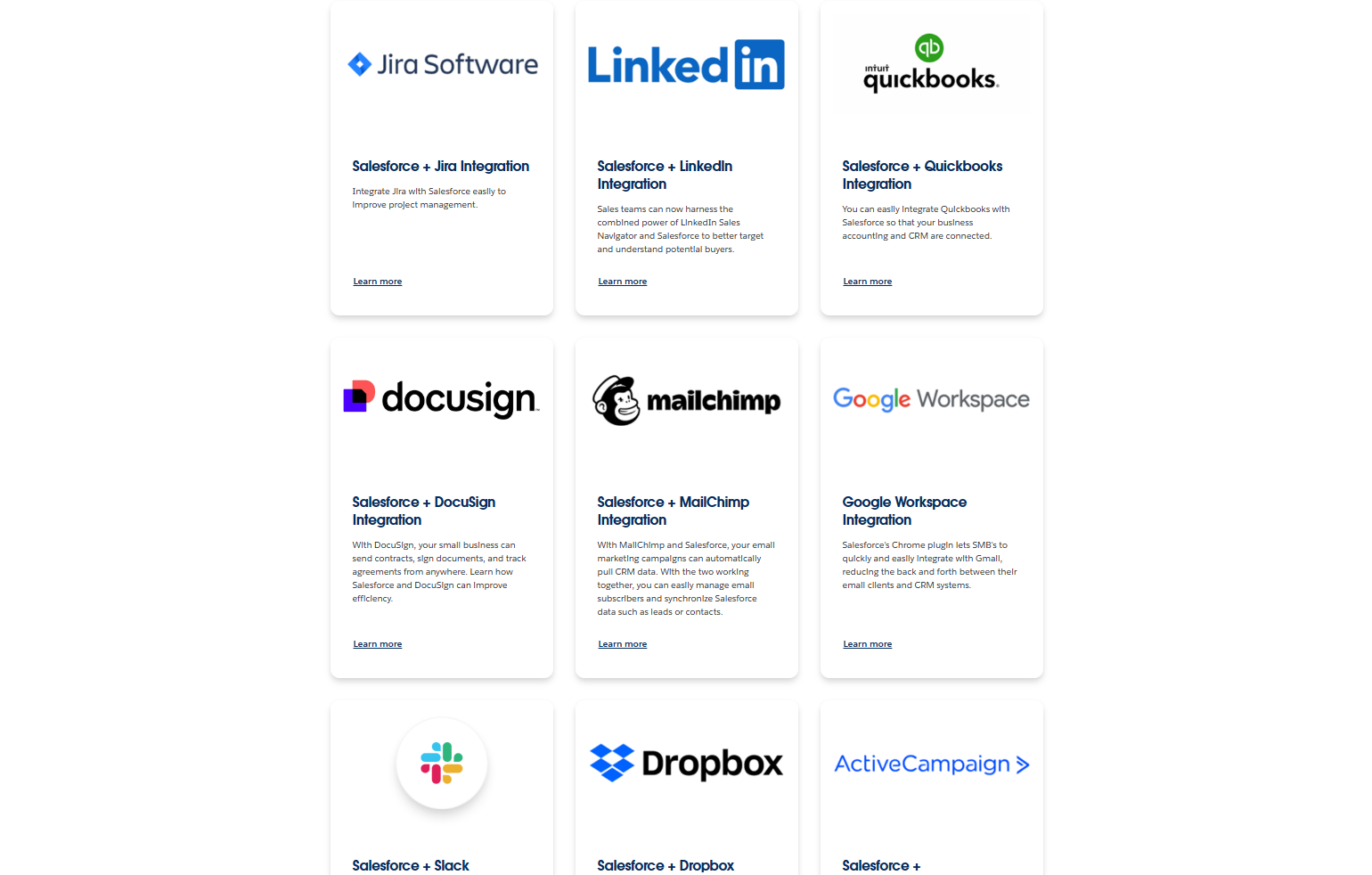
Source: Salesforce
ZoomInfo integrates with both platforms directly. The ZoomInfo App Marketplace lists 120+ partner integrations including Salesforce, HubSpot, and Microsoft Dynamics 365. API access is included in all relevant plans, and ZoomInfo's MCP server connects AI models directly to ZoomInfo's B2B data. Cloud Partners enables direct data ingestion into AWS, Google Cloud, Snowflake, and Databricks.
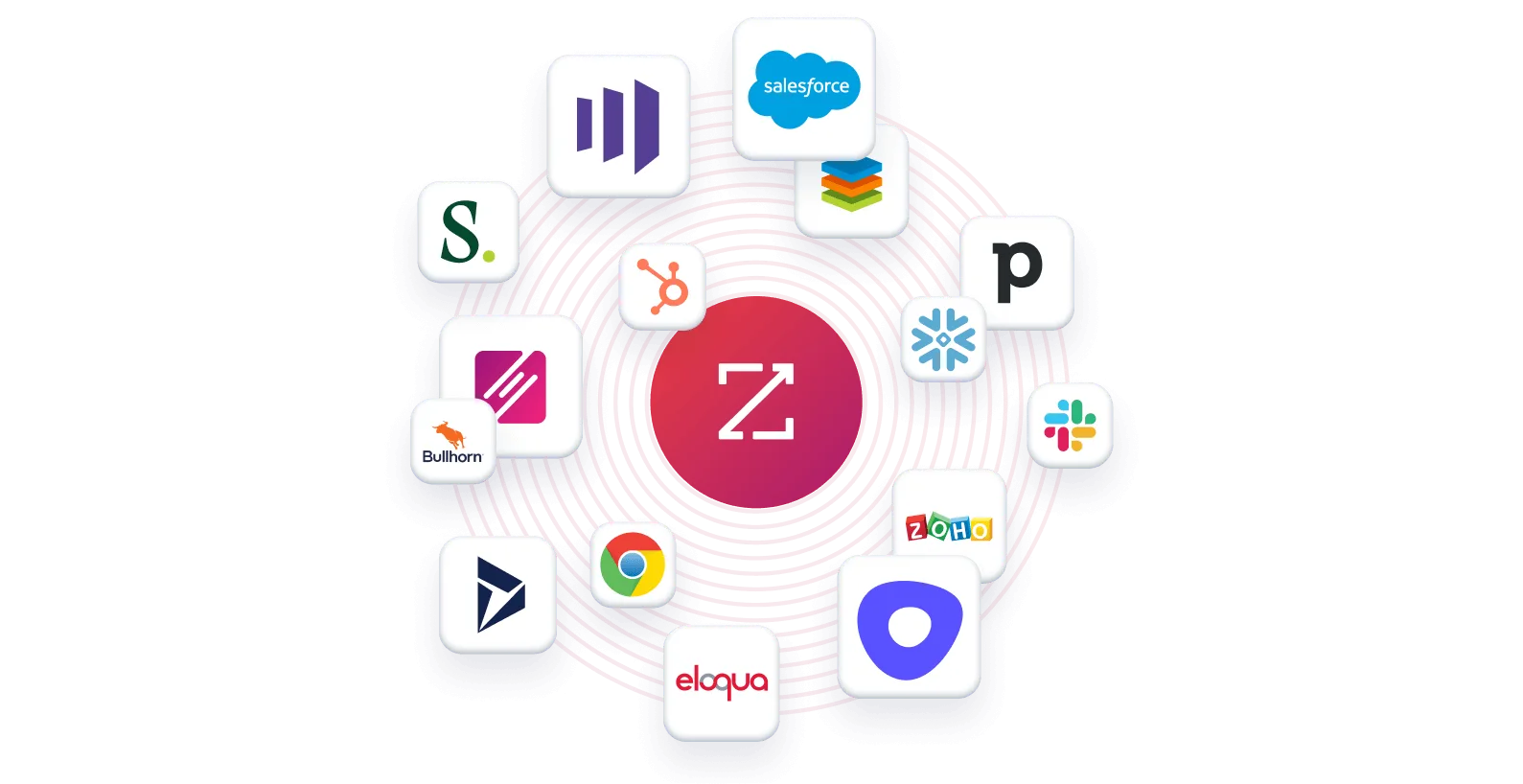
The key point: ZoomInfo functions as a data intelligence layer that enhances whatever CRM you choose. Whether you're on Nutshell or Salesforce, ZoomInfo's verified contacts, intent signals, and enrichment data flow into your existing workflows.
BDO Canada activated ZoomInfo data directly within internal systems: "The plug-and-play aspect of the API means I can integrate it very easily into any process and get information at a moment's notice," reducing time spent on data dashboard updates by 87%. (BDO Canada Case Study)
Pricing tells you who each platform was built for
Nutshell's pricing is transparent and predictable:
Plan | Annual Price |
|---|---|
Foundation | |
Growth | |
Pro | |
Business | |
Enterprise |
Every plan includes unlimited contacts and storage, webchat, AI chatbot, form builder, landing pages, and email marketing. No seat minimums or maximums. Add-ons are flat-fee: Marketing Pro at $49/month for the whole company, Quotes & Invoices at $67/month for unlimited users. A 10-person team on Pro pays $420/month total.
Salesforce's pricing is layered:
Edition | Price |
|---|---|
Starter Suite | |
Pro Suite | |
Enterprise | |
Unlimited | |
Agentforce 1 |
But the listed price is the starting point, not the total cost. Premier Support adds 30% of net license fees. Agentforce consumption charges $2 per conversation or $500 per 100,000 Flex Credits. Data Cloud, Marketing Cloud, and additional modules each carry separate pricing. A June 2025 restructuring raised Enterprise/Unlimited list prices by 6%. That same 10-person team on Enterprise pays $1,750/month before add-ons, support, or implementation costs.
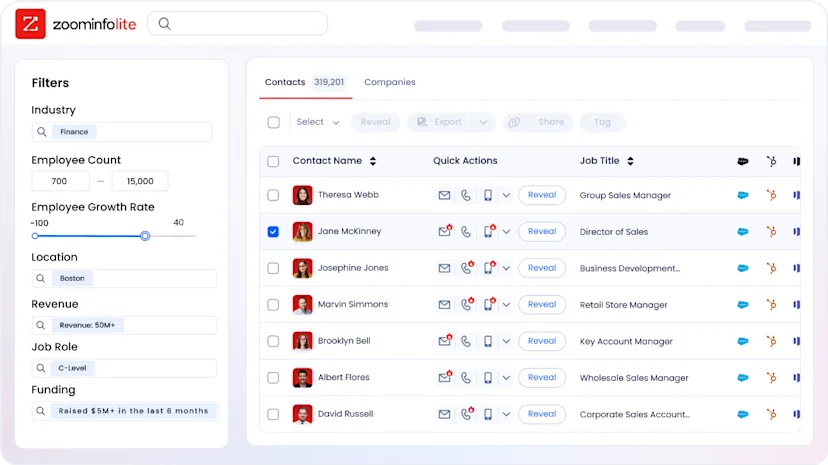
ZoomInfo uses custom-quoted, consumption-based pricing with no published prices for paid tiers. However, ZoomInfo Lite offers permanent free access to the B2B database with 10 monthly export credits, giving teams a way to test the platform before committing.
Support and onboarding reflect each platform's audience
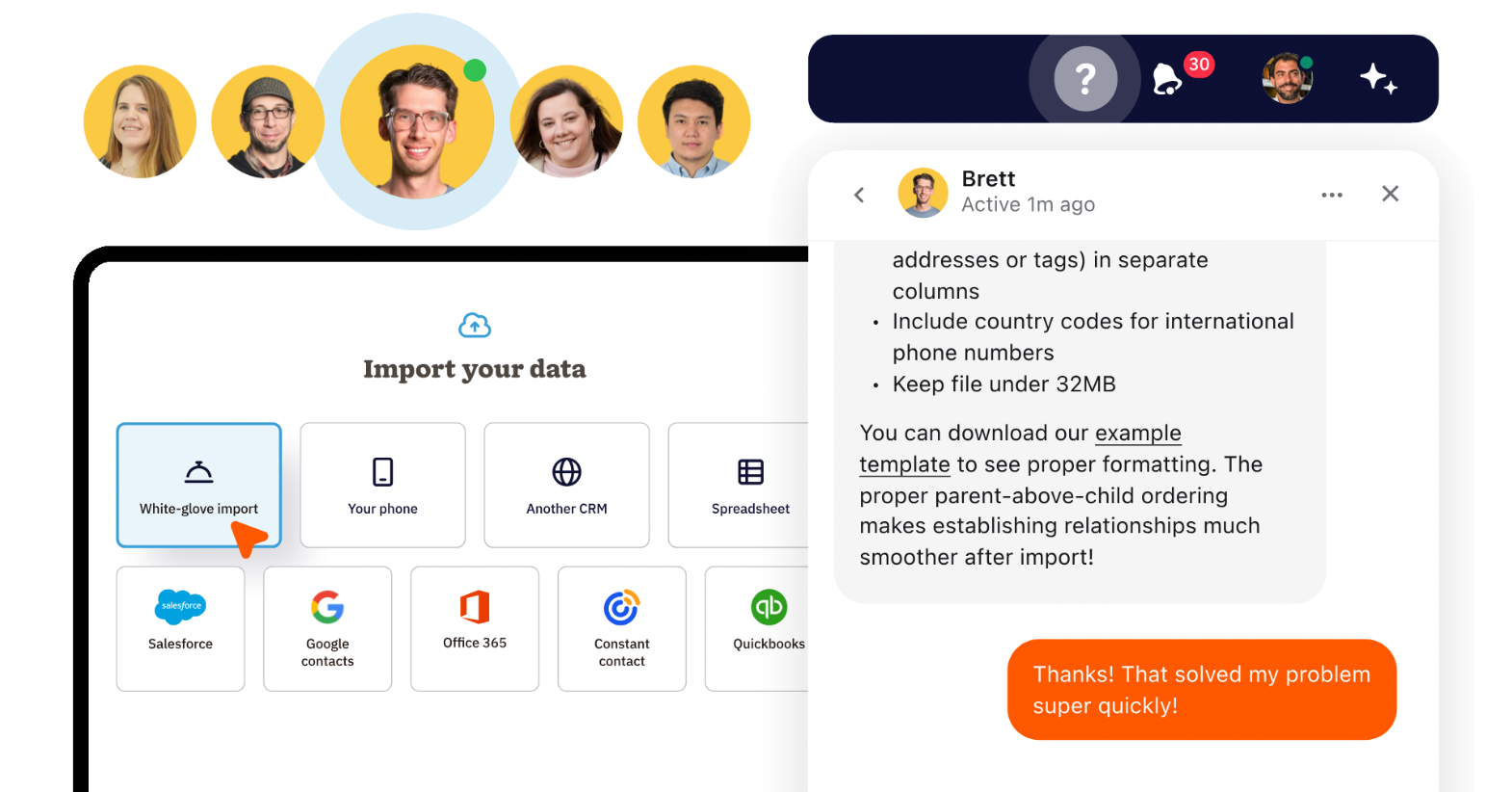
Nutshell provides free live chat and email support on every plan, including during the 14-day trial. No paywall gates support access. Qualifying customers receive a dedicated Onboarding Advisor with video calls, team training, and a 30-day check-in. A free data import service handles migration within 24-48 business hours.
For teams needing more, a CRM Advisor add-on at $249/month provides a dedicated named advisor and up to two strategy sessions monthly.
Source: Nutshell
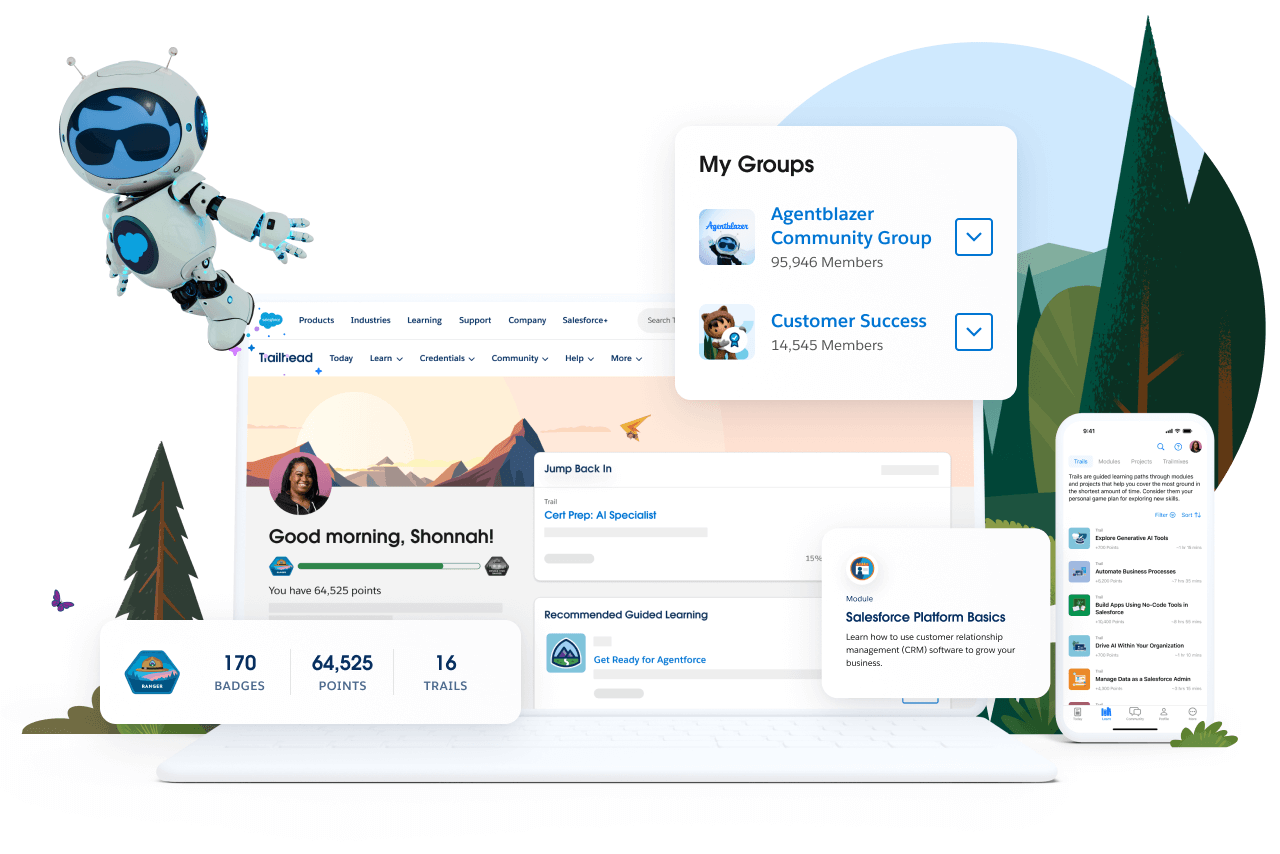
Salesforce tiers support by spend. Standard support (free) gives you Trailhead, documentation, and community access. Premier support (30% of net license fees) adds structured onboarding, 1:1 expert coaching, and 1-hour response times for business-impacting issues. Signature support (custom pricing) provides a dedicated Customer Success Manager and 24/7 support with 15-minute response for critical issues.
The counterbalance: Salesforce has Trailhead with 6+ million learners and 1,500+ badges, plus a Trailblazer Community of 20 million members helping each other solve problems.
Source: Salesforce
ZoomInfo redesigned its onboarding program from 30 to 90 days, structured across planning, technical implementation, education, and adoption. This produced a 25% improvement in customer satisfaction scores and won Rocketlane's Golden Comet award for Best Customer Onboarding Team of 2024. ZoomInfo University provides role-specific learning paths, certifications, and live webinars.

Security and compliance
For regulated industries, security certifications determine which platforms make the shortlist.
Nutshell has completed a SOC 2 audit (verified via Vanta, December 2025) and a CASA assessment validating compliance with App Defense Alliance requirements. Data is stored on AWS with 256-bit TLS 1.2 encryption in transit and encryption at rest. SAML-based SSO is exclusive to the Enterprise plan. Nutshell supports GDPR compliance with EU Standard Contractual Clauses available. ISO 27001 and HIPAA compliance are not mentioned in official documentation.
Salesforce holds the broadest certification stack: ISO 27001/27017/27018, SOC 1/2/3, FedRAMP (Government Cloud), and HITRUST. Salesforce Shield (premium add-on) provides event monitoring, platform encryption with BYOK, field audit trail, and data detect. Hyperforce enables regional data residency. For enterprises in healthcare, financial services, or government, Salesforce offers compliance depth that smaller platforms cannot match.
ZoomInfo maintains ISO 27001, ISO 27701, SOC 2 Type II, TRUSTe GDPR, and TRUSTe CCPA certifications, all renewed annually. The company is a registered data broker in California and Vermont. A dedicated Trust Center at trust.zoominfo.com provides documentation for enterprise security reviews.
Nutshell vs. Salesforce vs. ZoomInfo: Which should you choose?
The choice between Nutshell and Salesforce depends on your organization's scale and complexity. The choice to add ZoomInfo depends on whether you're serious about the data powering your CRM.
Choose Nutshell if:
You're a team of 2-100 that needs a CRM running within days
Adoption matters more than customization
You want email marketing, webchat, and SMS included without separate subscriptions
Your budget requires predictable pricing with no hidden costs
You operate primarily in anglophone markets (English-only interface)
You value free human support from day one
Choose Salesforce if:
You need a platform that scales from startup to global enterprise
Your organization requires customization, complex workflows, and multi-cloud integration
You have (or will hire) dedicated Salesforce administrators
Industry-specific compliance requirements demand FedRAMP, HIPAA, or ISO certification depth
You want an AI agent platform that operates autonomously across service, sales, and marketing
Your team can invest months in implementation for long-term returns
Add ZoomInfo if:
You want verified prospect data flowing into your CRM instead of stale records and guesswork
Knowing which accounts are researching your category would change your outreach timing
Your reps spend too much time researching and not enough time selling
You need a data intelligence layer that works with your existing CRM, not a replacement for it
You want AI that understands why deals move, not just that they moved
Your GTM strategy spans prospecting, intent monitoring, and account-based marketing
See how ZoomInfo's data and intelligence platform connects to your CRM with a free trial.
A CRM organizes your sales process. ZoomInfo ensures the people and signals feeding that process are accurate, current, and worth acting on. The most effective sales teams don't choose between a CRM and a data intelligence platform. They use both, because pipeline management without reliable data is just organized guessing.
"ZoomInfo's not just a contact data company anymore. They've built a full system of execution. GTM Intelligence actually works the list, writes the outreach, triggers the play, and helps drive predictable growth." - Ian Brodie, CEO & Co-Founder, Levanta (Levanta Case Study)
Nutshell vs. Salesforce vs. ZoomInfo FAQ
Who is Nutshell best suited for?
Nutshell is built for small and mid-size B2B teams of 2-100 people who need a CRM they can start using in days, not weeks. It works well for teams that have outgrown spreadsheets but find enterprise CRMs over-engineered. With pricing starting at $13/user/month and features like email marketing, webchat, and AI chatbot included on every plan, it targets businesses that prioritize adoption over configurability.
When does Salesforce make more sense than Nutshell?
Salesforce makes sense when your organization needs customization, multi-cloud integration across sales, service, marketing, and commerce, or when you require compliance certifications like FedRAMP and HIPAA. Teams with dedicated Salesforce administrators who can configure workflows, build reports, and manage the platform will extract more value than teams expecting an out-of-the-box solution.
Is ZoomInfo a CRM replacement for Nutshell or Salesforce?
No. ZoomInfo is a data intelligence and GTM execution platform, not a CRM. It provides the verified contacts, company data, intent signals, and AI-powered insights that make whichever CRM you choose more effective. ZoomInfo integrates directly with Salesforce and connects to other CRMs through its API and MCP server, functioning as the intelligence layer underneath your pipeline management tool.
How does ZoomInfo's contact database compare to Nutshell IQ?
ZoomInfo's database covers 500M contacts, 100M companies, 135M+ verified phone numbers, and 200M+ verified business email addresses globally. Nutshell IQ covers 200M+ people and companies but is restricted to US data only. ZoomInfo also provides buyer intent data, technographics across 30M+ companies, and an AI-powered GTM Context Graph that Nutshell IQ does not offer.
What does Salesforce cost compared to Nutshell for a 10-person team?
A 10-person team on Nutshell Pro pays $420/month (annual billing). The same team on Salesforce Enterprise pays $1,750/month before adding Premier Support (30% extra), Data Cloud, Marketing Cloud, or implementation costs. Salesforce Starter Suite at $25/user/month ($250/month total) is closer in price but lacks AI features, customization, and the automation depth Salesforce is known for.
Can ZoomInfo work with both Nutshell and Salesforce?
ZoomInfo has a direct native integration with Salesforce through its App Marketplace. For Nutshell and other CRMs, ZoomInfo provides API access (included in all relevant plans) and an MCP server that connects AI models to ZoomInfo's data programmatically. Both approaches deliver the same underlying data and intelligence, so teams aren't locked into one CRM to benefit from ZoomInfo.
Which platform has the best AI features for sales teams?
Each platform's AI serves a different function. Nutshell's AI handles CRM tasks like call summarization, email drafting, and lead recaps. Salesforce's Agentforce provides autonomous agents that can resolve cases, coach reps, and manage pipelines without human intervention. ZoomInfo's GTM Context Graph provides AI that understands why deals move or stall by combining CRM data with conversation intelligence, intent signals, and verified B2B data, then surfaces recommendations about who to contact, when to engage, and what to say.
What are the main limitations of each platform?
Nutshell's limitations include restricted custom reporting, a mobile app that lags behind desktop, constrained automation triggers, English-only interface, and US-only prospecting data. Salesforce's limitations are pricing complexity, steep learning curves, implementation timelines of months, and the need for dedicated administrators. ZoomInfo does not replace a CRM. You still need a pipeline management tool alongside it, and its custom-quoted pricing requires a sales conversation rather than self-serve checkout.
