
Observe.AI has become a prominent name in contact center AI, offering a platform that covers AI agents, real-time copilots, and conversation intelligence. For contact centers with limited QA coverage and rising customer expectations, it promises to analyze every interaction and turn conversation data into operational improvements.
To create this Observe.AI review, we analyzed it closely. It's a good fit if:
You run a mid-to-large contact center (100+ agents) and need automated quality assurance
You want AI agents that handle tier-1 customer interactions across voice and chat
You need real-time agent guidance to reduce handle times and improve compliance
You operate in regulated industries requiring HIPAA, SOC 2, or GDPR compliance
You want to move from sampling 3% of calls to analyzing 100% of interactions
Observe.AI optimizes what happens inside the contact center, but it doesn't tell you who your customers are, why they're reaching out, or how those interactions connect to your revenue strategy.
This is where ZoomInfo enters the picture: a go-to-market platform that gives contact center teams the customer context conversation intelligence alone can't deliver. Built on extensive B2B data, a GTM Context Graph that captures why customer relationships move or stall, and conversation intelligence (Chorus) that covers the sales side of every account, ZoomInfo connects CX operations to the full customer lifecycle.
We've included a detailed look at ZoomInfo later in this review because it provides the intelligence layer connecting contact center operations to revenue outcomes. If you want to see how B2B intelligence can complement your CX strategy, start with ZoomInfo Lite for free here.
What is Observe.AI?
Source: Observe.AI
Observe.AI is a contact center AI platform founded in 2017 by Swapnil Jain, Sharath Keshava Narayana, Jithendra Vepa, and Akash Singh.
The idea came from direct observation. Jain, a former Twitter engineer, spent two years walking the halls of contact centers in India and the Philippines and saw the same pattern everywhere. Agents were overwhelmed, customers were frustrated, and the data that could fix both problems went unused.
Today the company calls itself "the leading AI agent platform for customer experience," serving over 350 enterprises across healthcare, financial services, insurance, and other regulated industries.
The platform covers three product areas: AI Agents that automate customer interactions, AI Copilots that guide human agents in real time, and Conversation Intelligence that analyzes 100% of interactions for quality and compliance.
Headquartered in Redwood City, California, Observe.AI has raised $213M in total funding, with its Series C led by SoftBank Vision Fund 2 and participation from Zoom Video Communications. The company has roughly 441 employees across 5 continents, with 65% of the team focused on machine learning and generative AI. Revenue reached $44.2M in 2024, up from $30.1M the year prior.
The platform has earned recognition from analyst firms, including Leader status in the IDC MarketScape for AI-Enabled Contact Center Workforce Engagement Management, Leader in the CMP Research Prism Report for Conversational IVR, and a 4.6-star rating on G2 from 238 verified reviews.
Observe.AI Pros & Cons
Pros | Cons |
|---|---|
- Analyzes 100% of interactions vs. industry-standard 3% sampling | - Transcription accuracy issues reported by some users |
- Three-part AI platform spanning agents, copilots, and analytics | - No published pricing; requires sales engagement |
- Strong compliance certifications (SOC 2, HIPAA, GDPR, PCI, HITRUST) | - Some promised features reportedly undelivered after 18 months |
- 250+ integrations with CCaaS, CRM, and BI tools | - UI described as cluttered with a steep learning curve |
- Leader status from IDC MarketScape and CMP Research | - Annual billing with non-refundable fees |
- 4.6-star G2 rating with #1 rankings in ease of setup and use | - No B2B intelligence layer for customer context |
- VoiceAI agents can go live in as little as one week | - No permanent free plan for ongoing use |
Observe.AI Review: How It Works & Key Features
AI Agents: Observe.AI automates tier-1 customer interactions with voice and chat agents built for regulated industries.
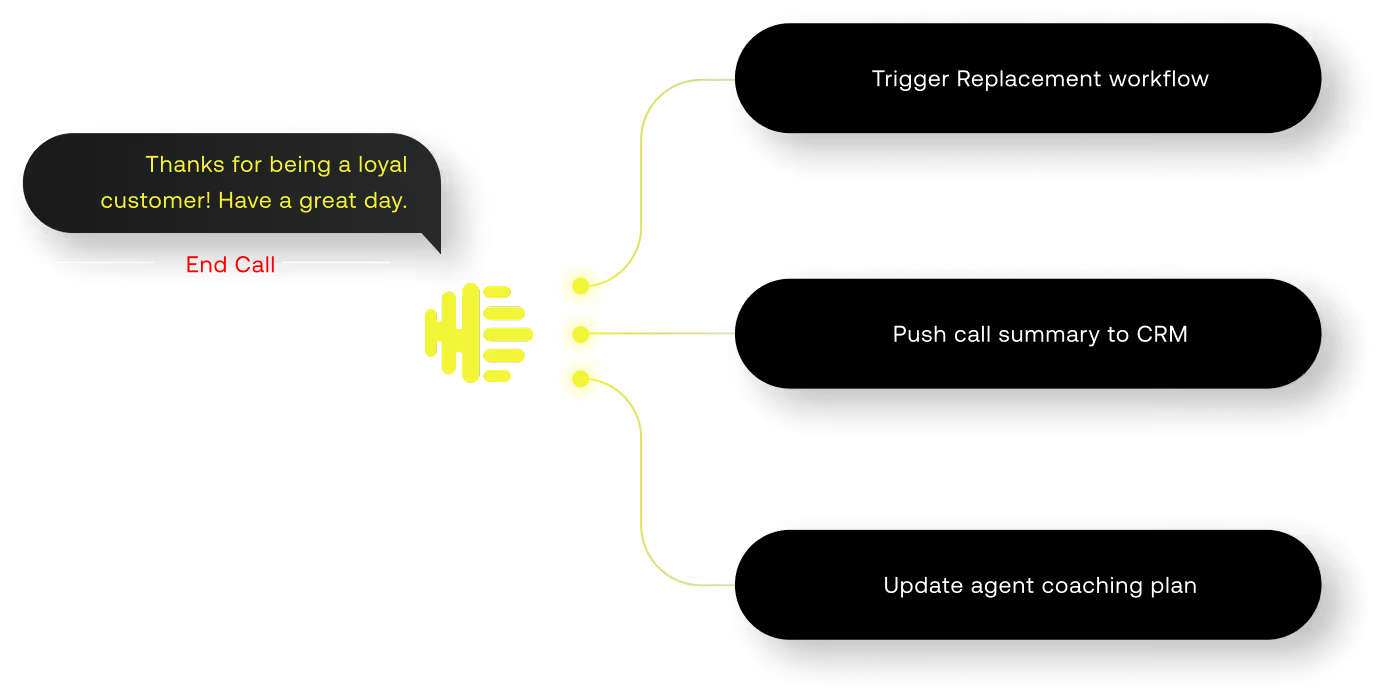
Observe.AI's AI Agents handle customer interactions across voice and text without human involvement. VoiceAI Agents handle complete calls on their own or route conversations to human agents, while ChatAI Agents authenticate users, resolve issues, and deliver support on any digital channel.
Source: Observe.AI
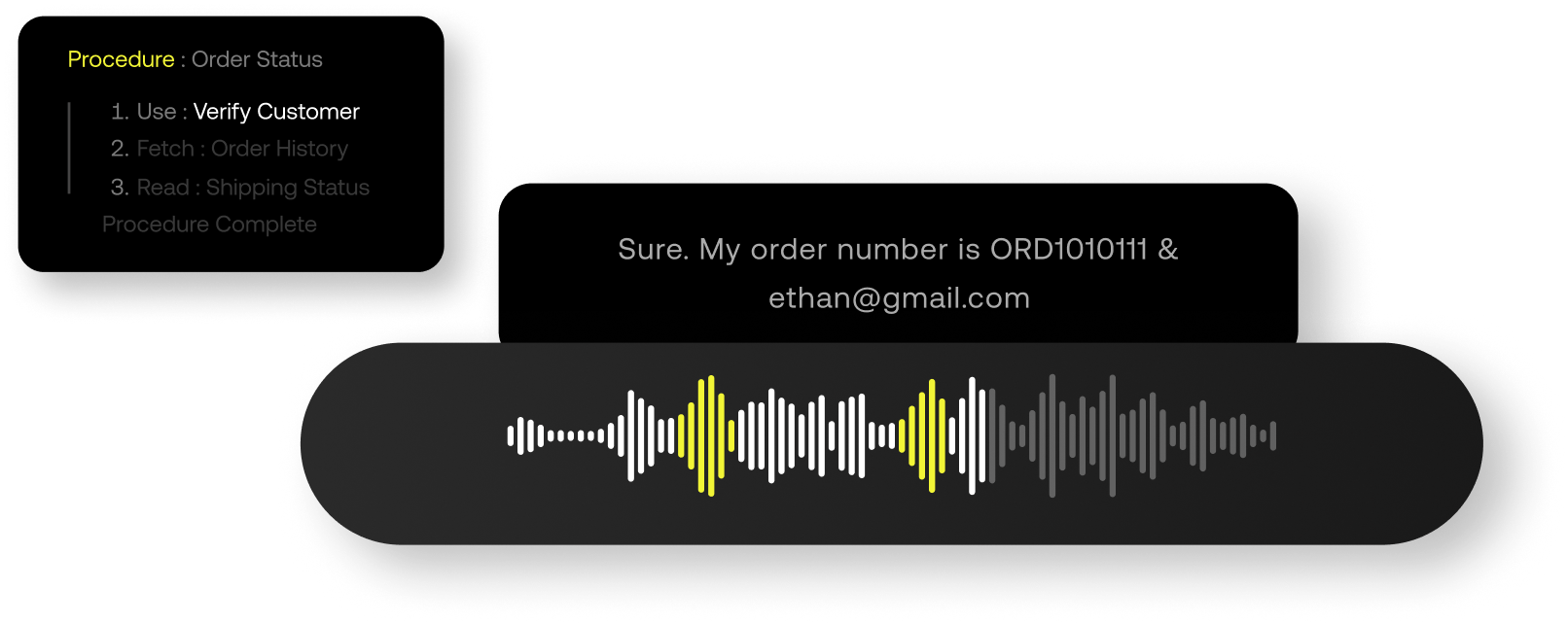
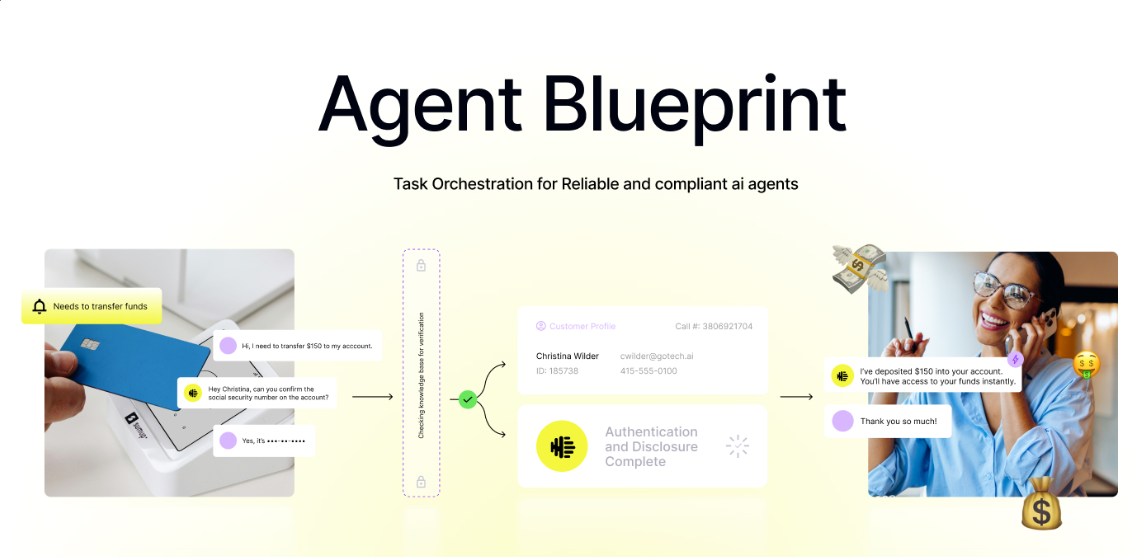
The technical differentiator is Agent Blueprint, a modular, graph-based architecture that breaks conversations into discrete tasks with defined transitions.
Source: Observe.AI
This matters because large language models are probabilistic by design and can skip steps like authentication or compliance checks. Agent Blueprint enforces workflow control through policy gates and deterministic activation, so regulated processes run in the correct order.
VoiceAI Agents use customized speech-to-text that handles accents, noise, and interruptions and work across over 25 languages. The platform supports cross-channel continuity, so customers can start in chat and escalate to a call with all information retained. Task-specific LLMs, each tuned for individual workflow steps, improve accuracy through reinforcement learning.
Every interaction runs through the Guardian Security Framework, which evaluates agents before and during deployment. Runtime monitoring detects drift, hallucinations, and failures during live calls.
AI Copilots: Real-time guidance that helps human agents handle interactions faster and more accurately.
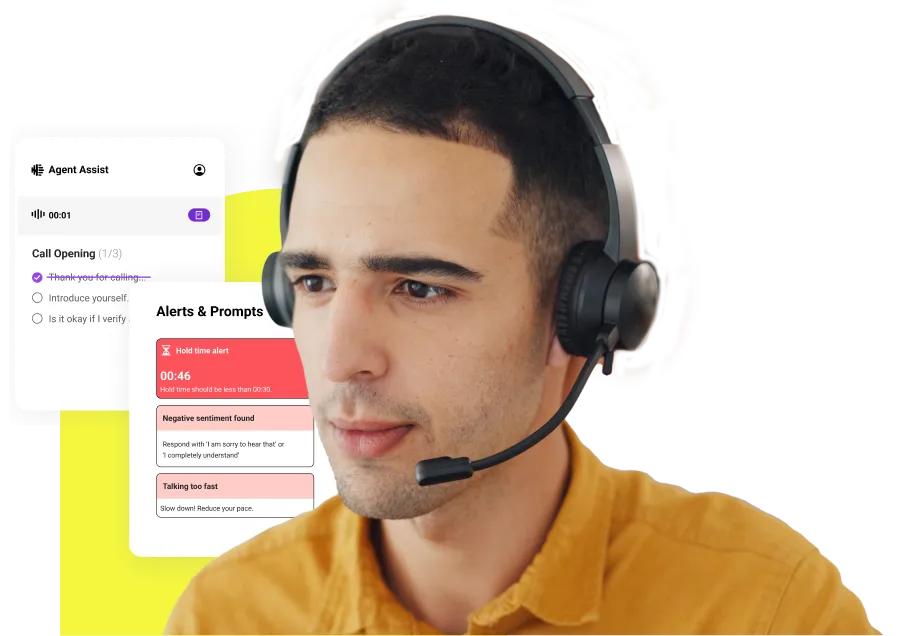
Observe.AI's AI Copilots serve three roles. Agent Copilot provides real-time guidance during live interactions, including smart scripts that give agents a visual checklist, visual alerts for hold times and negative sentiment, and handoffs with context summaries when AI agents transfer to humans.
Source: Observe.AI
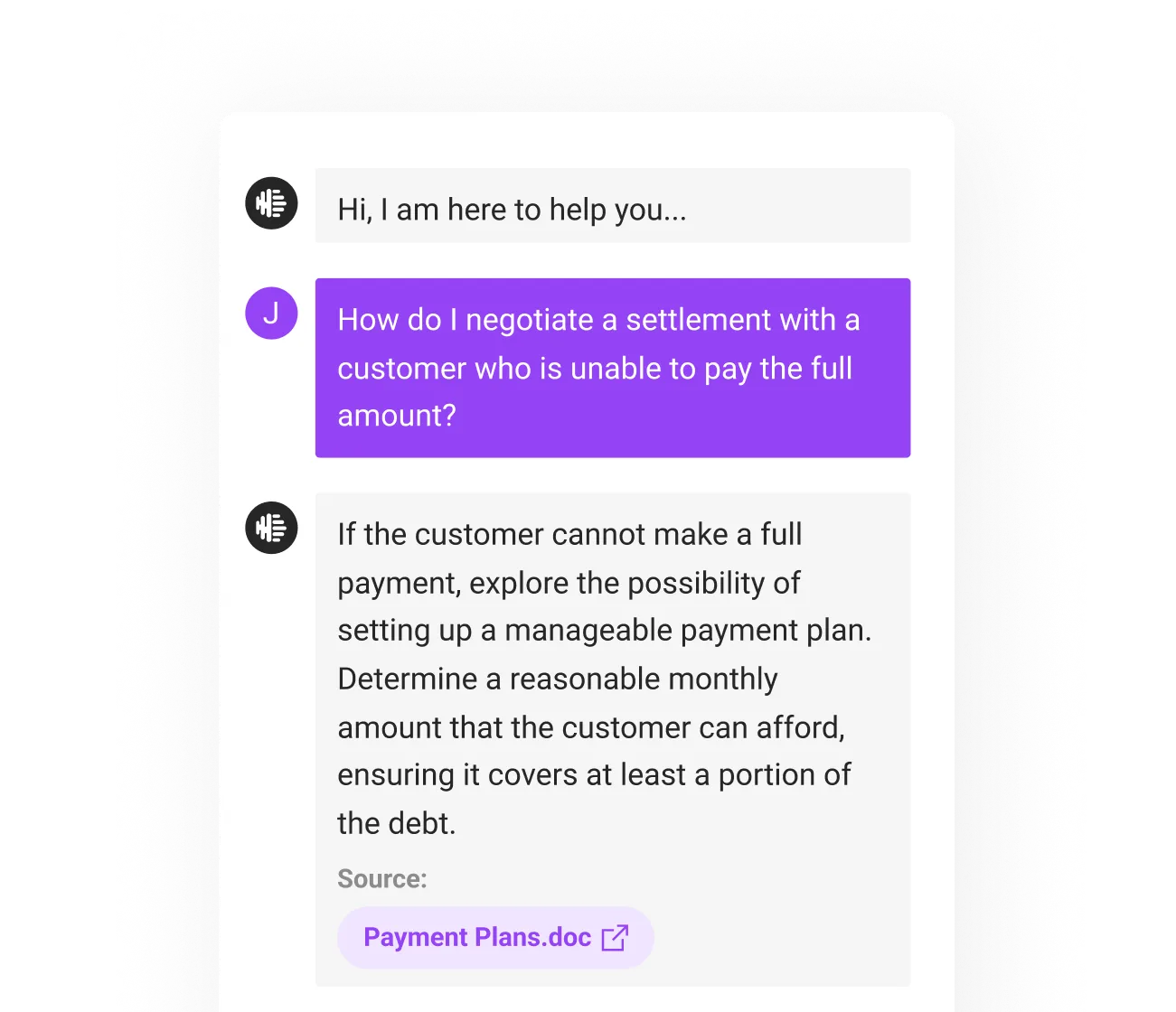
Knowledge AI gives agents instant access to centralized knowledge bases. Agents type queries into a chat interface, and GenAI summarizes relevant articles in seconds. The system learns from top agent responses and improves suggestions over time.
Source: Observe.AI
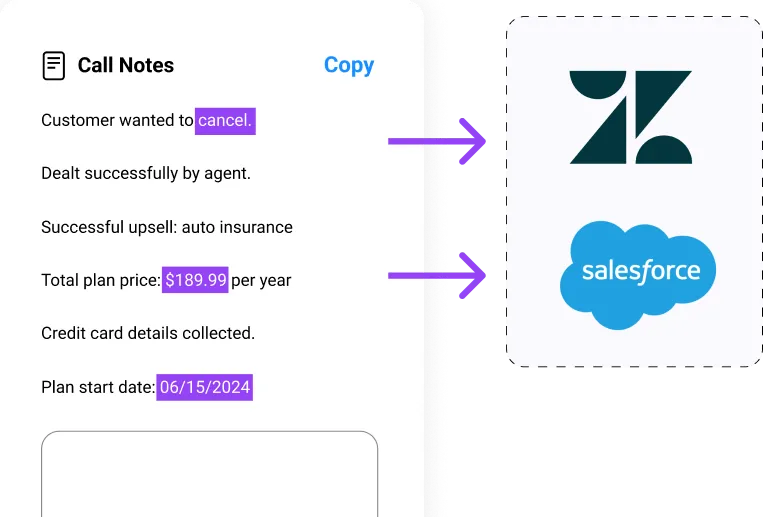
Summarization AI captures and formats call interactions, then routes summaries to CRM, ticketing systems, and other business applications. This cuts after-call work directly.
Source: Observe.AI
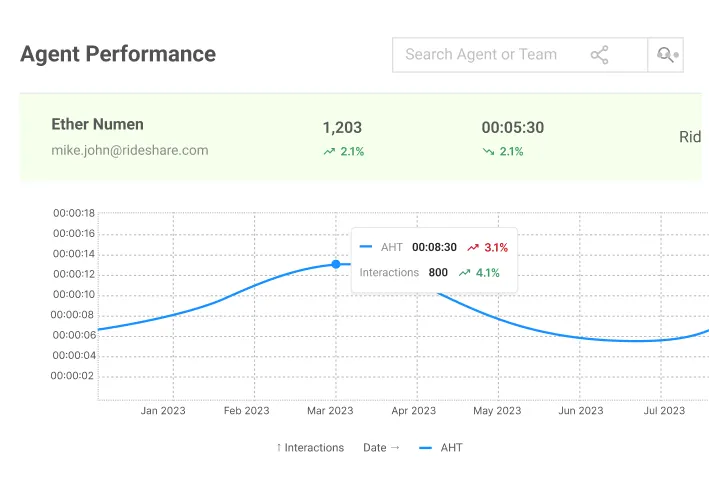
The third copilot, Coaching Copilot, turns call data into coaching opportunities. Instead of supervisors manually reviewing calls, AI analyzes individual agent interactions and generates evidence-backed recommendations for improvement.
Source: Observe.AI
Conversation Intelligence: Automated analysis of every customer interaction for quality, compliance, and performance insights.
Observe.AI's Conversation Intelligence addresses a basic contact center problem: most operations can only review around 2% of calls through manual QA. Observe.AI automates this, evaluating 100% of interactions.
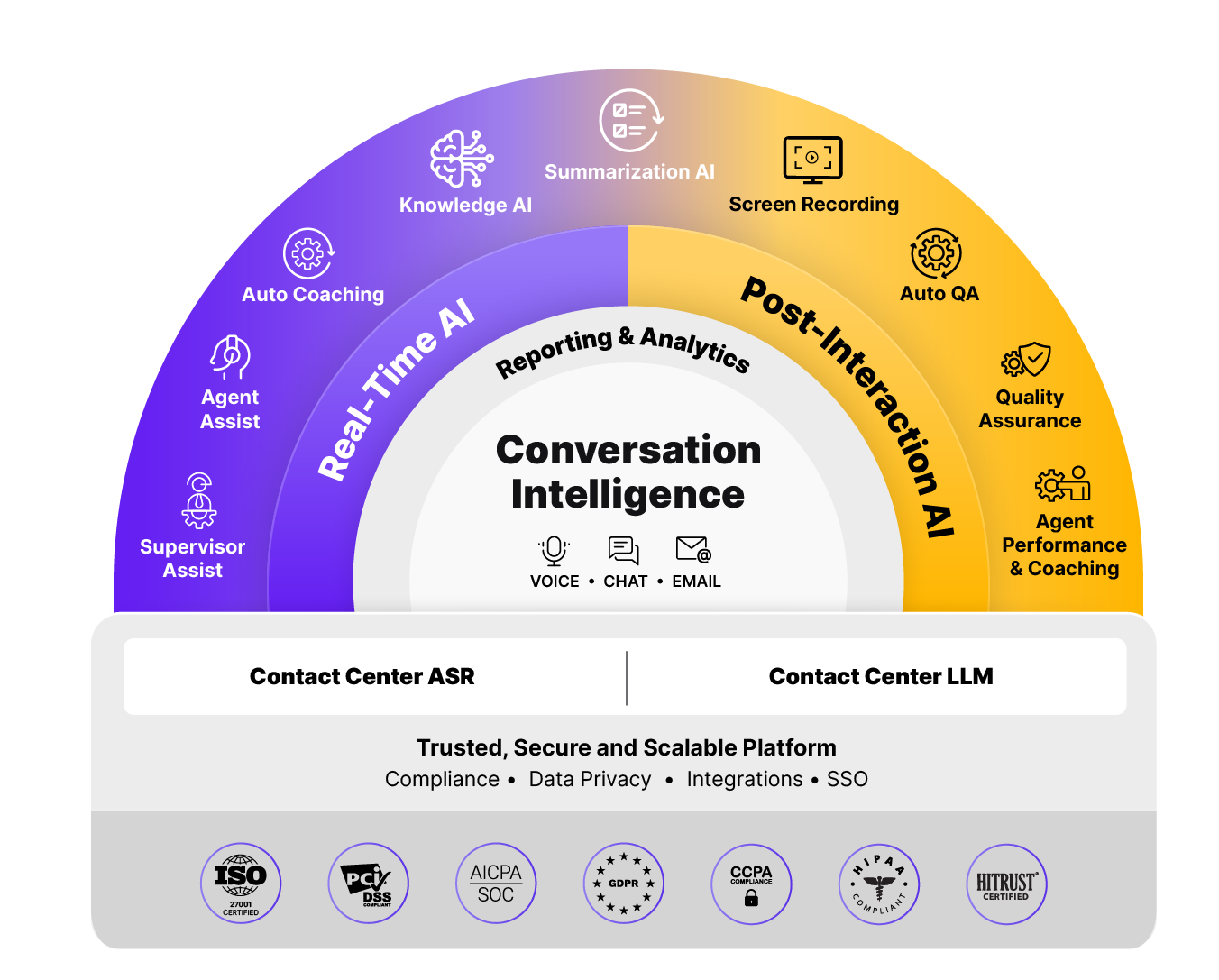
Source: Observe.AI
The platform works in three phases. During Capture, a proprietary ASR engine delivers diarized, PII-redacted transcriptions at 95% accuracy.
The Understand phase uses multi-LLM orchestration powered by a contact center-specific 40-billion-parameter LLM fine-tuned on over 100 years of contact center data. This produces 45% better accuracy for dead-air detection, 35% for call summarization, and 33% for sentiment detection compared to generic models.
The Act phase provides two QA modes. Auto QA evaluates every interaction using patented AI with a rule builder and drag-and-drop interface, achieving up to 90% automation. Manual QA surfaces key moments in conversations so evaluators focus on what matters, completing evaluations five times faster than traditional methods.
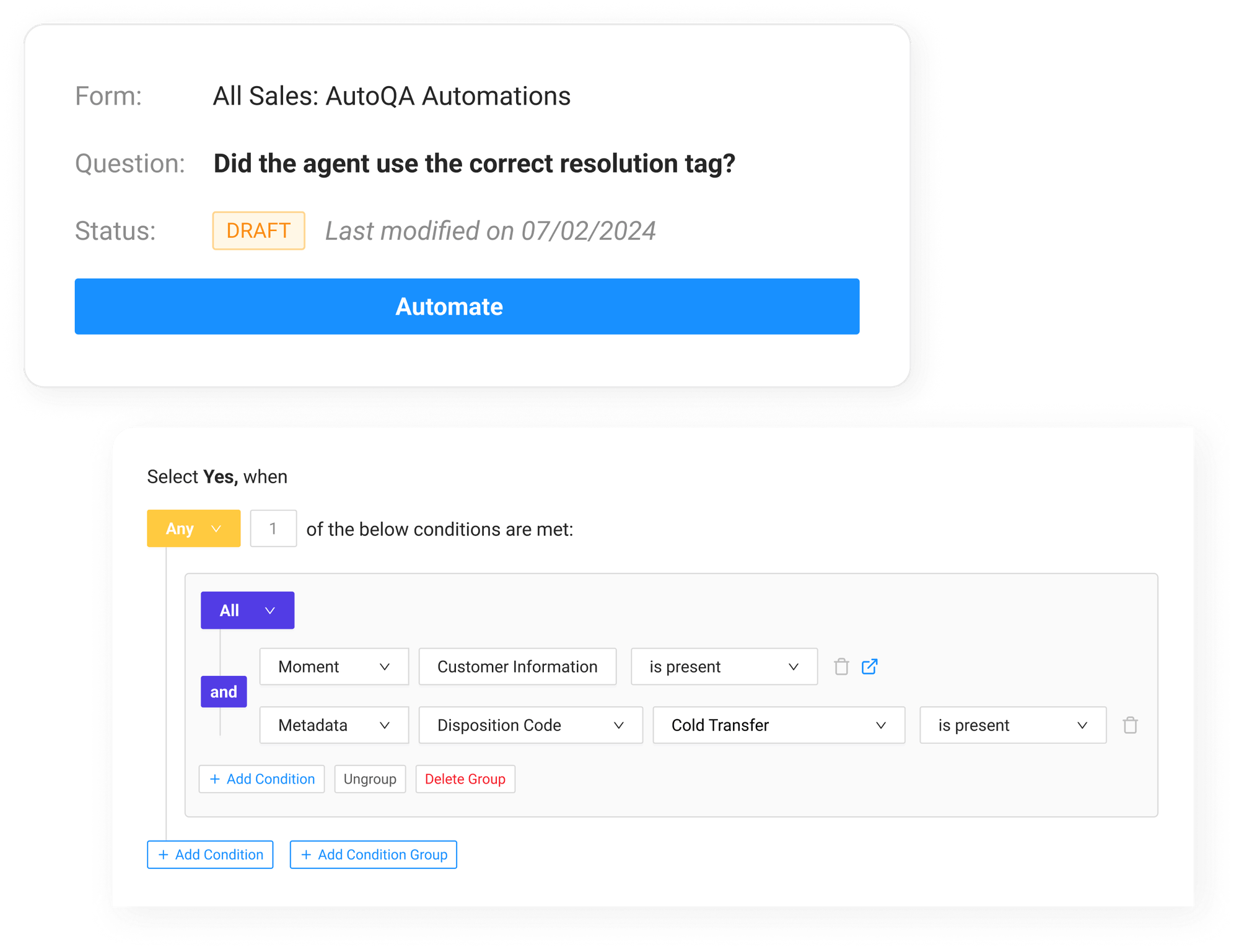
Source: Observe.AI
Additional capabilities include multi-screen recording synchronized with audio and transcripts, and Voice of Customer insights accessible through dashboards or ad-hoc GenAI searches.
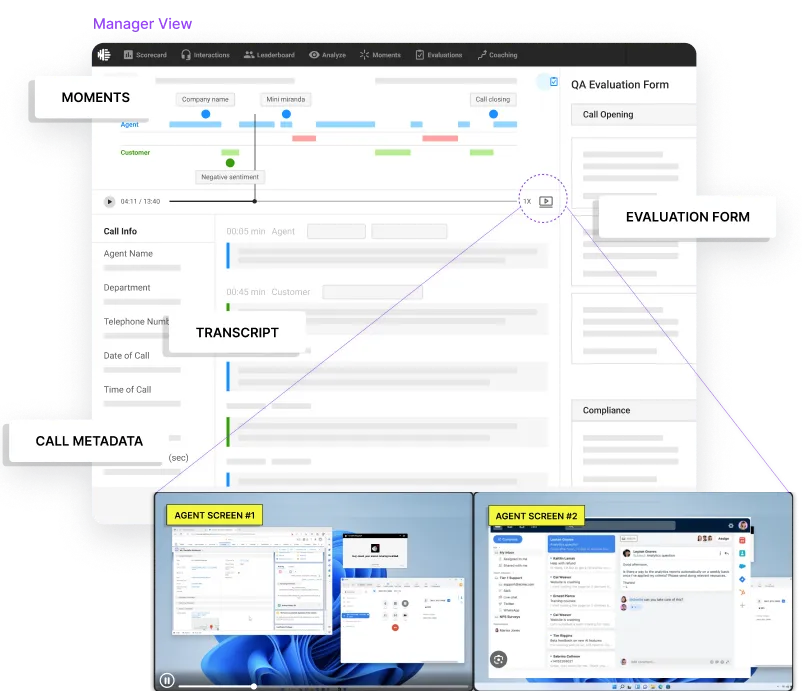
Source: Observe.AI
The scale is notable. Observe.AI analyzes roughly one billion minutes of conversations per year. Central Bank went from evaluating eight calls per month to 167,000 calls in a single quarter.
Pricing: Custom quotes only, with tiered options for different operational needs.
Observe.AI does not publish specific pricing. The pricing page shows tiered options, but all tiers direct to "Talk to sales" buttons.
The platform supports deployments ranging from 100 to 100,000 agents across five tiers:
Problem-Focused Tiers:
VoiceAI Agents: Targets improvements in CSAT, NPS, AHT, FCR, call deflection, and containment
Real-time AI: Targets improvements in AHT, FCR, and productivity
Post-interaction AI: Targets improvements in coaching, performance, spend, and compliance
Enterprise Tiers:
Enterprise Advanced: Combines Real-time AI and Post-interaction AI with enterprise insights
Enterprise Unlimited: Adds call summarization and Knowledge AI
Fees are invoiced annually in advance, and payment obligations are non-cancelable with non-refundable fees. Contracts automatically renew for successive annual terms unless 30 days' written notice is given. Additional costs may include implementation fees, usage overages, and enhanced support tiers.
Observe.AI may offer a 30-day evaluation trial, but no permanent free plan exists.
Where Observe.AI Falls Short
Observe.AI delivers solid contact center AI, but several limitations emerge during evaluation. These reflect a platform built to optimize contact center operations, not to connect those operations to broader business intelligence.
Transcription Accuracy Gaps: For a conversation intelligence platform, transcription accuracy is foundational. Users on TrustRadius report frustration with inaccurate transcription, noting that transcripts don't always match what was said on calls.
When every downstream insight (from QA scores to sentiment analysis) depends on accurate transcription, these gaps erode confidence in the platform's analytics.
Feature Delivery Concerns: Several TrustRadius reviewers said Observe.AI failed to deliver promised features after 18 months of use. For organizations making annual commitments with non-refundable fees, the gap between roadmap promises and actual delivery creates real risk.
Opaque Pricing: With no published pricing and mandatory sales calls for every tier, evaluating Observe.AI takes a significant time investment before you know whether it fits your budget. The annual billing structure with non-refundable fees adds financial risk for organizations that discover the platform isn't right after committing.
Interface Complexity: Despite ranking #1 for Ease of Setup and Ease of Use on G2, other sources tell a different story. Users describe the UI as cluttered and confusing, with a steep learning curve. With average onboarding taking three to four weeks, teams should plan for a real ramp-up period.
No Customer Intelligence Beyond the Call: Observe.AI analyzes what happens during interactions, but it doesn't tell you who your customers are in a business context: their company size, tech stack, buying signals, or where they sit in the customer lifecycle. Contact center agents handle conversations without visibility into account value, recent sales activity, or strategic importance.
This is where B2B intelligence platforms fill a gap in the customer experience stack.
These aren't failures. They reflect a platform built for contact center operations. But organizations that want their CX data connected to the full customer lifecycle need a complementary intelligence layer.
The Perfect Complement to Observe.AI: ZoomInfo
Where Observe.AI optimizes what happens inside the contact center, ZoomInfo provides the intelligence about who your customers are and why they matter.
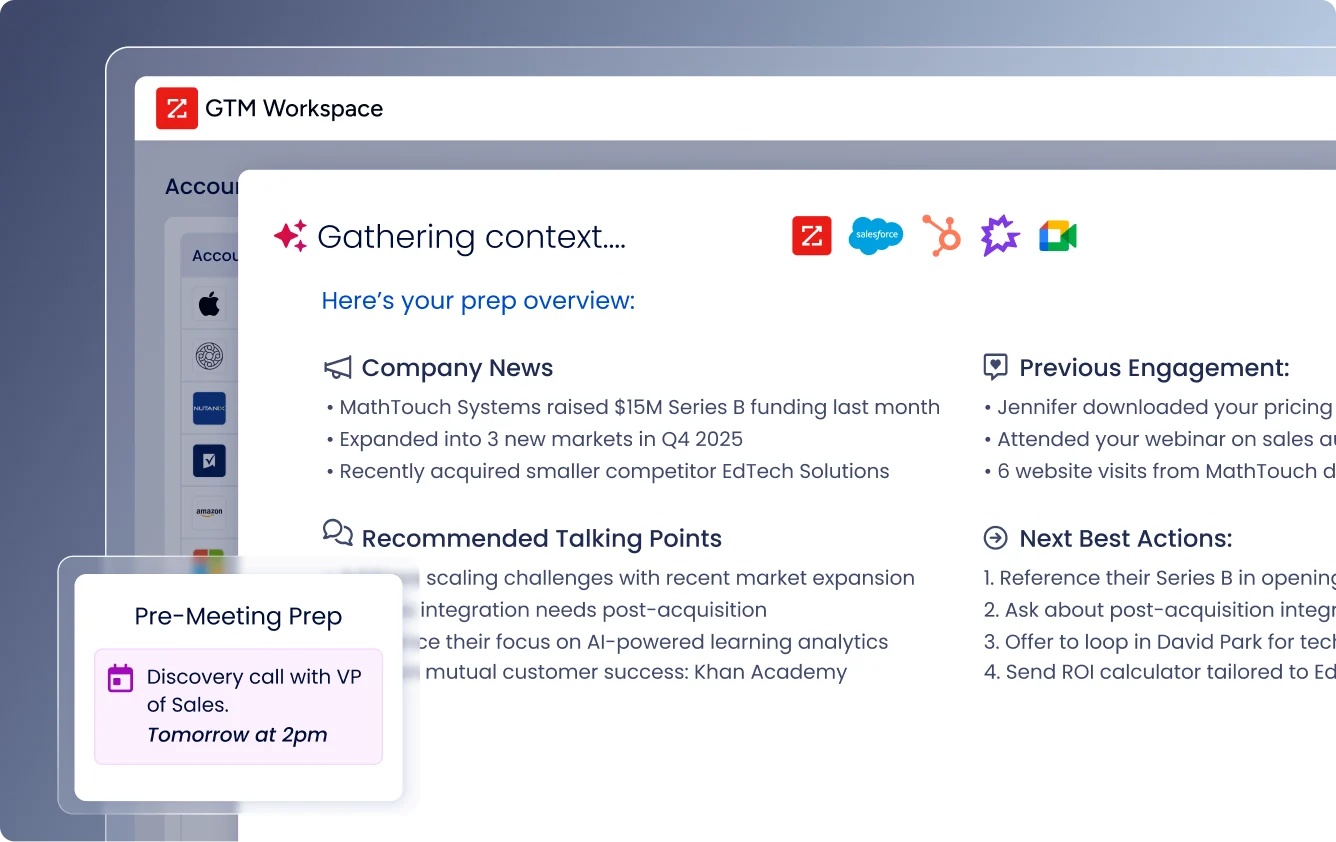
ZoomInfo is a go-to-market platform built on extensive B2B data, a proprietary intelligence layer called the GTM Context Graph, and access through APIs, MCP, and dedicated products.
For contact center operations, this means agents and managers gain context that conversation intelligence alone can't provide: who the caller's company is, what they're worth, whether they show buying signals, and how this interaction connects to the broader customer relationship.
Comprehensive B2B Data: ZoomInfo gives contact center teams the customer context that conversation intelligence can't.
ZoomInfo maintains an extensive B2B data platform: 500M contacts, 100M companies, 135M+ verified phone numbers, 120M direct-dial phone numbers, and 200M+ verified business email addresses.
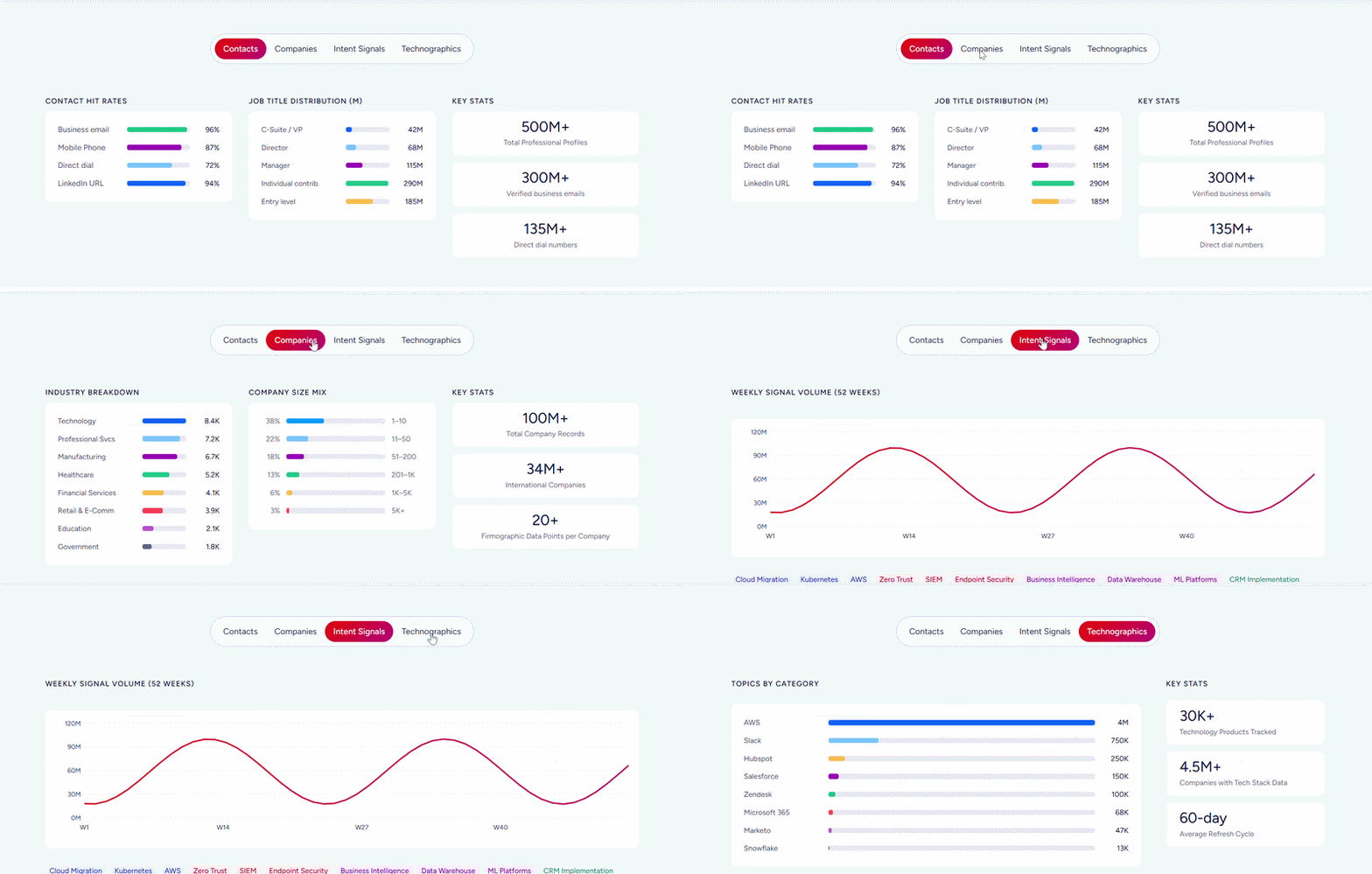
This data spans three dimensions: identity data (who buyers are and how to reach them), company context (firmographics, org charts, technographics covering 30,000+ technologies across 200+ categories), and signals that reveal when accounts are actively in-market.
The quality holds up under scrutiny. Data flows through a multi-source verification pipeline backed by 300+ human researchers, reaching up to 95% accuracy on first-party data. In a Fortune 500 competitive RFP analyzing 25 million contacts across vendors, an independent consultant concluded that "no other competitor came even close."
For contact center teams, this data changes how interactions get handled. Instead of treating every inbound call the same, agents and supervisors can see the caller's company profile, account value, and relationship history. Routing rules get smarter. Escalation decisions draw on real business context, not just queue position.
Vensure scaled prospecting with B2B data, with their VP of Revenue Operations noting that ZoomInfo provides "the information we need to execute" without digging through multiple spreadsheets. (Vensure)
Conversation Intelligence Across the Full Customer Journey: Chorus captures sales interactions while Observe.AI captures CX interactions, creating complete visibility.
ZoomInfo's Chorus captures and analyzes customer calls, meetings, and emails on the sales side, backed by 14 technology patents using proprietary ML. Where Observe.AI focuses on contact center conversations (support, service, compliance), Chorus covers the revenue side: discovery calls, demos, negotiations, and renewals.
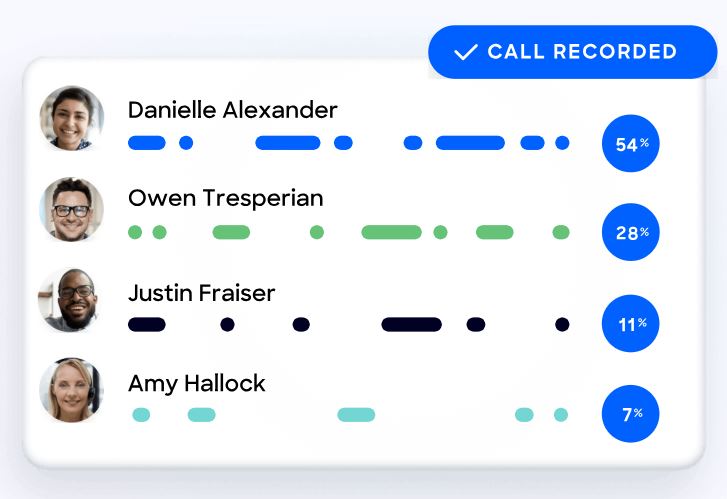
Together, they create something neither offers alone: conversation intelligence across every customer touchpoint. Sales teams see what customers asked support about before the renewal call. Contact center managers understand the commitments made during the sales process. CX insights inform how sales handles objections.
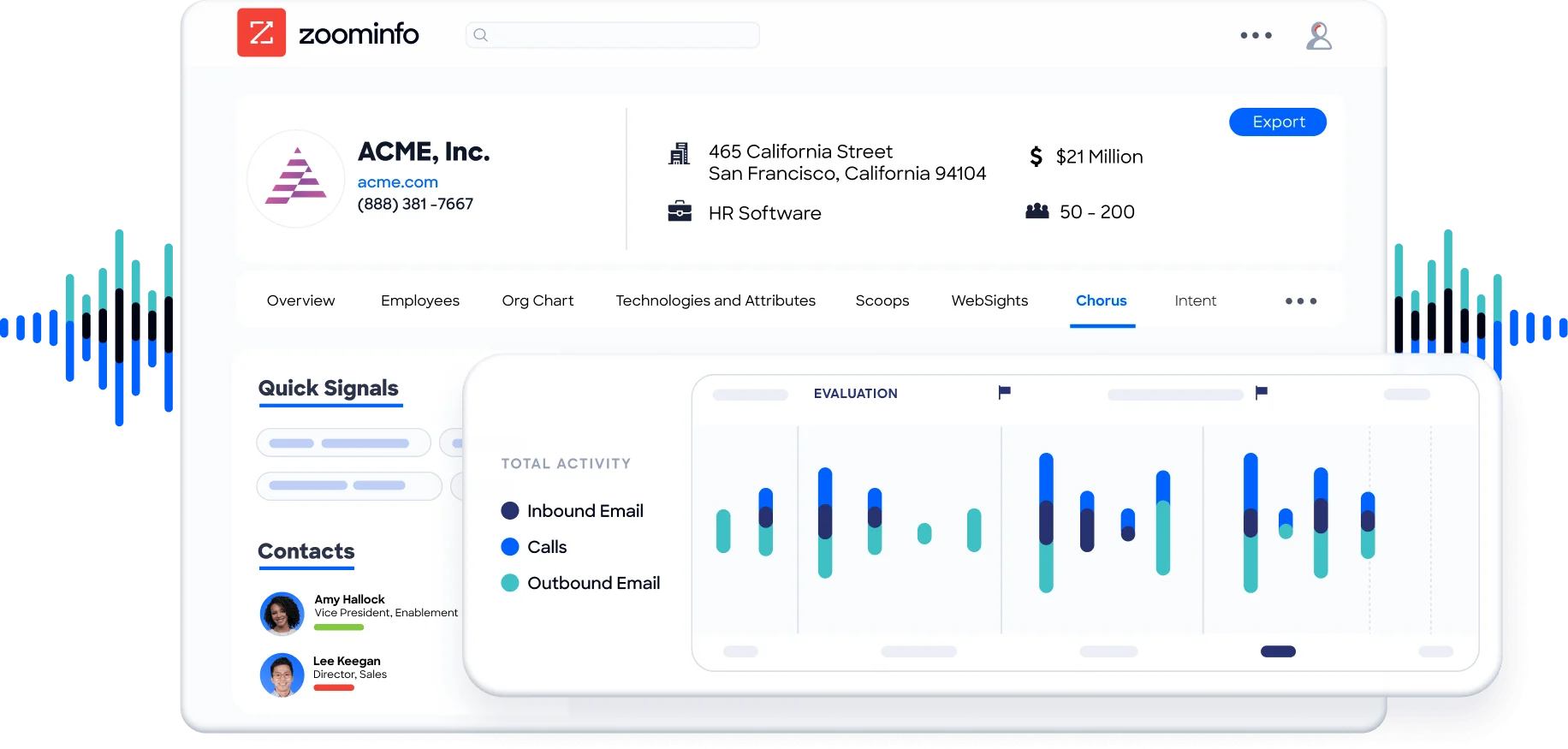
Chorus provides automatic recording and transcription, AI-generated call analysis (talk ratios, sentiment, objection detection), deal intelligence with CRM auto-sync, and sales coaching with scorecards and clip sharing.
Its Connected Intelligence feature surfaces ZoomInfo's contact and company data inside each interaction record, so a manager reviewing a call sees every participant's profile, company details, and relevant signals without switching to another system.
Seismic's sales team attributed 39% of active pipeline to opportunities identified or influenced by ZoomInfo signals, gained 54% productivity improvements, and saved 11.5 hours per week per seller. (Seismic)
GTM Context Graph: The intelligence layer that connects CX data to revenue outcomes.
The GTM Context Graph separates ZoomInfo from a static data provider. Processing 1.5B+ data points daily, it fuses ZoomInfo's B2B data with a customer's own CRM records, conversation transcripts, email interactions, and behavioral signals into one layer that captures not just what happened, but why it happened.
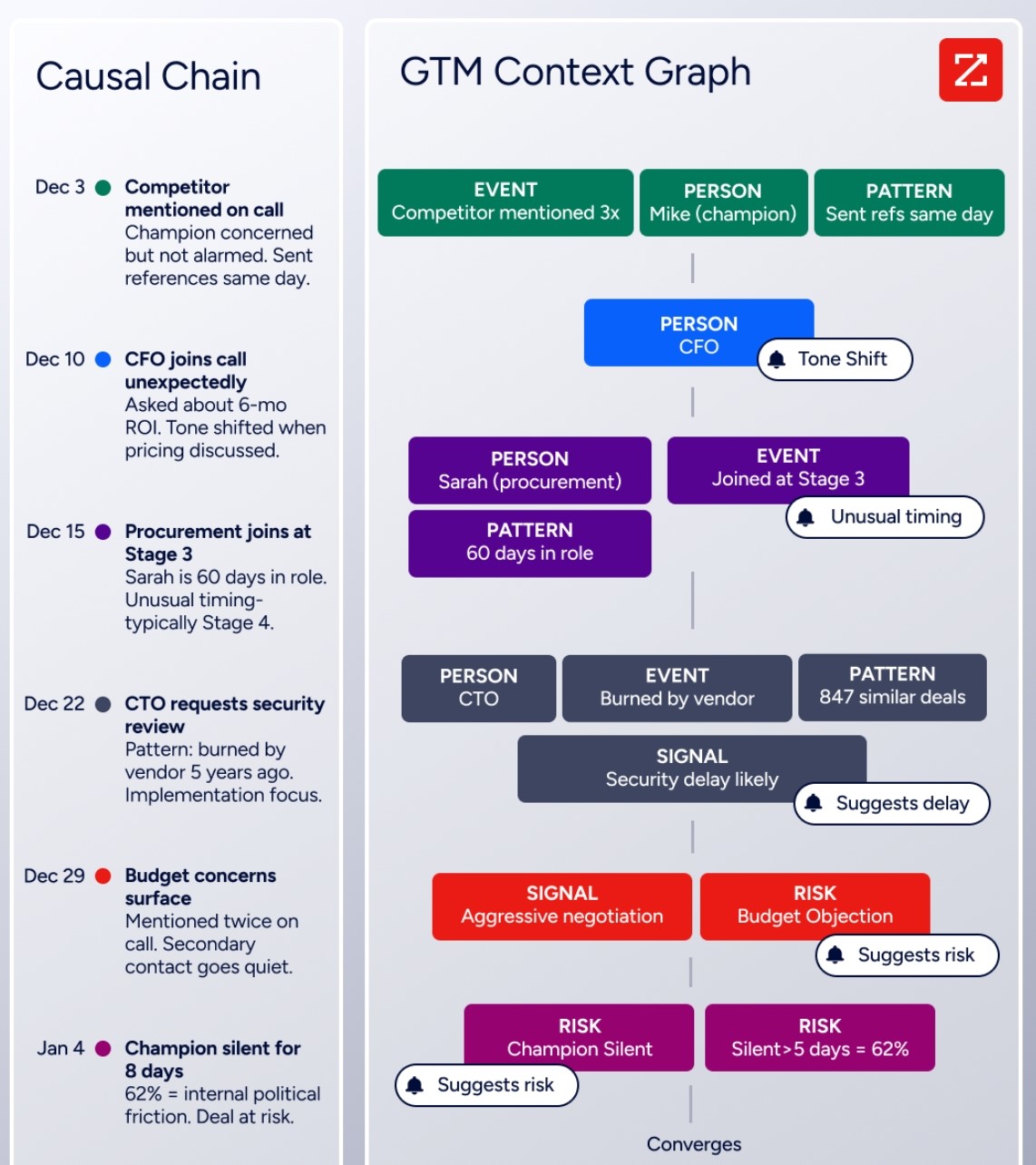
As ZoomInfo's Chief Product Officer Dominik Facher writes: "The CRM recorded the state change. It has no record of why it happened." The GTM Context Graph captures the decision context: who influences whom, what each action responded to, what patterns across thousands of deals suggest happens next.
For organizations running Observe.AI in the contact center, this matters because CX interactions don't exist in isolation. A spike in support calls from enterprise accounts might correlate with a competitor's outage, captured by intent signals. A pattern of negative sentiment from a high-value customer might predict churn risk before the renewal conversation.
The GTM Context Graph connects these dots across sales, marketing, and customer service data, making contact center insights part of the broader revenue picture.
Redwood Logistics achieved a 99% reduction in CPC and a 310% increase in CTR, with their Senior Director of Digital Strategy noting: "It's about the right data at the right time to help us reach out with the right message across that full buyer journey." (Redwood Logistics)
Universal Access: ZoomInfo's intelligence available in any tool through APIs and MCP.
ZoomInfo delivers its intelligence three ways: GTM Workspace for sellers, GTM Studio for marketers and RevOps, and APIs and MCP for any custom tool or AI agent.
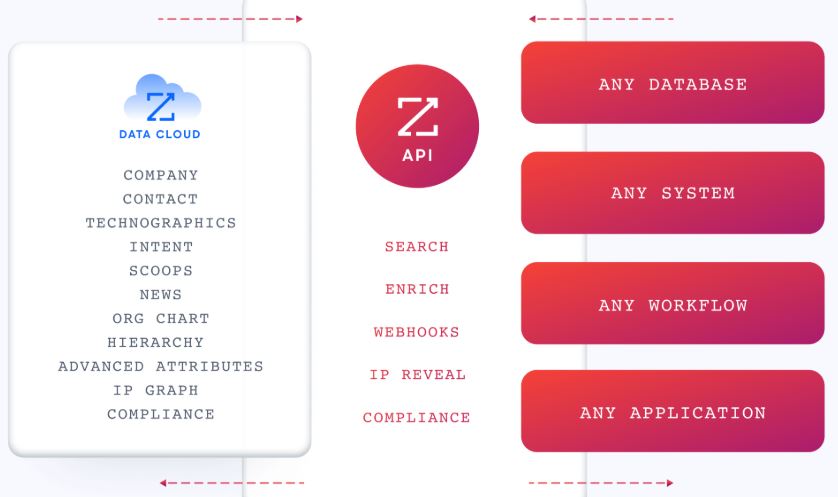
The API and MCP access matters most for contact center operations. The Enterprise API lets teams search, enrich, and retrieve B2B data programmatically, automating the enrichment of customer records flowing into contact center platforms.
The MCP server connects AI models directly to ZoomInfo's data as a native tool, so AI agents can pull customer context in real time without custom coding.
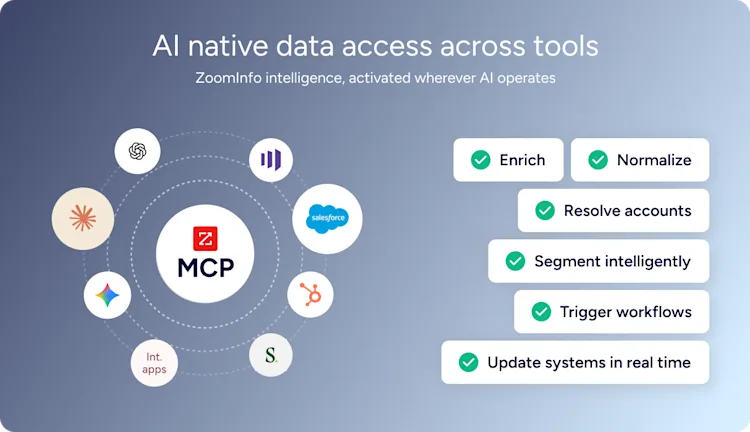
API access is included in all relevant plans, and MCP is available through partners including Anthropic Claude and Google. Contact center teams aren't locked into a single interface. ZoomInfo's data can flow into CCaaS platforms, CRMs, or custom applications through the same programmatic access.
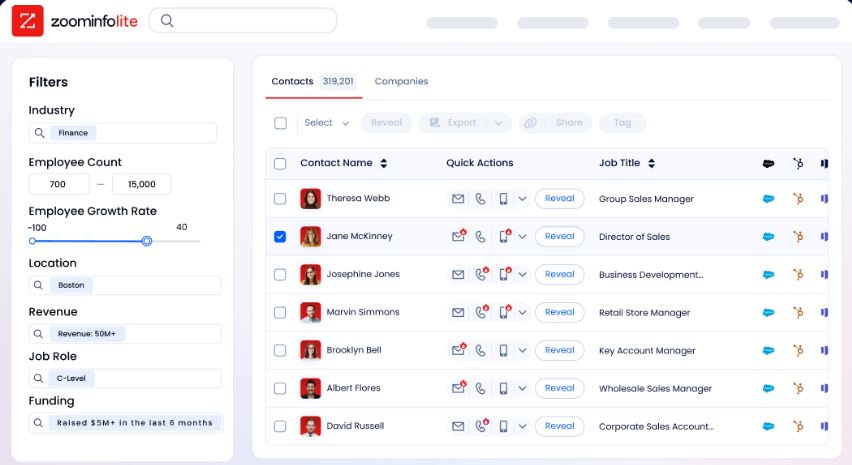
ZoomInfo also offers ZoomInfo Lite, a permanent free tier with access to the B2B database, 10 monthly export credits, and WebSights Lite for website visitor identification. Paid plans use a custom-quoted, consumption-based pricing model, with a 7-day free trial available with no credit card required.
BDO Canada achieved an 87% reduction in time spent on data dashboard updates, with their Senior Marketing Intelligence Analyst noting: "The plug-and-play aspect of the API means I can integrate it very easily into any process and get information at a moment's notice." (BDO Canada)
Observe.AI and ZoomInfo: Comparison Summary
Aspect | Observe.AI | ZoomInfo |
|---|---|---|
Primary Focus | Contact center AI and conversation intelligence | B2B data, GTM intelligence, and revenue operations |
Core Strength | Analyzing 100% of customer service interactions | Extensive B2B data and the GTM Context Graph |
Conversation Intelligence | Contact center calls, chat, and support interactions | Sales calls, meetings, and emails (Chorus) |
AI Agents | VoiceAI and ChatAI for customer service automation | AI agents for sales research, outreach, and CRM updates |
Data Layer | Interaction analytics and performance metrics | 500M contacts, 100M companies, intent signals, technographics |
Integrations | 250+ CCaaS, CRM, and BI integrations | 120+ CRM, marketing, and sales integrations plus APIs and MCP |
Compliance | SOC 2, HIPAA, GDPR, PCI, HITRUST, EU AI Act | ISO 27001, ISO 27701, SOC 2, TRUSTe GDPR/CCPA |
Free Tier | No permanent free plan; 30-day evaluation trial possible | ZoomInfo Lite (permanent free) plus 7-day trial |
Pricing | Custom quotes, annual billing, no published prices | Custom quotes, consumption-based |
Best For | Optimizing contact center operations | Connecting customer intelligence to revenue strategy |
Final Verdict
Observe.AI and ZoomInfo serve different parts of the customer lifecycle, and that difference makes them effective together.
Observe.AI gives contact centers the tools to analyze every customer interaction, automate routine inquiries, guide agents in real time, and maintain compliance across regulated industries. Its combination of AI Agents, Copilots, and Conversation Intelligence addresses the operational challenges contact center leaders face daily.
ZoomInfo provides the customer intelligence that makes those contact center operations smarter. With extensive B2B data, a GTM Context Graph that captures why customer relationships move or stall, and conversation intelligence (Chorus) that covers the sales side of the customer journey, ZoomInfo connects CX data to revenue outcomes. Through APIs and MCP, that intelligence flows into any tool your teams already use.
Get started with ZoomInfo Lite for free here.
Together, they form a complete system: Observe.AI ensures every customer interaction is handled well, while ZoomInfo ensures your teams understand who those customers are and what they need across the full lifecycle. The combination turns contact center data from an operational metric into a strategic asset.
Observe.AI FAQ
What is Observe.AI used for?
Observe.AI is a contact center AI platform used to automate quality assurance, provide real-time agent guidance, and deploy AI agents for customer interactions. The platform analyzes 100% of voice and text interactions to monitor agent performance, track compliance, and generate coaching recommendations.
It serves enterprises with 100 to 100,000 agents, with particular strength in regulated industries like healthcare and financial services.
How much does Observe.AI cost?
Observe.AI does not publish specific pricing. The platform offers five tiers (VoiceAI Agents, Real-time AI, Post-interaction AI, Enterprise Advanced, and Enterprise Unlimited), but all require contacting sales for quotes. Contracts are billed annually in advance, fees are non-refundable, and contracts auto-renew unless 30 days' written notice is given.
Additional costs may include implementation fees and usage overages.
Does Observe.AI offer a free trial?
Observe.AI may offer a 30-day evaluation trial for internal testing, but no permanent free plan exists. Either party can terminate the trial at any time, and the company offers no warranty or support commitments during trial periods. ZoomInfo, by contrast, offers both a permanent free tier (ZoomInfo Lite with 10 monthly export credits) and a 7-day free trial with no credit card required.
How accurate is Observe.AI's transcription?
Observe.AI claims 95% transcription accuracy using its proprietary ASR engine and a contact center-specific 40-billion-parameter LLM. However, some users on TrustRadius report that transcriptions don't always match what was said on calls. The platform offers a self-serve correction tool for domain-specific tuning, which can improve accuracy over time for specialized vocabulary.
What integrations does Observe.AI support?
Observe.AI offers 250+ integrations with enterprise-grade authentication, including pre-built connectors for CCaaS platforms (8x8, Amazon Connect, Avaya), CRM systems, BI tools, and data lakes. The platform also provides APIs, SFTP, and S3 for custom integration needs.
Is Observe.AI compliant with healthcare and financial regulations?
Yes. Observe.AI maintains SOC 2 Type II, HIPAA, GDPR, PCI Level 1, HITRUST r2, ISO 27001, and EU AI Act compliance certifications. All customer data is encrypted in transit and at rest using AES-256, with per-customer dedicated S3 buckets and unique encryption keys.
The platform supports data residency in US, CA, EU, and AU, and states that customer data is used solely for the customer's AI agent and is never trained on or shared.
What results do Observe.AI customers report?
Reported outcomes include Nations Info Corp achieving a 43% reduction in average handle time within one month, Pearson and Concentrix improving NPS from 60 to 85 points while reducing negative sentiment from 45% to 21-25%, and Central Bank evaluating 167,000 calls in one quarter (compared to eight per month with manual QA).
Across its customer base, Observe.AI reports a 23% reduction in AHT, 10% uplift in conversions, and 97% improvement in compliance monitoring.
How does ZoomInfo complement Observe.AI?
Observe.AI analyzes what happens during contact center interactions. ZoomInfo tells you who your customers are: their company, their buying signals, their place in the customer lifecycle.
Together, contact center teams can prioritize interactions by account value, connect CX insights to revenue outcomes through the GTM Context Graph, and maintain conversation intelligence across both sales (via Chorus) and support (via Observe.AI). ZoomInfo's APIs and MCP make it possible to feed this intelligence directly into the contact center tools your team already uses.
