
Choosing between Oracle CX and Salesforce for your enterprise CRM often comes down to five questions:
Is your organization already running Oracle ERP, SAP, or another back-office system that needs to share data with your CRM?
Do you need a CRM that connects natively to finance, supply chain, and HR data, or is a standalone front-office platform enough?
How important is ecosystem breadth (partner apps, third-party integrations, community resources) versus native platform depth?
Are you willing to invest in a longer implementation for tighter operational integration, or do you need faster results?
Does the quality of the data flowing into your CRM matter as much as the CRM itself?
In short, here's what we recommend:
Oracle CX is the CRM suite for organizations already running Oracle's back-office systems. Because it shares the same Fusion platform as Oracle ERP, SCM, and HCM, sales and service teams can access financial, supply chain, and contract data without middleware or custom integrations.
Oracle holds Gartner MQ Leader status across five CX categories simultaneously, and its CPQ product has been a Gartner Leader for nine consecutive years. The trade-off: a steep learning curve, complex implementations that usually require a certified systems integrator, and a third-party ecosystem much thinner than Salesforce's.
Salesforce leads the CRM market, holding #1 IDC revenue share and a Gartner MQ Leader position in Sales Force Automation for 19 consecutive years. With 150,000+ customers, 9,000+ AppExchange apps, and the Agentforce AI platform, Salesforce has the broadest CRM ecosystem.
But pricing complexity, add-on costs that compound fast, and implementation quality that depends on which partner you hire remain real problems.
Both are strong CRM systems. But neither answers this question on its own: how good is the data your teams actually work with? A CRM is only as useful as the contacts, company intelligence, and buying signals inside it. Incomplete records, stale emails, and missing direct dials mean your sales and marketing teams work blind, regardless of which CRM they use.
ZoomInfo is a B2B data and intelligence platform that gives reps the context for every call: why a deal is moving, who champions it, and what comes next. Marketers describe audiences in plain language and launch plays against accounts that match proven win patterns. Leaders see deal risk before it shows up in CRM stage fields.
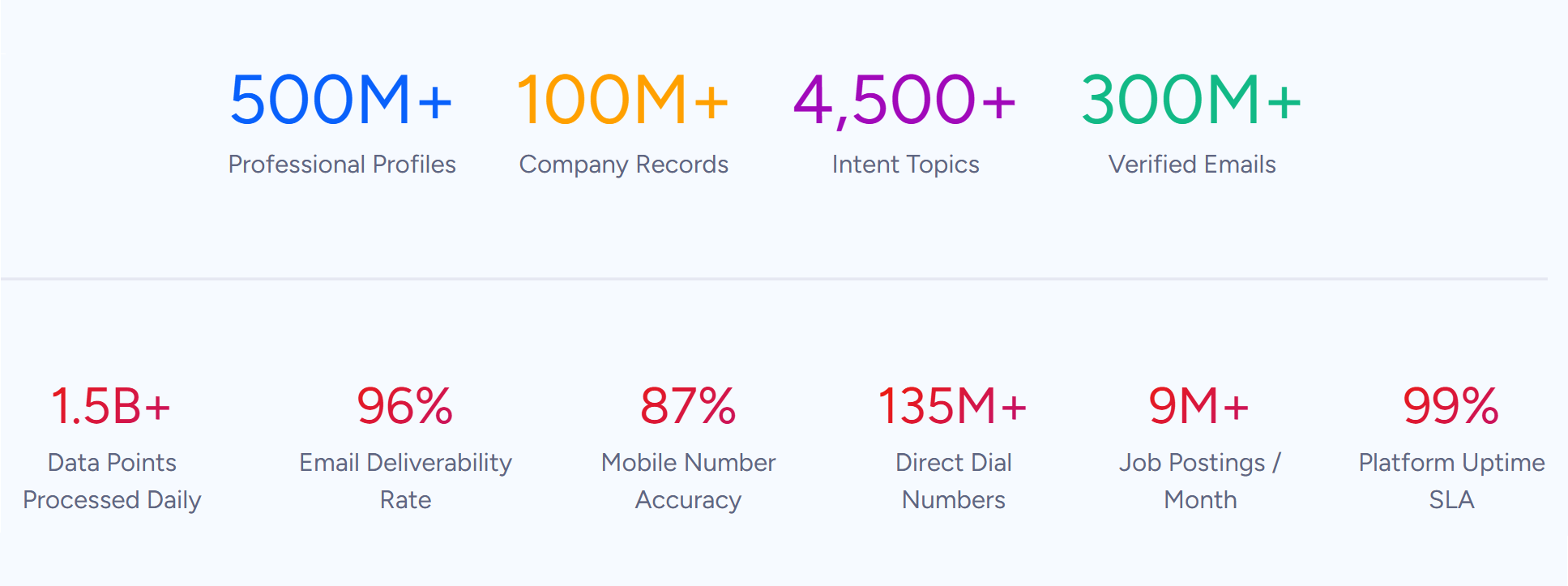
That depth comes from the GTM Context Graph: a single intelligence layer built on 500M contacts, 100M companies, 135M+ verified phone numbers, and 200M+ verified business emails, unified with your CRM records, conversation transcripts, and behavioral signals.
Teams reach this intelligence through the GTM Workspace for sellers, GTM Studio for marketers and RevOps, or APIs and MCP in any front-end. ZoomInfo integrates directly with Salesforce and other major CRMs.
If accurate, verified B2B data sounds like the missing piece, see how ZoomInfo works with your platform.
Oracle CX vs. Salesforce vs. ZoomInfo at a Glance
Oracle CX | Salesforce | ZoomInfo | |
|---|---|---|---|
Primary function | Enterprise CRM/CX suite with back-office integration | CRM platform with AI agents and broad ecosystem | B2B data and intelligence platform |
AI approach | Fusion Agentic Applications across CRM + ERP data | Agentforce autonomous agents across Customer 360 | GTM Context Graph: fuses first- and third-party data |
CRM integration | Native Oracle Fusion (ERP, SCM, HCM) | Native Sales, Service, Marketing, Commerce clouds | Integrates with Salesforce, HubSpot, Dynamics, and 120+ tools |
Ecosystem size | Oracle Cloud Marketplace (limited third-party depth) | 9,000+ AppExchange apps, 14M+ installs | 120+ marketplace integrations plus API/MCP access |
Implementation | 6–12+ months, requires certified SI | Weeks to 12 months depending on scope | Deploys in weeks |
Sales pricing | $150/user/month list (3-year term required) | $25–$550/user/month (annual contracts) | Custom-quoted, consumption-based |
Free option | Demo only | Free CRM (2 users), Starter Suite at $25/user/mo | ZoomInfo Lite (free, permanent) plus 7-day trial |
Gartner SFA Leader | 9 consecutive years | 19 consecutive years | Leader in ABM Platforms (2024 & 2025) |
Best for | Large enterprises on Oracle ERP | Mid-market to enterprise across all industries | Revenue teams that need accurate data and buying signals in any CRM |
Oracle CX and Salesforce Solve Different CRM Problems
The core difference between Oracle CX and Salesforce isn't features. It's architecture.
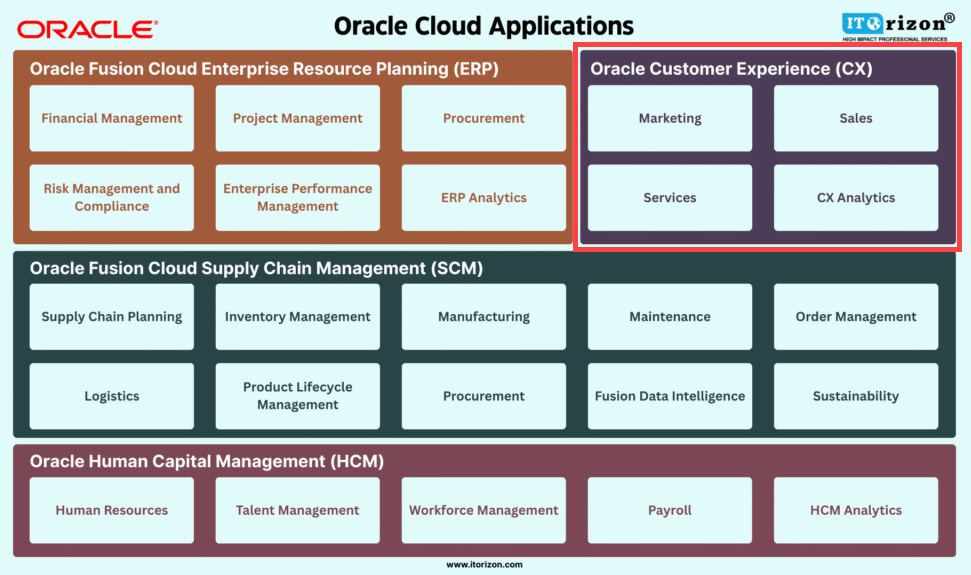
Oracle CX runs on the same Fusion platform as Oracle ERP, Oracle SCM, and Oracle HCM. When a sales rep opens an account, they see not just CRM data but live financial records, open invoices, supply chain status, and contract details, all without middleware.
Source: Oracle
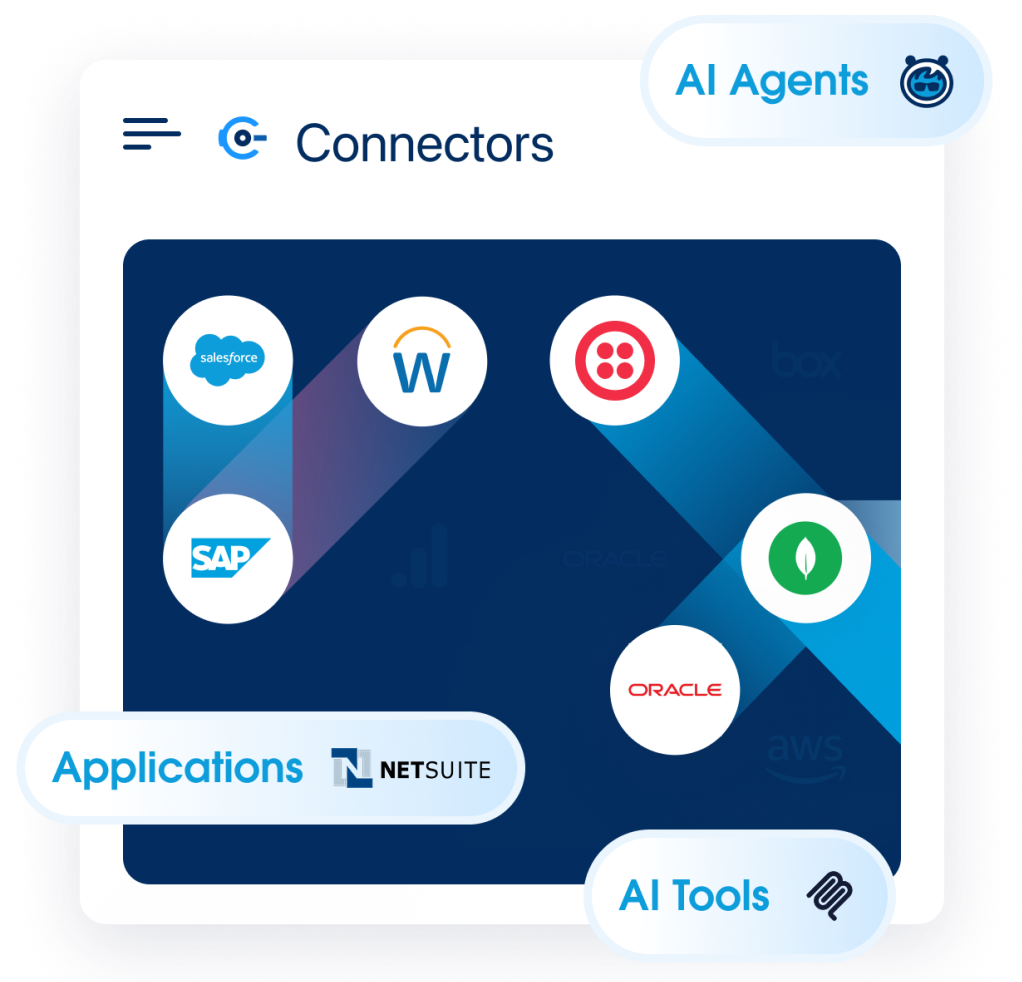
Salesforce is a standalone front-office platform. It covers sales, service, marketing, commerce, and collaboration through separate clouds that share a unified data model. Connecting Salesforce to your ERP, supply chain, or HR system requires integration work through MuleSoft (which Salesforce owns) or third-party middleware.
Source: MuleSoft
That adds cost and complexity, but it also gives Salesforce flexibility. It works with any back-office system, not just one vendor's.
"For organizations already on Oracle ERP, the integration math favors Oracle CX. For organizations running SAP, Microsoft, or mixed environments, Salesforce's vendor-neutral approach avoids lock-in. If Adobe is on your shortlist too, our Adobe Experience Platform vs. Oracle breakdown covers how Oracle's stack stacks up against Adobe's.
Salesforce Leads on Ecosystem, Oracle CX Leads on Operational Depth
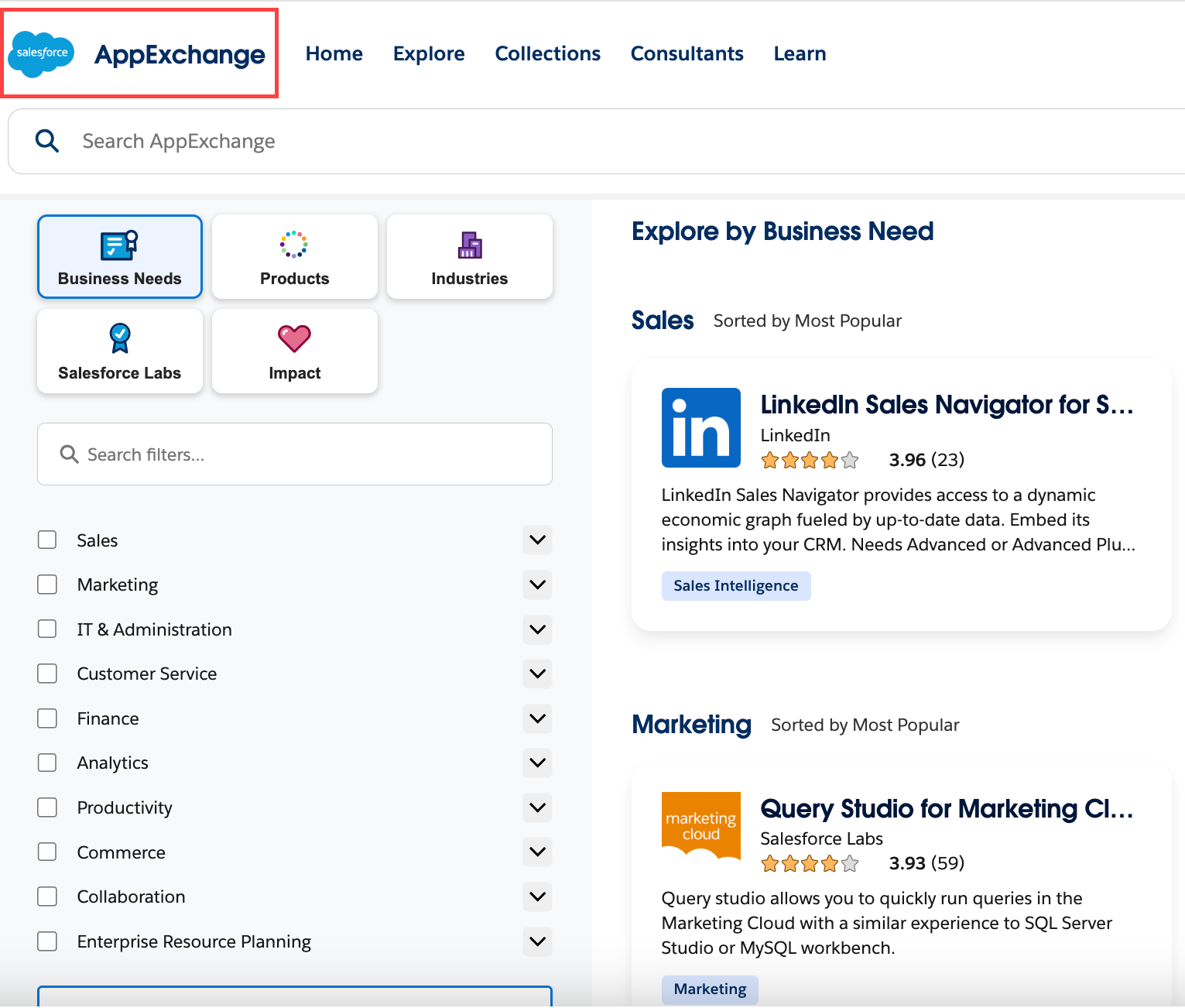
Salesforce's AppExchange is the largest enterprise cloud marketplace: 9,000+ partner apps, 14+ million installs, and 91% of customers using at least one AppExchange app. Need a tool for document generation, e-signature, project management, or industry compliance? There's probably an app for it.
Source: Salesforce
Oracle CX's third-party ecosystem is thinner. Users on G2 and Gartner Peer Insights note the platform "lacks integrations with third parties that help sales teams work more efficiently." Connecting to non-Oracle tools like Outreach, Gong, or other sales engagement platforms remains a recurring complaint.
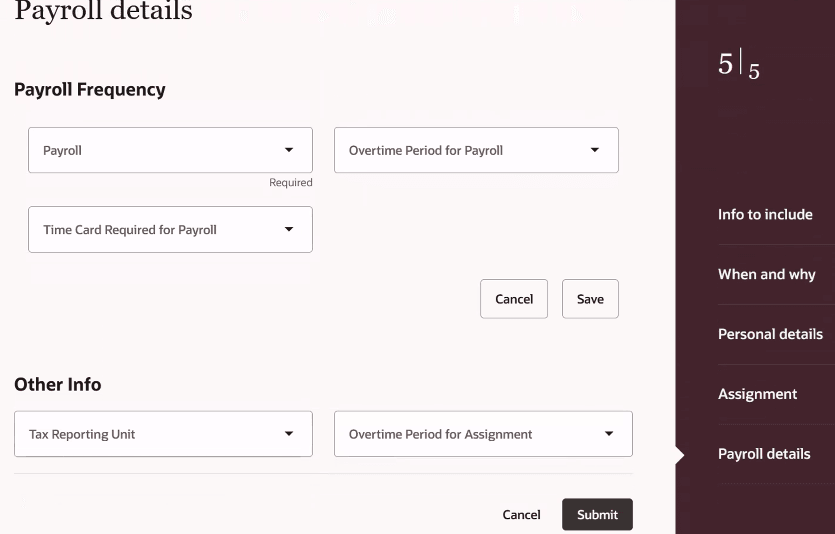
Where Oracle CX catches up is operational depth. Oracle CPQ connects natively to 20+ ERP systems (including SAP, Microsoft Dynamics, and JD Edwards), and its incentive compensation module integrates with Oracle Payroll so commissions appear on payslips alongside base salary.
Source: Oracle
Salesforce offers similar capabilities through Revenue Cloud and Spiff, but they require more configuration to reach the same level of financial integration.
For teams that use the broader sales tech stack (Outreach, Gong, LinkedIn Sales Navigator, ZoomInfo), Salesforce's integration breadth is a clear advantage. For teams whose daily work spans quoting, billing, fulfillment, and revenue recognition, Oracle's native operational connections eliminate real friction.
The AI Race: Agentforce vs. Fusion Agentic Applications
Both platforms bet big on AI. The approaches differ.
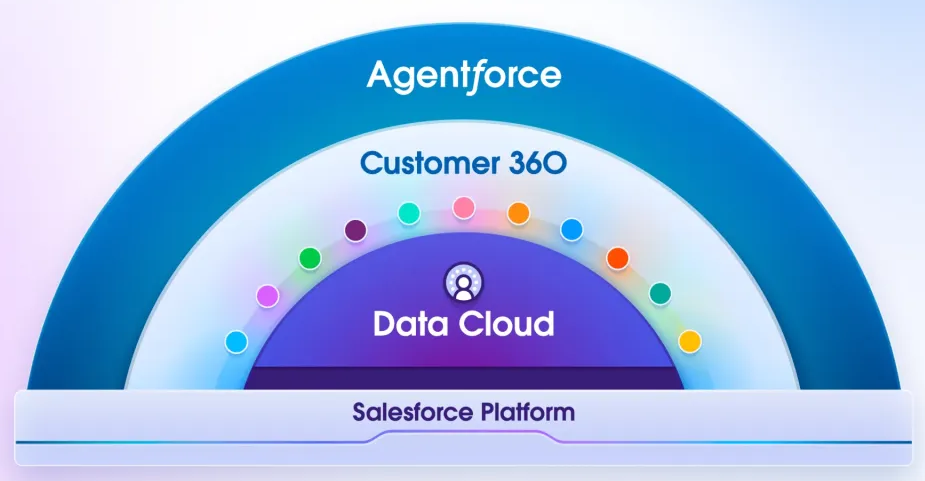
Salesforce launched Agentforce in October 2024 and has iterated through multiple major releases. The platform deploys autonomous AI agents that handle tasks across sales, service, marketing, and commerce. Salesforce's own support site resolves 85% of requests without human escalation using Agentforce.
Source: Salesforce
The underlying Atlas Reasoning Engine uses a reason-act-observe-adapt loop, and agents can act across any Salesforce cloud, Slack, or MuleSoft-connected system.
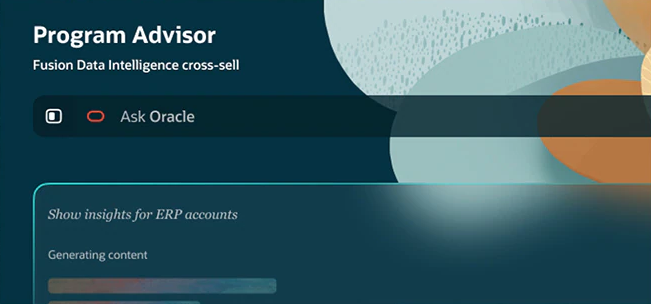
Oracle introduced Fusion Agentic Applications for CX in April 2026, with dedicated agent workflows like Sales Command Center, Cross-Sell Program Workspace, and Contract Compliance Workspace. Oracle's argument: because its agents draw from the full Fusion data scope (including finance, supply chain, and HR data), they make better recommendations than agents limited to CRM data alone.
Source: Oracle
AI capabilities come included in the base subscription with no extra licensing, and all AI runs on Oracle Cloud Infrastructure, where customer data is never shared with third-party LLMs.
Salesforce's Agentforce is further along in adoption and breadth. Oracle's Fusion Agentic Applications are newer but benefit from a structural data advantage for organizations that need AI to reason across front- and back-office operations.
Neither platform's AI, however, can overcome a fundamental limitation: the quality of the data it reasons over. An agent with access to financial records and supply chain data but stale contacts and missing buying signals will still produce incomplete recommendations.
Your CRM Is Only as Good as the Data Inside It
This is the gap ZoomInfo fills.
Enterprise CRMs are workflow engines. They manage pipelines, automate processes, and give visibility into customer relationships. But they don't generate the underlying data. A CRM can't tell you who the new VP of Procurement is at a target account, whether that account is researching your competitor's product, or that three key stakeholders changed roles last quarter.
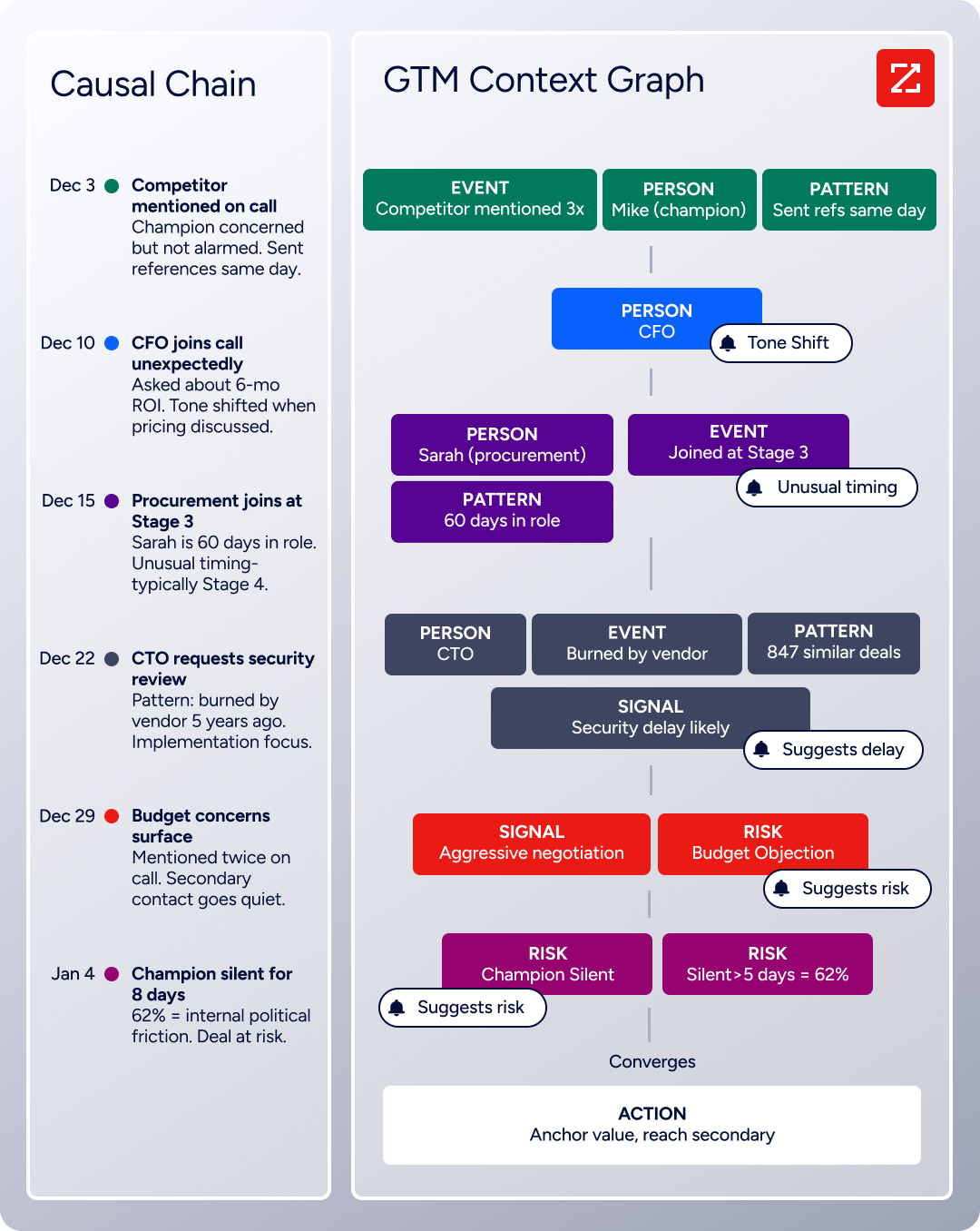
ZoomInfo's GTM Context Graph processes 1.5B + data points daily and fuses ZoomInfo's third-party B2B intelligence with a customer's own CRM records, conversation transcripts, and behavioral signals. The result: an intelligence layer that captures not just what happened in a deal, but why it happened and which actions drive the next step.
Source: ZoomInfo
This isn't theoretical. Snowflake feeds over 70 ZoomInfo firmographic and technographic data fields into their Account Propensity Scoring model. Accounts tracked with ZoomInfo-powered scores showed 90% higher opportunity open rates and 2x higher customer conversion rates.
Seismic's sales team attributed 39% of active pipeline to opportunities identified or influenced by ZoomInfo signals, reporting 54% productivity gains and saving 11.5 hours per week per seller. (Seismic)
Whether you run Oracle CX or Salesforce, the accuracy of your contact data, the completeness of your account intelligence, and the timeliness of your buying signals determine whether your CRM drives revenue or just stores records.
Data Quality and Intelligence Capabilities
Oracle CX and Salesforce both collect and organize customer data. Neither generates it.
Oracle CX unifies front-office CRM data with back-office financial and operational data through the Fusion platform. Oracle Fusion Unity CDP resolves identities across devices and channels and offers 27+ ready-to-use AI models for predictive scoring and propensity modeling.
This works well for analyzing existing customers. But for prospecting, new account identification, and market expansion, the data has to come from somewhere else.
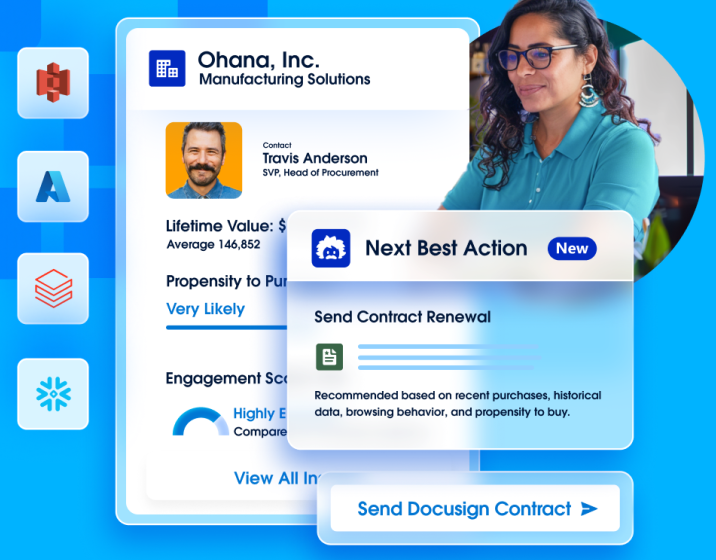
Salesforce Data Cloud ingested 112 trillion records in FY26 and provides zero-copy connections to Snowflake, Databricks, and other data warehouses. Identity resolution unifies profiles across sources. But Data Cloud harmonizes data that already exists in your systems. It doesn't source new contacts or scan the market for buying signals.
Source: Salesforce
ZoomInfo is built for this. The platform covers three data dimensions: identity data (500M contacts, 135M+ verified phone numbers, and 200M+ verified business emails), company context (100M companies with firmographics, org charts, and technographics), and dynamic signals that reveal when accounts are actively in-market.
Source: ZoomInfo
A verification pipeline backed by 300+ human researchers delivers up to 95% accuracy on first-party data. In a Fortune 500 competitive RFP analyzing 25 million contacts across vendors, an independent consultant concluded that "no other competitor came even close."
Buyer Intent data tracks signals from 210 million IP-to-Organization pairings and 6 trillion+ new keyword-to-device pairings sourced monthly. Guided Intent, exclusive to ZoomInfo, identifies topics historically correlated with deal success rather than requiring manual topic selection.

Source: ZoomInfo
"Company ID is transformational. It gives us a way to clearly communicate territory boundaries to our sellers." (Ashley Thoren Serita, Director of Sales Operations, Palo Alto Networks)
The practical distinction: Oracle CX and Salesforce help you manage existing customer relationships. ZoomInfo helps you find new ones, enrich the ones you have, and detect when accounts are ready to buy.
Pricing Comparison: Different Models, Different Trade-offs
The three platforms price differently, reflecting different buyers and business models.
Oracle CX uses per-named-user monthly pricing with a standard three-year contract term. Oracle Fusion Sales Enterprise lists at $150/user/month, Oracle Fusion Service Enterprise at $200/user/month (minimum 360 users), and Oracle CPQ at $240/user/month. The separately licensed Fusion Agentic Applications start at $500,000/year per environment.
Oracle does not offer a self-serve free trial; evaluation requires engaging Oracle sales for a demo. Additional costs include test environments ($75,000/year), integration access ($500,000/year), and the implementation consulting that enterprise deployments routinely require.
Salesforce offers a wider pricing spectrum. Sales Cloud and Service Cloud range from a free tier (2 users) through Starter Suite ($25/user/month) to Agentforce 1 ($550/user/month). Marketing Cloud starts at $1,500/org/month. Agentforce consumption costs $2 per conversation or $500 per 100,000 Flex Credits.
The complexity adds up: Agentforce consumption is separate from user licenses, Data Cloud credits require their own purchase, and the Premier Success Plan costs 30% of net license fees (bundled only with the Unlimited tier). Salesforce acknowledged its pricing "needed to be easier to understand, more predictable, and more flexible."
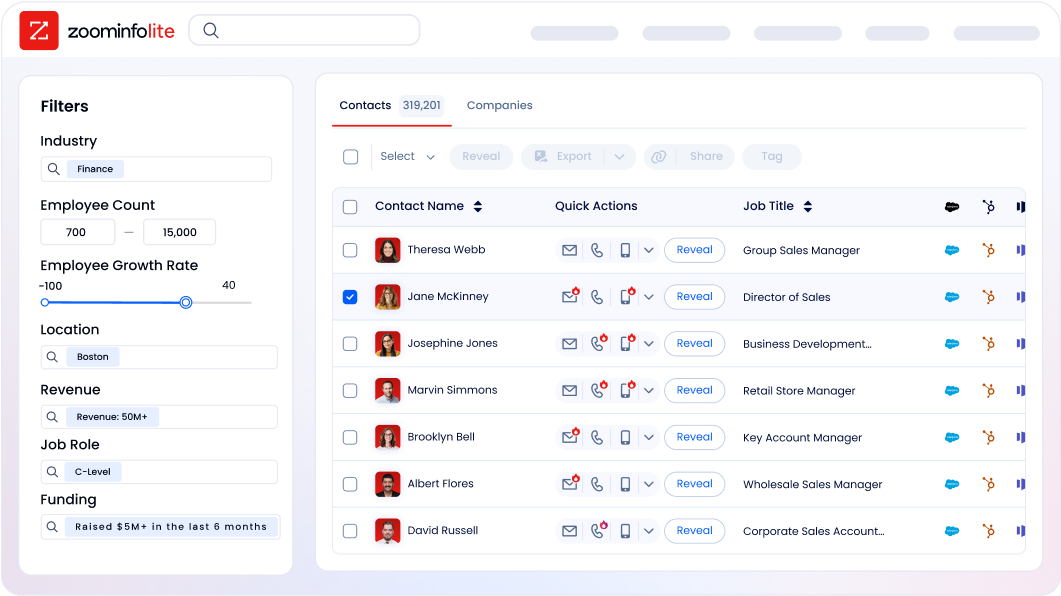
ZoomInfo uses consumption-based pricing with no publicly listed prices. Pricing scales around data access, API consumption, and AI activity. ZoomInfo Lite provides a permanent free tier with access to ZoomInfo's B2B database, 10 monthly export credits, and basic search tools. A 7-day free trial is also available with no credit card required.
Source: ZoomInfo
Because ZoomInfo complements rather than replaces a CRM, its cost sits alongside your CRM investment, but the return adds up: verified data cuts wasted outreach, better signals improve conversion, and enriched records make your CRM's AI more accurate.
User Experience and Implementation Reality
Oracle CX runs on the Redwood design system, Oracle's modern UX framework. But "modern" is relative. Reviewers describe the interface as "vast and lacks intuition", and setup "can be complex and require specialized knowledge." Effective deployments require Oracle Consulting or a certified systems integrator (Deloitte, Accenture, IBM), and implementation timelines of 6–12 months are common.
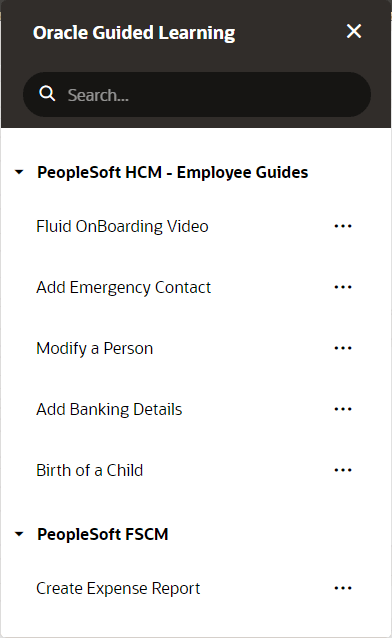
Oracle addresses the learning curve with Oracle Guided Learning, which delivers in-app guidance and reportedly accelerates adoption by 52%. But the platform remains enterprise-grade in every sense: capable and complex.
Source: Oracle
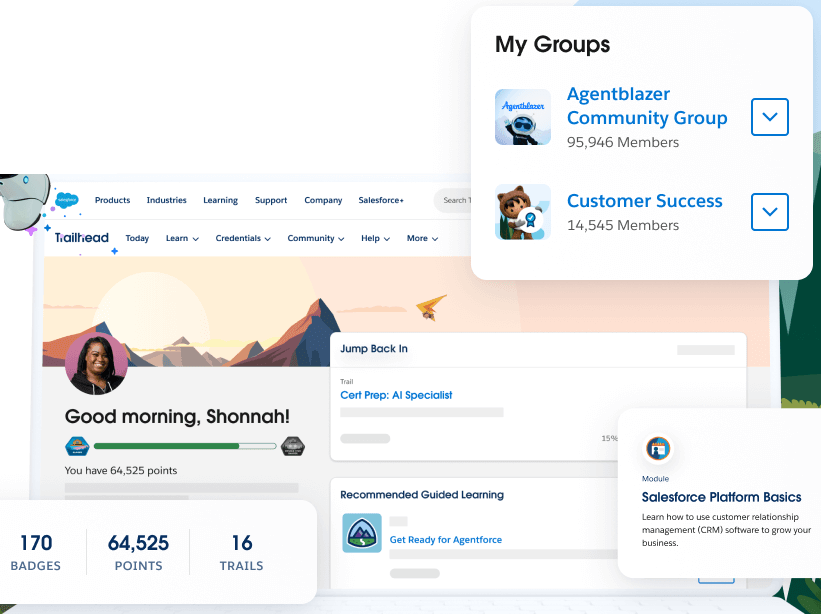
Salesforce has invested in usability through Lightning Experience, and Trailhead gives 6+ million learners free training. Simple Sales Cloud deployments can go live in weeks.
Source: Salesforce
But the full enterprise platform (multi-cloud, Data Cloud, Agentforce, custom objects) creates a steep learning curve that requires dedicated administrators. Over 70% of implementations are partner-led, meaning quality and cost depend on which partner you choose.
ZoomInfo deploys in weeks, not months. Because it integrates with your existing CRM rather than replacing it, there's no data migration or workflow reconstruction. ZoomInfo redesigned its onboarding program to span 90 days across planning, implementation, education, and adoption, producing a 25% improvement in customer satisfaction scores.
ZoomInfo University offers role-specific learning paths, and the platform is accessible without rebuilding your tech stack.

Source: ZoomInfo
Integration and Access: Locked-in vs. Open
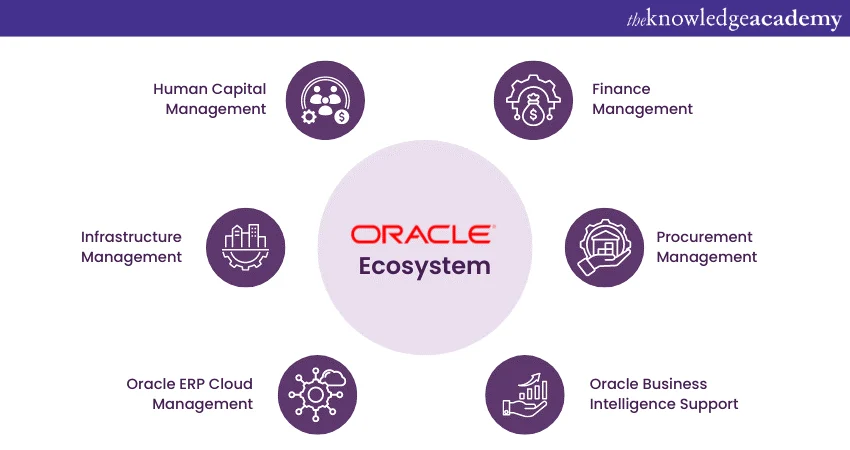
Oracle CX integrates within the Oracle ecosystem. The native connection to Oracle ERP, SCM, and HCM is its primary advantage. Outside that ecosystem, ISV partners include 6sense, Demandbase, DocuSign, Five9, and LinkedIn, but the total catalog is limited compared to Salesforce.
Source: Oracle
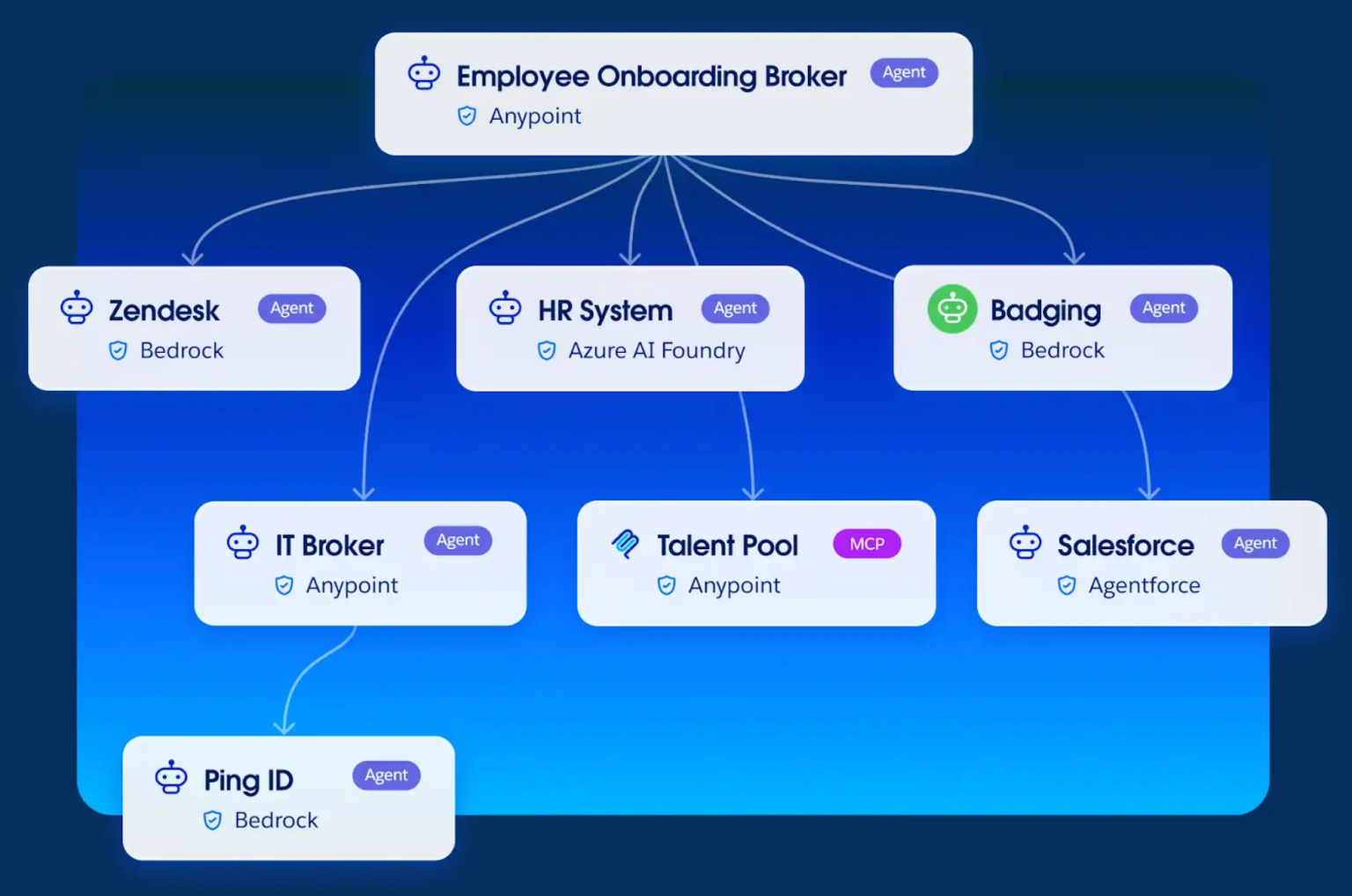
Salesforce has the broadest integration ecosystem. Beyond AppExchange, MuleSoft's Anypoint Platform provides hundreds of pre-built connectors for enterprise integrations, and Agent Fabric extends agent capabilities beyond Salesforce to Amazon Bedrock, Google Cloud Vertex AI, and other platforms. REST, SOAP, Bulk, Metadata, and Pub/Sub APIs cover virtually any integration pattern.
Source: MuleSoft
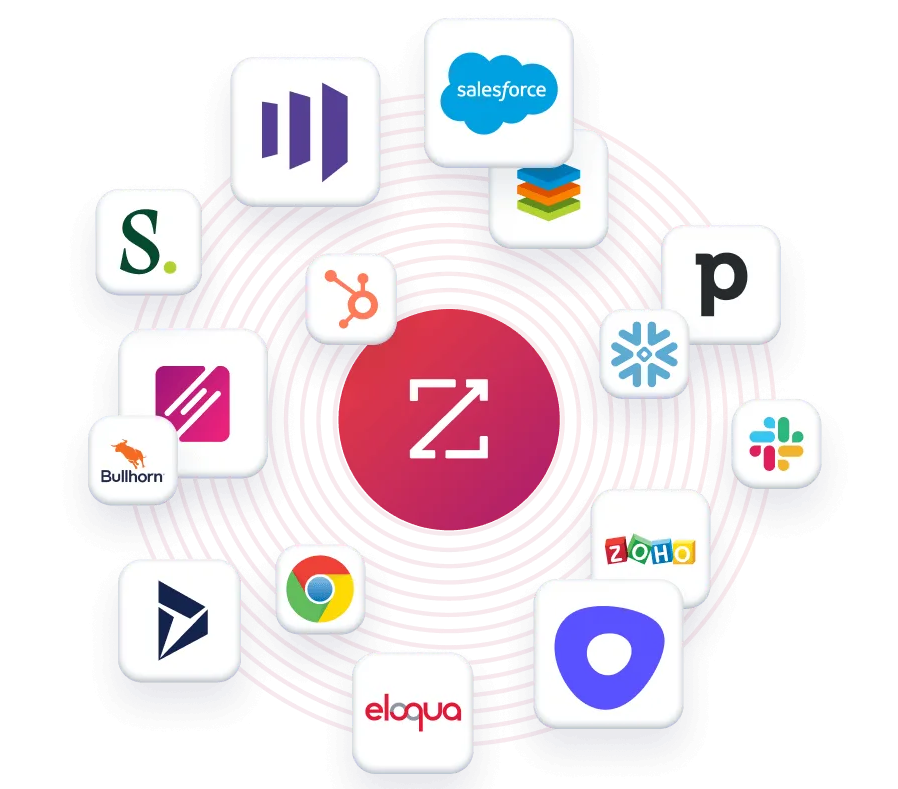
ZoomInfo takes an open approach. The ZoomInfo App Marketplace lists 120+ partner integrations, including Salesforce, HubSpot, Microsoft Dynamics 365, Snowflake, and Bullhorn. API access is included in all relevant plans, and the MCP server connects AI models directly to ZoomInfo's data with no custom coding required.
Source: ZoomInfo
Sellers reach this intelligence through the GTM Workspace, while marketers and RevOps teams use GTM Studio to build and run plays. Whether you use Oracle CX, Salesforce, or another CRM, ZoomInfo's intelligence layer works with your stack.
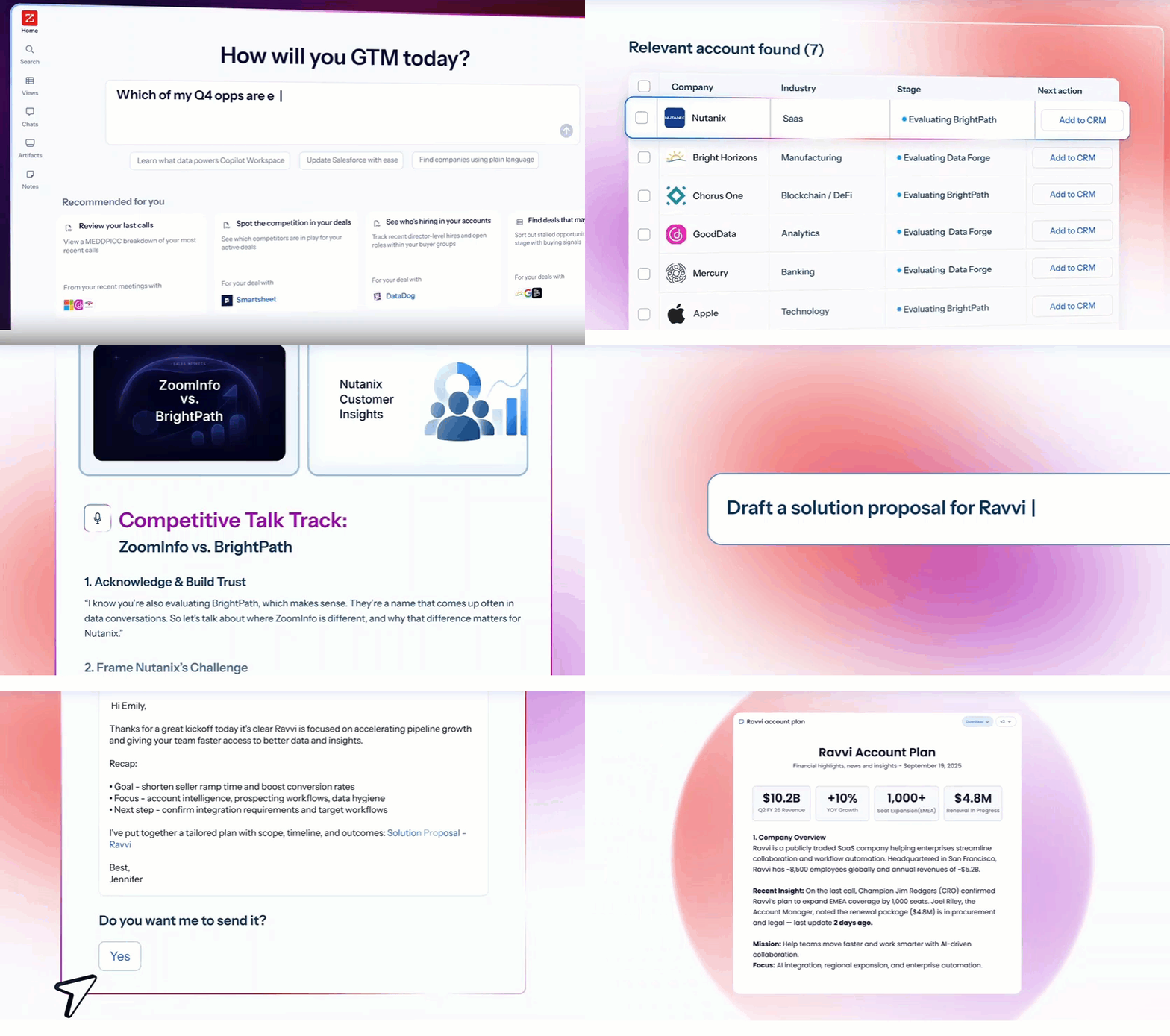
Source: ZoomInfo
"The plug-and-play aspect of the API means I can integrate it very easily into any process and get information at a moment's notice." (Jerry Wilson, Senior Marketing Intelligence Analyst at BDO Canada, who cut time on data dashboard updates by 87%. BDO Canada)
Oracle CX vs. Salesforce vs. ZoomInfo: Which Should You Choose?
The right choice depends on what problem you're solving.
Choose Oracle CX if:
Your organization runs Oracle ERP and needs native front-to-back-office integration
Complex quoting, configure-price-quote workflows, and subscription management are central to your sales process
You operate in industries with dedicated Oracle CX packages (Communications, Financial Services, Life Sciences, Utilities)
You can invest in a multi-month implementation with certified consulting partners
Data privacy requirements favor AI that runs entirely on your vendor's infrastructure
Choose Salesforce if:
You need the broadest CRM ecosystem with thousands of third-party apps and integrations
Your organization spans multiple departments that benefit from a unified CRM platform (sales, service, marketing, commerce, IT)
AI agent deployment across customer-facing channels is a priority
You want a range of entry points from a free CRM to full enterprise deployment
Your back-office systems are multi-vendor, and you need a CRM that's vendor-neutral
Use ZoomInfo with either platform if:
The accuracy and completeness of your B2B data directly affects revenue outcomes
You need verified contacts, direct dials, and business emails that your CRM doesn't generate on its own
Buyer intent signals and in-market account identification would improve your pipeline
You want an intelligence layer (accessible through GTM Workspace, GTM Studio, API, or MCP) that works regardless of which CRM you choose
Your AI investments need higher-quality data to reason over
See how ZoomInfo powers your CRM with a free trial or permanent ZoomInfo Lite access.
Oracle CX and Salesforce are both capable enterprise CRM platforms with real strengths. Oracle excels when the CRM needs to talk to ERP. Salesforce excels when the CRM needs to connect to everything else.
But the platform you choose matters less than the data you put into it. A CRM with verified contacts, current org charts, and live buying signals drives revenue. A CRM without them stores records. ZoomInfo ensures whichever platform you pick has the data to deliver results.
For a dedicated look at how Salesforce and ZoomInfo compare head-to-head, see our Salesforce vs. ZoomInfo comparison.
Oracle CX vs. Salesforce vs. ZoomInfo FAQ
What is the core difference between Oracle CX and Salesforce?
Oracle CX is an enterprise CRM suite that runs on the same Fusion platform as Oracle ERP, SCM, and HCM, providing native back-office integration without middleware. Salesforce is a standalone front-office CRM platform with the broadest partner ecosystem (9,000+ AppExchange apps) and AI capabilities through Agentforce.
Oracle is strongest for organizations already on Oracle infrastructure; Salesforce is strongest for organizations that need ecosystem breadth and vendor-neutral integration.
How does ZoomInfo relate to Oracle CX and Salesforce?
ZoomInfo is not a CRM replacement. It is a B2B data and GTM intelligence platform that integrates with both Oracle CX and Salesforce to provide the contact data, company intelligence, and buying signals that CRMs do not generate on their own. ZoomInfo's 500M contacts, 135M+ verified phone numbers, and buyer intent signals make whichever CRM you choose more effective.
Which platform has stronger AI capabilities?
Salesforce's Agentforce has broader adoption with $800M in ARR, 29,000 deals closed, and proven results like 85% autonomous case resolution on Salesforce's own support site. Oracle's Fusion Agentic Applications are newer but hold a structural advantage for organizations on Oracle Fusion, because agents can reason across CRM, financial, supply chain, and HR data simultaneously.
ZoomInfo's GTM Context Graph adds a different dimension: an intelligence layer that reasons across first-party CRM data and third-party B2B intelligence to capture why deals move or stall.
Which platform is cheaper?
Salesforce offers the lowest entry point with a free CRM for up to 2 users and Starter Suite at $25/user/month. Oracle CX lists at $150/user/month for Sales Enterprise with a three-year minimum contract and no free trial.
ZoomInfo offers a permanent free tier (ZoomInfo Lite) and a 7-day trial, with paid plans using consumption-based pricing. All three platforms see costs scale significantly in enterprise deployments, especially when factoring in implementation consulting and add-on modules.
Can I use ZoomInfo with Oracle CX?
ZoomInfo integrates with Oracle CX and other CRMs through its API and MCP access, which are included in all relevant ZoomInfo plans. While ZoomInfo's pre-built marketplace integrations are deepest with Salesforce, HubSpot, and Microsoft Dynamics, the Enterprise API enables programmatic data delivery into any system, including Oracle CX environments.
Which platform is best for organizations with complex quoting and billing?
Oracle CX holds a clear advantage for complex configure-price-quote workflows. Oracle CPQ connects natively to 20+ ERP systems and has been a Gartner Leader for nine consecutive years.
Salesforce offers Revenue Cloud with CPQ, contract lifecycle, and subscription management capabilities, but connecting them to non-Salesforce back-office systems requires additional integration work through MuleSoft or third-party middleware.
How long does implementation take for each platform?
Oracle CX enterprise deployments typically take 6–12 months and require certified systems integrators. Salesforce ranges from weeks for simple Sales Cloud setups to 3–12 months for multi-cloud enterprise deployments, with over 70% of implementations led by partners.
ZoomInfo deploys in weeks because it integrates with your existing CRM rather than replacing it, requiring no data migration or workflow reconstruction.
What if I'm not sure which CRM to choose yet?
Start with ZoomInfo. Because ZoomInfo works with any CRM, you can build your data foundation, identify target accounts, and enrich your contact database before choosing a platform. When you do pick Oracle CX or Salesforce, ZoomInfo's verified data and buying signals will be ready from day one.
