
Choosing between Outreach and Reply.io comes down to five questions:
Are you an enterprise team running complex, multi-stage deal cycles, or an SMB team focused on high-volume prospecting?
Do you need pipeline management, forecasting, and conversation intelligence alongside your outreach sequences, or is multichannel automation enough?
How important is the quality and comprehensiveness of your prospect data, and where does it come from today?
Can your budget handle enterprise software with custom pricing, or do you need transparent, predictable costs?
Do you want a platform that handles outreach only, or one that also provides the data and signals that make outreach effective?
In short, here's what we recommend:
Outreach is an enterprise platform built for large sales teams managing full deal cycles. It combines prospect engagement, deal management, conversation intelligence, forecasting, and rep coaching in a single platform, with AI agents that automate prospecting, research, and deal updates. Customers include Cisco, Snowflake, and Siemens. However, it carries high costs, a steep learning curve, and no public pricing, which makes it hard to justify for smaller teams.
Reply.io is a multichannel outreach platform for SMBs, startups, and agencies that want to run personalized prospecting across email, LinkedIn, WhatsApp, SMS, and calls without enterprise pricing. Its Jason AI assistant can autonomously find prospects, write personalized sequences, handle replies, and book meetings. With plans starting at $49/user/month, Reply.io is affordable for outbound-focused teams. The trade-offs: users report bugs that disrupt campaigns, LinkedIn automation that risks account blocks, and analytics that offer limited insight.
Both platforms help you execute outreach. But execution is only as good as the data behind it. If your prospect data is incomplete, your sequences land in the wrong inboxes. If you can't see which accounts are in-market, you're guessing who to contact and when. That's where a different approach matters.
ZoomInfo is a GTM platform that starts where Outreach and Reply.io can't: the data. With 500M contacts, 100M companies, 135M+ verified phone numbers, and 200M+ verified business email addresses, ZoomInfo provides the data that makes outreach work. Its GTM Context Graph combines this data with your CRM records, conversation transcripts, and behavioral signals to show not just who to contact, but why they're likely to buy now. Sellers execute through GTM Workspace, marketers and RevOps build plays in GTM Studio, and any tool can access the same intelligence via APIs and MCP. For teams that want outreach grounded in comprehensive data and intelligence, ZoomInfo is the platform to consider.
If your team needs outreach built on verified data, try ZoomInfo free.
Outreach vs. Reply.io vs. ZoomInfo at a glance
Outreach | Reply.io | ZoomInfo | |
|---|---|---|---|
Core strength | Enterprise sales execution and deal management | Multichannel outreach automation for SMBs | B2B data, intelligence, and GTM ex .ecution |
B2B data | No native database; relies on third-party data | 1B+ contacts, basic built-in database | 500M contacts, 135M+ verified phones, 200M+ verified emails |
Outreach channels | Email, phone, LinkedIn, SMS, live chat | Email, LinkedIn, WhatsApp, SMS, calls | Email, phone, ads, direct mail (via GTM Studio) |
AI capabilities | Revenue, Research, Deal, and Personalization Agents | Jason AI SDR (autonomous prospecting and reply handling) | GTM Context Graph, AI agents in Workspace and Studio |
Conversation intelligence | Built-in (Kaia) | Not available | Built-in (Chorus) |
Forecasting | AI-powered with scenario planning | Not available | AI-powered via GTM Workspace |
Buyer intent signals | Not native | Basic hiring/tech intent signals | 210M IP-to-Org pairings, Guided Intent |
Pricing | Custom quotes, no public pricing | Starting at $49/user/month | Custom quotes; free tier available |
Best for | Enterprise revenue teams (sales, CS, RevOps) | SMBs and agencies scaling outbound | Teams that need data, intelligence, and execution in one platform |
Outreach is built for enterprise deal cycles; Reply.io is built for outbound volume
The difference between these platforms is who they're for and what problem they solve.
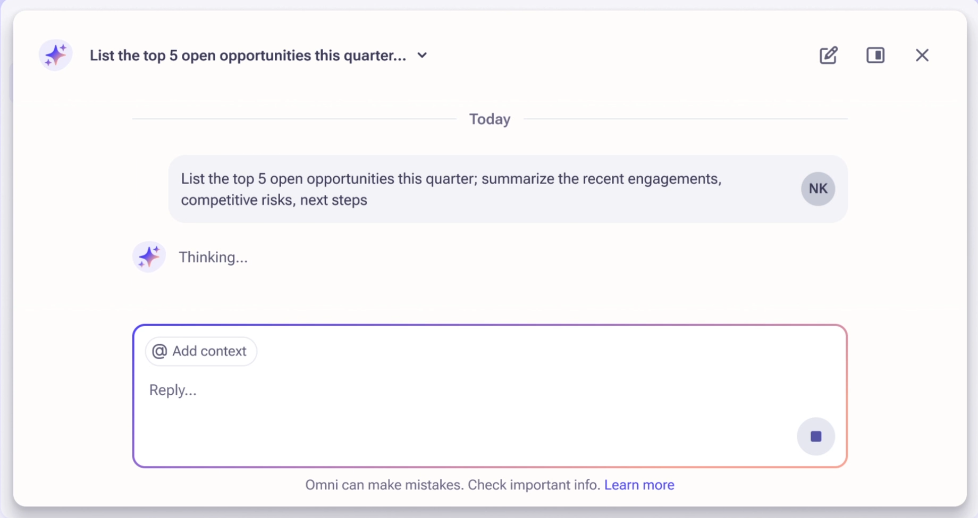
Outreach serves organizations where closing a deal involves multiple stakeholders, months-long sales cycles, and handoffs between SDRs, AEs, and customer success teams. The platform was named a Leader in the 2025 Gartner Magic Quadrant for Revenue Action Orchestration Platforms because it connects engagement, deal management, coaching, and forecasting into one system.
Source: Outreach
Reply.io serves a different market. It's built for outbound-driven B2B teams, startups, SMBs, and solo professionals who need to reach prospects with personalized messages across multiple channels without hiring a large team.
Source: Reply.io
The platform's strength is combining email, LinkedIn, WhatsApp, SMS, and calls into unified outreach sequences that run on autopilot.
Problems arise when teams choose the wrong tool for their situation. An SMB buying Outreach is paying enterprise prices for features they'll never use. An enterprise buying Reply.io will quickly outgrow its reporting and deal management capabilities.
The AI agent approaches reflect different priorities
Both platforms bet on AI, but their implementations reveal different priorities.
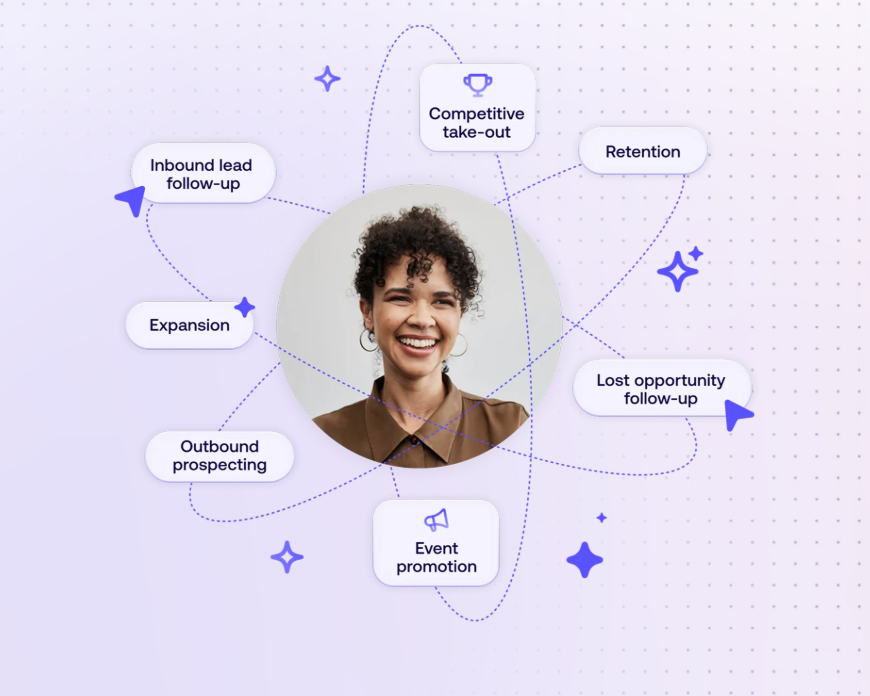
Outreach offers four AI agents: Revenue Agent for prospecting, Research Agent for account intelligence, Deal Agent for CRM updates, and Personalization Agent for message tailoring. These agents support the enterprise seller's full workflow.
Source: Outreach
Deal Agent, for example, transforms meeting conversations into accurate opportunity field recommendations so reps don't spend time manually updating Salesforce. Research Agent pulls from both internal and external sources (calls, meetings, emails) to build account intelligence.
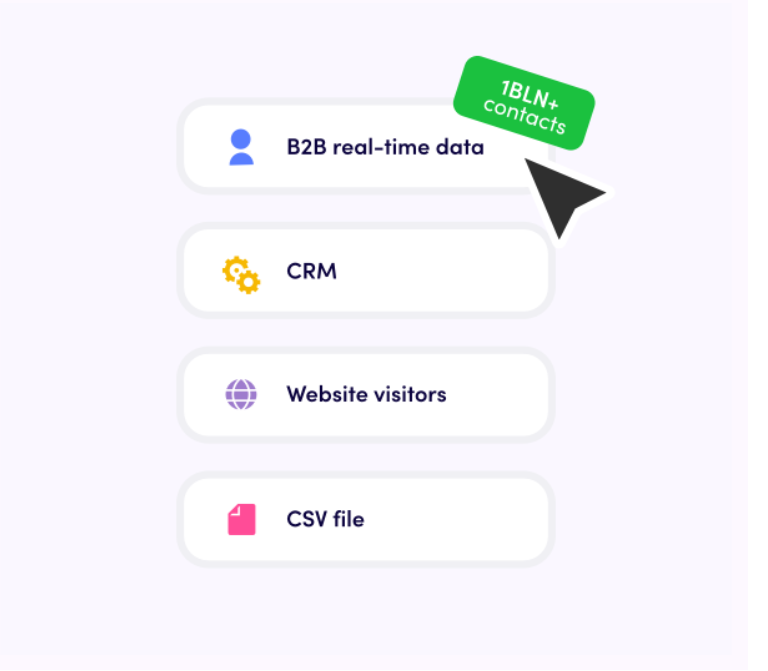
Reply.io's Jason AI takes a different approach: it tries to replace the SDR. Jason finds prospects from a built-in database of 1B+ contacts, researches each one, builds multichannel sequences with personalized messages, and handles replies, including answering questions, addressing objections, and booking meetings.
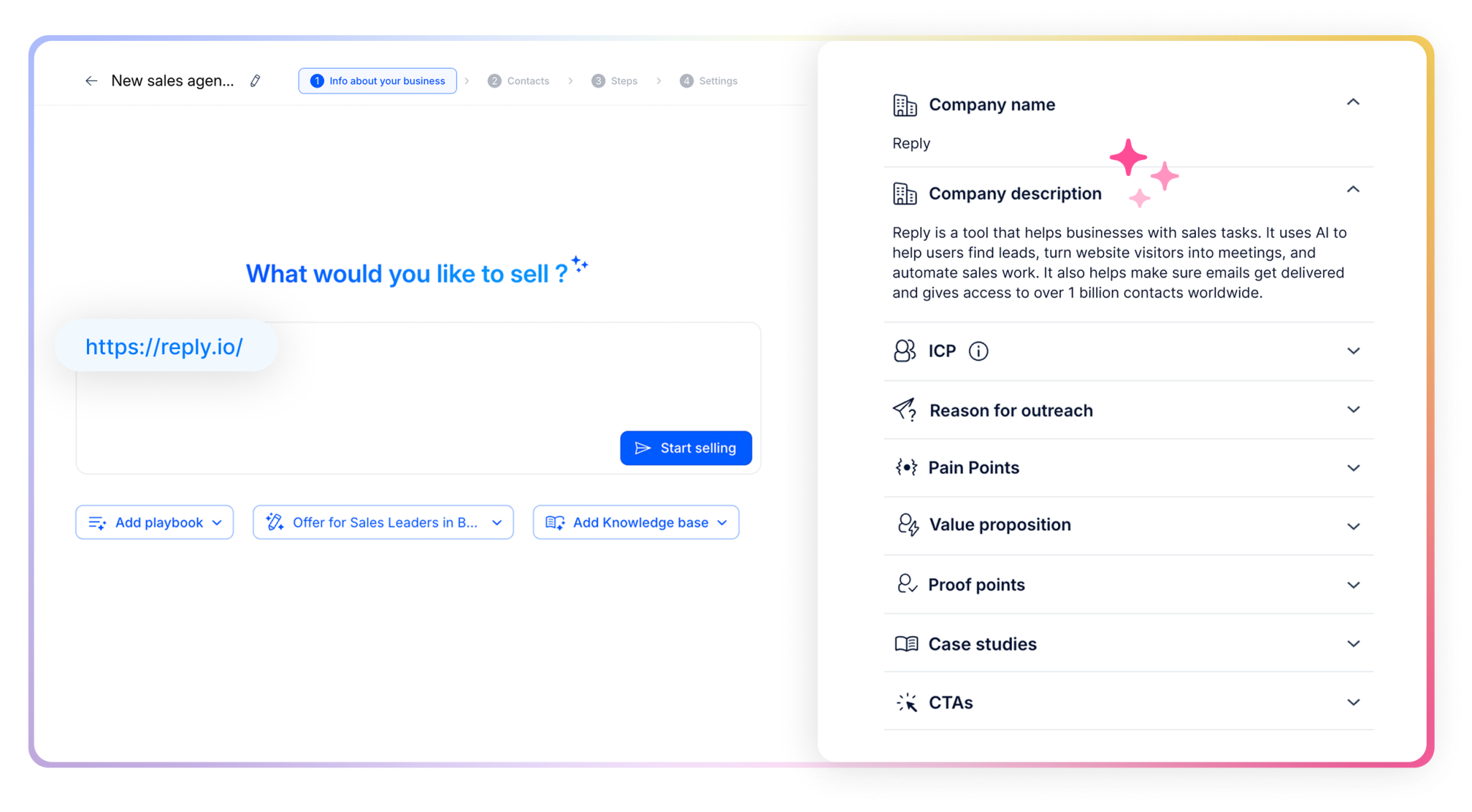
Source: Reply.io
Users can choose their preferred AI engine (Claude, Gemini, Mistral, or OpenAI) and run Jason in approval mode (review before sending) or automatic mode. Jason's three-level validation system checks brand voice, playbook compliance, and personalization accuracy before any message goes out.
Both approaches are credible for their target markets. Outreach's agents augment experienced enterprise sellers who need efficiency gains in complex workflows. Jason AI automates the entire outbound process for teams that can't afford (or don't need) dedicated SDRs.
Where the data comes from matters more than how it's sent
Here's what neither Outreach nor Reply.io addresses well: the quality and comprehensiveness of your prospect data.
Outreach doesn't have a native B2B database. It relies on whatever data you bring in from your CRM or third-party providers. It runs sequences and manages deals well, but if your contact data is stale or incomplete, Outreach can't fix that.
Reply.io includes a built-in B2B database with over 1 billion contacts and verified emails with bounce rates below 3%. That's an advantage over Outreach for teams that don't have an existing data provider. But Reply's database is primarily a prospecting tool. It offers 16 filters for building lists and basic intent signals like hiring and technology changes, useful but limited next to platforms built for B2B intelligence.
ZoomInfo operates at a different scale. Its GTM Context Graph processes 1.5B+ data points daily, and the underlying data is maintained through a verification pipeline backed by 300+ human researchers and automated ML that scans 28 million site domains daily.
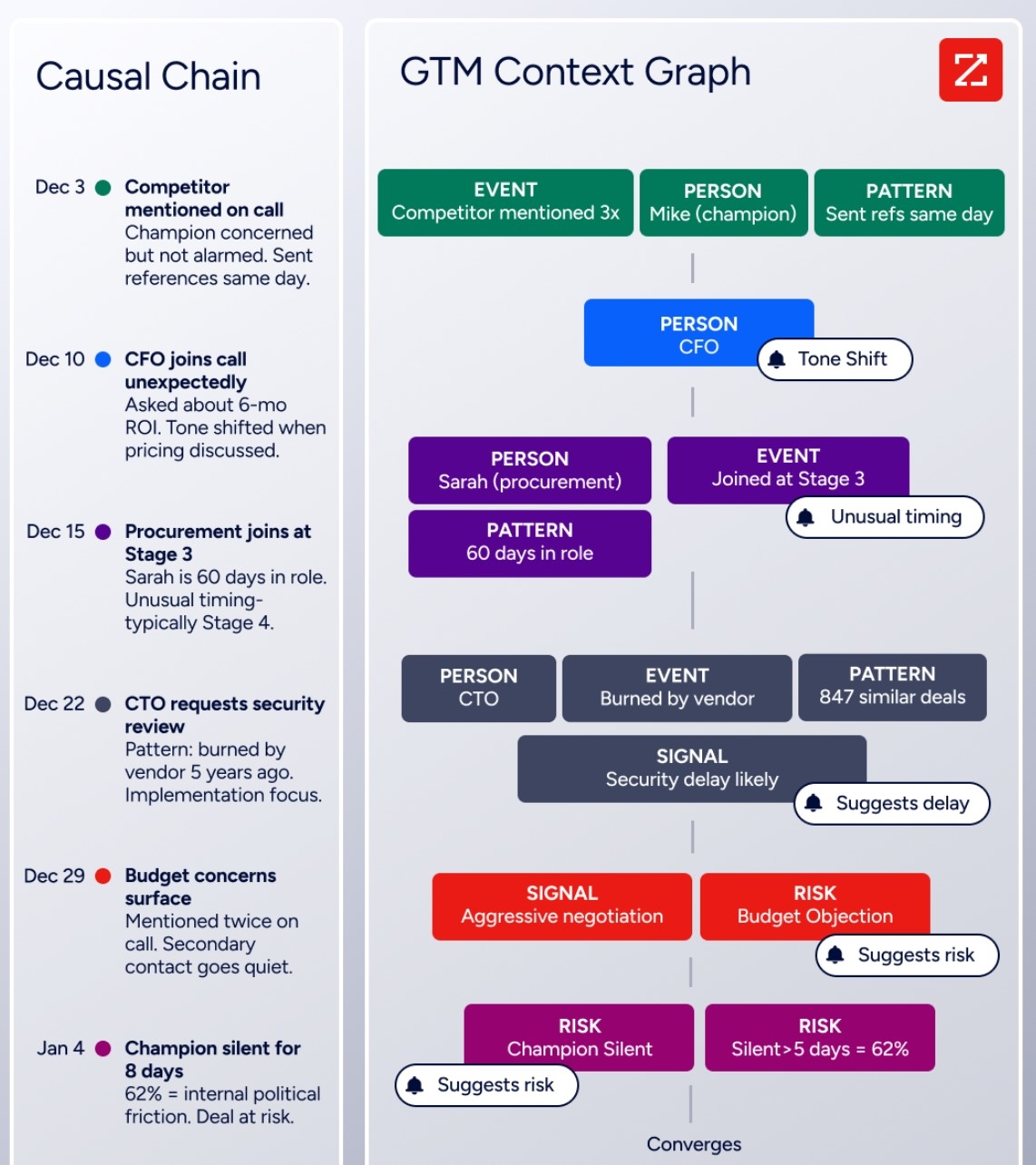
The result is up to 95% accuracy on first-party data, validated by an independent consultant who, in a Fortune 500 competitive RFP analyzing 25 million contacts across vendors, concluded that "no other competitor came even close."
But ZoomInfo's advantage isn't just the size of the database. It's what the platform does with the data. Buyer Intent tracks signals from 210 million IP-to-Organization pairings and 6 trillion+ keyword-to-device pairings sourced monthly.
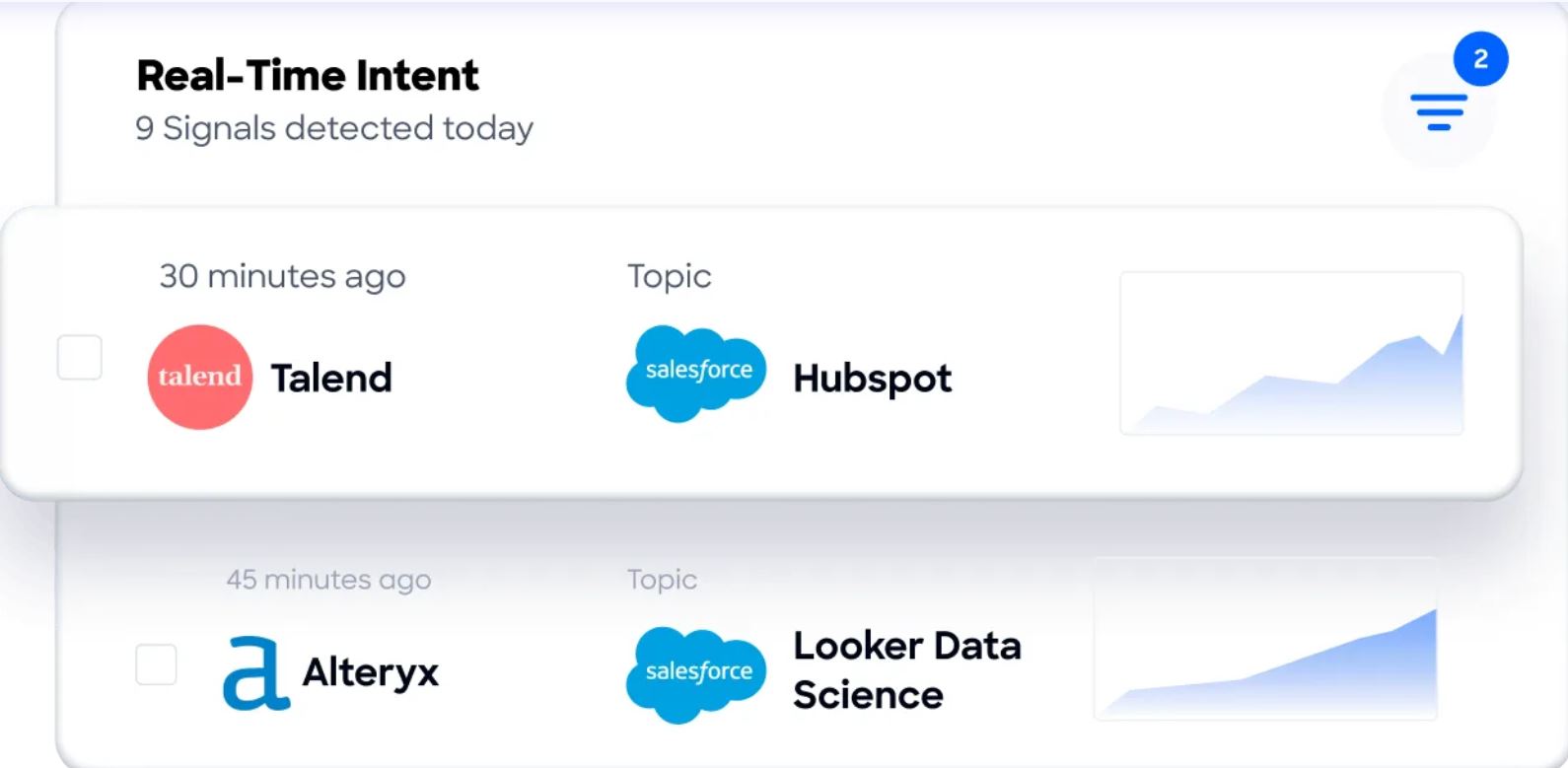
Guided Intent, which is exclusive to ZoomInfo, identifies topics historically correlated with deal success rather than requiring manual topic selection.
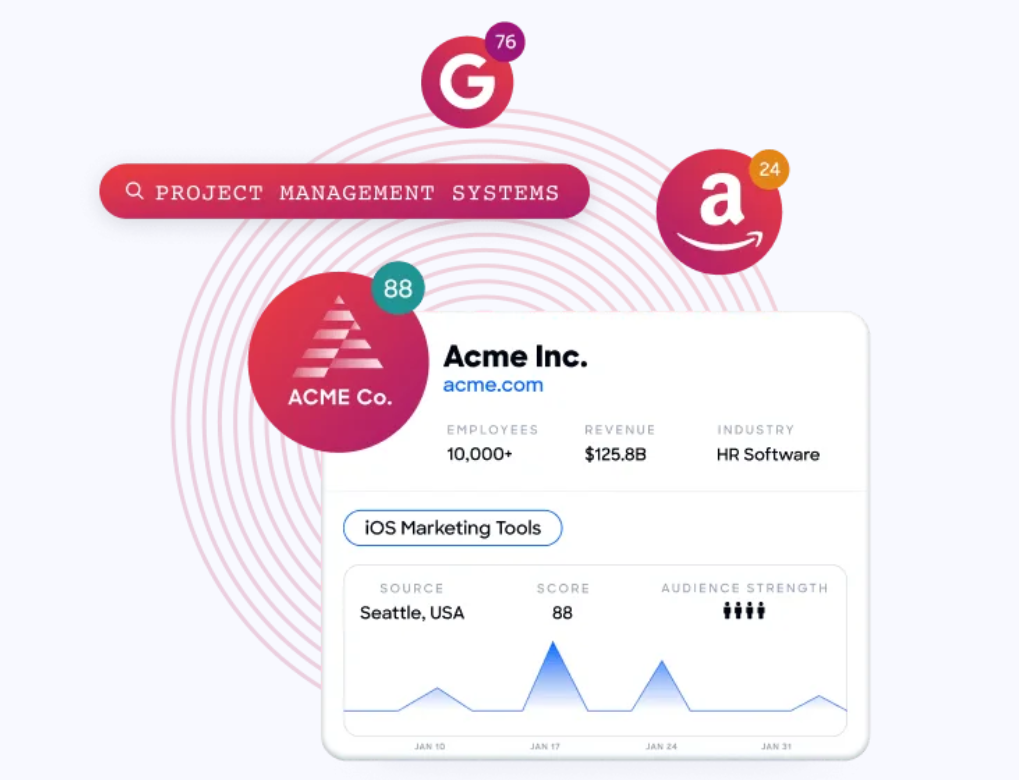
WebSights resolves anonymous website visitors to companies and individuals. Technographics profile the tech stack of 30+ million companies across 30,000+ technologies.
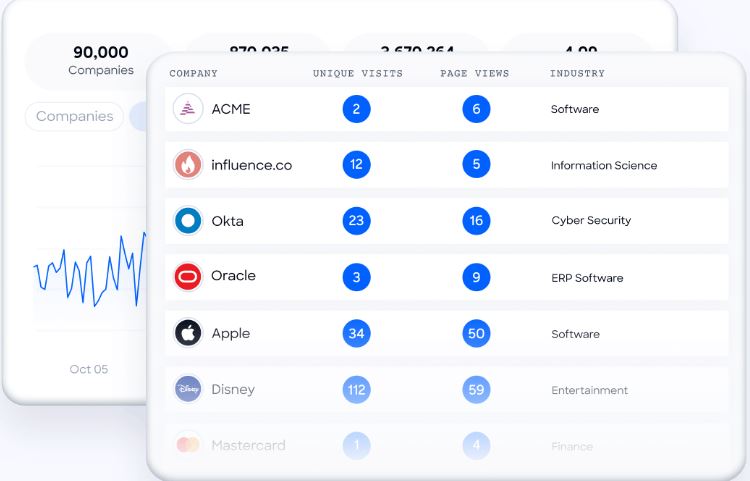
For outreach, the difference is practical: the direct dial actually rings, the email actually lands, and you know the account is in-market before you reach out.
Snowflake uses ZoomInfo for at least one-third of the most critical data features in their Account Propensity Scoring model. Accounts monitored using ZoomInfo-powered scores showed 90% higher opportunity open rates and 2x higher customer conversion rates. (Snowflake Case Study)
Conversation intelligence separates execution from guessing
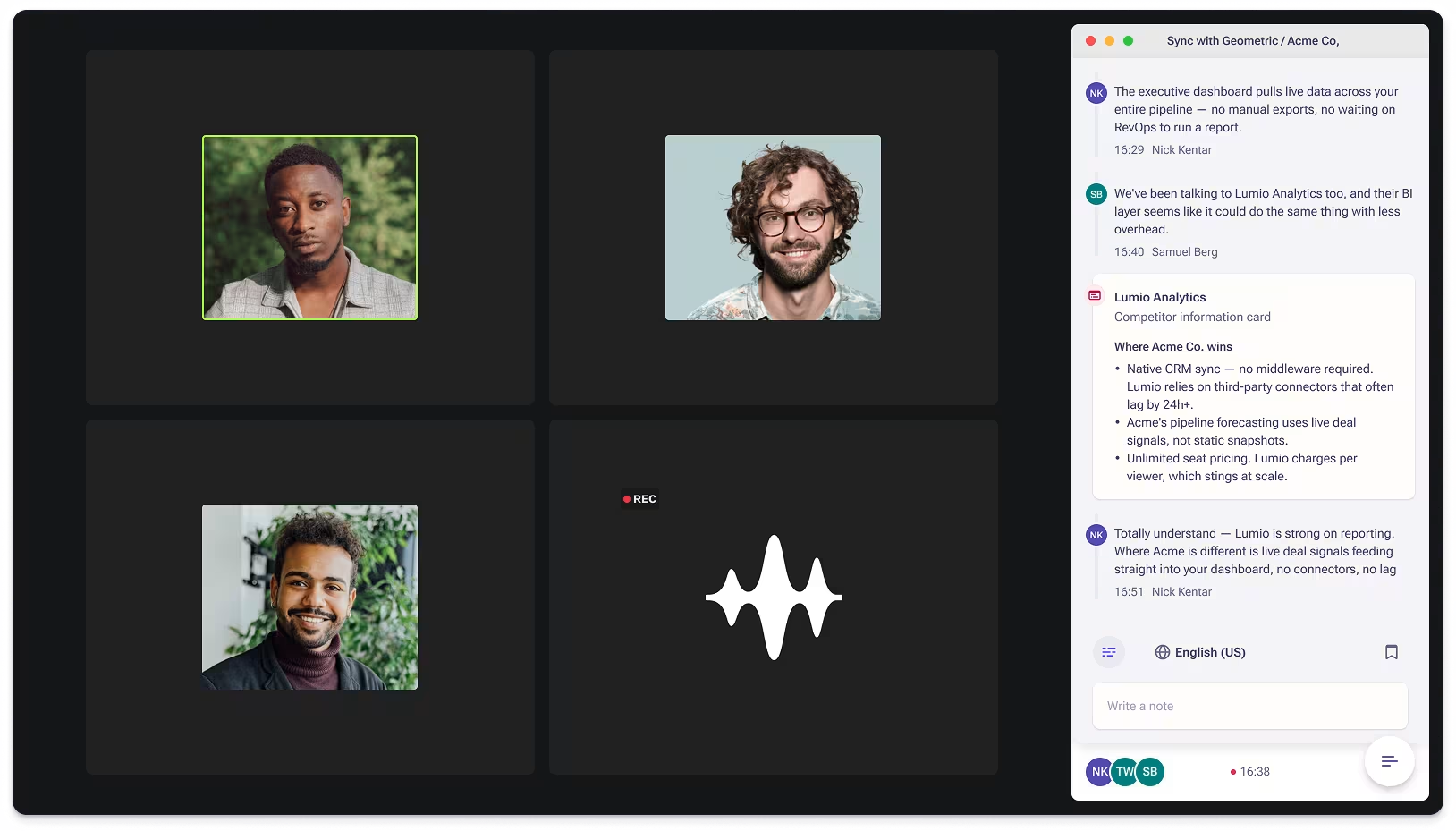
Outreach includes Kaia, its built-in conversation intelligence engine. Kaia joins live meetings, provides real-time transcription and content cards, automatically captures action items, and generates AI-powered summaries and follow-up emails after calls.
Source: Outreach
Bringing Kaia into meetings increases follow-up meeting probability by up to 36% and helps teams shorten sales cycles by 11 days. Managers can use Coach Cards to create structured evaluation frameworks with AI pre-populating answers, and Smart Topics to track buyer sentiment and topic trends across calls.
Reply.io does not offer conversation intelligence. Its focus stops at the outreach layer: sending messages and handling replies. For teams that primarily run cold outreach campaigns, this may be sufficient. For teams managing active deals where understanding buyer conversations is critical, it's a gap.
ZoomInfo provides conversation intelligence through Chorus, which captures and analyzes all customer calls, meetings, and emails.
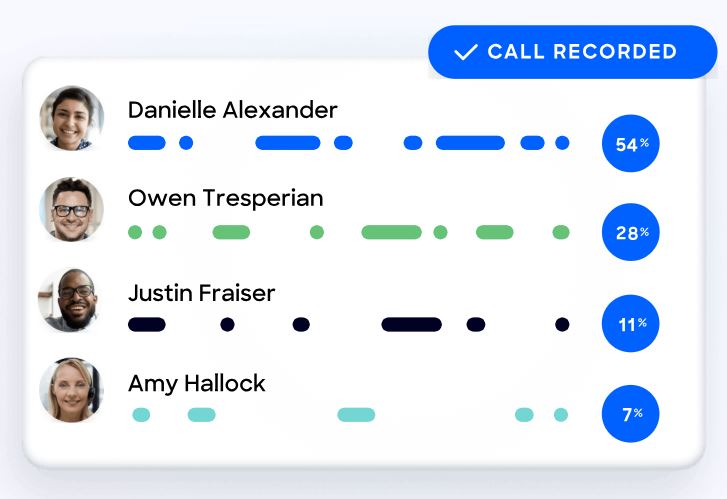
What makes Chorus different from standalone CI tools is Connected Intelligence: when a manager reviews a call, they see ZoomInfo's full profile and relationship history for every participant, including contact details, company insights, and relevant signals, without cross-referencing a separate system.
More importantly, Chorus feeds the GTM Context Graph. As ZoomInfo's CPO Dominik Facher explains, a CRM records that a deal moved stages, but "has no record of why it happened." The GTM Context Graph connects conversation data, CRM records, and third-party signals to capture that context, so each AI recommendation improves.
Seismic's sales team attributed 39% of active pipeline to opportunities identified or influenced by ZoomInfo signals, while saving 11.5 hours per week per seller. (Seismic Case Study)
Pricing structures serve different buyers
Outreach operates on per-user pricing with no platform fees across three tiers: Amplify Core, Amplify Plus, and Amplify Pro. Specific dollar amounts aren't published; you need to contact sales for a customized proposal. Core includes AI agents and sales engagement. Deal management and conversation intelligence require Plus.
Forecasting requires Pro. Voice calling runs on a separate usage-based model. Third-party analysis confirms the platform carries high costs and requires training. With no free trial on their site, evaluation requires a demo.
Reply.io publishes its prices, an advantage for budget-conscious teams. The Email Volume plan starts at $49/user/month (billed annually) for email-only automation. The Multichannel plan starts at $89/user/month to add LinkedIn, WhatsApp, SMS, and calls. The AI SDR plan (Jason AI) starts at $500/month for 1,000 active contacts. A 14-day free trial is available with no credit card required.
However, Reply.io's actual costs can diverge from advertised prices. LinkedIn automation adds $69/account and calls/SMS adds $29/account as separate add-ons, so a solo rep on the $49/month plan who needs LinkedIn and SMS would pay $147/month total. Email validation costs $5 per 1,000 validations, and data credits beyond the included amount are charged in blocks.
Users also report a mandatory 3-month minimum commitment that isn't clearly disclosed during signup, and auto-renewal settings that have caused unexpected charges.
ZoomInfo uses custom-quoted, seat-and-credit-based pricing with no published dollar amounts. Plans are organized into Sales and Marketing tiers (Professional, Advanced, Enterprise for Sales; Marketing Demand, ABM Lite, ABM Enterprise for Marketing), with capabilities gated by tier rather than just credit volume.
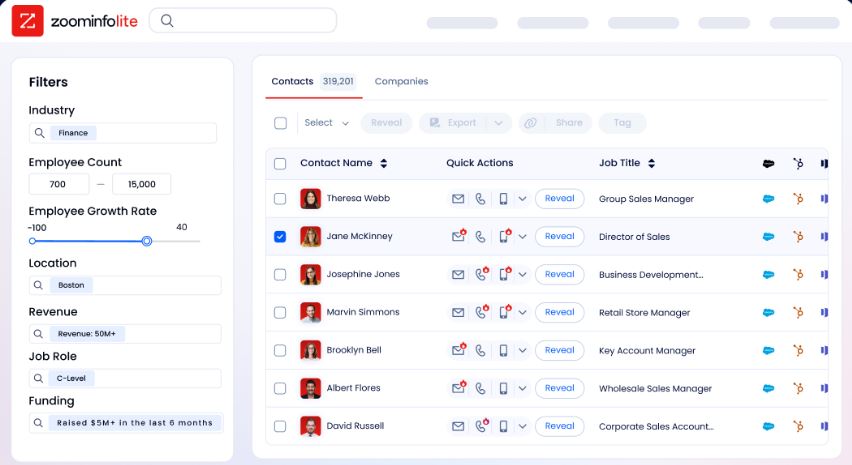
Unlike Outreach or Reply.io, ZoomInfo offers two free entry points: ZoomInfo Lite, a permanent free tier with 10 monthly export credits and access to the B2B database, and a 7-day free trial with broader feature access. The pricing reflects the platform's scope: you're paying for data, intelligence, and automation, not just outreach.
Platform reliability and support affect daily work
For tools your team uses every day, stability and support quality matter as much as features.
Outreach provides tiered support: Plus (included with all plans, web and live chat, Monday-Friday) and Enterprise (24/7 with phone support and dedicated engineers). Response times for the highest priority issues: 30 minutes for Enterprise, 1 hour for Plus.
The platform maintains 99.9% guaranteed uptime and achieves 60-90 second chat response times for premium support. Outreach University provides structured learning paths and certifications. The biggest challenge is the learning curve: the feature-rich platform can overwhelm new users, and mastering it requires training.
Reply.io provides support exclusively through live chat during operating hours (2 AM - 7 PM EST), with no phone support or 24/7 availability. The company reports a 96% satisfaction rate with 2-minute average response time. But reliability is where Reply.io has documented issues.
Multiple users report bugs that disrupt campaigns, including email sequences sending incorrectly or skipping steps, Gmail sync issues requiring frequent reconnections, and contacts disappearing from sequences unexpectedly. LinkedIn automation violates LinkedIn's ToS and can result in account blocks. For a platform handling your outbound pipeline, these stability issues carry cost.
ZoomInfo provides support via its Help Center, including a Knowledge Center, ZoomInfo University with role-specific learning paths, and direct support by phone at +1 866-904-9666. Enterprise tiers include a dedicated customer service manager. The platform redesigned its onboarding to 30-90 days, improving customer satisfaction scores by 25%.
ZoomInfo has more to learn than a single-purpose outreach tool, but it handles data, intelligence, and execution rather than just one piece.
Integrations determine how well each platform fits your stack
Outreach offers bi-directional CRM synchronization with Salesforce and Microsoft Dynamics 365, syncing at 10-minute intervals. The Outreach Marketplace provides over 100 pre-built integrations including LinkedIn Sales Navigator, Microsoft 365, Gmail, and Outlook. The platform has joined Anthropic's MCP Ecosystem, connecting Outreach's revenue data to Claude.
For custom integrations, Outreach provides a REST API built on JSON API 1.0 with a 10,000 requests/hour rate limit per user.
Reply.io offers native two-way integrations with Salesforce, HubSpot, and Pipedrive, with auto-sync every 2 hours. The platform also connects through Make, n8n, Zapier, and ApiX-Drive for third-party workflows. Its API provides programmatic access with a 15,000 calls/month rate limit per user. Reply.io recently introduced MCP support for exposing sales engagement actions to AI agents.
However, users report integration challenges, particularly with Salesforce around contact-to-account relationships and company-less prospects.
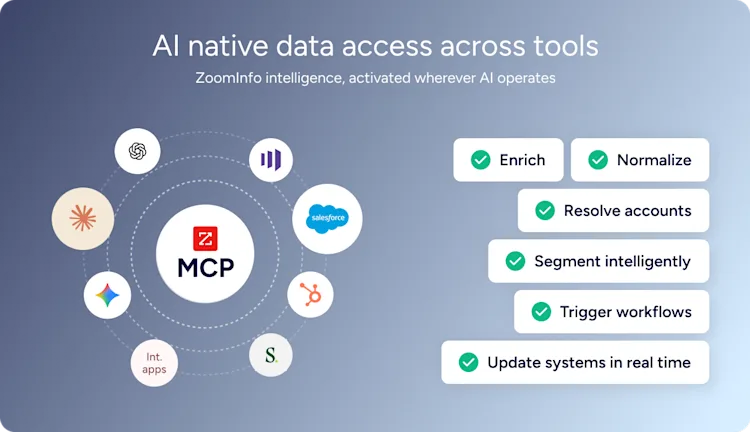
ZoomInfo's integrations reflect its role as infrastructure. The App Marketplace lists 120 partner integrations across CRM, marketing automation, sales engagement, data warehouse, and communications categories. API access is included in all relevant plans, and the MCP server connects AI models directly to ZoomInfo's data as a native tool.
The Enterprise API supports Search, Enrich, Copilot (AI intelligence), Marketing (audience management), and Engagement endpoints.
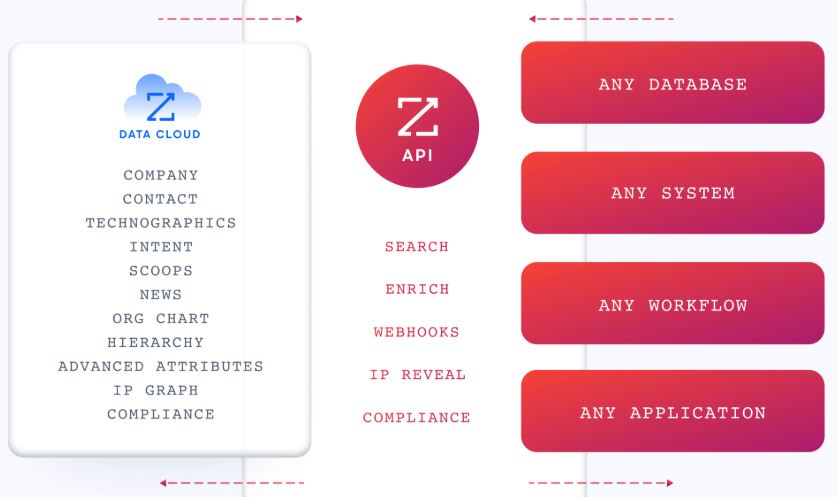
Through Cloud Partners, you can ingest data directly into AWS, Google Cloud, Snowflake, and Databricks. ZoomInfo also integrates with both Outreach and Salesloft, so you can use its data to power sequences in either platform.
BDO Canada's Jerry Wilson, Senior Marketing Intelligence Analyst: "The plug-and-play aspect of the API means I can integrate it very easily into any process and get information at a moment's notice." BDO achieved an 87% reduction in time spent on updates to their internal data dashboards using ZoomInfo's API. (BDO Canada Case Study)
Outreach vs. Reply.io vs. ZoomInfo: Which should you choose?
The right choice depends on what your team needs, not which platform has the longest feature list.
Choose Outreach if:
You're an enterprise organization with complex, multi-stage deal cycles
You need deal management, conversation intelligence, forecasting, and coaching alongside outreach
You have the budget for custom enterprise pricing and the resources for extended onboarding
Your sales team includes 50+ reps who need consistent processes and manager visibility
You already have a strong B2B data provider and need an execution platform
Choose Reply.io if:
You're an SMB, startup, or agency focused primarily on outbound prospecting
You want multichannel automation (email, LinkedIn, WhatsApp, SMS, calls) at an accessible price
An autonomous AI SDR that handles prospecting and replies would save you time
Your team is small enough that basic analytics and reporting are sufficient
You can tolerate occasional platform stability issues in exchange for affordability
Choose ZoomInfo if:
You want the data and intelligence that make outreach effective, not just the execution tools
You need verified prospect data, buyer intent signals, and account intelligence in one platform
Your team spans sales, marketing, and RevOps and needs shared intelligence across functions
You want to use ZoomInfo's data inside your existing tools via API and MCP, or through its GTM Workspace and Studio
You're ready to send the right messages to the right accounts instead of just sending more
Start with ZoomInfo Lite for free or request a full trial to see the platform in action.
Outreach and Reply.io are both capable outreach platforms for their respective markets. But outreach execution is only one piece. Your data quality, targeting intelligence, and timing signals determine whether your sequences generate pipeline or noise.
ZoomInfo provides all three, and lets you access them from its own products or the tools you already use.
Outreach vs. Reply.io vs. ZoomInfo FAQ
What is the core difference between Outreach, Reply.io, and ZoomInfo?
Outreach is an enterprise sales execution platform that combines outreach sequences with deal management, conversation intelligence, forecasting, and coaching. Reply.io is a multichannel outreach automation tool built for SMBs and agencies, with an AI SDR that handles prospecting and replies.
ZoomInfo is a GTM platform built on comprehensive B2B data, providing the intelligence and signals that make outreach effective, along with its own execution tools.
Which platform is cheapest?
Reply.io has the lowest entry price at $49/user/month for email-only automation, though actual costs rise with add-ons for LinkedIn ($69/account) and calls/SMS ($29/account). Outreach doesn't publish pricing and requires a sales conversation. ZoomInfo also uses custom pricing but offers ZoomInfo Lite as a permanent free tier with access to its B2B database and 10 monthly export credits.
Can I use ZoomInfo with Outreach or Reply.io?
Yes. ZoomInfo integrates with Outreach through its App Marketplace and can push data and signals directly into Outreach sequences. ZoomInfo also integrates with Reply.io via CRM connections and its API. Many teams use ZoomInfo as the data and intelligence layer while using a separate platform for sequence execution.
Which platform has the best AI capabilities?
Each platform's AI serves a different purpose. Outreach's AI agents automate enterprise tasks like deal updates, forecast preparation, and account research. Reply.io's Jason AI acts as an autonomous SDR that finds prospects, writes sequences, and handles replies.
ZoomInfo's GTM Context Graph provides the intelligence layer, combining B2B data with CRM records, conversation intelligence, and behavioral signals to show why deals move or stall, then powering AI recommendations across its products and any connected tool.
Which platform has the best B2B data for prospecting?
ZoomInfo has the most comprehensive B2B data: 500M contacts, 135M+ verified phone numbers, and 200M+ verified business email addresses, backed by 300+ human researchers and up to 95% accuracy. Reply.io includes a built-in database of 1B+ contacts with verified emails (below 3% bounce rate) and basic intent signals. Outreach does not include a native B2B database.
Does Reply.io's LinkedIn automation risk getting accounts blocked?
Yes. Multiple sources confirm that Reply.io's LinkedIn automation violates LinkedIn's Terms of Service and users report account blocks, restrictions, or unexpected behavior. Teams with strict LinkedIn compliance requirements should consider this risk before relying on Reply.io's LinkedIn automation features.
Which platform is best for enterprise sales teams?
Outreach is the strongest fit for large enterprise sales organizations that need deal management, conversation intelligence, forecasting, and coaching alongside outreach execution. ZoomInfo is better for enterprise teams that also need a data foundation, buyer intent signals, and cross-functional intelligence across sales, marketing, and RevOps. Reply.io is not designed for enterprise sales operations.
Do any of these platforms offer a free plan?
ZoomInfo offers ZoomInfo Lite, a permanent free tier with access to its B2B database, 10 monthly export credits, a Chrome extension, and HubSpot integration. Reply.io offers a free plan with AI sequence generation, a sequence builder, and 200 data credits per month, but cannot send automated emails. Outreach does not offer a free plan or advertise a free trial on its website.
Comparing Outreach and Reply.io? These related breakdowns go deeper:
