

Choosing between Pardot and SharpSpring for B2B marketing automation comes down to five questions:
Are you already running Salesforce CRM, or do you need a platform with its own CRM built in?
Is your marketing team large enough to justify a $15,000+/year platform, or do you need something cheaper?
Do you need AI scoring and account-based marketing, or will standard automation workflows do?
Are you an agency managing multiple client accounts, or a single company running its own marketing?
Before you automate outreach, do you actually know who your best prospects are and when they're ready to buy?
In short, here's what we recommend:
Pardot (now Marketing Cloud Account Engagement) is the natural choice for B2B teams already on Salesforce CRM. It shares Salesforce's data model, so marketing and sales work from one set of records with no sync lag.
Its Engagement Studio, dual lead scoring and grading system, and Agentforce-powered campaign creation make it a strong option for mid-market to enterprise B2B organizations.
The trade-off: pricing starts at $1,250/month and requires a Salesforce CRM license, the email and landing page builders feel dated, and the learning curve often demands a certified admin.
SharpSpring (now Constant Contact Lead Gen & CRM) is built for agencies and cost-conscious SMBs who want marketing automation and CRM in one platform without enterprise pricing.
Its VisitorID tracking, visual workflow builder, and built-in CRM let you capture, score, nurture, and close leads without bolting together separate tools. The agency features (white-label interface, single sign-on for managing clients, month-to-month contracts) have no direct competitor.
But the CRM is SMB-grade, reporting is limited, and the platform's future under Constant Contact ownership is less clear than it was as an independent company.
Both platforms are good at nurturing leads once you have them. But neither solves the problem that comes before automation: knowing who to target, when they're researching solutions, and what their buying committee looks like. That intelligence gap is where most B2B marketing programs lose before they begin.
ZoomInfo is a B2B data and GTM platform that provides the intelligence foundation marketing automation depends on. With 500M contacts, 100M companies, 135M+ verified phone numbers, and 200M+ verified business emails, ZoomInfo gives your team the contact data, buyer intent signals, and account intelligence that Pardot and SharpSpring don't provide.
Its GTM Context Graph combines this data with your CRM records, conversation transcripts, and behavioral signals to show not just what's happening in your pipeline, but why.
Whether your team works through ZoomInfo's own GTM Workspace and GTM Studio or feeds intelligence into Pardot, SharpSpring, or any other tool via APIs and MCP, the same verified data powers every action.
If building your marketing automation on a stronger data foundation sounds like the missing piece, see how ZoomInfo works.
Pardot vs. SharpSpring vs. ZoomInfo at a glance
Pardot (MCAE) | SharpSpring (Lead Gen & CRM) | ZoomInfo | |
|---|---|---|---|
Primary strength | Native Salesforce CRM integration | All-in-one automation + CRM for SMBs/agencies | B2B data intelligence + GTM execution |
Built-in CRM | No (requires Salesforce CRM license) | Yes (included) | CRM integrations (Salesforce, HubSpot, Dynamics) |
Contact database | Your own contacts only | Your own contacts + VisitorID | 500M contacts, 100M companies |
Lead scoring | Dual scoring + grading + Einstein AI | Behavioral scoring with decay | AI-powered intent signals + account fit scoring |
Email & nurturing | Engagement Studio workflows | Visual workflow builder + drip campaigns | Multi-channel orchestration via GTM Studio |
ABM capabilities | Native ABM dashboards + account scoring | Limited account-level features | Full ABM with intent data + buying group intelligence |
Buyer intent data | Not included natively | Not included | 210M+ IP-to-org pairings, 6T+ keyword signals monthly |
Agency support | Not designed for agencies | White-label, multi-client management | Not agency-focused |
Starting price | $1,250/org/month (+ Salesforce CRM) | Contact for pricing (historically ~$399/month) | Custom pricing (free tier available) |
Best for | Salesforce-native B2B enterprises | Agencies and cost-conscious SMBs | Teams that need data-driven targeting before automation |
The automation-first trap both platforms share
Pardot and SharpSpring both assume you already know who to market to. They give you workflows, email builders, and lead scoring models, but everything downstream depends on the data you feed in.
Pardot's lead database holds only the contacts your team has already captured through forms, imports, or Salesforce CRM records.

SharpSpring's VisitorID identifies some anonymous website traffic, but only at the company level for visitors who haven't filled out a form.
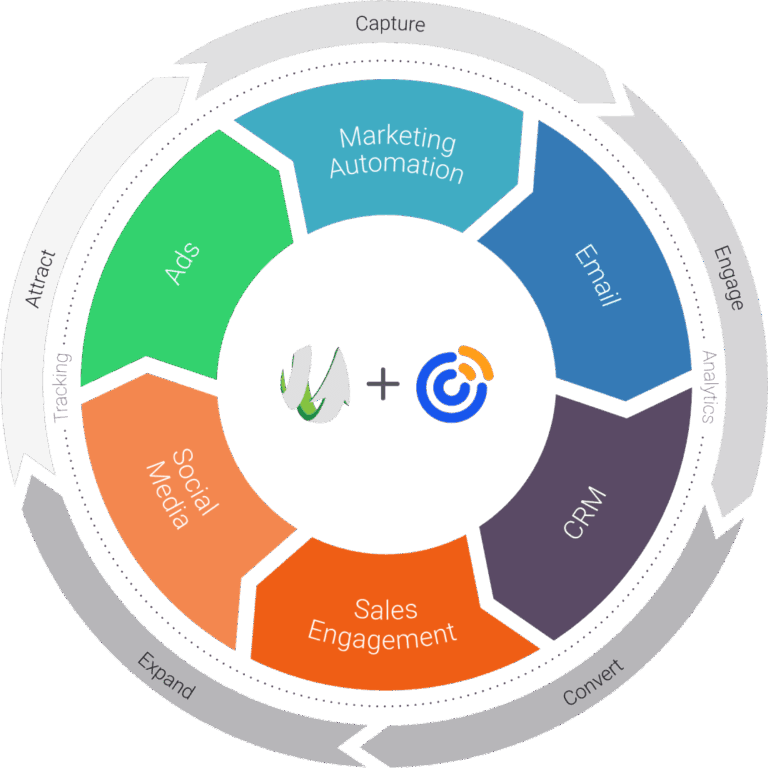
This creates a structural problem. If your total addressable market is 50,000 companies and you have 3,000 in your database, even the best automation workflows reach only 6% of your potential buyers. The other 94% never enter the funnel.
ZoomInfo addresses this directly. The platform's 500M contacts and 100M companies, verified by 300+ human researchers with up to 95% accuracy on first-party data, give marketing teams a complete picture of their buyable market.

In a Fortune 500 competitive RFP analyzing 25 million contacts across vendors, the independent consultant concluded that "no other competitor came even close."
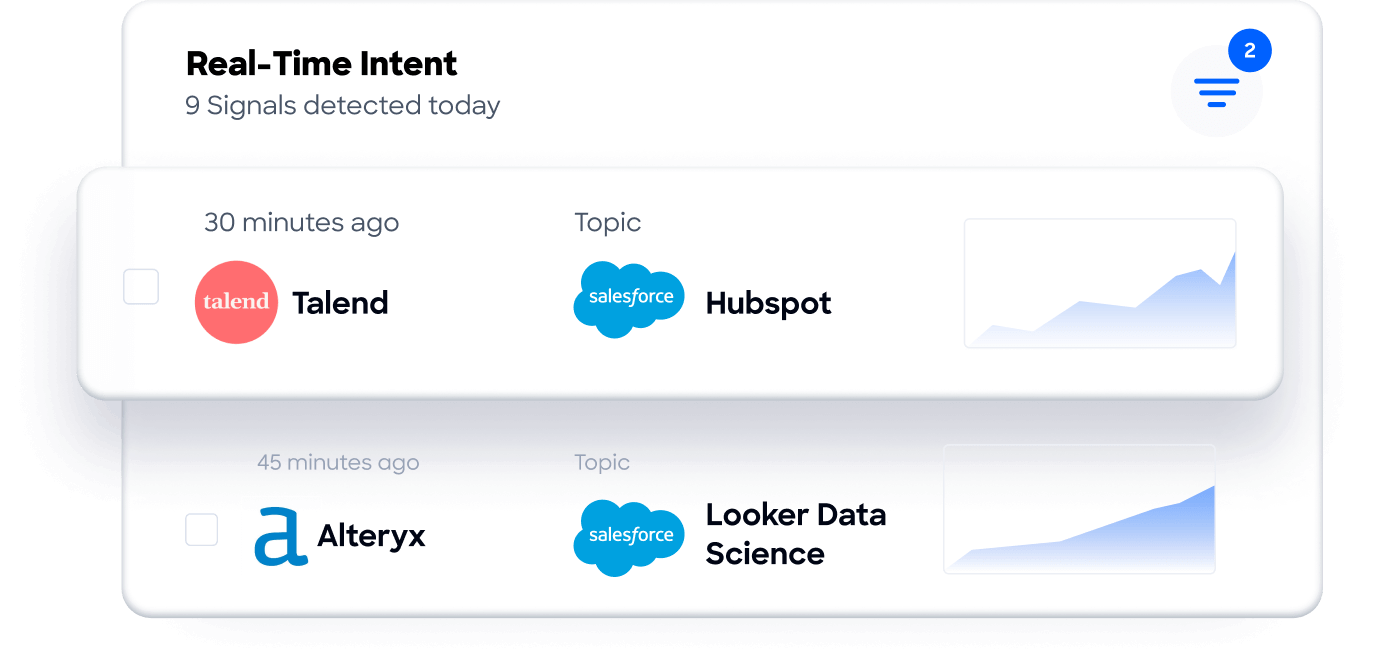
More importantly, ZoomInfo's buyer intent data tracks signals from 210 million IP-to-Organization pairings and 6 trillion+ new keyword-to-device pairings sourced monthly, showing your team which accounts are researching solutions right now.
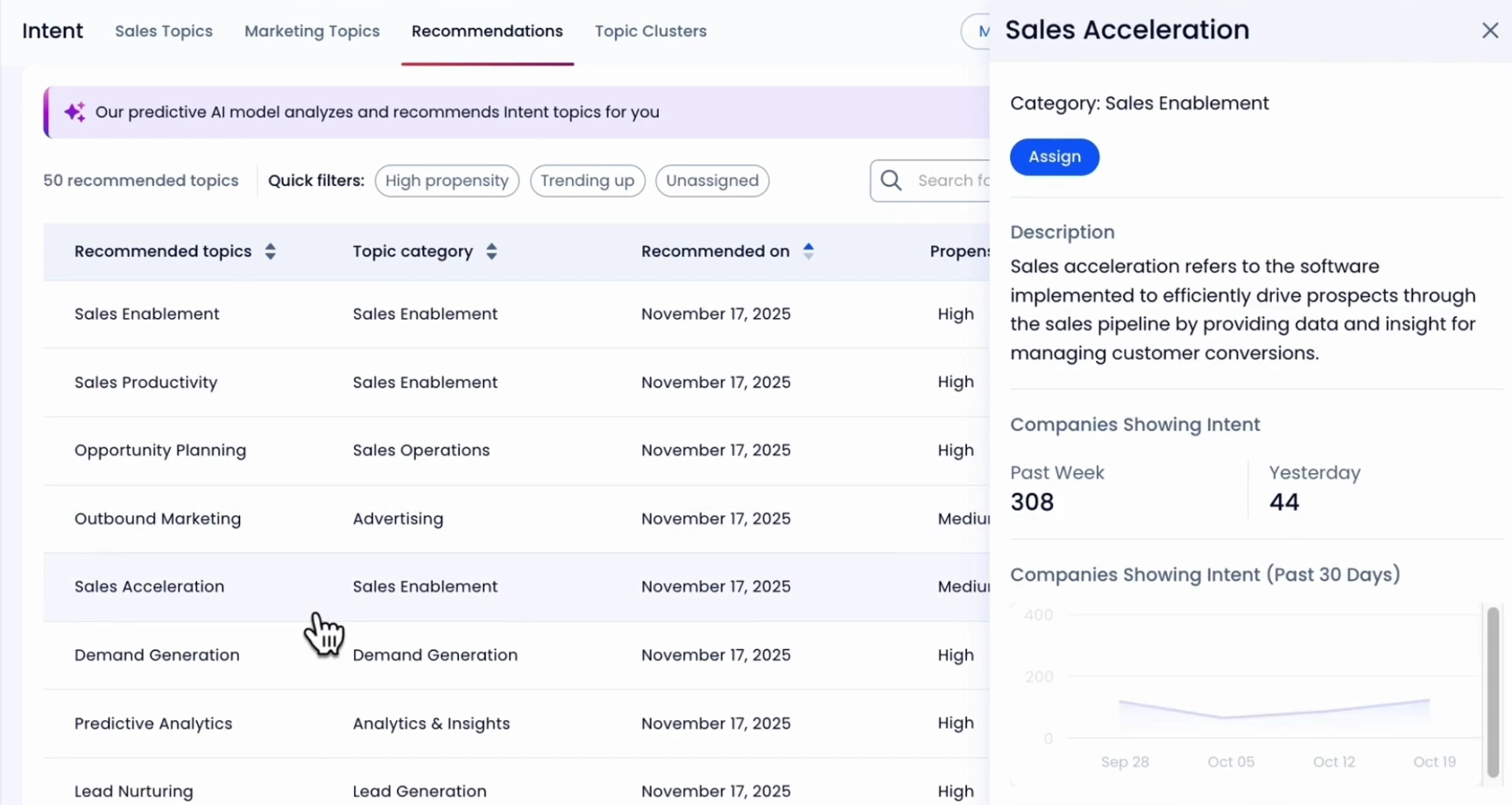
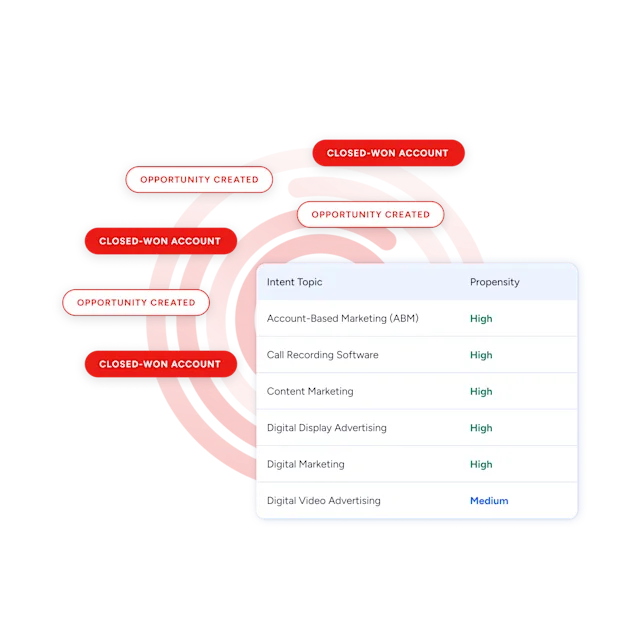
Guided Intent, exclusive to ZoomInfo, identifies topics historically correlated with deal success rather than requiring manual topic selection. Neither Pardot nor SharpSpring offers anything comparable.
Source: ZoomInfo
"ZoomInfo's not just a contact data company anymore. They've built a full system of execution. GTM Intelligence actually works the list, writes the outreach, triggers the play, and helps drive predictable growth." (Ian Brodie, CEO & Co-Founder, Levanta)
Pardot wins on Salesforce integration, SharpSpring wins on price
Each platform has a clear strength.
Pardot's defining advantage is native Salesforce CRM integration. Because both products share the same data model, prospect engagement data, lead scores, and campaign attribution flow in real time between marketing and sales without any connector or sync process.
TrustRadius reviewers consistently describe this integration as making "two tools feel like one." Pardot's dual scoring and grading system (scoring measures engagement behavior, grading measures profile fit) is mature, and Einstein AI adds machine-learning-based scoring on top of the rule-based model.
For organizations embedded in Salesforce, that native data connection eliminates a whole category of integration headaches. But it creates a hard dependency: Pardot requires a Salesforce CRM license, and the newest AI and multichannel features require Sales Cloud or Service Cloud Enterprise Edition or higher.
SharpSpring's pitch is simple: comparable automation at a fraction of the cost. The platform claims pricing at "as little as 1/10th the cost of competing solutions" and has earned a 4.4/5 on G2.
For agencies, the economics are stronger still: white-label capability, month-to-month contracts, single sign-on for all client accounts, and a revenue model where agencies keep 75%+ of revenue from what they charge clients. No major competitor matches this agency-first architecture.
The trade-off is feature depth. SharpSpring's CRM, while included, is considered thin for larger organizations. Reporting is the most persistent criticism across review sites: users note that custom reports cannot be filtered by custom fields and cross-pipeline aggregate reporting is absent. SharpSpring also lacks native buyer intent data, account-based marketing infrastructure, or AI-powered scoring.
Lead scoring approaches reveal different philosophies
How each platform scores leads tells you what it was designed for.
Pardot uses a dual model: scoring plus grading. Scores are numerical values based on behaviors (email opens, form submissions, page views), with score decay reducing values for inactivity.
Grades (F through A+) evaluate how well a prospect matches the ideal customer profile using attributes like job title, company size, and industry.
On top of these rule-based models, Einstein Behavior Scoring uses machine learning to assign a 0-100 score based on engagement patterns, and Einstein Lead Scoring analyzes historical conversion data to rank leads by conversion likelihood. It's thorough, but it only scores people already in your database.
SharpSpring takes a simpler approach with configurable lead scoring and decay. Engagement-based scores have a configurable "half-life" (the time before a score loses half its value), while information-based scores don't decay.
The behavioral tracking that feeds scoring is one of SharpSpring's real strengths, with the Life of the Lead timeline showing a chronological view of every touchpoint. But there's no AI scoring layer and no account-level scoring for ABM.

Source: SharpSpring
ZoomInfo scores differently because it starts with different data. Rather than scoring only people who've already engaged with your content, ZoomInfo's Account Fit Score uses predictive AI (0-100) to identify which company and prospect patterns predict conversion, applied across your entire addressable market.
Add buyer intent data showing which of those accounts are researching relevant topics, and your marketing team can prioritize based on both fit and timing, not just past engagement.
Source: ZoomInfo
Account-based marketing separates the tiers
ABM is where the gap between these platforms is most visible.
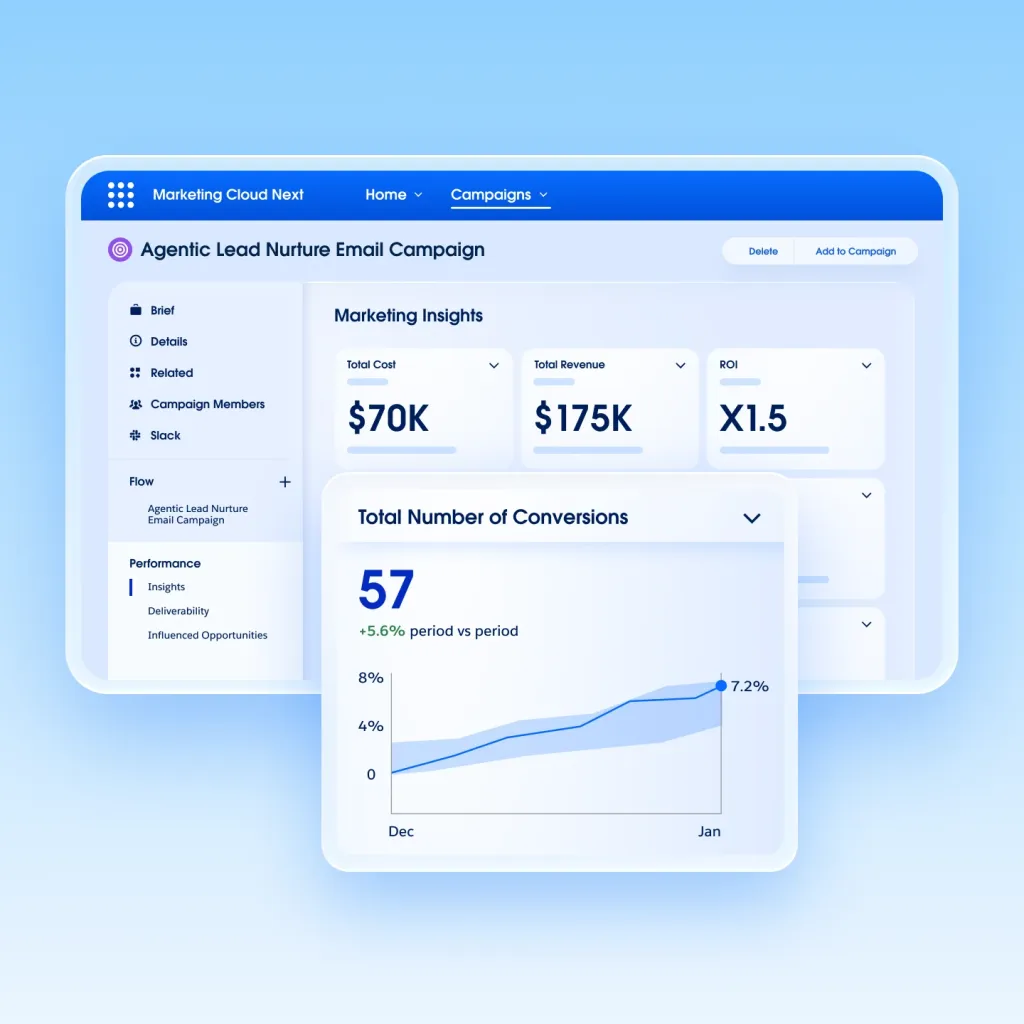
Pardot has real ABM capabilities. Einstein Key Account Identification analyzes historical opportunity data to rank accounts by engagement and purchase likelihood.

Source: Pardot
The platform detects when multiple people from the same company engage with marketing content and flags buying committee signals.
The ABM dashboard tracks pipeline and revenue tied to target accounts. For Salesforce-native teams, it's a solid ABM foundation.
Source: Pardot
SharpSpring's ABM capabilities are early-stage. The platform tracks engagement at the company level in addition to individual contacts, and a "Life of the Account" timeline is on the roadmap. But account-level scoring, buying group identification, and account-based reporting are still in development.
For organizations where ABM is central to strategy, SharpSpring falls short.
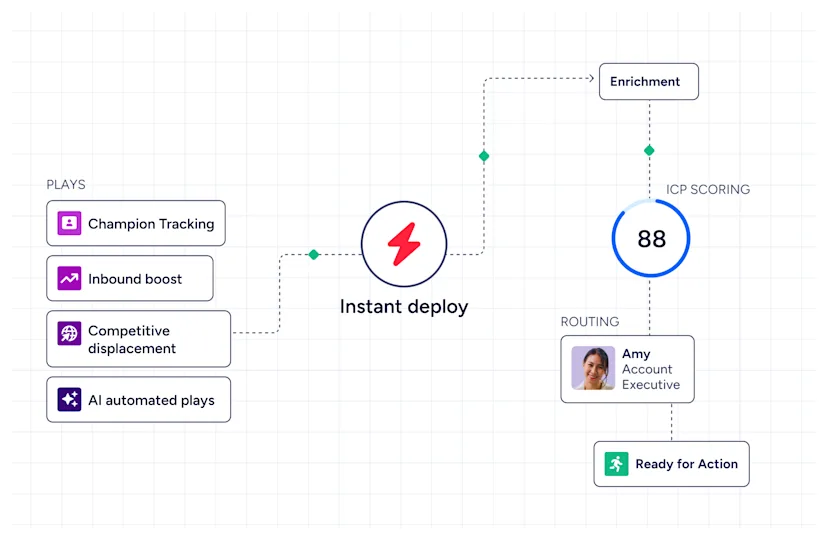
ZoomInfo treats ABM as a core use case, not an add-on. GTM Studio lets marketers describe audiences in natural language, enrich them with first- and third-party data, and launch multi-channel plays targeting accounts that match proven win patterns.
Source: ZoomInfo
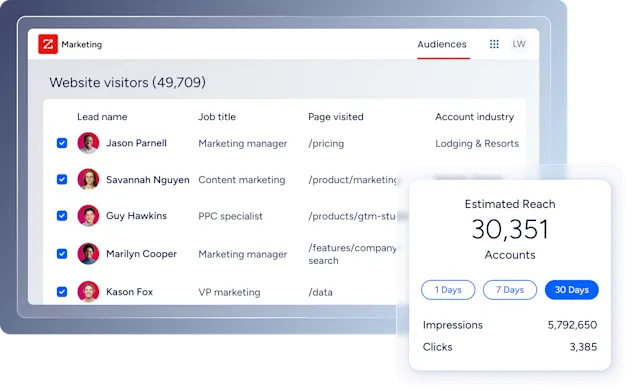
The platform identifies buying groups within target accounts, surfaces contact-level website visitor identification (not just company-level), and orchestrates display ads, email sequences, and SDR routing based on real-time intent signals.
Source: ZoomInfo
Customers report a 900% CTR increase and 61% increase in opportunities using ZoomInfo's ABM capabilities.
"That combination of our internal CRM data, external signals, and AI that's given all that context has helped us craft very specific account- and persona-based messages. And people have responded to them right away." (Toby Carrington, Chief Business Officer, Seismic)
Email and nurturing workflows compared
All three platforms handle email and nurturing, but with different strengths.
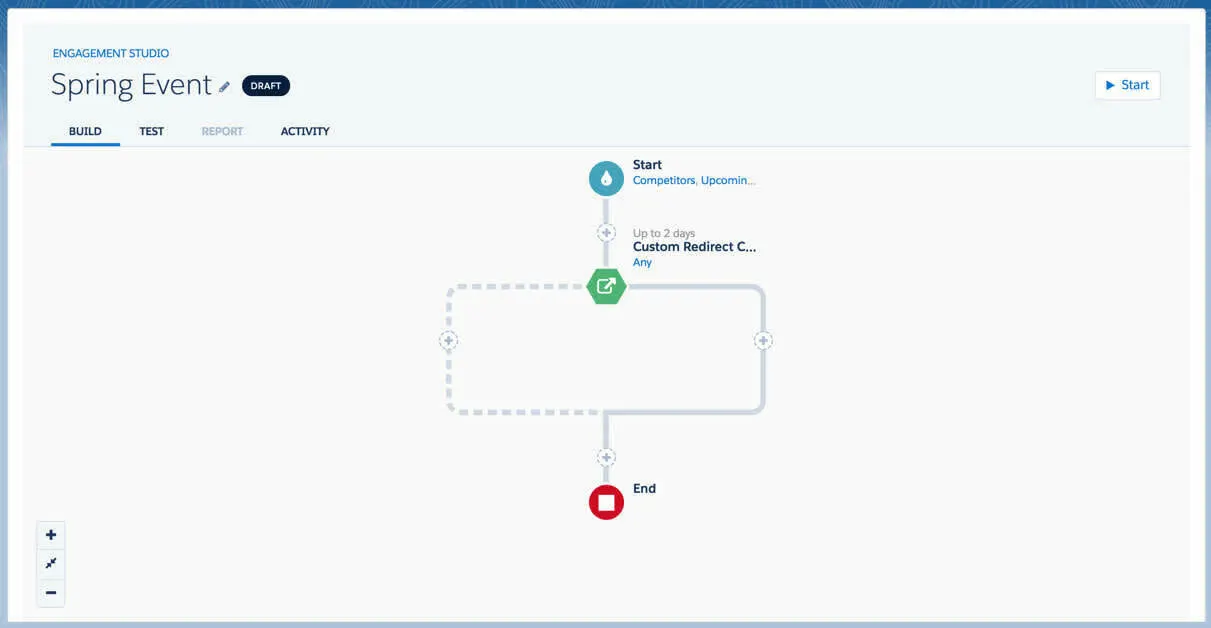
Pardot's Engagement Studio is a visual automation builder with trigger, rule, and action steps. It supports multi-condition branching based on prospect behavior, score thresholds, and CRM field values.
Source: Pardot
As of July 2025, MCAE customers can also add SMS and WhatsApp to cross-channel journeys via Account Engagement+ Permission Set Licenses. Agentforce Campaign Creation generates campaign briefs and email copy from natural language prompts.
The automation works, but TrustRadius reviewers note that "Pardot is very limited on the marketing automation aspect side of things" compared to competitors like Marketo, and the email template builder is widely described as outdated, often requiring HTML knowledge.
SharpSpring's visual workflow builder uses a point-and-click interface with triggers, filters, branching logic, actions, and time delays.
Email personalization includes merge fields and rule-based content swapping based on contact attributes, no code required.
However, SharpSpring's automation is email-only and doesn't support native SMS, WhatsApp, or cross-departmental workflows.
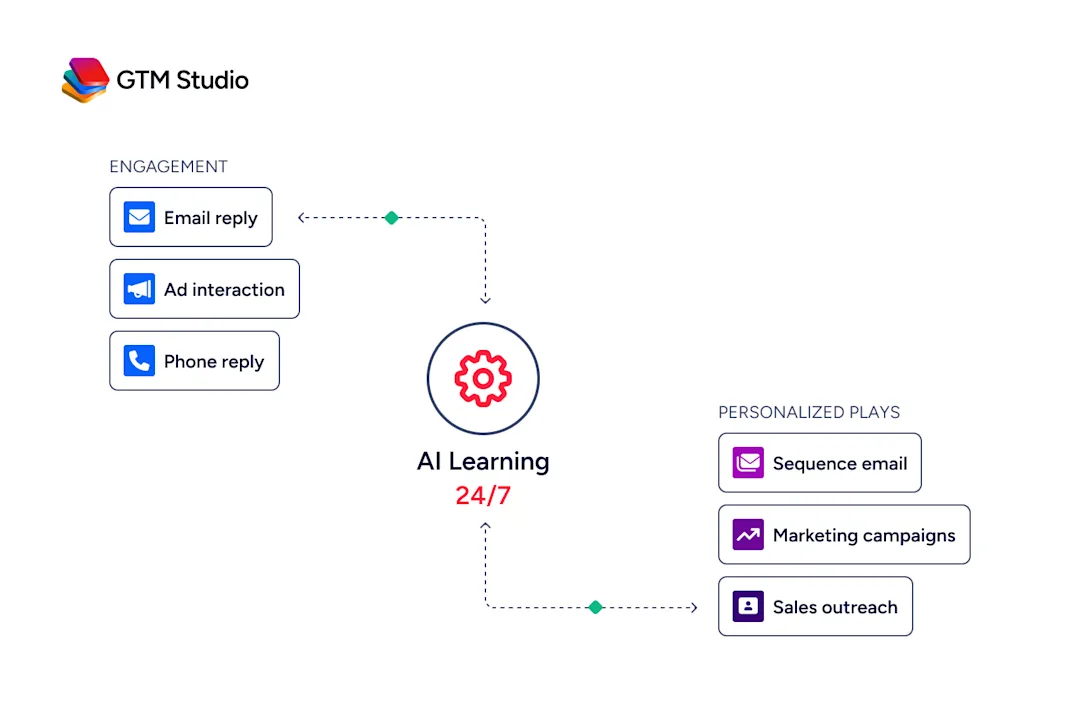
ZoomInfo approaches outreach differently. Rather than building automation around your existing contact list, GTM Studio orchestrates multi-channel campaigns (email, calls, ads, and direct mail) triggered by buyer behavior and intent signals.
Source: ZoomInfo
Pre-built GTM plays for inbound acceleration, champion tracking, competitive displacement, and ICP targeting launch in one click.
Where Pardot and SharpSpring automate campaign delivery, ZoomInfo automates the intelligence behind who should receive them and when.
The CRM question: build in, bolt on, or power up
CRM integration is often the deciding factor for B2B marketing teams, and each platform takes a different approach.
Pardot doesn't include a CRM. It requires one: Salesforce. This creates the tightest possible marketing-CRM integration (shared data model, real-time sync, no middleware) but also the highest cost floor and the deepest vendor lock-in.
If your organization already runs Salesforce and isn't leaving, this dependency is a strength. If you're evaluating CRM options alongside marketing automation, it's a constraint.
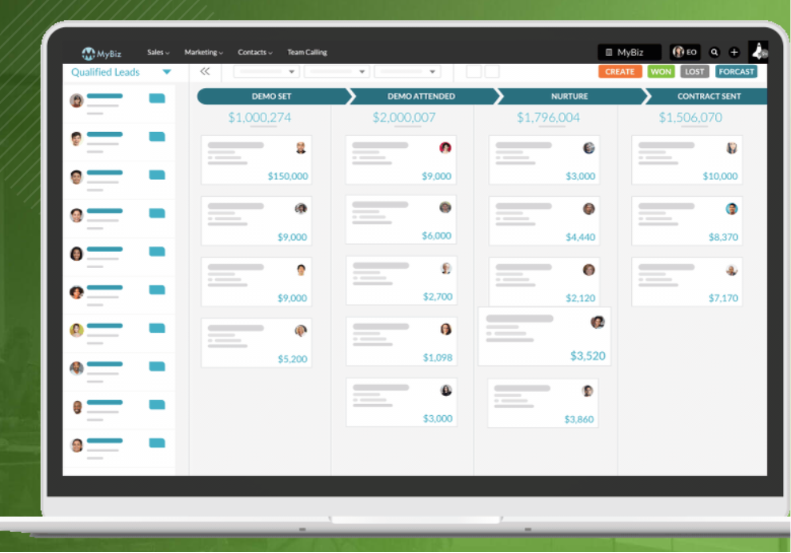
SharpSpring includes its own CRM with visual pipeline management, contact records, deal tracking, and task automation. The CRM and marketing automation share the same database, so every behavioral signal is available to sales in real time without sync latency.
Source: SharpSpring
As TechRadar notes, the CRM "may lack a few of the more advanced features you'd find in a standalone system," but the tight integration with behavioral data creates real value.
For SMBs without an existing CRM, this all-in-one approach eliminates a separate purchase and integration project.
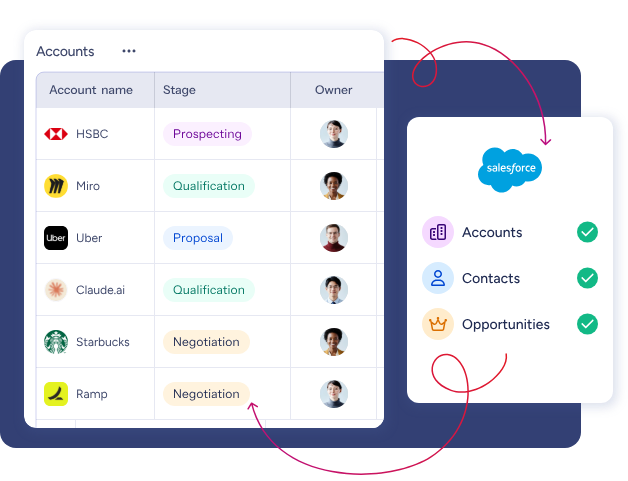
ZoomInfo integrates with the major CRMs (Salesforce, HubSpot, and Microsoft Dynamics) rather than replacing them.
Source: ZoomInfo
ZoomInfo's GTM Context Graph unifies CRM data with ZoomInfo's B2B intelligence, so insights flow into whatever CRM your team already uses.
ZoomInfo also enriches CRM records with verified contact data, company attributes, technographics, and intent signals, addressing the data quality problem that Forbes estimates leaves 91% of CRM data incomplete.
For Pardot users on Salesforce, ZoomInfo integrates directly to enrich the records Pardot uses for segmentation and scoring.
"ZoomInfo is our one source of truth for account data, and even more so for contact data. There's no other provider in the market that provides you with that level of detail." (Thor Sanderson, Senior Manager of Sales Technology Enablement, Smartsheet)
Pricing reveals what each platform values
The pricing structures tell you who each platform was built for.
Pardot is the most expensive option. Growth+ starts at $1,250/org/month, Plus+ at $2,750/month, Advanced+ at $4,400/month, and Premium+ at $15,000/month, all billed annually with no monthly option. Every tier includes only 10,000 contacts (except Premium+ at 75,000), with additional contacts at $100 per 10,000/month.
AI and SMS features require separate purchases: Einstein Request Credits, Messaging Credits, and Data 360 Credits.
The Premier Success Plan adds 30% of net license fees for 24/7 support. None of this includes the Salesforce CRM license required to run the platform. There is no free trial and no free plan.
SharpSpring doesn't publish prices publicly, directing prospects to schedule a demo with a Certified Partner.
What is documented: pricing is contact-based and usage-tiered, agencies get month-to-month contracts with no long-term commitment, and agency support is always free.
Historically, the platform has cost roughly $11,988/year for 10,000 contacts, far less than comparable Pardot or HubSpot tiers. Additional costs include email overage charges, lead overage charges, and optional add-ons like Salesforce integration and direct support at $99/month per client account.
ZoomInfo uses custom-quoted, consumption-based pricing with no public list prices. Pricing scales around data access, API consumption, AI activity, and seat count.
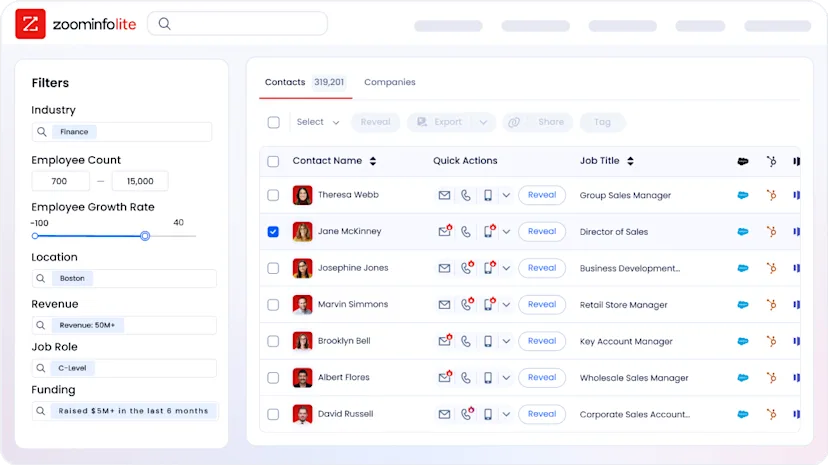
The key difference: ZoomInfo offers ZoomInfo Lite, a permanent free tier with access to its B2B database, 10 monthly export credits, individual and company searches, and the ReachOut Chrome Extension. A 7-day free trial of the full platform is also available.
Source: ZoomInfo
For teams already using Pardot or SharpSpring, ZoomInfo works as an intelligence layer that makes your existing marketing automation more effective.
Reporting and analytics depth
Reporting is a real difference between these platforms, and a sore spot for two of them.
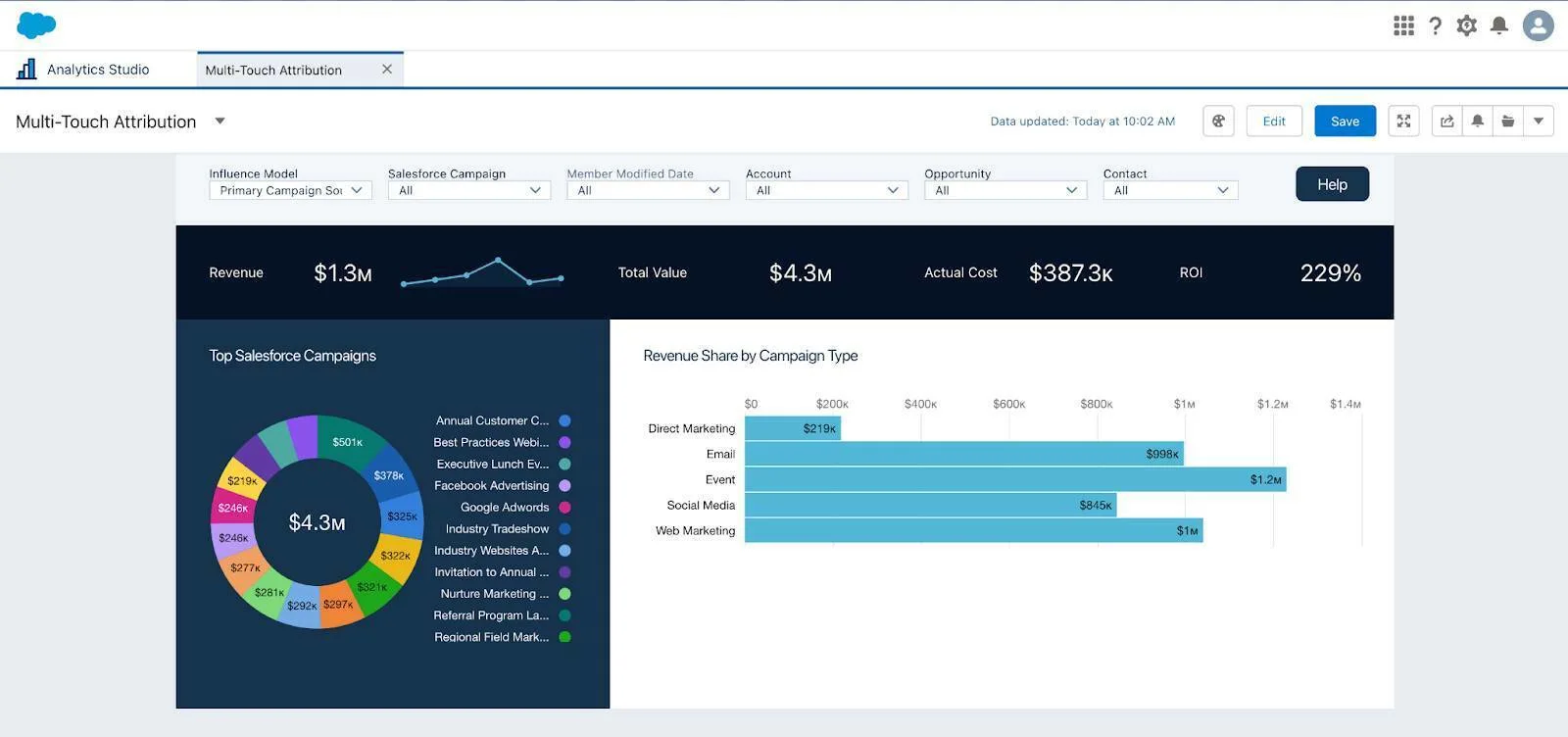
Pardot's analytics suite includes Engagement History Dashboards embedded in CRM records, the B2B Marketing Analytics app (included from Plus+ tier), and Einstein Attribution for AI-driven multi-touch revenue attribution.
Source: Pardot
The depth is real, but so is the complexity. B2B Marketing Analytics requires significant configuration, and the full suite (B2B Marketing Analytics Plus with Einstein Discovery) costs $3,000/user/month as an add-on or comes included only with Premium+ at $15,000/month.
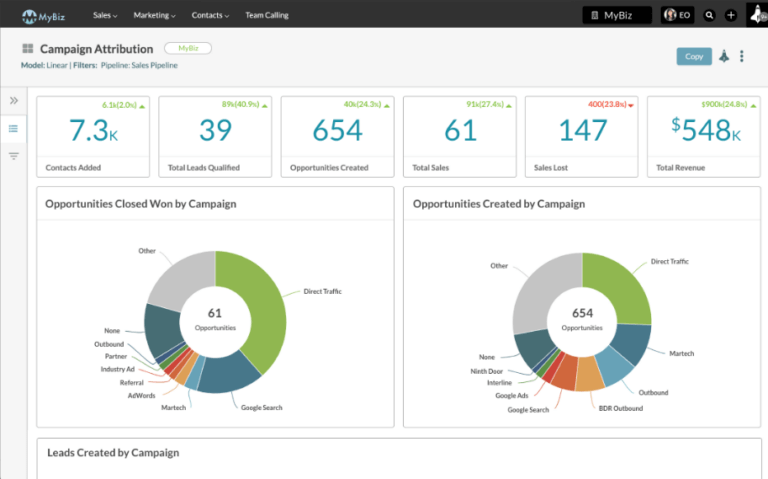
SharpSpring's reporting is its most-criticized feature. TrustRadius, Capterra, and Software Advice reviewers consistently flag that custom reports cannot be filtered by custom fields, cross-pipeline aggregate reporting is absent, and attribution reporting is shallow.
The platform does offer multi-touch attribution and campaign ROI reporting, but the gap versus Pardot (let alone dedicated analytics platforms) is significant.
Source: SharpSpring
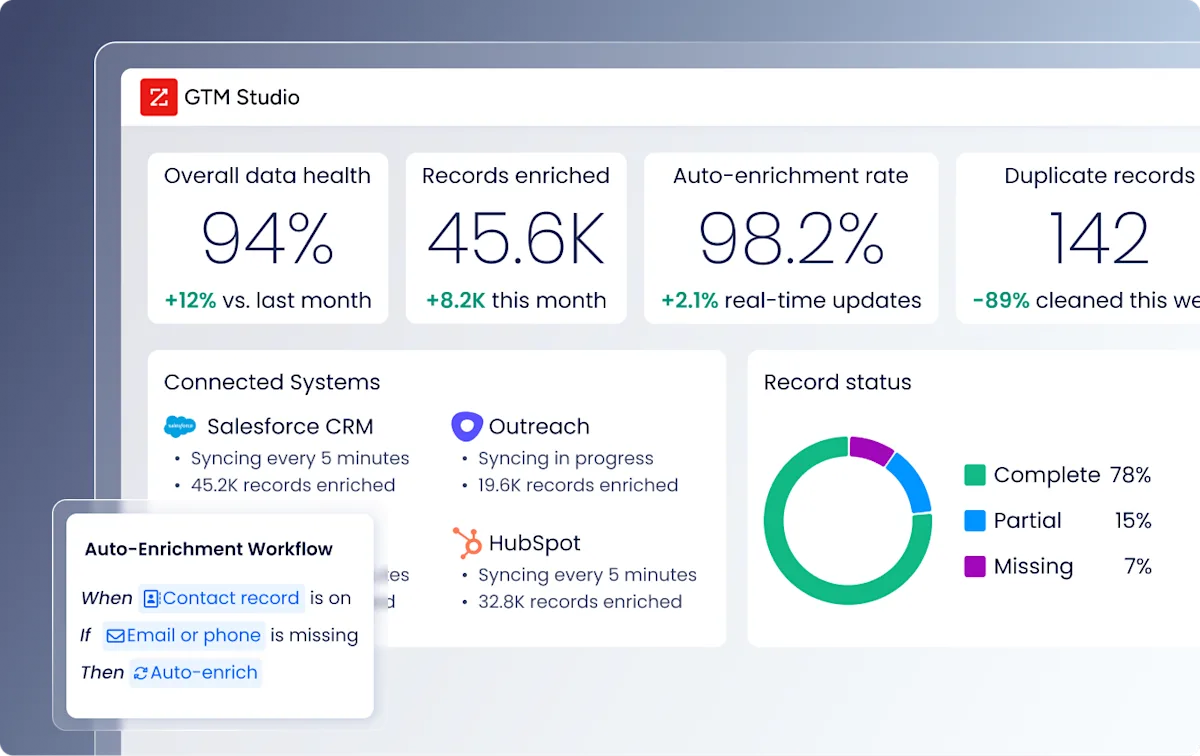
ZoomInfo provides dashboards through GTM Studio tracking engagement, funnel progression, and top-performing segments.
Source: ZoomInfo
The analytics focus on upstream intelligence rather than downstream campaign metrics: which intent signals correlate with closed deals, which accounts show buying committee activity, and which plays produce pipeline.
For teams that need campaign-level reporting (open rates, click rates, nurture sequence performance), Pardot or SharpSpring's native reporting fits better. For teams that need to understand market coverage, pipeline attribution, and targeting effectiveness, ZoomInfo fills a different gap.
Platform roadmap and long-term viability
Where each platform is headed matters as much as where it is today.
Pardot is converging with Salesforce's next-generation Marketing Cloud Next platform. Salesforce has confirmed no end-of-life plans for MCAE, and the Account Engagement+ PSL model bridges MCAE customers to new capabilities (Agentforce, SMS, Data 360) without a forced migration.
But the strategic direction is clear: Salesforce is concentrating engineering investment on Marketing Cloud Next and Agentforce. New B2B buyers will increasingly purchase Marketing Cloud Next directly as it reaches feature parity. Organizations evaluating Pardot today should factor this trajectory into long-term planning.
SharpSpring was acquired by Constant Contact in September 2021 for $240 million and rebranded in March 2023. Under Constant Contact, the platform is gradually integrating with the broader Constant Contact product rather than developing as a standalone competitor.
The agency partner program appears maintained, but growth will come from the Constant Contact umbrella, not from SharpSpring as an independent brand. TrustRadius now lists the product under "SharpSpring (discontinued)", reflecting the brand sunset.
Some users report that SharpSpring and Constant Contact's core email product still feel like two separate platforms rather than one.
ZoomInfo is a $1.25 billion annual revenue public company with $455 million in free cash flow, investing across all three pillars.
In 2025 alone, ZoomInfo added 10.2 million contacts, expanded international mobile coverage by 1.8 million numbers across six European markets, launched nine vertical datasets, launched GTM Studio and GTM Workspace, added API access to all relevant plans, and opened MCP access for AI agents. The platform is expanding, not consolidating.
"It's not just the data itself. It's more about the right data at the right time to help us reach out with the right message across that full buyer journey." (Chelsea Kenyon, Senior Director of Digital Strategy, Redwood Logistics)
Pardot vs. SharpSpring vs. ZoomInfo: Which should you choose?
The right platform depends on where your biggest gap is: automation, affordability, or intelligence.
Choose Pardot if:
You already run Salesforce CRM and want native integration without sync headaches
Your budget supports $15,000+/year for marketing automation alone (plus Salesforce CRM licensing)
You have a dedicated marketing operations resource or certified admin
Account-based marketing with buying committee tracking matters to your strategy
You need AI-powered campaign creation and multi-touch attribution tied to your CRM
Choose SharpSpring if:
You're an agency managing marketing automation for multiple clients
You need automation and CRM in one platform at a fraction of enterprise pricing
Month-to-month contracts and white-label capability matter to your business model
Your team is small and needs something functional without a certified admin
You're comfortable with SMB-grade CRM and reporting
Choose ZoomInfo if:
Your biggest problem isn't automation but knowing who to target and when
You need verified B2B contact data, direct dials, and business emails at scale
Buyer intent signals and account-based intelligence are central to your marketing strategy
You want to make your existing Pardot or SharpSpring investment more effective with better data
You need a platform that works across sales, marketing, and RevOps from one intelligence layer
Start with ZoomInfo Lite for free, or request a full platform trial.
Marketing automation platforms are only as effective as the data they run on. Pardot and SharpSpring are both capable automation engines for their audiences: Pardot for Salesforce-native enterprises, SharpSpring for agencies and budget-conscious SMBs. But the best email sequence in the world won't generate pipeline if it reaches the wrong people at the wrong time. ZoomInfo provides the data foundation that turns marketing automation from a messaging tool into a revenue engine.
Ready to see what your marketing automation is missing? Explore ZoomInfo's platform.
Pardot vs. SharpSpring vs. ZoomInfo FAQ
What is the key difference between Pardot, SharpSpring, and ZoomInfo?
Pardot is a B2B marketing automation platform built on Salesforce CRM, designed for enterprises that need tight sales-marketing alignment.
SharpSpring is a combined marketing automation and CRM platform built for agencies and SMBs, with white-label capability and month-to-month pricing.
ZoomInfo is a B2B data intelligence and GTM execution platform that provides the verified contact data, buyer intent signals, and account intelligence that marketing automation platforms need to target the right prospects.
Which platform is cheapest for B2B marketing automation?
SharpSpring is the most affordable option, historically priced at roughly one-tenth the cost of enterprise competitors.
Pardot starts at $1,250/org/month (billed annually) and requires a separate Salesforce CRM license.
ZoomInfo uses custom pricing but offers ZoomInfo Lite as a permanent free tier with access to B2B data, 10 monthly export credits, and basic search. ZoomInfo is not a substitute for either platform's automation workflows but can complement them with intelligence.
Do I need ZoomInfo if I already have Pardot or SharpSpring?
Pardot and SharpSpring automate outreach to leads already in your database. ZoomInfo identifies who should be in your database in the first place, providing 500M contacts, 100M company profiles, and real-time buyer intent signals showing which accounts are researching solutions.
ZoomInfo integrates with Salesforce (Pardot's CRM), and its data can also be imported into SharpSpring to improve targeting, lead scoring accuracy, and campaign performance.
Which platform has the best lead scoring?
Pardot has the most sophisticated native scoring with its dual scoring-plus-grading model and three layers of AI scoring through Einstein.
SharpSpring offers configurable behavioral scoring with decay rates but no AI scoring.
ZoomInfo takes a different approach, scoring accounts across your entire addressable market using predictive AI and real-time intent signals rather than scoring only contacts who have already engaged with your content.
Which platform is best for account-based marketing?
ZoomInfo is the strongest ABM platform of the three, combining buyer intent data, buying group identification, contact-level website visitor identification, and multi-channel orchestration via GTM Studio.
Pardot has solid ABM capabilities through Einstein Key Account Identification and native ABM dashboards, but only for contacts already in Salesforce.
SharpSpring's account-level features are still developing and not competitive for ABM at scale.
Can SharpSpring or Pardot identify anonymous website visitors?
SharpSpring's VisitorID identifies some anonymous visitors at the company level before they fill out a form.
Pardot does not offer native anonymous visitor identification.
ZoomInfo identifies website visitors at both the company and contact level through WebSights, resolving anonymous traffic to specific companies using 210 million IP-to-Organization pairings.
Which platform has the best email and landing page builders?
SharpSpring's visual workflow builder and email designer receive the most positive user reviews for usability among the three.
Pardot's email template builder and landing page creator are widely criticized as outdated, often requiring HTML knowledge.
ZoomInfo is not primarily an email builder but orchestrates multi-channel outreach (email, calls, ads, direct mail) through GTM Studio based on intent signals and buyer behavior.
What happens to SharpSpring under Constant Contact ownership?
Constant Contact acquired SharpSpring in September 2021 and rebranded it to Constant Contact Lead Gen and CRM in March 2023. The product remains available through sharpspring.com, and the agency partner program is maintained.
The strategic direction is gradual integration with the broader Constant Contact platform, including a planned shared email designer and potential bundled packages.
The product has not been sunset, but long-term development investment is shared with Constant Contact's broader portfolio.
More Pardot and SharpSpring comparisons and reviews:
