

Choosing between Pega and Salesforce for enterprise CRM often comes down to five questions:
Do you need a platform designed for complex, regulated workflows and AI decisioning, or a CRM ecosystem covering sales, service, marketing, and commerce?
Is your primary challenge orchestrating critical processes across legacy systems, or unifying customer data across departments?
How important is ecosystem breadth versus configurability for specific industries?
Does your team have the specialized developers needed for Pega, or do you prefer a larger talent pool and partner network?
Regardless of which platform you choose, do you have the B2B data foundation to make your CRM and AI investments pay off?
In short, here's what we recommend:
Pega is for large enterprises in regulated industries that need to automate complex workflows without replacing existing systems. Its Customer Decision Hub delivers real-time next-best-action decisioning, and its center-out architecture lets organizations modernize gradually instead of ripping and replacing. However, Pega demands specialized developers, carries a $5,000/month cloud minimum, and requires long implementation timelines that put it out of reach for most mid-market buyers.
Salesforce is the world's #1 CRM by market share, serving over 150,000 companies with a platform spanning sales, service, marketing, commerce, and analytics. Its Agentforce AI agents, 9,000+ AppExchange apps, and 17 industry clouds make it the default for organizations that want breadth. But that breadth comes with pricing complexity, a steep learning curve for full deployments, and a dependency on partner-led implementations.
Both are CRM and engagement systems. But neither solves the quality of the B2B data flowing through them on its own. A CRM is only as useful as the contact records, company intelligence, and buying signals inside it. That's where ZoomInfo comes in.
ZoomInfo is an AI-powered GTM platform built on B2B data covering 500M contacts, 100M companies, 135M+ verified phone numbers, and 200M+ verified business email addresses. Its GTM Context Graph combines this data with your CRM records, conversation transcripts, and behavioral signals to show not just what happened in a deal, but why. Whether your CRM runs on Pega or Salesforce, ZoomInfo provides the intelligence layer that makes it work, through native integrations, APIs, and MCP.
If you want to see how ZoomInfo's data and intelligence can power your CRM, start a free trial.
Pega vs. Salesforce at a glance
Pega | Salesforce | ZoomInfo | |
|---|---|---|---|
Core strength | Complex workflow automation and AI decisioning | CRM ecosystem and Agentforce AI agents | B2B data, intent signals, and GTM intelligence |
CRM approach | Process-first: workflows drive customer engagement | Data-first: unified customer records drive engagement | Intelligence-first: data enrichment and signals power any CRM |
AI capabilities | Predictive AI decisioning, governed agentic workflows | Agentforce autonomous agents, Atlas Reasoning Engine | GTM Context Graph, AI-powered prospecting, intent signals |
Ecosystem | 200+ integrations, SI-dependent | 9,000+ AppExchange apps, large partner network | 120+ integrations, API/MCP access in any tool |
Implementation | Months to years; requires certified developers | Weeks to months; 70%+ partner-led | Weeks; deploys into existing CRM |
Pricing entry | $5,000/month cloud minimum | Free CRM; paid from $25/user/month | Free tier (ZoomInfo Lite); paid plans custom-quoted |
Learning curve | Steep; proprietary rule-based model | Moderate to steep depending on deployment scope | Moderate; 90-day structured onboarding |
Best for | Regulated enterprises (banking, insurance, telecom, government) | Mid-market to enterprise across all industries | Any B2B sales, marketing, or RevOps team |
Two different answers to the same enterprise problem
Pega and Salesforce both help enterprises manage customer relationships, but they approach the problem from opposite directions.
Pega starts with the process. Founded in 1983 as a rules engine for financial services back-office operations, that DNA still defines the platform. Every customer interaction in Pega is a case with a governed workflow, SLAs, routing logic, and an audit trail. The platform excels when the process itself is the product: loan origination, insurance claims, regulatory compliance, complex service fulfillment.
Salesforce starts with the customer record. Founded in 1999 as the first cloud CRM, it built the category that Pega later entered. Salesforce organizes everything around a single view of the customer across sales, service, marketing, and commerce. Its strength is breadth: a rep sees the full history, a marketer targets based on purchase behavior, a service agent resolves cases with complete context.
Neither approach is wrong. Pega is deeper where it matters for regulated industries. Salesforce is broader where it matters for go-to-market teams. The question is which problem you're solving first.
Where Pega wins: complex workflows and AI decisioning in regulated industries
Pega's edge is sharpest in industries where a bad automated decision carries real consequences: a wrongly declined insurance claim, a non-compliant loan offer, a failed regulatory audit.
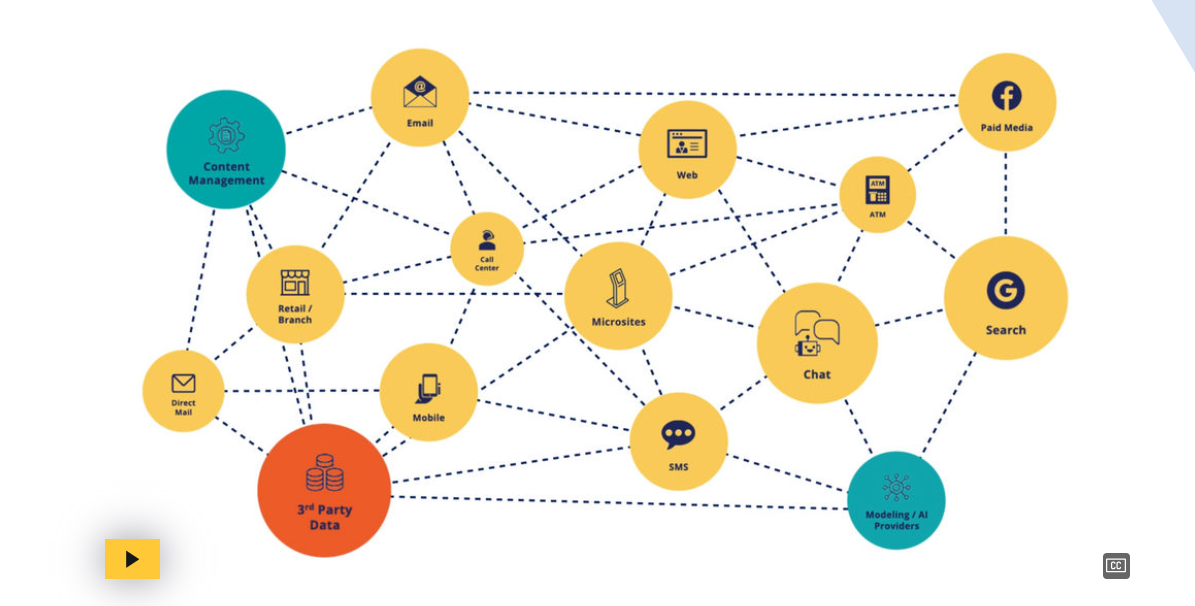
The Customer Decision Hub is Pega's signature capability. It evaluates the best action for each customer in real time, executing decisions in 220 milliseconds or less across web, mobile, call center, email, and outbound channels simultaneously.
Source: Pega
This isn't batch marketing. It's continuous, AI-driven arbitration that balances propensity to respond, business value, and regulatory constraints for every interaction.
The workflow and case management layer runs deep. The platform handles both structured processes and unpredictable, exception-heavy work within the same lifecycle, a capability that sets it apart from tools designed for predictable sequences.
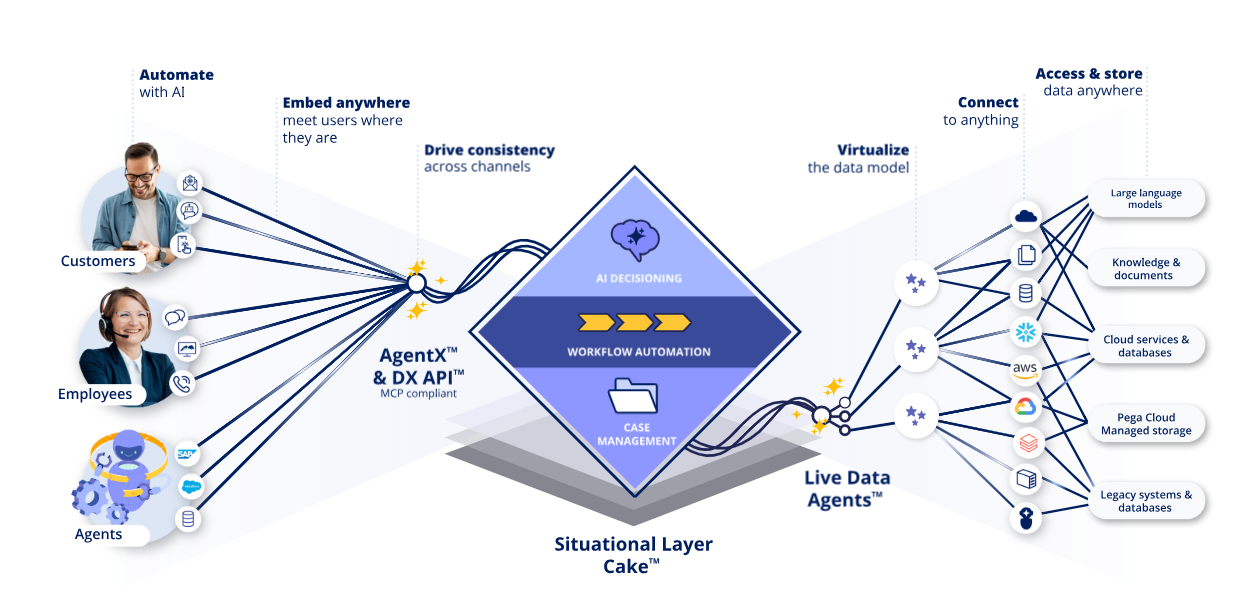
Pega's center-out architecture also addresses a problem Salesforce doesn't attempt to solve: wrapping and gradually replacing legacy systems without requiring a full migration. For a bank running mainframe applications from the 1990s, Pega can orchestrate modern workflows on top of those systems while preserving what still works.
Source: Pega
Where Salesforce wins: ecosystem breadth and speed to value
Salesforce's advantage is scale and accessibility.
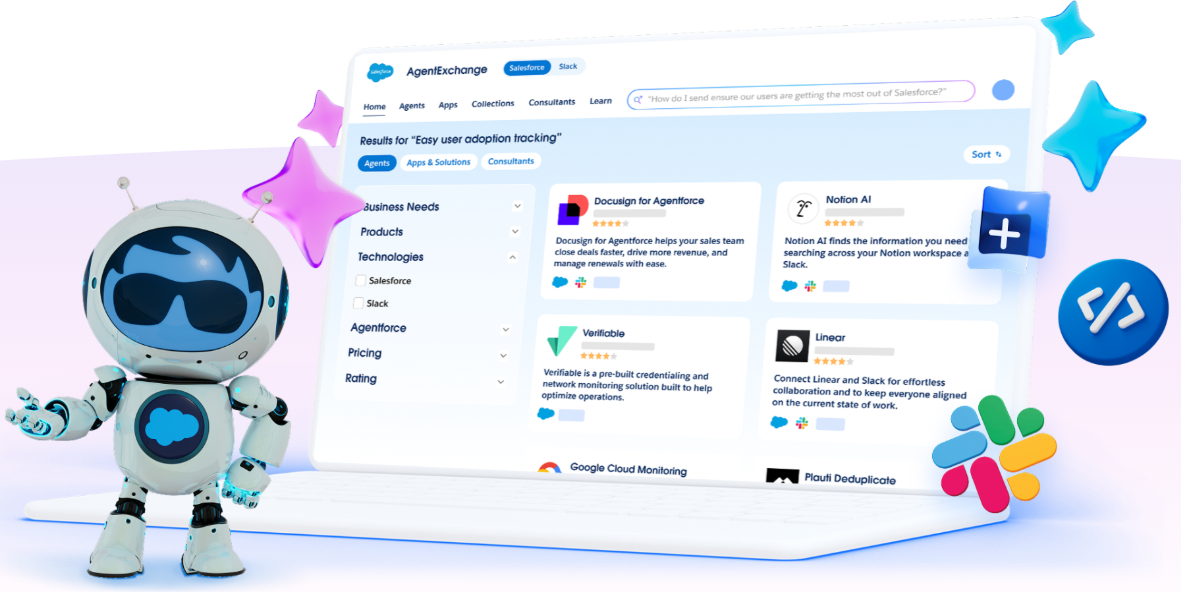
The AppExchange marketplace has 9,000+ partner apps with 14+ million installs. Pega's integration catalog is smaller, and reviewers on Gartner Peer Insights consistently cite limited pre-built connectors as a gap. For organizations that need their CRM to connect with dozens of specialized tools, Salesforce's ecosystem has no equal.
Source: Salesforce
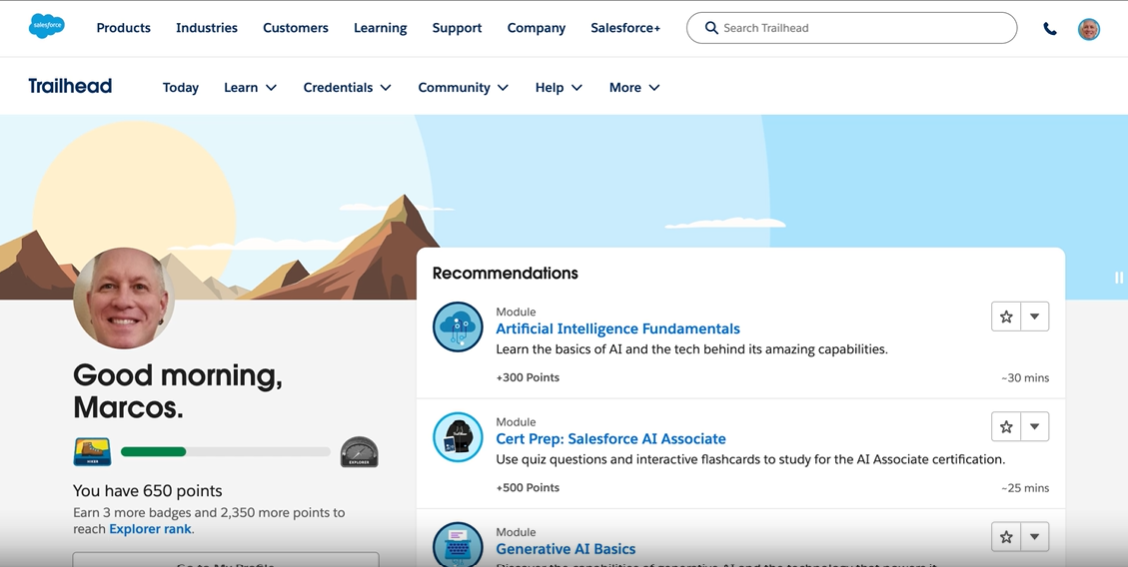
Talent availability follows the same pattern. Salesforce has 6+ million Trailhead learners and a Trailblazer Community of 20 million members. Finding a Salesforce administrator or developer is straightforward. Pega's proprietary rule-based architecture requires specialized training, and the company launched its Solution Designer Initiative to address the shortage of certified practitioners.
Source: Salesforce
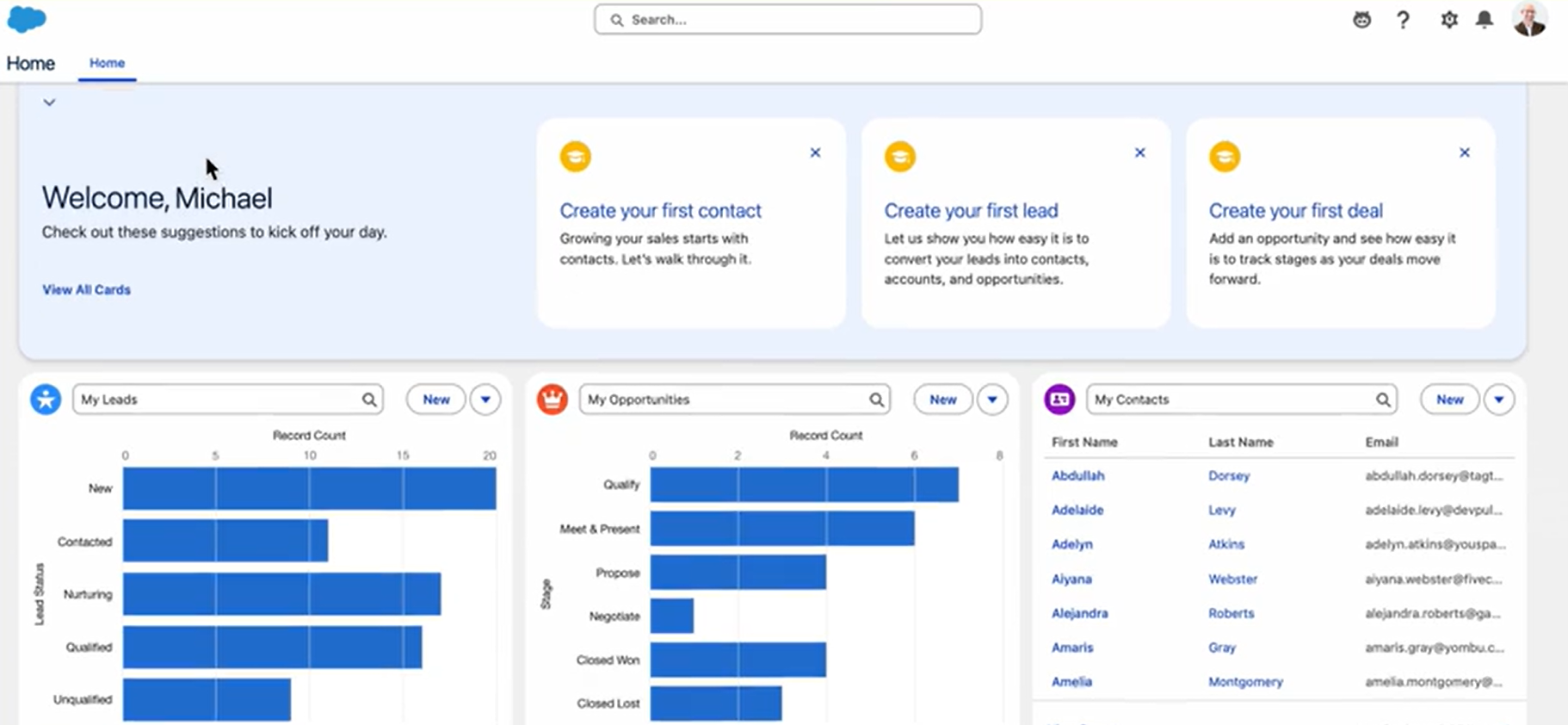
Salesforce also offers a lower barrier to entry. A free CRM exists for up to two users, with Starter Suite at $25/user/month. A small sales team can be productive in days. Pega's $5,000/month cloud minimum and multi-month implementation timelines mean the platform only makes economic sense at enterprise scale.
Source: Salesforce
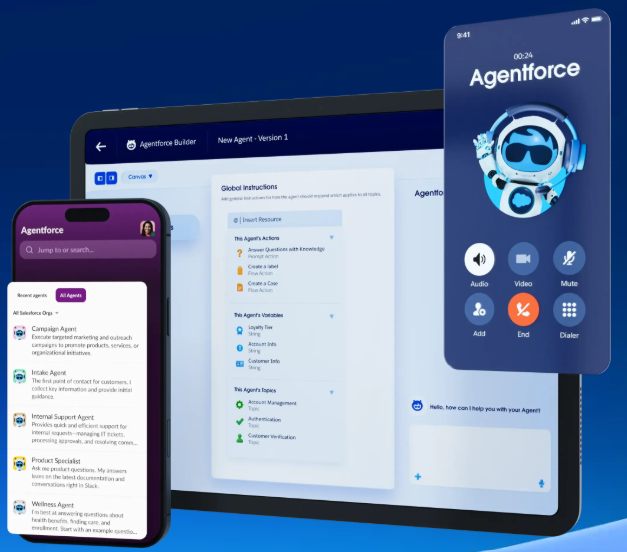
Agentforce has emerged as Salesforce's AI bet. Unlike Pega's governed, workflow-native AI agents, Agentforce uses the Atlas Reasoning Engine with a reason-act-observe-adapt loop, giving agents more autonomy.
Source: Salesforce
Salesforce reports Agentforce resolves 85% of support requests without human escalation. Pega argues that autonomous agents create compliance risk in regulated environments; Salesforce responds that the Einstein Trust Layer provides sufficient guardrails.
Neither platform solves your data problem
Here's the gap Pega and Salesforce share: they depend on the quality of the data inside them, and neither generates that data.
Salesforce CEO Marc Benioff acknowledged this directly: "You have got to get your data right." Salesforce's own 2026 CIO AI Trends research found that trust in data is the #1 bottleneck for AI adoption. On the Pega side, the Customer Decision Hub's real-time decisioning is only as good as the customer profiles feeding it. A next-best-action recommendation built on incomplete contact records, stale company data, or missing buying signals will be precisely wrong.
This is the problem ZoomInfo solves. With 500M contacts, 100M companies, 135M+ verified phone numbers, and 200M+ verified business email addresses, verified through a multi-source pipeline backed by 300+ human researchers achieving up to 95% accuracy on first-party data, ZoomInfo provides the intelligence layer that makes CRM platforms productive.

Source: ZoomInfo
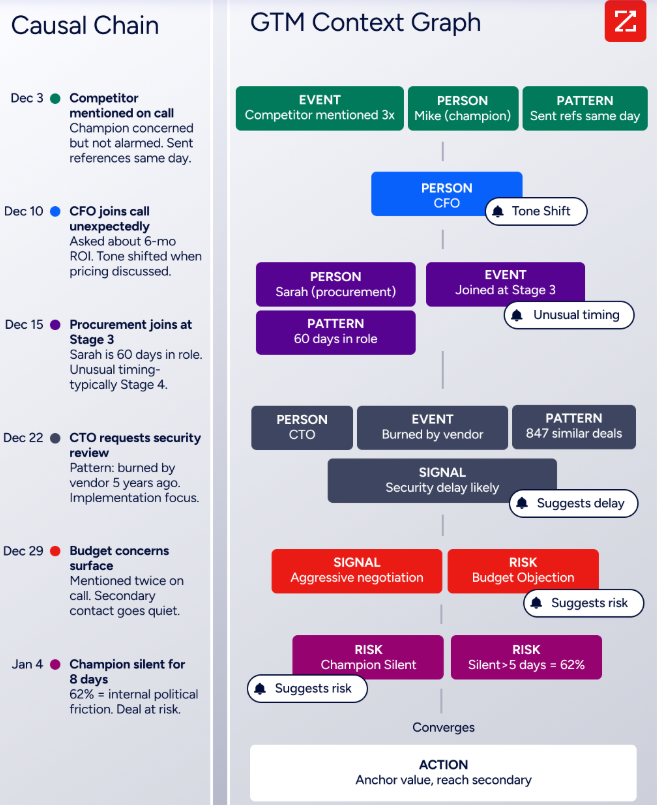
The GTM Context Graph goes beyond static contact records. It processes 1.5B+ data points daily, combining ZoomInfo's B2B data with your CRM records, conversation transcripts, and behavioral signals to capture why deals move or stall. A CRM records that a deal advanced to Stage 4. ZoomInfo's intelligence reveals that the CFO joined the last call and asked about six-month ROI, that the company just hired three new VPs, and that they're researching your competitor. That context turns CRM data from a record of what happened into a guide for what to do next.
Source: ZoomInfo
Seismic's sales team attributed 39% of active pipeline to opportunities identified or influenced by ZoomInfo signals, boosted productivity by 54%, and saved 11.5 hours per week. As Chief Business Officer Toby Carrington put it: "That combination of our internal CRM data, external signals, and AI that's given all that context has helped us craft very specific account- and persona-based messages." (Seismic Case Study)
For a direct look at how Salesforce and ZoomInfo stack up on data, integrations, and GTM intelligence, see our Salesforce vs. ZoomInfo comparison.
AI capabilities compared: governed workflows vs. autonomous agents vs. contextual intelligence
All three platforms have made major AI investments, but their approaches reflect different philosophies.
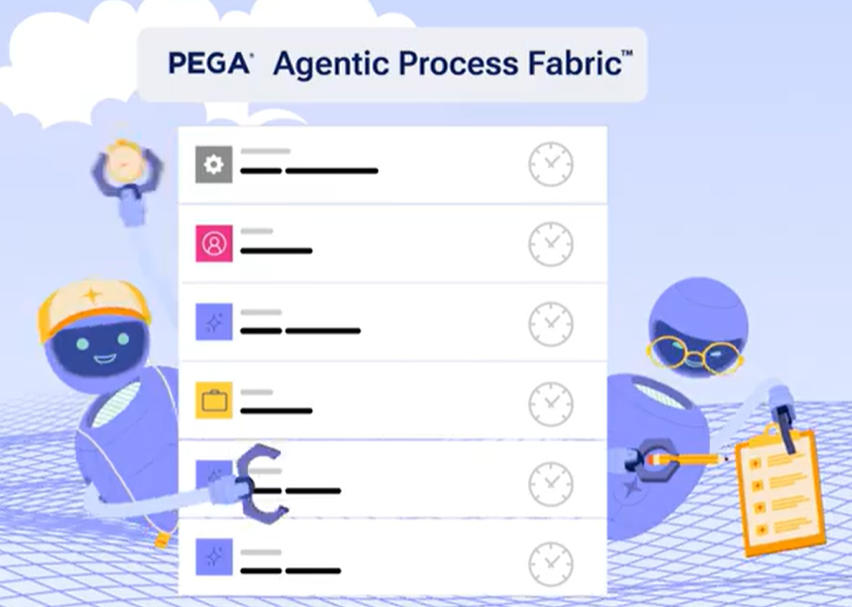
Pega's AI is governed and predictive. The platform separates creative reasoning (design time) from semantic execution (runtime), meaning agents follow defined workflows rather than improvising. The Pega Agentic Process Fabric orchestrates five agent types within existing processes, preserving audit trails and compliance. Pega claims cost reductions of more than 20x versus LLM-heavy architectures for some customers. For a bank that needs every automated decision to be explainable to regulators, this architecture matters.
Source: Pega
Salesforce's AI is autonomous and action-oriented. Agentforce agents can perceive, plan, and execute without constant human intervention. Pre-built agents cover service, SDR outreach, sales coaching, personal shopping, and IT service.
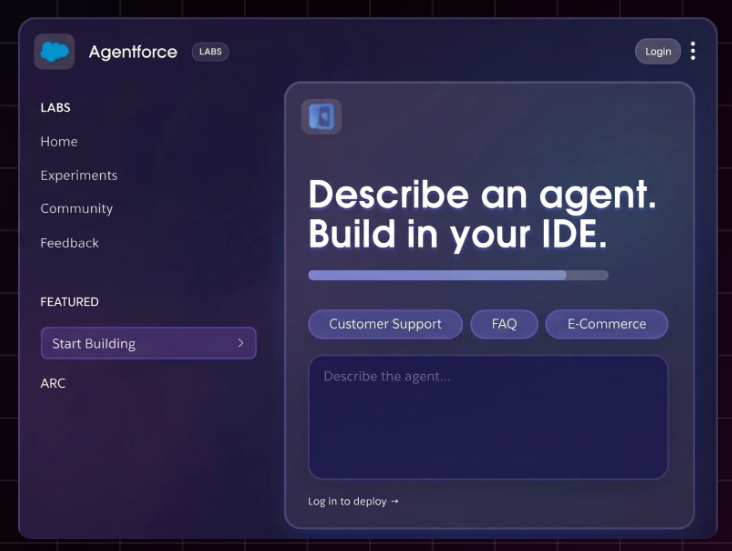
Source: Salesforce
The Atlas Reasoning Engine uses a reason-act-observe-adapt loop that gives agents flexibility to handle novel situations.
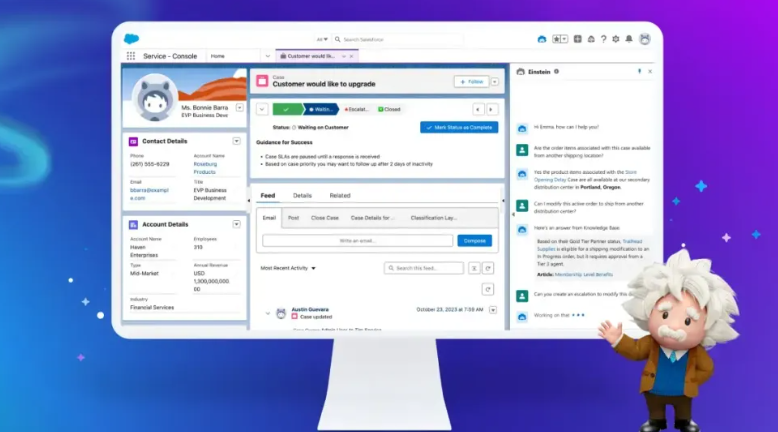
Source: Salesforce
For organizations that prioritize speed and automation breadth over strict process governance, Salesforce's approach delivers faster.
ZoomInfo's AI is contextual and data-driven. Rather than orchestrating workflows or deploying autonomous agents, ZoomInfo's intelligence focuses on a different layer: understanding accounts, identifying buying signals, and surfacing the right contacts at the right time. The GTM Context Graph captures patterns across thousands of deals to predict which accounts are in-market and why.
GTM Workspace uses AI agents built on Anthropic's Claude to draft outreach, research accounts, and surface next-best actions. This intelligence feeds into either CRM: a Salesforce rep sees ZoomInfo signals in their pipeline view; a Pega decisioning engine can consume intent data through APIs.
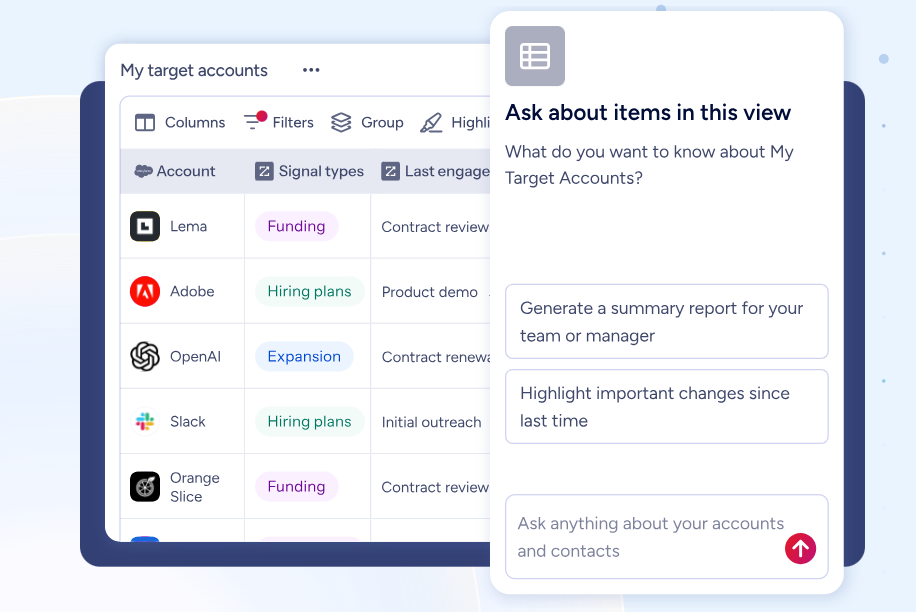
Source: ZoomInfo
Snowflake uses ZoomInfo data for over 70 company and technographic fields in their Account Propensity Scoring model. Accounts monitored using ZoomInfo-powered scores showed 90% higher opportunity open rates and 2x higher customer conversion rates. (Snowflake Case Study)
Pricing reflects different buyer profiles
The three platforms serve different pricing needs.
Pega does not publish unified pricing. The Customer Service pricing matrix shows tiers from $97 to $260 per user per month, with a $5,000/month cloud minimum covering up to 25 users. The Customer Decision Hub requires a separate license. Implementation costs (often delivered through system integrators like Cognizant, Accenture, or Infosys) can run multiples of the license value. A new flat fee per completed business case model was announced for agentic AI, replacing token-based pricing.
Salesforce offers more transparent tiers. Sales Cloud and Service Cloud range from free (2 users) through Starter ($25/user/month), Pro ($100), Enterprise ($175), Unlimited ($350), to Agentforce 1 ($550/user/month). But the real cost is in the add-ons: Agentforce Flex Credits at $500 per 100,000 credits, Data Cloud credits, Premier Success Plan at 30% of net license fees, and partner implementation costs. A June 2025 restructuring raised Enterprise/Unlimited list prices by about 6%.
ZoomInfo uses custom-quoted, consumption-based pricing with no publicly listed prices.
The key entry point is ZoomInfo Lite, a permanent free tier with access to ZoomInfo's B2B database, 10 monthly export credits, and website visitor identification. Paid plans scale around seats, credits, and features.
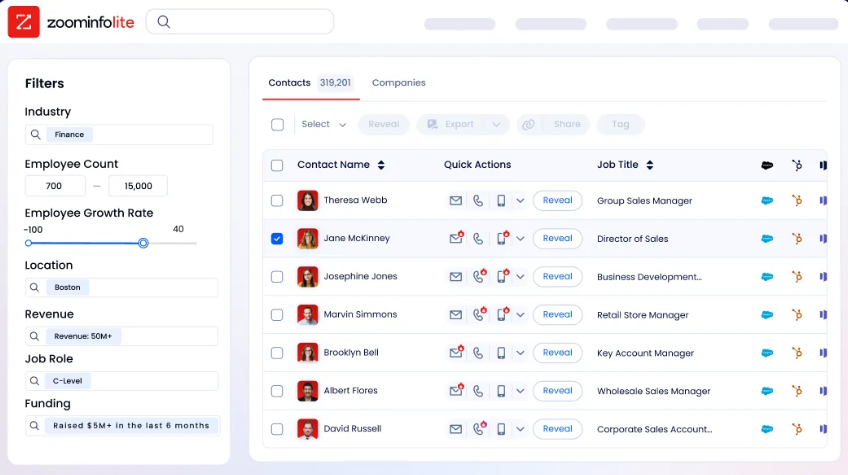
Source: ZoomInfo
API access is included in all relevant plans. Because ZoomInfo enriches data inside your existing CRM rather than replacing it, the total cost stacks alongside your Pega or Salesforce investment rather than competing with it.
Integration and ecosystem comparison
Pega ships with 200+ integrations and native connectors for SAP, Salesforce, ServiceNow, and major cloud platforms. Its API layer supports REST, SOAP, Kafka, and other enterprise protocols.
Source: Pega
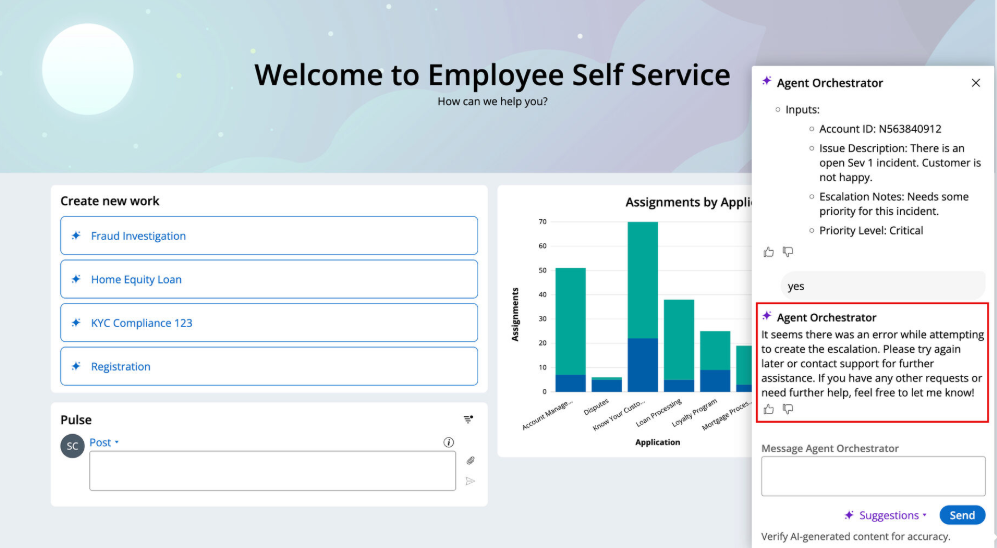
MCP support in Infinity '26 will let third-party agents discover and invoke Pega workflows. The platform also includes a Process Extender for Salesforce Lightning, which embeds Pega workflows inside Salesforce for organizations running both. Still, reviewers note that matching the ready-made connectivity of larger ecosystems requires custom development.
Source: Pega
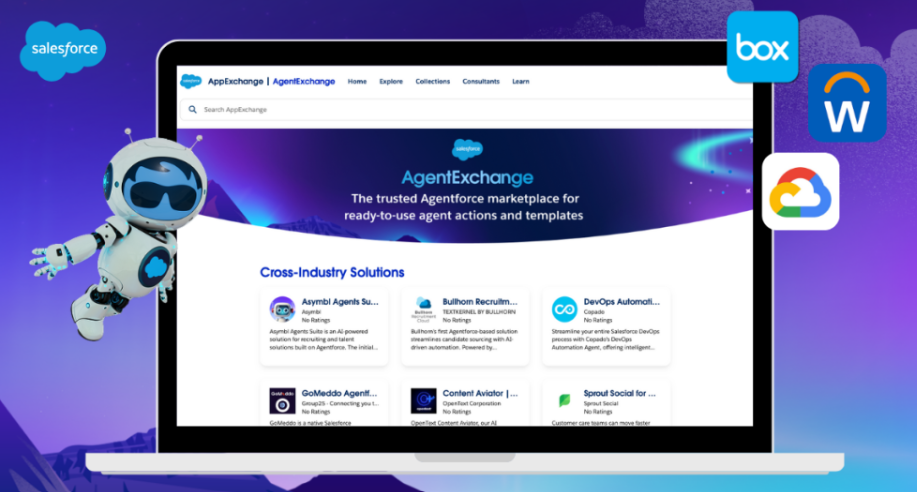
Salesforce has the largest enterprise application ecosystem. AppExchange covers 9,000+ apps with 91% customer adoption. MuleSoft provides API management and integration with hundreds of pre-built connectors.
AgentExchange offers 250+ pre-built agent actions and templates. Native integrations with Google Workspace, Microsoft Outlook and Teams, and Slack are built in. For organizations that need their CRM to connect with everything, Salesforce's ecosystem is the safest bet.
Source: Salesforce
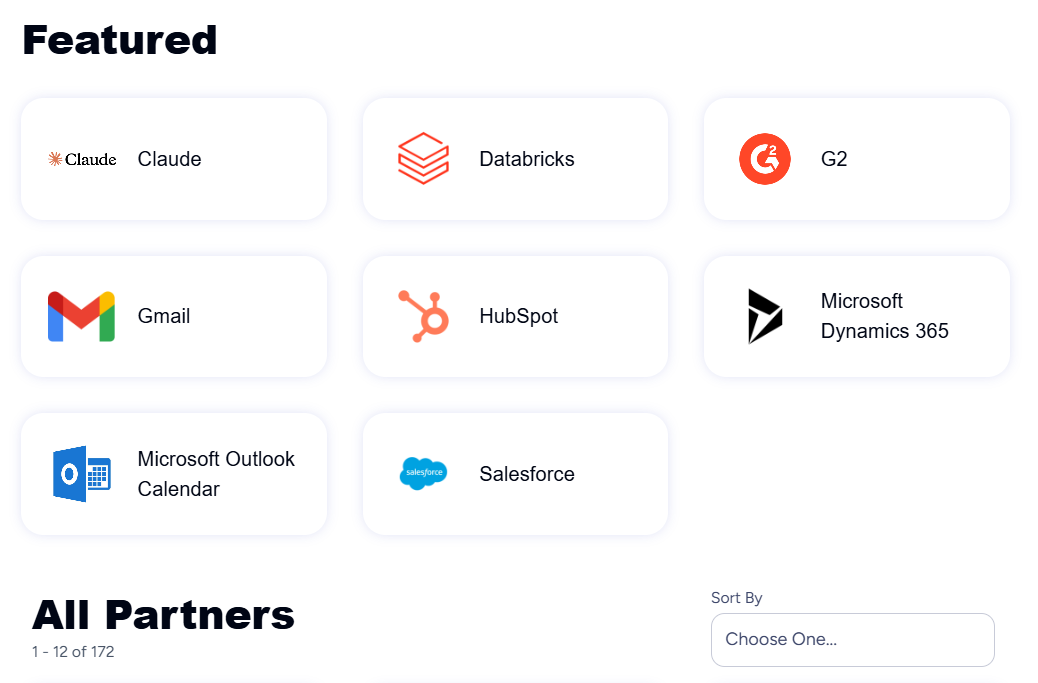
ZoomInfo works with both platforms. The ZoomInfo App Marketplace lists 120+ partner integrations, with native connectors for Salesforce, HubSpot, and Microsoft Dynamics 365.
Source: ZoomInfo
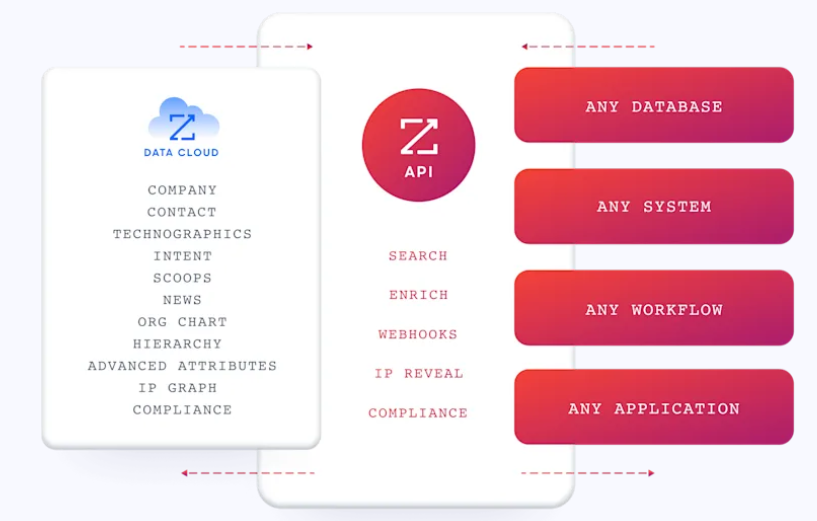
The Enterprise API and MCP server expose ZoomInfo's data and intelligence to any application or AI agent, including those on Pega or Salesforce.
Source: ZoomInfo
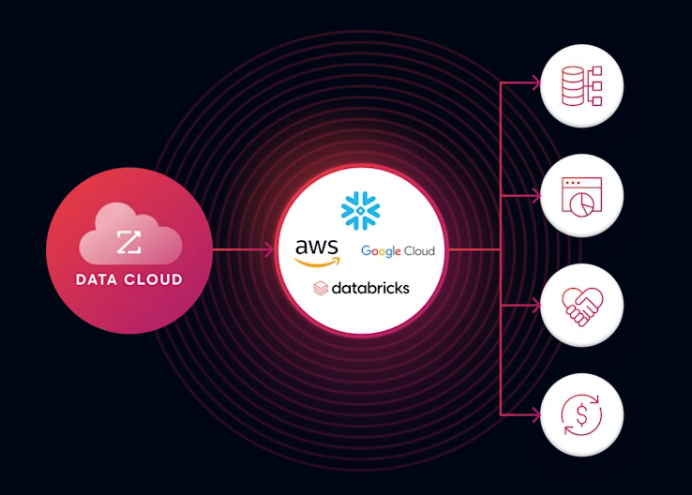
Cloud Partners enable direct data ingestion into AWS, Google Cloud, Snowflake, and Databricks. ZoomInfo's intelligence is available wherever your GTM team works, regardless of CRM platform.
Source: ZoomInfo
BDO Canada's Senior Marketing Intelligence Analyst Jerry Wilson put it simply: "The plug-and-play aspect of the API means I can integrate it very easily into any process and get information at a moment's notice." The team achieved an 87% reduction in time spent updating internal data dashboards. (BDO Canada Case Study)
Implementation and learning curve
The gap in time-to-value between these platforms is significant.
Pega has the steepest ramp. The declarative, rule-based programming model is foreign to developers trained in procedural languages, and enterprise deployments historically take several months.
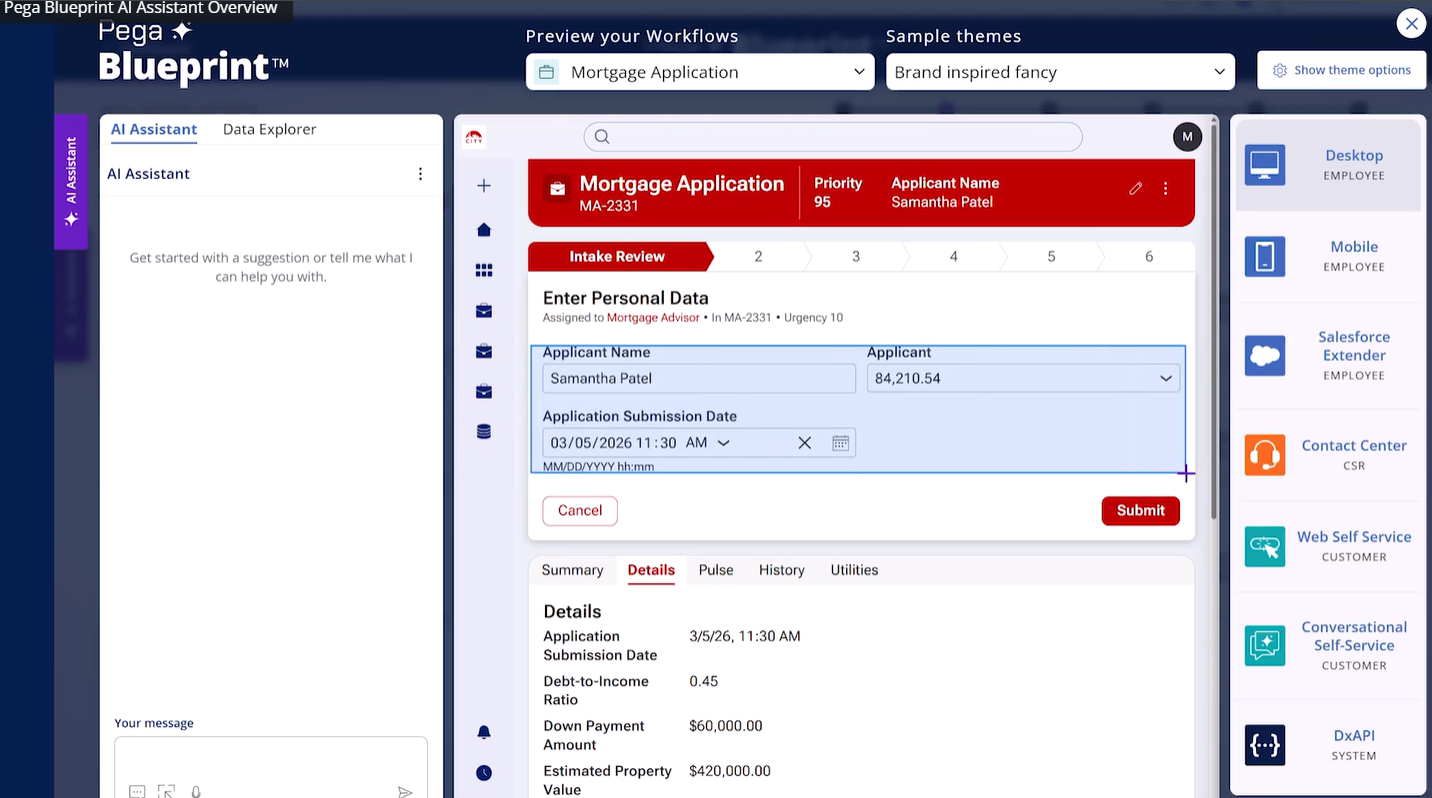
Pega is working to compress this: Blueprint AI helped a healthcare client deploy two applications in 92 and 70 days, and early customers report 80% of projects going live within 90 days. But the traditional implementation pattern, built around system integrator partnerships, remains the norm for complex deployments.
Source: Pega
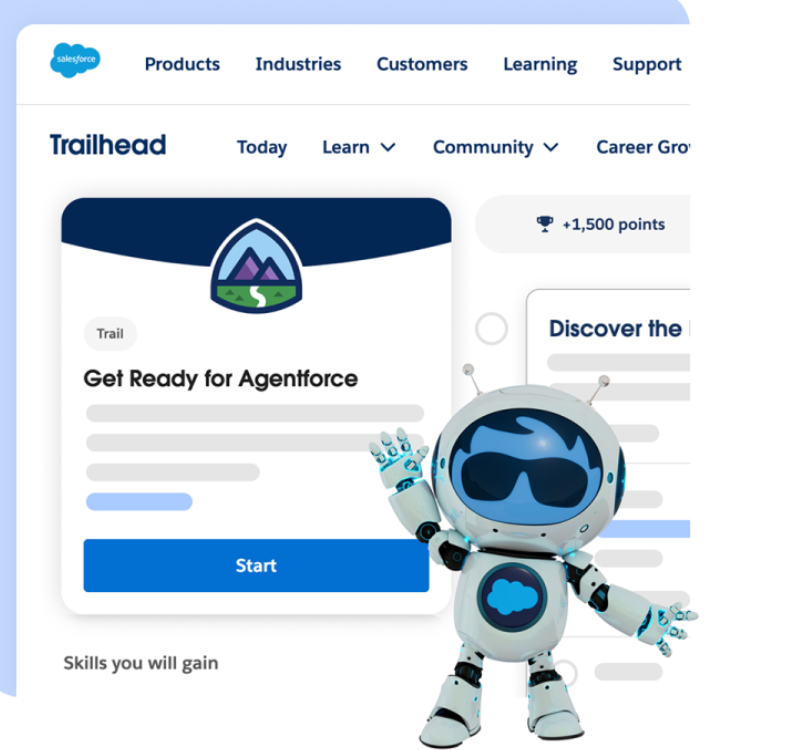
Salesforce varies widely by scope. A simple Sales Cloud deployment for a small team can go live in weeks. An enterprise multi-cloud implementation with Data Cloud, Agentforce, and industry-specific configurations can take 3 to 12 months. Over 70% of implementations are partner-led, meaning quality and timeline depend on the integrator. Trailhead and in-app guidance help with adoption, but the platform's feature density means most organizations use a fraction of what they pay for.
Source: Salesforce
ZoomInfo deploys into your existing CRM rather than replacing it. GTM Workspace deploys in weeks, and the company redesigned its onboarding program to a structured 90-day process that produced a 25% improvement in customer satisfaction scores. Because ZoomInfo enriches your CRM data rather than restructuring your tech stack, the adoption risk is lower. Your Salesforce or Pega investment stays intact; ZoomInfo makes it work harder.
Customer service and support models
Pega operates Standard and Premium support tiers. Premium support delivers a 15-minute initial response for critical production-down incidents and 24/7 availability. Pega Academy offers role-based certifications and structured training. The Pega Community provides peer discussion, a marketplace for add-ons, and GenAI-powered support via Athena.
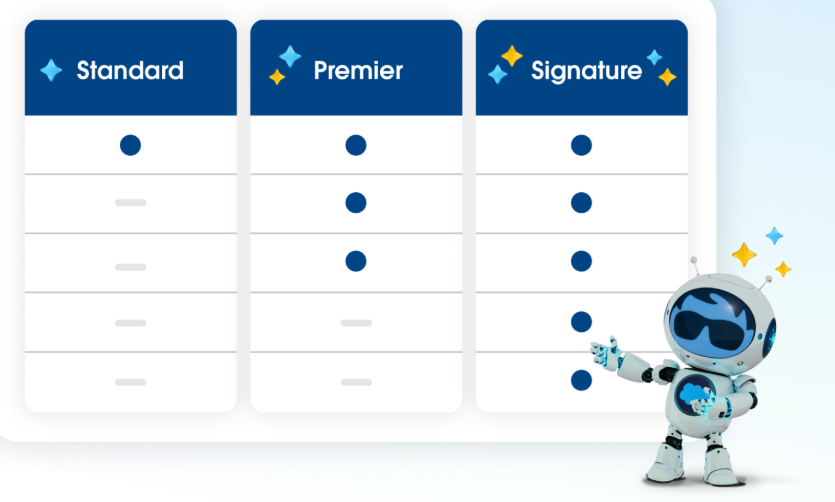
Salesforce offers three Success Plan tiers: Standard (free, self-service), Premier (30% of net license fees, 1-hour response for business-impacting issues), and Signature (custom pricing, 24/7 support with 15-minute response for critical issues).
Source: Salesforce
The Trailblazer Community spans 1,300+ local groups in 90 countries, the largest peer support network in enterprise software.
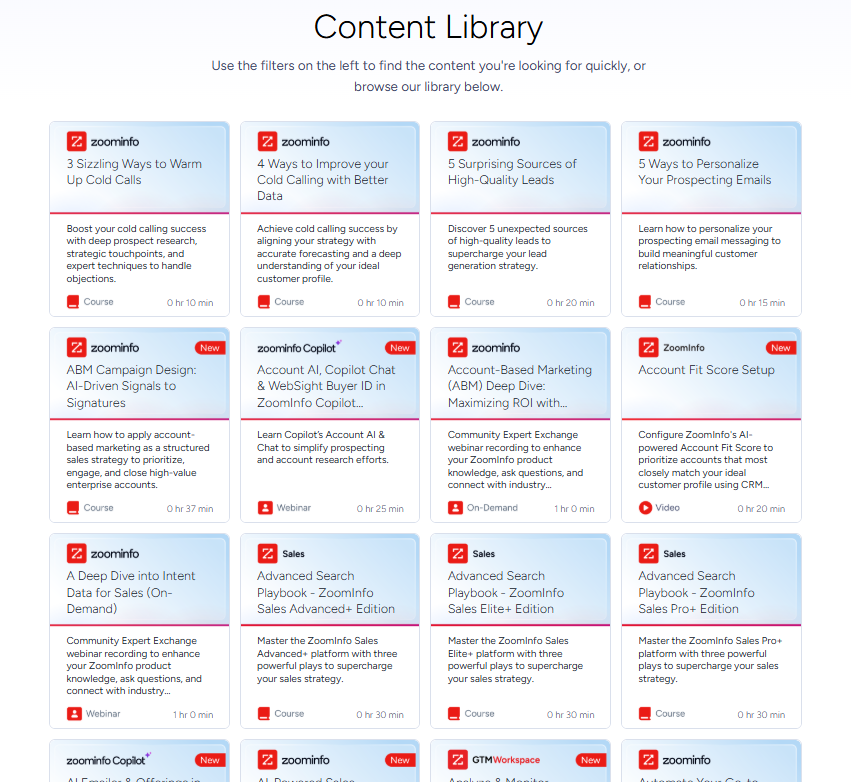
ZoomInfo provides support through its Help Center, ZoomInfo University with role-specific learning paths and certifications, and professional services through ZoomInfo Labs.
Source: ZoomInfo
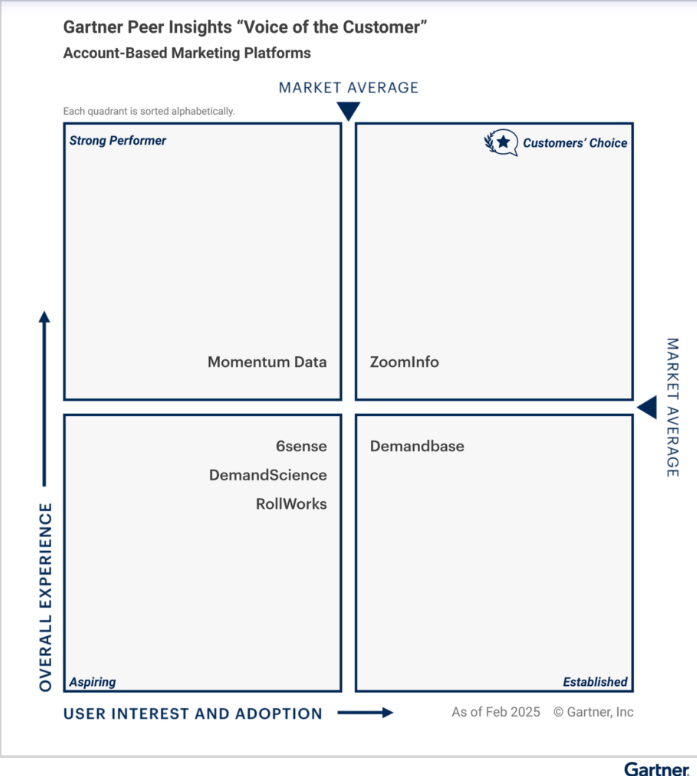
Enterprise customers receive dedicated customer service managers. The Gartner Voice of the Customer 2025 report positioned ZoomInfo as the only vendor in the Customers' Choice quadrant, with a 4.7/5.0 average rating.
Source: ZoomInfo
Pega vs. Salesforce vs. ZoomInfo: Which should you choose?
These three platforms solve different problems. The right choice depends on which problem is most pressing.
Choose Pega if:
You operate in a regulated industry (banking, insurance, healthcare, government, telecom)
Complex, multi-step workflows and case management are your primary challenge
Real-time AI decisioning with full auditability is a compliance requirement
You need to modernize legacy systems without replacing them
You have the budget and SI partnerships for a multi-month enterprise implementation
Choose Salesforce if:
You need a CRM covering sales, service, marketing, commerce, and analytics
Ecosystem breadth and AppExchange integrations matter to your workflow
You want access to a large talent pool of certified administrators and developers
You value Agentforce AI agents for autonomous customer engagement
You need industry-specific clouds with pre-built data models
Use ZoomInfo with either platform if:
You need accurate, verified B2B contact data and company intelligence in your CRM
Buyer intent signals and account prioritization would improve your sales team's targeting
Your CRM data is incomplete, stale, or preventing your AI investments from delivering results
You want intelligence that works across your entire tech stack through APIs and MCP
You want AI-powered prospecting, outreach, and deal context that compounds over time
See how ZoomInfo powers your CRM with a free trial.
Pega and Salesforce are both strong platforms for their respective strengths. Pega gives regulated enterprises the governed workflows and decisioning they need. Salesforce gives organizations the CRM ecosystem they rely on. But both perform best when the data inside them is accurate, complete, and enriched with buying signals. That's the layer ZoomInfo provides, and it works regardless of which CRM you choose.
Levanta CEO Ian Brodie summarized the shift: "ZoomInfo's not just a contact data company anymore. They've built a full system of execution. GTM Intelligence actually works the list, writes the outreach, triggers the play, and helps drive predictable growth." (Levanta Case Study)
Pega vs. Salesforce vs. ZoomInfo FAQ
What is the core difference between Pega, Salesforce, and ZoomInfo?
Pega is an enterprise AI platform designed for complex workflow automation, case management, and real-time AI decisioning, primarily serving regulated industries like banking, insurance, and healthcare. Salesforce is the world's largest CRM platform, covering sales, service, marketing, commerce, and analytics with a large app ecosystem. ZoomInfo is a B2B data and GTM intelligence platform that enriches the data inside your CRM, providing verified contacts, intent signals, and account intelligence.
Can Pega and Salesforce work together?
Yes. Pega offers a Process Extender for Salesforce Lightning that embeds Pega's workflow engine inside Salesforce. Organizations can use Salesforce as their CRM system of record while running complex process automation and decisioning through Pega. ZoomInfo integrates natively with Salesforce and can feed data into Pega through APIs, making all three platforms part of the same stack.
Which platform is better for sales teams?
Salesforce is the default for most sales teams, with Sales Cloud providing pipeline management, forecasting, activity tracking, and Agentforce-powered prospecting agents. Pega Sales Automation scored highest in B2B Sales use cases in Gartner's Critical Capabilities for Sales Force Automation for five consecutive years, but is built for complex, regulated sales cycles rather than general-purpose sales operations. ZoomInfo complements both by providing the verified contact data, direct dials, intent signals, and account intelligence that fuel sales outreach.
How do the platforms compare on AI capabilities?
Pega's AI is workflow-governed: agents operate inside deterministic processes with full audit trails, and the Customer Decision Hub delivers real-time next-best-action decisioning. Salesforce's Agentforce deploys autonomous AI agents across sales, service, and marketing using the Atlas Reasoning Engine. ZoomInfo's GTM Context Graph processes 1.5 billion data points daily to surface buying signals, account patterns, and deal context that feed into either platform's AI engine.
Which platform has the most flexible pricing?
Salesforce offers the widest range, from a free CRM for two users to enterprise editions at $550 per user per month, though costs scale quickly with add-ons for Agentforce, Data Cloud, and support plans. Pega has a $5,000 per month cloud minimum and does not publish platform pricing. ZoomInfo offers a permanent free tier (ZoomInfo Lite) with paid plans custom-quoted based on consumption, and API access is included in all relevant plans.
Which platform is best for a large enterprise in a regulated industry?
Pega is designed for this buyer. Its center-out architecture, governed AI agents, and native compliance features (audit trails, ethical bias checks, fair lending controls) serve financial services, insurance, healthcare, and government. Salesforce can serve regulated industries through its industry clouds and Shield security add-on, but its AI agents prioritize autonomy over strict governance. ZoomInfo provides the B2B data foundation either platform needs to work effectively.
Do I need ZoomInfo if I already have Salesforce or Pega?
Both platforms are CRM and engagement systems that depend on the quality of data inside them. ZoomInfo solves the data problem: enriching contacts and companies, surfacing intent signals, identifying buying committees, and keeping records current. In a Fortune 500 competitive RFP analyzing 25 million contacts across vendors, an independent consultant concluded that "no other competitor came even close" to ZoomInfo's data quality. That data layer makes your CRM investment more productive regardless of which platform you choose.
How quickly can each platform be implemented?
ZoomInfo deploys in weeks into an existing CRM. Salesforce ranges from weeks for simple Sales Cloud setups to 3-12 months for enterprise multi-cloud deployments, with most implementations partner-led. Pega traditionally takes several months for enterprise deployments, though Blueprint AI is compressing timelines to 60-90 days for standard use cases.
