
People Data Labs is a B2B data provider that delivers person and company datasets through APIs and bulk data feeds, built for developers and data teams who embed workforce intelligence into their own products.
The platform maintains 1.5 billion unique person profiles and over 74 million company profiles, accessed through enrichment, search, and identification APIs with SDKs in five languages, plus bulk Data License Feeds delivered via AWS, Snowflake, GCP, and Azure. This breakdown covers every feature, how it works, who it serves, and which plan unlocks it.
People Data Labs's feature set has you covered if:
You are building a data-driven product (AI SDR platform, recruiting tool, CRM enrichment engine) and need a person and company data layer underneath it
You want API-native access to structured workforce profiles with employment history, contact information, education, and social data across 1.5 billion records
You need to run population queries across 140+ filterable attributes to source candidates, build audiences, or power investment research
You require bulk dataset licensing delivered into your data warehouse via Snowflake, S3, or GCP
You want per-match pricing so you only pay when a record is returned, with buyer-defined match strictness
You need workforce analytics (headcount trends, employee growth rates, talent flow, executive movements) derived from resume-level data
You'll reach the edges of its capabilities if:
You need buyer intent signals showing which companies are actively researching your category across the web
You want a prospecting UI where sales reps can search contacts, build lists, and launch outreach without writing code
You need conversation intelligence that records, transcribes, and coaches from sales calls
You require multi-channel campaign orchestration, display advertising, or account-based marketing
You want AI-powered outreach generation, deal management, or pipeline forecasting in the same platform as your data
For those needs, the reference point is ZoomInfo: a GTM platform built on 500M contacts, 100M companies, 135M+ verified phone numbers, and 200M+ verified business email addresses, a GTM Context Graph that processes 1.5B+ data points daily and combines B2B data with CRM records, conversation intelligence, and behavioral signals into a single intelligence layer, and access through native products (GTM Workspace, GTM Studio) and programmatic delivery (APIs, MCP).
After the feature breakdown, this article covers where People Data Labs stops and how ZoomInfo fills those gaps.
People Data Labs Platform Overview
People Data Labs (PDL) is a B2B data provider that operates under the tagline "We build workforce data, so you don't have to." The platform sells to builders: developers, data engineers, data scientists, and product managers at technology companies who need structured professional and company data embedded in their own software.
Named customers include S&P Global, Clay, Hire Ez, Anaconda, Insight Partners, SeekOut, ServiceNow, Canva, and Accenture.
PDL organizes its products around two core datasets and a programmatic delivery layer:
Module | What It Does | Access |
|---|---|---|
1.5B unique person profiles: employment history, contact info, education, social profiles, skills | APIs (Enrich, Search, Identify) and Data License Feeds | |
74M+ company profiles: firmographics, headcount analytics, talent flow, corporate hierarchy | APIs (Enrich, Search) and Data License Feeds | |
Real-time job listing intelligence across 60k+ companies (beta) | Search API | |
REST APIs (v5), SDKs in 5 languages, bulk licensing via S3/Snowflake/GCP/Azure | All plans | |
Salesforce (Enterprise), Snowflake, Databricks, Zapier, Make | Varies by plan |
PDL uses a credit-based, per-match pricing model across three tiers: a Free plan (100 credits/month, contact fields obfuscated), a self-serve Pro plan (full field access, starting at $100/month), and a custom Enterprise plan with dedicated support and Data License access.
You consume credits only on successful matches, and the Autocomplete and Cleaner APIs are free for all customers. With that structure in place, here is the full tour.
People Data Labs Person Data: The Core Dataset
Person Data is the product most buyers encounter first and the foundation of everything else PDL does. The dataset contains nearly three billion individual profiles, de-duplicated to 1.5 billion unique records, and PDL tracks over 300 million job updates with 17 million job changes globally per quarter.
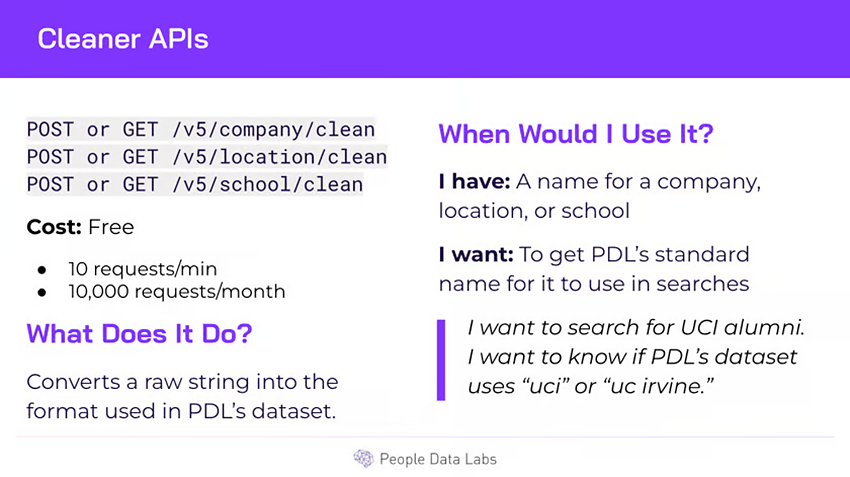
PDL aggregates data from public and licensed sources through a data build process that uses both deterministic and probabilistic de-duplication with hand-checking and unit testing at each build cycle. The same Cleaner APIs PDL exposes to customers run internally for data standardization, so the normalization logic powering PDL's own pipeline is available as a tool.
Source: People Data Labs
The person schema spans several field groups:
Identity: name, aliases, and a persistent hashed ID for tracking across dataset versions
Contact: emails, work email, personal emails, mobile phone, phone numbers, and street addresses, plus possible/candidate values for lower-confidence matches
Work experience: full employment history with company, title, dates, location, and industry, normalized through PDL's job title taxonomy (role, sub-role, class, level), O*NET codes, inferred salary, and inferred years of experience
Education: school, degrees, majors, minors, GPA, and dates (expanded in April 2024)
Social profiles: LinkedIn (URL, ID, connections), Twitter, GitHub, Facebook, and others
Demographics: sex, birth date/year, location with geo coordinates, languages, interests, skills, certifications, and summary/headline
Data quality metadata: num_sources, num_records, first_seen, last_seen, and dataset_version, so buyers can assess record reliability before acting on it
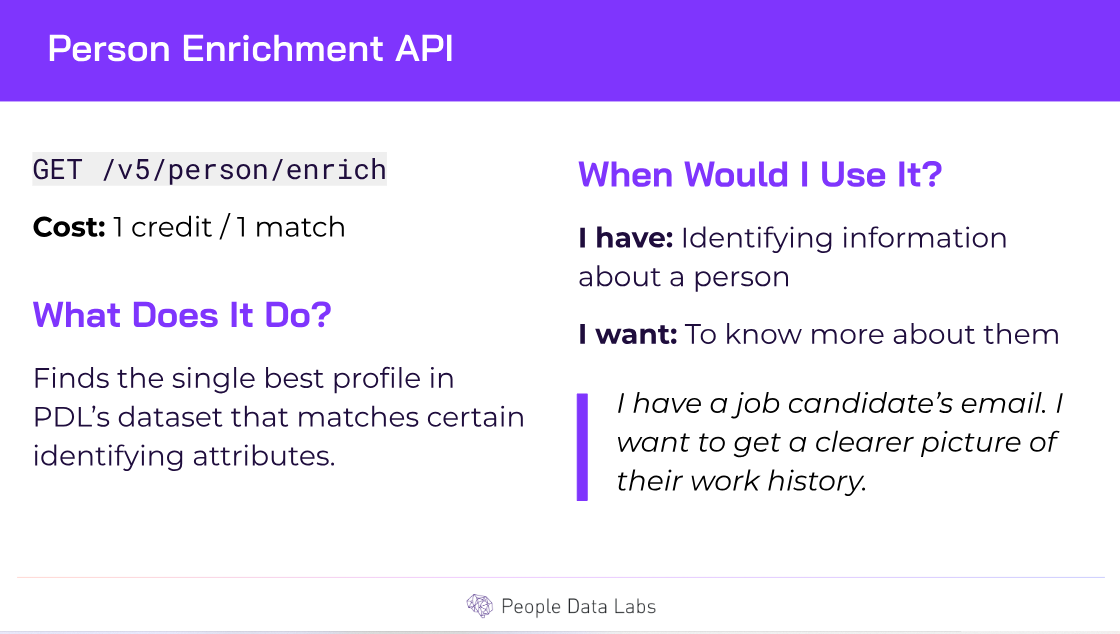
Three APIs serve different access patterns for this dataset. The Person Enrichment API handles 1:1 lookups: pass an email, LinkedIn URL, phone number, or name-plus-company combination and get the single best-matching profile.
Source: People Data Labs
Its required parameter lets customers define which fields must be non-null for a match to count as billable, so you only pay for records with the data you need. The Bulk Person Enrichment API extends this to up to 100 records per request for high-volume workflows.
The Person Search API works differently: instead of looking up known individuals, it lets you query the entire dataset using Elasticsearch DSL or SQL syntax across 140+ filterable attributes.
This powers use cases where you need to build a population from scratch (all VP-level marketing executives at SaaS companies with 200-500 employees in North America, for example). The API sorts results by data completeness, and pagination handles large result sets.
The Person Identify API fills the gap between the two: when you have partial information (a first name and a company, but no email), it returns up to 20 ranked candidates scored by match confidence, useful for entity resolution and deduplication workflows.
Data freshness follows a quarterly-major, monthly-minor release cadence. Mobile phone coverage tied to LinkedIn profiles increased 200% in April 2024 through new data partnerships. A Person Changelog API delivers delta records for bulk license customers who need to track what changed between dataset versions.
One constraint worth noting: on the Free plan, contact data fields (work email, personal emails, phone numbers, and granular location) are obfuscated, returned as True/False flags rather than actual values. Full field access requires a Pro plan at $100/month minimum. PDL also does not validate email deliverability; bounce detection requires a third-party integration such as Bouncer.
People Data Labs Company Data: Firmographics, Headcount, and Hierarchy
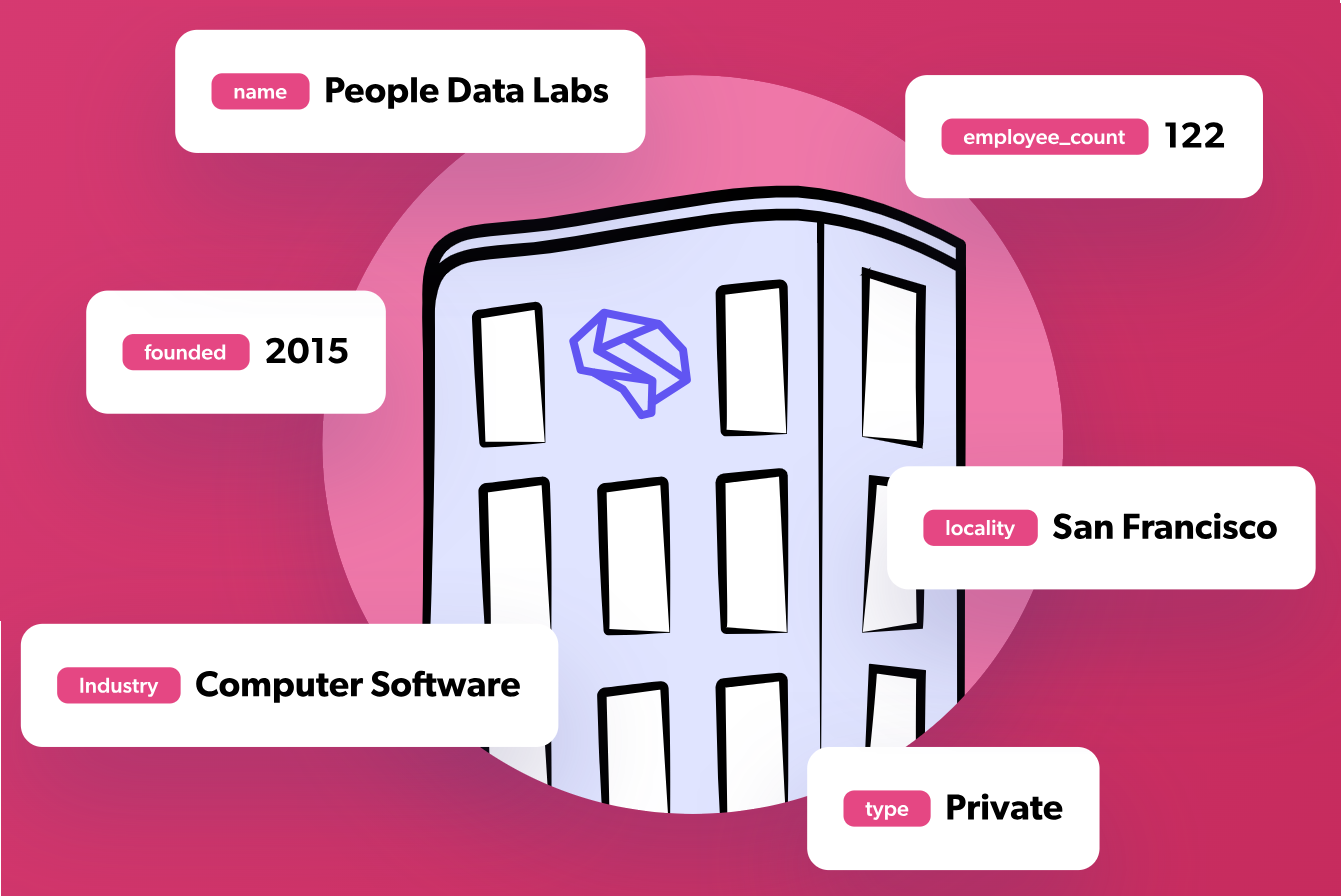
PDL's Company Data covers over 74 million company profiles. What sets it apart: firmographic and workforce attributes are derived by aggregating signals from individual-level professional records rather than company self-reporting.
Source: People Data Labs
Employee counts come from PDL's resume-level data, not LinkedIn's self-reported ranges, and the same bottom-up methodology powers headcount analytics, talent flow tracking, and growth rate calculations.
The company schema is organized into tiered data bundles. Firmographics include company type, size, industry (with both v1 and v2 taxonomies), NAICS/SIC codes, location, founding year, ticker, tags, summary, and LinkedIn follower count. Coverage as of v33.1 reaches 90% on location, 75% on industry, and 37% on employee count across the full 74.7 million records.
Headcount analytics are where PDL's person-dataset-derived approach goes deepest. The employee_count field reflects actual resume data rather than a self-declared figure. employee_count_by_month provides a time series of headcount with breakdowns by level and by role, so investment researchers can track whether a company is hiring engineers or salespeople.
Pre-computed employee_growth_rate and employee_churn_rate fields cover 3, 6, 12, and 24-month windows, and average_employee_tenure and inferred_revenue round out the workforce intelligence picture.
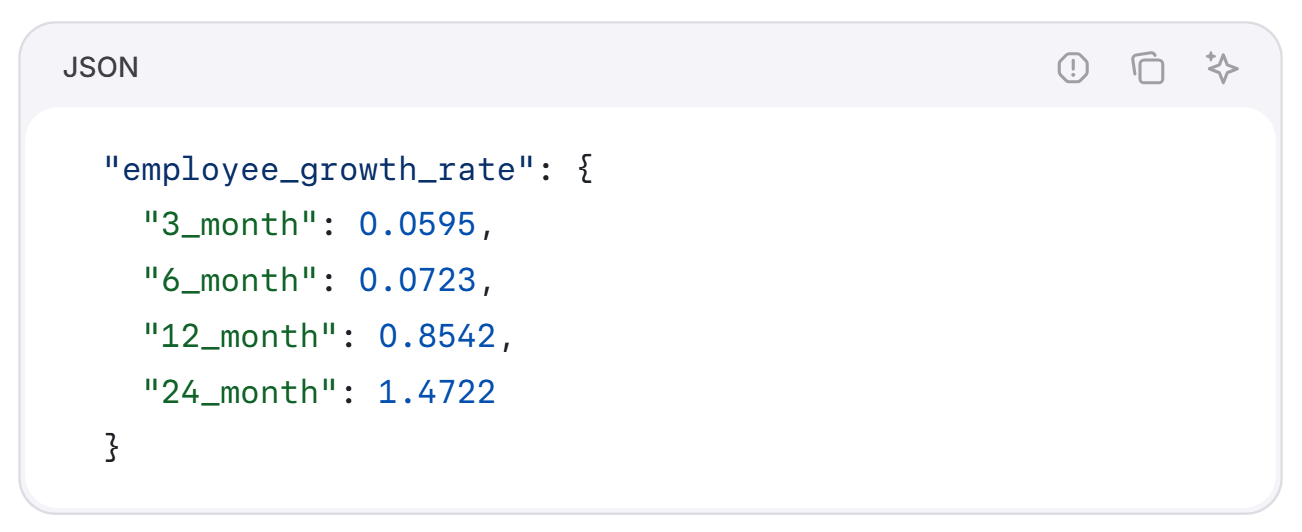
Source: People Data Labs
Talent flow data tracks where employees come from and where they go. Fields like top_previous_employers and top_next_employers (also broken down by role) reveal competitive hiring patterns, while recent_exec_hires and recent_exec_departures flag leadership changes.
Corporate hierarchy maps immediate_parent, ultimate_parent, direct_subsidiaries, and affiliated_entities, each with relationship catalyst, status, dates, and citation URLs linking to the press releases or filings that document the connection. Funding data covers per-round details (amount, type, date, investors) for approximately 280,000 companies.
Access follows the same API pattern as Person Data: a Company Enrichment API for 1:1 lookups by name, website, LinkedIn URL, or ticker; a Bulk Company Enrichment API for up to 100 companies per request; and a Company Search API for querying the full dataset with Elasticsearch DSL or SQL.
PDL also provides a free 22M+ company dataset under CC BY 4.0, updated quarterly, covering all companies with at least one current employee in PDL's person data. This is a useful resource for teams evaluating PDL's data quality before committing to a paid plan.
People Data Labs IP Enrichment: Website Visitor Identification
The IP Enrichment API matches IPv4 and IPv6 addresses to company and person signals. It returns the company most likely associated with a given IP address (name, size, industry, revenue) along with person details (title, seniority) and IP metadata flags for mobile, hosting, VPN, and Tor traffic.
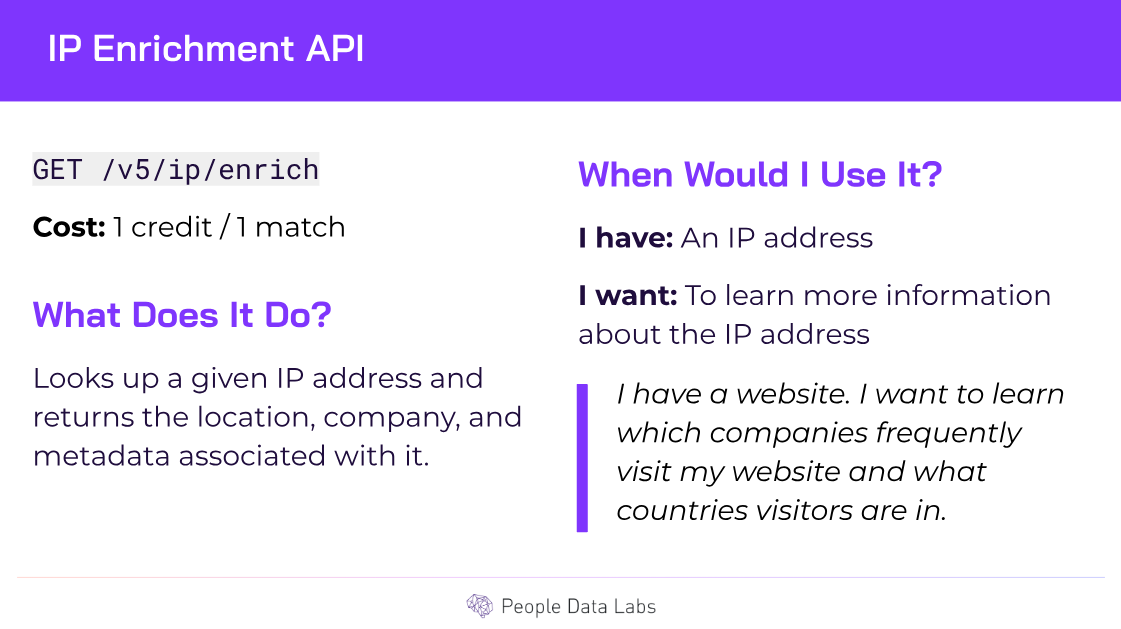
Source: People Data Labs
This powers website visitor identification: a product team can embed the API behind their analytics layer to resolve anonymous site visitors to companies and, where data supports it, individuals. The IP metadata flags help filter out non-human traffic before it reaches downstream analytics.
The API consumes 1 credit per successful call, following the same per-match model as the person and company endpoints. Identification operates at whatever level the data supports (sometimes company-only, sometimes person-level), and the output connects to PDL's company and person schemas for further enrichment.
People Data Labs Job Posting Data: Labor Market Intelligence
Job Posting Data is PDL's newest dataset, currently in beta. It indexes job listings across "54k+ companies in the investible universe" with global coverage, searchable via the Job Posting Search API using filters for company, title, location, and date.
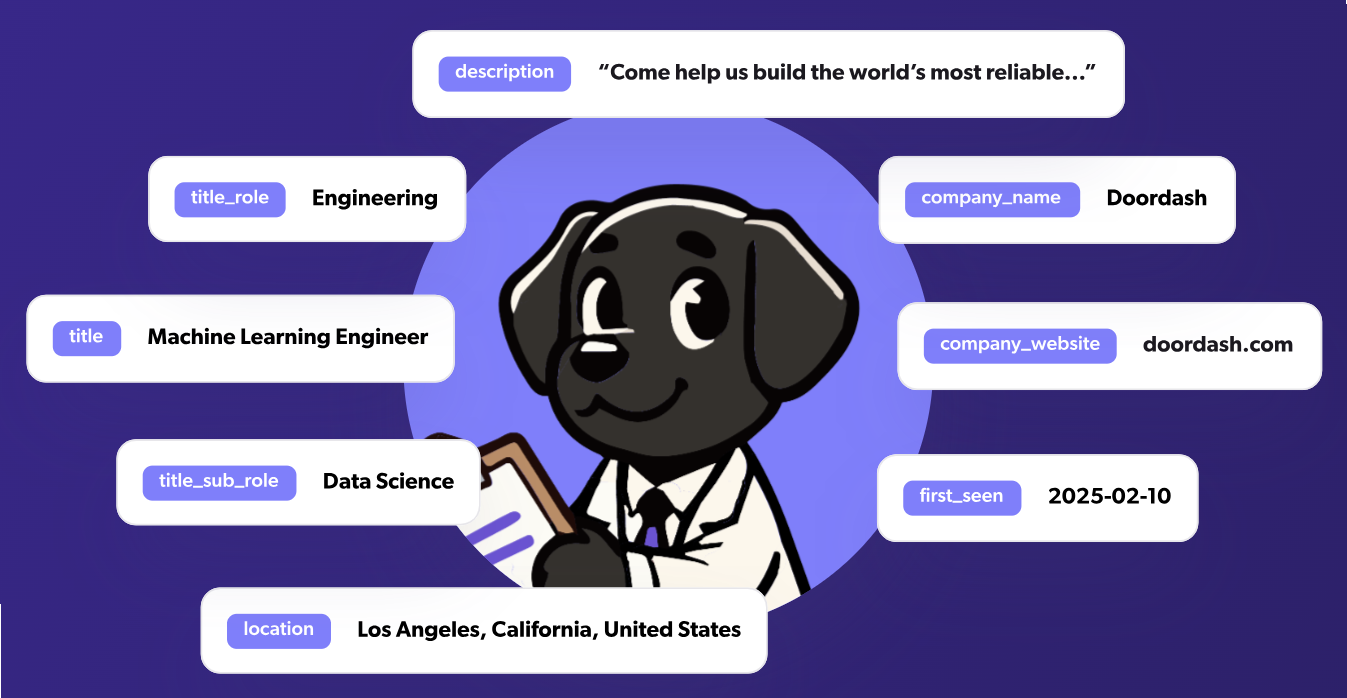
Source: People Data Labs
The use cases span all three of PDL's target verticals.
In sales and marketing, job postings serve as buying signals: a company hiring Salesforce administrators likely needs CRM tooling; a company hiring data engineers is building infrastructure. In investment research, hiring patterns act as leading indicators of company growth, strategic pivots, or contraction. In HR tech, the data powers competitive talent intelligence and labor market analytics.
Coverage is expanding, and the dataset is not yet at parity with standalone job data providers for breadth. PDL's public roadmap tracks planned expansions.
People Data Labs APIs and Data Delivery: The Infrastructure Layer
PDL delivers all data programmatically. Access flows through a REST API (HTTPS-only, JSON responses, versioned at v5) or through bulk Data License Feeds for teams at scale where per-call pricing becomes prohibitive.

Source: People Data Labs
The API endpoint inventory covers four entity types and a set of supporting utilities:
Person endpoints: Enrichment, Bulk Enrichment, Search, Identify, Preview (credit-free sampling), and Changelog
Company endpoints: Enrichment, Bulk Enrichment, Search
IP endpoint: Enrichment
Job Posting endpoint: Search
Supporting endpoints: Autocomplete (typeahead with record counts), Cleaner APIs (company, location, and school normalization), Job Title Enrichment (raw title to structured metadata), Skill Enrichment, and Subject Request API (GDPR/CCPA processing)
The Autocomplete and Cleaner APIs deserve attention because they are free for all customers, including Free plan users. Autocomplete returns canonical field values with record counts, useful for building search UIs and validating filter inputs. The Cleaner APIs normalize messy input data (company names, job titles, locations) against PDL's standardized taxonomy, the same normalization logic PDL uses internally.
Bulk data delivery serves teams that need the full dataset or custom subsets rather than per-call access. PDL delivers via S3 (preferred), Snowflake (preferred), Azure Blob Storage, GCP Bucket, and Direct Download. Delta file deliveries handle incremental updates, and standard terms include quarterly updates with monthly available at additional cost.
Data is also purchasable through the Snowflake Marketplace using Snowflake committed spend and the Databricks Marketplace via Delta Sharing.
PDL maintains SDKs in Python, JavaScript, Ruby, Go, and Rust, all open-source on GitHub, plus a React component for the Autocomplete API. A Sandbox environment returns synthetic data with identical structure at zero credit cost, available for Person Enrichment, Search, Identify, Company Enrichment, and Company Search, so teams can build and test integrations before production.
The Search APIs support dual query syntax: Elasticsearch DSL for developers comfortable with that ecosystem, and SQL for teams that prefer relational query patterns. Preview APIs let developers check results before consuming credits.
Webhooks are available for Enterprise API and Data License customers, configured to fire on person-record changes (job changes, email updates, phone updates, location changes, social profile changes) and delivered monthly as JSON arrays of up to 1,000 person IDs.
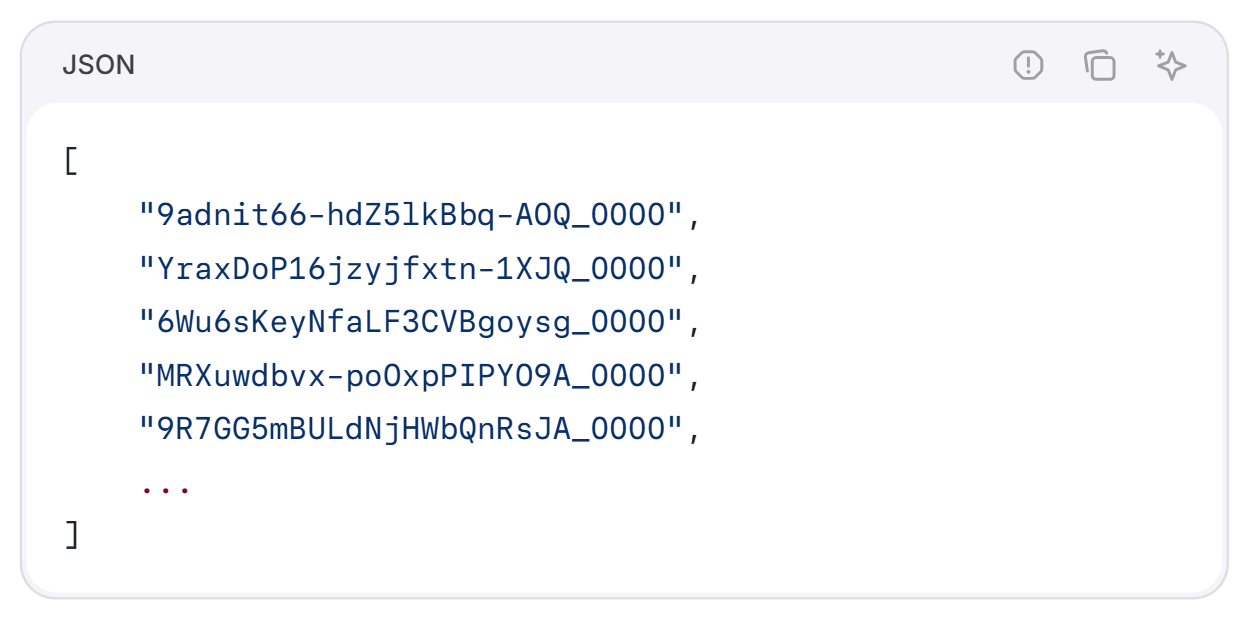
Source: People Data Labs
Rate limits use a fixed-window strategy on a per-API-key basis, with separate limits per endpoint. The 1 MB response size limit can be managed through gzip compression or the data_include parameter for field filtering. Bulk endpoints cap at 100 records per request.
People Data Labs Integrations and Ecosystem
PDL's integration catalog is focused rather than broad, reflecting its position as a data infrastructure layer rather than a workflow platform.
The Salesforce integration is a native, no-code add-on (Enterprise plan only) that enriches Salesforce Contacts, Leads, and Accounts from PDL's API Dashboard. Hundreds of PDL data points map to standard or custom Salesforce fields, with configuration handled through the dashboard's mapping interface rather than code.
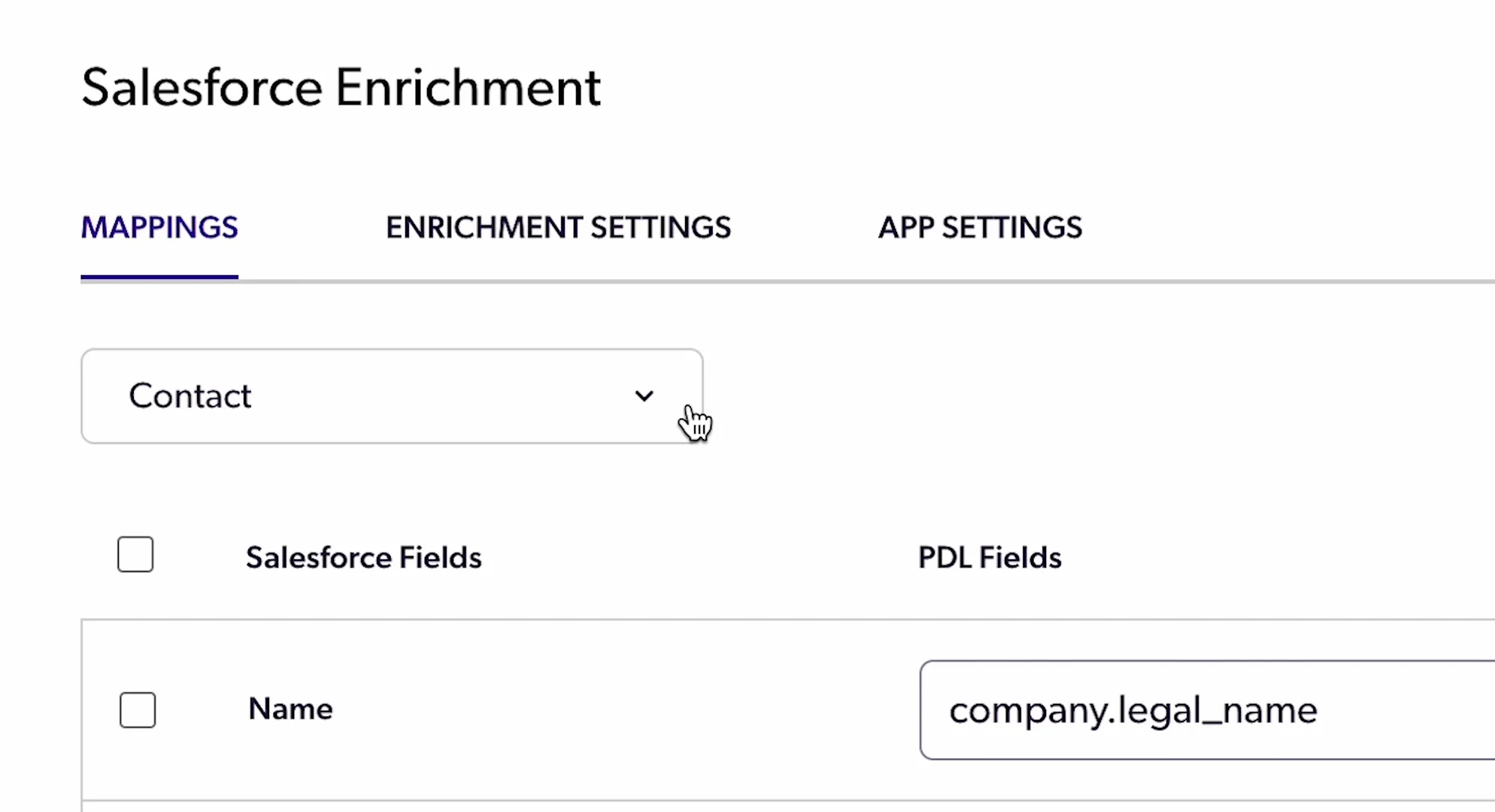
Source: People Data Labs
Zapier and Make integrations enable no-code workflow automation: pull contacts from a Google Sheet, enrich with PDL, and push to a CRM, all configured visually. The Ping Identity integration enriches user profiles at the authentication layer, and Bouncer handles email validation that PDL does not perform natively.
PDL does not operate a broad integration marketplace. Connections to tools like HubSpot, Outreach, or Apollo require custom API implementation using the SDKs or direct REST calls. There is no Chrome extension for browser-based prospecting.
People Data Labs Security and Compliance
PDL holds ISO 27001 certification and SOC 2 Type 2 attestation, with architecture designed to comply with NIST 800-53r5 at moderate level. PDL runs quarterly external penetration testing on external networks and applies quarterly security updates to all servers.
PDL encrypts all data at rest and in transit using FIPS 140-2 compliant algorithms. Internal access uses time-based controls, and the platform runs 24x7 monitoring with multi-AZ redundancy on AWS (Oregon and Northern California regions), with Elastic Cloud data centers as part of the infrastructure. The API Status page reports 99.99% uptime over the past 90 days. PDL reports security incidents within 24 hours.
On data privacy, PDL's Acceptable Data Use Policy is a contractual condition of all API and license access, prohibiting FCRA-covered purposes (credit eligibility, employment screening, tenant screening, insurance underwriting), government benefit determinations, and law enforcement use.
A Privacy Center provides opt-out, portability, correction, and deletion forms, and the Subject Request API handles GDPR/CCPA data subject requests programmatically. PDL states that none of its attributes describe sensitive personal data as defined by GDPR.
People Data Labs Pricing: How Credits Work
PDL's credit-based pricing charges per successful match, not per request. A failed lookup (no profile found) consumes zero credits. PDL prices person and company data separately, and credit costs decrease with volume across three tiers within Pro plans. Exact per-credit prices are disclosed during signup, not published publicly.
Credit consumption by endpoint:
Enrichment APIs (Person, Company, IP): 1 credit per successful call
Search APIs (Person, Company): 1 credit per profile returned (1 to 100 per request)
Bulk Enrichment: up to 100 credits per request
Autocomplete and Cleaner APIs: free, governed by rate limits only
Pro plans include 1,000 free Person Search credits per month (12,000/year on annual billing). Unused credits carry over up to 100% of the next period's allocation; excess is forfeited. Once credits run out, all requests return 402 errors (blocked, not auto-billed) unless an overage pool is pre-configured.
A permanent free tier provides 100 credits/month with no credit card required, but contact data fields are obfuscated to True/False flags. The Sandbox APIs are available on all plan types at zero credit cost. A separate free trial provides 500 API credits over 30 days with full field access.
Enterprise plans require sales contact and include dedicated support (Customer Success Manager, Solutions Engineer, Data Consultant, and Integration Architect), higher rate limits, Data License access, and webhook support. Above 100,000 credits/month, custom pricing through sales is required.
Where People Data Labs Stops: The Gaps
PDL is designed as an infrastructure-layer data supplier for technical builders. That focus creates depth, but it also means the platform defers to its customers (or their other vendors) for several capabilities a go-to-market team eventually needs.
No buyer intent data. PDL does not track which companies are actively researching specific topics across the web. The Job Posting Data product (still in beta) provides labor market signals, but there is no behavioral intent layer showing topic-level research activity, website visit patterns, or ad engagement signals. Teams that need to prioritize accounts by in-market activity need a separate intent data source.
No native user interface for prospecting or outreach. PDL runs entirely on APIs and data feeds. A sales rep or recruiter who wants to search contacts, build a list, and send outreach cannot use PDL directly. They need a product built on top of PDL (such as Clay or Hire Ez) or a separate platform with a prospecting UI. This is a deliberate choice: PDL sells to builders, not end users.
No conversation intelligence. PDL has no call recording, transcription, coaching, or conversation analysis. There is no layer that captures what happens in sales interactions or draws conclusions about deal outcomes. Teams moving from list building to live engagement need a separate tool for that context.
No outreach execution or campaign orchestration. PDL does not include email sequencing, multi-channel outreach, display advertising, or any form of campaign management. It supplies data; what happens with that data is the customer's responsibility.
No native email deliverability validation. PDL provides contact data (emails, phone numbers) but does not verify whether those emails will bounce. Deliverability validation requires third-party integration with a tool like Bouncer. For teams sending outreach at scale, an unverified email list carries sender reputation risk.
Webhook delivery is monthly, not real-time, and has no automatic retry. The webhook system fires monthly, synchronized with PDL's data release cycle, and there is no automatic retry on delivery failure. Teams building reliability-critical pipelines around PDL data changes need to account for this constraint.
How ZoomInfo Covers the Gaps
The gaps above share a common thread: PDL is a data infrastructure layer for builders, not a go-to-market execution platform. ZoomInfo supplies both the data layer (at greater scale) and the intelligence, execution, and orchestration capabilities PDL does not include.
ZoomInfo Intent and WebSights: In-market signals PDL does not provide
PDL's dataset tells you who people are and where they work. It does not tell you when they are evaluating solutions like yours. ZoomInfo Intent fills that gap, tracking signals from 210 million IP-to-Organization pairings and 6 trillion+ keyword-to-device pairings sourced monthly. Guided Intent, exclusive to ZoomInfo, identifies the topics historically correlated with deal success rather than requiring manual topic selection.
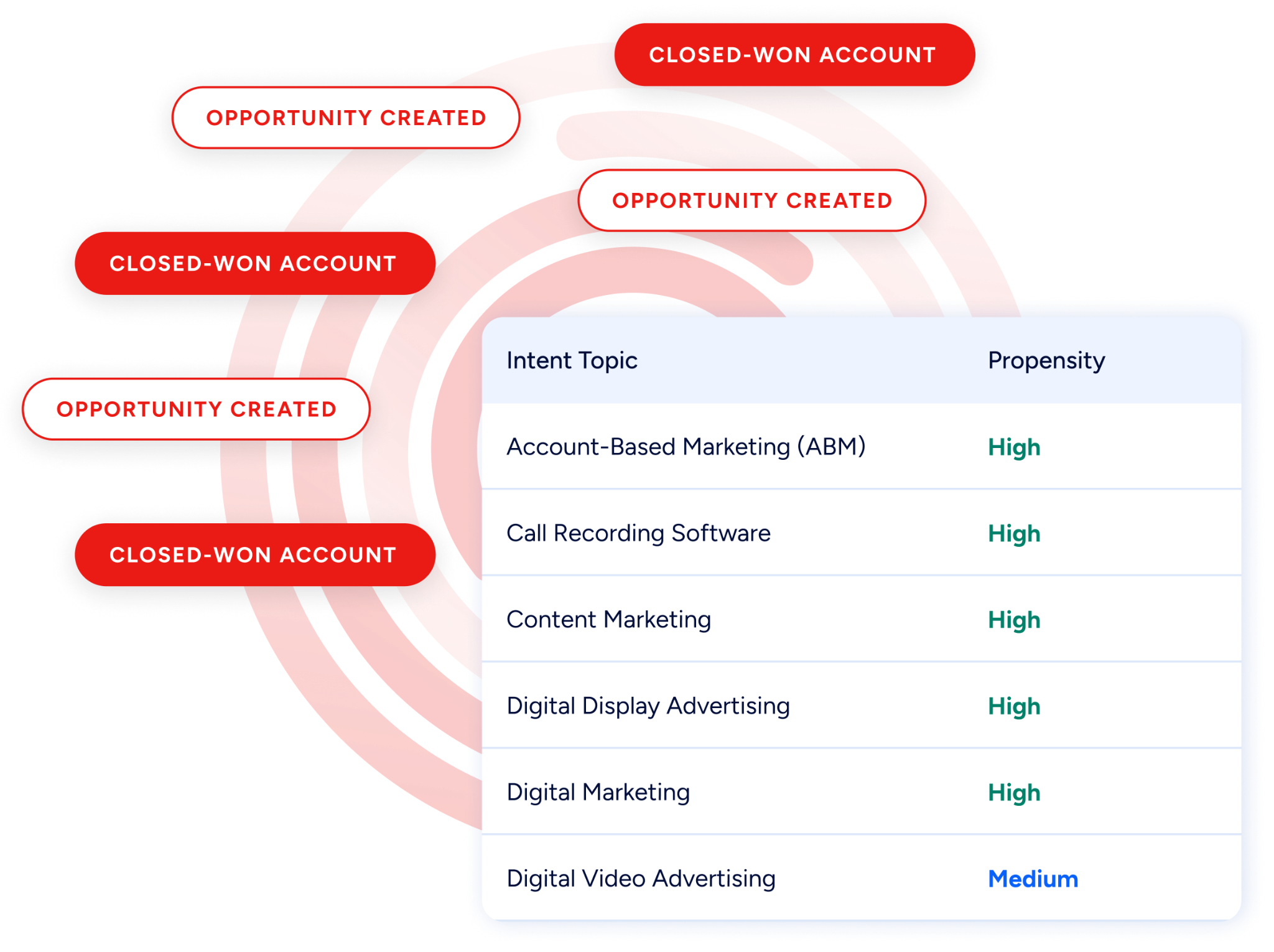
Source: ZoomInfo
On the website side, WebSights resolves anonymous website traffic to companies with Automatic Traffic Filtering that separates real visitors from bots. ZoomInfo Marketing extends this to contact-level site visitor identification, identifying who visited (not just which company) and triggering personalized outreach.
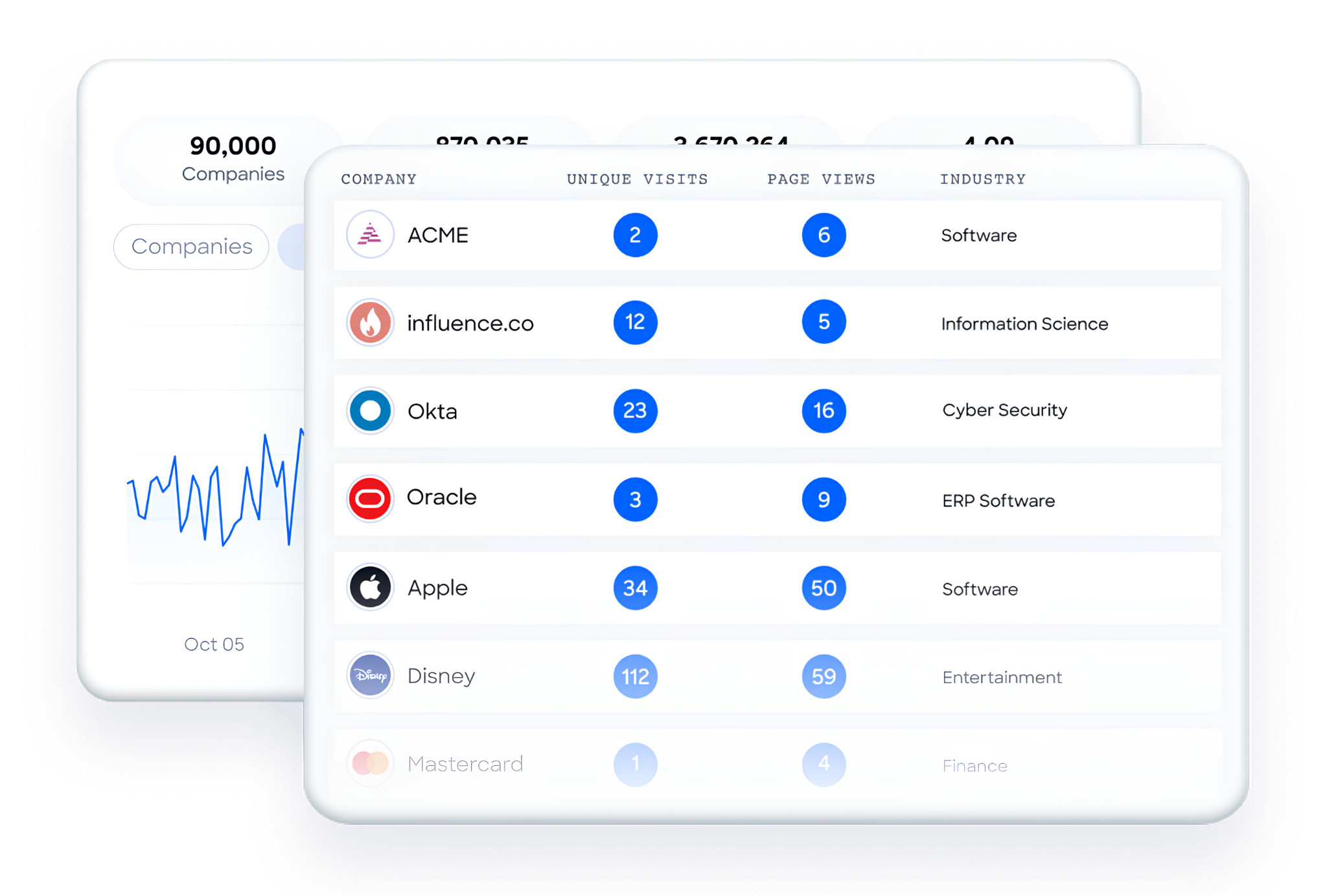
Source: ZoomInfo
Where PDL's IP Enrichment API provides building blocks for teams constructing their own visitor identification system, ZoomInfo delivers a signal layer integrated with outreach and pipeline management.
ZoomInfo is a Leader in the Forrester Wave for Intent Data Providers, Q1 2025, receiving the highest possible scores across eight criteria.
ZoomInfo GTM Workspace: A prospecting surface for sales teams
PDL requires engineering effort to turn data into action. GTM Workspace is ZoomInfo's native front-end for sellers: a single surface where a complete Book of Business view across CRM, ZoomInfo data, conversation history, and market intelligence converges with AI agents that automate account research, outreach, CRM updates, and signal monitoring.
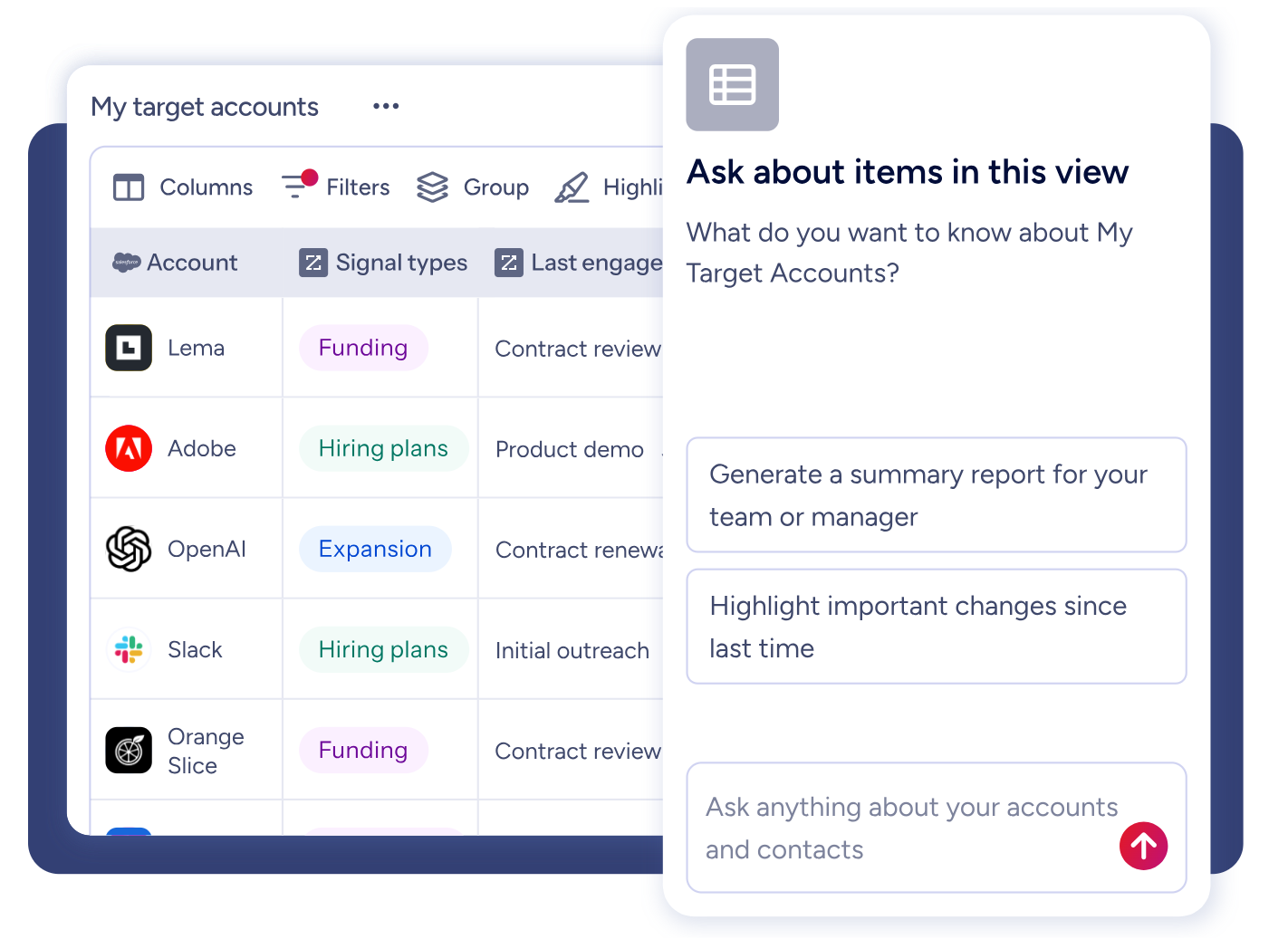
Source: ZoomInfo
An Action Feed streams in-market buyers matched to target criteria with pre-drafted actions on every signal. An AI Assistant delivers 1-click account briefs that pull CRM history, company news, ZoomInfo signals, and stakeholder context into a 10-second summary. The workspace integrates natively with Salesforce, HubSpot, and Microsoft Dynamics and deploys in weeks, not months.
For teams whose bottleneck is not building a data pipeline but using data to sell, this is the layer PDL does not offer.
ZoomInfo Chorus: Conversation intelligence that captures why deals move
Chorus, backed by 14 technology patents, records and transcribes sales calls, surfaces AI-generated insights (talk ratios, sentiment, objection detection), auto-syncs deal intelligence to the CRM, and provides coaching scorecards and clip sharing.

Source: ZoomInfo
It captures context that static data cannot: why a champion went quiet, what a competitive mention means for deal risk, which objection patterns predict closed-lost outcomes.
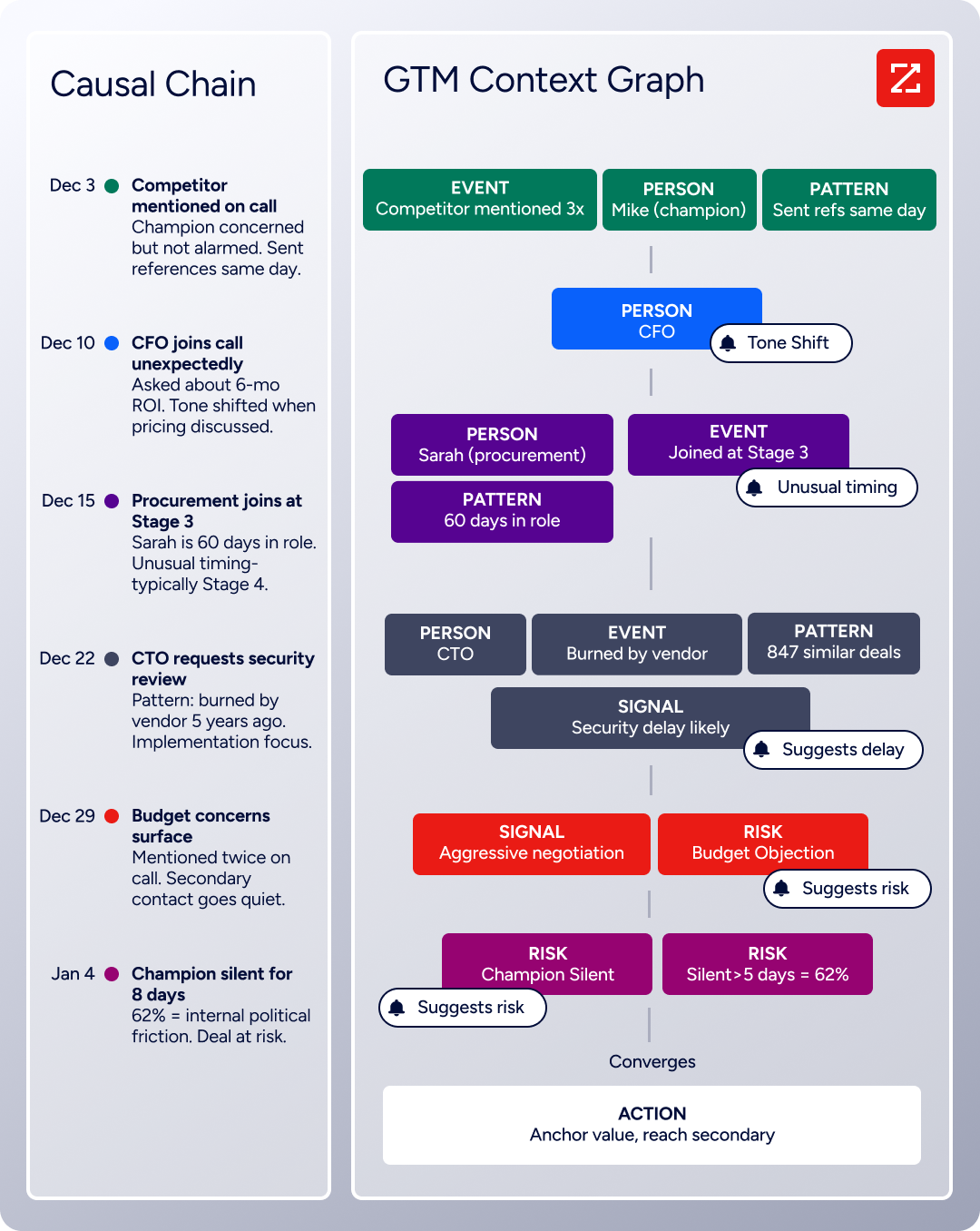
Chorus feeds ZoomInfo's GTM Context Graph, which processes 1.5B + data points daily and combines B2B data with CRM records, conversation intelligence, and behavioral signals into a single intelligence layer. A CRM records that a deal moved stages.
Source: ZoomInfo
The GTM Context Graph reveals why: it connects the CFO joining the last call with ROI-focused questions to the pattern behind closed-won deals in the same segment.
Seismic's sales team attributed 39% of active pipeline to opportunities identified or influenced by ZoomInfo signals, boosted productivity by 54%, and saved 11.5 hours per week per seller. (Seismic Case Study)
ZoomInfo GTM Studio: Marketing orchestration and campaign execution
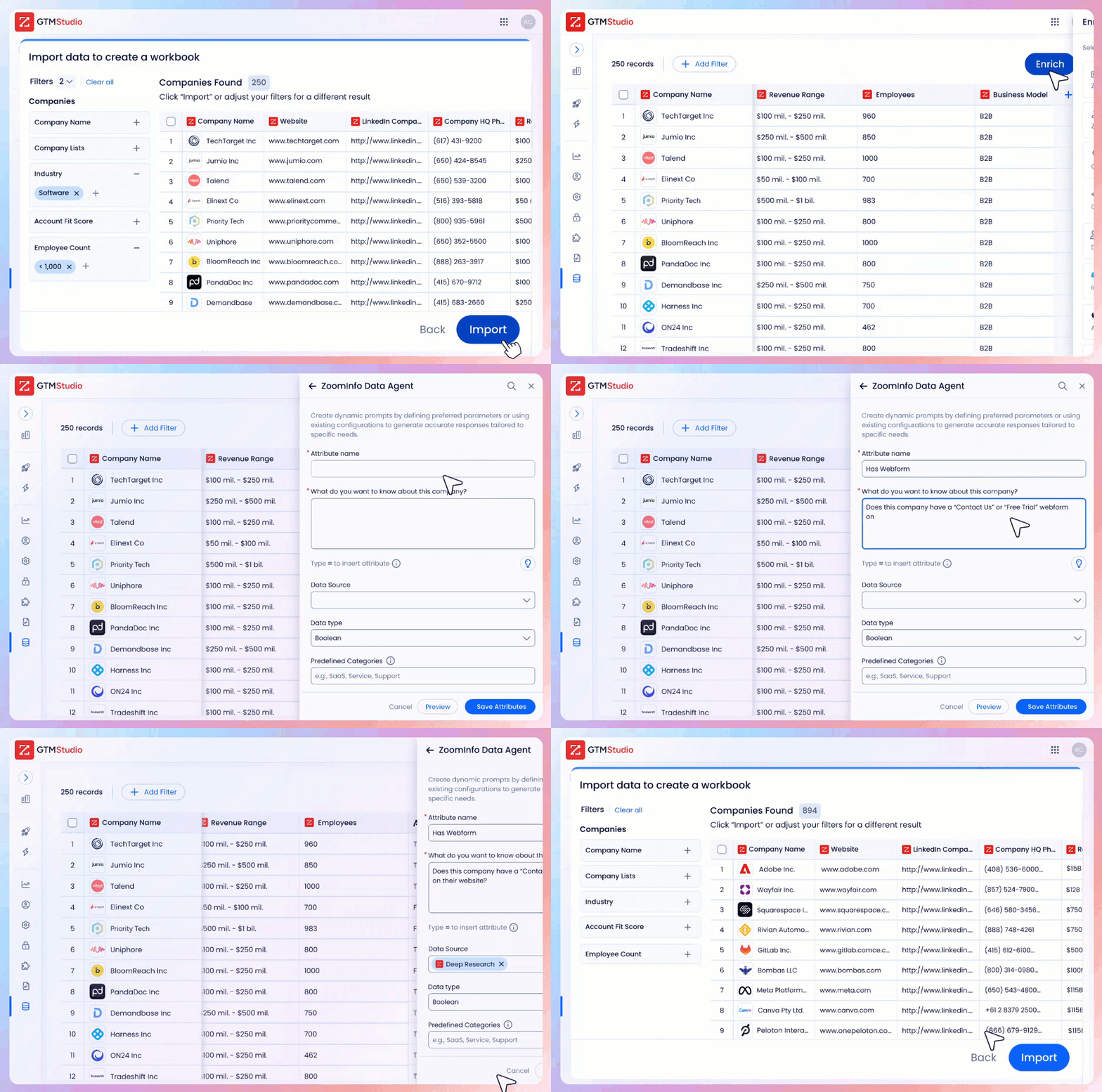
ZoomInfo’s GTM Studio addresses the campaign execution gap directly. Marketers, RevOps teams, and GTM engineers can build audiences using natural language, enrich with first- and third-party data, define triggers, and activate plays across channels (email, calls, display ads, direct mail, LinkedIn, Meta, Connected TV) without engineering support.
Source: ZoomInfo
Pre-built GTM plays cover inbound acceleration, champion tracking, competitive displacement, and ICP targeting. Expansion plays that used to take 3 weeks now launch in 30 minutes.
ZoomInfo Marketing includes a native Demand-Side Platform deploying display ads based on 300+ company attributes, FormComplete (reducing forms to a single field while auto-appending data), and Account Fit Scoring (predictive AI scoring 0-100 based on company attribute patterns). For teams whose data needs extend into execution, this is the orchestration layer PDL was not designed to provide.
ZoomInfo's B2B Data: Broader scale with verified deliverability
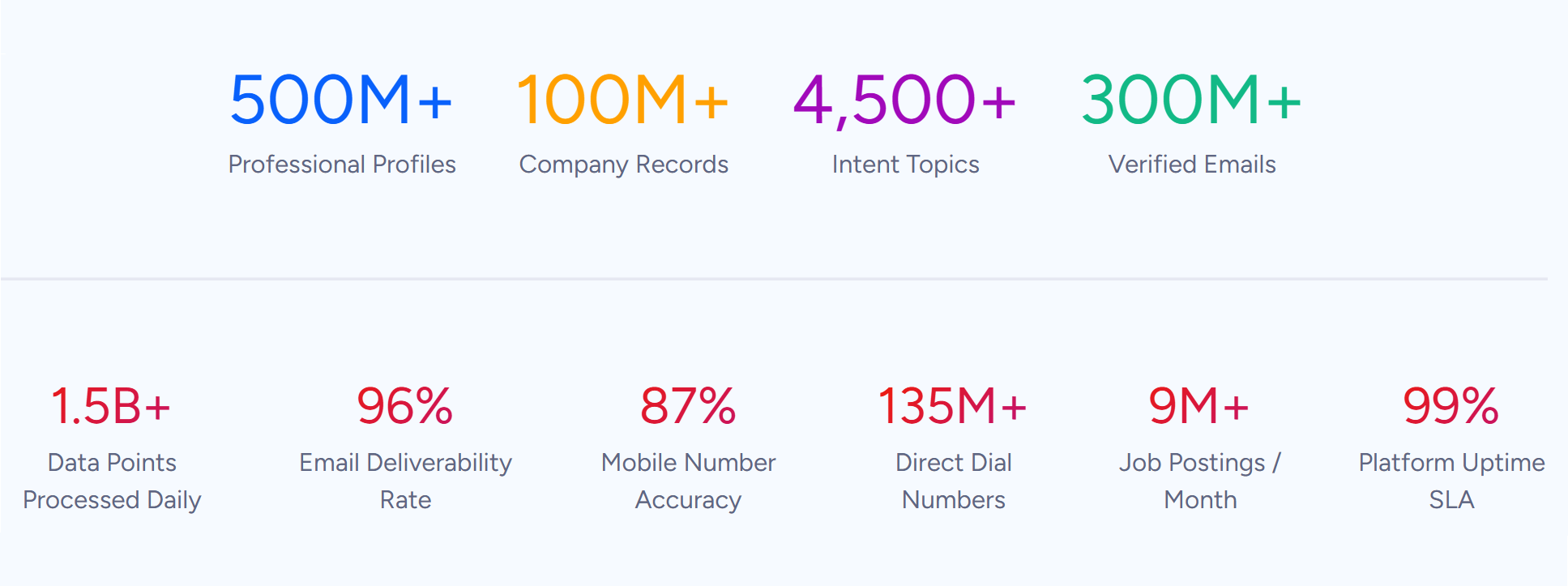
PDL maintains 1.5 billion unique person profiles and 74 million company profiles. ZoomInfo operates at 500M contacts, 100M companies, 135M+ verified phone numbers, 120M direct-dial phone numbers, and 200M+ verified business email addresses.
Source: ZoomInfo
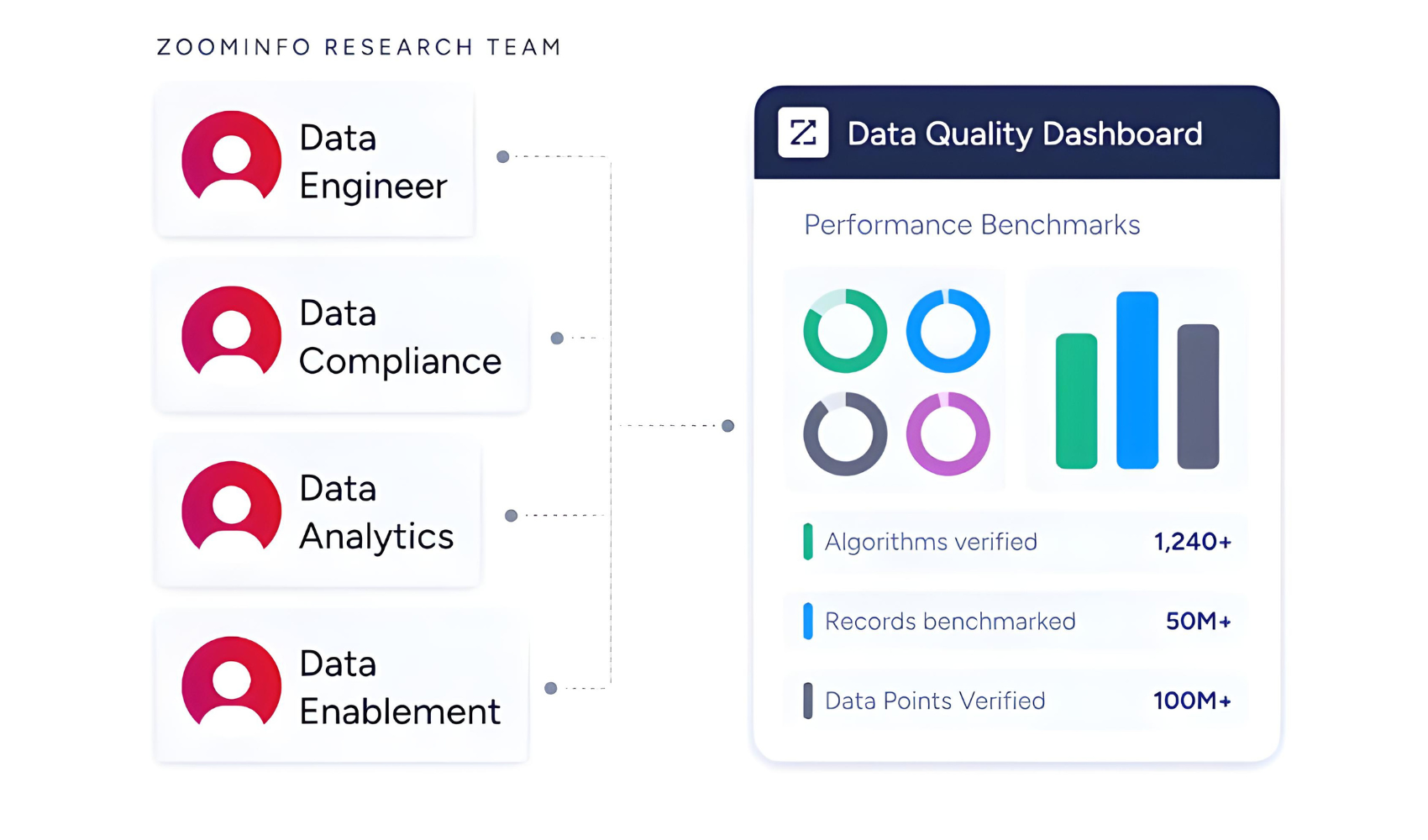
The data flows through a verification pipeline backed by 300+ human researchers and automated ML scanning of 28 million site domains daily, reaching up to 95% accuracy on first-party data.
Source: ZoomInfo
The key difference for outreach-focused teams: ZoomInfo verifies contact data for deliverability as part of the pipeline, while PDL provides contact data without native bounce detection. In a Fortune 500 competitive RFP analyzing 25 million contacts across vendors, an independent consultant concluded that "no other competitor came even close."
ZoomInfo's data also includes dimensions PDL does not cover: technographic profiles spanning 30,000+ technologies across 200+ categories for 30+ million companies, and global coverage extending to 34M+ company profiles outside North America, 200M+ professional profiles outside NA, and 45M+ mobile numbers outside NA.
ZoomInfo APIs and MCP: Programmatic access for builders
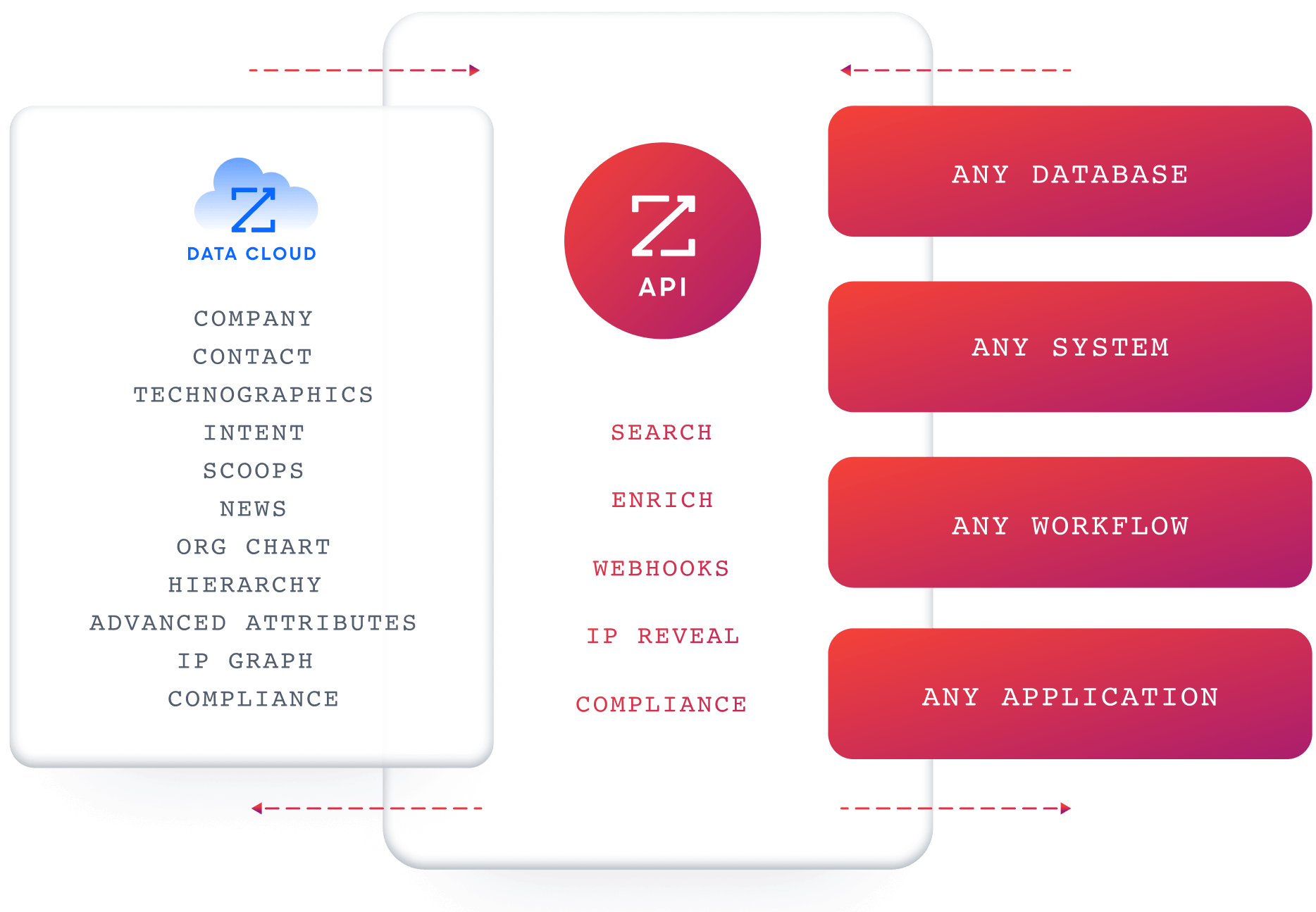
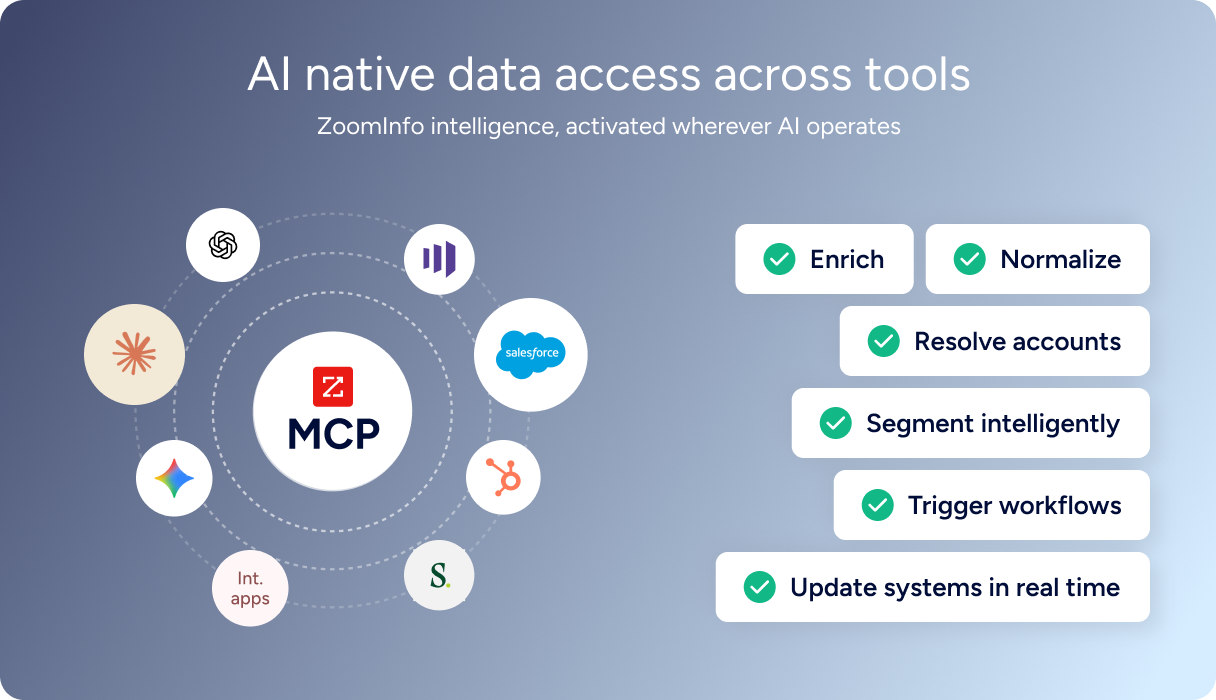
For teams that build their own products (PDL's core audience), ZoomInfo delivers its intelligence through APIs and MCP, so the same data and GTM Context Graph powering ZoomInfo's own products is accessible inside any third-party tool or custom AI agent.
Source: ZoomInfo
The MCP server connects AI models to ZoomInfo's B2B data as a native tool, currently supporting Claude and ChatGPT. API access is included in all relevant plans, and the Enterprise API covers Search, Enrich, Copilot (GTM Workspace AI), Marketing (audience management), and Engagements endpoints.
Source: ZoomInfo
Final Summary
People Data Labs is a data infrastructure layer: 1.5 billion unique person profiles and 74 million company profiles delivered through well-documented APIs and SDKs in five languages, with per-match pricing, dual query syntax (Elasticsearch DSL and SQL), sandbox environments for zero-cost testing, and bulk data licensing through S3, Snowflake, and major cloud providers.
Its person-dataset-derived headcount analytics, monthly time-series data, and talent flow tracking give investment researchers and HR tech builders workforce intelligence most competitors do not offer at the infrastructure level. It fits technical teams embedding B2B data into their own products, particularly in recruiting, sales intelligence, and investment research.
It is lighter on the layers around the data: no buyer intent signals, no prospecting UI, no conversation intelligence, no outreach execution, no campaign orchestration, and no native email deliverability validation.
If your bottleneck sits beyond the data layer (knowing which companies are in-market before you build a list, executing outreach once you have contacts, understanding what happened on a call and why a deal moved), that is the ground ZoomInfo covers.
Its 500M-contact, 100M-company database supplies verified emails and direct dials with deliverability built into the pipeline. ZoomInfo Intent surfaces the accounts researching your category from 6 trillion+ keyword-to-device pairings monthly. Chorus captures and analyzes every sales conversation.
GTM Studio gives marketing teams multi-channel orchestration. GTM Workspace gives sellers a single execution surface powered by the GTM Context Graph. And for teams that build their own products, APIs and MCP deliver the same intelligence into any tool or AI agent.
See what ZoomInfo adds to your data infrastructure: start with ZoomInfo Lite for free, or request a demo to explore how verified contacts, intent signals, and AI-powered execution work together.
FAQ
Does People Data Labs include buyer intent data?
No. PDL provides person and company data (contact information, employment history, firmographics, headcount analytics) but does not track which companies are actively researching specific topics across the web. The Job Posting Data product (in beta) surfaces hiring signals, but behavioral intent data covering web research activity, ad engagement, and content consumption is not part of PDL's dataset.
ZoomInfo Intent tracks signals from 210 million IP-to-Organization pairings and 6 trillion+ keyword-to-device pairings sourced monthly, identifying in-market accounts before any outreach begins.
Can sales reps use People Data Labs directly for prospecting?
Not without engineering support. PDL is an API-first platform with no prospecting UI. Sales reps and recruiters cannot search contacts, build lists, or launch outreach from a browser-based interface.
The platform is designed for developers and data teams who embed PDL data into their own products or pipelines. Products like Clay and Hire Ez are built on top of PDL's data layer to provide the end-user experience.
What is the difference between People Data Labs's Free and Pro plans?
The Free plan provides 100 credits per month with no credit card required, but contact data fields (work email, personal emails, phone numbers, and granular location) are returned as True/False flags rather than actual values.
The Pro plan starts at $100/month and unlocks full field access, higher rate limits (1,000 requests/minute for enrichment versus 100 on Free), and 1,000 free Person Search credits per month. Volume discounts apply across three tiers within Pro.
Does People Data Labs validate email deliverability?
No. PDL provides email addresses as part of its person data but does not verify whether those emails will bounce. Teams sending outreach at scale need a third-party email verification tool. PDL's integration with Bouncer addresses this gap, but the verification is not built into PDL's pipeline.
How does People Data Labs's company data differ from self-reported sources?
PDL derives employee counts, headcount trends, growth rates, churn rates, and talent flow data from its person dataset (resume-level data from 1.5 billion profiles) rather than relying on company self-reporting.
This means the employee_count field reflects actual professional records, not a company's declared LinkedIn range. Monthly time-series headcount with breakdowns by level and by role, pre-computed growth and churn rates at 3/6/12/24-month windows, and top previous/next employers all come from this bottom-up methodology.
Which plan includes the Salesforce integration?
The native Salesforce integration is available only on the Enterprise plan. It enriches Salesforce Contacts, Leads, and Accounts from PDL's API Dashboard with hundreds of data points mapped to standard or custom Salesforce fields, configured through a no-code mapping interface.
Pro plan customers can build custom Salesforce integrations using the API and SDKs, but the native, dashboard-managed integration requires Enterprise.
What query languages does People Data Labs's Search API support?
The Person Search and Company Search APIs support dual query syntax: Elasticsearch DSL and SQL. Elasticsearch DSL is the native format, supporting nested queries, boolean logic, range filters, and geo queries across 140+ person attributes.
SQL mode accepts standard SELECT statements for teams more comfortable with relational query patterns. Both syntaxes query the same underlying dataset and return identical results.
Does People Data Labs offer a way to test the API without spending credits?
Yes, through two mechanisms. Sandbox API endpoints return synthetic data with identical structure at zero credit cost, available for Person Enrichment, Search, Identify, Company Enrichment, and Company Search. Preview APIs let developers check whether a query returns results and inspect the match before consuming a production credit. Both are available on all plan types, including Free.
ZoomInfo also offers free entry points: ZoomInfo Lite is a permanent free tier with 10 monthly export credits and access to its B2B database, and a separate 7-day free trial provides broader access with no credit card required.
Other tools worth evaluating side by side:
