
Choosing between Performio vs. Varicent for incentive compensation management often comes down to five questions:
Do you need a focused commission calculation engine, or a full sales performance management suite that also handles territory design and quota planning?
How complex are your compensation plans, and how often do they change mid-cycle?
Can your compensation team configure plan changes on its own, or does it rely on IT or vendor support for every update?
How important is it that your sellers trust the numbers on their commission statements?
Is the pipeline data feeding your compensation system accurate and complete enough to produce reliable payouts?
In short, here's what we recommend:
Performio is the focused choice for organizations whose primary pain is commission calculation accuracy. Built for incentive compensation since 2006, it handles complex commission plans with accuracy and full visibility into every payout. Its component-based Plan Builder lets admins configure tiered rates, accelerators, splits, and clawbacks without writing formulas or filing support tickets.
Performio earned a Strong Performer rating in The Forrester Wave for SPM Solutions, Q1 2025, and was one of only three vendors out of twelve to receive above-average customer feedback scores. If you need territory planning, quota modeling, or AI-driven scenario analysis beyond the commission workflow, you'll need to look elsewhere.
Varicent is the broader platform for enterprise revenue teams that want incentive compensation, territory design, quota setting, and seller performance insights in one connected system.
Named a Leader in The Forrester Wave for SPM Solutions, Q1 2025 with the highest possible scores in 16 criteria, Varicent ties territories, quotas, and incentives to a shared data model so changes in one area propagate across the whole plan. That breadth comes with real complexity: reviewers consistently cite a steep learning curve and a platform that requires technical resources to operate.
Both platforms solve the commission calculation problem well. Neither can fix a deeper issue: when the pipeline data feeding your compensation system is incomplete or inaccurate, even the best calculation engine produces numbers your sellers won't trust. That's where a different kind of tool enters the picture.
ZoomInfo is a GTM platform that sits upstream from your compensation stack, providing the B2B data and sales intelligence that powers your pipeline. With 500M contacts, 100M companies, 135M+ verified phone numbers, and 200M+ verified business emails, ZoomInfo feeds clean, enriched account and contact data into the CRM systems that Performio and Varicent both depend on for commission calculations.
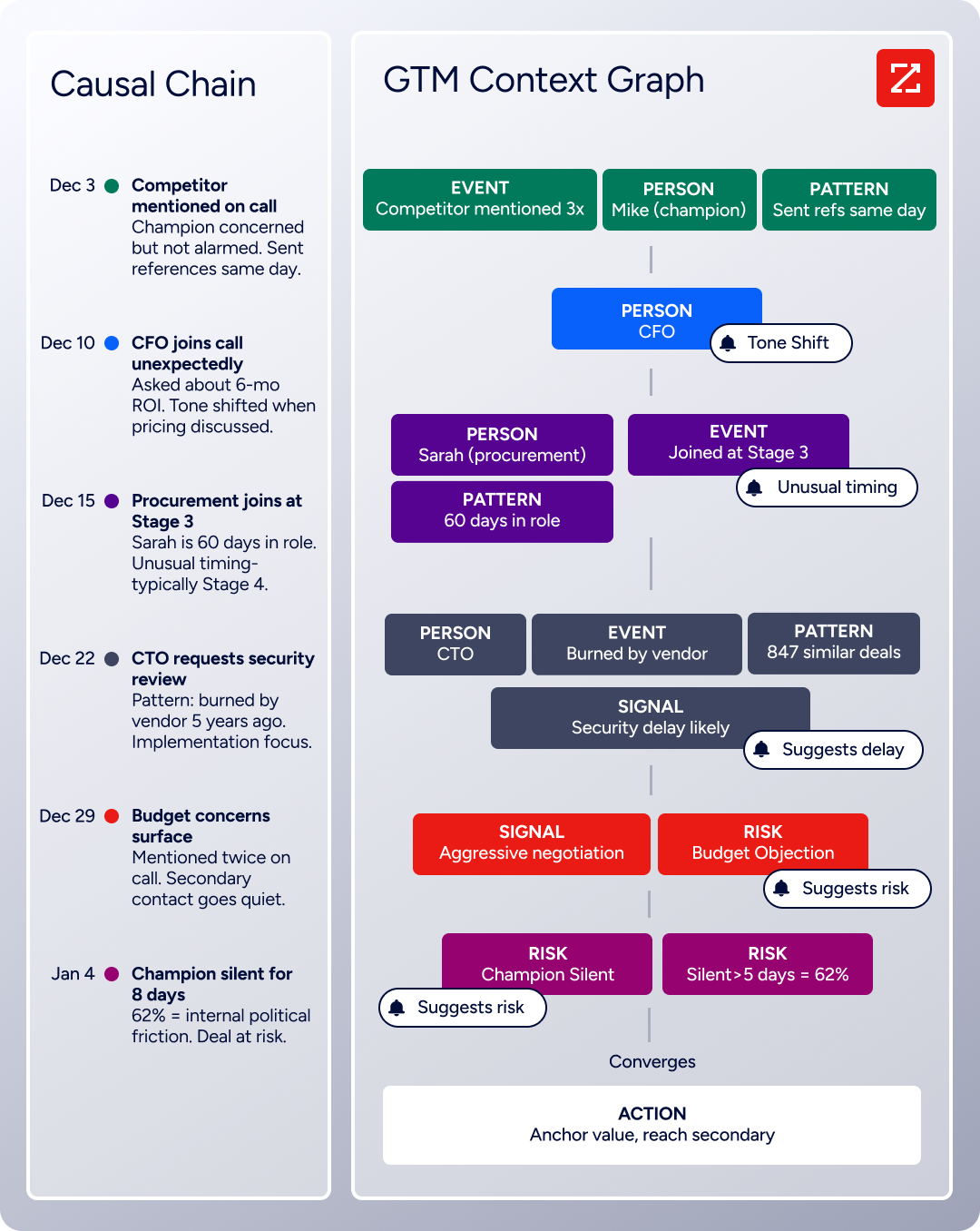
Its GTM Context Graph combines your CRM records, conversation transcripts, and intent signals into a single intelligence layer that helps sellers find the right accounts, understand buying committees, and close deals that your compensation system then pays out accurately.
Whether your team works through GTM Workspace, GTM Studio, or the API and MCP in any other tool, ZoomInfo ensures the data entering your revenue stack is worth compensating against.
If cleaner pipeline data and stronger sales intelligence sound like the missing piece in your compensation accuracy, see how ZoomInfo works.
Performio vs. Varicent at a glance
Performio | Varicent | ZoomInfo | |
|---|---|---|---|
Primary focus | Incentive compensation management | Full SPM (ICM + sales planning + seller insights) | B2B data and GTM intelligence |
AI capabilities | AI Admin Assistant, MCP Server | 4 GenAI Assistants (Designer, Research, ELT, Sales Planning) | GTM Context Graph, AI-powered agents |
Plan configuration | Component-based, no-code Plan Builder | Configurable, requires technical knowledge | N/A (feeds CRM/pipeline data upstream) |
Territory and quota planning | Not included (LINEN Cloud partnership available) | Native, fully integrated | Territory data and TAM analysis for pipeline |
Analyst recognition | Forrester Strong Performer (Q1 2025) | Forrester Leader (Q1 2025) | Forrester Leader (Intent Data, Q1 2025); Gartner Leader (ABM, 2025) |
Reporting | Analytics Studio (separate product) | Limited native reporting | GTM analytics and dashboards |
Pricing model | Custom quotes, no free trial | Custom quotes, no free trial | Custom quotes, free tier available |
Key integrations | Salesforce, Workday, Snowflake, 40+ systems | Salesforce, Workday, ServiceNow, HubSpot | 120+ integrations, API and MCP access |
Best for | Mid-market and enterprise teams needing accurate commission calculation | Enterprise revenue orgs needing connected territory, quota, and comp planning | Sales, marketing, and RevOps teams needing pipeline data quality |
ICM specialist vs. full SPM suite: the fundamental choice
The core difference between Performio and Varicent isn't features. It's scope.
Performio does one thing: incentive compensation. The company was built for sales compensation, and Forrester noted that Performio "is focused on being the best SPM/ICM solution, while others are looking to expand to a platform that delivers adjacent solutions such as territory and quota management."
Source: Performio
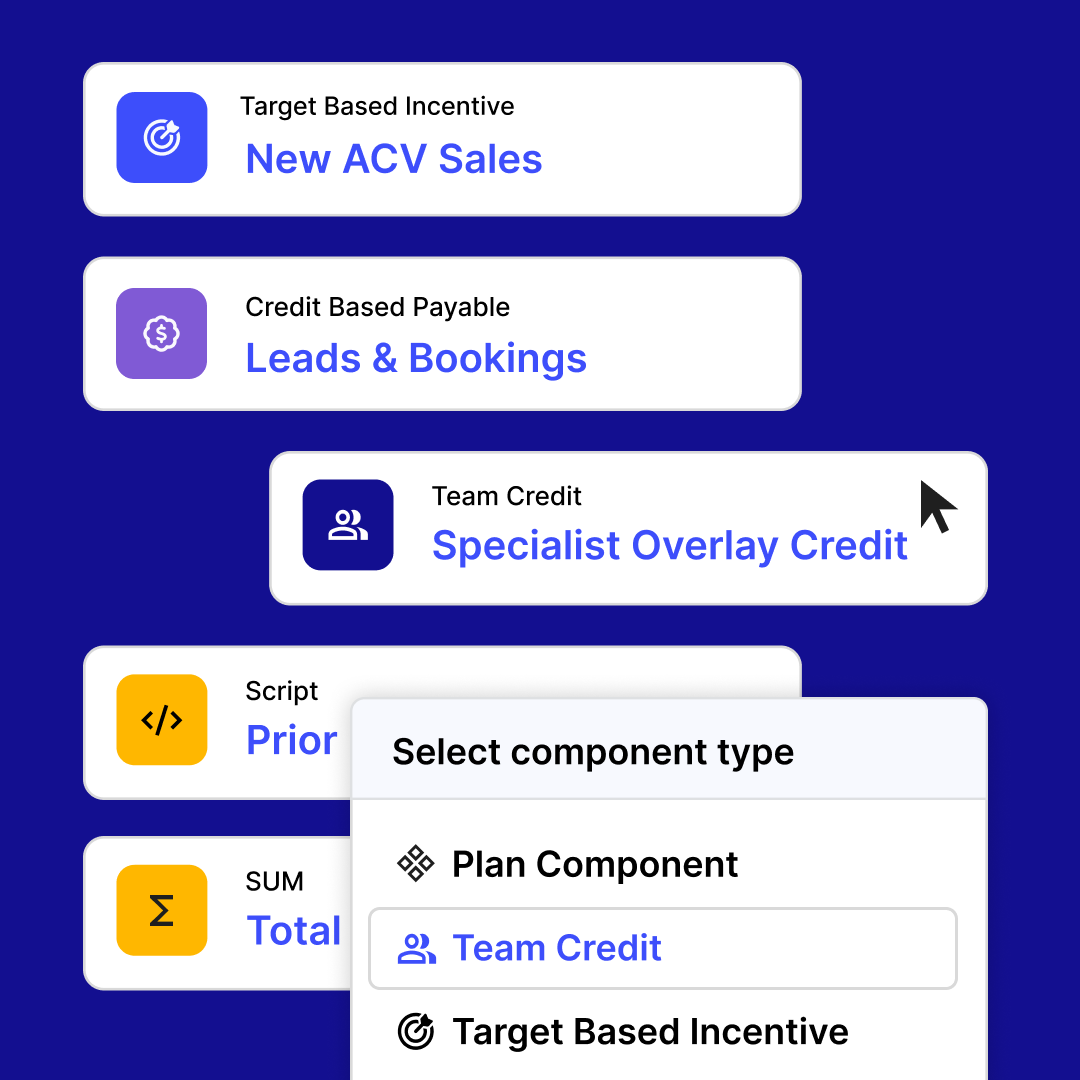
That focus means the calculation engine goes deep: six crediting models (participant, team, territory, roll-up, roll-down, and credit-on-credit), native support for tiered rates, accelerators, SPIFFs, clawbacks, and draws, all managed through reusable components rather than formulas.
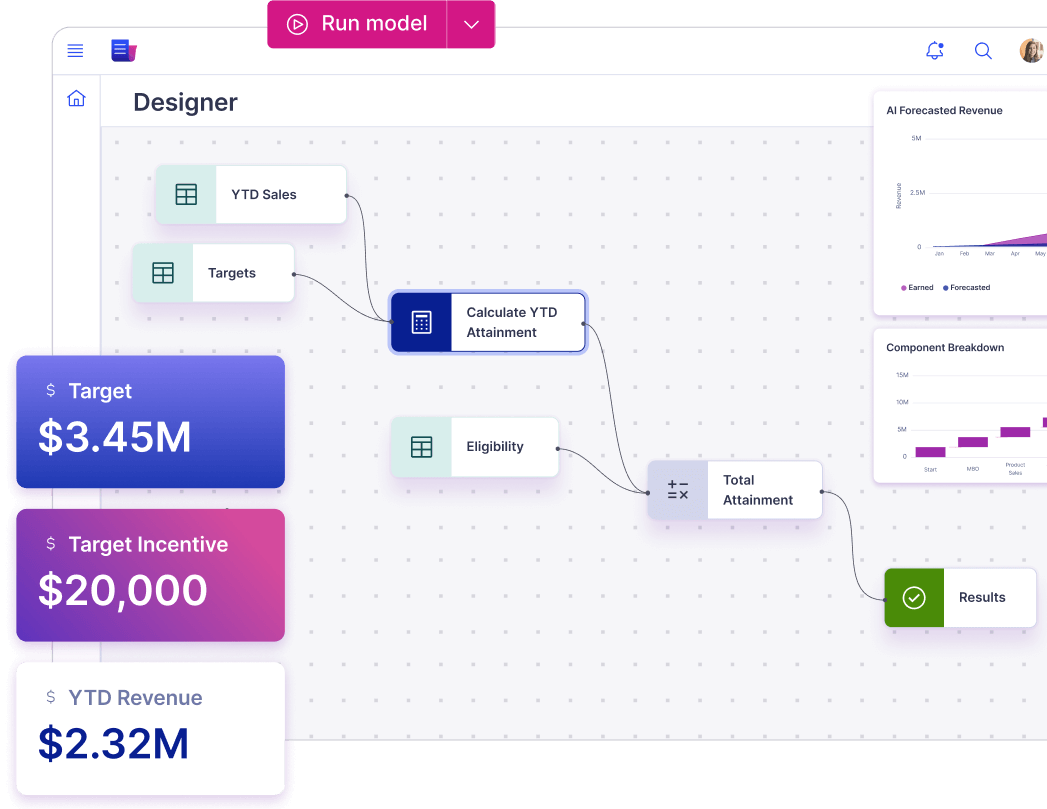
Varicent covers the full sales performance management cycle. Its platform connects three products: Incentives for commission calculation, Sales Planning for territory design and quota setting, and Seller Insights for rep-facing performance visibility.
Source: Varicent
All three share a single data model, so when a territory changes or a quota is adjusted, the compensation layer responds in the same system.
The decision depends on what your organization needs. If your pain is commission accuracy and your territory and quota planning lives in spreadsheets or a separate tool you're satisfied with, Performio's depth in pure ICM may serve you better. If you want a single system tying territory assignments to quota targets to incentive payouts, Varicent gives you that connection without stitching tools together.
Performio recently addressed its planning gap through a partnership with LINEN Cloud, bridging ICM with AI-powered sales planning. This gives Performio customers access to territory and quota planning without switching platforms, though the integration is a partnership rather than a native capability.
Plan configuration: components vs. complexity
How you build and change compensation plans is where you'll spend most of your administrative time. The two platforms take different approaches.
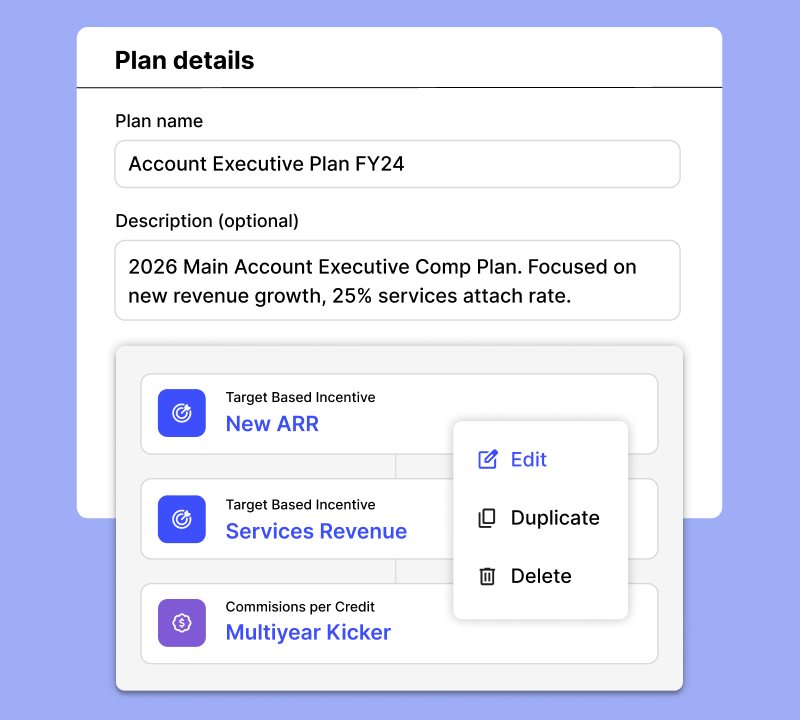
Performio uses a component-based Plan Builder where admins configure prebuilt components covering common and nuanced scenarios. Because components are modular and reusable, changing one automatically updates everywhere it appears.
Source: Performio
Commission rates are stored in reusable rate cards with built-in effective dating, validation, and audit history.
Varicent's plan configuration handles greater complexity but demands more technical skill. G2 reviewers cite complex table dynamics and a specialized development language. TrustRadius reviewers note the software requires coding knowledge or dedicated technical resources for routine plan changes.
The trade-off is clear: Varicent can model compensation structures that simpler tools cannot, but organizations without in-house technical talent risk heavy consulting dependency.
Both platforms claim no-code administration. In practice, Performio delivers on this more consistently for routine plan changes, while Varicent's "no-code" applies to a narrower set of operations. For organizations with straightforward comp plans, Performio removes the bottleneck faster. For organizations with plans complex enough to require a specialized language, Varicent's capability is worth the learning investment.
AI capabilities: two different bets
Both platforms have made AI a priority, but they've placed different bets on what AI should do inside a compensation system.
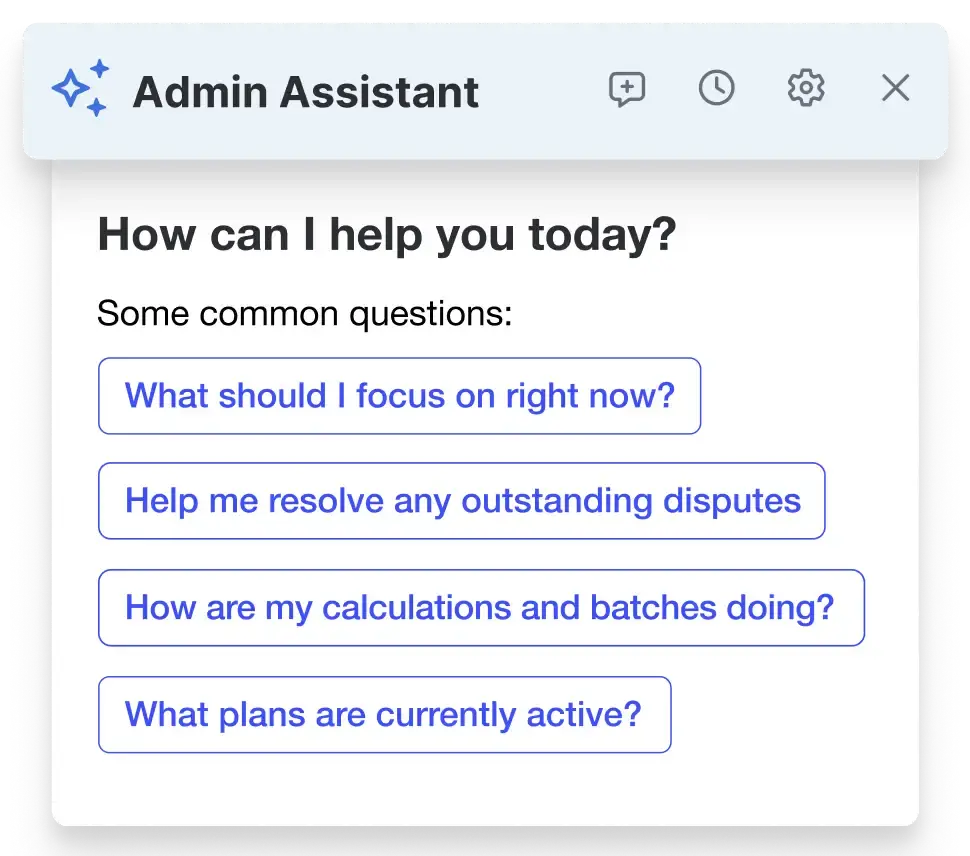
Performio's AI focuses on administrative efficiency. The AI Admin Assistant, launched October 2025, reads actual plan configuration, data, and rates to answer questions accurately. It surfaces issues in the ICM workspace, summarizes commission disputes with suggested resolutions, explains plan logic, and guides multi-step administrative tasks while pausing for human approval before applying changes.
Source: Performio
Performio also launched an MCP Server (the first Model Context Protocol implementation in the ICM industry), letting users interact with Performio through external AI tools like Claude Desktop or Salesforce Agentforce.
Varicent's AI is broader. Forrester named Varicent "the only solution evaluated with an in-depth set of AI capabilities" in its Q1 2025 Wave.
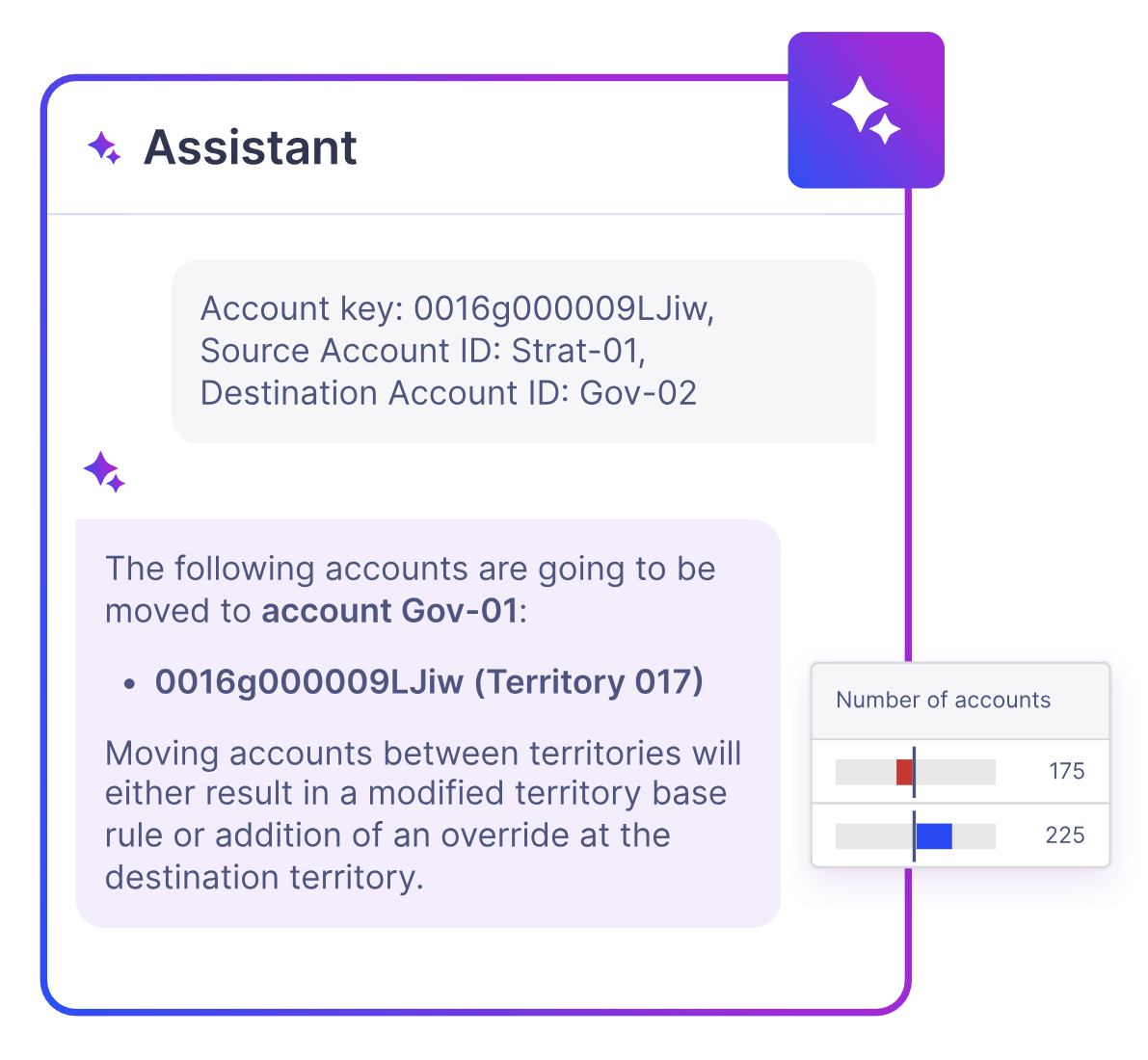
Varicent's AI spans four assistants: the Designer Assistant for building and testing incentive plans, the Research Assistant for resolving seller disputes at scale, the ELT Assistant for automating data pipeline construction, and a Sales Planning Assistant for territory and quota modeling.
Source: Varicent
The practical difference: Performio's AI helps compensation admins work faster within their existing workflow. Varicent's AI tries to connect compensation intelligence across the entire sales performance cycle.
If your frustration is time spent troubleshooting commission disputes and configuring plan changes, Performio's AI addresses that directly. If you want AI that models territory changes and predicts their impact on quota attainment and incentive spend at the same time, Varicent's system-level approach makes more sense.
The data upstream from your comp system matters
Both Performio and Varicent are only as accurate as the data they ingest. Every commission calculation starts with a pipeline record from your CRM: which rep owns the deal, what the deal is worth, which territory it falls under, and which product line it credits to.
When that CRM data is incomplete, stale, or wrong, the downstream effects are predictable: disputed commissions, manual reconciliation, and reps maintaining shadow spreadsheets because they don't trust the official numbers.
This is where ZoomInfo plays a different role than either compensation platform.
ZoomInfo sits upstream in the revenue stack. Its GTM Context Graph processes 1.5B+ data points daily, combining verified B2B intelligence with your CRM records, conversation transcripts, and behavioral signals.
Source: ZoomInfo
The result is cleaner account data, more accurate contact records, and signal-driven insights flowing into the same CRM that feeds your compensation system. For organizations running Performio or Varicent, that upstream data quality has three direct impacts:
Accurate pipeline data means fewer commission disputes. Performio's own research indicates 80% of its customers used spreadsheets before switching. Many of those disputes came not from calculation errors but from bad deal data. ZoomInfo's enrichment ensures the account records, contact associations, and territory assignments in your CRM are correct before they reach your compensation engine.
Better territory intelligence improves quota planning. Varicent's Sales Planning module designs territories and sets quotas, but the quality of those plans depends on understanding market opportunity, company hierarchies, and account potential.
ZoomInfo's 300+ company attributes, technographics covering 30,000+ technologies across 30M+ companies, and buyer intent signals provide the market intelligence that makes territory and quota modeling data-driven rather than guesswork.

Source: ZoomInfo
Stronger pipeline generation creates better deals to compensate. The purpose of a compensation system is to motivate the right selling behaviors.
ZoomInfo helps reps find accounts that match proven win patterns, understand buying committees before the first call, and focus on prospects showing active intent signals. When the pipeline is full of well-qualified, well-researched deals, compensation plans work the way they were designed to.
"That combination of our internal CRM data, external signals, and AI that's given all that context has helped us craft very specific account- and persona-based messages. And people have responded to them right away." (Toby Carrington, CBO, Seismic)
Reporting and analytics
Compensation analytics is one area where the two platforms diverge sharply.
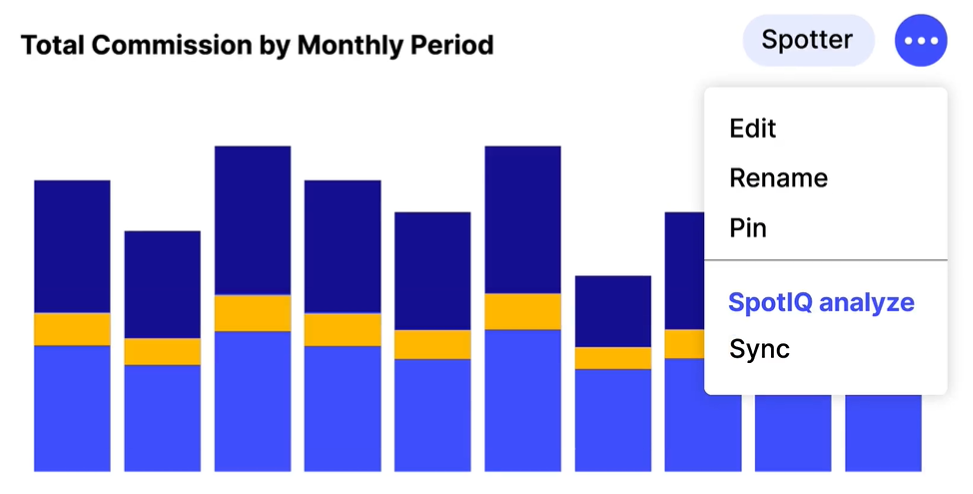
Performio invested in this space with Analytics Studio, a dedicated analytics product launched in February 2023. It provides natural language report generation (type a plain English question, get a chart), Automatic Insights that run thousands of queries across the compensation data set to surface anomalies and trends, and a Change Analysis feature for identifying the factors behind data changes.
Source: Performio
The product also forecasts commission payables based on current CRM pipeline, giving finance teams forward visibility into commission liability. Analytics Studio is positioned as a separate product tier, suggesting it may carry additional cost beyond the core subscription.
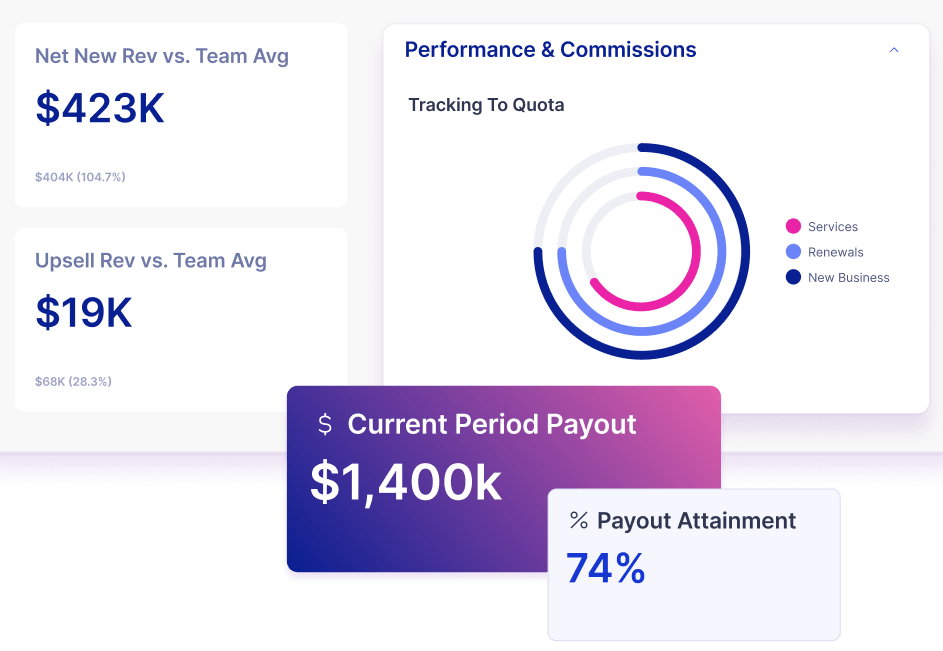
Varicent's reporting is a recognized weakness. Multiple G2 reviewers note that "the reporting is not great nor is it easy to build reports." Users frequently export to external BI tools like Tableau or Power BI for flexible analytics.
Varicent provides performance dashboards with commission statements, quota attainment, and pipeline performance for sellers, and the Research Assistant can surface calculation explanations. But for the ad hoc, cross-cutting analytics that finance teams and compensation managers need, the native tools often fall short.
Source: Varicent
For organizations where compensation analytics and plan effectiveness reporting are priorities, Performio's Analytics Studio is a clear advantage. For organizations already running enterprise BI platforms and comfortable with data exports, Varicent's reporting limitations may be acceptable.
Pricing: both require a conversation
Neither platform publishes pricing, which is standard in the enterprise ICM/SPM category. Both require direct engagement with sales teams for custom quotes.
Performio structures pricing around two components: a recurring subscription based on the number of commissionable employees, admin seats, and selected modules, plus a one-time implementation cost scoped by plan complexity, data sources, and reporting requirements.
The pricing page offers one public benchmark: "many mid-market and enterprise teams allocate less than 3% of total commission payouts to compensation software." Pricing is not tied to data volume or API usage, which matters for high-transaction-volume organizations.
Varicent charges on a per-Entitlement basis, with one Entitlement required per payee for Incentive Compensation and one per person on quota for Territory and Quota Planning. Two contract terms are worth noting.
First, all fees are non-refundable. Second, if a renewal order isn't executed before the subscription expires, Varicent converts to rolling 90-day terms at a 30% price increase over the prior rate. Both terms create incentives to finalize renewals well before expiration.
Neither platform offers a free trial. Performio's primary call to action is scheduling a demo. Varicent directs prospects to "Book Demo" or "Speak With an Expert."
Implementation costs for both are significant and scoped separately from the subscription. Varicent's implementation work is handled through Statements of Work with no published rate card. Varicent also offers optional paid VIP Support tiers (Essential, Enhanced, and Elite) providing a dedicated Technical Account Manager and quarterly directed hours.
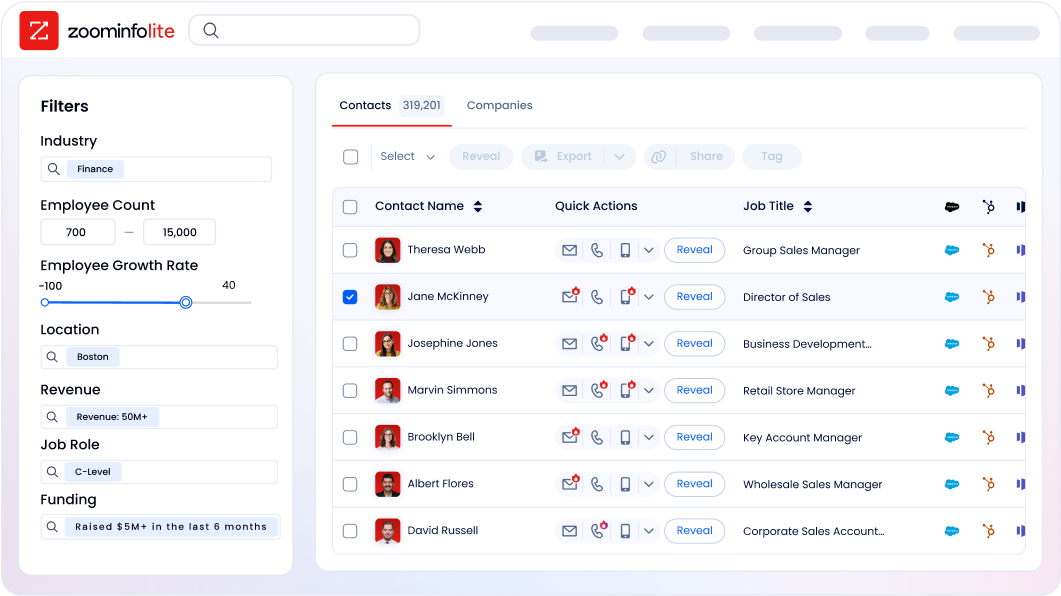
ZoomInfo uses a consumption-based pricing model with tiered plans for Sales and Marketing. Unlike both compensation platforms, ZoomInfo offers a permanent free tier (ZoomInfo Lite) with access to 100M+ verified profiles and 10 monthly export credits, plus a 7-day free trial of paid features.
Source: ZoomInfo
For organizations evaluating whether upstream data quality will improve their compensation outcomes, ZoomInfo's free entry points provide a low-risk way to test the thesis.
Integration ecosystems reflect different positions in the stack
Every compensation platform depends on the data it receives from other systems. How each tool connects to those systems determines how much manual work stands between your sales data and an accurate commission payout.
Performio integrates through three pathways: native connectors, a REST API, and flat file/SFTP ingestion. The connector catalog spans 40+ systems across CRM (Salesforce, HubSpot, Microsoft Dynamics), ERP (SAP, NetSuite, Epicor), HRIS (ADP, Workday, BambooHR), and data warehouses (Snowflake, BigQuery, Redshift).
Where Performio stands out is vertical-specific depth: connectors for banking and fintech systems (FIS, Finastra, Jack Henry, nCino), transportation and logistics (McLeod, Aljex, TMW/Trimble), and manufacturing (Plex, QAD).
Performio also ingests data as-is without requiring pre-transformation, handling cleansing inside the platform.
Varicent connects through a native ELT capability that handles data extraction, loading, and transformation automatically. Pre-built integrations cover Salesforce, Microsoft Dynamics, HubSpot, Snowflake, Amazon Aurora, and Power BI.
Source: Varicent
Partnerships with Workday and ServiceNow deepen Varicent's position in enterprise stacks. The ServiceNow integration, available in the ServiceNow Store from Q4 2025, enables live CRM-to-SPM data flow. For insurance-specific use cases, the AgentSync partnership handles producer onboarding, licensing compliance, and compensation on a single platform.
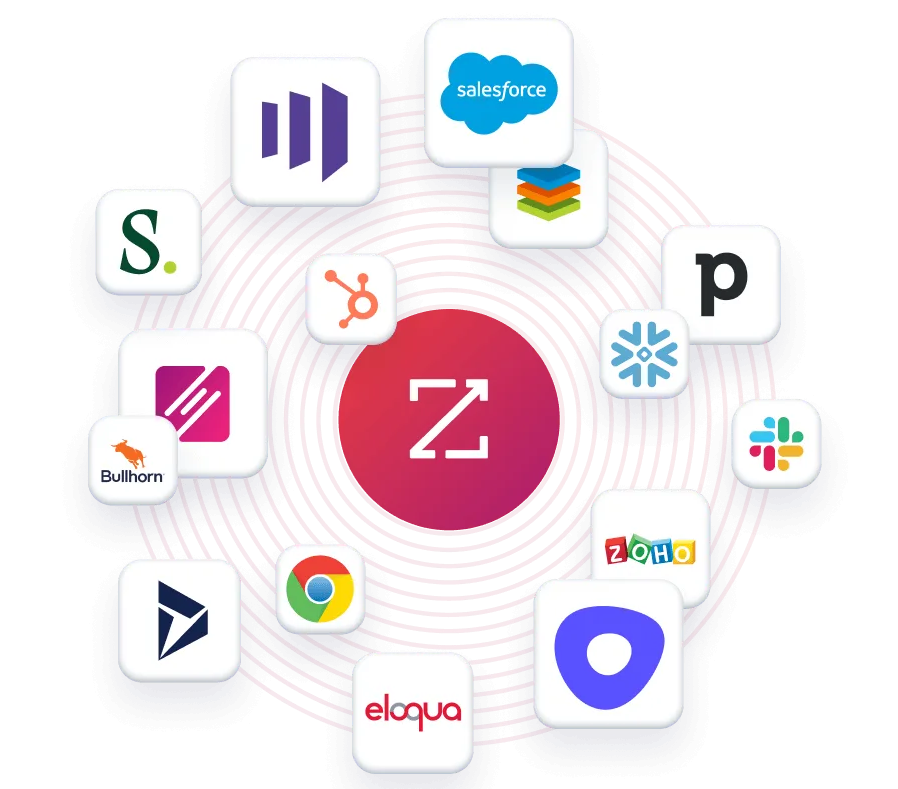
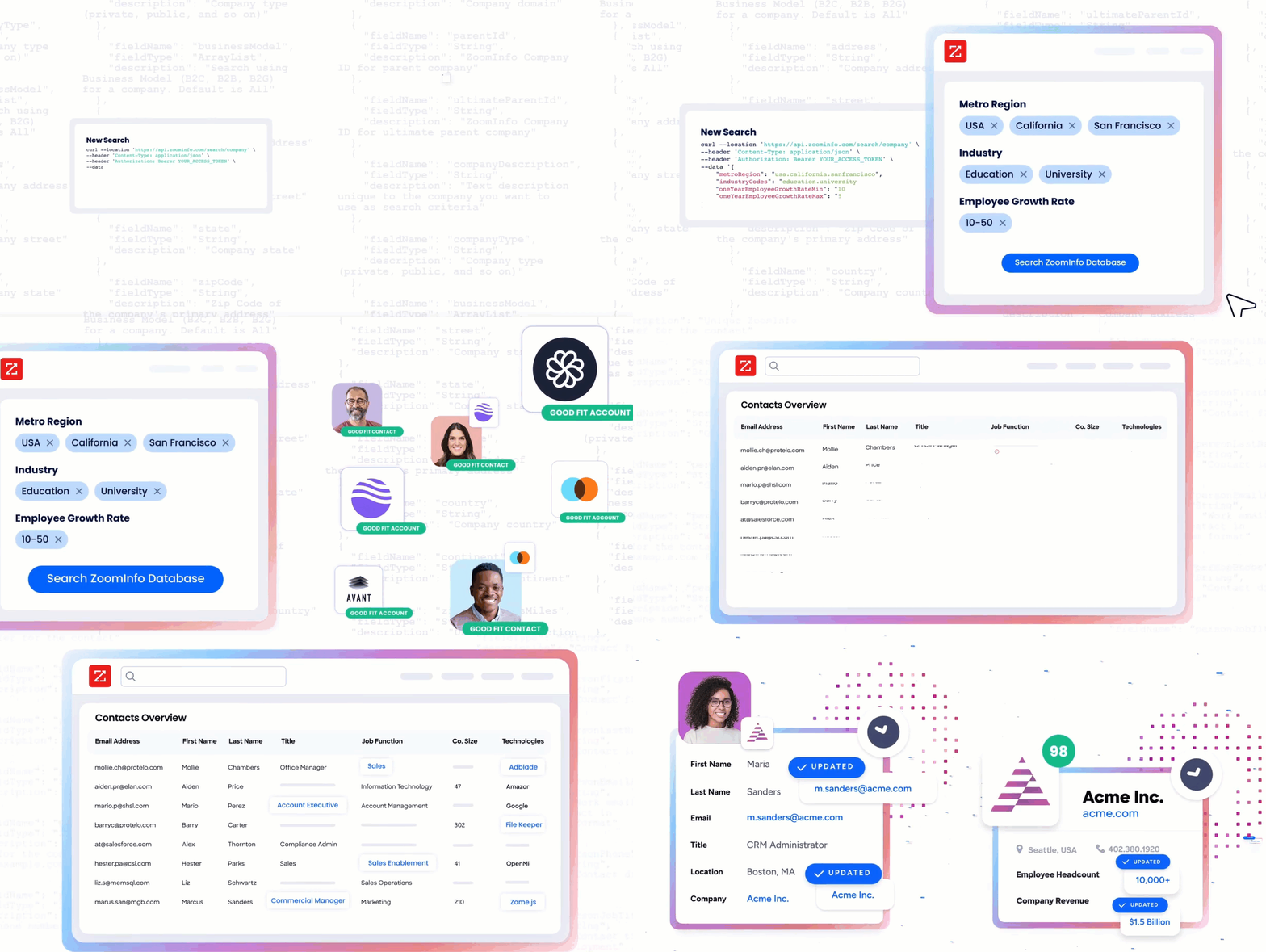
ZoomInfo connects to 120+ partner integrations spanning CRM, marketing automation, sales engagement, data warehouse, and AI platforms. Native integrations with Salesforce, HubSpot, and Microsoft Dynamics 365 enrich the same CRM data that Performio and Varicent ingest for commission calculations.
Source: ZoomInfo
Cloud Partners deliver ZoomInfo data directly into AWS, Google Cloud, Snowflake, and Databricks. The Enterprise API and MCP server expose the same intelligence to any custom application or AI agent.
Source: ZoomInfo
"ZoomInfo is our one source of truth for account data, and even more so for contact data. There's no other provider in the market that provides you with that level of detail." (Thor Sanderson, Senior Manager of Sales Technology Enablement, Smartsheet)
The integration picture: ZoomInfo feeds verified, enriched data into your CRM. Your CRM feeds that data into Performio or Varicent. The cleaner the upstream data, the fewer manual corrections needed at the compensation layer.
Seller trust and transparency
Commission transparency is a theme both platforms emphasize, and for good reason: when sellers don't trust the numbers, they build shadow spreadsheets, escalate disputes, and lose selling time.
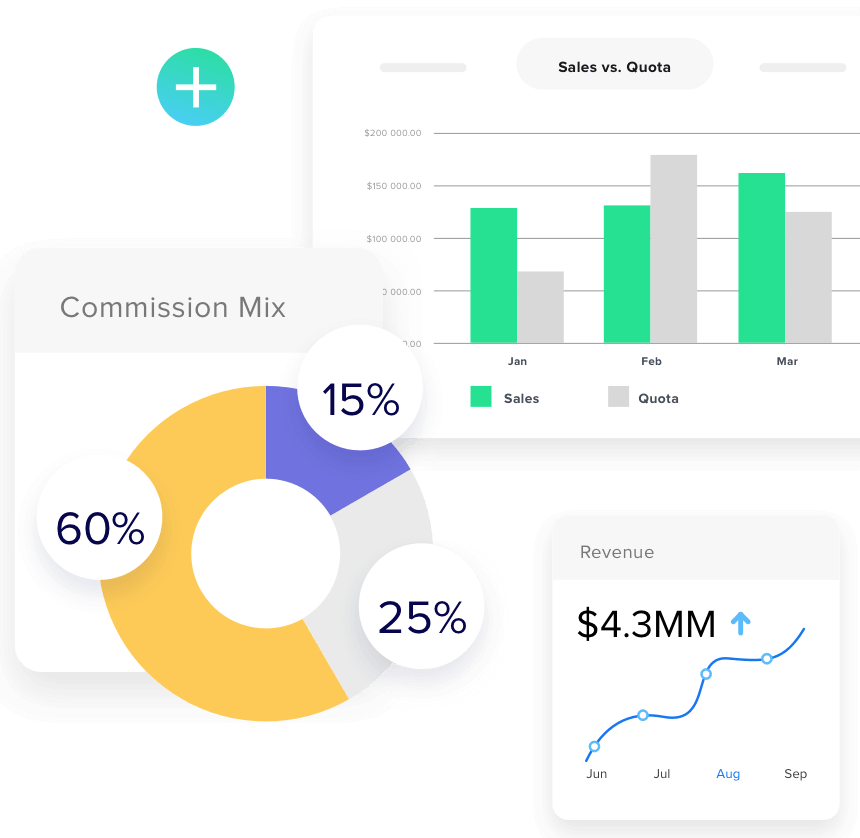
Performio addresses this with interactive dashboards that let sellers drill from summary views into individual transactions, rates, and plan components. A what-if calculator lets reps see commission estimates and projections before deals close, connecting compensation visibility to selling behavior.
Source: Performio
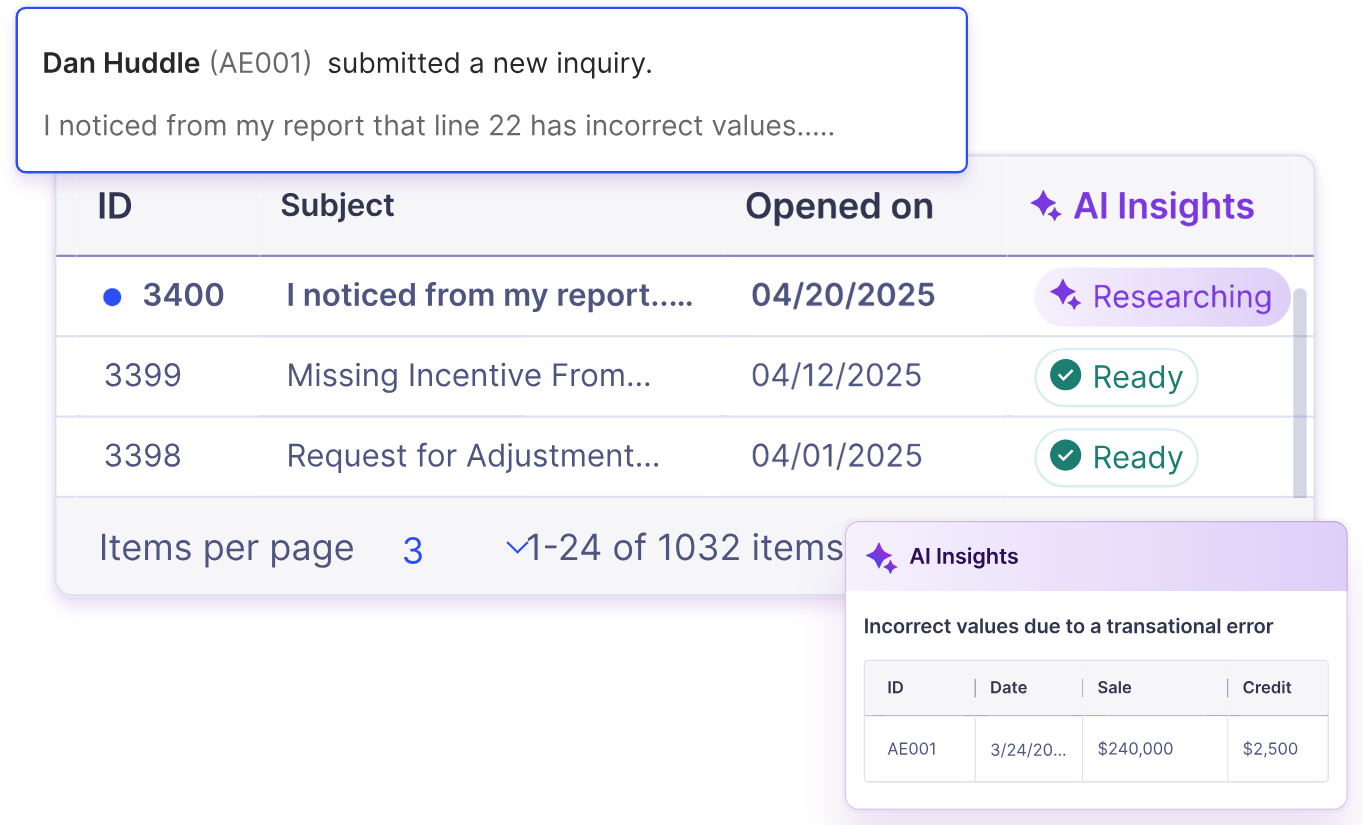
Varicent's Seller Insights provides commission statements, quota attainment, and next-best-action guidance from any device. The Research Assistant resolves disputes by reviewing inquiries against the actual plan logic (quotas, credit rules, payout mechanics), then drafting responses for admin review.
Source: Varicent
Both platforms take transparency seriously. Performio's transaction-level drill-down and what-if modeling give reps the detailed view they need to trust payouts. Varicent's AI-assisted dispute resolution addresses the admin bottleneck that slow inquiry responses create.
The right choice depends on whether your bigger problem is reps not understanding their commissions (Performio's drill-down helps) or your comp team drowning in dispute tickets (Varicent's Research Assistant helps).
Security and compliance
Both platforms meet enterprise security requirements, though their certifications differ in scope.
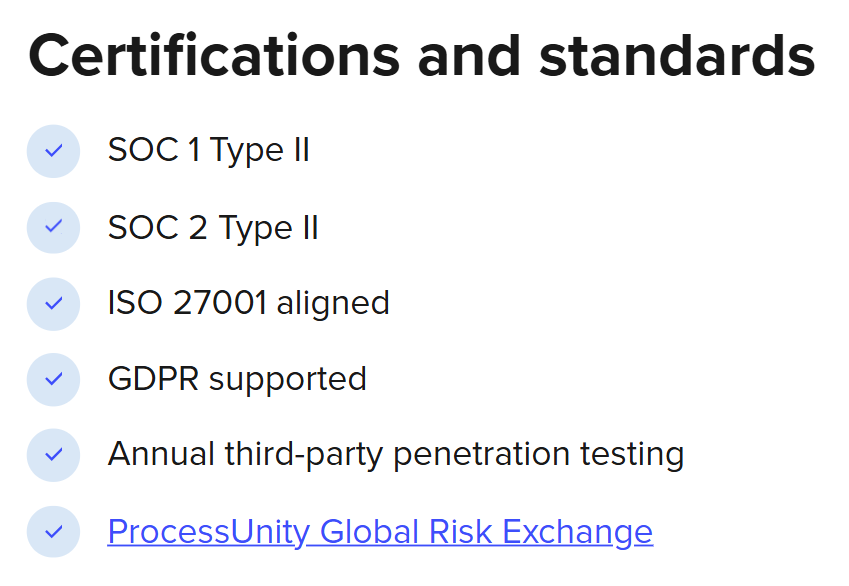
Performio holds SOC 1 and SOC 2 Type II certifications, uses AES-256 encryption in transit and at rest, supports SSO with SAML and MFA, and is GDPR and CPRA aligned. A Frankfurt data center launched in November 2022 serves European customers under local data residency requirements.
Source: Performio
ISO 27001 is described as "aligned" rather than formally certified, a distinction that matters for enterprise procurement teams requiring the actual certificate.
Varicent carries a broader certification portfolio: ISO 27001, ISO 27017, ISO 27018, SOC 2 Type II, and SOC 1 Type II. The three ISO certifications cover information security management, cloud-specific controls, and PII protection in public clouds, respectively.
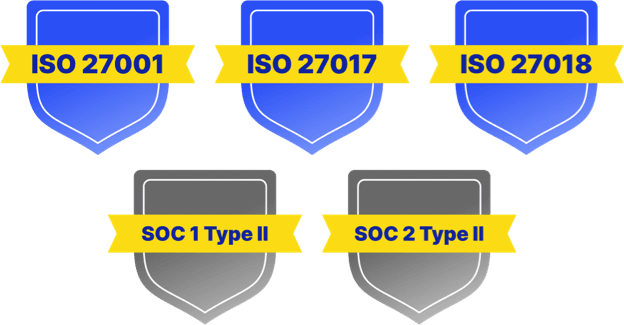
Source: Varicent
Varicent also maintains a defense-in-depth architecture with network segregation, encryption, WAF, SAST/DAST scanning, and daily data backups with 90-day immutable retention. Privacy alignment extends to GDPR, CCPA, UK GDPR, PIPEDA, and multiple US state privacy laws.
For regulated industries (financial services, insurance, healthcare), Varicent's formally certified ISO 27001 and additional ISO 27017/27018 certifications may simplify procurement. Both platforms meet the baseline security bar enterprise buyers require.
Performio vs. Varicent vs. ZoomInfo: Which should you choose?
The best choice depends on where your biggest pain sits in the revenue stack.
Choose Performio if:
Commission calculation accuracy is your primary challenge
You want admins to manage plan changes independently without IT or vendor support
You operate in a vertical (manufacturing, logistics, banking) that benefits from Performio's industry-specific integrations
Reporting and analytics on compensation data is a priority
You prefer a focused tool that does ICM well over a broader suite
Choose Varicent if:
You need territory design, quota planning, and incentive compensation in one connected system
Your organization has the technical resources to operate a complex platform
You're running thousands of sellers across global, multi-tier hierarchies
AI-driven scenario modeling for territory and quota changes is a priority
You're in financial services or insurance and need compliance and audit capabilities
Add ZoomInfo to either stack if:
The pipeline data feeding your compensation system is incomplete, stale, or unreliable
Your sellers are disputing commissions because of CRM data errors, not calculation errors
You want verified contact data, buyer intent signals, and org chart intelligence improving the quality of deals your comp plans pay out on
Your territory and quota planning needs better market intelligence to model opportunity accurately
You want one data platform that works across your entire GTM stack, not just inside one application
Start with ZoomInfo Lite for free or request a demo to see how upstream data quality improves compensation outcomes.
"ZoomInfo gives us the information we need to execute. We don't have to go through and spend our time digging. It's already there, so we can be three steps ahead." (William Kenimer, VP of Revenue Operations, Vensure)
Compensation accuracy doesn't start with the calculation engine. It starts with the data entering your CRM, flowing through your pipeline, and landing in your compensation system. Performio and Varicent both handle the calculation well. ZoomInfo handles the data that makes those calculations trustworthy.
Performio vs. Varicent vs. ZoomInfo FAQ
What is the core difference between Performio and Varicent?
Performio is a focused incentive compensation management platform built for calculating and paying commissions. Varicent is a broader sales performance management platform that combines incentive compensation with territory design, quota setting, and seller performance insights in a single connected system.
Performio earned a Strong Performer rating in the Forrester Wave for SPM Solutions (Q1 2025), while Varicent was named a Leader with the highest possible scores in 16 criteria.
How does ZoomInfo relate to Performio and Varicent?
ZoomInfo is not a compensation tool. It sits upstream in the revenue stack, providing B2B data and sales intelligence that flows into your CRM and feeds your compensation calculations.
With 500M contacts, 100M companies, and 135M+ verified phone numbers, ZoomInfo ensures the pipeline data entering your compensation system is accurate and complete, reducing commission disputes caused by bad data rather than bad calculations.
Which platform is easier to administer without technical resources?
Performio is generally easier for non-technical administrators. Its component-based Plan Builder allows admins to configure and update compensation plans without formulas, coding, or vendor support.
Varicent is more capable but consistently cited by reviewers as requiring coding knowledge or dedicated technical resources for routine plan changes. Varicent's AI Designer Assistant is intended to reduce this barrier, but the underlying platform remains more complex.
Do either Performio or Varicent offer territory and quota planning?
Varicent includes native territory design and quota setting through its Sales Planning module, which connects directly to its incentive compensation engine. Performio does not include territory or quota planning natively, though a partnership with LINEN Cloud provides access to AI-powered sales planning capabilities alongside the ICM platform.
What does pricing look like for each platform?
Neither Performio nor Varicent publishes pricing. Both require custom quotes through their sales teams. Performio charges a recurring subscription based on payee count and admin seats, plus a one-time implementation fee.
Varicent charges per Entitlement (one per payee for ICM, one per person on quota for planning). Varicent's contract includes a 30% price increase if the subscription lapses before renewal. ZoomInfo offers a permanent free tier (ZoomInfo Lite) and a 7-day free trial alongside its custom-quoted paid plans.
Which platform has better reporting and analytics?
Performio has a dedicated Analytics Studio product with natural language querying, automatic anomaly detection, and commission forecasting based on CRM pipeline data. Varicent's native reporting is widely cited by reviewers as limited, with many users exporting to external BI tools like Tableau or Power BI.
Which platform handles the most complex compensation plans?
Both handle enterprise-scale complexity but in different ways. Performio processes 20M+ transactions per month across 20,000+ payees using six crediting models and a component-based architecture.
Varicent manages comparable scale (CDW runs 6,000 payees with 125 plans) and adds cross-system territory and quota logic on top of commission calculations. Varicent's Forrester evaluation received the highest possible score in calculation processing.
How do the platforms compare on customer support?
Performio was one of only three vendors (out of twelve evaluated) to receive above-average customer feedback scores in Forrester's Q1 2025 Wave, and ISG rated it Exemplary on Customer Experience. Enterprise customers receive a dedicated Customer Success Manager.
Varicent earned G2 Best Support badges in the mid-market segment but receives mixed reviews on post-implementation support, with some reviewers noting frequently changing support models and slow ticket resolution. Varicent offers optional paid VIP Support tiers with dedicated Technical Account Managers.
More Performio comparisons:
