
If you're comparing Pipedrive vs. Zendesk, you're probably trying to solve two different problems at once.
Pipedrive is a sales CRM that helps reps close deals. Zendesk is a service platform that helps agents resolve support tickets. They sit on opposite sides of the customer lifecycle: one manages the relationship before the sale, the other manages it after. Comparing them is like comparing your front door to your back door. Both matter, but they face different directions.
The real questions you should be asking are:
Is your biggest challenge finding and closing new customers, or supporting the ones you already have?
Do you need a tool that helps reps manage their pipeline, or one that helps agents manage support volume?
Are you looking for a single platform to cover both sales and service, or are you willing to run two systems?
How important is knowing exactly who to sell to before your reps even open the CRM?
Does your team spend more time chasing unqualified leads than working real opportunities?
Here's what we recommend:
Pipedrive is a sales CRM for small and medium-sized businesses that want pipeline visibility without enterprise complexity. Salespeople designed its visual, kanban-style pipeline, and the product hasn't drifted from that focus.
With 500+ marketplace integrations, AI-assisted email writing, and plans starting at $14/month per seat, Pipedrive gives small teams a fast path from lead to closed deal. It offers no native customer service features, so once the deal is won, you'll need another tool for support.
Zendesk is a service platform that unifies customer support across email, chat, voice, messaging, and social channels into a single agent workspace. Trained on roughly 20 billion ticket interactions, its AI agents resolve complex issues on their own, while human agents get real-time guidance from Copilot.
For companies managing high support volume, Zendesk delivers. But it has no sales pipeline, no deal tracking, and no prospecting tools. It picks up where the sale ends.
Both platforms do their jobs well. But here's what neither one solves: before Pipedrive can manage a deal and before Zendesk can support a customer, someone has to find the right buyer, verify their contact information, and understand why they're worth pursuing. That's the gap most revenue teams feel first.
ZoomInfo is an AI GTM platform that gives your team the intelligence both Pipedrive and Zendesk lack. Built on the largest B2B dataset available (500M contacts, 100M companies, 135M+ verified phone numbers, and 200M+ verified business emails), ZoomInfo goes beyond raw data.
Its GTM Context Graph fuses your CRM records, conversation transcripts, and behavioral signals with ZoomInfo's third-party intelligence to reveal not just what's happening in your deals, but why. Your team accesses that intelligence through the GTM Workspace for sellers, GTM Studio for marketers and RevOps, or APIs and MCP in any front-end.
If building pipeline with verified data and AI sounds like the missing piece, see how ZoomInfo works.
Pipedrive vs. Zendesk vs. ZoomInfo at a glance
Pipedrive | Zendesk | ZoomInfo | |
|---|---|---|---|
Primary function | Sales CRM & pipeline management | Customer service & support platform | B2B data intelligence & GTM platform |
AI capabilities | AI email writer, AI Sales Assistant, AI reports | AI agents resolving tickets autonomously, Copilot for human agents | GTM Context Graph, AI prospecting, AI account summaries |
Integrations | 500+ marketplace apps | 1,800+ marketplace apps | 120+ marketplace partners + API/MCP access |
Sales pipeline | Core product | Not available | Complements any CRM via data enrichment |
Customer support | Not available | Core product | Not applicable |
B2B contact data | Limited (LeadBooster/Prospector add-on) | Not available | 500M contacts, 200M+ verified emails, 135M+ verified phones |
Buyer intent signals | Not available | Not available | Intent data from 210M IP-to-Org pairings |
Starting price | $14/seat/month | $19/agent/month (Support); $55/agent/month (Suite) | Custom pricing; free Lite tier available |
Free option | 14-day trial | 14-day trial | ZoomInfo Lite (permanent free tier) + 7-day trial |
Best for | SMB sales teams closing deals | Support teams managing ticket volume | Revenue teams finding and engaging buyers |
These platforms solve different problems
The Pipedrive vs. Zendesk comparison is unusual because these tools rarely compete for the same budget. Most businesses need some version of both: a way to win customers and a way to keep them.
Pipedrive lives in the pre-sale world.
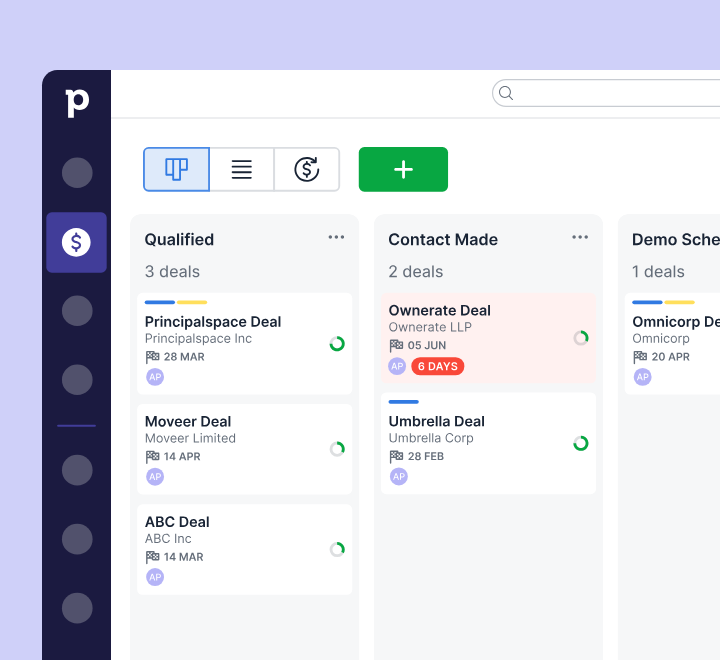
It answers: "Where is this deal in the pipeline? What's scheduled next? Which deals are going cold?" The kanban-style board makes deal status visible at a glance, and features like deal rotting alerts prompt reps to re-engage before opportunities slip away. Everything in Pipedrive orbits around moving a deal forward.
Source: Pipedrive
Zendesk lives in the post-sale world.
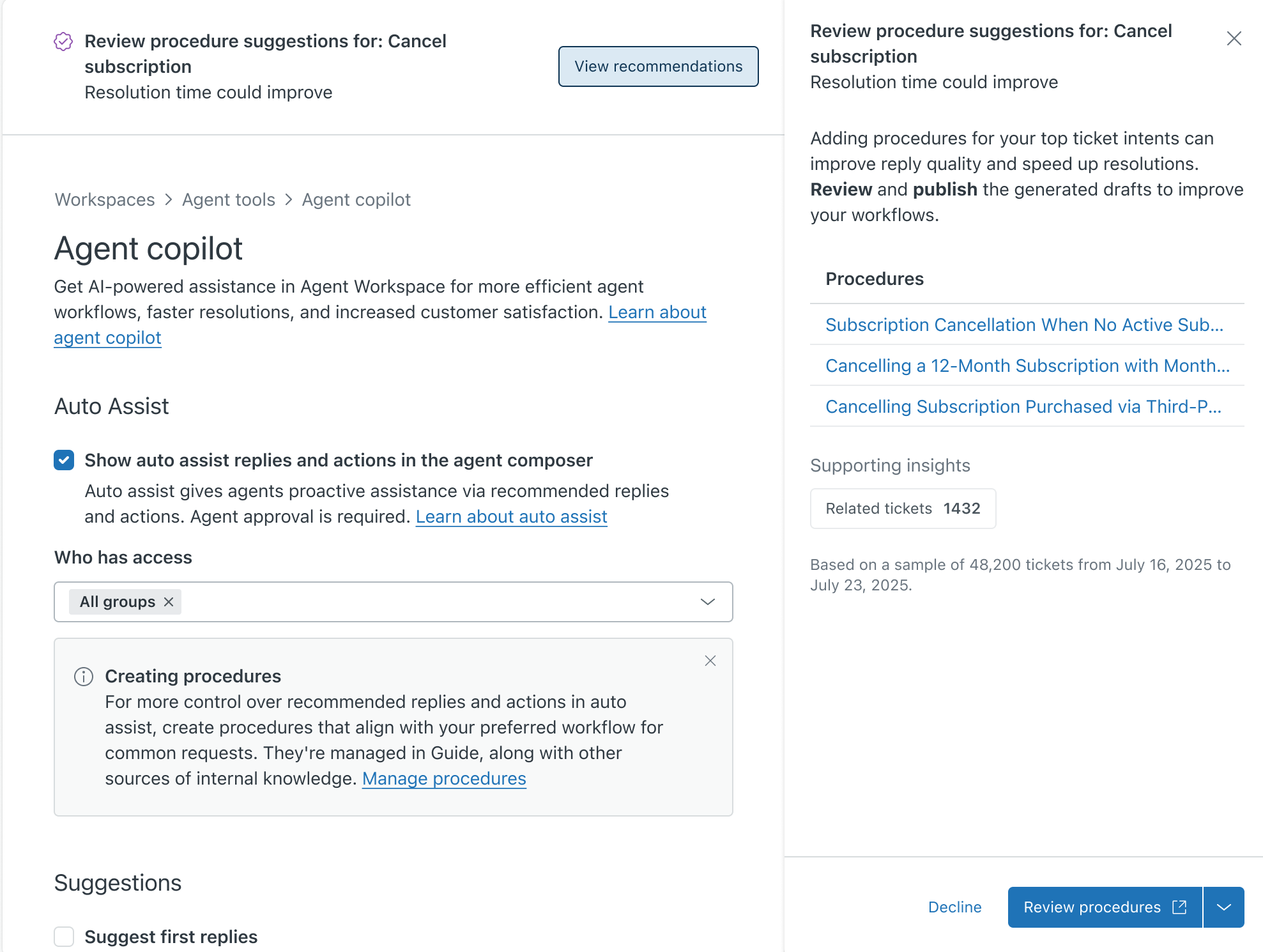
It answers: "What issue does this customer have? Which channel did they use? How fast can we resolve this?" The unified agent workspace consolidates email, chat, voice, and messaging into one queue, so support teams see every interaction in context. AI agents handle routine inquiries on their own while Copilot guides human agents through complex cases.
Source: Zendesk
ZoomInfo operates upstream of both.
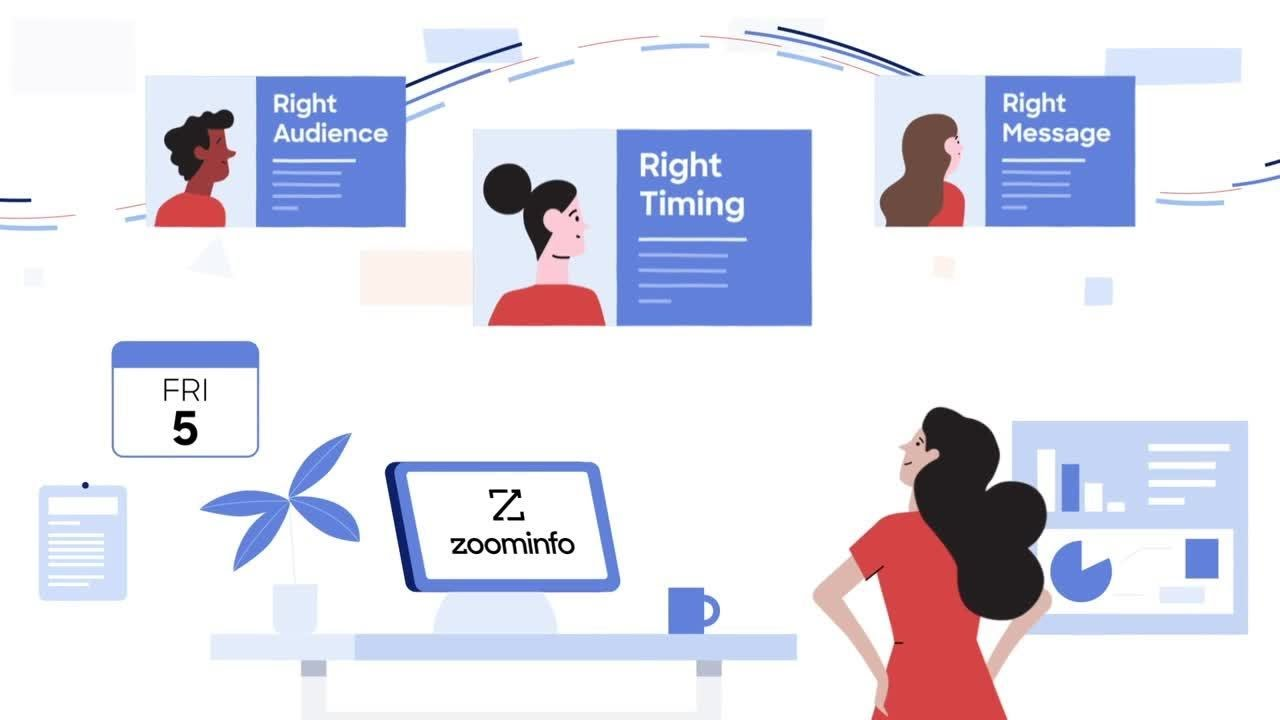
It answers the question neither platform addresses: "Who should we sell to, and why are they worth pursuing right now?" By combining the largest B2B contact database with buyer intent signals and the GTM Context Graph, ZoomInfo identifies which accounts are actively in-market, surfaces the right contacts within those accounts, and provides the context that makes outreach relevant.
The practical question isn't which platform replaces the other. It's which gap hurts your revenue most right now.
Pipedrive wins on sales pipeline simplicity
Five salespeople frustrated with CRMs designed for managers founded Pipedrive in 2010.
That origin still defines the product. The pipeline view is the first thing you see on login, and every feature serves one goal: moving deals to close.
The activity-based selling approach keeps reps focused on what to do next rather than what to report. Every call, email, and meeting attaches to a deal, person, or organization. Pipeline views come in three formats: kanban (the default board), list view, and forecast view showing expected closes and aggregate value.
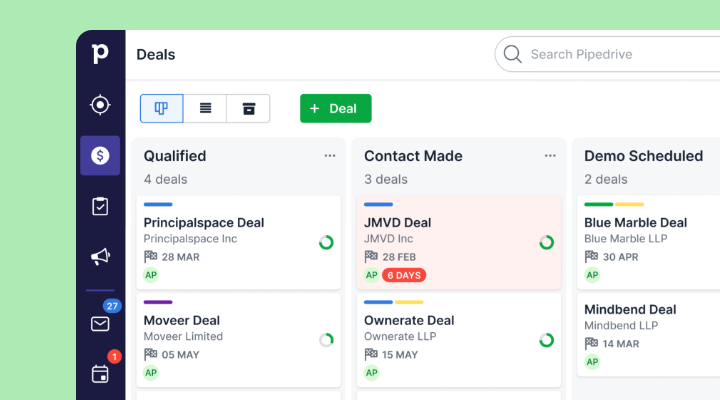
Source: Pipedrive
For small teams, onboarding is fast. Pipedrive offers a 14-day free trial with full access, no credit card required. The interface is intuitive enough that most reps start working within hours, not weeks.
Where Pipedrive falls short is everything outside the pipeline. There's no customer service module, no ticketing system, and no knowledge base. Once a deal closes, Pipedrive's job is done.
Zendesk wins on customer service depth
Zendesk has spent nearly two decades building infrastructure to handle customer service at scale.
The platform is a Leader in the 2025 Gartner Magic Quadrant for CRM Customer Engagement Center, earning the highest possible score in 13 criteria.
The depth shows in how the platform handles complexity. Omnichannel routing pushes tickets to agents based on availability, capacity, and skills. A single unified status governs availability across email, voice, and messaging at once, so an agent on a phone call won't receive a new chat request. SLA management sets response and resolution time targets with breach-triggered escalation.
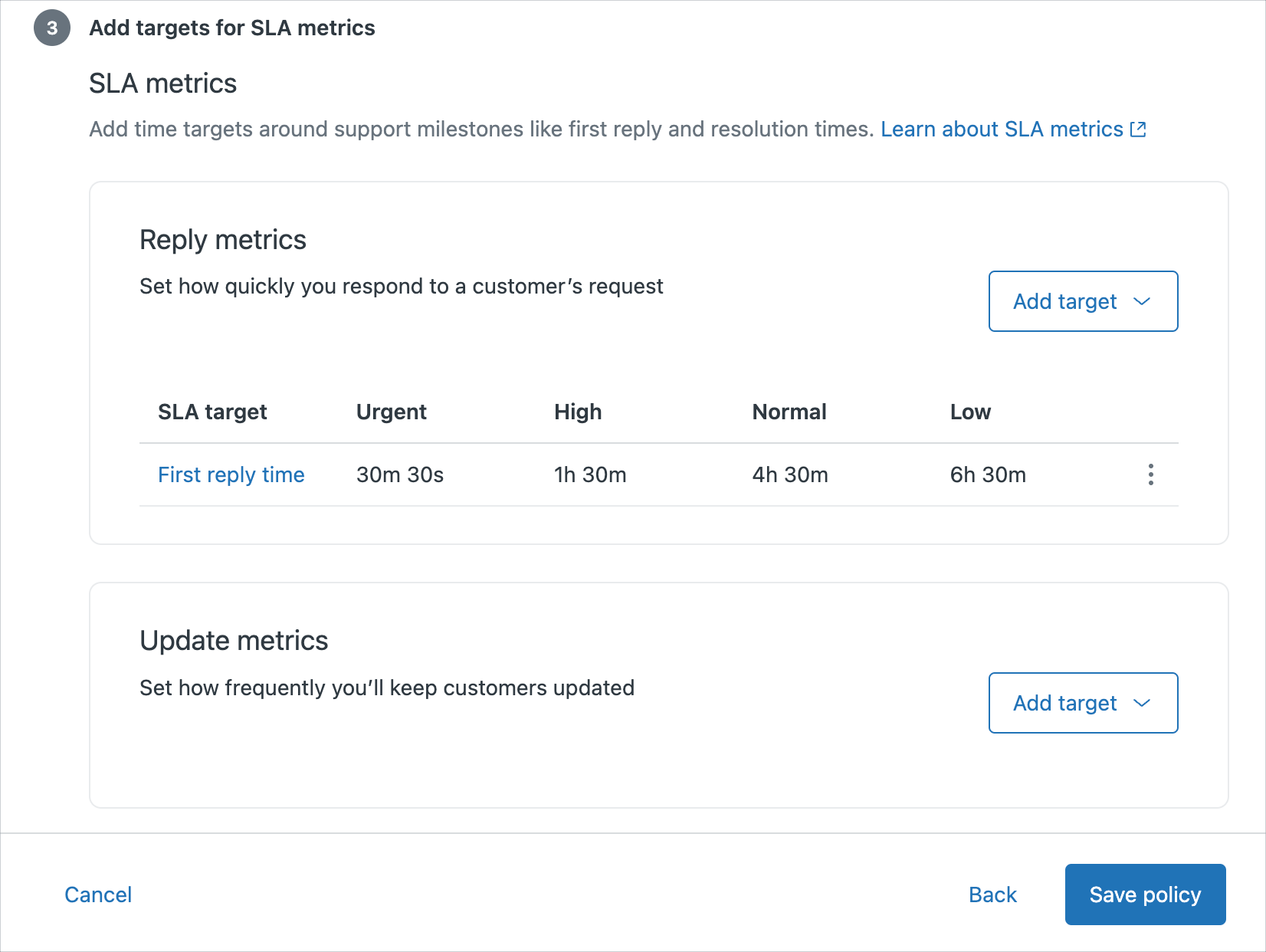
Source: Zendesk
AI is where Zendesk has invested most. AI agents use the Resolution Learning Loop, which feeds insights from every resolved interaction back into the system to close knowledge gaps without manual retraining.
But Zendesk has no sales pipeline, no deal tracking, no prospecting, and no lead management. It handles what happens after someone becomes a customer, not before.
ZoomInfo fills the intelligence gap both platforms miss
Pipedrive manages deals once they exist. Zendesk supports customers once they've bought. But neither platform helps you figure out who to pursue in the first place, whether their contact information is accurate, or why this week is the right time to reach out.
ZoomInfo was built to solve this.
The platform operates the largest B2B data asset available: 500M contacts, 100M companies, 135M+ verified phone numbers, 120M direct-dial phone numbers, and 200M+ verified business email addresses. ZoomInfo verifies that data through a multi-source pipeline backed by 300+ human researchers with up to 95% accuracy on first-party data.
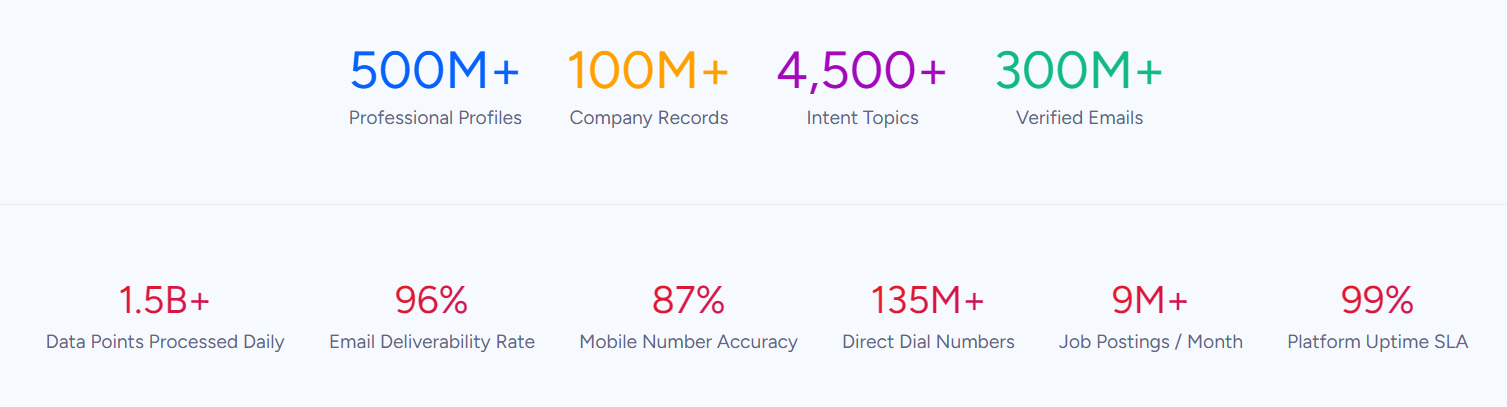
Data accuracy at this scale matters because bad data poisons every downstream tool. If 30% of your contact records bounce, your email sequences trigger spam filters, your pipeline metrics inflate with phantom leads, and your reps waste time calling disconnected numbers.
In a Fortune 500 competitive RFP analyzing 25 million contacts across vendors, the independent consultant concluded that "no other competitor came even close."
ZoomInfo's advantage goes beyond the database.
The GTM Context Graph fuses ZoomInfo's third-party intelligence with a customer's own CRM records, conversation transcripts, and behavioral signals. A CRM records that a deal moved to Stage 3.
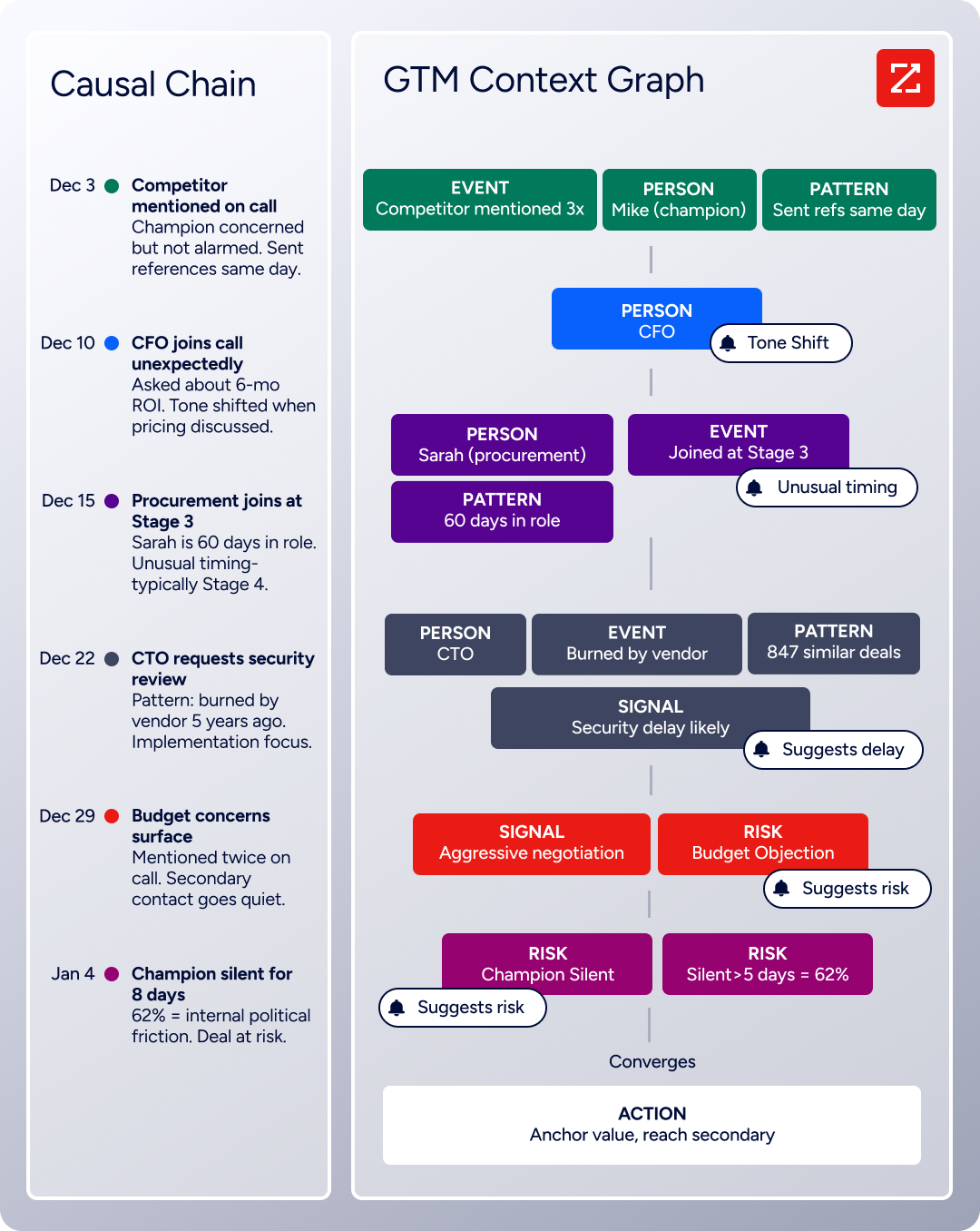
The GTM Context Graph reasons across all available data to understand why it moved: the CFO joined the last call and asked about six-month ROI, the company just raised a Series B, and they're researching your competitor. That context makes the difference between a generic follow-up and an outreach that addresses the buyer's actual decision criteria.
"That combination of our internal CRM data, external signals, and AI that's given all that context has helped us craft very specific account- and persona-based messages. And people have responded to them right away." (Toby Carrington, CBO, Seismic)
AI capabilities serve different missions
All three platforms have invested in AI, but their implementations reflect different goals.
Pipedrive's AI helps reps work faster inside the CRM.
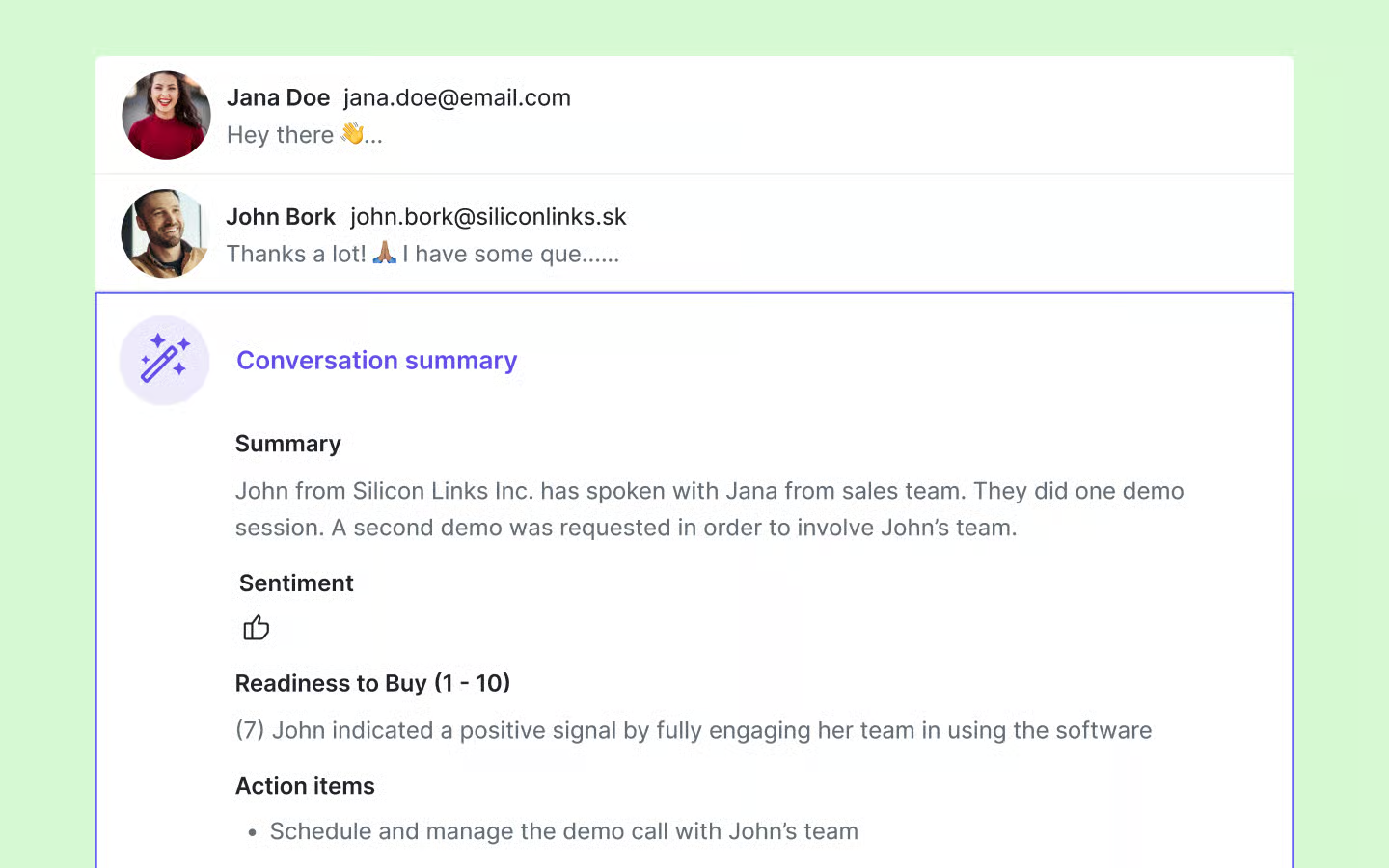
The AI email writer generates drafts from brief prompts. AI email summarization condenses long threads into summaries with key themes, sentiment analysis, and a readiness-to-buy score. The AI Sales Assistant surfaces win probability predictions, flags at-risk deals, and suggests next actions. The AI report generator lets managers build pipeline analyses from natural language prompts.
Source: Pipedrive
These features help with day-to-day sales execution, though some (like email summarization) are still labeled BETA.
Zendesk's AI resolves customer issues without human intervention.
AI agents handle multi-step customer conversations end-to-end, take actions in connected business systems, and improve through the Resolution Learning Loop. Copilot assists human agents proactively, drafting replies and recommending next steps the moment a ticket opens.
ZoomInfo's AI identifies who to pursue and why.
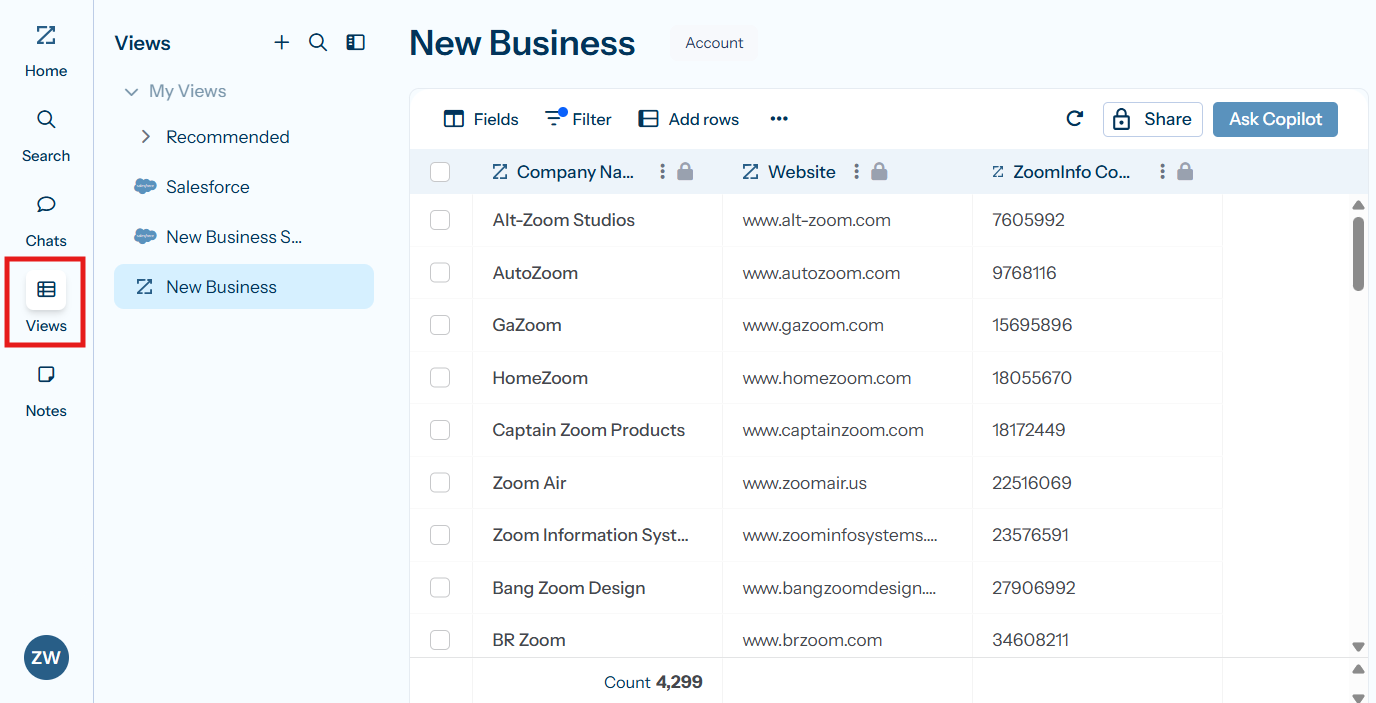
The GTM Context Graph processes 1.5B+ data points daily, connecting buying signals, org chart changes, intent data, and conversation patterns to surface opportunities before competitors see them. In GTM Workspace, AI agents handle account research, generate follow-ups, monitor signals, and draft outreach.
Source: ZoomInfo
In GTM Studio, marketers describe audiences in natural language and launch multi-channel plays targeting accounts that match proven win patterns. The AI doesn't just automate tasks. It reasons about which accounts deserve attention and what message will land.
"ZoomInfo's not just a contact data company anymore. They've built a full system of execution. GTM Intelligence actually works the list, writes the outreach, triggers the play, and helps drive predictable growth." (Ian Brodie, CEO & Co-Founder, Levanta)
Pricing reflects different markets and models
The pricing structures tell you who each platform was built for.
Pipedrive uses per-seat, per-month pricing across four tiers: Lite, Growth, Premium, and Ultimate.
Entry starts at $14/month per seat, with up to 42% discount on annual billing. Add-ons are billed per company, not per seat. LeadBooster (chatbot, live chat, prospector, web forms) costs $32.50/company/month billed annually. Campaigns (email marketing) and Web Visitors are separate add-ons. LeadBooster, Projects, and Smart Docs are included on Premium and Ultimate plans.
For small teams, Pipedrive is among the most affordable CRMs available. No permanent free plan exists, but there's a 14-day free trial with no credit card required.
Zendesk pricing starts simply but scales fast.
Support Team starts at $19/agent/month for email and ticketing only. The Suite plans start at $55/agent/month (Suite Team) and reach $115/agent/month for Suite Professional, which Zendesk marks as "Most Popular." Suite Enterprise + Copilot requires custom pricing through sales. On top of base plans, Workforce Management and Quality Assurance each add $50/agent/month.
AI agent automated resolutions come included in every Suite plan with a per-plan allowance (5-15 ARs per agent per month), but higher usage triggers overage billing. Voice calls and texts are billed pay-as-you-go beyond included minutes. For a mid-sized team running the full AI suite with WFM and QA, monthly costs climb well above the entry-level price.
ZoomInfo uses custom-quoted, consumption-based pricing with no publicly listed prices.
Costs depend on users, monthly credit volume, features, and contract length. Three product lines (Sales, Marketing, and Operations) each have their own tier structure (Professional, Advanced, Enterprise). ZoomInfo Lite is a permanent free tier with access to the B2B database, 10 monthly export credits, individual and company searches, the Chrome extension, and HubSpot integration.
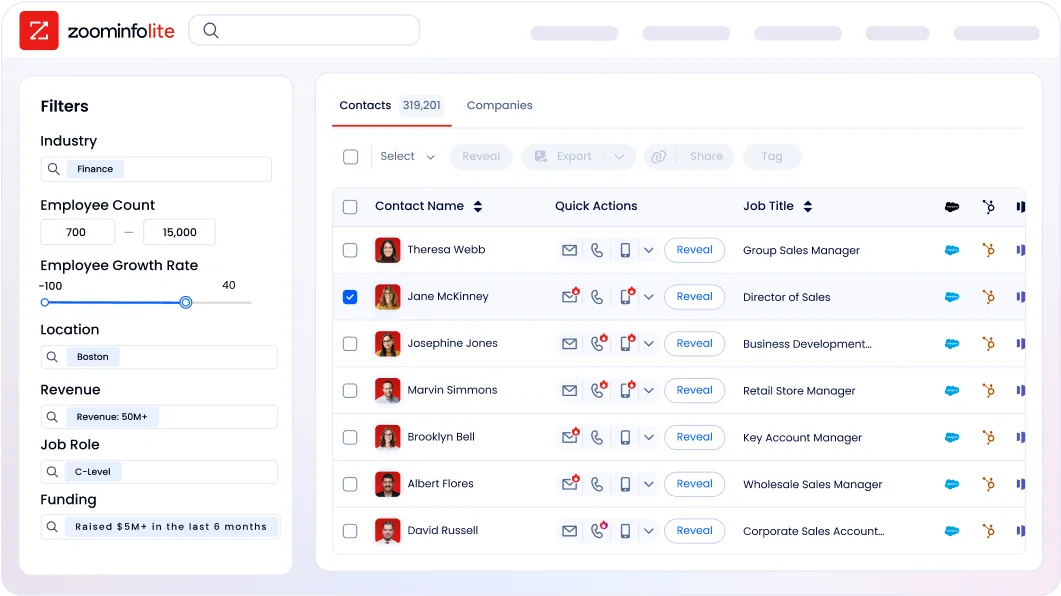
A separate 7-day free trial provides broader access. ZoomInfo is premium-priced, but customers evaluating ROI point to outcomes like Seismic's 54% productivity gains and 39% of pipeline attributable to ZoomInfo signals.
Integration ecosystems show each platform's role in your stack
How each platform connects with other tools reveals where it fits in your stack.
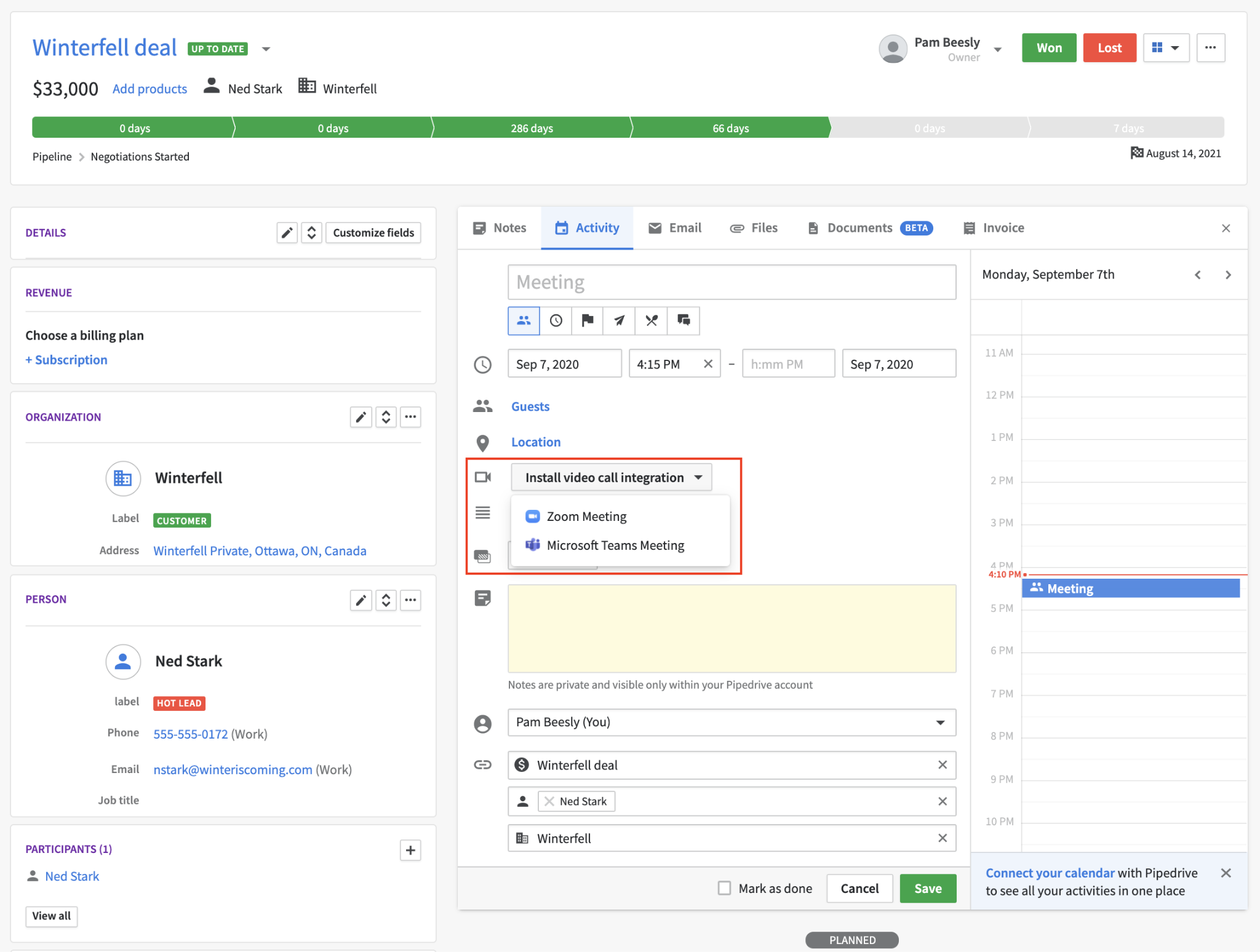
Pipedrive's 500+ marketplace integrations center on tools sales teams use daily: Zapier, Google Meet, Microsoft Teams, Mailchimp, Slack, QuickBooks, Xero, and DocuSign.
The free open API is available on all plans, and API v2 offers more efficient endpoint access. Developers can build custom apps using App Extensions and the Developer Hub. The ecosystem covers sales workflows well. Teams needing data enrichment or customer service connections will find fewer options.
Source: Pipedrive
Zendesk's 1,800+ marketplace apps make it one of the most extensible service platforms available.
Integrations span CRM (Salesforce, HubSpot), e-commerce (Shopify), collaboration (Slack, Jira), and billing systems. The REST API supports full CRUD operations with OAuth 2.0 authentication. Zendesk Integration Services (ZIS) provides hosted workflow orchestration.
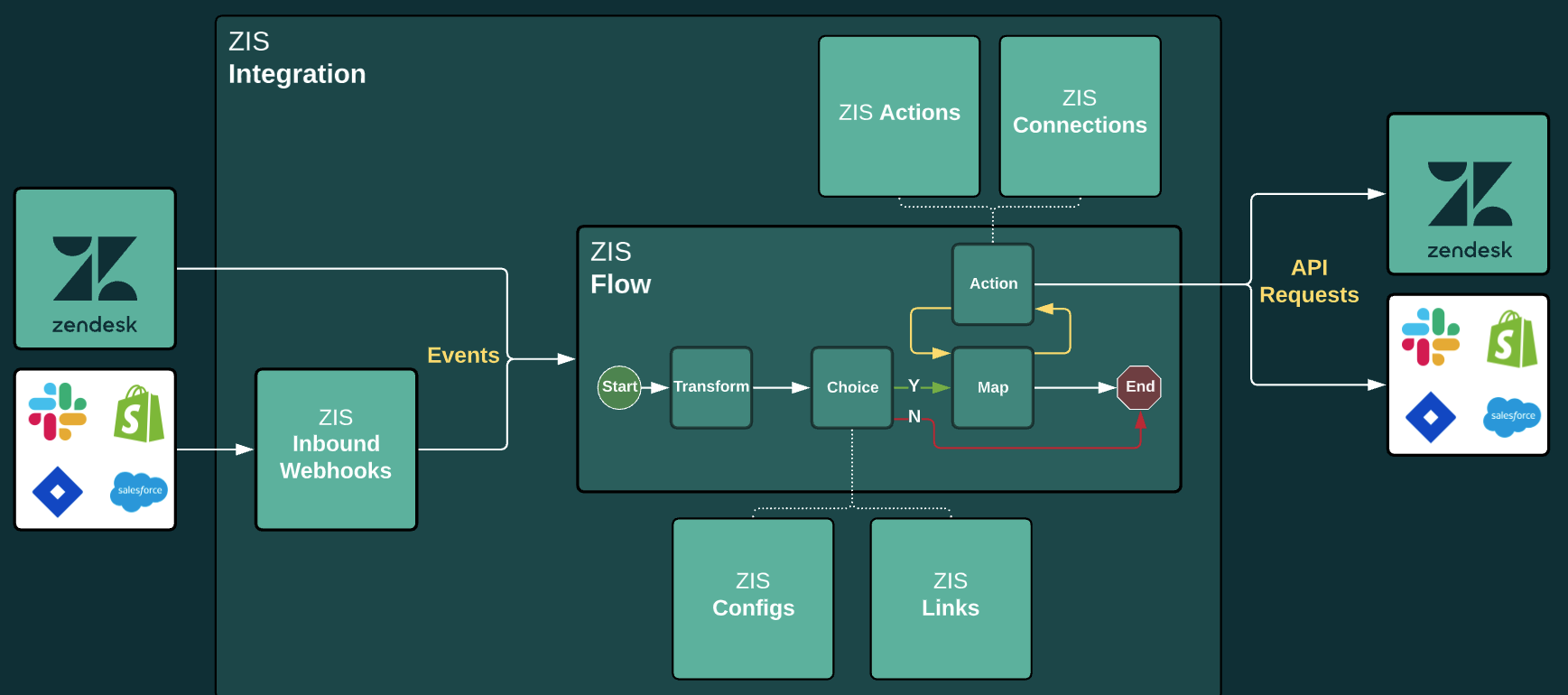
Source: Zendesk
The newer Zendesk MCP Server lets external AI platforms like Claude and ChatGPT connect to Zendesk's knowledge and ticket data. The ecosystem reflects Zendesk's goal of becoming the service layer for any tech stack.
ZoomInfo's integration approach pushes intelligence into the tools teams already use.
The Marketplace lists 120+ partners across CRM, marketing automation, sales engagement, and data warehouses. Native integrations with Salesforce, HubSpot, and Microsoft Dynamics 365 keep CRM data enriched automatically. Cloud Partners deliver ZoomInfo data into AWS, Google Cloud, Snowflake, and Databricks.
The Enterprise API and MCP server expose the GTM Context Graph to any application or AI agent. API access is included in all relevant plans, and the MCP server connects natively to Claude and ChatGPT. ZoomInfo works as infrastructure: the same intelligence available whether you're in ZoomInfo's products, your CRM, or a custom AI agent.
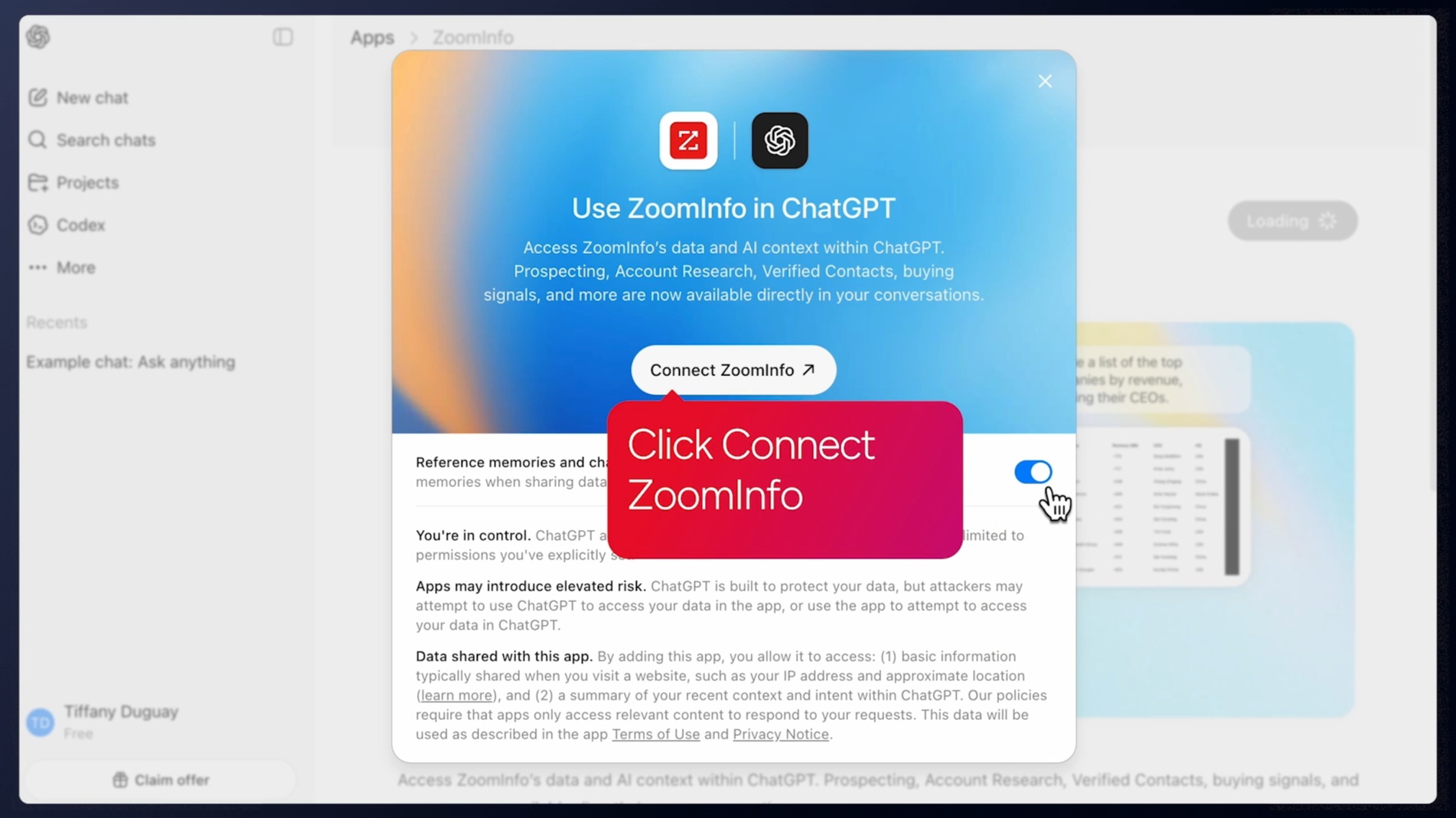
Source: ZoomInfo
"The plug-and-play aspect of the API means I can integrate it very easily into any process and get information at a moment's notice." (Jerry Wilson, Senior Marketing Intelligence Analyst, BDO Canada)
Data and prospecting capabilities compared
This is where the three platforms diverge most, because only one was built to solve the data problem.
Pipedrive offers prospecting through its LeadBooster add-on, which includes a Prospector tool sourcing from a database of over 400 million profiles and 10 million companies.
An AI engine verifies and updates up to 800,000 profiles daily. The newer Pulse toolkit adds data enrichment, custom lead scoring, and automated sequences. These features handle basic prospecting, but they're add-ons, not core functionality, and Pipedrive offers no buyer intent signals, technographic data, or org chart intelligence.

Source: Pipedrive
Zendesk has no prospecting or B2B data capabilities.
The platform manages existing customer relationships through support interactions. It provides no contact databases, lead sourcing, or intent signals.
ZoomInfo was built for this.
The data spans three dimensions: identity (who buyers are and how to reach them), company context (100M companies with firmographics, org charts, and technographics), and dynamic signals revealing when accounts are in-market.
Buyer Intent data tracks signals from 210 million IP-to-Organization pairings and 6 trillion+ new keyword-to-device pairings sourced monthly. Guided Intent, exclusive to ZoomInfo, identifies topics historically correlated with deal success rather than requiring manual topic selection. WebSights resolves anonymous website traffic to companies and filters out bots automatically.
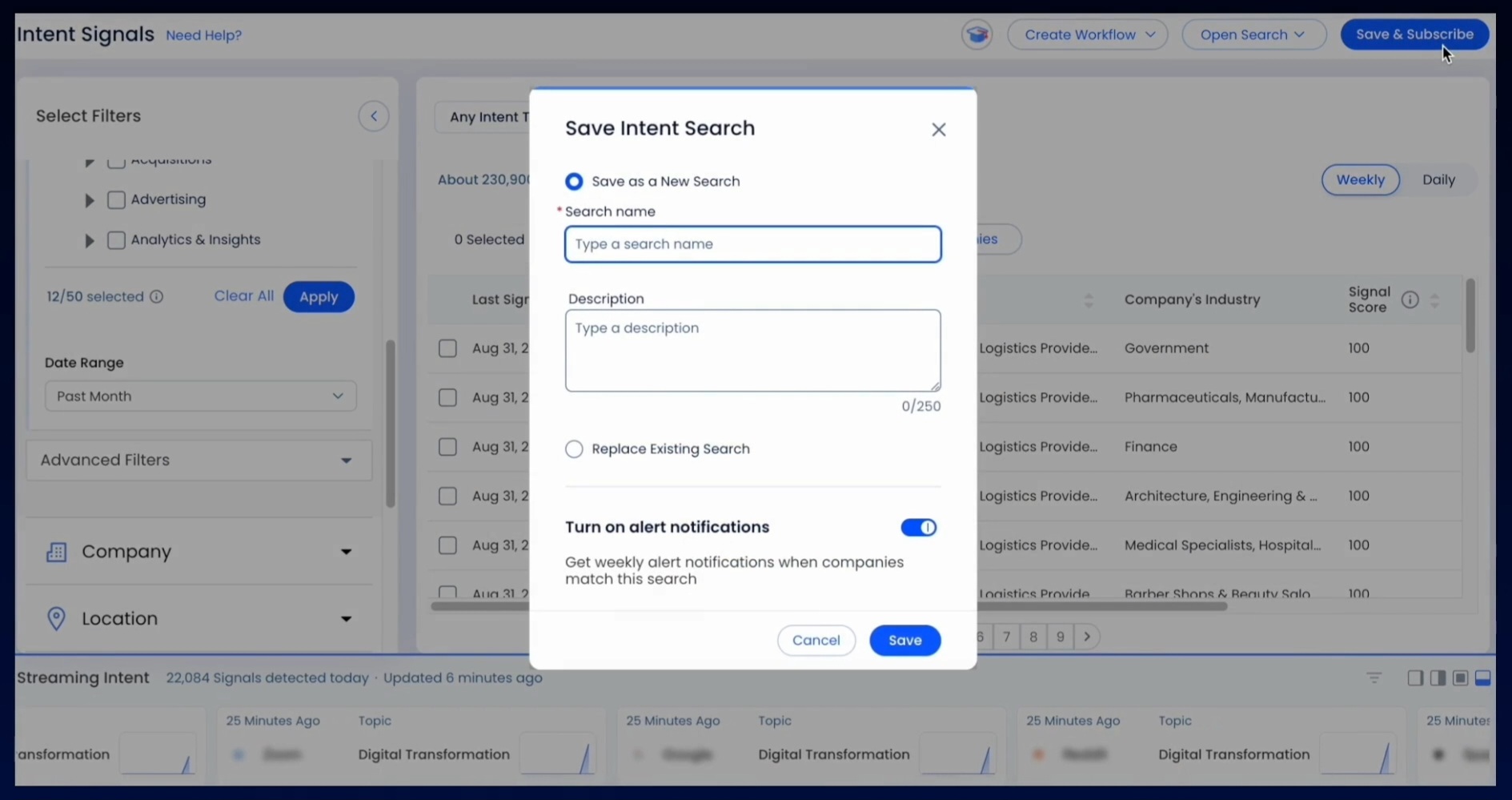
Source: ZoomInfo
The practical difference: Pipedrive gives you a pipeline to manage deals. ZoomInfo tells you which deals are worth creating.
"ZoomInfo gives us the information we need to execute. We don't have to go through and spend our time digging. It's already there, so we can be three steps ahead." (William Kenimer, VP of Revenue Operations, Vensure)
Security and compliance comparison
Enterprise buyers evaluating any platform need confidence in how their data is handled.
Pipedrive holds ISO/IEC 27001:2022 and ISO/IEC 27701:2019 certifications, SOC 2 Type 2 compliance, and AES-256 encryption.
Pipedrive hosts data on AWS with separate databases per customer in Europe and US regions. SSO via SAML 2.0 is available on all plans, supporting Okta and Microsoft Entra ID. The platform is GDPR compliant with a dedicated Data Protection Officer and participates in the EU-US Data Privacy Framework. For its SMB target market, the security posture is solid.
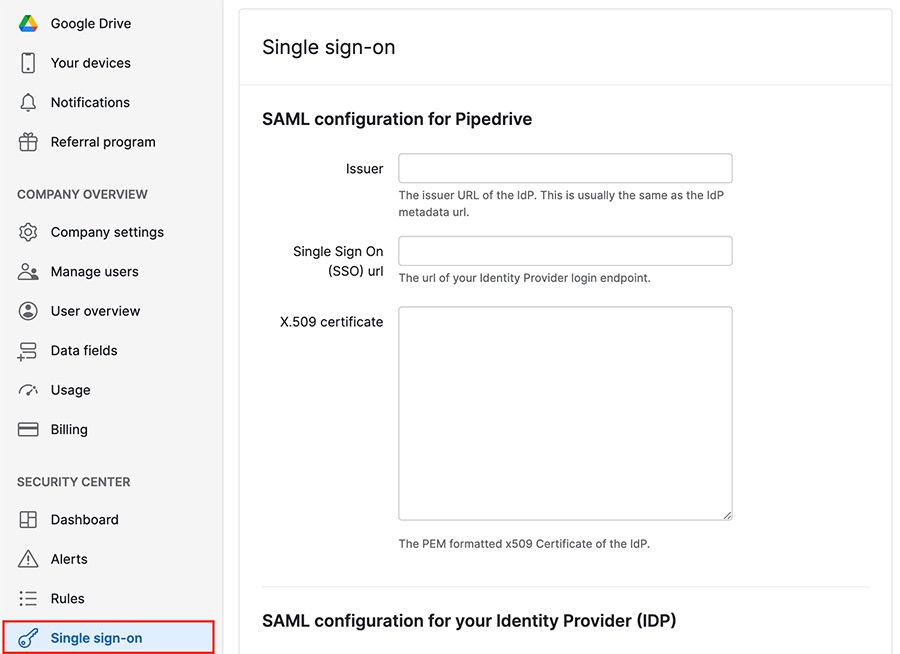
Source: Pipedrive
Zendesk offers a broader compliance footprint suited to larger enterprises.
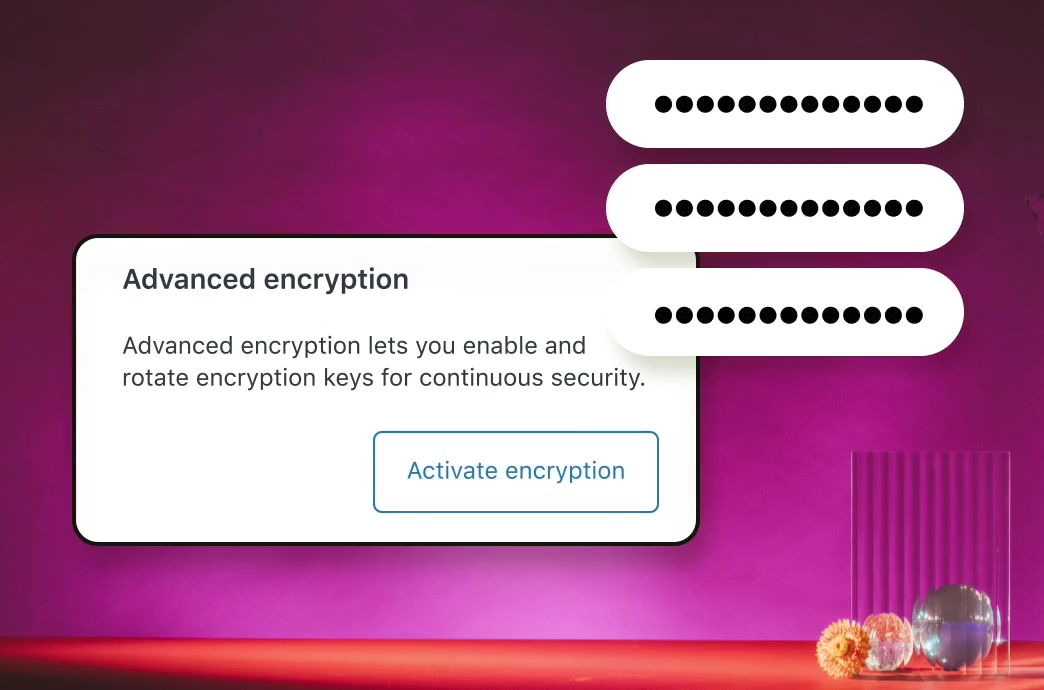
Certifications include SOC 2 Type II, ISO 27001:2022, and ISO 27018:2019. HIPAA BAA support covers healthcare. GDPR Binding Corporate Rules are published for both processor and controller roles. Advanced Data Privacy and Protection (ADPP) adds controls for regulated industries. FedRAMP authorization is in process.
Source: Zendesk
For AI governance, Zendesk uses a multi-LLM architecture with zero data retention endpoints for OpenAI and publishes responsible AI design principles.
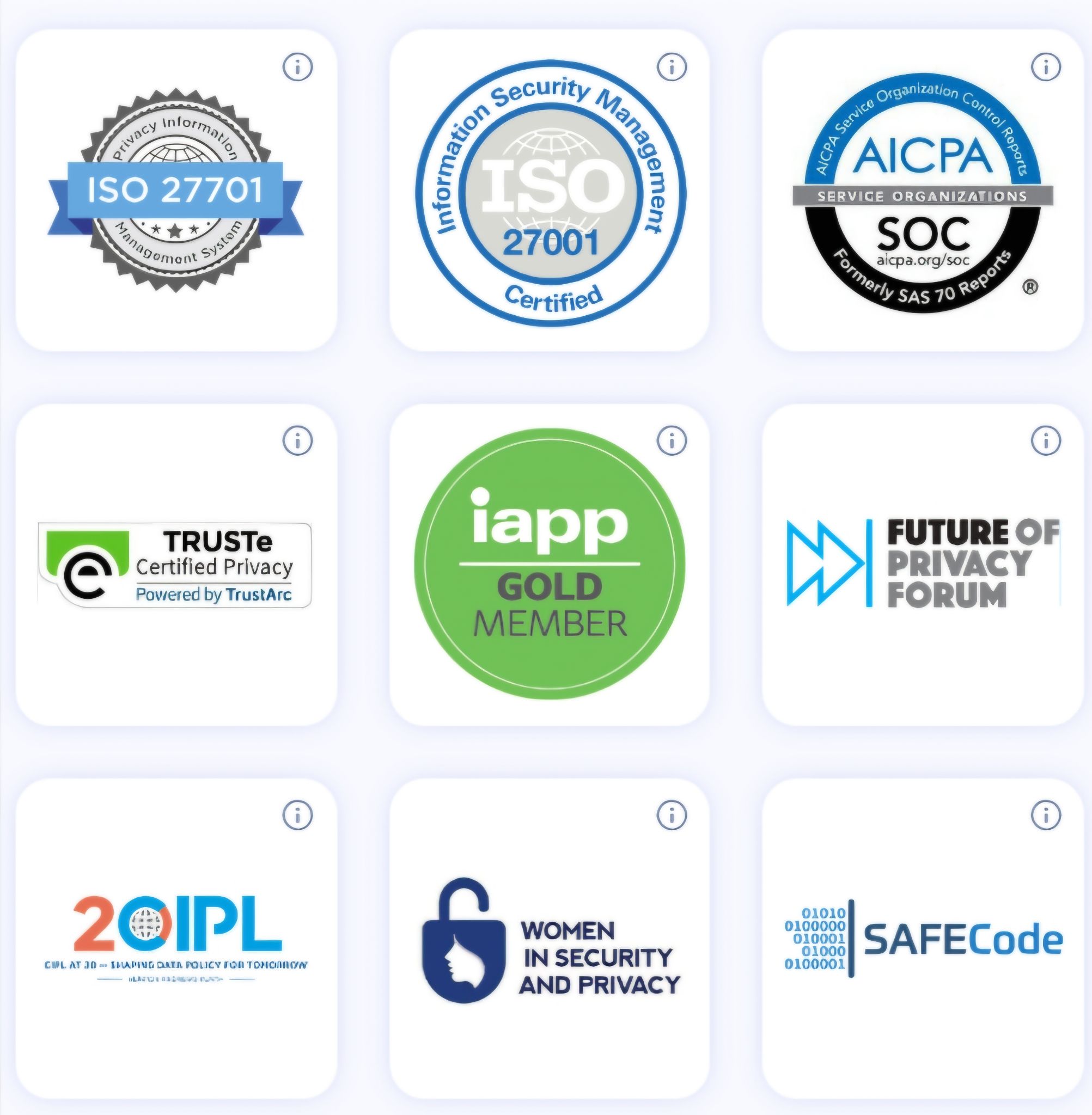
ZoomInfo maintains a certification stack renewed annually: ISO 27001, ISO 27701, SOC 2 Type II, TRUSTe GDPR and CCPA Practices Validation.
Source: ZoomInfo
The company is a registered data broker in California and Vermont. Pipedrive does not permit third parties to use client data to train AI models, a policy ZoomInfo shares through its own data governance framework. All three platforms take security seriously, with Zendesk offering the broadest compliance menu for regulated enterprises.
Pipedrive vs. Zendesk vs. ZoomInfo: Which should you choose?
The right platform depends on which problem your revenue team needs to solve first.
Choose Pipedrive if:
Managing your sales pipeline is the top priority
You need an affordable, intuitive CRM for a small team
Your reps already know who they're selling to and need a system to track progress
You want to be up and running within days, not weeks
Customer support is handled by another team or tool
Choose Zendesk if:
Customer support quality is your primary challenge
You need to manage high ticket volumes across multiple channels
AI resolution and agent productivity are strategic priorities
You're ready to invest in a platform that scales from SMB to enterprise
Sales and prospecting are handled separately
Choose ZoomInfo if:
You need verified B2B data to build pipeline with the right prospects
Your reps spend too much time on unqualified leads or stale contact information
Buyer intent signals and account intelligence would change how your team prioritizes
You want an intelligence layer that powers your CRM, your marketing automation, and your AI agents
You're looking for the data foundation that makes every other tool in your stack work better
Start with ZoomInfo Lite for free or request a demo to see the full platform.
These platforms don't compete with each other so much as they complete each other. ZoomInfo identifies who to sell to and why. Pipedrive manages the deal through close. Zendesk supports the customer after. The question isn't which one is best. It's which gap in your revenue operation needs closing first.
Pipedrive vs. Zendesk vs. ZoomInfo FAQ
What is the core difference between Pipedrive, Zendesk, and ZoomInfo?
Pipedrive is a sales CRM for managing deals through a visual pipeline.
Zendesk is a customer service platform for resolving support tickets across email, chat, voice, and messaging.
ZoomInfo is a B2B data intelligence platform for finding and engaging the right buyers. They operate at different stages of the customer lifecycle: ZoomInfo helps you identify prospects, Pipedrive helps you close them, and Zendesk helps you support them.
Can I use ZoomInfo with Pipedrive or Zendesk?
ZoomInfo integrates with major CRMs including Salesforce, HubSpot, and Microsoft Dynamics 365.
Pipedrive is not among ZoomInfo's featured native CRM integrations, but ZoomInfo's API and MCP server can send data into virtually any application.
Zendesk and ZoomInfo serve different functions (customer service vs. sales intelligence), but ZoomInfo's data could enrich customer records in Zendesk through API connections or automation tools like Zapier.
Which platform is most affordable for a small team?
Pipedrive is the most affordable for small sales teams, starting at $14/seat/month with core pipeline management included.
Zendesk's entry point is $19/agent/month for email-only ticketing, but the full omnichannel Suite starts at $55/agent/month.
ZoomInfo offers a permanent free tier (ZoomInfo Lite) with 10 monthly export credits and basic search access, but paid plans are custom-quoted and priced for mid-market and enterprise buyers.
Does Pipedrive offer customer support features?
No. Pipedrive handles pre-sale pipeline management only. It has no ticketing, no knowledge base, no live chat support, and no customer service features. Businesses using Pipedrive for sales need a separate platform like Zendesk or Freshdesk for post-sale support.
Does Zendesk offer sales pipeline management?
Zendesk offers Zendesk Sell (acquired from Base in 2018), which provides basic sales CRM functionality. But Zendesk's primary focus and investment is customer service. The company's flagship products, AI capabilities, and market positioning all center on support operations, not sales pipeline management.
How does ZoomInfo's data compare to Pipedrive's Prospector?
Pipedrive's Prospector provides access to over 400 million profiles and 10 million companies through the LeadBooster add-on.
ZoomInfo operates at a larger scale with 500M contacts, 100M companies, 135M+ verified phone numbers, and 200M+ verified business email addresses. ZoomInfo also provides buyer intent data, technographics covering 30,000+ technologies across 30+ million companies, and the GTM Context Graph, which layers reasoning on top of the data to explain why accounts are worth pursuing.
Which platform has the strongest AI capabilities?
Each platform's AI serves a different purpose. Zendesk's AI is the most mature for customer service, with autonomous agents resolving up to 80% of interactions and Copilot boosting agent productivity by 82%.
Pipedrive's AI helps reps write emails, generate reports, and prioritize deals within the CRM.
ZoomInfo's AI operates across the full go-to-market motion, using the GTM Context Graph to identify in-market buyers, draft contextual outreach, and surface deal intelligence that explains why opportunities are moving or stalling.
Do any of these platforms offer a permanent free plan?
ZoomInfo is the only one with a permanent free tier. ZoomInfo Lite provides ongoing access to the B2B database with 10 monthly export credits, search filters, a Chrome extension, and HubSpot integration at no cost. Pipedrive and Zendesk both offer 14-day free trials but no permanent free plans.
More Pipedrive comparisons:
