
If you're comparing Practifi vs. Salesforce for your wealth management CRM, you're asking a practical question: Should you buy a pre-configured CRM built for financial advisors, or build your own on the largest CRM platform available?
It's a real choice. Both paths lead to the same Salesforce infrastructure (Practifi runs on Salesforce Lightning), but they differ in how much control you get, how fast you can go live, and what you'll pay.
Before you decide, answer these questions honestly:
Do you want a CRM that ships with wealth management workflows on day one, or are you willing to invest months configuring one to your exact specifications?
Is your firm's complexity best served by a pre-built data model, or do you need full Salesforce configuration access?
How important is it that your CRM understands households, trusts, and multi-generational family structures out of the box?
Are you prepared to hire Salesforce consultants and administrators, or would you rather your vendor handle that layer?
Does your growth strategy depend on finding and reaching new prospects, and do you have the data infrastructure to support that?
In short, here's what we recommend:
Practifi is built for RIAs and wealth management firms that want a CRM without a long build project. Its pre-configured data model treats the household as the core client unit, with built-in workflows for account openings, annual reviews, and compliance documentation. Practifi Intelligence, its native AI assistant, automates meeting capture, generates summaries, and creates follow-up tasks within client records. However, Practifi restricts customization of its managed Salesforce objects, requires annual commitments with no free trial, and gates its AI features behind an add-on subscription.
Salesforce gives you the full world's #1 CRM platform, including Financial Services Cloud with data models built for financial services. With over 150,000 customers worldwide, 9,000+ AppExchange apps, and the Agentforce AI platform, Salesforce can be configured to do nearly anything. But that flexibility costs: implementations typically require partners (over 70% of deployments are partner-led), the learning curve is steep, and building a wealth-management instance from scratch takes months of consultant time and real budget.
Both platforms give you a CRM for managing existing client relationships. But neither solves the problem that comes before the CRM: finding and reaching the right prospects. Your CRM is only as valuable as the pipeline feeding it.
ZoomInfo is a B2B GTM platform built on a large data foundation: 500M contacts, 100M companies, 135M+ verified phone numbers, and 200M+ verified business emails. Its GTM Context Graph processes 1.5B+ data points daily, unifying this data with your CRM records, conversation transcripts, and behavioral signals to reveal not just who to contact, but why they're likely to engage now. ZoomInfo integrates with both Salesforce and Practifi (via the Salesforce AppExchange), so your prospecting intelligence flows into whichever CRM you choose.
If building a data-driven pipeline into your CRM sounds like the missing piece, see how ZoomInfo works with your sales stack.
Practifi vs. Salesforce vs. ZoomInfo at a glance
Practifi | Salesforce | ZoomInfo | |
|---|---|---|---|
Primary function | Wealth management CRM | General-purpose CRM platform | B2B GTM platform |
Infrastructure | Built on Salesforce Lightning | Salesforce Lightning (native) | Integrates with Salesforce and Practifi |
Implementation time | 80% faster than custom Salesforce builds | Weeks to 12+ months depending on complexity | Deploys in weeks |
Wealth management data model | Pre-configured (households, trusts, COIs) | Available via Financial Services Cloud (requires configuration) | N/A (provides B2B prospect data) |
AI capabilities | Practifi Intelligence (meeting capture, summaries, chat) | Agentforce and Einstein AI (broad AI suite) | GTM Context Graph, AI-drafted outreach, intent signals |
Pricing transparency | Not published; annual commitment required | Published tiers from $0 to $550/user/month | Consumption-based; free tier available |
Free trial or plan | No free trial | Free Suite (2 users) and Starter Suite ($25/user/month) | ZoomInfo Lite (free, permanent) and 7-day trial |
Integration ecosystem | 3,000+ via Salesforce AppExchange | 9,000+ AppExchange apps, MuleSoft | 120+ native integrations, API, and MCP access |
Best for | Mid-market RIAs and advisory firms | Enterprises needing full customization | Prospecting, pipeline generation, and data enrichment |
The fundamental trade-off: pre-built vs. custom-built
Practifi and Salesforce sit on the same infrastructure but offer opposite philosophies.
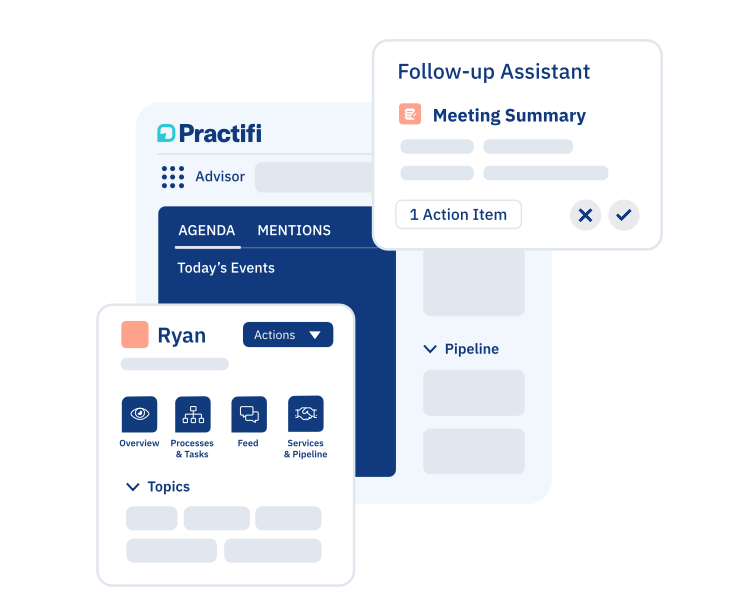
Practifi ships a finished product. The data model is already configured for wealth management: households, individuals, organizations, trusts, centers of influence, and service models are ready on day one.
Pre-built workflows for account openings, annual client reviews, and money movement requests work immediately. You don't need a Salesforce consultant to get started, and your team can be productive faster because the CRM already speaks the language of financial advisory.
Source: Practifi
The trade-off is control. G2 reviewers note that Practifi restricts customization of its managed Salesforce objects. Changes beyond standard admin tooling require a formal work order through Practifi's professional services team. If your firm has unusual workflows or needs configuration flexibility, you'll feel the constraints of a managed package.
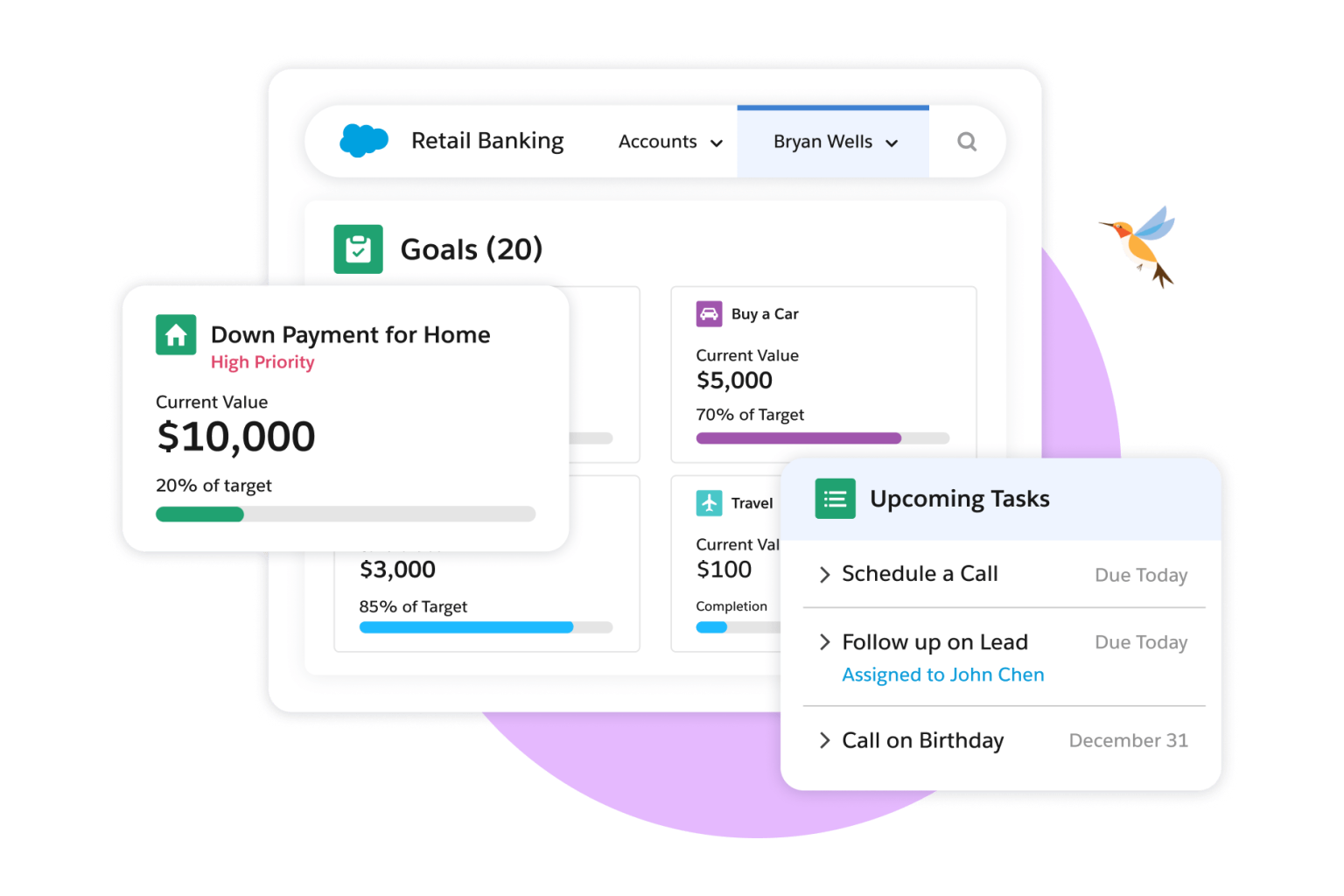
Salesforce gives you the opposite: full flexibility with full responsibility. Through Financial Services Cloud, you get a data model built for financial services, but you still need to configure it for your specific advisory practice. You can build exactly the CRM you want, with exactly the workflows, automations, and integrations you need. But building it takes time, money, and specialized talent.
Source: Salesforce
For firms that have outgrown simpler CRMs but don't want a 6-to-12-month custom Salesforce project, Practifi occupies a clear middle ground. For firms with the budget and IT resources to build precisely what they need, Salesforce's full platform is hard to match.
Wealth management data models compared
The data model is where Practifi's specialization shows most clearly.
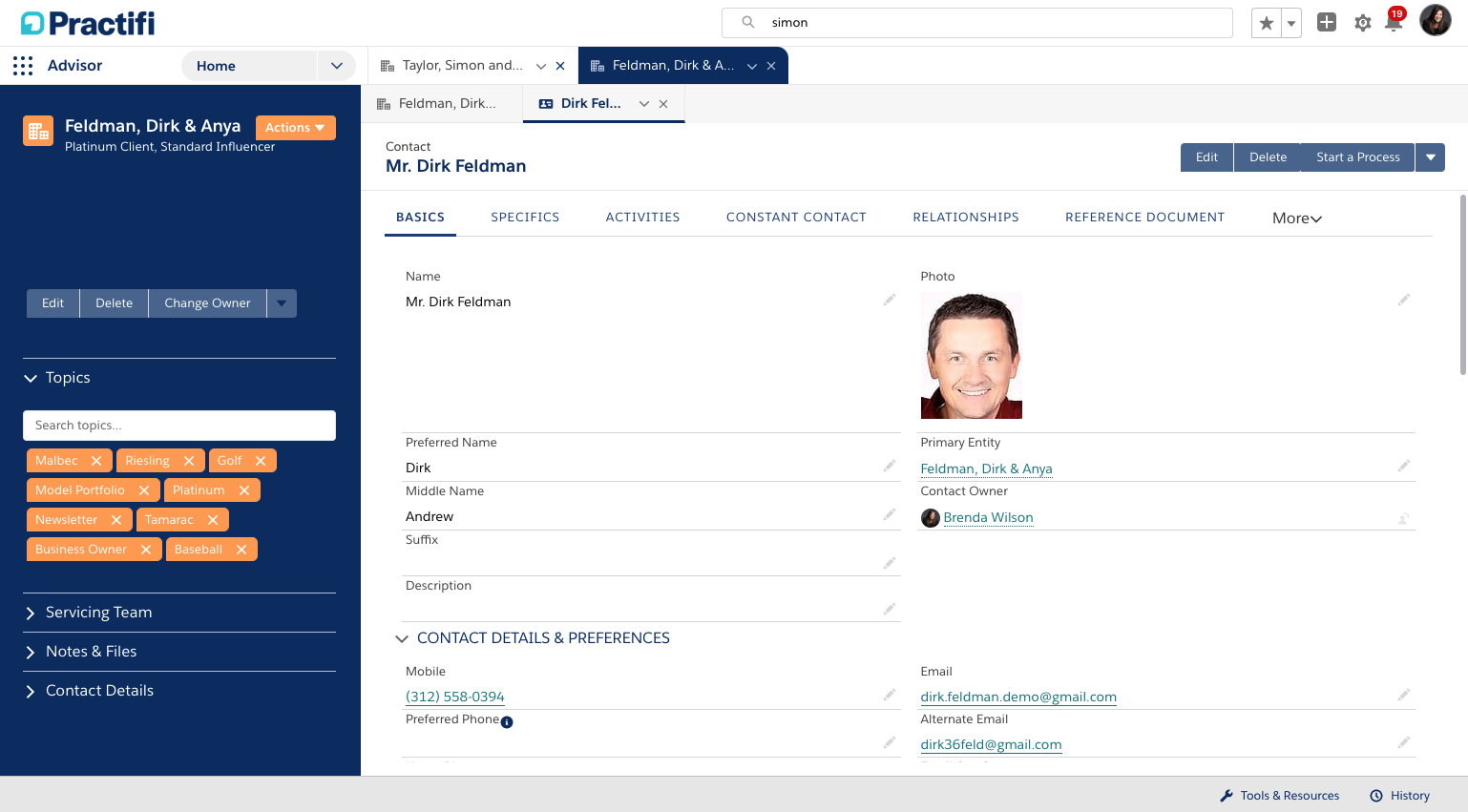
Practifi structures client relationships through a three-tiered model: the Household entity acts as the primary client record, individual Contact records sit beneath it, and Organizations (trusts, business entities) link to the same structure.
Source: Practifi
The April 2026 "Fiano" release deepened this with Groups, a new entity type that unifies Individuals, Households, and Organizations under a single container. Groups automatically roll up consolidated financials, combined services, a unified activity feed, and all documents across every member. An interactive visual hierarchy diagram maps the group's full structure.
This matters because wealth management relationships are structurally different from standard B2B sales. A four-generation family with a single-family office, three operating businesses, and two trusts isn't an edge case at a mid-market RIA. It's a Tuesday. Practifi's data model handles this natively.
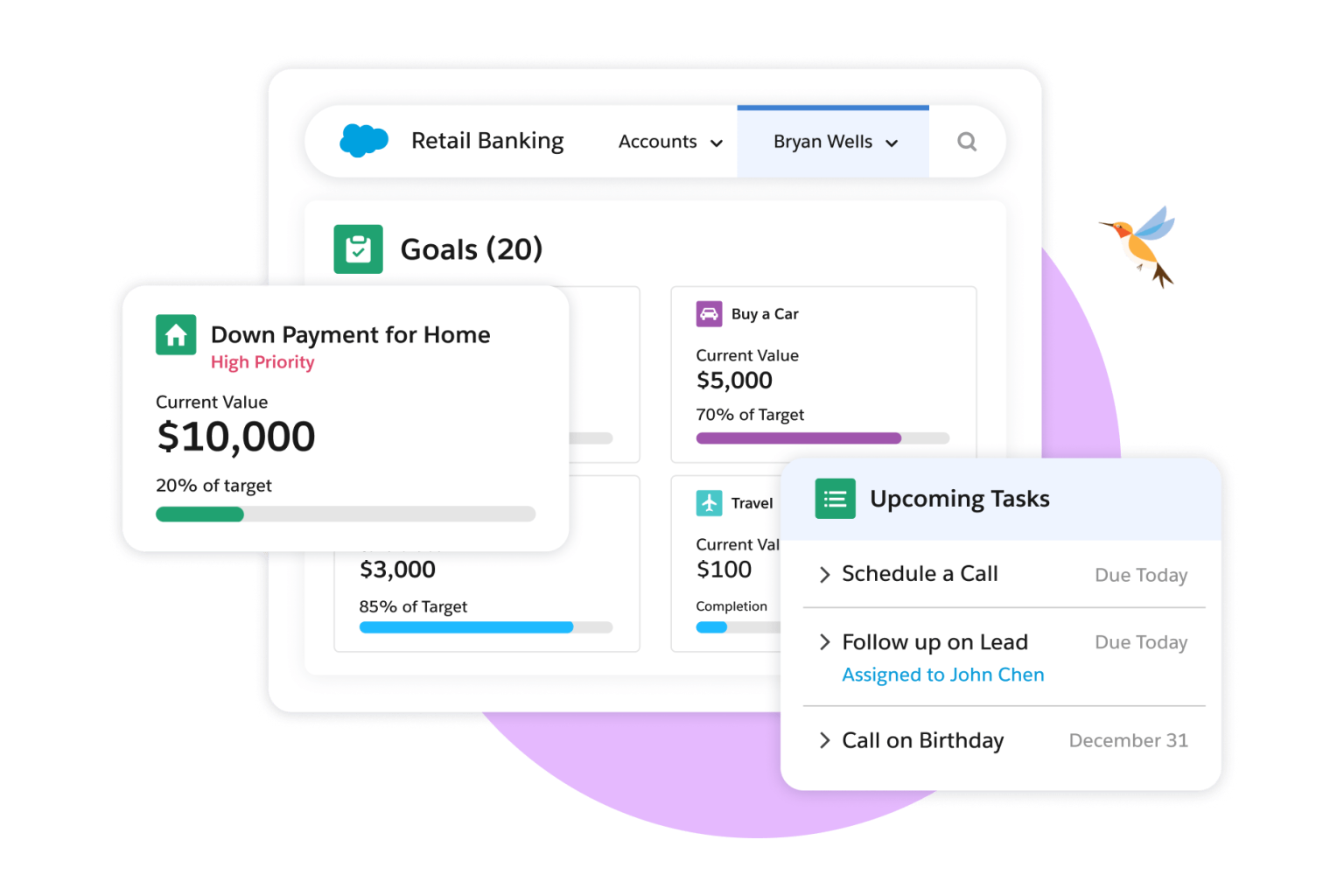
Salesforce's Financial Services Cloud provides its own financial services data model with person accounts, financial accounts, and household structures. But Financial Services Cloud is a starting point, not a finished product.
Source: Salesforce
You'll configure the objects, build the workflows, and define the relationship hierarchies yourself (or pay a consultant to do it).
The gap between the two approaches narrows as your firm's complexity grows. A 25-advisor RIA with standard workflows will be productive on Practifi far faster than on raw Salesforce. A 500-advisor platform with specific operational requirements may need the configuration latitude that only direct Salesforce access provides.
AI capabilities serve different purposes
Both platforms are investing in AI, but their approaches reflect their different missions.
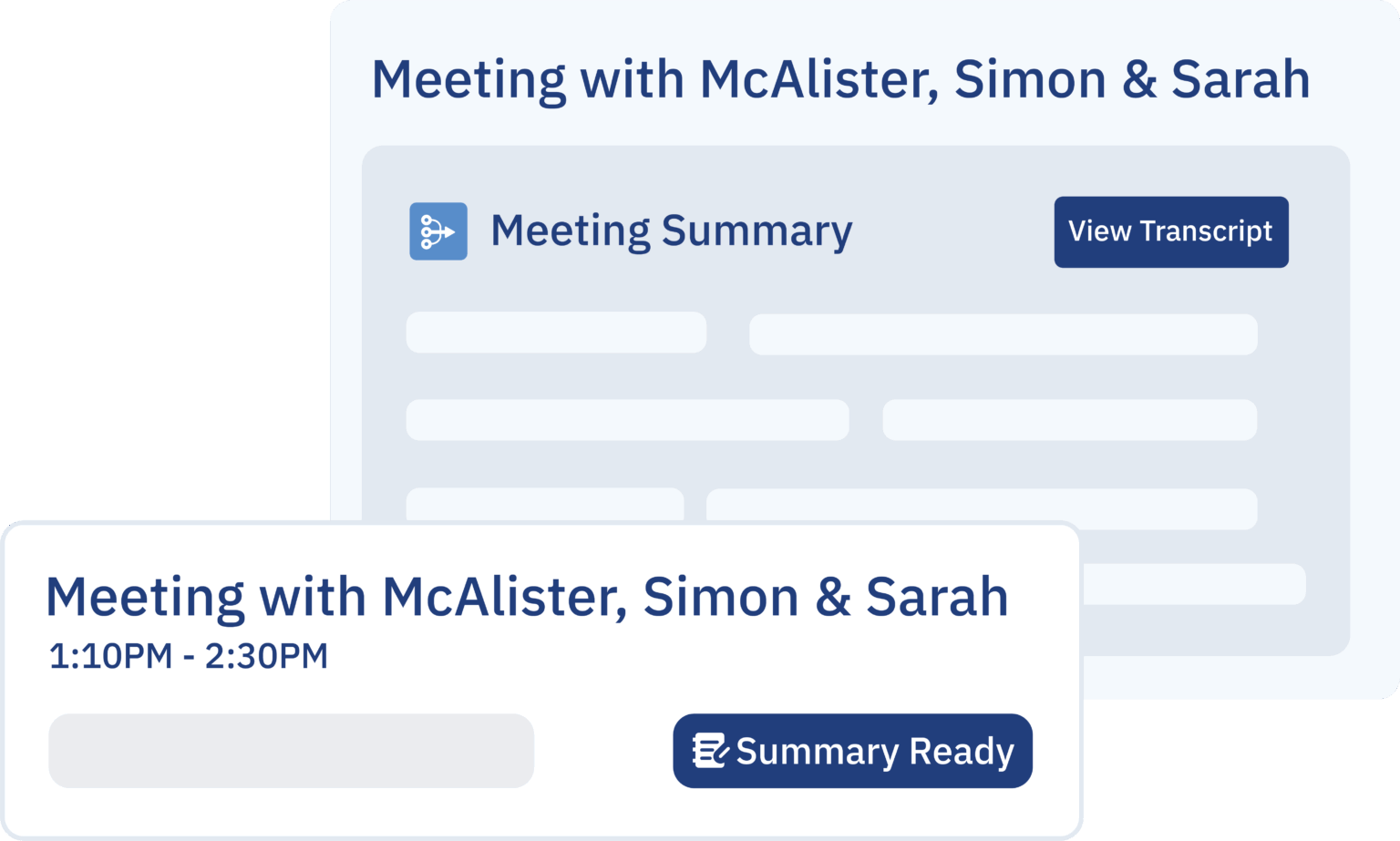
Practifi Intelligence is built for advisor-client conversations. Its Meeting Intelligence module auto-joins Zoom and Microsoft Teams calls, records audio and video, and generates structured summaries stored as Smart Notes linked to the relevant client record. The Follow-Up Assistant scans those summaries to create tasks automatically with context, suggested deadlines, and recommended assignees.
Source: Practifi
Meeting Sentiment Analysis tracks the emotional tone of each conversation, tuned for wealth management dynamics rather than generic sentiment. The Conversational Chat feature lets advisors ask questions in plain language against a client's full CRM history, with citations back to source records.
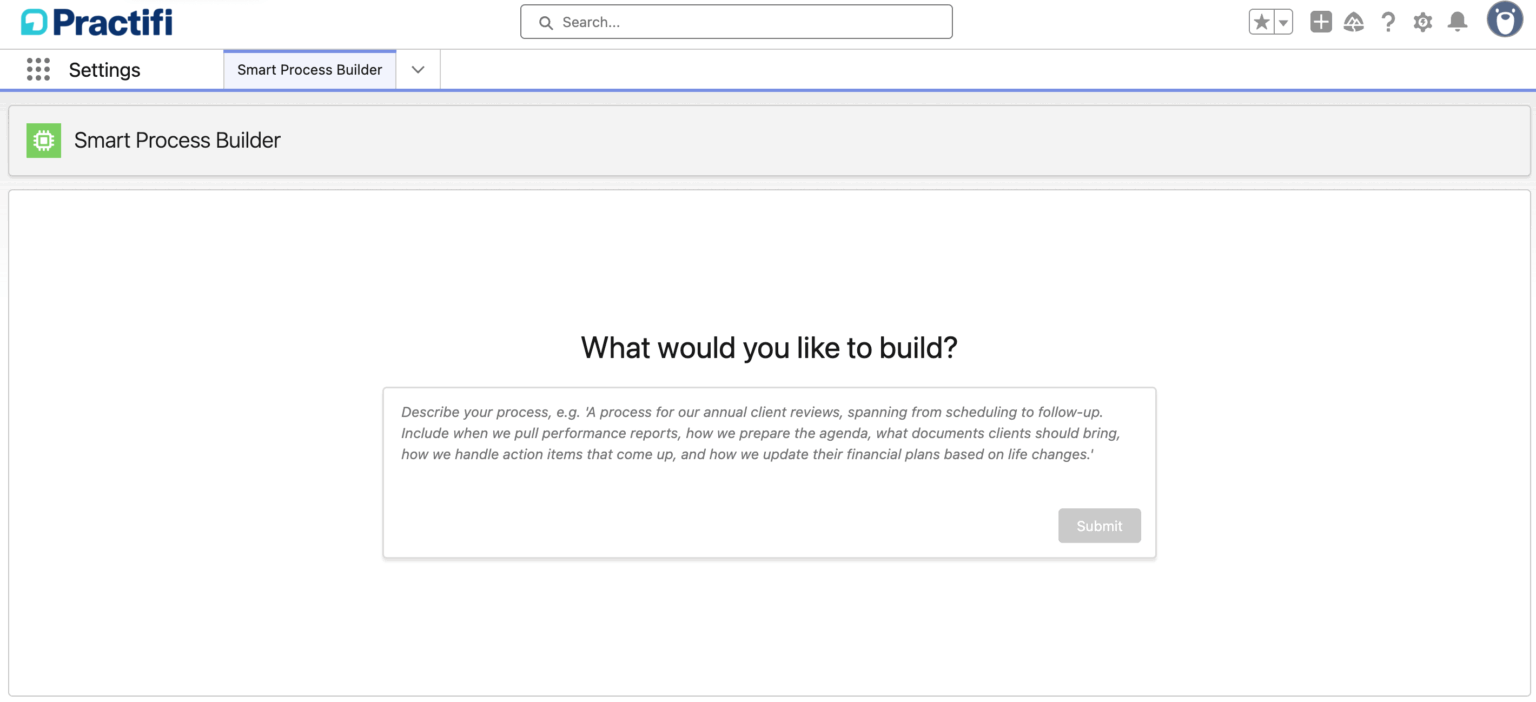
For operations teams, the Smart Process Builder lets non-technical staff build and modify compliance workflows through plain-English prompts, with real-time visual previews. No Salesforce admin or developer required.
Source: Practifi
These AI features require the Practifi Intelligence add-on with Relationship Intelligence licenses, adding cost on top of the base subscription.
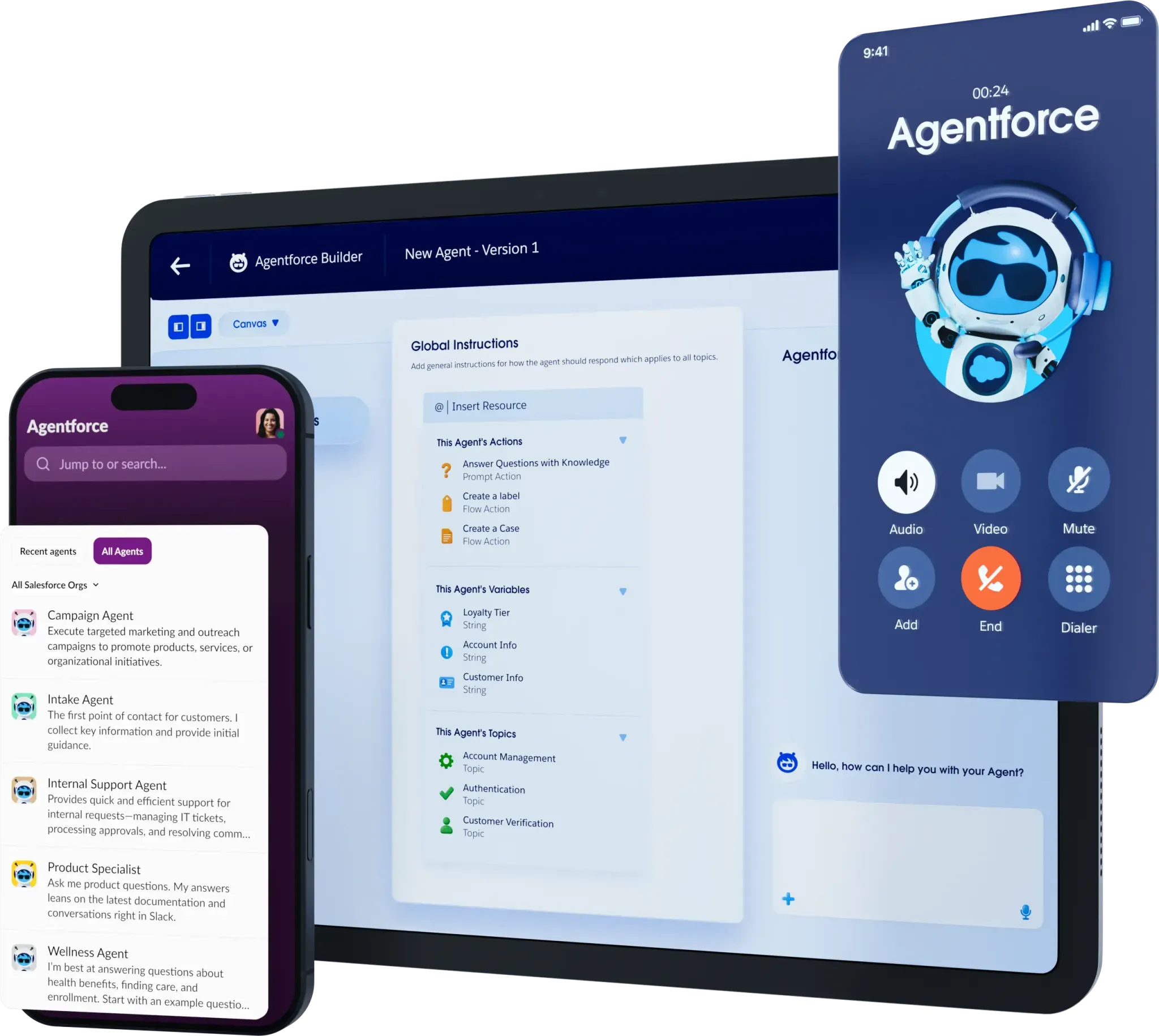
Salesforce's AI suite is broader but not wealth-management-specific. Agentforce is an autonomous AI agent platform powered by the Atlas Reasoning Engine, handling tasks across sales, service, marketing, and commerce.
Source: Salesforce
Pre-built agents include an SDR Agent, Sales Coach, Service Agent, and Campaign Assistant. For sales teams, Agentforce can generate account plans with SWOT analysis, draft follow-up emails, and surface pipeline health signals.
The distinction is depth vs. breadth.
Practifi's AI understands a client review meeting and knows what follow-up tasks to create for a financial advisor.
Salesforce's AI covers more of the enterprise, but you'll need to configure and train it for your specific advisory workflows.
Compliance infrastructure matters for regulated firms
Wealth management firms operate under SEC, FINRA, and state-level regulations that demand auditable processes. Both platforms address this, but differently.
Practifi embeds mandatory compliance checkpoints directly into workflow steps. Every workflow for client onboarding, account opening, or annual reviews can include required sign-offs and documentation gates that cannot be bypassed.
The system tracks every email, document, meeting, and note in a single location with timestamps and access logs. Practifi Intelligence adds compliance-grade meeting documentation: full audio, video, and transcript capture with controlled access and configurable retention policies.
This approach means operational staff can't accidentally skip a required step. For multi-advisor firms that need consistent process execution, it removes reliance on individual discipline.
Salesforce provides the infrastructure for equally rigorous compliance, but you build it yourself. Shield (a premium add-on) adds event monitoring, platform encryption with BYOK, and indefinite field audit trail retention. Flow automation can enforce approval paths and documentation requirements. The underlying certifications are extensive: ISO 27001, SOC 1/2/3, FedRAMP, and HITRUST.
Both paths lead to compliant operations. The difference is whether compliance controls come pre-built (Practifi) or need to be engineered (Salesforce).
The integration ecosystems share a foundation
Because Practifi runs on Salesforce, both platforms access the Salesforce AppExchange with its 9,000+ apps and 14+ million installs. But the integration stories diverge from there.
Practifi maintains curated native integrations with the core wealth tech stack: portfolio management platforms (Orion, Black Diamond, Addepar, Envestnet Tamarac), financial planning tools (MoneyGuide, PreciseFP), custodians (Schwab Advisor Center), and document management platforms (Box, Egnyte, Dropbox, DocuSign).
These connections are tested and maintained by Practifi for wealth management workflows.
Salesforce's integration universe is far larger. Beyond the AppExchange, MuleSoft's Anypoint Platform provides hundreds of pre-built connectors for enterprise integrations. Native connectors cover Google Workspace, Microsoft Outlook and Teams, and Slack. For firms with a technology footprint beyond wealth management, Salesforce has the broadest integration ecosystem available.
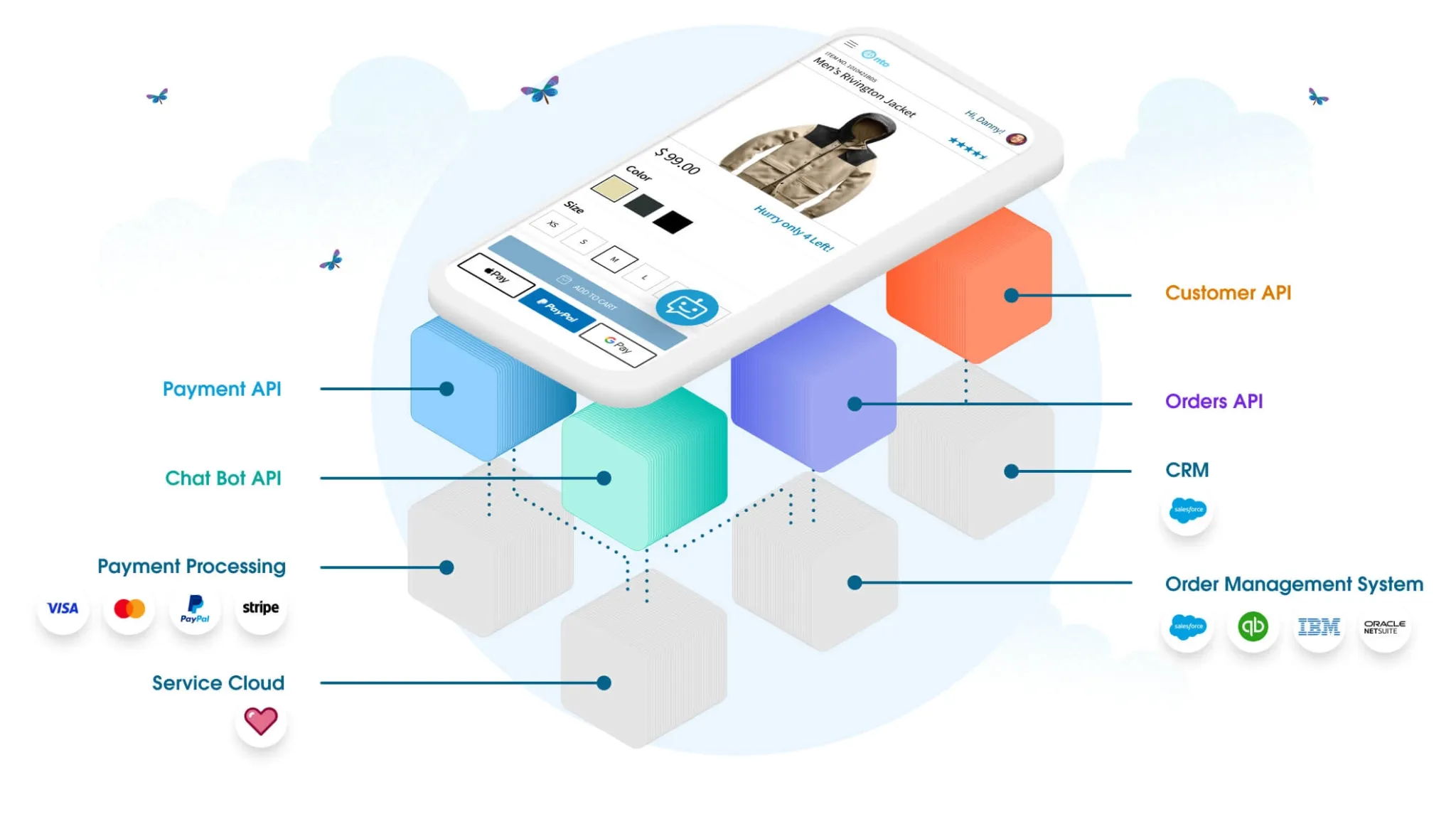
Source: Salesforce
Both platforms share an important gap: they manage relationships after you have them. Neither provides the verified contact data, intent signals, or prospecting intelligence needed to build pipeline.
ZoomInfo fills the prospecting intelligence gap
A CRM without fresh pipeline is a filing cabinet. Both Practifi and Salesforce manage client relationships and track deals well, but neither tells you which companies are researching solutions like yours, who the decision-makers are, or how to reach them.
This is what ZoomInfo was built for.
ZoomInfo's B2B data platform covers three dimensions: identity data (500M contacts, 135M+ verified phone numbers, and 200M+ verified business emails), company context (100M companies with firmographics, org charts, and technographics), and signals that reveal when accounts are in-market. The data is verified through a multi-source pipeline backed by 300+ human researchers, reaching up to 95% accuracy on first-party data.
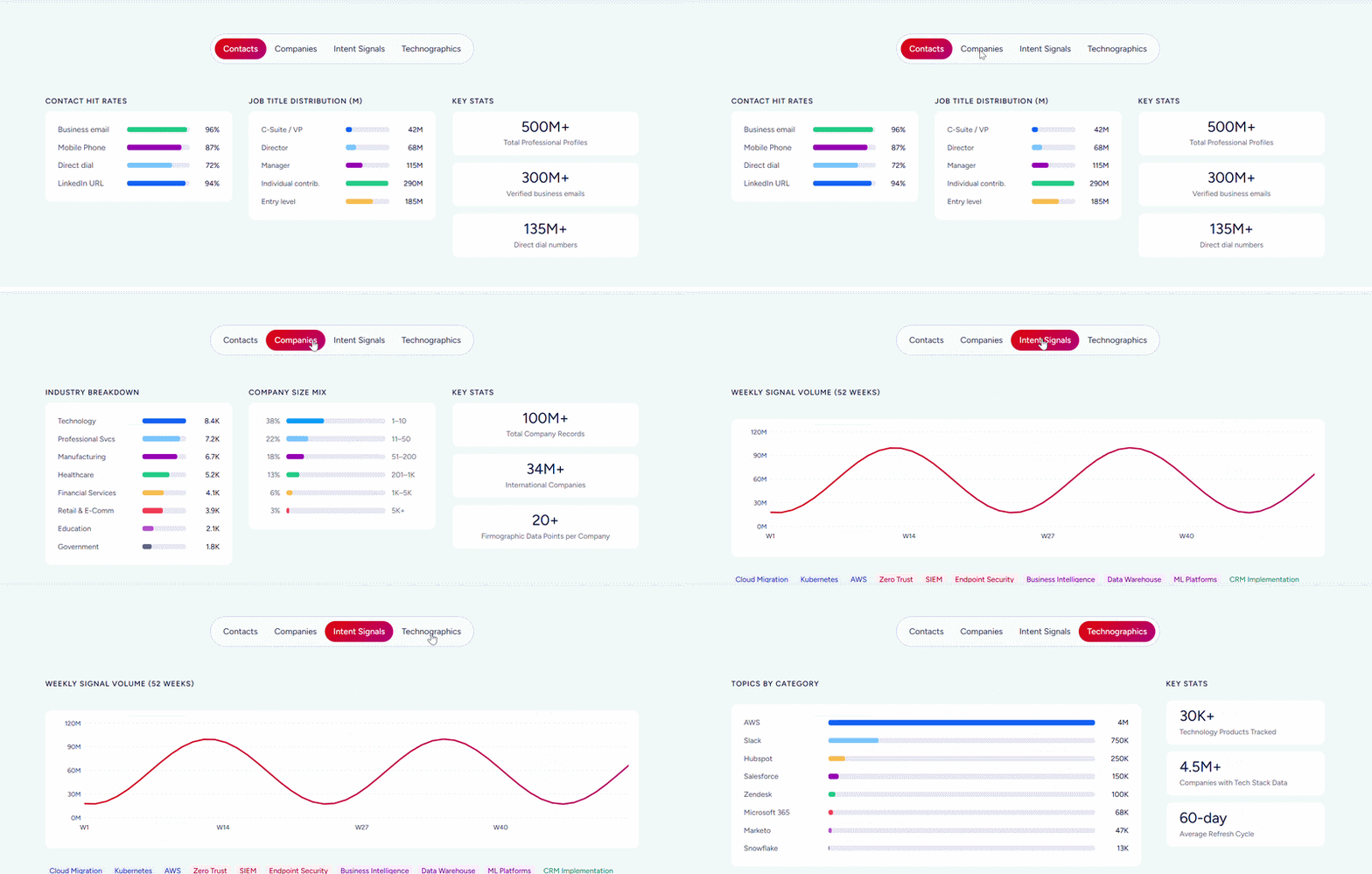
For financial advisory firms, this translates to concrete advantages. You can identify companies going through events that typically trigger advisory needs (funding rounds, leadership changes, M&A activity) and reach the right contacts with verified direct dials and business emails.
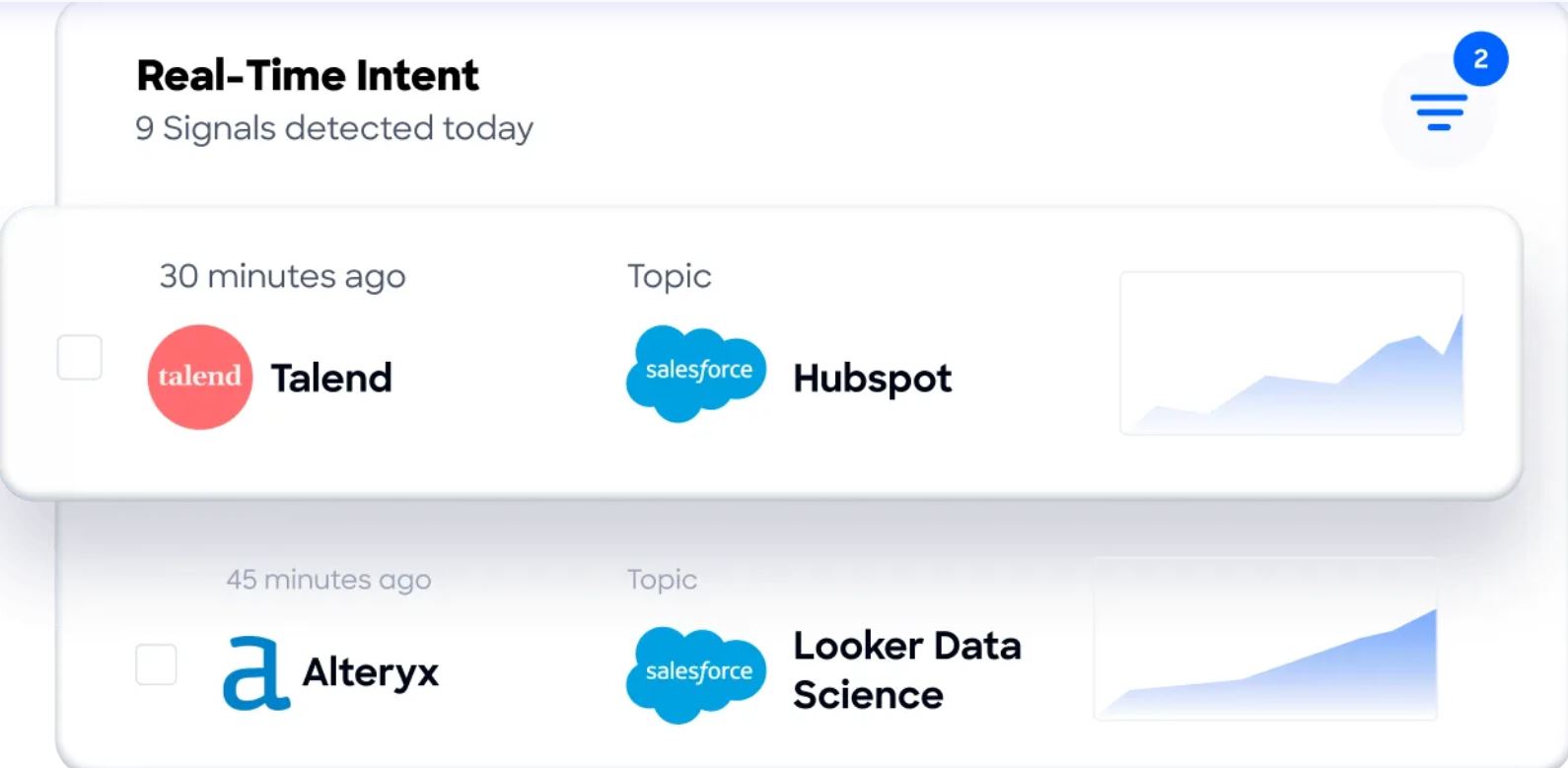
Buyer Intent data tracks signals from 210 million IP-to-Organization pairings, showing which companies are researching financial services before they visit your website.
The GTM Context Graph processes 1.5B+ data points daily and takes this further by unifying ZoomInfo's B2B data with your CRM records, conversation transcripts, and behavioral signals. It captures not just what happened in your pipeline, but why deals moved or stalled.
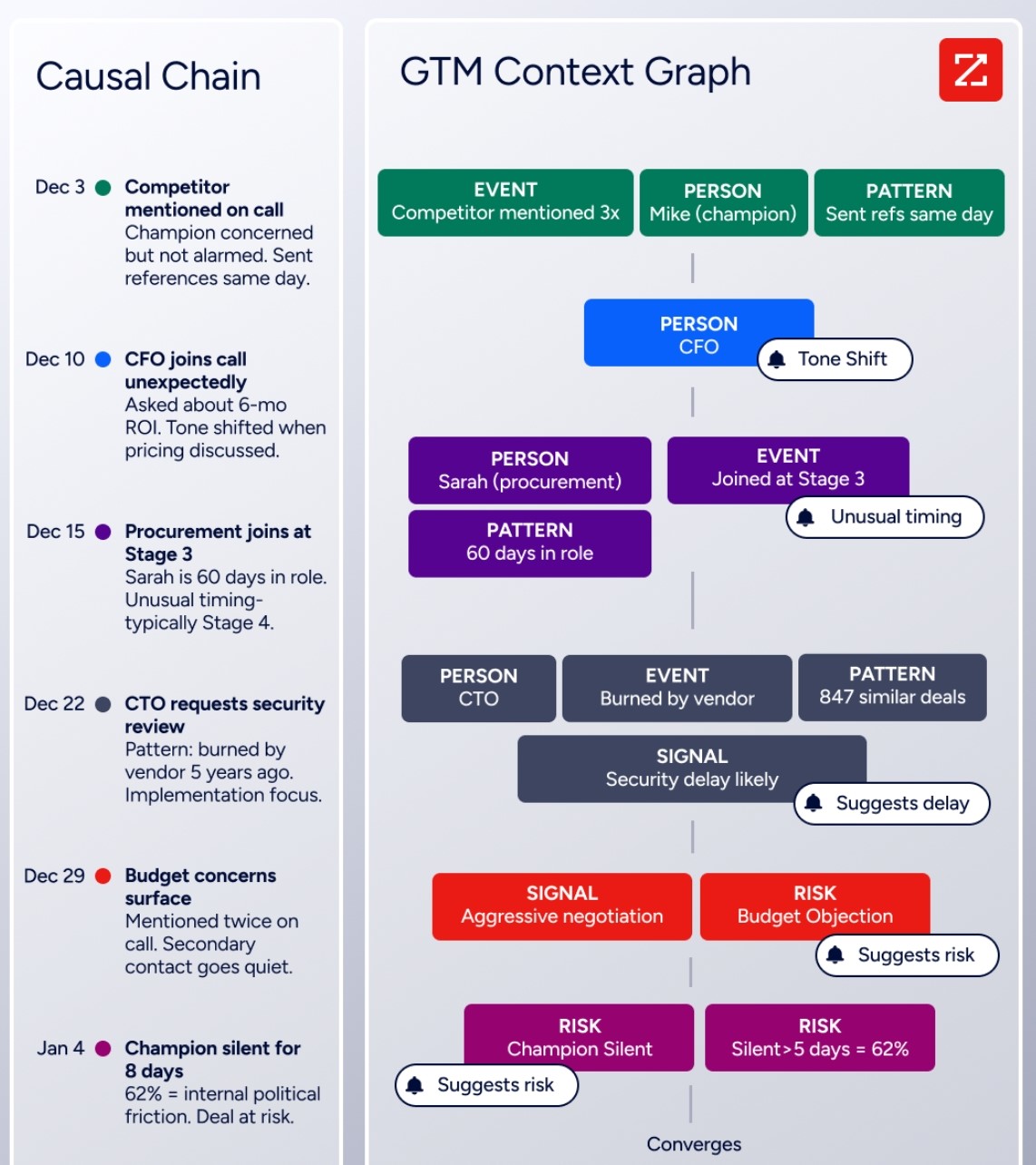
When your team opens GTM Workspace, they see prioritized accounts with AI-drafted outreach that addresses the specific concerns identified.
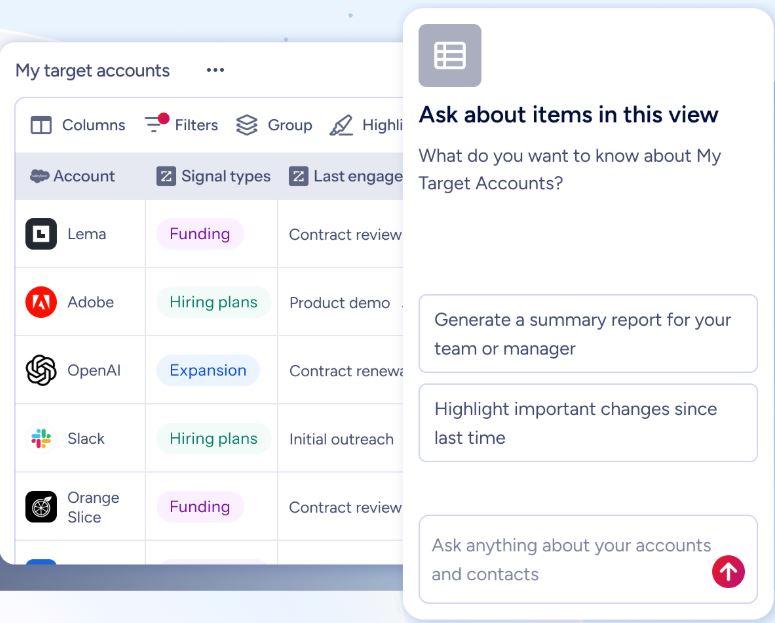
When RevOps builds plays in GTM Studio, they can describe audiences in plain language and launch campaigns targeting accounts that match proven win patterns.
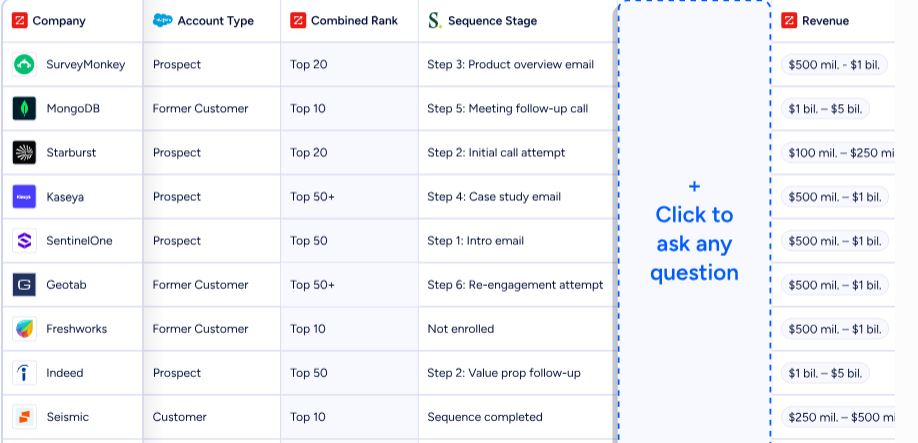
ZoomInfo integrates natively with Salesforce and works with Practifi through the Salesforce AppExchange. Data flows into your CRM, enriching records and triggering workflows without manual data entry. For teams that build custom tools, APIs and MCP expose the same intelligence to any application or AI agent.
Seismic's sales team attributed 39% of active pipeline to opportunities identified or influenced by ZoomInfo signals, reporting 54% productivity gains and saving 11.5 hours per week per seller. (Seismic Case Study)
Pricing structures reflect different business models
Understanding what you'll actually pay requires looking past list prices.
Practifi does not publish pricing. The FAQ page directs all inquiries to sales, and the model is a per-user annual subscription. Every subscription includes guided implementation, a dedicated Client Success Manager, PractifiU e-learning access, and bundled Salesforce platform access (no separate Salesforce license required).
AI features through Practifi Intelligence cost extra as a platform add-on, as do Portals, Promote (marketing), Protect (security), and the full Sandbox environment.
The lack of published pricing creates friction when comparing against competitors with transparent rates. And the annual commitment with no free trial means you're committing based on a demo, not hands-on experience.
Salesforce publishes clear tier pricing. Sales Cloud runs from a Free Suite ($0, max 2 users) through Starter Suite ($25/user/month), Pro Suite ($100/user/month), Enterprise ($175/user/month), and Unlimited ($350/user/month). But the sticker price is rarely the final number. Add-ons like Shield, Field Service, or Digital Engagement each carry separate per-user fees.
Implementation costs typically require partners, and the Premier Success Plan runs 30% of net license fees on top of the license cost (bundled only with Unlimited). A mid-market advisory firm building a full Salesforce Financial Services Cloud instance can reach six figures annually before counting implementation fees.
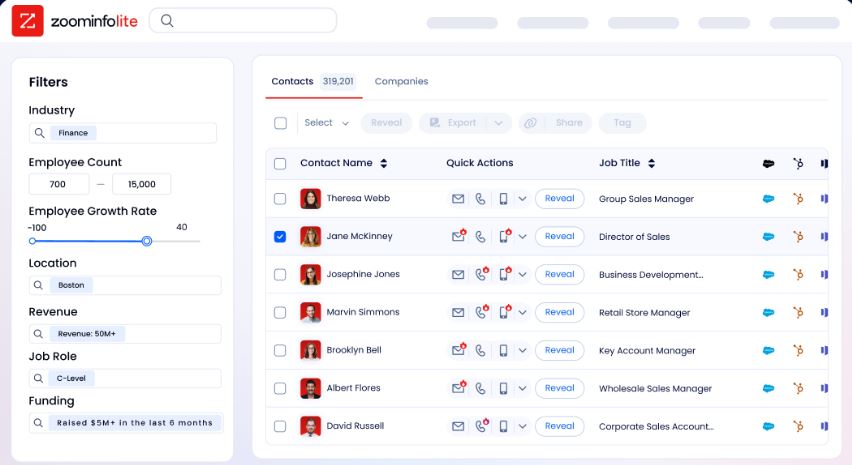
ZoomInfo uses a consumption-based pricing model that scales around data access, API consumption, and AI activity. ZoomInfo offers two free entry points: ZoomInfo Lite (a permanent free tier with access to the B2B database and 10 monthly export credits) and a 7-day free trial of the full platform. This lets firms test the data quality before committing.
User experience and learning curve
Practifi's learning curve sits between a simple CRM and raw Salesforce. The interface is Salesforce Lightning, configured for RIA workflows. Advisors navigate households, clients, entities, and service models rather than the generic leads-and-opportunities model. Role-based apps surface different views for advisors, client service staff, and compliance teams.
PractifiU, the dedicated e-learning platform, provides structured learning paths from "Undergraduate" through "Advanced Study" levels. For users without Salesforce experience, the structured onboarding and pre-configured workflows cut ramp-up time.
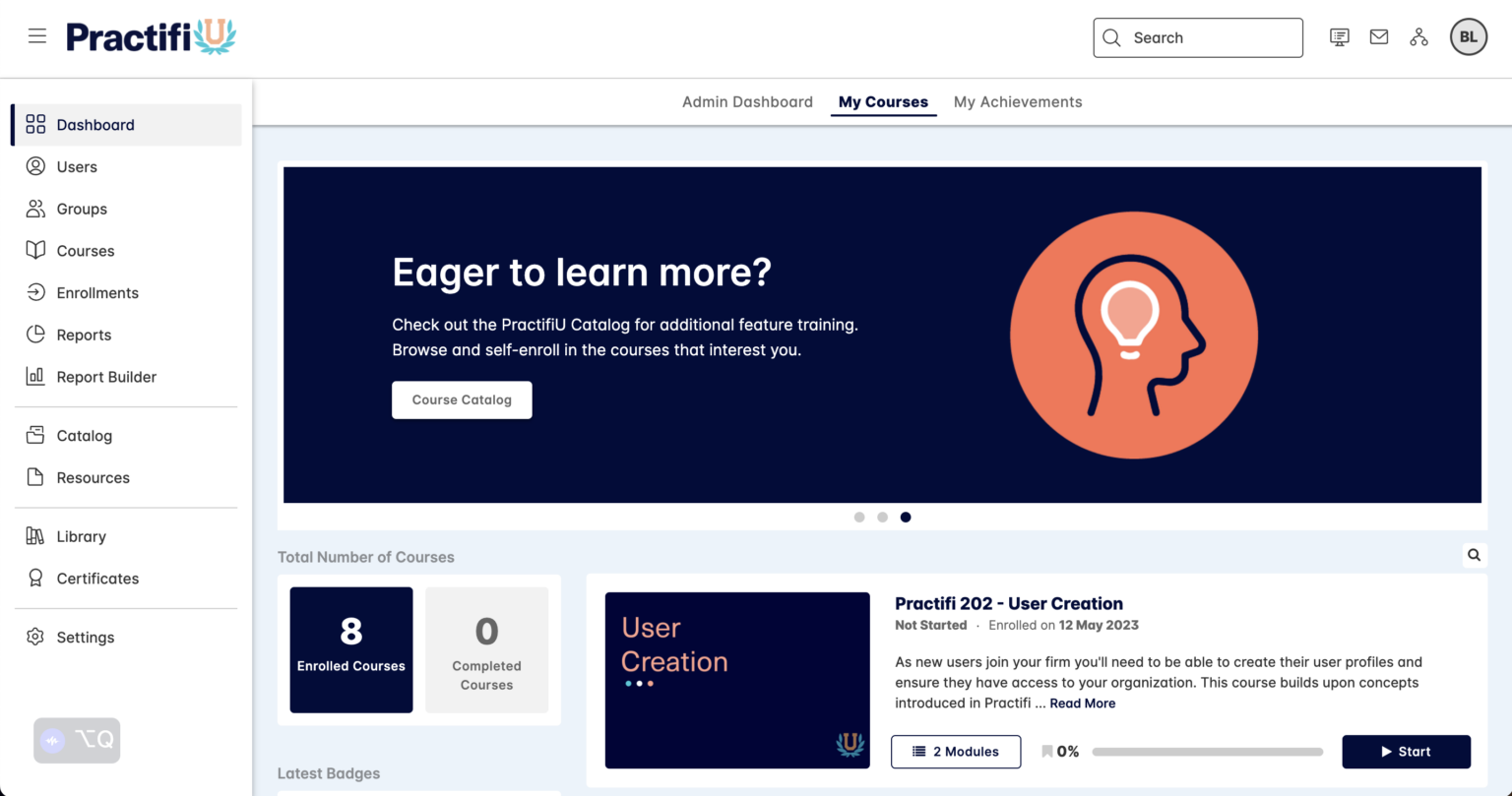
Source: Practifi
Salesforce has one of the steepest learning curves in enterprise software. Lightning Experience is the modern interface, but meaningful configuration requires trained administrators.
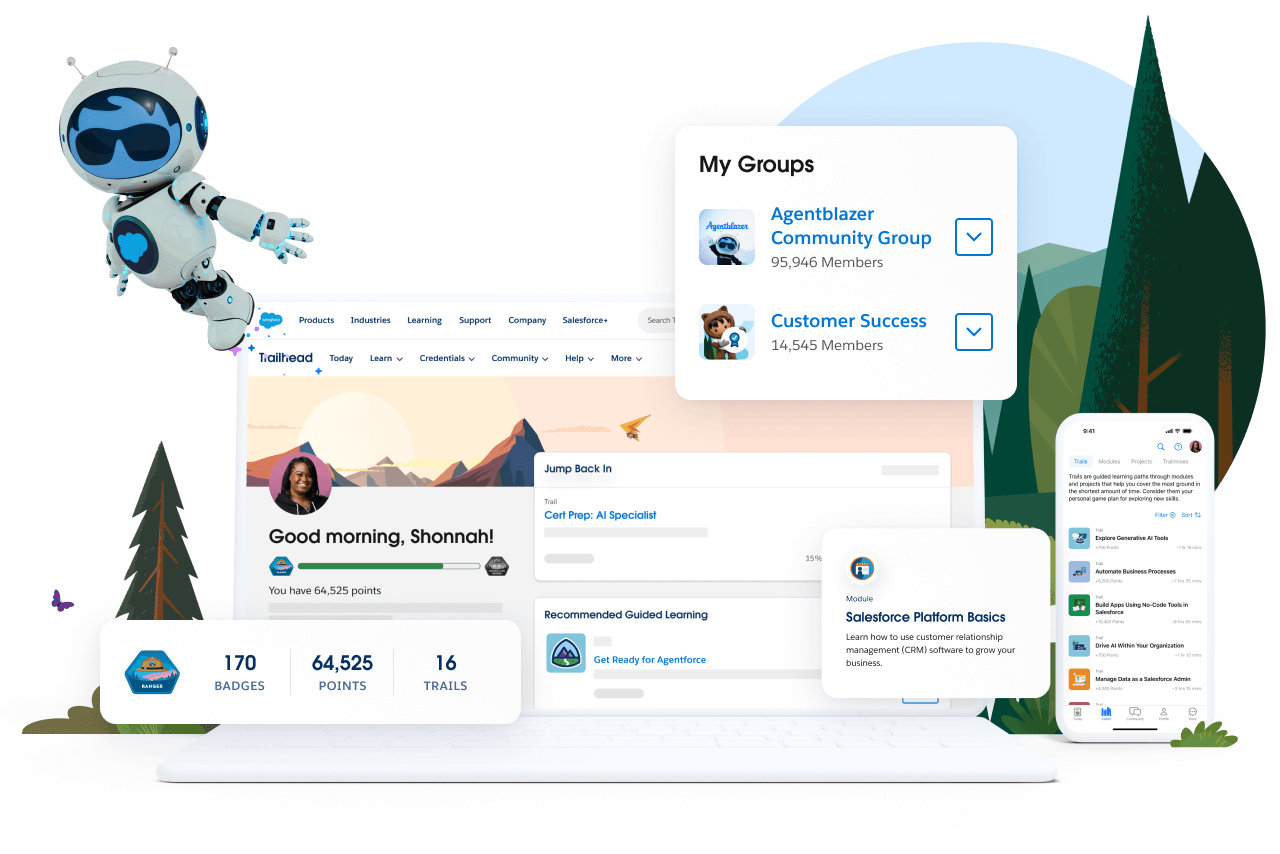
Trailhead provides 1,500+ badges and 6+ million learners for upskilling, and the Trailblazer Community spans 20 million members. The resources are extensive, but the investment in learning is real. Implementation timelines range from weeks for a simple Sales Cloud setup to 3-to-12 months for an enterprise multi-cloud deployment.
Source: Trailhead
ZoomInfo has invested in reducing onboarding friction. The company redesigned its onboarding program from 30 to 90 days, producing a 25% improvement in customer satisfaction scores. ZoomInfo University provides role-specific learning paths for Sales, Marketing, and Administrator personas.

For sellers, GTM Workspace consolidates account research, outreach, and CRM updates in a single view, reducing the context-switching that slows adoption.
Support models differ with scale
Practifi assigns every subscriber a dedicated Client Success Manager as the primary post-go-live contact, regardless of firm size. Guided implementation is included in the subscription. The CSM model provides a named contact who knows your firm, which matters for advisory practices without large IT departments.
However, G2 reviewers note that initial support responses sometimes require escalation before issues are resolved.
Salesforce structures support in tiers. Standard support (free) includes Trailhead, documentation, and community access. Premier support (30% of net license fees) adds structured onboarding, expert coaching, and 1-hour response times for business-impacting issues.
Signature support (custom pricing) provides a dedicated Customer Success Manager and 24/7 support with 15-minute response for critical issues. The depth of support scales with what you pay.
ZoomInfo provides support through its Help Center, phone support at +1 866-904-9666, and professional services through ZoomInfo Labs. Enterprise customers on higher tiers receive dedicated customer service managers.
Practifi vs. Salesforce vs. ZoomInfo: Which should you choose?
These three platforms solve different problems in the advisory firm's technology stack, and understanding which problems you need solved determines the right combination.
Choose Practifi if:
You're a mid-market RIA (25-500 advisors) that has outgrown Redtail or Wealthbox
You want a wealth management CRM that works on day one without months of configuration
Compliance workflow automation and audit-ready documentation are priorities
You need Salesforce infrastructure without hiring Salesforce consultants
Managing multi-generational households and complex entity structures is part of daily operations
Choose Salesforce if:
You need full configuration control over every object, workflow, and automation
Your firm has (or will hire) dedicated Salesforce administrators
You want a platform that extends beyond CRM into marketing, commerce, service, and analytics
You're a large enterprise with IT resources to manage a multi-cloud deployment
You need the broadest integration ecosystem and partner network available
Add ZoomInfo to either CRM if:
You need verified contact data and direct dials to power outbound prospecting
Identifying which companies are researching financial services (before they contact you) would change your pipeline
Your CRM data is incomplete, and enriching it with company context, technographics, and org charts would improve targeting
You want sales intelligence that tells your team who to contact, when to engage, and what to say
You're building a data-driven growth strategy, not just managing existing relationships
Start with ZoomInfo Lite for free or request a 7-day trial to test data quality against your target market.
"ZoomInfo's not just a contact data company anymore. They've built a full system of execution. GTM Intelligence works the list, writes the outreach, triggers the play, and helps drive predictable growth." (Ian Brodie, CEO & Co-Founder, Levanta; Levanta Case Study)
The best technology stack for a financial advisory firm isn't a single tool. It's the right combination: a CRM that fits your firm's operational reality (Practifi for pre-built wealth management workflows, Salesforce for full flexibility), paired with a data intelligence layer (ZoomInfo) that ensures your team always knows who to pursue next and how to reach them.
Your CRM manages the relationships you have. ZoomInfo helps you find the ones you don't.
Practifi vs. Salesforce vs. ZoomInfo FAQ
What is the key difference between Practifi and Salesforce for wealth management firms?
Practifi is a pre-configured CRM built on Salesforce Lightning for wealth management. It ships with a household-based data model, compliance workflows, and advisor-focused role-based apps ready on day one.
Salesforce is the underlying platform that provides full configuration control, a broader feature set, and a larger integration ecosystem, but requires significant setup time and often partner-led implementation to serve wealth management workflows. Practifi claims 80% faster implementations than custom Salesforce builds.
Does Practifi run on Salesforce?
Yes. Practifi is a managed package on Salesforce Lightning, which means it uses Salesforce's infrastructure, security certifications, and API framework. A separate Salesforce license is not required; it's bundled into the Practifi subscription. However, because it's a managed package, Practifi restricts customization of certain Salesforce objects that direct Salesforce access would allow.
How does ZoomInfo complement a CRM like Practifi or Salesforce?
ZoomInfo provides the prospecting and data intelligence layer that CRMs lack. While Practifi and Salesforce manage existing client relationships, ZoomInfo supplies verified B2B contact data, buyer intent signals, technographics, and AI-drafted outreach to help firms identify and reach new prospects.
ZoomInfo integrates with Salesforce and works with Practifi through the Salesforce AppExchange, feeding enriched data into CRM records without manual entry.
For a closer look at how Salesforce and ZoomInfo compare directly, see our Salesforce vs. ZoomInfo comparison.
Which platform is best for a small RIA just starting out?
For small RIAs on tight budgets, Salesforce offers a Free Suite for up to 2 users and a Starter Suite at $25 per user per month. Practifi does not offer a free trial or free plan and requires an annual commitment with undisclosed pricing. ZoomInfo Lite is permanently free and provides access to B2B data with 10 monthly export credits, which can support early prospecting efforts regardless of which CRM you choose.
How do the AI capabilities compare across all three platforms?
Practifi Intelligence focuses on wealth management conversations: automatic meeting capture, AI-generated summaries, sentiment analysis tuned for advisor-client dynamics, and plain-language chat against client records. Salesforce's Agentforce is a broader AI agent platform covering sales, service, marketing, and commerce, with capabilities like autonomous case resolution and AI-generated account plans.
ZoomInfo's AI powers the GTM Context Graph, which unifies CRM data, conversation intelligence, and external signals to surface prioritized accounts, draft outreach, and reveal why deals are progressing or stalling.
What compliance and security certifications do these platforms hold?
Practifi inherits Salesforce's certifications (SOC 1/2/3, ISO 27001, FedRAMP High) and adds compliance workflow enforcement built into its processes. Salesforce holds ISO 27001/27017/27018, SOC 1/2/3, FedRAMP, and HITRUST certifications, with the Shield add-on providing event monitoring and platform encryption.
ZoomInfo maintains ISO 27001, ISO 27701, SOC 2 Type II, and TRUSTe GDPR and CCPA validations, all renewed annually.
Can I use all three platforms together?
Yes. A common stack for growth-oriented advisory firms combines a CRM (Practifi or Salesforce) for client relationship management with ZoomInfo for prospecting intelligence and data enrichment. ZoomInfo's Salesforce integration pushes verified contacts, company data, and intent signals into CRM records. Your advisors manage relationships in the CRM while ZoomInfo feeds new opportunities into the pipeline.
How do the pricing models compare?
Practifi uses per-user annual subscriptions with undisclosed pricing and no free trial. Salesforce publishes tiered pricing from free to $550 per user per month, but add-ons, implementation costs, and the Premier Success Plan (30% of net license fees) can push costs well beyond list prices. ZoomInfo uses consumption-based pricing but offers a permanent free tier (ZoomInfo Lite) and a 7-day free trial.
More Salesforce comparisons:
