
ReachStream sells B2B contact and company data to teams that can't afford enterprise vendors. Its database holds 200M+ contacts across 150+ countries, it offers a permanent free plan, and paid tiers start at $29/month. It targets prospectors who find platforms like ZoomInfo or Apollo too expensive.
We've analyzed ReachStream in detail. It's a good choice if:
You need affordable B2B contact data for cold outreach
You want a simple, filter-based prospecting tool
You're a small team or solo SDR running outbound email at volume
You value a permanent free plan to test real data before committing
Your CRM is Salesforce, HubSpot, or Zoho
However, ReachStream might not be the best choice if:
You need buyer intent signals to identify accounts actively researching solutions
You need conversation intelligence or deal insights
You want a platform that connects sales, marketing, and RevOps
You need integrations across your GTM stack
Your team has outgrown contact lookup and needs signals to prioritize accounts
In this case, consider ZoomInfo: a GTM platform that combines a large B2B dataset with a GTM Context Graph connecting its data to your CRM records, conversation transcripts, and behavioral signals in one layer. ReachStream provides contacts. ZoomInfo provides context: who to contact, when to engage, and why.
We've included a detailed look at ZoomInfo later in this review for teams that need more than a contact database. If you want to see what a GTM intelligence platform offers, start with ZoomInfo's free trial.
What is ReachStream?
ReachStream is a B2B data and prospecting platform operated by Spokesly Inc., founded in 2016 by Junaid Syed in Santa Clara, California. The company set out to make B2B data accessible to organizations of all sizes, and in 2017 created DataCaptive, a data services division combining automated technology with human research. ReachStream is the self-serve platform built on that research infrastructure.
The platform provides access to 200M+ verified contacts and 15M+ company profiles spanning 150+ countries and 400+ industries. Users filter by 20+ attributes including job title, industry, company size, revenue, and technology stack to build prospect lists. A built-in email verifier checks addresses before export, and a Chrome Extension pulls verified contact data from LinkedIn profiles.
Source: ReachStream
ReachStream claims 95% data accuracy, 90% email deliverability, and 85% phone number accuracy, with a 45-day data refresh cycle and 10M+ daily contact updates. Its target customers are sales-led SMBs, startups, freelance SDRs, and demand generation teams that need contact data for outbound campaigns at lower prices.
ReachStream Pros & Cons
Pros | Cons |
|---|---|
Permanent free plan with real data access | Phone number quality lags behind email quality |
Paid plans start at $29/month | Interface feels unpolished in places |
Credits only charged on verified emails | Export processing involves email confirmation delays |
Built-in email verifier included on all plans | Only three native CRM integrations |
Chrome Extension works on LinkedIn and Sales Navigator | No intent data or buyer signals |
GDPR, CCPA, and CAN-SPAM compliant | Limited list management capabilities |
Responsive customer support | Conflicting information on credit rollover policy |
ReachStream Review: How it Works & Key Features
Contact and Company Data: ReachStream provides a large verified database with a credit model that rewards data quality.
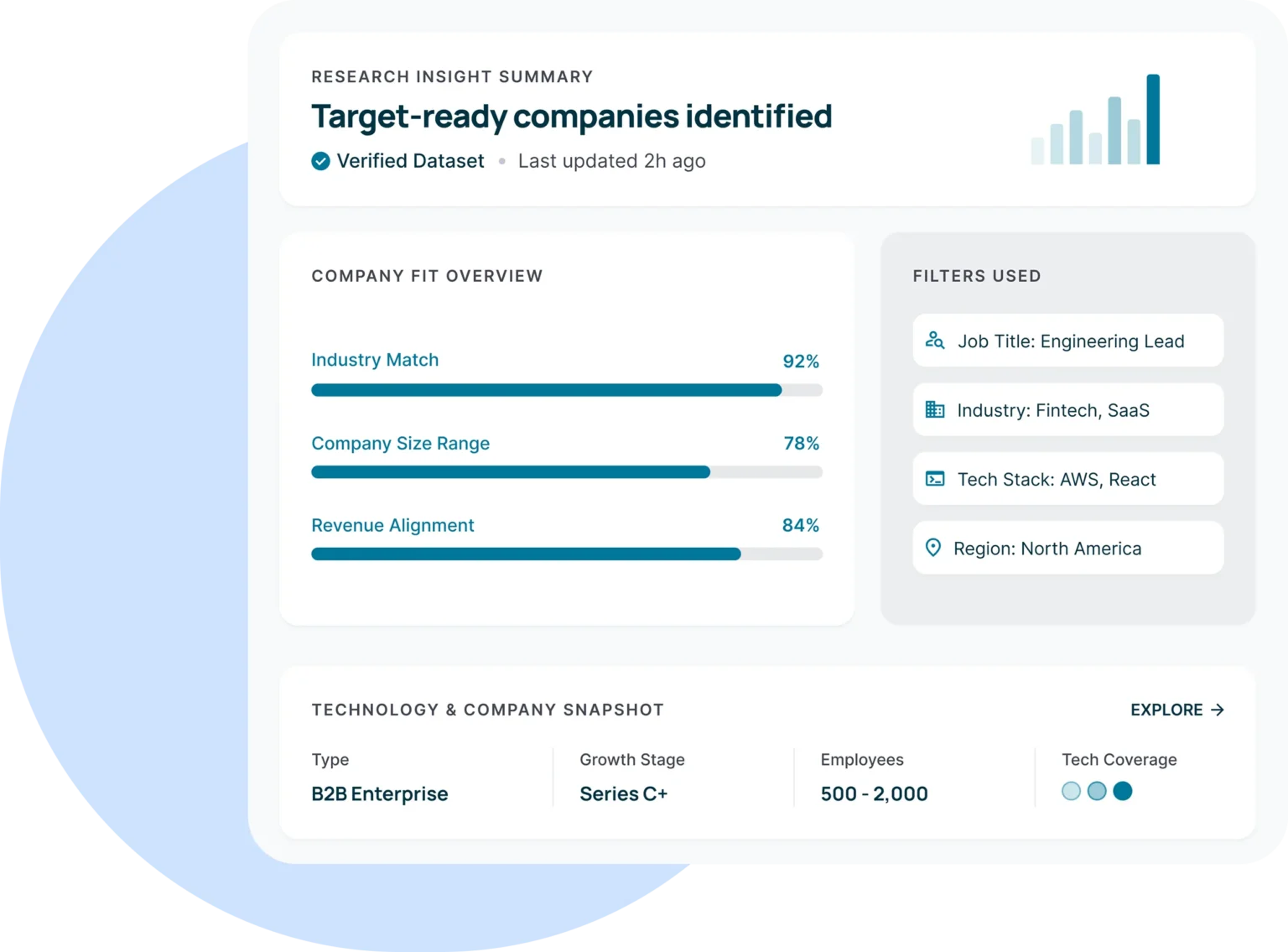
ReachStream's core offering is its contact and company database. Users search by filtering on 20+ data attributes including job title, department, seniority, industry, company size, revenue, location, and technology stack. The database covers 400+ industry segments and includes both contact-level details (name, title, verified email, phone number, social profiles) and company-level data (industry, headcount, revenue range, location, company type).
Source: ReachStream
The most notable part of the data model is how credits work. ReachStream only charges credits when an email is verified, not when you browse or view profiles. All plans include unlimited contact and company views, so teams can research prospects freely and only pay when they export verified records. Many competing platforms charge per profile view or per search.
Data freshness comes from a three-stage lifecycle: collection from trusted sources, validation through automated checks and expert review, and continuous refreshing on a 45-day cycle with 10M+ daily contact updates. The platform claims 95% data accuracy overall, though phone number reliability falls below email quality according to user reviews.
Chrome Extension and LinkedIn Prospecting: ReachStream surfaces verified contact data directly on LinkedIn profiles.
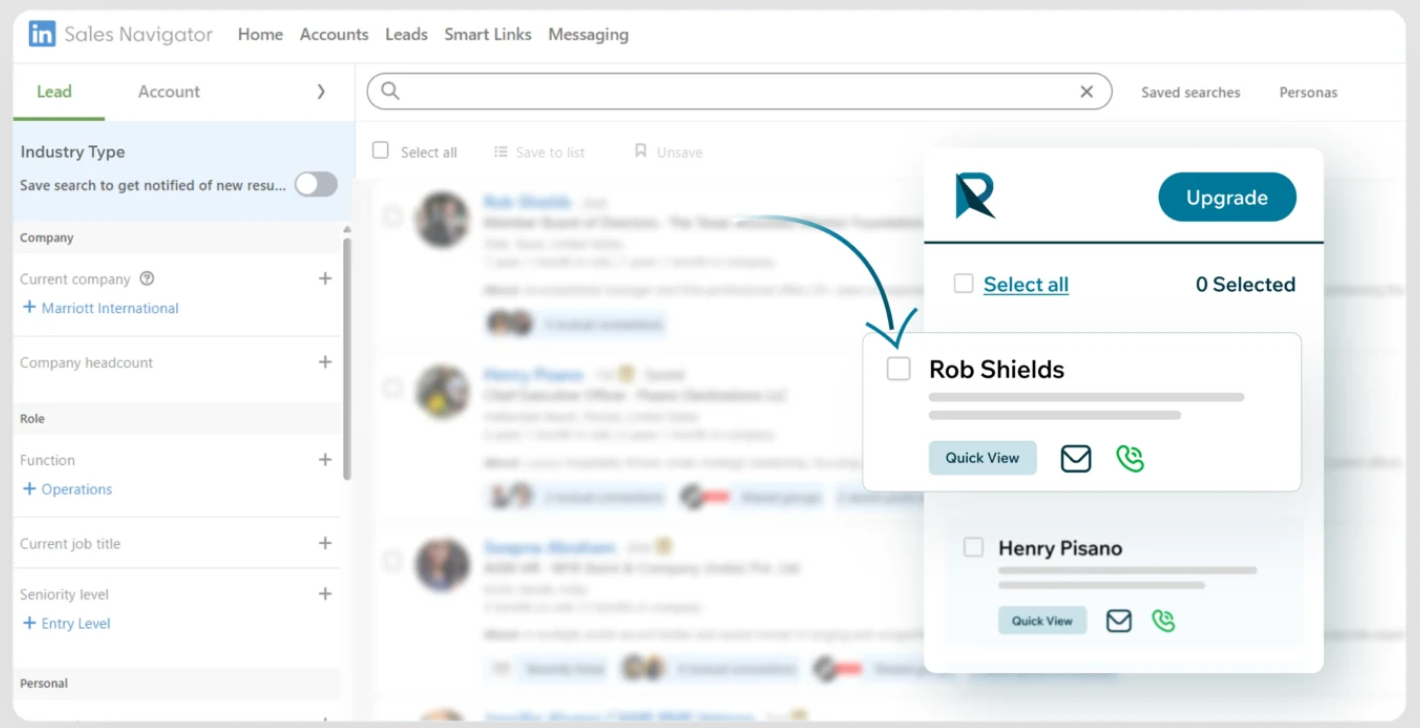
The Chrome Extension connects LinkedIn research to outreach. While browsing LinkedIn or LinkedIn Sales Navigator, the extension overlays verified email addresses and phone numbers from ReachStream's database onto prospect profiles, showing 20+ data attributes per contact without leaving the browser.
Source: ReachStream
The workflow is simple: find prospects on LinkedIn, reveal their contact data through the extension, select leads, and save them to prospect lists. From there, lists can be exported or pushed into a connected CRM (Salesforce, HubSpot, or Zoho). The extension also tracks job changes, updating when a prospect switches roles or companies.
The extension comes with every plan, including the free Icebreaker tier, which is uncommon. Many competing tools restrict extension access to paid plans.
Built-in Email Verifier: ReachStream verifies emails at the point of export, protecting sender reputation and credit spend.
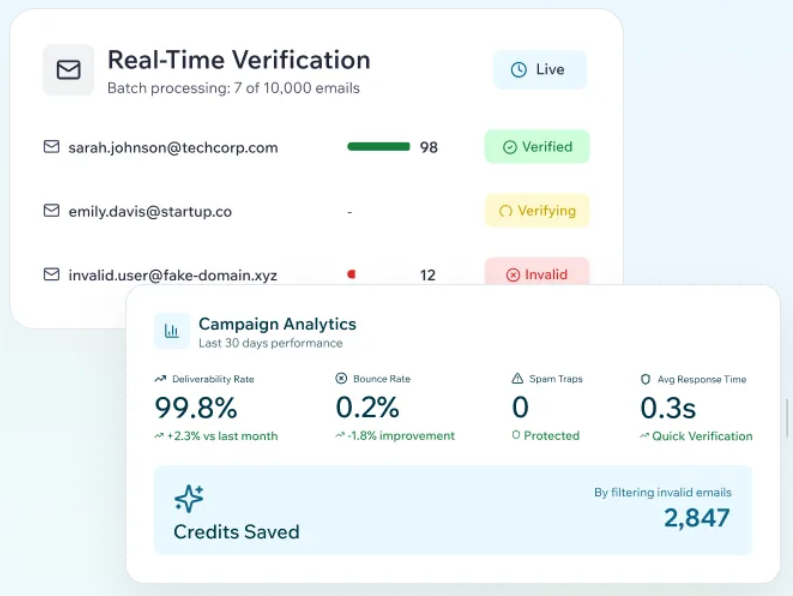
ReachStream embeds email verification into its prospecting workflow through the built-in verifier. When you select "Verify and Download" on a saved list, the system checks emails against validation signals in real time. Only verified contacts consume credits; you get unverified results at no cost.
For teams that need to verify external lists (from CRM exports, spreadsheets, or other sources), ReachStream offers RightEmails as a standalone verification product. RightEmails performs SMTP-level verification with multi-attempt retry logic for complex domains, classifying results into five categories: Valid, Invalid, Risky, Unknown, and Do Not Mail. No email is sent during verification, so the check itself doesn't affect deliverability.
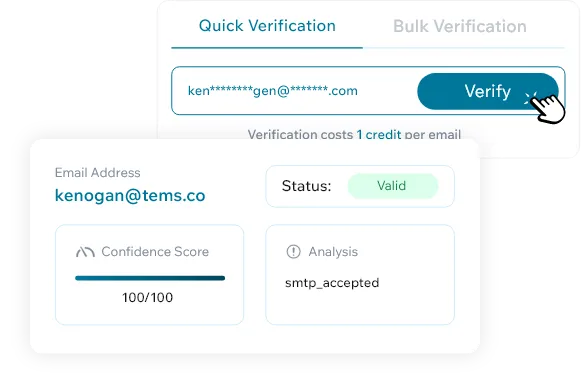
Source: ReachStream
RightEmails has its own pricing: a free tier with 100 credits, and paid plans from $135/year (5,000 credits/month) to $710/year (50,000 credits/month). This two-product setup (verification built into the platform plus a standalone option) lets ReachStream serve both prospecting and verification use cases.
Pricing Structure: ReachStream offers a permanent free plan and transparent tiered pricing starting at $29/month.
ReachStream's pricing is credit-based with five tiers:
Icebreaker (Free, no credit card required):
100 export credits/month (1,200/year)
200 email views/month (2,400/year)
1 seat
Chrome Extension, ABM List Builder, data enrichment, API access included
No phone numbers, no dedicated account manager
Glacier ($29/month annual / $39/month monthly):
60,000 export credits/year (annual) or 5,000/month
Unlimited email views
1 seat
Direct-dial and mobile phone numbers
Ice Floe ($49/month annual / $59/month monthly):
120,000 export credits/year (annual) or 10,000/month
Same features as Glacier with double the credits
Polar Peak ($79/month annual / $99/month monthly):
240,000 export credits/year (annual) or 20,000/month
3 seats included
Dedicated account manager
Frozen Fortune (Custom, Enterprise):
Custom credits and seat counts
Fully customized solution
All paid plans include unlimited email views, direct-dial phone numbers, CRM integrations with Salesforce, HubSpot, and Zoho, and API access. Monthly plans carry no contract, allowing cancellation or pause at any time.
One caveat: a conflict exists between official sources on credit rollover. The pricing page FAQ states credits roll over on paid plans, while the Terms of Service states unused credits expire at end of billing cycle. Buyers should get written clarification before relying on rollover.
Where ReachStream Falls Short
ReachStream delivers value for budget-conscious teams, but several limitations show up with sustained use. These reflect a platform built for affordable contact lookup, not go-to-market intelligence.
No Intent Data or Buyer Signals. ReachStream is a contact and company database. It tells you who works where and how to reach them, but it cannot tell you which accounts are actively researching solutions right now. Without intent signals, teams must rely on manual qualification or gut instinct to prioritize outreach, spending equal effort on accounts months away from a buying decision and accounts evaluating vendors this week.
Phone Number Quality. While ReachStream claims 90% email deliverability, phone accuracy sits at 85%, and G2 reviewers report that phone numbers are frequently outdated. For teams running phone-heavy outreach, this gap between email and phone reliability creates friction.
Narrow Integration Ecosystem. Native CRM integrations are limited to Salesforce, HubSpot, and Zoho. Teams using Pipedrive, Outreach, Salesloft, or other GTM tools must rely on the API or CSV exports. There are no connections to marketing automation platforms, sales engagement tools, or middleware services like Zapier.
Interface Polish and Export Delays. Multiple G2 reviewers describe the platform as functional but rough around the edges, with certain workflows feeling complicated and hazy. List exports require a confirmation email step rather than instant downloads, adding friction to high-volume workflows.
Limited List Management. Users have requested the ability to merge multiple saved lists and add new contacts to previously downloaded lists. These are basic organizational features the platform currently lacks.
No AI or Contextual Intelligence. ReachStream provides static contact records. It cannot tell you why a deal is stalling, which stakeholders are blocking a purchase, or what messaging will resonate based on a prospect's recent behavior. As go-to-market teams rely more on contextual signals for outreach, a platform limited to contact lookup falls further behind.
These aren't failures. They follow naturally from building an affordable contact database. But they create a ceiling for teams that need more than names and emails, teams that also need to know when to engage and why.
Top ReachStream Alternative for Growing Teams: ZoomInfo
ZoomInfo addresses these limitations by operating at a different scale. It combines a large B2B dataset with an intelligence layer that connects its data to your CRM records, conversation transcripts, and behavioral signals. Where ReachStream answers "who works at this company?", ZoomInfo answers "who should you contact, when should you reach out, and what should you say?"
The Most Comprehensive B2B Data: Built on multiple data sources and a large verification operation.
ZoomInfo's database spans 500M contacts, 100M companies, 135M+ verified phone numbers, 120M direct-dial phone numbers, and 200M+ verified business email addresses. That is more than double ReachStream's contact count, with deeper phone coverage.
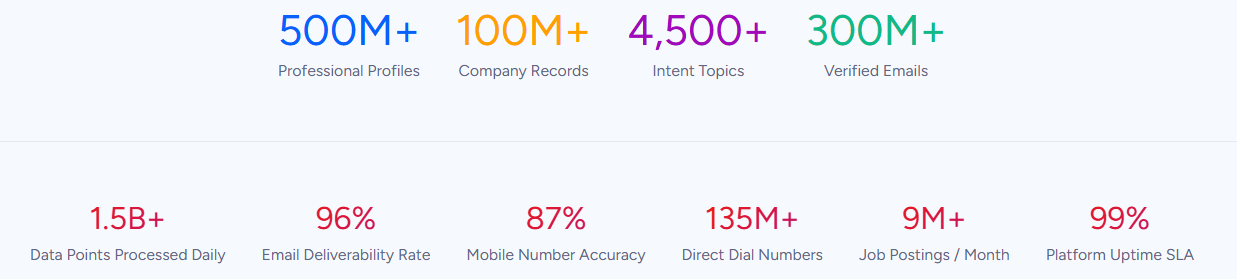
The data comes from multiple sources: automated ML scanning of 28 million site domains daily, third-party partner data covering 95 million businesses, a community of 200,000+ ZoomInfo Lite users who share data back, and an in-house Data Training Lab of 300+ human researchers. First-party data reaches up to 95% accuracy. In a Fortune 500 competitive RFP analyzing 25 million contacts across vendors, the independent consultant concluded that "no other competitor came even close."
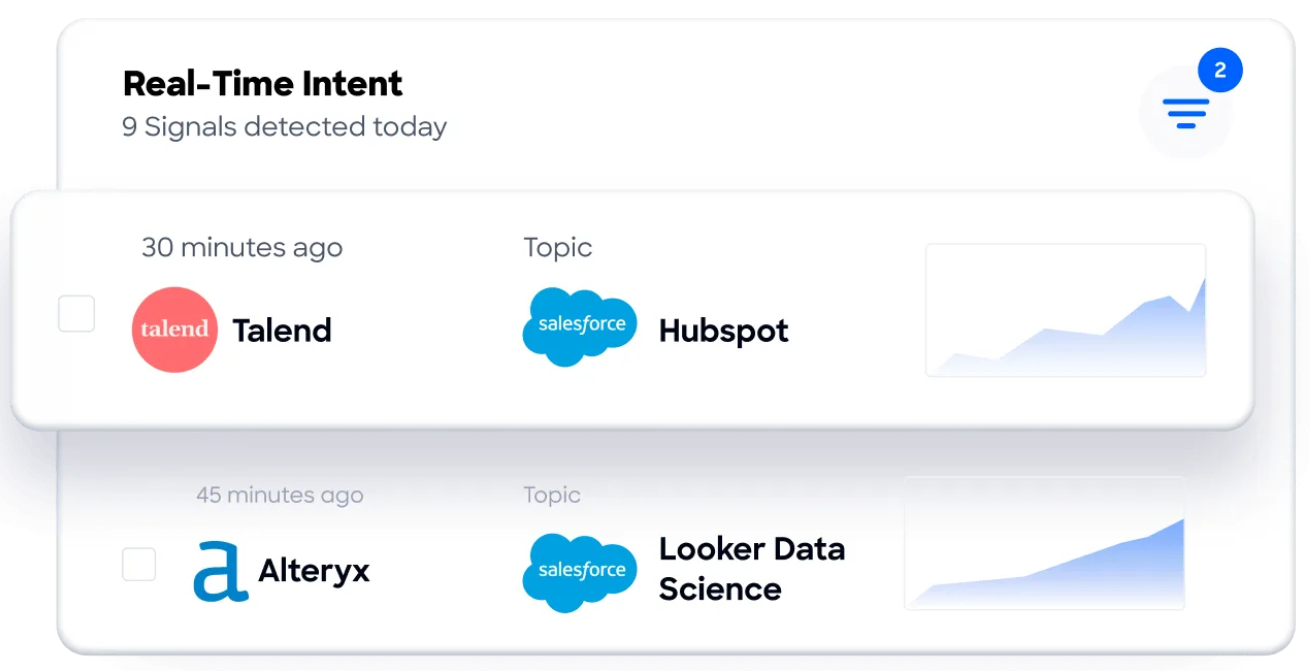
Beyond contact records, ZoomInfo provides technographics for 30+ million companies covering 30,000+ technologies, buyer intent signals from 210 million IP-to-Organization pairings, website visitor identification, department org charts, and job-change tracking. Teams can research a prospect's tech stack, identify whether the account is in-market, and map the buying committee from one platform.
Vensure scaled prospecting using ZoomInfo's data: "ZoomInfo gives us the information we need to execute. We don't have to go through and spend our time digging. It's already there, so we can be three steps ahead." (Vensure Case Study)
GTM Context Graph: ZoomInfo's intelligence layer captures not just what happened in a deal, but why.
ReachStream provides static records. ZoomInfo's GTM Context Graph processes 1.5B+ data points daily, combining ZoomInfo's data with a customer's CRM records, call transcripts, email interactions, and behavioral signals in one layer.
The difference matters. A CRM records that a deal moved to Stage 3. Conversation intelligence transcribes what the VP of Finance said on the last call. Intent data logs a spike in research activity. The GTM Context Graph reasons across all three to capture why the deal moved, and which actions should follow. This intelligence powers AI-drafted outreach that addresses concerns raised in conversations, identifies accounts whose signal patterns match proven win patterns, and forecasts deal risk based on buying evidence rather than stage labels.
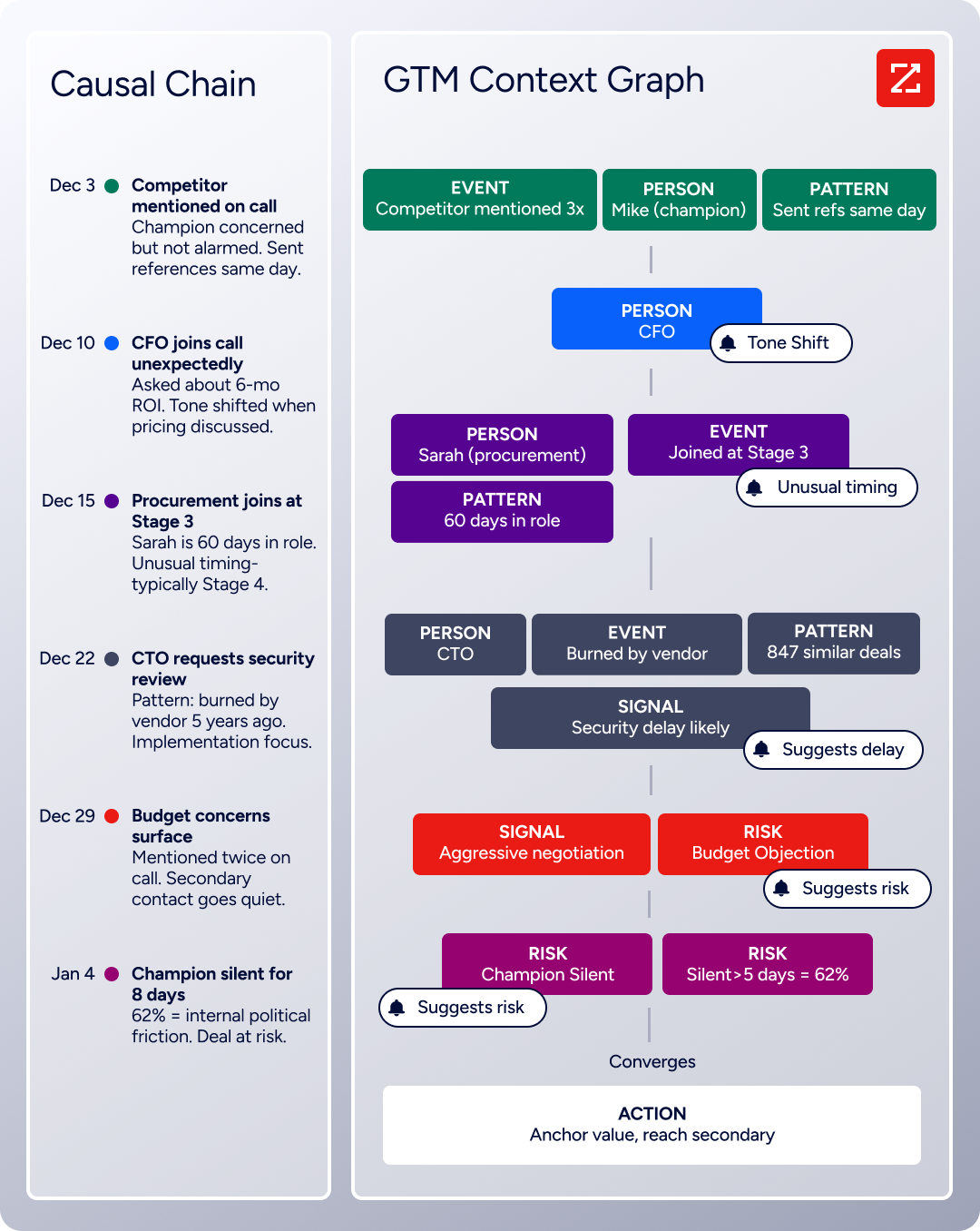
This depth exists because ZoomInfo spent 20 years building data infrastructure and acquired the conversation and behavioral intelligence tools (including Chorus) that feed the graph. No single-function data provider can replicate this because none has all these layers at scale.
Seismic attributed 39% of active pipeline to opportunities identified or influenced by ZoomInfo signals, with 54% productivity gains. "That combination of our internal CRM data, external signals, and AI that's given all that context has helped us craft very specific account- and persona-based messages. And people have responded to them right away." (Seismic Case Study)
Universal Access: ZoomInfo delivers intelligence through native products, APIs, and AI agents.
ZoomInfo delivers its intelligence through three channels:
GTM Workspace gives sellers one place where prioritized accounts, AI-drafted outreach, deal execution, and CRM updates come together. AI agents handle account research, outreach drafting, signal monitoring, and CRM cleanup. Customers report 23% more pipeline and nearly 60% more meetings per week.
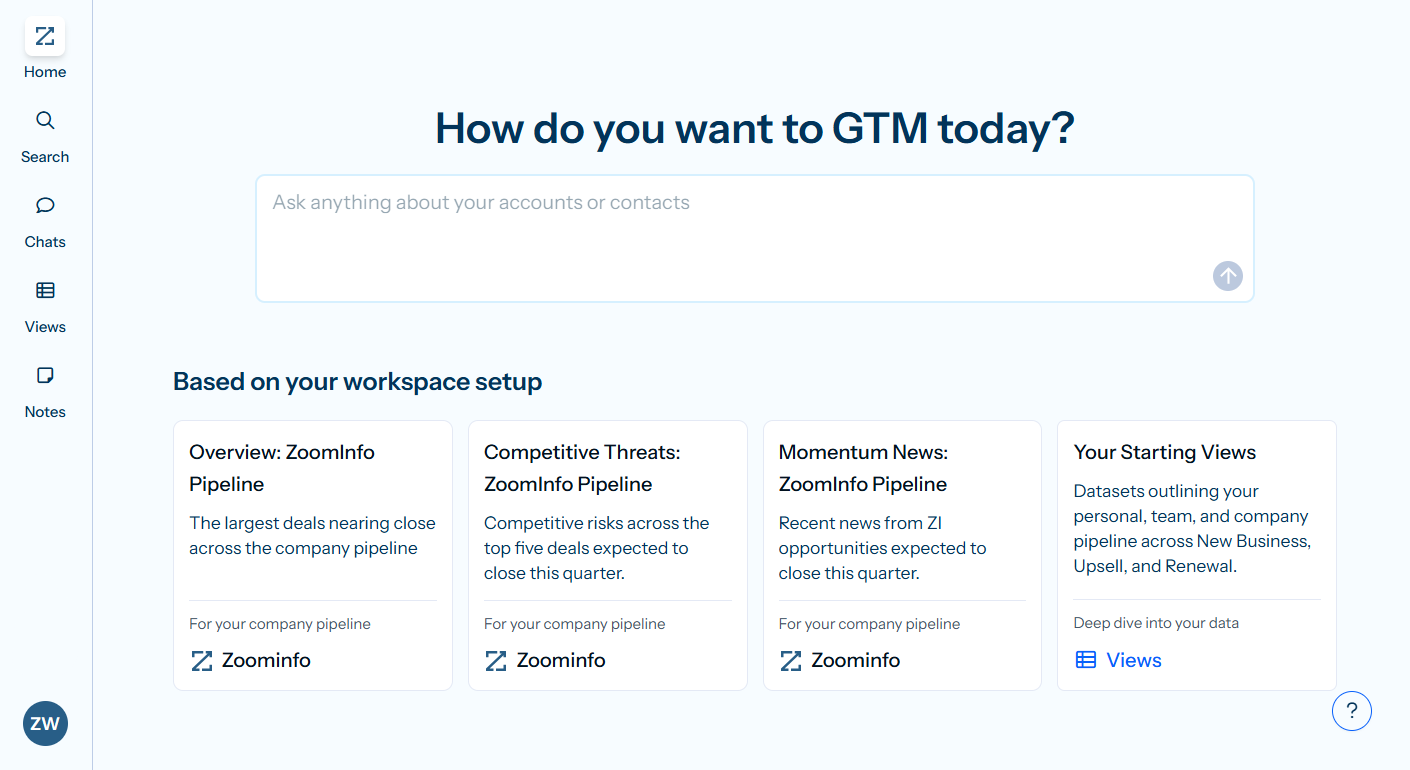
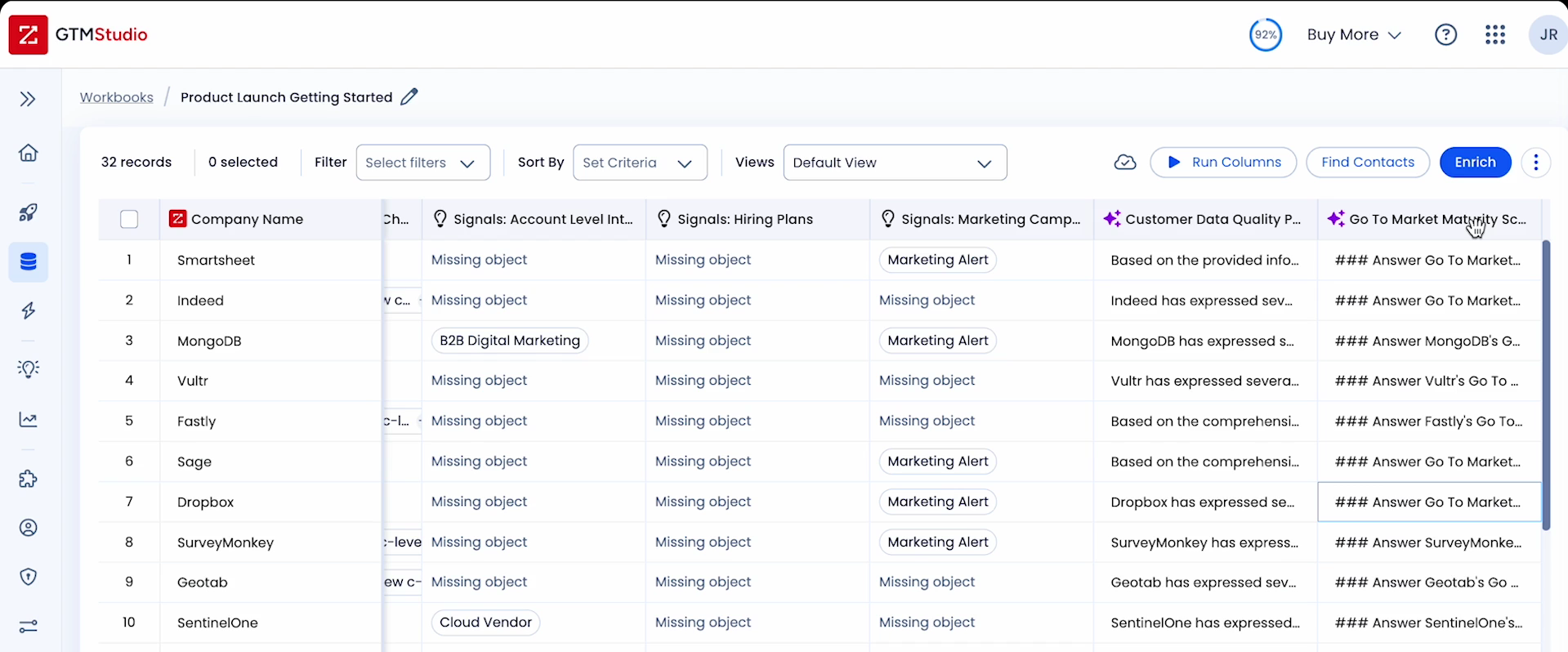
GTM Studio gives marketers, RevOps, and GTM engineers a builder where they define audiences, run campaigns, and measure pipeline using natural language. Expansion campaigns that took three weeks now launch in 30 minutes without engineering help.
APIs and MCP expose the same intelligence to custom agents, internal tools, or partner platforms, including Anthropic Claude and Google. API access is included in all relevant plans.
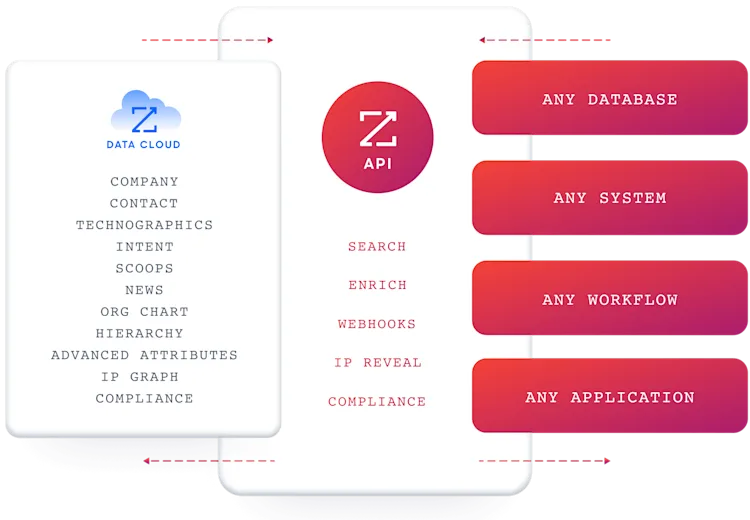
All three channels draw from the same GTM Context Graph, so where you work doesn't limit the intelligence you get. ReachStream's API exists, but it delivers contact records. ZoomInfo's API delivers intelligence.
BDO Canada activated ZoomInfo data directly within internal systems, achieving an 87% reduction in time spent on data dashboard updates. "The plug-and-play aspect of the API means I can integrate it very easily into any process and get information at a moment's notice." (BDO Canada Case Study)
Pricing and Entry Points: ZoomInfo offers custom enterprise pricing with free-tier access for evaluation.
ZoomInfo uses a custom-quoted, seat-and-credit-based subscription model without published dollar amounts. Pricing depends on user count, credit volume, feature set, company size, and contract length. Three product lines (Sales, Marketing, and standalone products like Chorus and Chat) each have tiers at Professional, Advanced, and Enterprise levels.
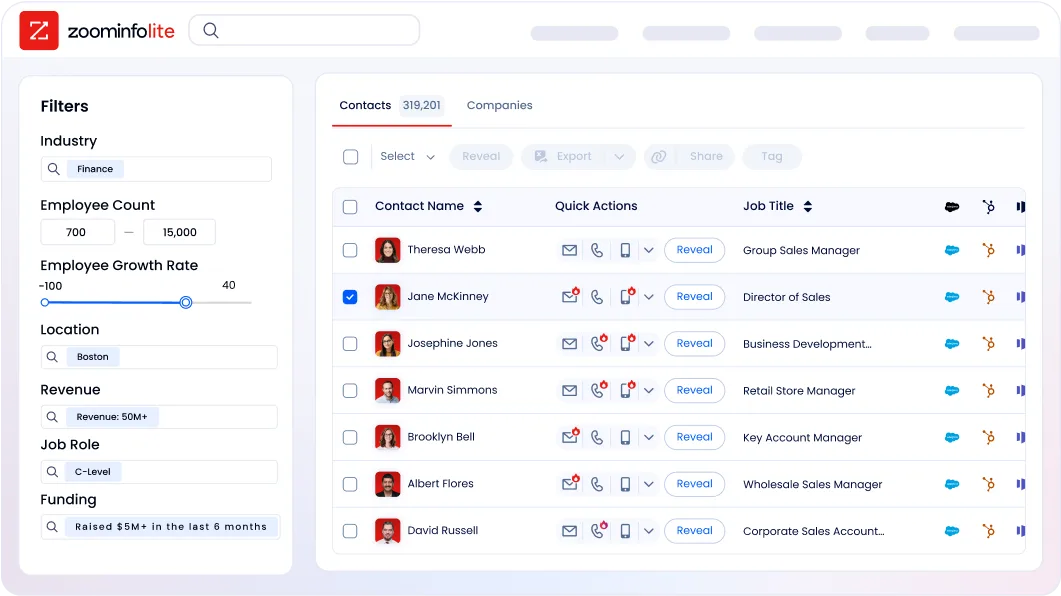
For evaluation, ZoomInfo offers two free entry points. ZoomInfo Lite is a permanent free tier with access to the B2B database, 10 monthly export credits, advanced search filters, the Chrome extension, and website visitor identification (up to 10 reveals per day). A separate 7-day free trial provides broader access to paid features without requiring a credit card.
Note: ZoomInfo is transitioning toward a consumption-based pricing model.
ZoomInfo costs more than ReachStream. That price reflects a difference in kind, not degree: intent signals, conversation intelligence, AI agents, campaign orchestration, and 120+ integrations are capabilities ReachStream does not offer at any price.
ReachStream or ZoomInfo: Comparison Summary
ReachStream | ZoomInfo | |
|---|---|---|
Primary focus | B2B contact database and prospecting | AI GTM platform |
Database size | 200M+ contacts, 15M+ companies | 500M contacts, 100M companies |
Phone numbers | 85% accuracy (self-reported) | 135M+ verified, 120M direct-dial |
Email accuracy | 90% deliverability (self-reported) | Up to 95% accuracy on first-party data |
Intent data | Not available | Buyer intent from 210M+ IP-to-Org pairings |
Conversation intelligence | Not available | Chorus (call recording, transcription, AI analysis) |
AI capabilities | Basic filtering and search | GTM Context Graph, AI agents, AI-drafted outreach |
CRM integrations | Salesforce, HubSpot, Zoho | 120+ integrations (Salesforce, HubSpot, Dynamics, Outreach, Salesloft, and more) |
Chrome Extension | All plans including free | All plans including free |
Free plan | Permanent (100 exports/month) | ZoomInfo Lite (10 exports/month, permanent) |
Paid pricing | $29–$79/month (published) | Custom-quoted (not published) |
Security certifications | GDPR, CCPA, CAN-SPAM compliance | ISO 27001, ISO 27701, SOC 2 Type II, TRUSTe GDPR/CCPA |
Analyst recognition | G2 4.8/5 rating | Gartner MQ Leader, Forrester Wave Leader, G2 133 No. 1 rankings |
Best for | Budget-conscious SMBs doing outbound email | Enterprise and mid-market teams needing full GTM intelligence |
Final Verdict
The choice between ReachStream and ZoomInfo depends on where your team stands today and where it's headed.
Choose ReachStream if you need affordable B2B contact data for outbound email and your priorities are simple: find prospects, verify their email, and start sending. It fits solo SDRs, startups, and small teams that can't justify enterprise data spending. The free plan lets you test real data before committing, and paid tiers offer large credit volumes at prices that won't strain an early-stage budget. If your outreach model is email-first and your qualification process is manual, ReachStream provides the contact data to fuel it.
Choose ZoomInfo if your team needs more than a contact database. ZoomInfo is the right choice when knowing who to call isn't enough, when you also need to know which accounts are in-market, what they care about, and who on the buying committee is engaged. Its GTM Context Graph connects contact data with intent signals, conversation intelligence, and CRM records to drive execution across sales, marketing, and RevOps. For teams moving from manual prospecting to signal-driven go-to-market, ZoomInfo provides the data, the reasoning, and the execution in one platform.
Get started with ZoomInfo here.
ReachStream and ZoomInfo serve different stages of GTM maturity. ReachStream gives growing teams a data foundation at an accessible price. ZoomInfo gives larger teams the intelligence that turns data into pipeline. The question isn't which platform has better contact data. It's whether your go-to-market strategy needs contacts or context.
ReachStream FAQ
Is there a free version of ReachStream?
Yes, ReachStream offers a permanent free plan called Icebreaker. It includes 100 export credits per month (1,200 per year), 200 email views per month, access to the Chrome Extension, ABM List Builder, data enrichment, and API access. No credit card is required. The free plan does not include direct-dial phone numbers or a dedicated account manager. ZoomInfo also offers a permanent free tier called ZoomInfo Lite, which provides 10 monthly export credits, advanced search filters, a Chrome Extension, and limited website visitor identification.
How accurate is ReachStream's data?
ReachStream claims 95% overall data accuracy, 90% email deliverability, and 85% phone number accuracy. These figures are self-reported and not independently audited. G2 reviewers generally confirm email quality but note that phone numbers are frequently outdated. ZoomInfo reports up to 95% accuracy on first-party data, validated by 300+ human researchers and external evaluations including a Fortune 500 competitive RFP that concluded no other competitor came close.
Does ReachStream offer intent data?
No, ReachStream is a contact and company data platform without intent data or buyer signals. It tells you who works at a company and how to reach them, but it cannot identify which accounts are actively researching solutions. ZoomInfo provides buyer intent signals from 210 million IP-to-Organization pairings and 6 trillion+ monthly keyword-to-device pairings, plus a Guided Intent feature that identifies topics correlated with deal success.
What CRM integrations does ReachStream support?
ReachStream natively integrates with three CRMs: Salesforce, HubSpot, and Zoho. Teams using other CRMs must rely on the ReachAPI or CSV exports. There are no integrations with sales engagement platforms, marketing automation tools, or middleware services. ZoomInfo offers 120+ integrations through its App Marketplace, covering CRMs, marketing automation, sales engagement, data warehouses, and more.
How much does ReachStream cost?
Paid plans start at $29 per month (billed annually) for the Glacier tier with 60,000 annual export credits and unlimited email views. The Ice Floe plan is $49 per month with 120,000 annual credits, and Polar Peak is $79 per month with 240,000 credits and 3 seats. Monthly billing is available at higher rates. An enterprise Frozen Fortune plan offers custom pricing. ZoomInfo does not publish pricing; all paid plans are custom-quoted based on user count, credit volume, and feature requirements.
Does ReachStream have a Chrome Extension?
Yes, ReachStream offers a Chrome Extension that surfaces verified contact data on LinkedIn and LinkedIn Sales Navigator profiles. It reveals email addresses, phone numbers, and 20+ data attributes per contact, supports bulk selection, and saves leads to prospect lists or connected CRMs. The extension is included on all plans, including the free Icebreaker tier. ZoomInfo also provides a Chrome Extension (called ReachOut) on all plans, with intent signals and company data alongside contact details.
Can ReachStream replace multiple prospecting tools?
ReachStream bundles list building, email verification, data enrichment, and LinkedIn prospecting in one platform. For teams whose needs are limited to these functions, it can reduce tool count. However, it lacks intent data, conversation intelligence, marketing automation, website visitor tracking, and workflow orchestration. Teams requiring those capabilities will still need additional tools. ZoomInfo covers all these functions natively: contact data, intent signals, conversation intelligence (Chorus), website chat, marketing automation, and execution through GTM Workspace and GTM Studio.
How does ReachStream's credit system work?
ReachStream charges export credits when you download verified contact data from the platform. You only spend credits on verified emails; unverified results come back at no cost. Browsing and viewing contact profiles does not consume credits. Each plan includes a set number of annual or monthly export credits. One important note: there is a conflict between the pricing page (which says unused credits roll over) and the Terms of Service (which says they expire at end of billing cycle). Buyers should confirm the rollover policy in writing before purchasing.
