
RevenueHero is an inbound lead conversion and scheduling platform for B2B revenue teams. It qualifies leads, routes them, and books meetings in real time, converting form submissions into calendar slots in under three seconds.
But as your go-to-market operation grows, a scheduling-first platform may not cover every place where pipeline decisions happen. You may need CRM-layer routing that lives inside Salesforce rather than alongside it, a workflow engine that replaces three separate tools with one canvas, or an intelligence layer that reveals not just who to meet but why they're ready to buy.
That's where this guide comes in. Whether you're looking to:
Enrich your pipeline with B2B data and AI-powered deal intelligence
Consolidate inbound scheduling, CRM routing, SDR handoffs, and AI chat under one enterprise vendor
Replace your fragmented inbound stack with a single visual workflow engine
Move routing logic inside Salesforce with lead-to-account matching
Deploy clean, low-overhead scheduling without RevOps complexity
Embed scheduling as open-source infrastructure in your own product
Remove forms from the buyer path entirely with AI-native conversational conversion
We'll explore RevenueHero alternatives that excel in each area.
Some teams use these tools to complement their existing RevenueHero setup. Others replace RevenueHero entirely with a platform better suited to their GTM maturity. This isn't about finding a "better" tool; it's about finding the right fit as your revenue operation scales.
Let's dive in.
The Best RevenueHero Alternatives | |
|---|---|
Best Alternative for B2B Data & AI-Powered GTM Intelligence We chose ZoomInfo because it provides the data foundation and contextual intelligence that scheduling-first tools cannot replicate, showing revenue teams who to target, when to engage, and why deals move. | |
Best Alternative for Enterprise Inbound Conversion with Salesforce-Native Routing We chose Chili Piper because its modular suite covers inbound scheduling, CRM-level lead routing, SDR-to-AE handoffs, and AI chat under one vendor with shared routing logic and consolidated reporting. | |
Best Alternative for Consolidating Your Entire Inbound GTM Stack We chose Default because its visual workflow canvas replaces a fragmented stack of scheduling, enrichment, routing, and automation tools with a single observable platform. | |
Best Alternative for Enterprise Salesforce Teams Needing CRM-Layer Routing We chose LeanData because its routing engine lives entirely inside Salesforce, processing lead-to-account matching, territory management, and full object routing within the CRM rather than around it. | |
Best Alternative for Small B2B Teams Needing Simple, Low-Overhead Scheduling We chose Calendly because its free tier, self-serve setup, and brand recognition make it the natural starting point for small teams that don't yet need routing complexity. | |
Best Alternative for Full Scheduling Capability Without Per-Seat Costs We chose Cal.com because its open-source foundation, free tier with CRM sync, and API-first architecture deliver professional scheduling at a fraction of per-seat licensing costs. | |
Best Alternative for Form-Free AI-Native Lead Conversion We chose Knock AI because it eliminates the web form entirely, replacing it with AI-driven conversations in Slack, WhatsApp, and LinkedIn that qualify and book meetings from within the chat thread. |
What is RevenueHero?
Source: RevenueHero
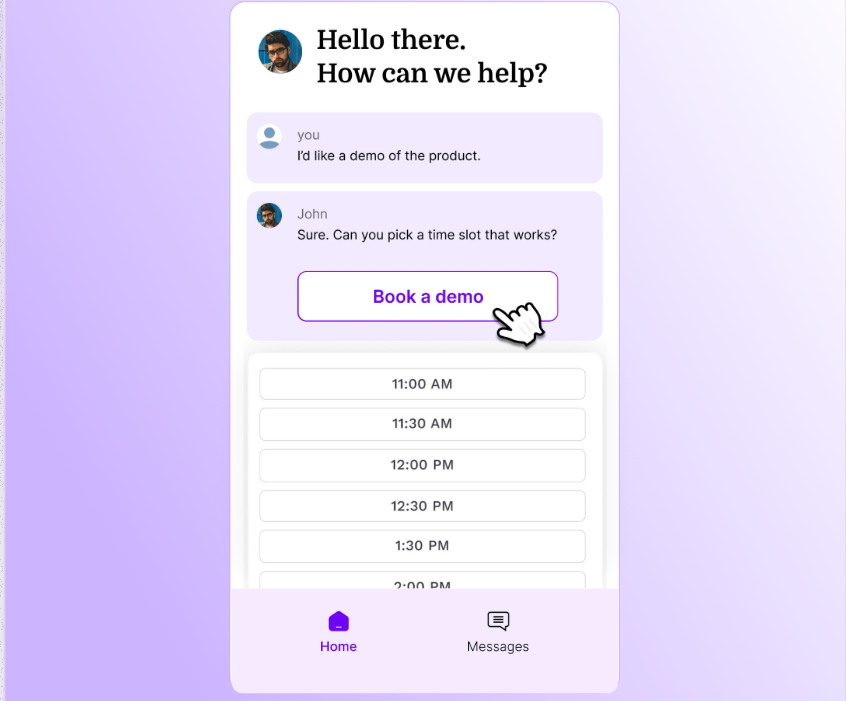
RevenueHero is an inbound lead conversion and scheduling automation platform built for B2B revenue teams. It qualifies leads, routes them, and books meetings, converting form submissions into booked meetings in under three seconds without manual SDR intervention.
Its key features include:
Inbound scheduling with instant qualification: Qualifies, routes, and books meetings from web form submissions in real time, with native enrichment from Apollo, Clearbit, Crustdata, ZoomInfo, and Ocean.io
Smart meeting distribution: CRM-aware routing that checks account ownership before round-robin fires, with Balanced and Collective Round Robin modes
Campaign router and magic links: One-click scheduling from outbound email sequences using pre-filled CRM data, eliminating form friction for known contacts
SDR-to-AE relays: Lets BDRs book directly onto AE calendars in 2 clicks from the CRM, email, or the Chrome extension
Native enrichment waterfall: Enriches minimal form inputs (name and email) with firmographic data in milliseconds, enabling short forms without sacrificing routing precision
Reporting and routing logs: Full step-by-step visibility into every routing decision, with conversion tracking from form submission through held meeting
When a prospect submits a demo request, RevenueHero enriches the submission, qualifies the lead against admin-defined rules, matches them to the right CRM owner or distributes via round robin, and surfaces a booking calendar, all before the prospect leaves the page.
RevenueHero works best for B2B SaaS companies with an active inbound motion, 10–500 employees, and a dedicated RevOps function managing routing complexity. But as your GTM needs expand beyond inbound scheduling (into data intelligence, CRM-native routing, or full-stack workflow orchestration) you may need a more specialized tool.
Want to equip your revenue team with B2B data and AI-powered GTM intelligence? Learn more about ZoomInfo and see how the GTM Context Graph can inform every deal interaction.
How We Curated Our List of RevenueHero Alternatives
After testing RevenueHero and researching the inbound conversion market, we found that its scheduling-first approach works well for converting form fills to booked meetings. But B2B revenue teams often need more:
Building pipeline with verified B2B data and AI-powered account intelligence
Routing leads inside Salesforce with territory management and lead-to-account matching
Consolidating fragmented inbound stacks (scheduler + enrichment vendor + routing tool + automation glue) into one platform
Deploying scheduling and routing without the RevOps complexity of a dedicated conversion platform
Embedding scheduling infrastructure into products, marketplaces, or portals via API
Converting high-intent website visitors who never fill out forms
Each tool on this list leads in one of these areas. Some complement RevenueHero by adding capabilities it lacks; others replace it if your needs have outgrown a scheduling-first approach.
DISCLAIMER: We aren't covering every tool in the market! Our focus is on alternatives that address specific needs beyond RevenueHero's inbound scheduling and routing. The goal is to highlight tools that fit different GTM maturity levels and use cases. |
|---|
1. ZoomInfo: Best Alternative for B2B Data & AI-Powered GTM Intelligence
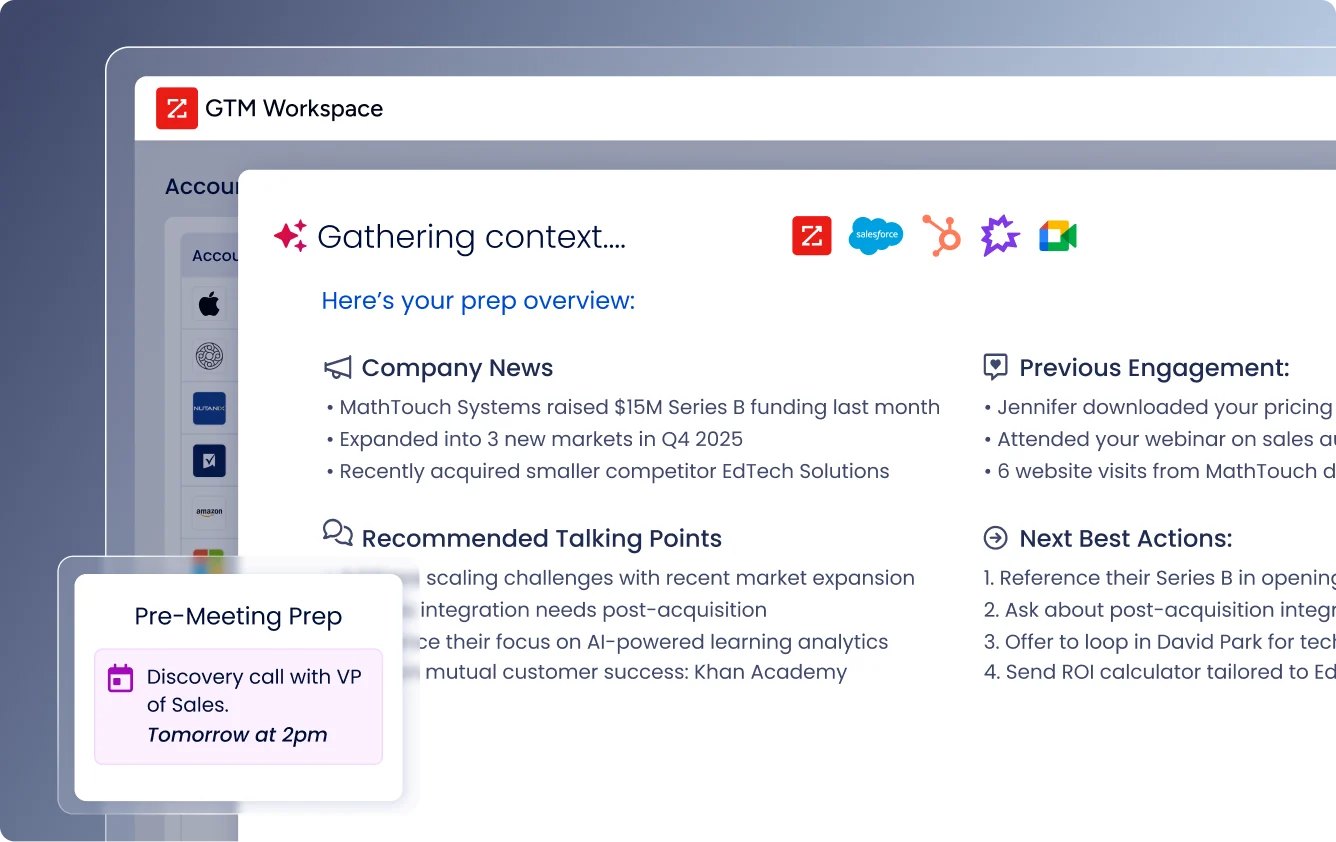
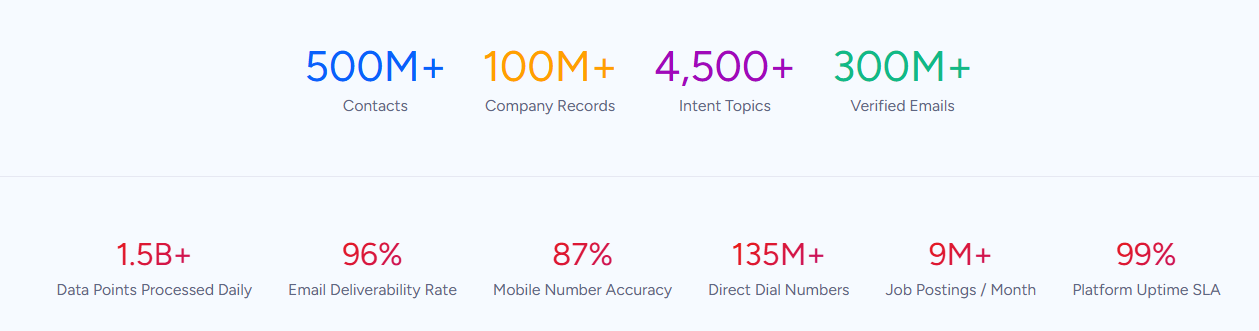
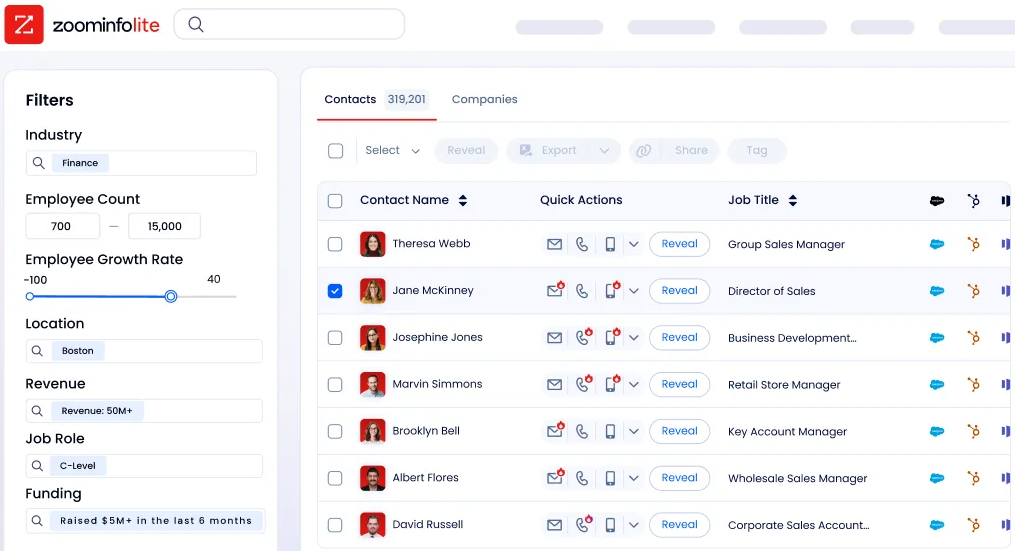
ZoomInfo is an AI-powered GTM platform built on a large data foundation: 500M contacts, 100M companies, 135M+ verified phone numbers, and 200M+ verified business emails.
By fusing this data with your CRM records, conversation transcripts, and behavioral signals, ZoomInfo's GTM Context Graph (which processes 1.5B+ data points daily) reveals the full context of your accounts. That context fuels AI to show not just what happened, but why, and what to do next. Its key features include:
B2B data platform: 500M contacts, 100M companies, 135M+ verified phone numbers, 120M direct-dial phone numbers, and 200M+ verified business emails, verified by 300+ human researchers at up to 95% accuracy on first-party data
GTM Context Graph: An intelligence layer that fuses ZoomInfo's B2B data with your CRM records, conversation intelligence, and behavioral signals to capture why deals move or stall, not just that they did
Buyer Intent Data: Tracks signals from 210 million IP-to-Organization pairings and 6 trillion+ new keyword-to-device pairings sourced monthly, with Guided Intent identifying topics historically correlated with deal success
Three access paths: GTM Workspace for sellers, GTM Studio for marketers and RevOps, and APIs & MCP for custom tools or AI agents
RevenueHero solves one job well: converting the prospect who just filled out your form into a booked meeting. ZoomInfo solves the upstream and surrounding problems: identifying who should be filling out that form, understanding why they're in-market, and giving your sales team the intelligence to close the deal once the meeting happens.
Why Choose ZoomInfo Over RevenueHero for GTM Intelligence
RevenueHero excels at inbound scheduling automation. ZoomInfo provides the data foundation and intelligence layer that powers every stage of the revenue cycle. Here's where ZoomInfo steps up.
Data-Powered Pipeline Generation: Know Who to Target Before They Fill Out a Form
RevenueHero activates at the moment of form submission. Everything before that moment (identifying which companies are in your market, finding the right contacts, understanding their tech stack, org chart, and buying signals) lives outside RevenueHero's scope.
ZoomInfo's data platform covers that entire upstream surface. With 300+ company attributes for market segmentation, department org charts with decision-makers' direct dials and verified emails, and technographic profiles of 30+ million companies tracking 30,000+ technologies, sales teams can build precise target lists and launch outbound motions that generate the pipeline RevenueHero then schedules against.
ZoomInfo in Action: Your marketing team uses GTM Studio to describe an audience in plain language: "mid-market SaaS companies in North America with 200–1,000 employees that use Salesforce and show buying intent for sales automation tools."
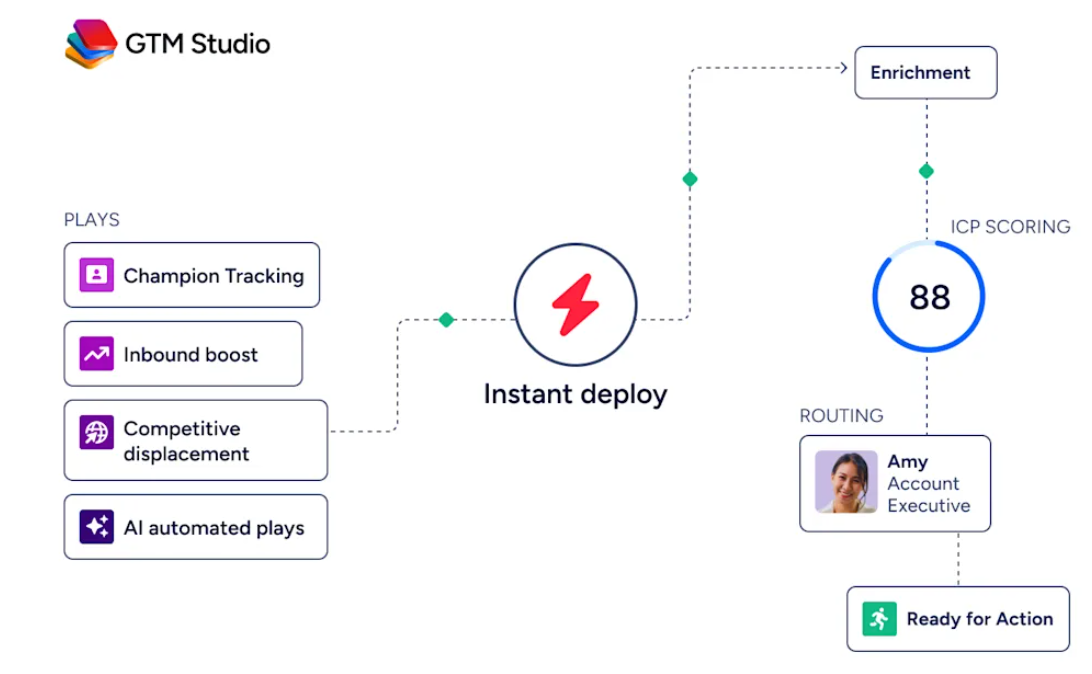
ZoomInfo builds that audience from verified data, launches a multi-channel play targeting accounts matching your win patterns, and routes hot accounts into GTM Workspace where your AEs see AI-drafted outreach already addressing the concerns the intelligence layer identified.
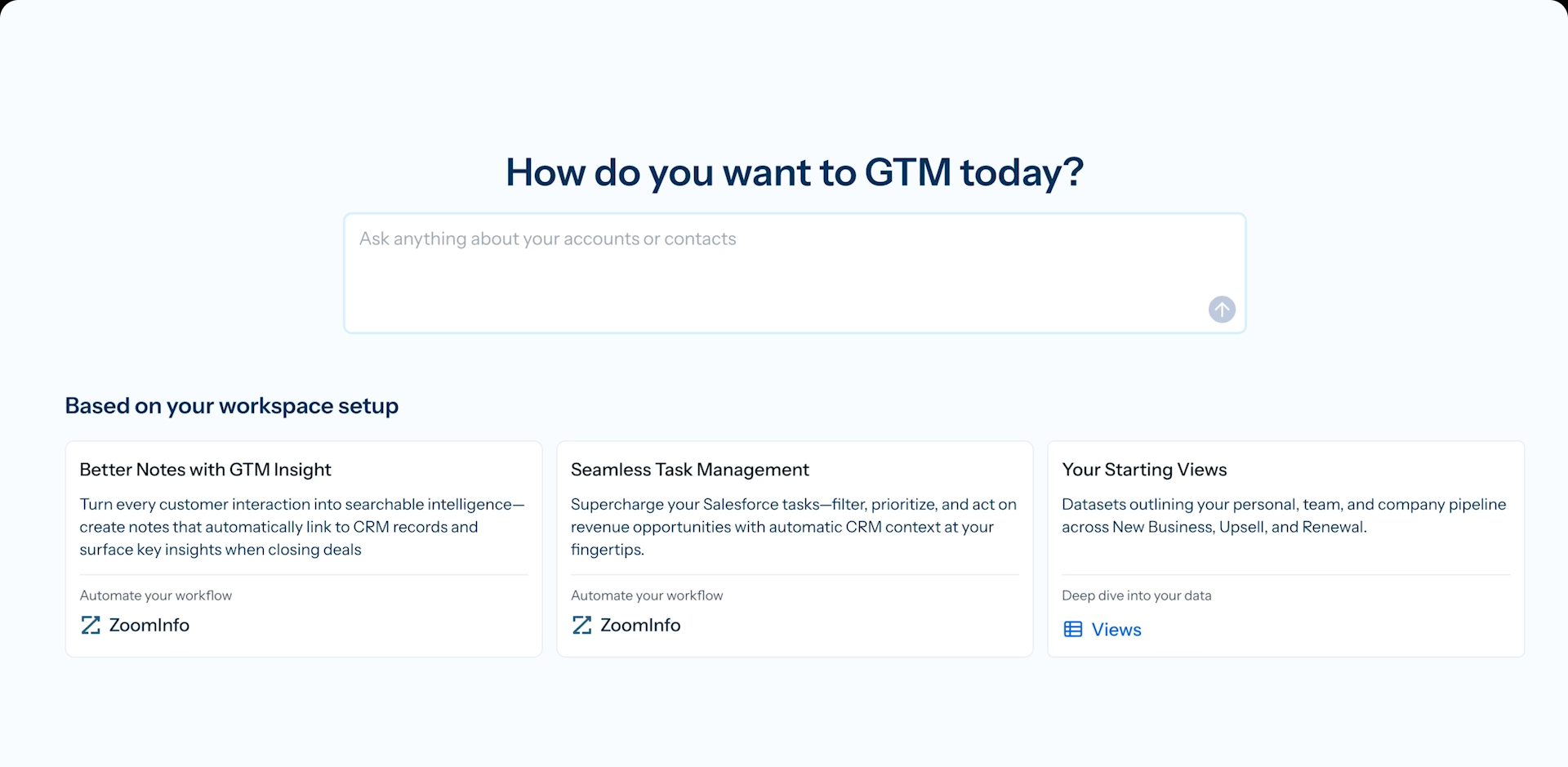
The entire motion (from audience definition to personalized outreach) happens without an engineering ticket, without manual list building, and without waiting for prospects to find your demo page.
ZoomInfo customer Seismic attributed 39% of active pipeline to opportunities identified or influenced by ZoomInfo signals, while their sales team reported 54% more productive workflows and 11.5 hours saved per week. (Seismic Case Study)
The GTM Context Graph: Understand Why Deals Move, Not Just That They Did
RevenueHero's routing log shows you which rules fired and which rep was assigned. That's valuable for debugging misroutes. But it doesn't tell you why a deal is accelerating, why a champion went quiet, or what the CFO's concern means for your next follow-up.
The GTM Context Graph captures this decision context by fusing your CRM records, conversation transcripts from Chorus (ZoomInfo's conversation intelligence engine), email interactions, and behavioral signals with ZoomInfo's third-party data. It surfaces the connections between signals and outcomes.
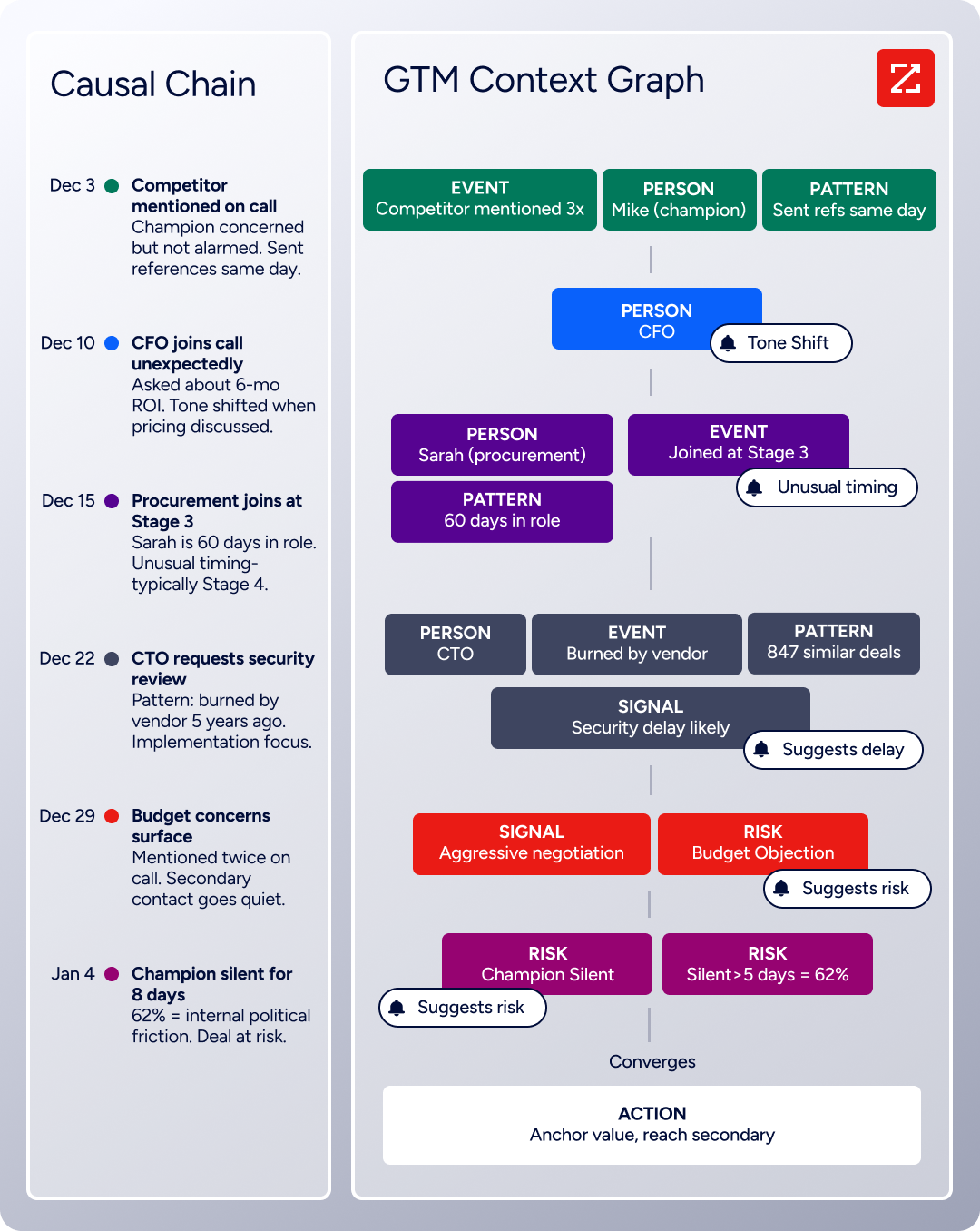
As ZoomInfo's Chief Product Officer Dominik Facher writes: "The CRM recorded the state change. It has no record of why it happened."
This intelligence powers every downstream action: the follow-up email addresses the specific concern the CFO raised because the system understands why it matters now. The GTM play targets accounts whose signal combinations match your actual win patterns rather than those that tripped a keyword threshold. The forecast weights deals by the strength of buying evidence rather than stage labels and rep optimism.
ZoomInfo in Action: A seller opens GTM Workspace to their prioritized account feed. The AI assistant generates a 10-second account brief pulling CRM history, company news, ZoomInfo signals, and stakeholder context. The Action Feed surfaces a live stream of in-market buyers matched to target criteria, with pre-drafted actions on every signal: G2 comparisons, funding events, executive hires.
Instead of toggling between dozens of tools, the seller executes from one workspace with the full context of the GTM Context Graph behind every interaction.
Universal Access: Intelligence That Works in Any Tool, Any Workflow
RevenueHero integrates with CRMs, calendars, and enrichment providers for the scheduling workflow. ZoomInfo's intelligence is accessible through three paths designed to meet teams where they work.
APIs and MCP expose ZoomInfo's data and GTM Context Graph to any custom agent, internal tool, or partner platform, from Anthropic Claude to proprietary systems.
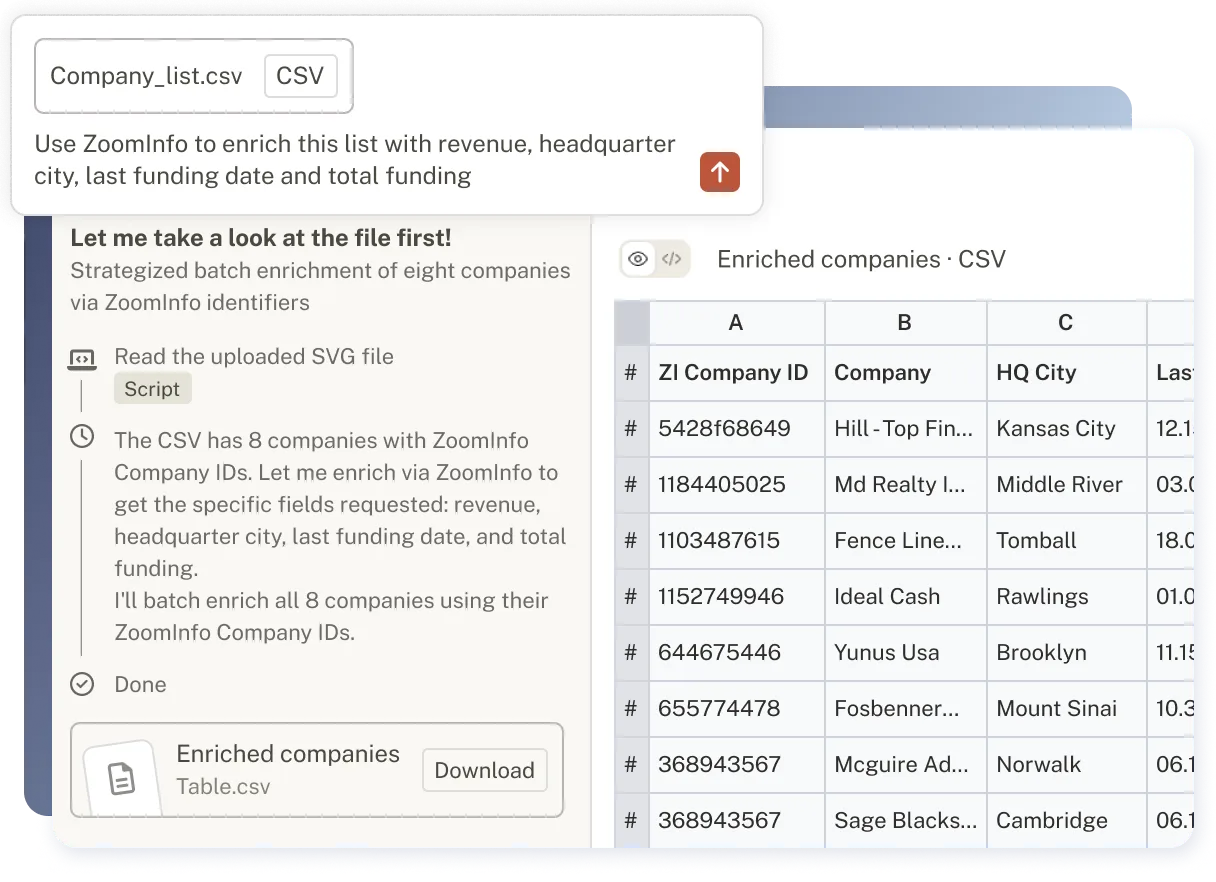
GTM Workspace gives sellers a front-end where prioritized accounts, AI-drafted outreach, and deal execution converge. GTM Studio gives marketers and RevOps a builder environment where audience definition, campaign orchestration, and pipeline measurement happen in natural language.
All three paths draw from one GTM Context Graph. The same data, the same intelligence, the same continuously learning model. A buying signal one team detects is immediately actionable by every other team.
ZoomInfo in Action: Your RevOps engineer plugs ZoomInfo's MCP server into your company's internal AI agent. That agent now has the same contextual intelligence powering ZoomInfo's own products: it can research accounts, identify buying committees, draft personalized outreach, and surface intent signals, all inside the tools your team already uses.
A large financial services firm built an internal application using ZoomInfo's MCP server, and CEO Henry Schuck noted: "That's a surface area we would never see before."
ZoomInfo customer Snowflake integrated ZoomInfo data into their Account Propensity Scoring model, feeding over 70 company and technographic data fields. Accounts monitored using ZoomInfo-powered scores showed 90% higher opportunity open rates and 2x higher customer conversion rates. (Snowflake Case Study)
NOTE: We evaluated other B2B data and intelligence platforms for this position and found that ZoomInfo's combination of data scale (500M contacts, 100M companies), the GTM Context Graph, and access via APIs, MCP, GTM Workspace, and GTM Studio puts it in a category by itself. In a Fortune 500 competitive RFP analyzing 25 million contacts across vendors, the independent consultant concluded that "no other competitor came even close." ZoomInfo is also a Leader in the Gartner Magic Quadrant for ABM Platforms (2024 & 2025) and a Leader in the Forrester Wave for Intent Data Providers B2B (Q1 2025).
ZoomInfo Pricing
ZoomInfo uses a custom-quoted, consumption-based pricing model where costs depend on usage, number of users, monthly credit volume, features, company size, and contract length.
Sales Plans are organized into three tiers: Professional (contact and company data, CRM integrations, Chrome extension, AI-powered email generation), Advanced (AI-driven account prioritization, Buyer Intent signals, website visitor tracking, Champion Tracking), and Enterprise (real-time buyer intent, advanced workflows, AI-generated account summaries, dedicated customer service manager).
Marketing Plans range from Marketing Demand (audience targeting, CRM and MAP integrations, GTM workflows) to ABM Lite (display network campaigns, LinkedIn/Facebook/Google advertising) and ABM Enterprise (unlimited intent topics, AI recommendations, predictive scoring).
ZoomInfo also offers ZoomInfo Lite, a permanent free tier with access to 100M+ verified profiles, 10 monthly export credits, WebSights Lite, HubSpot integration, and the Chrome extension. A 7-day free trial of the full platform is also available with no credit card required.
Who Should Use ZoomInfo?
Choose ZoomInfo if:
You need the data foundation that powers pipeline generation, not just scheduling. Your team needs verified direct dials, business emails, org charts, technographics, and intent signals to identify and reach buyers before they visit your demo page.
Your revenue operation has outgrown scheduling-layer intelligence and needs an AI engine that understands why deals move, connects first-party CRM data with third-party signals, and surfaces contextual recommendations across every team and tool.
You want your intelligence layer accessible everywhere (your CRM, custom AI agents, marketing automation, and sellers' daily workflows) through APIs, MCP, GTM Workspace, and GTM Studio.
Ready to see how ZoomInfo's B2B data and the GTM Context Graph can strengthen your revenue operation? Start your free ZoomInfo trial or request a demo to experience AI-powered GTM intelligence firsthand.
2. Chili Piper: Best Alternative for Enterprise Inbound Conversion with Salesforce-Native Routing
Source: Chili Piper
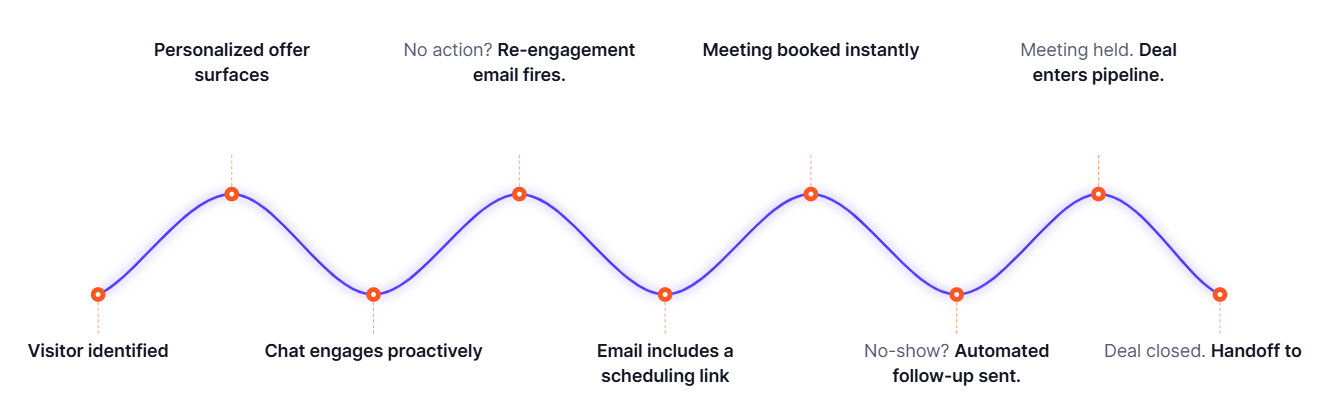
Chili Piper is a Demand Conversion Platform that consolidates form-to-meeting scheduling, Salesforce-native lead routing, SDR-to-AE handoff coordination, and AI-powered web chat into a single modular suite. Its key capabilities include:
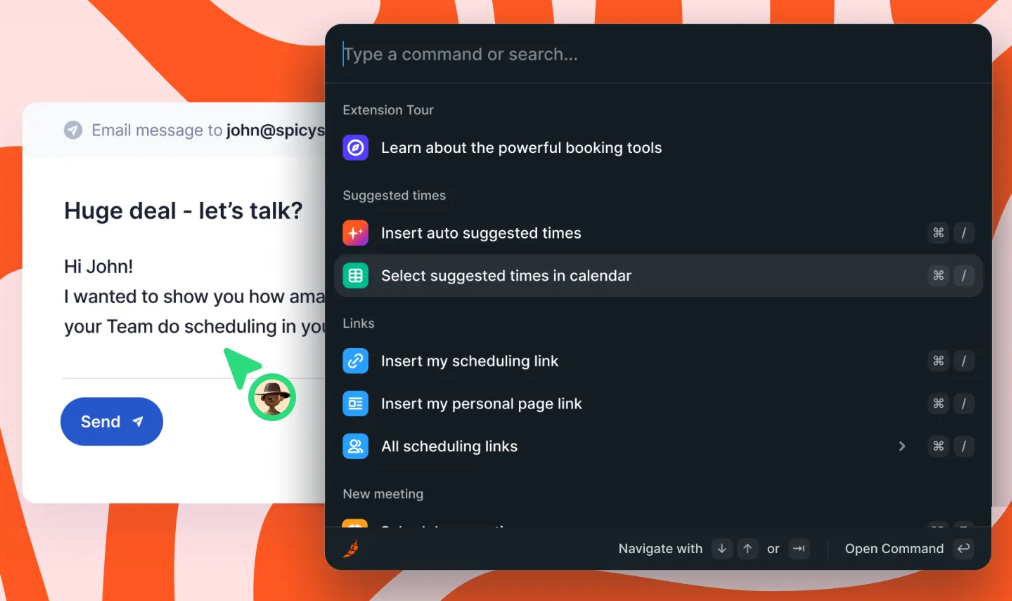
Form Concierge: Qualifies, routes, and books meetings from web forms in real time with enrichment from ZoomInfo, Clay, Lusha, LeadIQ, and Apollo
Distro: Routes any Salesforce object (Lead, Contact, Account, Opportunity, Case, or custom objects) using territory rules and account ownership logic inside the CRM
Handoff: SDR-to-AE booking in under 30 seconds with cherry-picking prevention and automatic CRM logging
Chat AI: An AI-powered website assistant (built on OpenAI GPT-4.1 Turbo) that qualifies visitors and books meetings 24/7
For enterprise organizations with high-volume inbound, deep Salesforce dependency, and a full range of revenue handoffs to manage, Chili Piper covers more ground than RevenueHero's scheduling-first approach.
Why Choose Chili Piper Over RevenueHero for Enterprise Inbound Conversion?
Chili Piper stands out in three areas:
Salesforce-Native Lead Routing That Lives Inside the CRM
Distro operates directly on Salesforce objects, triggered by field updates, record creation, or both. It updates ownership across multiple related objects in a single routing action, using lead-to-account matching with exact and fuzzy algorithms and duplicate detection using Salesforce's native framework. RevenueHero's routing centers on the scheduling event; when routing needs to fire on CRM record updates, field changes, or non-scheduling triggers, Distro's trigger model covers more surface area.
Dedicated SDR-to-AE Handoff with Cherry-Picking Prevention
Handoff adds operational controls beyond what RevenueHero's Relays feature covers. The "Prevent Cherry Picking" setting hides the assigned rep's identity so SDRs cannot repeatedly route to favored AEs. Handoff Live enables warm transfers during live calls by checking real-time AE availability.
Modular Architecture Covering Inbound, CRM, Handoff, and Chat Under One Vendor
A single procurement decision, integration layer, and reporting environment covers all four conversion surfaces. Shared teams, routing rules, and consolidated dashboards mean that when a prospect enters through a form (Concierge), gets re-assigned via a CRM trigger (Distro), or gets handed off from an SDR (Handoff), all events surface in the same reporting environment. ChiliCal, the one-click scheduling product, is included free with any other Chili Piper purchase.
Source: Chili Piper
NOTE: We also evaluated LeanData as a Salesforce-routing alternative. LeanData excels at complex Salesforce lead-to-account matching but is a routing specialist, not a demand conversion platform; it does not cover inbound form scheduling or SDR handoff coordination natively. Chili Piper offers the most complete enterprise coverage of inbound scheduling, CRM routing, and SDR handoffs in a single vendor relationship.
Weighing Chili Piper against LeanData for your Salesforce routing needs? See our Chili Piper vs LeanData comparison.
Chili Piper Pricing
Chili Piper uses a hybrid per-user plus platform fee model, with each product priced separately and bundle discounts available.
Individual Products (Monthly): Form Concierge, Distro, and Handoff each cost $30/user/month plus platform fees ($150–$1,000/month depending on product and lead volume). Chat AI is $20,000/year flat + $1,000/month platform fee.
Bundle Pricing: 2 products at $37.50/user/month; 3 products at $30/user/month; 4+ products at $27/user/month. The Demand Conversion Platform (all products) is available at $72/user/month + $1,000/month platform fee.
Annual Billing: Multi-year contracts save 15% (2 years), 25% (3 years), or 40% (4 years). A 14-day free trial is available.
Who Should Use Chili Piper?
Choose Chili Piper if:
Your organization is Salesforce-native and needs CRM-level routing that fires on record creation, field updates, and object relationships, not just form submissions.
You need inbound web forms, CRM-triggered lead assignment, SDR-to-AE handoffs, and AI chat conversion managed under one vendor with shared routing logic and consolidated reporting.
Your sales org is large enough (15+ AEs) that distribution fairness and cherry-picking prevention are active problems, and you need cross-channel distribution tracking from a single round-robin queue.
3. Default: Best Alternative for Consolidating Your Entire Inbound GTM Stack
Source: Default
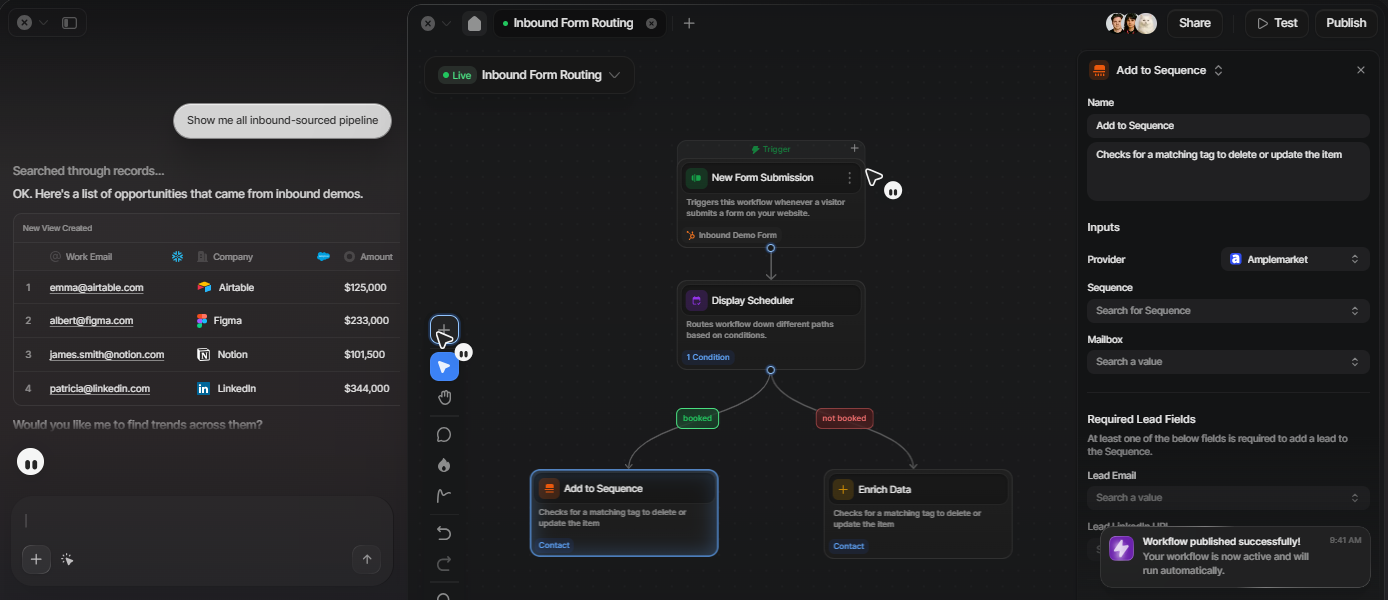
Default is a workflow engine that serves as the control layer for a revenue team's GTM stack. Rather than handling just meeting scheduling, Default provides a canvas where routing, enrichment, forms, qualification logic, CRM writes, and booking automation all live and execute together. Its key capabilities include:
Visual drag-and-drop workflow builder covering the full inbound funnel from form submission through CRM update, with conditional branching, enrichment nodes, and scheduling widgets on the same canvas
Native waterfall enrichment from Clearbit, Apollo, Wiza, People Data Labs, and more embedded inside routing decisions
Website intent detection via a Sessions.js pixel that fires routing and scheduling workflows before a prospect submits any form
AI-powered routing agent using natural language territory definitions with sub-400ms assignment decisions
Default is the stronger choice for RevOps practitioners at Series A–C B2B SaaS companies who are consolidating a fragmented inbound stack into one observable platform they can audit, debug, and iterate without cross-referencing separate systems.
Why Choose Default Over RevenueHero for Inbound GTM Stack Consolidation?
Default stands out in three areas:
A Single Workflow Canvas Replacing the Full Inbound Point-Solution Stack
RevenueHero handles scheduling and routing with depth. Default replaces the fragile web of separate tools (schedulers, routing engines, enrichment vendors, and automation glue) that revenue teams stitch together.
Enrichment Waterfall Embedded in the Routing Step
Both Default and RevenueHero offer multi-provider enrichment. The difference is where it fires. RevenueHero enriches at form submission before routing logic runs. Default runs enrichment as part of the routing step itself, with providers as individual canvas nodes that sit alongside if/else branching and queue assignment. Clearbit enrichment is included at no additional cost on all plans with no separate API key.
Website Intent Detection as a Native Workflow Trigger
Default's Sessions.js pixel resolves anonymous visitor IP addresses to verified company records. When a target account visits the site, a "Company Identified" event fires inside Default's workflow builder, enabling automated Slack alerts, CRM pushes, or round-robin assignment before any form is filled. This closes a gap that typically requires a separate intent vendor stitched into the stack via Zapier.
NOTE: We also evaluated Chili Piper and HubSpot Meetings for this slot. Chili Piper is a mature inbound scheduling platform with deep Salesforce support, and HubSpot Meetings is the natural fit for HubSpot-native teams. Default offers the most unified visual workflow engine for RevOps teams consolidating a fragmented stack, particularly teams that need enrichment, routing, scheduling, and CRM automation in one observable place.
Default Pricing
Default uses a base platform fee plus per-seat model, billed annually. A sales conversation is required at all tiers.
Startup: Starting from $750/month; 1 workflow, basic enrichment (Clearbit and Apollo), 10,000 enrichment credits/year, $45/user/month for Routing + Scheduling seats
Growth: Custom pricing; 10 workflows, premium enrichment (Clearbit, Apollo, Wiza, Abstract, Vector, People Data Labs), 20,000 enrichment credits/year, website intent included
Enterprise: Custom pricing; unlimited workflows and enrichment credits, dedicated support, migration services from legacy routing tools
Who Should Use Default?
Choose Default if:
Your RevOps team is consolidating a fragmented inbound stack (running separate tools for scheduling, routing, enrichment, and automation) and wants one observable workflow canvas instead.
You need enrichment, routing, scheduling, CRM writes, and meeting lifecycle automation in one place so you can see what broke and fix it without cross-referencing three systems.
You want website intent detection as a native workflow trigger, routing to target accounts before they submit a form, without adding a separate vendor.
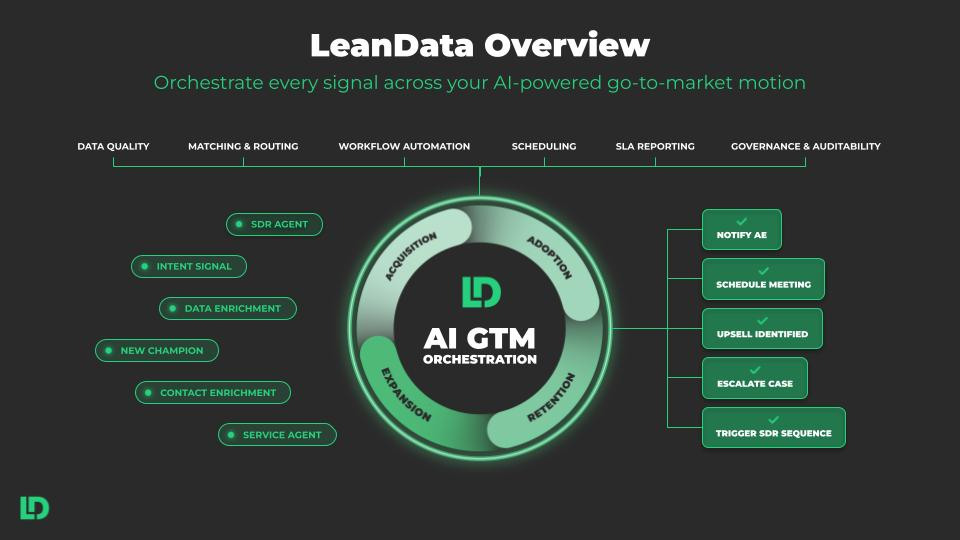
4. LeanData: Best Alternative for Enterprise Salesforce Teams Needing CRM-Layer Routing
Source: LeanData
LeanData is a Salesforce-native GTM orchestration platform that replaces external scheduling-first routing with a routing engine that lives inside Salesforce. Its key capabilities include:
FlowBuilder visual routing for any Salesforce object (Leads, Contacts, Accounts, Opportunities, Cases, and custom objects) without Apex code
Lead-to-account matching at 95% accuracy using domain, company name, and firmographic fuzzy matching inside Salesforce
Territory-based routing with hierarchical structures, overlapping regions, and multi-team assignments
BookIt Scheduling for meeting booking immediately after CRM routing
AI Inference Nodes (Q1 2026) for embedding LLM-powered reasoning into routing graphs
LeanData occupies a different architectural position from RevenueHero: it is the routing layer for organizations where the CRM is the system of record and all routing logic must live there.
Why Choose LeanData Over RevenueHero for CRM-Native Enterprise Routing?
LeanData stands out in three areas:
Routing Lives Inside Salesforce, Not Alongside It
RevenueHero operates as an external layer that intercepts form submissions and writes outcomes back to the CRM. LeanData's routing logic, audit trails, and configurations live directly within Salesforce as a native application.
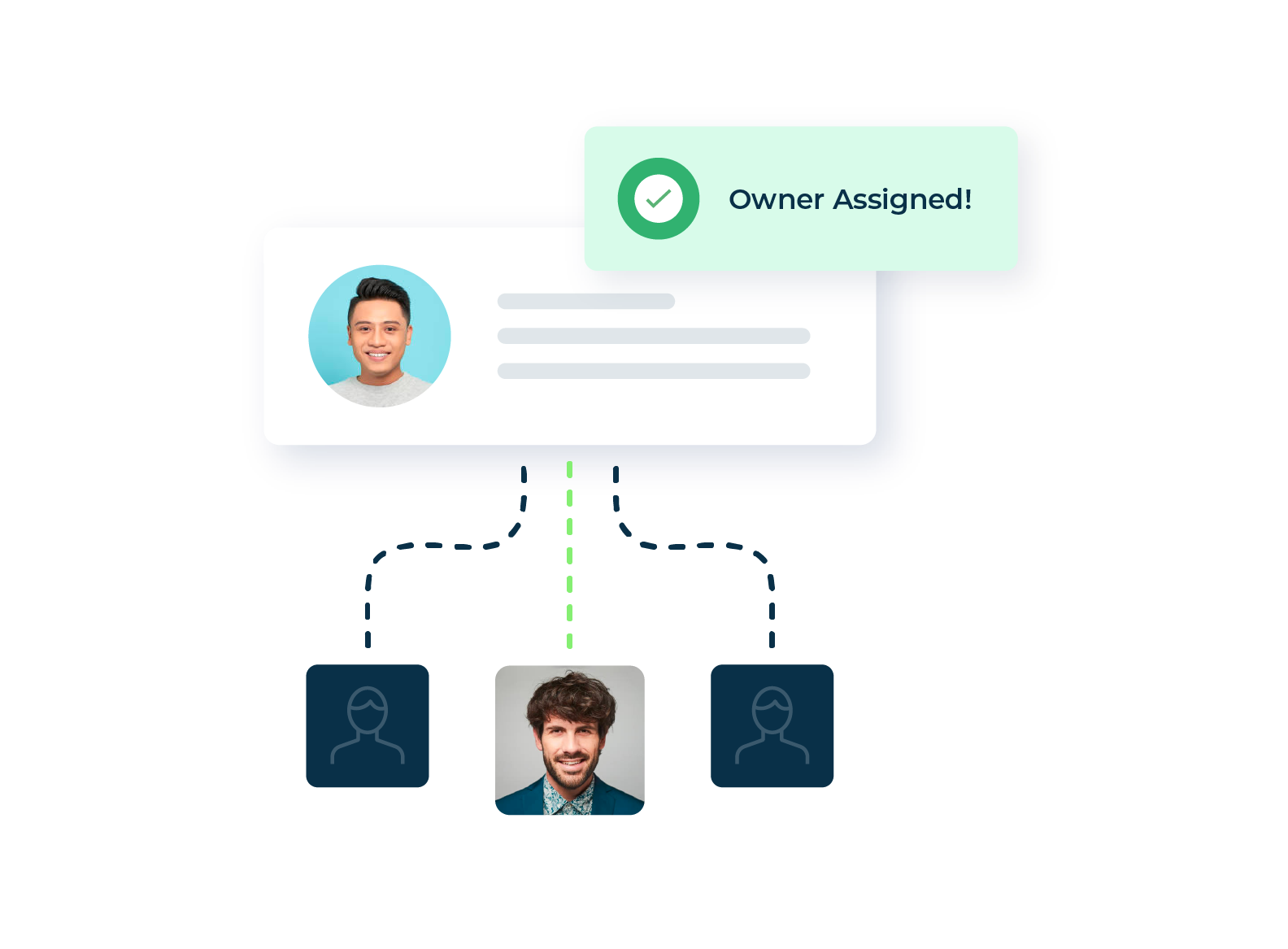
Source: LeanData
Lead-to-Account Matching at Enterprise Scale
LeanData's AI-powered matching engine evaluates company name, email domain, website, address, and phone using fuzzy logic across multiple fields simultaneously.
Territory Management and Full Revenue Lifecycle Orchestration
RevenueHero's value is concentrated at the inbound form. LeanData governs the full revenue lifecycle: territory assignments with hierarchical structures, automated handoffs to customer success, case routing with SLAs, and CSM alerts on churn risk signals all run through the same FlowBuilder.
NOTE: We also evaluated Chili Piper Distro and Calendly for this slot. Chili Piper Distro provides strong form-based routing with a meeting-first orientation, and Calendly serves general-purpose scheduling needs. LeanData offers the deepest CRM-layer routing for enterprise teams already running their GTM motion inside Salesforce.
For a deeper look at LeanData's routing capabilities and platform design, see our LeanData review.
LeanData Pricing
LeanData uses a per-user license model with four Orchestration tiers. Exact pricing requires a sales conversation.
Standard: Lead object routing with lead-to-account matching, round robin, territory routing, and all integrations
Advanced (marked "Best Value"): Lead, Contact, and Account objects with Contact and Account matching
Premium: Any Salesforce object, including custom objects
Enterprise: Any Salesforce object plus sandbox/production support, dedicated consulting, and multi-instance capabilities
Add-ons include Multi-Graph (separate business units), Engagement (account-level insights), NotifyPlus (Slack/Teams notifications), and BookIt Scheduling as standalone or add-on purchase.
For a detailed breakdown of what's included in each tier, see our LeanData pricing breakdown.
Who Should Use LeanData?
Choose LeanData if:
Your team runs on Salesforce and needs routing logic, audit trails, and territory management to live inside the CRM, not in a third-party application.
You process high volumes of inbound leads and need lead-to-account matching at scale, particularly when company name variations or subsidiary relationships cause routing errors in simpler tools.
Your GTM motion extends beyond inbound form routing into account-based orchestration, post-sale CS handoffs, case routing, and buying group management, and you want a single visual FlowBuilder to govern all of it.
5. Calendly: Best Alternative for Small B2B Teams Needing Simple, Low-Overhead Scheduling
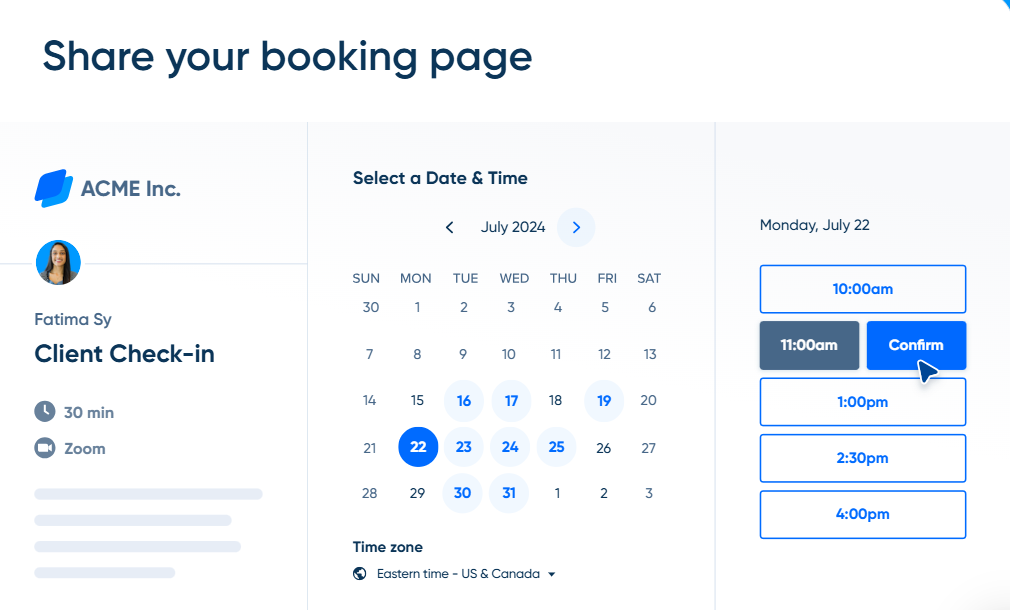
Source: Calendly
Calendly is a scheduling platform that eliminates meeting back-and-forth through shareable booking pages. It serves as a natural RevenueHero alternative for small B2B teams that need reliable scheduling without inbound routing logic, enrichment waterfalls, or a RevOps administrator. Its key capabilities include:
Permanently free plan with unlimited bookings and one event type
Round-robin team scheduling with Routing Forms on the Teams plan at $16/seat/month
100+ native integrations including Google Calendar, Outlook, Zoom, HubSpot, Salesforce, Stripe, and PayPal
Self-serve setup requiring no IT or RevOps involvement
Calendly is used by more than 20 million individuals and 100,000+ organizations across 230+ countries, including 86% of Fortune 500 companies. Its fit here is as the starting point for small B2B teams with five or fewer sales reps.
Why Choose Calendly Over RevenueHero for Simple B2B Scheduling?
Calendly stands out in three areas:
A Permanent Free Tier That Lets You Run Real Meetings
RevenueHero has no free plan; the 14-day trial expires, and the lowest plan starts at $25/seat/month plus a $79/month platform fee. For a three-person team, that's $154/month minimum. Calendly's free plan has no time limit, no meeting cap, and includes mobile apps, video conferencing links, and Meeting Polls. The Standard plan at $10/seat/month unlocks unlimited event types, Workflows, HubSpot integration, and payment collection.
Zero-Configuration Self-Serve Setup
RevenueHero's configuration model is designed for RevOps administrators. A new rep can go from Calendly account creation to a live booking link in under ten minutes. Calendly's structured onboarding compresses the Getting Started workflow into a 17-minute, four-lesson video course. For teams without a dedicated ops function, that's the difference between deploying in an afternoon versus blocking weeks of admin time.
Predictable Per-Seat Cost With No Platform Fee
Calendly charges no platform fee at any tier. Standard is $10/seat/month annually; Teams is $16/seat/month. A five-seat Calendly Teams deployment costs $80/month. The equivalent RevenueHero Inbound Essentials deployment starts at $204/month.
NOTE: We also evaluated Appointy and Acuity Scheduling. Appointy offers solid appointment scheduling for service businesses, and Acuity Scheduling suits individual consultants. Calendly offers the smoothest lightweight scheduling experience for small B2B teams needing CRM integration, round-robin distribution, and a brand their prospects already trust.
Calendly Pricing
Free (always free): 1 event type, 1 calendar, unlimited meetings, mobile apps, video conferencing
Standard: $10/seat/month (annual) or $12/seat/month (monthly); unlimited event types, 6 calendars, Workflows, HubSpot, Stripe/PayPal
Teams: $16/seat/month (annual) or $20/seat/month (monthly); round-robin, Salesforce, Routing Forms, Managed Events, SAML SSO add-on
Enterprise: Starts at $15,000/year; Salesforce lookup routing, Microsoft Dynamics 365, SAML SSO included, SCIM, audit log
Who Should Use Calendly?
Choose Calendly if:
Your team has five or fewer sales reps and hasn't hit routing complexity that would require a dedicated inbound conversion platform.
You need a scheduling tool your prospects already recognize and trust, reducing friction in cold outreach where an unfamiliar booking URL might cause hesitation.
Budget matters and you need a functional free tier, or predictable per-seat pricing without a platform fee.
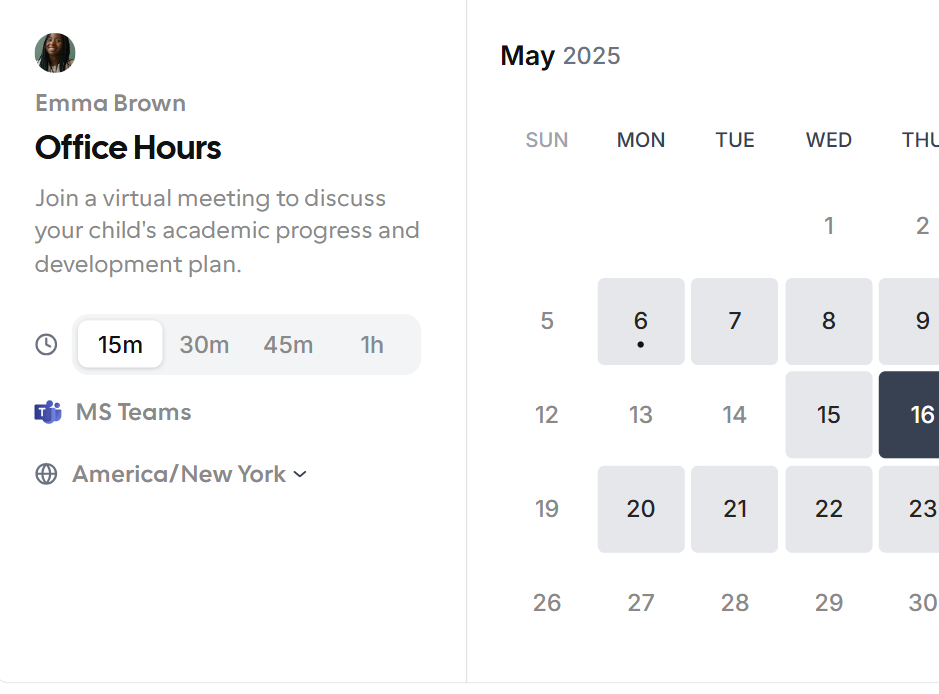
6. Cal.com: Best Alternative for Full Scheduling Capability Without Per-Seat Costs
Source: Cal.com
Cal.com is an open-source scheduling platform that delivers a broad feature set (routing forms, team round-robin, CRM sync, and API access) either free for individual users or at $12–$28/user/month for teams, with no platform fee. Its key capabilities include:
Unlimited event types and unlimited bookings on a permanently free plan
Routing forms with conditional logic for inbound lead qualification
Round-robin, collective, and managed team scheduling
Native two-way sync with Salesforce and HubSpot
REST API v2 and Cal Atoms React components for embedding scheduling in products
Self-hosting via Cal.diy (MIT license) for full data sovereignty
HIPAA, SOC 2 Type II, and ISO/IEC 27001 compliance
Cal.com fits two buyer types: technically resourced teams wanting to embed scheduling infrastructure in their own product, and cost-sensitive teams needing professional scheduling with routing at a fraction of RevenueHero's pricing.
Why Choose Cal.com Over RevenueHero for Scheduling Without Per-Seat Costs?
Cal.com stands out in three areas:
A Permanently Free Tier Without Feature Time-Limits
Cal.com's free plan includes unlimited event types, unlimited bookings, unlimited calendar connections, Stripe/PayPal payments, and native two-way Salesforce and HubSpot sync. RevenueHero's 14-day trial converts to a minimum of $154/month for a three-person team. Cal.com's Teams plan at $12/user/month is $36/month for three users, less than half of RevenueHero's platform fee alone.
Open-Source Foundation with a Self-Hosting Path
Cal.com has 41,000+ GitHub stars and offers Cal.diy as a self-hostable scheduling engine. For organizations requiring data sovereignty (government, healthcare, fintech), scheduling data and routing logic can run entirely within their own infrastructure. RevenueHero is a closed SaaS product with no self-hosting option. Cal.com holds HIPAA, SOC 2 Type II, and ISO/IEC 27001 certifications.
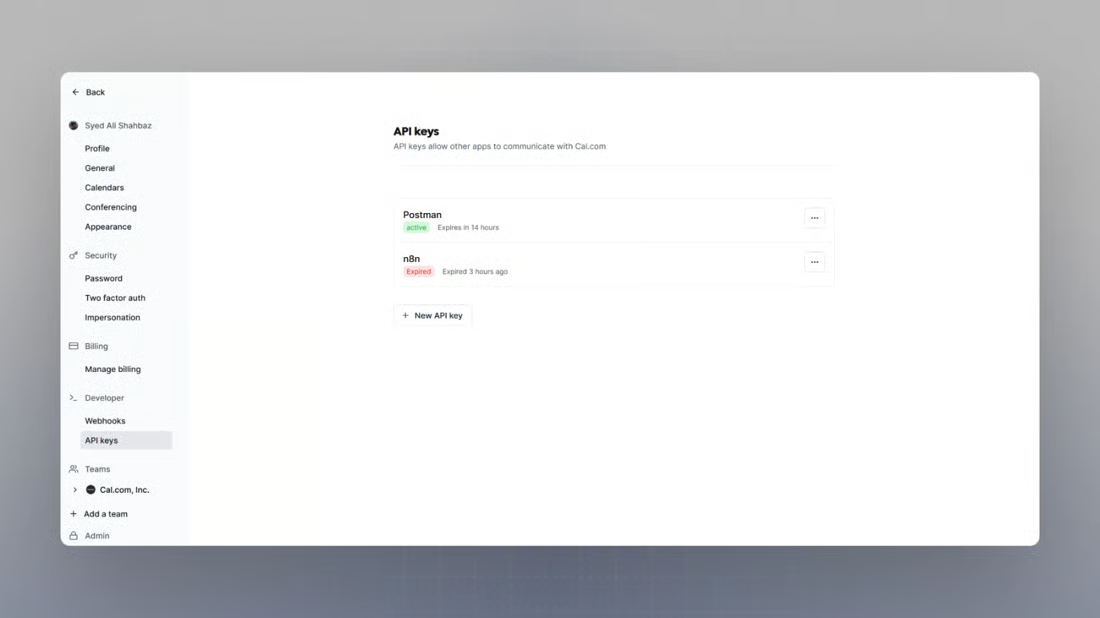
API-First Architecture for Developer-Built Scheduling
Cal.com's REST API v2 and Cal Atoms are built for embedding scheduling in third-party products.
Source: Cal.com
NOTE: We also evaluated HubSpot Meetings and Calendly for the free/low-cost slot. HubSpot Meetings is free within the HubSpot ecosystem but lacks routing forms, self-hosting, and developer APIs outside HubSpot. Calendly offers the most polished individual booking experience but restricts free users to a single event type with no API access or self-hosting. Cal.com delivers the most complete free-tier feature set, the only credible self-hosting path, and the deepest developer API.
Cal.com Pricing
Free: $0/month; unlimited event types, unlimited bookings, unlimited calendars, Salesforce/HubSpot sync, Stripe/PayPal payments
Teams: $12/user/month (annual) or $15/month (monthly); round-robin, routing forms, booking analytics, custom APIs, branding removal. 14-day free trial.
Organizations: $28/user/month (annual); unlimited sub-teams, attribute-based routing, SAML SSO, SCIM, SOC 2/HIPAA/ISO 27001. 14-day free trial.
Enterprise: Custom pricing; dedicated support, 99.9%+ SLA, HRIS integrations, white-label, configurable data residency.
Who Should Use Cal.com?
Choose Cal.com if:
Your team needs professional scheduling with routing and CRM sync but cannot absorb RevenueHero's platform fee plus per-user pricing.
You are building scheduling into your own product, marketplace, or portal and need a developer API and embeddable React components.
Your organization operates in a regulated industry and requires data sovereignty through self-hosting or HIPAA compliance paired with scheduling infrastructure.
7. Knock AI: Best Alternative for Form-Free AI-Native Lead Conversion
Source: Knock AI
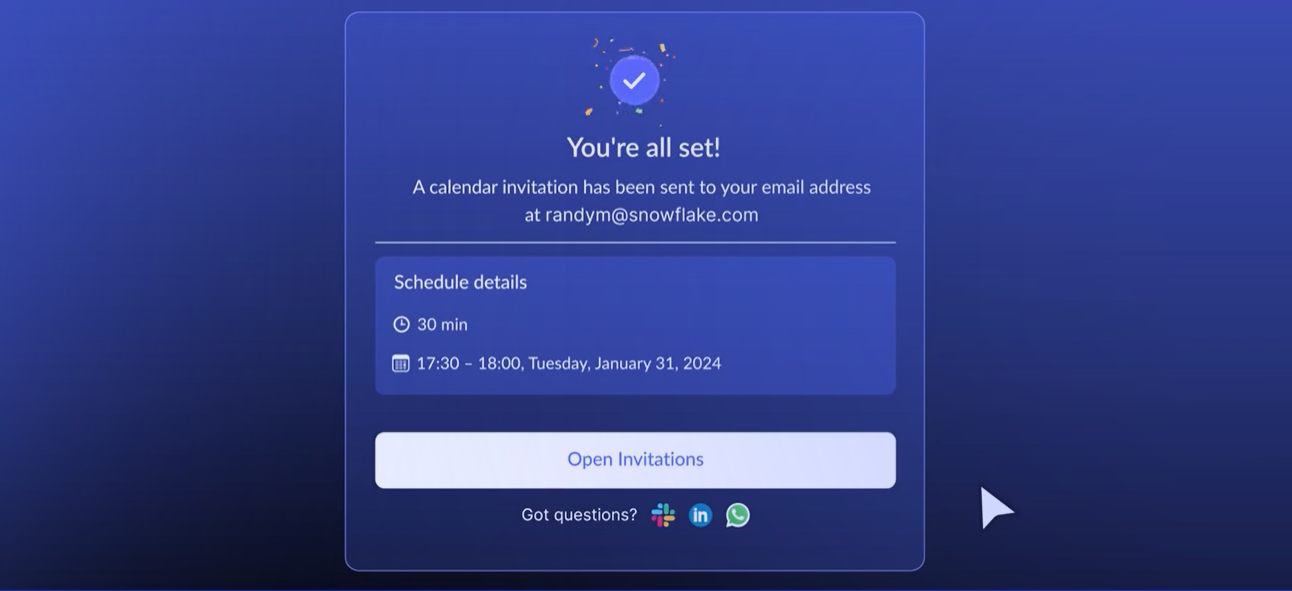
Knock AI is an AI-native lead conversion platform that replaces static web forms and calendar schedulers with real-time buyer conversations in messaging apps buyers already use: Slack, WhatsApp, LinkedIn, and Telegram. Its key capabilities include:
Formless scheduling through AI conversations: Buyers click a Knock Link and enter a guided chat with Knock's AI agent, which qualifies, enriches, and books a meeting from within the conversation
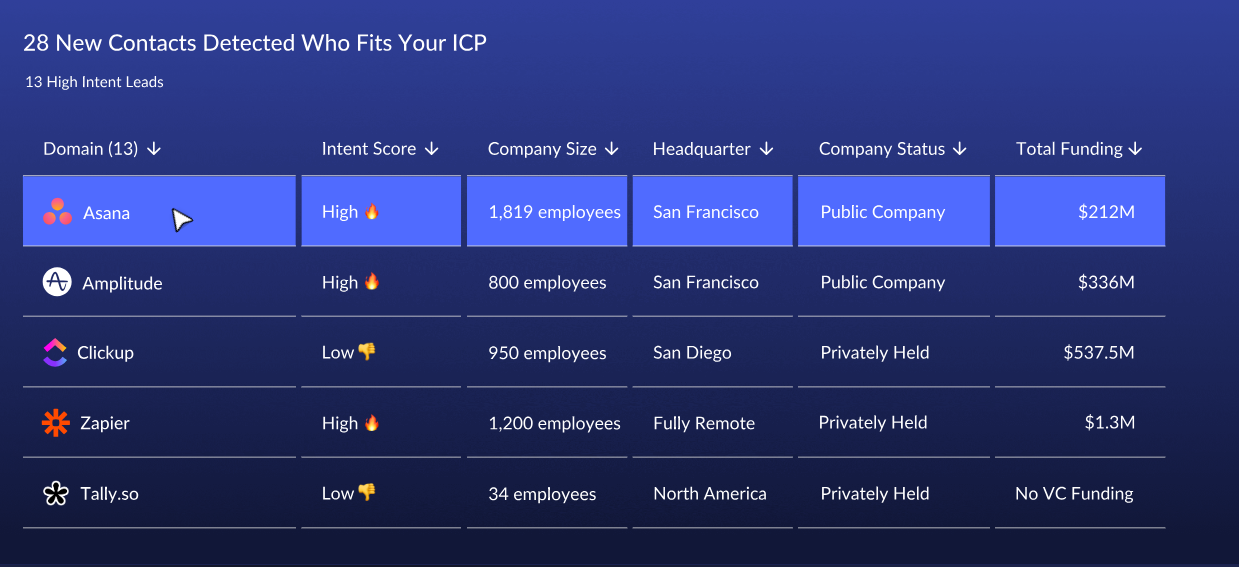
First-party conversational intent routing: Knock Intent routes leads based on what buyers say during the conversation rather than what they selected in a dropdown
Visitor de-anonymization: Knock Reveal identifies anonymous website visitors and surfaces contact-level data before any chat begins
Unlimited seats at a flat monthly rate: Pricing runs on usage credits rather than per-seat licenses
Knock AI is the only platform on this list that routes around the form rather than optimizing what happens after it.
Why Choose Knock AI Over RevenueHero for Form-Free Conversion?
Knock AI stands out in three areas:
The Buyer Path Starts with a Conversation, Not a Form
RevenueHero depends on a buyer completing a form. A buyer who sees the form and leaves represents demand generation spend RevenueHero cannot recover. Knock AI cites that 84% of qualified B2B buyers prefer to chat rather than fill out forms. Instead of a form, every CTA opens a conversation in the buyer's preferred messaging app. Qualification and booking happen within the same chat thread, with no redirect to a calendar page.
Routing Runs on What Buyers Say, Not What They Submitted
RevenueHero's routing operates on structured data: form field values, CRM properties, and enrichment attributes. Knock Intent assigns each interaction one of four intent types (Buying, Partnership, Support, Job Seeker) based on actual conversation content. Knock claims 98% intent detection accuracy in distinguishing buying intent from non-revenue conversations.
Source: Knock AI
Unlimited Seats and AI Agents at No Extra Cost
RevenueHero's per-seat model means cost scales with headcount. Knock AI plans run on usage quotas, not seat count. The Foundation plan starts at $1,000/month with unlimited seats, and AI agents are included at no extra cost.
NOTE: We also evaluated Default 2.0 and Qualified for this slot. Default 2.0 offers form-to-calendar acceleration with enrichment-native routing but doesn't remove the form from the buyer path. Qualified has strong AI chat capabilities but targets larger organizations and centers on form and chat co-existing. Knock AI is the most structurally distinct departure from the scheduling category, the only option that replaces the form rather than optimizing around it.
Knock AI Pricing
Knock AI uses a credit-based subscription model. All plans include unlimited seats and AI agents.
Pipeline Foundation: From $1,000/month; auto-identification, Slack chat capture, AI SDR, instant booking, CRM sync, up to 10,000 de-anonymization credits, 1,000+ activated contacts
Pipeline Acceleration: From $2,000/month; multi-channel messaging (LinkedIn, WhatsApp, Slack, Telegram, iMessage), AI runs full qualification autonomously, up to 30,000 de-anonymization credits, 3,000+ activated contacts
Enterprise Pipeline: Custom pricing; unlimited enrichment and de-anonymization, 10,000+ activated contacts, enterprise security (SAML/OIDC, SCIM), dedicated CSM
Who Should Use Knock AI?
Choose Knock AI if:
Your demo page gets meaningful traffic but form submissions are disproportionately low, and you want to convert abandoned inbound intent without requiring a form fill.
Your buyers are technical, senior, or messaging-native (developers, CISOs, founders) who resist web forms but are active on Slack, LinkedIn, and WhatsApp.
Your SDR team spends significant time triaging non-ICP inbound, and you want AI to filter buying intent from support requests and job seekers before a human rep sees the conversation.
The Final Verdict
RevenueHero excels at converting inbound form submissions into booked meetings with routing and real-time qualification. But as your GTM operation matures, you may need capabilities that go well beyond the scheduling layer.
Based on our research, here are the best alternatives:
ZoomInfo for B2B data, AI-powered deal intelligence via the GTM Context Graph, and access through APIs, MCP, GTM Workspace, and GTM Studio
Chili Piper for enterprise inbound scheduling, Salesforce-native CRM routing, SDR handoff automation, and AI chat under one modular vendor
Default for consolidating fragmented inbound stacks into a single visual workflow engine with native enrichment and website intent detection
LeanData for Salesforce-native lead-to-account matching, territory management, and full object routing that lives inside the CRM
Calendly for simple, budget-friendly scheduling with a permanent free tier and zero-config setup for small teams
Cal.com for open-source scheduling infrastructure with a free tier, developer APIs, self-hosting, and HIPAA compliance
Knock AI for form-free, AI-native lead conversion through conversational booking in messaging apps
You don't have to choose between RevenueHero and these alternatives. Many teams use a scheduling platform alongside complementary tools, pairing RevenueHero's inbound conversion with ZoomInfo's data intelligence, for example, to build a more complete GTM stack. Consider your needs, team size, and growth trajectory when deciding which solution fits.
Ready to power your revenue operation with B2B data and AI-driven intelligence? Start your free ZoomInfo trial or request a demo to see how the GTM Context Graph strengthens every deal interaction, from first signal to closed-won.
RevenueHero Alternatives FAQ
Why do teams look for RevenueHero alternatives?
RevenueHero is built for inbound scheduling and routing, and it does that job well, with a median qualified-to-booked rate of 62% across its customer base.
Teams look for alternatives when their needs extend beyond the scheduling layer: they need B2B data for pipeline generation, CRM-native routing inside Salesforce, full-stack workflow consolidation, or capabilities like website intent detection and conversational AI that operate outside the form-submission model.
What is the best overall RevenueHero alternative?
There is no single best alternative because RevenueHero covers a specific function within a larger GTM workflow.
ZoomInfo is the top choice for teams that need the data foundation and AI intelligence layer powering every stage of the revenue cycle. Chili Piper is strongest for enterprises needing a modular demand conversion platform with Salesforce-native routing. Calendly is the best starting point for small teams that don't yet need routing complexity.
Is there a free alternative to RevenueHero?
Yes. Calendly offers a permanently free plan with unlimited bookings, video conferencing, and one event type. Cal.com's free plan goes further with unlimited event types, unlimited calendar connections, and native two-way Salesforce and HubSpot sync.
ZoomInfo offers ZoomInfo Lite, a permanent free tier with access to 100M+ verified profiles and 10 monthly export credits. RevenueHero itself offers only a 14-day free trial with no permanent free plan.
Which RevenueHero alternative is best for Salesforce-heavy organizations?
LeanData is built for Salesforce-native GTM orchestration, with routing logic, audit trails, and territory management that live inside Salesforce. Its lead-to-account matching achieves 95% accuracy using fuzzy logic across multiple fields.
For teams that also need inbound form scheduling alongside CRM routing, Chili Piper's Distro product offers Salesforce-native routing combined with Form Concierge for scheduling.
How does ZoomInfo compare to RevenueHero?
ZoomInfo and RevenueHero serve different functions. RevenueHero converts form submissions into booked meetings with routing and qualification. ZoomInfo provides the upstream data foundation (500M contacts, 100M companies) and the GTM Context Graph intelligence layer that identifies who to target, reveals when they're in-market, and gives sellers contextual insights for every deal interaction.
Many teams use both: ZoomInfo for data and intelligence, and a scheduling tool for the booking layer.
Which alternative is best for small teams on a budget?
Calendly at $10–$16/seat/month with no platform fee is the most cost-effective option for small B2B teams. Cal.com's free plan offers even more features at no cost, including CRM sync and unlimited event types. For comparison, RevenueHero's Inbound Essentials starts at $25/seat/month plus a $79/month platform fee, making the minimum cost for a three-person team $154/month.
Can I use RevenueHero alongside these alternatives?
Yes, several of these tools complement rather than replace RevenueHero. ZoomInfo provides the data intelligence layer that feeds your entire GTM motion, including the inbound funnel RevenueHero manages. Knock AI captures visitors who abandon forms, which RevenueHero's form-dependent model cannot reach.
The decision to complement versus replace depends on whether your needs are additive (more capability alongside scheduling) or substitutive (a different approach to the same problem).
Which alternative is best for teams that want to eliminate web forms entirely?
Knock AI is the only platform on this list that removes the form from the buyer path. Instead of optimizing what happens after a form submission, Knock replaces the form with AI-driven conversations in messaging apps like Slack, WhatsApp, and LinkedIn. This captures intent from buyers who would never have filled out a form.
