

Choosing between RocketReach and ZoomInfo for B2B prospecting comes down to five questions:
Do you need affordable contact lookups, or a full go-to-market intelligence platform?
Is your priority fast, self-serve access to verified emails, or account-level insights with intent signals and conversation intelligence?
Are you an individual contributor or small team watching costs, or an enterprise organization investing in data infrastructure?
Do you want a focused prospecting tool, or a platform that unifies sales, marketing, and RevOps data?
How important is it that your data platform understands the context behind your deals, not just serves contact records?
In short, here is what we recommend:
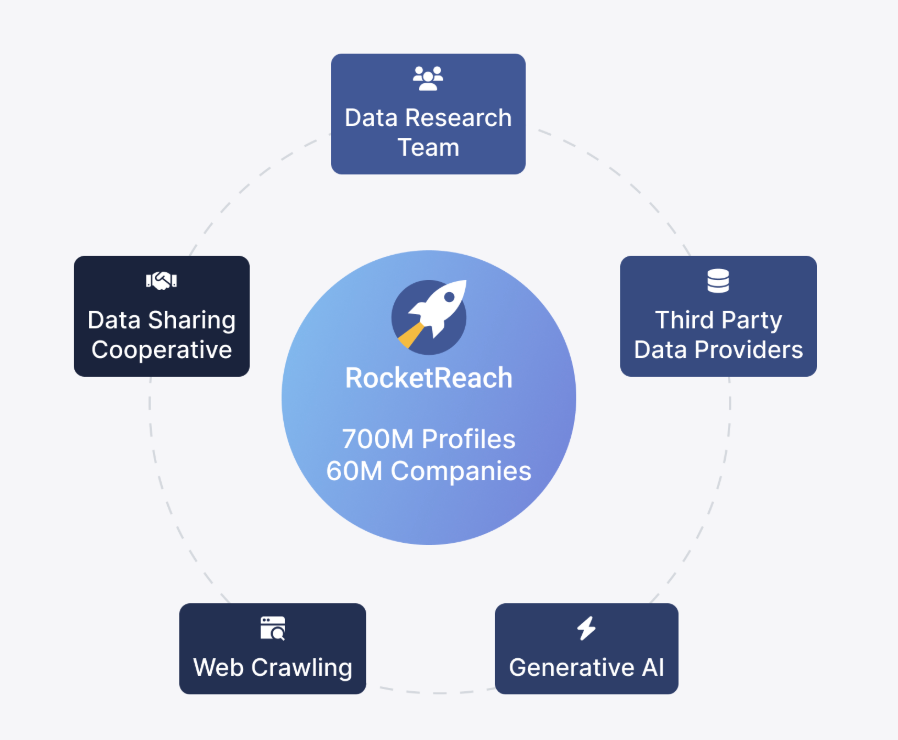
RocketReach is a self-serve contact intelligence platform with 700M+ professional profiles and 60M companies, built by a bootstrapped, profitable team that has kept pricing low. Its strength is speed to value: verified email lookups with up to 98% deliverability on A-grade emails, a Chrome extension with 300K+ users, and annual plans starting at $39/seat/month. RocketReach recently added multi-step Sequences, Intent Data powered by Intentsify, and Autopilot to move beyond lookups, though these engagement features are still maturing. RocketReach is a competitor because it delivers fast, transparently priced contact lookups without enterprise procurement overhead, a strong fit for individual reps and small teams that need reliable contact data without the cost or complexity of a full platform.
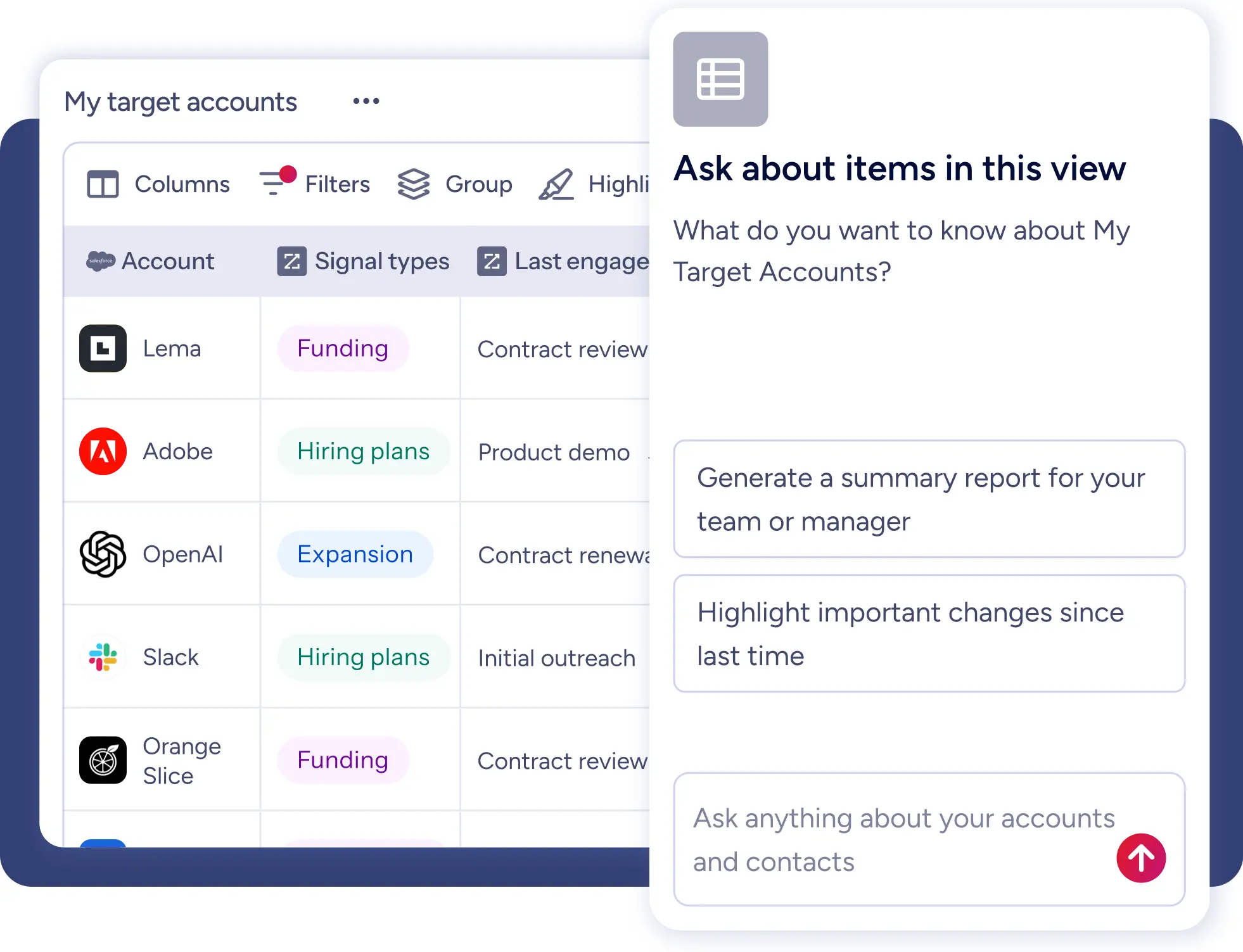
ZoomInfo is an all-in-one AI GTM Platform built on a large data foundation: 500M contacts, 100M companies, 135M+ verified phone numbers, and 200M+ verified business email addresses. Its GTM Context Graph processes 1.5B+ data points daily, unifying this data with your CRM records, conversation transcripts, and behavioral signals to reveal the full context of your accounts. That context feeds AI that shows not just what happened, but why and what to do next. Your team can run sales motions from the GTM Workspace, build GTM plays in GTM Studio, or power their own tools through the API and MCP in any front-end. Pricing is free to start with consumption credits based on usage, with a ZoomInfo Lite tier available for getting started.
Both platforms provide B2B contact data, but they serve different scales of ambition. Your choice depends on whether you need a focused prospecting tool or a platform that powers your entire go-to-market motion.
The core difference: contact intelligence vs. GTM intelligence
The split between these platforms is scope.
RocketReach was founded in 2015 by Andrew Tso and Amit Shanbhag, two software engineers who built a search engine to process public web data at scale. The company has stayed bootstrapped and privately held, growing to 30+ million users and 95% of S&P 500 companies without venture funding. That origin shaped the product: RocketReach does one thing well, finding and verifying contact data, and keeps overhead low. Its bundled outreach tools (Messages, Sequences, Autopilot) have expanded what it can do, but the product identity is still a contact intelligence tool with engagement features layered on top.
ZoomInfo started in 2007 when Henry Schuck founded DiscoverOrg from the conviction that go-to-market teams need verified B2B data. Nearly two decades of acquisitions built an expanding data and intelligence infrastructure. Today ZoomInfo is a $1.25 billion revenue public company that has moved beyond prospecting data into an all-in-one AI GTM Platform. The company's data layer (500M contacts, 100M companies, 300+ human researchers, multi-source AI-and-human verification) is the foundation. On top sits the GTM Context Graph, which fuses ZoomInfo's third-party data with a customer's CRM records, conversation transcripts, and behavioral signals so AI can reason over the full context of every account. And on top of that: three access lanes for any team and any workflow.
This is not just a difference in company size. It reflects different answers to the question: what does a sales team need? RocketReach says accurate contact data, delivered fast, at a fair price. ZoomInfo says the data is necessary but not sufficient. You also need the intelligence to know who to call, when to call them, and what to say. ZoomInfo is a competitor to RocketReach because it answers that broader question with a unified data, intelligence, and execution platform rather than a contact database alone.
RocketReach excels at fast, affordable contact lookups
RocketReach's strength is speed from search to verified contact. The platform covers 700M+ professional profiles with a real-time verification approach: every time a user performs a lookup, RocketReach runs email prediction and verification in real time rather than serving cached data. This keeps deliverability rates high, with up to 98% deliverability for A-grade verified emails.
The search experience suits individual contributors who need answers fast. Users can filter by 100+ criteria including title, company, industry, location, skills, technologies, and recent job changes. The Chrome extension (300K+ users) surfaces contact and company data while browsing any website or social profile. CSV upload with automated column parsing enables bulk enrichment without manual formatting.
RocketReach recently added an intent data module powered by Intentsify, covering 35,000+ intent topics refreshed weekly. The bundle starts at $175/month, making it accessible to teams that cannot justify a standalone intent platform. Autopilot provides automated list-build and refresh on daily, weekly, or monthly cadences (5 active autopilots on Essentials, 10 on Pro, 25 on Ultimate), and native Sequences enable multi-step email outreach without switching tools.
Pricing is unusually transparent: three self-serve tiers are publicly listed at $25/month ($299/year) for Essentials, $62/month ($749/year) for Pro, and $128/month ($1,539/year) for Ultimate. A Custom Team plan starts at $6,000/year for pooled credits, company-level exports, and dedicated support. For teams that need to size a budget without a sales cycle, this is a genuine advantage over enterprise-only vendors.
What RocketReach users commonly run into
RocketReach's main strengths are accessible pricing and ease of use. But as teams scale, certain capability gaps become relevant.
Gap | What users experience | How ZoomInfo differs |
|---|---|---|
No reasoning layer over CRM data | RocketReach surfaces contact records and intent topics. It cannot fuse your CRM data, deal history, and conversation signals into a unified model that explains why accounts are trending. | GTM Context Graph processes 1.5B+ data points daily, connecting ZoomInfo data with your CRM records, Chorus call transcripts, and behavioral signals into an account context your AI can reason over. |
No conversation intelligence | No native call recording, transcript analysis, or deal intelligence based on what was said in meetings. Teams relying on Gong or Chorus have to manage a separate tool. | Chorus is natively integrated, feeding conversation signals directly into the GTM Context Graph and surfacing deal risk and coaching signals in context. |
No MCP server or agent access lane | RocketReach has no published MCP server, no Claude marketplace listing, and no agent-framework integration. Developers embedding contact data into AI workflows need to use the REST API without the intelligence layer. | ZoomInfo's MCP exposes ZoomInfo data and GTM Context Graph intelligence to AI agents (Claude, custom tools) directly, enabling natural-language access in any front-end. |
Bounded Autopilot count | Autopilot credits are capped per tier (5/10/25). Teams with larger outbound volumes or multiple parallel sequences hit these limits. | GTM Workspace includes AI agents that automate research, outreach drafting, and workflow execution without per-autopilot credit limits. |
These are not defects in RocketReach. They are the natural boundary of a contact intelligence tool. Teams that need these capabilities are outgrowing the product category, not the vendor.
ZoomInfo's GTM Context Graph goes beyond contact lookups
ZoomInfo's intelligence advantage is the GTM Context Graph. Most B2B data platforms answer the question, "who should I contact?" ZoomInfo answers, "who should I contact, why right now, what context do they have with us, and what should I say?"
The GTM Context Graph fuses ZoomInfo's verified B2B data (contacts, companies, firmographics, technographics, intent signals) with a customer's first-party data: CRM records, email and calendar signals, Chorus conversation transcripts, and behavioral engagement. This fusion creates a semantic graph that AI can reason over, not just query. When an account shows intent signals, the GTM Context Graph connects that signal to deal history, past call topics, and stakeholder relationships to surface context that a standalone contact data tool cannot provide.
For sellers, this plays out in GTM Workspace: AI agents that draft context-aware outreach, surface buying signals with deal context, and recommend next actions based on the full account picture. For marketers and RevOps teams, GTM Studio provides natural-language audience building and campaign orchestration over the same intelligence layer. And for developers and GTM engineers, the APIs and MCP give programmatic access to both the data and the reasoning, so any front-end can be intelligence-powered.
ZoomInfo's data foundation remains the starting point for all of this: 500M contacts, 135M+ verified phone numbers, 120M direct-dial numbers, and 200M+ verified business emails. Multi-source verification with 300+ human researchers delivers up to 95% accuracy on first-party data, and the company processes 28M site domains daily to keep records current. This is the data layer that the GTM Context Graph operates on top of.
Data accuracy and verification: how the two platforms compare
Both platforms make strong data accuracy claims. Here is what each actually delivers.
RocketReach uses real-time email prediction and verification at the point of lookup. When you pull a contact, RocketReach runs its proprietary algorithm against the live email infrastructure rather than returning a cached result from weeks or months ago. The platform claims 700M+ professional profiles, 989M emails in its corpus, and up to 98% deliverability on A-grade verified emails. Email accuracy, verified by a G2 comparison RocketReach publishes, is cited at 80%.
ZoomInfo uses a multi-source fusion model: AI-driven data aggregation from public web sources, licensed data partnerships, a 100M+ member ZI Community (users who opt in to verify their own records), and 300+ human researchers who verify data at scale. The result is up to 95% accuracy on first-party data, 135M+ verified phone numbers (including 120M direct-dial numbers), and 200M+ verified business emails. The human researcher component is a structural differentiator: it catches job changes and data drift that automated verification misses.
The honest assessment: RocketReach's contact volume claim (700M) exceeds ZoomInfo's (500M), and its real-time verification approach at the moment of lookup is legitimate. ZoomInfo's advantage is direct-dial depth (135M verified phone numbers vs. phone coverage included on Pro+ plans without a comparable verified count) and the human researcher layer that sustains accuracy at enterprise scale. For a rep who primarily sends emails, RocketReach's deliverability numbers are strong. For a rep who calls, ZoomInfo's direct-dial database is a material difference.
G2 ratings as of 2026: RocketReach holds a 4.5/5 from 654 reviews, with strong scores on ease of use, ease of setup, and ease of admin. ZoomInfo holds G2 No. 1 rankings across 133 categories including Sales Intelligence, Buyer Intent, and Data Quality (G2 Summer 2025).
Intent data and buying signals
Both platforms now offer intent data, but the architecture is different.
RocketReach bundles B2B Intent Data powered by a partnership with Intentsify. The module covers 35,000+ intent topics with weekly refresh and is sold as a bundle starting at $175/month that combines intent signals with RocketReach's contact data. For teams that previously had to buy standalone intent platforms at $10,000+/year, this is a meaningful addition.
ZoomInfo built its intent data capability on the Clickagy acquisition and maintains a proprietary signal network covering 210M IP-to-Organization pairings. The key difference: ZoomInfo's intent signals are not a separate add-on. They feed directly into the GTM Context Graph, where they are fused with deal history, CRM activity, and conversation signals to produce account context rather than a list of companies showing topic spikes. An account showing intent on "B2B data" in ZoomInfo is not just flagged with a topic, it is surfaced in the context of your existing relationship, prior deal cycles, and rep engagement history.
For teams deciding between the two: if you need intent data as an affordable addition to a contact prospecting workflow, RocketReach's Intentsify bundle is a practical choice. If you need intent signals to feed a reasoning layer that connects to your CRM and conversation data, ZoomInfo's approach is structurally different.
ZoomInfo customer outcomes
When Seismic deployed ZoomInfo's platform across its outbound sales motion, reps reported being 54% more productive and saving an average of 11.5 hours per week. The team also saw pipeline from ZoomInfo signals increase and booking rates rise.
Spekit, a sales enablement SaaS company, found that ZoomInfo's data enrichment and AI-generated post-meeting summaries reduced administrative load on the sales team. High-scoring accounts moved through qualification 58% faster than before.

"I give props to the data services team at ZoomInfo. They've done really a great job working with us to get us what we need."
Snowflake built an Account Propensity Scoring model on ZoomInfo firmographic and technographic data integrated into their data warehouse. Accounts with the highest propensity scores delivered a 25% higher customer engagement rate and 2x higher new customer conversion rates.
These outcomes reflect a platform that connects data to execution. ZoomInfo identifies the right accounts and surfaces context that makes rep actions more precise, not just faster.
Pricing: what each platform costs
RocketReach publishes its pricing openly, which is a genuine strength for teams that need budget clarity without a procurement cycle.
Plan | Monthly | Annual | Key limits |
|---|---|---|---|
Essentials (Email only) | $25/mo | $299/yr | 1,200 exports/yr, 5 active Autopilots |
Pro (Email + Phone) | $62/mo | $749/yr | 3,600 exports/yr, 10 Autopilots, Salesforce/HubSpot |
Ultimate | $128/mo | $1,539/yr | 20,000 exports/yr, 25 Autopilots, all integrations, Intent Data |
Custom Team | $6,000+/yr | Contact sales | Pooled credits, company exports, dedicated support |
Intent Data (Intentsify bundle) is an additional $175/month. The RocketReach pricing page has the full plan comparison.
ZoomInfo pricing is free to start with consumption credits based on usage. ZoomInfo Lite is a permanent free tier with 10 exports per month, useful for initial evaluation or occasional lookups. Full platform access scales with usage, and ZoomInfo pricing is quoted based on the team's specific data, intelligence, and workflow needs.
The comparison for most teams: RocketReach's transparent annual pricing makes the initial purchase decision easy. ZoomInfo's consumption model reflects that larger teams are buying data infrastructure at scale. Neither pricing model is inherently better, however, it depends on whether you are optimizing for a predictable per-seat spend or a usage-based model tied to GTM output.
When RocketReach is the right fit
RocketReach is a strong fit when:
You are an individual contributor, recruiter, or small team that needs affordable, fast contact data without enterprise procurement overhead. The self-serve model at $39/seat/month (annual billing) means you can be productive in under an hour.
Your primary workflow is email outreach. RocketReach's real-time verification and deliverability focus suit teams whose connect rate is primarily email-driven.
You have a healthcare, staffing, or executive search use case. RocketReach's NPI healthcare data, Bullhorn ATS integration, and coverage of healthcare and legal personas are niche capabilities ZoomInfo does not prioritize.
You need API access bundled into standard plan pricing. RocketReach's Contact Data API is included on Pro and Ultimate plans without a separate enterprise contract.
You want intent data as a low-cost add-on to a prospecting workflow, and the Intentsify bundle at $175/month fits your budget.
When ZoomInfo is the right fit
ZoomInfo is the right fit when:
Your revenue team needs a unified platform where sales, marketing, and RevOps work from the same data and intelligence layer. Contact data alone is not enough; you need context.
Direct-dial accuracy at scale is a core requirement. ZoomInfo's 135M+ verified phone numbers and 120M direct-dial numbers are a structural advantage for teams running call-heavy outbound.
You want intent signals that feed a reasoning layer. ZoomInfo's 210M IP-to-Org pairings integrate into the GTM Context Graph rather than sitting as a separate dashboard.
Conversation intelligence (Chorus) is part of your revenue strategy. You need deal signals and coaching data connected to the same accounts you are prospecting.
RevOps or GTM engineers need to build on top of your data. ZoomInfo's API and MCP server give programmatic access to both the data and the intelligence layer for any tool or agent workflow.
Your enterprise requires governance, dedicated implementation, and deep Salesforce or HubSpot integrations with bidirectional sync and routing logic.
Ready to see how ZoomInfo's data and intelligence platform works across your revenue team? It's free to start.
RocketReach vs. ZoomInfo: feature comparison
Feature | RocketReach | ZoomInfo |
|---|---|---|
Core Philosophy | Contact intelligence + outreach tool | All-in-one AI GTM Platform |
Database Size | 700M+ profiles, 60M companies | 500M contacts, 100M companies |
Verified Phone Numbers | Included on Pro+ plans | 135M+ verified, 120M direct dials |
Email Accuracy | Up to 98% deliverability (A-grade) | Up to 95% accuracy (first-party data) |
Email Volume | 989M emails in corpus | 200M+ verified business emails |
Data Verification | Real-time prediction + verification at lookup | Multi-source AI + 300+ human researchers |
Intent Data | Intentsify-powered, 35,000+ topics, $175/mo bundle | Proprietary, 210M IP-to-Org pairings, integrated into GTM Context Graph |
Intelligence Layer | Contact records + topic-based intent | GTM Context Graph: fuses B2B data + CRM + Chorus + behavioral signals |
Conversation Intelligence | Not available | Chorus (native) |
GTM Workspace | Not available | Yes, next-gen seller surface with AI agents |
GTM Studio | Not available | Yes, marketer/RevOps audience-building and orchestration |
Sales Engagement | Messages, Sequences, Autopilot (native) | Salesloft partnership + GTM Workspace AI agents |
MCP / Agent Access | No MCP server | Yes, ZoomInfo MCP for Claude and custom agents |
API Access | REST API included on Pro/Ultimate; $6K/yr Custom | Enterprise API + MCP; consumption-based |
Starting Price | $39/seat/month (annual billing) | Free to start (ZoomInfo Lite); consumption credits |
Pricing Transparency | Published tiers | Consumption-based; free to start |
Free Tier | Free lookups (no credit card required) | ZoomInfo Lite (permanent, 10 exports/month) |
Healthcare / NPI Data | Yes (NPI API + Healthcare tier) | Not a primary product focus |
Recruiting / ATS Integration | Bullhorn ATS native | Not a primary product focus |
Best For | Individual reps, small teams, recruiting/staffing | Enterprise and mid-market GTM organizations |
Frequently Asked Questions About RocketReach vs. ZoomInfo
Is RocketReach or ZoomInfo better for small teams?
RocketReach is better suited for small teams and individual reps who need affordable, self-serve contact data without enterprise overhead. The self-serve pricing model ($39/seat/month on annual billing) and fast setup make it accessible for teams that need to be productive quickly. ZoomInfo serves teams that need multi-team GTM infrastructure, including intent data fused with a reasoning layer, conversation intelligence, and enterprise integrations. ZoomInfo Lite provides a free starting point for any team wanting to evaluate the platform before committing to full usage.
How does RocketReach's data compare to ZoomInfo's data?
RocketReach covers 700M+ professional profiles with real-time verification at the moment of lookup, achieving up to 98% deliverability on A-grade verified emails. ZoomInfo covers 500M contacts with 135M+ verified phone numbers (including 120M direct dials), 200M+ verified business emails, and up to 95% first-party data accuracy using multi-source verification with 300+ human researchers. RocketReach's contact volume claim is higher; ZoomInfo's advantage is direct-dial depth and the human verification layer that sustains accuracy at enterprise scale.
Does RocketReach have intent data?
Yes. RocketReach offers B2B Intent Data powered by a partnership with Intentsify, covering 35,000+ intent topics with weekly refresh. This is sold as a bundle starting at $175/month alongside RocketReach contact data. ZoomInfo's intent capability is proprietary, based on 210M IP-to-Organization pairings, and is integrated into the GTM Context Graph rather than sold as a separate add-on. ZoomInfo intent signals connect to CRM history and conversation data to produce account context, not just topic flags.
What does ZoomInfo offer that RocketReach does not?
The core gaps are: (1) GTM Context Graph, the intelligence layer that fuses B2B data with CRM records, Chorus transcripts, and behavioral signals so AI can reason over full account context; (2) Chorus conversation intelligence natively integrated into deal workflows; (3) GTM Workspace, the next-gen seller surface with AI agents for context-aware outreach and deal guidance; (4) GTM Studio for marketers and RevOps building audiences and campaigns on the same intelligence layer; and (5) MCP server enabling ZoomInfo data and intelligence to power AI agents in any front-end. RocketReach's product identity is a contact data and outreach tool; ZoomInfo is a multi-team platform.
How much does RocketReach cost compared to ZoomInfo?
RocketReach publishes transparent annual pricing: Essentials at $299/year, Pro at $749/year, Ultimate at $1,539/year per seat, and Custom Team plans starting at $6,000/year. ZoomInfo is free to start with ZoomInfo Lite (10 exports/month, no credit card required); full platform access uses consumption credits based on usage. RocketReach's pricing transparency is a genuine advantage for teams that need a predictable per-seat budget without a sales cycle.
If you're weighing RocketReach against other tools, our RocketReach review covers third-party assessments in detail, our RocketReach pricing breakdown goes deeper on plan tiers, and Apollo vs. RocketReach (vs. ZoomInfo) brings a third platform into the comparison. Looking for a broader list of options instead? See our RocketReach alternatives roundup or top Cognism alternatives.
