
Comparing Ruiyun Service Cloud to HubSpot is like comparing a surgical instrument to a Swiss Army knife. Both deal with customers, but they solve different problems. Before you choose, answer these questions:
Is your primary challenge managing after-sales service and field operations, or managing the full customer journey from first touch to retention?
Do you sell physical products that require installation, repair, and ongoing maintenance?
Is your team based in China, expanding internationally, or operating globally from day one?
Do you need field-service workflows (dispatch, spare parts, IoT monitoring), or marketing automation, pipeline management, and a CRM that connects every department?
How important is having accurate, verified data on the companies and contacts you're trying to reach?
Here's what we recommend:
Ruiyun Service Cloud is the platform for manufacturers and equipment companies whose competitive edge depends on after-sales service. Its 12 product modules cover omnichannel intake, intelligent dispatch, spare parts management, and IoT-triggered predictive maintenance, handling the full post-sale lifecycle in ways generalist CRMs cannot.
ut Ruiyun is built for after-sales operations. It won't manage your marketing campaigns, score your inbound leads, or automate your sales pipeline.
HubSpot is the customer platform for companies that need marketing automation, sales pipeline management, customer service, and content creation under one roof. With 288,706 customers across 135+ countries, HubSpot connects every go-to-market team through a shared Smart CRM, and its Breeze AI layer automates tasks across all departments.
But HubSpot's Service Hub, while strong for ticketing and customer support, isn't built for field-service dispatch, spare parts logistics, or IoT-connected equipment management.
Both platforms do their jobs well. But neither solves a problem that sits upstream of everything they do: identifying the right companies and contacts to pursue. Before you can service a customer (Ruiyun) or nurture them through a pipeline (HubSpot), you need to know who they are, how to reach them, and whether they're ready to buy.
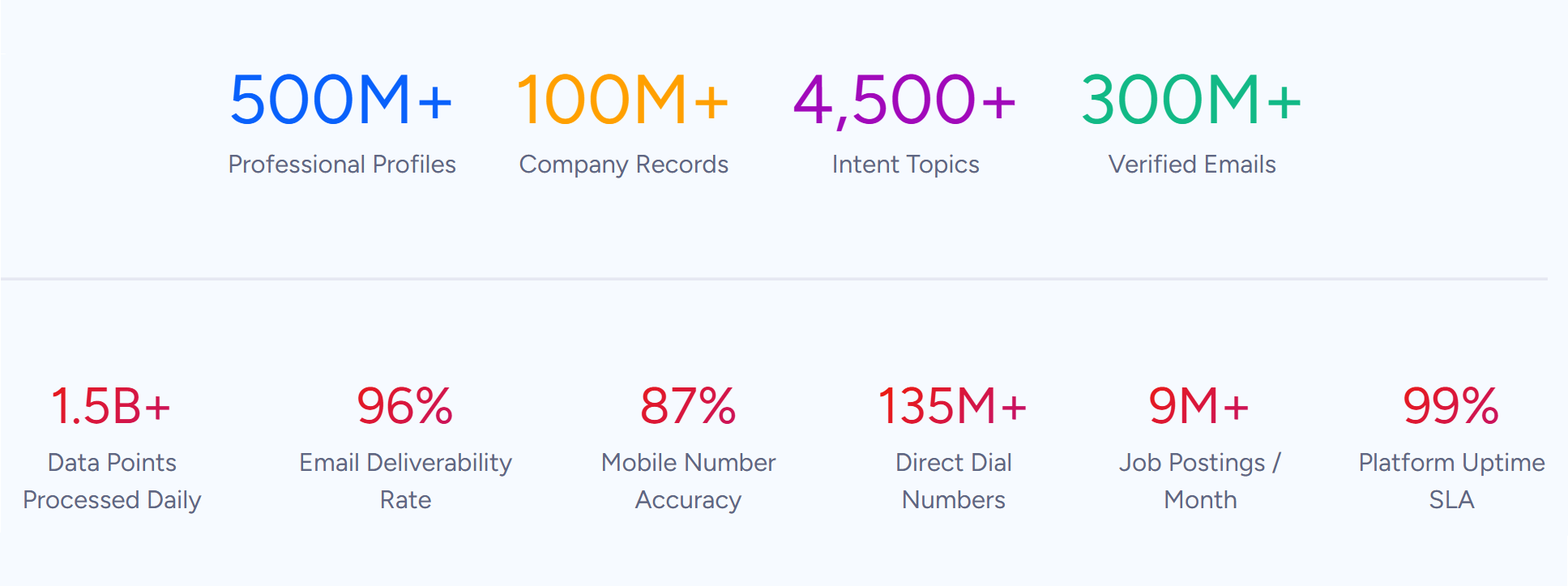
ZoomInfo is a B2B data and GTM platform built on 500M contacts, 100M companies, 135M+ verified phone numbers, and 200M+ verified business email addresses. Its GTM Context Graph processes 1.5B+ data points daily, combining this data with your CRM records, conversation transcripts, and behavioral signals to reveal not just what happened in a deal, but why.
That intelligence flows into every downstream action through GTM Workspace for sellers, GTM Studio for marketers and RevOps, or APIs and MCP in any front-end, including HubSpot.
If verified, data-rich prospecting sounds like the missing piece, see ZoomInfo in action with a free trial.
Ruiyun Service Cloud vs. HubSpot vs. ZoomInfo at a glance
Ruiyun Service Cloud | HubSpot | ZoomInfo | |
|---|---|---|---|
Primary focus | After-sales service and field service management | Full customer lifecycle CRM | B2B data intelligence and GTM execution |
Service capabilities | Dispatch, work orders, spare parts, IoT, predictive maintenance | Ticketing, knowledge base, customer portal, AI customer agent | Not a service platform; provides the intelligence layer before service begins |
Sales & marketing | Service marketing and contract upsell only | Full marketing automation, pipeline management, CPQ | Prospecting, buyer intent, account intelligence, AI-powered outreach |
AI capabilities | AI dispatch, diagnostics, parts identification, multi-LLM support | Breeze AI across all hubs (Customer Agent, Prospecting Agent, Data Agent) | GTM Context Graph, AI-powered account research, signal-driven plays |
Pricing model | Custom enterprise contracts (not published) | Freemium + per-seat/per-hub tiers (starts at $0) | Custom consumption-based (free tier available via ZoomInfo Lite) |
Primary market | China-based enterprises, expanding globally | Global, 135+ countries | Global; trusted by over half the Fortune 500 |
CRM integration | OpenAPI for ERP/CRM connectivity | Is the CRM | Native integrations with Salesforce, HubSpot, Dynamics 365 |
Best for | Manufacturers with field service, repair, and maintenance operations | Companies needing unified marketing, sales, and service | Companies needing accurate prospecting data and buyer intelligence |
These platforms solve different problems
The question isn't which platform is "better." It's which problem you're trying to solve.
Ruiyun Service Cloud exists because after-sales service at manufacturing companies is operationally complex. A home appliance manufacturer has technicians in the field, spare parts in distributed warehouses, warranty contracts with varying terms, and customers who expect real-time status updates.
Coordinating all of this through phone calls and WeChat groups doesn't scale. Ruiyun digitizes the entire post-sale workflow, from customer intake through dispatch, field execution, parts logistics, billing, and satisfaction tracking.
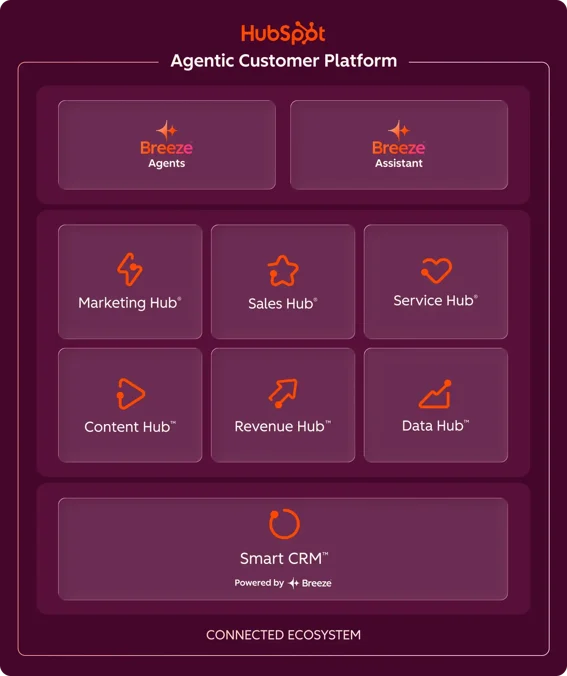
HubSpot exists because go-to-market teams drown in fragmented tools. A growing company might use one tool for email marketing, another for CRM, another for customer support, and yet another for content management.
HubSpot consolidates marketing, sales, service, content, data management, and commerce into a single platform connected through one Smart CRM. The pitch: "Disconnected tools and data slow you down. HubSpot connects everything in one place."
Source: HubSpot
The overlap is narrow. HubSpot's Service Hub handles ticketing, live chat, knowledge bases, and customer feedback. Ruiyun's service marketing module can upsell customers and manage contracts. But these peripheral capabilities don't make either platform a substitute for the other. A company choosing between them is deciding which operational challenge takes priority.
Ruiyun goes deeper on field service than HubSpot can
For companies that install, maintain, and repair physical products, Ruiyun's depth matters.
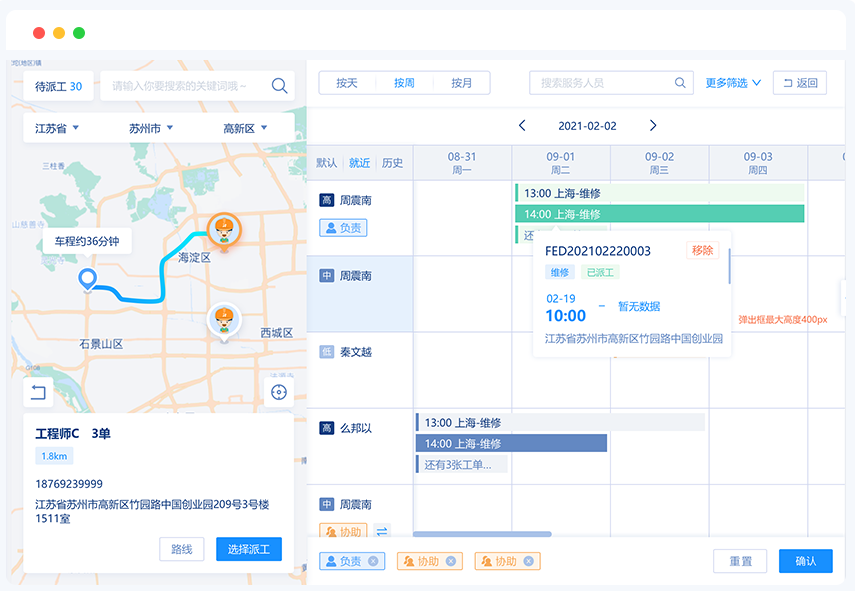
Intelligent dispatch supports three modes: map-based dispatching showing engineer locations and workloads, mobile dispatching for station managers, and automatic dispatching based on location, service qualifications, and current load. HubSpot's Service Hub routes tickets to agents by queue rules, but it has no geographic dispatch, engineer certification matching, or multi-stop route optimization.
Source: Ruiyun Service Cloud
Spare parts management tracks inventory across headquarters, service stations, and individual engineers' personal warehouses, with safety-stock alerts, BOM-based requests, and automated used-part return lists generated from work orders. HubSpot has no native inventory or parts management.
Equipment 360° records maintain a full lifecycle profile for every installed unit: model details, warranty expiry, factory shipment date, every service event written back to the record, and a panoramic map showing the entire installed base with warranty status at a glance.
When a repair is triggered, the system automatically determines warranty eligibility, eliminating manual lookups and billing disputes. HubSpot's CRM tracks contacts and companies, not individual equipment units and their service histories.
IoT integration connects to installed equipment via sensor data. Critical anomalies automatically create and dispatch work orders; minor alerts send customer notifications. This severity-aware routing avoids alarm fatigue while catching real failures before a customer calls. HubSpot has no IoT module.
HubSpot goes broader on CRM and marketing than Ruiyun can
For companies whose primary challenge is attracting, converting, and retaining customers across multiple channels, HubSpot's breadth far exceeds Ruiyun's.
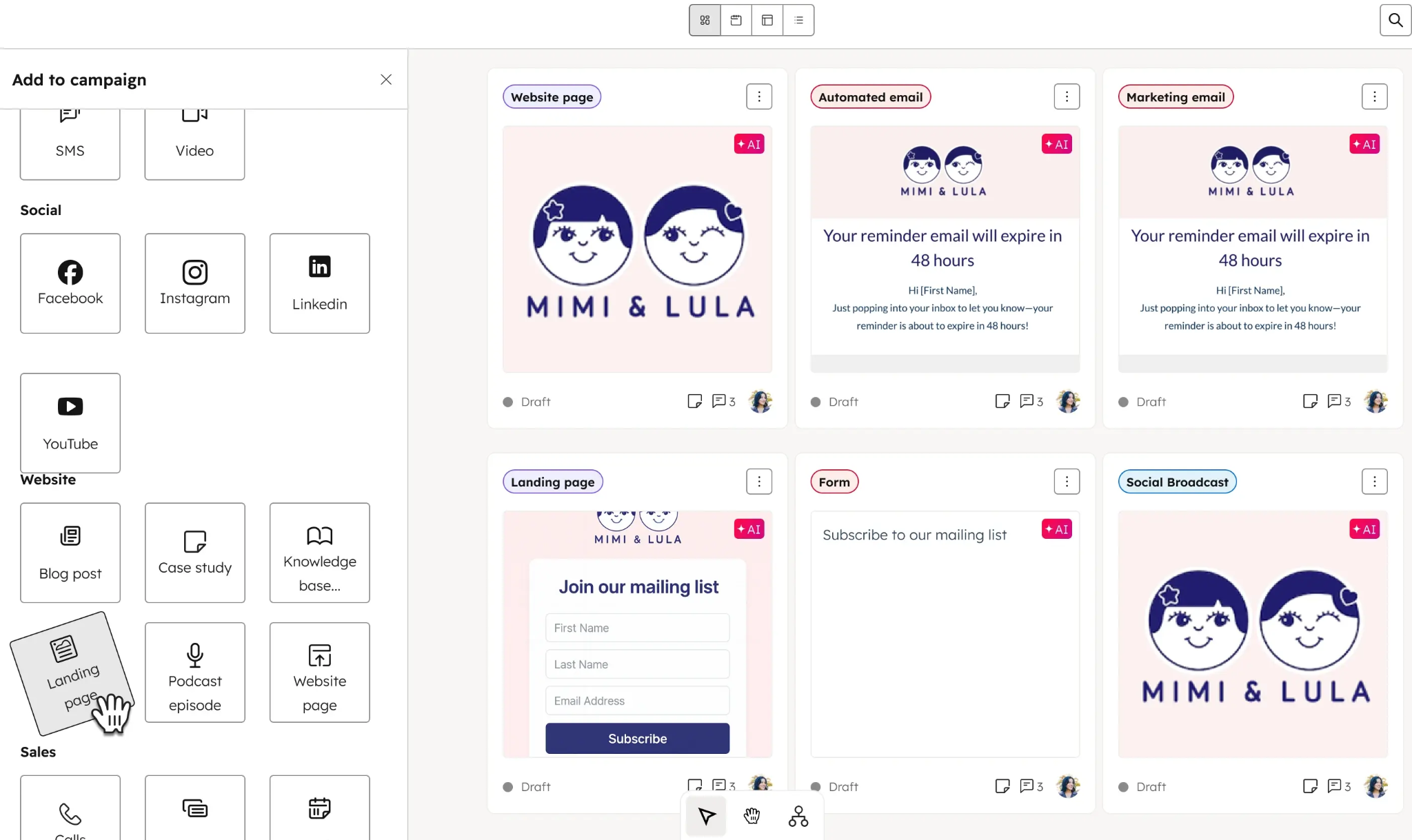
Marketing Hub covers email marketing, automation workflows, landing pages, forms, social media management, ad management, and multi-touch revenue attribution, all connected to the same CRM that sales and service use.
Source: HubSpot
Ruiyun's service marketing module can tag customers for upsell opportunities and manage service contracts, but it's not a marketing automation platform. No email campaigns, no landing pages, no SEO tools, no ad management.
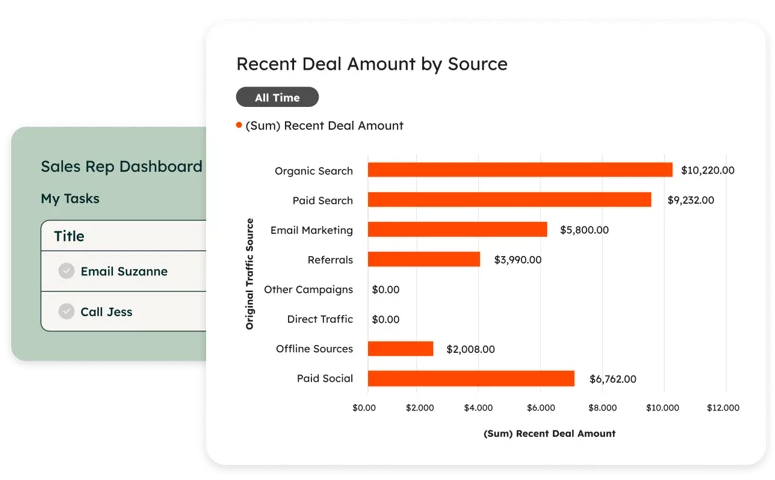
Sales Hub provides pipeline management, sequences, call tracking, CPQ, conversation intelligence, forecasting, and AI-guided selling. Ruiyun has no sales pipeline. Its commercial capabilities stop at service contract renewals and the service marketplace.
Source: HubSpot
Content Hub lets teams create and manage websites, blogs, and content using AI writers and a drag-and-drop builder, with content personalization driven by CRM data. Ruiyun has a learning center ("Xiao Rui Academy") for educational content about the platform itself, not a content creation toolset for customers.

Source: HubSpot
The app ecosystem is another gap. HubSpot's marketplace has over 2,000 integrations with 2.5 million active installs. Ruiyun offers pre-built connectors for Chinese payment platforms (WeChat Pay, Alipay), domestic and international logistics carriers, and e-commerce platforms, plus OpenAPI for ERP/OA integration, but the ecosystem is smaller.
AI capabilities reflect each platform's focus
All three platforms have invested in AI, but the implementations reveal their priorities.
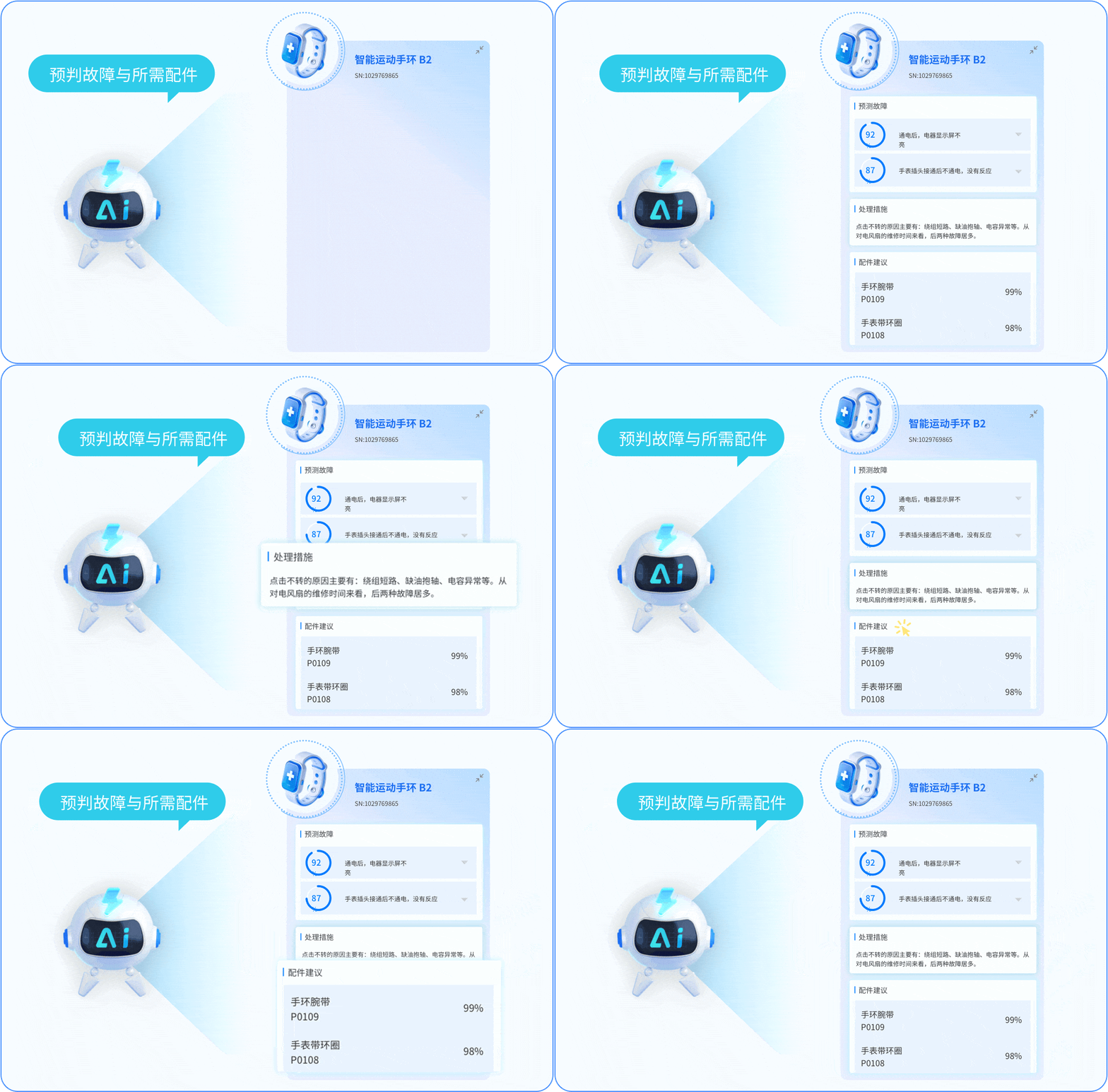
Ruiyun's AI is embedded across the after-sales workflow: intelligent customer service handling 80%+ of common inquiries, email extraction that parses fault descriptions and serial numbers, AI-powered dispatch, predictive fault diagnosis combining descriptions with device model history, and photo-based parts identification that returns part numbers with real-time inventory counts.
Source: Ruiyun Service Cloud
The platform connects to DeepSeek, ERNIE Bot, Tongyi Qianwen, Moonshot, OpenAI, and Claude, giving enterprises a choice between domestically approved and frontier models.
HubSpot's Breeze AI spans the entire customer platform. The Customer Agent resolves over 50% of customer conversations without a human. The Prospecting Agent monitors buying signals and drafts personalized outreach using complete customer history. The Data Agent answers natural-language questions about CRM data.

Source: HubSpot
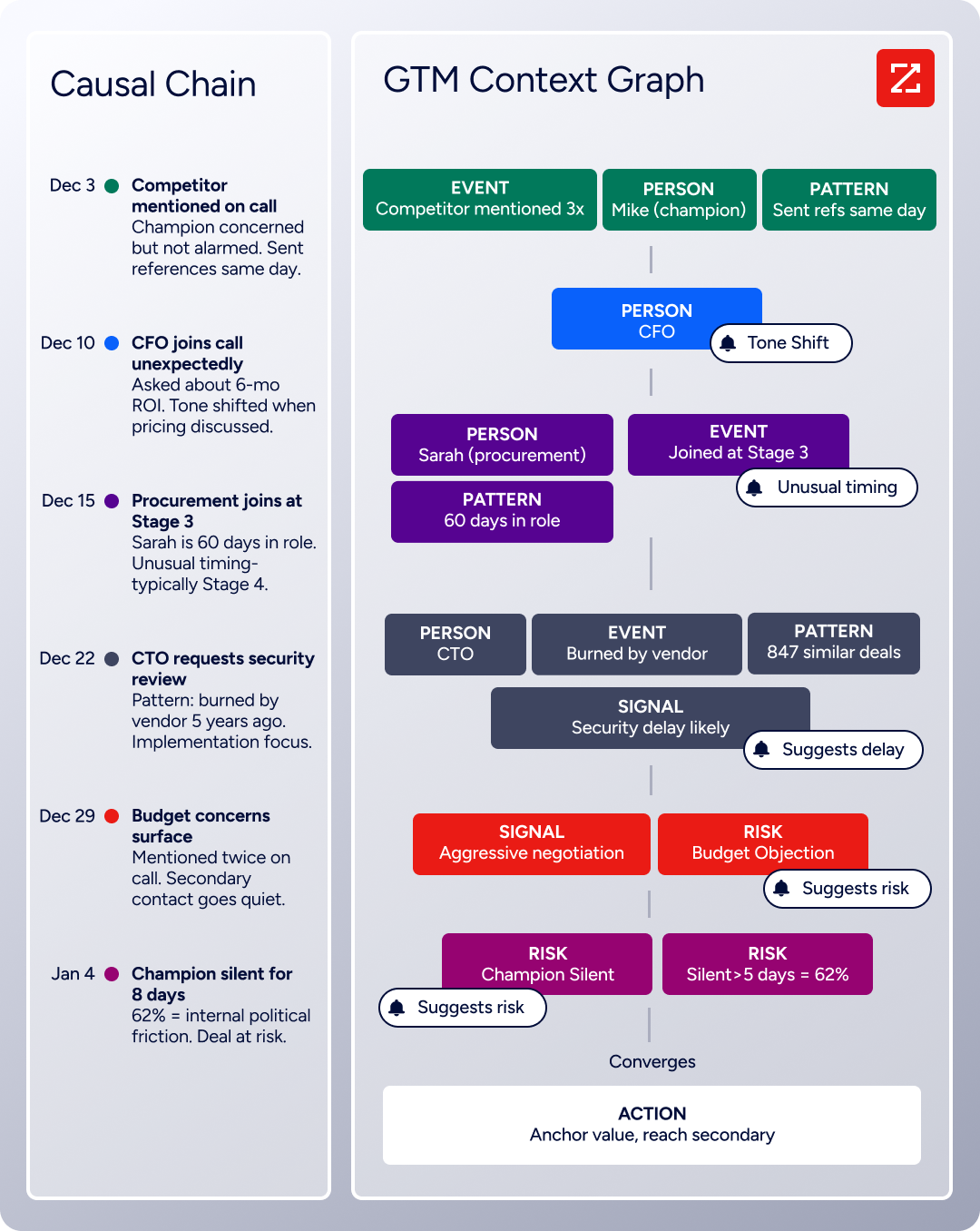
ZoomInfo's AI operates at the intelligence layer. The GTM Context Graph processes 1.5B+ data points daily, combining B2B contact data with CRM records, conversation transcripts, and behavioral signals to capture why deals move or stall, not just what happened. This powers AI-drafted outreach in GTM Workspace and signal-driven plays in GTM Studio.
Source: ZoomInfo
Seismic's sales team attributed 39% of active pipeline to opportunities identified or influenced by ZoomInfo signals and boosted productivity by 54%. (Seismic case study)
The distinction matters: Ruiyun's AI optimizes what happens after a service request arrives. HubSpot's AI spans marketing, sales, and service execution. ZoomInfo's AI sits upstream, identifying which companies to target and why they're likely to buy.
Global readiness depends on where you start
Geography plays a decisive role in this comparison.
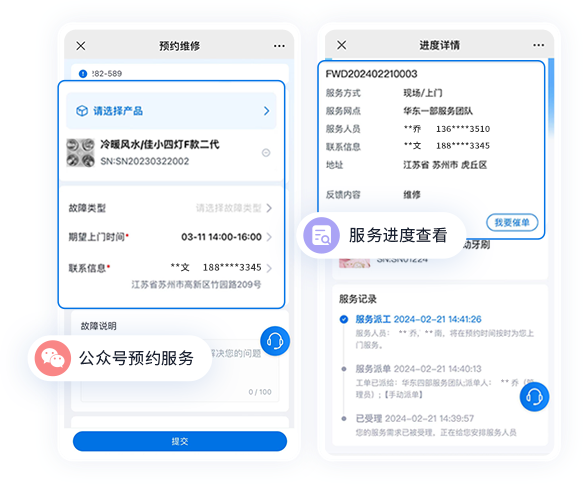
Ruiyun is built for the Chinese market first. Its omnichannel intake integrates with WeChat Official Accounts, WeChat Mini Programs, WeCom, and Chinese e-commerce platforms like JD.com and Suning. For Chinese manufacturers, this is exactly right.
Source: Ruiyun Service Cloud
The platform is expanding internationally through a partnership with Amazon Web Services covering 72 countries and supports multilingual localization and GDPR compliance. But the global infrastructure is still emerging. International buyers would find a shorter track record outside China.
HubSpot operates natively across 135+ countries with localized platforms in multiple languages. Its knowledge base is available in 17+ languages. For companies operating globally from day one, HubSpot is ready. It won't, however, connect to WeChat, JD.com, or Alipay the way Ruiyun does natively.
ZoomInfo covers 500M contacts across 100M companies globally, including 34M+ company profiles outside North America, 200M+ professional profiles outside NA, and 45M+ mobile numbers outside NA.
Source: ZoomInfo
In 2025, ZoomInfo expanded international mobile coverage by 1.8 million numbers across six European markets. For companies entering new markets, ZoomInfo identifies and reaches buyers before the first conversation happens.
Pricing models signal different buying experiences
The three platforms have different commercial structures.
Ruiyun does not publish pricing. The company offers a sales-qualified demo and trial with one-on-one consultation and an implementation plan, but there is no self-serve sandbox.
Given the platform's target market (companies with annual revenue between ¥500 million and ¥5 billion), this fits custom enterprise contracts. Expect multi-month implementation cycles with dedicated consulting.
HubSpot offers the most transparent pricing and the lowest barrier to entry. A permanent free CRM includes unlimited contacts, basic tools across all hubs, and never expires. The Starter Customer Platform bundles all hubs at $15/seat/month (monthly) or $9/seat/month (annual).
Marketing Hub Professional starts at $800/month with a $3,000 mandatory onboarding fee. Sales Hub Professional is $90/seat/month (annual) with a $1,500 onboarding fee. Enterprise tiers scale to $3,600/month for Marketing Hub and $150/seat/month for Sales Hub. One catch: if you subscribe to multiple hubs at different tiers, all Core Seats are billed at the rate of the highest tier.
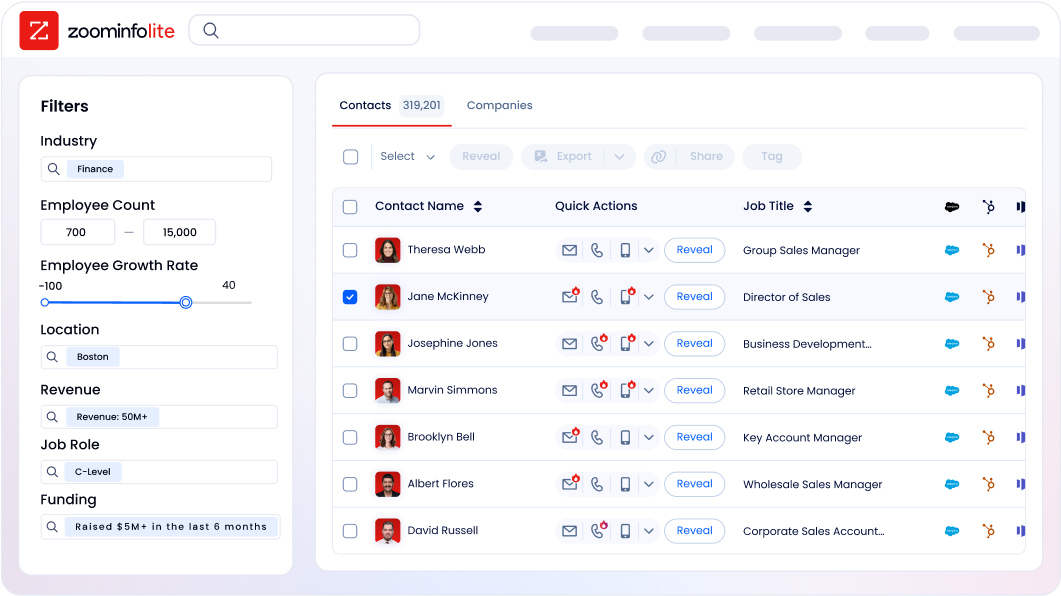
ZoomInfo uses custom consumption-based pricing. ZoomInfo Lite provides permanent free access with 10 monthly export credits, search capabilities, and a Chrome extension. A 7-day free trial offers broader access. Paid plans scale around seats, credits, and features (intent signals, AI capabilities, and enterprise integrations at higher tiers), with API access included in all relevant plans.
Source: ZoomInfo
Integration and data flow between platforms
For many companies, the real question isn't choosing one platform. It's understanding how they fit together.
ZoomInfo and HubSpot have a native integration. ZoomInfo data (contacts, companies, intent signals) flows directly into HubSpot's CRM, enriching records with verified direct dials, business emails, company attributes, and technographics.
HubSpot's free tier includes a ZoomInfo Lite integration. For companies using both, this means the intelligence that identifies and qualifies prospects (ZoomInfo) connects directly to the platform that nurtures and converts them (HubSpot).
Ruiyun integrates with HubSpot or other CRMs through its OpenAPI layer, but this requires configuration work rather than a pre-built connector. A manufacturing company using HubSpot for marketing and sales and Ruiyun for after-sales service would need project effort to synchronize customer records across both platforms.
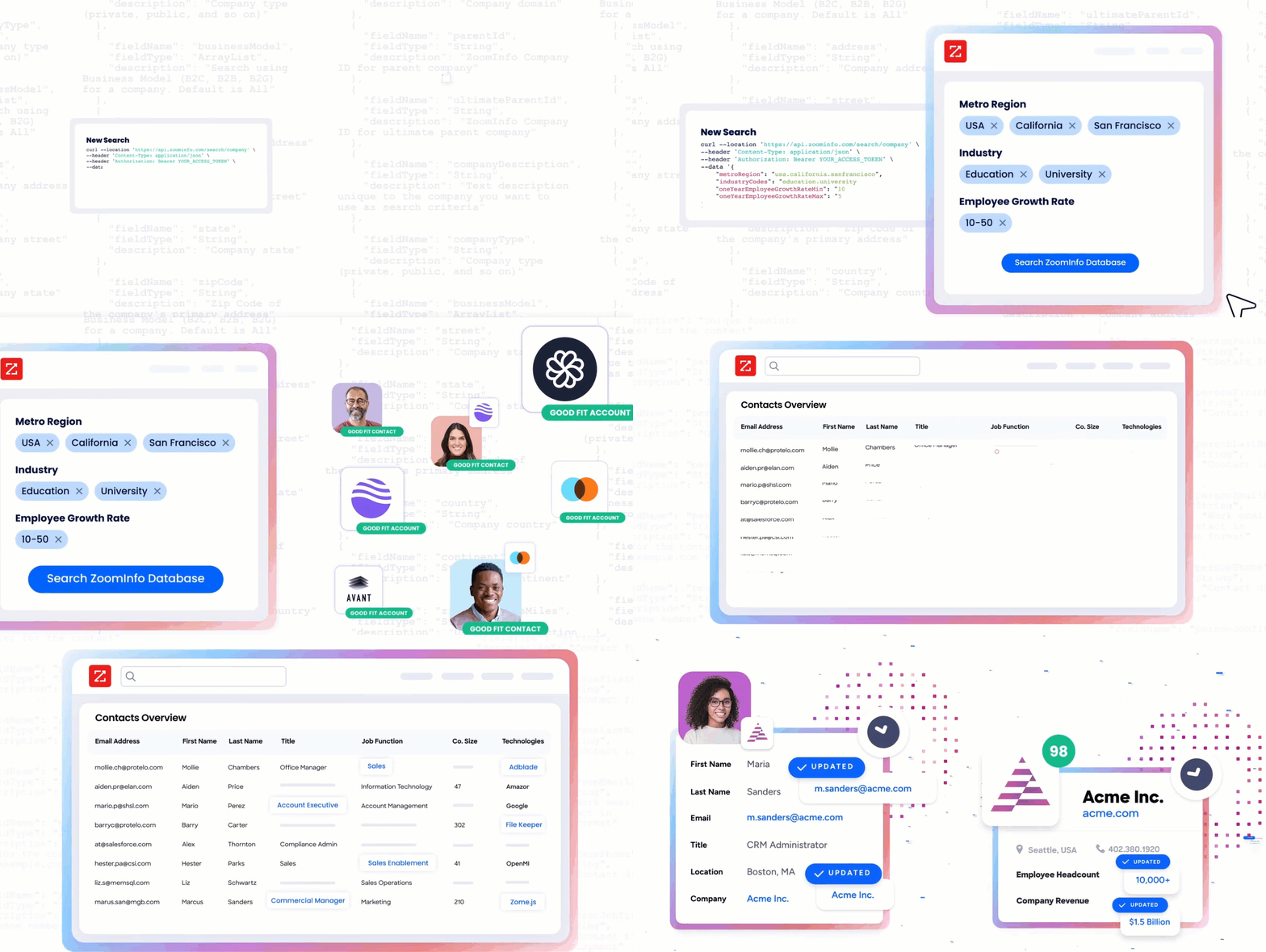
ZoomInfo's intelligence also extends beyond its own products. Through APIs and MCP, the same B2B data and GTM Context Graph are accessible inside any AI agent or custom tool, including Claude and ChatGPT.
Source: ZoomInfo
BDO Canada's Senior Marketing Intelligence Analyst: "The plug-and-play aspect of the API means I can integrate it very easily into any process and get information at a moment's notice," achieving an 87% reduction in time spent on internal data dashboard updates. (BDO Canada case study)
If you're evaluating HubSpot and ZoomInfo as standalone platforms, see our HubSpot vs ZoomInfo comparison for a direct breakdown of how they stack up.
Support and onboarding reflect different scales
Ruiyun runs a high-touch, vendor-led model. With 800+ employees (85%+ in R&D, consulting, and implementation), every enterprise engagement includes dedicated implementation managers.
The "Xiao Rui Academy" offers white papers, live-streaming courses, and industry-specific guides. Support is available through a 400 hotline, WeChat consultation, and email. This is the right model for complex after-sales deployments, but there is no self-service path.
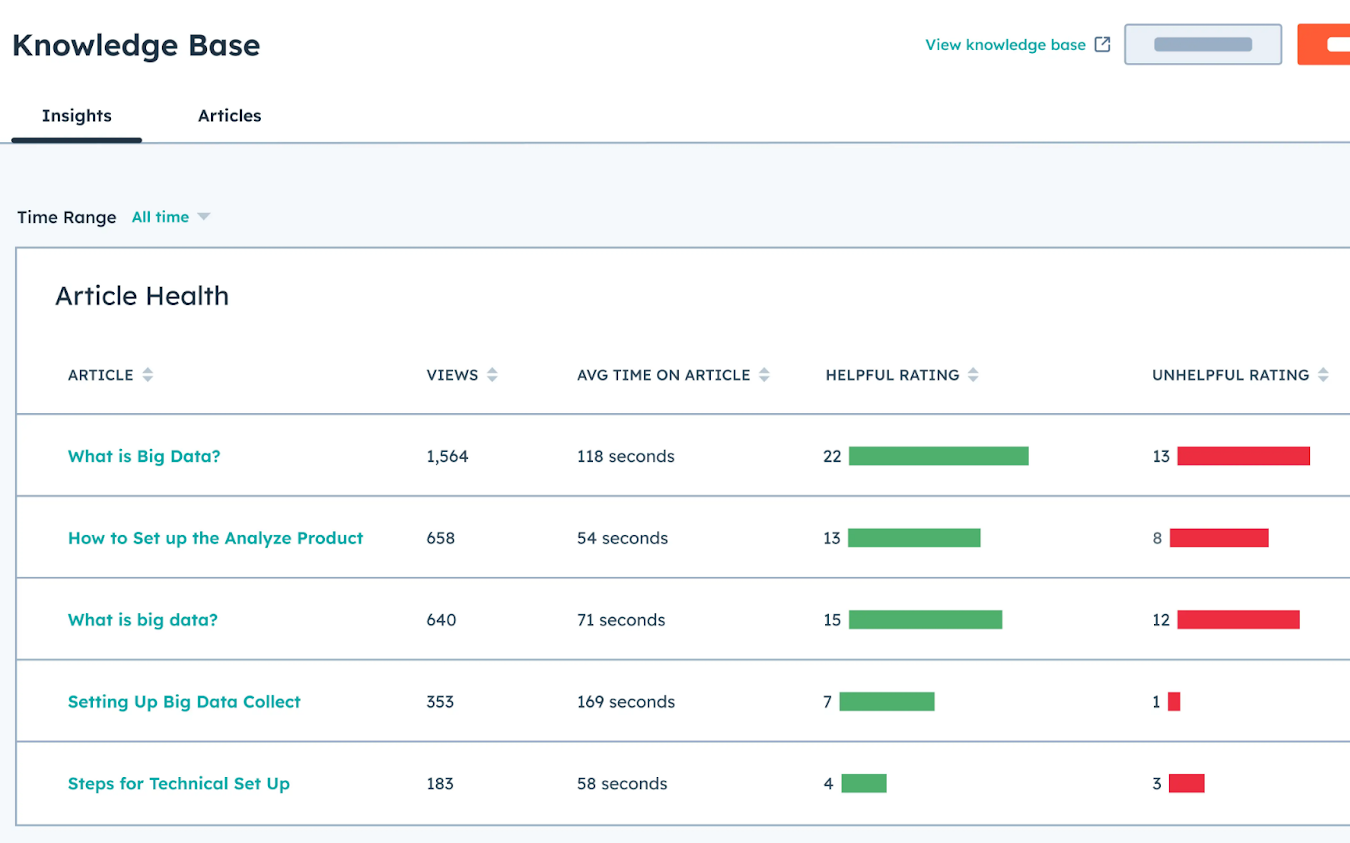
HubSpot provides tiered support: community access for free users, email and chat for Starter, and phone support for Professional and Enterprise. HubSpot Academy offers free courses and certifications (over 200,000 professionals certified). The knowledge base spans 17+ languages across 13+ topic areas.
Source: HubSpot
For complex deployments, HubSpot relies on its Solutions Partner ecosystem, since internal professional services account for only ~2% of total revenue.
ZoomInfo redesigned its onboarding from 30 to 90 days, producing a 25% improvement in customer satisfaction scores. ZoomInfo University provides role-specific learning paths and certifications. Support includes a help center, community, phone access, and professional services through ZoomInfo Labs.

Source: ZoomInfo
Ruiyun Service Cloud vs. HubSpot vs. ZoomInfo: Which should you choose?
The right choice depends on what kind of customer operation you're building.
Choose Ruiyun Service Cloud if:
You manufacture physical products requiring installation, repair, and ongoing maintenance
Field service dispatch, spare parts logistics, and equipment lifecycle tracking are core operational needs
Your primary market is China or you're a Chinese brand expanding service operations internationally
You need IoT-connected equipment monitoring with automated work-order creation
You want a platform built for after-sales, not a generalist CRM with service features bolted on
Choose HubSpot if:
You need marketing automation, sales pipeline management, and customer service in one platform
Your teams are drowning in fragmented point solutions and need a single source of truth
You want a low barrier to entry with a free tier and self-serve onboarding
Content creation, lead nurturing, and full-funnel analytics are critical to your growth
You operate globally and need a platform with localization across 135+ countries
Add ZoomInfo if:
You need verified B2B contact and company data to power your sales pipeline
Your outbound prospecting suffers from incomplete data, bounced emails, or wrong phone numbers
You want buyer intent signals that show which accounts are actively researching solutions
You use HubSpot (or Salesforce, or Dynamics) and need the intelligence layer that makes your CRM data actionable
You're building AI agents or custom tools that need programmatic access to B2B intelligence
Start with ZoomInfo Lite for free, or explore the full platform with a 7-day trial.
These platforms are not substitutes for each other. A manufacturing company could use all three: ZoomInfo to identify and reach target accounts, HubSpot to manage the marketing and sales pipeline, and Ruiyun to deliver the after-sales service that drives retention and expansion revenue. The question is which gap hurts most today. That's where you start.
Ruiyun Service Cloud vs. HubSpot vs. ZoomInfo FAQ
What is the core difference between Ruiyun Service Cloud, HubSpot, and ZoomInfo?
Ruiyun Service Cloud is a specialized after-sales service and field service management platform built for manufacturers, covering work orders, dispatch, spare parts, IoT monitoring, and predictive maintenance. HubSpot is a customer platform combining marketing automation, sales CRM, customer service, and content management in a single system.
ZoomInfo is a B2B data intelligence platform that provides verified contact and company data, buyer intent signals, and AI-powered go-to-market tools to help companies find and reach their target accounts.
Can Ruiyun Service Cloud replace HubSpot, or vice versa?
No. They solve different problems with minimal overlap. Ruiyun has no marketing automation, sales pipeline, or content management. HubSpot has no field service dispatch, spare parts management, IoT integration, or equipment lifecycle tracking. A company that needs both a marketing-sales CRM and field service management would likely use both platforms rather than trying to force one into the other's role.
Which platform is best for a manufacturing company?
It depends on the priority. For after-sales operations (dispatch, maintenance, spare parts, warranty management), Ruiyun Service Cloud is built for manufacturing.
For marketing, sales pipeline, and general customer service, HubSpot is the broader platform. For identifying which companies and contacts to target before the relationship begins, ZoomInfo provides the B2B intelligence layer. Many manufacturing companies would benefit from combining all three.
Does ZoomInfo integrate with HubSpot?
Yes. ZoomInfo has a native integration with HubSpot that enriches CRM records with verified contact data, company attributes, technographics, and buyer intent signals. ZoomInfo Lite is also available as a free integration for HubSpot users. Prospecting intelligence from ZoomInfo flows directly into HubSpot's CRM for sales and marketing execution.
How does pricing compare across the three platforms?
HubSpot is the most accessible, with a permanent free CRM and paid plans starting at $9 per seat per month for the Starter bundle.
ZoomInfo offers permanent free access through ZoomInfo Lite with 10 monthly export credits, plus a 7-day trial for broader features; paid plans are custom-quoted. Ruiyun Service Cloud does not publish pricing and requires contacting enterprise sales; all engagements are custom-contracted for mid-to-large enterprises.
Which platform has the best AI capabilities?
Each platform's AI serves its domain. Ruiyun's AI handles after-sales tasks: automated customer intake, fault diagnosis, parts identification, and intelligent dispatch. HubSpot's Breeze AI spans marketing, sales, and service, with agents that handle customer inquiries, prospect research, and data analysis across the full CRM.
ZoomInfo's GTM Context Graph processes 1.5 billion data points daily, identifies buying patterns, predicts deal outcomes, and powers AI-driven outreach. The best AI depends on which business function you need to improve.
Is Ruiyun Service Cloud available outside of China?
Ruiyun is expanding internationally. A June 2026 partnership with Amazon Web Services added omnichannel service capabilities across 72 countries, and the platform supports multilingual localization and GDPR compliance for EU deployments.
However, the platform's strongest integrations remain optimized for the Chinese market, including WeChat, JD.com, and domestic logistics carriers. International buyers should evaluate the maturity of global capabilities against their specific regional needs.
Which platform is best for tracking buyer intent and prospecting?
ZoomInfo. Its intent data tracks signals from 210 million IP-to-Organization pairings and 6 trillion or more new keyword-to-device pairings sourced monthly. Guided Intent (exclusive to ZoomInfo) identifies topics historically correlated with deal success rather than requiring manual topic selection.
Neither Ruiyun nor HubSpot offers comparable third-party intent data at this scale, though HubSpot does provide website visitor tracking and lead scoring within its own platform.
See how HubSpot measures up against other platforms:
