
Choosing between Sage CRM and SugarCRM for your B2B sales operation often comes down to five questions:
Are you already running Sage accounting software and need a CRM that talks to your back office?
Do your sales reps manage hundreds of accounts with complex reorder cycles, or a smaller portfolio of high-value deals?
Is your team prepared to invest in implementation and training, or do you need something productive in days?
Does your sales process depend more on tracking what customers have already bought, or on finding new buyers you haven't reached yet?
Do you have the data your reps need to sell, or is incomplete contact information slowing everything down?
Here's what we recommend:
Sage CRM is the natural choice for small and midsize businesses already running Sage accounting. Its native integration with Sage 50, 100, 200, 300, and X3 connects sales activity with financial data, so reps can see order history, invoice status, and credit limits without leaving the CRM. At roughly $45-50/user/month, it's affordable, and new salespeople can be productive within 1-2 days. The downsides: its interface feels dated, its third-party integration ecosystem is thin, and it has no AI capabilities.
SugarCRM (now rebranding as SugarAI) serves B2B companies in manufacturing, wholesale, and distribution that need more than a contact database. Its standout feature is Sugar sales-i, which pulls ERP order data into the CRM to surface cross-sell opportunities, churn risks, and buying pattern changes without separate BI tools. With 180+ ERP integrations and recognition as a Nucleus Research Leader for six consecutive years, SugarCRM is a serious platform for relationship-driven sales. The trade-off: a 15-user minimum starting at $59/user/month ($885/month floor), a steep learning curve, and a mobile app that reviewers consistently call slow and buggy.
Both platforms organize customer data well once you have it. But most B2B sales teams face a more basic problem: they don't have enough of the right data. Reps spend hours researching accounts, direct dials bounce, email addresses are stale, and the CRM is only as useful as the information inside it. That's the gap ZoomInfo fills.
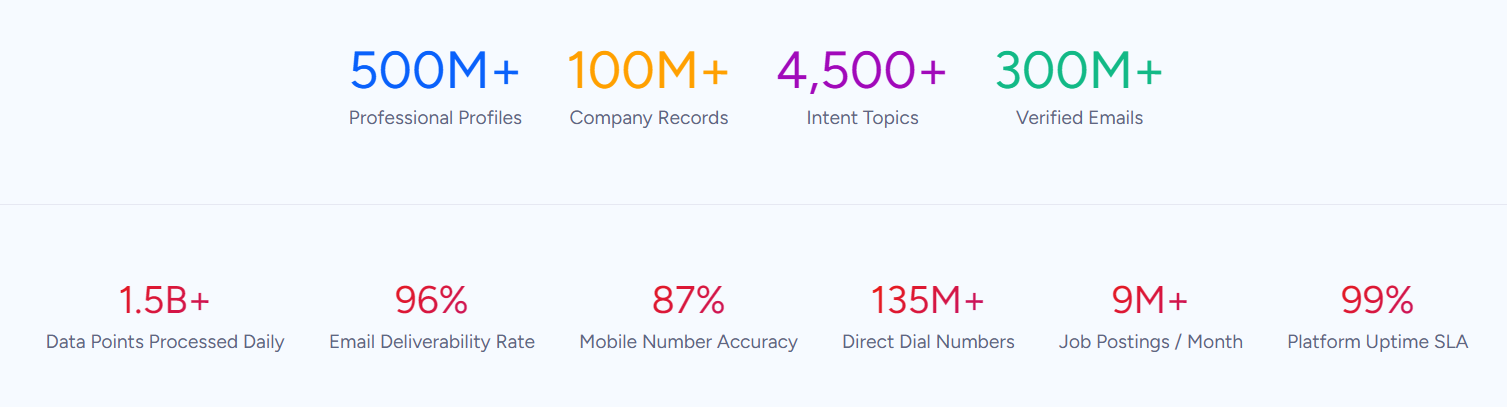
ZoomInfo is a B2B data and go-to-market platform built on extensive B2B data: 500M contacts, 100M companies, 135M+ verified phone numbers, and 200M+ verified business email addresses. ZoomInfo's GTM Context Graph processes 1.5B+ data points daily, combining this data with your CRM records, conversation transcripts, and behavioral signals to reveal not just what's happening in your accounts, but why. Your team can access that intelligence through GTM Workspace for sales execution, GTM Studio for marketing and RevOps, or APIs and MCP in any front-end. ZoomInfo doesn't replace your CRM. It gives your CRM the data and intelligence it needs to drive revenue.
If your sales team needs verified contacts, buyer intent signals, and account intelligence, see how ZoomInfo works.
Sage CRM vs. SugarCRM vs. ZoomInfo at a glance
Sage CRM | SugarCRM | ZoomInfo | |
|---|---|---|---|
Primary function | CRM for Sage accounting users | Sales CRM for B2B manufacturers/distributors | B2B data intelligence and go-to-market platform |
ERP integration | Native Sage 50/100/200/300/X3 | 180+ ERP systems via Sugar sales-i | Integrates with Salesforce, HubSpot, Dynamics and 120+ tools |
AI capabilities | None currently | AI prioritization, sentiment analysis (Advanced+ tiers) | GTM Context Graph, AI agents, buyer intent, predictive scoring |
Deployment | Cloud or on-premise | Cloud or on-premise | Cloud (SaaS) |
Contact database | Customer records only | Customer records only | 500M contacts, 200M+ verified emails, 135M+ verified phones |
Learning curve | 1-2 days for basic use | Weeks to months for full setup | Days to weeks depending on scope |
Starting price | ~$45-50/user/month | $59/user/month (15-user minimum) | Custom, consumption-based; free tier available |
Free trial/plan | 30-day trial | 7-day trial | ZoomInfo Lite (permanent free tier) + 7-day trial |
Best for | SMBs on Sage ERP (20-100 users) | Mid-market B2B companies (50-1,000 employees) | B2B revenue teams needing data, signals, and intelligence |
Different tools for different problems
These three platforms address the sales challenge from different angles. Understanding those angles matters more than any feature checklist.
Sage CRM is a record-keeping system.
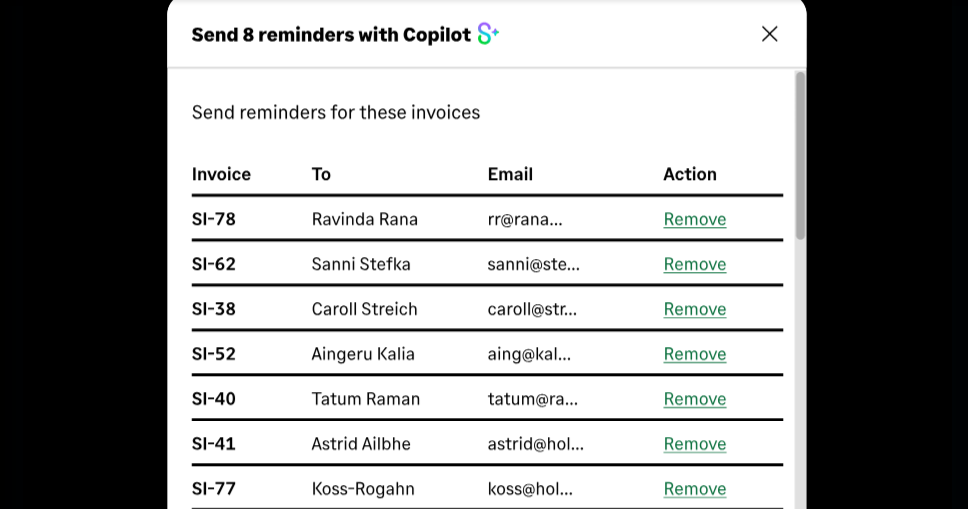
It organizes the customer data you already have, connects it to Sage accounting, and gives your team a shared view of accounts, deals, and service cases. If sales and finance operate in separate silos, Sage CRM bridges them within the Sage ecosystem.
Source: Sage
SugarCRM is a sales guidance system.
It goes beyond recording data to surface what your ERP transaction history reveals about each account: which customers are buying less, which product lines they haven't tried, which reorder cycles are overdue. For manufacturers and distributors managing hundreds of accounts, that intelligence separates reactive selling from proactive account expansion.
ZoomInfo operates upstream of both.
Before your CRM can manage a relationship, someone needs to identify the right person to talk to, verify their contact information, and learn whether their company is evaluating solutions. ZoomInfo provides a large-scale B2B data platform along with buyer intent signals and account intelligence. It integrates with CRMs rather than replacing them, so every record in your pipeline starts with verified, current data.

The question isn't which platform is "better." It's which problem you need to solve first: organizing existing customer data (Sage CRM), extracting intelligence from purchase history (SugarCRM), or building a data-driven pipeline from scratch (ZoomInfo).
ERP integration: Sage CRM and SugarCRM take different paths
Both Sage CRM and SugarCRM position ERP integration as a central differentiator, but the scope and depth differ.
Sage CRM's integration is narrow and deep within its own family.
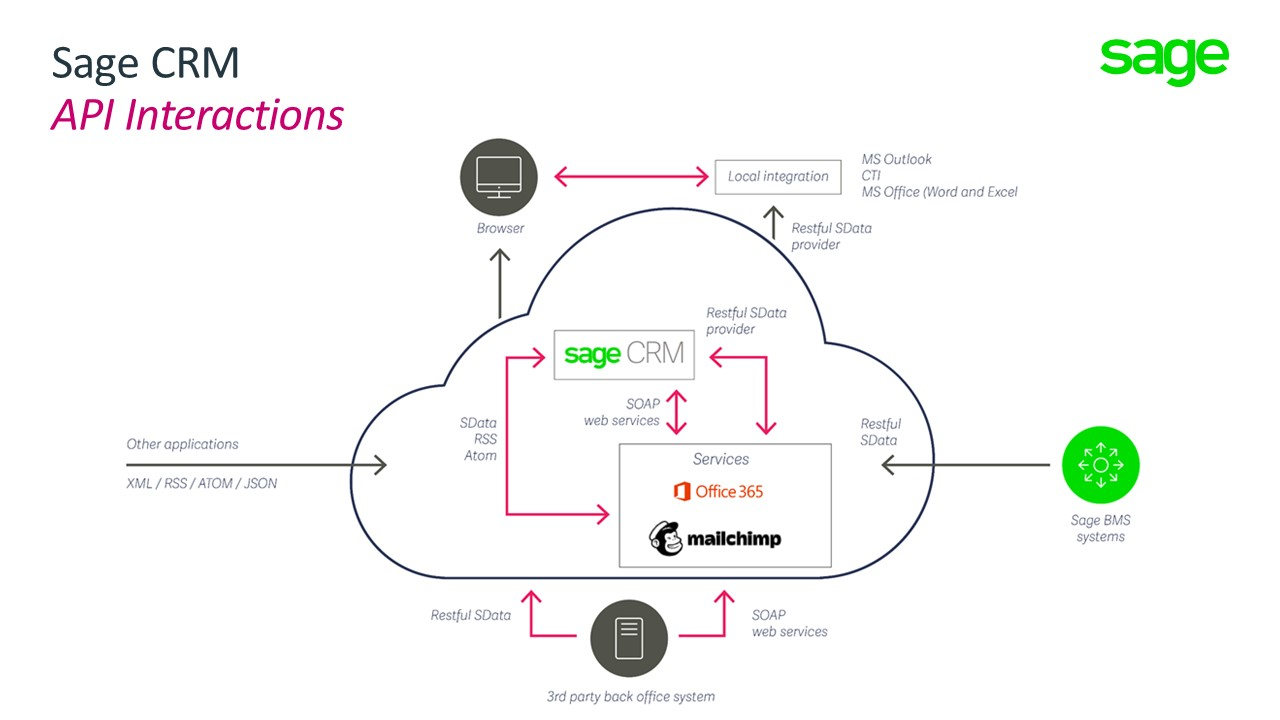
On-premise deployments offer real-time, bi-directional synchronization of customers, contacts, quotes, orders, and accounting details with Sage accounting products. Reps can check inventory levels in real time, place a quote using live ERP pricing, and push the order into the accounting system without re-entering data. For a business already running Sage 100 or Sage 300, this eliminates the data re-entry that plagues disconnected systems.
The limitation is the word "Sage." If you run SAP, Oracle, Epicor, or any non-Sage ERP, that integration depth disappears. Even within the Sage ecosystem, cloud deployments get one-way sync only, so cloud customers miss the bi-directional sync that makes the on-premise version compelling.
SugarCRM plays a wider field.
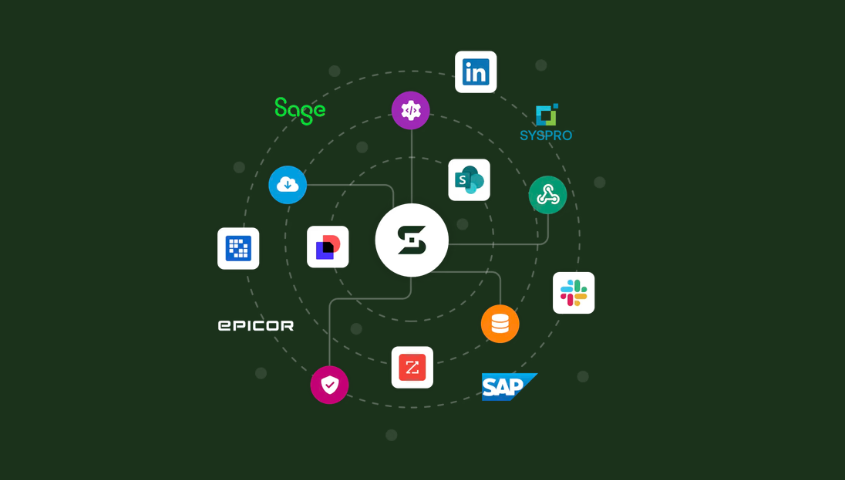
With 180+ ERP integrations spanning SAP, Oracle, Epicor, Syspro, Sage, and others, SugarCRM connects to most major ERP systems regardless of vendor. Sugar sales-i doesn't just display ERP data in the CRM. It analyzes that data to surface buying patterns, cross-sell gaps, and churn signals.
Source: Sugar AI
ZoomInfo approaches data integration from the opposite direction.
Instead of pulling internal transaction data into the CRM, ZoomInfo pushes external intelligence into it: 300+ company attributes, org charts with verified direct dials, technographic profiles of 30,000+ technologies across 30M+ companies, and buyer intent signals, all flowing into your existing systems through native integrations with Salesforce, HubSpot, Microsoft Dynamics, and 120+ other tools.
Your ERP tells you what a customer bought. ZoomInfo tells you who else you should be selling to, and when they're ready to buy.
Source: ZoomInfo
"ZoomInfo gives us the information we need to execute. We don't have to spend our time digging. It's already there, so we can be three steps ahead." (Vensure)
Sales intelligence comparison
How each platform helps reps decide what to do next reveals its design philosophy.
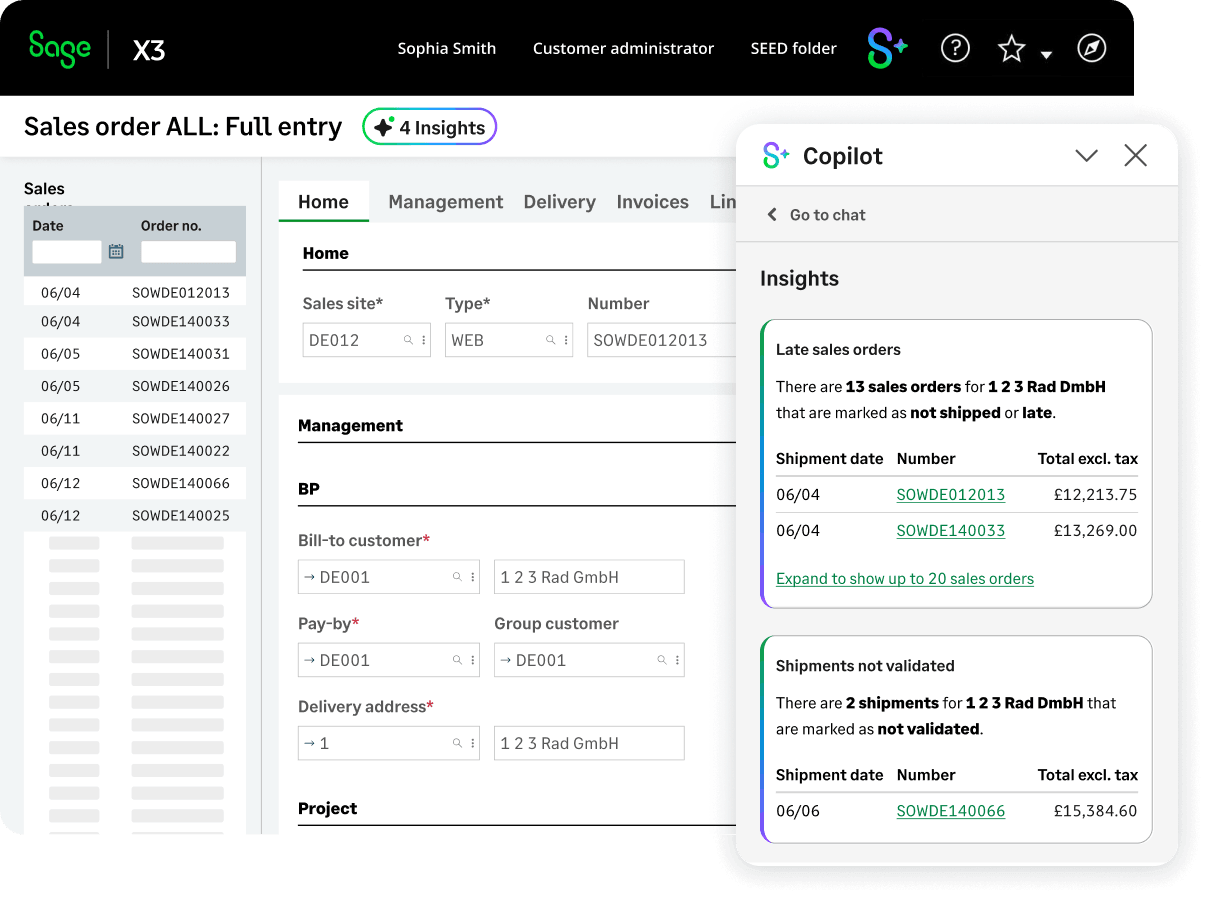
Sage CRM provides pipeline visibility and workflow automation.
Reps track opportunities through stages, managers view the Sales Funnel for a snapshot of open deals, and workflow rules can create follow-up reminders, require specific information before advancing a deal, and alert managers when an opportunity exceeds a value threshold.
The forecasting tool uses probability-weighted pipeline values rather than raw sums, a step above basic stage tracking. But the intelligence depends entirely on data your team enters manually. No AI scoring, no predictive analytics, no signals from outside the CRM.
Source: Sage
SugarCRM adds proactive guidance.
At the Advanced tier ($85/user/month), reps get lead prioritization, Revenue Intelligence, and sentiment analysis. Sugar sales-i goes further by detecting buying pattern changes, flagging accounts where a customer buys one product category but not a related one, and tracking reorder cycles across large account bases.
For distributors and manufacturers, this ERP-derived intelligence is a real differentiator. Nucleus Research cited it as a key reason for SugarCRM's Leader positioning in their 2026 SFA Technology Value Matrix.
ZoomInfo works from a different intelligence model.
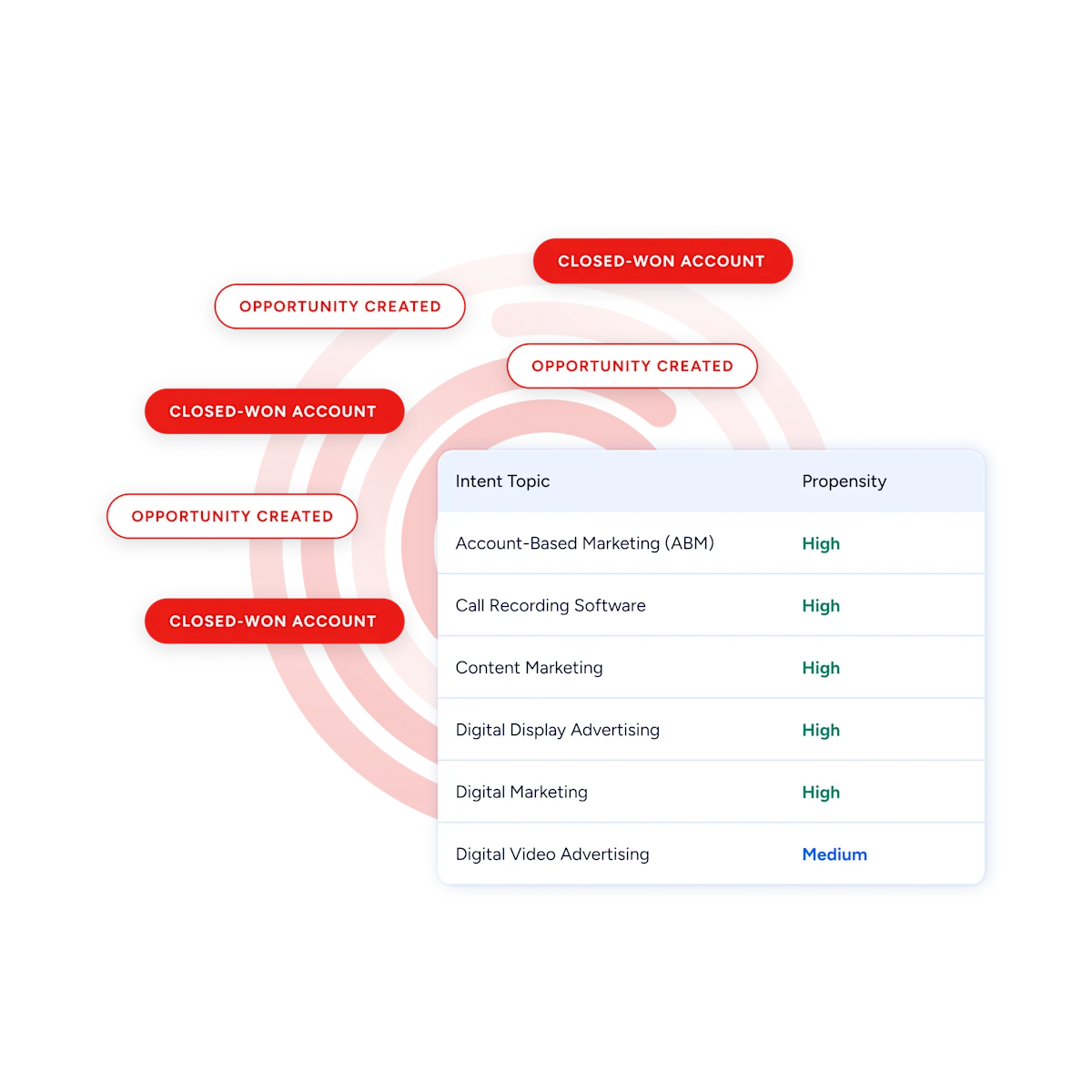
The GTM Context Graph processes 1.5B+ data points daily, combining your CRM records and conversation transcripts with ZoomInfo's third-party intelligence to capture not just what happened in a deal, but why.
Buyer Intent data tracks signals from 210 million IP-to-Organization pairings and 6 trillion+ keyword-to-device pairings monthly, identifying companies researching solutions before they fill out a form. Guided Intent, exclusive to ZoomInfo, identifies topics correlated with deal success rather than requiring manual topic selection.
Where Sage CRM and SugarCRM help you manage what's in your pipeline, ZoomInfo helps you fill the pipeline with the right accounts at the right time.
Source: ZoomInfo
"That combination of our internal CRM data, external signals, and AI that's given all that context has helped us craft very specific account- and persona-based messages. And people have responded to them right away." (Seismic)
Data quality and the intelligence gap
This is where the three platforms diverge most, because it's the difference between managing data and generating it.
Sage CRM relies entirely on manually entered data. Your customer records are only as good as what your team types in.
Capterra users find the contact database tedious to manage, particularly around grouping, segmenting, and updating large contact lists. There's no data enrichment, no external verification, and no way to identify contacts you're missing.
SugarCRM improves on this with ERP data integration, bringing transactional history into the CRM automatically.
The platform also offers enrichment through the Sugar Hint add-on (available on Premier tier), which pulls company news and social data. But the enrichment covers only existing records. SugarCRM won't tell you about the 50 decision-makers at a target account that nobody on your team has met.
ZoomInfo was built to solve this problem.
The platform maintains 500M contacts and 100M companies through a multi-source verification process that includes automated ML scanning of 28 million site domains daily, a Data Training Lab of 300+ human researchers, and third-party partner data covering 95 million businesses. First-party data reaches up to 95% accuracy.
In a Fortune 500 competitive RFP analyzing 25 million contacts across vendors, the independent consultant concluded that "no other competitor came even close."
Source: ZoomInfo
For sales teams, the impact is direct: the phone number rings and the email lands. For RevOps teams, enrichment doesn't require stitching together multiple vendors. For marketers, TAM modeling becomes a continuously verified census rather than a theoretical exercise built on stale snapshots.
"ZoomInfo is our one source of truth for account data, and even more so for contact data. There's no other provider in the market that provides you with that level of detail." (Smartsheet)
User experience and the adoption question
A CRM that nobody uses is worse than no CRM at all. Each platform handles this differently.
Sage CRM wins on simplicity for its target market.
Multiple reviewers note a quick learning curve of roughly 1-2 days for new salespeople, and the drag-and-drop customization interface lets business users configure workflows without developers. The trade-off is an interface that looks dated next to modern CRMs.
The 2026 R1 release deprioritized UX improvements in favor of security and infrastructure, so this gap will persist through at least the rest of 2026. Mobile access relies on browser-based responsive themes rather than a native app, which works but can't compete with mobile-first platforms.
SugarCRM offers more power at the cost of complexity. The platform supports no-code configuration for workflows, fields, and processes.
But G2 and Capterra reviewers consistently flag the learning curve: setting up custom workflows, automations, and reports requires technical expertise. The mobile app, critical for field reps in manufacturing and distribution, is noticeably worse than desktop according to reviewers.
ZoomInfo takes a different approach to adoption.
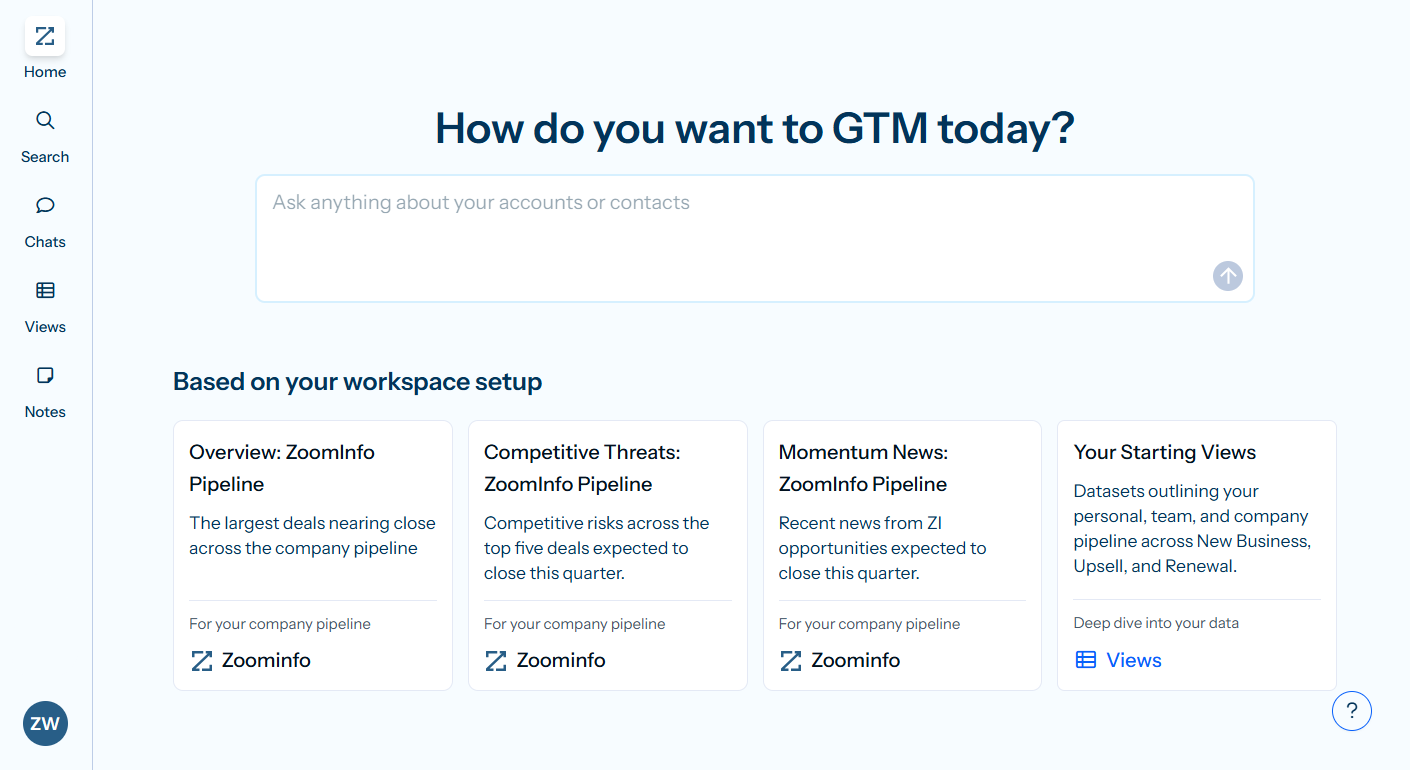
GTM Workspace is designed so that when a rep logs in, the work is already prioritized: AI-generated account briefs, pre-drafted outreach, and an Action Feed that surfaces in-market buyers with recommended actions on every signal. Rather than forcing reps to learn a complex system, the system does the work.
ZoomInfo redesigned its onboarding program from 30 to 90 days, producing a 25% improvement in customer satisfaction scores and winning Rocketlane's Golden Comet award for Best Customer Onboarding Team of 2024.
Pricing structures reveal different markets
Each platform's pricing model tells you who it's built for.
Sage CRM is the cheapest entry point.
The Sage Ireland storefront lists Cloud Professional at €50/user/month, with US partner estimates at $45-50/user/month for the base license. But headline pricing doesn't tell the full story. Outlook connectivity runs ~$200/user/year extra, the ERP integration module (Greytrix GUMU) adds ~$200/user/year, and mobile extensions cost ~$150/user/year.
A fully configured deployment with accounting integration, Outlook sync, mobile, hosting, and implementation can reach $75-150+/user/month depending on scope. On-premise deployments also require a SQL Server or Oracle database license and a mandatory first-year support contract.
SugarCRM structures pricing around three tiers, all with a 15-user minimum:
Tier | Price | Annual minimum |
|---|---|---|
Standard | $59/user/month | $10,620 (15 users) |
Advanced | $85/user/month | $15,300 (15 users) |
Premier | $135/user/month | $24,300 (15 users) |
The Standard tier covers basic CRM. But the features that differentiate SugarCRM (lead prioritization, Revenue Intelligence, generative AI, sentiment analysis) are gated behind the Advanced tier or higher. For a team of 15 wanting the full AI experience, you're looking at $24,300/year minimum. Sugar Market and Sugar Serve are priced separately and require contacting sales.
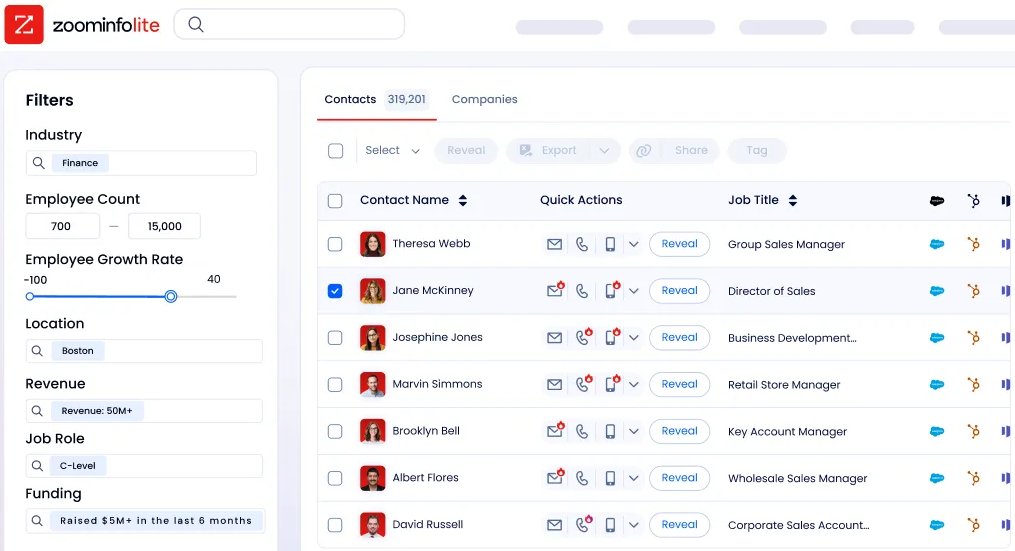
ZoomInfo uses custom, consumption-based pricing with no published rates. Pricing depends on usage, user count, credit volume, and features selected.
Two things stand out.
First, ZoomInfo Lite is a permanent free tier (not a trial) that includes access to ZoomInfo's B2B database with 10 monthly export credits and core search. Second, the value proposition differs from a CRM: you're paying for verified data and intelligence that generates pipeline, not for record management. Customers like Seismic have attributed 39% of active pipeline to ZoomInfo signals while reporting 54% productivity gains.
Source: ZoomInfo
Customer service: built-in vs. bolt-on
Both Sage CRM and SugarCRM include dedicated service modules. ZoomInfo doesn't, by design.
Sage CRM's Customer Service module provides case lifecycle management with configurable stages, SLA enforcement with priority tiers, and a self-service portal included in the base license. SLA calculations account for business calendars and holiday sets, preventing false breach alerts across time zones. For SMBs already using Sage CRM for sales, adding service within the same system avoids introducing another tool.
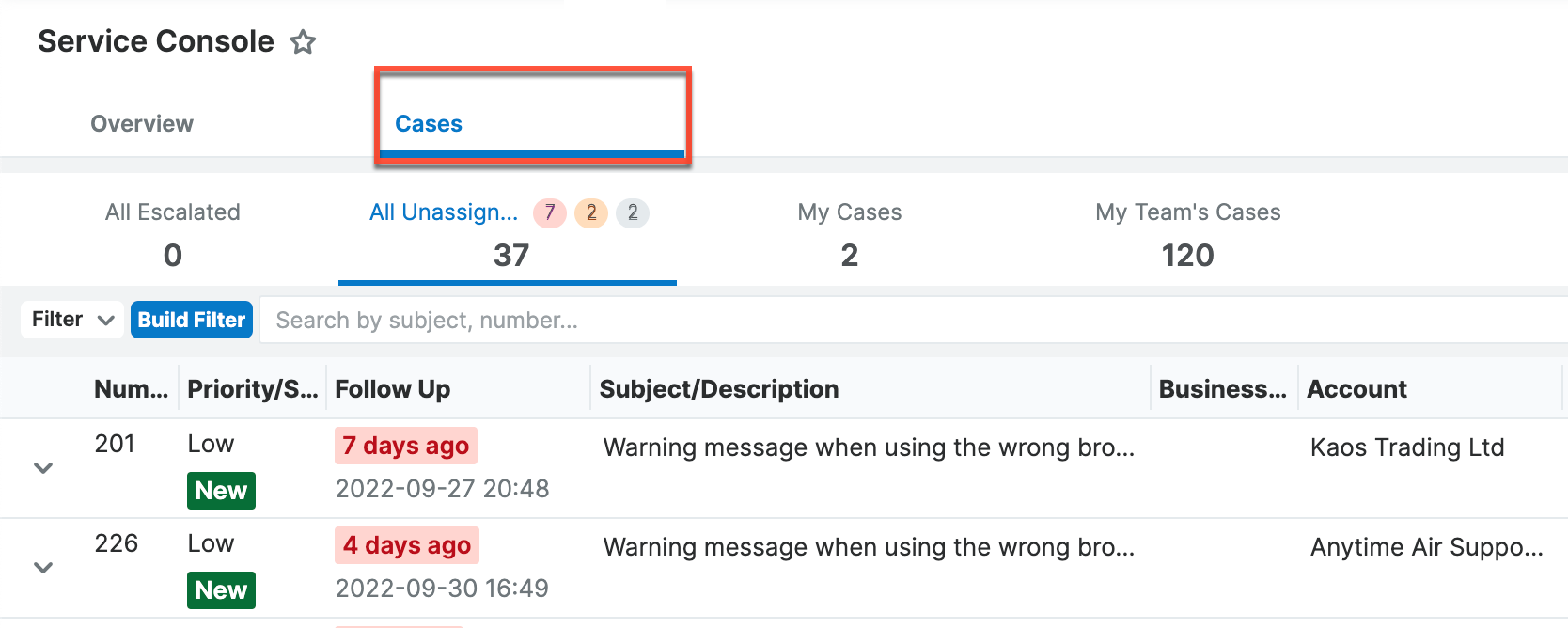
SugarCRM's Sugar Serve goes further with a Service Console featuring color-coded case queues and auto-refresh, plus SugarLive for real-time voice and chat powered by Amazon Connect. The shift-aware round-robin assignment routes cases only to agents currently on shift.
Because Sugar Serve runs on the same platform as Sugar Sell, agents see the full account history, purchase records, and open opportunities without switching systems.
Source: Sugar AI
ZoomInfo is not a customer service platform. Its value in the service context is indirect: by keeping CRM data accurate and enriched, it ensures that when a service agent opens a customer record, the information is current. If customer service management is a primary requirement, Sage CRM or SugarCRM (or a dedicated service platform) is the right choice.
Deployment flexibility and security
All three platforms offer deployment choices, though the options differ in scope.
Sage CRM supports both cloud/hosted and on-premise deployment, with Sage Partner Cloud enabling managed multi-tenant hosting. The Sage Group holds ISO 27001 certification for cloud SaaS products, and hosted instances run on Microsoft Azure and Amazon Web Services.
On-premise customers bear full security responsibility. The 2026 R1 release addressed vulnerabilities found through penetration testing and updated third-party components.
Source: Sage
SugarCRM offers SugarCloud (AWS-hosted) and on-premise deployment via Sugar Enterprise.
Its compliance list is broader: SOC 2 Type II, ISO/IEC 27001:2022, CSA STAR Registry, GDPR, CCPA, and Data Privacy Framework certifications. Data residency is customer-selected from four AWS regions (Australia, Germany, United Kingdom, or United States). Multi-factor authentication is required across all systems, and customers retain data access for up to 120 days after termination.
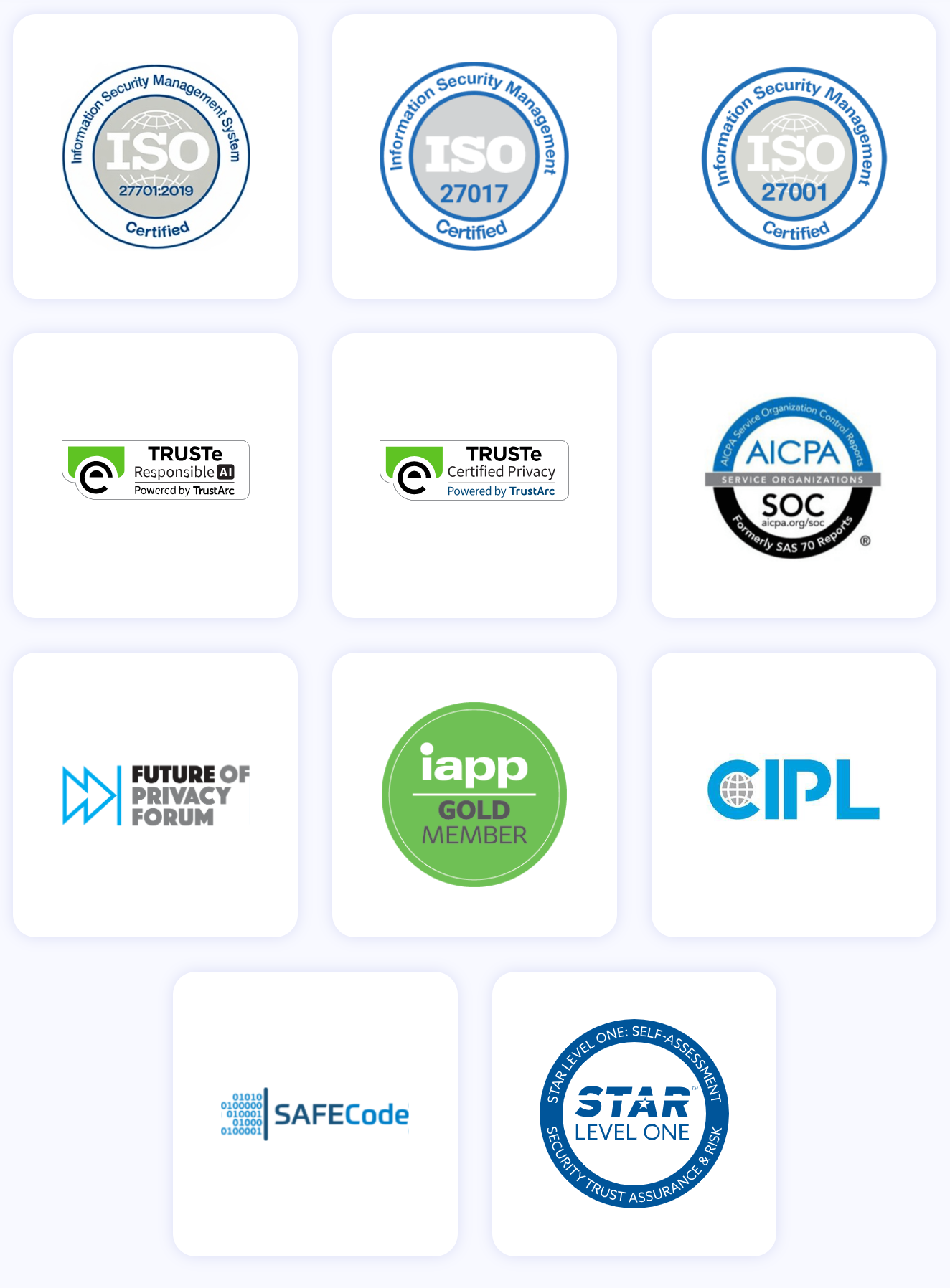
ZoomInfo maintains the broadest compliance stack, renewed annually: ISO 27001, ISO 27701, SOC 2 Type II, TRUSTe GDPR, and TRUSTe CCPA certifications. ZoomInfo is a registered data broker in California and Vermont, with a dedicated Trust Center for transparency. For enterprises in regulated industries, the privacy and compliance infrastructure is built into the data layer.
Integration ecosystems compared
How well each platform connects to your tech stack determines how useful it is in practice.
Sage CRM has the thinnest ecosystem.
Beyond native Sage accounting integrations, G2 reviewers note that integrations "function as expected but having a broader selection of plug-and-play options would enhance the overall experience." There is no native Zapier integration and no confirmed connectors for Make or Workato.
Webhooks were introduced in 2025 R2 as an experimental (Labs) feature, not yet production-grade. The REST API uses only Basic Authentication with no confirmed timeline for OAuth 2.0 support, and the official C# client was archived in May 2024.
SugarCRM offers a broader marketplace.
The SugarAI Marketplace includes connectors for SAP, Oracle, NetSuite, Epicor, QuickBooks, Zendesk, Microsoft Teams, PhoneBurner, and more. The platform's REST API (v10-v11.25) uses two-legged OAuth 2.0 authentication. Web Logic Hooks fire on record events, though they run asynchronously through a cron-based queue rather than in real time. For SugarCloud instances, the API caps at 20 requests per second.
ZoomInfo has the largest integration infrastructure.
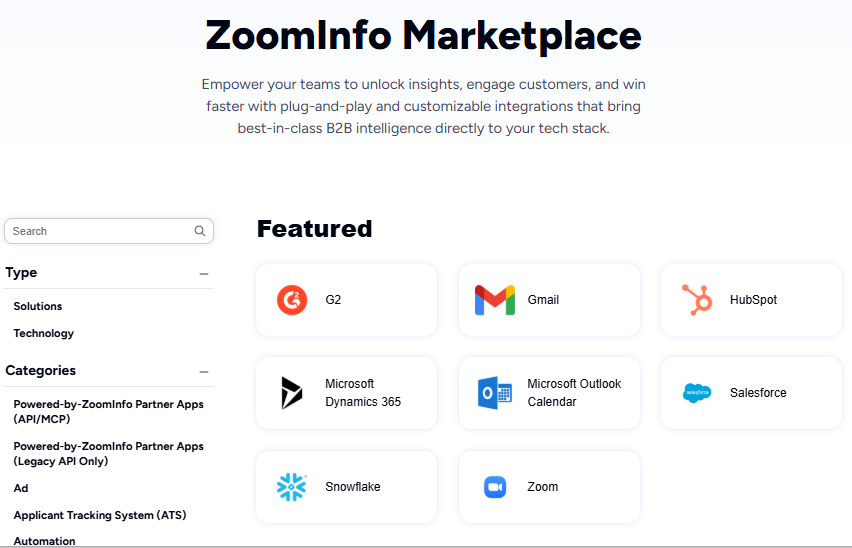
The ZoomInfo App Marketplace lists 172+ integration partners across CRM, marketing automation, sales engagement, data warehouse, communications, and more. The Enterprise API uses OAuth 2.0 with PKCE and provides access to search, enrich, intent, and AI intelligence endpoints. Cloud Partners enables direct data ingestion into AWS, Google Cloud, Snowflake, and Databricks. The MCP server connects AI models to ZoomInfo's data as a native tool, currently supporting Claude and ChatGPT.
Source: ZoomInfo
"The plug-and-play aspect of the API means I can integrate it very easily into any process and get information at a moment's notice." (BDO Canada)
Sage CRM vs. SugarCRM vs. ZoomInfo: Which should you choose?
The right platform depends on what's limiting your sales team today.
Choose Sage CRM if:
You're already running Sage accounting (Sage 50, 100, 200, or 300) and need a CRM that connects to your financial data
Your sales team is small (5-50 users) and needs a system they can learn in a day or two
Budget is a primary concern and you can work within a limited integration ecosystem
On-premise deployment with bi-directional ERP sync is a requirement
You value simplicity over advanced intelligence features
Choose SugarCRM if:
You're a mid-market manufacturer, wholesaler, or distributor with 50+ employees
Your sales team manages hundreds of accounts with complex reorder cycles and cross-sell potential
You run a non-Sage ERP and need a CRM that pulls intelligence from your transaction history
Customization of workflows and processes is important to your sales operation
You have the implementation resources and budget ($10,620/year minimum) to invest in the platform
Choose ZoomInfo if:
Your CRM is full of incomplete, outdated, or unverified contact data
Your sales team spends too much time researching accounts and not enough time selling
You need verified direct dials, business emails, and buyer intent signals to build pipeline
You want AI that tells reps who to contact, when to engage, and what to say
You want a platform that works with your existing CRM (Salesforce, HubSpot, Dynamics, or any other) rather than replacing it
You need data access via APIs and MCP for custom workflows or AI agents
Start with ZoomInfo Lite for free, or request a demo to see the full platform.
Sage CRM and SugarCRM both do useful work: they organize customer relationships and, in SugarCRM's case, extract intelligence from purchase history.
But for B2B revenue teams, the bottleneck is rarely the CRM itself. It's the quality and completeness of the data inside it, the ability to identify the right buyers before competitors do, and the intelligence to know which accounts deserve attention now.
That's what ZoomInfo provides, built on a large B2B dataset and an intelligence engine no CRM can replicate on its own.
Sage CRM vs. SugarCRM vs. ZoomInfo FAQ
What is the core difference between Sage CRM, SugarCRM, and ZoomInfo?
Sage CRM is a traditional CRM for small and midsize businesses running Sage accounting software, connecting sales activity with financial data.
SugarCRM is a sales CRM for mid-market B2B companies in manufacturing, wholesale, and distribution, with ERP-native intelligence that surfaces cross-sell opportunities and churn risks from transaction history.
ZoomInfo is a B2B data and intelligence platform that provides verified contact data, buyer intent signals, and account insights; it integrates with CRMs rather than replacing them.
Which platform is cheapest to get started with?
Sage CRM has the lowest per-user base price at roughly $45-50/user/month, though add-ons for ERP integration, Outlook connectivity, and mobile can push costs to $75-150+/user/month. SugarCRM starts at $59/user/month but requires a 15-user minimum, making the floor $10,620/year.
ZoomInfo offers a permanent free tier called ZoomInfo Lite with 10 monthly export credits; paid plans are custom-quoted based on consumption.
Can ZoomInfo replace a CRM like Sage CRM or SugarCRM?
No. ZoomInfo is not a CRM and does not manage customer records, sales pipelines, or service cases. It provides the data and intelligence layer that makes CRMs effective, integrating with Salesforce, HubSpot, Microsoft Dynamics, and other CRMs to keep records accurate, enriched, and actionable. Many teams use ZoomInfo alongside their CRM.
Which platform is best for manufacturing and distribution companies?
SugarCRM fits manufacturing and distribution best, with 180+ ERP integrations and Sugar sales-i built to analyze ERP order data for buying patterns, cross-sell opportunities, and churn signals.
Sage CRM works well for manufacturers already on Sage accounting but lacks the ERP-data intelligence layer. ZoomInfo complements either by providing verified contact data and buyer intent signals for prospecting and account expansion.
How do the platforms handle AI and automation?
Sage CRM has no AI capabilities; its 2026 R1 release focused on security and infrastructure. SugarCRM offers AI-driven lead prioritization, sentiment analysis, and revenue intelligence on the Advanced and Premier tiers. ZoomInfo's GTM Context Graph processes 1.5B+ data points daily, combining CRM data with third-party intelligence to deliver account prioritization, outreach drafting, and buyer intent signals through GTM Workspace and GTM Studio.
Which platform has the best mobile experience?
None of the three excels on mobile. Sage CRM relies on browser-based responsive themes rather than a native app. SugarCRM has a mobile app, but Capterra reviewers consistently describe it as slow and buggy compared to desktop. ZoomInfo offers a mobile app and Chrome extension, with GTM Workspace accessible across devices, though it is designed primarily for desktop workflows.
Do any of these platforms offer on-premise deployment?
Both Sage CRM and SugarCRM support on-premise deployment. Sage CRM's on-premise version delivers bi-directional ERP sync (vs. one-way for cloud). SugarCRM's on-premise offering is Sugar Enterprise, starting at $85/user/month with a 10-user minimum.
ZoomInfo is cloud-only (SaaS), but its data can be delivered into customer-owned infrastructure via APIs, Data Cubes, and cloud partner integrations with AWS, Google Cloud, Snowflake, and Databricks.
Which platform is best for teams that need both CRM and prospecting data?
Pairing a CRM (Sage CRM or SugarCRM) with ZoomInfo gives you the most complete solution. The CRM manages your customer relationships and sales pipeline; ZoomInfo fills it with verified contacts, company intelligence, and buyer intent signals. ZoomInfo integrates natively with major CRMs so data flows into your existing workflows without manual import.
