
Sales cadence tools turn scattered follow-ups into a repeatable system, so your reps spend less time scheduling touches and more time in conversations that move deals.
These platforms differ sharply on the things that decide outcomes, from data quality and channel coverage to AI and how well they fit your existing stack.
This guide breaks down the 12 best sales cadence tools against those criteria, so you can match a platform to the way your team actually sells. We start with ZoomInfo, the all-in-one AI GTM platform that runs cadences on verified data and real-time buying signals, then work through the specialists worth a closer look.
What Are Sales Cadence Tools?
Sales cadence tools are software platforms that automate your outreach sequences. This means the platform sends emails, schedules calls, and triggers social touches automatically based on rules you set. Instead of manually tracking when to follow up with each prospect, the software does it for you.
Modern cadence platforms do more than just send emails on a schedule. They coordinate multiple channels at once, sync with your CRM in real time, and use AI to tell you which prospects to contact first. The software tracks every interaction and shows you which messages get responses so you can fix what's not working.
Core capabilities include:
Multi-channel sequencing: Coordinate email, phone, and social touches in one workflow
Automation and scheduling: Trigger steps based on prospect behavior or time intervals
CRM integration: Sync activity data to Salesforce, HubSpot, or other systems
Analytics and reporting: Track open rates, reply rates, and conversion metrics
These platforms turn prospecting from a manual grind into a system that runs whether you're on a call or not.
Why Sales Teams Need Cadence Software
Your reps spend too much time scheduling follow-ups. It's a core sales productivity drain. Not enough time goes to actually talking to prospects.
Without cadence software, they manually track who needs a call, forget critical touchpoints, and lose deals because they followed up too late or not at all.
Cadence software fixes this by handling the repetitive work. The platform schedules every touchpoint, tracks engagement, and tells reps which prospects are most likely to respond right now. Managers can see what's working across the team and copy successful sequences instead of guessing what might work.
The problems this solves:
Inconsistent follow-up: Reps forget steps and prospects go cold
Manual task overload: Time spent scheduling instead of selling
No visibility: Managers can't see what's working across the team
Missed buying windows: Leads not contacted at optimal times
A rep using cadence software generates pipeline systematically. A rep working manually hopes prospects remember to respond.
Comparison Table
Here's how the top sales cadence platforms compare:
Platform | Channels Supported | Key Strength | Best For |
|---|---|---|---|
ZoomInfo | Email, Phone, Social, Chat | Data and engagement in one platform | Mid-market to enterprise |
Outreach | Email, Phone, Social, SMS | AI Revenue Workflow Platform | Large sales teams |
Salesloft | Email, Phone, Social | Revenue orchestration and analytics | Revenue teams |
HubSpot Sales Hub | Email, Phone, Tasks | CRM-native workflows | SMB to mid-market |
Apollo | Email, Phone, LinkedIn | Prospecting and sequencing | SMB and startups |
Salesforce Sales Engagement | Email, Phone, Tasks | Native Salesforce integration | Salesforce-first orgs |
Gong | Email, Phone (analysis) | Revenue AI Operating System | Revenue intelligence focus |
Reply | Email, Phone, LinkedIn, SMS | Multi-channel automation | Outbound-heavy teams |
Mixmax | Email, Calendar | AI-native sales execution | Small teams |
Mailshake | Email, Phone | Simple email sequences | SMB outbound |
Yesware | Email, Phone | Outlook and Gmail tracking | Individual reps |
Woodpecker | Email, LinkedIn | Cold email automation | Agencies and SMB |
12 Best Sales Cadence Tools
With those criteria in mind, here's a closer look at what each of the best sales cadence tools brings to the table, where it shines, and the teams it fits best.
1. ZoomInfo
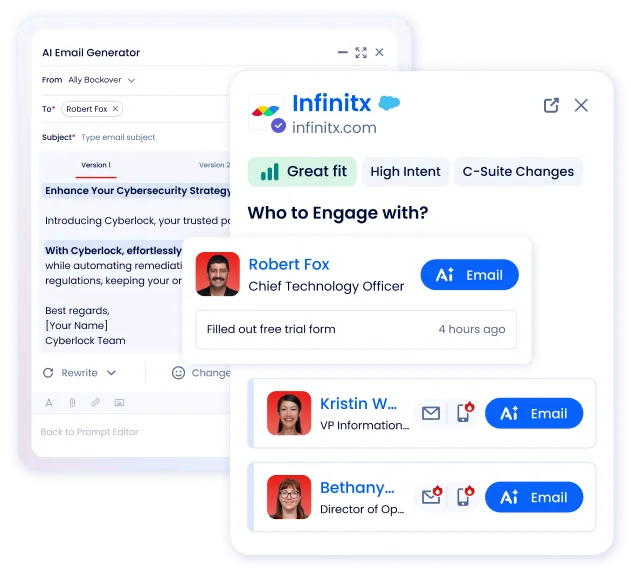
ZoomInfo is an all-in-one AI GTM platform that brings your cadences, contact data, and buying signals into one system. It runs on three connected layers: the most comprehensive B2B data foundation, the GTM Context Graph that reasons over that data, and Universal Access that lets your team act on it in any tool or workflow. That structure is what separates it from point solutions that only send sequences.
The data layer gives you more than 500 million business contacts and 100 million companies, paired with buyer intent signals that show which accounts are actively researching solutions right now. The GTM Context Graph fuses that data with your CRM records, conversation data, and behavioral signals, so you see not just what a prospect did but why they are worth a touch today. For sellers, GTM Workspace turns that intelligence into action through Copilot, its built-in AI that surfaces which prospects to contact and drafts what to say in context.
On the access layer, teams consume the same data and intelligence three ways with no lock-in: GTM Workspace for sellers, GTM Studio for marketing, RevOps, and GTM engineers, and GTM.AI, the headless API and MCP option that wires ZoomInfo intelligence into any tool or AI agent. Cadences build directly on verified contact data, so your sequences run on real email addresses and direct-dial numbers, which means fewer bounces and more connects than sequences built on unverified data.
ZoomInfo syncs with Salesforce, HubSpot, and other major CRMs to enrich records automatically and log every email, call, and social touch. It maintains SOC 2 Type II, ISO 27001, and TRUSTe GDPR/CCPA compliance with continuous verification that keeps contact information current. Analysts including Gartner and Forrester have recognized ZoomInfo across GTM and revenue categories, and it serves thousands of B2B organizations that want accurate data and the tools to act on it in one place.

"That combination of our internal CRM data, external signals, and the AI chatbot that's given all that context has helped us craft very specific account- and persona-based messages."
Key Features:
Intent signal integration: Prioritize accounts showing active buying behavior based on web activity and content consumption
Automated data enrichment: Keep CRM records current with real-time contact and company updates
Multi-channel cadence builder: Orchestrate email, phone, and social touches in unified sequences
AI-powered prioritization: Copilot, the AI layer inside GTM Workspace, surfaces high-intent accounts and drafts outreach in context
Native CRM sync: Bi-directional integration with Salesforce and HubSpot logs all activity automatically
Verified contact data: Build sequences on email addresses and phone numbers validated for accuracy
Conversation intelligence: Analyze call recordings and email threads to identify winning messaging
2. Outreach
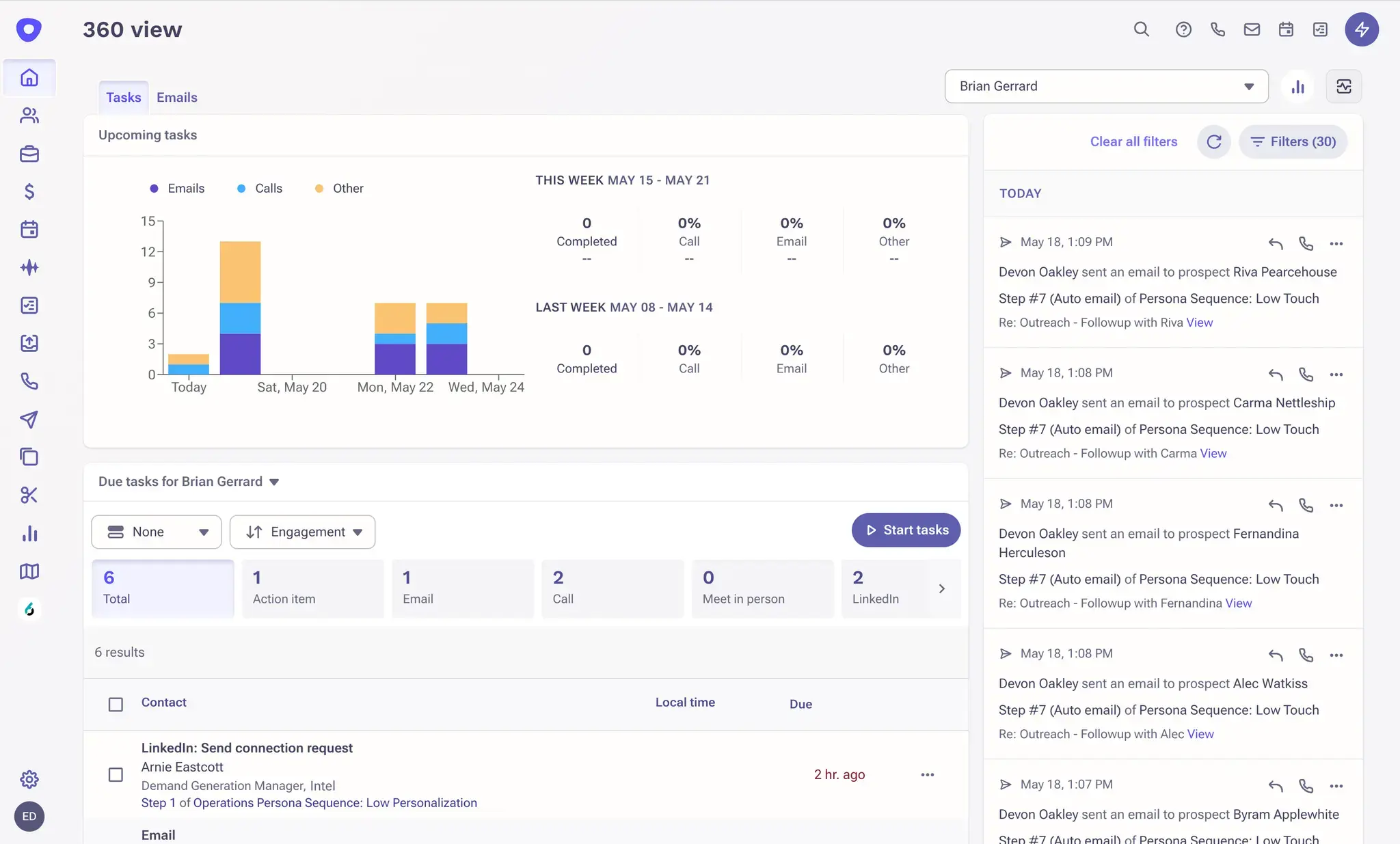
Outreach is an AI Revenue Workflow Platform that orchestrates sequences across email, phone, social media, and SMS. The platform unifies prospect engagement, customer retention, and revenue intelligence into a single integrated solution, with AI Agent capabilities that automate workflows and provide intelligent recommendations. It integrates with Salesforce, Microsoft Dynamics, and other CRMs to log activity and sync prospect data. You can customize sequence templates for different buyer personas and deal stages.
The platform includes A/B testing that lets you compare subject lines, messaging, and timing to see what drives responses. Meeting scheduling links embedded in emails reduce friction in booking calls. Pipeline management features track how sequences contribute to revenue and which touchpoints move deals forward.
Outreach offers AI-powered recommendations that suggest optimal send times and next steps based on historical engagement data. Analytics dashboards show sequence performance at the rep, team, and organizational level. Workflow automation handles repetitive tasks like creating follow-up reminders and updating CRM fields.
Key Features:
Email and phone sequencing with customizable templates
A/B testing for subject lines and messaging
Meeting scheduler integration
Pipeline analytics and revenue attribution
AI-powered send time optimization
CRM activity logging and data sync
Team collaboration and sequence sharing
Workflow automation for task creation
Rep performance dashboards
Weighing Outreach against the field? See how it lines up next to ZoomInfo and Salesforce.
3. Salesloft
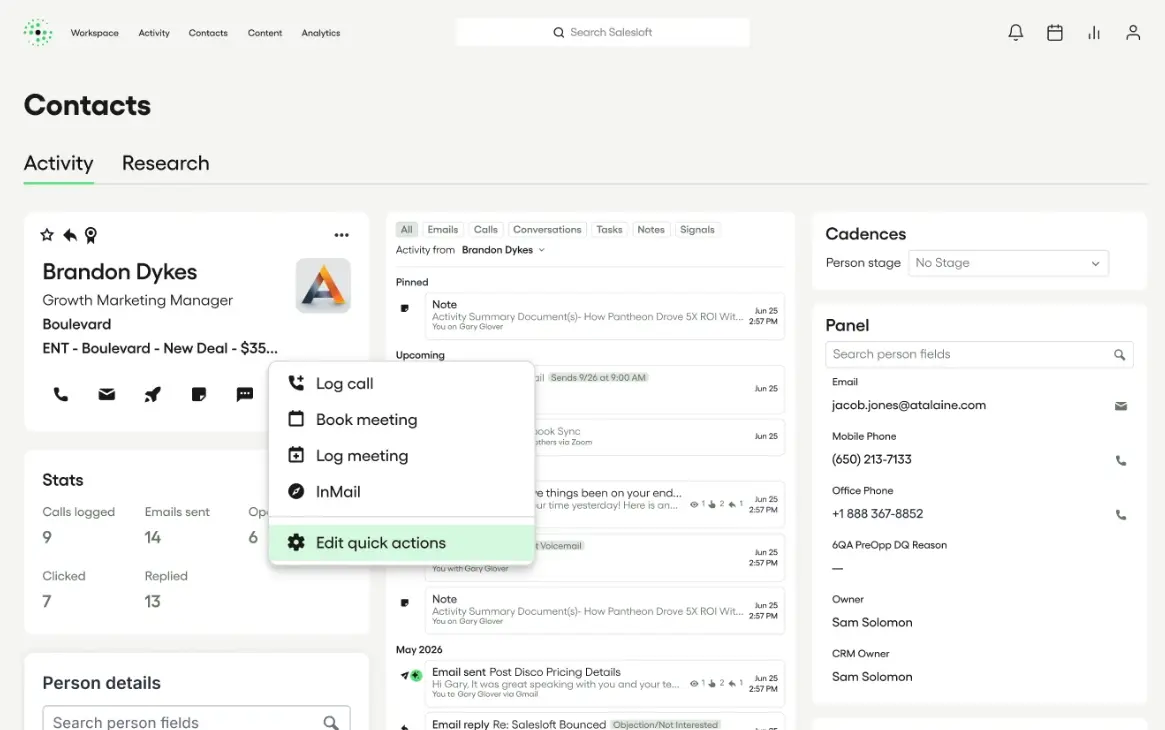
Salesloft is a Revenue Orchestration Platform that merged with Clari to unify sales engagement, revenue intelligence, conversation intelligence, deal management, and forecasting capabilities through AI-powered workflows. The platform combines email sequencing, phone dialing, and social touches into workflows that execute automatically. It integrates with Salesforce and other CRMs to maintain data consistency and log all prospect interactions.
The built-in dialer provides local presence calling and call recording, with conversation intelligence features that analyze calls for coaching opportunities. Email tracking shows when prospects open messages and click links, triggering alerts that help you time follow-up. Workflow automation creates tasks, updates CRM fields, and moves prospects between sequences based on engagement behavior.
Salesloft provides analytics dashboards that show which sequences drive meetings and pipeline, along with rep performance metrics that identify coaching needs. Team collaboration features let managers share successful sequences and messaging across the organization. The platform includes meeting scheduling and calendar integration to reduce booking friction.
Key Features:
Multi-channel cadence builder with email, phone, and social
Built-in dialer with local presence and call recording
Conversation intelligence for coaching insights
Email tracking and engagement alerts
Workflow automation and task management
Analytics on sequence and rep performance
CRM integration and activity sync
Team collaboration tools
Meeting scheduler
4. HubSpot Sales Hub
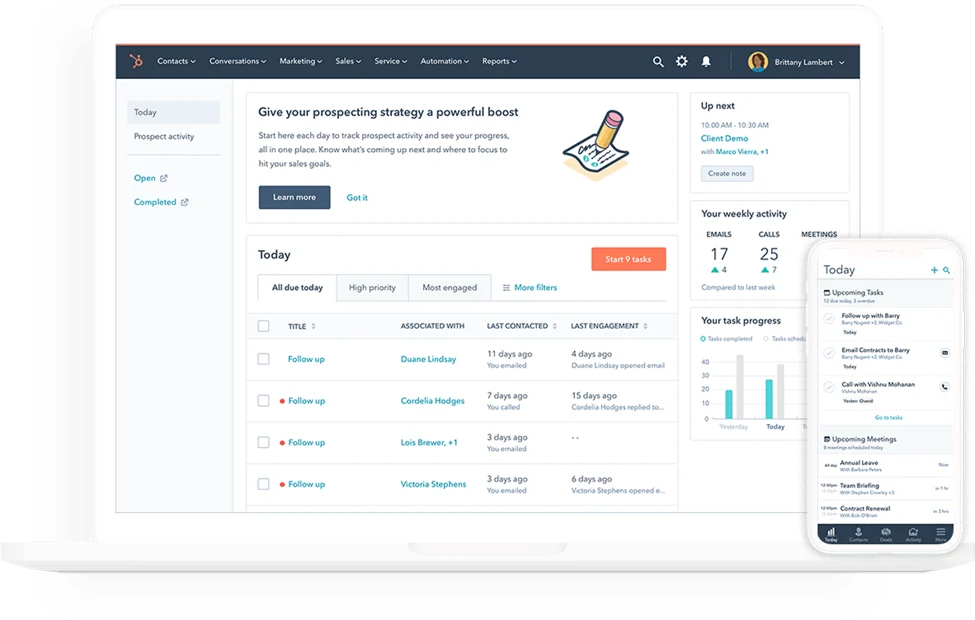
HubSpot Sales Hub is a CRM-native sales engagement tool with built-in sequence capabilities. The platform provides email templates, task automation, and meeting scheduling that work directly within the HubSpot CRM. Sequences trigger automatically based on contact properties, deal stage, or manual enrollment.
Email tracking shows when prospects open messages and click links, with notifications that alert you to engagement. Meeting links embedded in emails sync with your calendar to eliminate back-and-forth scheduling. Pipeline management features track deal progress and forecast revenue based on historical close rates.
HubSpot Sales Hub integrates tightly with HubSpot Marketing Hub, allowing sales and marketing teams to coordinate outreach and share lead intelligence. Reporting capabilities show sequence performance, email metrics, and rep activity. The platform includes mobile apps that let you manage sequences and log calls from anywhere.
Key Features:
CRM-native sequences with automatic enrollment
Email templates and tracking
Meeting scheduler with calendar sync
Task automation and reminders
Pipeline management and forecasting
Integration with HubSpot Marketing Hub
Mobile app for iOS and Android
Reporting on sequence performance
If HubSpot's already in your stack, here's how its engagement tools compare with ZoomInfo.
5. Apollo
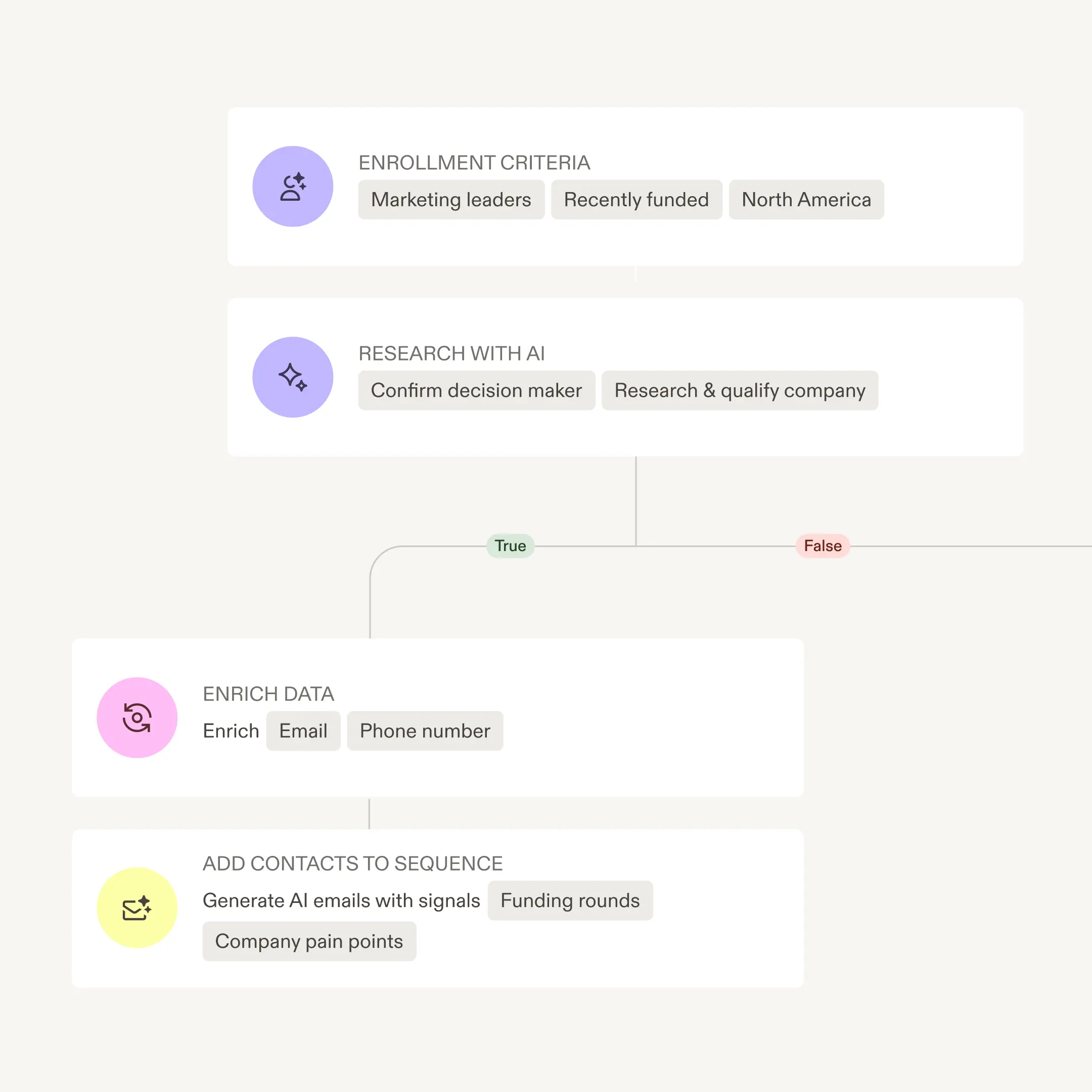
Apollo combines a prospecting database with sales engagement capabilities in one platform. The system provides access to contact and company data that you can add directly to sequences. Email sequencing, phone dialing, and LinkedIn automation execute from a single interface.
The platform includes contact enrichment that fills in missing data fields and verifies email addresses before sending. Workflow automation creates tasks, updates CRM records, and moves prospects between sequences based on engagement. Analytics show which sequences drive replies and meetings, along with individual email performance metrics.
Apollo integrates with Salesforce, HubSpot, and other CRMs to sync contact data and log activity. The platform offers A/B testing for email subject lines and messaging. Meeting scheduling links reduce friction in booking calls with engaged prospects.
Key Features:
Combined prospecting database and engagement platform
Email sequencing with deliverability optimization
Built-in dialer and call logging
LinkedIn automation and social touches
Contact enrichment and data verification
CRM integration and activity sync
A/B testing and analytics
Meeting scheduler
Workflow automation
Curious where Apollo's data and sequencing land? Here's the full Apollo vs. ZoomInfo breakdown.
6. Salesforce Sales Engagement
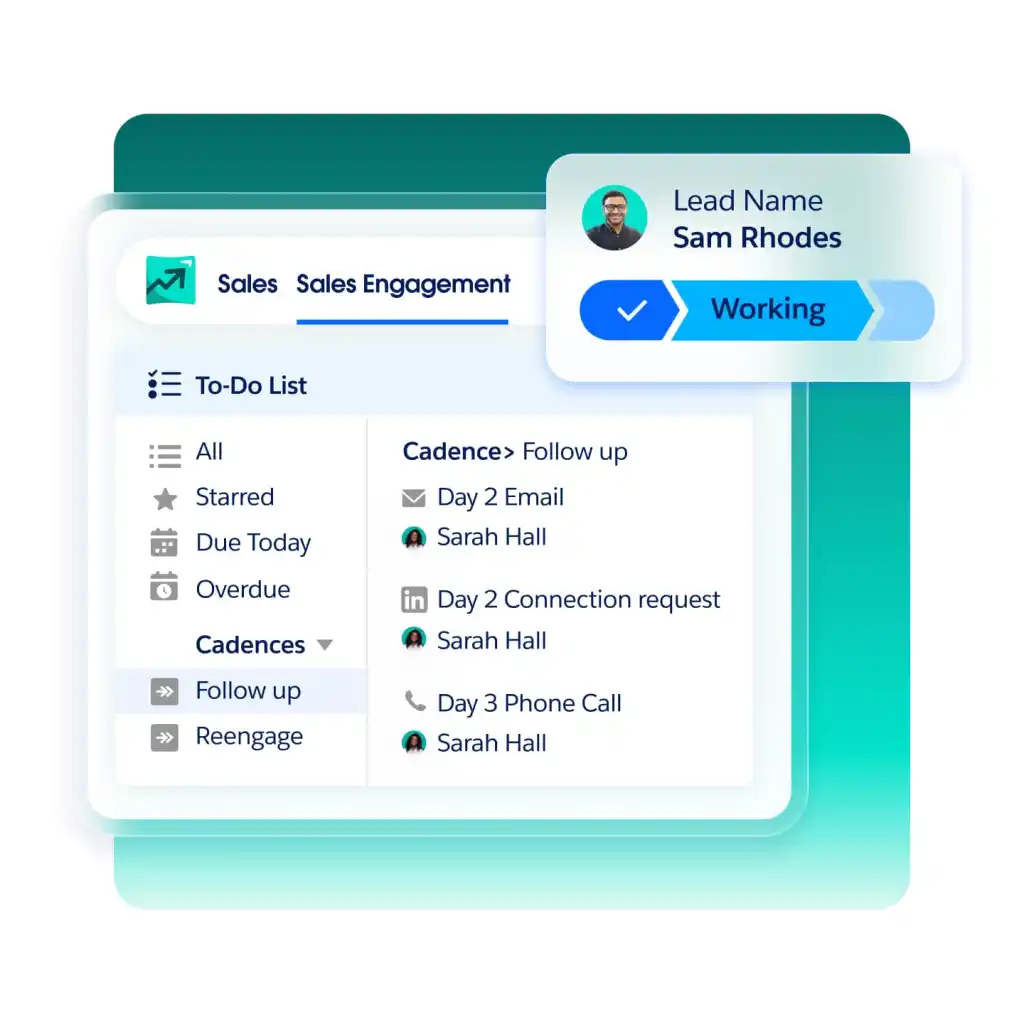
Salesforce Sales Engagement is a native tool for cadence management and sales automation within the Salesforce ecosystem, now part of the Agentforce Sales offering. The platform provides work queues that prioritize which prospects you should contact based on engagement signals and deal stage. Email templates and sequences execute directly within Salesforce without requiring a separate login.
Einstein Activity Capture automatically logs emails and calendar events to Salesforce records, reducing manual data entry. Call logging integrates with phone systems to track conversations and outcomes. Task automation creates follow-up reminders and updates opportunity fields based on prospect behavior.
The platform leverages existing Salesforce data to personalize outreach and segment prospects into targeted sequences. Reporting shows sequence performance, rep activity, and pipeline contribution. Sales Engagement works exclusively within the Salesforce ecosystem and requires no third-party tools for organizations already standardized on Sales Cloud.
Key Features:
Native Salesforce integration with no third-party tools
Work queues that prioritize prospect outreach
Email templates and sequence automation
Einstein Activity Capture for automatic logging
Call logging and conversation tracking
Task automation and CRM updates
Reporting on sequence and rep performance
Personalization using Salesforce data
Already standardized on Salesforce? See how its native engagement stacks up against ZoomInfo.
7. Gong
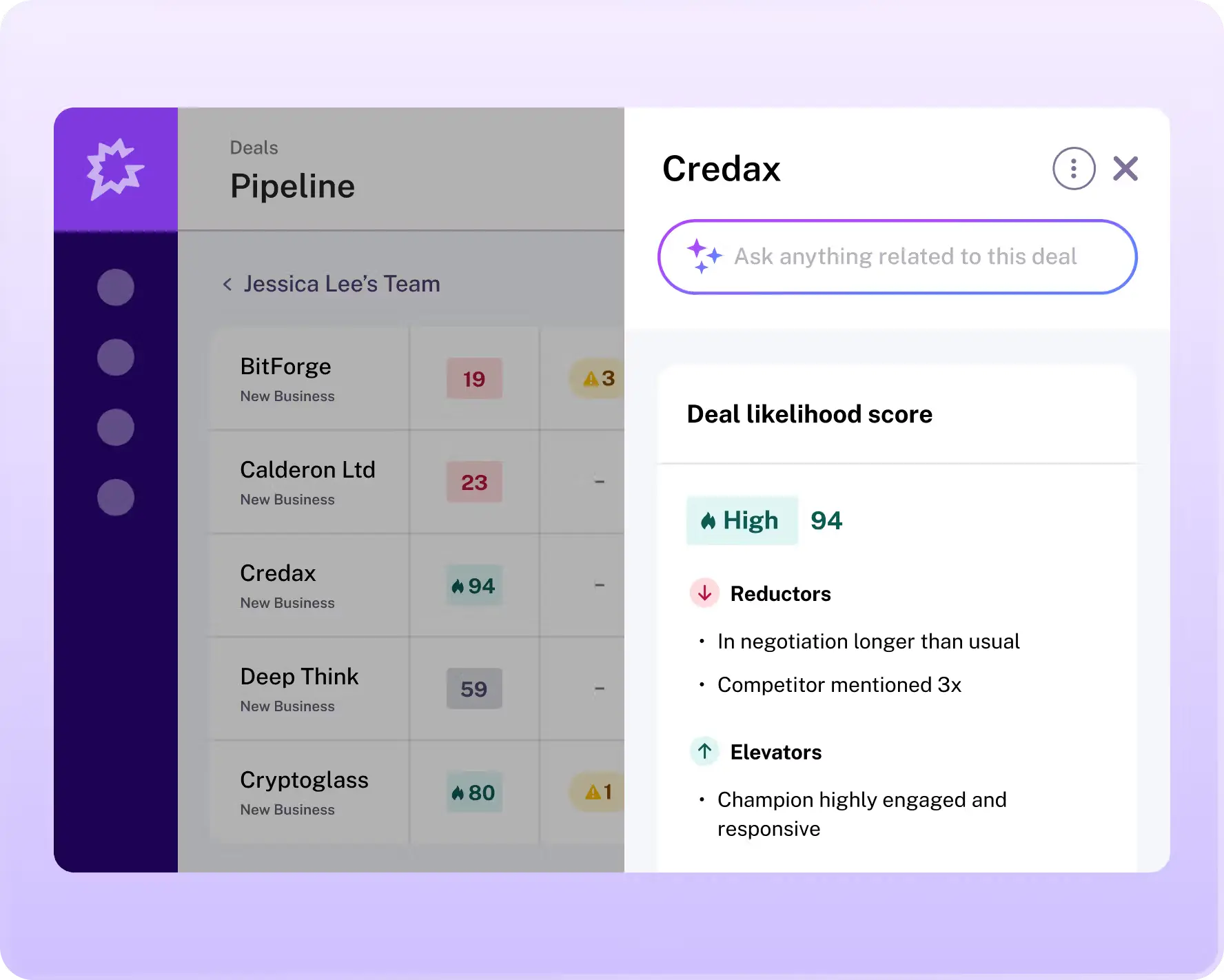
Gong is a Revenue AI Operating System that goes beyond traditional conversation intelligence to serve as a comprehensive revenue intelligence platform. The system records and analyzes sales calls to identify successful messaging patterns and coaching opportunities, while also tracking engagement across email and phone interactions. Recognized as a Leader in the 2025 Gartner Magic Quadrant for Revenue Action Orchestration, Gong provides AI Agents for workflow automation, pipeline management, and forecasting capabilities.
Deal intelligence features analyze all interactions with an account to surface risks and opportunities. The platform identifies which topics and questions correlate with closed deals, helping you replicate winning conversations. Analytics dashboards show rep performance, pipeline health, and forecast accuracy.
Gong integrates with CRMs, email systems, and phone platforms to capture all customer interactions in one place. The platform provides coaching insights that managers use to improve rep performance. Conversation analytics reveal which competitors come up in deals and how reps handle objections.
Key Features:
Call recording and conversation analysis
Email tracking and engagement monitoring
Deal intelligence and risk identification
Rep performance analytics and coaching insights
Pipeline visibility and forecast accuracy
CRM integration and activity capture
Competitive intelligence from customer conversations
Topic tracking across conversations
Want to see where conversation intelligence meets GTM data? Here's Gong vs. ZoomInfo, side by side.
8. Reply
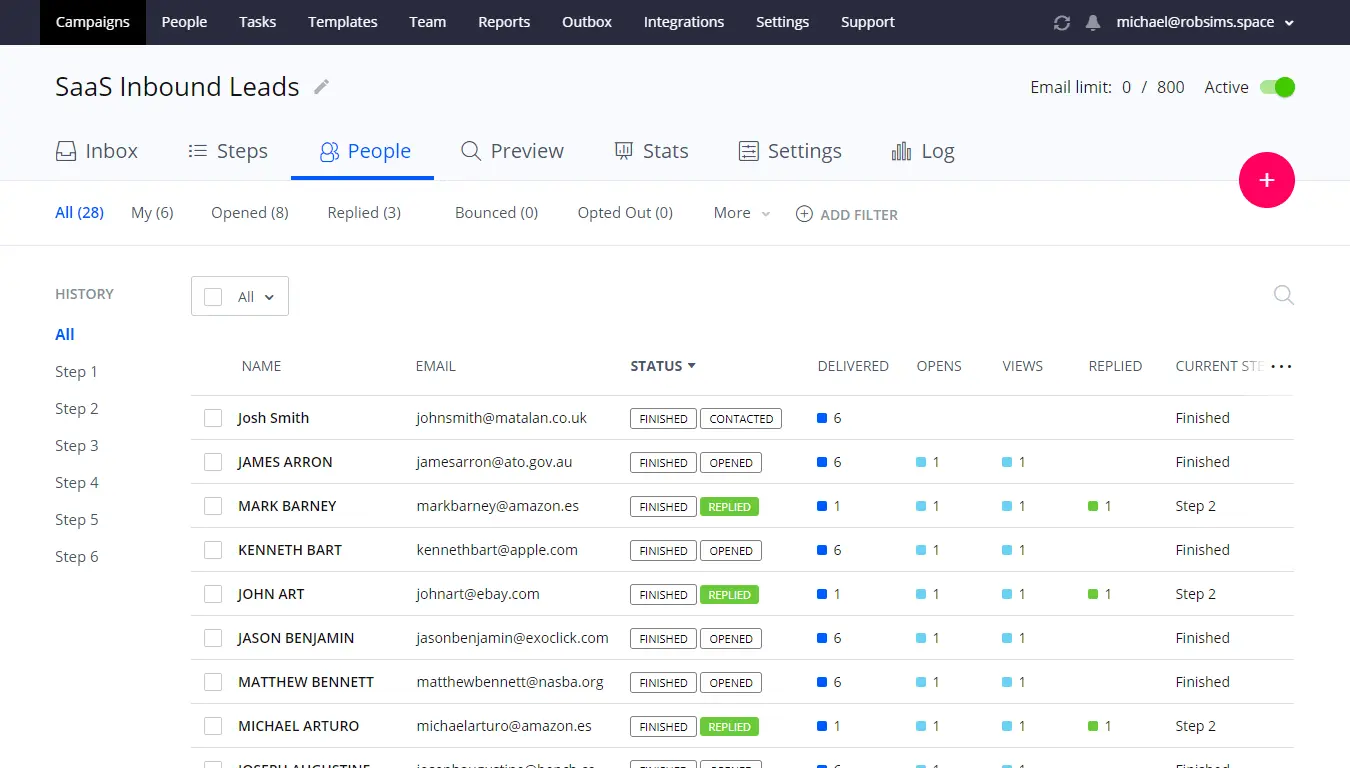
Reply is a multi-channel sales engagement platform focused on outbound automation. The system coordinates email sequences, LinkedIn automation, phone calls, SMS, and WhatsApp messages in unified workflows. Sequences trigger automatically based on time intervals or prospect behavior.
AI-assisted writing features suggest email copy and subject lines based on successful templates. Analytics show which channels and messages drive the highest response rates. The platform includes contact enrichment that verifies email addresses and fills in missing data fields.
Reply integrates with Salesforce, HubSpot, Pipedrive, and other CRMs to sync prospect data and log activity. Meeting scheduling links embedded in emails reduce friction in booking calls. The platform offers A/B testing for email elements and provides deliverability monitoring to maintain sender reputation.
Key Features:
Multi-channel sequences across email, phone, LinkedIn, SMS, and WhatsApp
AI-assisted email writing and optimization
Contact enrichment and email verification
CRM integration and activity logging
Meeting scheduler with calendar sync
A/B testing and analytics
Deliverability monitoring and sender reputation management
Workflow automation
Comparing multichannel outbound platforms? Here's how Reply measures up against Outreach.
9. Mixmax
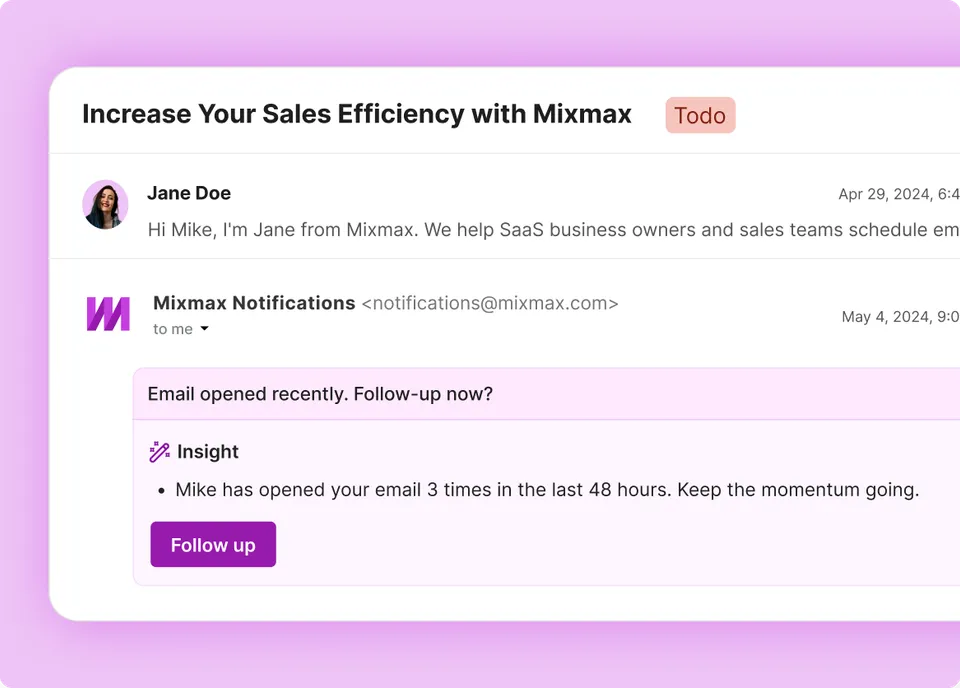
Mixmax is an AI-native Sales Execution Platform built for Gmail users, featuring specialized AI Copilot products including Inbox Copilot, Meeting Copilot, and Engagement Copilot. The platform provides email tracking, templates, and scheduling capabilities with AI-powered features like AI Compose, AI Smart Send, and AI Engagement Score that work directly in the Gmail interface. Sequences automate follow-up emails based on whether prospects open messages or click links.
Calendar integration lets prospects book meetings directly from emails without leaving their inbox. Email templates include personalization tokens that pull data from connected CRMs. Workflow rules automate tasks like creating reminders or updating deal stages based on email engagement.
Mixmax integrates with Salesforce and other CRMs to log email activity and sync contact data. Team collaboration features let managers share templates and sequences across the organization. Analytics show email performance metrics and sequence effectiveness.
Key Features:
Gmail-native email tracking and templates
Email sequencing with engagement-based triggers
Calendar integration for one-click meeting scheduling
Workflow automation and task creation
CRM integration and activity logging
Team collaboration and template sharing
Analytics on email and sequence performance
Personalization tokens
If scheduling is the deciding factor, here's how Mixmax compares with Calendly.
10. Mailshake
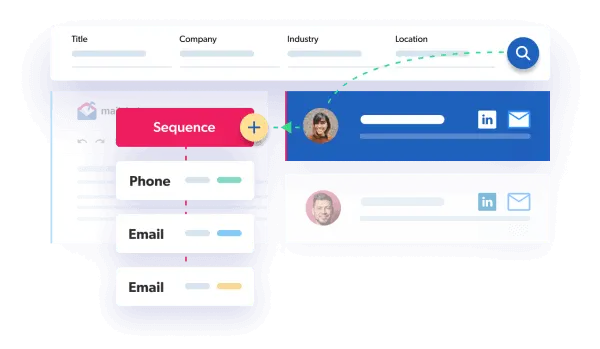
Mailshake is an email outreach and sales engagement platform designed for cold outreach campaigns. The platform supports outbound sales execution with email sequencing, phone dialing, and LinkedIn automation in one interface. Sequences execute automatically with personalized messaging pulled from CSV uploads or CRM data.
Lead catcher functionality monitors replies and automatically pauses sequences when prospects respond, preventing awkward follow-ups after a conversation has started. A/B testing compares subject lines and email copy to identify what drives opens and replies. The built-in dialer logs calls and tracks outcomes.
Mailshake integrates with Salesforce, Pipedrive, and other CRMs to sync contact data and log activity. Analytics dashboards show sequence performance, email deliverability, and reply rates. The platform includes team collaboration features that let managers review campaigns before launch.
Key Features:
Email sequencing with personalization
Phone dialer and call logging
LinkedIn automation
Lead catcher that pauses sequences on replies
A/B testing for subject lines and copy
CRM integration and activity sync
Analytics on deliverability and reply rates
Team collaboration and campaign review
Sizing up cold outreach tools? Here's how Mailshake stacks up against Instantly.
11. Yesware
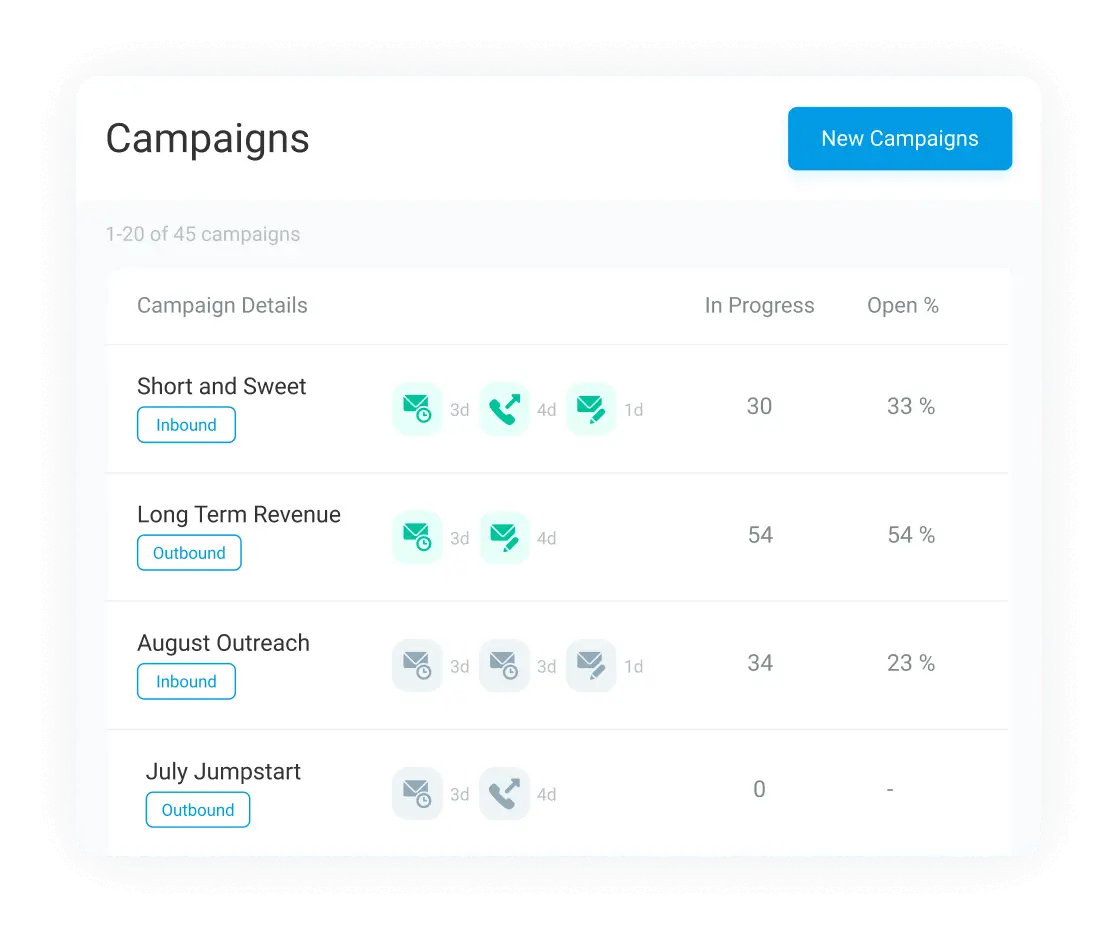
Yesware is an email tracking and sales engagement tool for Outlook and Gmail users. The platform provides email templates, sequencing, and tracking capabilities that work directly in email clients. Sequences automate follow-up emails based on whether prospects open messages or click links.
Meeting scheduler integration lets prospects book time directly from emails. Attachment tracking shows when prospects view proposals and documents. The platform logs email activity to Salesforce and other CRMs, with Salesforce integration available at the Enterprise tier.
Yesware focuses on individual rep productivity rather than team-wide campaign management. Analytics show email performance metrics like open rates and reply rates. The platform includes mobile apps that let you track emails and manage sequences from anywhere.
Key Features:
Email tracking for Outlook and Gmail
Email templates with personalization
Sequencing with engagement-based triggers
Meeting scheduler and calendar integration
Attachment tracking for proposals and documents
CRM integration and activity logging
Mobile apps for iOS and Android
Individual rep analytics
Torn between inbox-based tools? See how Yesware compares with HubSpot Sales.
12. Woodpecker
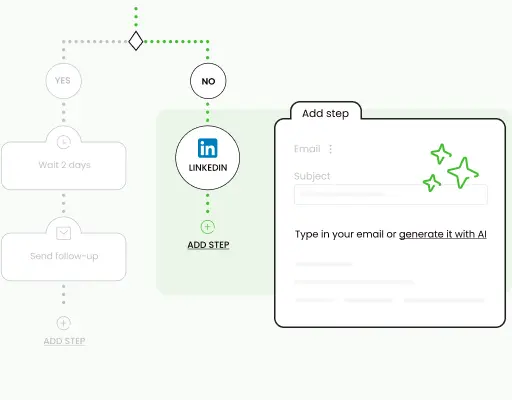
Woodpecker is a cold email automation platform focused on B2B outreach with multi-channel capabilities. The system provides email sequencing with follow-up automation based on whether prospects open messages or reply, and now includes LinkedIn automation through Dux-Soup integration, allowing you to add LinkedIn invites, messages, or profile visits to coordinated multi-channel campaigns. Deliverability tools monitor sender reputation and provide recommendations to maintain inbox placement.
The platform includes A/B testing for subject lines and email copy. Agency features let you manage multiple client accounts from one dashboard. Integrations with CRMs and other tools sync contact data and log email activity.
Woodpecker provides detailed analytics on open rates, reply rates, and deliverability metrics. Workflow automation handles tasks like pausing sequences when prospects respond.
Key Features:
Cold email sequencing and automation
LinkedIn automation via Dux-Soup integration
Multi-channel campaign coordination
Follow-up automation based on engagement
Deliverability monitoring and optimization
A/B testing for subject lines and copy
Agency features for managing multiple accounts
CRM integration and activity logging
Analytics on email performance and deliverability
Automatic sequence pausing on replies
Want the full picture before you commit? Here's our hands-on Woodpecker review.
How to Choose Sales Cadence Software
The right cadence software depends on your team size, tech stack, and how you sell. Start by mapping your current prospecting workflow to identify which manual tasks waste the most time and where leads fall through the cracks. Then evaluate platforms based on how well they solve those specific problems rather than chasing feature lists.
Channel Coverage and Flexibility
Multi-channel outreach drives higher response rates than email alone because prospects engage differently across channels. Some respond to phone calls, others to LinkedIn messages, and many need multiple touches before they reply. Your cadence software should support the channels your buyers actually use.
Key considerations:
Does it support phone, email, social, and SMS?
Can reps customize channel mix per persona?
Does it integrate with your existing dialer or LinkedIn tools?
CRM and Tech Stack Integration
Cadence software that doesn't sync with your CRM creates data silos and undermines your CRM strategy, forcing reps to log activity manually. Bi-directional integration keeps contact records current, logs all touchpoints automatically, and ensures marketing and sales work from the same data. Poor integration means reps spend time on data entry instead of selling.
Key considerations:
Native integration or third-party connector?
Bi-directional sync or one-way?
Does it work with your existing engagement tools?
Data Quality and Contact Enrichment
Cadences fail when they run on bad data. Bounced emails waste your time and damage sender reputation. Wrong phone numbers mean hours of dialing that never connect. The best cadence software either includes verified contact data or integrates tightly with a data provider that maintains accuracy.
Key considerations:
Does the platform include or integrate with a contact database?
How is data verified and refreshed?
What are deliverability rates?
Automation and AI Capabilities
Modern cadence tools use AI to optimize send times, detect replies, and surface which prospects are most likely to respond. This automation removes guesswork and lets you focus on conversations instead of managing sequences. Platforms without AI require more manual intervention and deliver less consistent results.
Key considerations:
Does it offer AI-powered timing or sequencing?
Can it auto-detect replies and pause sequences?
Does it surface buying signals or prioritization insights?
Analytics and Reporting
You can't improve what you don't measure. Cadence software should show which sequences drive meetings, which touchpoints get responses, and which reps need coaching. Sequence-level analytics reveal what works so you can replicate success across the team instead of guessing.
Key considerations:
Sequence-level and step-level analytics?
Rep performance dashboards?
A/B testing capabilities?
Find the Right Sales Cadence Tool for Your Team
The right sales cadence software turns inconsistent prospecting into a repeatable system that scales across your team. The platform you choose should match your go-to-market motion, integrate with your existing tech stack, and provide the data quality your sequences need to actually connect with prospects.
Key decision factors:
Channel coverage aligned to your outreach strategy
Tight integration with your CRM and existing stack
Data quality to ensure deliverability and rep efficiency
Analytics to measure and optimize performance
To see how ZoomInfo combines B2B data intelligence with multi-channel sales engagement, book a demo.
Frequently Asked Questions
What is a sales cadence?
A sales cadence is a predefined sequence of touchpoints designed to engage prospects over a set timeframe. It typically includes emails, phone calls, social media interactions, and other contact methods executed in a specific order.
How many touchpoints should a B2B sales cadence include?
Most B2B sales cadences include 8-12 touchpoints spread over 2-4 weeks. Enterprise deals often require more touches than transactional sales because buying committees are larger and decision cycles are longer.
What is the difference between a sales cadence and an email cadence?
An email cadence uses only email as the contact method, while a sales cadence incorporates multiple channels including phone, social media, and direct mail. Multi-channel cadences typically generate higher response rates because they reach prospects where they prefer to engage.
Can sales cadence tools integrate with Salesforce?
Most sales cadence platforms offer native or third-party integrations with Salesforce and other major CRMs. These integrations sync contact data, log activity, and update records automatically so reps don't have to enter data manually.
What are sales cadence templates?
Sales cadence templates are pre-built sequences for common scenarios like cold outbound, inbound follow-up, or re-engagement campaigns. You customize these templates with your own messaging and timing instead of building sequences from scratch.
How does sales cadence software improve rep productivity?
Cadence software automates manual follow-up tasks, ensures consistent outreach, and surfaces the highest-priority prospects. This removes administrative work and lets reps spend more time on conversations that drive revenue instead of scheduling emails and calls.
