
Sales email sequences turn one-off follow-ups into a repeatable system, so your reps spend less time chasing touches and more time in conversations that book meetings.
But sequences differ sharply on the things that decide outcomes: how well you match the sequence to the situation, how tightly each email is written, and whether the accounts behind them are worth the send.
This guide breaks down how to build sales email sequences that convert, from the five sequence types and steal-ready templates through to the metrics and mistakes that move reply rates. It closes with the data layer that decides which accounts to sequence in the first place.
Why email sequences outperform single-touch outreach
Sales email sequences are a coordinated series of emails sent to a prospect over a defined period, with timing, personalization, and removal logic managed by a sequencing platform. They come in two forms: trigger-based sequences that fire when a prospect takes a behavioral action (downloading content, filling out a form, visiting a pricing page) and time-based sequences that follow a fixed-interval schedule regardless of prospect behavior. The primary goal of any sequence is to book a response or a meeting, not to inform.
If you already know how to write compelling cold emails, a sequence lets you apply that skill across multiple touches, each addressing a different angle of the prospect's problem. More touchpoints give you more chances to get the message right. The challenge is building email sequences that convert, not just sequences that send.
What makes a sales email sequence work
A sales email sequence is an automated, multi-touch outreach program that adapts to prospect behavior and stops automatically when the goal is achieved. That last part is what separates sequences from drip campaigns, and the distinction matters in practice.
A trigger-based sequence might fire when a prospect downloads a whitepaper on pipeline forecasting. A time-based sequence sends emails on Day 1, Day 3, and Day 7 regardless of what the prospect does in between. Both are sequences, but they serve different purposes and require different personalization approaches.
Dimension | Sales email sequence | Drip campaign |
|---|---|---|
Trigger type | Behavioral (reply, click, download) or time-based | Time-based only |
Personalization level | High, tailored to enrollment trigger and account signals | Moderate, persona or segment level |
Primary goal | Book a response or meeting | Nurture awareness over time |
Removal logic | Auto-removes on reply or meeting booked | Continues until unsubscribe or list end |
The table above captures why sequences outperform single emails. RAIN Group research finds it takes an average of 8 touches to start a conversation with a prospect. A single well-crafted email rarely gets there. A coordinated sequence, calibrated to the prospect's behavior and enrollment trigger, does.
Five types of sales email sequences (and when to use each)
Knowing how to create sales email sequences that convert starts with matching the sequence type to the situation. Using a cold outreach sequence on a warm inbound lead, or a re-engagement sequence on a prospect who just booked a demo, wastes the opportunity. Here are the five types worth building.
1. Cold outreach sequence
Trigger: No prior contact with the prospect. Goal: Earn a first response. Ideal length: 5-7 emails over 2-3 weeks. Primary CTA: Request a short call or ask a qualifying question.
Cold outreach sequences start from zero relationship and zero trust. Every email needs to earn the next open. Keep subject lines specific to the prospect's role or company, lead with a pain hypothesis rather than a product pitch, and vary the angle with each touch. Pair the email track with calls and LinkedIn touches using a shared sales cadence so no single channel carries the whole sequence.
2. Post-demo or post-meeting follow-up
Trigger: Completed discovery call or product demo. Goal: Advance to the next stage (proposal, technical evaluation, or stakeholder meeting). Ideal length: 3-5 emails over 1-2 weeks. Primary CTA: Confirm next steps or share a relevant resource tied to the conversation.
This sequence has the highest conversion ceiling of any type because the prospect already knows who you are. Reference specifics from the conversation. Generic follow-up after a demo is a fast way to lose a warm opportunity.
3. Inbound lead nurture
Trigger: Content download, form fill, or webinar registration. Goal: Convert opted-in interest into a booked meeting. Ideal length: 4-6 emails over 1-2 weeks. Primary CTA: Offer a direct next step (demo, assessment, or consultation).
Inbound prospects are already showing intent. They warrant a more direct conversion path than cold outreach. Do not treat them like cold contacts by starting with a long educational sequence. They downloaded the content; they know the problem exists. Get to the value conversation faster.
See how to accelerate inbound leads for the speed-to-lead side of this motion.
4. Re-engagement sequence
Trigger: A prospect who went dark after prior contact or a stalled opportunity. Goal: Revive the conversation or get a definitive no. Ideal length: 3-4 emails over 2-3 weeks. Primary CTA: Offer a new angle, a relevant trigger (funding, hiring signal, product update), or a breakup email that gives them an easy out.
Re-engagement sequences work best when you have a genuine new reason to reach out. A new case study from their industry, a relevant product update, or an account signal (new hire, funding round) gives the sequence a hook beyond "just checking in." A job change alert on a former champion is one of the strongest re-engagement triggers there is.
5. Referral or expansion sequence
Trigger: Existing customer or internal champion. Goal: Source a warm introduction to another buyer or expand into a new team or division. Ideal length: 2-4 emails over 2 weeks. Primary CTA: Ask for a specific referral or introduction to a named colleague or team.
Expansion sequences are the highest-ROI sequences most teams never build. The trust is already there. The ask is specific. The conversion rate on a warm introduction from a satisfied customer beats cold outreach by a significant margin.
Top tips for sales email sequences that convert
Writing a great sales email sequence means adhering to some basic principles. Mainly, you want to make sure you're brief, don't waste the prospect's time with filler words, lengthy asides, and favorite phrases.
Get to the point. Focus on the customer. Keep the conversation moving. Here are some time-tested tips that ZoomInfo uses to train its own sales team on the art of writing great cold emails:
1. Short and sweet wins
People are busy and inboxes are jammed. Make your point, don't use a lot of extra words that you think are adding flair, and don't repeat yourself. Good advice for any kind of communication, really.
Get straight to the point. Avoid formalities and preamble
Remove the fluff, adverbs and adjectives are easy cuts
Limit your email to three to four lines with one idea per section
2. Aim for both focus and scale
You're one person having an ongoing conversation. Make each email in your sequence similar in tone, voice, and approach even when the facts of the message change. Then read them back, does this scale out to a broader audience?
Consider writing a full email campaign in one sitting
Let each email focus on a different "pain hypothesis"
Scale that message to a persona or industry
3. Mix it up
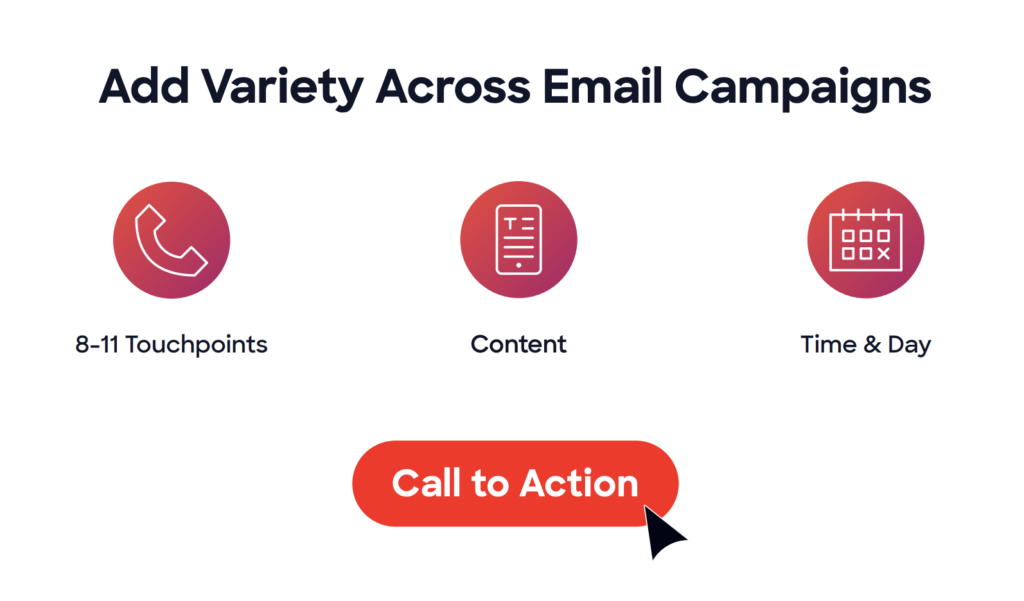
Research from RAIN Group puts the average at 8 touches to start a conversation, which is why email sequences work best as part of a multichannel motion that includes calls and LinkedIn outreach. Use email sequences, but don't forget to call behind. Vary the content offers you provide. Try different timeslots and CTAs.
4. Before you send: deliverability foundations
The best-written sequence fails if it never reaches the inbox. Before launching any sequence, confirm these prerequisites:
SPF, DKIM, and DMARC authentication: All three records must be configured for your sending domain. Without them, major email providers will route your messages to spam or reject them outright.
One-click unsubscribe compliance: Google and Yahoo's 2024 bulk sender guidelines require one-click unsubscribe in the email header for commercial messages. Non-compliance triggers filtering at scale.
Spam complaint rate below 0.3%: Google's 2024 sender guidelines set 0.3% as the threshold above which deliverability degrades significantly. Monitor complaint rates in Google Postmaster Tools and pause sequences that approach this ceiling.
Deliverability is infrastructure, not a nice-to-have. A sequence with a 30% open rate on a clean domain outperforms a sequence with a 50% open rate that lands in spam half the time.
Steal-ready templates for your sales email sequence
Looking for the best sales email sequences to model? This four-step framework is built on a cadence developed by ZoomInfo's GTM Plays team. ZoomInfo's GTM Plays team reports open rates of 97-99% on sequences that combine this cadence with verified contact data, firmographics, technographics, and buyer intent signals. Teams that want to wire that same verified intelligence directly into their own AI tools and agents can do so through GTM.AI, the headless API and MCP option, connecting firmographic, technographic, and intent signals to any agent or custom workflow.
Cadence framework: Start with Day 1 (first email), Day 3 (first follow-up), Day 7 (content or proof touch), Day 14 (referral or breakup). This spacing is a starting point, enterprise prospects at VP and above often warrant longer gaps between touches, while SMB sequences can compress the timeline.
It can take 8-11 touchpoints to convert a lead, so make the most of every channel.
Step 1: Intro
SL: (Offer) for (Name)
(Name), is (Prospect Company) seeking (Solution To Pain Point)?
At (My Company), we've launched (your product/offer/pitch). Leading companies such as (Customer Proof Examples) are already leveraging this (Product/Service) to (Solve Problem), and I'm confident your team can too.
If you're looking to (Solve Pain Point), let's connect. How about (Day/Week)?
Best,
(Name)
Why this works: The subject line formula creates a personalized value hook before the prospect opens. The CTA is a single, low-friction ask, a specific day or week, not an open-ended "let me know when you're free."
Step 2: Content
SL: Why not (Solve Pain Point)?
(Name), with (Product/Service), you can (Take Specific Action) and (Solve Specific Problem). Here's a great example, our latest (Content Offer):
(INSERT CONTENT: Video, blog, ebook, or other collateral)
This is why (My Company) is the leader in (My Market).
Are you free (Day/Week) to connect?
Let me know,
(Name)
Why this works: The content offer shifts the dynamic from "I'm selling" to "here's something useful." The CTA stays consistent, one ask, matched to the stage.
Step 3: Customer Proof
SL: More (Benefit), Less (Pain Point)
(Name), achieving (Benefit) with (Less Pain) is a challenging task.
However, (Reference Customer Solved Pain Point, link to online case study) with (My Product/Service).
(Prospect Company) can get those same results by (Key Benefit of My Product/Service).
Any chance you're free (Day/Week) to connect?
Best,
(Name)
Why this works: Social proof from a recognizable peer company reduces perceived risk. The subject line formula (More X, Less Y) is a proven tension-and-relief structure that drives opens.
Step 4: Referral
SL: (Name), Can You Help With This?
Hey (Name),
I want to ensure your teams get the best (My Category, Link to My Website) to truly thrive this year.
If this isn't something that is on your radar, who's the best colleague to reach out to?
Best,
(Name)
Why this works: The referral ask reframes the email from a sales pitch to a favor request. Even a "not me, try X" reply is a win, it opens a new thread and expands your reach within the account.
Pro tip on removal: When a prospect replies or books a meeting, remove them from the sequence immediately. Continuing to send emails after a reply damages sender reputation and creates a poor buyer experience. Configure your sequencing tool to auto-remove on reply and on calendar booking, do not rely on manual cleanup.
How to measure whether your sequences are working
Open rate alone does not tell you whether a sequence is working. A tiered metrics framework gives you a diagnostic view across the full funnel.
Engagement metrics
Open rate: Benchmark for cold outreach is 20-30%. If you're below this, the problem is likely deliverability (check authentication and complaint rates) or subject line relevance.
Click rate: Tracks whether prospects are engaging with your content offer in Step 2. Low click rates with high open rates indicate the body copy or offer isn't landing.
Interpretation: If open rates are healthy but click rates are near zero, the subject line is doing its job but the content offer or CTA needs revision.
Response metrics
Reply rate: Benchmark for cold outreach is 1-5%. ZoomInfo's GTM Plays team reports open rates of 97-99% on sequences using verified contact data and intent signals, a signal that data quality directly influences engagement at the top of the funnel.
Positive reply rate: The share of replies that are interested (not unsubscribes or out-of-office). Track this separately from total reply rate to get a true read on message-market fit.
Interpretation: If reply rate is within benchmark but positive reply rate is low, the sequence is reaching the right people but the value proposition or timing is off.
Pipeline metrics
Meetings booked: The primary conversion metric for most SDR sequences. Track meetings booked per sequence enrolled, not just per email sent.
Opportunities created: The downstream metric that connects sequence activity to pipeline. If meetings are booking but opportunities aren't opening, the qualification criteria or handoff process needs review.
Interpretation: If meetings book but opportunities don't open, the sequence is attracting the wrong ICP or the discovery process isn't qualifying effectively.
Sequence health metrics
Unsubscribe rate: Elevated unsubscribe rates signal that the sequence is reaching the wrong audience or the messaging is too aggressive for the enrollment trigger.
Spam complaint rate: Keep below 0.3% per Google's 2024 sender guidelines. If complaint rates are rising, review the enrollment criteria, the email frequency, and whether auto-removal on reply is functioning correctly.
Interpretation: Rising spam complaints with stable unsubscribe rates often indicate that prospects are not seeing an easy way to opt out, check your one-click unsubscribe configuration.
Common mistakes that kill sequence performance
Most underperforming sequences fail for the same reasons, and most of those reasons are fixable without rebuilding from scratch.
ZoomInfo's Chief Revenue Officer, James Roth, has watched sales teams make the same mistake for years. He describes the most common failure mode bluntly:
"They make their three calls, the decision maker doesn't pick up, so they push the button to run the sequence of emails no one will read, and call it a job well done."
Firing a sequence at a single contact and moving on is the failure mode most of the mistakes below share. The fix in every case is the same: treat the sequence as one part of a deliberate, multi-threaded play, not a button you press to look busy.
Sending too many emails too quickly. Compressing all touches into the first week triggers spam filters and trains prospects to ignore your domain. Fix: space touches at Day 1, 3, 7, 14 as a minimum baseline.
Generic subject lines with no personalization. "Following up" and "Quick question" are not subject lines, they are noise. Fix: reference the enrollment trigger or a specific account signal (recent funding, new hire, tech stack change) in the subject line.
Multiple CTAs per email. Asking a prospect to book a demo, read a case study, and watch a video in the same email produces zero action. Fix: one ask per email, matched to the sequence stage. The intro email asks for a meeting; the content email asks for a click; the referral email asks for a name.
Failing to remove responders from the sequence. Sending a scheduled email to a prospect who replied two days ago is one of the fastest ways to lose a deal. Fix: configure auto-removal on reply and on meeting booked in your sequencing platform. Do not rely on manual cleanup at scale.
Misaligned messaging to enrollment trigger. If a prospect downloaded content on revenue forecasting, every email in the sequence should connect to that topic's value proposition. Sending a generic product pitch to someone who opted in on a specific topic tells them you weren't paying attention. Fix: build sequence variants by enrollment trigger, not just by persona.
ZoomInfo and the data layer behind high-converting sequences
For teams building on B2B email marketing best practices, ZoomInfo is an all-in-one AI GTM Platform built to help revenue teams find, win, and grow customers: email sequences are one of the highest-leverage motions in that system.
The foundation is data. ZoomInfo's B2B data layer covers 500M contacts, 100M companies, 200M+ verified business emails, and 120M direct-dial phone numbers. That scale matters because sequences start failing before the first email sends when the underlying contact data is stale. Bounced emails erode domain reputation, wrong numbers waste call blocks, and contacts who changed roles six months ago never respond. Stale data is the single most common reason sequences underperform before a rep ever tests subject line copy. ZoomInfo's GTM Plays team reports open rates of 97-99% on sequences that combine this cadence with verified contact data and intent signals, a result that is only achievable when the contacts in the sequence are actually reachable.
The intelligence layer is the GTM Context Graph. It processes 1.5B+ data points daily, fusing ZoomInfo's B2B data with CRM records, conversation intelligence, and behavioral signals into a unified reasoning layer that surfaces which accounts are showing buying intent right now. For sequence strategy, that means reps can prioritize which sequences to run and which accounts to enroll based on actual buying behavior, not territory coverage or gut instinct. The difference between a sequence sent to a cold account and a sequence sent to an account actively researching your category is measurable in reply rates.
This is not just theory for ZoomInfo. When CRO James Roth's team rebuilt outbound around signals, the numbers moved in the same direction:
"We implemented AI talk tracks and moved conversion rates up 15 percent. Then we prioritized the higher signal-density accounts, and conversion went up another 10 points."
The access layer is where teams connect to this intelligence in the workflow that fits them. Sellers use GTM Workspace. Marketers and RevOps teams use GTM Studio. Any team that wants to wire the same verified intelligence directly into their own AI tools and agents can do so through the headless API and MCP option in GTM.AI, connecting firmographic, technographic, and intent signals to any agent or custom workflow.
See how ZoomInfo's verified data and GTM Context Graph can power your next sequence. Request a demo.
Frequently asked questions about sales email sequences
What are email sequences in sales?
A sales email sequence is a coordinated series of emails sent to a prospect over a defined period, managed by a sequencing platform that controls timing, personalization, and automatic removal when a prospect responds. Sequences differ from drip campaigns in that they are prospect-response-driven and stop automatically when the goal (a reply or meeting) is achieved. Most effective sequences combine email with phone and LinkedIn touchpoints across 8-11 touches.
How many emails should a sales sequence have?
Most effective cold outreach sequences run 5-9 emails over 2-4 weeks. RAIN Group research puts the average touches needed to start a conversation at 8, which is why sequences outperform single-email outreach. Optimal length varies by ICP seniority and deal size, enterprise sequences often run longer with more research-intensive personalization between touches, making them some of the best sales email sequences for complex buying cycles.
What's a good email sequencer for sales?
The right sequencing tool depends on your team's use case: cold outreach specialists often use tools like Instantly or Saleshandy; multichannel teams use Apollo or Lemlist; CRM-native teams use HubSpot Sales Hub or Salesloft; enterprise teams use Outreach. Teams that want to ground their sequences in verified B2B contact data, intent signals, and AI-assisted prioritization can use ZoomInfo's GTM Workspace, which combines sequencing with the data layer that determines which accounts to sequence in the first place.
What are the 5 C's of email?
The 5 C's of effective sales email are: Clear (one idea per email, no ambiguity about the ask), Concise (three to four lines maximum), Compelling (lead with a pain point or insight relevant to the prospect's situation), Credible (reference a customer outcome, a specific data point, or a relevant trigger), and Conversion-focused (one clear CTA per email matched to the sequence stage). Applying all five to every email in a sequence is the fastest way to improve reply rates without changing the cadence.
What is the 3-21-0 email rule?
The 3-21-0 rule is a cold email follow-up framework: send a follow-up 3 days after the initial email, a second follow-up 21 days after that, and aim for 0 unsolicited emails after a prospect explicitly opts out. It is a conservative cadence designed to avoid spam triggers while maintaining presence over a longer sales cycle. Most B2B sales teams use a more aggressive cadence (Day 1, 3, 7, 14) for active prospecting sequences, reserving the 3-21-0 pattern for lower-priority or longer-cycle accounts.