
If you're comparing Salesforce vs. ServiceTitan, you're asking a fundamental question: does your business need a CRM that can be shaped to fit any industry, or an operating system built for the trades?
The answer depends on a handful of specifics:
Are you running a trades business (HVAC, plumbing, electrical, roofing), or do your needs extend beyond field service?
Do you need dispatch, scheduling, and field technician tools that work without months of configuration?
Is your growth driven by inbound calls, or do you need to prospect for commercial accounts?
Can you invest in implementation partners and ongoing administration, or do you want software that understands your workflows from day one?
Is knowing which companies need your services, and who makes the buying decisions, a gap in your current process?
In short, here's what we recommend:
Salesforce is the right choice for large organizations that need a CRM flexible enough to serve any industry and any workflow. With 150,000+ customers worldwide and a 19-year run as Gartner's Magic Quadrant Leader for Sales Force Automation, Salesforce covers sales, service, marketing, commerce, analytics, and autonomous AI agents through Agentforce (a platform that deploys AI to handle customer interactions and internal workflows). Its Field Service module adds dispatch, scheduling, and mobile workforce tools. But Salesforce requires dedicated administrators, real implementation investment, and additional per-user costs for each capability you add.
ServiceTitan is the leading platform for trades contractors who want one system covering their entire operation. From dispatching and scheduling to a field mobile app, integrated payments, service agreements, and marketing attribution, ServiceTitan gives trades businesses what they need without stitching together separate tools. But ServiceTitan is opinionated about how work should flow, pricing isn't published, and its reach stops at the trades.
Both platforms excel at managing work that's already in front of you. But winning new commercial accounts (identifying facility managers and property directors before they start calling competitors) requires a different kind of tool.
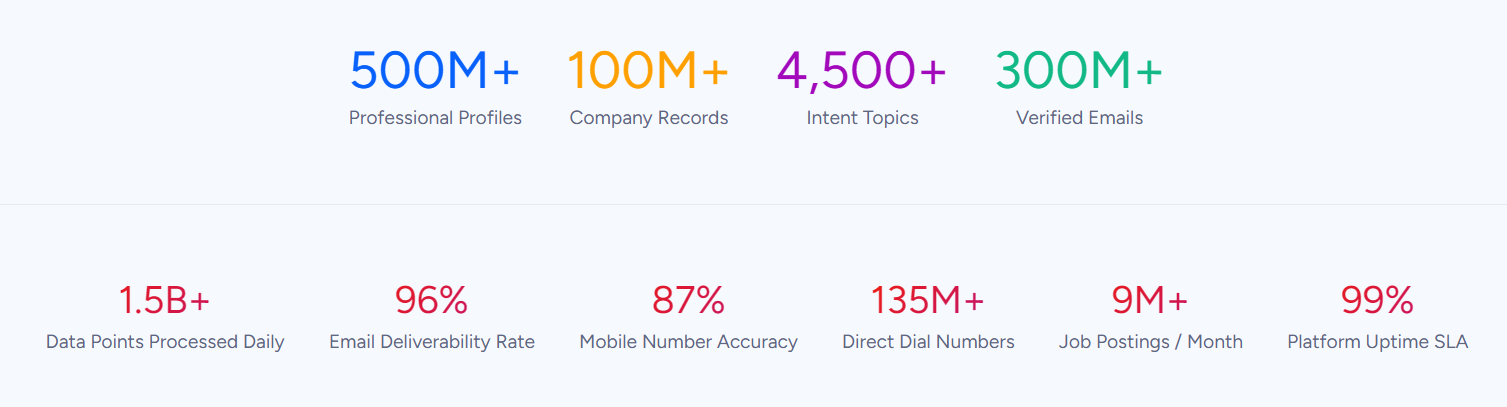
ZoomInfo is an AI-powered go-to-market platform that provides the intelligence layer neither Salesforce nor ServiceTitan offers on its own. With 500M contacts, 100M companies, 135M+ verified phone numbers, and 200M+ verified business email addresses, ZoomInfo helps commercial contractors and B2B sales teams identify which companies need their services, who makes the buying decisions, and when those companies are researching solutions. Its GTM Context Graph processes 1.5B+ data points daily, combining this data with your CRM records and behavioral signals to reveal not just what happened in a deal, but why. ZoomInfo integrates directly with Salesforce and works alongside ServiceTitan for teams that need both operational management and outbound commercial sales intelligence.
If finding new commercial accounts and reaching the right decision-makers is a gap in your process, see how ZoomInfo works.
Salesforce vs. ServiceTitan vs. ZoomInfo at a glance
Salesforce | ServiceTitan | ZoomInfo | |
|---|---|---|---|
Core function | Horizontal CRM + enterprise platform | Vertical trades operating system | B2B data + sales intelligence |
Target market | Any industry, any size | Trades contractors (HVAC, plumbing, electrical, etc.) | B2B sales, marketing, and RevOps teams |
Field service tools | Add-on (from $175/user/mo) | Built-in dispatch, scheduling, mobile app | N/A (complements both platforms) |
B2B contact database | No native database | Convex add-on (commercial prospecting) | 500M contacts, 100M companies |
AI capabilities | Agentforce (autonomous CRM agents) | Titan Intelligence / Max (trades AI) | GTM Context Graph (deal intelligence) |
Pricing model | Per-user tiers ($25–$550/user/mo) | Per-technician, quote-based | Consumption-based, custom-quoted |
Implementation time | Weeks to 12 months | 2–12 months | Deploys in weeks |
Integrations | 9,000+ AppExchange apps | 70+ trades-focused integrations | 172+ marketplace partners |
Free option | Free CRM (max 2 users) | No free plan or trial disclosed | ZoomInfo Lite (free, permanent) |
Best for | Enterprises needing flexible CRM | Trades businesses with 5–500+ techs | Finding and winning new B2B accounts |
A CRM that does everything vs. a platform built for one industry
This comparison is unusual because Salesforce and ServiceTitan solve overlapping problems from opposite directions.
Salesforce is a horizontal platform. It assumes nothing about your industry, your workflow, or how you run your business. That's its strength and its burden. You get a configurable foundation with modules (Sales Cloud, Service Cloud, Field Service, Marketing Cloud, Commerce Cloud, analytics, and AI agents), but assembling them into something that matches your trades business takes time, expertise, and budget.
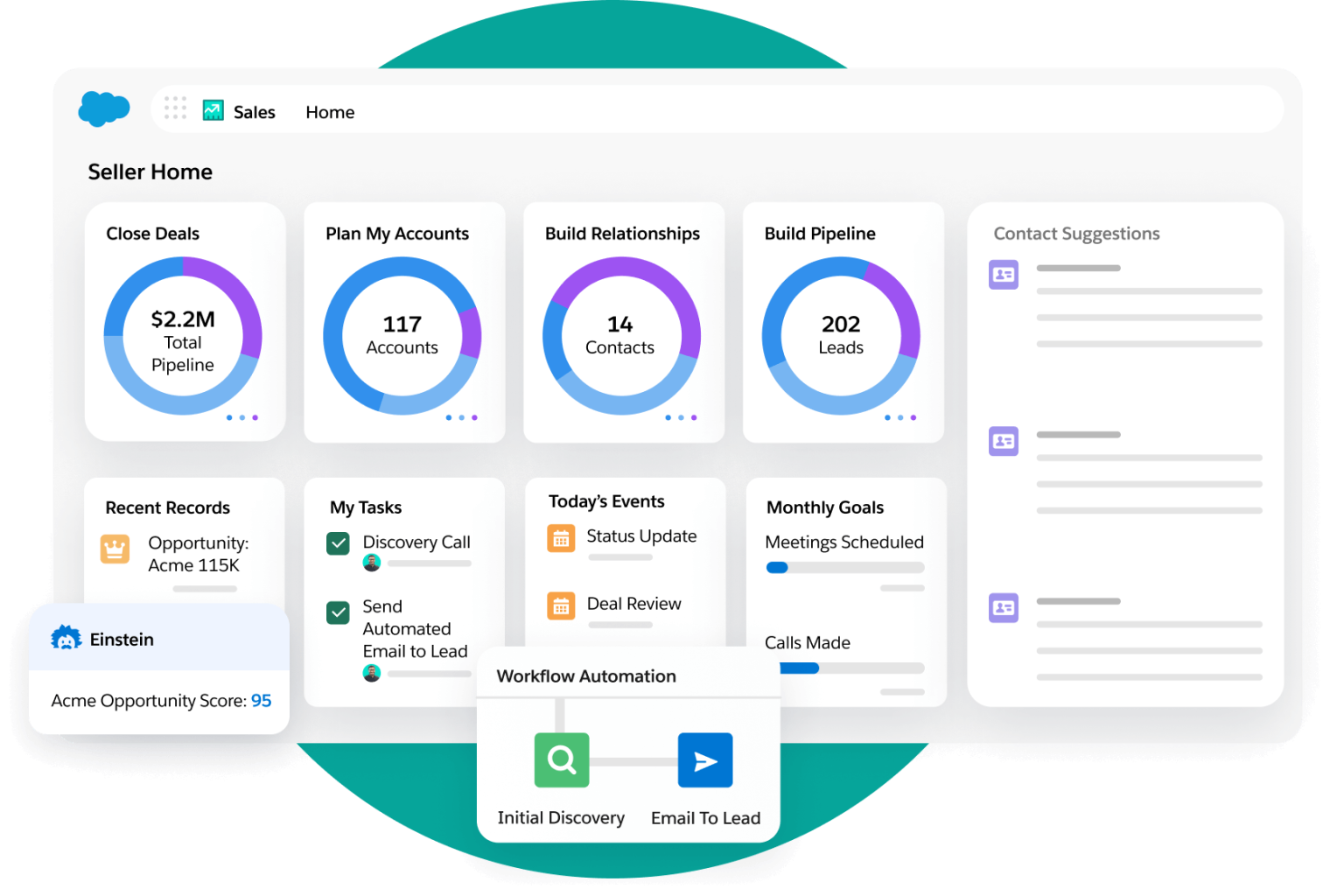
Source: Salesforce
Over 70% of Salesforce implementations are led by partners, which means the cost of making Salesforce work for you extends well beyond the license fee.
ServiceTitan is the opposite. It was founded by two sons of tradesmen who understood what HVAC, plumbing, and electrical contractors need.
The dispatch board, the field mobile app, the pricebook, the membership management, the call booking screen with caller ID: these aren't add-ons or configurations. They're the product. When a customer calls, the CSR sees the caller's name, property details, and service history before picking up. When a technician arrives, the app shows equipment age, warranty status, membership tier, and past job photos.
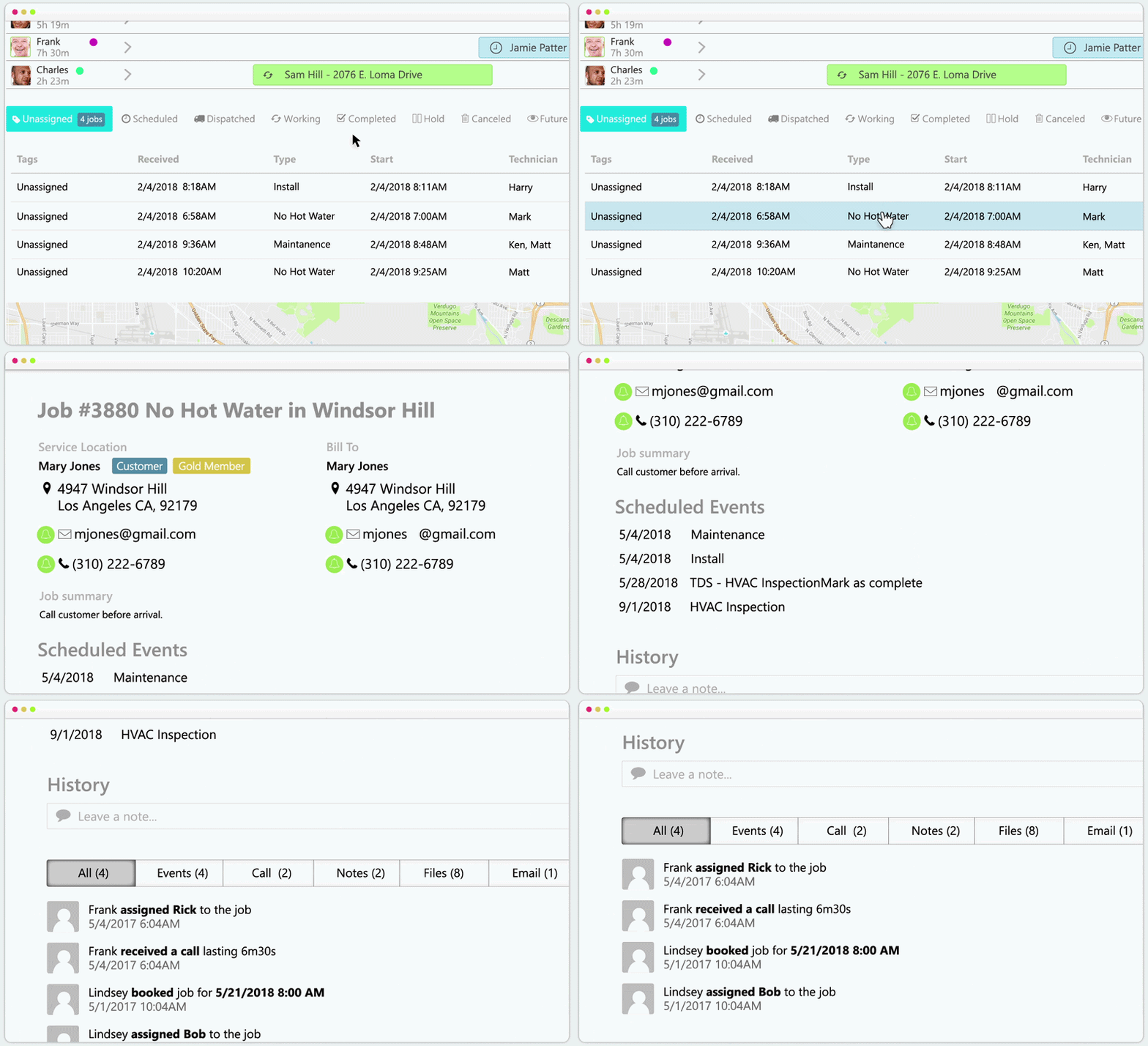
Source: ServiceTitan
Salesforce can approximate that industry depth with enough customization, but it can't match it out of the box.
The choice comes down to what your business is. A trades contractor with standard workflows will get more value from ServiceTitan's focused design. A company whose needs span beyond field service (selling to enterprise accounts, managing complex sales cycles, running marketing across multiple channels) will benefit from Salesforce's breadth.
ServiceTitan owns the trades workflow
ServiceTitan's advantage is that every feature was designed for someone standing in a customer's basement or sitting in a dispatch chair.
The dispatch board, rated 8.9/10 across G2 reviews, shows a visual timeline of every technician's schedule with real-time GPS locations. Dispatchers can draw geographic selections on a map to batch-assign nearby jobs.
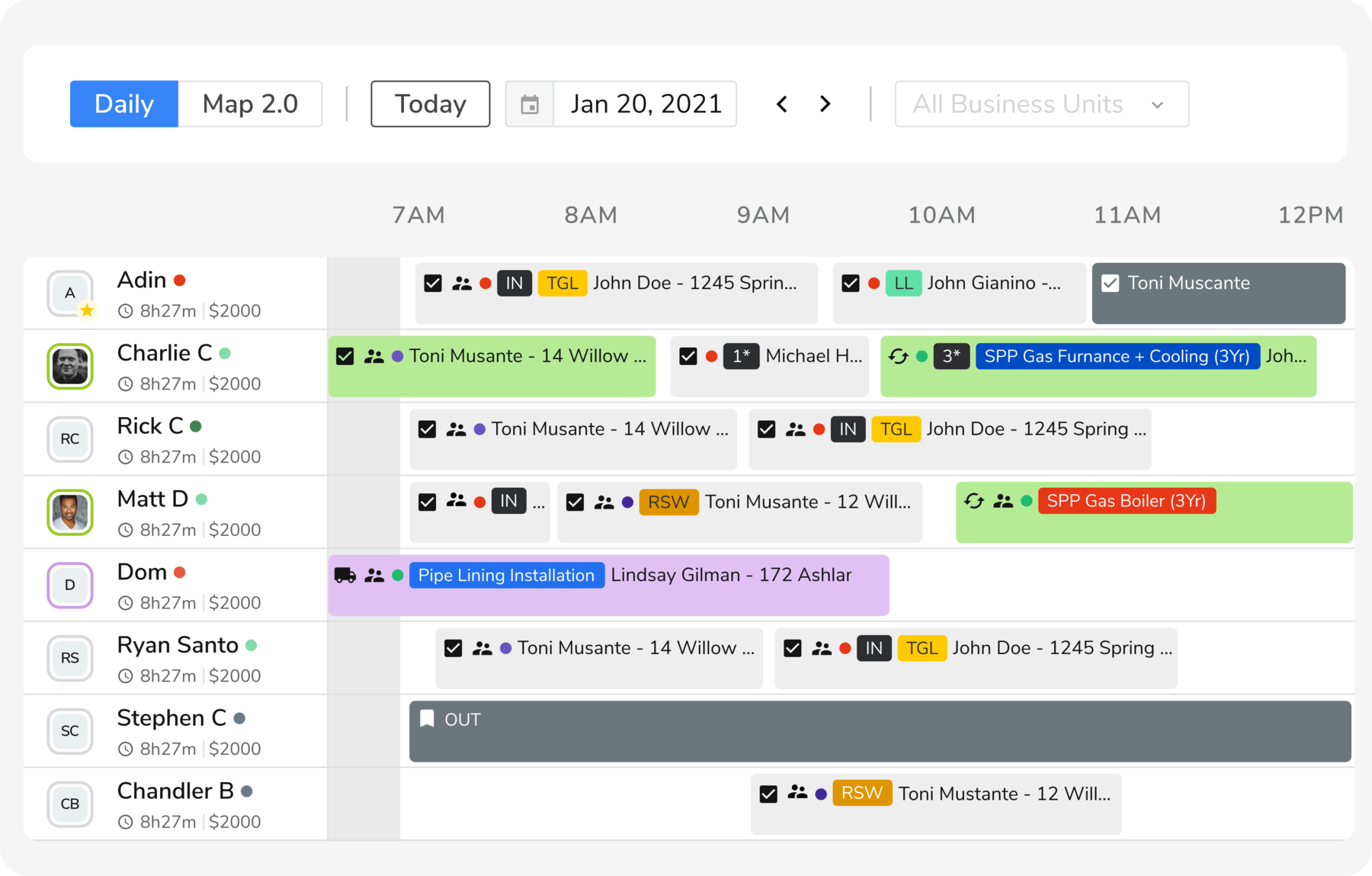
Source: ServiceTitan
Dispatch Pro adds AI technician recommendations based on skill match, predicted job value, and historical closing rates.
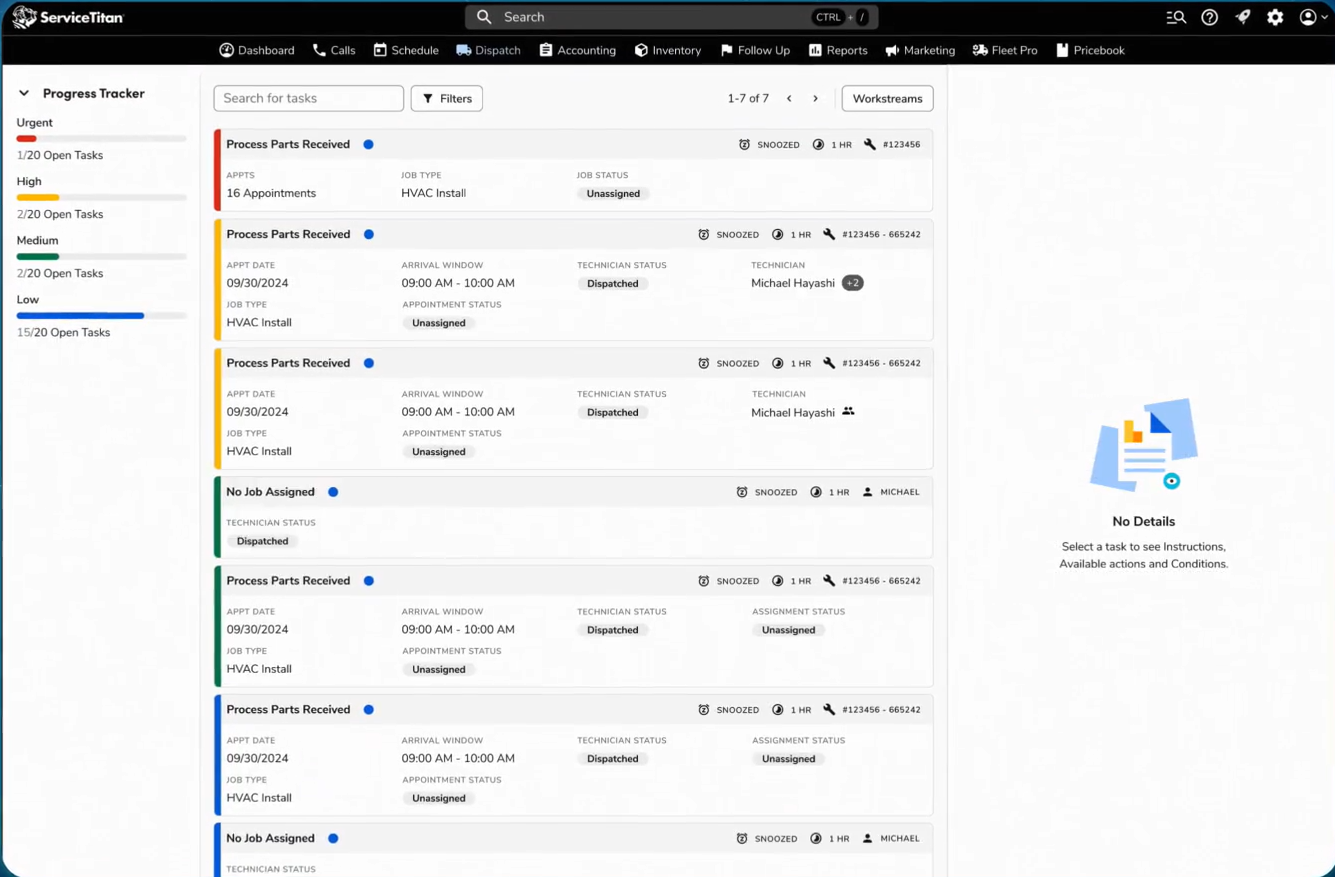
Source: ServiceTitan
The field mobile app handles every phase of a job. Technicians scan equipment nameplates via OCR to auto-populate manufacturer, model, and serial number. They build tiered Good-Better-Best estimates from pre-configured templates.
They collect payment via Tap to Pay, card reader, or payment links. Every status tap (dispatch, arrive, working, complete) triggers back-office events: GPS tracking activates, timesheets start, and the dispatch board updates in real time.
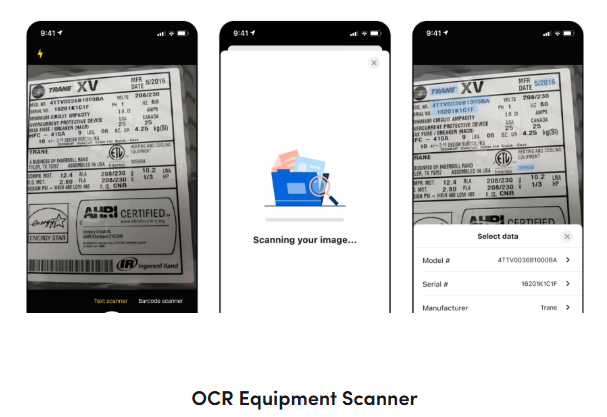
Source: ServiceTitan
The integrated accounting layer means invoices are created automatically when jobs are booked, journal entries generate at posting, and field payments reconcile without a separate step.
ServiceTitan also manages membership programs with automated billing, renewal tracking, and recurring service scheduling. For commercial contractors, service agreements support equipment-level coverage, not-to-exceed limits, and e-signature workflows.
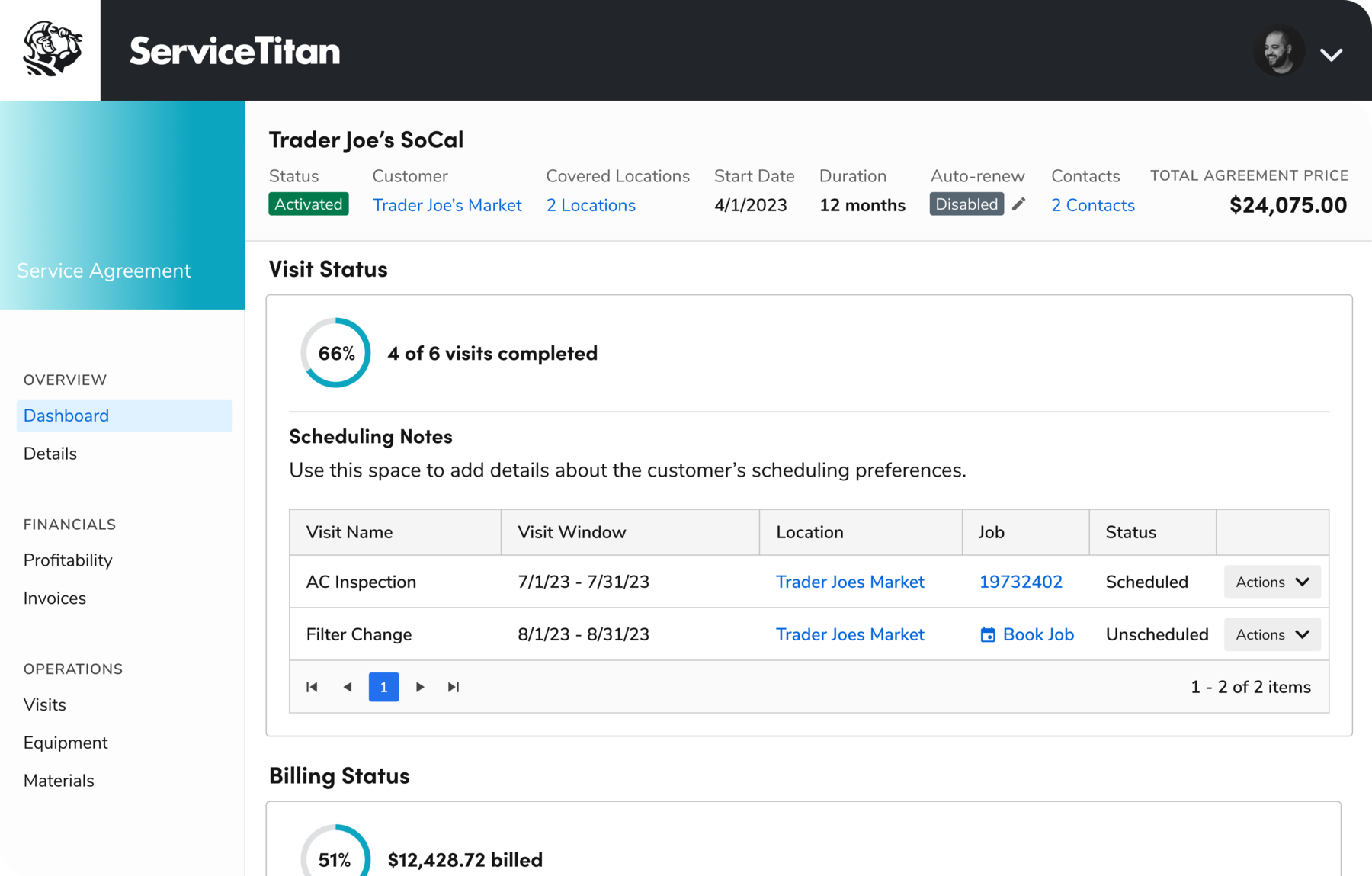
Source: ServiceTitan
The tradeoff is rigidity. ServiceTitan assumes your business follows standard trades patterns. G2's lowest-rated category for ServiceTitan is Ease of Setup at 6.8/10. Businesses with non-standard processes frequently describe the system as requiring workarounds. And pricing isn't published: all plans require a sales conversation, with cancellation before the contract term triggering a fee equal to all remaining payments.
Salesforce brings flexibility and enterprise scale
Where ServiceTitan gives you one well-defined path, Salesforce gives you every possible path and asks you to choose.
Salesforce's Field Service module covers scheduling, dispatch, a mobile app for technicians, and work order management. But it starts at $175/user/month on top of your Service Cloud license, and reaching ServiceTitan's level of trades-specific functionality takes considerable configuration.
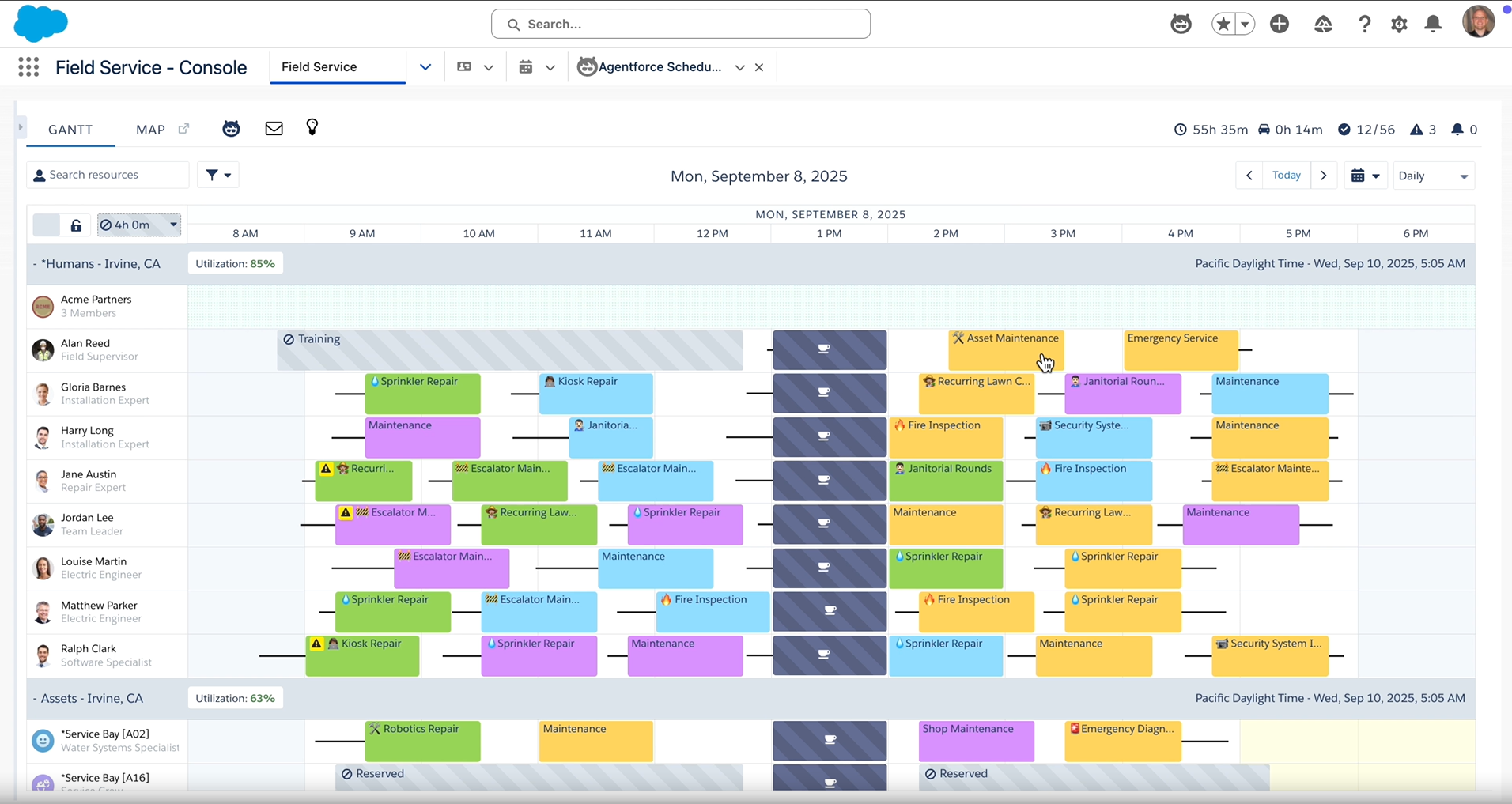
Source: Salesforce
Where Salesforce pulls ahead is breadth. The same platform that manages your field service can also run your sales pipeline, marketing campaigns, e-commerce storefront, analytics via Tableau, and collaboration via Slack.
For companies that sell to commercial accounts through complex B2B sales cycles (not just responding to inbound calls), Sales Cloud provides pipeline management, forecasting, quoting, and AI-powered coaching that ServiceTitan doesn't attempt.
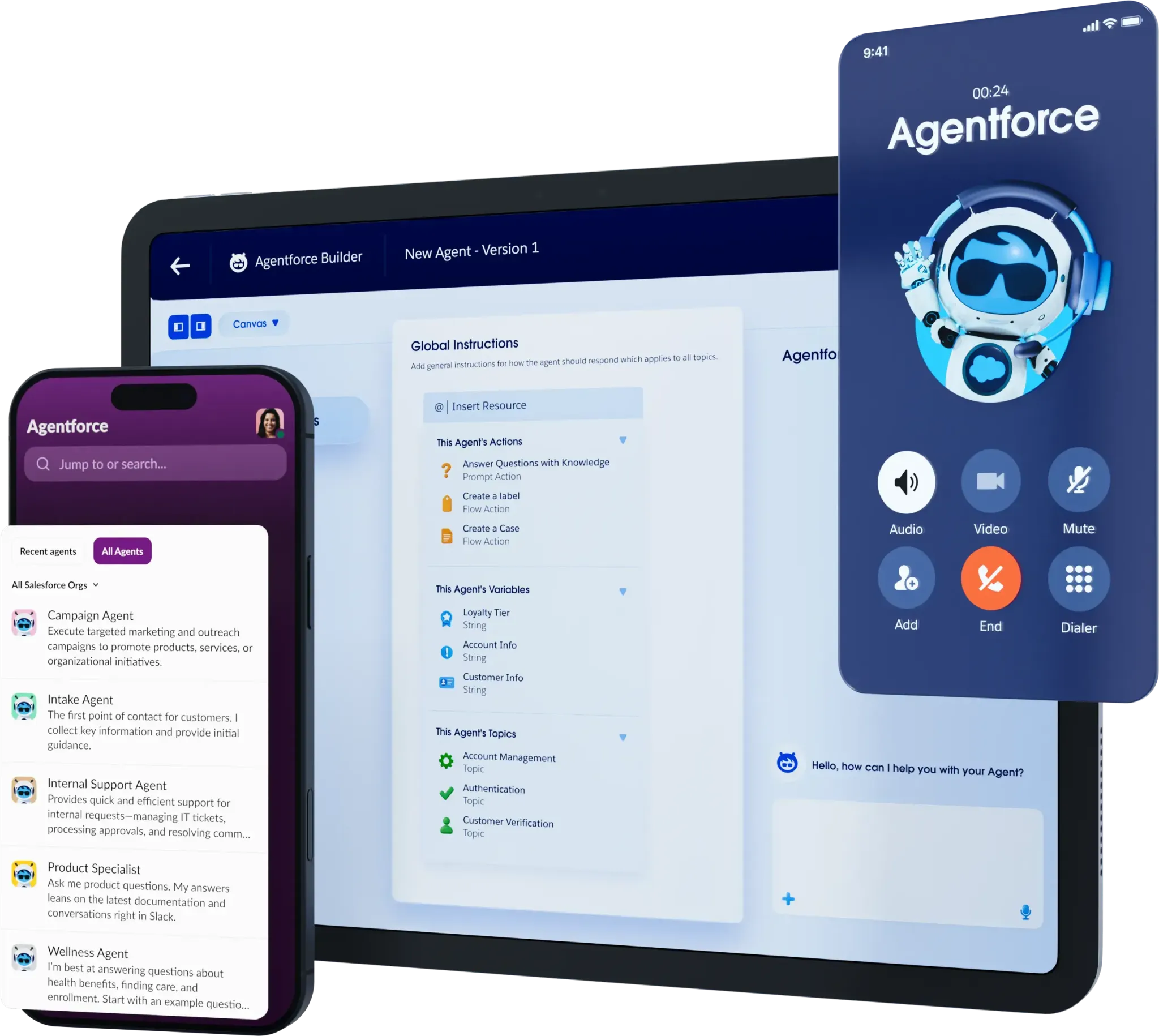
The Agentforce AI platform deploys autonomous agents that handle customer inquiries across channels. Salesforce reports its own Agentforce agents resolve 85% of support requests without human escalation.
Source: Salesforce
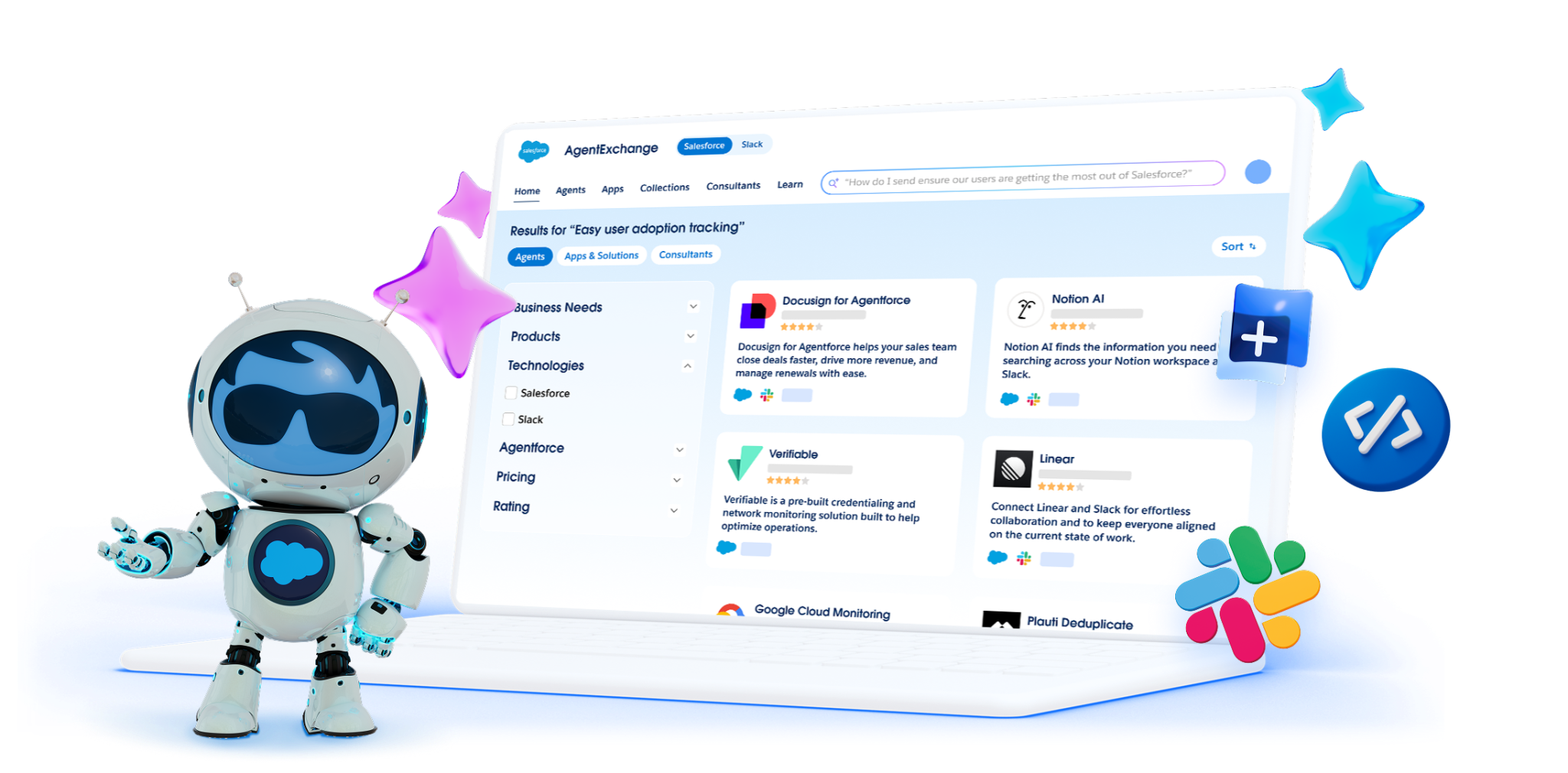
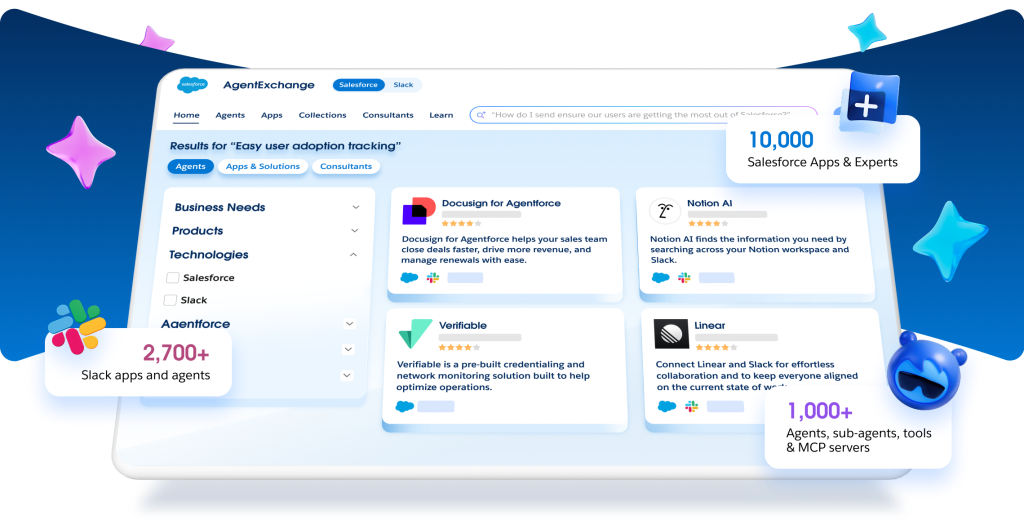
The AppExchange marketplace offers 9,000+ partner apps with 14+ million installs, meaning nearly any business process can be supported through the ecosystem.
Source: Salesforce
But this breadth carries real costs. Sales Cloud pricing ranges from a free plan (limited to 2 users) through $25/user/month (Starter Suite), $100 (Pro Suite), $175 (Enterprise), $350 (Unlimited), to $550/user/month (Agentforce 1). Field Service, marketing, commerce, and analytics each layer additional costs. The Premier Success Plan costs 30% of net license fees for dedicated support. Implementation timelines range from weeks for basic setups to 3–12 months for enterprise multi-cloud deployments.
For a 20-technician HVAC company, the math rarely works. For a 200-location commercial services enterprise running sales, service, marketing, and analytics across multiple regions, Salesforce is hard to replace.
Finding new commercial accounts is where both platforms fall short
Both Salesforce and ServiceTitan manage work you already have. Neither tells you which companies to target next.
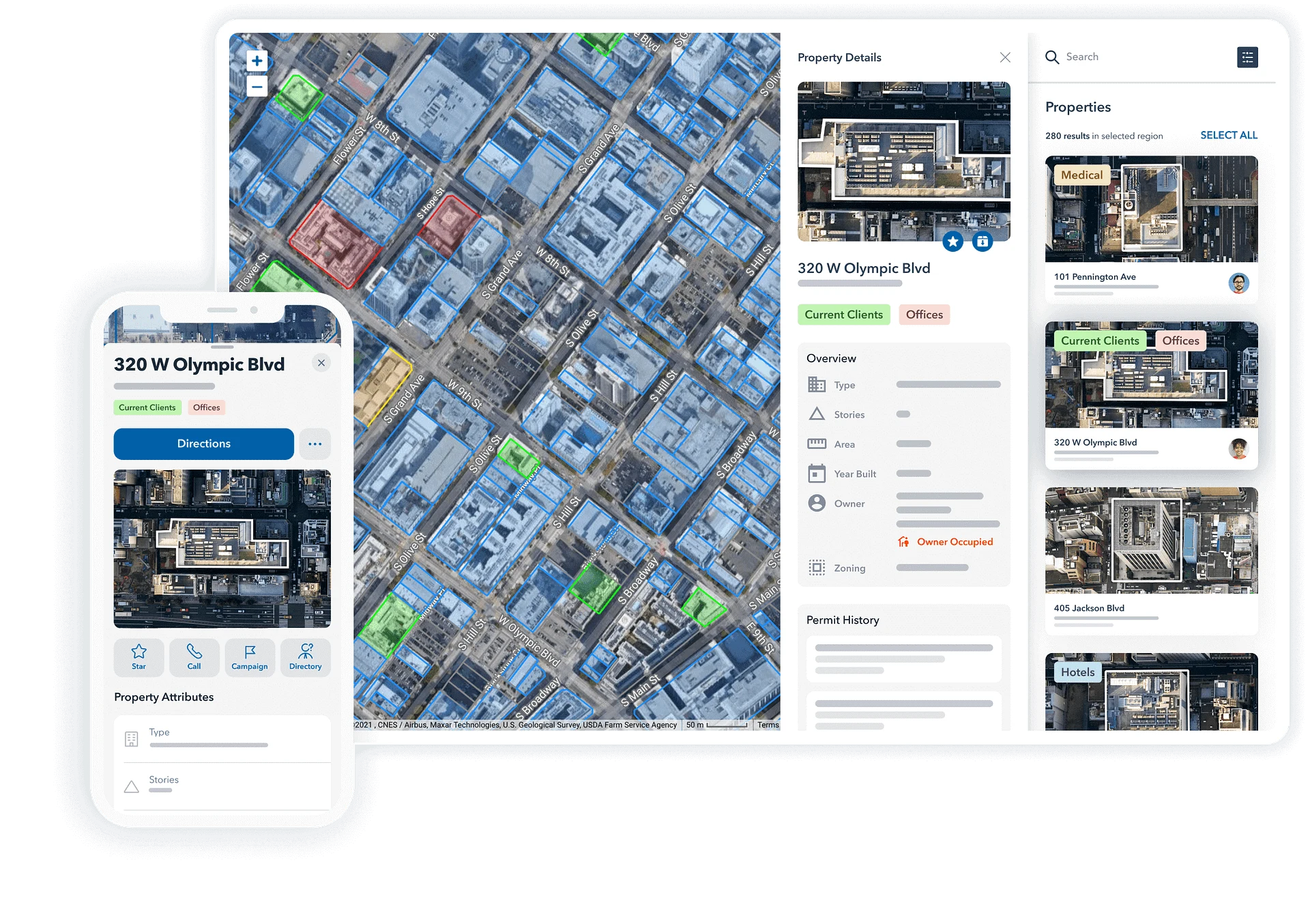
ServiceTitan offers Convex as a commercial sales prospecting tool, but its scope is limited to property and facility data for commercial contractors. Salesforce organizes and automates relationships with customers and prospects, but it doesn't include the contacts or companies to put into the pipeline.
Source: ServiceTitan
For trades businesses focused on inbound residential work (homeowners calling when the AC breaks), this gap doesn't matter. But commercial contractors competing for facility management contracts, property maintenance agreements, and large-project bids need to know which companies are hiring, expanding, or researching services. They need direct contact information for facility directors and operations managers. They need to reach these decision-makers before competitors do.
This is where ZoomInfo fills a gap neither platform addresses.
ZoomInfo's database covers 500M contacts and 100M companies, with 135M+ verified phone numbers and 200M+ verified business email addresses.
For a commercial HVAC contractor, that means finding the facility manager at every target property, the operations VP at every property management group, and the procurement lead at every general contractor, with direct phone numbers and verified emails that reach up to 95% accuracy on first-party data.
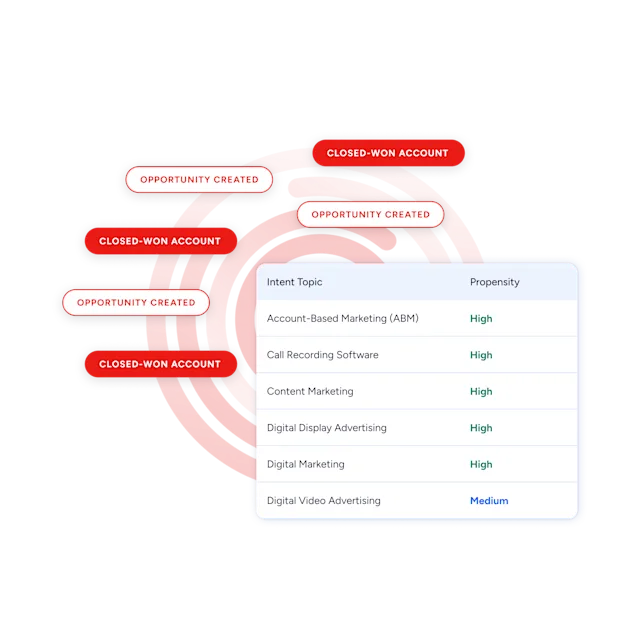
Buyer Intent data tracks signals from 210 million IP-to-Organization pairings, showing which companies are researching services like yours. Instead of cold-calling a list, your sales team reaches out when a company is already evaluating options.
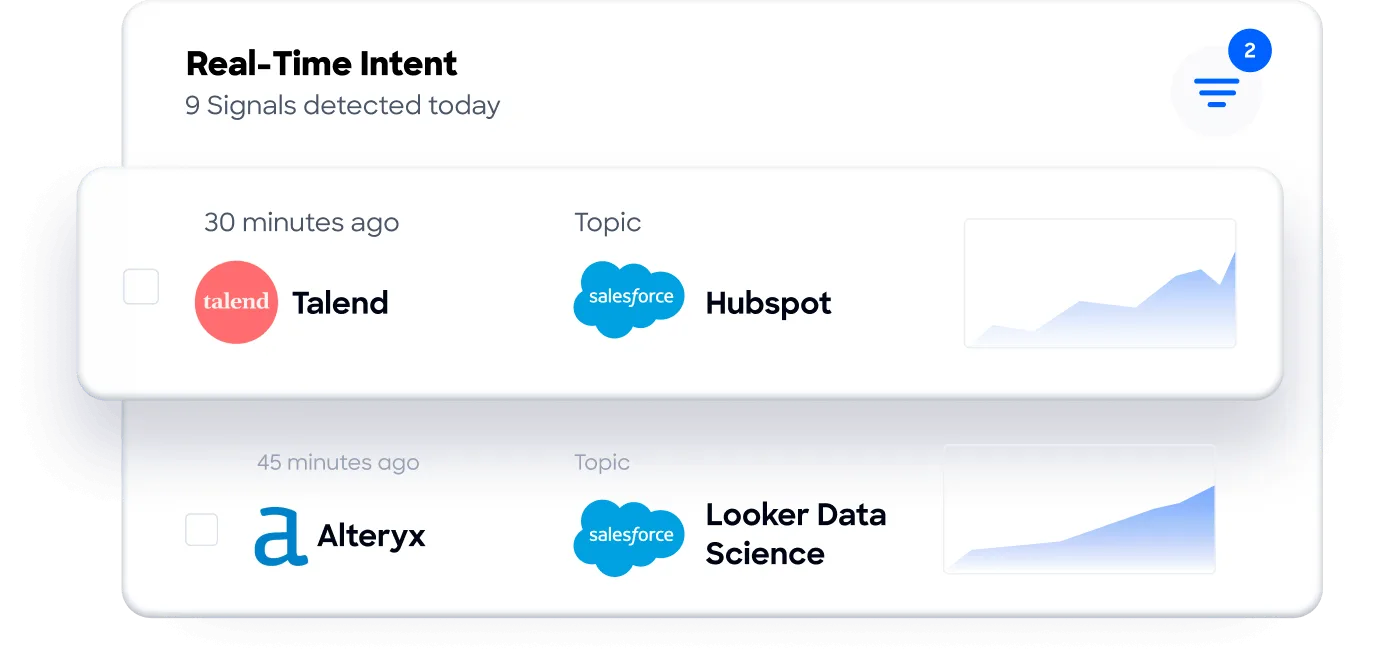
Guided Intent, exclusive to ZoomInfo, identifies topics historically correlated with deal success rather than requiring manual topic selection.
For teams using Salesforce, ZoomInfo integrates directly as a native integration, enriching CRM records, providing contact intelligence, and pushing signals into the sales pipeline. For teams using ServiceTitan, ZoomInfo provides the prospecting layer that feeds new commercial opportunities into ServiceTitan's operational workflow.
For a deeper look at how Salesforce and ZoomInfo stack up as standalone platforms, see our Salesforce vs. ZoomInfo comparison.
Vensure scaled prospecting and accelerated client acquisition using ZoomInfo's data, enabling their revenue operations team to "be three steps ahead" without spending weeks digging through spreadsheets. (Vensure)
AI capabilities serve different purposes
All three platforms invest heavily in AI, but each applies it to a different problem.
ServiceTitan's Titan Intelligence is trained on proprietary trades data.
The company says its AI is "born in the trades, trained on the trades". The flagship "Max" program is evolving toward an "Agentic Operating System for the trades", where AI books calls, dispatches technicians, generates estimates, and processes payments, with humans reviewing exceptions.
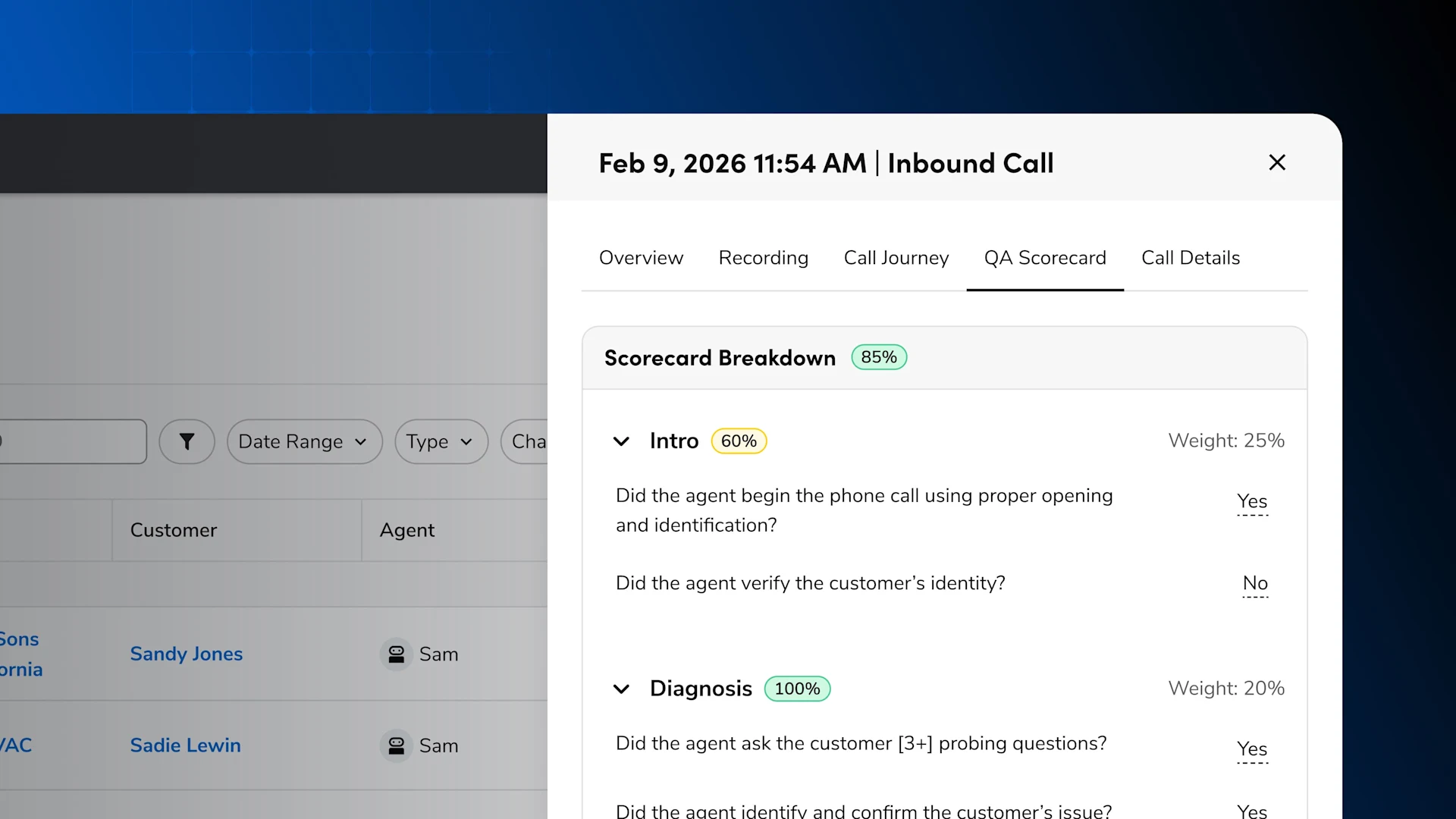
The AI Voice Agent handles inbound calls autonomously. Dispatch Pro uses AI to match high-value jobs to the technicians most likely to close them.
Source: ServiceTitan
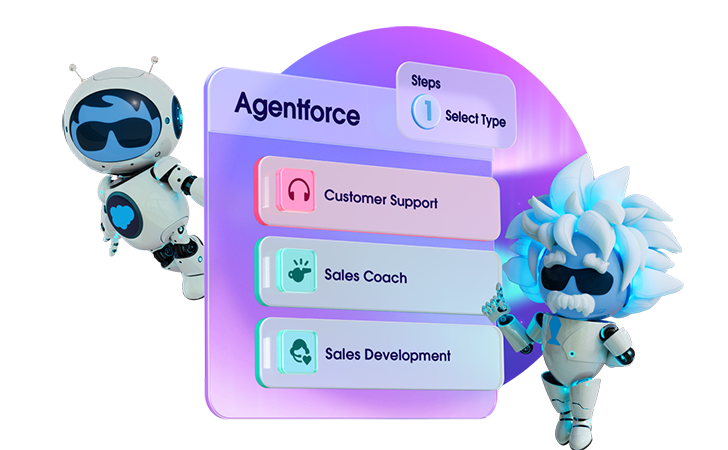
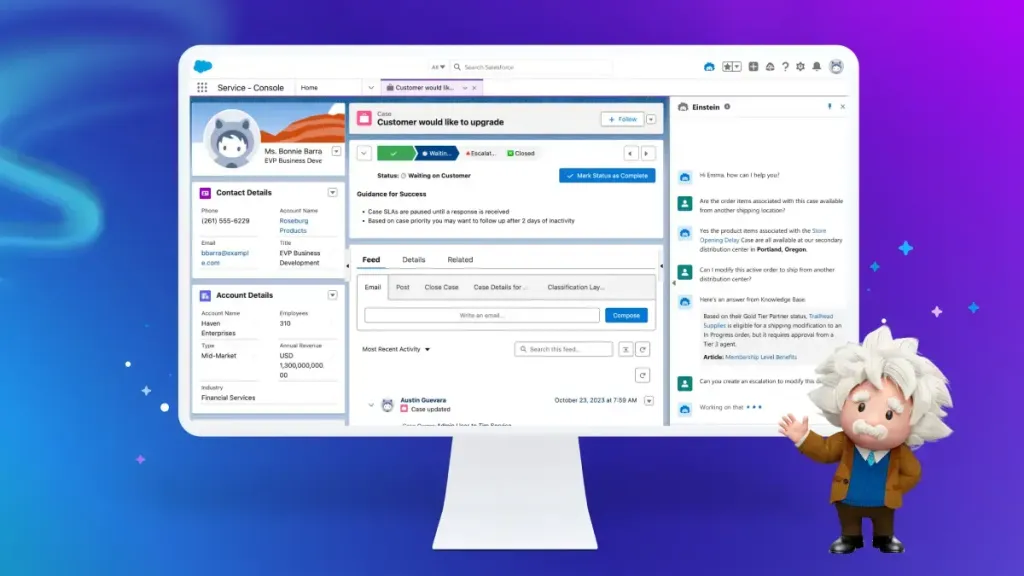
Salesforce's Agentforce operates at a broader scale.
Powered by the Atlas Reasoning Engine, these agents handle customer service cases, sales coaching, marketing campaigns, and IT service requests across any industry.
Source: Salesforce
The Einstein Trust Layer enforces zero data retention with LLM partners and includes built-in guardrails, which matters for enterprises in regulated industries.
Source: Salesforce
ZoomInfo's GTM Context Graph solves a different problem.
It processes 1.5B+ data points daily, combining ZoomInfo's B2B data with your CRM records, conversation transcripts, and behavioral signals. The result isn't operational AI (that's what Agentforce and Titan Intelligence do). It's intelligence about why deals move and which accounts to prioritize next.
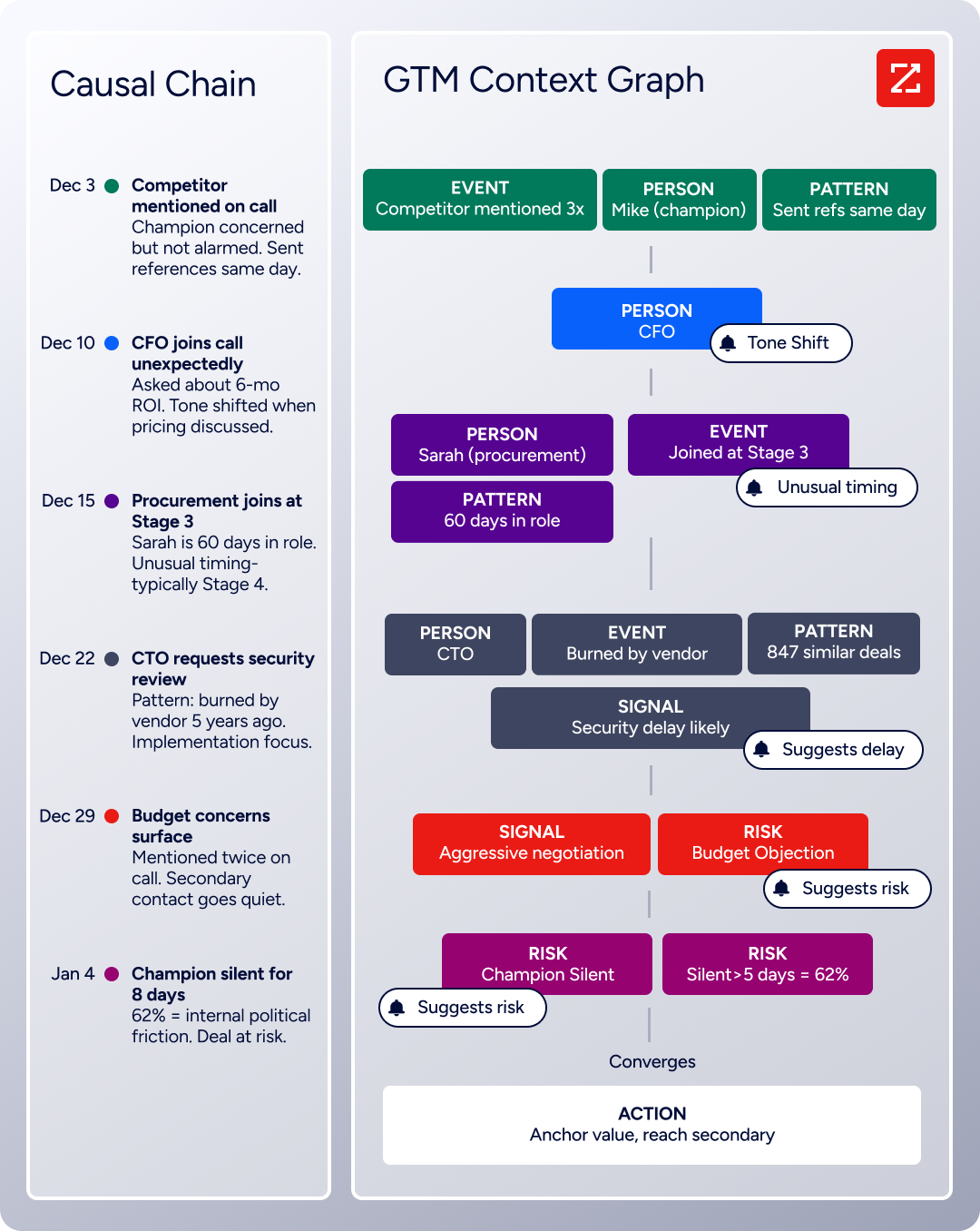
GTM Workspace uses this intelligence to surface accounts where buying signals match your win patterns and draft outreach that addresses each prospect's actual situation.
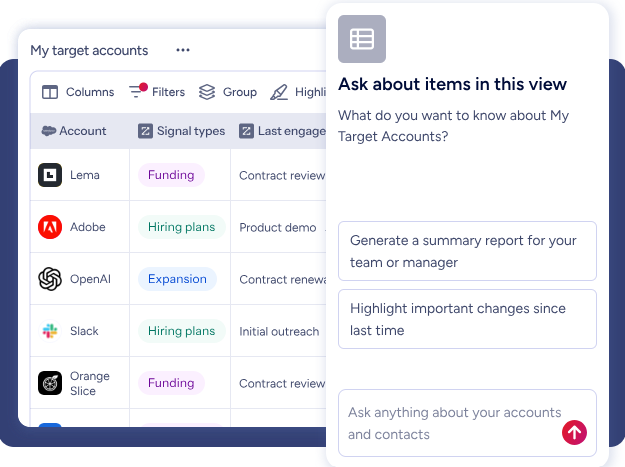
Seismic attributed 39% of active pipeline to opportunities identified or influenced by ZoomInfo signals, with sales teams boosting productivity by 54% and saving 11.5 hours per week. (Seismic)
The three AIs are complementary, not competitive. Titan Intelligence optimizes the job after it's booked. Agentforce automates the CRM workflow. The GTM Context Graph identifies which accounts deserve attention before anyone picks up the phone.
Pricing tells you who each platform is built for
Salesforce publishes detailed pricing tiers. Sales Cloud ranges from a free plan (2 users) through Starter Suite ($25/user/month) to Agentforce 1 ($550/user/month). Field Service starts at $175/user/month. Marketing Cloud starts at $1,500/org/month. Each cloud is priced separately, and add-ons like Agentforce consumption ($2 per conversation or $500 per 100,000 Flex Credits) and Data Cloud ($500 per 100,000 credits) stack on top. For a mid-sized field service operation, total costs climb once you add the clouds, add-ons, implementation partners, and the Premier Success Plan at 30% of net license fees.
ServiceTitan publishes three tiers (Starter, Essentials, The Works) but no dollar amounts. All pricing is per-technician and requires a sales conversation. Pro add-ons (Marketing Pro, Voice Agent, Dispatch Pro, Field Pro, Fleet Pro, Pricebook Pro, Scheduling Pro, Contact Center Pro) are each priced separately with no public figures. The Terms of Use specify that early cancellation triggers a fee equal to all remaining payments, and ServiceTitan may increase pricing with 30 days' notice.
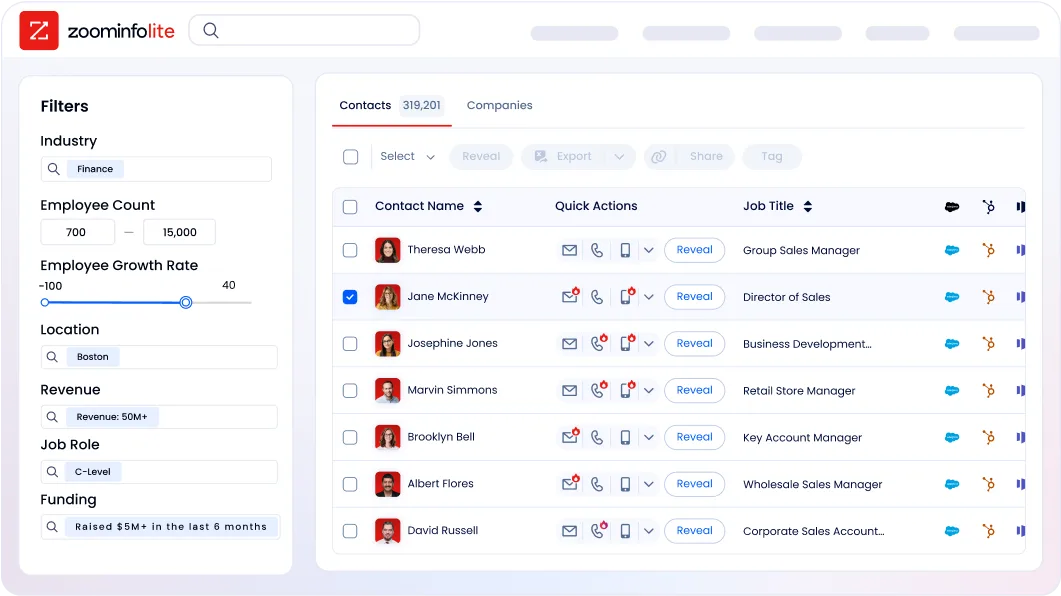
ZoomInfo uses consumption-based pricing scaled around seats and credits, with no publicly listed dollar amounts. Three product lines (Sales, Marketing, ABM) each have tiered plans with expanding capabilities. ZoomInfo Lite is a permanent free tier with access to the B2B database and 10 monthly export credits, no credit card or time limit required. A 7-day free trial is available for the full platform.
None of these platforms makes pricing simple. But the pattern is clear: Salesforce charges per user per cloud, compounding across capabilities. ServiceTitan charges per technician with opaque add-ons. ZoomInfo charges based on data consumption. For businesses evaluating all three, the question isn't which is cheapest. It's which combination delivers the highest return on the revenue you're trying to generate.
Integration ecosystems reflect different ambitions
Salesforce has the largest ecosystem by far.
The AppExchange hosts 9,000+ partner apps with 14+ million installs, and 91% of Salesforce customers use at least one AppExchange app.
Source: Salesforce
MuleSoft, Salesforce's integration platform, provides hundreds of pre-built connectors for enterprise systems. The March 2025 AgentExchange launch added a marketplace for AI agent components with 200+ launch partners. If you need Salesforce to connect to something, it almost certainly can.
ServiceTitan offers 70+ pre-built integrations through its App Marketplace. The focus is trades-specific: accounting integrations with 11 named systems (QuickBooks Online, Sage Intacct, Oracle NetSuite, Xero, and others), supply chain connections with distributors, and financing integrations with five lenders. A certification program launched in 2026 validates integration quality. The ecosystem is smaller but focused on tools trades contractors actually use.
ZoomInfo's Marketplace lists 172+ integration partners. The most notable capability is its API and MCP access. ZoomInfo connects to Salesforce, HubSpot, Microsoft Dynamics 365, Snowflake, and AWS as native integrations.
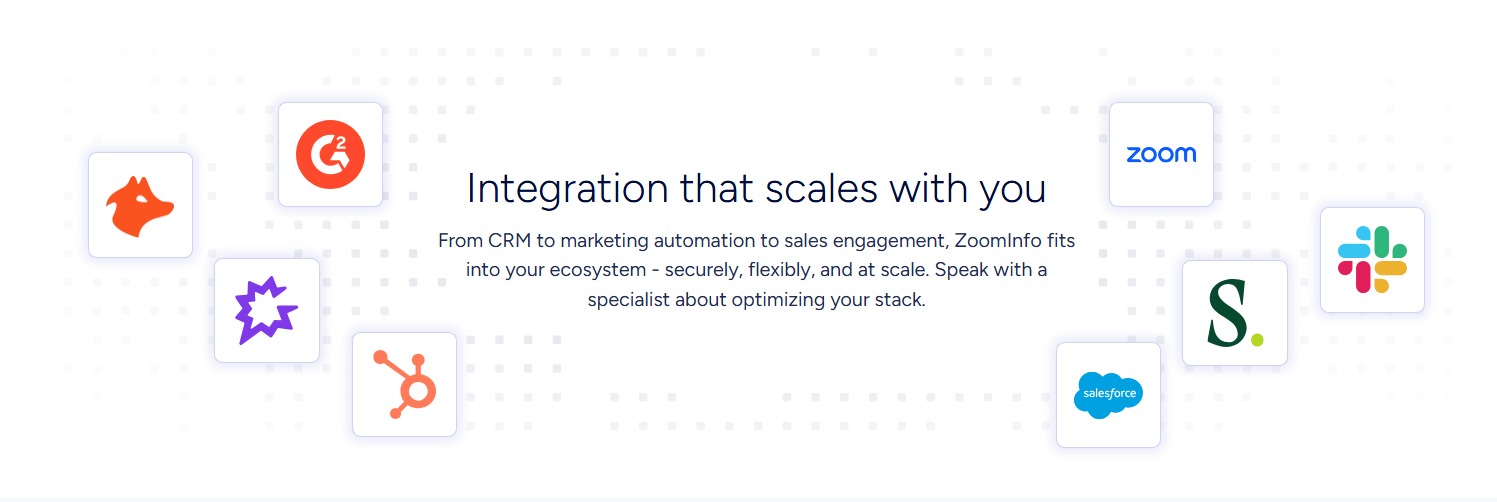
The ZoomInfo MCP server exposes ZoomInfo's intelligence to any MCP-compatible AI agent, including Claude and ChatGPT. API access is included in all plans, so the same data powering ZoomInfo's own products is available in any custom tool or workflow.
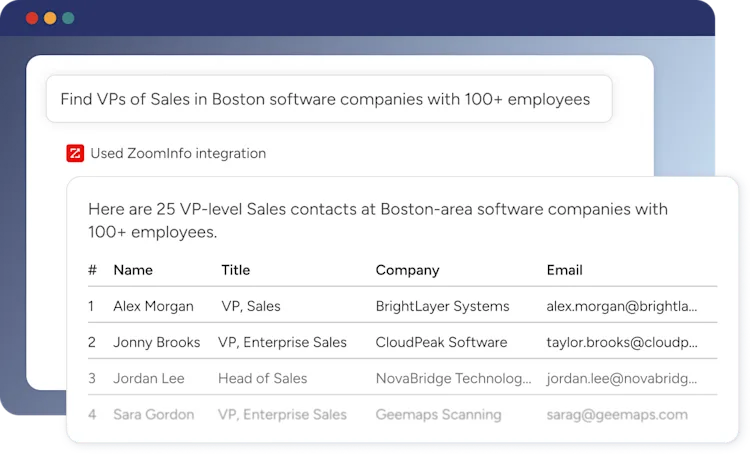
For businesses running Salesforce, ZoomInfo plugs in directly. For businesses running ServiceTitan, ZoomInfo provides a parallel prospecting system that feeds new commercial opportunities into the operational pipeline.
Redwood Logistics achieved a 99% reduction in CPC and 310% increase in CTR by using ZoomInfo's data to reach the right prospects at the right time. (Redwood Logistics)
Salesforce vs. ServiceTitan vs. ZoomInfo: Which should you choose?
The best setup depends on your business model, your growth strategy, and where your next customer comes from.
Choose Salesforce if:
Your business extends beyond trades into complex B2B sales, multi-channel marketing, or enterprise operations
You have (or will invest in) dedicated Salesforce administrators
You need a platform customizable enough to support any industry or workflow
Integration with thousands of enterprise tools is a requirement
You can absorb multi-cloud pricing and partner-led implementation costs
Choose ServiceTitan if:
You run a trades business (HVAC, plumbing, electrical, roofing, or similar) with 5+ technicians
You want dispatch, scheduling, field mobile tools, payments, and accounting in one platform without building it yourself
Your growth comes primarily from inbound calls and existing customer relationships
You need trades-specific features like pricebook management, membership programs, and marketing attribution tied to job revenue
You're ready for a multi-year commitment to a platform that knows your industry
Use ZoomInfo with either platform if:
You sell commercial services and need to find facility managers, property directors, and procurement leads at target companies
You want verified contact data (direct dials and emails) for the decision-makers who control purchasing
You need to know when companies are researching services like yours
You want intelligence about which accounts to prioritize and what to say when you reach out
You're ready to move from reactive inbound to proactive outbound commercial sales
Start with ZoomInfo Lite for free or request a full platform demo.
The most productive setup for commercial trades contractors isn't choosing one platform. It's combining the right ones. Run your operations on whichever platform fits your business (ServiceTitan for trades-specific workflows, Salesforce for broader enterprises). Layer ZoomInfo on top for the intelligence to find your next customer before they find your competitor. Together, they cover the full cycle from prospecting to payment.
Salesforce vs. ServiceTitan vs. ZoomInfo FAQ
Is Salesforce or ServiceTitan better for a trades contractor?
ServiceTitan is almost always the better fit for trades contractors with standard workflows. It includes dispatch, scheduling, field mobile tools, pricebook management, membership programs, payments, and marketing attribution in one platform designed for HVAC, plumbing, electrical, and similar trades. Salesforce can replicate many of these capabilities, but doing so requires considerable configuration, implementation partners, and per-cloud add-on costs that make it impractical for most trades businesses under several hundred employees.
Can Salesforce handle field service management?
Yes. Salesforce's Field Service module covers scheduling, dispatch, a mobile workforce app, work order management, and AI-powered scheduling optimization. Customers report a 31% increase in first-time-fix rate and 32% increase in mobile worker productivity. However, Field Service starts at $175/user/month on top of Service Cloud licensing and lacks trades-specific features like flat-rate pricebooks, membership management, and integrated payments that ServiceTitan includes natively.
How does ServiceTitan compare to Salesforce on pricing?
Salesforce publishes detailed per-user pricing starting at $25/user/month for basic CRM and scaling to $550/user/month for the full Agentforce suite. ServiceTitan does not publish pricing. All quotes are per-technician and require a sales conversation. ServiceTitan's contracts include early cancellation fees equal to all remaining payments, and assigned users cannot be removed without written approval. Both platforms can become expensive for growing businesses, but Salesforce's costs are more predictable upfront.
What does ZoomInfo add that Salesforce and ServiceTitan don't provide?
ZoomInfo provides the B2B intelligence layer for finding new customers. Its database covers 500M contacts and 100M companies with 135M+ verified phone numbers and 200M+ verified business email addresses. Neither Salesforce nor ServiceTitan includes a B2B contact database. Salesforce organizes existing contacts; ServiceTitan manages operational workflows for existing jobs. ZoomInfo identifies target companies, surfaces decision-makers with direct contact information, and tracks buying signals showing when companies are researching services.
Does ZoomInfo integrate with Salesforce and ServiceTitan?
ZoomInfo has a native integration with Salesforce, enriching CRM records, providing contact intelligence, and syncing signals directly into the sales pipeline. ZoomInfo does not have a direct native integration with ServiceTitan, but it serves as a parallel prospecting layer. Commercial contractors use ZoomInfo to identify and reach target accounts, then manage the resulting work through ServiceTitan's operational platform.
Which platform has the best AI capabilities?
Each platform's AI serves a different purpose. ServiceTitan's Titan Intelligence is trained on trades-specific data and optimizes field operations. Its AI Voice Agent books calls autonomously, and Dispatch Pro matches high-value jobs to the best-performing technicians. Salesforce's Agentforce deploys autonomous agents across any business function, with 2.4 billion Agentic Work Units delivered and case studies showing 46–85% case deflection rates. ZoomInfo's GTM Context Graph processes 1.5B+ data points daily to identify which accounts to prioritize and why deals move or stall. The three AIs are complementary: Titan Intelligence handles operations, Agentforce automates CRM workflows, and ZoomInfo provides the intelligence to find the next customer.
Who is ServiceTitan NOT a good fit for?
ServiceTitan is not built for solo operators or businesses with fewer than 3 technicians, where the cost-to-value ratio is unfavorable. It's also not designed for non-trades industries; the platform is specific to residential and commercial contractors. Businesses with non-standard workflows that can't conform to ServiceTitan's architecture may find it too rigid. Companies that just need scheduling and invoicing at lower cost may be better served by lighter-weight tools.
Can a business use both Salesforce and ServiceTitan together?
In theory, yes, though it's uncommon. Some large commercial services enterprises use Salesforce for B2B sales pipeline management and ServiceTitan for field operations, connecting the two through APIs or middleware. Most businesses choose one or the other based on their primary need. The more common pairing is one operational platform (Salesforce or ServiceTitan) combined with ZoomInfo for the prospecting and intelligence layer that feeds new business into the pipeline.
See how Salesforce compares to other platforms:
