
Choosing between SAP CRM and SugarCRM for your B2B sales operations comes down to five questions:
Are you already running SAP ERP, or are you evaluating CRM independently of your back-office systems?
Do you need a full customer experience suite spanning commerce, marketing, sales, and service, or a focused sales platform built for account expansion and pipeline management?
Is your team prepared for a multi-month enterprise implementation, or do you need to be operational in weeks?
Are you managing hundreds of sales reps across global divisions, or a mid-market team of 15 to 200 sellers?
Does your CRM need to generate buyer intelligence on its own, or can you pair it with a dedicated data and signal layer?
In short, here's what we recommend:
SAP CRM (now branded SAP Customer Experience) is the enterprise CX suite for organizations already running SAP ERP. Its defining advantage is native integration with SAP's back-office systems: pricing, inventory, order management, and financial data flow into every customer-facing workflow without middleware. The suite spans SAP Sales Cloud, SAP Service Cloud, SAP Commerce Cloud, SAP Engagement Cloud, and SAP Customer Data Platform, with AI assistants embedded across all modules via SAP's Joule framework. SAP Commerce Cloud has been a Leader in Gartner's Digital Commerce MQ for 11 consecutive years. The tradeoffs: a steep learning curve, no published pricing, and an implementation timeline measured in months. Without existing SAP infrastructure, the value proposition weakens considerably.
SugarCRM (now rebranding as SugarAI) is the mid-market B2B sales platform built for manufacturing, wholesale, and distribution companies. Its standout capability is Sugar sales-i, which pulls ERP order data into the CRM to surface cross-sell opportunities, churn risks, and buying pattern changes without separate BI tools. SugarCRM has been a Leader in Nucleus Research's SFA Value Matrix for six consecutive years. With pricing starting at $59/user/month and 180+ ERP integrations, it's a practical choice for B2B companies that need ERP-connected selling intelligence at a mid-market price point. The tradeoffs: a 15-user minimum, an interface reviewers describe as dated, and mobile performance that lags behind the desktop experience.
Both platforms manage customer relationships well within their target markets. But a CRM is only as good as the data inside it, and neither generates the buyer intelligence needed to identify which prospects are worth pursuing, which accounts are in-market, or who the decision-makers are. That's a different problem.
ZoomInfo is a GTM platform that provides the intelligence layer underneath either CRM. With 500M contacts, 100M companies, 135M+ verified phone numbers, and 200M+ verified business email addresses, ZoomInfo gives sales teams the verified data that CRM systems don't generate on their own. Its GTM Context Graph combines this third-party data with your CRM records, conversation transcripts, and behavioral signals to reveal not just what happened in a deal, but why. Teams access this intelligence through GTM Workspace for sellers, GTM Studio for marketers and RevOps, or APIs and MCP in any front-end, including the CRM itself.
If turning your CRM into an intelligence-driven selling system sounds like what's missing, see how ZoomInfo works with your existing stack.
SAP CRM vs. SugarCRM vs. ZoomInfo at a glance
SAP CRM | SugarCRM | ZoomInfo | |
|---|---|---|---|
Primary function | Enterprise CX suite (sales, service, commerce, marketing) | B2B sales CRM with ERP intelligence | B2B data intelligence and GTM execution |
ERP integration | Native with SAP S/4HANA | 180+ ERP connectors via Sugar sales-i | Not an ERP tool; enriches CRM data |
AI capabilities | Joule assistants across all modules | AI lead prioritization, sentiment, generative AI (higher tiers) | GTM Context Graph, AI-drafted outreach, intent signals |
Data generation | Relies on manual entry and integrations | Relies on manual entry and ERP data | 500M contacts, 100M companies, continuously verified |
Deployment | Cloud (multi-month implementation) | Cloud or on-premises (days to weeks) | Cloud; deploys in weeks |
Analyst recognition | Gartner Leader: Digital Commerce (11 years) | Nucleus Research Leader: SFA (6 years); IDC MarketScape Leader: Sales Intelligence | Gartner Leader: ABM Platforms; Forrester Leader: Intent Data |
Starting price | Quote-based (no published pricing) | $59/user/month (15-user minimum) | Custom-quoted; free tier available (ZoomInfo Lite) |
Free trial | 30-day basic trial (Sales and Service Cloud) | 7-day trial | 7-day trial + permanent free tier (ZoomInfo Lite) |
Best for | Large enterprises on SAP ERP | Mid-market manufacturers, wholesalers, distributors | Any B2B team needing verified buyer data and signals |
Enterprise CX suite vs. mid-market sales platform
SAP CRM and SugarCRM solve the same category of problem, but they're built for different companies at different stages.
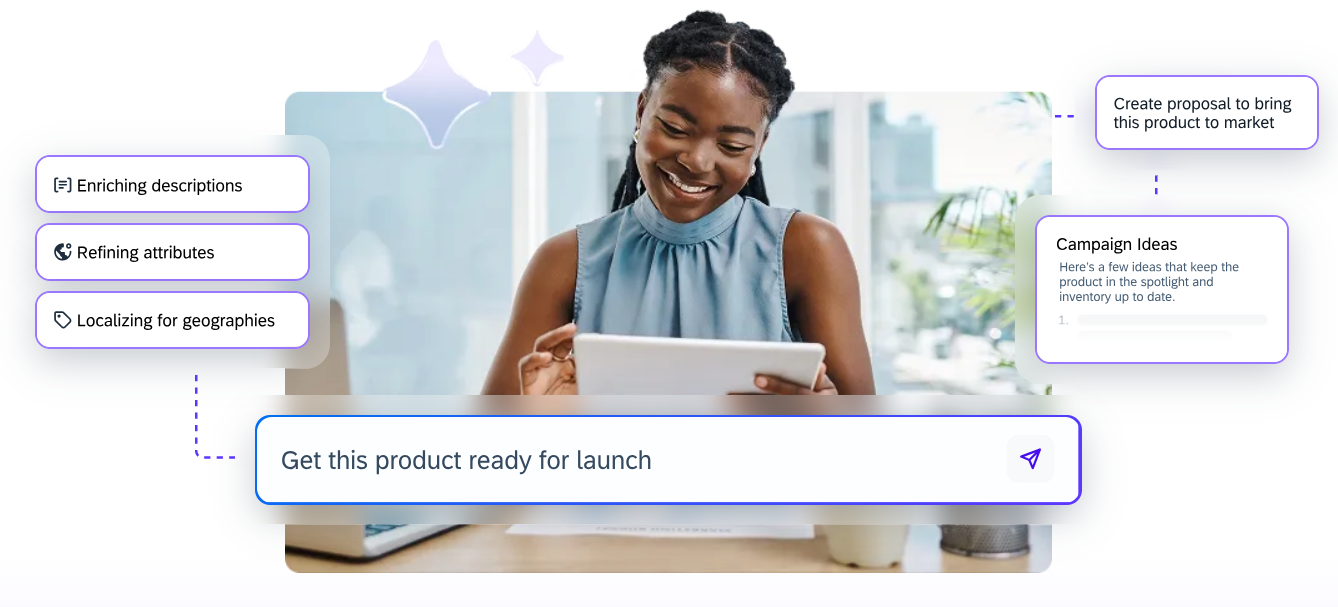
SAP CRM is an enterprise customer experience suite. It doesn't just handle sales. It connects digital commerce, marketing automation, customer service, field service, order management, and customer data management into one stack. The current positioning frames it as "Autonomous CX," where AI assistants run customer experience workflows without manual handoffs. This breadth makes sense when you're a global manufacturer running SAP S/4HANA and need your pricing engine, inventory system, and sales team looking at the same data. It makes less sense if you're a 200-person distributor who needs reps to stop managing accounts in spreadsheets.
Source: SAP
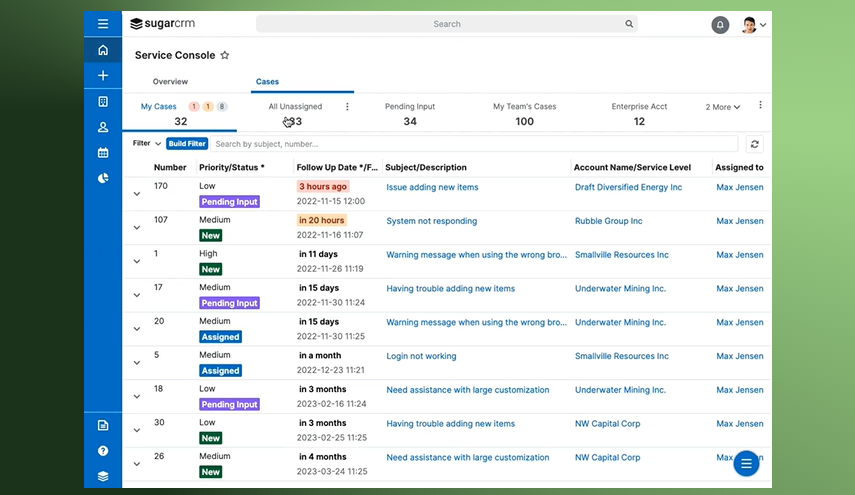
SugarCRM occupies the opposite end of this spectrum. The product suite has four components: Sugar Sell (sales automation), Sugar sales-i (ERP revenue intelligence), Sugar Serve (customer service), and Sugar Market (marketing automation). But the company's energy is concentrated on sales.
Source: SugarCRM
CEO David Roberts positions it as "a system of proactive sales guidance that interprets signals from across the business and guides sellers toward the highest-value actions." The target buyer is a B2B company in manufacturing, wholesale, or distribution with long buying cycles and close customer relationships.
The question is straightforward: do you need a platform that runs your entire customer experience operation, or one that makes your sales team more effective? SAP CRM answers the first. SugarCRM answers the second.
ERP integration is the shared selling point, but the approaches differ
Both platforms claim ERP integration as a core differentiator, but they mean different things by it.
SAP CRM's integration is structural. Because SAP builds both the ERP and the CRM, the connection between them is native. When a sales rep generates a quote in SAP Sales Cloud, the pricing comes from SAP S/4HANA in real time. When a customer checks order status through SAP Commerce Cloud, the data comes from SAP's order management system. No middleware, no custom integration project, no synchronization delays. G2 reviewers cite this as SAP Sales Cloud's primary differentiator: "seamless integration with SAP ERP which makes it much more robust and meaningful."
The limitation is equally structural. This integration advantage only exists if you're already running SAP ERP. Connect SAP CRM to Oracle ERP, Epicor, or Sage, and you lose the native data flows that justify the platform's complexity.
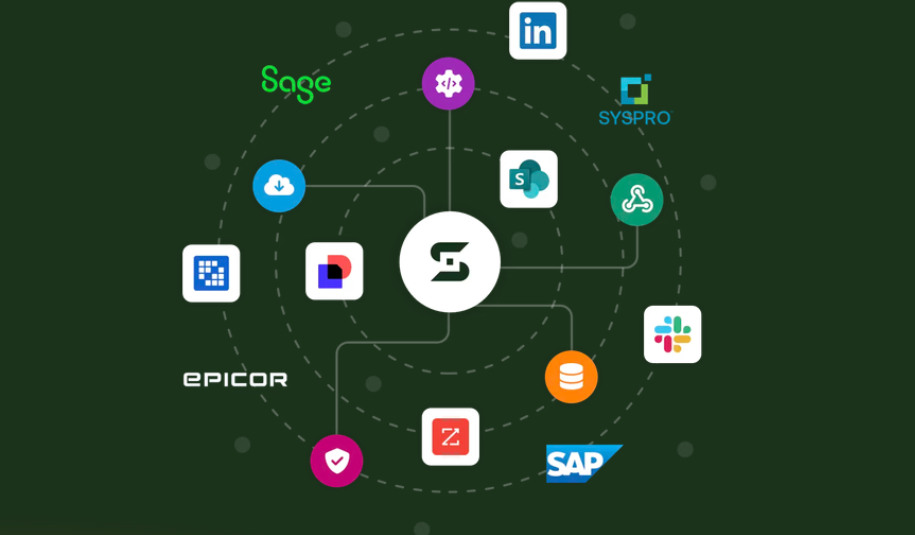
SugarCRM takes a different approach. Rather than owning the ERP, SugarCRM built Sugar sales-i to connect with 180+ ERP systems including SAP, Oracle, Epicor, Syspro, and Sage. The platform pulls transactional data from whatever ERP the customer runs and surfaces it as sales intelligence: which customers haven't reordered, which product lines are under-purchased, which accounts are spending less frequently.
Source: SugarCRM
The tradeoff is clear. SAP's integration is deeper but narrower (SAP ERP only). SugarCRM's is broader but works as an intelligence overlay rather than a native data layer.
AI features reflect different philosophies
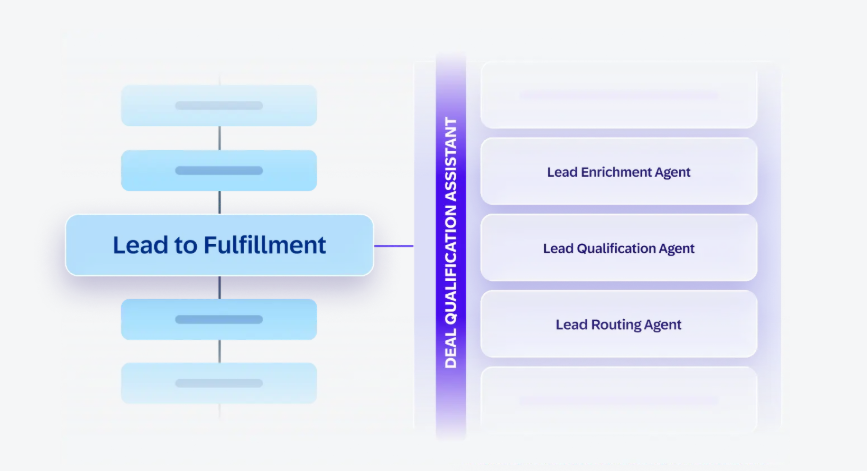
SAP CRM has invested heavily in agentic AI. The platform now includes Joule Assistants for every stage of the customer lifecycle: a Deal Qualification Assistant that enriches, scores, and routes leads automatically; a Sales Assistant that captures meeting notes and detects pipeline risk; a Deal Closing Assistant that generates quotes and converts them to orders; a Campaign Assistant that orchestrates marketing campaigns; and a Case Management Assistant for customer service. SAP's argument is that these AI agents produce better outcomes because they operate on real ERP data (inventory, pricing, financials) rather than just CRM records.
Source: SAP
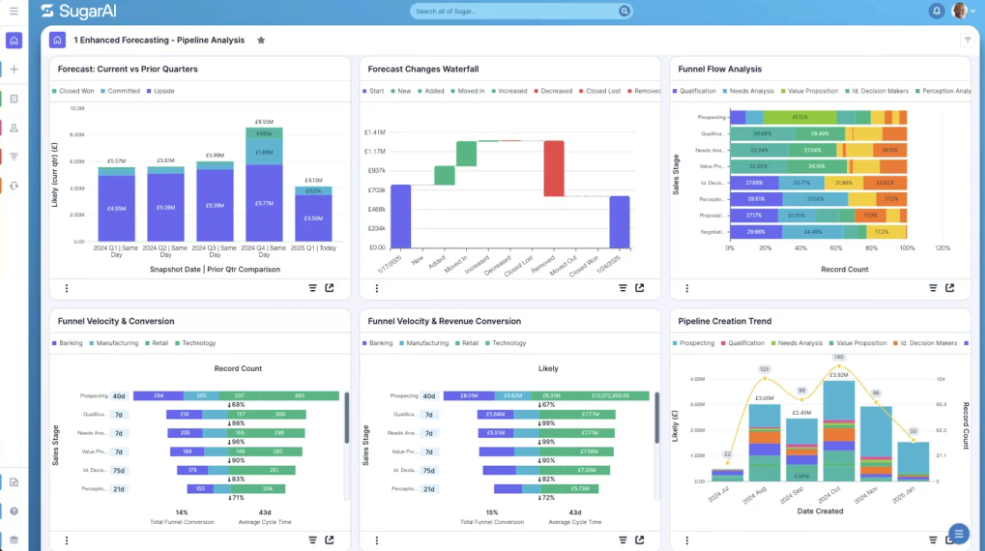
SugarCRM's AI is more focused. The platform uses AI to surface prioritized actions for reps at login, identify cross-sell and upsell opportunities from ERP order data, and detect churn risk from changes in buying patterns. Intelligent lead prioritization, Revenue Intelligence, generative AI, and sentiment analysis are available, though these features are gated above the entry-level tier, requiring the Advanced ($85/user/month) or Premier ($135/user/month) plan. SugarCRM's AI strength is practical: it tells reps which accounts need attention now and why, using transaction history most CRMs never see.
Source: SugarCRM
Both platforms focus their AI on internal CRM and ERP data. Neither generates external buyer intelligence, identifies in-market accounts from third-party signals, or verifies whether the contact data in your CRM is still accurate.
The intelligence gap neither CRM fills
Here's the problem both SAP CRM and SugarCRM share: they manage relationships with customers you already know. Finding new customers, identifying decision-makers, and detecting buying intent before a prospect contacts you are not problems either platform was built to solve.
SAP CRM can tell you that an existing customer's order volume dropped 15% last quarter. SugarCRM's sales-i can flag that an account hasn't reordered a product line they usually buy. Both are valuable signals. But neither can tell you that a company matching your ideal customer profile just started researching your product category, that their VP of Procurement changed jobs three months ago, or that the person listed as your champion no longer works there.
This is where ZoomInfo changes the equation.
ZoomInfo's B2B data platform continuously verifies contact and company information across 500M contacts and 100M companies, with a multi-source pipeline backed by 300+ human researchers and up to 95% accuracy on first-party data. In a Fortune 500 competitive RFP analyzing 25 million contacts across vendors, an independent consultant concluded that "no other competitor came even close."

Source: ZoomInfo
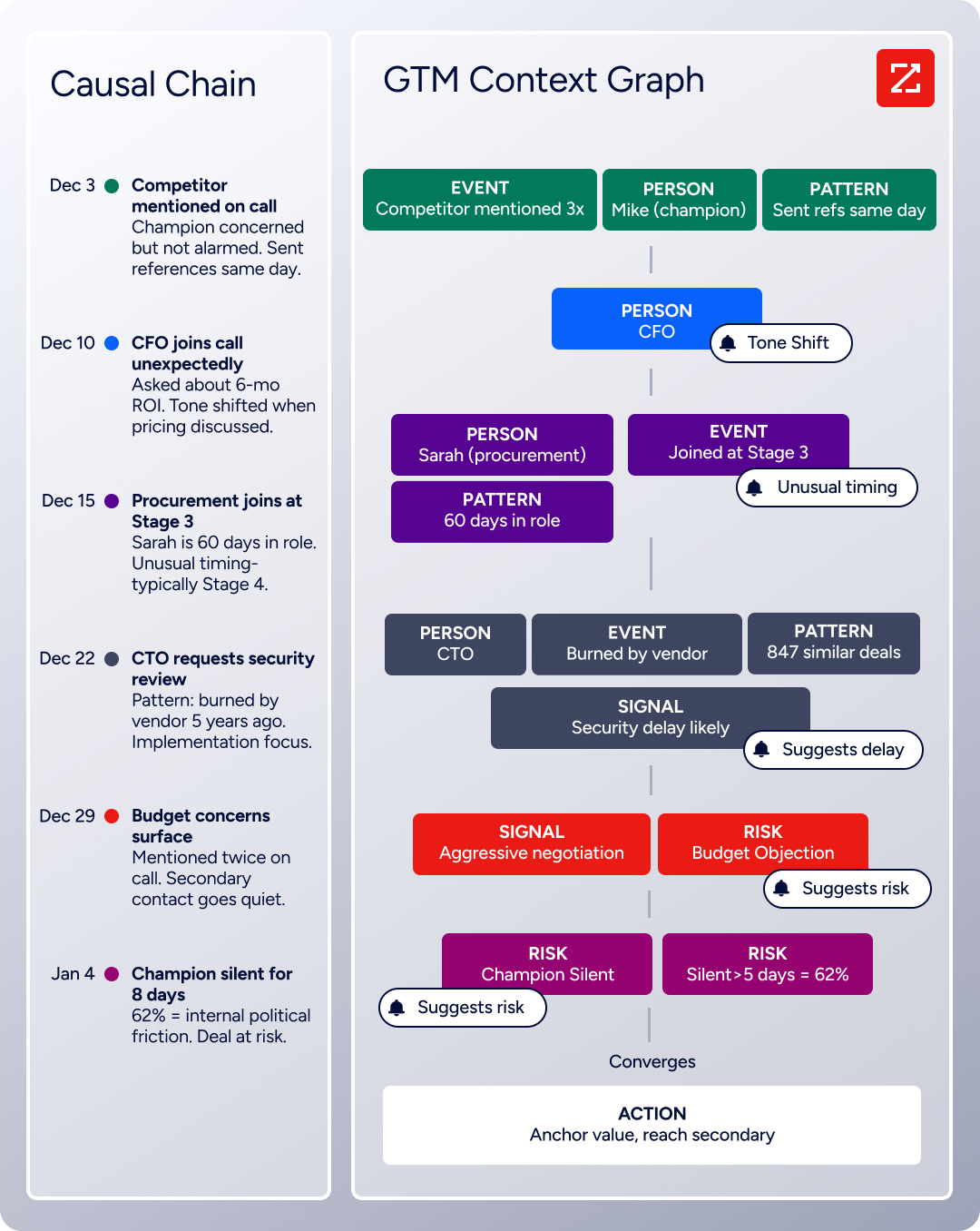
But verified data is the foundation, not the ceiling. ZoomInfo's GTM Context Graph combines that third-party intelligence with your CRM records, conversation transcripts, and behavioral signals to capture why deals move or stall. A CRM records that a deal changed stages.
Source: ZoomInfo
The GTM Context Graph captures that the CFO joined the last call and asked about six-month ROI, that the VP went quiet for eight days during an internal budget battle, and that third-party signals show the company is hiring three new VPs and researching your competitor. That contextual reasoning flows into every downstream action: the follow-up email, the account prioritization, and the forecast.
Seismic's sales team attributed 39% of active pipeline to opportunities identified or influenced by ZoomInfo signals, boosted productivity by 54%, and saved 11.5 hours per week. As Chief Business Officer Toby Carrington put it: "That combination of our internal CRM data, external signals, and AI that's given all that context has helped us craft very specific account- and persona-based messages. And people have responded to them right away." (Seismic case study)
Pricing comparison
The pricing models reflect each platform's target market.
SAP CRM follows enterprise software conventions: no published pricing. The pricing page reads "Let us help identify the best package for your business needs" with a Contact Us button. The suite is modular, meaning customers license SAP Sales Cloud, SAP Service Cloud, SAP Commerce Cloud, and other components separately, with pricing negotiated per product. Base and Premium tiers exist, with Joule Base AI included at no additional cost and Joule Premium for CX requiring a separate quote. Implementation costs, the Advanced Success Plan for premium support, and SAP Business Technology Platform licensing add further cost layers. Most enterprises need experienced SAP consultants to deploy, which pushes total cost of ownership well beyond the subscription.
SugarCRM is more transparent. Sugar Sell has three tiers, all billed annually with a 15-user minimum:
Tier | Price | Minimum Annual Commitment |
|---|---|---|
Standard | $59/user/month | $10,620/year (15 users) |
Advanced | $85/user/month | $15,300/year (15 users) |
Premier | $135/user/month | $24,300/year (15 users) |
The catch is what's gated. Standard includes core CRM functions but excludes mail and calendar integration. Advanced adds mail integration but gates AI features (intelligent lead prioritization, Revenue Intelligence, generative AI, sentiment analysis) behind an asterisk, meaning they require an upgrade to Premier or separate purchase. Premier consolidates all major add-ons into a single SKU. Sugar Market and Sugar Serve pricing is not published and requires contacting sales. On-premises deployment (Sugar Enterprise) starts at $85/user/month with a 10-user minimum.
According to Nucleus Research cited by SugarCRM, SugarAI users can lower total cost of ownership by up to 32% compared to Salesforce on similar functionality.
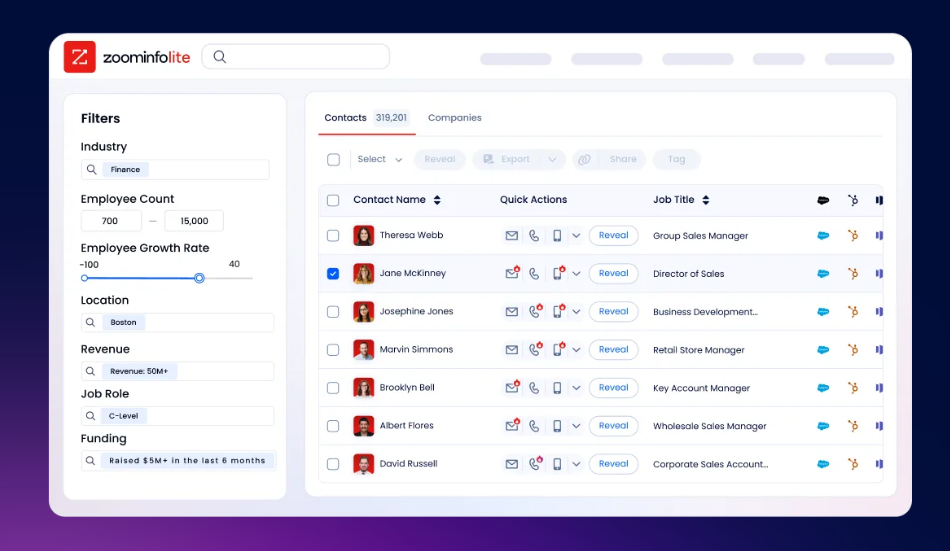
ZoomInfo uses consumption-based pricing that scales around data access, API consumption, and AI activity. No published per-seat prices. However, ZoomInfo offers two free entry points that neither CRM matches: ZoomInfo Lite, a permanent free tier with access to the B2B database, 10 monthly export credits, and WebSights Lite; plus a 7-day free trial with broader feature access.
Source: ZoomInfo
User experience and the learning curve question
SAP CRM's learning curve is steep by design. The platform spans five domains (Commerce Cloud, Customer Data, Marketing Cloud, Sales Cloud, and Service Cloud), each with its own implementation track. G2 reviewers flag "81 mentions of learning curve" issues and consistently describe the interface as "complex and not user-friendly" for non-technical sales reps. SAP has responded with embedded AI assistants and WalkMe guidance, but the platform remains complex. SAP acknowledges this, publishing a dedicated CX Onboarding Guide for Organizational Change Management and staging onboarding from kick-off to go-live.
SugarCRM positions its interface around prioritized work queues. Instead of dashboards that require interpretation, reps log in and see ranked accounts and opportunities with contextual signals already surfaced. No-code configuration lets administrators tailor modules and workflows without developer involvement. SugarCloud enables organizations to get "up and running in days, not months."
However, G2 and Capterra reviewers consistently flag the interface as less intuitive than modern CRMs and note the mobile app differs noticeably from desktop, with reports of slow performance and bugs.
ZoomInfo invested in reducing onboarding friction across its three access points. The company redesigned its onboarding program from 30 to 90 days, producing a 25% improvement in customer satisfaction scores. ZoomInfo University provides role-specific learning paths for Sales, Marketing, Administrator, and Customer Success.

GTM Workspace, the seller front-end, was designed to consolidate the average enterprise's 23 GTM technologies into a single workspace, and CEO Schuck has stated it "deploys in weeks, not months."
Sales force automation: where SAP CRM falls short
Despite SAP's strength in commerce and personalization, Gartner tells a different story about its sales capabilities. SAP is classified as a Challenger in Gartner's 2025 SFA MQ, not a Leader, with Gartner noting a "reliance on add-ons and integrations." The three SFA Leaders (Salesforce, Microsoft, and Oracle) offer more native sales depth out of the box.
SugarCRM, by contrast, has built its identity around sales execution. The IDC MarketScape named SugarCRM a Leader in Worldwide Sales Intelligence 2025, evaluating real-time sales guidance, deal insights, forecasting, predictive analytics, and data integration. Nucleus Research analyst Cameron Marsh captured the positioning: "Sugar Sell is positioned for organizations that require context-driven selling, ERP-informed insights, and AI embedded directly into sales workflows."
This distinction matters. If your primary need is pipeline management, deal coaching, and account expansion in a manufacturing or distribution environment, SugarCRM's focused sales depth may outperform SAP's broader but shallower sales module. If your primary need is connecting customer-facing workflows to back-office operations across a global enterprise, SAP CRM's breadth is hard to match.
Where SAP CRM leads: commerce and global scale
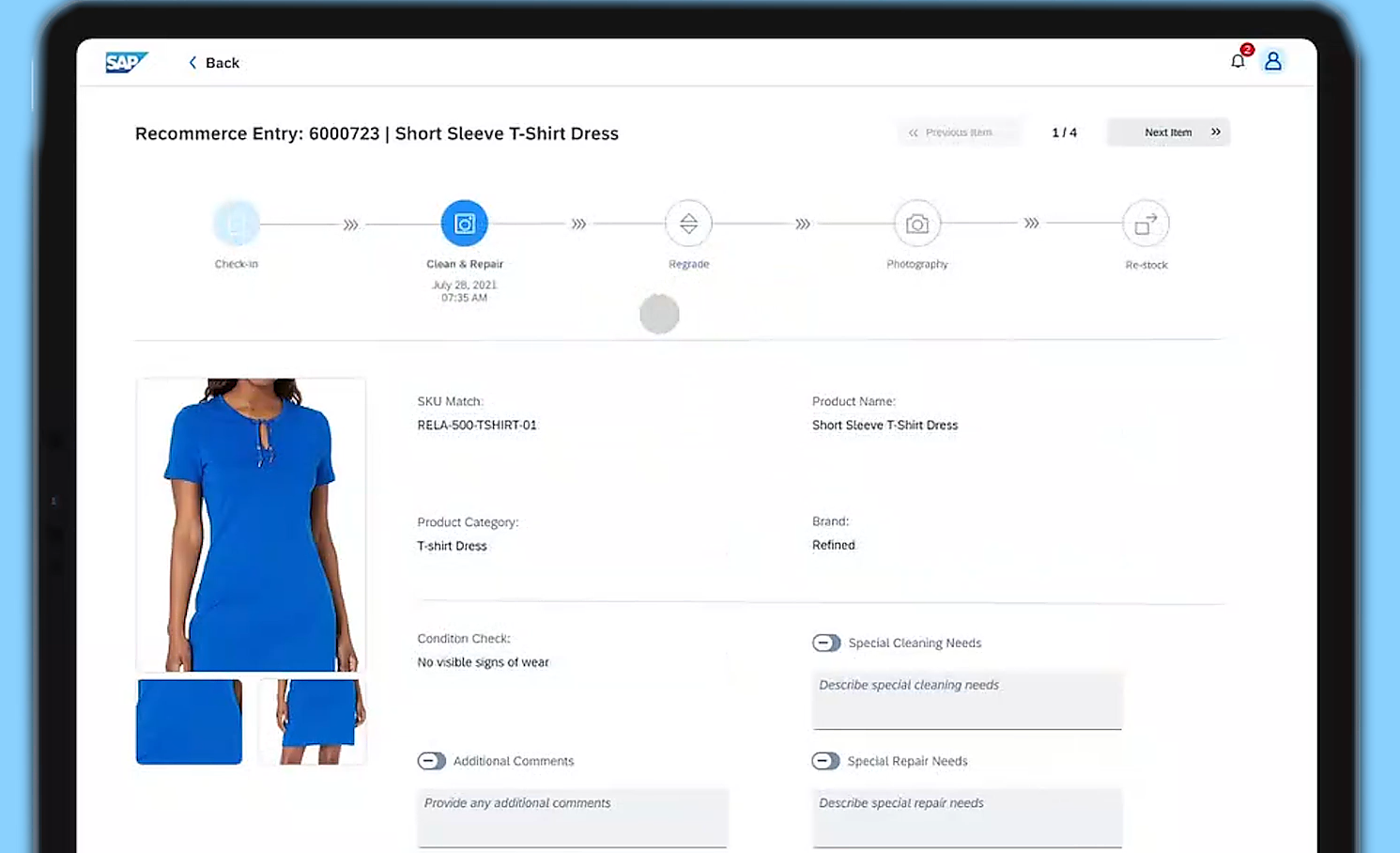
SAP CRM's strongest claim is in digital commerce. SAP Commerce Cloud supports B2B, B2C, B2B2X, and D2C business models with composable storefronts, headless architecture options, and AI-powered merchandising. SAP has been named a Leader in the Gartner Magic Quadrant for Personalization Engines for seven consecutive years.
Source: SAP
SugarCRM has no comparable commerce offering. If your business requires a customer-facing storefront, self-service ordering portal, or omnichannel commerce, SAP CRM addresses that need natively while SugarCRM does not.
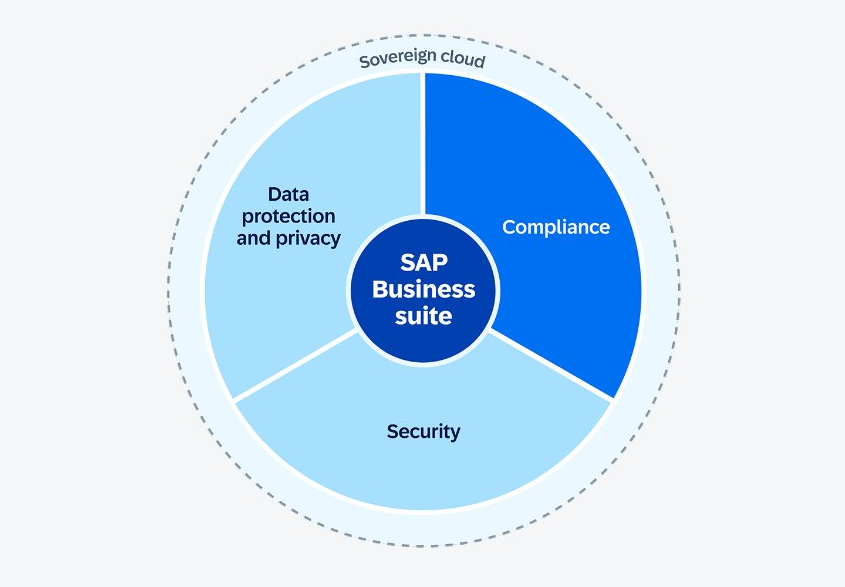
SAP also holds a clear advantage in global compliance and security certifications. The SAP Trust Center documents ISO 27001, ISO 27017, ISO 27018, ISO 42001 (AI management), SOC 1, SOC 2, PCI DSS, TISAX (automotive), FedRAMP (US government), and CMMC Level 2 (US DoD) among others. SAP operates in 130 countries with 57 data centers at 32 locations in 15 countries and offers a Sovereign Cloud for organizations requiring full data residency control.
Source: SAP
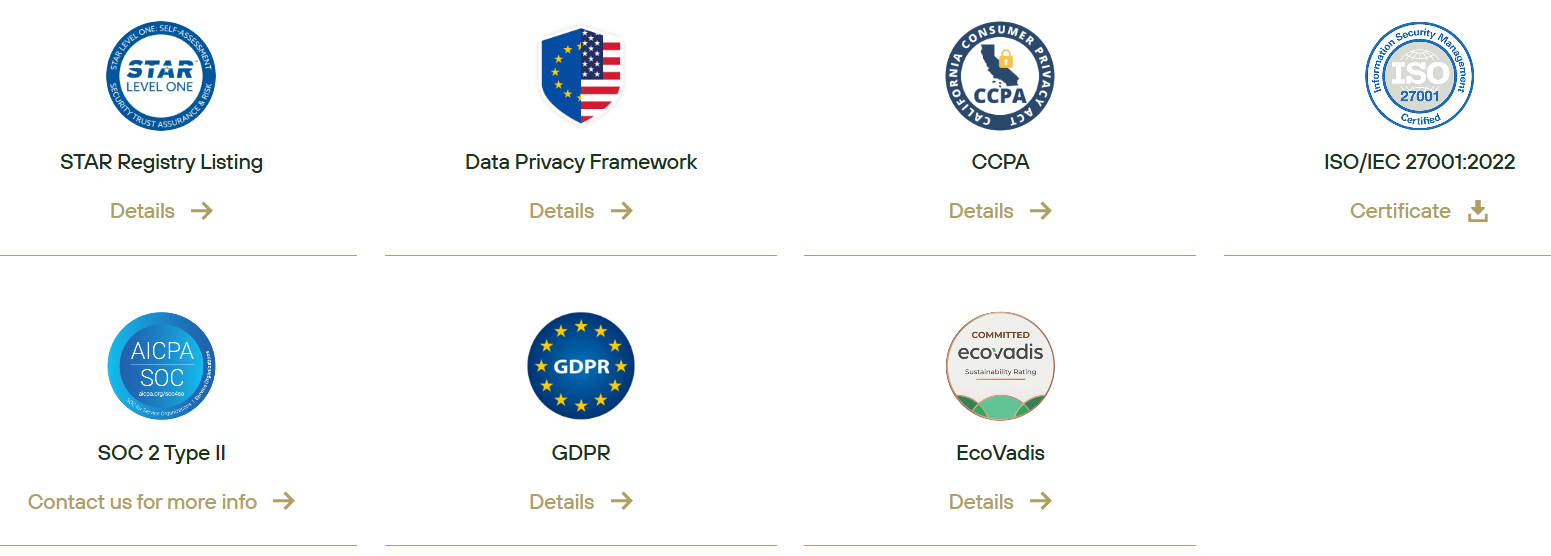
SugarCRM holds SOC 2 Type II, ISO 27001:2022, CSA STAR, GDPR, and CCPA compliance, with data residency options across four AWS regions (Australia, Germany, United Kingdom, United States). This covers most mid-market compliance requirements but does not match SAP's depth for heavily regulated industries or government contracts.
Source: SugarCRM
Where SugarCRM leads: mid-market value and deployment flexibility
SugarCRM wins on three fronts where SAP CRM struggles.
Transparent, accessible pricing. SAP's "contact us" model and multi-layer cost structure (subscription + implementation consulting + AI premium + BTP licensing) makes budgeting difficult. SugarCRM publishes clear per-user pricing and, according to their own claim referencing Nucleus Research, delivers a 32% lower TCO than Salesforce on similar functionality. For a 20-person sales team, Sugar Sell Standard costs $14,160/year. The equivalent SAP CRM deployment would require a custom quote and likely cost several multiples of that.
Deployment flexibility. SugarCRM is one of the few modern CRM platforms offering both cloud and on-premises deployment. Sugar Enterprise starts at $85/user/month for on-premises, with migration to SugarCloud supported as a managed path. For regulated industries or companies with data sovereignty requirements that preclude cloud-only vendors, this flexibility matters.
Industry-specific sales intelligence. Sugar sales-i's ability to connect to 180+ ERP systems and surface transaction-level intelligence is a rare capability at the mid-market price point.
How ZoomInfo complements either CRM
ZoomInfo is not a CRM. It doesn't manage your pipeline, track service cases, or run your commerce storefront. What it does is solve the data intelligence problem that both SAP CRM and SugarCRM inherit.
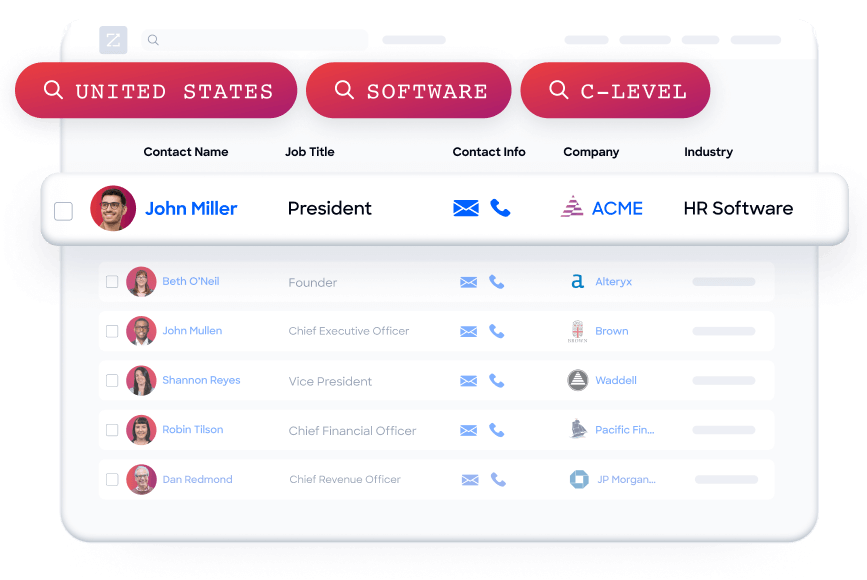
Before your reps log in. ZoomInfo's Contact & Company Search gives your team access to 300+ company attributes, department org charts with decision-makers' direct dials and emails, and 120M direct-dial phone numbers. Those contacts can be exported into SAP CRM, SugarCRM, or any connected CRM with verified data rather than the stale records that accumulate over time.
Source: ZoomInfo
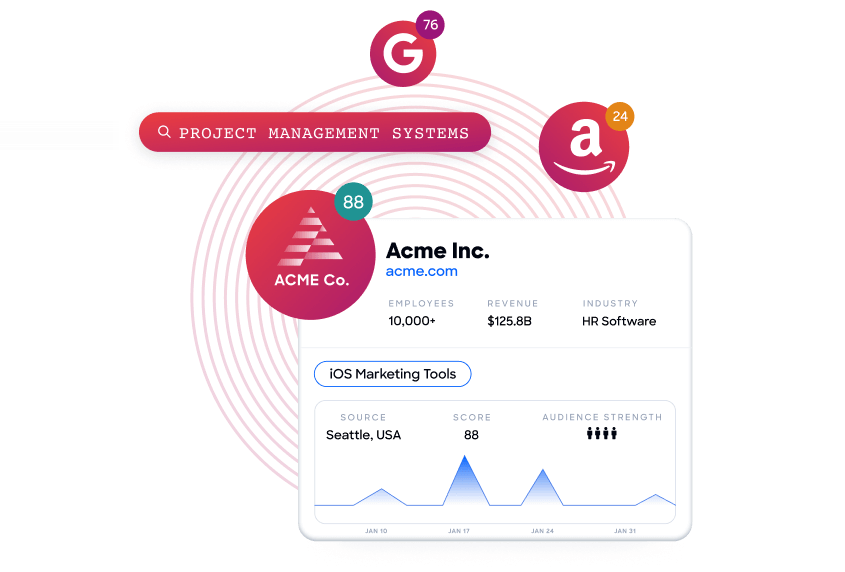
While your reps are selling. ZoomInfo Intent tracks buying signals from 210 million IP-to-Organization pairings and 6 trillion+ new keyword-to-device pairings sourced monthly. Guided Intent, exclusive to ZoomInfo, identifies topics historically correlated with deal success rather than requiring manual topic selection. When a target account starts researching your product category, your sales team knows before the account raises its hand.
Source: ZoomInfo
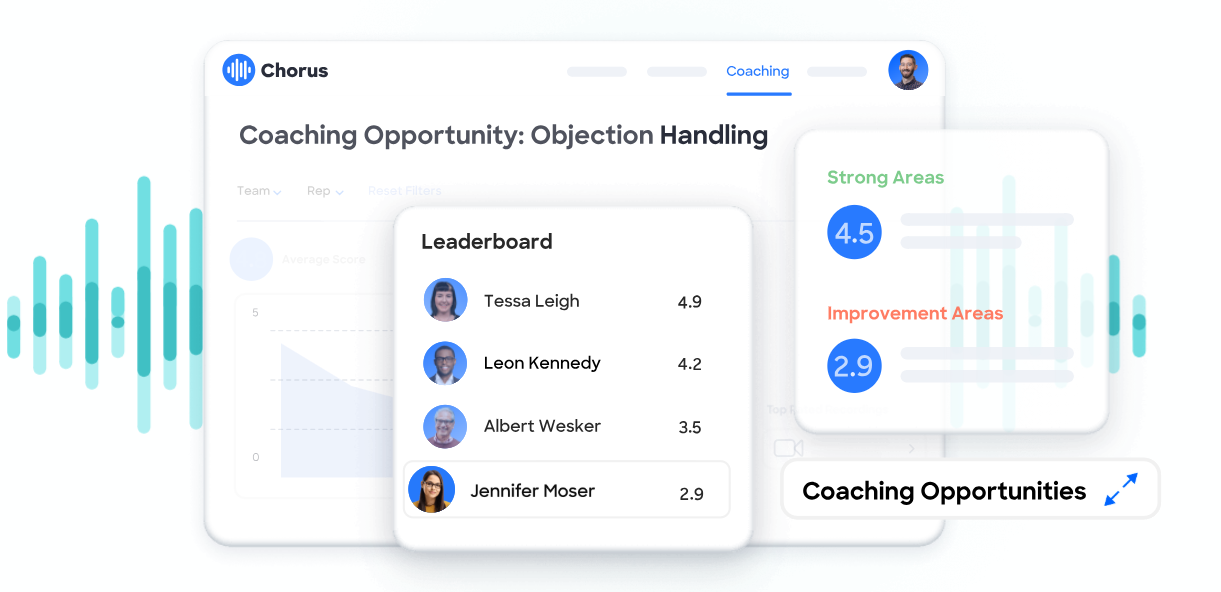
After the deal closes. GTM Workspace monitors customer health and surfaces expansion signals, while Chorus (ZoomInfo's conversation intelligence) captures and analyzes every customer call, meeting, and email to build organizational memory that survives rep turnover.
Source: ZoomInfo
This complementary architecture means you don't have to choose between CRM and intelligence. Either CRM paired with ZoomInfo creates a closed loop: the CRM manages the relationship; ZoomInfo identifies the opportunity, verifies the data, and tracks the signals that predict what happens next.
Smartsheet's Thor Sanderson, Senior Manager of Sales Technology Enablement, said: "ZoomInfo is our one source of truth for account data, and even more so for contact data. There's no other provider in the market that provides you with that level of detail." He added: "Without ZoomInfo, it would be extremely difficult (if not impossible) to achieve our business objectives." (Smartsheet case study)
Integrations and the broader tech stack
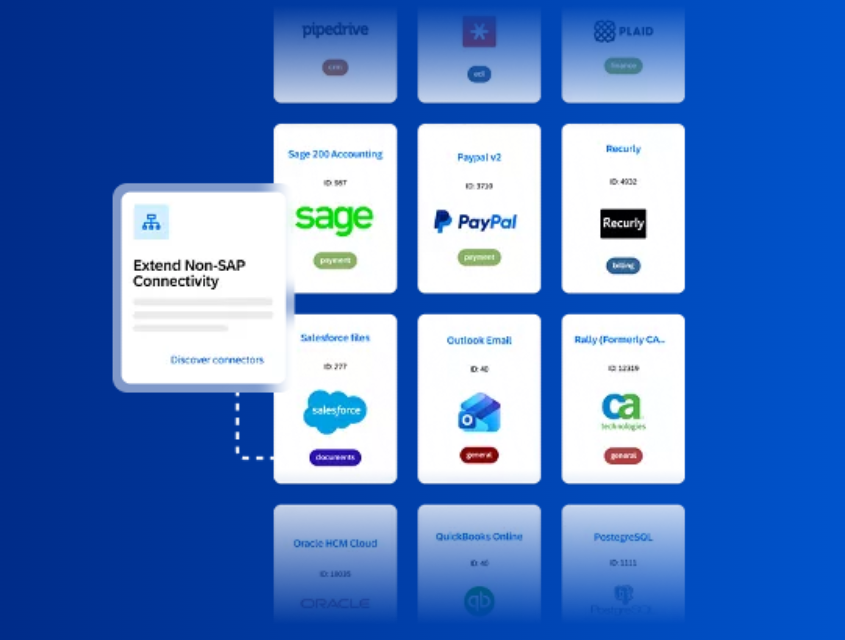
SAP CRM integrates most naturally within the SAP ecosystem. SAP Integration Suite, recognized as a Leader in Gartner's 2026 iPaaS MQ for the sixth consecutive year, provides pre-built connectors to Salesforce, Workday, AWS, ServiceNow, Google Cloud, HubSpot, Jira, and others. But this integration infrastructure is a separately licensed product on SAP BTP, adding another cost layer.
Source: SAP
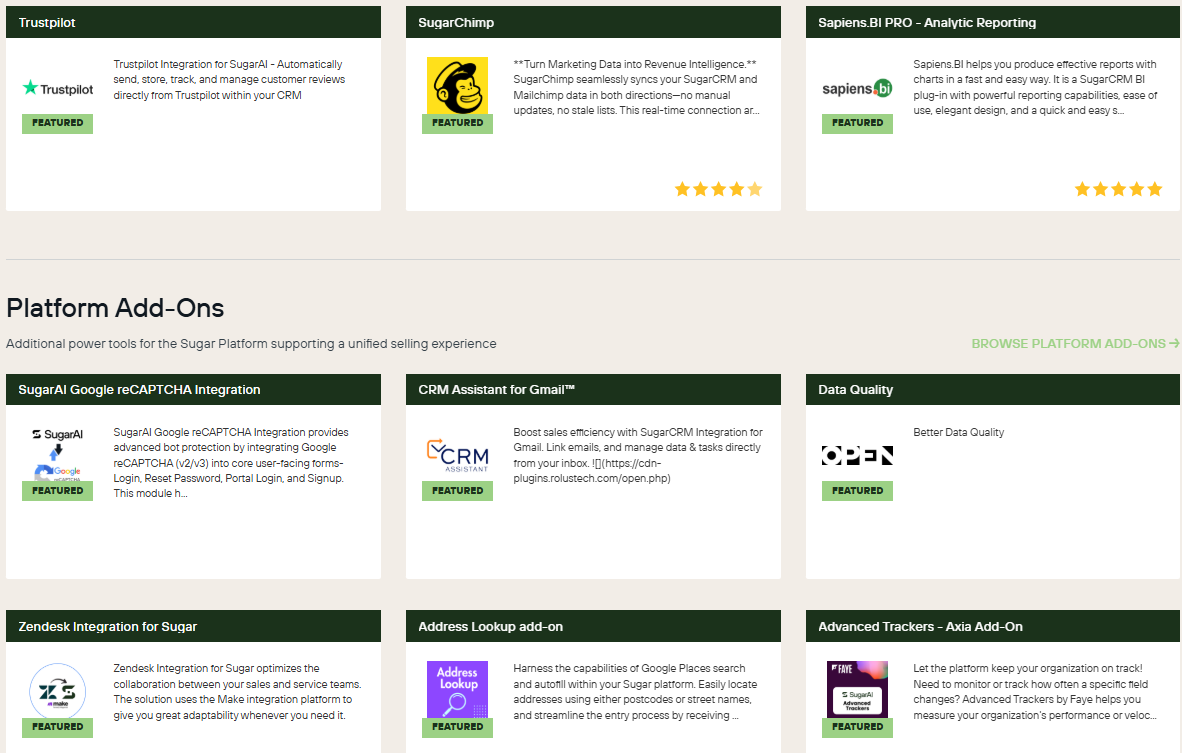
SugarCRM's Marketplace provides connectors for ERP systems (SAP, Oracle, NetSuite, Epicor, Sage, Acumatica), telephony (PhoneBurner, Microsoft Teams), marketing (Mailchimp via SugarChimp, Oktopost), reporting (Power BI), and AI tools (Fireflies, Claude for SugarAI). The Marketplace is narrower than SAP's integration ecosystem, and some reviewers note that coverage of modern SaaS point solutions can be limited, sometimes requiring manual data transfers.
Source: SugarCRM
ZoomInfo's App Marketplace lists 172+ integration partners including native connectors for Salesforce, HubSpot, Microsoft Dynamics 365, Snowflake, Databricks, and AWS.
The Enterprise API and MCP server let ZoomInfo's intelligence flow into any application, including CRM platforms like SAP and SugarCRM. API access is included in all relevant plans, and the MCP server is listed in the Claude directory and supports Claude and ChatGPT.
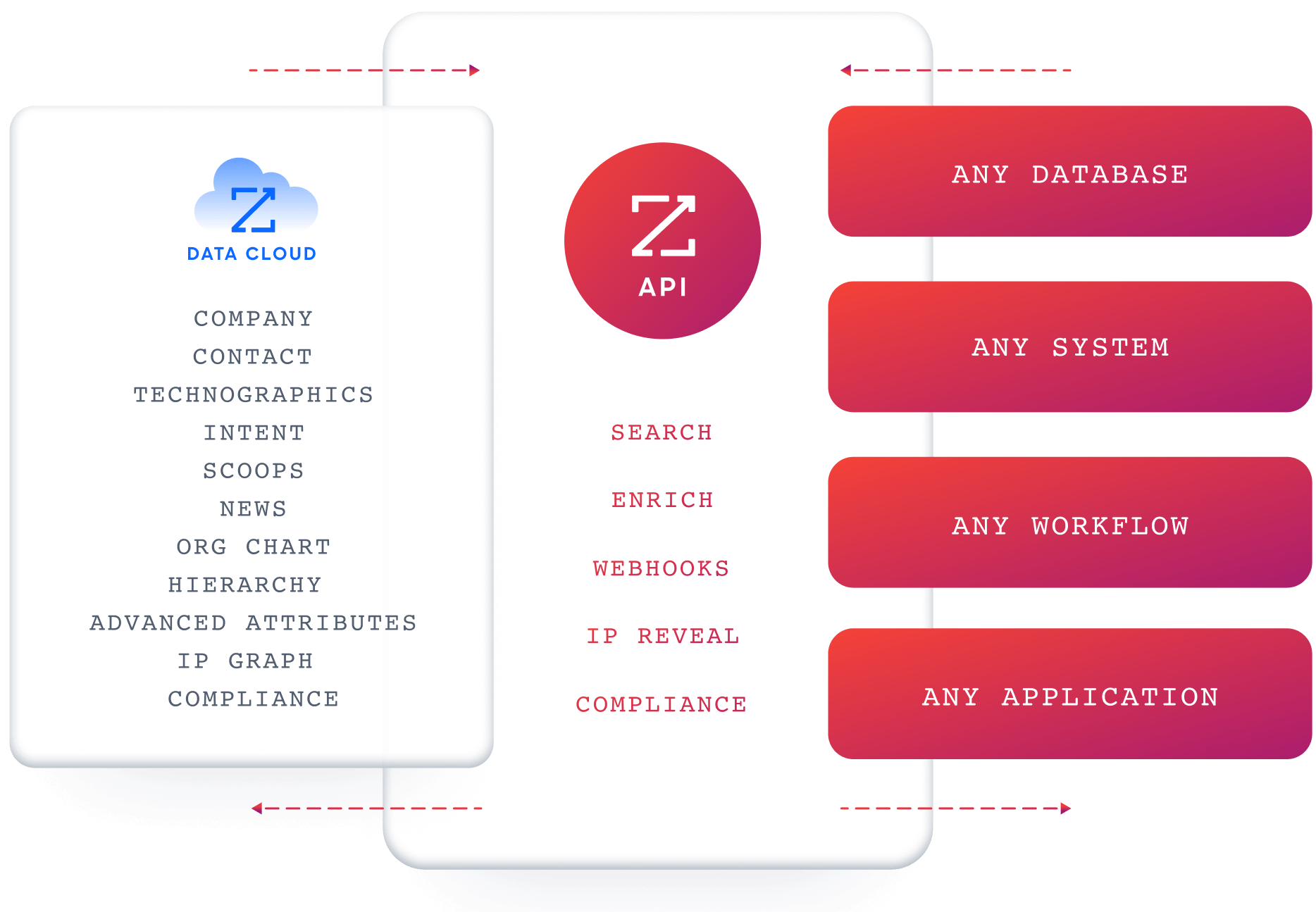
Source: ZoomInfo
BDO Canada activated ZoomInfo data within internal systems to scale account identification and engagement. Jerry Wilson, Senior Marketing Intelligence Analyst, said: "The plug-and-play aspect of the API means I can integrate it very easily into any process and get information at a moment's notice." The result: an 87% reduction in time spent on updates to their internal data dashboards. (BDO Canada case study)
SAP CRM vs. SugarCRM vs. ZoomInfo: Which should you choose?
These three platforms solve different problems. The right answer depends on which problem matters most to your business.
Choose SAP CRM if:
You already run SAP S/4HANA or SAP Cloud ERP and need CRM that shares native data flows with your back-office systems
You need a full customer experience suite spanning sales, service, digital commerce, marketing, and order management
Global compliance requirements (FedRAMP, TISAX, PCI DSS, Sovereign Cloud) are non-negotiable
You have the budget and timeline for a multi-month enterprise implementation with dedicated SAP consultants
Your primary use case extends beyond sales into B2B or B2C digital commerce
Choose SugarCRM if:
You're a B2B company in manufacturing, wholesale, or distribution with 15+ sales reps
Your ERP system (SAP, Oracle, Epicor, Sage, Syspro, or another) holds purchasing data you want surfaced as sales intelligence
You need transparent pricing and a faster path to deployment than enterprise CRM suites offer
Pipeline management, account expansion, and deal coaching are your primary CRM requirements
On-premises deployment or data residency flexibility is important
Add ZoomInfo to either if:
Your CRM has incomplete, outdated, or unverified contact and company data
You need to identify in-market buyers before they contact you, not just manage known relationships
Your sales team spends too much time researching accounts instead of selling
You want AI-driven outreach and account intelligence that draws on verified external data, not just internal CRM records
You need your data intelligence to work across multiple tools, teams, and workflows through APIs, MCP, or native integrations
See how ZoomInfo's intelligence layer works with your CRM or start free with ZoomInfo Lite.
A CRM tells you what happened with your customers. ZoomInfo tells you what's about to happen with your market. The companies getting the most from their CRM investment treat both as essential, not as alternatives.
SAP CRM vs. SugarCRM vs. ZoomInfo FAQ
What is the main difference between SAP CRM and SugarCRM?
SAP CRM (SAP Customer Experience) is an enterprise CX suite spanning sales, service, digital commerce, marketing, and order management, built for large organizations already on SAP ERP. SugarCRM is a mid-market B2B sales platform focused on manufacturing, wholesale, and distribution, with ERP-connected intelligence through Sugar sales-i. SAP offers deeper back-office integration for SAP ERP customers; SugarCRM offers broader ERP connectivity (180+ systems) and more transparent pricing.
How does ZoomInfo differ from SAP CRM and SugarCRM?
ZoomInfo is not a CRM. It is a B2B data intelligence and go-to-market execution platform that provides verified contact data (500M contacts, 135M+ verified phone numbers, 200M+ verified business emails), buyer intent signals, and AI-driven account intelligence. It complements either CRM by solving the data quality and buyer identification problems that CRM systems don't address on their own.
Which platform is most affordable for a mid-market sales team?
SugarCRM has the most transparent pricing, starting at $59/user/month with a 15-user minimum ($10,620/year). SAP CRM requires custom quotes with no published pricing and typically costs several multiples more once implementation and licensing are factored in. ZoomInfo uses consumption-based pricing but offers ZoomInfo Lite as a permanent free tier for teams getting started with B2B data intelligence.
Can ZoomInfo integrate with SAP CRM and SugarCRM?
ZoomInfo integrates with major CRM platforms through its Enterprise API and MCP server. API access is included in all relevant ZoomInfo plans. SugarCRM's Marketplace lists a Claude for SugarAI connector, and ZoomInfo's App Marketplace lists 172+ integration partners. SAP's Integration Suite provides pre-built connectors for third-party data sources. In both cases, ZoomInfo data can enrich CRM records through direct integration or middleware.
Which platform has better AI capabilities?
Each platform applies AI to different problems. SAP CRM embeds Joule AI assistants across sales, service, commerce, and marketing workflows, grounded in ERP data. SugarCRM uses AI for lead prioritization, sentiment analysis, and ERP-derived selling intelligence (though AI features require the Advanced or Premier tier). ZoomInfo's GTM Context Graph combines third-party B2B data with CRM records and conversation intelligence to reveal why deals move or stall, powering AI-drafted outreach and real-time buying signal detection.
Does SugarCRM work with SAP ERP?
Yes. SugarCRM's Marketplace lists connectors for SAP ECC, SAP S/4 HANA, and SAP Business One through integration partners like Magic xpi and Commercient SYNC. Sugar sales-i can pull transactional data from SAP ERP systems to surface cross-sell, upsell, and churn-risk signals. However, this integration operates through middleware rather than the native data flows available when pairing SAP CRM with SAP ERP.
Which platform is best for a company not running SAP ERP?
SugarCRM is the stronger CRM choice for B2B companies running non-SAP ERP systems (Oracle, Epicor, Sage, Syspro, and others), since its 180+ ERP integrations and mid-market pricing are designed for exactly this scenario. SAP CRM's value proposition depends on native SAP ERP integration; without it, the platform competes on breadth alone, where Gartner positions it as a Challenger rather than a Leader in sales force automation. Adding ZoomInfo to either CRM provides the external B2B data intelligence layer that no ERP-CRM combination generates on its own.
What free trial options are available?
SAP CRM offers a 30-day basic trial for SAP Sales Cloud and SAP Service Cloud using a shared tenant with limited functionality. SugarCRM offers a 7-day free trial. ZoomInfo offers both a 7-day free trial with broader feature access and ZoomInfo Lite, a permanent free tier with 10 monthly export credits, access to the B2B database, and WebSights Lite for website visitor identification.
