
ScrapIn is a developer-focused API for extracting structured LinkedIn data in real time. For engineering teams building B2B products, it solves a clear problem: LinkedIn has no official bulk data API, yet nearly every sales, recruiting, and enrichment tool depends on LinkedIn profile data. ScrapIn returns structured JSON on professionals and companies in under two seconds, without requiring a LinkedIn account or cookies.
We've analyzed ScrapIn closely. It's a good fit if:
You're building a B2B product that needs programmatic access to LinkedIn profile and company data
You have engineering resources to integrate and maintain an API
You value real-time data over pre-built databases
Your primary need is structured person and company data from LinkedIn
You operate at moderate API volumes and want simple credit-based billing
ScrapIn might not be the best choice if:
You need verified emails, direct-dial phone numbers, and intent signals in one platform
Your sales or marketing team needs a point-and-click interface without developer support
You require CRM integrations, workflow automation, or outreach execution
You need intelligence beyond raw LinkedIn fields (buying signals, org charts, technographics)
You want a complete go-to-market platform, not just a data layer
In that case, consider ZoomInfo: an AI go-to-market platform that covers far more than LinkedIn data. With 500M contacts, 100M companies, 135M+ verified phone numbers, and 200M+ verified business email addresses, ZoomInfo provides the data, an intelligence layer that connects signals to outcomes (the GTM Context Graph), and the tools to act on it, through the seller-facing GTM Workspace, the marketer-facing GTM Studio, or APIs and MCP for custom applications.
We've included a detailed look at ZoomInfo later in this ScrapIn review for teams that need more than a LinkedIn scraping API. To explore ZoomInfo's platform, you can start a free trial.
What is ScrapIn?
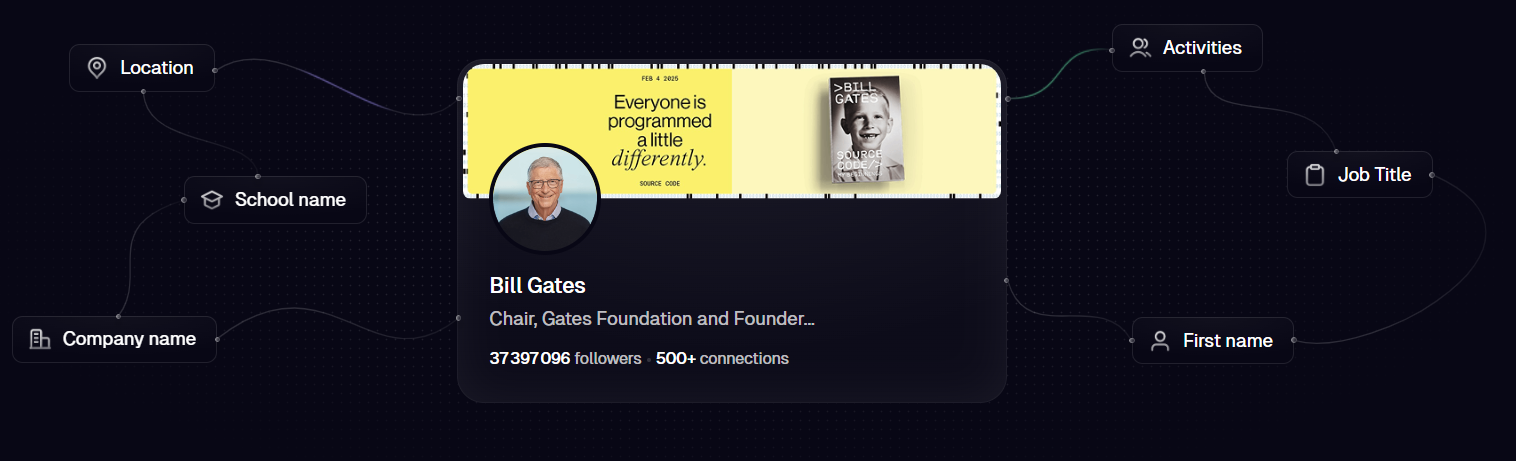
ScrapIn is a B2B data API founded in 2020 and operated by VISUM SAS, a French company. It was built to solve a developer problem: LinkedIn has no official bulk data API, yet B2B software products across sales, marketing, and recruiting depend on LinkedIn profile data. ScrapIn offers a cookie-less, account-free API that extracts and structures public LinkedIn data at scale.
Source: ScrapIn
ScrapIn calls itself a "B2B Data Intelligence Layer for AI", targeting developers and AI product teams who need programmatic access to person and company data. Since 2020, over 400 companies have used ScrapIn, and the platform reports processing 300 million API requests per month with 98.8% uptime and sub-2-second response times.
As of March 2026, ScrapIn has merged into Reverse Contact, a B2B identity resolution platform. Co-founder Julien Keraval said both teams had "worked on similar B2B identity resolution solutions" for years before deciding to consolidate. The ScrapIn API remains operational under its existing endpoints during the transition, but the brand and interface will move to Reverse Contact.
ScrapIn Pros & Cons
Pros | Cons |
|---|---|
Real-time data, never served from a stale database | Developer-only product with no UI for non-technical users |
No LinkedIn account required by the caller | No verified email or phone number data |
Sub-2-second response times at scale | No CRM integrations or workflow automation |
Covers person profiles, companies, and social activities | No free plan (paid trial starts at $30) |
GDPR and CCPA compliance built in | No intent signals, buying signals, or interpreted intelligence |
Responsive support from a small team | Full API documentation gated behind signup |
Person Match endpoint resolves profiles from partial data | LinkedIn ToS gray area at high volumes |
ScrapIn Review: How it Works & Key Features
Person Data APIs: ScrapIn provides two endpoints for enriching contact records from LinkedIn.
ScrapIn's person data consists of two endpoints that cover the most common enrichment scenarios.
The Person Profile Endpoint is the straightforward path: supply a LinkedIn profile URL, and ScrapIn returns a structured person object. The response includes identity fields (name, headline, photo), location, current job title and employer, career history with date ranges, education, skills, languages, and certifications. Each successful call consumes 1 credit.
The Person Match Endpoint handles the harder problem: when you don't have a LinkedIn URL. It accepts any combination of first name, last name, company name, company domain, or email, and resolves the best-matching profile. The response includes match metadata such as the resolved LinkedIn URL and match status, so downstream systems can tell high-confidence matches from ambiguous ones.
Both endpoints also return a company object with the person record, covering the employer's industry, headcount range, headquarters, and founding year. A single API call returns both individual and employer context without a separate company lookup.
For higher-volume needs, ScrapIn supports bulk delivery in CSV, JSON, and Parquet formats, with cloud integrations for Amazon S3, Google Cloud, and Azure.
Company Data APIs: ScrapIn covers company enrichment and discovery through profile and search endpoints.
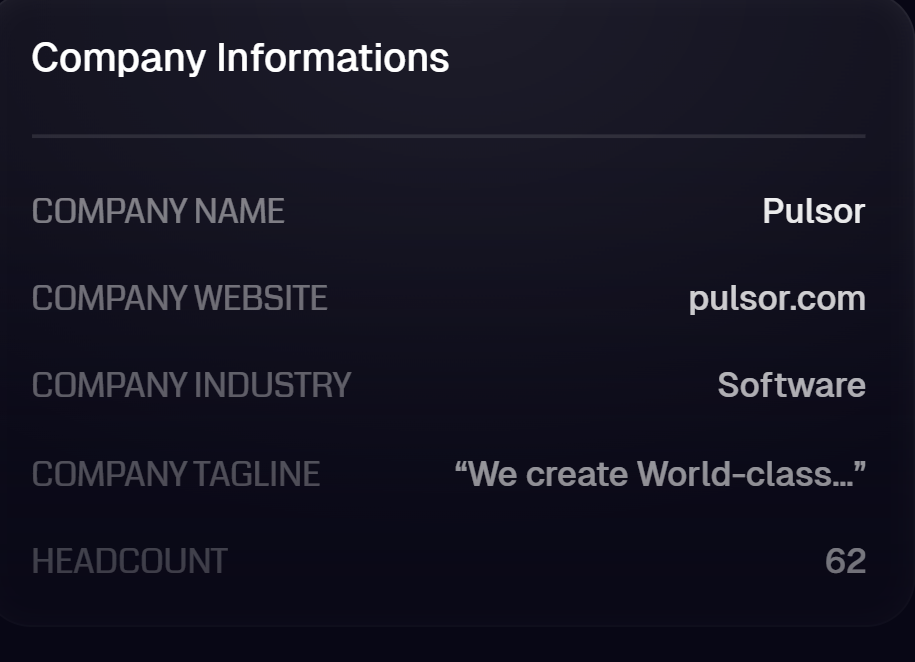
The Company Profile Endpoint converts a company's LinkedIn page URL into a normalized company record: identity fields, employee count, size range, industry, headquarters, founding year, website, specialties, and logo.
Source: ScrapIn
The Company Search Endpoint handles discovery when no LinkedIn URL is known, accepting filters for company name, domain, industry, size range, location, and keywords, and returning paginated results sorted by relevance, follower count, or employee count.
The underlying dataset covers roughly 65 million company records across 200+ countries and 50+ industries, refreshed through real-time processing.
Both endpoints cost 1 credit per successful call, keeping billing predictable.
Social Activities APIs: ScrapIn tracks posts, comments, reactions, and reposts for both people and companies.
ScrapIn offers twelve endpoints split across person and company activities. For individuals, the API retrieves posts, comments, reactions, and engagement data on specific posts, including who commented, who reacted (with the reaction type), and who reshared with optional commentary. For companies, parallel endpoints retrieve published posts, comments, reactions, and reshares.
The reaction-type detail is worth noting: rather than returning a raw count, the API shows the specific reaction type (like, celebrate, insightful) alongside the reacting user's identity. The repost endpoints capture not only who reshared content but also any commentary they added, which helps identify advocates or capture unsolicited endorsements.
Each successful call or page of results consumes 1 credit. All list-returning endpoints support cursor-based pagination for traversing large activity histories.
Pricing: ScrapIn uses credit-based billing with no free tier.
ScrapIn offers three purchasing paths:
Paid 7-Day Trial ($30)
API access for 7 days
Low rate limits
For evaluation only
Pay As You Go (from $500)
Credits valid for 12 months from purchase
Medium rate limits
Optional auto-refill when balance drops below a threshold
No commitment between purchases
Enterprise (Annual, custom pricing)
Guaranteed daily and per-minute rate limits
High concurrency limits
Slack-based technical support
All API calls cost 1 credit per successful response, regardless of endpoint. Per the Terms of Service, cancellations take effect at the end of the billing period, and ScrapIn does not provide refunds.
Where ScrapIn Falls Short
ScrapIn delivers on its core promise: real-time LinkedIn data via API. But for teams that need to move from raw data to intelligence and execution, several gaps appear.
No Verified Emails or Phone Numbers. ScrapIn returns email addresses only when they're publicly listed on a LinkedIn profile, and even then they're unverified. Phone numbers are absent entirely. For teams running outbound campaigns where deliverability and direct dials matter, this means adding at least one more provider for contact data, then building the integration to stitch results together.
No Intelligence Layer. The API returns raw LinkedIn fields. Turning those fields into signals (job change alerts, hiring spike detection, buying intent, engagement scoring) requires the buyer to build all the logic. There is no signal processing, no scoring, and no pattern matching across accounts.
Developer-Only Access. There is no dashboard for sales reps, no interface for marketers, and no CRM integration for RevOps teams. G2 reviewers note the UI/UX is "not fully developed." Teams without dedicated engineering resources cannot use the product.
No CRM or Workflow Integrations. ScrapIn offers no native sync to Salesforce, HubSpot, or similar CRMs. There is no Zapier or Make connector, no public webhook support, and no workflow builder. Every integration must be built from scratch.
No Free Tier. The lowest entry point is a $30 paid trial valid for 7 days with low rate limits. For teams accustomed to free tiers or credit-based trials from other providers, this adds friction before they can assess data quality or coverage.
Documentation Gated Behind Signup. The public API documentation is marked as a "preview." Full JSON schemas, error codes, authentication details, and rate limit specs only appear after account creation, making technical evaluation harder before committing.
These limitations follow naturally from building a focused, developer-first LinkedIn data API. But they leave a gap for teams that need verified contact data, buying signals, CRM connectivity, and execution tools in one platform.
Top ScrapIn Alternative for Complete GTM Intelligence: ZoomInfo
ZoomInfo addresses ScrapIn's limitations as an AI go-to-market platform that provides not just a data API, but go-to-market intelligence and execution.
Where ScrapIn returns raw LinkedIn fields for developers to interpret, ZoomInfo delivers verified contact data, company intelligence, buying signals, and AI-powered execution tools for entire revenue teams (SDRs, account executives, marketers, RevOps, and GTM engineers).
Comprehensive B2B Data: ZoomInfo's data covers contacts, companies, intent signals, and technographics at a scale LinkedIn alone cannot match.
ZoomInfo runs the largest B2B data platform available: 500M contacts, 100M companies, 135M+ verified phone numbers, 120M direct-dial phone numbers, and 200M+ verified business email addresses.
This data comes from multiple sources: automated ML scanning of 28 million site domains daily, third-party partner data covering 95 million businesses, a community of 200,000+ ZoomInfo Lite users who share data back, and an in-house Data Training Lab of 300+ human researchers. First-party data reaches up to 95% accuracy.
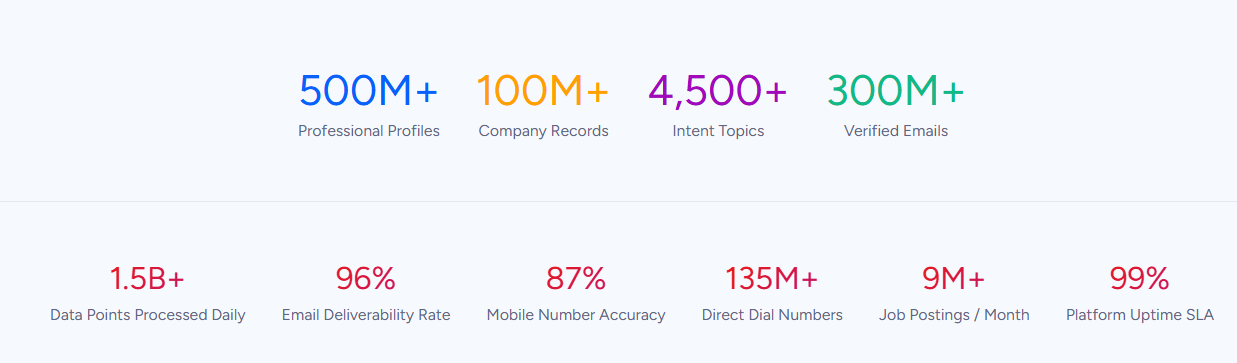
Beyond contacts and companies, ZoomInfo covers data dimensions ScrapIn does not: buyer intent data tracking signals from 210 million IP-to-organization pairings, technographics profiling 30,000+ technologies across 30+ million companies, department org charts with decision-maker contact information, and website visitor identification that resolves anonymous traffic to companies and buying teams.
Independent parties have validated the data quality. In a Fortune 500 competitive RFP analyzing 25 million contacts across vendors, the independent consultant concluded that "no other competitor came even close." ZoomInfo was named a Forrester Wave Leader for Intent Data Providers in Q1 2025 and a Gartner Magic Quadrant Leader for ABM Platforms for the second consecutive year.
SpringDB used ZoomInfo's enriched data for precise client targeting, achieving 2x to 3x increases in campaign conversions and a 300% increase in database usability. (SpringDB)
GTM Context Graph: ZoomInfo combines its B2B data with your CRM, conversation, and behavioral data into a layer that captures why deals move.
Where ScrapIn returns data and leaves interpretation to the buyer, ZoomInfo's GTM Context Graph processes 1.5B+ data points daily and connects signals to outcomes. It unifies a customer's CRM records, conversation transcripts, email interactions, and behavioral signals with ZoomInfo's third-party data into a single graph that captures not just what happened in a deal, but why it happened.
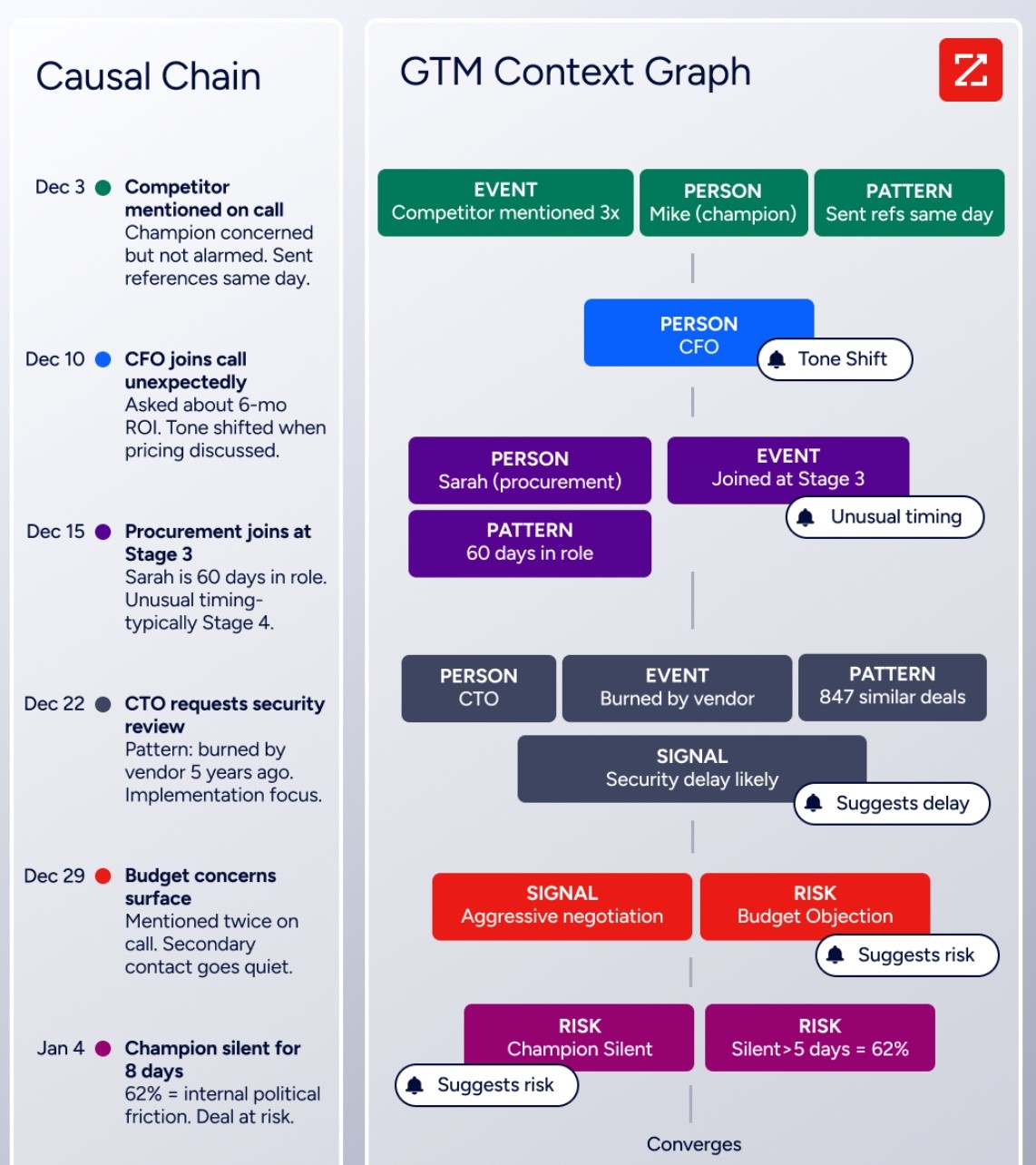
For example, a CRM might record that a deal moved from Stage 3 to Stage 4. The GTM Context Graph captures the context behind that move: the CFO joined the last call and asked about six-month ROI, the champion went quiet for eight days during an internal budget battle, or the account started researching a competitor.
That context flows into every downstream action: follow-up emails, account prioritization, pipeline forecasting, and play design.
This intelligence layer exists because of two decades of infrastructure investment. ZoomInfo built the data unification platform (entity resolution, identity matching, hierarchy management) that powers its B2B data, then extended it to first-party data. The acquisitions of Chorus and Workbounce added conversation intelligence and behavioral signal engines that extract context from calls, meetings, and engagement patterns.
Seismic's sales team attributed 39% of active pipeline to opportunities identified or influenced by ZoomInfo signals, boosted productivity by 54%, and saved 11.5 hours per week. "That combination of our internal CRM data, external signals, and AI that's given all that context has helped us craft very specific account- and persona-based messages." (Seismic)
Universal Access: ZoomInfo delivers its intelligence through native products for sellers and marketers, plus APIs and MCP for custom tools.
ScrapIn is API-only. ZoomInfo offers three ways to access its intelligence, each built for a different team:
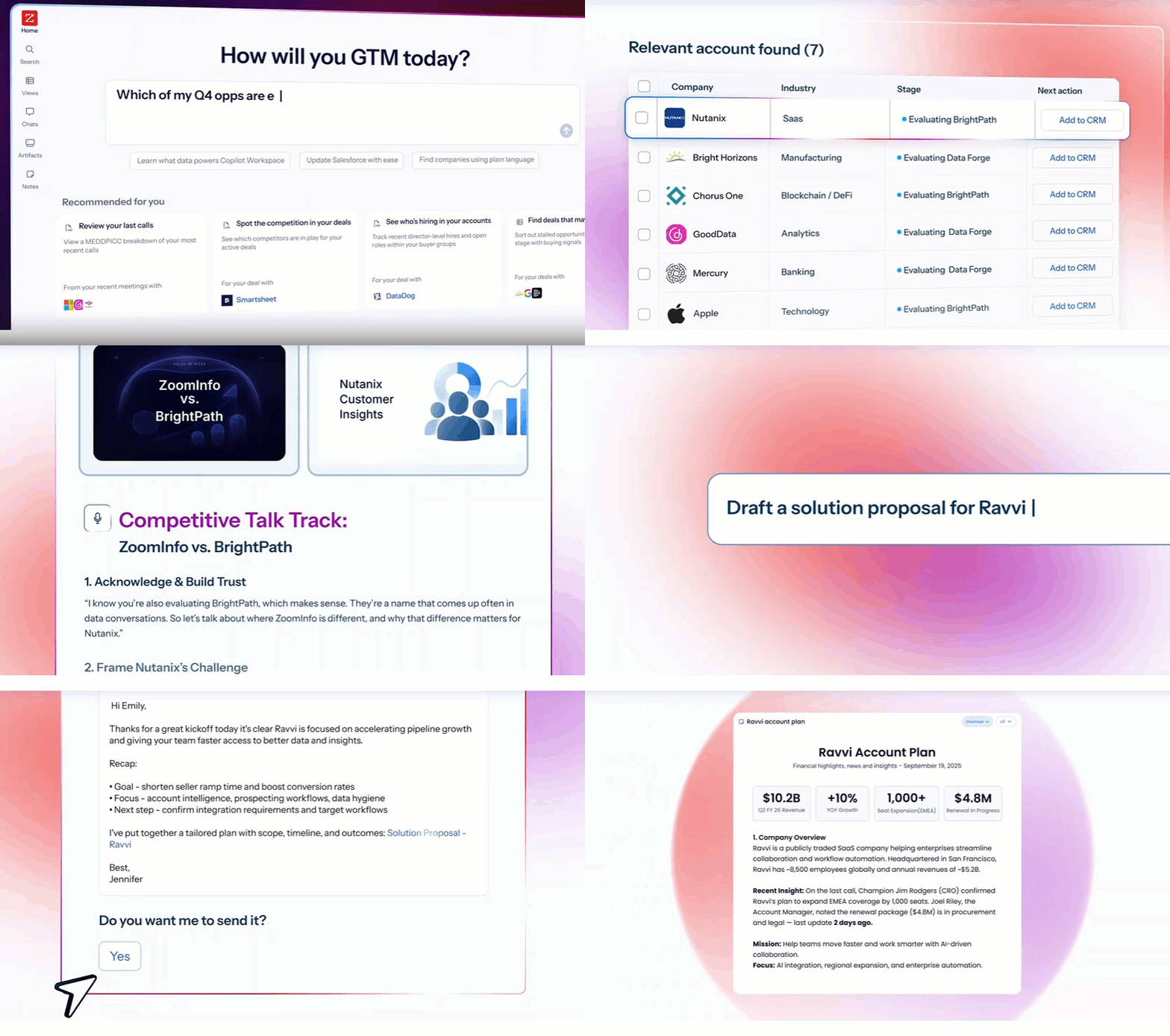
GTM Workspace is the seller's interface. It gives AEs, SDRs, and account managers a workspace where prioritized accounts, AI-drafted outreach, deal intelligence, and CRM updates converge. AI agents built on Anthropic's Claude handle account research, signal monitoring, and follow-up generation automatically.
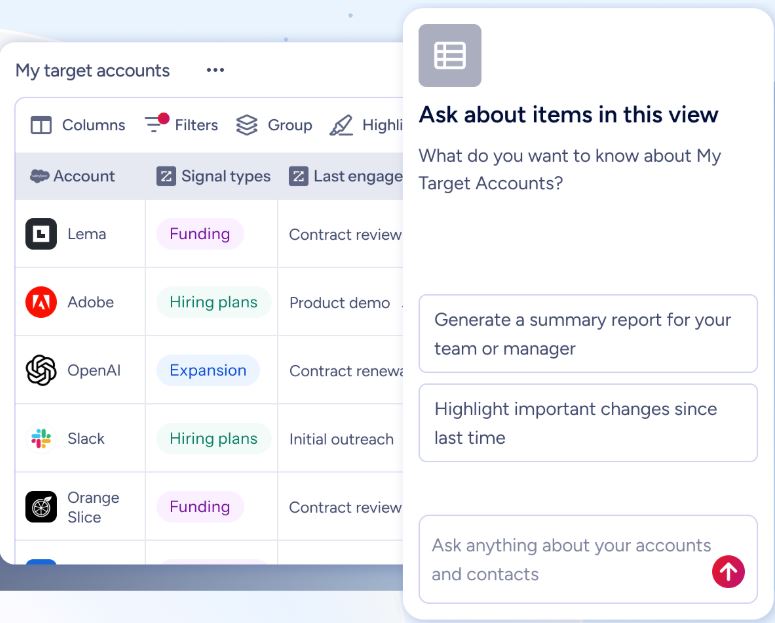
GTM Studio is the interface for marketers, RevOps, and GTM engineers. It lets teams define audiences in natural language, orchestrate multi-channel campaigns, and track pipeline analytics in real time, without filing engineering tickets. Expansion plays that previously took weeks now launch in 30 minutes.
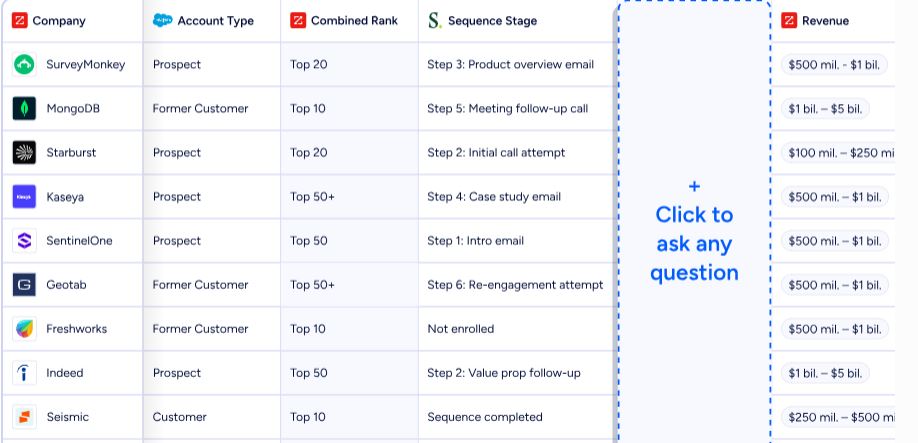
For teams building beyond ZoomInfo's own products, APIs and MCP expose the same intelligence to any custom agent, internal tool, or third-party platform. The Enterprise API includes search, enrichment, AI intelligence (account summaries, lookalike companies, contact recommendations), and audience management endpoints.
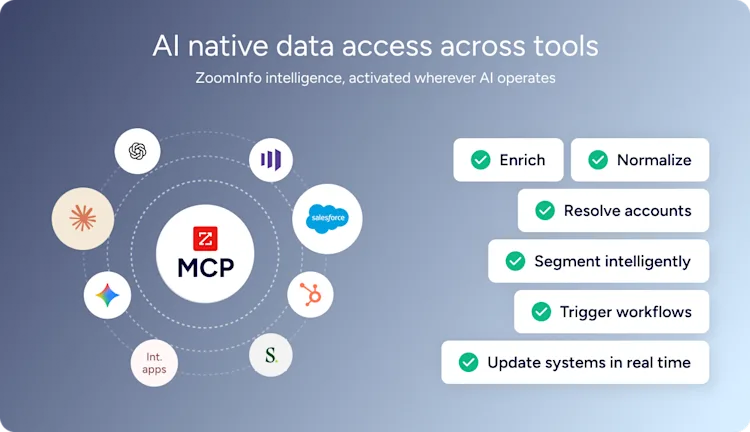
API access is included in all relevant plans. All three products draw from one GTM Context Graph: the same data, the same reasoning, the same model.
"The plug-and-play aspect of the API means I can integrate it very easily into any process and get information at a moment's notice." BDO Canada cut time spent on internal data dashboard updates by 87% using ZoomInfo's API. (BDO Canada)
Pricing: ZoomInfo offers a permanent free tier and custom-quoted paid plans across Sales, Marketing, and Operations.
ZoomInfo uses a custom-quoted, seat-and-credit-based subscription model. The key entry points:
ZoomInfo Lite (Free, permanent)
Access to ZoomInfo's B2B database with 100M+ verified profiles
10 monthly export credits (25 with Community Edition upgrade)
Search filters, contact information, and email addresses
ReachOut Chrome Extension and mobile app
WebSights Lite (up to 10 website visitor reveals per day)
HubSpot integration and CRM data enrichment
Paid Plans (custom-quoted)
Sales plans span three tiers: Professional (contact and company data, CRM integrations, AI email generation), Advanced (intent signals, website visitor tracking, account fit scoring, automated workflows), and Enterprise (real-time intent, AI account summaries, custom integrations, dedicated support).
Marketing plans range from Marketing Demand through ABM Lite to ABM Enterprise. Pricing depends on seats, credit volume, features, and contract length.
7-Day Free Trial
A no-credit-card trial with access to core features including search, intent signals, and outreach tools.
ZoomInfo does not publish fixed prices. Costs scale with seats, credits, and feature tier. Where ScrapIn charges per API call with no free option, ZoomInfo provides a permanent free tier and a no-commitment trial.
Note: ZoomInfo is transitioning toward a consumption-based pricing model.
ScrapIn or ZoomInfo: Comparison Summary
Aspect | ScrapIn | ZoomInfo |
|---|---|---|
Primary focus | LinkedIn data extraction API | AI go-to-market platform |
Data coverage | LinkedIn profiles and companies (~65M companies) | 500M contacts, 100M companies, multi-source |
Verified phone numbers | Not available | 135M+ verified, 120M direct dials |
Verified emails | Partial, unverified | 200M+ verified business emails |
Intent signals | Not available | 210M IP-to-org pairings |
Technographics | Not available | 30,000+ technologies, 30M+ companies |
Data freshness | Real-time per-call scraping | Multi-source continuous verification |
API access | Core product | Included in all plans |
MCP for AI agents | Not available | |
Native UI for sales | API only | |
Native UI for marketing/RevOps | API only | |
CRM integrations | None | Salesforce, HubSpot, Dynamics, 120+ integrations |
Conversation intelligence | Not available | |
Free tier | Paid trial only ($30) | ZoomInfo Lite (permanent) |
Compliance certifications | GDPR/CCPA; SOC 2 and ISO 27001 in progress | ISO 27001, ISO 27701, SOC 2 Type II, TRUSTe GDPR/CCPA |
Target user | Developers and AI product teams | Sales, marketing, RevOps, and developers |
Best for | LinkedIn data layer for custom applications | Go-to-market intelligence and execution |
Final Verdict
The choice between ScrapIn and ZoomInfo depends on what you're building and who needs the data.
Choose ScrapIn if you're a development team building a B2B product that needs real-time LinkedIn profile and company data as raw input. ScrapIn's live-scrape architecture means you never work with stale records, its credit-based pricing is straightforward, and its focused API design means less complexity than a full platform.
It works well when your engineering team can handle integration, interpretation, and workflow automation on its own, and when LinkedIn data alone meets your needs.
Choose ZoomInfo if you need more than a LinkedIn data pipe. ZoomInfo fits when your go-to-market team needs verified direct dials and emails that work, intent signals that show when accounts are in-market, and execution tools that turn intelligence into action without requiring developers for every workflow.
Its GTM Context Graph captures not just contact data but the context behind deals, and its three products (GTM Workspace, GTM Studio, and APIs/MCP) put that intelligence in front of every team. For organizations that have outgrown stitching together point APIs and need one platform spanning data, intelligence, and execution, ZoomInfo is built for that job.
Get started with ZoomInfo here.
ScrapIn solves a real problem well: giving developers clean, real-time LinkedIn data without the infrastructure headache. ZoomInfo solves the broader problem that follows: turning B2B data from every source into intelligence your entire revenue team can act on, in every tool they already use.
ScrapIn FAQ
Does ScrapIn have a free plan?
No. ScrapIn has no free tier. The lowest entry point is a $30 paid trial valid for 7 days with low rate limits. Pay-as-you-go credit purchases start at $500, with credits valid for 12 months.
ZoomInfo offers ZoomInfo Lite, a permanent free plan with access to 100M+ verified profiles, 10 monthly export credits, a Chrome extension, and HubSpot integration, plus a separate 7-day free trial of paid features with no credit card required.
What data does ScrapIn return?
ScrapIn returns structured person profiles (name, headline, location, job title, career history, education, skills, certifications) and company profiles (name, industry, employee count, headquarters, founding year, specialties) sourced from LinkedIn. It also provides social activity data including posts, comments, reactions, and reposts. It does not return verified email addresses, phone numbers, intent signals, or technographic data.
ZoomInfo covers all of these data dimensions across 500M contacts and 100M companies, drawn from multiple sources beyond LinkedIn.
Does ScrapIn verify email addresses?
No. ScrapIn returns email addresses only when they are publicly listed on a LinkedIn profile, and these are not verified for deliverability. Teams using ScrapIn for outreach need a separate email verification tool. ZoomInfo maintains 200M+ verified business email addresses with up to 95% accuracy on first-party data, verified through a multi-source pipeline that includes 300+ human researchers.
Can non-technical teams use ScrapIn?
No. ScrapIn is a developer-only product with no dashboard, no CRM integration, and no workflow builder. All access is through the REST API, which requires engineering resources. ZoomInfo provides native interfaces for non-technical users: GTM Workspace for sales teams and GTM Studio for marketers and RevOps, alongside APIs and MCP for developers.
What is happening with ScrapIn and Reverse Contact?
In March 2026, ScrapIn announced a merger with Reverse Contact, a B2B identity resolution platform. The ScrapIn API remains operational under its existing endpoints during the transition, but the brand, dashboard, and interface will move to Reverse Contact.
The combined entity plans to add a contact data layer (phone and verified email), a monitoring feature, SOC 2 and ISO 27001 certifications, and a redesigned dashboard.
Does ScrapIn integrate with CRMs?
No. ScrapIn has no native integrations with Salesforce, HubSpot, or any other CRM. There is no Zapier or Make connector and no documented webhook support. All integrations must be custom-built. ZoomInfo integrates natively with Salesforce, HubSpot, Microsoft Dynamics, and over 120 other tools through its App Marketplace, with API access included in all relevant plans.
How does ScrapIn handle data compliance?
ScrapIn is GDPR and CCPA compliant. It processes only publicly available professional data, follows data minimization principles, and supports opt-out requests. Customer data is encrypted at rest (AES-256) and in transit (TLS 1.2). Infrastructure runs on Google Cloud Platform in Belgium. SOC 2 and ISO 27001 certifications are in progress but not yet complete.
ZoomInfo holds ISO 27001, ISO 27701, SOC 2 Type II, and TRUSTe GDPR and CCPA certifications, all renewed annually.
Is LinkedIn scraping legal?
LinkedIn scraping occupies a legal and policy gray area. LinkedIn's Terms of Service restrict automated data collection, and high-volume scraping may trigger platform restrictions. ScrapIn's cookie-less architecture reduces some risk, but the practice remains contested. This concern applies to any LinkedIn scraping provider.
ZoomInfo draws B2B data from multiple sources beyond LinkedIn (automated scanning of 28 million domains daily, third-party partners, and a community of users who share data back), reducing dependence on any single platform.
More ScrapIn comparisons and alternatives:
