
Twilio Segment is a widely adopted customer data platform, serving 25,000+ customers and processing 12.1 trillion API calls in 2023. Its Connections pipeline collects first-party behavioral data from every touchpoint and routes it to 750+ destinations, giving data, marketing, and product teams a single collection layer for the customer lifecycle.
But a CDP only knows what happens inside it.
Segment captures page views, track events, identify calls, and group associations. It cannot verify whether a prospect's contact data is accurate, tell you which accounts are researching your category this week, push warehouse-computed attributes back into operational tools, or trigger a campaign the instant a behavioral event fires.
The right integrations close those gaps. They feed your CDP verified data it cannot generate on its own, activate behavioral signals across channels in real time, store and model event data at warehouse scale, and connect ad spend to first-party customer identity so your team works from a complete picture instead of fragments.
This guide covers the strongest integration for each of the jobs Segment users most commonly need done:
Enrich customer profiles with verified B2B contact data, buyer intent signals, and company intelligence
Turn behavioral events into CRM records and keep sales data in sync both ways
Store, model, and activate event data at cloud warehouse scale with identity-resolved profile export
Trigger cross-channel campaigns the moment a behavioral event fires
Run funnel, retention, and product analytics from your existing Segment event stream
Surface high-value customer events and pipeline health alerts in real time
Recover conversion signal loss and build first-party audiences for advertising activation
Each section walks through how the integration connects with Segment, what data flows between the platforms, pricing, and who benefits most.
Best Segment Integrations at a Glance |
|---|
Best Segment Integration for B2B Data Enrichment and Go-to-Market Intelligence Enriches Segment profiles with verified contact data, buyer intent signals, and company intelligence from a B2B database spanning 500M contacts and 100M companies, giving your team accurate identity data and signals to prioritize accounts that are in-market. |
Best Segment Integration for Turning Behavioral Events into CRM Records Maps any Segment Track event to Salesforce Lead or Contact records via the Salesforce (Actions) destination, pulls CRM data back through the Cloud Source for warehouse unification, and pushes warehouse-computed attributes into CRM fields via Reverse ETL. |
Best Segment Integration for Cloud Warehouse Storage and Reverse ETL Activation Receives every Segment event with automatic schema management, exports identity-resolved profiles via Profiles Sync, and pushes warehouse-computed insights back to 550+ destinations on a 15-minute cadence through Reverse ETL. |
Best Segment Integration for Real-Time Behavioral Activation Across Channels Forwards Segment Track events to Braze in real time to trigger campaigns across email, push, SMS, and in-app, while Braze Currents streams engagement data back into Segment for downstream analytics. |
Best Segment Integration for Product Analytics Without SDK Duplication Routes behavioral event data from Segment's single instrumentation layer into Mixpanel for funnel, retention, and user-level analysis, with historical replay and B2B Group Analytics support. |
Best Segment Integration for Real-Time Event Alerting and Pipeline Health Monitoring Delivers formatted, real-time notifications to designated channels the moment specific customer events fire through Segment, plus Connections Alerting for pipeline health monitoring. |
Best Segment Integration for Server-Side Conversion Tracking and First-Party Audience Targeting Routes server-side conversion events via the Enhanced Conversions API and syncs first-party Customer Match audiences from Segment, bypassing browser-side tracking that increasingly fails in cookieless and ad-blocked environments. |
What Is Segment?
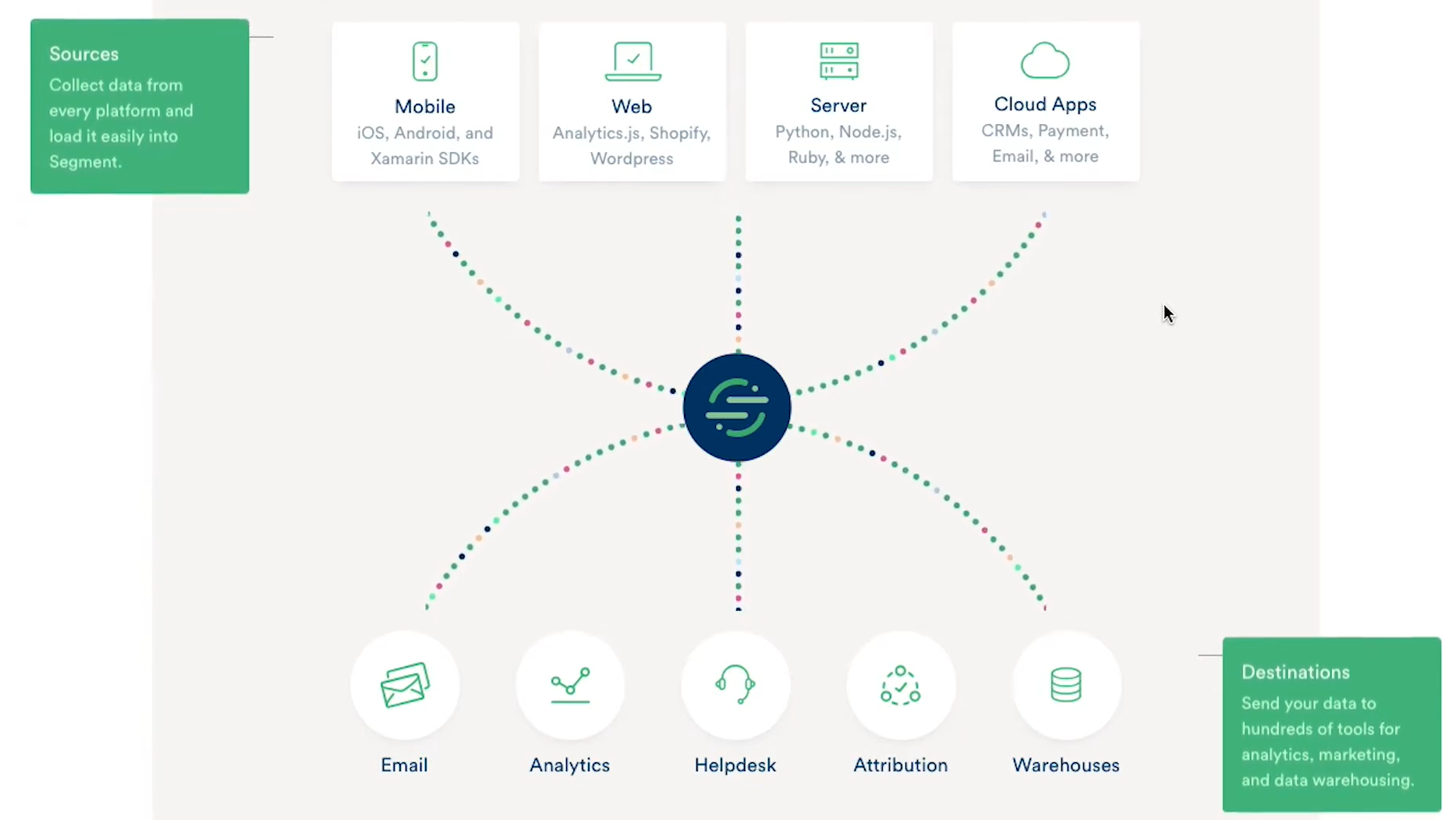
Twilio Segment is a customer data platform (CDP) that collects first-party behavioral data from websites, mobile apps, and servers through a single API, then routes that data to 750+ downstream destinations for analytics, marketing, CRM, and warehouse storage.
Source: Twilio
Twilio acquired Segment for $3.2 billion in November 2020. Segment now serves as the data foundation within Twilio's broader Customer Engagement Platform. The pitch is not "standalone CDP" but the data engine that makes everything else in Twilio work better: "Twilio Segment's CDP puts data at the heart of Twilio".
Segment's integration ecosystem is the platform's main strength.
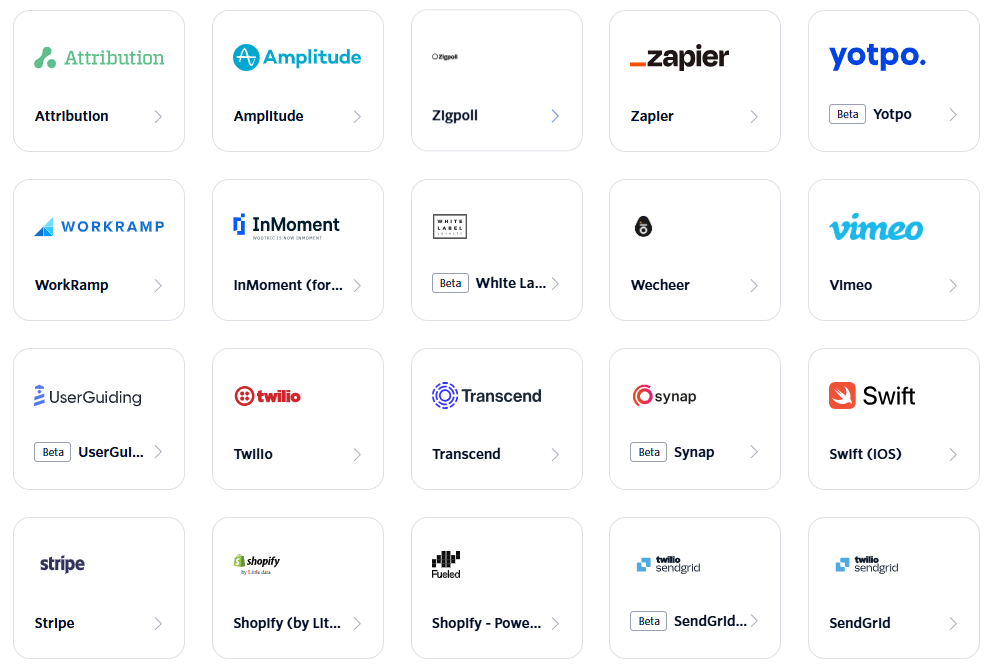
The Segment Catalog houses 750+ integrations spanning advertising, analytics, CRM, email marketing, enrichment, personalization, payments, customer success, and data warehousing.
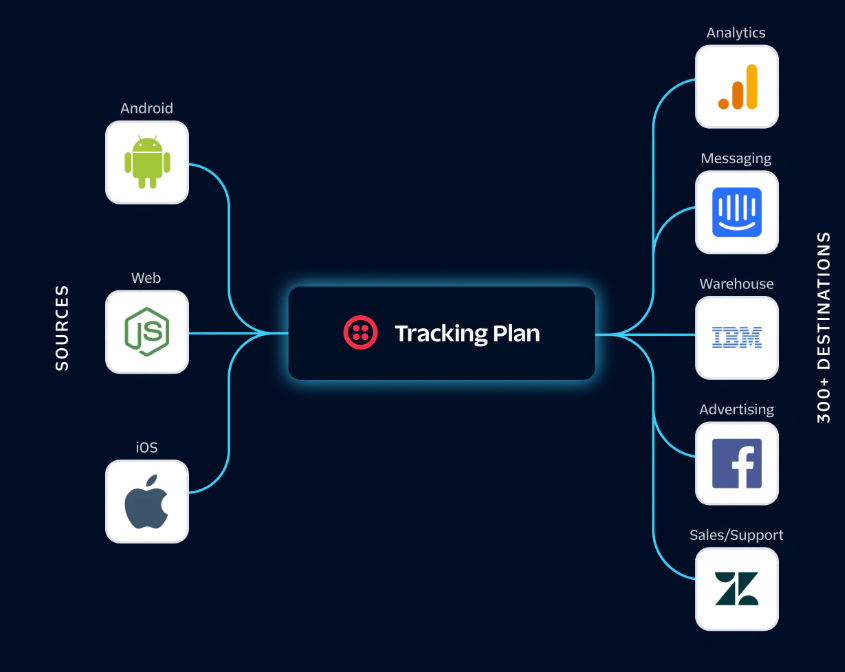
The platform follows a "collect once, route everywhere" model: teams instrument one Segment source library, and the Connections pipeline translates and delivers that data to every connected destination without additional code.
Segment offers REST APIs (the Public API for workspace management and the Tracking API for event ingestion), supports OAuth-based authentication, and provides a Destination Actions framework for trigger-based control over how events map to destination-specific actions. The full CDP offering layers Unify (identity resolution), Engage (audience building and journey orchestration), Protocols (data governance), and Reverse ETL on top of the core Connections pipeline.
Source: Twilio
The integration categories available to Segment users include:
CRM and sales: Salesforce, HubSpot, Microsoft Dynamics 365
Data warehousing: Snowflake, BigQuery, Redshift, Databricks
Customer engagement: Braze, Iterable, Customer.io
Product analytics: Mixpanel, Amplitude, Heap
Team communication: Slack, Microsoft Teams
Advertising: Google Ads, Meta Conversions API, LinkedIn Ads
Data enrichment: B2B intelligence platforms, identity resolution providers
Workflow automation: Zapier, tray.io, custom Functions
With that ecosystem as context, here are the seven integrations we selected as the best options for extending Segment's capabilities across the categories that matter most.
1. ZoomInfo: Best Segment Integration for B2B Data Enrichment and Go-to-Market Intelligence
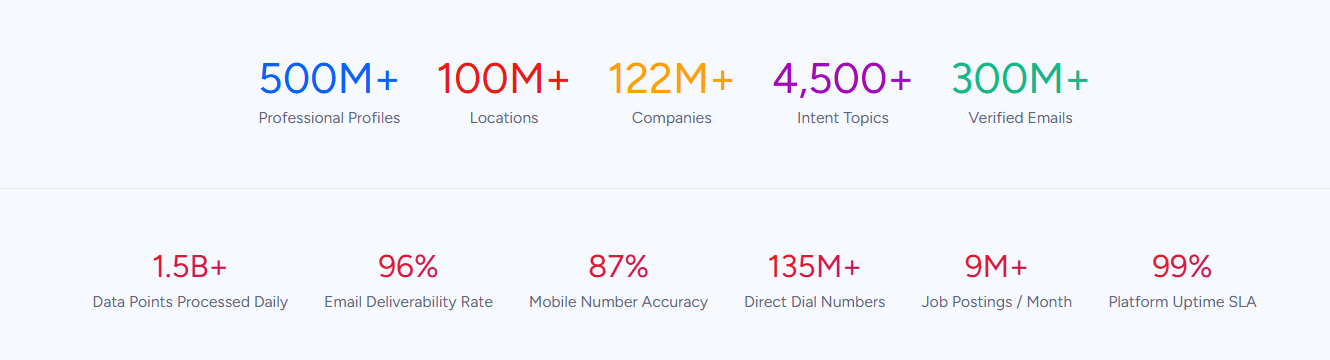
ZoomInfo is a B2B intelligence platform built on a database of 500M contacts, 100M companies, 135M+ verified phone numbers, and 200M+ verified business email addresses.
Source: ZoomInfo
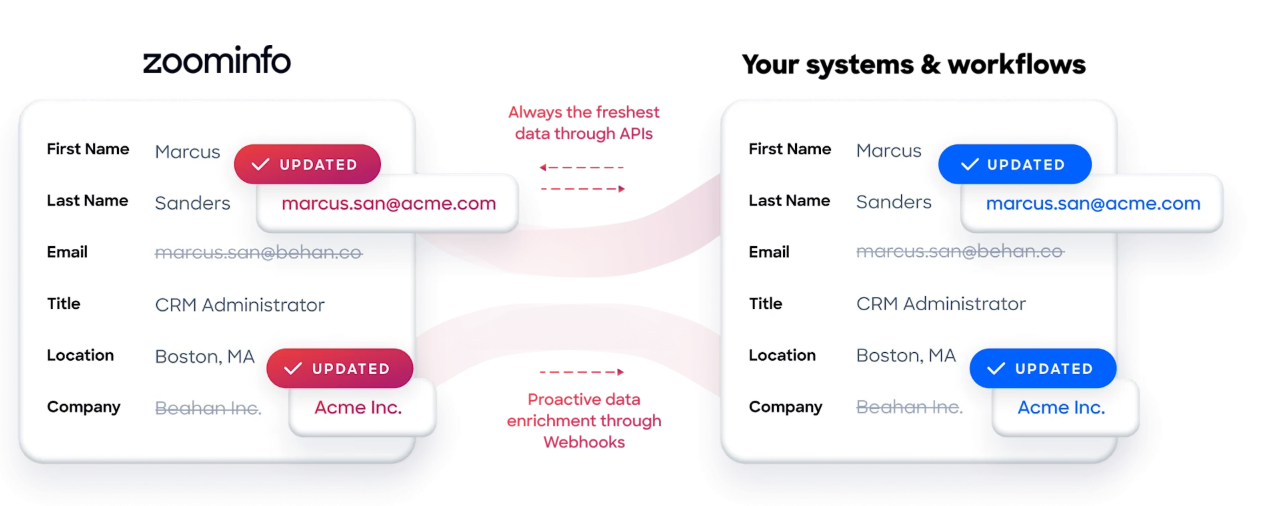
Its data engine processes 1.5B+ data points daily, combining B2B data with your first-party signals to add context behavioral events alone can't provide. ZoomInfo integrates with Segment via API to enrich your CDP profiles with verified contact data, company intelligence, buyer intent signals, and technographic insights.
Connecting the two platforms gives you:
A CDP backed by verified B2B identity data, with direct dials, business emails, company attributes, and org charts appended to your Segment profiles
Prioritization by buying signals, so your team activates against accounts that are in-market this week, not a static list
Downstream activation that carries enriched data, because every destination receiving data from Segment inherits the contact and company attributes ZoomInfo provides
Segmentation and routing driven by firmographic and intent data, with ZoomInfo company, technographic, and intent attributes powering Engage audience logic and warehouse models
How ZoomInfo Integrates with Segment
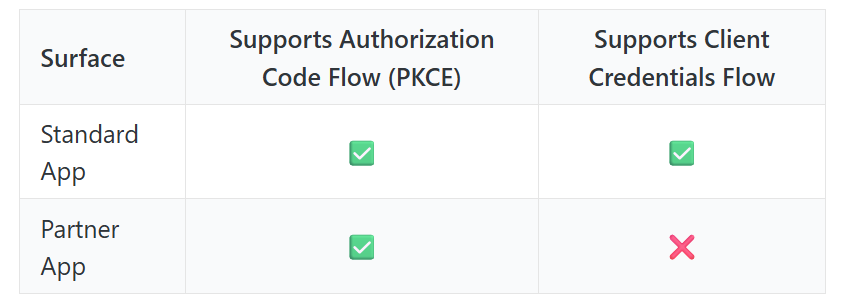
ZoomInfo connects to Segment through an API-based integration. ZoomInfo's REST API (the GTM API) provides programmatic access to its B2B intelligence database, including search, enrich, intent, and account research endpoints.
Data pulled from ZoomInfo's API flows into Segment via Segment's tracking libraries or server-side HTTP API, enriching profiles and events with verified B2B data. Integration templates from middleware platforms like YepCode simplify the connection for teams that prefer a managed workflow.
Because ZoomInfo's API covers Search, Enrich, Intent, Scoops, and Account Research endpoints, the integration supports a range of enrichment patterns: from batch enrichment of existing Segment profiles to event-triggered lookups that append ZoomInfo data to new contacts as they enter the CDP.
Source: ZoomInfo
Contact and Company Data Enrichment: Fill the Gaps Your CDP Cannot Fill Independently
Segment's Connections pipeline captures interaction data: page views, track events, identify calls, form submissions. It cannot verify whether a phone number still works, detect a job change, or reveal a company's technology stack.
ZoomInfo's API returns verified business emails, direct dials, job titles, departments, seniority levels, and company attributes covering 100M companies with revenue, employee count, industry, headquarters, and parent-child corporate hierarchy. The data flows through a verification pipeline backed by 300+ human researchers, reaching up to 95% accuracy on first-party data.
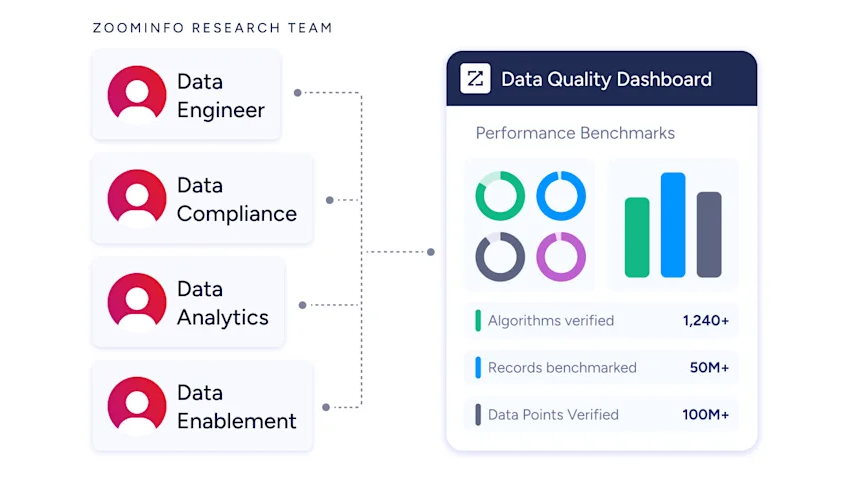
In a Fortune 500 competitive RFP analyzing 25 million contacts across vendors, the independent consultant concluded that "no other competitor came even close."
ZoomInfo in action: A prospect fills out a Segment-tracked form with only a name and work email. A server-side enrichment workflow calls ZoomInfo's Enrich API and appends their direct dial, current title, company profile (a 400-person fintech running Salesforce and Marketo), and three other decision-makers in their department.
That enriched profile flows through Segment to your CRM, marketing automation tool, and warehouse simultaneously, so every downstream system gets the complete picture without separate integrations to each.
Buyer Intent Data: Identify Accounts That Are Actively In-Market
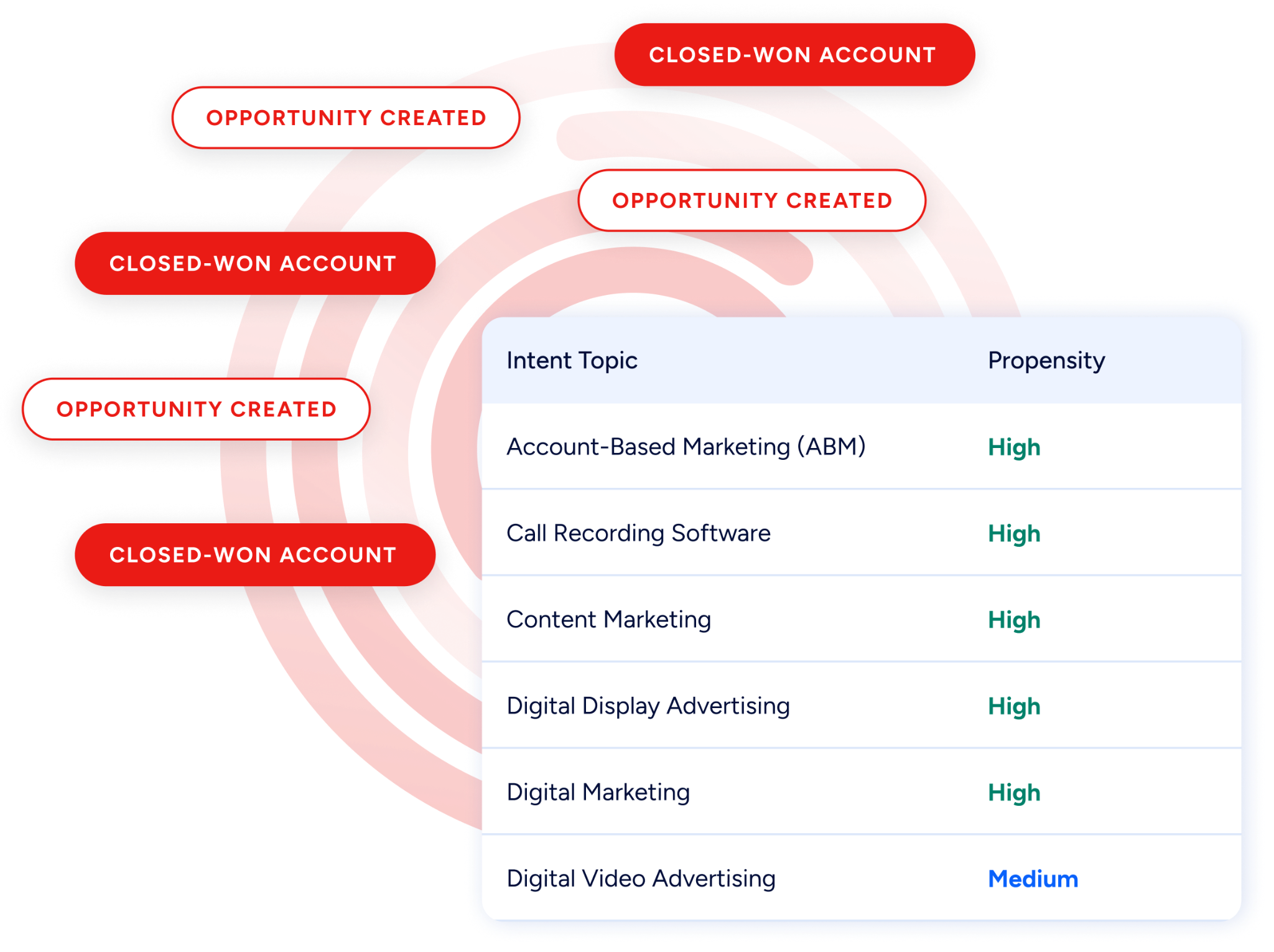
ZoomInfo's Buyer Intent tracks signals from 210 million IP-to-Organization pairings and 6 trillion+ new keyword-to-device pairings monthly, revealing which companies are researching topics relevant to your product.
Source: ZoomInfo
Intent signals pulled from ZoomInfo's API and routed through Segment become available to every connected destination: they can power Engage audience conditions, trigger Braze campaigns, update Salesforce lead scores, and feed warehouse models for predictive analytics.
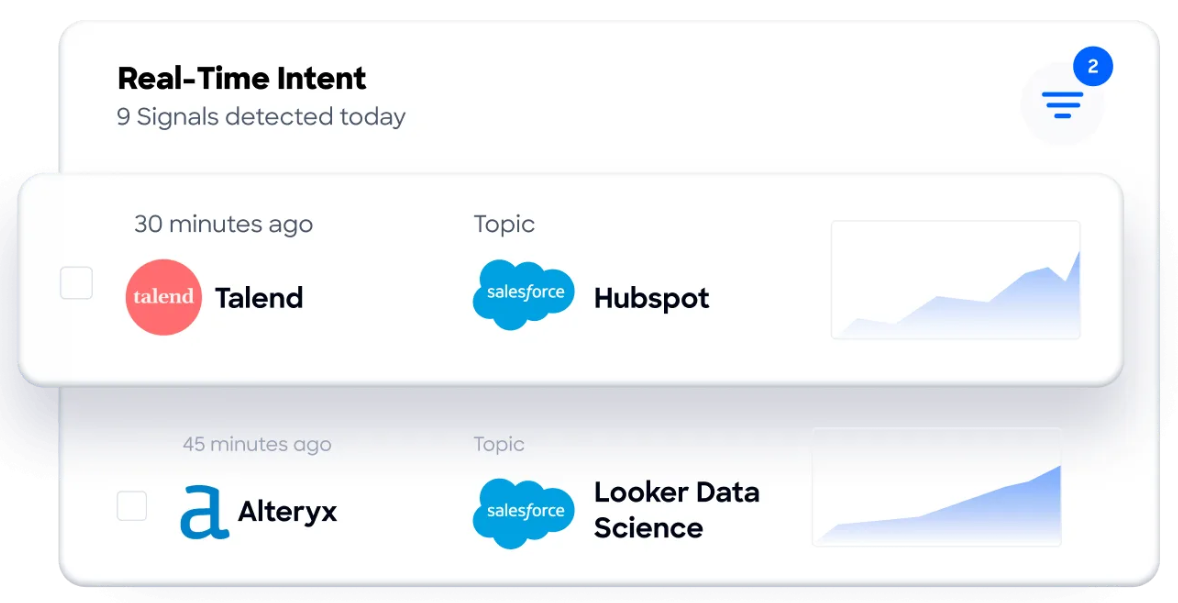
Guided Intent (exclusive to ZoomInfo) identifies the research topics historically correlated with deal success in your business, so the signals match your actual win patterns rather than generic keyword thresholds.
Source: ZoomInfo
ZoomInfo in action: ZoomInfo detects a target account researching "customer data platform migration" for two weeks. The signal flows into Segment, where an Engage audience condition triggers enrollment in a switching-focused email sequence via Braze, raises the account's score in Salesforce, and updates the warehouse record for the data science team's next model run.
Technographic Intelligence: Segment and Score by Technology Stack
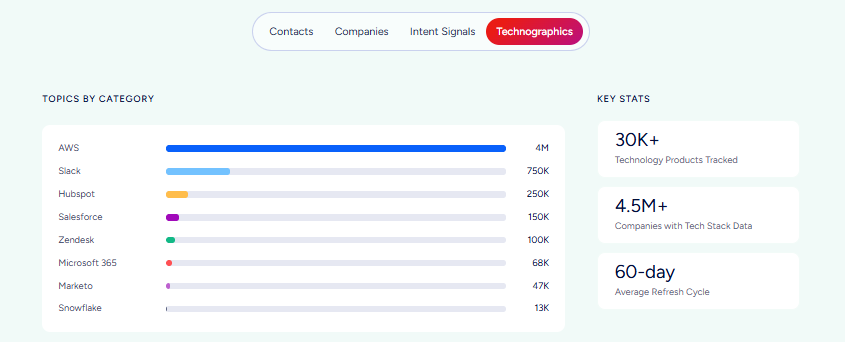
ZoomInfo profiles the tech stack of 30+ million companies, tracking 30,000+ technologies across 200+ categories. Technographic data pulled into Segment becomes a filtering and scoring input across the downstream stack: flag companies running a competitor's product, identify accounts using complementary tools, or score ICP fit based on tech stack alignment.
This data updates continuously, with nearly 90% of active pairings refreshed within three months, so audiences and scores built on technographic attributes stay current without manual refresh.
Seismic's sales team attributed 39% of active pipeline to opportunities identified or influenced by ZoomInfo signals, reporting 54% productivity gains and saving 11.5 hours per week per seller. (Seismic Case Study)
ZoomInfo Pricing
ZoomInfo uses a consumption-based pricing model with custom quotes based on usage, users, credit volume, and features.
Plans are organized into Sales, Marketing, and standalone product lines, each in Professional, Advanced, and Enterprise tiers. API access is included in all relevant plans, and the Enterprise API product provides greater programmatic access for high-volume enrichment. The Advanced tier adds intent signals and website visitor tracking; Enterprise adds real-time intent, custom intent topics, and AI-powered account summaries.
Source: ZoomInfo
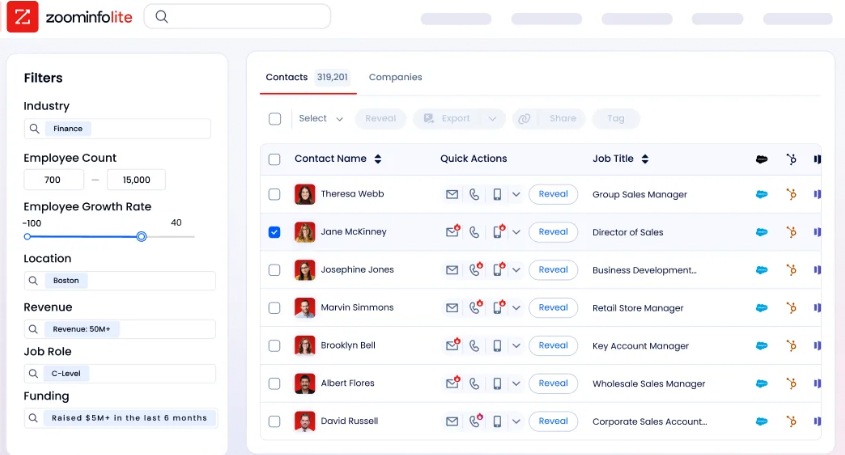
ZoomInfo Lite is a permanent free tier (no credit card, no time limit) with 10 monthly export credits, searches, the Chrome extension, and CRM integrations, making it a practical way to evaluate data quality before committing. A separate 7-day free trial covers paid features.
Source: ZoomInfo
Who Should Use the ZoomInfo Integration?
B2B teams whose Segment profiles lack verified contact data: enrichment is the difference between verified direct dials and a bounce rate that damages sender reputation and wastes activation spend
Revenue operations teams that need company, technographic, and intent data flowing through Segment into CRM scoring, warehouse models, and marketing audiences, not behavioral signals alone
Marketing teams running account-based campaigns through Segment that need dynamic lists of accounts showing buying signals now, not static company-data snapshots
2. Salesforce: Best Segment Integration for Turning Behavioral Events into CRM Records
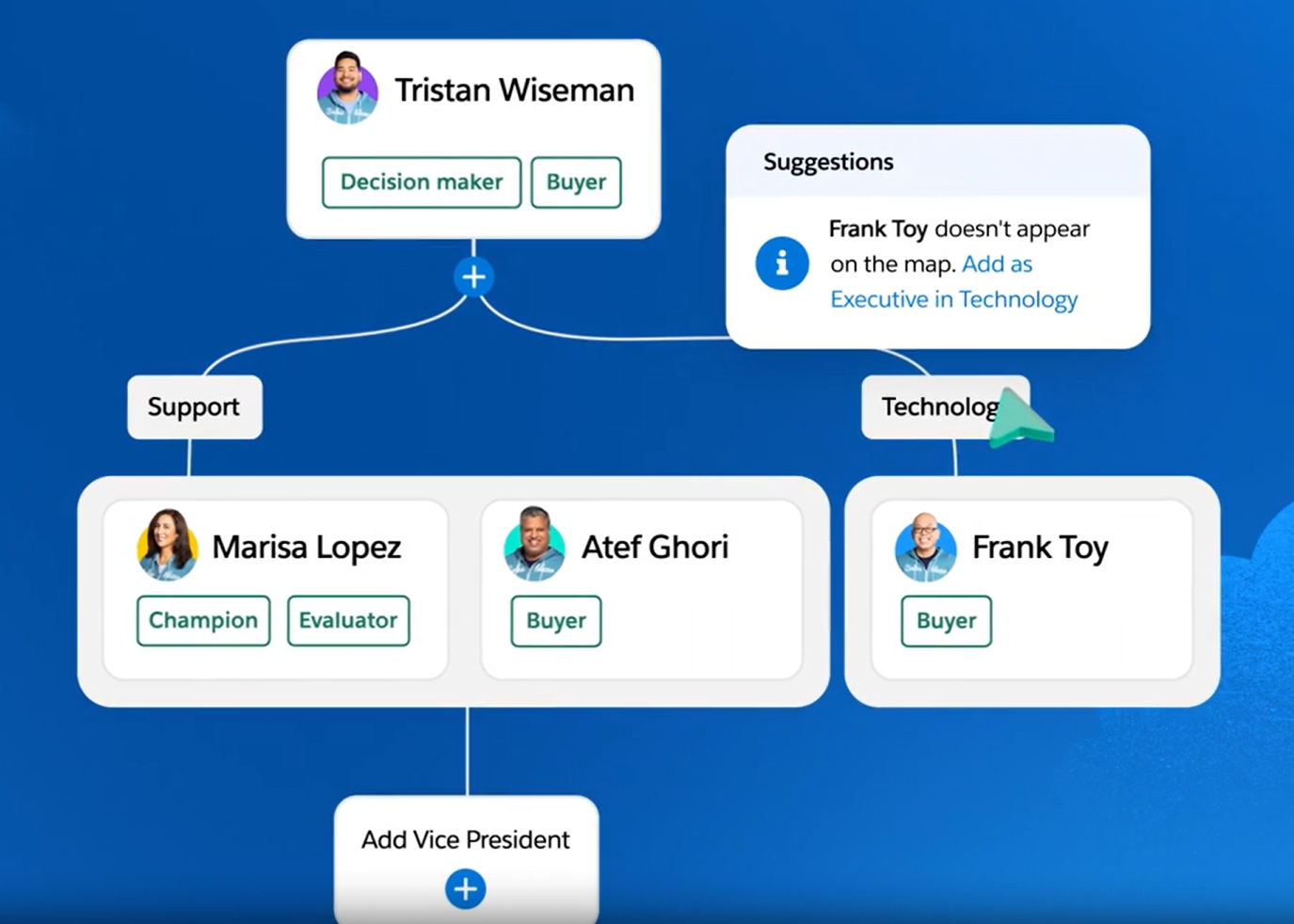
Salesforce is the #1 CRM by IDC revenue market share, serving over 150,000 companies. It integrates with Segment in two directions: pushing behavioral product events into Salesforce as CRM records, and pulling CRM data back through Segment into your data warehouse. The integration is a native bidirectional connection via Salesforce's REST API.
Source: Salesforce
Key integration capabilities include:
Mapping any Segment Track event ("Trial Started," "Demo Requested," "Enterprise Form Submitted") to a Create or Upsert action on Salesforce Lead or Contact objects via the Salesforce (Actions) destination
Polling Salesforce via Segment's Cloud Source on a three-hour interval to pull Contacts, Accounts, Opportunities, Campaigns, and Tasks into Segment and downstream to your data warehouse
Selective Sync at the object and field level, keeping Segment clean and warehouse storage costs predictable
Reverse ETL from Snowflake or BigQuery back to Salesforce custom fields, so warehouse-computed attributes flow into CRM records
How Salesforce Integrates with Segment
The Salesforce-Segment integration operates across three mechanisms: the Salesforce (Actions) destination for outbound event-to-CRM flows, the Salesforce Cloud Source for inbound CRM-to-Segment polling, and Segment's Reverse ETL for warehouse-to-Salesforce pushes. Most enterprise teams run all three simultaneously to create a closed data loop. Setup requires a Connected App in Salesforce authenticated via OAuth 2.0.
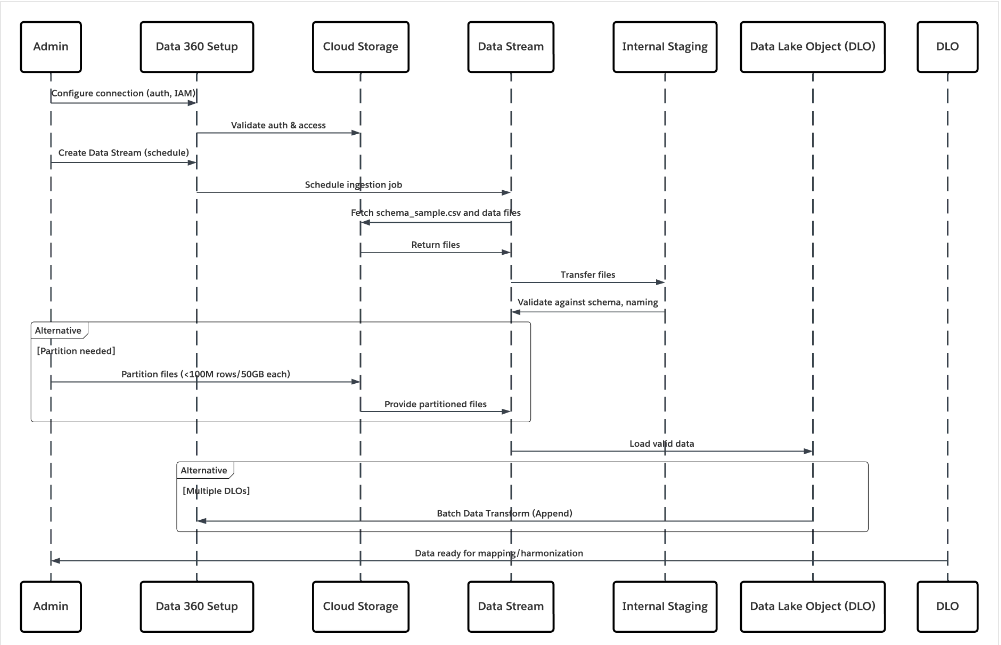
Source: Salesforce
1. Converting Product Events into CRM Records.
The Salesforce (Actions) destination turns what your users do in your product into CRM records. A prospect who submits a high-intent form triggers a Segment Track event, which the destination maps to a Salesforce Lead Create or Contact Upsert, specifying which event properties (email, company, job title, form source) populate which Salesforce fields.
The Upsert pattern (matching on email or an external ID field) prevents duplicate record creation. The destination supports custom Salesforce fields using the __c naming convention.
2. CRM Data into Segment and Your Warehouse.
The Salesforce Cloud Source pulls CRM data into Segment on a three-hour polling interval, routing Contacts, Accounts, Opportunities, Campaigns, and Tasks downstream to your connected data warehouse. This eliminates the need for a separate Salesforce ETL build: the same Segment workspace that routes behavioral events also handles the CRM data pull, with data landing in the same warehouse tables.
3. Selective Sync for Data Governance.
Selective Sync gives teams object-level and field-level control over what enters Segment. Salesforce Activity history can run to millions of rows, and pulling it all into a warehouse on a three-hour cadence generates significant storage volume. Selective Sync lets teams scope the Cloud Source to only the objects their analytics require.
4. Reverse ETL for Warehouse-Computed CRM Enrichment.
Segment's Reverse ETL pushes warehouse-computed data back into Salesforce. Product usage scores, predicted LTV, or cohort memberships computed in SQL sync to Salesforce custom fields on a 15-minute schedule, keeping CRM records current with data science outputs. Segment's incremental change detection syncs only changed records, not a full table reload.
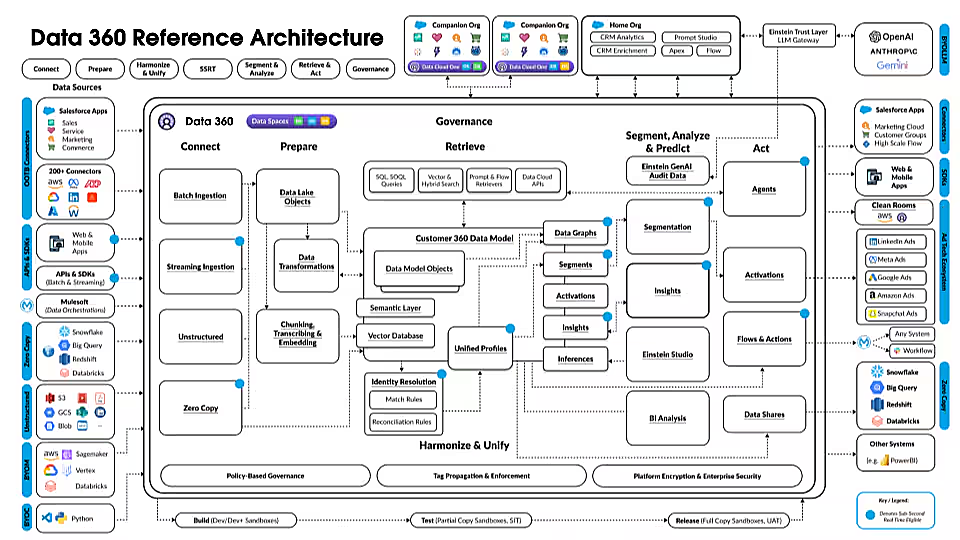
Source: Salesforce
Salesforce Pricing
Salesforce uses per-user annual contracts:
Professional: $100/user/month (excludes API access, which blocks the Segment integration entirely)
Enterprise: $175/user/month (API access included; the minimum tier for the Segment integration)
Unlimited: $350/user/month (higher API call allocations; recommended for larger orgs with frequent sync volumes)
On the Segment side, the Salesforce (Actions) destination is available on all paid Connections tiers (Team and Business). The Cloud Source and Reverse ETL require the Business tier.
Who Should Use the Salesforce Integration?
Teams using Segment as the behavioral event layer and Salesforce as the CRM that want product signals (trial starts, demo requests, feature milestones) to create or update CRM records without manual data entry
Analytics teams that need a unified dataset combining Salesforce CRM records with Segment behavioral events in a shared data warehouse, without building a separate ETL pipeline
Revenue operations teams computing warehouse attributes (product usage scores, health scores, predictive LTV) that need those scores in Salesforce custom fields for sales rep visibility
3. Snowflake: Best Segment Integration for Cloud Warehouse Storage and Reverse ETL Activation
Snowflake is a cloud-native data platform that integrates with Segment to serve as the analytical foundation of a Segment-powered data stack: receiving every behavioral event, exporting identity-resolved customer profiles, and pushing warehouse-computed insights back into operational tools through Reverse ETL. The integration is a native Snowflake destination connector within Segment's catalog.
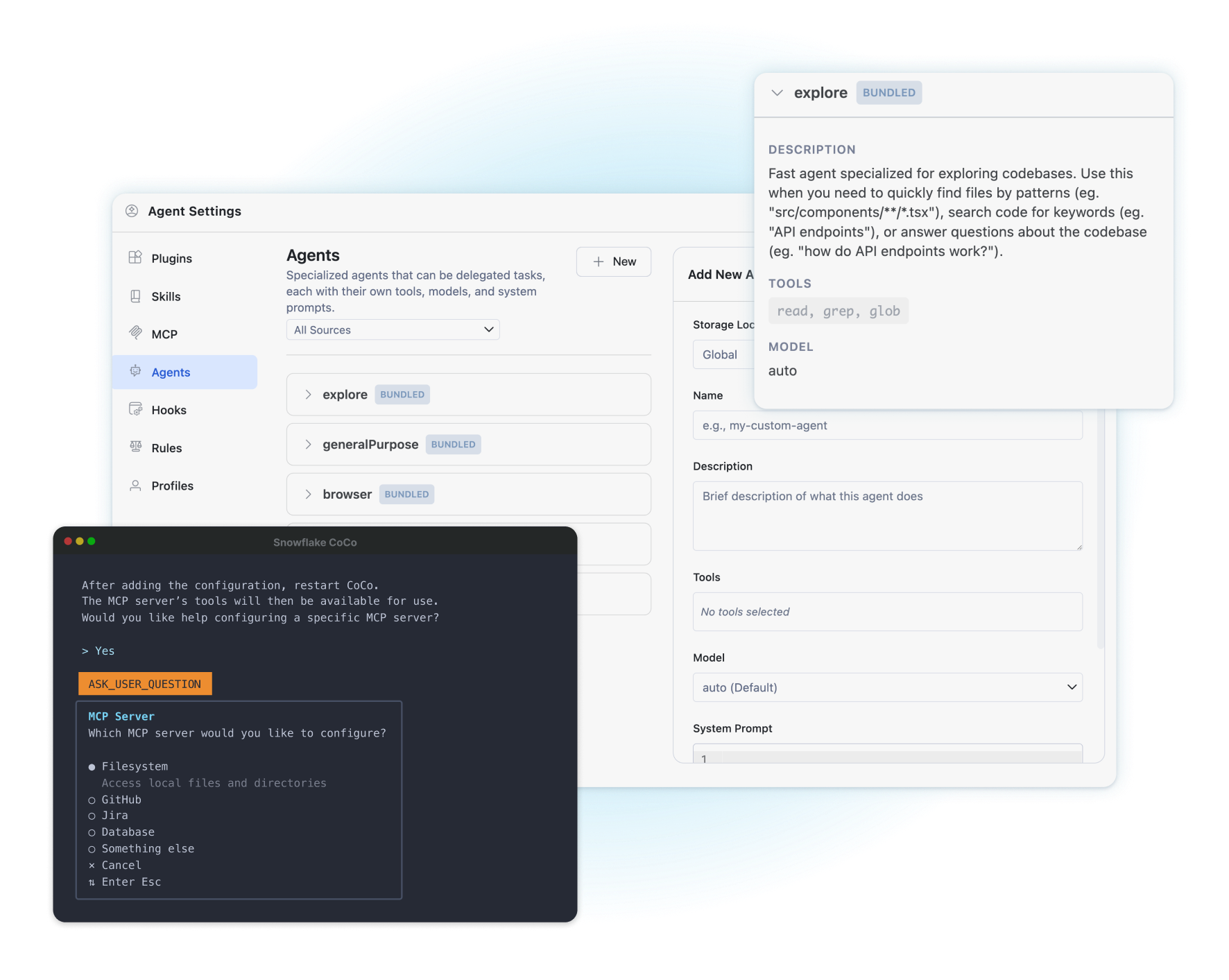
Source: Snowflake
Key integration capabilities include:
Streaming event storage with automatic schema management, so new event properties expand Snowflake table schemas without manual migrations
Profiles Sync for continuous export of identity-resolved profiles from Segment Unify to Snowflake
Reverse ETL with 15-minute sync frequency, pushing warehouse-computed insights to 550+ destinations
Linked Audiences that join Snowflake entity data directly into Segment Engage audience definitions
How Snowflake Integrates with Segment
Segment operates both as a data source pushing events into Snowflake and as an orchestration layer pulling warehouse-modeled data back out for downstream activation.
Teams configure the integration within Segment's workspace with no third-party connector required. Segment requires read and write access to a designated schema, since it uses state-tracking tables for its Reverse ETL record diffing.
1. Streaming Event Storage with Automatic Schema Management.
Every event flowing through Segment's Tracking API is bulk-loaded into Snowflake at regular intervals. Segment creates a separate table for each distinct event type (a product_viewed table, an order_completed table) with each property mapped to a column.
When a developer adds a new property to an event, Segment detects it on the next load cycle and expands the Snowflake table schema automatically. Teams don't write or maintain schema migrations. According to Segment's published data, customers synced nearly 10 trillion rows to cloud warehouses in the past year.
2. Profiles Sync for Identity-Resolved Profile Export.
Profiles Sync exports identity-resolved profiles continuously to Snowflake, making Segment's entire ID graph available as queryable SQL tables.
Each synced record includes the canonical segment_id, all merged external identifiers, every trait (including computed traits and SQL traits), and the merge history. Predictive models can train on identity-resolved records rather than fragmented anonymous event streams.
3. Reverse ETL with 15-Minute Sync Frequency.
Teams write a SQL query or point to a dbt model against any Snowflake table. Segment syncs the results to any of its 550+ destinations on a schedule as tight as every 15 minutes, using checksum-based record diffing so only changed records are pushed.
A Snowflake-computed audience can flow into Braze for email targeting, Salesforce for CRM enrichment, and Google Ads for audience suppression, all on the same cadence, driven by a single SQL model.
4. Linked Audiences Using Snowflake Entity Data.
Linked Audiences extends Engage's audience builder with direct access to Snowflake entity tables. Marketing teams define conditions that blend warehouse-modeled data (product usage scores, ML propensity outputs, historical cohorts) with real-time Segment behavioral signals, without requiring a data engineering ticket for each new audience definition.
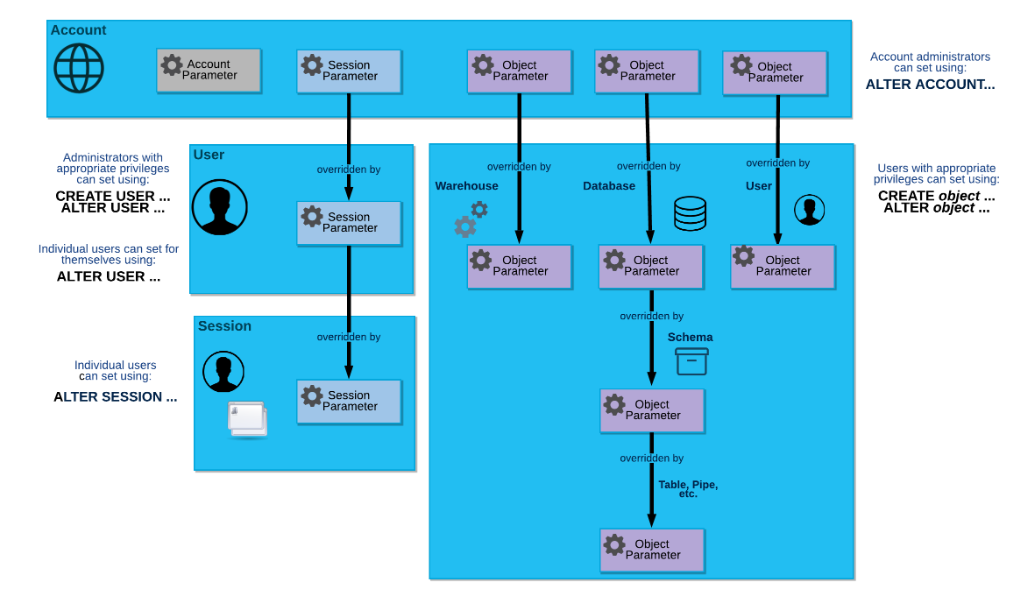
Source: Snowflake
Snowflake Pricing
Snowflake uses a consumption-based pricing model with no fixed per-seat charges: compute credits (billed per second) and flat-rate storage (billed per TB/month of compressed data):
Standard: Entry-level tier; includes all APIs and full Segment connectivity
Enterprise: Adds multi-cluster warehouses, 90-day Time Travel, dynamic data masking; recommended for production Segment deployments
Business Critical: Adds HIPAA/PCI DSS compliance, PrivateLink connectivity, customer-managed encryption keys
A 30-day free trial is available with $400 in free usage credits, no credit card required. On the Segment side, event storage works on all paid Connections tiers; Profiles Sync and Linked Audiences require the full CDP plan.
Who Should Use the Snowflake Integration?
Teams that need a permanent, query-accessible archive of every Segment event without building or operating a custom ingestion pipeline
Data science teams that need identity-resolved customer profiles accessible through SQL for training models, not fragmented anonymous event rows
Organizations running warehouse-computed attributes (engagement scores, churn probabilities) that need to push those values back to CRM, marketing, and advertising tools via Reverse ETL
4. Braze: Best Segment Integration for Real-Time Behavioral Activation Across Channels
Braze is a customer engagement platform for mid-market and enterprise B2C brands that orchestrates campaigns across email, mobile push, in-app messaging, SMS/RCS, WhatsApp, and web.
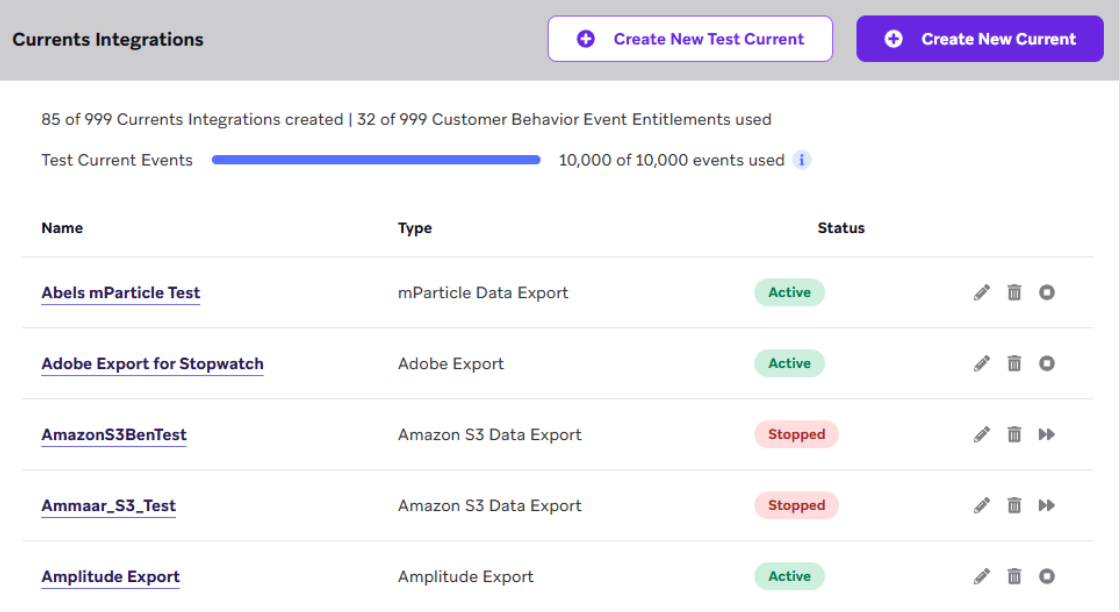
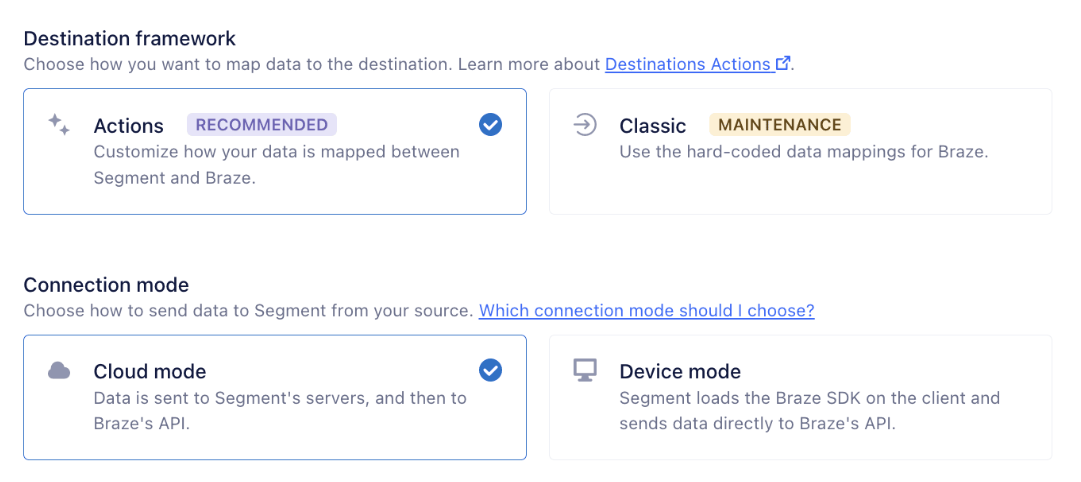
It integrates with Segment to close a bidirectional data loop: Segment behavioral events flow into Braze to trigger campaigns the moment they fire, while Braze Currents streams engagement data back into Segment for downstream analytics. The integration is a native destination available in Cloud Mode (recommended) and Device Mode.
Source: Braze
Key integration capabilities include:
Real-time event forwarding without SDK duplication, so every Segment Track event triggers Braze campaign sequences the moment it fires
User attribute sync through Identify calls, keeping Braze profiles current for personalization
Braze Currents bidirectional export back to Segment, feeding downstream tools with engagement data
Segment Engage cohort syncing for audience targeting across platforms
How Braze Integrates with Segment
The connection operates through a Segment Destination (data flows from Segment into Braze) and a Braze Currents connection (engagement data flows back). Cloud Mode Actions is the recommended path: it routes all events server-to-server, eliminating duplicate SDK instrumentation.
Source: Braze
1. Real-Time Event Forwarding via Cloud Mode Actions.
When a user fires any behavioral event tracked through Segment (an Order Completed, Feature Activated, Cart Abandoned), the destination translates it into a Braze custom event and forwards it in real time.
On the Braze side, this event triggers action-based Canvas sequences within seconds. Engineering teams do not need to add Braze's native SDK separately. For high-volume environments, the destination batches up to 75 events per batch, flushed at 30-second intervals.
2. User Attribute Sync via Identify Calls.
Segment Identify calls forward to Braze's user profile system immediately. When Segment receives an updated trait (plan_tier: "enterprise", onboarding_step: "completed"), that attribute pushes to the Braze profile in real time, so campaign personalization via Liquid templating reflects current user state.
3. Braze Currents Bidirectional Data Export.
Braze Currents continuously exports engagement events (email opens, push clicks, in-app conversions, unsubscribes) back to Segment as a source. This creates a closed loop: Segment sends events to trigger campaigns, Braze generates engagement events, and Currents streams those events back to Segment for routing to Snowflake, Mixpanel, or any other destination. Currents is available at Pro and Enterprise tiers.
4. Segment Engage Cohort Syncing.
Audiences built in Segment Engage (behavioral conditions, computed traits, Predictive Traits, Linked Audiences) sync to Braze as cohorts. Braze campaigns target those audiences without rebuilding segmentation logic, preventing divergence between independently managed audience definitions.
Source: Braze
Braze Pricing
Braze does not publish public pricing. Braze negotiates all contracts based on Monthly Active Users, product edition, and Flexible Credits for channel usage:
Braze Go: Entry-level tier; core features, email, and push notifications
Braze Select: Adds orchestration tools and security features
Braze Pro: Adds predictive AI and recommendations; Braze Currents available at this tier
Braze Enterprise: Full orchestration, experimentation, BrazeAI Agent Console
A 30-day free trial is available. VC-backed startups can access a Braze for Startups program offering 4 months of free access.
Who Should Use the Braze Integration?
Mobile app or high-traffic web product teams that need to trigger cross-channel campaigns the moment a behavioral event fires, without adding a second SDK alongside Segment
Teams that need Braze engagement data (email opens, push clicks, in-app conversions) flowing back into Segment for warehouse analytics without building a separate extraction pipeline
Marketing teams maintaining audience definitions in Segment Engage that want those cohorts to drive Braze targeting without duplicating segmentation logic
5. Mixpanel: Best Segment Integration for Product Analytics Without SDK Duplication
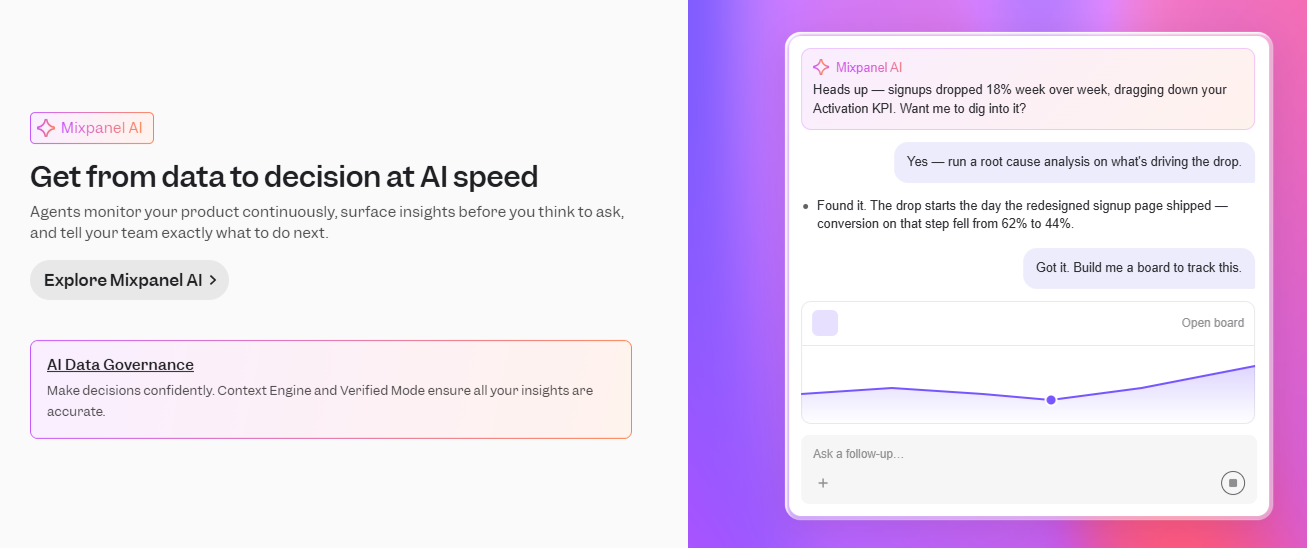
Mixpanel is an analytics platform that integrates with Segment to route behavioral event data from Segment's single instrumentation layer into Mixpanel's product analytics engine.
Source: Mixpanel
It gives product teams funnel, retention, and user-level analysis without maintaining a separate Mixpanel SDK alongside Segment's. The integration is a native destination available in Cloud Mode and Device Mode, connected by 66% of Twilio Segment customers.
Key integration capabilities include:
Cloud Mode event forwarding that routes all Track, Identify, and Group calls to Mixpanel without duplicate instrumentation
Device Mode support via the Mixpanel SDK plugin for client-side features (in-app surveys, super properties, heatmaps)
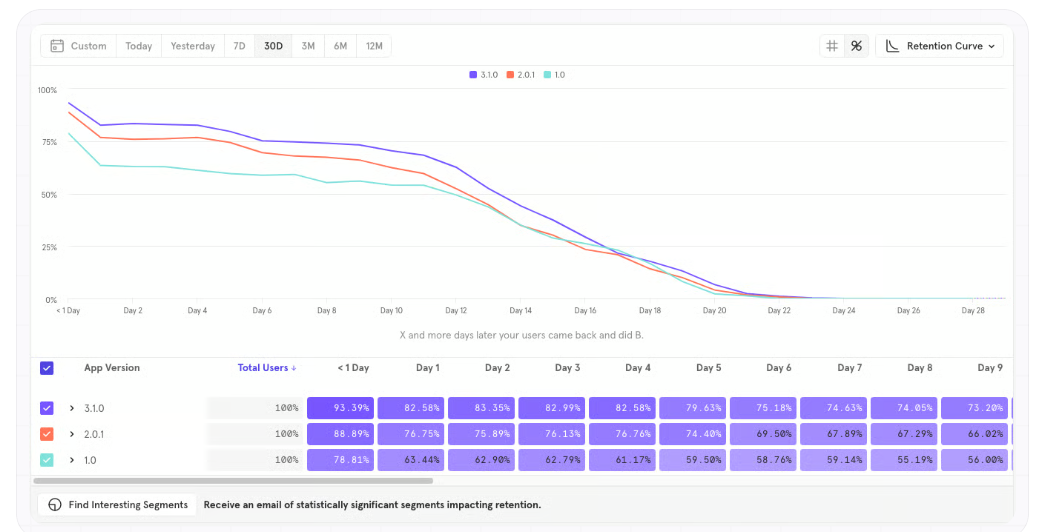
Historical event replay from Segment into a new Mixpanel workspace for immediate retention analysis
B2B account-level Group Analytics via Segment's Group calls
How Mixpanel Integrates with Segment
Segment supports two connection modes: Cloud Mode (recommended for most teams) and Device Mode (for Mixpanel-specific client-side features). Both are available through the Mixpanel Actions destination. Cloud Mode is the first-party connector where Segment's servers forward events to Mixpanel.
1. Cloud Mode Event Forwarding.
In Cloud Mode, every Track call flows to Mixpanel as an event, every Identify call creates or updates a user profile, and every Group call maps to Mixpanel's Group Analytics. The mapping uses Segment's Destination Actions framework with field-level control.
Adding Mixpanel as a Cloud Mode destination takes minutes through Segment's catalog, without a single line of Mixpanel-specific code. Every event already instrumented in Segment flows to Mixpanel automatically.
2. Device Mode for Mixpanel-Native Features.
For teams needing in-app surveys, heatmap capture, or super properties (persistent key-value pairs), Segment loads the Mixpanel SDK directly on the client device. Device Mode increases page weight and requires managing Mixpanel SDK updates as a separate dependency. Most teams running standard product analytics have no need for Device Mode.
3. Historical Event Replay.
Segment can replay stored event history into a new Mixpanel workspace, so product analytics starts with a complete behavioral record.
Mixpanel's retention reports require longitudinal data to produce meaningful cohort curves. With Segment's replay, a team with 18 months of event history can have complete Day-90 retention cohorts available within hours. Mixpanel bills replay events at current rates in the month they are ingested.
4. B2B Account-Level Group Analytics.
Segment's Group calls map directly to Mixpanel's Group Analytics, enabling analysis at the account level alongside user-level data. Product teams can analyze feature adoption rates by company size, compare retention across plan tiers, or identify which industries reach activation milestones fastest. Group Analytics is a paid add-on in Mixpanel, not included in the free or base Growth plans.
Source: Mixpanel
Mixpanel Pricing
Mixpanel uses event-volume pricing where each data point ingested counts as a billable monthly event:
Free: Permanently free, 1 million monthly events, core reports (Insights, Funnels, Flows, Retention), 10,000 session replays/month
Growth: First 1 million events free; additional events start at $0.28 per 1,000 events with volume discounts; overages billed at 150% of the standard rate
Enterprise: Custom pricing, unlimited events; required for Group Analytics, advanced access controls, and dedicated support
Who Should Use the Mixpanel Integration?
Product teams that need funnel and retention analysis from the same Segment event stream powering other destinations, without adding a second SDK
Teams that adopted Segment before dedicated product analytics and want to use Segment's event replay to backfill behavioral history into Mixpanel from day one
B2B products tracking company-level activity that want Segment's Group calls flowing directly into Mixpanel Group Analytics for account-level conversion and retention analysis
6. Slack: Best Segment Integration for Real-Time Event Alerting and Pipeline Health Monitoring
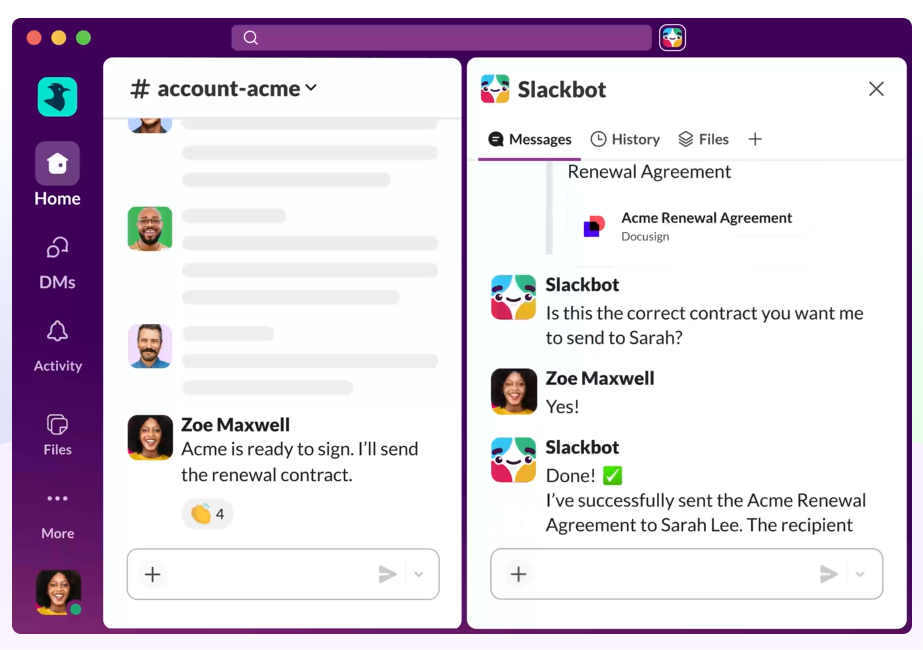
Slack is a team communication platform that integrates with Segment to deliver formatted, real-time notifications to designated channels the moment specific customer events fire through the Segment pipeline. It gives revenue, product, and data engineering teams operational visibility without custom alerting infrastructure. The integration uses the Slack (Actions) destination in Segment's catalog.
Source: Slack
Key integration capabilities include:
Structured, field-mapped messages posted to any Slack channel the instant a targeted Segment Track event fires
Multi-channel event routing within a single destination connection using separate action mappings
Connections Alerting notifications for pipeline health monitoring (delivery failure rates, throughput anomalies, Tracking Plan violations)
How Slack Integrates with Segment
The Slack (Actions) destination connects through a Slack Incoming Webhook URL scoped to a specific channel. Setup does not require Slack admin permissions. The destination is available on all Segment Connections plans.
1. Real-Time Channel Notifications on Targeted Events.
When a specific Segment Track event fires (Enterprise_Plan_Purchased, Trial_Converted, Subscription_Cancelled), Segment posts a formatted message to the designated Slack channel immediately.
The Destination Actions framework provides trigger conditions and field-level payload mapping, so teams define which events trigger a notification and which properties populate the message (account name, plan tier, MRR value, acquisition source).
2. Multi-Channel Event Routing by Event Type.
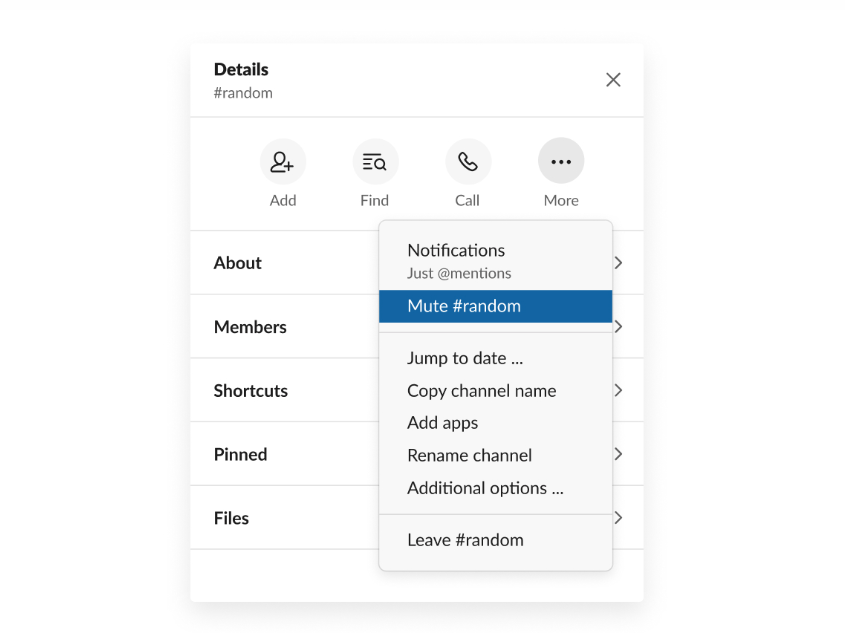
A single Slack (Actions) destination supports multiple action mappings, each with its own trigger condition and target Webhook URL. Different event types fan out to different channels without additional infrastructure:
Enterprise_Plan_Purchased to #revenue-wins
Payment_Failed to #revenue-ops
Trial_Started to #growth
Tracking_Plan_Violation to #data-eng
Each mapping carries its own payload configuration, pulling different event properties depending on what that channel's audience needs.
3. Connections Alerting for Pipeline Health Monitoring.
Segment's Connections Alerting delivers automatic notifications about data pipeline health when a connection's delivery failure rate crosses a threshold, event volume drops outside expected ranges, or Tracking Plan violation patterns emerge at scale.
Data engineering teams get the signal before downstream tools are affected: before an ad platform stops receiving conversion events, before a marketing automation tool stops receiving behavioral triggers.
Source: Slack
Slack Pricing
Slack uses per-seat pricing with Incoming Webhooks supported on all plans:
Free: $0/month (webhooks supported; 90-day message history; 10-app limit)
Pro: $7.25/user/month annual (unlimited history and apps; sufficient for most Segment integration use cases)
Business+: $15/user/month annual (SAML SSO, SCIM, custom retention policies, Slack AI)
Enterprise+: Custom pricing (Enterprise Grid, DLP, HIPAA compliance)
The Segment integration adds no cost on Segment's side. Slack's Fair Billing Policy credits back seats inactive for 28+ days.
Who Should Use the Slack Integration?
Revenue, product, and data engineering teams already working in Slack that want real-time visibility into high-value conversion events and payment failures without polling dashboards
Data engineering teams that need proactive pipeline health monitoring for delivery failure spikes and Tracking Plan violations
Teams that want to route different Segment event types to different channels without building or maintaining custom routing infrastructure
7. Google Ads: Best Segment Integration for Server-Side Conversion Tracking and First-Party Audience Targeting
Google Ads is Google's advertising platform, the engine behind the over 5 trillion searches Google processes annually.
Source: Google
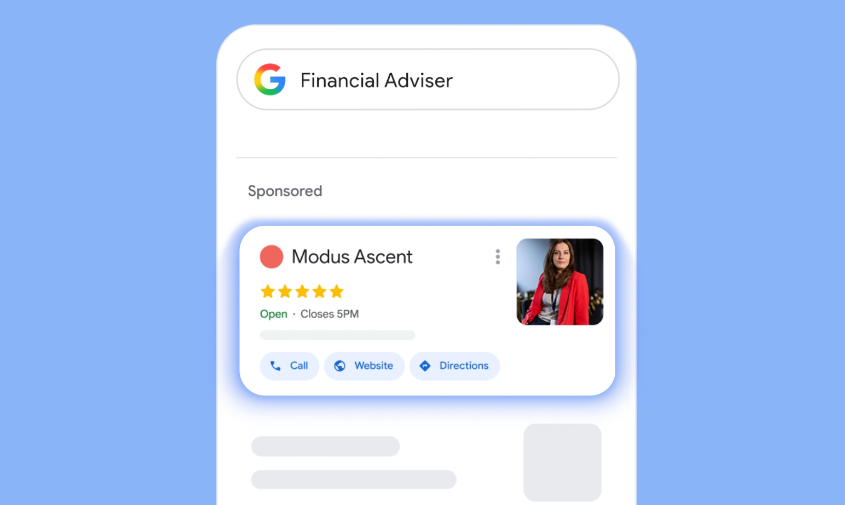
It integrates with Segment to route server-side conversion events and first-party Customer Match audiences directly to Google's advertising infrastructure, bypassing browser-side pixel tracking that increasingly fails in iOS-restricted, ad-blocked, and cookieless environments. The integration uses the Google Ads Conversions Actions destination and Segment Engage or Reverse ETL for audience sync.
Key integration capabilities include:
Server-side conversion upload through the Enhanced Conversions API, routing purchase, lead, and trial events from Segment directly to Google Ads
Customer Match audience sync using hashed emails and phone numbers from Segment for remarketing and lookalike targeting
Session Attributes forwarding (gclid, gbraid, wbraid) to improve click-to-conversion match rates
EU consent mode passthrough forwarding Segment's consent signals in the format Google requires
How Google Ads Integrates with Segment
The integration runs through the Google Ads Conversions Actions destination (for server-side conversion upload) and Segment Engage Audiences or Reverse ETL (for Customer Match list sync). Most teams deploy both in parallel.
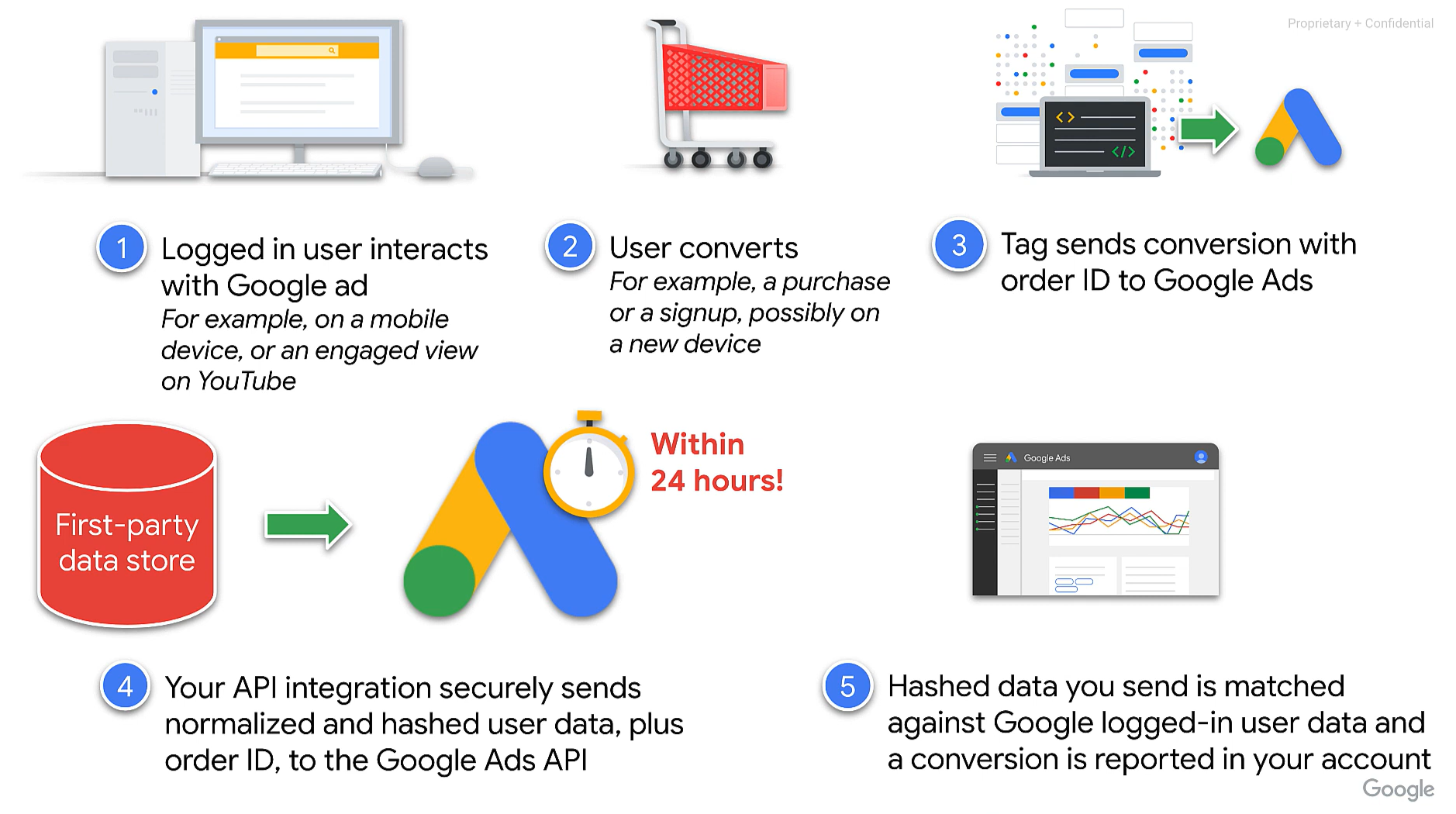
1. Server-Side Conversion Tracking via the Enhanced Conversions API.
Segment routes conversion events (purchases, form completions, trial activations) directly to Google Ads through the Enhanced Conversions API, bypassing the gtag.js pixel.
The upload includes hashed customer identifiers (email, phone) alongside conversion data, letting Google match conversions back to ad clicks even when the GCLID cookie was dropped. Advertisers who switch to server-side Enhanced Conversions typically recover previously unmeasured conversions from iOS-heavy or ad-block-prone audiences.
2. Customer Match Audience Building from First-Party Identifiers.
Segment Engage Audiences or Reverse ETL populate Customer Match lists in Google Ads. An audience defined in Engage ("customers who purchased in the last 90 days") syncs to Google Ads with SHA-256 hashed PII.
Reverse ETL provides an alternative path for teams computing purchase recency, LTV tiers, or engagement scores in a warehouse. Customer Match lists require a minimum of approximately 1,000 matched users to activate for targeting.
3. Session Attributes and EU Consent Mode Forwarding.
The destination forwards click identifiers (gclid, gbraid, wbraid) alongside each server-side conversion for more reliable attribution. For EEA users, the integration forwards consent signals (analytics_storage and ad_storage states) in the format Google's mandatory consent mode framework requires, ensuring conversion events from non-consenting users are modeled in aggregated measurement.
Source: Google
Google Ads Pricing
Google Ads operates on an ad spend model with no subscription fees, seat licenses, or platform access costs:
Self-Serve: No platform fee; costs are 100% ad spend with no minimum commitment
Enterprise / Monthly Invoicing: Available to larger advertisers with dedicated account management
The Segment-to-Google Ads integration adds no cost from either side. The Google Ads Conversions destination is available on all paid Segment plans. Teams doing high-frequency Customer Match updates should confirm their Google Ads API access level is Standard (unlimited operations) rather than Explorer (2,880 ops/day).
Who Should Use the Google Ads Integration?
Teams whose client-side conversion tracking is under-reporting due to iOS privacy restrictions, ad blockers, or cookie limitations: server-side upload recovers those signals without changes to client-side instrumentation
Marketers building Customer Match remarketing lists or suppression lists from behavioral data and purchase history already flowing through Segment
Teams running Performance Max campaigns that want to supply Google's AI with stronger audience signals using verified first-party customer identity data from Segment
Final Verdict
The best Segment integrations feed verified data into your CDP, activate behavioral signals across channels, and keep your pipeline observable:
ZoomInfo: verified B2B data, buyer intent, and company intelligence enriching every Segment profile; the most impactful integration on this list if your downstream activation depends on data quality
Salesforce: behavioral events converted to CRM records, CRM data pulled into your warehouse, and warehouse-computed attributes pushed back to sales reps
Snowflake: every Segment event stored with automatic schema management, identity-resolved profiles exported for modeling, and Reverse ETL closing the loop back to operational tools
Braze: real-time cross-channel campaign activation from Segment events, with Currents streaming engagement data back for downstream analytics
Mixpanel: product analytics from your existing Segment event stream, with replay for immediate retention analysis and Group Analytics for B2B accounts
Slack: high-value event notifications and pipeline health alerts surfaced where your team already works
Google Ads: server-side conversion tracking and first-party audience targeting that bypasses cookie and ad-blocker signal loss
These integrations also compound: you might run ZoomInfo for B2B enrichment, Snowflake for warehouse storage, Braze for campaign activation, and Mixpanel for product analytics on the same Segment workspace, each adding a capability that makes the others more effective.
If you connect just one, make it the data layer everything else depends on. ZoomInfo's API integration with Segment feeds verified B2B data into every downstream destination in your stack. ZoomInfo Lite is a permanent free tier, so you can evaluate the data quality flowing through your Segment pipeline before committing.
Frequently Asked Questions
How many integrations does Segment support?
Segment's catalog includes over 750 integrations spanning advertising, analytics, CRM, email marketing, enrichment, personalization, payments, customer success, data warehousing, and raw data infrastructure.
Beyond the catalog, Segment's HTTP API accepts events from any system, Functions extend the pipeline with custom JavaScript, and the Extensible Webhook destination connects to any tool that accepts webhook payloads.
Do Segment integrations work on the free plan?
Segment's free Connections plan includes 1,000 Monthly Tracked Users, 2 sources, 1 warehouse destination, and access to the 700+ integration catalog.
Advanced features like Reverse ETL, Protocols, Unify (identity resolution), and Engage (audiences and journeys) require the Business tier or the full CDP plan. The Public API is available on Team and Business tiers but not the free tier.
How does Segment's Reverse ETL work with warehouse integrations?
Reverse ETL extracts data from a connected warehouse (Snowflake, BigQuery, Redshift, Databricks, Postgres, Azure Synapse, or Db2) using a SQL query or dbt model you define, then syncs results to downstream destinations on a schedule as tight as every 15 minutes.
Segment uses checksum-based record diffing inside your warehouse so only changed records push on each sync. This means warehouse-computed attributes, ML model outputs, and enriched records flow back to CRM, marketing, and advertising tools without building a separate pipeline.
Can I connect Segment to tools that are not in the catalog?
Yes. Segment's HTTP API accepts events from any system that can make HTTP requests. On the outbound side, the Extensible Webhook destination sends event data to any URL with configurable authentication (no auth, Bearer token, or OAuth 2.0), and Destination Functions let teams write custom JavaScript to send data to any endpoint. For broader automation, Zapier and tray.io are both native destinations in the catalog.
How does Segment handle identity resolution across integrations?
Segment's Unify product builds a persistent, identity-resolved profile for every user by merging anonymous session IDs, device IDs, email addresses, and custom external identifiers into a single canonical profile.
When an anonymous user later identifies themselves, Unify folds all prior anonymous activity into their profile retroactively. These unified profiles power Engage audiences, feed Profiles Sync exports to warehouses, and are accessible via the Profile API with sub-200ms response times for real-time personalization.
Does connecting multiple integrations cause data quality issues?
Each integration operates independently through its own connection and sync schedule. Segment's Protocols product provides a governance layer:
Tracking Plans define every permitted event and property, the system flags violations in real time, schema controls can block non-conforming events, and Transformations rename events and properties without touching source code. Connections Alerting monitors delivery failure rates and throughput anomalies across all destinations.
What is the best way to enrich Segment profiles with verified B2B data?
Integrating a B2B intelligence platform via API provides the broadest enrichment. ZoomInfo's API connects to Segment to enrich profiles with verified emails, direct-dial phone numbers, company attributes, technographic profiles, and buyer intent signals from a database spanning 500 million contacts and 100 million companies.
The data flows through a verification pipeline backed by 300+ human researchers. For teams where downstream activation depends on data accuracy, connecting a platform built for B2B intelligence closes the gap between what Segment captures behaviorally and what your team needs to act on.
