
Seismic has earned its place as the #1 Global Sales Enablement Platform, offering an AI-powered system that covers content management, learning, coaching, meeting intelligence, and digital sales rooms for enterprise revenue teams. Its Enablement Cloud brings these capabilities together under one architecture.
But as your revenue organization evolves, you may find that a platform built around sales content management doesn't address every need in your go-to-market stack. Perhaps your most pressing gap isn't getting the right deck to the right rep, but understanding why deals stall, building your prospecting pipeline with verified buyer data, or scaling coaching without bottlenecking on manager bandwidth.
That's where this guide comes in. We'll explore Seismic alternatives that excel where you need them most, whether you're looking to:
Fuel your pipeline with B2B data, buyer intent signals, and AI-powered prospecting
Scale video-first coaching and AI role-play across distributed sales teams without manager bottlenecks
Get content management and coaching at a mid-market price point with faster deployment
Build structured rep readiness programs with measurable behavioral outcomes tied to revenue
Ground your revenue forecasting in conversation intelligence rather than CRM stage labels
Govern and deliver organizational knowledge across every department and tool, not just the sales team
Drive rep adoption by delivering enablement content inside the tools reps already work in
This isn't about finding a "better" platform. It's about finding the right fit for your specific needs. Some teams might use these tools to complement their Seismic setup with deeper capabilities in a specific area, while others might replace Seismic entirely. Let's explore the alternatives.
The Best Seismic Alternatives |
|---|
Best Alternative for B2B Data Intelligence and AI-Powered Prospecting We chose ZoomInfo because it fills a gap Seismic doesn't address: B2B data, buyer intent signals, and AI-powered pipeline generation. Its GTM Context Graph combines 500M contacts with CRM and conversation data to surface why deals move, not just what content reps need. |
Best Alternative for Enterprise Sales Enablement with Video-First Coaching We chose Allego because its video-first coaching, adaptive AI role-play, and organically built platform offer enterprise enablement with lower admin burden, plus platform independence in a post-merger market. |
Best Alternative for Mid-Market Teams Needing Integrated Content and Coaching We chose Showpad because it delivers content management and coaching comparable to Seismic in a modular, transparent pricing model with deployment in weeks rather than months. |
Best Alternative for Revenue Readiness and Structured Rep Onboarding We chose Mindtickle because its Readiness Index and AI role-play depth make it the strongest option for teams whose primary gap is rep behavior, not content access. |
Best Alternative for Revenue Intelligence and Conversation-Based Deal Execution We chose Gong because its Revenue AI platform captures and analyzes every customer interaction to surface deal risks, coaching opportunities, and forecasts grounded in buyer behavior, not CRM stage labels. |
Best Alternative for Enterprise-Wide AI Knowledge Governance We chose Guru because it governs and delivers verified knowledge across every department and tool, not just the sales team, with automated content quality that maintains itself without a dedicated admin. |
Best Alternative for Teams Struggling with Rep Adoption We chose Spekit because its in-workflow delivery model solves the adoption gap that plagues portal-first platforms: content reaches reps inside Salesforce, Gong, and Gmail without a tab switch. |
What is Seismic?
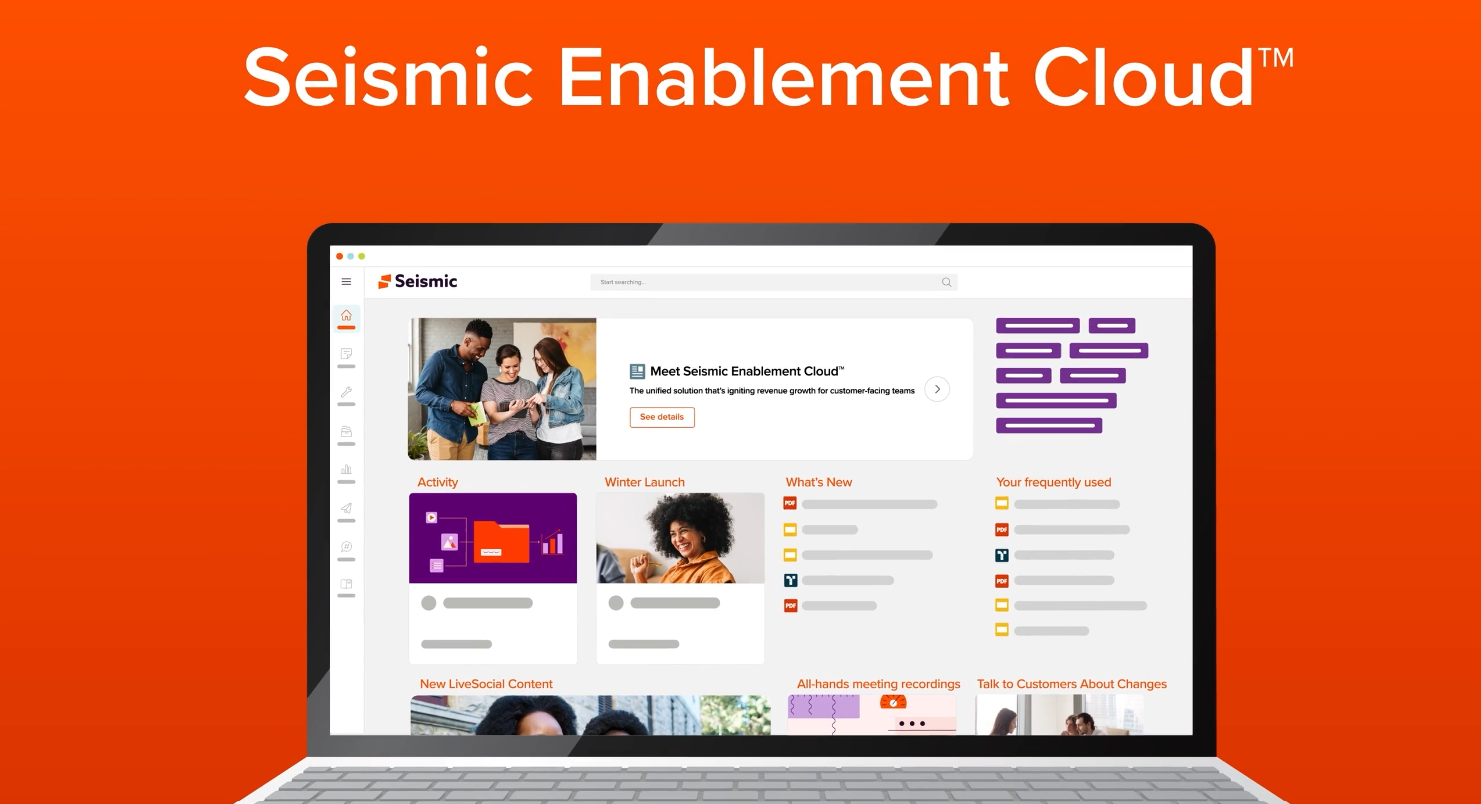
Source: Seismic
Seismic is an AI-powered revenue enablement platform built around the Seismic Enablement Cloud. It helps enterprise sales organizations manage content, train reps, coach performance, and engage buyers from a single system. It's the dominant platform in the sales enablement category, serving approximately 2,000 organizations worldwide with 85 customers at $1M+ ARR.
Its key features include:
Content Management & Library with AI-powered search, LiveDocs content automation, and LiveSend tracking for buyer engagement analytics
Learning & Coaching with AI role-play, video coaching, skills assessments, and structured learning paths tied to revenue outcomes
Aura AI embedded across the platform, powering generative search, content creation, meeting summaries, and agents for presentations, coaching, and analytics
Meeting Intelligence with automatic transcription, conversation analytics, and AI-generated follow-up recommendations
Digital Sales Rooms with Mutual Action Plans, buyer collaboration tools, and stakeholder engagement tracking
150+ integrations with Salesforce, Microsoft Dynamics 365, HubSpot, Outreach, Salesloft, Slack, Microsoft Teams, and more
When a rep prepares for a customer meeting, Aura AI surfaces relevant content based on deal context and CRM data. LiveDocs pulls live account information into personalized presentations. After the meeting, conversation intelligence generates summaries and action items, while Digital Sales Rooms give the buying committee a centralized space to review materials and collaborate. The entire workflow (from preparation to follow-up) stays within one platform.
Seismic's depth is particularly strong in regulated industries: 400+ financial services firms rely on its compliance-enforced content distribution, and it holds ISO 42001 certification for AI governance alongside SOC 2 Type II, ISO 27001, and ISO 27701.
That said, Seismic's strengths come with trade-offs. Implementation timelines of four months or longer are common. The platform requires dedicated enablement staff to manage content governance, and content search can degrade as libraries scale without rigorous manual tagging. Pricing is opaque, with no published tiers or self-serve options. And while Seismic excels at equipping sellers with the right content, it was not designed to solve every go-to-market challenge: prospecting intelligence, revenue forecasting from conversation data, and enterprise-wide knowledge governance sit outside its core architecture.
That's why this article focuses on tools that specialize where Seismic's enablement-first design reaches its natural limits.
Looking for B2B data and AI-powered prospecting to fuel your pipeline? ZoomInfo combines 500M contacts, buyer intent signals, and the GTM Context Graph to help your team find, prioritize, and engage the right buyers.
How We Curated Our List of Seismic Alternatives
After evaluating Seismic and researching the revenue enablement market, we focused on tools that excel in specific areas where growing revenue teams need deeper or different capabilities. While Seismic is strong at managing sales content, training reps, and governing assets for enterprise teams, some organizations need more power for:
Generating pipeline with verified B2B data, buyer intent signals, and AI-powered prospecting
Scaling rep coaching through video-first practice and adaptive AI role-play without relying on manager bandwidth
Deploying content management and coaching at mid-market scale with transparent pricing and faster time to value
Building structured readiness programs that measure and improve rep behavior, not just content consumption
Understanding why deals close or stall through conversation intelligence and behavioral forecasting
Governing and delivering verified knowledge across the entire organization, not just the sales team
Driving rep adoption by meeting sellers inside the tools they already use rather than requiring a portal switch
Each tool on this list leads in one of these areas. You might use them alongside Seismic or as a replacement; it depends on where your most pressing gap is.
DISCLAIMER: We aren't covering every single tool in the market! Our focus is on highlighting the best alternatives that address some of Seismic's limitations for various use cases. The goal is to provide insights into tools that cater to specific business needs. |
|---|
1. ZoomInfo - Best Alternative for B2B Data Intelligence and AI-Powered Prospecting
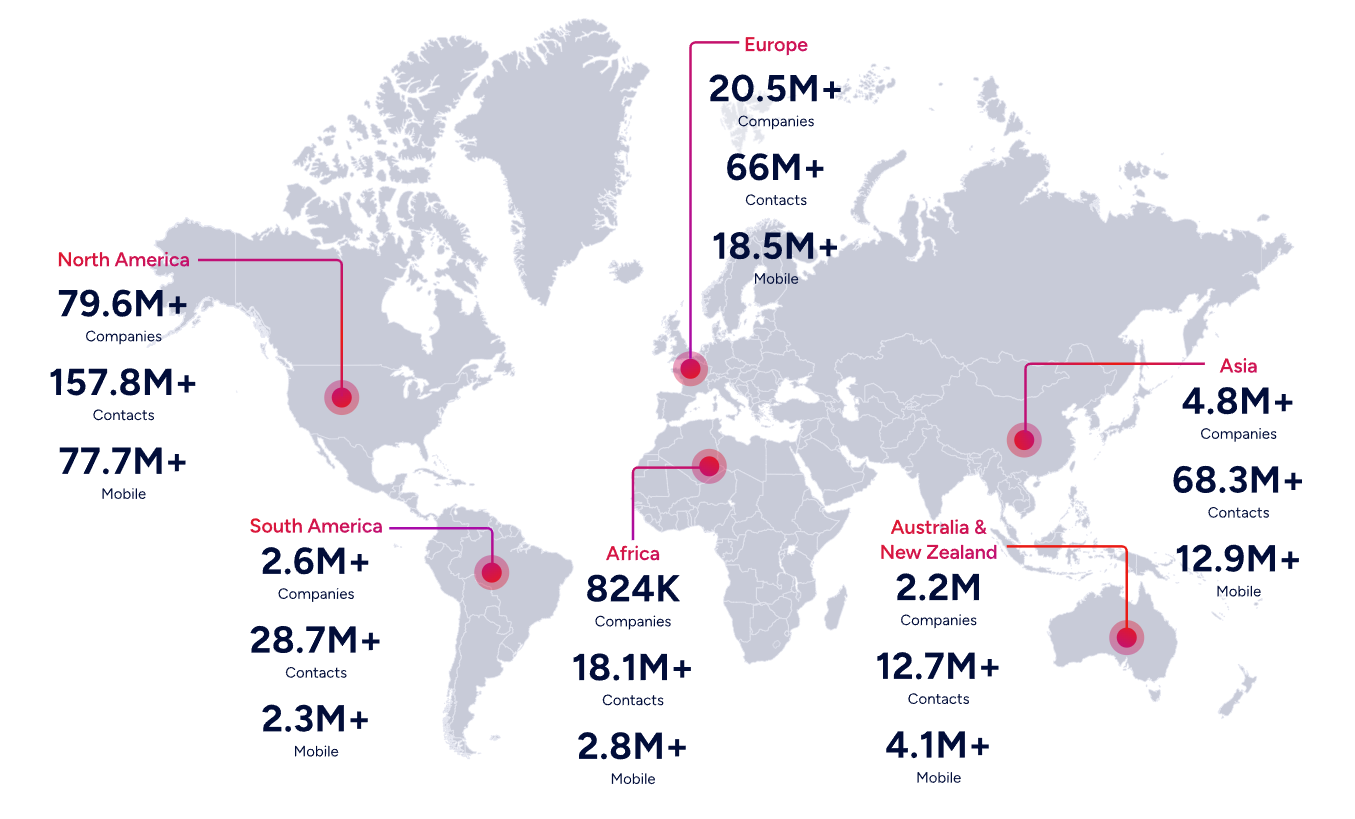
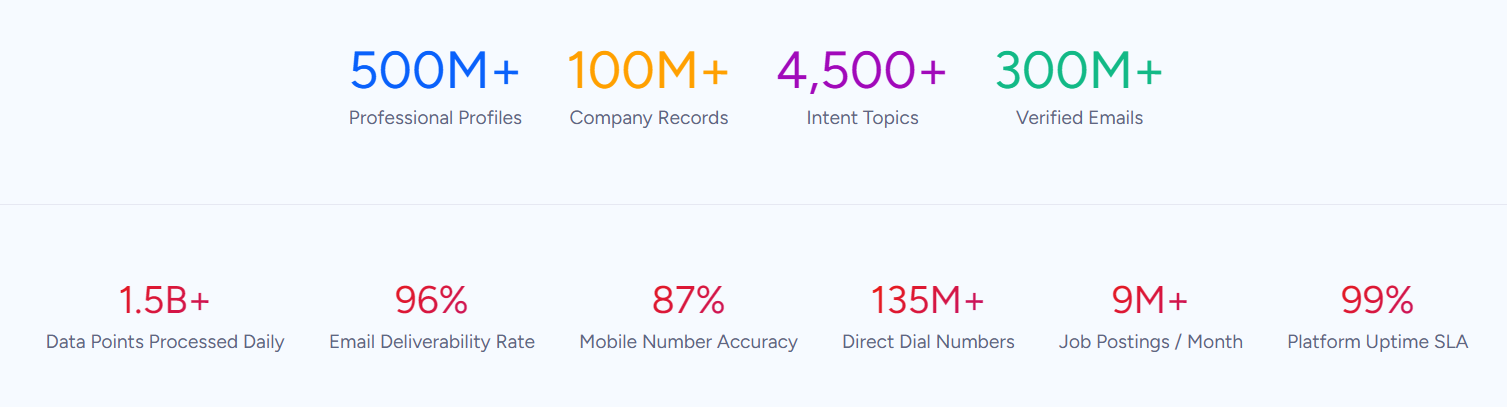
ZoomInfo is an AI GTM platform built on the industry's largest data foundation: 500M contacts, 100M companies, 135M+ verified phone numbers, and 200M+ verified business emails. By combining this data with your CRM records, conversation transcripts, and behavioral signals, ZoomInfo's GTM Context Graph (which processes 1.5B+ data points daily) reveals the full context of your accounts. Its key features include:
B2B data spanning 500M contacts, 100M companies, 135M+ verified phone numbers, 120M direct-dial phone numbers, and 200M+ verified business email addresses with up to 95% accuracy on first-party data
Buyer intent signals tracking 210 million IP-to-Organization pairings and 6 trillion+ new keyword-to-device pairings sourced monthly, including Guided Intent that identifies topics correlated with deal success
GTM Context Graph that unifies third-party intelligence with CRM data, conversation intelligence, and behavioral signals to capture why deals move or stall
GTM Workspace giving sellers AI-powered account prioritization, AI-drafted outreach, and deal execution in a single workspace
GTM Studio for marketers and RevOps to design, enrich, and activate GTM plays using natural language
APIs and MCP delivering the same intelligence into any third-party tool, custom agent, or partner platform
Where Seismic helps your reps deliver the right content at the right moment, ZoomInfo helps your team identify who to target, when to engage, and why a deal is moving. It provides the intelligence layer that sits upstream of content delivery.
Why Choose ZoomInfo Over Seismic for Pipeline Intelligence and Prospecting
Seismic excels at equipping sellers with content, coaching, and buyer engagement tools. ZoomInfo addresses a different part of the revenue problem: knowing who to sell to, understanding why deals move, and building pipeline with verified data and AI-powered intelligence.
Comprehensive B2B Data: The Foundation Seismic Was Never Built to Provide
Seismic is an enablement platform designed to arm your sellers with the right assets once they're in a deal. It does not help you identify who to pursue, verify their contact information, or map the buying committee before that first conversation.
ZoomInfo operates the largest B2B data platform in the world. With 500M contacts and 100M companies, validated through a multi-source pipeline backed by 300+ human researchers, ZoomInfo gives revenue teams the raw material to build pipeline. This isn't a static directory: 120M direct-dial phone numbers and 200M+ verified business emails mean reps reach prospects directly, and technographic data covering 30,000+ technologies across 200+ categories helps you filter accounts by the tools they use.
In a Fortune 500 competitive RFP analyzing 25 million contacts across vendors, the independent consultant concluded that "no other competitor came even close."
ZoomInfo in Action: Your team is launching an outbound campaign targeting mid-market SaaS companies using a competitor's product. In ZoomInfo, you filter by technographic data (companies running the competitor's software), layer on intent signals showing which accounts are actively researching alternatives, and pull verified direct dials and emails for the VP of Sales and CTO at each account. In minutes, your SDRs have a prioritized list of in-market buyers with working contact information, something that would take days of manual research.
Seismic attributed 39% of active pipeline to opportunities identified or influenced by ZoomInfo signals and reported being 54% more productive.
The GTM Context Graph: Intelligence That Captures Why Deals Move
Seismic's Aura AI generates content recommendations, meeting summaries, and coaching suggestions grounded in the organization's approved content. That intelligence helps reps find the right materials. But it operates within the enablement layer: it knows what content exists and how reps use it, not why a deal accelerated or what signals predict a close.
ZoomInfo's GTM Context Graph operates at a different level. It combines ZoomInfo's third-party data with your first-party CRM records, conversation intelligence from Chorus, email interactions, and behavioral signals into one intelligence layer. As CPO Dominik Facher writes: "The CRM recorded the state change. It has no record of why it happened." The GTM Context Graph captures the decision context that CRMs miss: the CFO who joined the last call and asked about six-month ROI, the VP who went quiet for eight days during an internal budget battle, the intent spike from a competing evaluation.
This intelligence exists because twenty years of data unification, plus the context capture engines from acquired conversation intelligence platforms, gave ZoomInfo both the connective tissue and the extraction layer no single point solution has.
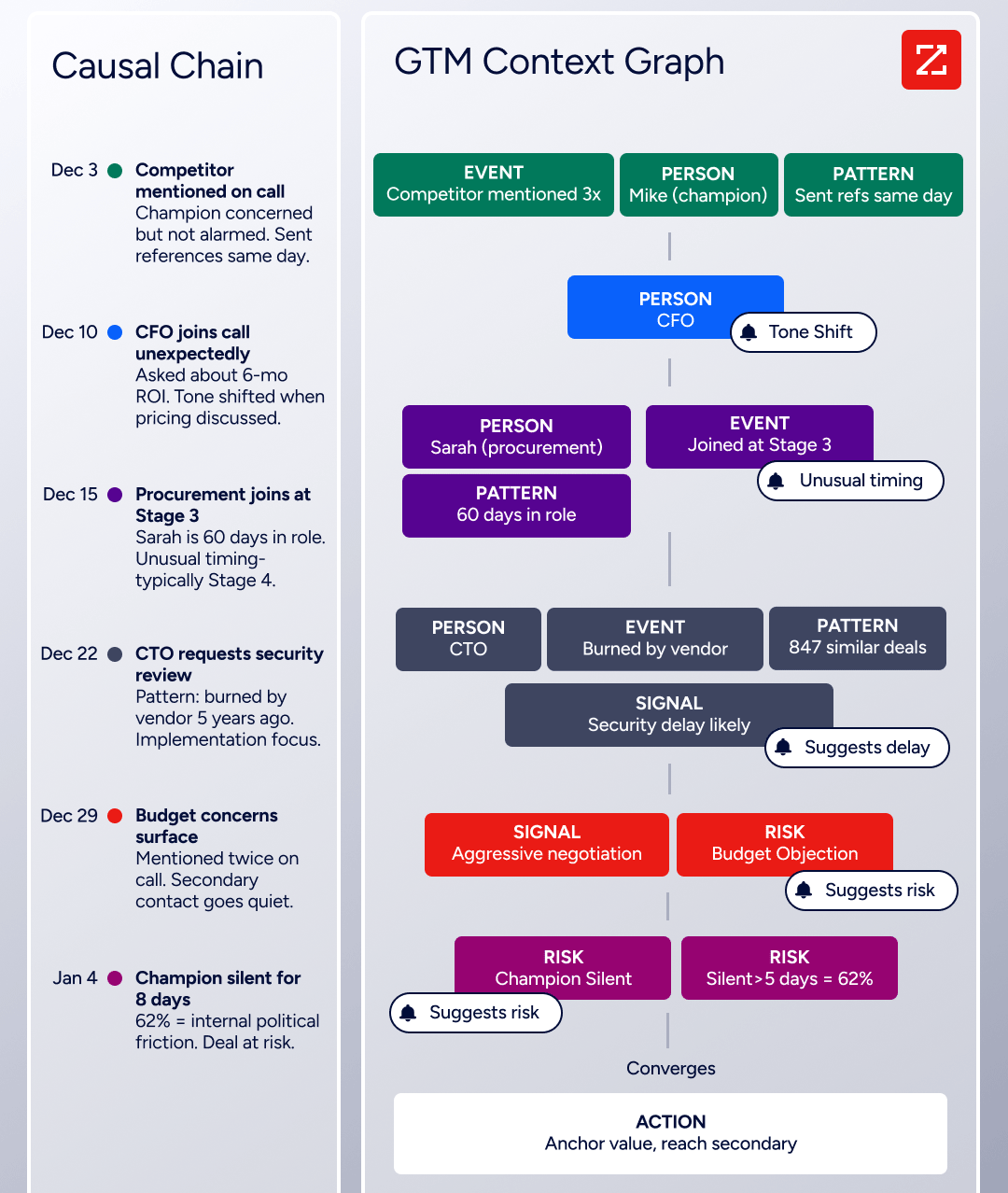
ZoomInfo in Action: Your AE opens GTM Workspace and sees that a target account's intent score spiked three days ago on topics correlated with your product category. The GTM Context Graph cross-references this with a Chorus transcript from two weeks ago where the prospect's CFO asked about implementation timelines, and a recent news signal showing the account hired two new VPs in the department you sell to. ZoomInfo drafts a follow-up email that addresses the CFO's timeline question, referencing the new hires as additional stakeholders to engage. The rep didn't search three tools for this information; the intelligence came to them.
"ZoomInfo's not just a contact data company anymore. GTM Intelligence actually works the list, writes the outreach, triggers the play, and helps drive predictable growth." — Ian Brodie, CEO & Co-Founder, Levanta
Universal Access: Use the Intelligence in Any Tool
Seismic delivers its intelligence through its own platform and 150+ integrations, primarily embedding into CRM, sales engagement, and communication tools. That integration depth is a strength. But the intelligence is scoped to Seismic's own content, learning, and engagement data.
ZoomInfo's intelligence works as infrastructure: the same data and GTM Context Graph that power ZoomInfo's native products are accessible through APIs and MCP in any third-party tool, custom agent, or AI application. GTM Workspace is the native front-end for sellers. GTM Studio is the native front-end for marketers and RevOps. For teams building custom solutions, API access is included in all relevant plans, with MCP available through Anthropic Claude, Google, and additional partners.
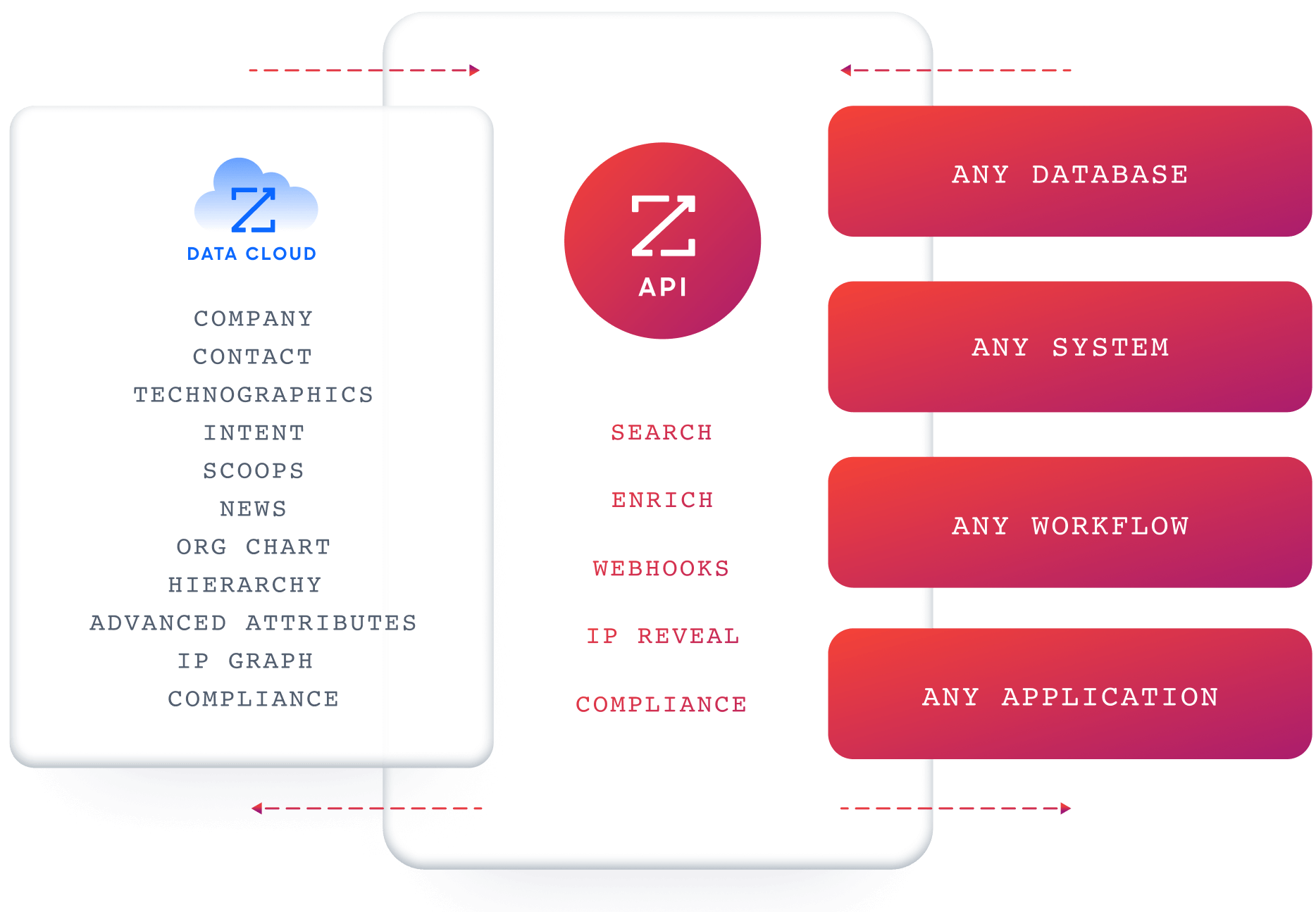
CEO Henry Schuck described a large financial services firm building an internal app using ZoomInfo's MCP server: "That's a surface area we would never see before."
ZoomInfo in Action: Your RevOps team uses GTM Studio to define an audience in plain language: "mid-market fintech companies in EMEA that use Salesforce, have raised Series B+ funding, and are showing intent signals on revenue operations topics." GTM Studio enriches the audience from ZoomInfo's data, launches a multi-channel play targeting accounts matching your proven win patterns, and routes hot accounts into GTM Workspace for your sellers. Meanwhile, your engineering team builds a custom AI agent that queries the same GTM Context Graph via MCP to automate account research inside your internal tools. Both teams draw from one intelligence layer.
NOTE: We looked into other data intelligence and prospecting platforms and found Apollo.io and Cognism to be strong contenders. Apollo.io offers a more affordable entry point with a free tier and integrated sales engagement, making it a good fit for smaller teams. Cognism excels in European mobile number coverage and GDPR compliance for EU-focused organizations. However, neither matches ZoomInfo's data scale (500M contacts, 100M companies), the intelligence depth of the GTM Context Graph, or the infrastructure-grade access via APIs and MCP that makes ZoomInfo's intelligence available in any tool.
ZoomInfo Pricing
ZoomInfo uses a custom-quoted, consumption-based pricing model with no publicly listed prices. Costs depend on usage patterns, number of users, monthly credit volume, features, company size, and contract length.
ZoomInfo's pricing is organized into three product lines:
Sales plans across Professional, Advanced, and Enterprise tiers, from contact and company data to AI-driven account prioritization, buyer intent signals, and advanced workflows
Marketing plans across Marketing Demand, ABM Lite, and ABM Enterprise tiers, spanning audience targeting, display advertising, and AI-powered account-based marketing
Chorus (conversation intelligence) and Chat (data-powered website chat) are available as standalone products
ZoomInfo Lite is a permanent free tier (not a trial) with access to the B2B database, 10 monthly export credits, individual and company searches, a Chrome extension, and HubSpot integration. A 7-day free trial of paid features is also available with no credit card required.
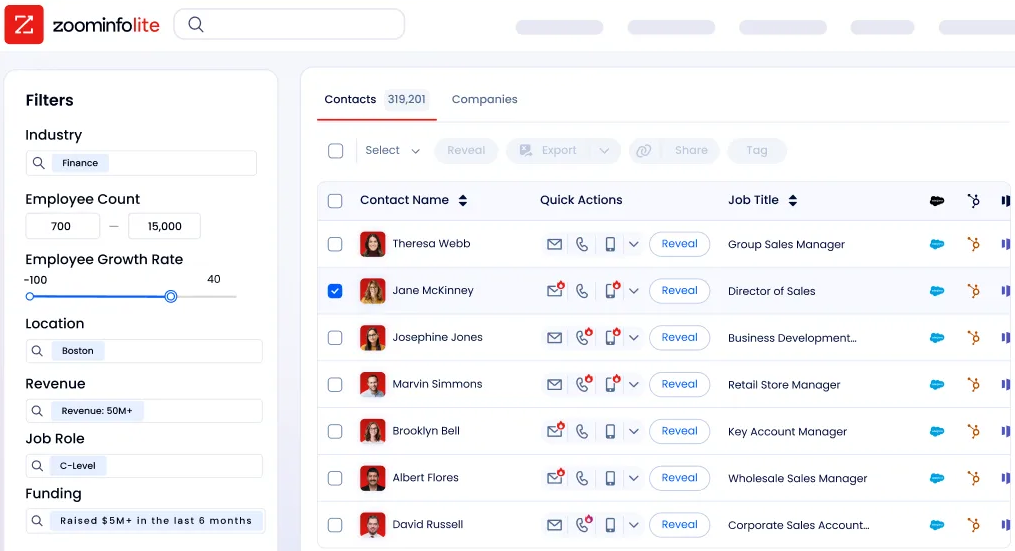
Credits work on an export basis: 1 credit = 1 export of a professional or company profile. Searching and viewing data within ZoomInfo does not consume credits. API access is included in all relevant plans.
Who Should Use ZoomInfo?
Choose ZoomInfo if:
Your primary revenue gap is upstream of enablement: you need verified B2B data, buyer intent signals, and AI-powered prospecting to build and prioritize pipeline before your reps ever open a content library or enter a coaching session.
You want your AI to understand why deals move, not just what content reps use. ZoomInfo's GTM Context Graph captures the decision context behind outcomes, powering recommendations grounded in buying patterns across your entire deal history.
You need infrastructure-grade data access for custom AI agents, internal tools, or partner platforms. ZoomInfo's APIs and MCP deliver the same intelligence in any front-end, not just ZoomInfo's own products.
Want to see the full context behind your deals? ZoomInfo combines B2B data with the GTM Context Graph to help your team find, prioritize, and win the right buyers. Start your free trial or request a demo today.
2. Allego - Best Alternative for Enterprise Sales Enablement with Video-First Coaching
Source: Allego
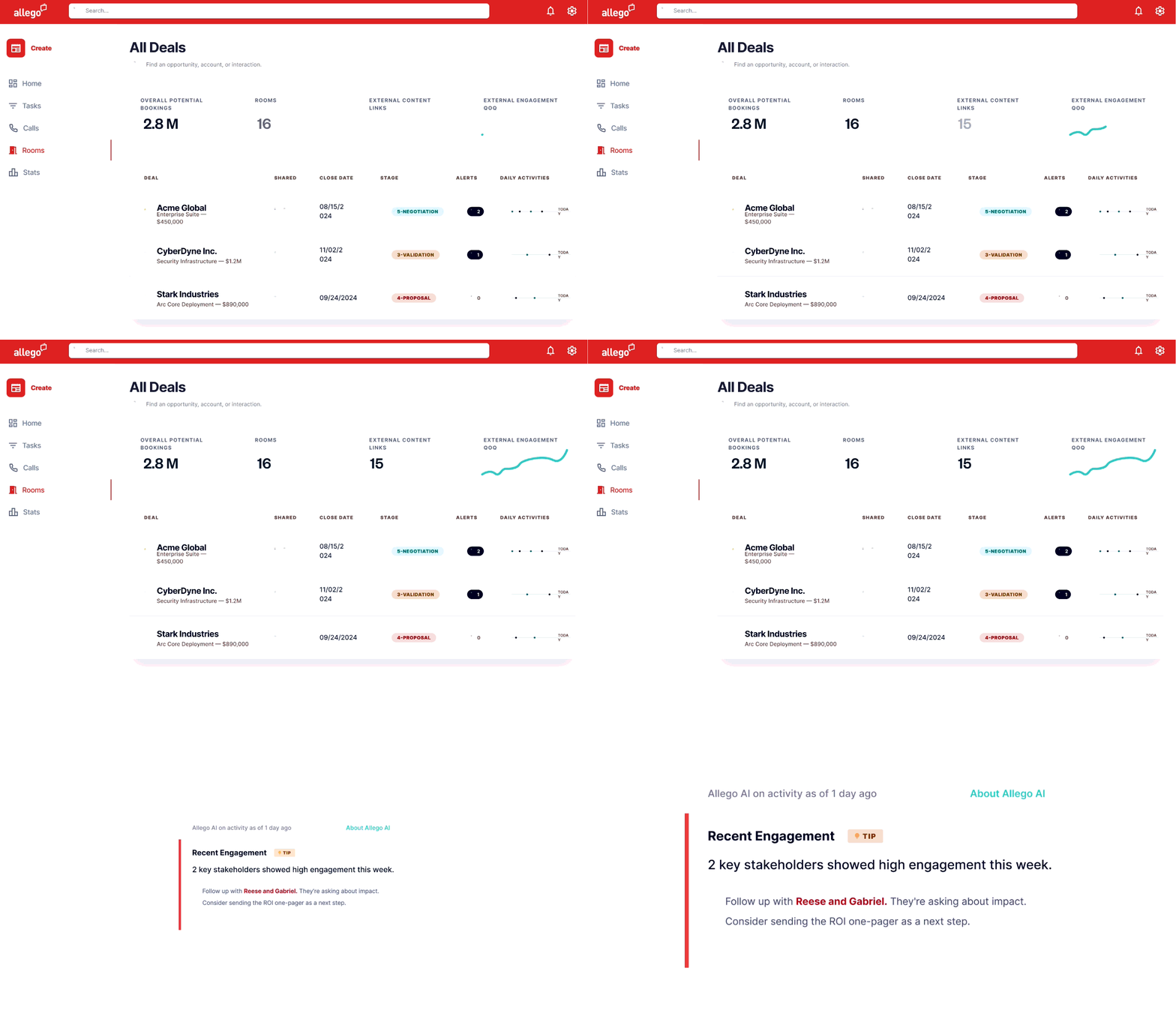
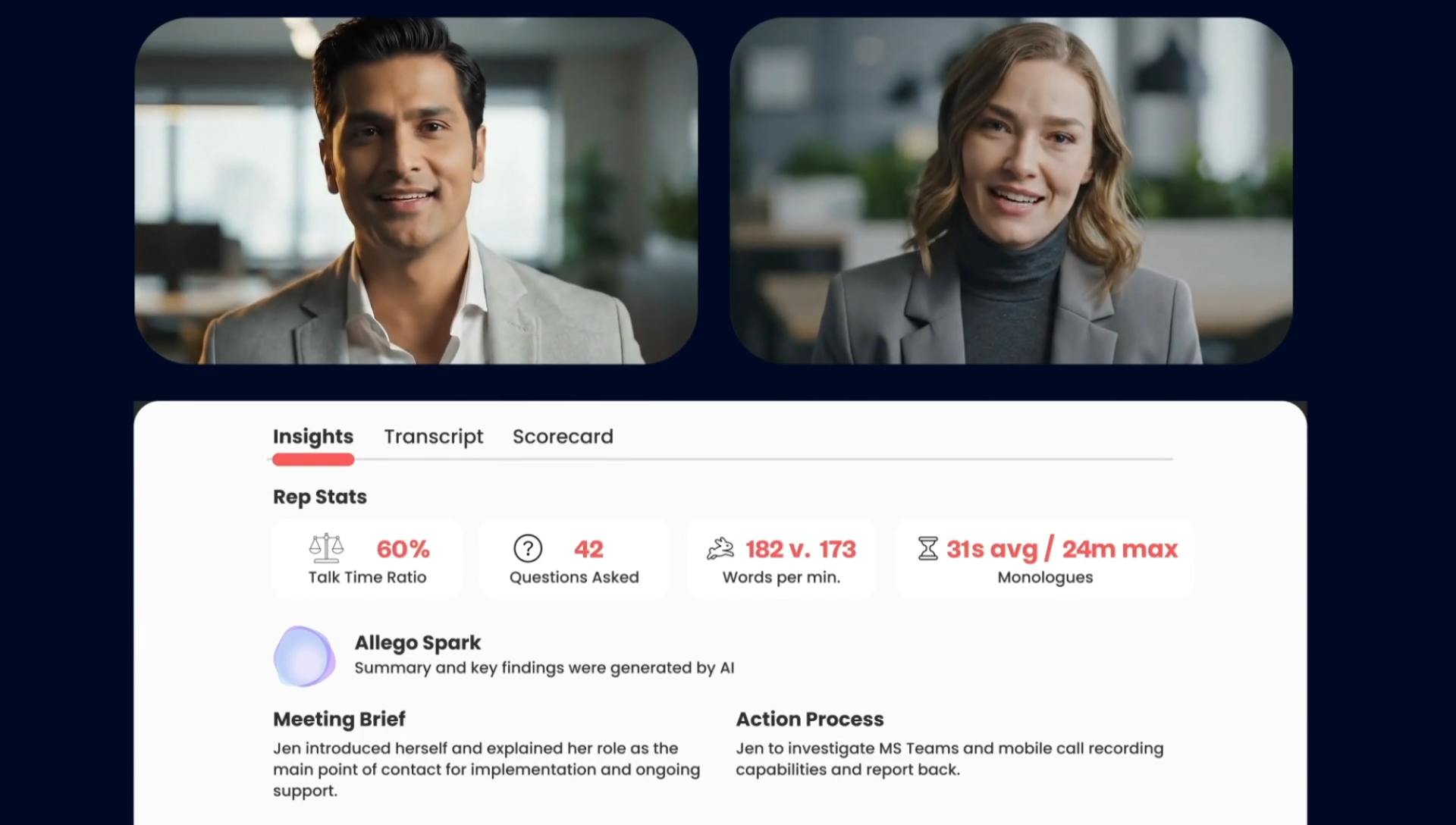
Allego is a revenue enablement platform that consolidates sales content management, video-first coaching, AI role-play, digital sales rooms, and conversation intelligence into a single organically built system. Its key capabilities include:
Video-first coaching with asynchronous manager feedback via timestamped annotations
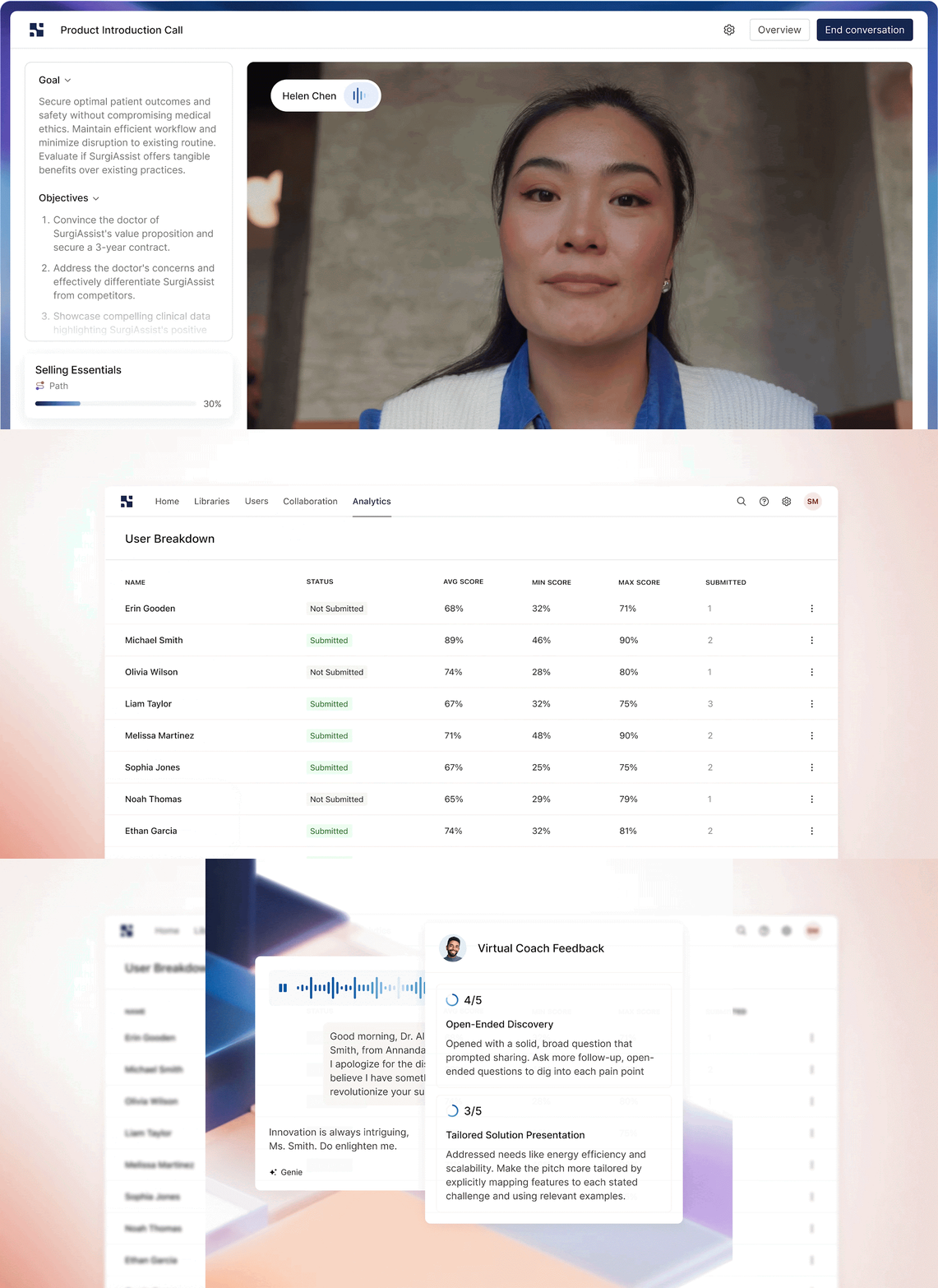
AI Role Play (Live Dialog Simulator) with unscripted, adaptive simulations and automated performance scoring across 32 languages
Centralized content hub with AI-assisted contextual search and Universal Content Connector syncing SharePoint, Google Drive, AEM, and other repositories
Allego Digital Rooms with buying committee mapping, stakeholder engagement signals, and AI Deal Alerts
Conversation Intelligence with call recording, transcript search, topic tracking, and sentiment analysis
Native Salesforce integration with bi-directional engagement data and deal-level AI guidance
Why Choose Allego Over Seismic for Enterprise Sales Enablement
Allego stands out compared with Seismic in several ways:
Coaching Depth That Scales Without Manager Bottlenecks Seismic's coaching capability arrived via the 2021 Lessonly acquisition. Allego was founded on video-first sales coaching. Its Live Dialog Simulator creates unscripted, adaptive video AI personas: the rep cannot memorize a path through the exercise because the AI listens to spoken responses and pivots in real time, as a real buyer would. Managers define shared rubrics once; the AI applies them consistently across every rep, region, and product line without manual scoring.
Platform Independence and a Defined Enterprise Roadmap The Seismic-Highspot merger announced in February 2026 introduces uncertainty for enterprise buyers: overlapping feature sets requiring rationalization, integration complexity during transition, and potential pricing shifts. Allego operates as an independent, privately held company backed by General Catalyst and Summit Partners, with a platform built organically rather than assembled through acquisitions. For enterprise teams signing 3-year contracts, platform stability carries real procurement weight. Allego's customer base spans major enterprise accounts: one quarter of Dow Jones Industrial Average companies, five of the 15 largest U.S. banks, and all five of the largest asset management companies.
Lower Administrative Burden for Content Governance at Scale One of Seismic's most cited weaknesses in reviews is that content search quality degrades as libraries grow without rigorous manual tagging. Allego's Universal Content Connector automatically syncs approved assets from SharePoint, Google Drive, AEM, and other enterprise repositories into a single governed library, eliminating the overhead of re-uploading and re-tagging content. Allego also commits to a 4-week deployment timeline with a full project team, against Seismic's multi-month enterprise onboarding norm.
Source: Allego
NOTE: We also evaluated Highspot and Showpad as alternatives in this archetype. While Highspot has historically been the closest feature-comparable competitor to Seismic, its announced merger with Seismic in February 2026 removes it as a viable independent alternative. Showpad offers strong buyer engagement and content personalization. Allego offers the best combination of content governance, video-first coaching at scale, and conversation intelligence for enterprise teams seeking a stable independent vendor.
For a direct comparison of Allego and Seismic across features and capabilities, see our Allego vs. Seismic breakdown.
Allego Pricing
Allego uses a per-user, per-month pricing model billed annually upfront. No list prices are published; all contracts require a custom quote. All platform modules (Sales Content Management, Modern Learning, AI Role Play & Coaching, Digital Sales Rooms, and Conversation Intelligence) are included, and all AI capabilities ship at no additional charge. Premium Success Services are included with every deployment, covering implementation, integrations, training, and ongoing engagement. Standard contracts are 3 years, with 2-year and 1-year options also available. A buyout program is available for customers locked into competing vendor contracts.
Who Should Use Allego?
Choose Allego if:
Your organization needs coaching infrastructure that scales beyond manager bandwidth, with distributed teams of 50+ reps where AI-scored video practice needs to become repeatable.
You are evaluating Seismic or Highspot but want a platform with an independent roadmap not undergoing post-merger integration, especially on a multi-year contract.
Your vertical is financial services, life sciences, high-tech, or manufacturing. Allego holds FINRA 17a-4, SOC 2 Type II, GDPR, and FDA 21 CFR Part 11 compliance.
3. Showpad - Best Alternative for Mid-Market Teams Needing Integrated Content and Coaching

Source: Showpad
Showpad is a revenue effectiveness platform that delivers content management and sales coaching comparable to Seismic at a modular, mid-market price point. Its key capabilities include:
Centralized content library with AI-powered discovery via Genie Assistant
RolePlay AI for scalable, manager-independent sales coaching and pitch practice
Field Meeting AI for real-time content surfacing, call transcription, and post-meeting follow-up automation
Shared Spaces as branded buyer collaboration microsites with stakeholder engagement tracking
AuthoringAI for turning slides into narrated training with automatic translation
Modular pricing starting at $25 per user per month with optional add-on bundles
Showpad is a recognized Leader in both the 2025 Gartner Magic Quadrant for Revenue Enablement Platforms and The Forrester Wave: Revenue Enablement Platforms, Q3 2024, earning the highest innovation score in Forrester's Sales Readiness criterion in 2023.
Why Choose Showpad Over Seismic for Revenue Effectiveness at Mid-Market Scale
Showpad stands out compared with Seismic in several ways:
Transparent, Modular Pricing That Scales With the Team Seismic does not publish pricing. Its commercial discussions are gated behind a demo request, contracts are non-cancellable and invoiced annually in advance, and Seismic Learning is priced as a separate purchase. Showpad's eOS Professional, Advanced, and Expert tiers are published starting at $25 per user per month, and optional add-on bundles (Learn+, Collaborate+, Empower+) let teams activate capabilities as maturity grows. For procurement teams used to visible line items, this difference matters.
Faster Time to Value With a Lighter Governance Footprint Seismic's implementation timelines of four months or longer are well-documented, and the platform requires ongoing admin effort for content taxonomy and metadata tagging. Showpad's deployment timeline is cited at 6 to 9 weeks, and its Genie Assistant surfaces content based on deal context rather than requiring precise metadata queries. LibraryIQ identifies duplicate files and organizational gaps, keeping the library healthy without a dedicated admin.
Native Coaching Integration in a Single License Seismic Learning is a separate purchase from the content platform. Showpad's eOS integrates content and coaching natively. RolePlay AI runs realistic sales simulations with automated scoring, and the platform documents a 70% increase in knowledge retention. Field Meeting AI provides real-time content recommendations during live calls. AuthoringAI cuts training content production time by 3-5x with translation across 30+ languages. All from one system and one license.
Source: Showpad
NOTE: We also evaluated Mindtickle and ContentCamel. Mindtickle offers stronger sales readiness depth with structured competency frameworks but carries a heavier implementation footprint and pricing closer to Seismic. ContentCamel is simpler and cheaper but lacks coaching and buyer engagement features. Showpad offers the best balance of content management, AI coaching, and buyer engagement at mid-market price points.
Showpad Pricing
Showpad offers three core tiers on a per-user licensing model:
eOS Professional starting at $25 per user per month: centralized content and training hub, curated Collections, Shared Spaces, 3D and AR content support, Courses and Paths, CRM integration, question-based analytics
eOS Advanced adds AI-powered content governance, multilingual video captioning, Shared Spaces templates, knowledge checks, AnalyticsIQ, and sales engagement integrations
eOS Expert adds AI-powered search, AI-powered content FAQs, LibraryIQ, AI-powered Page creator, AI-powered CRM recommendations, unlimited divisions, and Priority Support
Optional add-on bundles include Learn+ (role-based competencies, PitchAI), Collaborate+ (Mutual Action Plans, buyer uploads), and Empower+ (automated content personalization at scale).
Who Should Use Showpad?
Choose Showpad if:
Your team has 50-500 sales reps and needs Seismic-grade capabilities without the multi-month implementation, dedicated admin overhead, or opaque enterprise pricing.
You want content management and coaching as one system from one license, not two separately purchased products.
You operate in field sales, manufacturing, or medical devices where reps need offline access, 3D models, and immersive content formats.
4. Mindtickle - Best Alternative for Revenue Readiness and Structured Rep Onboarding
Source: Mindtickle
Mindtickle is a revenue enablement platform that treats readiness (measurable and tied to outcomes, not content completion rates) as its central organizing principle. Its key capabilities include:
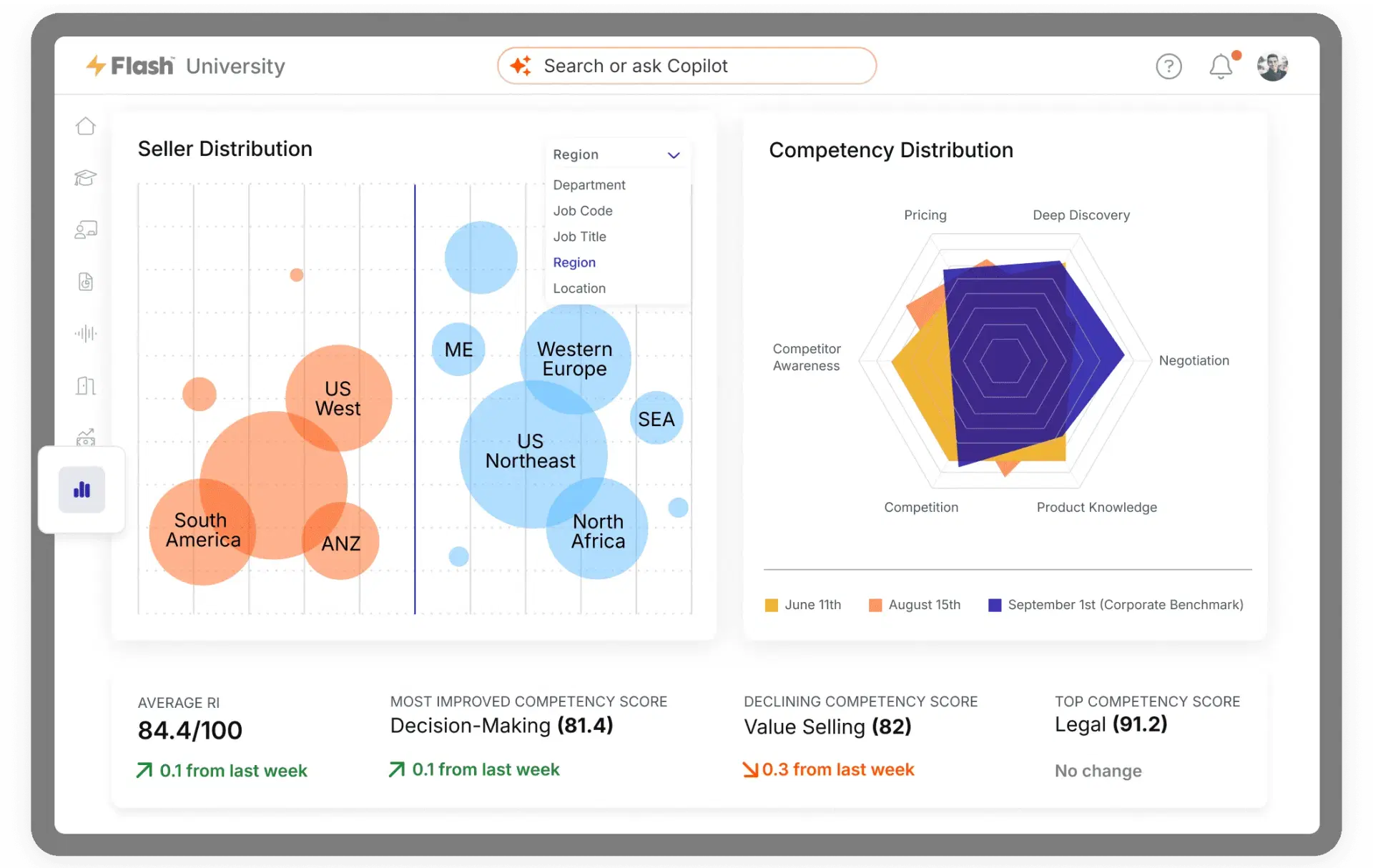
AI Sales Readiness Index that continuously scores each rep based on training completion, skill assessments, and call behavior data
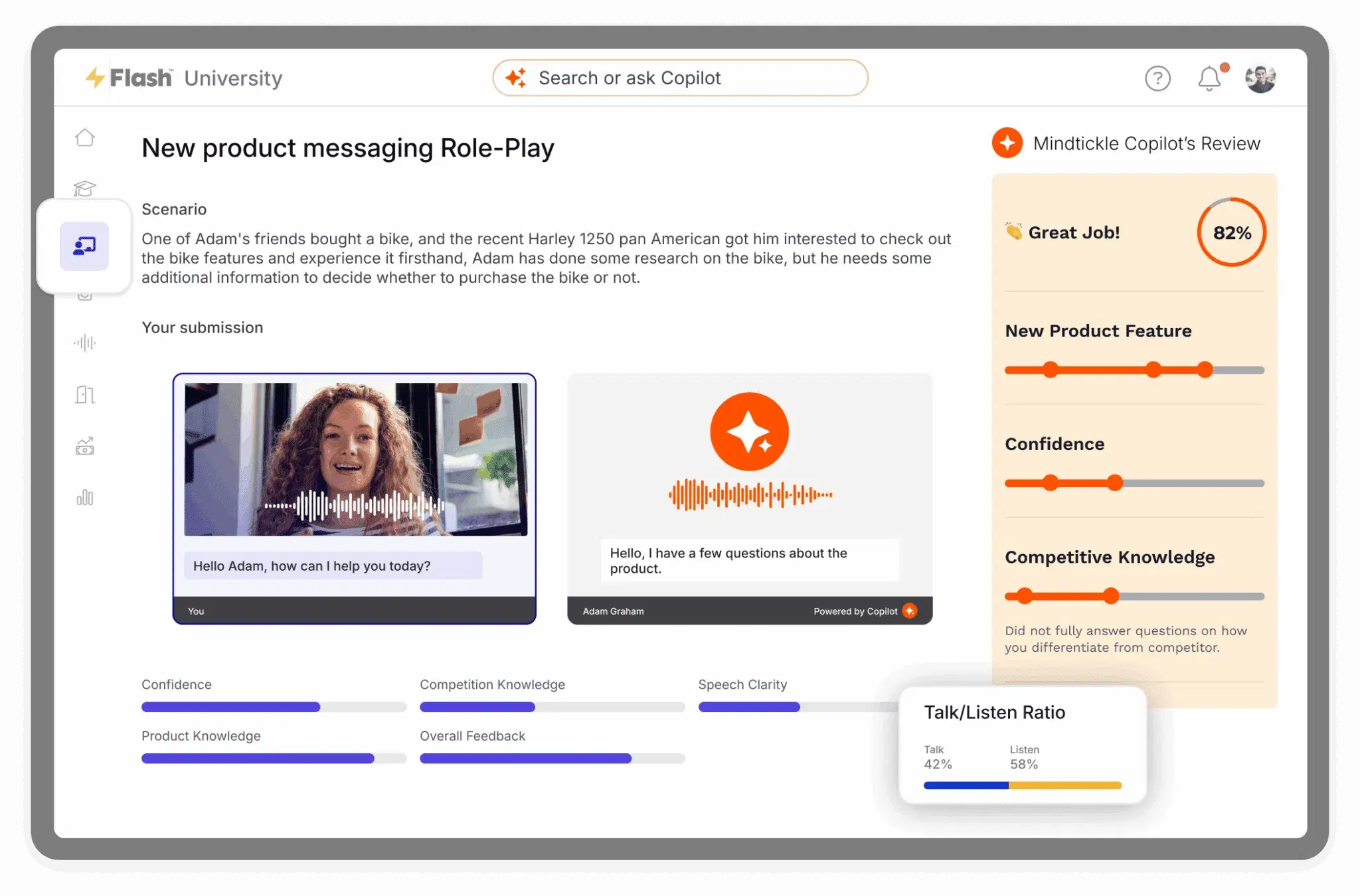
AI Role Play Simulator with dynamic AI personas that respond adaptively to rep inputs across realistic buyer scenarios
Conversation Intelligence (Call AI) that records, transcribes, and analyzes calls to identify patterns between rep behaviors and deal outcomes
Structured learning paths with defined milestones, knowledge checks, and completion certifications ranked #1 by G2 for sales onboarding
Digital Sales Rooms with AI-highlighted buyer signals and recommended follow-up actions
Why Choose Mindtickle Over Seismic for Rep Readiness and Onboarding
Mindtickle stands out compared with Seismic in several ways:
Readiness Is a First-Class Metric, Not a Byproduct of Content Usage Seismic's Learning & Coaching module sits within a product architecture organized around content management. Mindtickle was built around the opposite premise. Its Readiness Index continuously scores every rep against a defined Ideal Rep Profile, combining training data, skill assessments, AI role-play performance, and actual call behavior into a single composite readiness number. Mindtickle then correlates those readiness scores against CRM revenue metrics, so enablement teams can prove, at the rep level, that readiness investments move business outcomes.
AI Role-Play at a Scale Seismic Has Not Yet Matched Mindtickle is a pioneer in AI Sales Role Plays with over 1.5 million completed across its customer base. The AI personas respond dynamically and simulate various buyer personalities without falling into repetitive patterns. Sessions average about 3 minutes, making them usable right before a customer call. Mindtickle cites that a team of 100 reps and 10 managers can save 1,400 hours and $132K annually through this automation.
Replicating Top-Performer Behaviors Across the Full Team Seismic's architecture solves the seller's content problem (find it, personalize it, track it). Mindtickle's architecture solves the seller's behavior problem: identify what top performers do differently, codify it, and close the gap. The Ideal Rep Profile benchmarks top-performer competencies at the skill level, and gaps identified in role-plays and call scores automatically trigger targeted training in a closed reinforcement loop.
Source: Mindtickle
NOTE: We also evaluated Trainual and Lessonly. Trainual offers a simpler training platform for general onboarding but lacks sales-specific readiness infrastructure, AI role-play, or revenue correlation. Lessonly was acquired by Seismic in 2021, so evaluating it now means evaluating Seismic itself. Mindtickle offers the most complete rep readiness infrastructure for systematic skill development.
Mindtickle Pricing
Mindtickle does not publish pricing on its website. All commercial terms are negotiated through a custom demo engagement. Four package tiers are documented:
LMS Package: Core learning management with Courses, Assessments, Certifications, Readiness Index, and AI Copilot
Readiness Package: Adds Spaced Reinforcement, one-way AI Role Play (submission only), and Coaching Rooms
Enable Package: Adds Asset Hub (sales content management) and Digital Sales Rooms
Transform Package: Full revenue productivity platform with Conversation Intelligence (Call AI)
Note: Two-way interactive AI Role Play, Mindtickle's most differentiated capability, requires a separate line item on top of any base package.
Who Should Use Mindtickle?
Choose Mindtickle if:
Your primary enablement gap is rep ramp time and new-hire productivity, not content discoverability.
You need AI role-play at a frequency and scale that a manager-led coaching calendar cannot sustain.
You want to measure rep readiness as a business metric correlated to quota attainment and win rates, not just training completion percentages.
5. Gong - Best Alternative for Revenue Intelligence and Conversation-Based Deal Execution
Source: Gong
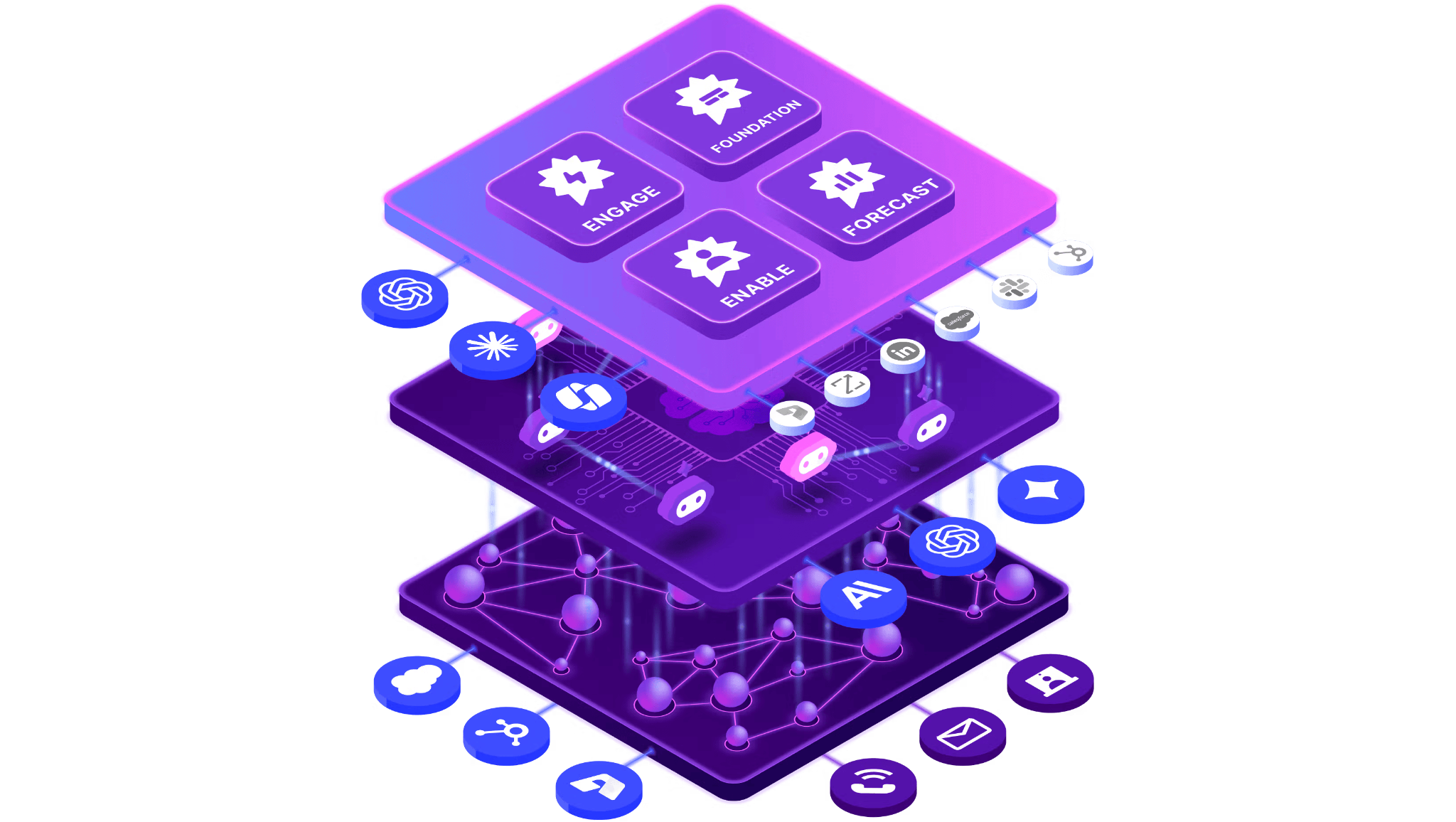
Gong is a Revenue AI platform that captures and analyzes every customer interaction to surface deal risks, coaching opportunities, and revenue forecasts grounded in buyer behavior rather than CRM stage labels. Its key capabilities include:
Conversation intelligence with 300+ behavioral signal analysis across calls, emails, and meetings
Deal analytics via AI Deal Monitor, AI Deal Reviewer, and AI Deal Predictor
Revenue forecasting built on actual buyer engagement behavior
AI coaching from call pattern analysis benchmarked against top-performer behaviors
Market intelligence via AI Theme Spotter, surfacing competitive trends from thousands of conversations
Gong Engage for multi-channel outreach with AI-composed messaging
Gong is named a Leader in the inaugural 2025 Gartner Magic Quadrant for Revenue Action Orchestration and ranked first across all four evaluated use cases in the companion Critical Capabilities report.
Why Choose Gong Over Seismic for Revenue Intelligence and Deal Execution
Gong stands out compared with Seismic in several ways:
Conversation Intelligence as the Core Data Layer Seismic's Aura AI generates insights from structured inputs: content library metadata, CRM records, and meeting transcriptions. Gong's architecture is built around a different data primitive: the actual conversation. The Gong Revenue Graph captures every call, email, and meeting across the full revenue team, analyzing interactions using models trained on three billion+ customer interactions. The AI operates across 300+ behavioral signals: talk ratios, sentiment shifts, objection patterns, competitor mentions, and scheduling behavior.
Revenue Forecasting Grounded in Behavioral Evidence Seismic's analytics are strong within the enablement layer but do not address forecasting reliability. Gong Labs research found that only 1% of customer interactions make it into the CRM. Gong Forecast processes 300+ signals from actual conversations to produce forecasts 20% more precise than CRM-only algorithms and 22% more accurate than reps' own predictions.
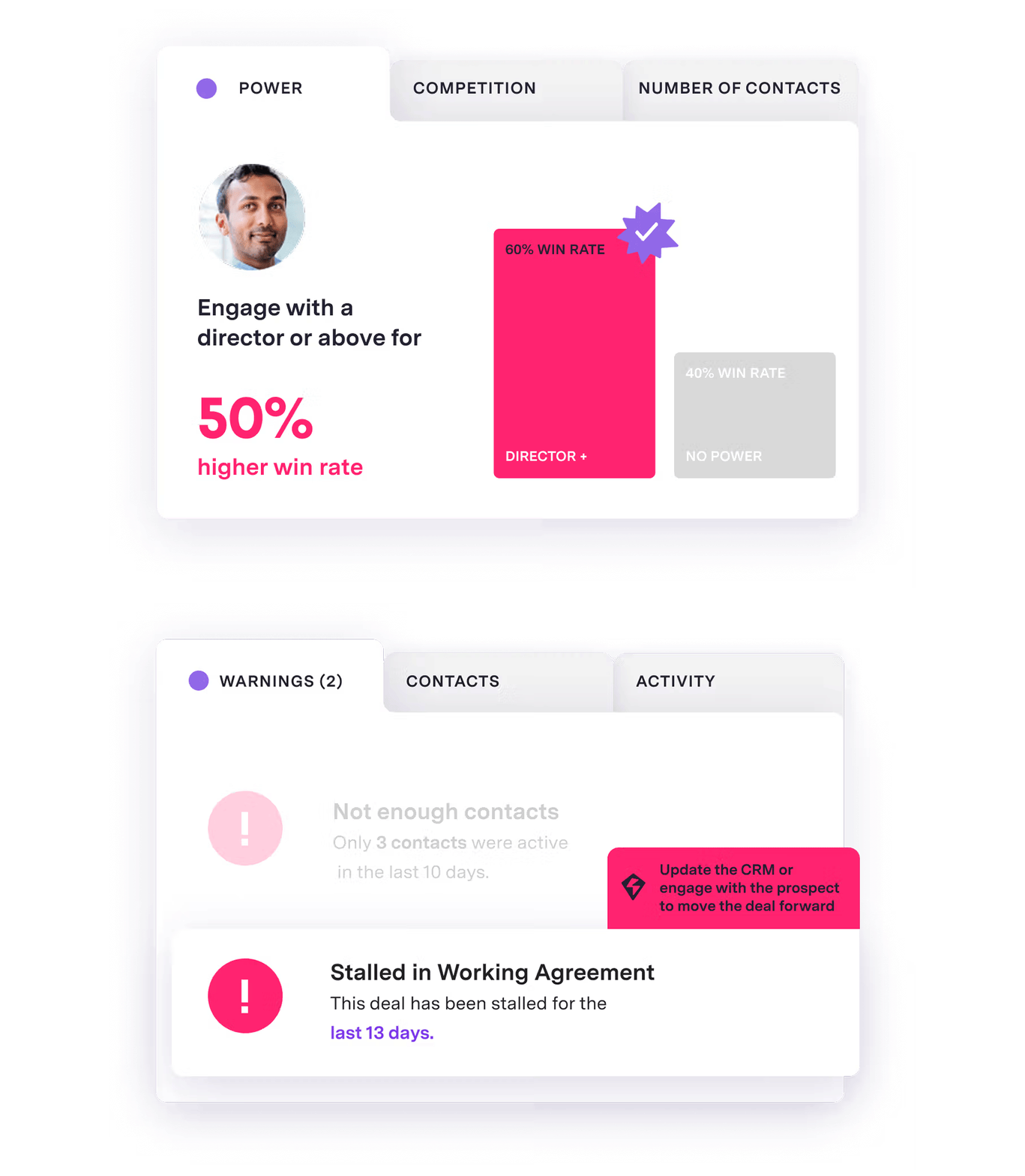
Deal Execution Intelligence Built on Real Buyer Signals Seismic's Digital Sales Rooms track which content a buyer opened. Gong's AI Deal Predictor assigns each deal a probability score trained on 300+ buying signals from 2.5 billion conversations. Gong Labs data shows that deals with detected red flags have a 33% lower probability of winning and take 31% longer to close. These agents are included with standard Gong licenses at no additional cost.
Source: Gong
NOTE: We also evaluated Clari and Chorus. Clari excels at revenue operations and pipeline management with deep RevOps capabilities. Chorus delivers strong conversation intelligence as part of ZoomInfo's broader GTM data platform. Gong offers the most complete combination of standalone conversation intelligence, deal analytics, and behavioral forecasting in a single platform.
Gong Pricing
Gong uses a quote-based pricing model with no published list prices. Pricing includes a per-user license fee plus a platform fee scaled to team size. All standard integrations and 15+ specialized AI agents are included at no additional cost.
The core platform (Gong Foundation) includes call recording, transcription, conversation management, CRM mapping, and all AI agents. Modular add-ons purchased separately include:
Gong Engage for multi-channel sales engagement with AI-composed messaging
Forecast Essentials for deal boards and win/loss insights
Gong Forecast for full AI-powered forecasting with AI Revenue Predictor
Gong Enable for AI-based coaching with role-play training
Data Cloud for direct export to Snowflake, Databricks, or BigQuery
For a full breakdown of Gong's pricing tiers and what's included at each level, see our Gong Pricing guide.
Who Should Use Gong?
Choose Gong if:
Your primary intelligence gap is understanding why deals close or stall, not content distribution or structured onboarding.
Your revenue leaders need forecasting grounded in actual buyer engagement signals rather than CRM stage confidence.
You manage a mid-market or enterprise B2B sales team where managers need AI to surface specific coaching moments across a large team without manually reviewing recordings.
6. Guru - Best Alternative for Enterprise-Wide AI Knowledge Governance
Source: Guru
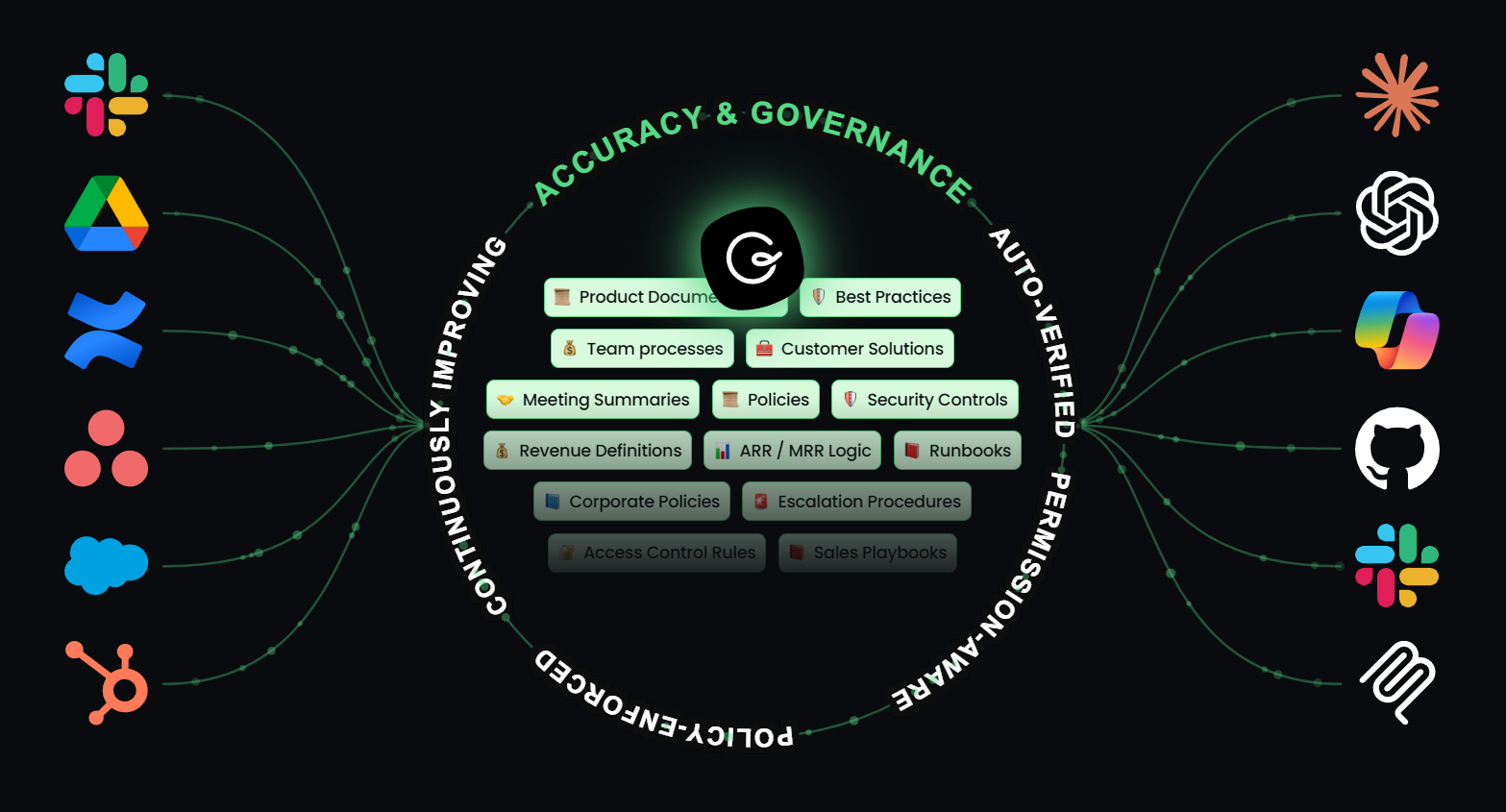
Guru is an AI-powered knowledge management platform that governs organizational knowledge across the entire enterprise (not just the sales team) and delivers verified answers in context inside every tool where employees already work. Its key capabilities include:
AI-powered Knowledge Agents that query across all connected sources and return cited, verified answers in natural language
Knowledge Quality Automation that runs daily checks using behavioral and content-based signals to verify content programmatically
Browser extension that surfaces verified knowledge inside any web application without requiring native integrations
Slack and Microsoft Teams integrations delivering Knowledge Agent answers directly in messaging tools
100+ pre-built source connectors spanning CRM, ticketing, documentation, and file storage
MCP connectivity enabling external AI tools (Claude, Copilot, ChatGPT) to query the same governed knowledge base
Why Choose Guru Over Seismic for Knowledge Governance
Guru stands out compared with Seismic in several ways:
Knowledge Governance That Spans the Entire Organization
Seismic is built for sales enablement. Every design decision is optimized for the seller's workflow. Guru is built as an enterprise knowledge governance layer spanning support, HR, IT, and sales from a single platform. Guru's research with 50+ enterprise IT leaders found that the assumption of picking one AI tool has collapsed. Enterprises now run multiple AI tools simultaneously and need a single governed knowledge source all of them can trust. Guru's MCP Server, compatible with Claude, ChatGPT, Cursor, and Microsoft Copilot, is built for this cross-tool governance role.
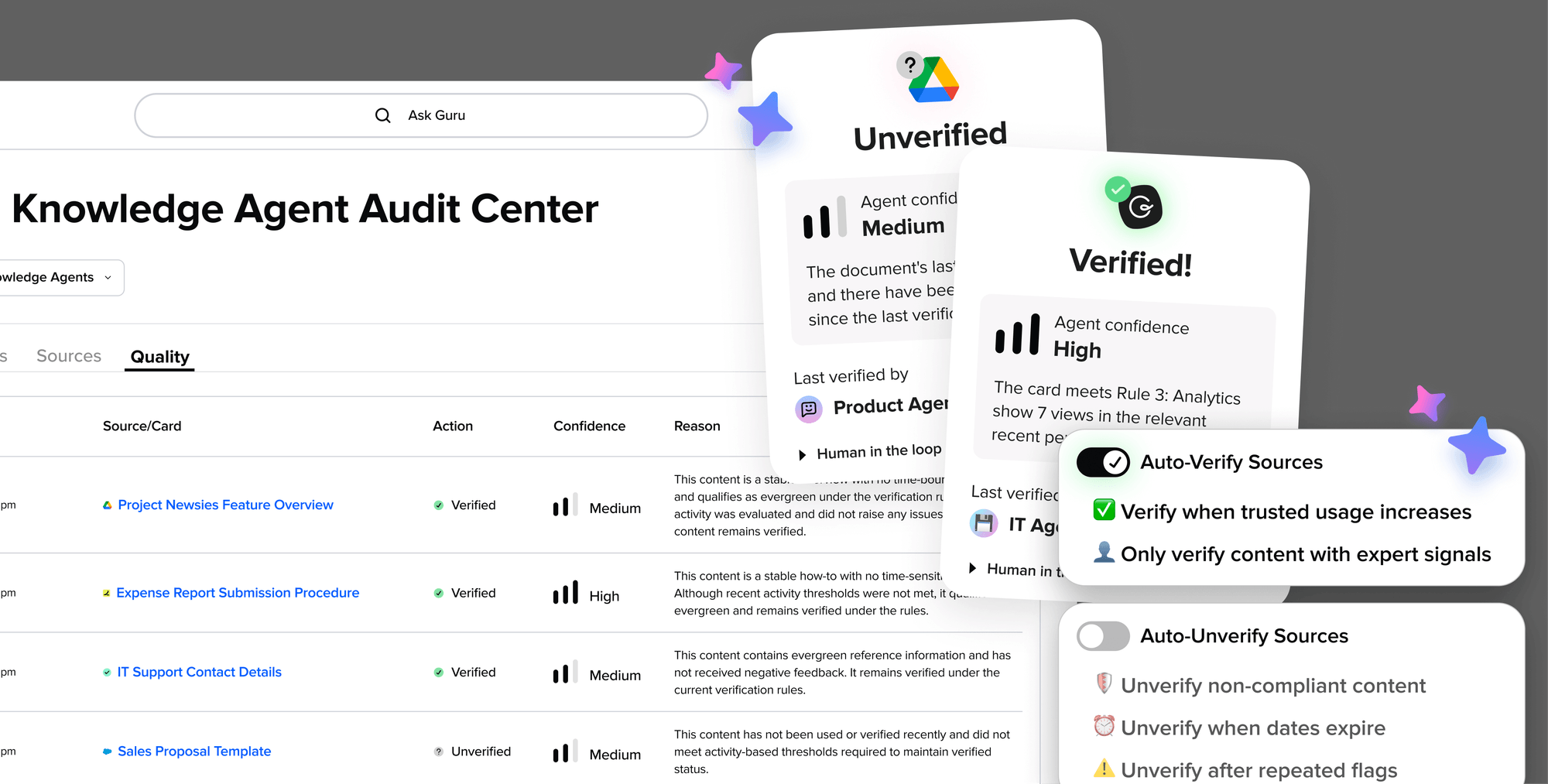
Automated Knowledge Quality vs. Manual Governance Seismic's content quality requires ongoing manual metadata tagging, a governance dependency that multiple reviewers cite. Guru's Knowledge Quality Automation deploys agents that run daily checks, evaluating both behavioral signals (thumbs up/down, views, copies) and content-based signals (time-sensitive references, expiration cues) to move organizations from 60% to 100% of knowledge assessed and verified. Every automated decision is logged in the AI Agent Center with explicit reasoning and a confidence level, and every decision is overridable by a human admin.
In-Context Knowledge Delivery Across Any Web Surface Seismic integrates into Salesforce and Microsoft Teams. Guru's browser extension delivers verified knowledge inside any web application (Salesforce, Gmail, Zendesk, Intercom, or a custom internal tool) without requiring a native integration per surface. TrustRadius and G2 reviewers identify the browser extension and Slack integration as primary adoption drivers.
Source: Guru
NOTE: We also evaluated Bloomfire and Confluence. Bloomfire offers knowledge sharing with a community-centric content model. Confluence provides strong documentation infrastructure for engineering and product teams. Guru offers the best combination of AI-powered verified knowledge delivery, browser-native surfacing, and automated content quality governance for organizations needing governed knowledge beyond the sales team.
Guru Pricing
Guru does not publish standard per-seat rates. The pricing page describes it as "a platform and expertise solution, not just a per-seat tool," with every engagement custom-scoped. Pricing bundles three components: the AI knowledge platform (search, Knowledge Agents, 100+ integrations, automated verification), expertise (AI & KM strategy team for implementation and ongoing optimization), and enterprise governance infrastructure (SOC 2 Type II, SSO/SCIM, DLP masking, audit logs). A minimum of 10 seats is required.
Who Should Use Guru?
Choose Guru if:
Your knowledge governance need spans beyond the sales team to support, HR, operations, and sales from a single verified knowledge layer.
You are deploying multiple AI tools and need a single governed source of truth that all of them can query via MCP.
You need verified knowledge surfaced inside any web application, not just CRM and Microsoft Teams, and cannot sustain Seismic's ongoing admin requirements.
7. Spekit - Best Alternative for Teams Struggling with Rep Adoption
Source: Spekit
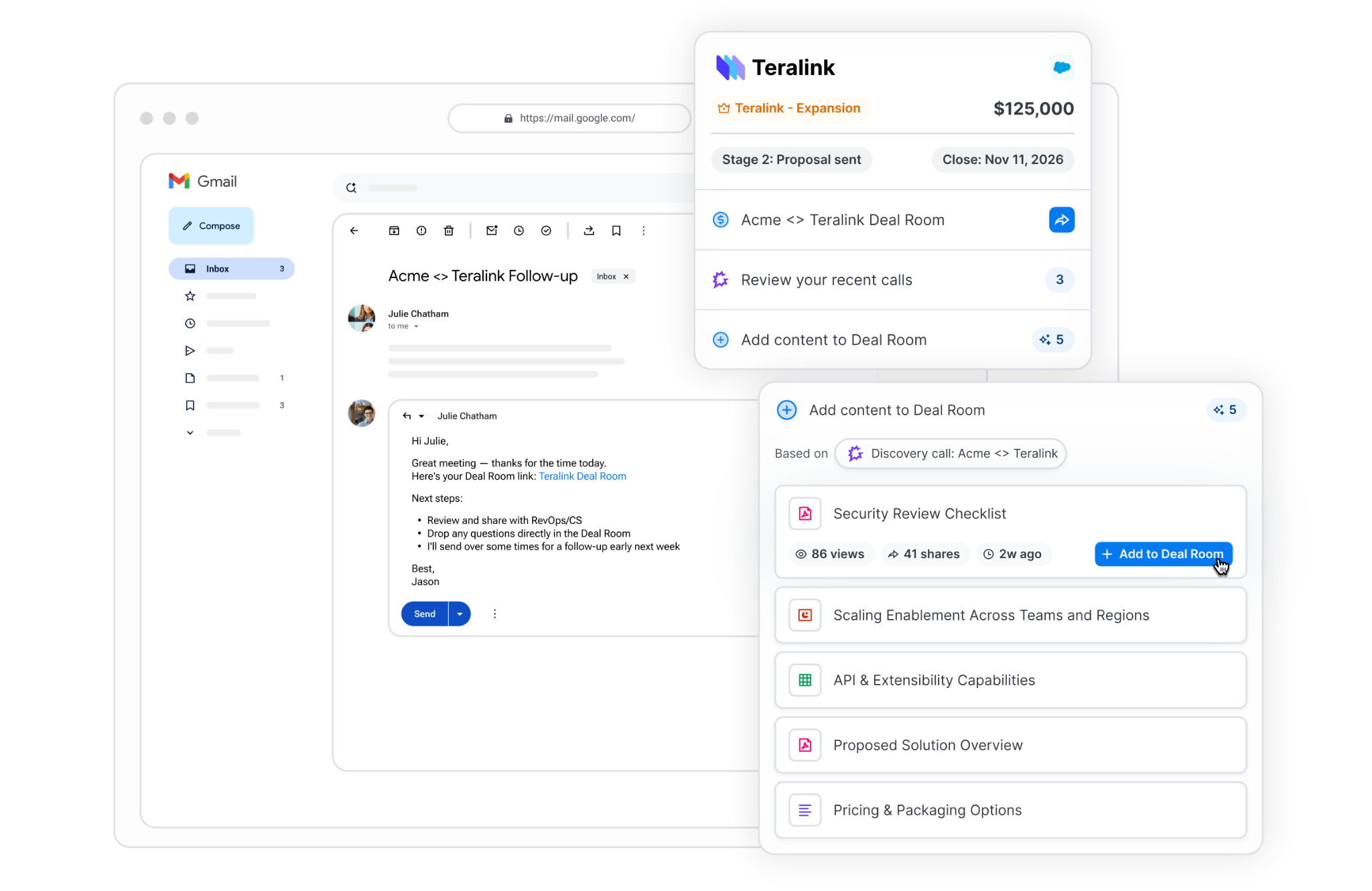
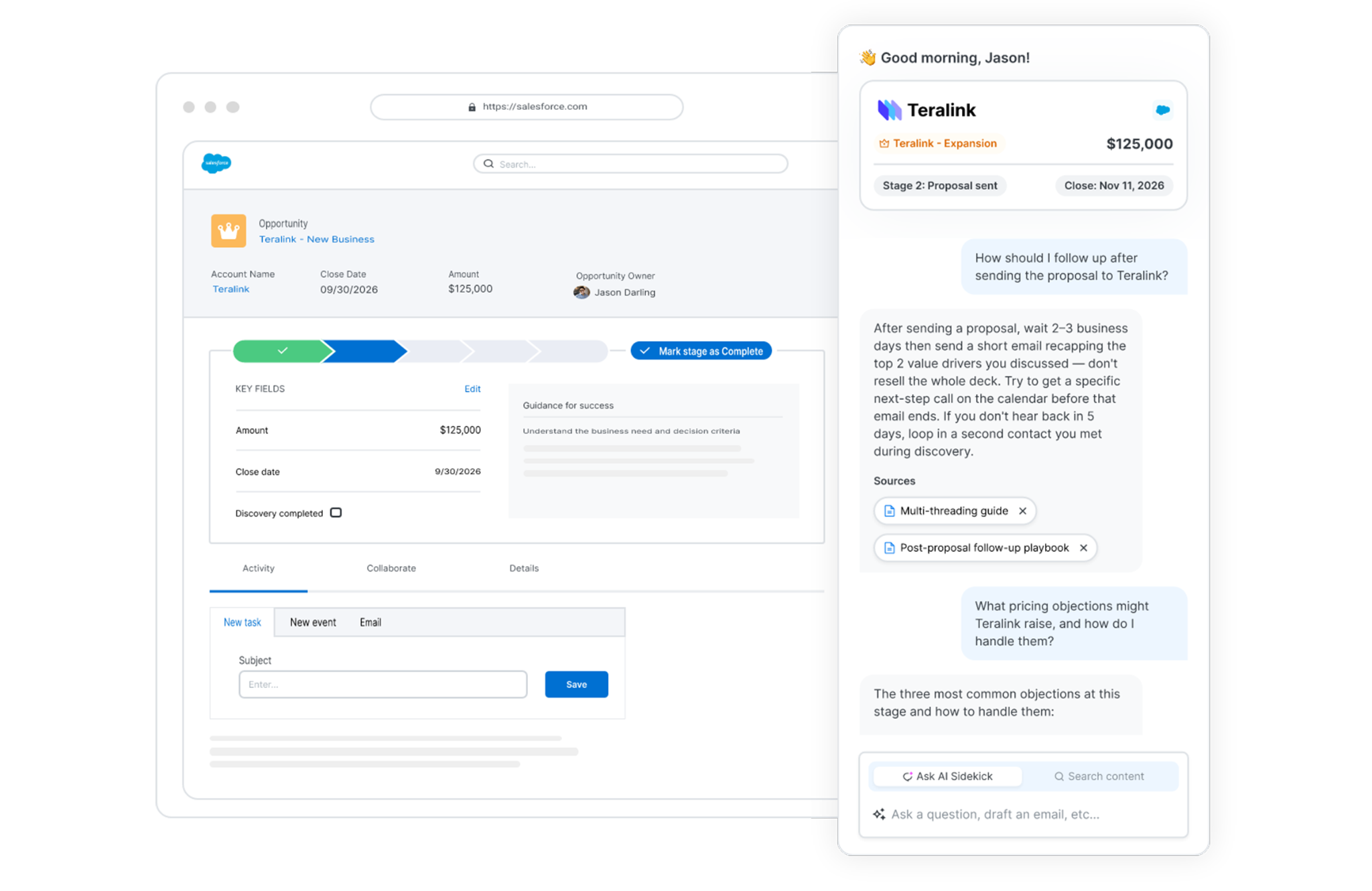
Spekit is a sales enablement platform designed to solve the adoption problem that plagues portal-first enablement tools: reps don't navigate to a separate system when they're in the middle of a deal. Its key capabilities include:
AI Sidekick delivering content, coaching, and answers inside Salesforce, Gong, Gmail, Slack, and other tools in real time
Embedded enablement that attaches guided process flows directly to Salesforce fields and workflow transitions
GTM Knowledge Engine with AI-governed content sync from Google Drive, SharePoint, and Confluence
Revenue-linked analytics connecting content engagement and rep behavior to pipeline movement
Deal Rooms that auto-populate with deal-specific content from Gong transcripts and Salesforce data
Why Choose Spekit Over Seismic for Rep Adoption and In-Workflow Enablement
Spekit stands out compared with Seismic in several ways:
Reps Never Have to Leave the Tool They're Already Working In Seismic's portal-first model requires reps to break their workflow, open Seismic, search for content, and return. Spekit's own research reports that 55% of enablement practitioners cite low rep adoption as the primary reason for switching platforms. Spekit's AI Sidekick runs as a browser-native layer across every tool the rep uses: Salesforce, Gong, Gmail, Outlook, LinkedIn. It detects the active opportunity and surfaces relevant coaching, battlecards, and content without the rep doing anything.
Implementation in Weeks, Not Months Spekit's GTM Knowledge Engine syncs existing content from Google Drive, SharePoint, and Confluence automatically, with AI auto-tagging reducing the metadata burden. G2 data cited by Spekit places Spekit's implementation speed at 30% faster than competing enablement solutions.
Content Governance That Maintains Itself Spekit's Governance Dashboard monitors content freshness, flags outdated material, and routes update requests to owners without requiring an administrator to start the process. When a source document changes, every Spekit surface that references it updates automatically. The AI Content Builder generates new playbooks and battlecards with a reported 90% reduction in content creation time.
Source: Spekit
NOTE: We also evaluated Dock and Pitcher. Dock offers strong digital sales rooms and buyer engagement tools but focuses more narrowly on the buyer experience layer. Pitcher serves mobile-first field sales teams with a specialized use case. Spekit offers the most direct answer to the low rep adoption problem that drives most teams to look for a Seismic alternative.
Spekit Pricing
Spekit does not publish pricing publicly. The pricing page directs prospects to request a demo. All commercial terms are negotiated through individually signed Order Forms under a per-seat licensing model. Professional Services for implementation and content migration are scoped separately. Contracts auto-renew annually unless otherwise specified.
Who Should Use Spekit?
Choose Spekit if:
Your team runs on Salesforce and Gong and you want enablement content delivered inside those tools rather than in a separate platform.
You've tried Seismic and rep adoption was the primary failure mode: the content existed, but reps wouldn't leave Salesforce to find it.
Your GTM motion changes rapidly and you need content governance that propagates updates automatically without manual re-tagging.
The Final Verdict
Seismic leads the sales enablement market, but revenue teams often need specialized capabilities that go beyond content management, coaching, and buyer engagement. Based on our research, here are the best alternatives:
ZoomInfo for B2B data, buyer intent signals, and AI-powered prospecting that fuels pipeline before enablement begins
Allego for enterprise video-first coaching and conversation intelligence with platform independence in a post-merger market
Showpad for content and coaching comparable to Seismic at mid-market pricing with faster deployment
Mindtickle for structured rep readiness programs with measurable behavioral outcomes tied to revenue
Gong for conversation-based revenue intelligence, deal execution, and behavioral forecasting
Guru for enterprise-wide AI knowledge governance that spans every department and tool
Spekit for in-workflow enablement that drives rep adoption by meeting sellers where they already work
You don't have to choose between Seismic and these alternatives exclusively. Many organizations use Seismic alongside specialized tools to build a complete revenue stack. Consider your specific gaps and growth plans when deciding which solution fits best.
Want to fuel your pipeline with B2B data and AI-powered prospecting? ZoomInfo combines 500M contacts, buyer intent signals, and the GTM Context Graph to help your team find, prioritize, and win the right buyers. Start your free trial or request a demo today.
Seismic Alternatives FAQ
Why do businesses look for Seismic alternatives?
Seismic leads sales enablement, but businesses look for alternatives for several reasons: implementation timelines of four months or longer, the need for dedicated enablement staff to maintain content governance, opaque pricing with no published tiers or self-serve options, and gaps outside Seismic's core architecture such as prospecting intelligence, revenue forecasting from conversation data, or enterprise-wide knowledge governance.
What is the best overall Seismic alternative?
There is no single best alternative because Seismic covers multiple enablement functions. ZoomInfo is the top choice for B2B data intelligence and AI-powered prospecting. Gong leads for conversation intelligence and revenue forecasting. Showpad offers the closest feature comparison at a more accessible price point. The right choice depends on whether your primary gap is upstream pipeline generation, deal intelligence, rep readiness, or content adoption.
Is there a free alternative to Seismic?
Most enterprise enablement platforms do not offer permanent free plans. ZoomInfo offers a permanent free tier (ZoomInfo Lite) with access to its B2B database and 10 monthly export credits, plus a 7-day free trial of paid features. Gong, Allego, Mindtickle, Guru, and Spekit all require custom quotes.
Which Seismic alternative is best for mid-market teams?
Showpad is the strongest option for mid-market teams, offering transparent pricing starting at $25 per user per month, deployment timelines of 6 to 9 weeks, and integrated content management and coaching in a single license. Its modular add-on bundles let teams activate capabilities as they grow without committing to enterprise-level budgets upfront.
How does the Seismic-Highspot merger affect buyers?
The merger announced in February 2026 combines the two largest pure-play enablement platforms into a single entity operating as Seismic. Buyers should consider potential product roadmap changes, overlapping feature rationalization, and integration complexity during the transition. Allego has positioned itself as the independent alternative for enterprise teams seeking a stable vendor not undergoing post-merger integration.
To see how Highspot and Seismic compared on features and capabilities, read our Highspot vs. Seismic comparison.
Which alternative is best for improving sales forecasting accuracy?
Gong is built for this use case. Its Revenue AI platform captures every customer interaction and processes 300+ behavioral signals to produce forecasts 20% more precise than CRM-only algorithms. ZoomInfo's GTM Context Graph also contributes to deal intelligence by correlating buyer intent signals with CRM and conversation data.
Can I use Seismic alongside these alternatives?
Yes. Many enterprise revenue organizations run Seismic for content management and enablement alongside ZoomInfo for prospecting intelligence, Gong for conversation intelligence, or Guru for enterprise knowledge governance. These tools address different parts of the revenue stack and complement rather than duplicate Seismic's capabilities.
Which alternative is best for reducing new rep onboarding time?
Mindtickle is the strongest option for onboarding speed, with its Readiness Index providing a measurable score of rep preparedness and AI role-play enabling practice at scale without manager involvement.
Looking beyond Seismic? Compare the strongest alternatives side by side:
